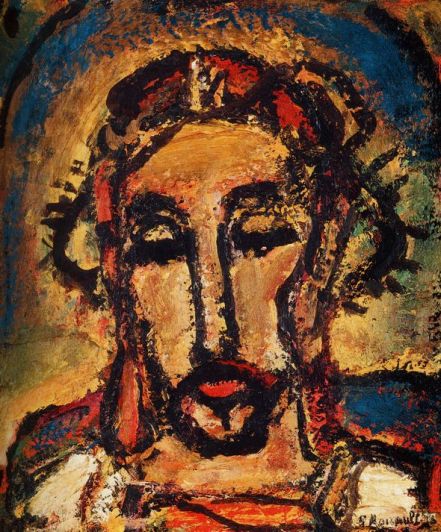
“Ecce Homo,” Georges Rouault. Vatican Museum. Rouault is an artist totally captivated by the beauty of the Holy Face.

“Ecce Homo,” Georges Rouault. Vatican Museum. Rouault is an artist totally captivated by the beauty of the Holy Face.
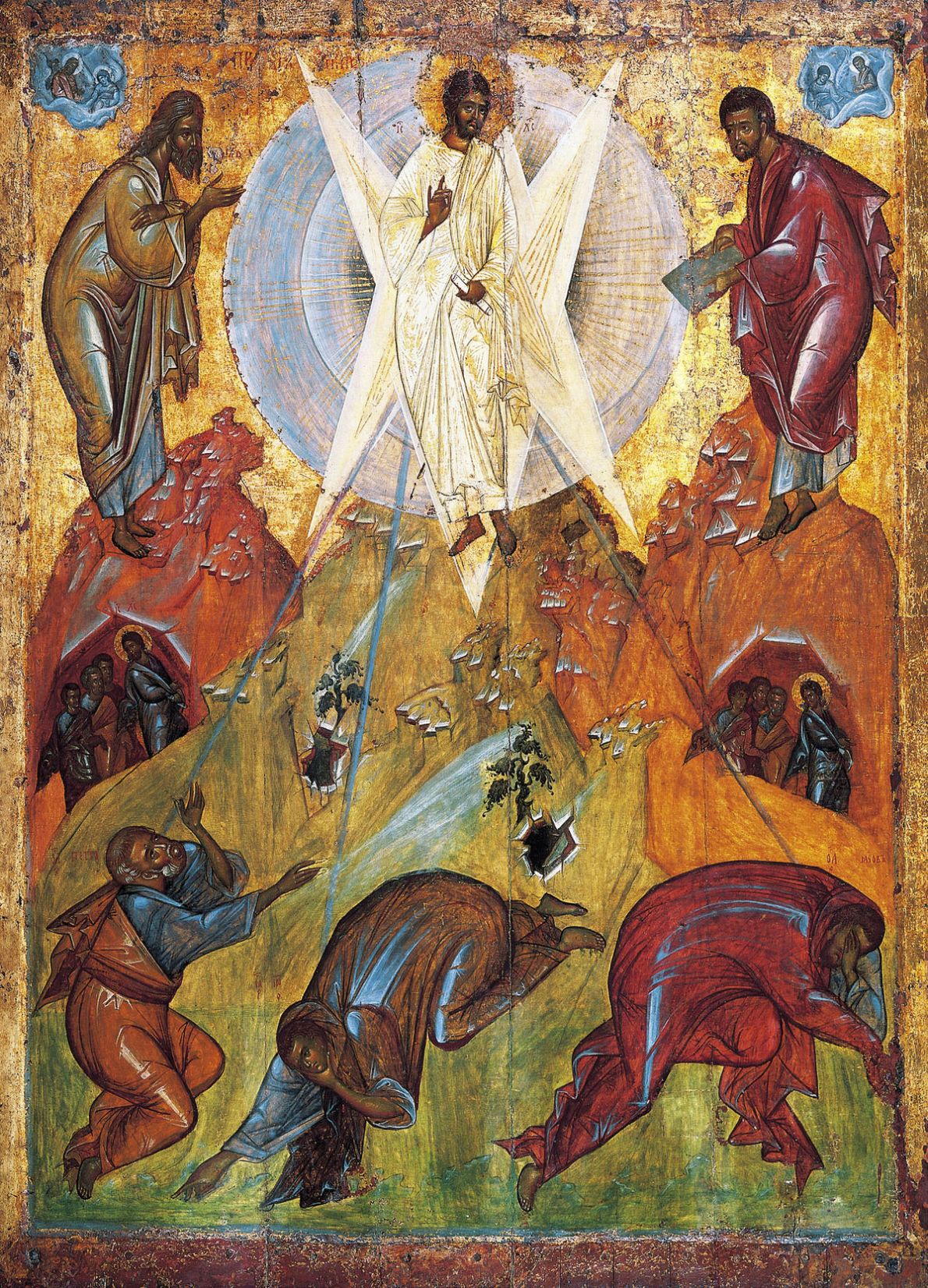
Icon of the Transfiguration, by the hand of the great 15th century iconographer of Moscow, Theophanes the Greek.
Jesus took Peter, James, and John his brother, and led them up a high mountain by themselves. And he was transfigured before them; his face shone like the sun and his clothes became white as light. And behold, Moses and Elijah appeared to them, conversing with him. Then Peter said to Jesus in reply, “Lord, it is good that we are here. If you wish, I will make three tents here, one for you, one for Moses, and one for Elijah.” While he was still speaking, behold, a bright cloud cast a shadow over them, then from the cloud came a voice that said, “This is my beloved Son, with whom I am well pleased; listen to him.” When the disciples heard this, they fell prostrate and were very much afraid. But Jesus came and touched them, saying, “Rise, and do not be afraid.” And when the disciples raised their eyes, they saw no one else but Jesus alone.
As they were coming down from the mountain, Jesus charged them,”Do not tell the vision to anyone until the Son of Man has been raised from the dead.”
These words from St. Matthew were the Gospel reading at Mass last night. Yesterday was the second weekend of Lent, and the Church directs our eyes, alongside those of the holy apostles, to the face of Our Lord in His Transfiguration. And in the Eastern Churches, today is St. Gregory Palamas Sunday. Palamas is most famous for his articulation of the Essence-Energies distinction as part of a broader polemic against the Byzantine Scholastic attacks on Hesychasm carried out by Barlaam of Seminara. One of Palamas’ key Scriptural examples of God’s energies is the “uncreated light” of Christ’s glory in the Transfiguration. St. Gregory is celebrated to this day by the Eastern Orthodox and by Eastern Catholics on their Lenten calendars; yet in the post-Scholastic West, he still holds no place on the calendar. I must wonder whether or not the readings for the Second Sunday of Lent were chosen at the revision of the Lectionary in part as an ecumenical gesture to the Orthodox, though my knowledge of 20th century liturgical innovations is shallow at best. Regardless, those who, to adapt a phrase of Pope St. John Paul II, “breathe with both lungs” of the Church can recognize the Providential coincidence of these two celebrations.
The Light of Tabor is, in a Palamite reading, the eternal Glory of God made manifest in, with, and through Christ’s created humanity. The Transfiguration is therefore an archetypal moment for every mystic—not just the Hesychasts whom St. Gregory was defending. In view of all this, while I listened to the priest reading the Gospel this evening, a song came to mind: “My Heart’s in the Highlands,” by Arvo Pärt. The lyrics are taken from a poem by Robert Burns. Here’s the chorus:
My heart’s in the Highlands, my heart is not here,
My heart’s in the Highlands, a-chasing the deer;
Chasing the wild-deer, and following the roe,
My heart’s in the Highlands, wherever I go.
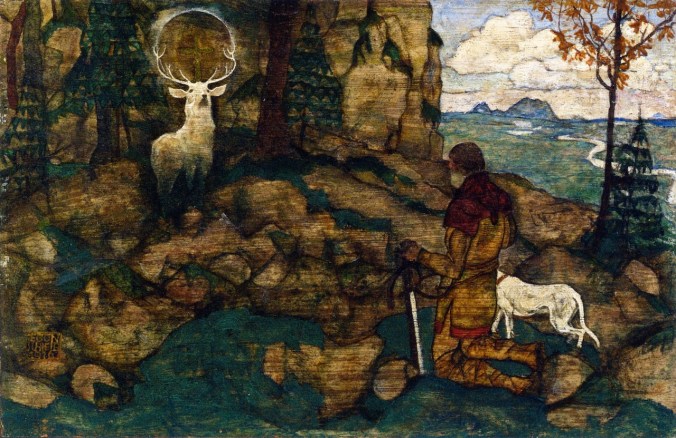
A few weeks ago, when I first listened to the song, it immediately struck me as a potent metaphor for the contemplative life. Is not the contemplative’s heart set in the “high lands” of the spirit, like St. John of the Cross’s Mount Carmel? And has the Divine not been associated with wild deer throughout history, from the panting hart of Psalm 42 to the vision of St. Hubert to the White Stag of Narnia? The Apostles, like the mystics, like the chanting voice in Pärt’s song, are “led…up a high mountain by themselves.” There, they find Christ’s true glory, the energy of His divinity totally interpenetrating all they can perceive of him. The created rises into the divine, and the uncreated bends towards the creaturely; the two meet in the transfigured Christ. The dual presence of the heavenly Elijah and the Sheol-bound Moses demonstrates the moment of radiant communion between God and His creation, manifested perfectly in Christ, the Word made flesh.
Pärt’s song describes the experience of the mystic, not because Burns’ words actually refer to contemplation, but because of the way he takes up the verse and stretches it against an agonizingly poignant organ composition. He sets secular words to sacred music. Thus he accomplishes in miniature the assumption of the creaturely by the divine that comes before our vision in the Transfiguration. Art at its finest is called to participate in this lesser Transfiguration, and Pärt is a consummate master of what Tolkien might call “sub-creation.”
But Pärt is not alone in this; one of his colleagues, John Tavener, arguably a finer and more mystically-oriented composer, also transfigured profane writings into sacred pieces of music. I can think of no better example of this than his brief and delightful motet, “The Lamb.” Tavener took the lyrics from William Blake’s poem of the same name. In full, it reads:
Little lamb, who made thee
Dost thou know who made thee,
Gave thee life, and bid thee feed
By the stream and o’er the mead;
Gave thee clothing of delight,
Softest clothing, woolly, bright;
Gave thee such a tender voice,
Making all the vales rejoice?
Little lamb, who made thee?
Dost thou know who made thee?
Little lamb, I’ll tell thee;
Little lamb, I’ll tell thee:
He is callèd by thy name,
For He calls Himself a Lamb.
He is meek, and He is mild,
He became a little child.
I a child, and thou a lamb,
We are callèd by His name.
Little lamb, God bless thee!
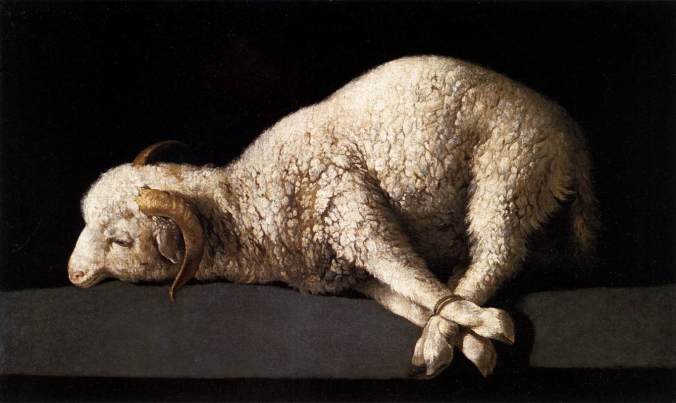
Here too, we might glimpse the transfigured Lamb of God between the lines of Blake’s verse. The lamb’s “clothing of delight/Softest clothing, woolly, bright” seems to echo the robe rendered “white as light” on Mt. Tabor. Blake speaks of “the vales” when Scripture instead would bring us up to the peaks. And the question that ends the first verse is fundamentally the same as that which must have run through the minds of the bewildered apostles; who is this man? The answer, of course, comes from the voice in the cloud: “This is my beloved Son, with whom I am well pleased; listen to him.” And Tavener’s eerily beautiful choral setting imbues the lyrics with a dimension hitherto unimagined. Many of his works remind one of candlelight on ritual gold, or the smell of incense flying forth with the rhythm of thurible bells, or the echo that thins out asymptotically under the glittering mosaic of a high dome. “The Lamb” is all of this, presented compactly. It stands as one of his finest works, and one of his most spiritually rich.
I recently wrote about the Holy Minimalists in a piece on the music of The Young Pope. They’ve been on my mind. But I didn’t connect their artistic project to the Transfiguration until tonight. We Christians are to become “little Christs,” imitating Jesus in all things by adoption and deification. Sometimes, that takes the form of contemplation. The apostles model that path for us in their behavior on Mt. Tabor. But at other times, and in other ways, we are called to live the life of Christ more directly. The Transfiguration provides a mystical glimpse of what happens—and indeed, what will happen—when the uncreated Light of God assumes, permeates, and glorifies the creation. Of course, the energies of God are not found in the artifices of men; but artists can practice their own, creaturely form of transfiguration. The pieces of music I have discussed are shot through with an awareness of the divine presence, and the words that began as profane poetry become something altogether different, something sacred, something nearly liturgical.
At the beginning of Lent, T.S. Eliot tells us to “Redeem/The time.” On this, the Second Sunday of the penitential season, Christ reveals in Himself how we might do so—a transfiguration that Arvo Pärt and John Tavener have achieved, in some small way, through their own creative work.

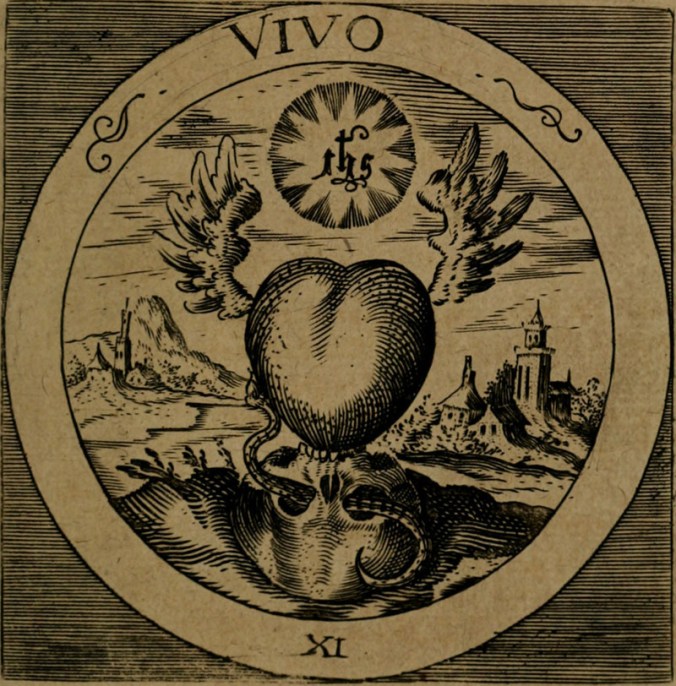
“I Live,” from the Emblemata Sacra (1618)
Of all the myriad forms of visual theology that draw upon the Western traditions of art history, perhaps no medium is quite as neglected as the emblem. The books that contained these small, symbolically rich images constituted a prolific genre in the early modern period. They had a fairly standard format. Usually, the emblems sat alongside a few moral or sacred verses in Latin, Greek, or a European language. Daniel Cramer’s Emblemata Sacra (1618), from which the image above was taken, is a good example of this polyglot tendency. On the verso, one can find a quatrain in Latin, German, French, and Italian, always connecting the symbolism of the emblem with a French and Italian verse of the Scriptures. On the recto, the emblem sits under the same verse, this time in Latin and German. The page concludes with an epigrammatic prayer in Latin.
It seems that emblem books were popular in early modern Europe. Mara R. Wade of the University of Illinois Urbana-Champaign writes, “In the preface to his Companion to Emblem Studies (2006) Peter Daly estimates that ca. 6,500 emblem books were published during the Renaissance, with an individual volume containing anywhere from 15 to 1,500 emblems.” Wikipedia lists no fewer than 54 representative titles, though there were certainly many more produced between 1500 and 1800 (as any cursory review of UIUC’s Emblematica Online or the French Emblems at Glasgow archives can show). The fact that these books were often printed with multiple languages of text side by side suggests that they were documents with cross-cultural appeal. They were meant to speak not only to the elites who knew Latin, but also to the literate bourgeoisie. All of that makes their emergence as a genre at a time of religious strife even more remarkable.

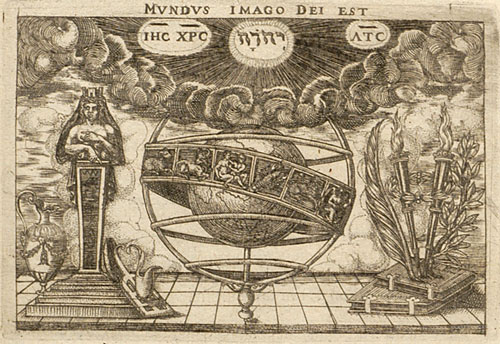
“Le Monde est L’Image de Dieu,” one of the more explicit expressions of esoteric philosophy, in Boissard’s Emblemes latins […] avec l’interpretation Francoise (1588). It anticipates Boehme’s De Signatura Rerum by nearly 40 years.

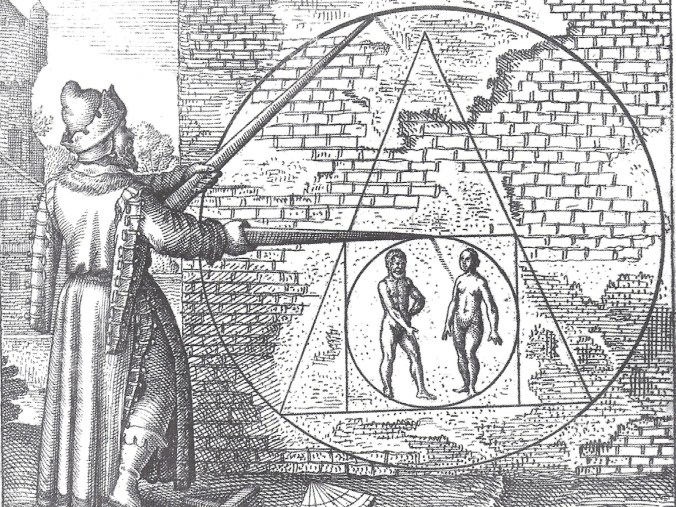
Emblem XXI from the alchemical text Atalanta Fugiens (1617), by the Lutheran Rosicrucian Michael Maier
There is a good historical and aesthetic reason for this. The emblem functions by setting up a symbol or a system of symbols independent of any text. While text was sometimes used to elucidate the meaning of those symbolic networks, it was always secondary to the image itself. The emblem book is one of the last gasps of the primacy of image over text in European thought. Along with the Wunderzeichenbuchen, the emblem book is one of the main genres mobilized by Continental Protestants to rediscover a non-iconographic (and, to their mind, a non-idolatrous) use of image in moral and spiritual development. Instead of an image asserting its “auratic” power to the exclusion of text, the emblem book suggests a way that text and image can mutually illuminate each other. As Mara Wade writes, the emblem books engendered “a process of reciprocal reading of texts and images, whereby the back and forth between the words and the pictures creates meaning. The picture presents the reader with a recognizable scene or symbolic collage, and the text then reorients the reader’s understanding of that scene to present a new and unexpected message.” In this sense, the emblem book clearly partakes of a distinctly Humanist and Protestant heritage. Note again that emblem books were very often the chosen medium for the quasi-scientific magical teachings of the Rosicrucians and alchemists. Those strange laborers were also, in their own quixotic way, seeking to reclaim something of the sacramental worldview thrown away by the iconoclastic Reformers (see Henry 2015).
The triumph of discursive reason over image in the Enlightenment led to the decline of the emblem book as a genre (there are surely other reasons tied to shifting book markets, but my capacities to do research into textual history are limited at this time). After that, the record has been rather sparse. Hamann occasionally used emblems in his philosophical works. More recent theologians have largely overlooked the emblem book as a theological genre. The single counterexample I can readily think of is Valentin Tomberg’s Meditations on the Tarot, which can only count as an emblem book when we ignore its departures from the traditional form. Yet the renewal of esoteric Catholicism by reliably orthodox publishing houses like Angelico Press suggests that the emblem book may have a place in the theology of the future.
Its revival seems particularly apropos in an age when memes have become topics of serious political discourse, when visual self-representation has been amplified through various social media, and when new norms of communication emphasize brevity over detail. An epoch is defined, in large part, by the relation of its people to their media. The development of the printing press launched early modernity by helping to bring about new conceptions of subjectivity, as well as new questions about the relationship of text and image. Consequently, the emblem book arose to grapple with some of those questions. The next great civilizational step in communication arrived with the internet, accompanying nascent postmodernity. Perhaps we shall see a revival of the emblem book for theologians to navigate this “brave new world.”

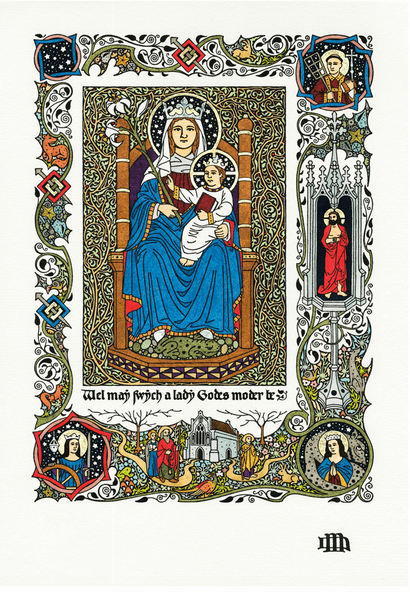
“Our Lady of Walsingham,” by Daniel Mitsui. Available at http://www.danielmitsui.com
Exciting news for anyone who follows the Catholic art world. Daniel Mitsui, the artist famous for his intricate, lively drawings of Christ and the Saints, has just announced that he has a new blog. The new site promises to be aesthetically and spiritually enriching. Check out his new, great project, the Summula Pictoria. I look forward to seeing what Mr. Mitsui will produce for us in the future.
And his new piece depicting St. Philip Neri is lovely, as always.

Out of Catullus
By Richard Crashaw (translating Catullus)
As shall mocke the envious eye.
Sonnet 29
By William Shakespeare
When, in disgrace with fortune and men’s eyes,
I all alone beweep my outcast state,
And trouble deaf heaven with my bootless cries,
And look upon myself, and curse my fate,
Wishing me like to one more rich in hope,
Featur’d like him, like him with friends possess’d,
Desiring this man’s art and that man’s scope,
With what I most enjoy contented least;
Yet in these thoughts myself almost despising,
Haply I think on thee, and then my state,
Like to the lark at break of day arising
From sullen earth, sings hymns at heaven’s gate;
For thy sweet love remember’d such wealth brings
That then I scorn to change my state with kings.
The Flaming Heart
By Richard Crashaw (excerpted)
O heart, the equal poise of love’s both parts,
Big alike with wounds and darts,
Live in these conquering leaves; live all the same,
And walk through all tongues one triumphant flame;
Live here, great heart, and love and die and kill,
And bleed and wound, and yield and conquer still.
Let this immortal life, where’er it comes,
Walk in a crowd of loves and martyrdoms;
Let mystic deaths wait on ’t, and wise souls be
The love-slain witnesses of this life of thee.
O sweet incendiary! show here thy art,
Upon this carcass of a hard cold heart,
Let all thy scatter’d shafts of light, that play
Among the leaves of thy large books of day,
Combin’d against this breast, at once break in
And take away from me my self and sin;
This gracious robbery shall thy bounty be,
And my best fortunes such fair spoils of me.
O thou undaunted daughter of desires!
By all thy dow’r of lights and fires,
By all the eagle in thee, all the dove,
By all thy lives and deaths of love,
By thy large draughts of intellectual day,
And by thy thirsts of love more large than they,
By all thy brim-fill’d bowls of fierce desire,
By thy last morning’s draught of liquid fire,
By the full kingdom of that final kiss
That seiz’d thy parting soul and seal’d thee his,
By all the heav’ns thou hast in him,
Fair sister of the seraphim!
By all of him we have in thee,
Leave nothing of my self in me:
Let me so read thy life that I
Unto all life of mine may die.
By John Donne
The Love Song of J. Alfred Prufrock

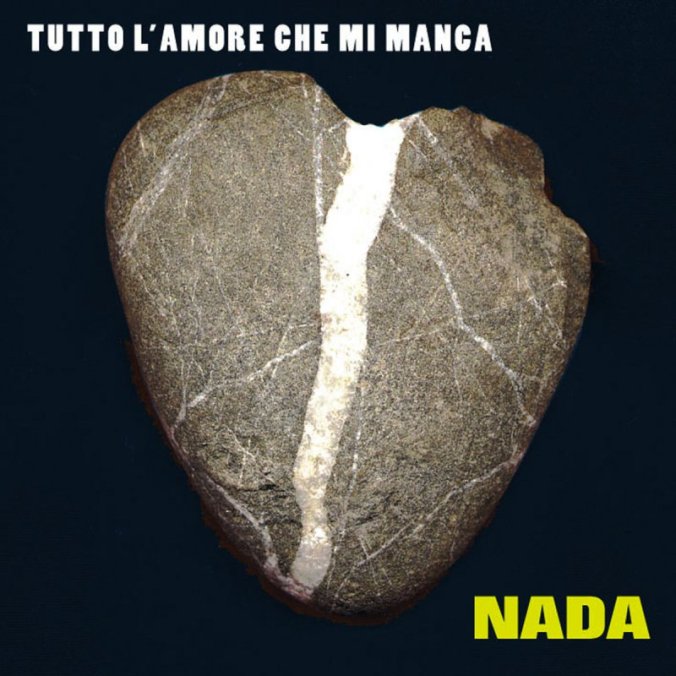
The Prime Minister of Greenland gives the Pope a record of Nada’s “Senza un Perche.” And then dances to it. Alone. While the credits role.
In a previous post, I discussed the visual aesthetic of Paolo Sorrentino’s new drama, The Young Pope. Today, I’d like to examine another facet of the show’s artistry: the soundtrack. The Young Pope‘s music has occasioned a few admiring or even acerbic comments, but little serious inquiry.
Although I am by no means an expert in musical theory, I know enough to realize that few shows have ever had quite the musical mix that The Young Pope has. And since I have a Spotify account, I have the luxury of perusing the entire official Young Pope playlist. A few types of music emerge. I would like to examine these in turn.
The Original Score
Is relatively unremarkable. Ramin Djawadi has given us better music in HBO’s other great recent dramas, Game of Thrones and Westworld. But Lele Marchitelli’s “Cardinals” has a delightful airiness, the sense of a certain holy whimsy about it. It’s happy music.
Techno

“Levo,” by Recondite
The show is very European, and incorporates a great degree of the continent’s signal, stereotypical genre.
Michael Baumann over at The Ringer offers a great analysis of one of the songs, “Levo,” by Recondite, a techno artist from Germany. Baumann notes that Sorrentino “folds ‘Levo’ into Lenny Belardo’s character the way Prokofiev folded the French horn into the Wolf’s.” The song is deployed at moments that reveal critical new plot developments that are really the Pope at his purest.
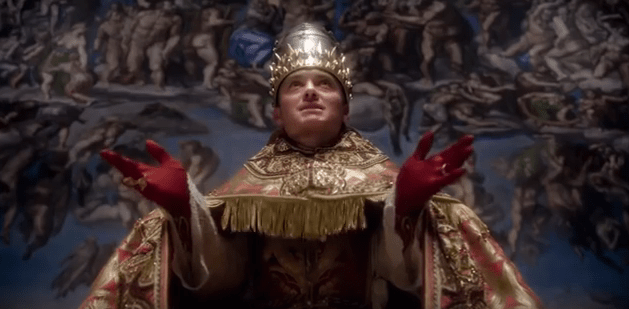
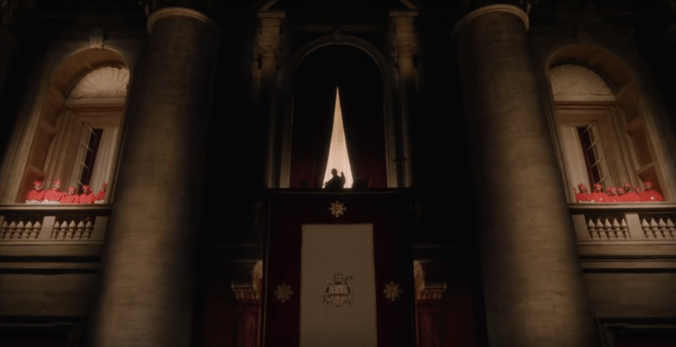
Sorrentino also deploys Techno at moments that seem particularly surreal; the twitching scratch of a beat in Labradford’s “By Chris Johnston, Craig Markva, Jamie Evans” opens the series with Lenny’s nightmare Urbi et Orbi. The piece lends the slow-mo cinematography and almost sculptural quality of the characters the air of a dance. It balances the stillness and motion of the moment, in keeping with Sorrentino’s neomodernist aesthetic.
And yes, I know it’s technically post-rock. But it sounds close enough to Techno to work in this category.
Pop Singles

This song will get stuck in your head.
Lenny Belardo is an American, and the show is set in the near future. It only makes sense that Sorrentino adds pop to the aural texture of several of his key moments.
A few songs come to mind: Nada’s “Senza un Perché,” Lotte Kerstner’s cover of “Halo,” by Beyoncé, LMFAO’s “Sexy and I Know It,” Flume’s “Never Be Like You,” and that cover of “All Along the Watchtower” that marks the opening sequence. Of these, two are particularly worth closer analysis: the covers of “Halo” and “All Along the Watchtower.”
By choosing Kerstner’s slow, soulful cover over Beyoncé‘s original version, Sorrentino draws our attention to the singularly religious inflection of the lyrics:
The song frames love as a religious experience, an encounter with a divine other. We can read here the central (albeit de-eroticized) element of Lenny’s spiritual vision; the way he ties together the love of his parents and his belief in God. And the luminescent lyrics work perfectly for the glowing landscape and figures that we see in Africa and Colorado. The lyrics perfectly match the Pope’s solitary walk through the sleeping journalists on the plane:
The language here practically describes the scene. We are on the plane at night, and Lenny, the only one whom the journalists want to see, has arrived to watch them sleep. Their flight is quite literally defying gravity. As the Pope breaks his rule about meeting journalists, he finds one awake. It’s a risk, but it rewards him with a moment of admiring affirmation.
And we don’t need to consciously apprehend the meaning of the words as we watch the scene to feel their impact. Aesthetically, the song’s dreamy tremor fits well with the soft-focus visuals that Sorrentino uses in that scene and throughout the series.
Secondly, Sorrentino opens most of the episodes with a sequence of the Pope passing nine paintings and a sculpture of Pope St. John Paul II. An instrumental cover of “All Along the Watchtower” plays in most iterations of the sequence. The song’s connotations of cultural revolution represent Lenny’s monumental program of change and remind us of his parents’ own ideological leanings. The irony of the song pairs well with the irony of the visuals, as Lenny’s shooting star disrupts the order of the paintings.
Holy Minimalism
For me, the most striking addition to the repertoire is the heavy use of the Holy Minimalists. Arvo Pärt, Henryk Górecki, and John Tavener, some of the most respected members of the movement, all appear in the playlist.

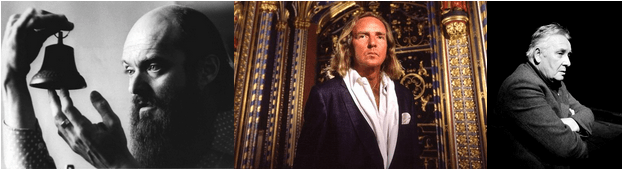
The Holy Minimalists: (l-r) Arvo Part, John Tavener, Henryck Gorecki
The Holy Minimalists were a group of composers active from the 1970’s whose work sought to reinvigorate more traditional sacred forms. Often by working in conversation with Eastern Christian forms—Pärt, like the late Tavener, is a convert to Eastern Orthodoxy, while Górecki was a Polish Catholic—the Holy Minimalists sought to capture a sense of the eternal in their inventive and dissonant work. Listening to their music, one has the sense of peering through the cracks of our broken human existence to glimpse yawning chasms of infinite glory.
No fewer than 12 works by the Holy Minimalists are featured in the show’s official playlist. I’d like to focus on two pieces, deployed in juxtaposition at one of the most climactic moments in the entire series.

“Knock, knock.”
As Pius XIII enters the Sistine Chapel to address his assembled cardinals, he is borne aloft by attendants on a Sedia Gestatoria. John Tavener’s haunting dirge for Princess Diana, “Song for Athene,” seems to float in along with him. But just as the climax is about to resolve into a peaceful, triumphant harmony (the part of the song that evokes the Resurrection and the Life eternal), Lenny opens his eyes—and the music stops instantly. It’s a chilling moment. In that second, before he even starts to speak, we understand the gist of what is about to follow.
The music only begins again with a single, unnerving note on the piano, when the Pope directs their attention to a mysterious door that has appeared at the other end of the chapel. He continues his dark (and, if we’re being honest, rather magnificent) speech for nearly another eight minutes. The lone note is joined by others, and becomes Arvo Pärt‘s “Lamentabile – ” before concluding with the humiliation of Cardinal Voiello.
I think Sorrentino relies so heavily on the Holy Minimalists in his aural aesthetic to suggest another element of Lenny’s spiritual vision. Throughout the series, Lenny is able to deliver profound wisdom through quiet, concise statements. Simplicity is the garment of his unique insights. And the Holy Minimalists sought to re-present the sacred tradition of Christian music for modernity; their project is consonant with Lenny’s.
It’s also worth pointing out that, in addition to the Holy Minimalists, Sorrentino deploys a few works by regular, ordinary, profane minimalist John Adams (those of you who played Civ IV growing up will recognize his “Shaker Loops: III. Loops and Verses“).
In Sum
I know I’m missing a few things, since the playlist is long, and I’m not a musicologist. But that very fact points to the multiple layers of meaning that Paolo Sorrentino has inscribed in his rich soundtrack. I encourage everyone to give the playlist a serious and attentive listen-through, possibly several. There are gems in there. And if you can go through it (or the show) without getting “Senza un Perché” stuck in your head, you’re doing it wrong.

There are many ways to analyze HBO’s new limited series, The Young Pope. I’ve read comparisons to Twin Peaks and House of Cards. Some of my friends take it as a commentary on contemporary church politics. Others simply revel in its lush costuming and surreal sense of humor. There’s truth in all of these approaches, but I think none come close enough to identifying the show’s real aesthetic: Neomodernism.
Neomodernism is a small school of visual art created by Andre Durand and Armando Alemdar. A critical response to postmodernist dominance of the art scene in the last decades of the 20th century, Neomodernists explore “spiritual and aesthetic values in art,” as their Manifesto states. Neomodernist painters seek “a new relationship with works of art from the 15th to the 20th century.” They focus on the creative renewal of tradition. And they do so by adhering to nineteen criteria that shape their work. Here they are, lifted from Armando Alemdar’s website:
Clearly, these criteria are tailored for the plastic arts—and painting in particular. Among the various examples of proto-Neomodernist that Alemdar draws from art history, all are paintings. Yet I would contend that many of the aforementioned criteria would work with any art form that places at its aesthetic center the tableau. There has been much critical writing on film (and by extension, television) as a primarily visual medium. Directors are primarily distinguished by the nuances of their visual style, rather than the way they use sound. We can, therefore, apply some of the same criteria to film that we use with painting.
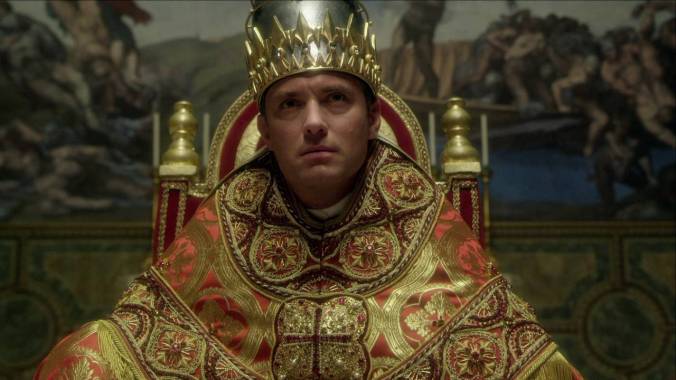
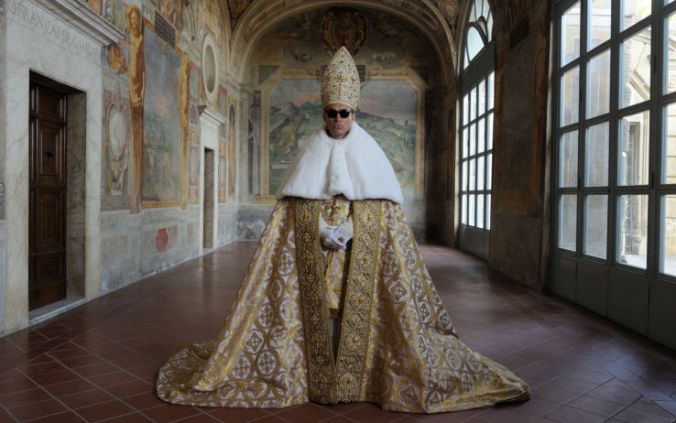
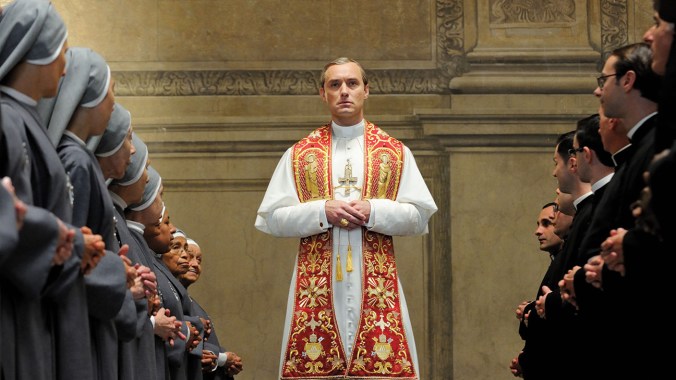
And The Young Pope is a perfect example. Director Paolo Sorrentino relishes the visual component of his work. That tendency comes through powerfully in The Young Pope. While the show doesn’t fit all of the nineteen criteria, it does seem to play with many of them. Let’s go through a few:
“A Neomodernist picture has links to the works of art that preceded it and / or antiquity.”
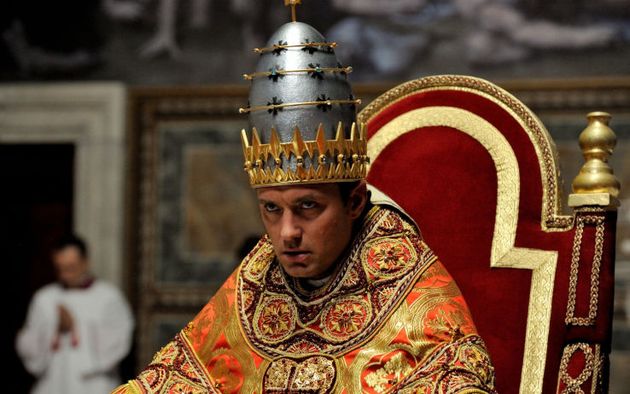
The show isn’t an unambiguous endorsement of Catholic tradition, but it does engage with it. The narrative of TYP centers on a Pope who re-establishes several ancient customs, even as he closes himself off from the world. On the aesthetic level, however, the show’s links to the past are constantly re-emphasized. The costumes reflect sartorial tendencies that largely disappeared after the Second Vatican Council. The Pope placidly examines two works of Renaissance art alongside his confidant and master of ceremonies, Gutierez. In the course of the story, both paintings turn out to reflect the two characters’ inner demons. Another work of art, the Venus of Willendorf, is at the heart of one Cardinal’s sins of lust. Lenny invokes Kubrick and Banksy to justify his isolation. One of the show’s most riveting scenes takes place in a massive reproduction of the Sistine Chapel. And of course, there’s that intro, which features 10 pieces of art with thematic significance for Lenny Belardo’s troubled pontificate. Sorrentino ensures that art and film history saturate The Young Pope.
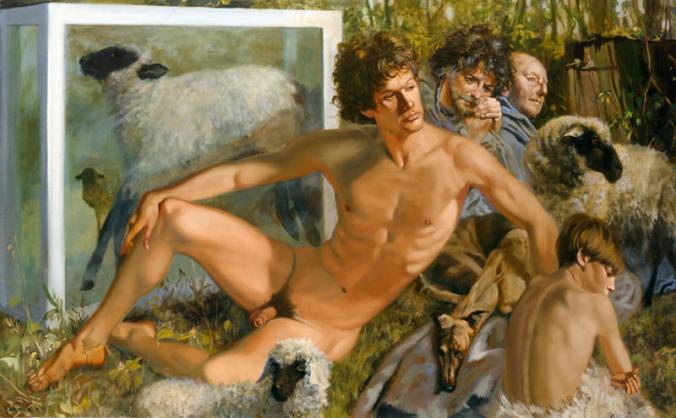
Neomodernist painters do the same. Andre Durand’s 2000 painting “Et in Arcadia Ego” is a good representative of this quality.

The painting reworks the classical theme of the Arcadian shepherds most famously portrayed by Poussin. But instead of a tomb bearing the titular inscription, we are shown Damien Hirst’s “Away from the Flock,” a dead sheep preserved in formaldehyde. Durand was present at the Tate Modern when it was vandalized—another artist poured black ink into the tank and declared that the resultant piece was called “Black Sheep.” The experience conveyed to him a strong sense of the decline of art; a celebration of death, negation, and fragmentation rather than life, affirmation, and the integrated whole. The vibrantly alive human nude—which, for Neomodernists, is the central axis of meaning in art—at the center of the piece contrasts sharply with the dead animal. He is among others in an easy communion; the sheep is isolated. He is subject to decay, as the other figures suggest the waning of a long life. But better to live with others subject to the vicissitudes of time than to exist alone in a state of constant, deathly preservation. In short, we are shown the difference between a living tradition and a deadening individuality. The piece thus serves to critique the anti-traditional death-wish implicit in so much postmodern art—especially Damien Hirst’s work.
This brings us to another of the criteria:
“The nude or the symbol of the nude is the basis of a Neomodernist picture.”
Compared to many other HBO productions, The Young Pope is positively modest. But there is some nudity, particularly at moments of thematic or narrative consequence. When it occurs, it’s often desexualized. The opening shot of the series, the famous and bizarre “baby pyramid” in Venice, fixates on nude infants. Esther, tasked with seducing the Pope, prays in the nude. Lenny is occasionally shown naked. Some of the only memories he retains of his parents take place in a peaceful landscape, and all three members of the family are more or less stripped. The warm glow of the sun on their youthful flesh speaks to an implicit, Edenic innocence. And of course, there are the scenes of Cardinal Dussolier’s (rather perverse) sexual pleasures.
While the nude isn’t as central to the show’s artistic vision in the way that it is in Neomodernist painting, the use of occasional nudity underscores the main theme of the series: loneliness and power. The Young Pope is deeply, principally concerned with how people try to cope with loneliness, and how loneliness interacts with power. The Vatican is a particularly convenient setting for that exploration, as it combines a culture of celibacy and the absolute power of a priest-king. The human body, when it appears, demonstrates some of the ways that loneliness can be overcome. There is eroticism, but eroticism subject to the demands of the spirit.
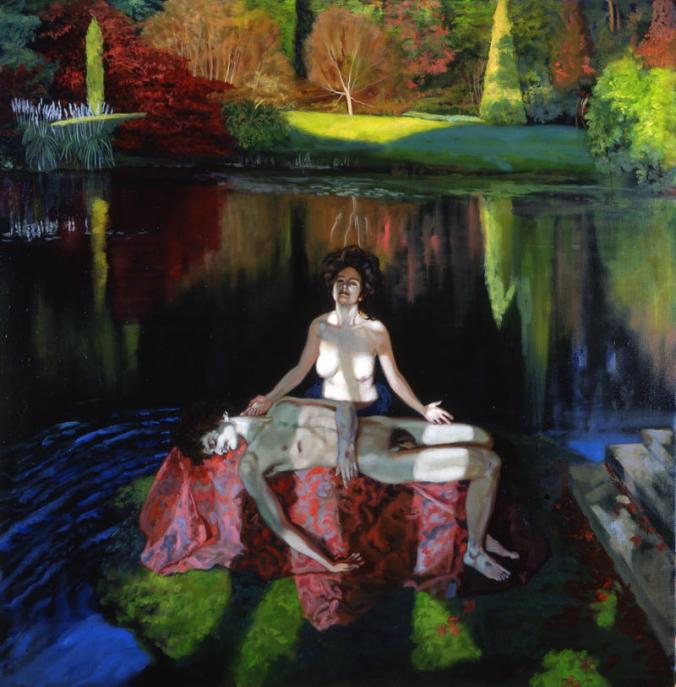
We can say much the same of Andre Durand’s work. While the nude looms as a much larger figure in his oeuvre than in Sorrentino’s, certain formal and tonal similarities remain. Observe the placement of the bodies in Durand’s “Pietà,” 2006. Compare the image with the parental flash-back scenes in Episode 7 or Episode 8.

Two related criteria:
“A Neomodernist approach to religious subject matter is detached and philosophical, never an affirmation of faith. A Neomodernist treatment of political or historical subject matter is detached and philosophical, never propaganda.”
It would be impossible to say that The Young Pope is “an affirmation of faith.” Pius himself seems to struggle with belief in God, even in light of the miracles he (probably) works. Theology, though touched upon occasionally, is secondary to matters of Church discipline and ethics. The few moments of genuine spirituality usually come in short, nearly-corny, quietly profound statements (“Under all that ice, could be God,” “He’s lifting the weight of God”). It avoids the twin evils of the ugly liberal partisanship that has marked so many Vatican stories and the preachy conservative propagandizing that can characterize religious film. Instead, we’re given a strangely human story that confounds both sides—even in spite of the show’s manifest popularity among young, traditional Catholics. Lenny may be a saint, but his holiness is thoroughly ambiguous, weighed down by a number of unpleasant personality traits. This puts any viewer (perhaps especially the Catholic one) in an uncomfortable position.

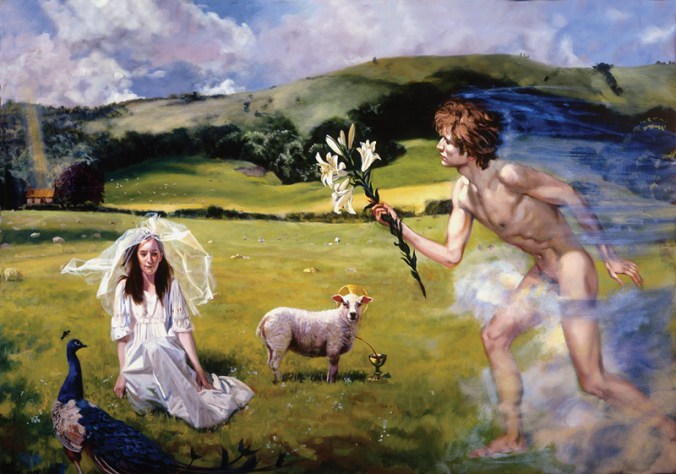
Neomodernist art should make us uncomfortable, too. Like The Young Pope, Durand’s Neomodernism resists easy classification. He infuses a basically realistic idiom with surreal exaggerations, obvious anachronisms, and intrusions of the fantastic. Moreover, Durand’s work is shot through with eroticism (including homoeroticism), even when he’s depicting sacred subjects. Observe his “Annunciation at Didling,” completed in 2001. Anyone who’s watched most of the series might be forgiven for remembering the utterly bizarre introduction of Tonino Pettola on an Italian hillside.

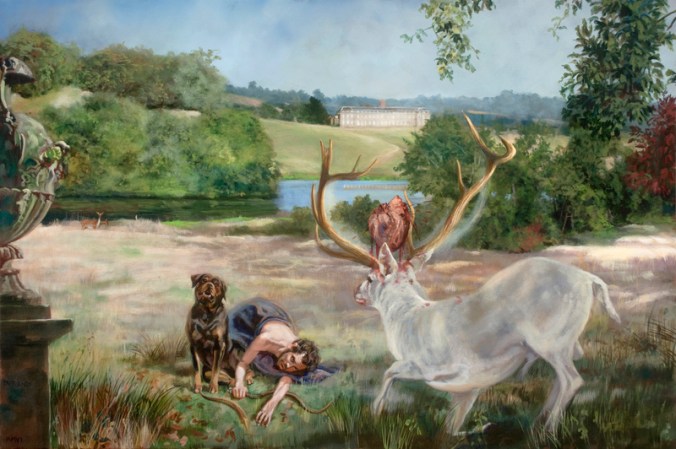
Or his rendition of “St. Eustace.”

These paintings, and others like them, are not set forth by the artist to prove any point. They are not didactic, and they don’t attempt, as the Eastern icons do, to bear the glorious presence of their subjects. Instead, they are a system of symbols arranged with a philosophical detachment.
Moving on:
“A Neomodernist artist must have sound drawing abilities and a command of the other traditional academic disciplines, such as perspective.”
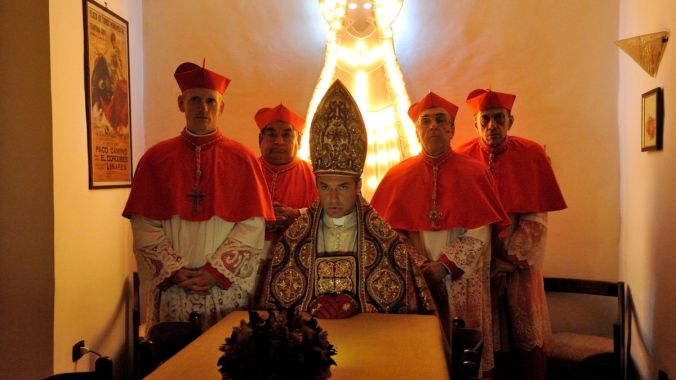
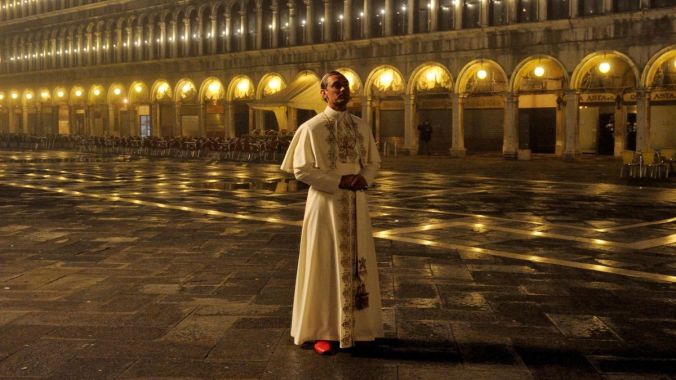
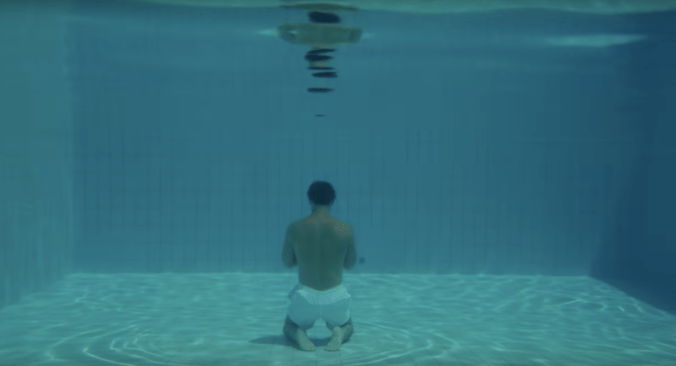
Sorrentino’s technical mastery is evident throughout. Let’s take perspective. I give you:


Note again how often the vanishing point centers on the Pope; that is, on the human body. Other examples could be cited.
The next relevant criterion can also be dealt with in a similarly brief manner. Durand and Alemdar write,
“A Neomodernist picture concentrates the soul in the eye.”
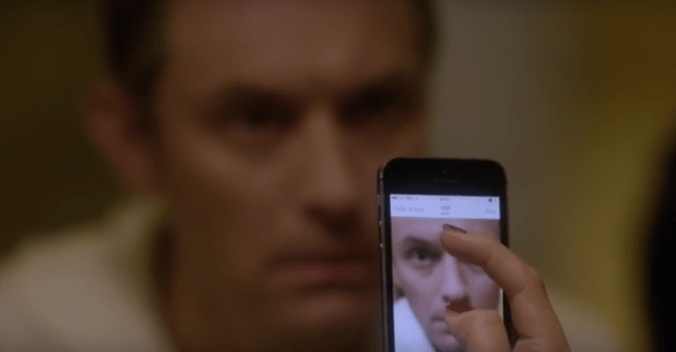
The hotel scene immediately comes to mind. When Lenny asks the prostitute for her proof of the existence of God, she whips out a camera, snaps a photo, and says, “Your eyes.” She’s not making the old creationist argument from the 90’s. She’s talking about the human soul, which becomes manifest to us in the human face—and preeminently through the eyes.

The scene is particularly interesting because it is, to the best of my knowledge, the only moment in the series when Lenny allows himself to be photographed. He is disarmed by the prostitute’s beauty, and unsettled by the truth buried in her simple words. But I digress.
Next up:
“A Neomodernist work of art is emblematic rather than psychological.”
I only include this because it’s the one that definitely doesn’t fit TYP. The whole point of the show is psychological exploration, as I’ve already mentioned.
“A Neomodernist figurative or abstract picture has Albertian depth, space and light, never stressing the flatness of the canvas surface but exploring its limitless depths.”
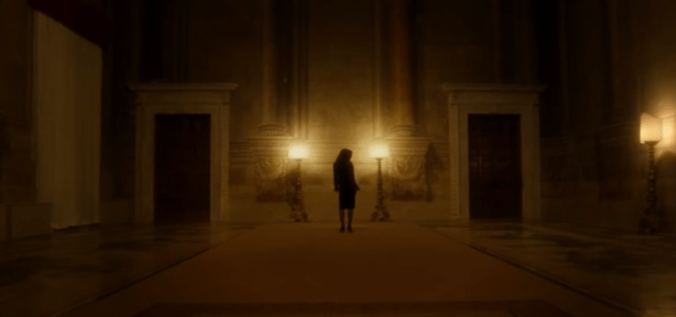
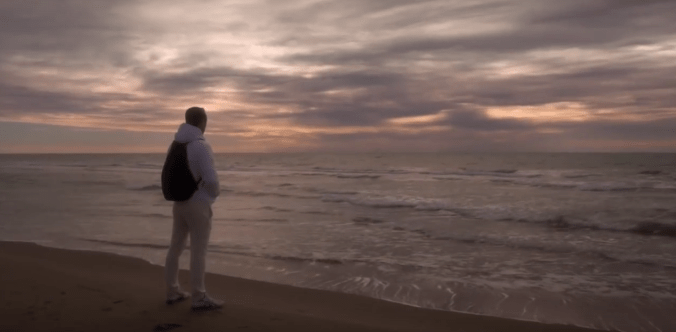
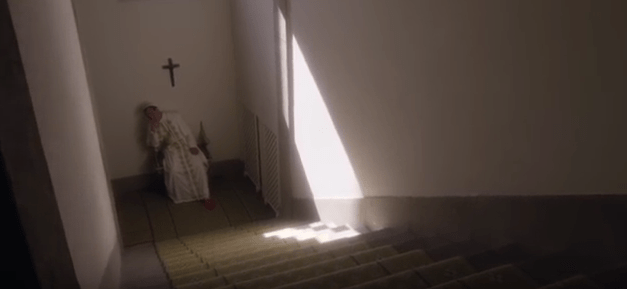
This quality comes through in the ways that The Young Pope makes use of space. Every landscape is treated in such a way that its full aesthetic potential is maximized. This is true of both internal and external backgrounds. For example:


See also the photo at the top of this post.
“A Neomodernist work of art hightens the sense of newness, regardless of when it was made.”
This is harder to pin down, so I won’t dwell on it. I’ll only refer you to the many reviews that note the show’s peculiarity. People can tell there’s never been anything quite like it on television before. The show’s novelty is part of the reason people kept watching.
“Simplicity of form is Neomodernist.”
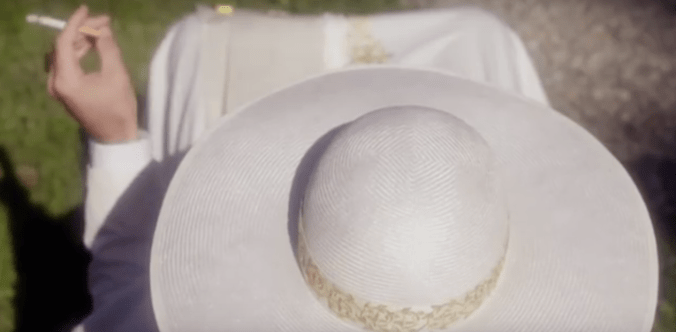
Again, a few stills will suffice.


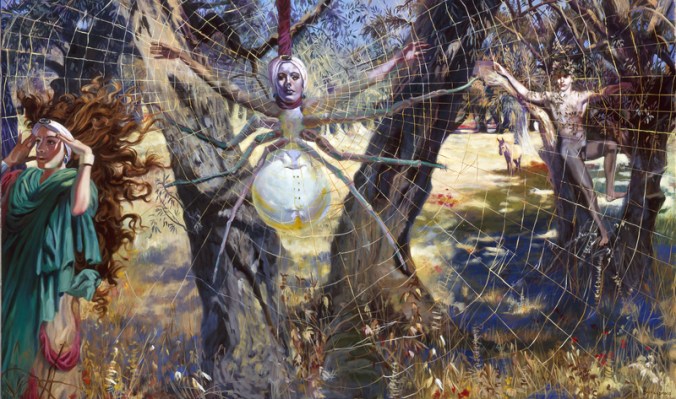
There are, of course, plenty of moments in The Young Pope where simplicity is anything but the order of the day. Yet not all of Durand’s own work seems rooted in a “simplicity of form.”

“Arachne,” 2002.

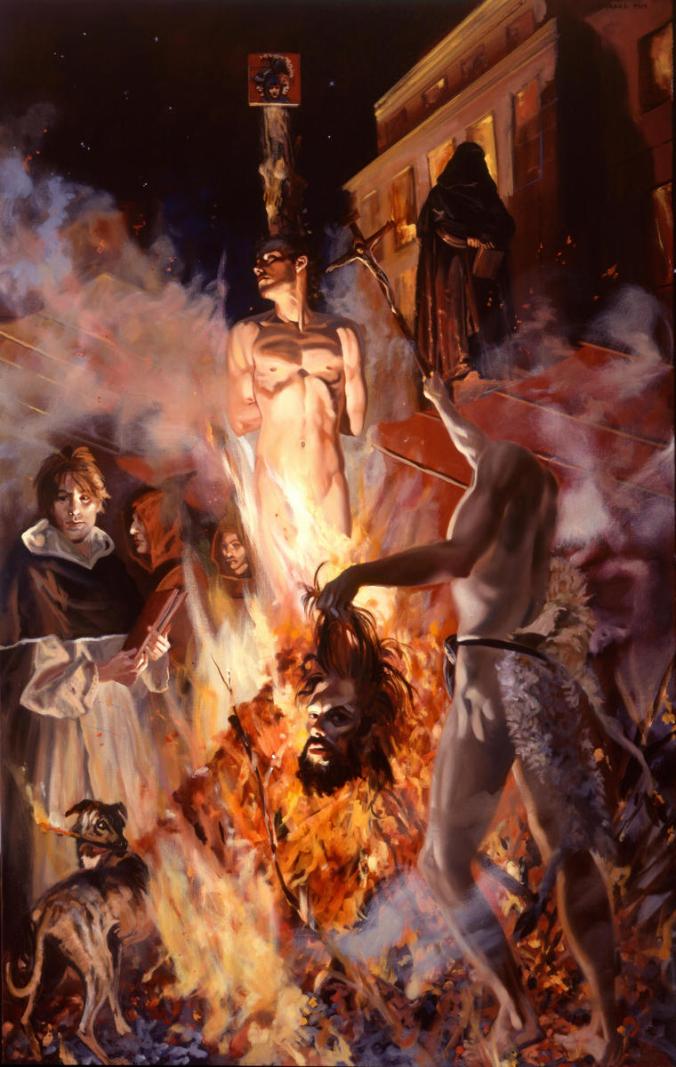
“Giordano Bruno Burning,” 2000.
So perhaps the quality is malleable.
“A Neomodernist work of art has movement and stillness simultaneously.”
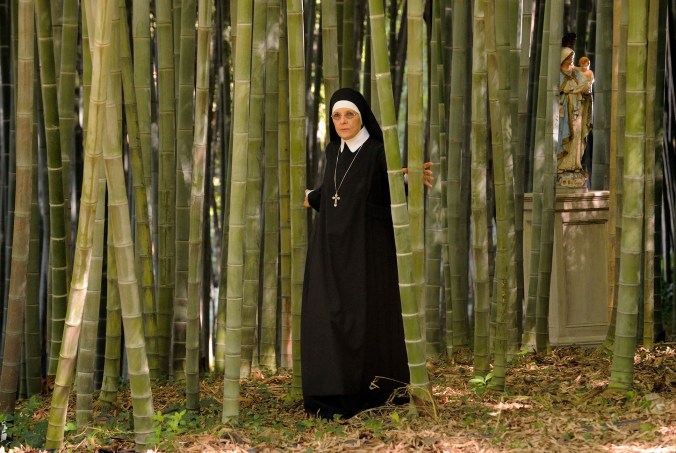
This is another quality that’s difficult to express, but there are scenes that strike a nice balance between the two. One is the frequently alluded-to address to the cardinals. Another is the first homily to the faithful. Yet a third might be the banal advice of the dead popes. Or the (oh-so-Italian) conclusion to Episode 4. Or even the confrontation with Sister Antonia. Probably more.
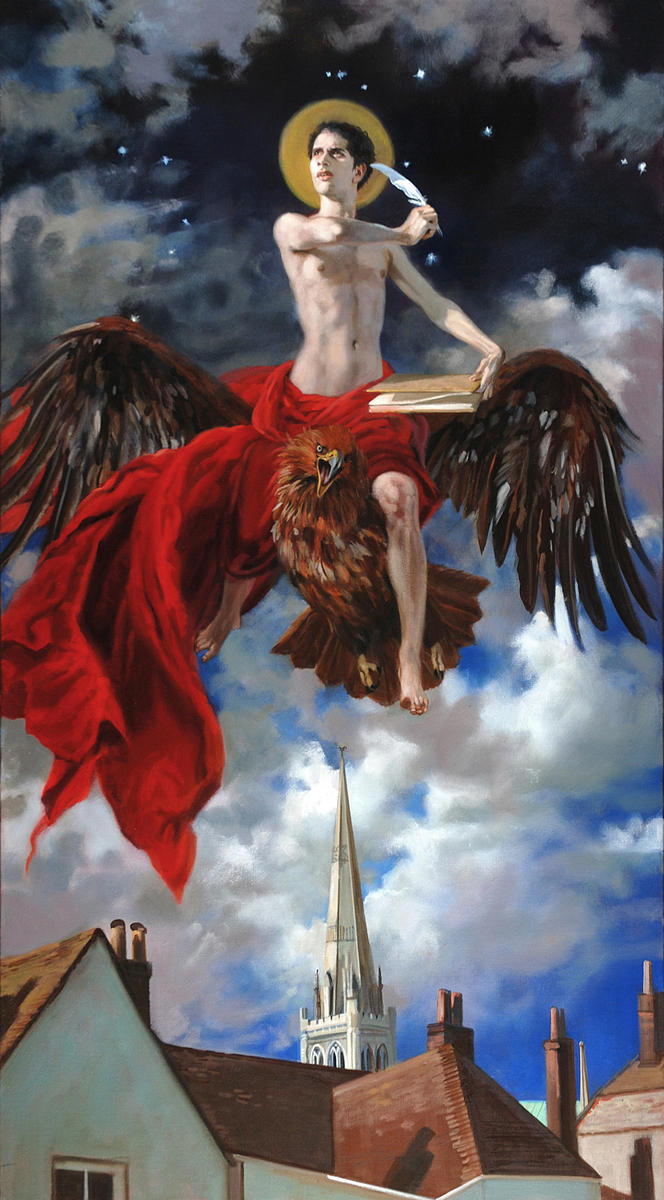
Durand achieves this quality in several pieces, but I’ll only refer to his 2006 paintings “Coronation of the Virgin” and “St. John the Evangelist.”


“Neomodernism precedes and supersedes post-modernism.”
I’m genuinely unsure of whether this applies to The Young Pope. Yes, Pius XIII is intent on reforming the Church back to its more “prohibitive” days, before the rot of postmodernism set in. But he’s nothing if not the Byronic hero that achieved new, wider, and stranger expressions in postmodern literature. So I guess I’m torn.
Regardless, I’d argue that there is sufficient reason to believe that Paolo Sorrentino’s new show is the first example of Neomodernist television. Since The Young Pope has just been renewed for a second season, it remains to be seen whether that aesthetic will persist across the larger arc of the story.
Until then, just enjoy this beautiful work of cinematic art.
My blog has something to tell you
Ordos, reflections, and thoughts on prayer
"My friends at least will accept them as such, whether they like their collective title or not." - George MacDonald
Exploring the heterodox in science, religion, and politics
A blog dedicated to particularities of the Catholic liturgy in Portugal
séminaire de recherche de l'IRSE et du CERPHI
writing from the soul and the mind
billectric
Politics & Culture from a Catholic perspective
Historian, folklorist, indexer, and translator
"...like the sun he heated the world with the warmth of his virtues and filled it with the splendor of his teaching."
herstory. poetry. recipes. rants.
A site dedicated to exploring ruins of years gone by in South Carolina.
A traditional Catholic blog on faith, life, and culture
Publication + Consultancy. Championing creative talent before a mass audience. Passionately global.
The Desire for the Transcendent
and the Catholicate of the West
An Homage to Bolton Morris Church Artist 1920-2004
Everything Catholic Today
Dixitque Deus, "Fiat lux", et facta est lux
Helping young Catholic men seek Heaven.
An exploration of the works of poet Charles Williams (1886-1945)
An Open-Access, Peer-Reviewed Journal
Highly unusual lives.
‘Catholicity, Antiquity, and consent of the Fathers, is the proper evidence of the fidelity or Apostolicity of a professed Tradition’ J.H. Newman, Lectures on the Prophetical Office of the Church, 1837, p. 51