Twelve Ways to Sanctify Your COVID Crisis

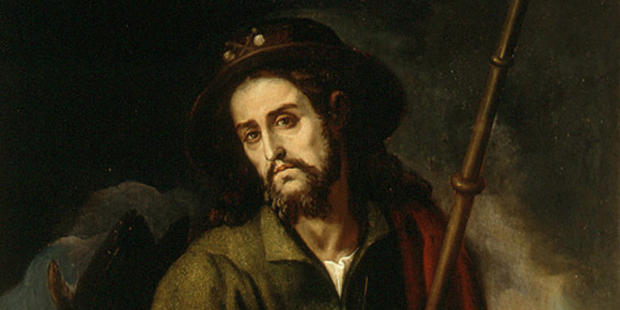
St. Roch, Patron against the plague, pray for us (Source)

The COVID-19 crisis is impacting all of us at some level. Yet we are not alone in the midst of our fear and pain. In His grace, the Good Lord provides so many ways for us to grow in holiness in the midst of this affair. I offer a few ideas here for the general edification of the faithful.

  1. Offer up your suffering for the salvation and sanctification of sinners

    The life of a Christian is the death of Christ. We can therefore unite all our sufferings – physical, emotional, mental – to the Cross. When we do so, we can impetrate tremendous graces for ourselves and others. If you are afflicted by the disease – offer it up. If you are worried for those you know who are ill – offer it up. If you are mourning – offer it up. If you are struggling with troubles related to work (or the lack thereof) – offer it up. If you are bored in quarantine – offer it up. Even minor inconveniences can become springs of grace when we offer them to the Great High Priest on high. A terrible crisis like the one we are now facing is also a marvelous opportunity to grow in holiness, to help others spiritually, and to nurture our abandonment to Divine Providence. Especially as we move through Lent.

  2. Devote time to pious reading, especially of the Holy Scripture

    It is the duty of every Christian to be conversant with the Holy Scriptures, especially the Gospels. The stories and teachings of the Divine Physician may be especially comforting in this difficult time. On the other hand, I can hardly think of circumstance more apt to induce us to read the Prophecies and Apocalyptic books of the Bible. Beyond the Scriptures, one might turn to such edifying texts as In Sinu Jesu, All For Jesus, or Revelations of Divine Love.

  3. Develop a friendship with one or more of the plague saints

    There are many saints whom Catholics have called upon to help them in times of plague and pestilence. I listed a few here. You might find yourself drawn to St. Rosalia, or St. Sebastian, or St. Charles Borromeo. I have set up a candle in my own prayer corner dedicated to St. Roch. He has been a good intercessor for me in times past, and as the patron of bachelors (I am unmarried) and of animals (my family has many pets), I think he is a very appropriate saint to honor while I am stuck at home during this crisis.

  4. Keep an extra day of special fasting, beyond Lenten Fridays

    Wednesday was historically a day of penance in addition to Fridays. You might set aside Wednesday (or Thursday, in honor of the Blessed Sacrament, or Saturday, in honor of Our Lord’s entombment) as a sort of “second Friday.” You don’t have to give up meat; you could add an extra penance you only keep on this second day, such as giving up alcohol, or sweets, or praying an extra set of prayers.

  5. Pray the Seven Penitential Psalms

    The Divine Office is superior option to sanctify the hours, but for those who may lack the resources or time to do so, praying the Seven Penitential Psalms is a great alternative. Psalms 6, 31, 37, 50, 101, 129, and 142 (6, 32, 38, 51, 102, 130, and 143 for those of you using Protestant translations) are a moving, profound way to express sorrow for one’s own sins and for those of the whole world.

  6. Pray the Rosary and the Divine Mercy Chaplet

    These popular devotions are widely-known, so I won’t go on at length here about their peculiar merits. They are to be commended for their brevity, depth, and penitential character. Both are particularly well-suited to a time when we must implore God to spare us in His mercy. The Rosary also has the added benefit of beseeching the aid of the Queen of Heaven, whose title “Health of the Sick” comes to mind as particularly apropos in view of present circumstances.

  7. Give to the poor and to religious houses

    The lack of employment and an inability to leave the house is hitting working class families especially hard in this period, not to mention the homeless, prisoners, and others among society’s most vulnerable. I don’t yet know how to directly help them in a time of social distancing, but would be happy to take and/or post suggestions in the comments to this article. That said, I do know that religious houses will be struggling as well. Please consider giving to these holy souls, many of whom rely on charitable donations to get by month to month. I would direct my readers especially to the good Fathers and Brothers of Silverstream Priory. And don’t just give – pick up one of their excellent handmade decals, books, or prayers to Mother Mectilde de Bar from their online store! I’m sure the monks could use all the help they can get in this time of economic crisis.

  8. Dedicate one hour daily to reparatory Adoration of the Most Blessed Sacrament through mental recollection

    You don’t need to go to a chapel or church to adore the Blessed Sacrament. Set aside an hour in your day as a time of adoration. It need not distract from your work or recreation (though an extra hour of prayer may be a good idea, if it does not become too laborious). We can simply say to God, “I give you the next hour,” then come back to adore Him mentally through the hour as we can recall. And why not take the opportunity to make reparation for offenses against Our Eucharistic Lord, or His neglect in the tabernacles and altars of the world? This is a sweet and easy means to preserve the presence of God. Done regularly, it will help us grow in the sense of God’s proximity and in the trust of His merciful Providence.

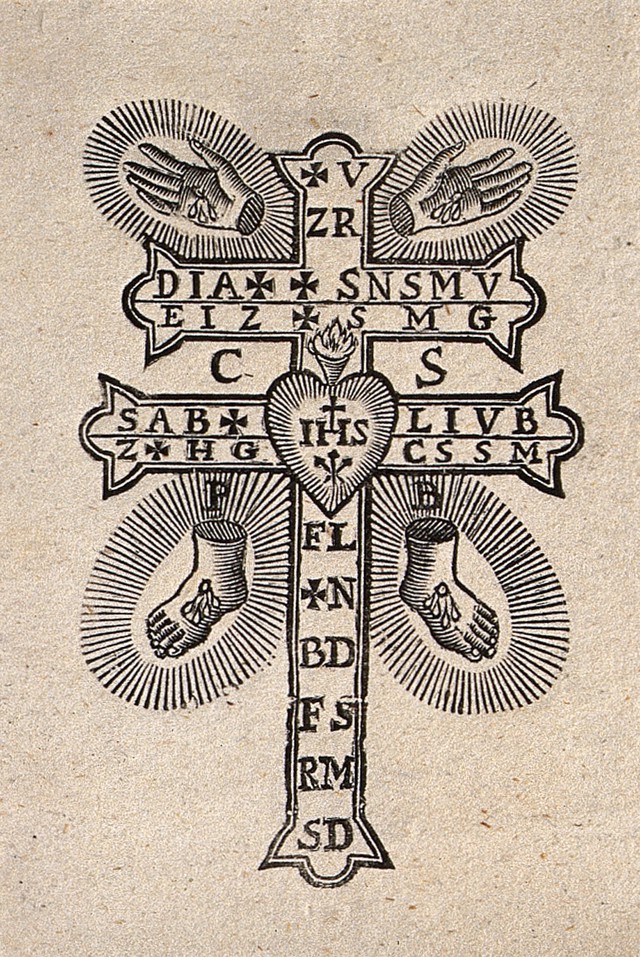
  9. Make a plague cross

    Those who are feeling crafty might wish to draw or paint a version of one of the old plague crosses used in Europe during the late medieval and early modern periods. Examples abound online, as a quick Google search will reveal. This prayerful activity is not only a way to invoke the aid of great saints, but also a great way to connect with the history of Catholic devotion.

  10. Intercede for the dead and dying

    Fr. Faber recommends frequent, dedicated intercession for those in their last agony and for the holy souls of Purgatory. In a time of great mortality, it is an act of charity to pray in a special way for those who are succumbing to death. Indeed, praying for the dead is one of the seven spiritual works of mercy. You might begin by offering prayers for the dead and dying of your parish, then your diocese, then your state, then your nation, then the whole church, then the world. Let your prayer cast a wide net.

  11. Make spiritual communions and acts of reparation each Sunday

    This will, sadly, be necessary until public Masses are restored. But spiritual communions are not to be understood as somehow second-rate communions. When you are away from Mass in obedience to your bishop and through no fault of your own, you can still make a good communion with Our Lord. It may not possess the full sacramental character of a good Eucharistic communion, but it still binds us to the Eucharistic sacrifice. And any grace we receive as a result is indeed infused into us by the merits of Christ’s sacrifice. So let us come to love Acts of Spiritual Communion, an underappreciated and undervalued weapon in the Catholic arsenal in good times as well as in bad. You can find a variety all over the internet. I would add to these an Act of Reparation in time of plague.

  12. Pray for the grace of final perseverance

    St. Benedict teaches us that the Christian must “Keep death daily before one’s eyes” (Rule of St. Benedict, Chapter IV). In a time like this, it is hard not to follow this advice. And yet, we can put off the reality of our mortality by the unconscious assumption that it will never be us. Surely, death will pass us by. Surely, we have blood on our door. But the fact is, we don’t know when our time will come. The more seriously we take the prospect of our own mortality, the more shall we find ourselves drawn to ponder our own judgment. Let this salutary meditation induce us to pray for the graces of final repentance and perseverance and abandonment to the will of God.

And may the grace of Our Lord Jesus Christ, and the Love of God, and the Communion of the Holy Ghost, be with us all evermore. Amen.
Mère Angélique Arnauld on Mortification, Adoration, and Providence

The great reforming Abbess of Port-Royal, Mère Angélique Arnauld (1591-1661), is chiefly remembered today for her memorable role in the early phases of the Jansenist controversy. This is somewhat unfortunate, as the reform at Port-Royal was considerable and widely admired by such eminent figures as SS Francis de Sales and Jeanne-Françoise de Chantal. Leaving aside any historical question of Mère Angélique‘s actions in the Jansenist affair, I put forth my own translation of what is, I believe, a salutary text published long after her death. I would add that a Catholic may believe that the five propositions are heretical while also believing the nuns of Port-Royal were very badly treated by the authorities of church and state. The text is excerpted from Entretiens ou conferences de la reverende mère Marie-Angelique Arnauld (1767), pg. 331-34.

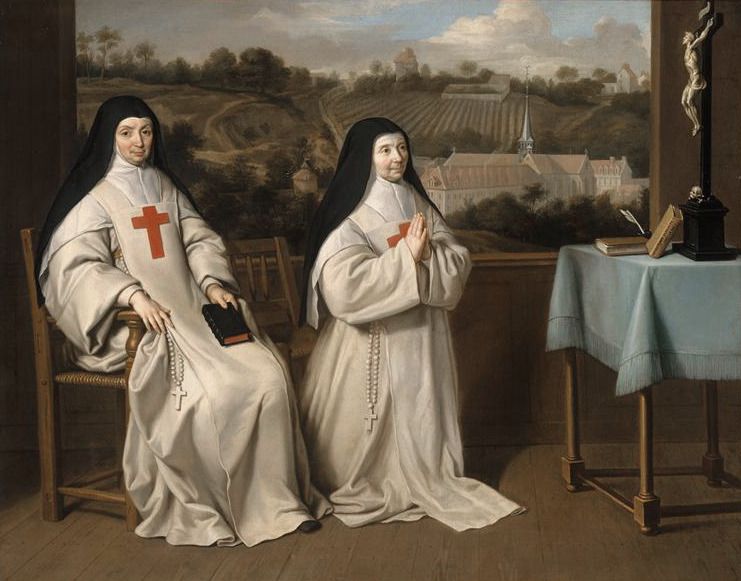
Philippe de Champaigne’s iconic double portrait of (l-r) Angélique and Agnès Arnauld, sisters and Abbesses of Port-Royal. (Source)

To have a part in the inheritance of Jesus Christ, one must suffer with Him: and what suffering did He endure? He suffered pains in his body: He suffered in His goods, because He desired to be born poor, and to endure the inconveniences of poverty: in His honor, for all the world knows in what fashion He was treated. Thus, if we desire to enjoy glory with Him, it is necessary to suffer with Him and like Him. I say to you in truth, my Sisters, that whosoever does not embrace mortification, he piles up affliction on affliction, not only for the life eternal, but also for the present…

The greatest need that we have is to adore God, and the greatest fault that we commit is not to do so. If therefore we beg of God the grace to adore Him, we remedy our greatest need, and in adoring Him, we repair our greatest faults. I wish that we would be so truly in this spirit of adoration, that we would have no other thoughts than to offer all creatures and ourselves in continual sacrifice to God. This would be a holocaust that would be more agreeable than all the prayers that we know how to say. Believe me: this would be the true way to obtain all the graces that are necessary for us. It is properly that which Our Lord said unto St. Catherine of Sienna: Think of me, and I shall think of thee. Consider, I pray you, the Blessed Virgin: she knew God from the moment of her conception, and from that moment she never ceased adoring Him…She followed Him with simplicity in time: she allowed herself to marry with the same simplicity; she received the quality of Mother of God in a profound adoration of His divine grandeur: her whole life was nothing but a perfect dependence on God. At the wedding at Cana, she contents herself with representing to her Son the necessity that she sees; and after having understood His response, she says to the servants: Do whatever he tells you; as if she had desired to say: I do not know what He wants to do, but obey that which He commands of you; if he says nothing unto you, do nothing…

It seems to me that it suffices to know that God is our Father, and after that what anxieties can we have in this life? When one has a Father at once wise, rich, good, and powerful, one fears nothing: but if he comes to die, we pity these poor orphans, fearing lest a tutor dissipate all their goods; but this is what cannot happen with God. So I do not understand how it can happen that one has so much mistrust of the mercy and the providence of God; do we therefore lack faith? Many times I find myself in rather disagreeable affairs, and He has always granted me the grace of handing over the event to His divine providence. One time in particular I found myself in a situation that was entirely difficult, and that was of no small importance; it put me in a great anguish, because I could see no daylight there. A good person wrote to me that when we do not see any remedy for things according to human prudence, God knows that we don’t know. This calmed me very much, so that all my anxieties ceased, and I have always believed so firmly in the providence of God, that nothing could shake me, because I know that He guides everything.

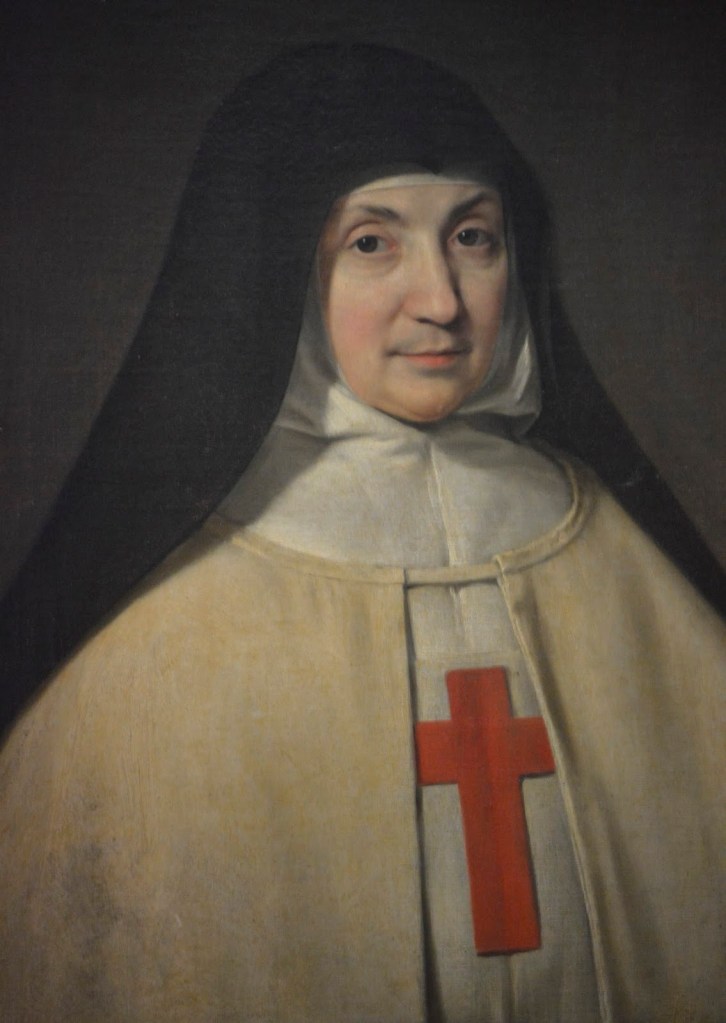
Mère Angélique Arnauld (Source)

A Litany in Time of Plague

A depiction of the Madonna and Child with Patron Saints against the Plague. Colored engraving by T. Van Merlen. (Source)

“Is it my will that a sinner should die, saith the Lord God, and not that he should be converted from his ways, and live?” – Ezekiel 18:23 DRA.

In Nomine Patris et Filii et Spiritus Sancti, Amen.

Stella Caeli extirpavit, quae lactavit Dominum:
mortis pestem quam plantavit primus parens hominum.
Ipsa stella nunc dignetur sidera compescere
quorum bella plebem caedunt dirae mortis ulcere.
O piisima Stella Maris, a peste succurre nobis.
Audi nos, Domina, nam filius tuus nihil negans te honorat.
Salva nos, Jesu, pro quibus virgo mater te orat.

Kyrie Eleison
Christe Eleison
Kyrie Eleison

God the Father Almighty, Maker of Heaven and Earth, have mercy on us.
God the Son, Redeemer of the World, have mercy on us.
God the Holy Ghost, Sanctifier and Vivifier of All Things, have mercy on us.

Holy Mary, Mother God, pray for us.
Our Lady, Queen of Heaven, pray for us.
Our Lady of Sorrows, pray for us.
Our Lady, Help of Christians, pray for us.
Our Lady, Health of the Sick, pray for us.
Our Lady, Salvation of the Roman People, pray for us.
Our Lady, Star of the Sea, pray for us.
Our Lady, Untier of Knots, pray for us.
St. John the Baptist, pray for us.
St. Joseph, pray for us.
St. Mary Magdalene, pray for us.
St. Michael and All Angels, pray for us.
St. Thecla, pray for us.
St. Valerian, pray for us.
St. Corona, pray for us.
SS. Cosmas and Damian, pray for us.
St. Zacharias of Jerusalem, pray for us.
St. Roch, pray for us.
St. Sebastian, pray for us.
St. Christopher, pray for us.
St. Adrian, pray for us.
St. Blaise, pray for us.
St. Macarius of Ghent, pray for us.
St. Patrick, pray for us.
St. Pantaleon, pray for us.
St. Dymphna, pray for us.
St. Rosalia, pray for us.
St. Anthony of Egypt, pray for us.
St. Benedict, pray for us.
St. Gregory, pray for us.
St. Bernardine of Siena, pray for us.
St. Anthony of Padua, pray for us.
St. Philip Neri, pray for us.
St. John Nepomuk, pray for us.
St. Charles Borromeo, pray for us.
St. Camillus of Lellis, pray for us.
St. Aloysius Gonzaga, pray for us.
St. Damien of Molokai, pray for us.
St. Thérèse of Lisieux, pray for us.

O Sacred Heart, Furnace of Charity, have mercy on us.
Lamb of God, Who takest away the sins of the world, spare us, O Lord.
Lamb of God, Who takest away the sins of the world, graciously hear us, O Lord.
Lamb of God, Who takest away the sins of the world, have mercy on us.

O Crux, ave spes unica
hoc Passionis tempore!
Piis adauge gratiam
reisque dele crimina.

We beseech Thee O Lord, in Thy compassion, to turn away from Thy People Thy wrath, which indeed we deserve for our sins, but which in our human frailty we cannot endure; therefore embrace us with that tenderness which Thou art wont to bestow on the unworthy; through Jesus Christ our Lord.

Gloria Patri, et Filio, et Spiritui Sancto,
Sicut erat in principio, et nunc, et semper, et in saecula saeculorum.
Amen.

A plague cross. (Source)

Bossuet on the Sufficiency of God

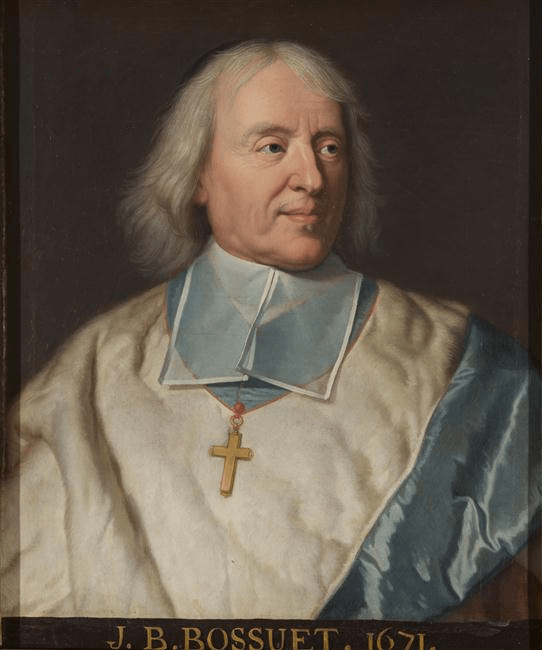
There are many candidates for the title of “Greatest Preacher in Christian History,” but my money’s on Jacques-Bénigne Bossuet (1627-1704), “The Eagle of Meaux,” Bishop and Tutor to the Grand Dauphin of France. Famed in his own day for the clarity of his doctrine, the incisive vigor of his spirituality, and the dazzling versatility of his oratorical skill, Bossuet stands as one of the late flowers of the Grand Siècle. Trumpet of the Gallicans and Hammer of Quietism, Bossuet nevertheless is not merely to be regarded as a relic of dusty seventeenth-century controversies. He still has much to teach us. In this excellent passage, excerpted from a recent translation and edited collection of his Meditations for Lent by Christopher O. Blum (Sophia Institute Press, 2013), we can see the essentially ascetic cast of Bossuet’s mind. This was the same man who, in a felicitious turn of phrase, elsewhere referred to the Rule of St. Benedict as “a little abridgment of the Gospel.” The relevant passage can be found on pages 10-12 of the source text.

Portrait of Bossuet by Charles Sevin de la Penaye, after Hyacinthe Rigaud, c. early 18th century (Source)

“Lord, show us the Father, and we shall be satisfied” (John 14:8). God alone suffices, and all we need to possess him is to see him, because in seeing him, we see all his goodness, as he himself explained to Moses: “I will make all my goodness pass before you” (Ex. 33:19). We see all that attracts our love, and we love him beyond all limits. Let us join St. Philip in saying with all our heart, “Lord, show us the Father, and we shall be satisfied.” He alone can fill all our emptiness, satisfy all our needs, content us, and make us happy.

Let us then empty our heart of all other things, for if the Father alone suffices, then we have no need for sensible goods, less for exterior wealth, and still less for the honor of men’s good opinion. We do not even need this mortal life; how then can we need those things necessary to preserve it? We need only God. He alone suffices. In possessing him we are content.

How courageous are these words of St. Philip! To say them truthfully, we must also be able to say with the apostles: “Lord, we have left everything and followed you” (cf. Matt. 19:27). At the least we must leave everything by way of affection, desire, and resolution, that is, by an invincible resolution to attach ourselves to nothing, to seek no support except in God alone. Happy are they who carry this desire to its limit, who make the final, lasting, and perfect renunciation! But let them not leave anything for themselves. Let them not say: “This little thing to which I am still attached, it is a mere nothing.” We know the nature of the human heart. Whenever a little thing is left to it, there the heart will place all its desires. Strip it all away; break from it; let it go. To own things as though one had nothing, to be married as though one were not, to make use of this world as though one were not using it, but as though it did not exist, and as though we were not a part of it: this is the true good for which we should strive. We are not Christians if we cannot say sincerely with St. Philip, “Show us the Father, and we shall be satisfied.”

It is from the very depths of faith that these words are spoken, and it is in a certain sense from the very foundation of nature itself. For in the depths of our nature we sense our need to posses God, that he alone is capable of fulfilling our nature, and that we are anxious and tormented when separated from him…Man, abandoned to himself, does not know what to do, nor what to become. His pleasures carry him off, and these very same pleasures destroy him. With each sin of the senses he gives himself a killing blow, and he not only kills his soul by his intemperance, in his blindness and ignorance he kills the very body that he would flatter. Since the Fall, man is born to be unhappy…We do not know how to desire or ask for what we need.

St. Philip’s words teach us everything. He limits himself to what Jesus taught us is the one thing needful. Lord, you are the way.

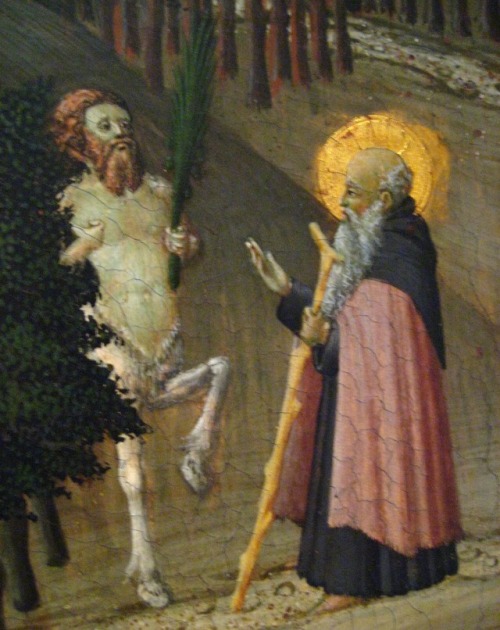
The Saint, the Centaur, and the Satyr

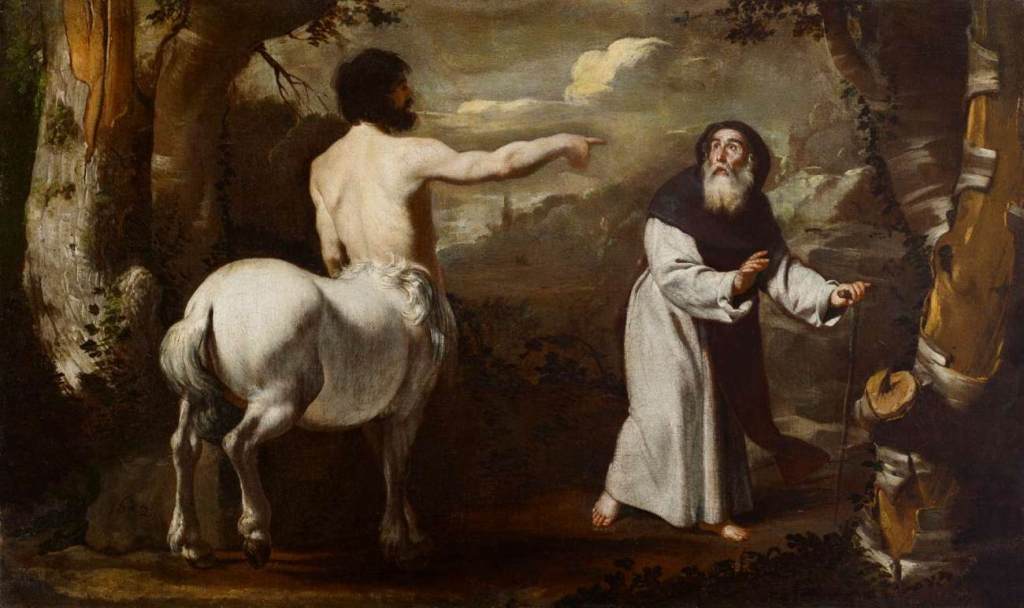
On this feast of St. Anthony the Abbot, I am reminded of a peculiar episode in the life of the saint that St. Jerome records. In full, it reads:

Francesco Guarino, St. Anthony Abbot and Centaur, 1642 (Source)

But to return to the point at which I digressed. The blessed Paul had already lived on earth the life of heaven for a hundred and thirteen years, and Antony at the age of ninety was dwelling in another place of solitude (as he himself was wont to declare), when the thought occurred to the latter, that no monk more perfect than himself had settled in the desert. However, in the stillness of the night it was revealed to him that there was farther in the desert a much better man than he, and that he ought to go and visit him. So then at break of day the venerable old man, supporting and guiding his weak limbs with a staff, started to go: but what direction to choose he knew not. Scorching noontide came, with a broiling sun overhead, but still he did not allow himself to be turned from the journey he had begun. Said he, I believe in my God: some time or other He will show me the fellow-servant whom He promised me. He said no more. All at once he beholds a creature of mingled shape, half horse half man, called by the poets Hippocentaur. At the sight of this he arms himself by making on his forehead the sign of salvation, and then exclaims, Holloa! Where in these parts is a servant of God living? The monster after gnashing out some kind of outlandish utterance, in words broken rather than spoken through his bristling lips, at length finds a friendly mode of communication, and extending his right hand points out the way desired. Then with swift flight he crosses the spreading plain and vanishes from the sight of his wondering companion. But whether the devil took this shape to terrify him, or whether it be that the desert which is known to abound in monstrous animals engenders that kind of creature also, we cannot decide.

Antony was amazed, and thinking over what he had seen went on his way. Before long in a small rocky valley shut in on all sides he sees a mannikin with hooked snout, horned forehead, and extremities like goats’ feet. When he saw this, Antony like a good soldier seized the shield of faith and the helmet of hope: the creature none the less began to offer to him the fruit of the palm-trees to support him on his journey and as it were pledges of peace. Antony perceiving this stopped and asked who he was. The answer he received from him was this: I am a mortal being and one of those inhabitants of the desert whom the Gentiles deluded by various forms of error worship under the names of Fauns, Satyrs, and Incubi. I am sent to represent my tribe. We pray you in our behalf to entreat the favour of your Lord and ours, who, we have learned, came once to save the world, and ‘whose sound has gone forth into all the earth.’ As he uttered such words as these, the aged traveller’s cheeks streamed with tears, the marks of his deep feeling, which he shed in the fullness of his joy. He rejoiced over the Glory of Christ and the destruction of Satan, and marvelling all the while that he could understand the Satyr’s language, and striking the ground with his staff, he said, Woe to you, Alexandria, who instead of God worships monsters! Woe to you, harlot city, into which have flowed together the demons of the whole world! What will you say now? Beasts speak of Christ, and you instead of God worship monsters. He had not finished speaking when, as if on wings, the wild creature fled away. Let no one scruple to believe this incident; its truth is supported by what took place when Constantine was on the throne, a matter of which the whole world was witness. For a man of that kind was brought alive to Alexandria and shown as a wonderful sight to the people. Afterwards his lifeless body, to prevent its decay through the summer heat, was preserved in salt and brought to Antioch that the Emperor might see it.

St. Jerome, The Life of Paul the First Hermit, 7-8.

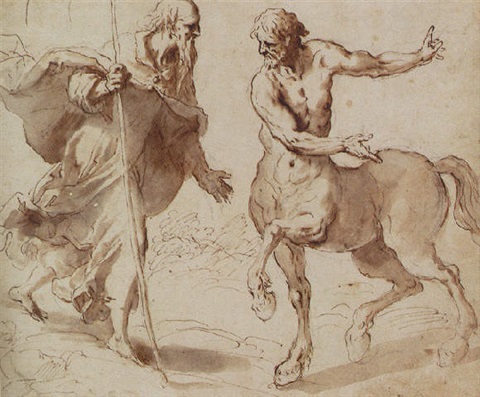
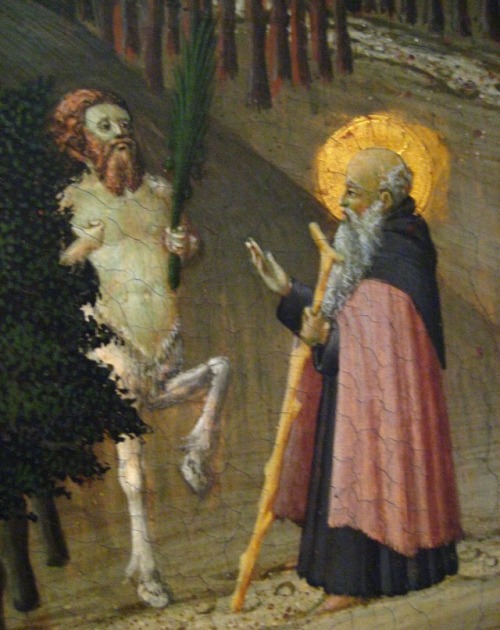
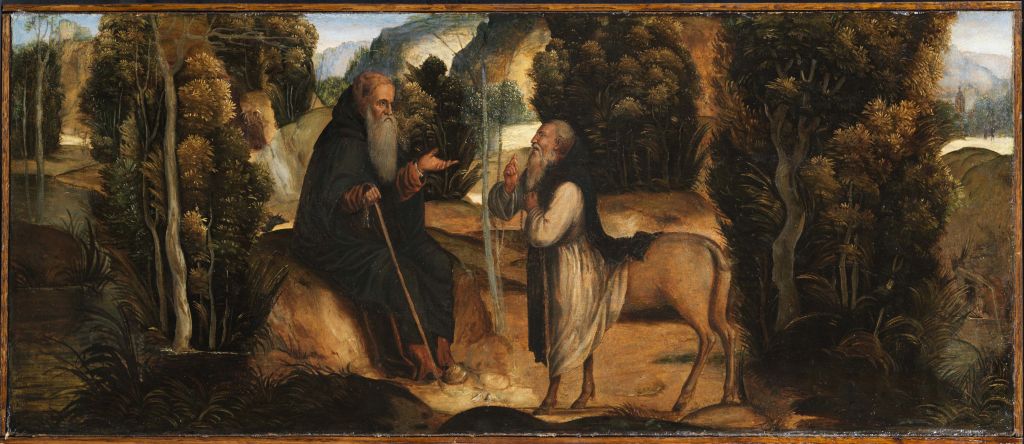
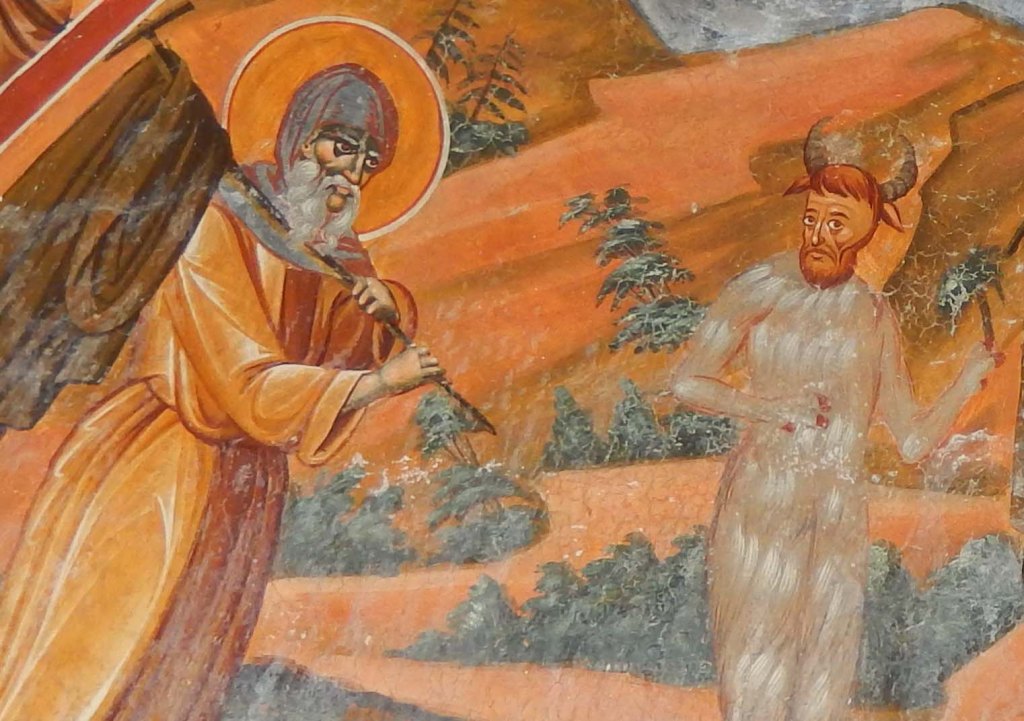
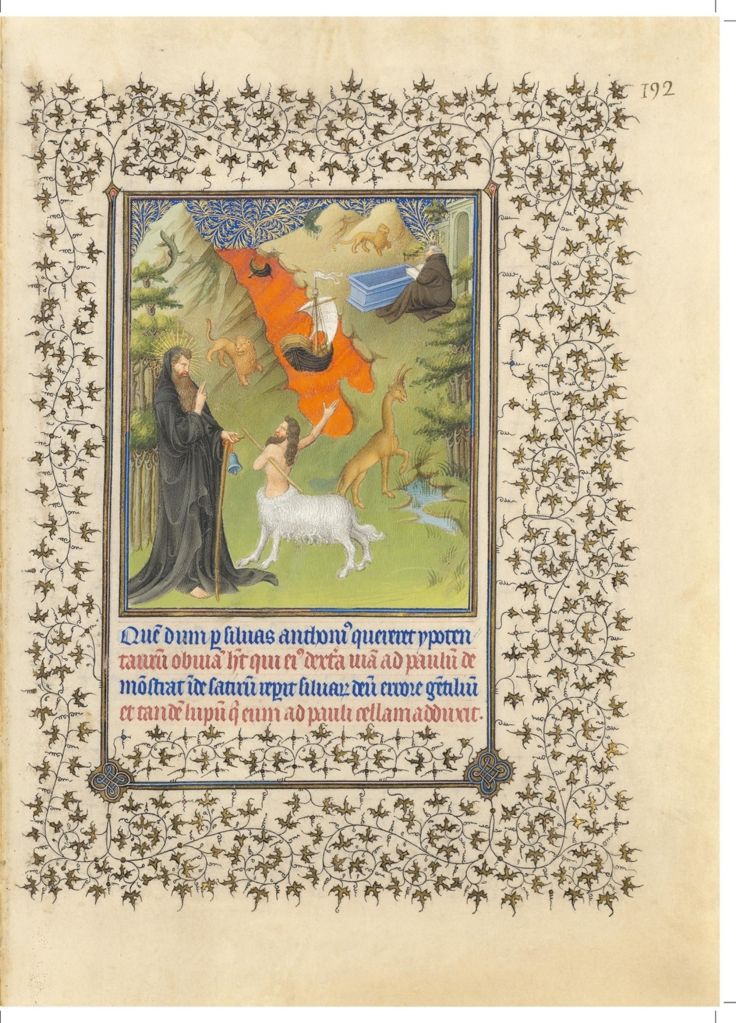
Let it never be said that the lives of the saints are boring. Artists, like Demonologists, have throughout the centuries returned to these scenes again and again. The Centaur shows up a lot, probably because it’s a subject that permits the artist to show off his own talents at depicting both human and equine anatomy. Yet we can also detect here a certain visual sensibility that can only be described as picturesque delight and fascination.

Jacopo Palma il Giovane, Saint Anthony Abbot asking the Centaur the way (Source)
Osservanza Master, The Meeting of Saint Anthony and Saint Paul, 1430-35, detail (Source)
Benedetto di Montagna, St. Anthony and the Centaur. The depiction of the Centaur as a monk is particularly unusual. (Source)
A less common depiction, St. Anthony and the Satyr (Source)
A medieval depiction of St. Anthony with both the Centaur and the Satyr, by Robert Testard. (Source)
John Mandeville’s take on the scene, with color highlighting the hybridity of the Centaur’s nature. (Source)
St. Anthony meets the Centaur in an illumination by Jean de Limbourg (Source)

Unsolicited Thoughts on Recent Horrors

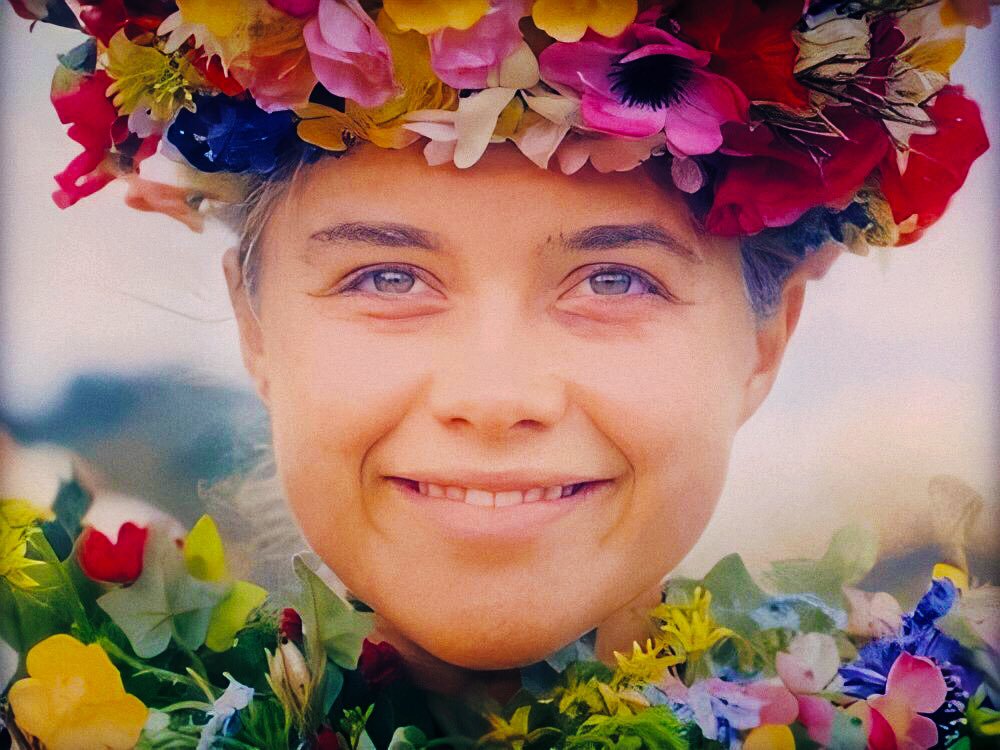
“Don’t cry because it’s over; smile because it happened!” Florence Pugh as Dani in Midsommar. (Source)

I finally saw Midsommar.

Let me begin with the good. I liked it a lot more than Ari Aster’s first offering, Hereditary. The bright Scandinavian aesthetics and Pawel Pogorzelski‘s enchanting cinematography lent the film an undeniable visual appeal. The acting was also to be commended. Florence Pugh’s performance is a masterclass in theatrical distress.

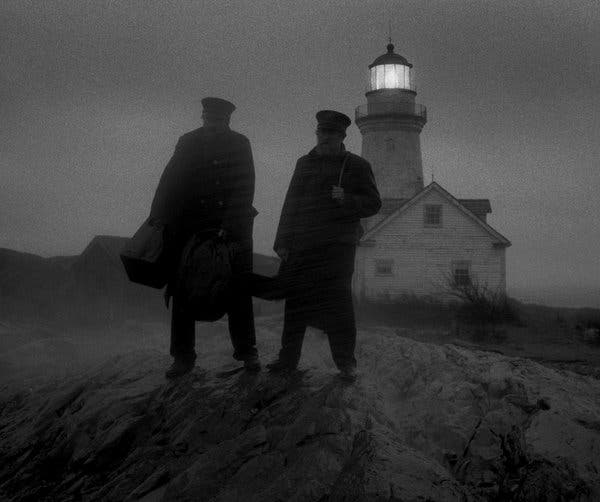
That being said, the film was on the whole, yet another disappointment from Ari Aster. I cannot say the same about Robert Eggers’s The Lighthouse, which I saw with friends last week.

I think I can fairly compare these two horror directors working under the aegis of A24. Not to put too fine a point on it, but Eggers is better in every way that counts. Both have now produced folk horrors centered on the trauma of young women in claustrophobic wilderness. The Witch is more inventive, precisely because it is more traditional, than Midsommar. Or rather, it did what few films are willing to do in its approach to the past; take it on its own terms. Its originality lies in large part due to its embrace of the Puritan myths without judgment, and exposing the horrors we thought we left behind in the seventeenth century. Admittedly, Midsommar doesn’t have the burden (or the gift?) of history to work with. But one can’t help but feel that what we find here is just The Wicker Man gutted of its moral core and set slightly farther north. In fact, the ending is probably a double homage to both Wicker Man films.

Nicolas Cage in a bear skin suit. The Wicker Man (2006) – (Source)

While Midsommar is an improvement over the rather humdrum (if at times shocking and, admittedly, very well researched) Hereditary, it doesn’t push the boundaries of cinema in the way that The Lighthouse does. In The Lighthouse, we discover a radically different kind of film. Its irregular aspect ratio, its black-and-white cinematography, its baroquely salty dialect – these bewildering distinctions from the run-of-the-mill horror flick work together to construct a vision of a world totally unlike our own. And yet, The Lighthouse manages to provide a series of sights, sounds, and even smells so visceral that one feels entirely immersed in this other world.

Midsommar fails to do that. For all its blood-and-guts moments, for all its eros and trauma, one comes away from the experience feeling strangely detached. I couldn’t manage to care too much about what happens to these characters, some of whom are intensely annoying. Not so in The Lighthouse. One cares very, very deeply – or more correctly, you feel the confusion and desperation of the situation in your gut. You are on that island. It is happening to you.

Perhaps the greatest disappointment of Midsommar was its rather predictable plot twists (if I can even call them that). Anyone familiar with the genre will be able to see exactly what is coming, even if they can’t imagine all the precise details. Not so in The Lighthouse. While one can establish a direction of travel – particularly in the film’s first half – after a certain point, you become as disoriented as the film’s unhappy protagonists. Like its great antecedent, Moby Dick, The Lighthouse is full of strange allusions, haunting images, and intensely visceral shocks. It’s a tight, dark, and disturbing maze.

Beyond that, I have a complaint that is, perhaps, too subjective to warrant much value criticism. Midsommar failed to scare me. Not many horrors do, I have to confess. I liked Possum, even though it was more unnerving than actually scary. Two of my favorite horror films, The Shining and the original Wicker Man, don’t actually frighten me. Nor does The Witch. In their cases, I can overlook the lack of fear because of the strength of these movies has as a film. Midsommar wasn’t strong enough for me to forgive the lack of fear.

The Lighthouse however, climaxed with one of the most genuinely frightening scenes I have seen in any film for a very long time. Without saying too much, I will refer my readers to my essay on eldritch horror in the New England literary tradition. Eggers knows that tradition very, very well. The Lighthouse, like The Witch before it, is a superlative contribution to New England’s peculiar darkness. His final, terrifying scene in The Lighthouse is an echo of Pip’s experience in Chapter XCIII of Moby Dick. Eggers, and of many a chapter in Lovecraft.

Powerhouse performances, top-notch writing, historical faithfulness, invocation of the New England horror tradition, black humor, innovative cinematography, and genuine scares make The Lighthouse the best and most beautiful horror film of the year. (Source)

I’m a sucker for folk horror, as my readers may well recall. Midsommar does deserve a place in the folk horror canon. But The Witch and The Lighthouse are higher on that grisly totem pole. They are also better works of art.

Elsewhere: Keanu Heydari on the Coredemptrix

August is the Month of the Immaculate Heart of Mary. While I was too busy moving and adapting to life in Pennsylvania to write anything for Assumption Day, my good friend Keanu Heydari wrote a beautiful meditation on the meaning of the Assumption as well as on Our Lady’s co-redemptive role more generally. I offer it to my readers for their edification and delight as well as for the honor of Our Lady’s Sorrow and Immaculate Heart. Here’s a particularly puissant excerpt:

In this remarkable passage, as the Venerable Fulton Sheen has argued, John’s Jesus invokes the archetypical womanhood of Mary as the New Eve. Mary is the woman. Jesus affirms her role in undoing our devastated humanity in the Garden by affirming her role as the New Eve. Moreover, the Lord makes a startling claim about the dignity of Mary’s personhood and her role in the narrative arc of cosmic salvation as Coredemptrix and Mediatrix. What is true about Christ is also just as true of the Virgin. Only Mary could confess that she, in the purest way, was truly of the flesh of the Son of Man. 

Keanu Heydari

Keanu hits upon a fundamental truth of Catholicism, the Marian-Ecclesial analogy with Christ. What is predicated of Christ can be predicated of both the Church, His Bride, and, in a special way, His Mother. This is not to suggest that anyone other than Jesus Christ as a discreet person is the Logos, but to note that all that He is by nature, we can become by Grace – and Mary first of all.

Reflections on Leaving Oxford

Sweet dreams are made of this… (Source)

I have, by the merciful grace of God, passed my M.Phil in Theology at Oxford. I could not have done so without the abundant help of my supervisors and tutors, principally Dr. Sarah Apetrei, as well as the many friends and family who supported me throughout the course of my studies there. Latterly this endeavor has caused me to neglect my blogging, for which I must beg pardon of my readers. Editing, submissions, an examination, travelling, and the arduous business of moving back across the Atlantic has distracted me. So has the bittersweet task of saying goodbye to so many friends, men and women I will miss in the years to come.

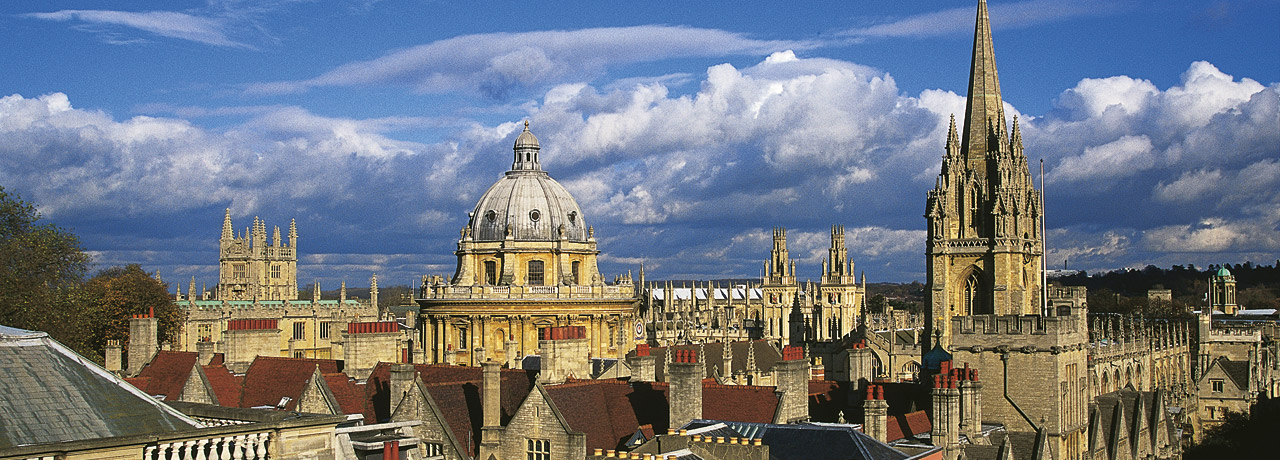
Oxford is most beautiful in the Spring. Photo taken by author.

I can understand why our soon-to-be-Saint Newman had so much trouble getting Oxford out of his blood. The place is a mirage in silver and stone. To have dwelt in such a dream-city for so long a time, to have been part of its inner life, to have shaped it according to one’s own character and to be shaped by it in turn, to watch the sun and the rain succeed in their seasons over streets imbued everywhere with a boundless sense of eternity…yes, I can see why Newman was always looking for a path back to this northern Eden. A Papal angel kept him from the gate. More prosaic barriers have turned me aside, namely, the prospects of an academic career in America.

But, in some way, the greater grief is leaving the United Kingdom. Shakespeare called Albion a swan’s nest in a stream. Having traveled from London to Birmingham, from Cardiff to York, from Tenby to Bournemouth, from Cambridge to Edinburgh, from Bath to Stratford, from Walsingham to Wakefield, in short, across the whole face of this country, I can start to see what he means. Britain possesses a peculiar beauty in grey-green and gold, something delicate and immortal that only reveals itself to an attentive foreigner. I shall miss it.

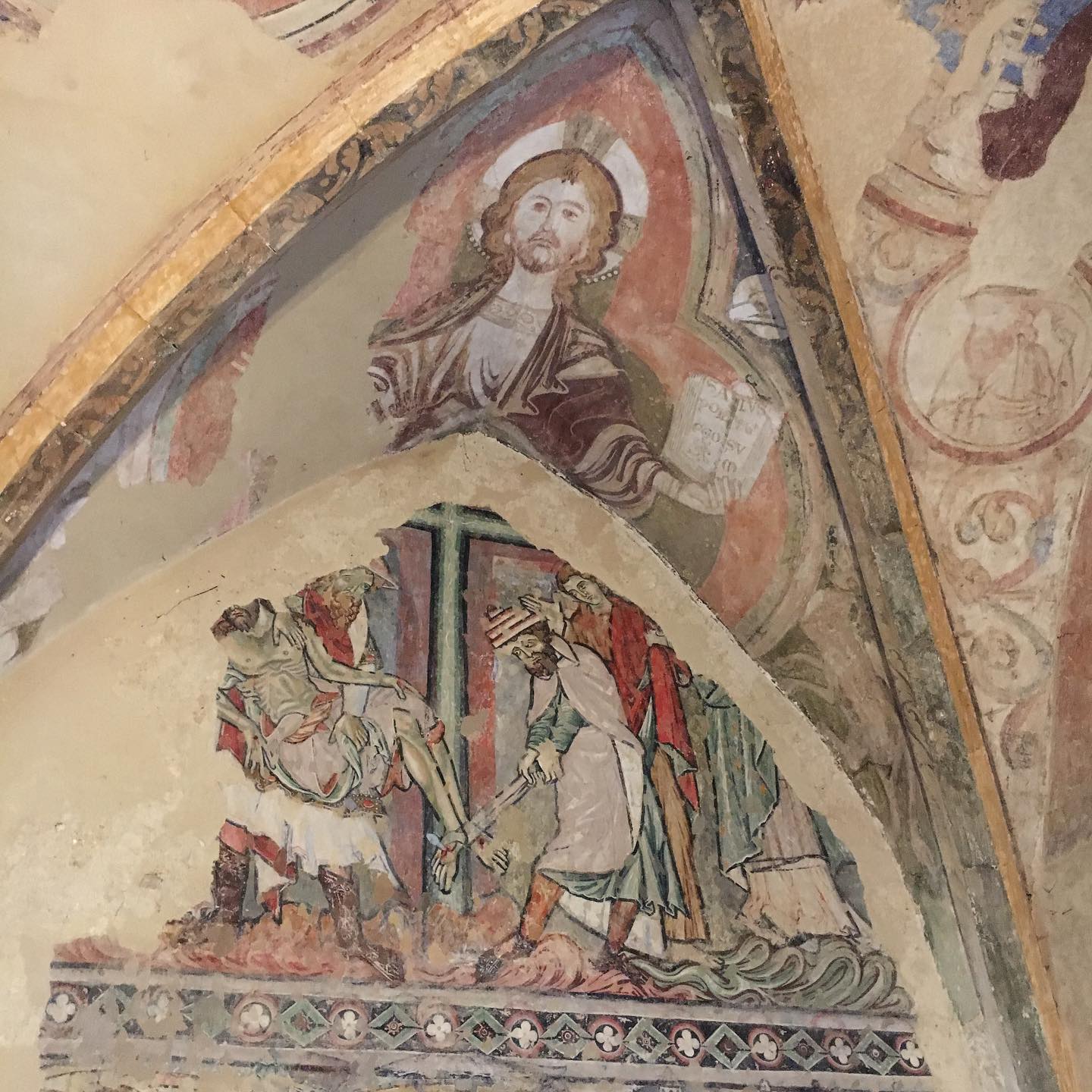
The St. Sepulchre Chapel, Winchester Cathedral. Photo taken by author.

More than that, I’ll miss the many friends I made in my two years abroad. Not just English either, though there were plenty of those – but also Canadians, Russians, Australians, Irish (both orange and green), French, Armenians, Italians, Romanians, Scots, Sri Lankans, Welsh, Poles, Chinese, and even some of my fellow countrymen. The story of my time in Oxford would not be complete without them. I will feel the absence of each, some more keenly than others.

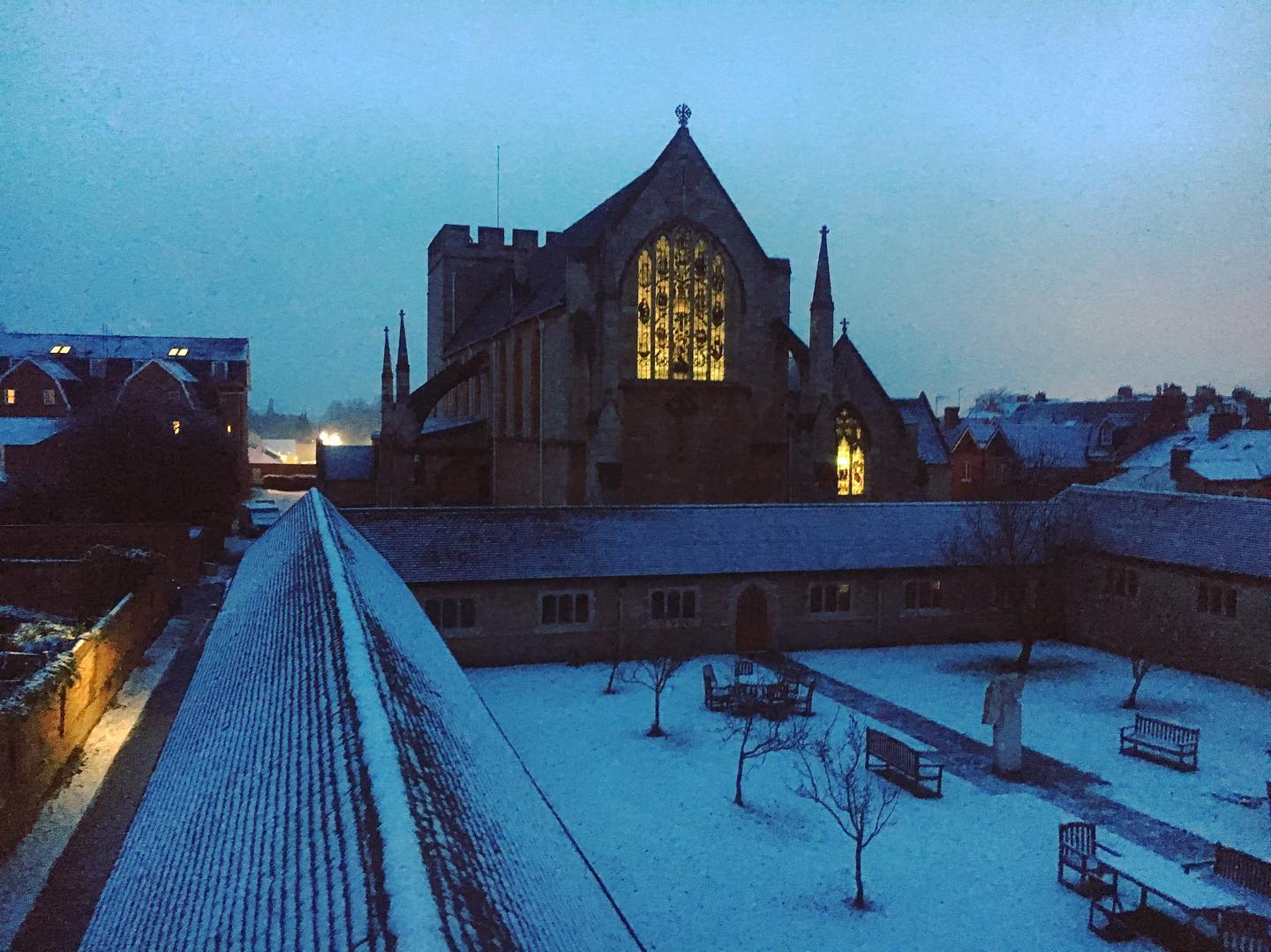
St. Stephen’s House in the snow, January 2019. Photo taken by author.

I suppose this is as good a time as ever to take stock of some of my travels through life at large. I am 24 years old. I have visited 12 countries beyond the borders of the United States:

The United Kingdom
France
Ireland
Belgium
The Netherlands
Italy
Austria
The Czech Republic
Hungary
Romania
Bermuda
Vatican City

And 14 if one includes layovers and train connections in Germany and Switzerland. I have stood at the banks of the following rivers:

The Thames in London
The Thames in Oxford (Isis)
The Thame in Dorchester (before it becomes the Thames)
The Cherwell
The Liffey
The Seine
The Amstel
The Arno
The Rhône
The Saône
The Tiber
The Danube
The Lys
The Usk
The Avon in Bath
The Loire
The Cam

I have spent quite a lot of time in churches. A few favorites in England include the Oxford Oratory, the York Oratory, the Birmingham Oratory, Magdalen College Chapel, Worcester College Chapel, Oriel College Chapel, Merton College Chapel, St. Stephen’s House Chapel, St. Etheldreda’s, Holborn, and the Anglican Shrine of Our Lady of Walsingham. My single favorite church in England remains the Brompton Oratory, as it has been since that first June day I stepped into its vast and holy darkness, four years ago.

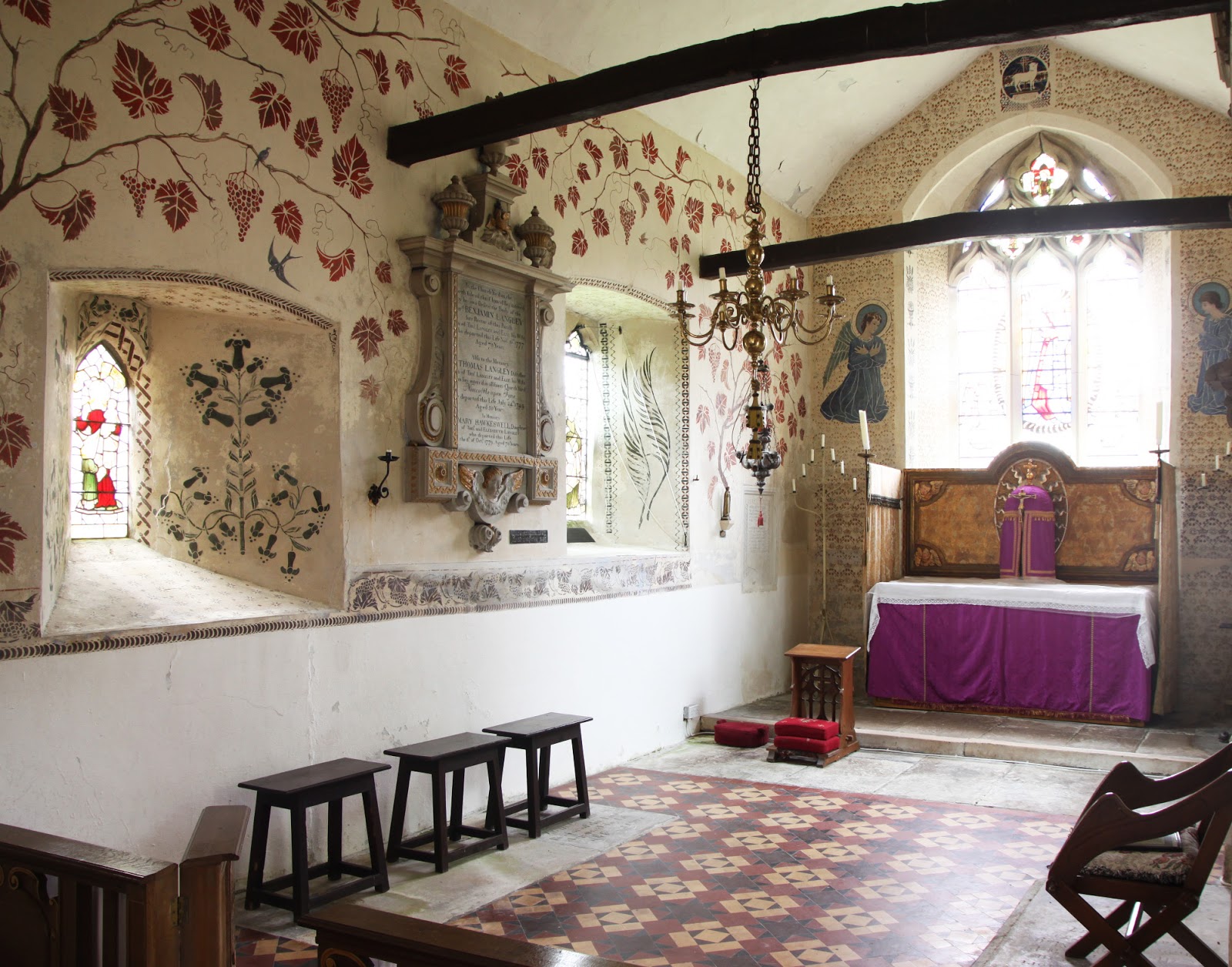
A favorite country church – St. Swithun’s, Compton Beauchamp. Full of delightfully ironic Georgian monuments and a complete refurbishment by Martin Travers in the 1930s. The setting is beautiful, too. (Source)

I have so far managed to get to the following Cathedrals (and Abbeys) in England, of which the first two are my favourites:

Winchester Cathedral
Gloucester Cathedral
Norwich Cathedral
Oxford Cathedral
St. Paul’s Cathedral
York Minster
Wakefield Cathedral
Salisbury Cathedral
St. Giles’s, Edinburgh
Westminster Cathedral
Westminster Abbey
Bath Abbey
Malmesbury Abbey

Plus some lovely country churches – East Coker, Burford, Stow-on-the-Wold, Binsey, and my very favorite, St. Swithun’s, Compton Beauchamp.

In Ireland, Silverstream Priory remains the most spiritually nourishing place I have ever been; its beauty and its holiness are always palpable.

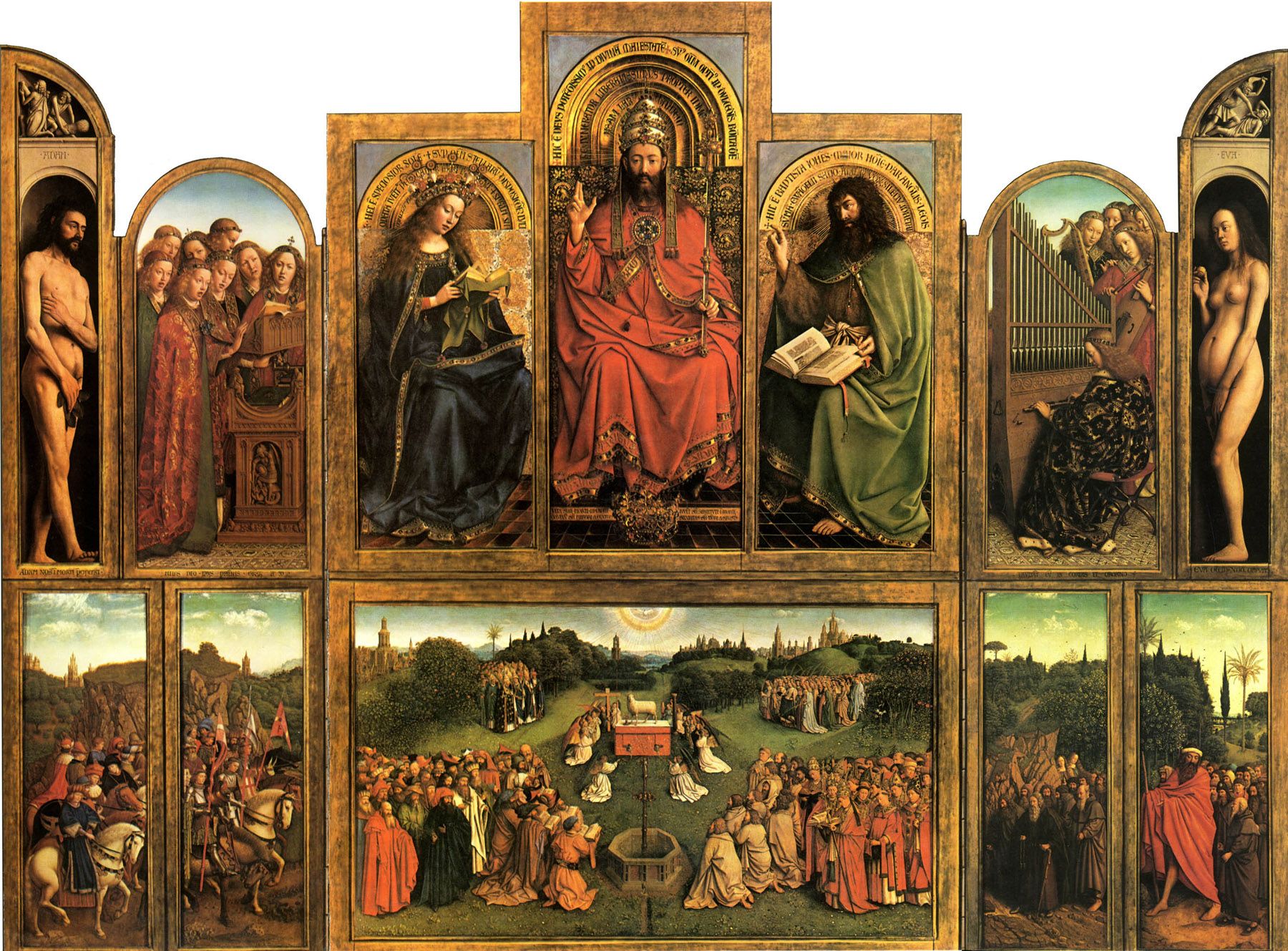
The Ghent Altarpiece. Seeing this for the first time last February in Saint Bavo’s Cathedral was one of the best moments of my two years abroad. (Source)

My travels on the Continent have been full of their own various ecclesiastical delights, so I’ll only mention a few highlights. My favorite cathedral in the world is St. Bavo’s, Ghent, which represents the perfect fusion of Gothic, Baroque, Rococo, and 19th Century styles. In France, the Chapel of the Miraculous Medal in the Rue du Bac, Saint-Étienne-du-Mont, Lyon Cathedral, Notre-Dame de Fourvière, and Saint-Just in Lyon are a few holy places I will not easily forget. Recently, I visited De Krijtberg in Amsterdam, which is the best example of painted Neo-Gothic I have seen beyond the Sainte-Chapelle. Italy is too full of wonderful churches to count, as are the old Hapsburg lands. If I were to choose a favorite in each, I suppose I would have to list the Chiesa Nuova (St. Philip Neri’s home and final resting place) in Italy, as well as Stift Heiligenkreuz in Austria, the Matthias Church in Hungary, and St. Vitus Cathedral in the Czech Republic. Though, to be fair, I visited several of these a few years ago rather than on this late sojourn in Europe.

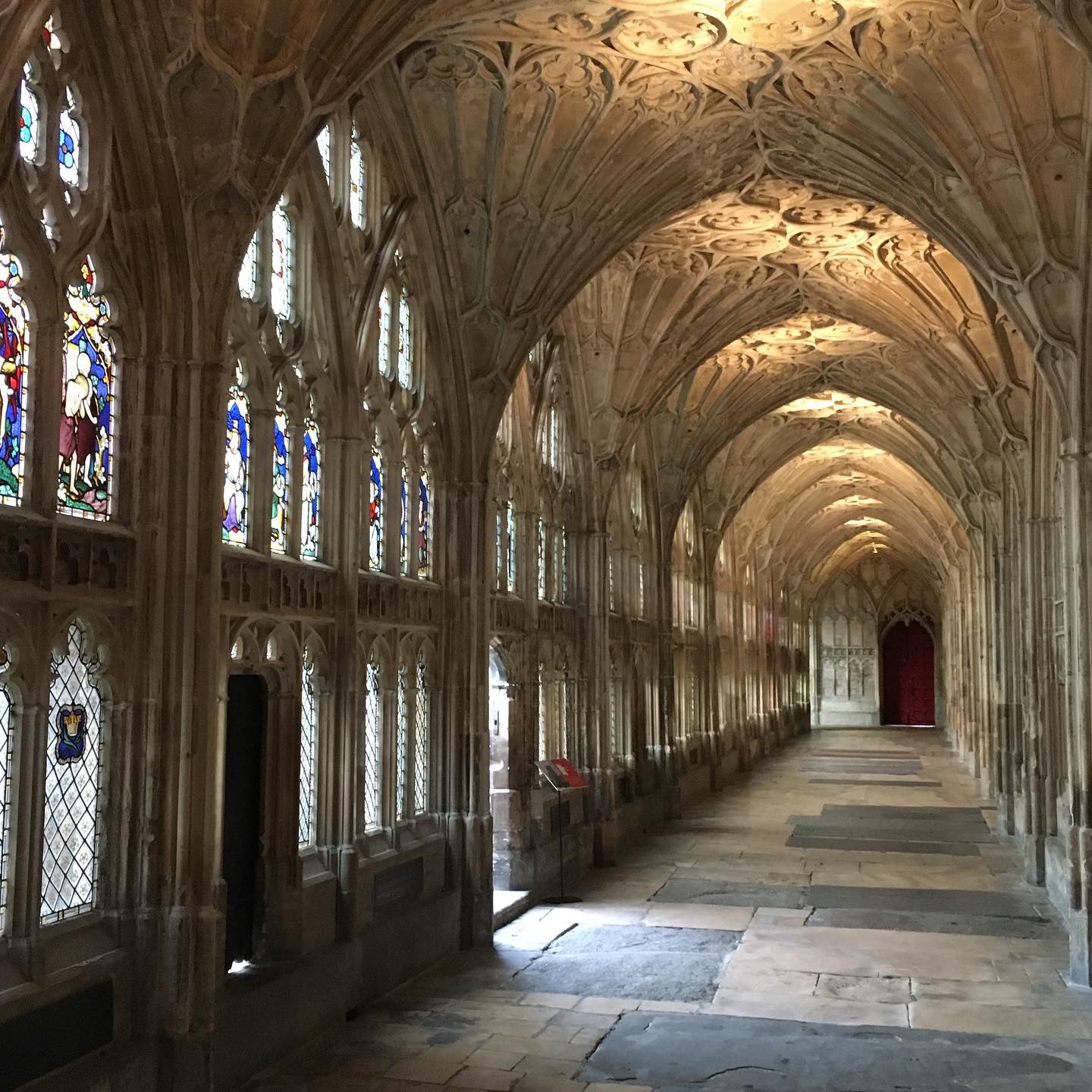
The cloisters, Gloucester Cathedral. America’s greatest fault probably lies in having no Medieval structures in situ. Photo taken by author.

I list these travels not out of any boasting, and, perhaps, not even for my readers. If anything, I do it for myself. I am more interested in remembering these places; writing about them has given me occasion to reminisce, to try and recapture something of the pleasure they gave me once.

I have been very blessed in life. I praise the Good Lord for allowing me the chance to see a bit of the world, to have done useful work, to have read interesting books, to have seen beautiful things, to have drank some good wine, and to have known such wonderful people. What more can one ask for in this brief life?

Celebrating 150,000 Views

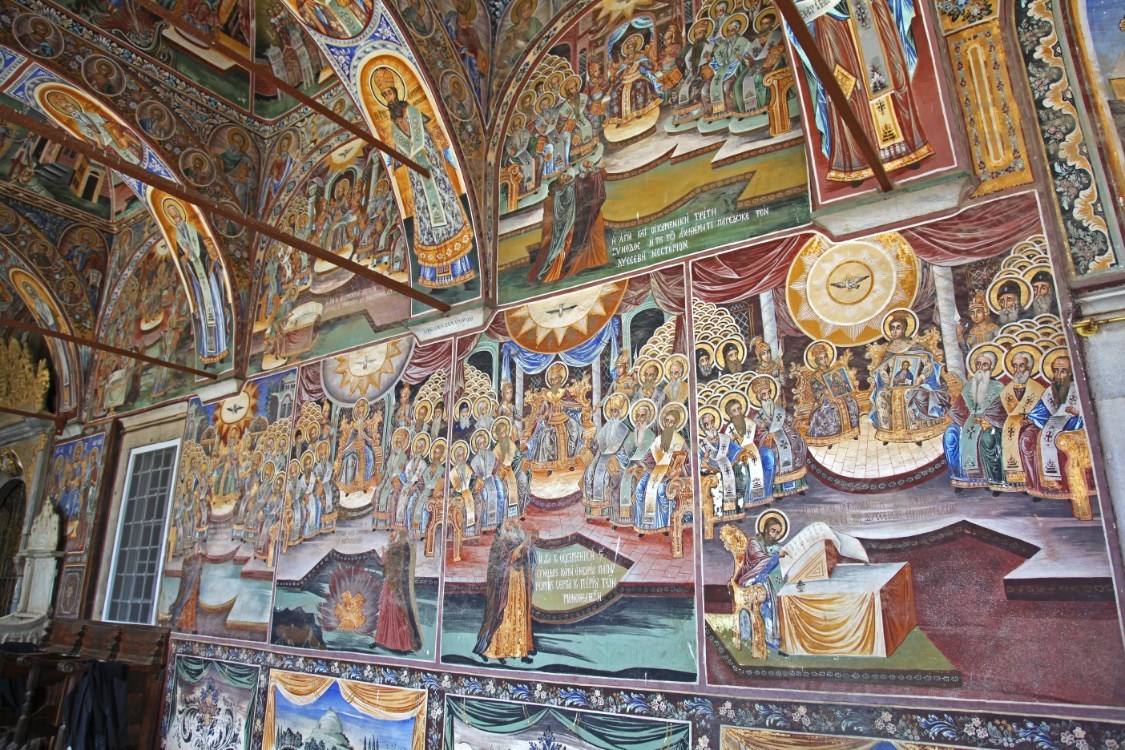
Icons of the Ecumenical Councils. (Source)

I am pleased and humbled to announce that The Amish Catholic has received 150,000 views! It’s been a wonderful experience since February of 2017. Thank you to all my many readers, especially those of you who take the time to comment on, share, or promote my work. It means more than you know. May God bless all of you!

St. Philip Neri and the God Who Dwells With Men

The Vision of St. Philip Neri, Giovanni Camillo Sagrestani (Source)

“Behold the tabernacle of God with men, and he will dwell with them. And they shall be his people; and God himself with them shall be their God.” – Revelation 21:3

St. Philip’s feast always falls within that sunny period of the Church’s year when, passing from Easter to Ascensiontide and following on to Pentecost and Corpus Christi, we find our days running over with the majesty of these great mysteries. The days grow longer, and so they seem to grow more golden with the ever-descending light of the Holy Ghost. We are in a season of peculiar glory. The culminating lesson of these mysteries is clear: God has made his dwelling among men, and in the midst of His people shall He reign.

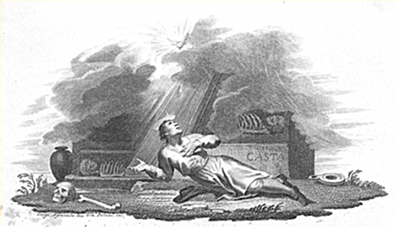
St. Philip receives the Holy Ghost while at prayer in the catacombs. (Source)

St. Philip knew this truth well. His whole life could well be described as a journey between Pentecost and Corpus Christi, the two feasts that most clearly teach us of God’s enduring presence in His Church. It was on the Vigil of Pentecost, 1544, that St. Philip received the grace that would define his vocation and the character of his sanctity. While praying in the catacombs of San Sebastiano, the Holy Ghost descended into St. Philip’s heart visibly and sensibly in the form of a ball of fire. This experience, which provided as much heat and pain as rapturous joy, marked the true beginning of St. Philip’s active ministry. In St. Philip, the Holy Ghost once again made His dwelling among men.

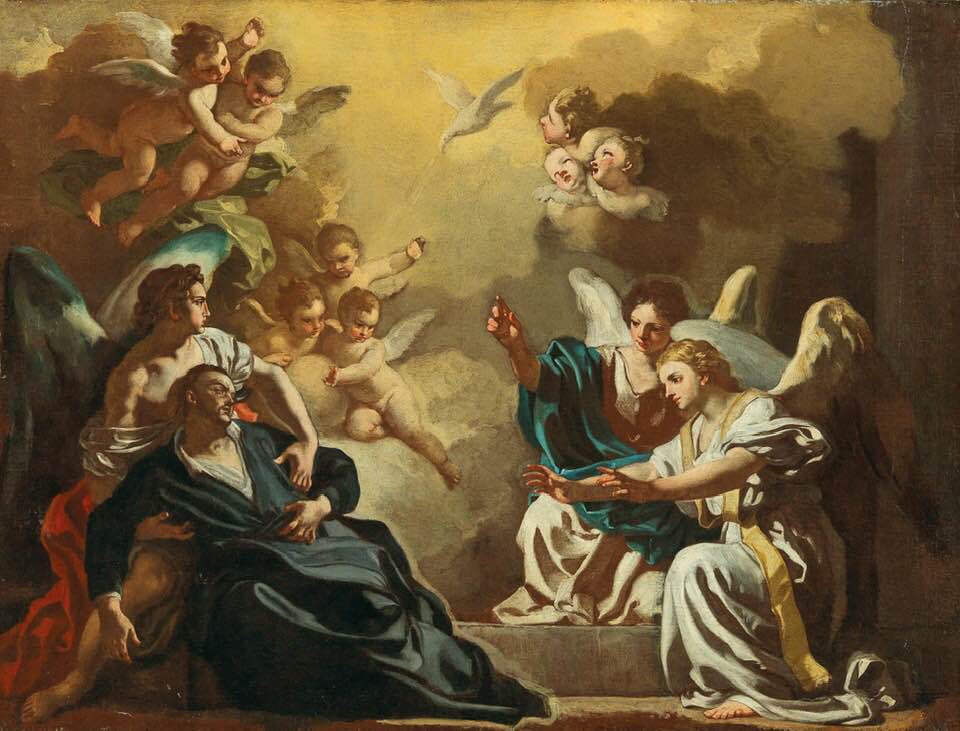
St. Philip Neri Receiving the Holy Spirit in the Catacombs of St. Sebastian, Francesco Solimena (Source)

From then on, St. Philip’s whole life would be marked by a singular union with the Holy Ghost. He became the “tabernacle of the Most High” and a living fountain of graces. His many miracles testify to the indwelling of the Spirit within him. So does his manifest oddity, his clear and salutary estrangement from the ways and works of ordinary men. The prophet writes, “For my thoughts are not your thoughts: nor your ways my ways, saith the Lord.” So does the Holy Ghost speak from the heart of St. Philip. For this reason, the Church applies the words of St. Paul to the new Apostle of Rome:

The love of God has been poured into our hearts
through the Spirit of God dwelling within us

Introit for the Feast of St. Philip Neri

St. Philip’s priestly life was marked by the overwhelming presence of God. Everything about him spoke to the present reality of the supernatural. This reality took two chief forms. The most famous were the astounding miracles wrought by St. Philip – most notably the raising of Prince Paolo Massimo from the dead. But there was also St. Philip’s profound adoration of the Eucharist. His popularization of the Forty Hours’ Devotion was but the visible extension of his love of the Blessed Sacrament. So too were the Eucharistic ecstasies to which he was increasingly susceptible as he became older. St. Philip knew no sweeter hours than those that he spent at Mass as an old man, kneeling in darkness before the altar, lost in the rarefied heights of a contemplation we can barely begin to fathom.

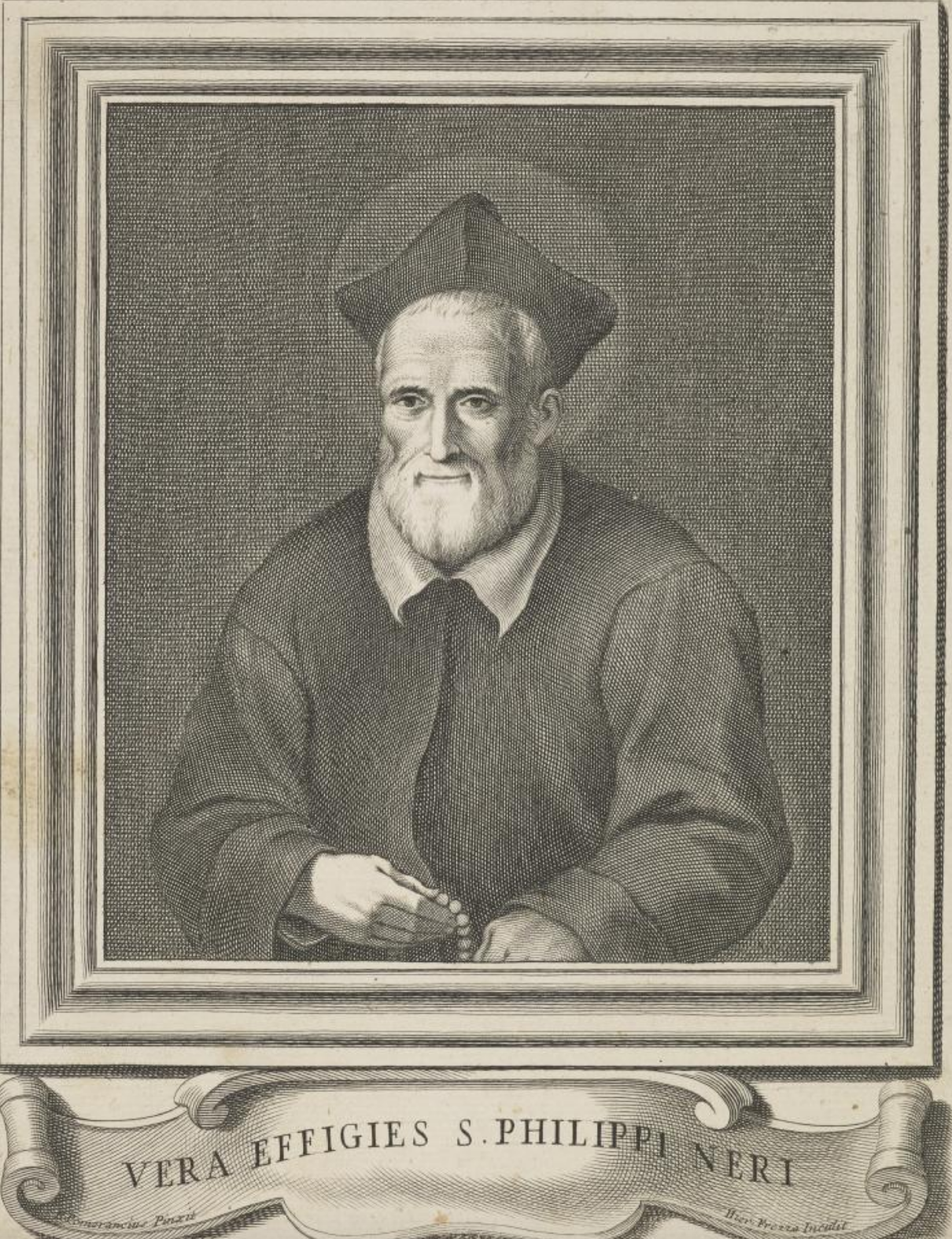
Engraving of St. Philip Neri, Hieronymus Frezza (Source)

One particularly perceptive observer has written:

In recalling the holiness of Saint Philip, it occurs to me that it was essentially this: he was all priest. He was always and everywhere a priest. His priesthood suffused his very being, making him incandescent with the fire of the Cross and of the altar.

Vultus Christi

St. Philip’s extraordinary endowment with the Spirit was ordered towards his life as a priest – namely, towards the glory of God in the Eucharist. This is the case with all of us. The Spirit, God in us, is given precisely for us to receive the Eucharist, God with us. Confirmation, like all the other sacraments, exists with the Eucharist as its proper telos.

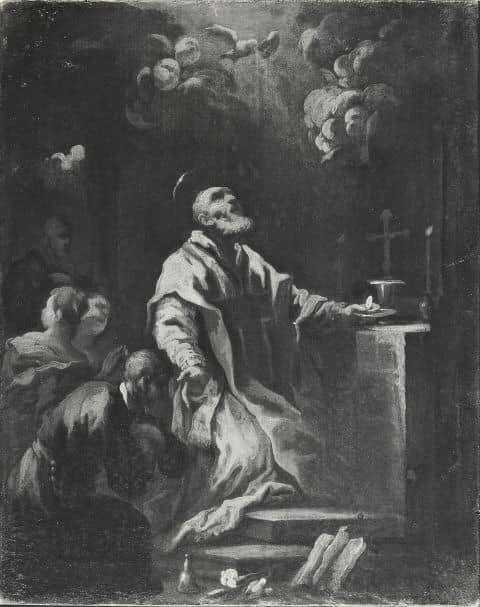
The Mass of St. Philip Neri, Circle of Giovanni Battista Piazzetta (Source)

How fitting, then, that St. Philip should pass into eternal life when he did. May the 25th, 1595, was the feast of Corpus Christi. As Fr. Faber has it,

Day set on Rome! its golden morn
Had seen the world’s Creator borne
Around St. Peter’s square
Trembling and weeping all the way,
God’s Vicar with his God that day
Made pageant brave and rare!

“St. Philip’s Death,” F.W. Faber

Providence often grants the saints a Christ-like death. It is a sign that, even in suffering and death, God is still dwelling with us. St. Benedict died in choro during a liturgy, just as Christ died in the fulfillment of His high priesthood. Many martyrdoms were accompanied by strange signs and mystical evocations of the Sacrifice of Christ. It should be no surprise that God would take St. Philip in a similarly edifying manner.

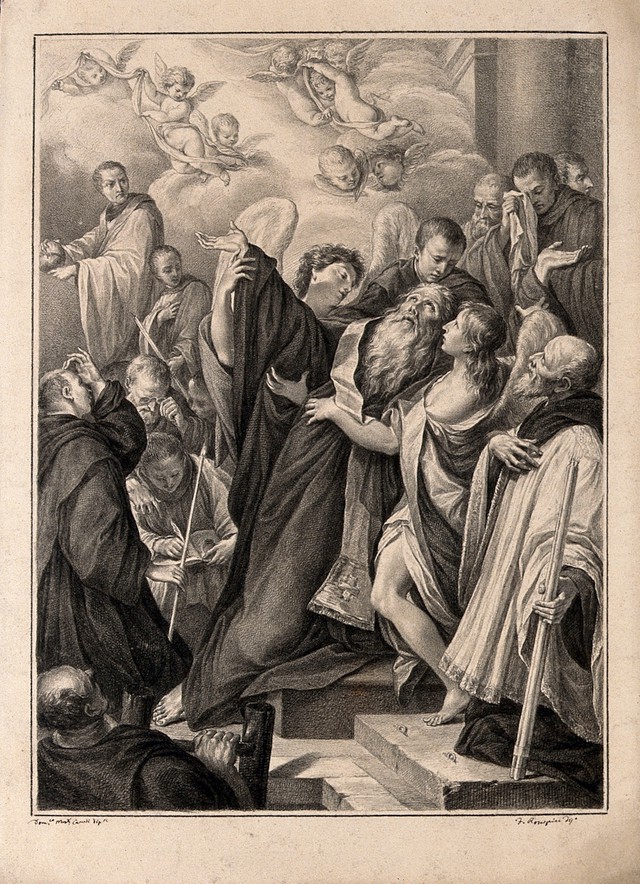
The Death of St. Benedict, F. Rosaspina, 1830, after D.M. Canuti. (Source)

In his death, St. Philip reminds us that we are all meant to imitate Christ in His Sacrifice, that is, in the Blessed Sacrament. There is no more perfect pedagogue in the life of the Spirit than the Son, who has presented Himself to us on all the altars of the world. Would that we might take this lesson to heart!

St. Philip died when he did because, by a singular grace of Providence, God was pleased to mark His servant’s passing with the Church’s celebration of the Most Holy Sacrament of the Altar. Just as St. Philip honored the Eucharistic God in his life, so did the Eucharistic God honor him in his death.

We, too, can honor the saint best by cleaving to the Lord. St. Philip’s words to a spiritual daughter are as true today as they once were:

“Let us concentrate ourselves so completely in the divine love, and enter so far into the living fountain of wisdom, through the wounded Side of our Incarnate God, that we may deny ourselves and our self-love, and so be unable to find our way out of that Wound again.”

St. Philip Neri

God dwells with us just as He once dwelt in the blessed heart of St. Philip. He comes to us just as He came once to the priestly hands of St. Philip. Let us abide in Him, just as St. Philip did once and does forevermore in the heights of Heaven.

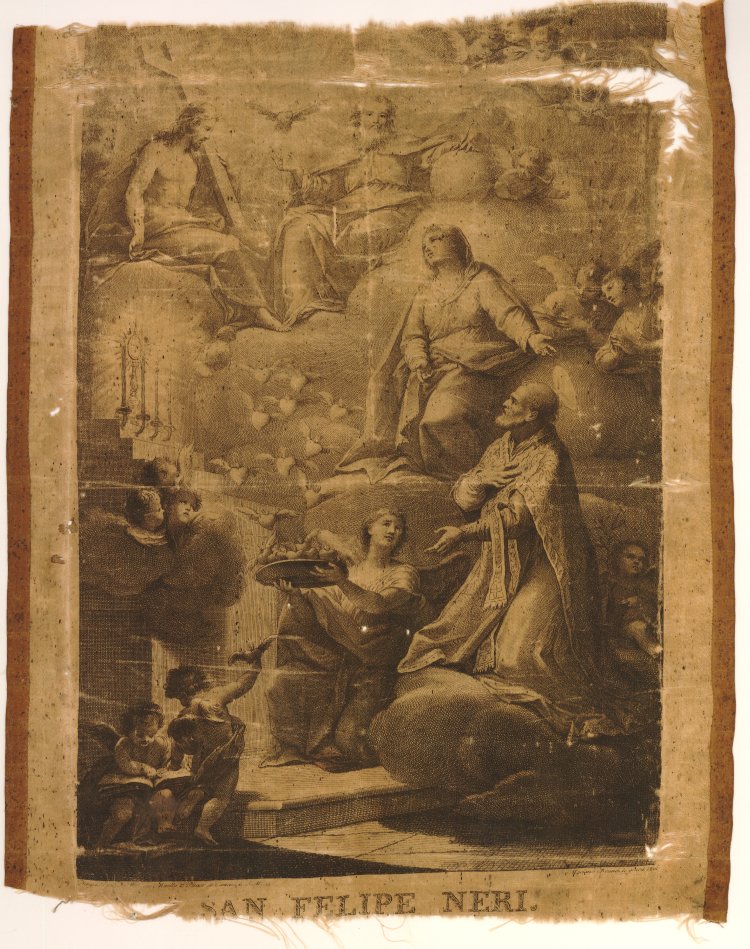
Votive image of St. Philip Neri from the British Museum. As they have it: “St Philip Neri kneeling on a cloud in front of altar; angel to right holding tray with burning hearts and ascending towards Holy Trinity; Virgin Mary mediating surrounded by angels, after Maella. 1801 Engraving, printed on silk.” Note the Eucharist enthroned in a monstrance. (Source)