Elsewhere: A New Blog on English Catholicism

image

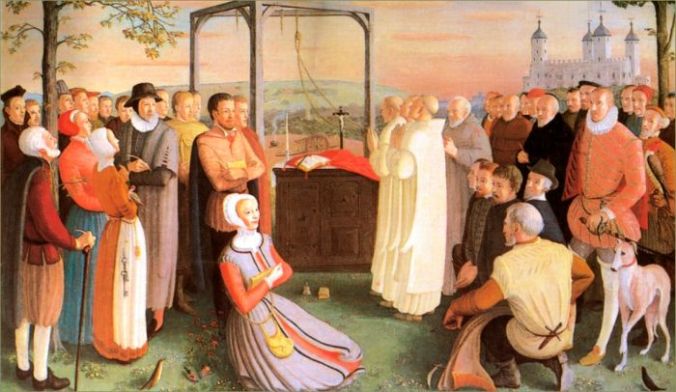
All ye holy English Martyrs, pray for us. (Source)

Anglo-Catholic readers will no doubt have mourned the demise of Conner McNeill’s Merrily on High, what was once among the best and most prolific AC blogs on the web. Never fear! Connor McNeill rides again. He’s back with a new blog called Mary’s Dowry. It looks as tasteful, reverent, and aesthetically sophisticated as the project that preceded it.

Mr. McNeill has decided to depart from the Church of England and join the Roman Communion. As he had been pursuing ordination with the C of E, this conversion is no small undertaking. Pray for him! And check out Mary’s Dowry while you’re at it.


Elsewhere: Fr. Hunwicke on Liturgical Wigs

image

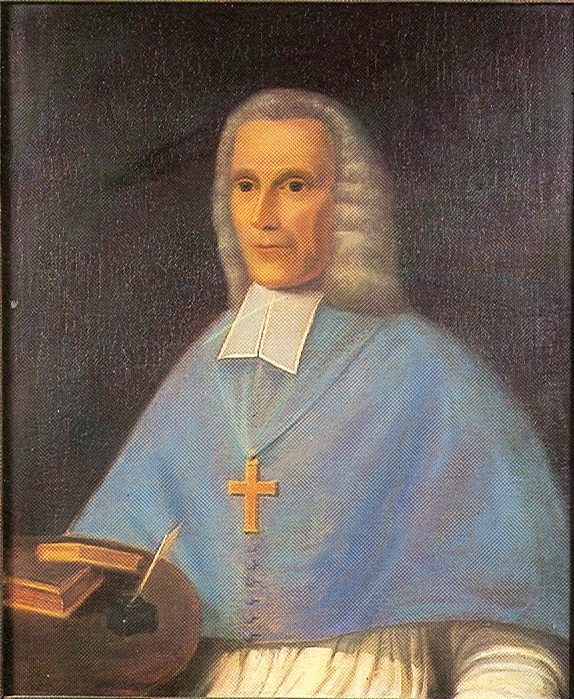
The famous portrait of Bishop Challoner to which Fr. Hunwicke refers in his piece. (Source)

I haven’t written much this week, as I’ve been traveling. However, on this beautiful  St. Bernard’s Day, I thought I’d share this brief and wonderful gem of a piece by Fr. John Hunwicke of the Ordinariate.

An excerpt:

I’m sure there are zillions of you out there who have the following sort of information right at your snuff-stained finger tips: did prelates eo fere tempore wear their wigs all through Mass? Even after their zucchetto had been removed as they approached the Consecration? When did Catholic bishops stop wearing wigs? (I think it went out of fashion in Anglican cicles in the 1830s.)

He also gets into the question of blue episcopal choir dress, mainly used in France and Ireland. Read the whole thing.

Clerical dress is one of my longstanding interests, as is the history of 18th century Catholicism. I’m glad Fr. Hunwicke is using his formidable celebrity to draw attention to these matters. While some may dismiss clerical fashion (particularly that of the Ancien Régime) as a trivial matter, I beg to differ. Clerical dress both during and outside of the liturgy is one more aesthetic component by which we can present “the beauty of holiness.” The nondescript threads worn by so many clergy and religious today are, alas, one more surrender to the cult of stark utility, false equality, failed individuality, and, in the end, boring homogeneity.

At the moment, I don’t have the time or capacity to research the questions Fr. Hunwicke raises. But The Amish Catholic will follow this story with all due attention and gravity. You can count on that. In the meantime, I’ll feast my eyes on this doozy of a cappa magna.

Elsewhere: A New Anglo-Catholic Blog

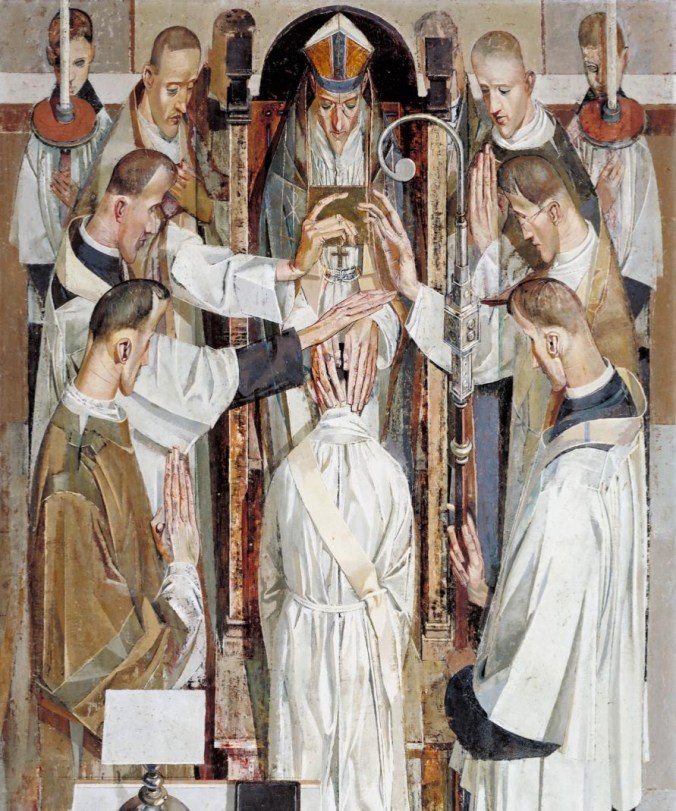
Ordination 1956 by Norman Blamey 1914-2000

“Ordination,” by Norman Blamey, 1956. (Source)

My friend, Archbishop Mark Haverland, Primate of the Anglican Catholic Church, has just started a new blog called “Anglican Catholic Liturgy and Theology.” You really get what it says on the tin with this one. For those of us with an interest in Anglo-Catholic history, theology, and practice, Archbishop Haverland’s blog will no doubt prove to be a great resource.

Elsewhere: Cooper on Edo Japan

image

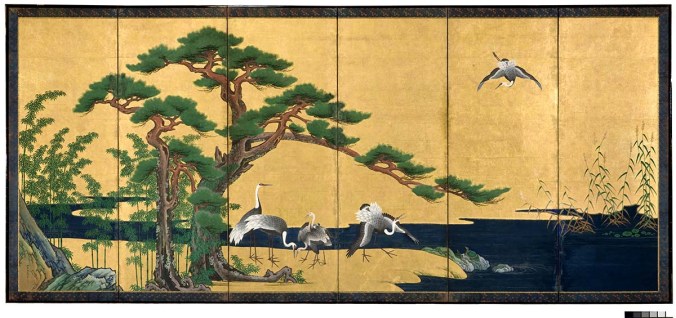
Some art of the Edo period. (Source).

Over at The Heavy Anglo-Orthodox, Matthew Franklin Cooper has an excellent  short post on the history of Edo Japan. I’ve never studied too much Japanese history in any depth, but found Mr. Cooper’s essay a pleasant and enlightening read. However, I did see Silence in January. One of the things about the film that most stood out to me was the simple beauty of 17th century Japan. It is difficult for me to understand how anyone could not find the aesthetics of this period deeply attractive…but de gustibus. 

Elsewhere: More on Julien Green’s Life, Death, and Love of God

KlagenfurtChurch

St. Egid Church, Klagenfurt, Austria. (Source)

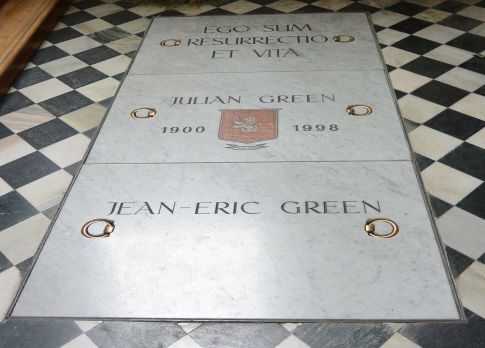
Pater Edmund Waldstein O.Cist. was kind enough to mention my recent post about Julien Green on his superlative blog, Sancrucensis. But what’s more, he built off of my essay in a really wonderful way. In his post, you can find more information on Green (particularly his later years, death, and entombment) as well as a wonderful homily he wrote incorporating elements of Green’s life and spirituality. I highly recommend a view.
JulianGreenKlagenfurt

The tomb of Julian Green and his adopted son, Jean-Eric Green. (Source)

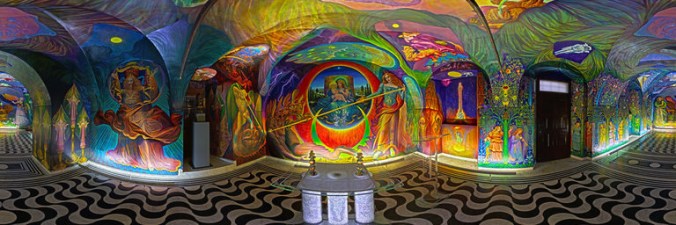
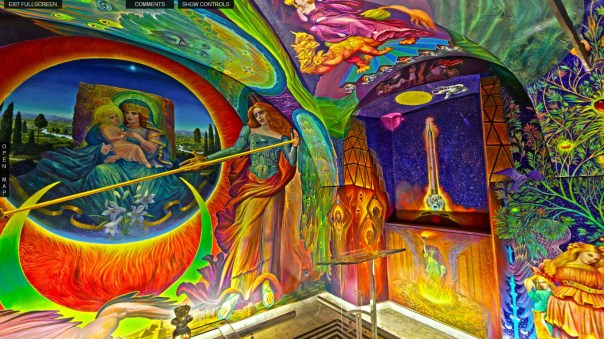
The only thing I’ll add is only tangentially related to Green. St. Egid Church, where Green is interred, is also host to one of the most remarkable chapels in existence. The Austrian artist Ernst Fuchs, a Catholic whose work draws upon the best of the Western visionary, symbolist, and esoteric tradition, was commissioned to create a chapel in the crypt. The result is…something. Although I’m a fan of Fuchs generally, I’m not convinced that his was the best approach to sacramental space. And…a clear altar?
KlagenfurtApocalypseChapel

The Apocalypse Chapel, by Ernst Fuchs. St. Egid Church, Klagenfurt, Austria. (Source)

It’s a bit too psychedelic for a temple of God, I think. But hey, I’d rather attempt to worship in this overabundance of color and image than, say, a vaguely imposing and tomb-like structure that leaves its visitors depressed. I must emphasize that Fuchs’s art really can be mystical, even sophianic. Perhaps I’ll write a post on it some time soon.
 

apocalypse-chapel

Those really are a rocket and the Statue of Liberty. Really. (Source).

And perhaps I’ll someday have the chance to visit St. Egid Church, make the pilgrimage to pray for Green at his tomb, and see the chapel myself.
Elsewhere: Daniel Mitsui’s New Blog

screen-shot-2017-02-28-at-8-20-29-pm

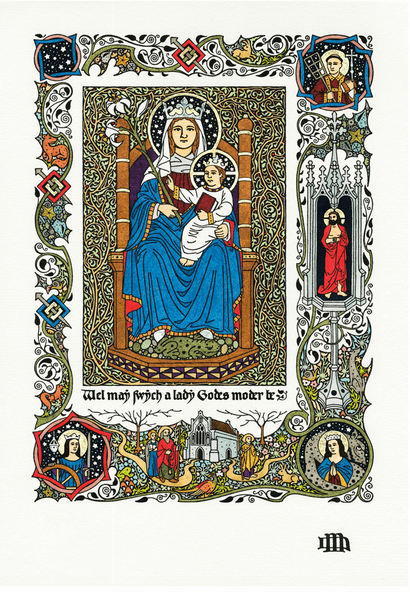
“Our Lady of Walsingham,” by Daniel Mitsui. Available at http://www.danielmitsui.com

Exciting news for anyone who follows the Catholic art world. Daniel Mitsui, the artist famous for his intricate, lively drawings of Christ and the Saints, has just announced that he has a new blog. The new site promises to be aesthetically and spiritually enriching. Check out his new, great project, the Summula Pictoria. I look forward to seeing what Mr. Mitsui will produce for us in the future.

And his new piece depicting St. Philip Neri is lovely, as always.