New Chant from Silverstream

“In the midst of life we are in death” (Source)

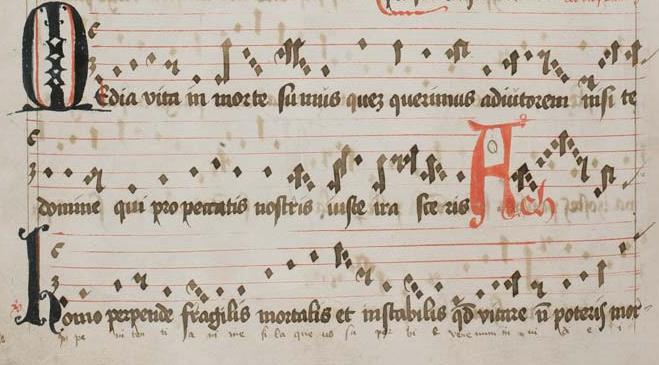
I must refer my readers to a new recording of some Gregorian chant from Silverstream Priory. The beautiful responsory, Media Vita, is very timely during this pandemic. Here is the translation, passed on by the Prior:

In the midst of life we are in death; from whom shall we seek help, save Thee, O Lord? Who for our sins art justly angered. * Holy God, Holy mighty One, Holy merciful Saviour, hand us not over to the bitterness of death.

1. In Thee our fathers hoped; they hoped, and Thou hast liberated them. * Holy God, Holy mighty One, Holy merciful Saviour, hand us not over to the bitterness of death.

2. To Thee our fathers cried; they cried and were not confounded. * Holy God, Holy mighty One, Holy merciful Saviour, hand us not over to the bitterness of death.

3. Glory be to the Father, and to the Son, and to the Holy Ghost. * Holy God, Holy mighty One, Holy merciful Saviour, hand us not over to the bitterness of death.

Translation of the Media Vita

I know I speak for the monks when I encourage you to give it a listen and take some comfort from this ancient prayer of the Church in a time when death is all around.

I would particularly note the highly idiosyncratic harmonic arrangement used here. I have not heard any other renditions of this chant like it. I grew up listening to the Benedictines of Santo Domingo do Silos, and although I like their hauntingly pure Media Vita, the Silverstream version has a complexity and depth that feels very different, if just as moving.

The accompanying film is also of very high quality. I have known the monks of Silverstream for six years. This is by far the best video I’ve seen from them. It does a good job capturing the peculiar beauty of that monastery in Springtime, as well as the powerful sense of holiness that radiates throughout the house and grounds from the Blessed Sacrament. And for those who care about such things, there’s a lovely conical requiem chasuble from 3:23 on.

Give it a listen, and please consider supporting the monks through a donation or by shopping at their excellent online store. The monks are streaming their masses and some of their offices throughout this crisis, and I recommend following them for what will no doubt be a stirring and holy Paschal Triduum (albeit at a distance).

The Charism of Eccentricity

A-Priestridden-Village-BM

The 18th century was a Golden Age of clerical satire – and clerical eccentricity – in England. (Source)

What a day of loons it has been. After discovering the narrative of that wandering bishop which I brought to my readers’ attention earlier this afternoon, I have since come across two wonderful articles about the venerable tradition of eccentricity in the Church of England. The first is over at the Church Times. The Rev. Fergus Butler-Gallie, a curate in Liverpool, has written a book entitled A Field Guide to the English Clergy (One World Press, 2018). In his article at the CT, Butler-Gallie provides a taste of what is assuredly a very fun book indeed. Take just one of the bizarre figures he profiles:

William Buckland, a Victorian Dean of Westminster, became obsessed with eating as many animals as possible, from porpoise and panther to mole fricassee and mice on toast, even managing to gobble up the mummified heart of King Louis XIV while being shown round the Archbishop of York’s stately home.

He was no fool, though. The first person ever to excavate an entire dinosaur skeleton (although he was more interested in other prehistoric remains, writing on a desk made out of dinosaur faeces), he once disproved a supposed miracle in France by being able to prove (by taste, of course) that a supposed saint’s blood was, in fact, bat urine.

Or consider this parson:

The Revd Thomas Patten was a real-life Dr Syn, helping to run a smuggling operation on the north-Kent coast. Patten would preach interminably boring sermons until a parishioner held up a lemon, a sign that someone had agreed to buy his drinks for the evening at the tavern opposite, at which point he managed to terminate the service with astonishing alacrity (a ruse, I’m sure, no clergy reading this would even consider replicating).

If the rest of the book is as fascinating at these anecdotes suggest, it will be a classic in no time – right up there with Loose Canon and The Mitred Earl. Apparently it’s been getting rave reviews. (I’ll add that if any of you are looking for a Christmas gift for your favorite Catholic blogger, it’s going for under £10 at Amazon).

Today I also came across an article about one of Butler-Gallie’s subjects, the Rev. R.S. Hawker, also known as the “Mermaid of Morwenstow.” Alas, as I am not a subscriber to The Spectator, I cannot read it. Those who can are encouraged to do so.

One of my favorite clerical eccentrics whom I doubt that Butler-Gallie covers is the Rev. William Alexander Ayton, vicar of Chacombe in Oxfordshire.  You can read more about him in my article, “On the Wings of the Dawn – the Lure of the Occult.”

Though of course there are few stories of clerical eccentricity as amusing as the infamous dinner related by Brian Fothergill in his life of Frederick Hervey, Bishop of Derry. Fothergill tells us that

On one occasion when a particularly rich living had fallen vacant he invited the fattest of his clergy and entertained them with a splendid dinner. As they rose heavily from the table he proposed that they should run a race and that the winner should have the living as his prize. Greed contending with consternation the fat clerics were sent panting and purple-faced on their way, but the Bishop had so planned it that the course took them across a stretch of boggy ground where they were all left floundering and gasping in the mud, quite incapable of continuing. None reached the winning-point. The living was bestowed elsewhere and the Bishop, though hardly his exhausted and humiliated guests, found the evening highly diverting. (The Mitred Earl, 27).

Ballyscullion

Hervey also built what must have been one of the greatest gems of British Palladian architecture, Ballyscullion House. Alas, it is no longer extant, but has been reduced to a respectable if far less elaborate mansion. (Source) For a 3D model, see here.

If there’s one thing for certain, it’s that Anglicanism as lived in history is not a dry religion.

Allow me to indulge in a bit of crude cultural observation. It occurs to me that the national church of the English would inevitably partake of that quintessential English quality – eccentricity. Americans don’t produce real eccentrics. We breed individualists and, less commonly, outright weirdos. But the great British loon is mostly unknown to us. Eccentricity requires a certain localism, even an urban one, that has been mostly lost in the sprawling homelands of the American empire. Suburbs don’t produce eccentrics.

And more to the point, why should strangeness be so unwelcome in the Church? Why should the Church be bland and conformist and comfortable? Why must we labor on through the nauseatingly boring bureaucratic lingo and platitudinous sound-bites that so often seem to make up the bulk of our ecclesisatical discourse? Where is the sizzling fire cast to earth? Where is the light and heat of the Holy Ghost? In reviewing the proceedings of the recent Youth Synod, I was dismayed to find so little that genuinely spoke of the sacred. It so often seems that our Bishops are more interested in crafting a Church of the self-righteous liberal bourgeoisie than they are in the Church that Jesus left to His Apostles.

Eccentricity may not be a strategy, but it’s at least has the potential to become a reminder that the supernatural reality is completely other. As that Doctor of the Church, David Lynch, once said, “I look at the world and I see absurdity all around me. People do strange things constantly, to the point that, for the most part, we manage not to see it.” Well, God does far stranger things far more often than we do. Eccentrics – especially the Fools for Christ – can speak to that.

Butler-Gallie gets at this well in his article when he writes,

Church of England with more rigour and vigour might have its appeal, but the evangelising potential of the strange increasingly appears to be a casualty of the drive to be more, not less, like the world around us. An embracing of our strangeness, failings, and folly might free us to eschew conversion via tales of our usefulness — be that in pastoral wizardry, wounded healing, or nifty management speak — and, instead, “impress people with Christ himself”, as suggested by Ignatius of Antioch (who, though not an Anglican, did share his fate with the 1930s Rector of Stiffkey, both being eaten by a lion).

…Perhaps less strangeness is a good thing. It is certainly an easier, safer thing from the bureaucratic and behavioural point of view. I’m more inclined, however, to agree with J. S. Mill — hardly a friend of the Church of England — who suggested that “the amount of eccentricity in a society has generally been proportional to the amount of genius, mental vigour, and moral courage it contained. That so few dare to be eccentric marks the chief danger of our time.” Or, to put it another way, a Church that represses its strangeness is one that is not more at ease with itself and the world, but less.

I can only applaud this point. Ross Douthat said much the same in my own communion when, in response to the Met Gala last Spring, he suggested we “Make Catholicism Weird Again.” Or what Fr. Ignatius Harrison CO was getting at when he gave that wonderful sermon on St. Philip Neri’s downright oddity. And though Flannery O’Connor may never have actually said it, I can’t help but agree that “You shall know the Truth, and the Truth shall make you odd.” Indeed, my readers will know that I have hammered on about this point ad nauseum. Butler-Gallie’s writing encourages me to keep at it until we in the Christian West more widely recognize the charism of eccentricity.

MitredMinuet

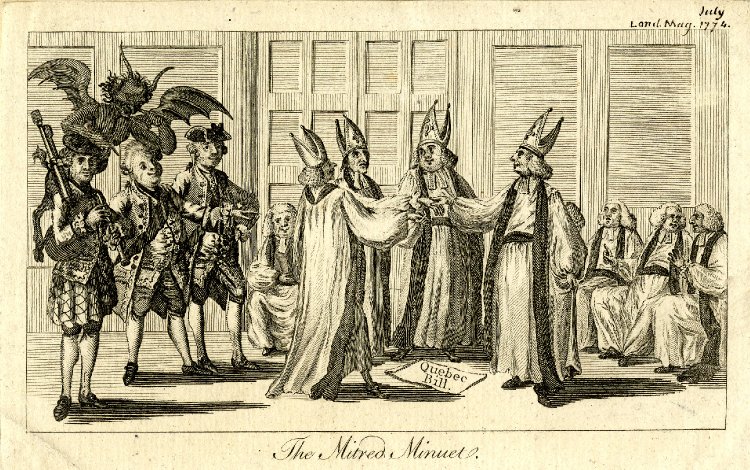
Prelates dancing to the Devil’s music. (Source)

Elsewhere: Mother Mectilde de Bar and the Prayer of Devekut

One of the great works of Vultus Christi has been the exposure of many English-speaking Catholics to the spiritual treasures of the continental Benedictine tradition, especially the life and work of Mother Mectilde de Bar. The good nun was a profound mystic of the Eucharist and a spiritual heir to the French School. Anyone with any interest in Benedictine life, Catholicism in early modern France, or spirituality generally should take note.

MechtildeBNF.jpg

Mother Mectilde de Bar (1614-1698), foundress of the Benedictines of Perpetual Adoration of the Most Blessed Sacrament of the Altar. (Source)

I am very happy to refer my readers to an excellent translation of one of Mother Mectilde’s letters of spiritual direction. The translator, an Oblate of Silverstream, has rendered the 17th century French into elegant and very readable English. A job well done!

Here’s a particularly potent excerpt:

The whole of Christian perfection consists in continual attention to Jesus Christ, and a constant adherence or submission to His good pleasure. These two points contain everything, and their faithful practice will lead you to the highest degree of perfection. Blessed is the soul who observes them.

The first point consists in seeing Jesus Christ in everything; in all events and in all our dealings; in such way that this divine sight removes from us the sight of creatures, ourselves, and our interests, in order to see nothing except Jesus Christ. In a word, it is to have the presence of God continually.

The second point consists in being constantly submissive to His holy will; in being so much subject to His good pleasure that we no longer have any return, at least voluntarily, by which we can withdraw from this respectful obedience.

I am reminded, in reading this passage, of a concept in Jewish mysticism called devekut. To practice devekut is to cleave to God constantly, even in the midst of everyday, profane activities. The Rabbis who founded and nurtured Hasidism in the 18th century made it a central feature of their mystical praxis, though the idea has roots in the Temple traditions of the Old Testament (vide Barker 2004, 37). Dr. Margaret Barker notes that, according to the older, priestly understanding of the word “cleaving” in Hebrew, “to cleave” meant quite literally to join. However, this sense was displaced when the Moses-focused Deuteronomist tradition came to ascendance. The new meaning of “cleaving” was, instead, obedience (Ibid. 37). Mother Mectilde has here joined both meanings in a salutary way.

Holy-Eucharist-Icon.jpg

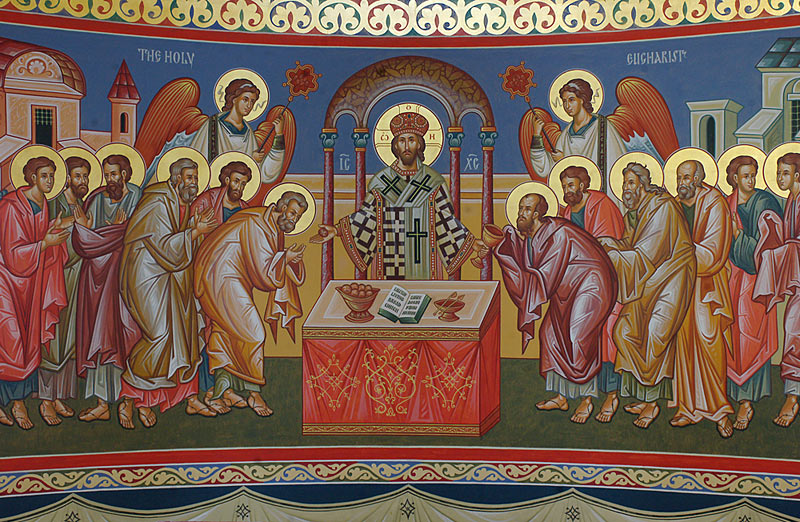
An icon of the Holy Eucharist, showing Christ the High Priest in the Holy of Holies. (Source)

However, I think she places a bit more emphasis on the first, as the primary and indispensable basis of the second. She goes on to write,

Have Jesus Christ imprinted and carved on the center of your soul. Have him in all the faculties of your mind. May your heart be able to think of and long for nothing except Jesus Christ.  May your whole inclination be to please Him. Attach all your fortunes and your happiness to knowing and loving Jesus Christ.[1] May nothing on earth, however great it seems, prevail in you against the constant union you should have with Jesus Christ. May neither heaven, nor earth, nor hell, nor any power, ever separate you from Him.[2]

She continues on and apostraphizes Divine Love, writing

O Jesus all powerful and all love, work in us these two effects of mercy: attract us by your omnipotence and transform us by your love into Yourself.

O love, O love divine, may you burn in us, and that you may consume in us everything that is contrary to you and opposed to your workings.

O life that is not animated by love, how can you be called life? You are a hideous death, and most terrible.

O pure and holy love of Jesus Christ, do not allow a single moment of my life to be spent without love; make me die and throw me into hell a thousand times rather than not to love Jesus Christ.

The first line here is the key; this is the loving and even conjugal language of devekut, not simple obedience. But obedience is implied as the sustaining force and natural result of such attentive love.

Hesychast.jpg

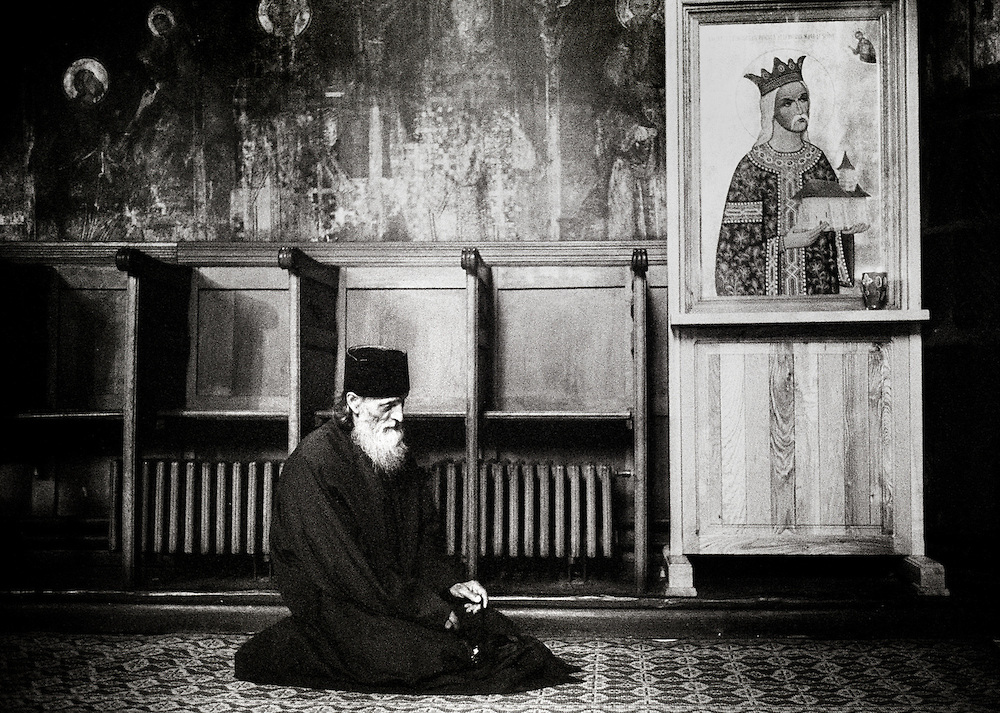
A hesychast at prayer. (Source)

It seems appropriate to me that Mother Mectilde, a Benedictine, should advocate for this kind of “cleaving” prayer, vigilant love in every moment. It has always been the task of the monastic throughout history to preserve this kind of remembrance of God that is itself a form of His presence in the heart. Precisely this “cleaving” constitutes the positive good underlying hesychasm in the East, but it can also be found in many monastic writers of both East and West. Mother Mectilde is not speaking alone. Indeed, she expresses the perennial Wisdom that has always infused the monastic life and made it fruitful.

Read the whole thing over at Vultus Christi.

Elsewhere: A Powerful Prayer of Deliverance

Our Lady of Angels

Icon of Our Lady of Angels. (Source)

Over at Vultus Christi, you can find a series of Chapter Talks on the Rule of Saint Benedict. Today’s commentary concludes with the story of a mighty prayer of deliverance given by the Blessed Virgin Mary to a French priest of the nineteenth century, Bl. Louis-Edoard Cestac. Here it is:

August Queen of Heaven, sovereign Mistress of the Angels, thou who from the beginning hast received from God the power and the mission to crush the head of Satan, we humbly beseech thee to send thy holy legions, that under thy command and by thy power they may pursue the evil spirits, encounter them on every side, resist their bold attacks, and drive them hence into eternal woe.

Who is like unto God?

O good and tender Mother, thou willest always to be our love and our hope.
O Mother of God, send thy holy Angels to defend us and drive far from us the cruel enemy.
Holy Angels and Archangels, defend us and keep us. Amen.

Go read the whole thing. In fact, all of the commentaries are edifying; read them all.

The Best Monastic Documentaries

The monastic life is about as far as one can get from the flashy world of the entertainment industry. And yet, it has been the subject of some very good documentaries over the last fifteen years or so. For those curious about the various monks (and nuns) of the world, I thought I would provide a list of a few films with which to start.

Into Great Silence (2006)

Screen Shot 2018-05-16 at 10.05.16 PM.png

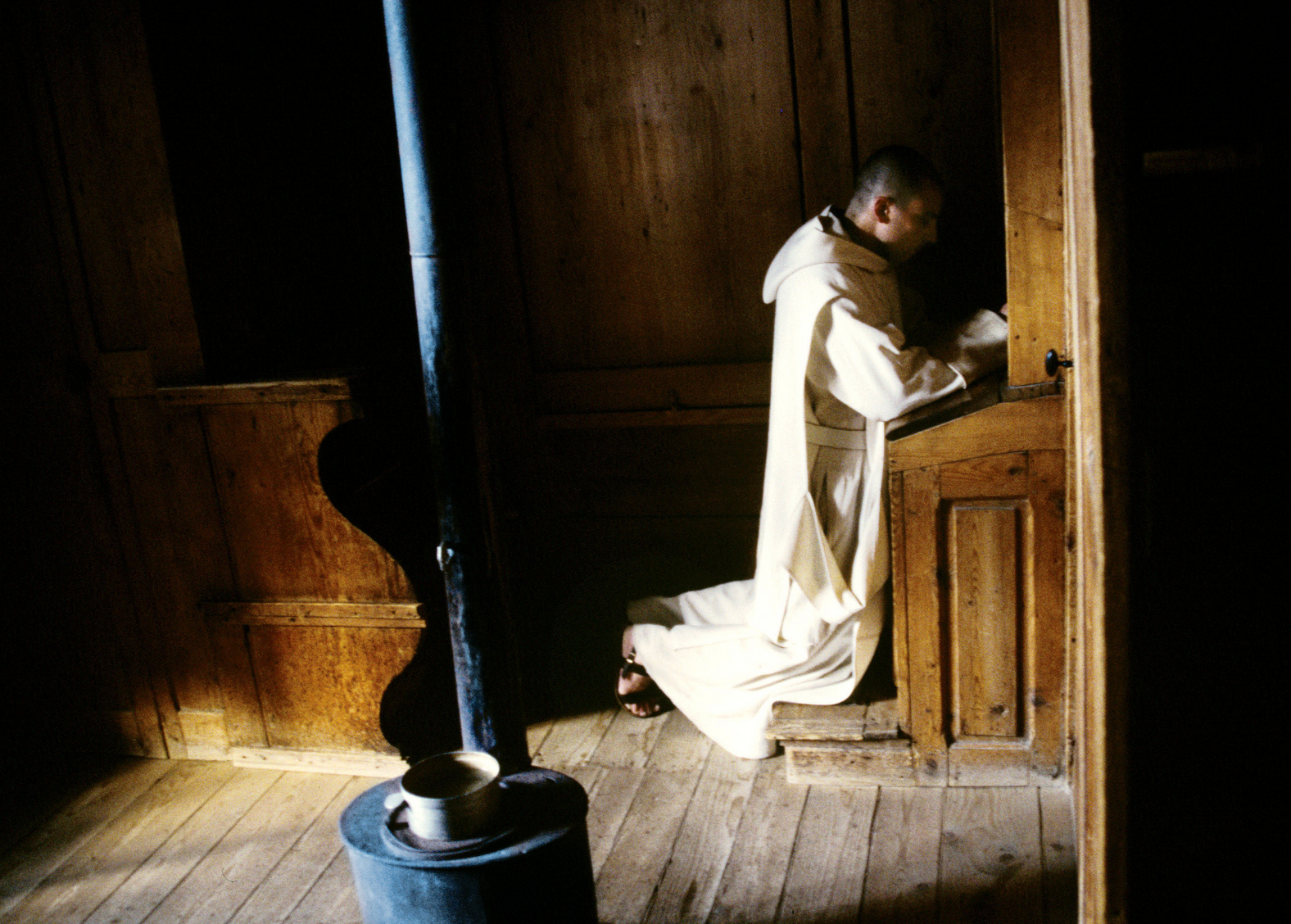
A Carthusian prays in his cell, from Into Great Silence (Source)

This stirring art film by Philip Gröning was produced over several years. Every shot is deeply meditative. We, the viewers, are drawn into a contemplative pose along with the monks themselves. As might be expected, there is very little dialogue – indeed, very little sound at all. We get a powerful sense of the holy silence that envelops the Carthusians of La Grande Chartreuse. Yet when the monks do speak, such as in an interview with an ancient, blind monk that comes towards the end of the film, the words mean something. The chant of the night office given prominent place in the film evokes all the centuries of virtually unchanged monastic life that have come down to us from St. Bruno. This film is hands down the most important and most spiritually insightful documentary about monasticism, and it has continued to exert a powerful influence on most such documentaries since.

Veilleurs dans la nuit (2011)

LeBarrouxMass

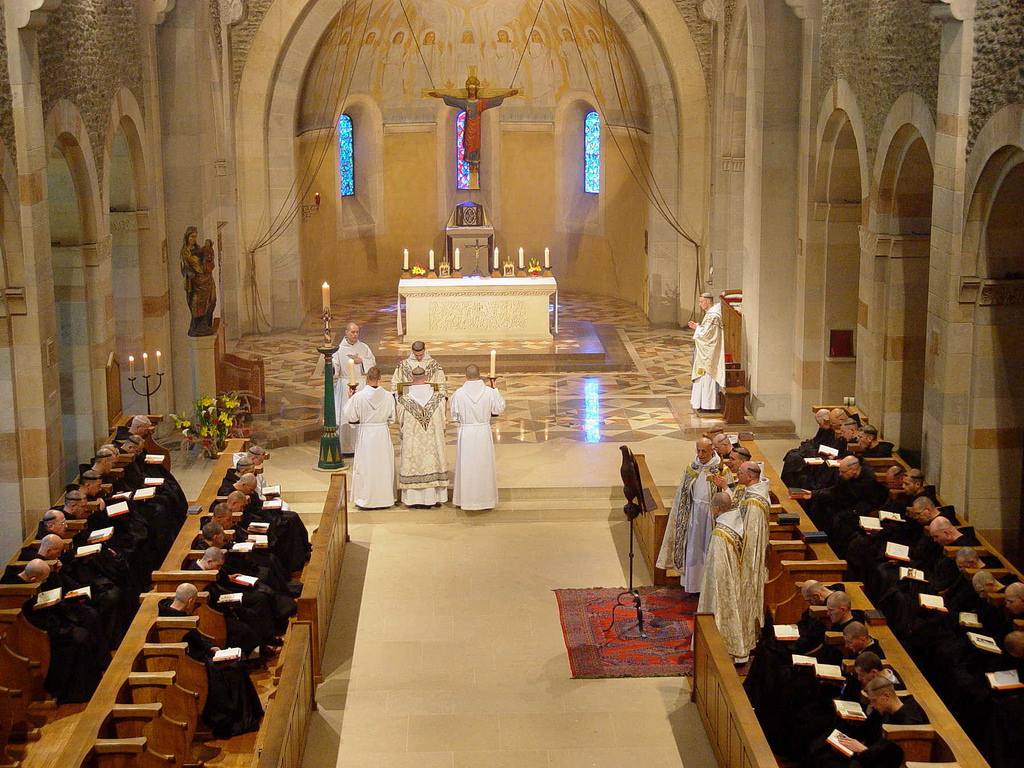
A liturgy at Le Barroux (Source)

The monastery of Sainte Marie-Madeleine du Barroux, founded in the wake of the Second Vatican Council, preserves much of the great tradition of French Benedictine life. It is one of the very few monasteries on earth which has preserved the form of tonsure once known as “the monastic crown.” It is also famous for its grand and elegant celebration of the liturgy, as well as the great holiness of its founder, Dom Gérard Calvet. This French documentary does a good job depicting their life through a mix of commentary and interviews. It is of an entirely different style than Into Great Silence, but it relates more actual information about the monks themselves.

Quaerere Deum (2011)

NorciaBeer

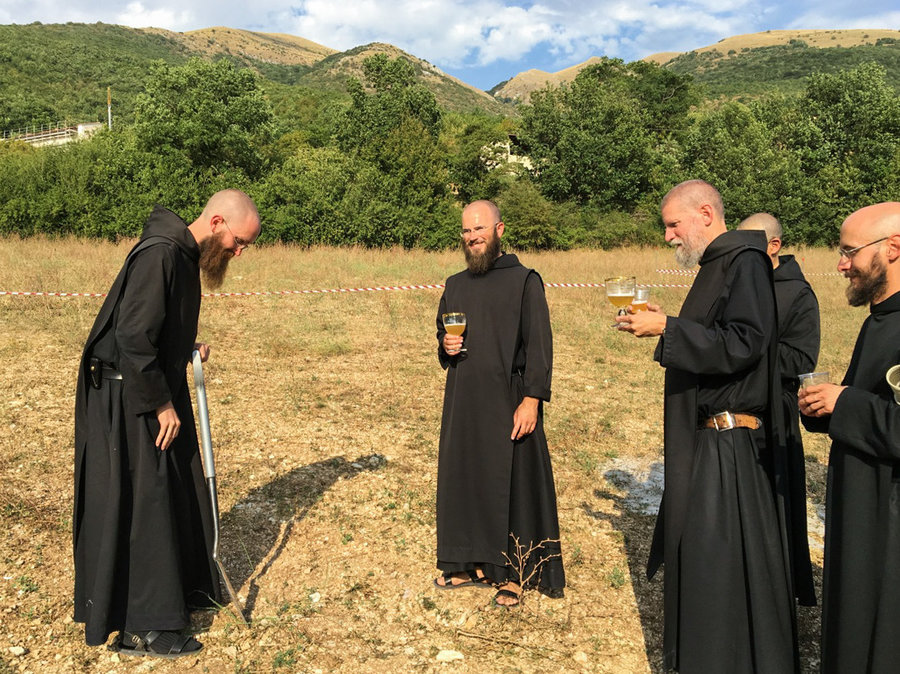
Some of the monks of Norcia with their famous beer (Source)

Filmmaker Peter Hayden of Wilderland Media has done some great and poetic work publicizing the various new monasteries founded in the old world by Americans. The first of these was the Monastero di San Benedetto in Norcia, established in 2000. It is only appropriate then that Hayden should have looked at them first. He produced a “day in the life” style documentary bearing clear influences from Into Great Silence. The slow pace, lack of commentary, and meditative minimalism all recall the best parts of that earlier work. Norcia itself – or what it was before the terrible earthquake of 2016 destroyed much of the town – emerges as a living community “seeking God.” A subdued sense of joy shines throughout.

Benedictine Monks, Ireland (2017)


BrJBAdoration

Br. John Baptist in adoration before the Blessed Sacrament, Silverstream. Photo taken by the author.

Peter Hayden’s second work on the monastic renewal is a more obviously promotional piece of filmmaking than Quaerere Deum. A profile of Silverstream Priory, Benedictine Monks, Ireland depicts the community life of adoration and reparation led by the monks there. Scenes from Mass, chapter, and refectory alternate with candid shots of the monks at work and leisure. Interviews with the Prior and Subprior provide spiritual as well as historical context. As someone who knows the monks personally, I found it a pretty good exposition of their spirit. That peculiarly Benedictine sense of place is evoked through gentle Irish music at various points. And the combined wisdom of Dom Mark and Dom Benedict is a great grounding to the beautiful visuals. I was very taken with the image of Dom Cassian, then only a postulant, in prayer at the pillar and candle.

My only criticism is that, in spite of all these good features, the film fails to capture the overwhelming sense of the supernatural that hangs about Silverstream. I’m not sure if it was the darkness of the year during filming, or the slightly uneven cinematography, or the lack of scenic order that scuttled it for me.  Benedictine Monks, Ireland needs a heavier dose of the contemplative stillness that so strongly marks both Into Great Silence and Quaerere Deum. Still, it’s a nice introduction to the place for those curious about the Benedictine Monks of Perpetual Adoration.

Présence à Dieu (2015)

Screen Shot 2018-05-16 at 10.39.43 PM.png

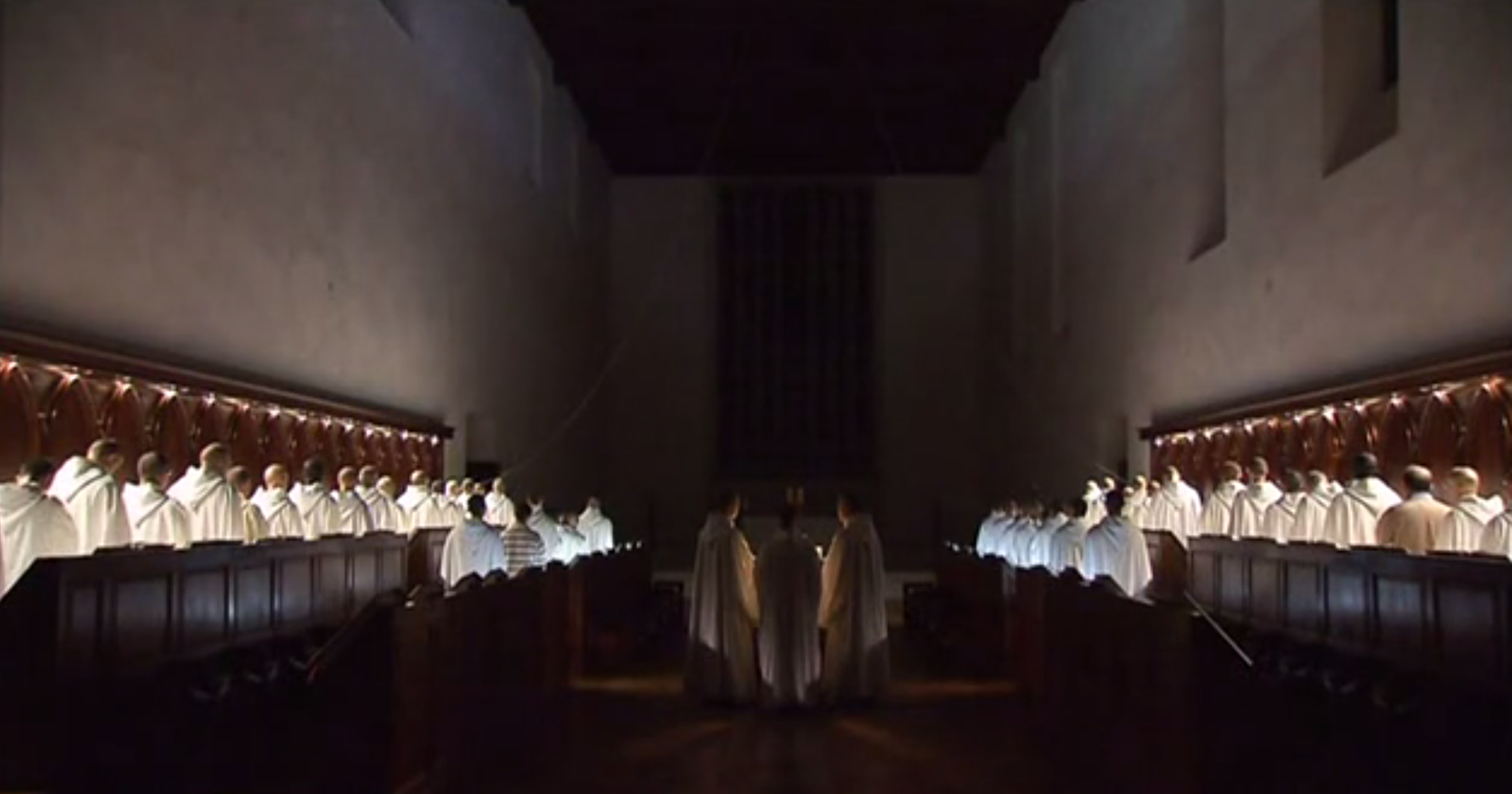
Matins at Sept-Fons, from Présence à Dieu (Source)

This short film, first brought to my attention by Fr. Joseph Koczera SJ, does a good job showing what a traditional monastery can look like, even if it embraces the new Mass and the vernacular office. Notre Dame de Sept-Fons is currently the largest Trappist monastery in the world, at least in terms of membership – it is also manifestly young and diverse. The film shows why the Abbey keeps getting vocations. A near constant soundtrack of chant carries the viewer along. Présence à Dieu is also full of the Abbot’s exposition of the Rule, which is a nice plus.

God is the Bigger Elvis (2011)

GodistheBiggerElvis

Mother Dolores Hart, wearing her trademark beret, from God is the Bigger Elvis (Source)

This one differs from the others in a few key respects. First, it’s an HBO production, rather than an Indie film. Secondly, it’s about nuns rather than monks. And third, there is a delicate sense of humor throughout that is a refreshing change from the other movies. It tells the story of Mother Dolores Hart, a starlet of the 1950’s who appeared in several features alongside Elvis before becoming a nun at the Benedictine monastery of Regina Laudis in Connecticut. She is now the prioress of the community. The documentary looks at her life and vocation as well as the daily ins and outs of the monastery. Not to be missed!

Life in Hidden Light (2016)

LifeinHIddenLight

A scene in the refectory from Life in Hidden Light (Source)

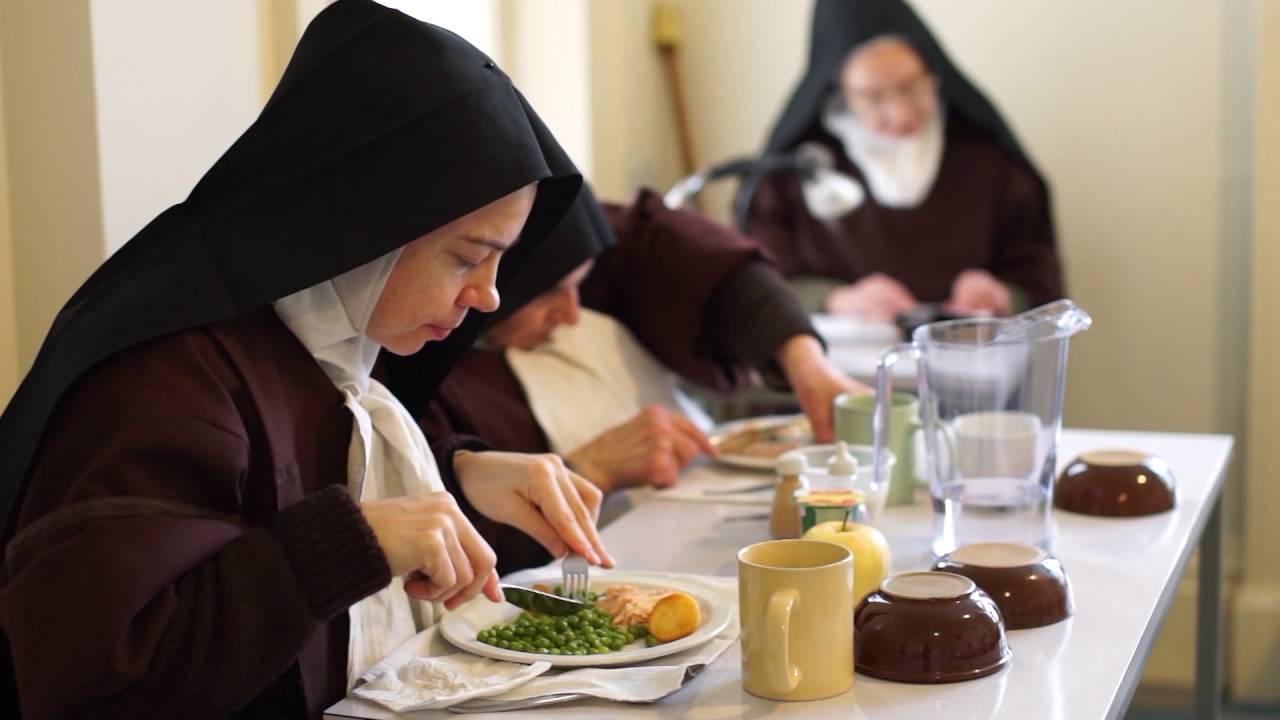
Monasticism is not confined to the Benedictine family. As Life in Hidden Light reminds us, the Carmelites also have a great tradition of contemplative monasticism. Clearly influenced by Into Great Silence, this film does a great job balancing meditative cinematography and interviews with the Discalced Carmelite sisters of Wolverhampton. One in particular that stands out is the old, mostly deaf nun who speaks about the “mess” of the world and the love of God. I was reminded of Into Great Silence‘s blind Carthusian (not to mention the slightly grotesque Jesuit in “The Enduring Chill,” by Flannery O’Connor). The old nun’s message is a sound, salutary one that we should all hearken to in this day and age.

There are probably other such films out there, but these are a few that might be a good starting place for those interested in the monastic life.

The Threefold Maternity of Mary

OurLadyCenacle.jpg

Our Lady of the Cenacle, pray for us. Photo by Lawrence Lew O.P. (Source)

God seems very fond of doing things in a Trinitarian way. Everywhere we look, in nature, in our lives, in the life of the Church, it seems that we constantly come upon things that speak of threeness-in-oneness. So it is with God’s finest creation, Our Lady. Or rather, with her maternity. She has but one singular motherhood – her highest title, Theotokos, means “Mother of God.” Nothing can surpass this supreme gift. Nothing greater can be said of the Lord’s chosen. Nothing can reveal more about Our Lady’s life and mission. Yet we detect a certain triune quality to this one eminent dignity. We can speak of the threefold maternity of Mary.

Screen Shot 2018-05-12 at 12.17.34 AM.png

Our Lady of the Annunciation (Source)

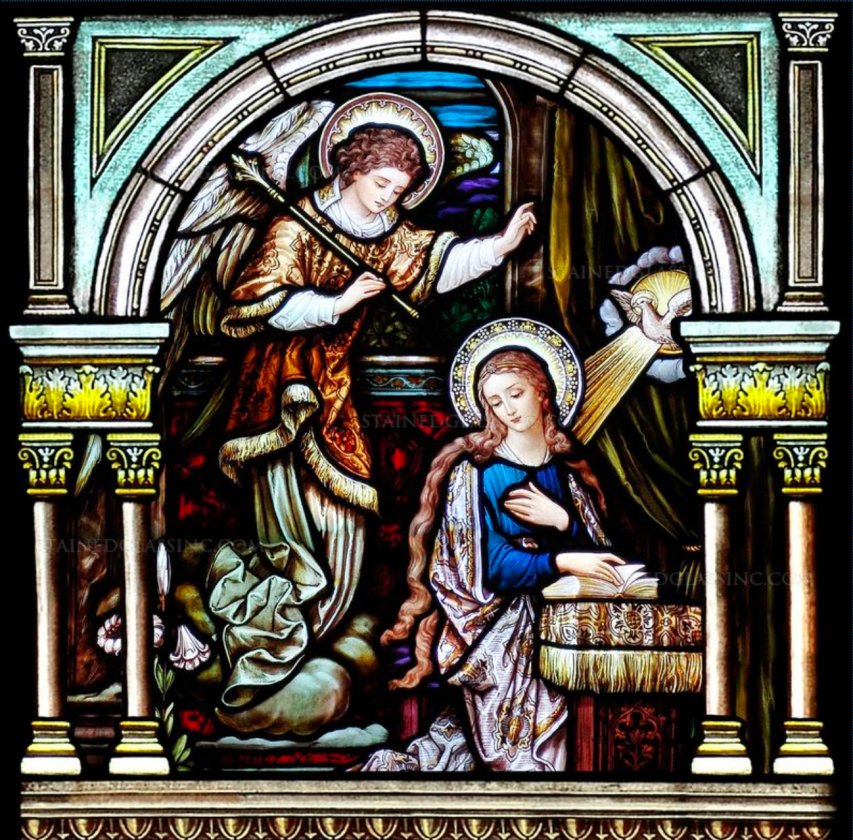
First, we encounter Mary’s basic, physical motherhood of Jesus at the Annunciation. In welcoming the will of God into her life, she becomes the mother of the Most High, God Incarnate in Jesus Christ. The Holy Ghost, her divine spouse, conceives the Son in her womb. Her mystical partner and guardian in this parentage is St. Joseph. And in the joy of that maternity, we see Mary and Joseph as two models of chastity. Everything in those joyful mysteries becomes a parable of purity. The sanctity of the Holy Family consists in no small part in the innocence that pervades the hearts of each member. For that innocence is an opening to charity.

sorrowfulmotherwindow

Our Lady of Sorrows (Source)

Then, after the three and thirty years, Mary stands mournful beneath the cross. It was there that she became Mother of the Eucharistic Christ. For, offering up the sorrow of her own Immaculate Heart in union with her son’s High Priestly sacrifice, she bound herself to all the altars of the world as first adorer and co-redemptrix. Gone is St. Joseph; in his stead we find St. John, the figure of all priests under Christ. He would share the Eucharistic life with Mary forever after, entrusted with her care. Here, the great virtue uniting both of the hearts below the Cross is obedience. Our Lady obeys the paramount Providence of God in consenting to the sacrifice of her son, and St. John obeys the words of Our Lord in taking responsibility for the Sorrowful Mother.

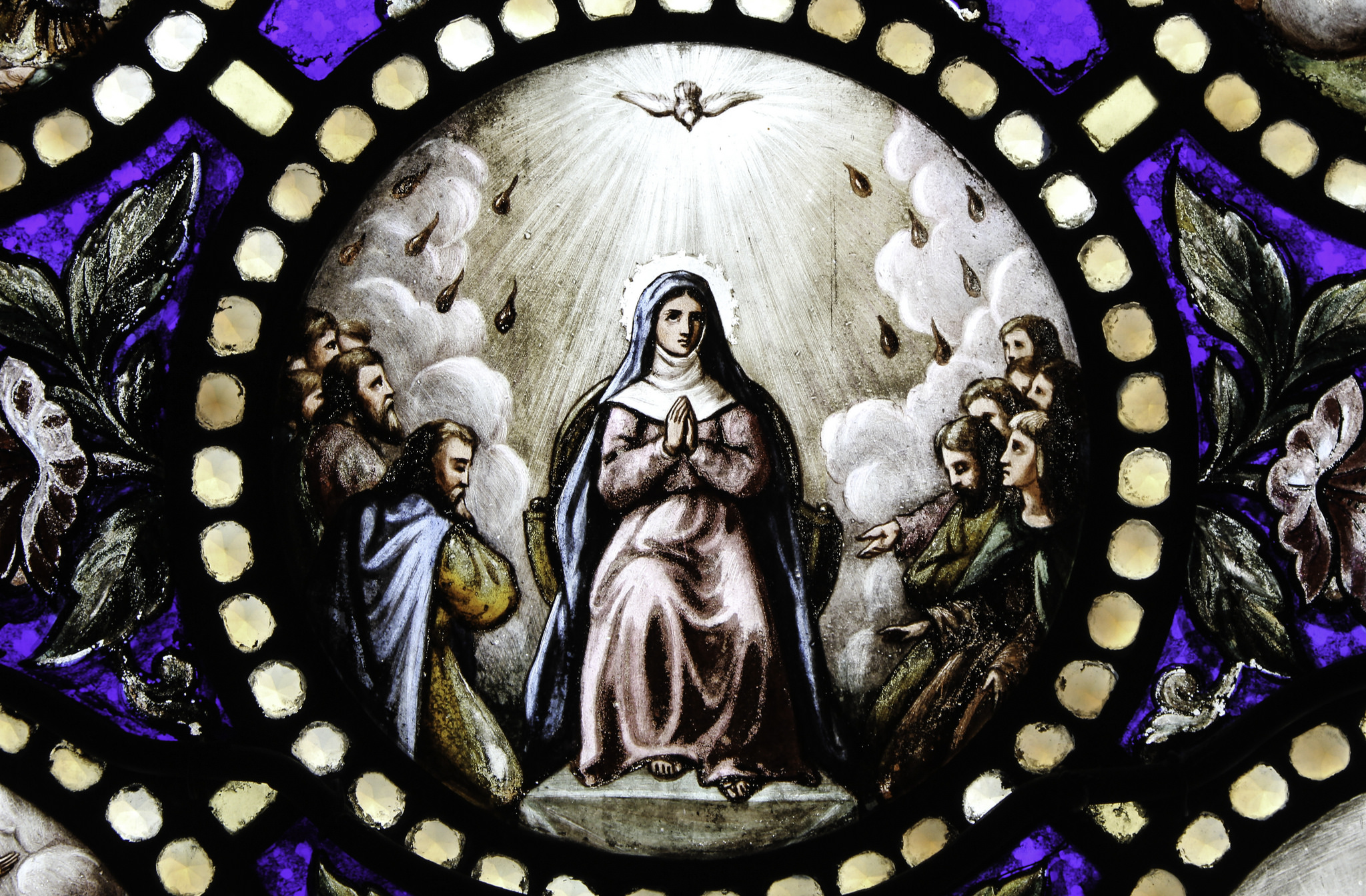
But it is today’s feast of Our Lady of the Cenacle that points to the full and final extension of these two prior forms of motherhood. It falls on a most interesting point in the calendar, Saturday in the Octave of the Ascension. It is as if we are standing in the middle of a bridge between two shining cities, and can hear the mingled music of both. This liminal quality is important. For the feast we celebrate today has a double meaning. Two feasts of different but equal importance and dignity seem to unite in this celebration.

We have just left Christ in his Ascension. The Ascension is a memorial of Christ’s High Priesthood. It is like the prayers at the foot of the altar in the Cosmic Liturgy. Pentecost is a glorious theophany, the arrival of the Holy Ghost. We are thus mid-way between a mystery of veiling, and mystery of unveiling. And who do we turn to, but Mary, she who both hid and manifested God in her person?

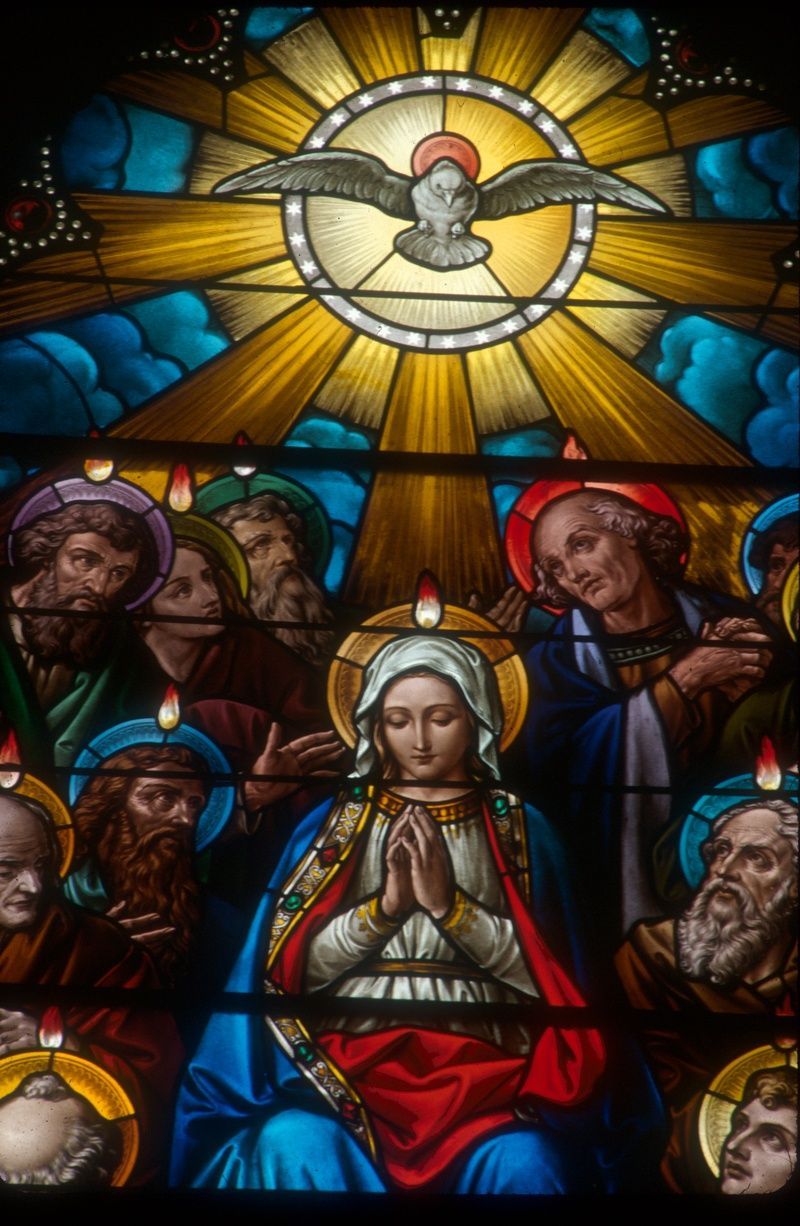
When we celebrate Our Lady of the Cenacle, we commemorate her vigil of silent prayer with the Apostles in the upper room in those intense days following Our Lord’s Ascension. But we also remember the descent of the Holy Ghost into her own Immaculate Heart and into those of her companions. At the deepest level of reality, these constitute a single event in the History of Salvation. And they give us a sense of Mary’s deepening, widening maternity.

MaryCenacleSpirit.jpg

Our Lady of the Cenacle (Source)

Wherever Mary communes with her divine spouse, the Holy Ghost, there is conceived the Body of Christ. First, that meant the physically Incarnate Word. Then it was the Eucharist extended throughout all time. And finally, as a consequence of these two forms of motherhood, we come to Mary’s maternity of the Church. This maternity is the crown of the other two, for it has never ended. The Holy Spirit came to that silver throne, the Immaculate Heart of Mary, and has never left. In all the rest of Mary’s earthly life and eternal existence in beatitude, she has never been deprived of that intimate union begun in Pentecost. And so the Church remains. Mary’s union with the Holy Ghost is at the very heart of the Church’s being. That union brought forth Christ once. It brings forth the Eucharist at every Mass. And now, at Pentecost, it brings forth the Eucharistic community, Christ in His members.

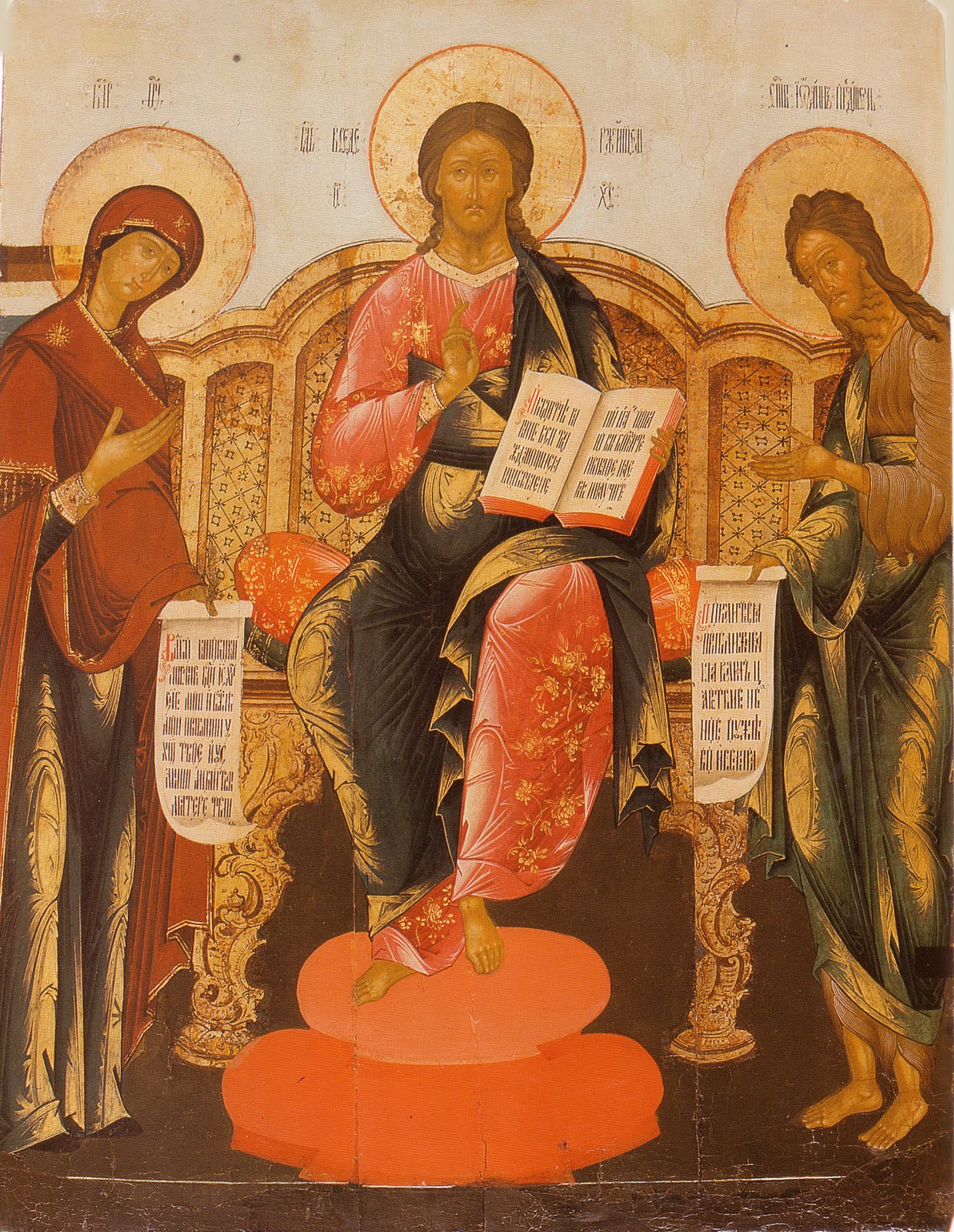
Yet in what does this exalted maternity consist? Prayer, offered perfectly in the Immaculate Heart united to the Holy Ghost. Contemplation, adoration, reparation, intercession – in all its forms, prayer rises from Mary’s heart like huge storms of incense blowing across a desert plain, raining down graces to make it fertile. Yet one form of prayer does not. Mary cannot be contrite. She has never sinned. But we turn to her mystic partner in this maternity, and find a pillar of penance. Who else shares in the life of the Spirit in such a fiery way, but St. John the Baptist? Such is the heavenly reality expressed by the Deisis icon. It shows the Blessed Virgin Mary, paragon of prayer, and St. John the Baptist, archetype of penance, adoring Christ the Lord. Both Our Lady and St. John represent the twin realities of the Ecclesial life – prayer and penance – ordered to Christ – the Sacraments. We might thus speak of Mary’s motherhood of the Church as her Sophianic Maternity, for it is entirely drawn from and oriented to the Divine Wisdom.

Deisis.jpg

A typical deisis. (Source)

The feast of Our Lady of the Cenacle is thus a profoundly maternal day in the Church’s liturgy. Let us join her in prayer. Perhaps we shall taste something of that everlasting life granted to her in the Cenacle.

CenacleRound.jpg

Monstra Te Esse Matrem (Source)

Thoughts on Converting the Young

New-format-for-Coke-Zero-Cherry

The official drink of the movement. (Source)

By now, it has become a commonplace among the Catholic literati that, as one reporter put it, “The Kids are Old Rite.” Traditionalism is on the rise among Millennial Catholics. Several overlapping clans of young, traditional Catholicism have arisen over social media, especially Twitter. Traditional orders get more and younger vocations; older, more progressive orders face extinction in the near future. The Pope himself has taken notice and expressed concerns about this trend. Of course, most of the young trads prefer a pope closer to their own age.

Several unrelated items recently have come up in my news-feed that have collectively crystallized the issue for me.

I

First, a three-part study of FOCUS (The Fellowship of Catholic University Students) has just appeared in the National Catholic Reporter. While I’m often wary of NCR’s coverage on just about anything, I’d encourage you to read it. Sometimes the magazine’s liberal bias gets the best of it, as in a mostly uninteresting examination of FOCUS’s ties to Neo-Conservative and generally right-wing organizations in Part II.

But there are also genuine insights. A lot of the issues raised reminded me of my own somewhat mixed experience with a FOCUS-dominated campus ministry. I certainly made friends, some of whom I still consider important mentors. My first-year Bible Study leader, a fellow student who had been “discipled” by the FOCUS missionaries, was a great influence in my first year of Catholicism (and beyond). But I more or less left the ministry fairly early on, like most of my trad or trad-lite friends. The NCR study gets into some of the reasons why.

For instance, in Part 1, we read:

A FOCUS women’s Bible study group gave Elisa Angevin purpose and strengthened her values — at first. As a freshman at New York University, she met a missionary, who became a mentor and a friend.

But as she met different people outside that community — some of whom were “rubbed the wrong way” by FOCUS — Angevin began to distance herself from the group because it felt exclusionary, rigid and not open to different ways of being Catholic.

“Once you become part of FOCUS, it has a very structured approach,” recalled Angevin, now 25 and a social worker in New York. “It created a lot of passion. But a lot of student leaders looked down on other people who didn’t have the same passion.”

Angevin attended some of FOCUS’ mega-conferences, such as the Student Leadership Summit, and was inspired by the speakers and sense of community. “It was empowering to see people my age who were as excited as I was,” Angevin recalled. “But as I started to get older, the newness had worn off … and it felt very closed.”

A lot of this rings true. Speaking from my own experience, I always got the very strong impression that FOCUS represented a fairly “mainstream” form of Catholicism, the JP2 consensus. Banal liturgy coupled with social conservatism. But there really isn’t any room for traditionalists – or even just those who are friendly to the Old Mass and the piety it sustained. I remember being called “judgmental” for my views. Other trads were  sidelined as well.

I also think that the program’s reliance on *very young* missionaries often leads to a dumbing-down of the vast spiritual and intellectual inheritance that is Catholicism. There’s some call for this at a campus ministry, where ministers have to reach as many people as possible. Not everyone can or even should be St. Thomas Aquinas. Undergraduates don’t often go to ministries looking for lectures, but for some escape from the academic life. Still, must it all be so infantilizing? Perhaps you can see what I mean here:

At the Chicago event, held at the sprawling McCormick Place convention center, FOCUS founder Curtis Martin struts onto the stage, hands in the air, shouting “Woo!” and “Awesome!” to the applauding summit attendees who had been enjoying a contemporary Christian band before his keynote address. Two days earlier, actor Jim Caviezel — Jesus in the Mel Gibson film “The Passion of the Christ” — made a surprise visit to the conference.

“This is how awesome you are,” Martin said. “When the guy who pretended to be Jesus walked in the room, you all stood up and clapped, but when Jesus showed up, you all fell down and knelt. You know the difference. How cool is that?”

What an ineffably stupid way of addressing adults. Mr. Martin manages to strike at once a patronizing and self-congratulatory tone, a true rhetorical feat.
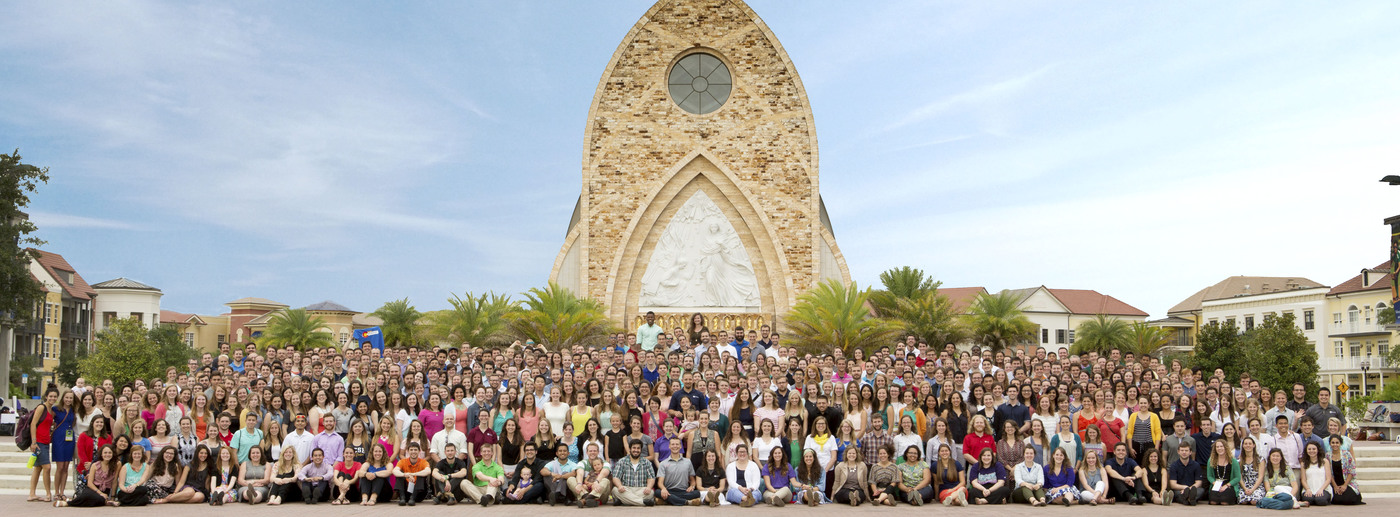
FOCUSavemaria

One thing I learned in the NCR articles is that FOCUS missionaries only get four weeks of training the summer before they begin. And some of that is dedicated to learning how to fund-raise. (Source)

Yet my unease with FOCUS wasn’t just with that sort of standard, if irritating, campus ministry procedure. As a recent convert who had grown up in an Evangelical Protestant school, I found a lot of FOCUS’s Protestant-lite discourse unsatisfying. It was more than just the use of emotivist praise and worship music at Benediction (as grating as that was). It was more than just the way FOCUS mission trips seemed to mirror the sort of make-work vacation mission trips I recognized from my time in the Evangelical world. I got the distinct sense that FOCUS borrowed heavily from the discourse of Evangelicalism, even down to the language it deployed when talking about conversion. Here’s an example from Part III:

As former FOCUS employees (called “missionaries”) or as students involved with the organization on their college campuses, they were taught its “Win, build, send” formula.

“Win” means to build “authentic friendships” with people, with the ultimate purpose of evangelization, while “build” requires helping those friends grow in faith and virtue through what FOCUS calls “the big three” virtues: chastity, sobriety and excellence.

First, we have the shallow reduction of evangelization to a business-like slogan, as if the work of the Holy Ghost could be charted like a marketing campaign. This type of lingo is, in my experience, very common in Evangelical discourse. Paired with it we find the language of authenticity. The first step in FOCUS’s three-part strategy is to “build ‘authentic friendships.'” Authenticity is like obscenity – you can’t define it, but you know it when you see it. The problem, of course, is that you can’t actually plan an “authentic friendship.” The planning is precisely what makes it artificial. Friendships come about organically, and no two look alike. The same can be said of conversions. At best, FOCUS should rather resemble what St. Philip Neri imagined the Oratory to be, though he never constructed any firm plans for the Congregation’s foundation or development. At worst, students get the sense of entering faux, farmed, and framed friendships. Those attract precisely no one.

In the emphasis on “chastity, sobriety, and excellence” as, risibly, “‘the big three’ virtues,” we find a synecdoche of the very strong note of philistine, puritanical prudery ensconced in FOCUS. Encountering this tendency also made me recall the moralistic Calvinism of my youth. Everything in Christianity seemingly came back to sex, drinking, and drugs. No one who ponders the state of American students could seriously suggest that these issues don’t matter, but to hammer on about them to the exclusion of two other triads – Faith, Hope, and Charity, and the Good, the True, and the Beautiful – makes Christianity dull.


FOCUSprots

Protestant Sunday worship, or Catholic conference? Hard to tell…and therein lies the rub. (Source)

But why does FOCUS make “chastity, sobriety, and excellence” its threefold mantra? The FOCUS promotional video in Part 1 offers some insight into their worldview. The narrative told there is one of nostalgia and decline. Various clips from the 1950’s are shown in contrast to the sex, drugs, technology, and mass media of today. The message is obvious: society was better back then, and it’s worse now. But it’s not fundamentally true. First of all, evil has always existed. FOCUS’s Manichaean view of the past may not be unusual, but it’s also deeply lopsided. All the terrible things FOCUS decries about our modern society – pornography, addiction, suicide, the disenchantment of consumerist technology – all of these things existed prior to the 1960’s. And lots of bad things about the society of the 1950’s have disappeared or been greatly mitigated in various ways (need I point out segregation as the elephant in the room?). Yet none of those advances are mentioned. It’s not surprising that social justice Catholics, like trads, find themselves ill at ease with FOCUS. Is it all that shocking that “a lack of racial, ethnic and economic diversity among students served by FOCUS is another criticism?”

The FOCUS video also fails to note the role the Church herself played in clearing the way for, hastening, and abetting the worst changes. Nary a peep do we hear about how leaders of the postconciliar Church abandoned her sacred mission to convert a sinful world, nor the way that such a surrender was intimately tied to the loss of the Mass of Ages.

I don’t intend for this post to be a simple laundry-list of my grievances with FOCUS, philosophical and otherwise. After all, I know plenty of wonderful people who got a lot out of their connection with the organization. The FOCUS missionaries themselves were always perfectly pleasant, and seemed orthodox enough. But I also knew others who felt excluded and patronized by the model they brought to campus ministry. I confess a very deep ambivalence about their hopes to expand ministry to parishes (though the veritable clerisy of middle-class lay ministers that Marti Jewell envisions in Part III of the report is hardly any better).

YoungTrads

An alternative. (Source)

If we want to win the youth with “authenticity,” then look no further than the Latin Mass. Or even just the Novus Ordo celebrated according to Fortescue, as you see at the English Oratories. That which is unmistakably Catholic and orthodox has the best chance of bringing about conversion of heart. I would be curious to know how Juventutem compares to FOCUS in terms of outreach, vocations, etc. Regardless, my own view of how this program of evangelization might best function is in my essay, “The Oratorian Option.” Nothing has changed since then, except that I’ve gotten the chance to attend an Oratorian parish consistently, an experience that has corroborated my original theories. The Eucharist and the worthy celebration of the Mass are at the heart of it all.

It’s just unfortunate that FOCUS, at least as I’ve known them, aren’t interested.

II

The New York Times published a piece on the Trappists of Mepkin, monks in my own home Diocese of Charleston. They’re good, quiet priests who farm mushrooms on a prime piece of real estate next to the Cooper River. The Times profile is nice enough, though I think its central flaws are aptly pointed out by my friend, Fr. Joseph Koczera SJ, in his response over at The City and the World. To wit:

Despite the NYT‘s suggestion that the Mepkin “affiliate program” represents “a new form of monasticism,” the monks themselves realize that it does not. As NYT reporter Stephen Hiltner observes, “the monks at Mepkin are cleareyed about the likelihood that their new initiatives — which will probably attract young, interfaith and short-term visitors — will fail to attract Roman Catholics who are interested in a long-term commitment with the core monastic community.” Mepkin’s abbot also frankly admits that the monastery may not survive: “I’d rather be in a community that has a vital energy and a good community life. And if that means closing Mepkin, that means closing Mepkin.”

“New” and dubiously monastic programs substituted for genuine, old-fashioned monasticism? We’ve seen this before. Mepkin’s well-intended program differs even from, say, the Quarr internship insofar as it isn’t primarily targeted to candidates who might plausibly have a vocation, single Catholic men from the ages of 18 to 25. And unlike Quarr, a monastery which retains its Solesmes heritage, Mepkin seems to be failing in part because it holds too tightly to the Spirit of the Council. Mepkin’s new affiliate program is open to women as well as men, “of any faith tradition.” It seems that the solution they’ve come up with to their vocational crisis is to become less Catholic, not more.

Fr. Koczera continues at length:

As Terry Mattingly points out at GetReligion, the NYT article is very one-sided, focusing on monasteries that are dying without ever asking questions about monasteries that actually are drawing vocations. Most Trappist monasteries in the United States seem to be in straits similar to those of Mepkin, at least judging by yearly statistics published by the Trappist Order. On the other hand, it isn’t difficult to find monasteries in the United States (albeit those of other orders) that continue to attract (and retain) young vocations: one thinks of the Benedictines at Our Lady of Clear Creek Abbey in Oklahoma or Saint Louis Abbey in Missouri, or of the Cistercian Abbey of Our Lady of Dallas (a monastery I’ve written about once or twice before)…Despite the evident sincerity of the monks at Mepkin Abbey, their sense of what young people want belies data about what young Catholics in particular are looking for. As the monks acknowledge, seeking to provide a haven for ‘spiritual but not religious’ types will not lead to an influx of new vocations. The monks may realize, too, that Millennial Catholics who take their faith seriously are also serious about commitment and likely to be unimpressed by a strategy that is specifically tailored to seekers who are “interested in the spiritual life journey, but not in institutional religion.” In this sense, it’s interesting to contrast the NYT story on Mepkin Abbey with a NBC News story from just last week that highlighted the rising number of American Millennials who are choosing to enter religious orders – and who enter looking for a solid sense of identity and commitment that is countercultural. They represent a generation of Catholics who find themselves, as Tracey Rowland writes, “in full rebellion from the social experiments of the contemporary era” as they seek “to piece together elements of a fragmented Christian culture.” Some will find the resources they need to assemble those fragments in one or another of America’s remaining monasteries – but not, it seems, at Mepkin Abbey.

temporary-transfer-to-rome

A 2016 photo of the community of Norcia. The monastery is unlike Mepkin in many ways: young, international, augmented by regular vocations, and above all, Traditional. (Source)

Of the new monasteries that do seem to get vocations (and lots of them), two stand out: Norcia and Silverstream. The lives of these two monasteries are so attractive to young American Catholic men that, though they are in Italy and Ireland respectively, they are mostly inhabited by Americans willing to make the move to Europe. Both are old-rite monasteries. And I would wager that neither Dom Cassian Folsom nor Dom Mark Daniel Kirby went about planning their monastic ventures with catchy slogans or even a very programmatic sense of action. They celebrated the Mass reverently, preached orthodoxy, and, with the help of the internet, they achieved widespread fame. They shared the trust in Divine Providence that St. Philip had as he – or, in his own words, Our Lady – founded the Oratory.

III

My friend John Monaco has just published an excellent personal narrative at his blog, Inflammate Omnia. It describes his Catholic upbringing, difficulties in seminary, extended flirtation with liberalism, and final reversion to a basically Traditionalist position. Parts of it reminded me of my own story: my natural religious sentiment as a child, my vituperative liberalism in High School, my conversion and eventual move towards a more or less Traditionalist orientation, in part through the beneficent influence of the Christian East.

cropped-Sacre-Coeur-940x450

Christ offers us His heart freely and fully. (Source)

I was particularly taken with the way that the Act of Reparation to the Sacred Heart of Jesus, as traditional a devotion as you can get, gently shaped John’s sensibilities over time. His original resistance to the Sacred Heart gave way to the a love of Jesus in precisely this mystery. And by the infallible rule of Lex Orandi, Lex Credendi, the prayer also led him to adhere more perfectly to the Faith as enshrined in Tradition. He writes,

You see, the more I prayed to the Sacred Heart, the more I began to really think about what I was actually praying. Prayer of Reparation? “For what?” I asked. My sins. What does it mean to “resist the rights and teaching authority of the Church which Thou hast founded?” That must obviously mean that the Church has authority, and that Christ founded the Church. The more and more I prayed these prayers, the more I began to question its essence. And even more so, I began to question my own conduct and dispositions.

You see, none of this “mercy” stuff makes sense if we don’t believe that sin actually harms. If all sin is simply personal weaknesses that do not affect our relationship with God and each other, then why do we need forgiveness? Or, in response to some moral theologians, if it is impossible to sin, then what is the purpose of grace? If the Church doesn’t have authority, then why do we consider the command to preach the Gospel? If Christ didn’t found the Church, then why should we bother following it? I also wondered why I was skipping all of the “hard-sayings” of Jesus, such as His words on divorce and remarriage, purity, suffering, obedience, and the promise that the “world” would hate me for preaching the truth. I started examining the fact that people would tell me, “I like you because you’re not talking about Hell and all of that sin stuff all the time”, and that had less to do with me balancing the Christian message than it did with me picking & choosing which parts to speak about.

John also captures the essence of the new, young Traditionalism:

Delving beyond the contemporary face of Catholicism, I was able to re-discover Tradition- not through EWTN or Rorate Caeli, nor through PrayTell or Crux, but rather through a true experience of the sacred liturgy, prayer, and study.

A future church historian will take that line as summative of the entire experience of a generation. The only thing I would add is that in my own case, as with many others, beauty was the central thing. Community, tradition, stability, a sense of history; all these are goods that the Church offers her children. But it was supernatural beauty that captured my imagination and led me to a genuine encounter with the Living God. The Church has the chance to re-present that “beauty ever ancient, ever new” each week at the Mass. It is Christ Himself in the Eucharist who will convert the world. Not our misbegotten, if earnest, attempts to plan out the advance of His Kingdom. If anything, we too often get in His way.

TYPsedia

More of this, please. (Source)

Prayer Request: Retreat

ImmaculateConceptionStatue

Maria Immaculata, Ora Pro Nobis. (Source)

I haven’t been as active on this blog as I had hoped for the last week or so, but I do have several good posts in store. In the meantime, please do pray for me. I’m off to Ireland for a retreat in honor of the Immaculate Conception, and I would appreciate your prayers as I spend this time unplugging and drawing near to Our Lord in His Blessed Infancy.

I noticed yesterday that I’ve accidentally timed the whole thing rather well. I leave England on the feast of St. Birinus, Bishop of Dorchester. He baptized Cynegils, King of the West Saxons, in what is now Dorchester on Thames, only a short bus ride from Oxford. I leave Ireland to return home to the United States on the feast of St. Juan Diego, the first indigenous saint of the Americas (and a deeply Marian one at that). And of course, the culmination of the retreat falls on the solemnity of the Immaculate Conception, America’s patronal feast. Providence works through these kinds of coincidences.

557px-The_Immaculate_Conception,_by_Giovanni_Battista_Tiepolo,_from_Prado_in_Google_Earth

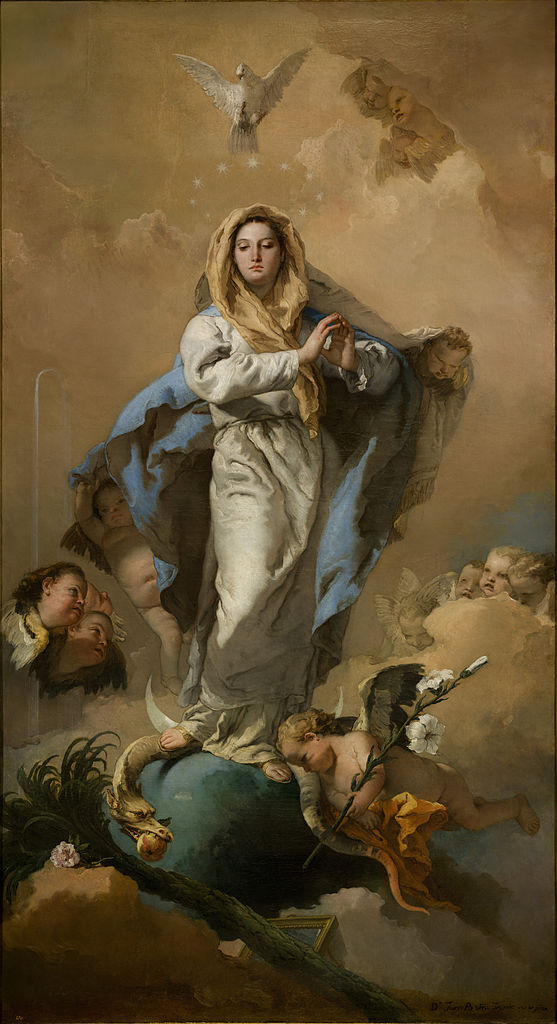
The Immaculate Conception, Giovanni Battista Tiepolo, c.1767. I love Our Lady’s expression –  a mixture of humility before the Spirit above and regal contempt for the Devil at her feet. (Source)

Additionally, by a quirk of the academic calendar, this year is the first time in my life that I will have a genuine Advent. Since seventh grade, I’ve had exams deep into December. Since I became Catholic four and a half years ago, I haven’t had the chance to experience this season for what it is, a time of profound peace, penance, and prayer in preparation for the Nativity of Christ. All of which prompts me to beg for your prayers.

Our Lady, Immaculate, pray for us.
Our Lady, Theotokos, pray for us.
Our Lady, Queen of Heaven, pray for us.

immaculb

Immaculate Conception, José Claudio Antolinez, 17th century. (Source)

A Sophianic Documentary

Skelligs

The Puffins of Little Skellig, featured in the show. (Source)

Recently, I had the good fortune of watching Ireland’s Wild Coast, a PBS piece. I must recommend it in the highest possible terms. You can watch the trailer here. From PBS’s description:

Emmy Award-winning wildlife cameraman Colin Stafford-Johnson takes viewers on an authored odyssey along Ireland’s rugged Atlantic coast – the place he chooses to make his home after 30 years spent shooting some of the world’s most celebrated wildlife films.

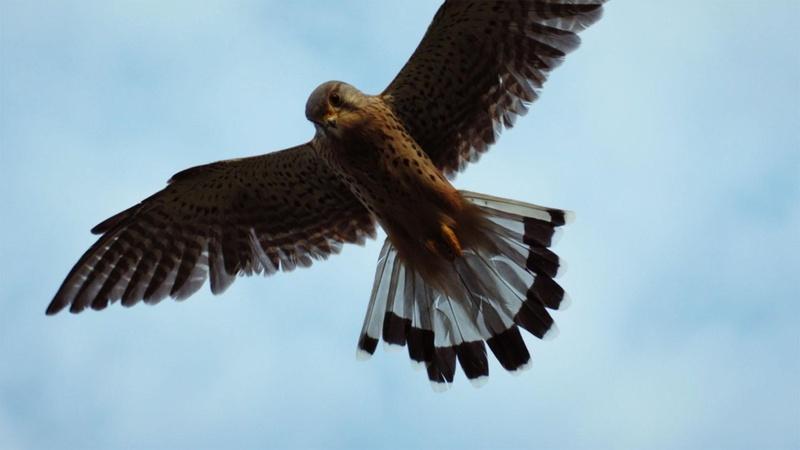
The show goes far beyond what we’re used to in the usual nature documentaries. Stafford-Johnson’s skill with the camera is peerless. Many of his shots are photographic gems in their own right. His birds are a particular delight to watch. He captures them as they move in stillnessKestrel, Eagle, Swan. Brought together with beautiful music and sensitive narration over the course of two hours, the gorgeous shots elevate each other to the level of true documentary art.

WildGeese

Irish Swans, photo by Colin Stafford-Johnson. (Source)

Stafford-Johnson couldn’t be more different than, say, David Attenboroughdistant, officious, illustrative, objective, professorial. In a word, British.

Instead, he has given us a distinctly Irish documentary. Every scene is infused with an Irish sensibility. Gone is the slightly stuffy, very British narration conveying little more than scientific data about the life cycle and behavior of various animals; gone the humanitarian appeals for conservation or legislative action on climate change; gone, too, the very American emphasis on spectacle and action. While there’s some information about the creatures that inhabit the west coast of Ireland and the threats they face, it comes across in a very different way. British and American nature shows are prose, and sometimes clunky, technical prose at that. Ireland’s Wild Coast is pure poetry. Or even—dare I say it—a prayer.

At every turn, we can sense Stafford-Johnson’s affection for and intimacy with his subject. For example, Stafford-Johnson rather touchingly says that a stag in rut “has only one thing on his mind: fatherhood.” He admires the tenacity of the humble lamprey; “Any creature that has been around for that long has got life sorted.” He has a wonderful tendency to humanize the animals he films. Surrounded by humpback whales at rest after feeding, he says, “I like to think that other animals can be happy.” In some sense, that’s the whole point of Ireland’s Wild Coast. To show us the joy of the natural world, and help us rekindle our wonder in it.

Likewise, Stafford-Johnson’s environmental concerns are usually framed by a winsome sense of home. These animals are Ireland; they belong to the land and sea; they form an integral part of his home, and must be preserved as such. The Irish sense of place, an obsession that has formed the country’s art, literature, and politics for centuries, colors Stafford-Johnson’s narration in more ways than one. For this film is not just a nature documentary. At the Skelligs, at Great Blasket, at Corcomroe, and in his traditional rowboat, Stafford-Johnson reflects on the Irish people in their history and culture. He wistfully wonders what kind of life the men who built the beehive huts of Skellig Michael might have led. He contemplates the dissolution of the monasteries. And he tells us a few old Irish legends along the way.

RedDeer

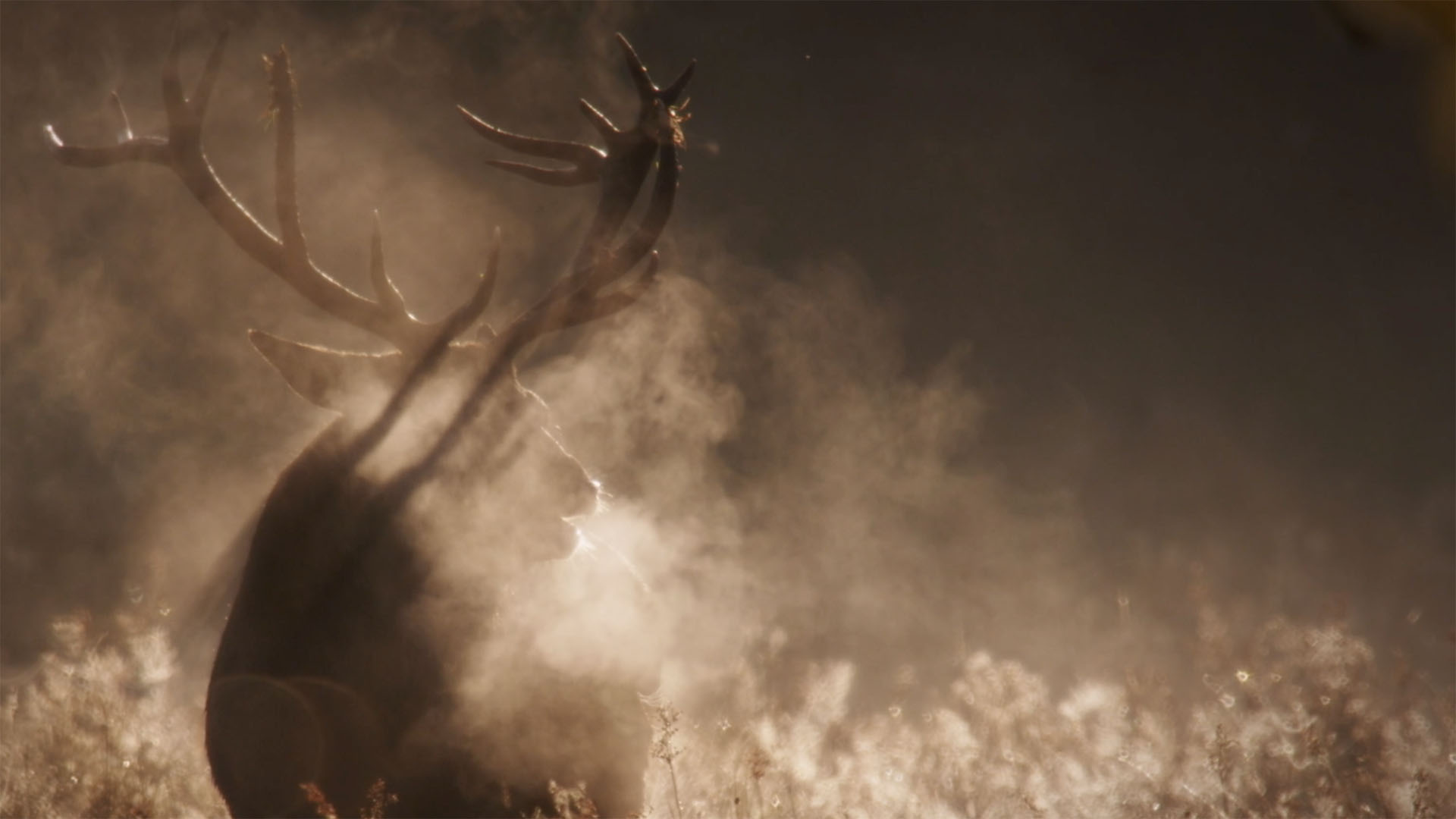
Red Deer Stag, by Colin Stafford-Johnson. Featured in the film. (Source).

The viewer is led to contemplate nature and history through a poetic lens. We become fellow-travelers with Stafford-Johnson as he winds his way up the West Coast on a watery pilgrimage. Any student of Sophiology will recognize in Ireland’s Wild Coast a perfect example of truly Sophianic art. As Michael Martin writes at the beginning of his essential text, The Submerged Reality: Sophiology and the Return to a Poetic Metaphysics:

For sophiology, especially as articulated from the 17th century onward, asks us to attend to the grace of God, his presence, in Creation: a presence which, despite the world’s fallenness, can only be described (in the words of Genesis) as “good.” (3)

That’s precisely the message that Stafford-Johnson most powerfully communicates. Not that the earth is in danger; not that wild animals live interesting and impressive lives; not even that Ireland has a unique and valuable ecosystem on its west coast. Nothing so pragmatic as that. Rather, we are left with the powerful sense of the goodness of creation. We are led to delight in it.

In watching the film—in rewatching it—in writing this piece—I am reminded not only of the lessons of latter-day sophiologists, but of that sophiologist malgré lui, Gerard Manley Hopkins. Specifically, the words of his great sonnet, “God’s Grandeur.”

And for all this, nature is never spent;
There lives the dearest freshness deep down things;
And though the last lights off the black West went
Oh, morning, at the brown brink eastward, springs —
Because the Holy Ghost over the bent
World broods with warm breast and with ah! bright wings.

No words so perfectly describe the Kestrel of Corcomroe as it hovers, hesitates, and then glides down with Pentecostal grace upon its unsuspecting prey.

Kestrel

The Kestrel, shot by Colin Stafford-Johnson. It is impossible to understand how beautiful this bird is without seeing it in motion. (Source).

Elsewhere: Fr. Hunwicke on Liturgical Wigs

image

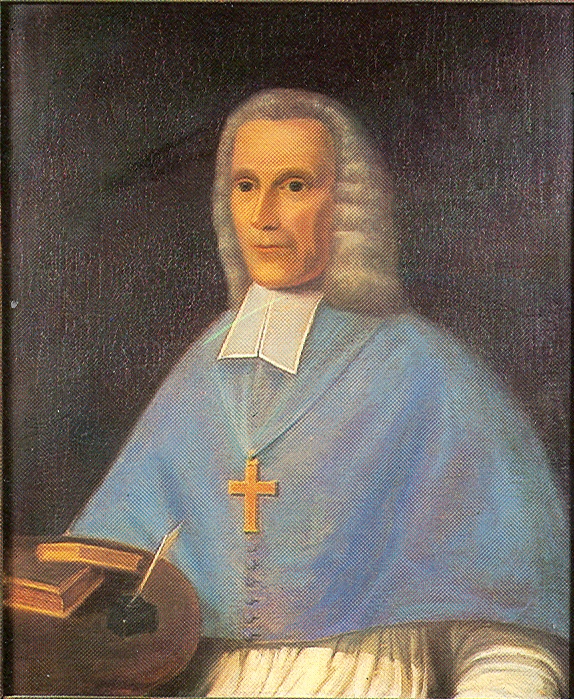
The famous portrait of Bishop Challoner to which Fr. Hunwicke refers in his piece. (Source)

I haven’t written much this week, as I’ve been traveling. However, on this beautiful  St. Bernard’s Day, I thought I’d share this brief and wonderful gem of a piece by Fr. John Hunwicke of the Ordinariate.

An excerpt:

I’m sure there are zillions of you out there who have the following sort of information right at your snuff-stained finger tips: did prelates eo fere tempore wear their wigs all through Mass? Even after their zucchetto had been removed as they approached the Consecration? When did Catholic bishops stop wearing wigs? (I think it went out of fashion in Anglican cicles in the 1830s.)

He also gets into the question of blue episcopal choir dress, mainly used in France and Ireland. Read the whole thing.

Clerical dress is one of my longstanding interests, as is the history of 18th century Catholicism. I’m glad Fr. Hunwicke is using his formidable celebrity to draw attention to these matters. While some may dismiss clerical fashion (particularly that of the Ancien Régime) as a trivial matter, I beg to differ. Clerical dress both during and outside of the liturgy is one more aesthetic component by which we can present “the beauty of holiness.” The nondescript threads worn by so many clergy and religious today are, alas, one more surrender to the cult of stark utility, false equality, failed individuality, and, in the end, boring homogeneity.

At the moment, I don’t have the time or capacity to research the questions Fr. Hunwicke raises. But The Amish Catholic will follow this story with all due attention and gravity. You can count on that. In the meantime, I’ll feast my eyes on this doozy of a cappa magna.