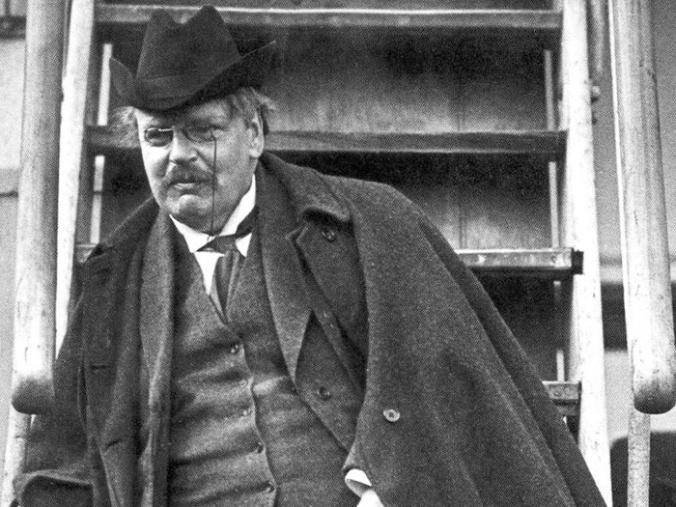
Chesterton on Cheese

ChestertonCape

G.K. Chesterton died June 14, 1936. (Source).

In honor of the anniversary of his death, I reproduce for you here G.K. Chesterton’s marvelous essay, “Cheese.” I have taken the text from G.K. Chesterton Daily.

MY forthcoming work in five volumes, “The Neglect of Cheese in European Literature,” is a work of such unprecedented and laborious detail that it is doubtful if I shall live to finish it. Some overflowings from such a fountain of information may therefore be permitted to sprinkle these pages.  I cannot yet wholly explain the neglect to which I refer.  Poets have been mysteriously silent on the subject of cheese.  Virgil, if I remember right, refers to it several times, but with too much Roman restraint. He does not let himself go on cheese.  The only other poet I can think of just now who seems to have had some sensibility on the point was the nameless author of the nursery rhyme which says: “If all the trees were bread and cheese” — which is, indeed a rich and gigantic vision of the higher gluttony.  If all the trees were bread and cheese there would be considerable deforestation in any part of England where I was living.  Wild and wide woodlands would reel and fade before me as rapidly as they ran after Orpheus.  Except Virgil and this anonymous rhymer, I can recall no verse about cheese. Yet it has every quality which we require in exalted poetry. It is a short, strong word; it rhymes to “breeze” and “seas” (an essential point); that it is emphatic in sound is admitted even by the civilisation of the modern cities.  For their citizens, with no apparent intention except emphasis, will often say, “Cheese it!” or even “Quite the cheese.”  The substance itself is imaginative. It is ancient — sometimes in the individual case, always in the type and custom.  It is simple, being directly derived from milk, which is one of the ancestral drinks, not lightly to be corrupted with soda-water. You know, I hope (though I myself have only just thought of it), that the four rivers of Eden were milk, water, wine, and ale. Aerated waters only appeared after the Fall.

But cheese has another quality, which is also the very soul of song. Once in endeavouring to lecture in several places at once, I made an eccentric journey across England, a journey of so irregular and even illogical shape that it necessitated my having lunch on four successive days in four roadside inns in four different counties. In each inn they had nothing but bread and cheese; nor can I imagine why a man should want more than bread and cheese, if he can get enough of it.  In each inn the cheese was good; and in each inn it was different.  There was a noble Wensleydale cheese in Yorkshire, a Cheshire cheese in Cheshire, and so on. Now, it is just here that true poetic civilisation differs from that paltry and mechanical civilisation which holds us all in bondage. Bad customs are universal and rigid, like modern militarism. Good customs are universal and varied, like native chivalry and self-defence. Both the good and bad civilisation cover us as with a canopy, and protect us from all that is outside. But a good civilisation spreads over us freely like a tree, varying and yielding because it is alive.  A bad civilisation stands up and sticks out above us like an umbrella — artificial, mathematical in shape; not merely universal, but uniform. So it is with the contrast between the substances that vary and the substances that are the same wherever they penetrate. By a wise doom of heaven men were commanded to eat cheese, but not the same cheese.  Being really universal it varies from valley to valley. But if, let us say, we compare cheese with soap (that vastly inferior substance), we shall see that soap tends more and more to be merely Smith’s Soap or Brown’s Soap, sent automatically all over the world.  If the Red Indians have soap it is Smith’s Soap. If the Grand Lama has soap it is Brown’s soap.  There is nothing subtly and strangely Buddhist, nothing tenderly Tibetan, about his soap. I fancy the Grand Lama does not eat cheese (he is not worthy), but if he does it is probably a local cheese, having some real relation to his life and outlook.  Safety matches, tinned foods, patent medicines are sent all over the world; but they are not produced all over the world.  Therefore there is in them a mere dead identity, never that soft play of slight variation which exists in things produced everywhere out of the soil, in the milk of the kine, or the fruits of the orchard.  You can get a whisky and soda at every outpost of the Empire: that is why so many Empire-builders go mad.  But you are not tasting or touching any environment, as in the cider of Devonshire or the grapes of the Rhine. You are not approaching Nature in one of her myriad tints of mood, as in the holy act of eating cheese.

When I had done my pilgrimage in the four wayside public-houses I reached one of the great northern cities, and there I proceeded, with great rapidity and complete inconsistency, to a large and elaborate restaurant, where I knew I could get many other things besides bread and cheese.  I could get that also, however; or at least I expected to get it; but I was sharply reminded that I had entered Babylon, and left England behind.  The waiter brought me cheese, indeed, but cheese cut up into contemptibly small pieces; and it is the awful fact that, instead of Christian bread, he brought me biscuits.  Biscuits — to one who had eaten the cheese of four great countrysides!  Biscuits — to one who had proved anew for himself the sanctity of the ancient wedding between cheese and bread! I addressed the waiter in warm and moving terms.  I asked him who he was that he should put asunder those whom Humanity had joined. I asked him if he did not feel, as an artist, that a solid but yielding substance like cheese went naturally with a solid, yielding substance like bread; to eat it off biscuits is like eating it off slates. I asked him if, when he said his prayers, he was so supercilious as to pray for his daily biscuits.  He gave me generally to understand that he was only obeying a custom of Modern Society. I have therefore resolved to raise my voice, not against the waiter, but against Modern Society, for this huge and unparalleled modern wrong.
A Poem for Trinity Sunday

TrinityThrones

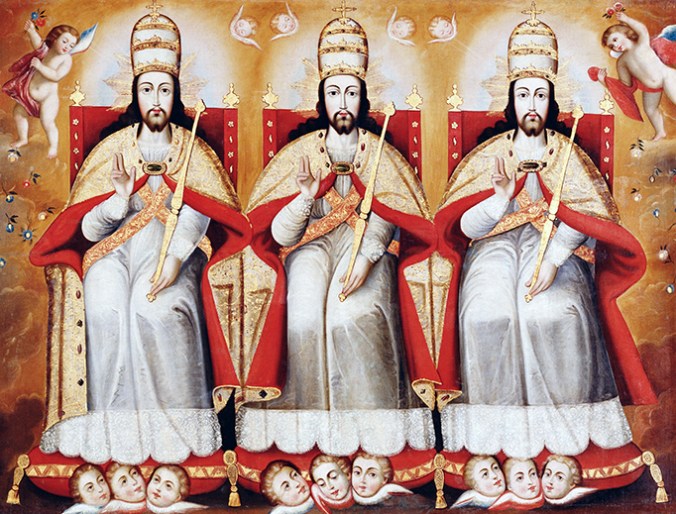
“The Enthroned Trinity.” Cuzco School. c. 1730. (Source).

Holy Sonnet XIV
John Donne

Batter my heart, three-person’d God, for you
As yet but knock, breathe, shine, and seek to mend;
That I may rise and stand, o’erthrow me, and bend
Your force to break, blow, burn, and make me new.
I, like an usurp’d town to another due,
Labor to admit you, but oh, to no end;
Reason, your viceroy in me, me should defend,
But is captiv’d, and proves weak or untrue.
Yet dearly I love you, and would be lov’d fain,
But am betroth’d unto your enemy;
Divorce me, untie or break that knot again,
Take me to you, imprison me, for I,
Except you enthrall me, never shall be free,
Nor ever chaste, except you ravish me.
TrifacialTrinityCuzcoSchool

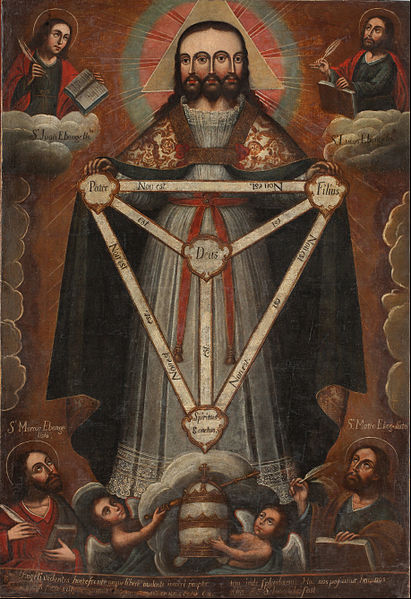
“Trifacial Trinity,” Cuzco School. c. 1750-70. (Source).

Three Poems for Whitsunday

Fresco-Zica

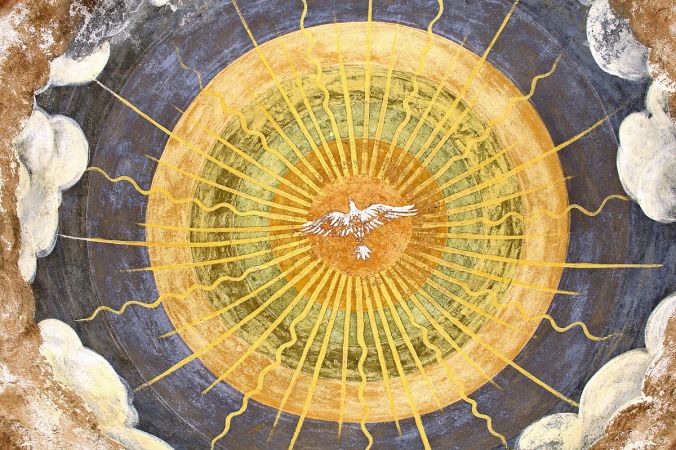
The Dove Descending…(Source)

Inspired by and borrowing from Artur Rosman’s similar post, I offer you some Pentecostal poetry.

“Little Gidding” IV, by T.S. Eliot

The dove descending breaks the air
With flame of incandescent terror
Of which the tongues declare
The one discharge from sin and error.
The only hope, or else despair
Lies in the choice of pyre of pyre-
To be redeemed from fire by fire.

Who then devised the torment? Love.
Love is the unfamiliar Name
Behind the hands that wove
The intolerable shirt of flame
Which human power cannot remove.
We only live, only suspire
Consumed by either fire or fire.

“God’s Grandeur,” by Gerard Manley Hopkins S.J.

The world is charged with the grandeur of God.
    It will flame out, like shining from shook foil;
    It gathers to a greatness, like the ooze of oil
Crushed. Why do men then now not reck his rod?
Generations have trod, have trod, have trod;
    And all is seared with trade; bleared, smeared with toil;
    And wears man’s smudge and shares man’s smell: the soil
Is bare now, nor can foot feel, being shod.
And for all this, nature is never spent;
    There lives the dearest freshness deep down things;
And though the last lights off the black West went
    Oh, morning, at the brown brink eastward, springs —
Because the Holy Ghost over the bent
    World broods with warm breast and with ah! bright wings.


“Epigrammata Sacra XIII” – The descent of the Holy Spirit – Richard Crashaw

Bear, o bosoms, bear ye what Heaven’s vintage showers,
Sacred clusters pouring from ethereal bowers.
Too happy, surely, ye who drink of wine so good;
It comes into your bosoms a sparkling, cooling flood.
Behold, with nectar’d star, each head is shining, shining;
Around your purpl’d locks a crown of life entwining.
O Spirit of all flesh, to drink who’d be denied,
Since Thou, lest they should falter, mak’st wine a torch to guide?

HolySpiritCeiling

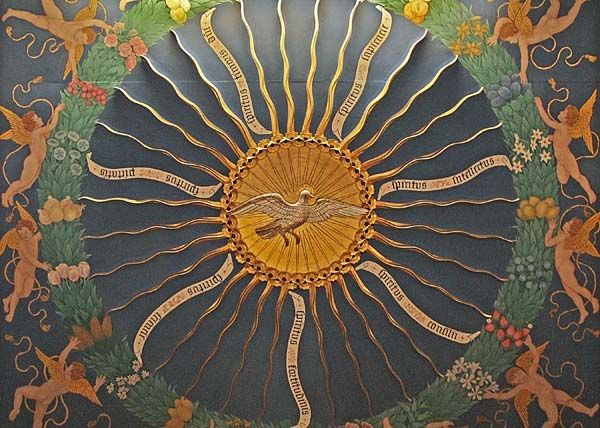
Veni Sancte Spiritus! (Source)

The Seven Sacraments in Flannery O’Connor

image.jpeg

Flannery O’Connor at her farm, Andalusia, with one of her beloved peacocks. (Source).

Flannery O’Connor’s name is synonymous with the American short story tradition. What sets her apart from her peers, besides her mastery of plot and her succinct, grotesque style, is the deep concern for issues of faith and grace that animates all of her stories. As O’Connor once put it, “All my stories are about the action of grace on a character who is not very willing to support it, but most people think of these stories as hard, hopeless, brutal, etc.” There is a certain delicious cruelty to her work. The nasty fates she metes out to children, let alone the adults who deserve what they get, rank her with the best of the gothic writers (and a humorous one at that—we can only imagine the hysterical laughter that something like Der Struwwelpeter would have provoked in her).

Yet O’Connor never show us violence for its own sake, nor for mere moralizing, nor as a ploy for cheap entertainment. Violence is the only outlet for grace in a fallen, “Christ-haunted” world. Her pages are choked and sodden with the precious blood that flows from the Cross.

Seven_Sacraments_Rogier

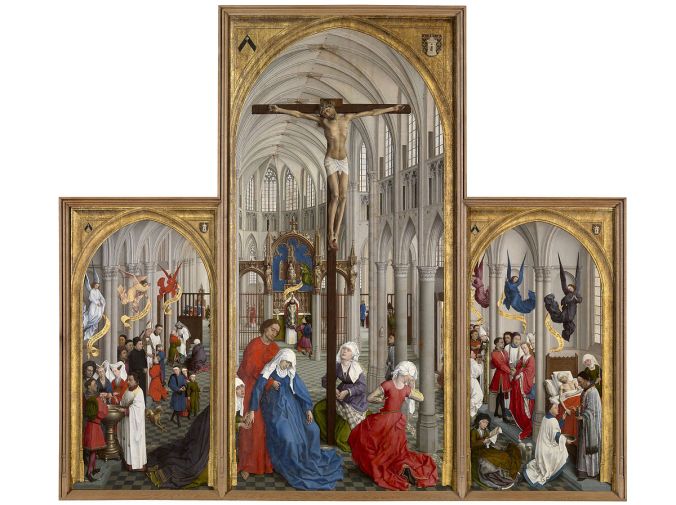
The Seven Sacraments, Rogier van der Weyden, c. 1448. O’Connor provides us with a (southern) gothic view of the sacraments. (Source)

It is a commonplace among critics that O’Connor’s writing is deeply sacramental. But to my knowledge, no author who has made that claim has also tried to find the fullness of the sacramental system present in her work.

I maintain that all seven sacraments appear in her fiction under different guises. Very often, we are given only implicit or twisted versions. It is common in O’Connor’s dark narratives to find flashes of grace in the inverse of sacraments; the truth emerges through its own negationhence her heavy use of violence. But all seven are all there, for those who “hath ears to hear” (Matt. 13:9 KJV).

In giving short descriptions of the following stories, my effort is not to justify my choices so much as to provoke further reading. As such, I will keep my descriptions succinct and relatively spoiler-free. Those who have read them may be able to see where I’m coming from. Those who haven’there’s some summer reading for you.

Baptism“The River”

This is one of O’Connor’s more overtly sacramental stories. The young son of irreligious parents accidentally gets himself baptized by a preacher in a Southern riverwith lethal consequences.

Honorable mention: The Violent Bear It Away. O’Connor thought about baptism a lot, probably because, as a rite of initiation, it is so centrally connected with questions of faith.

Confirmation“The Enduring Chill”

A sick and snobbish intellectual. A garrulous Jesuit. An overt reference to “A Simple Life” by Flaubert. Sometimes, the descent of the Holy Spirit doesn’t feel quite the way we expect.

Eucharist“A Temple of the Holy Ghost”

The only short story I know by any author that quotes the Tantum Ergo at length. There’s a good example of the “Red, Eucharistic Sun” motif that O’Connor was so fond of using. And lovers of the weird O’Connor will find her incarnational vision at a particularly grotesque note in this story.

The thinkpiece that uses “Temple” to discuss contemporary gender identity issues, sadly, has yet to be written.

ChurchDevilSign.jpg

O’Connor knew how to use a Protestant idiom to communicate Catholic doctrine. (Source).

Confession“The Lame Shall Enter First”

At one point, the liberal main character’s office is compared to a confessional. In confession, however, you hope that a good priest will comfort those who need comfort and afflict those who need affliction, for the edification and sanctification of all. Not so in Sheppard’s benevolently atheist bubble.

Marriage“Parker’s Back”

In this remarkable narrative, one of O’Connor’s most Catholic stories, we read the story of a marriage broken apart by a dramatically visible expression of extraordinary grace. Theological and moral Puritans won’t be pleased by the implications.

Holy OrdersWise Blood

What happens when you really, really, really don’t want to accept your vocation? You end up like Hazel Motes, and chase after a “Holy Church of Christ Without Christ.” The last chapter can be read as a meditation on the Imago Dei.

Unction“A Good Man is Hard to Find”

If only for that incredible, climactic line spoken by the Misfit, “She would of been a good woman…”

I may try to expand this list into a real academic work some day. For now, take this list for what it isa few reading suggestions for those of you who, like me, enjoy O’Connor, Southern Lit generally, and Catholicism.

Also peacocks.

Lots of peacocks.

CompleteStoriesFO

Cover of The Complete Stories. (Source).

A Poem for Ascension Day

AscensionWindow

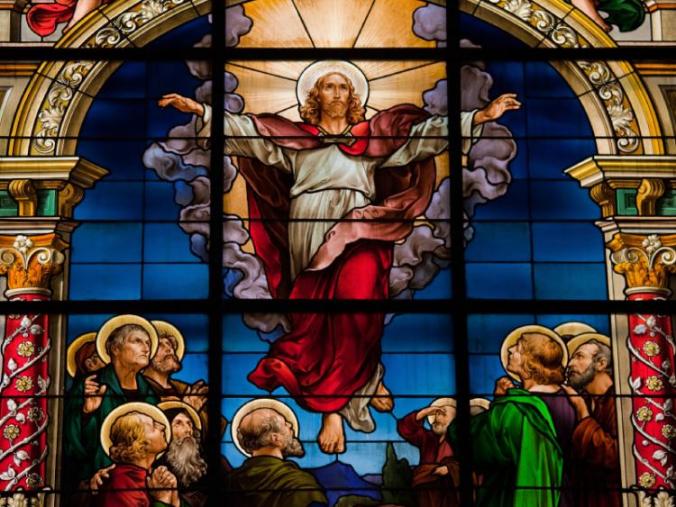
A stained glass window depicting the Ascension of the Lord. (Source).

Salute the last, and everlasting day,

Joy at the uprising of this Sun, and Son,

Ye whose true tears, or tribulation

Have purely wash’d, or burnt your drossy clay.

Behold, the Highest, parting hence away,

Lightens the dark clouds, which He treads upon;

Nor doth he by ascending show alone,

But first He, and He first enters the way.

O strong Ram, which hast batter’d heaven for me!

Mild lamb, which with Thy Blood hast mark’d the path!

Bright Torch, which shinest, that I the way may see!

O, with Thy own Blood quench Thy own just wrath;

And if Thy Holy Spirit my Muse did raise,

Deign at my hands this crown of prayer and praise.

(John Donne)

Life Update: Graduate School

SSHChurchView

St. Stephen’s House, Oxford. Source.

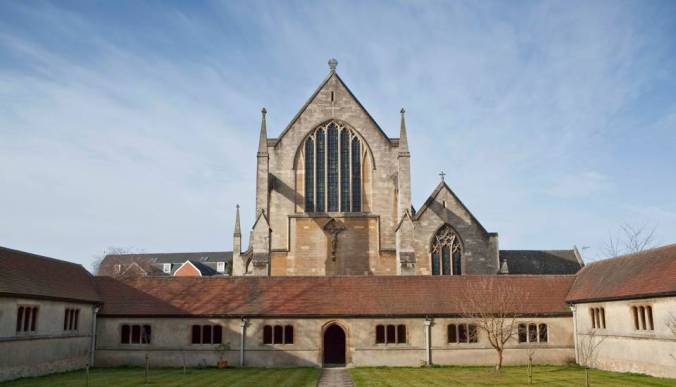
This won’t come as a surprise to those of you who know me personally, but in the interest of honesty, archiving, and my own historical interests, I thought I’d post here that I have decided to attend the University of Oxford next year in pursuit of an M.Phil. in Theology, with a concentration in Ecclesiastical History. I will be living at St. Stephen’s House.

StaggersCrest.jpg

The coat of arms of St. Stephen’s House. It incorporates elements of the coat of arms of its founder, Bishop Edward King. (Source)

I’m very happy to be at St. Stephen’s. It is the Anglo-Catholic seminary in Oxford. I am guaranteed to be around people who are seeking ordination in the Church of England. And very high Anglo-Catholics at that. I’m really looking forward to morning and evening prayer every day. While it may not be the prayer of the whole Church in the Divine Office, the Book of Common Prayer is nevertheless a fine, beautiful way to pray and meditate on Scripture in community. I also think that the liturgical rhythms of life at “Staggers,” as it’s called, will be salutary on the whole. It’s even motivated me to try to memorize a few of the old collects, as Peter Hitchens demonstrates in this debate.

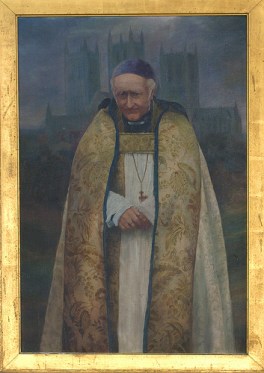
While I realize it has changed a great deal over time, the history of St. Stephen’s House is one of the reasons I’m happy to be here. It may not be one of the well-known colleges (it doesn’t even seem to have very much merchandising in the way of scarves, ties, pins, cufflinks, etc., like all the other ones). But Staggers did play its part in the history of Anglo-Catholicism. Founded by Bishop Edward King of Lincoln in 1876, the house soon became a major center of Anglo-Catholicism. It started to produce Tractarian priests by the dozens, and eventually gained a reputation as a factory of bishops and deans of cathedrals. This prolific connection to the Church of England’s highest chambers has continued into its more recent years.

edward-king

Edward King, Bishop of Lincoln. (Source)

Its relationship with Oxford, on the other hand, has varied. It only attained Permanent Private Hall status in 2003. In moving to that arrangement, it joined other historically religious foundations at Oxford: Blackfriars for the Dominicans, St. Benet’s for the Benedictines of Ampleforth, Wycliffe Hall for Evangelicals, Campion Hall for the Jesuits, and Regent’s Park (nominally) for the Baptists. It was at that time that the House broadened its emphasis to include those who were not seeking ordination in the C of E.

Moreover, Staggers has moved around Oxford. It started as a small community near the heart of town, and only much later moved to its present location across the Cherwell. To wit:

For the House’s first years, it was situated near the centre of Oxford, where the New Bodleian Library now stands. From 1919, the House had a site in Norham Gardens, near to the University Parks. In 1980 it moved to the current site…(St. Stephen’s House Blog).

The accommodations that the House took up were built by the Society of St. John the Evangelist, named alongside the parish church they ran (although it is now largely a concert venue, the House clergy still conduct liturgies there each week). The Society priests were also known as the Cowley Fathers. T.S. Eliot conducted at least one retreat there, although he was generally closer to the Benedictines at Nashdom and the Society of the Sacred Mission at Kelham (see Spurr’s biography, Anglo-Catholic in Religion).

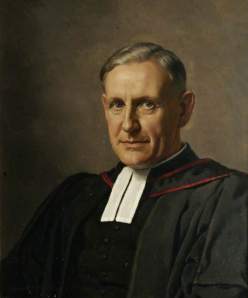
In the mid 20th century, the House prospered under the benevolent influence of Father Arthur Couratin, allegedly referred to by some as “Noël Coward in a clerical collar.”

Halliday, Edward Irvine, 1902-1984; Reverend Canon Arthur Couratin, Former Principal of St Stephen's House

Canon Arthur Couratin, Principal of St. Stephen’s House. (Source)

Although its ethos remains largely Anglican, the House has offered a few important alumni to the Church of Rome. Balthasar scholar and theologian Father John Saward graduated there, as did the one-time Bishop of Ebbsfleet and current priest of the English Ordinariate, Monsignor Andrew Burnham. Indeed, they’ve even produced the Primate of the Western Diocese of the Armenian Church of North America, Hovnan Derderian. He is the youngest Armenian archbishop.

Staggers also gave the Church of England Fr. Kenneth Leach, an important Christian Socialist priest. He was trained at St. Stephen’s when it had become a rather homoerotic place, and Leach would famously sum up his time there as “gin, lace, and backbiting.” The writer and Staggers alum A.N. Wilson composed a bitingly comedic satire of the House in those years, entitled Unguarded Hourswhich, as Ignatius Press’s reviewer puts it, is decidedly “not a Catholic novel.” Alas. Wilson, who would eventually return to Christianity after years of very public atheism, would later recall the custom formerly in vogue at Staggers of taking “religious names” that were actually rather saucy nicknames, often of the opposite sex. If Father Couratin was “Noël Coward in a clerical collar,” it seems that by the 1970’s, you were more likely to find Julian and Sandy in soutanes.

I seriously doubt that any of that persists. Women’s ordination in the C of E means that, while many Anglo-Catholics have become more liberal, their seminaries no longer smack of the kinds of homoerotic associations that fueled so many stereotypes (see Cousin Jasper’s famous quip in Brideshead Revisited). Staggers seems to remain as a pillar of sensible, ornate, properly Anglo-Catholic liturgy at its best.

StStephensLiturgy1

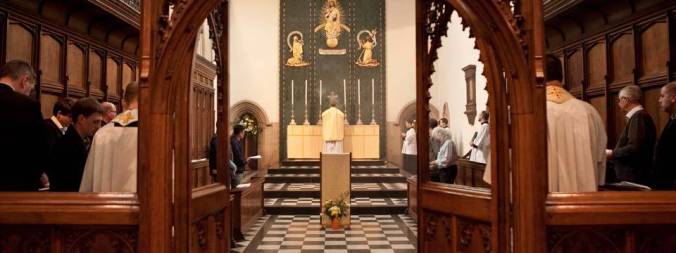
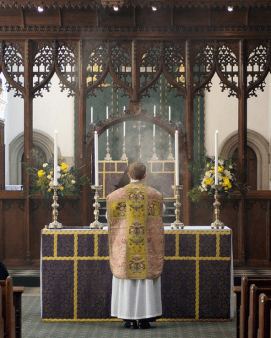
A liturgy at the parish church of St. John the Evangelist, St. Stephen’s House, Oxford. (Source).

Requiem

A requiem for the founders of the House. (Source)

StStephensHouseRose.jp

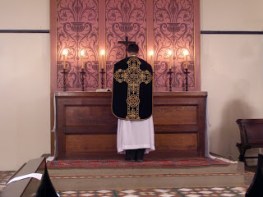
A priest says a Mass at St. Stephen’s House. I highly recommend the source I took this from, Merrily On High. An excellent source for all things Anglo-Catholic.

Of course, I could also emphasize the importance of Oxford in general as a center of CatholicismRoman and otherwise. Here, the Subtle Doctor “fired France for Mary without spot.” Here, Cardinal Wolsey established a college named for his office and, later, all of Christ’s Body on earth. Here, Archbishop Laud attempted to bring back devotion to Our Lady through a little portico on her church in town. Here, Charles I took refuge while his queen heard the Mass of Ages in Merton Chapel. Here, Keble railed against a “National Apostasy.” Here, Newman battled the liberals, and in doing so, broke ground for the Second Spring. Here, Gerard Manley Hopkins served briefly as curate. Here, Oscar Wilde flirted with men and the Church for the first time. Here, Monsignor Ronald Knox cut his clerical teeth as the chaplain of Trinity College. Here, Montague Summers was first haunted by the Vampyre’s shadow. Here, Tolkien and Lewis and Williams and their friends spoke about God long into the stout-softened night. Here, T.S. Eliot studied briefly before going on to greatness in London. Here, Evelyn Waugh thought up a story about two men and a teddy bear. Here, Father Martin D’Arcy pondered the ways of divine and human love. Here, the Oratory finally arrived in 1990 to fulfill Newman’s dream. Here, the late Stratford Caldecott wrote of God’s undying beauty in all things.

OxfordSkyline1

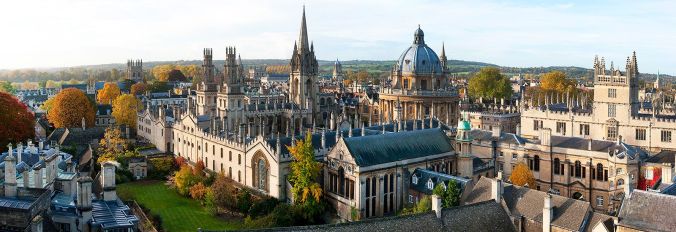
An Oxford morning. (Source).

I could name more ways in which Oxford has played a special role in the life of the Catholic Church. Perhaps I will do so in another post, or a series of posts. For now, I’m just happy to say that I’ll be in a place with a lot of Catholic history, learning about that history. And thank God for that.

CrivelliStephen

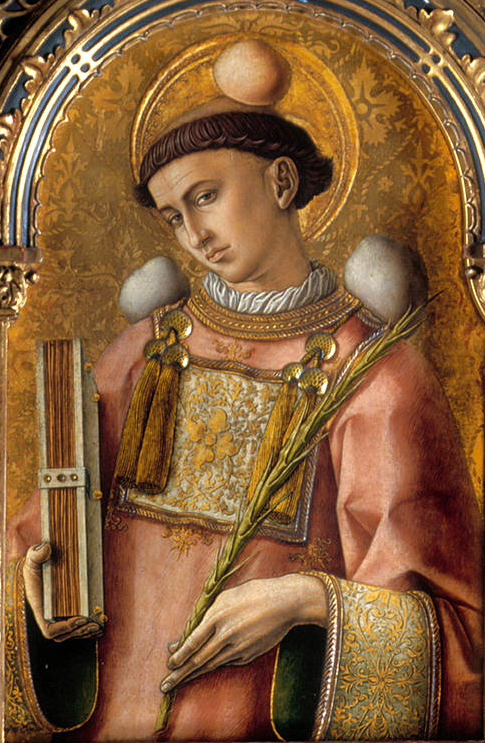
“Saint Stephen,” by Carlo Crivelli. Proto-martyr and patron of St. Stephen’s House, Oxford (and perhaps a rather wan patron at that, by the look of this paintingis that asparagus in his hand?). (Source)

PrinceofWalesatStaggers

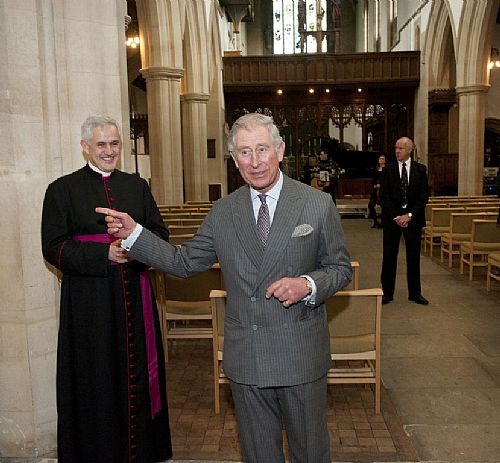
Also, apparently the Prince of Wales sometimes visits. (Source)

Elsewhere: More on Julien Green’s Life, Death, and Love of God

KlagenfurtChurch

St. Egid Church, Klagenfurt, Austria. (Source)

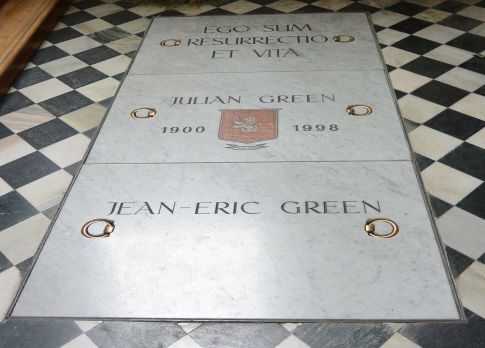
Pater Edmund Waldstein O.Cist. was kind enough to mention my recent post about Julien Green on his superlative blog, Sancrucensis. But what’s more, he built off of my essay in a really wonderful way. In his post, you can find more information on Green (particularly his later years, death, and entombment) as well as a wonderful homily he wrote incorporating elements of Green’s life and spirituality. I highly recommend a view.

JulianGreenKlagenfurt

The tomb of Julian Green and his adopted son, Jean-Eric Green. (Source)

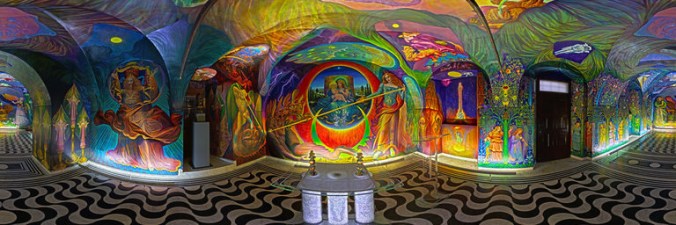
The only thing I’ll add is only tangentially related to Green. St. Egid Church, where Green is interred, is also host to one of the most remarkable chapels in existence. The Austrian artist Ernst Fuchs, a Catholic whose work draws upon the best of the Western visionary, symbolist, and esoteric tradition, was commissioned to create a chapel in the crypt. The result is…something. Although I’m a fan of Fuchs generally, I’m not convinced that his was the best approach to sacramental space. And…a clear altar?

KlagenfurtApocalypseChapel

The Apocalypse Chapel, by Ernst Fuchs. St. Egid Church, Klagenfurt, Austria. (Source)

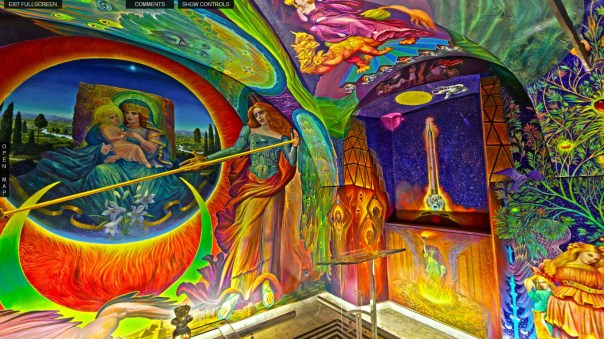
It’s a bit too psychedelic for a temple of God, I think. But hey, I’d rather attempt to worship in this overabundance of color and image than, say, a vaguely imposing and tomb-like structure that leaves its visitors depressed. I must emphasize that Fuchs’s art really can be mystical, even sophianic. Perhaps I’ll write a post on it some time soon.


apocalypse-chapel

Those really are a rocket and the Statue of Liberty. Really. (Source).

And perhaps I’ll someday have the chance to visit St. Egid Church, make the pilgrimage to pray for Green at his tomb, and see the chapel myself.

A Poem for Good Friday

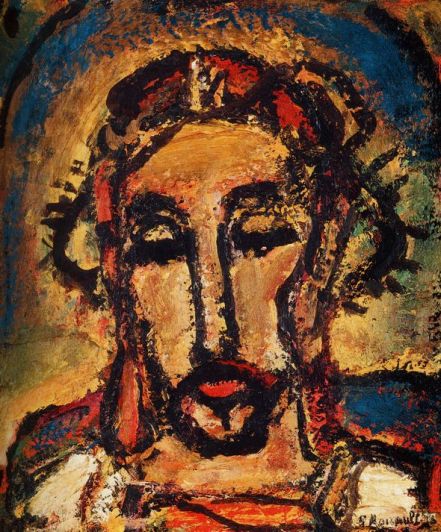
GeorgesRouaultEcceHomo

“Ecce Homo,” Georges Rouault. Vatican Museum. Rouault is an artist totally captivated by the beauty of the Holy Face.

Good Friday, 1613. Riding Westward
Let mans Soule be a Spheare, and then, in this,
The intelligence that moves, devotion is,
And as the other Spheares, by being growne
Subject to forraigne motion, lose their owne,
And being by others hurried every day,
Scarce in a yeare their naturall forme obey:
Pleasure or businesse, so, our Soules admit
For their first mover, and are whirld by it.
Hence is’t, that I am carryed towards the West
This day, when my Soules forme bends toward the East.
There I should see a Sunne, by rising set,
And by that setting endlesse day beget;
But that Christ on this Crosse, did rise and fall,
Sinne had eternally benighted all.
Yet dare I’almost be glad, I do not see
That spectacle of too much weight for mee.
Who sees Gods face, that is selfe life, must dye;
What a death were it then to see God dye?
It made his owne Lieutenant Nature shrinke,
It made his footstoole crack, and the Sunne winke.
Could I behold those hands which span the Poles,
And tune all spheares at once peirc’d with those holes?
Could I behold that endlesse height which is
Zenith to us, and our Antipodes,
Humbled below us? or that blood which is
The seat of all our Soules, if not of his,
Made durt of dust, or that flesh which was worne
By God, for his apparell, rag’d, and torne?
If on these things I durst not looke, durst I
Upon his miserable mother cast mine eye,
Who was Gods partner here, and furnish’d thus
Halfe of that Sacrifice, which ransom’d us?
Though these things, as I ride, be from mine eye,
They’are present yet unto my memory,
For that looks towards them; and thou look’st towards mee,
O Saviour, as thou hang’st upon the tree;
I turne my backe to thee, but to receive
Corrections, till thy mercies bid thee leave.
O thinke mee worth thine anger, punish mee,
Burne off my rusts, and my deformity,
Restore thine Image, so much, by thy grace,
That thou may’st know mee, and I’ll turne my face.

Source

Some Occasional Thoughts on the Holy Minimalists and the Light of Tabor

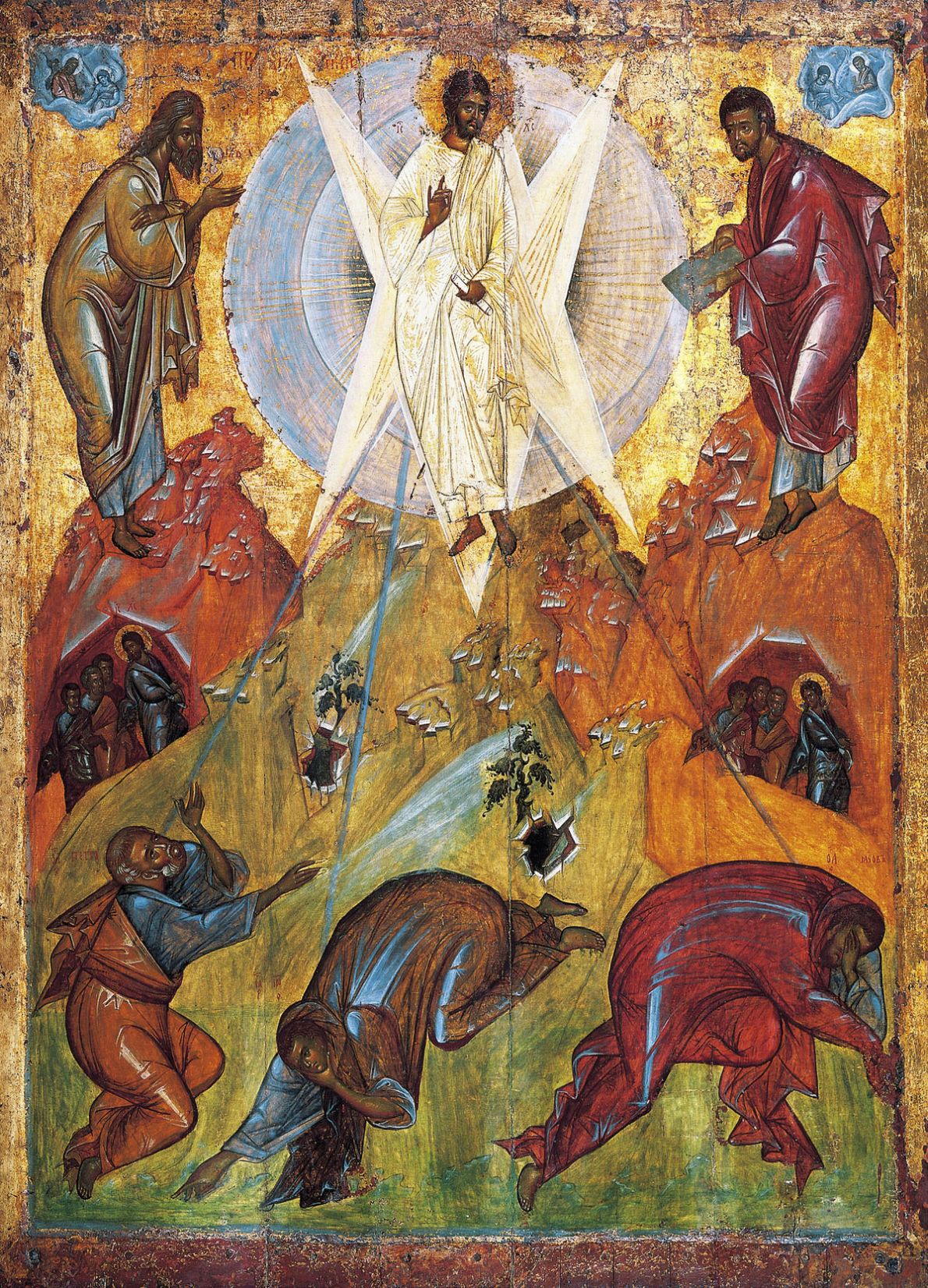
IconTransfigurationFeofanGrek

Icon of the Transfiguration, by the hand of the great 15th century iconographer of Moscow, Theophanes the Greek.

Jesus took Peter, James, and John his brother, and led them up a high mountain by themselves. And he was transfigured before them; his face shone like the sun and his clothes became white as light. And behold, Moses and Elijah appeared to them, conversing with him. Then Peter said to Jesus in reply, “Lord, it is good that we are here. If you wish, I will make three tents here, one for you, one for Moses, and one for Elijah.” While he was still speaking, behold, a bright cloud cast a shadow over them, then from the cloud came a voice that said, “This is my beloved Son, with whom I am well pleased; listen to him.” When the disciples heard this, they fell prostrate and were very much afraid. But Jesus came and touched them, saying, “Rise, and do not be afraid.” And when the disciples raised their eyes, they saw no one else but Jesus alone.

As they were coming down from the mountain, Jesus charged them,”Do not tell the vision to anyone until the Son of Man has been raised from the dead.”

These words from St. Matthew were the Gospel reading at Mass last night. Yesterday was the second weekend of Lent, and the Church directs our eyes, alongside those of the holy apostles, to the face of Our Lord in His Transfiguration. And in the Eastern Churches, today is St. Gregory Palamas Sunday. Palamas is most famous for his articulation of the Essence-Energies distinction as part of a broader polemic against the Byzantine Scholastic attacks on Hesychasm carried out by Barlaam of Seminara. One of Palamas’ key Scriptural examples of God’s energies is the “uncreated light” of Christ’s glory in the Transfiguration. St. Gregory is celebrated to this day by the Eastern Orthodox and by Eastern Catholics on their Lenten calendars; yet in the post-Scholastic West, he still holds no place on the calendar. I must wonder whether or not the readings for the Second Sunday of Lent were chosen at the revision of the Lectionary in part as an ecumenical gesture to the Orthodox, though my knowledge of 20th century liturgical innovations is shallow at best. Regardless, those who, to adapt a phrase of Pope St. John Paul II, “breathe with both lungs” of the Church can recognize the Providential coincidence of these two celebrations.

The Light of Tabor is, in a Palamite reading, the eternal Glory of God made manifest in, with, and through Christ’s created humanity. The Transfiguration is therefore an archetypal moment for every mysticnot just the Hesychasts whom St. Gregory was defending. In view of all this, while I listened to the priest reading the Gospel this evening, a song came to mind: “My Heart’s in the Highlands,” by Arvo Pärt. The lyrics are taken from a poem by Robert Burns. Here’s the chorus:

My heart’s in the Highlands, my heart is not here,
My heart’s in the Highlands, a-chasing the deer;
Chasing the wild-deer, and following the roe,
My heart’s in the Highlands, wherever I go.

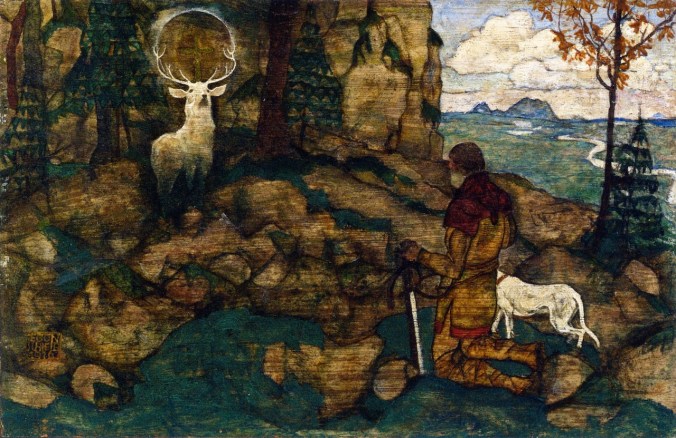
A few weeks ago, when I first listened to the song, it immediately struck me as a potent metaphor for the contemplative life. Is not the contemplative’s heart set in the “high lands” of the spirit, like St. John of the Cross’s Mount Carmel? And has the Divine not been associated with wild deer throughout history, from the panting hart of Psalm 42 to the vision of St. Hubert to the White Stag of Narnia? The Apostles, like the mystics, like the chanting voice in Pärt’s song, are “led…up a high mountain by themselves.” There, they find Christ’s true glory, the energy of His divinity totally interpenetrating all they can perceive of him. The created rises into the divine, and the uncreated bends towards the creaturely; the two meet in the transfigured Christ. The dual presence of the heavenly Elijah and the Sheol-bound Moses demonstrates the moment of radiant communion between God and His creation, manifested perfectly in Christ, the Word made flesh.

Pärt’s song describes the experience of the mystic, not because Burns’ words actually refer to contemplation, but because of the way he takes up the verse and stretches it against an agonizingly poignant organ composition. He sets secular words to sacred music. Thus he accomplishes in miniature the assumption of the creaturely by the divine that comes before our vision in the Transfiguration. Art at its finest is called to participate in this lesser Transfiguration, and Pärt is a consummate master of what Tolkien might call “sub-creation.”

But Pärt is not alone in this; one of his colleagues, John Tavener, arguably a finer and more mystically-oriented composer, also transfigured profane writings into sacred pieces of music. I can think of no better example of this than his brief and delightful motet, “The Lamb.” Tavener took the lyrics from William Blake’s poem of the same name. In full, it reads:

Little lamb, who made thee
 Dost thou know who made thee,
Gave thee life, and bid thee feed
By the stream and o’er the mead;
Gave thee clothing of delight,
Softest clothing, woolly, bright;
Gave thee such a tender voice,
Making all the vales rejoice?
 Little lamb, who made thee?
 Dost thou know who made thee?

 Little lamb, I’ll tell thee;
 Little lamb, I’ll tell thee:
He is callèd by thy name,
For He calls Himself a Lamb.
He is meek, and He is mild,
He became a little child.
I a child, and thou a lamb,
We are callèd by His name.
 Little lamb, God bless thee!
 Little lamb, God bless thee!

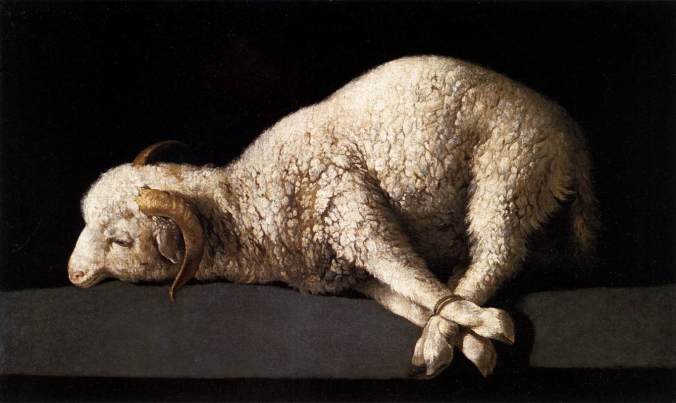
Here too, we might glimpse the transfigured Lamb of God between the lines of Blake’s verse. The lamb’s “clothing of delight/Softest clothing, woolly, bright” seems to echo the robe rendered “white as light” on Mt. Tabor. Blake speaks of “the vales” when Scripture instead would bring us up to the peaks. And the question that ends the first verse is fundamentally the same as that which must have run through the minds of the bewildered apostles; who is this man? The answer, of course, comes from the voice in the cloud: “This is my beloved Son, with whom I am well pleased; listen to him.” And Tavener’s eerily beautiful choral setting imbues the lyrics with a dimension hitherto unimagined. Many of his works remind one of candlelight on ritual gold, or the smell of incense flying forth with the rhythm of thurible bells, or the echo that thins out asymptotically under the glittering mosaic of a high dome. “The Lamb” is all of this, presented compactly. It stands as one of his finest works, and one of his most spiritually rich.

I recently wrote about the Holy Minimalists in a piece on the music of The Young Pope. They’ve been on my mind. But I didn’t connect their artistic project to the Transfiguration until tonight. We Christians are to become “little Christs,” imitating Jesus in all things by adoption and deification. Sometimes, that takes the form of contemplation. The apostles model that path for us in their behavior on Mt. Tabor. But at other times, and in other ways, we are called to live the life of Christ more directly. The Transfiguration provides a mystical glimpse of what happensand indeed, what will happenwhen the uncreated Light of God assumes, permeates, and glorifies the creation. Of course, the energies of God are not found in the artifices of men; but artists can practice their own, creaturely form of transfiguration. The pieces of music I have discussed are shot through with an awareness of the divine presence, and the words that began as profane poetry become something altogether different, something sacred, something nearly liturgical.

At the beginning of Lent, T.S. Eliot tells us to “Redeem/The time.” On this, the Second Sunday of the penitential season, Christ reveals in Himself how we might do soa transfiguration that Arvo Pärt and John Tavener have achieved, in some small way, through their own creative work.


A Theological Primer on Emblems

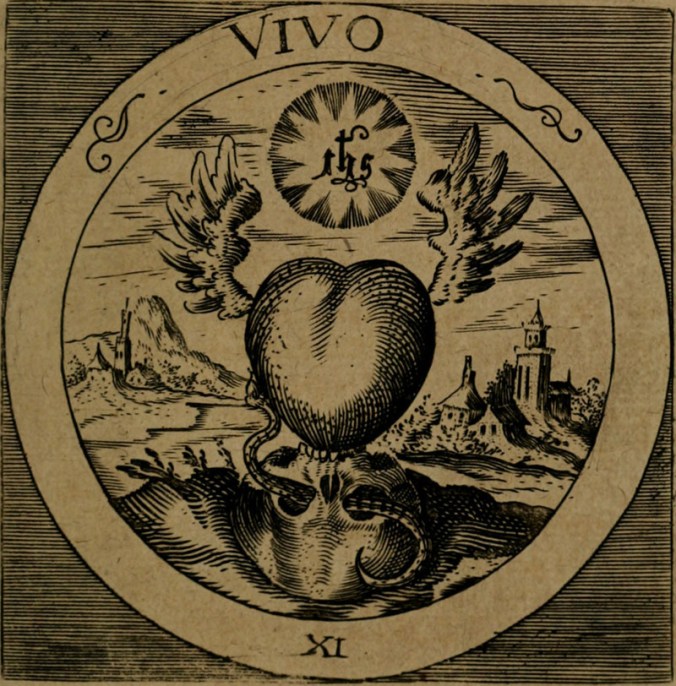
emblematasacravivo

“I Live,” from the Emblemata Sacra (1618)

Of all the myriad forms of visual theology that draw upon the Western traditions of art history, perhaps no medium is quite as neglected as the emblem. The books that contained these small, symbolically rich images constituted a prolific genre in the early modern period. They had a fairly standard format. Usually, the emblems sat alongside a few moral or sacred verses in Latin, Greek, or a European language. Daniel Cramer’s Emblemata Sacra (1618), from which the image above was taken, is a good example of this polyglot tendency. On the verso, one can find a quatrain in Latin, German, French, and Italian, always connecting the symbolism of the emblem with a French and Italian verse of the Scriptures. On the recto, the emblem sits under the same verse, this time in Latin and German. The page concludes with an epigrammatic prayer in Latin.

It seems that emblem books were popular in early modern Europe. Mara R. Wade of the University of Illinois Urbana-Champaign writes, “In the preface to his Companion to Emblem Studies (2006) Peter Daly estimates that ca. 6,500 emblem books were published during the Renaissance, with an individual volume containing anywhere from 15 to 1,500 emblems.” Wikipedia lists no fewer than 54 representative titles, though there were certainly many more produced between 1500 and 1800 (as any cursory review of UIUC’s  Emblematica Online or the French Emblems at Glasgow archives can show). The fact that these books were often printed with multiple languages of text side by side suggests that they were documents with cross-cultural appeal. They were meant to speak not only to the elites who knew Latin, but also to the literate bourgeoisie. All of that makes their emergence as a genre at a time of religious strife even more remarkable.

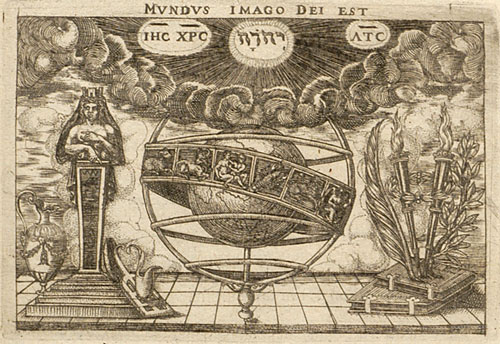
LeMondeLImagedeDieu

“Le Monde est L’Image de Dieu,” one of the more explicit expressions of esoteric philosophy, in Boissard’s Emblemes latins […] avec l’interpretation Francoise (1588). It anticipates Boehme’s De Signatura Rerum by nearly 40 years.

Of course, not all emblem books were targeted for mass appeal. Occult works often made rich use of emblems. The chief virtue of the emblem is its capacity of succinct complexity. It can communicate a lot by saying very little. It obscures by revealing; it hides by manifestation. As one source puts it, “Emblems are concise yet potent combinations of texts and images that invite, and require, decoding.” This makes the emblem the perfect vehicle for the esoteric proliferation of ideas. “He who has ears to hear, let him hear,” says the Lord. If He had come in the age of Gutenberg, perhaps He would have delivered His parables in emblem books. Of course, to say so is to implicitly claim Christ as a Protestant. Catholics did produce emblem books; indeed, one of the latest examples I have found is the 1780 French reprint of Dom Bonifaz Gallner’s earlier Regula Emblematica Sancti Benedicti. However, it would seem that the majority of important emblem books flowed from Protestant presses.

Michael-Maïer-Atalanta-Fugiens-1618-Emblème-XXI1-e1435998180296

Emblem XXI from the alchemical text Atalanta Fugiens (1617), by the Lutheran Rosicrucian Michael Maier

There is a good historical and aesthetic reason for this. The emblem functions by setting up a symbol or a system of symbols independent of any text. While text was sometimes used to elucidate the meaning of those symbolic networks, it was always secondary to the image itself. The emblem book is one of the last gasps of the primacy of image over text in European thought. Along with the Wunderzeichenbuchen, the emblem book is one of the main genres mobilized by Continental Protestants to rediscover a non-iconographic (and, to their mind, a non-idolatrous) use of image in moral and spiritual development. Instead of an image asserting its “auratic” power to the exclusion of text, the emblem book suggests a way that text and image can mutually illuminate each other. As Mara Wade writes, the emblem books engendered “a process of reciprocal reading of texts and images, whereby the back and forth between the words and the pictures creates meaning. The picture presents the reader with a recognizable scene or symbolic collage, and the text then reorients the reader’s understanding of that scene to present a new and unexpected message.” In this sense, the emblem book clearly partakes of a distinctly Humanist and Protestant heritage. Note again that emblem books were very often the chosen medium for the quasi-scientific magical teachings of the Rosicrucians and alchemists. Those strange laborers were also, in their own quixotic way, seeking to reclaim something of the sacramental worldview thrown away by the iconoclastic Reformers (see Henry 2015).

The triumph of discursive reason over image in the Enlightenment led to the decline of the emblem book as a genre (there are surely other reasons tied to shifting book markets, but my capacities to do research into textual history are limited at this time). After that, the record has been rather sparse. Hamann occasionally used emblems in his philosophical works. More recent theologians have largely overlooked the emblem book as a theological genre. The single counterexample I can readily think of is Valentin Tomberg’s Meditations on the Tarot, which can only count as an emblem book when we ignore its departures from the traditional form. Yet the renewal of esoteric Catholicism by reliably orthodox publishing houses like Angelico Press suggests that the emblem book may have a place in the theology of the future.

Its revival seems particularly apropos in an age when memes have become topics of serious political discourse, when visual self-representation has been amplified through various social media, and when new norms of communication emphasize brevity over detail. An epoch is defined, in large part, by the relation of its people to their media. The development of the printing press launched early modernity by helping to bring about new conceptions of subjectivity, as well as new questions about the relationship of text and image. Consequently, the emblem book arose to grapple with some of those questions. The next great civilizational step in communication arrived with the internet, accompanying nascent postmodernity. Perhaps we shall see a revival of the emblem book for theologians to navigate this “brave new world.”