The Best Depictions of the Subtle Doctor

I’ve taken a major interest in Scotus recently. His Christology and Mariology seem to be treasures that remain largely unexploited by contemporary theologians, in part because he was recognized as being in the right about a doctrine that became dogma almost two hundred years ago. He is at the center of ongoing debates about the advent of secularism and modernity, debates which I am not competent to comment on at this time. Nevertheless, I thought it might be fun to examine some of the ways that Catholics (mostly Franciscans) have memorialized him in art over the course of the last several centuries. In some sense, the variety of depictions here tell a story of a lineage long overshadowed by other, more influential streams of thought. Thomism in particular has had a near perennial appeal within the Church, whereas Scotism, it seems, has largely been a niche concern. After all, Scotus has not yet been canonized or joined the ranks of the Doctors of the Church. This inequity arose from a variety of factors. No doubt, the fate of Scotism has come partially from Scotus’s own difficult style and vast intelligence. There’s a reason he’s called the “Subtle Doctor.”

May my small collection here help rectify that oversight on this, his feast day.
Bl John Duns Scotus-thumb-275x279-4957

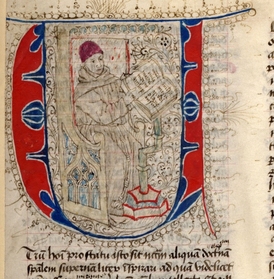
John the Scot (c. 1266 – 8 Nov. 1308), appearing in what must be one of his earliest depictions: an illuminated capital. (Source)
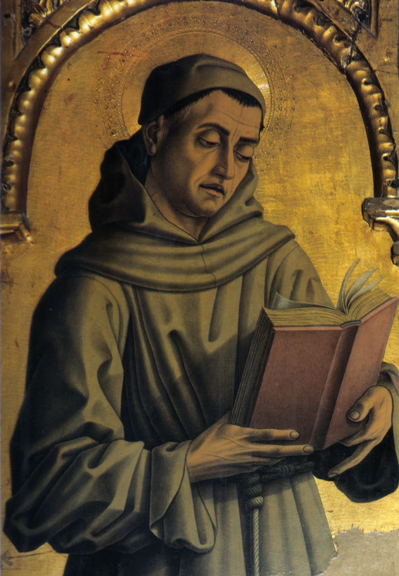
bl-john-duns-scotus

A Renaissance portrait of the Blessed John Duns Scotus. One point that people forget about Scotus is that he defended the rights of the Church against Philip IV, who had wanted to tax church properties. For his bold stance, he was exiled for a few years from Paris. (Source)
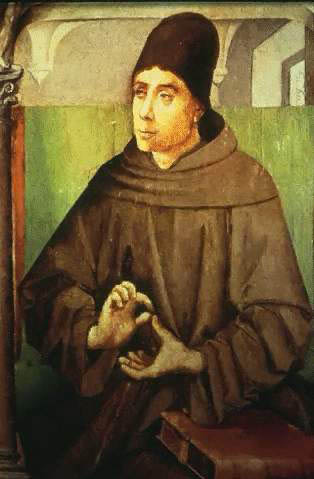
JohnDunsScotus_-_full

Perhaps the most famous, a late-Medeival, early-Renaissance portrait of Scotus. The name of the artist escapes me. (Source)
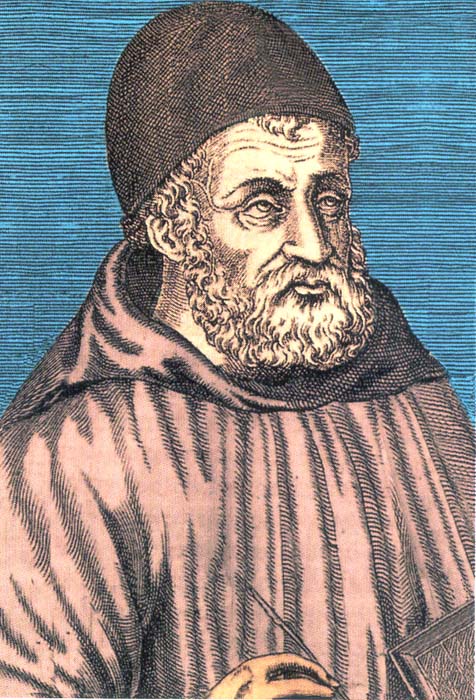
Beato_Giovanni_Duns_Scoto_B

An early modern engraving of Scotus, probably early to mid 15th century. (Source)
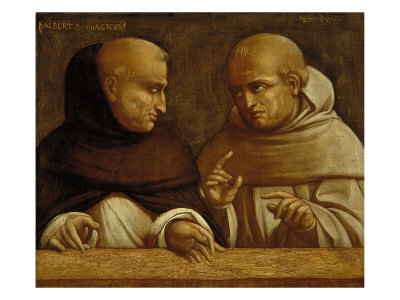
St Albert the Great & Bl John Duns Scotus

Here he is with St. Albert the Great, one of the Dominican Doctors. (Source)
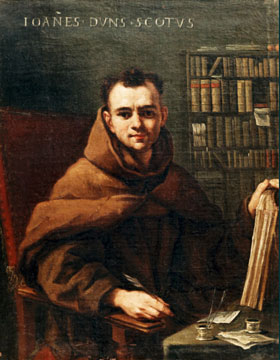
duns-scotus1

Scotus the Scholar. Age and provenance unclear; my guess is late 17th century, though it may be later. (Source)
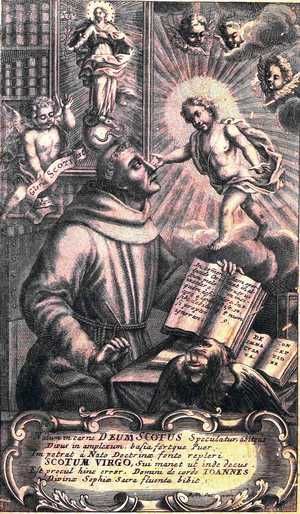
Scotus17thcentury

Scotus receiving a vision of the Christ Child, 17th or 18th century. Although chiefly remembered for his metaphysics and Mariology, Scotus made major contributions to Christology, defending the Patristic idea of Christ’s Absolute Primacy. (Source)
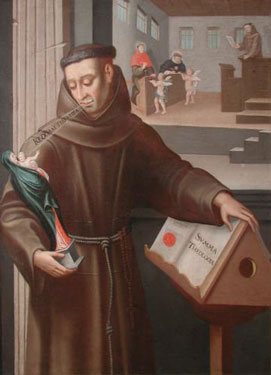
scotusstatue1

From the early modern period, it became typical to depict Scotus with representations of the Virgin Mary, whose Immaculate Conception he famously defended. This piece, probably from the 18th century, is one such example. It also contains a pretty clear criticism of Aquinas – Scotus looks away from the Summa to gaze lovingly at Mary (Source: this very friendly take on Scotus by a prominent popular Thomist)
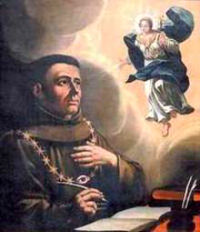
11_08_duns_scotus2

A slightly more dramatic iteration of the same theme. Scotus is inspired by the Immaculate Conception. (Source)
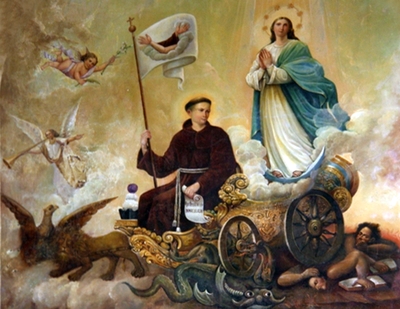
ScotusChariot

My single favorite image of Scotus is this ludicrously over-the-top Rococo depiction of Scotus and the Immaculate Conception triumphing over heresy and sin. He holds the arms (no pun intended) of the Franciscan order. His defense of the Immaculate Conception surpassed the doubts of even his own order’s great luminary, St. Bonaventure. And what a marvellously simple argument it was, too. Remember: POTVIT DECVIT ERGO FECIT. (Source).
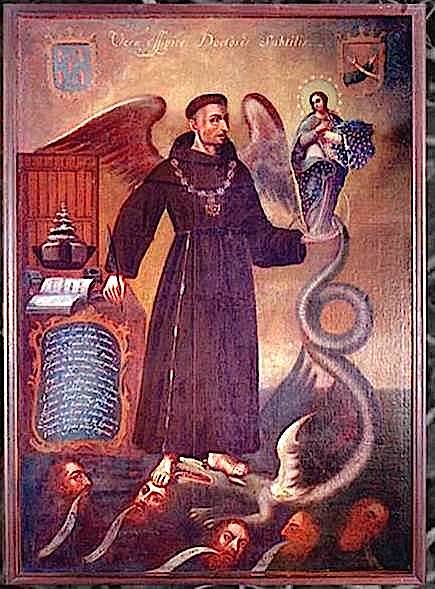
Izamal Duns Scotus Adopte rest

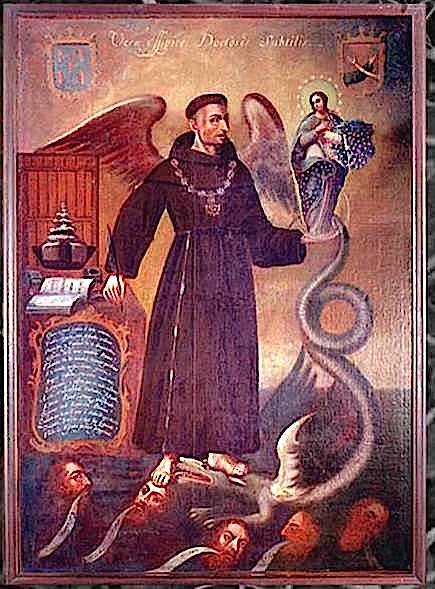
Likewise, this totally marvelous Colonial Mexican painting from the Franciscan monastery of Izamal, Yucatan, is something else. Rare is the saint granted wings in traditional iconography, though the trend was not uncommon in early modern Mexican art (Source)
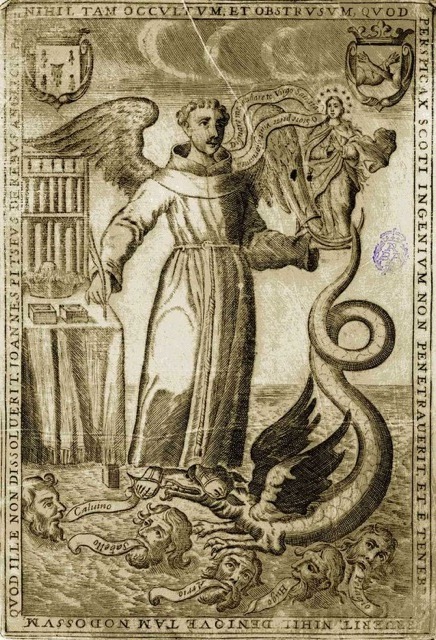
Joannes Pitseus, Scotus 1619

The mystery solved! This version by Johannes Pitseus comes from 1619, and served as a model for the Izamal piece. Here, it’s clearer that the heads represent various heretics, including Pelagius, Arius, and Calvin. (Source)
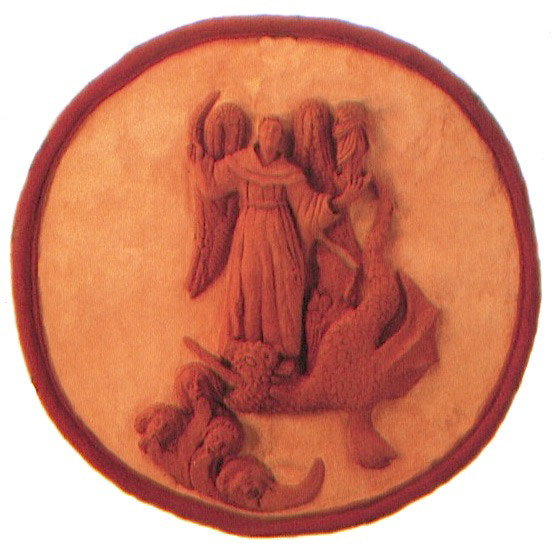
Landa Duns Scotus

This ceiling relief from Landa, Querétaro, uses the same iconographic lexicon. It seems that the Franciscans of colonial Mexico had a set of stock images to propagate devotion to their own saints. (Source)
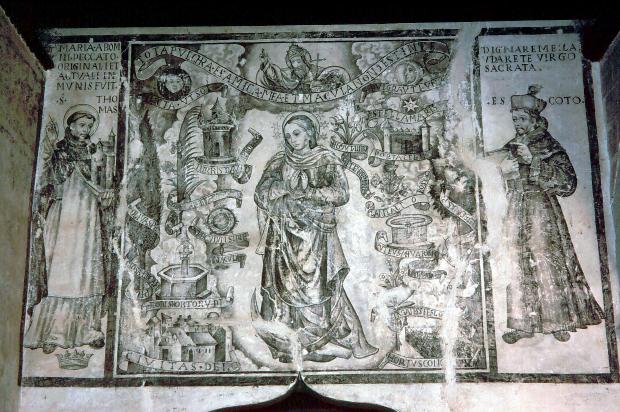
huej purisima

Here’s another unusual image of Scotus. In this mural of Mary Immaculate, or La Purísima, we see Scotus alongside St. Thomas Aquinas…and wearing a biretta! A remarkable addition, unique among all other depictions of the Subtle Doctor that I know of. (Source)
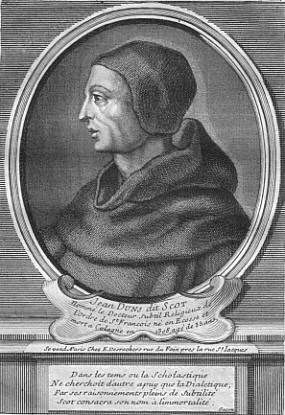
SCOTUS

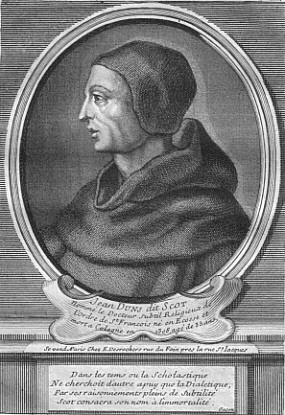
Moving away from Mexico, we come to this rather uninteresting French portrait of Scotus. Not all 18th century portraits of the man are elaborate bits of Franciscan propaganda. (Source)
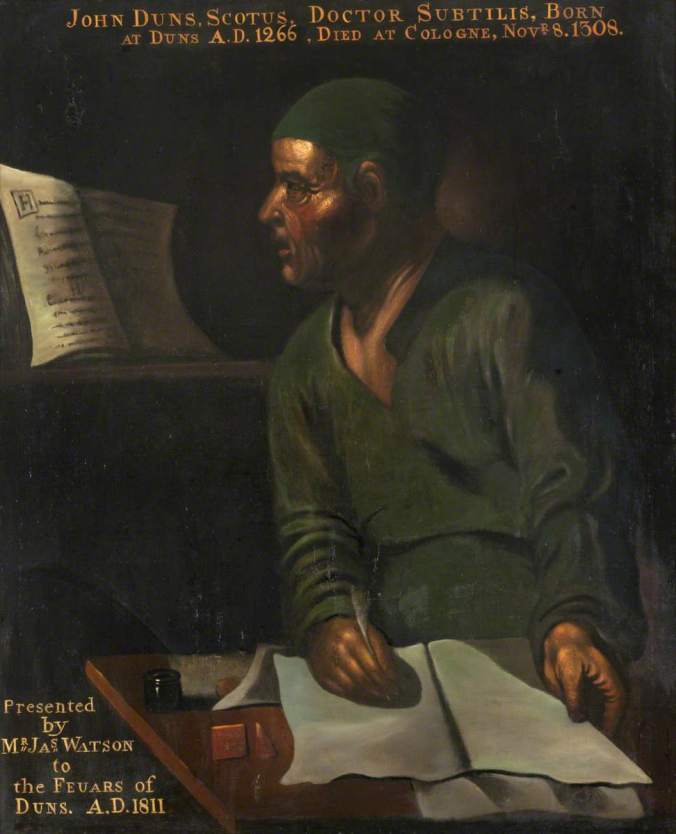
 

unknown artist; John Duns Scotus (1266-1308)

A late 18th or early 19th century depiction of Bl. John Duns Scotus. If this is in fact an English painting, its creation at a time of high and dry Anglican Protestantism poses interesting questions about the use of Scotus as a figure of national pride. (Source)
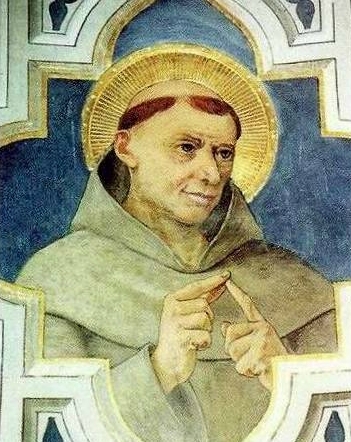
john-duns-scotus

I’m unsure of how old this image is; my guess, however, is that it represents a 19th century imitation of late Medieval and Renaissance style. (Source)
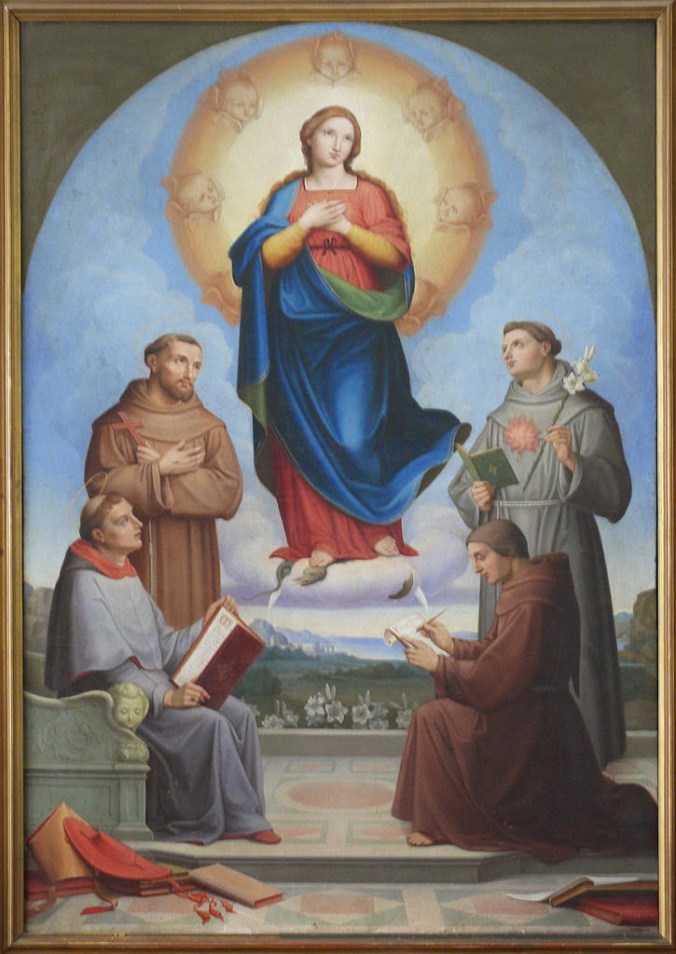
Albert Küchler (Brother Peter of Copenhagen) - Immaculate Conception with St. Bonaventure, Francis, Anthony and Blessed John Duns Scotus - Rome - Pontifical University Antonianum

A great 19th century painting of the Immaculate Conception by Danish Franciscan Albert Küchler. Scotus, who is on the bottom right, is here depicted alongside other Franciscan saints – S.s. Francis of Assisi, Anthony of Padua, and Bonaventure. (Source)
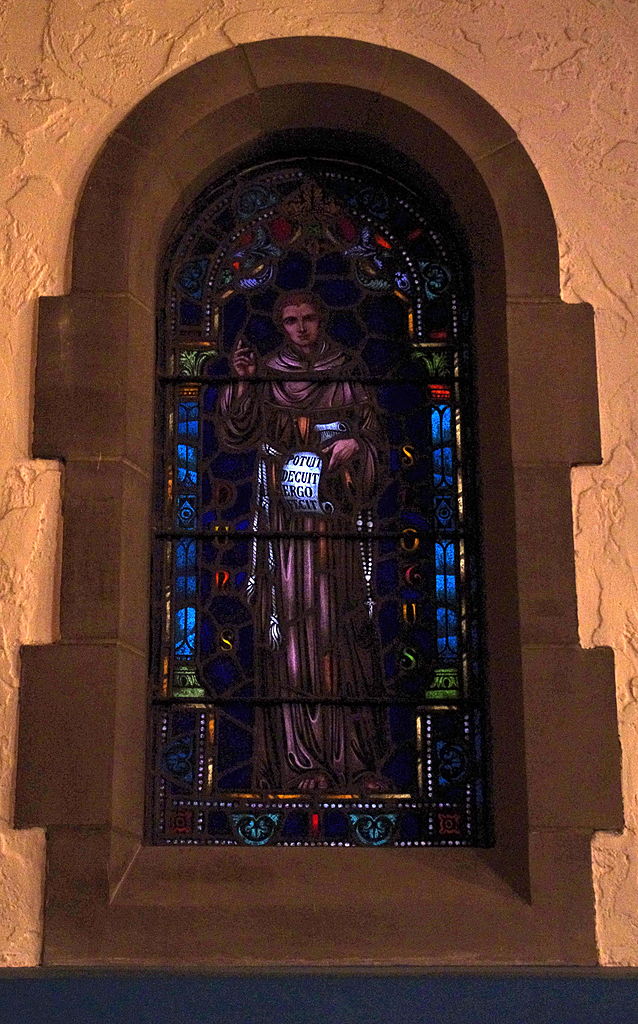
Immaculate_Conception_Church_(Columbus,_Ohio)_-_stained_glass,_Blessed_Duns_Scotus

This looks like a Harry Clarke window, though it may just resemble his style. In anyway, we see here Scotus holding a scroll with his famous argument for the Immaculate Conception epitomized – “He could do it, It was fitting He should do it, so He did it.” (Source)
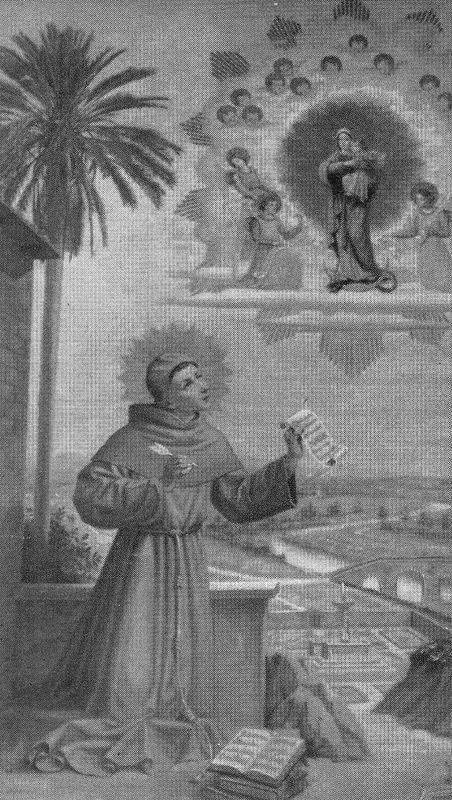
JohnDunsScotusImmaculata

John Duns Scotus, once again contemplating the Immaculate Virgin and offering his mighty works to her. (Source)
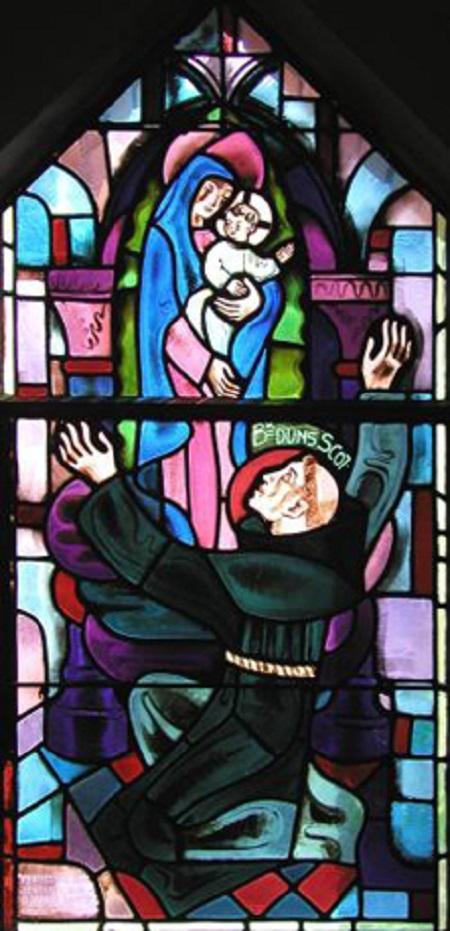
dunsscot.2

Another stained glass window, this time indubitably from the 20th century. We see here Scotus worshiping the Christ Child and his Immaculate Mother. (Source)
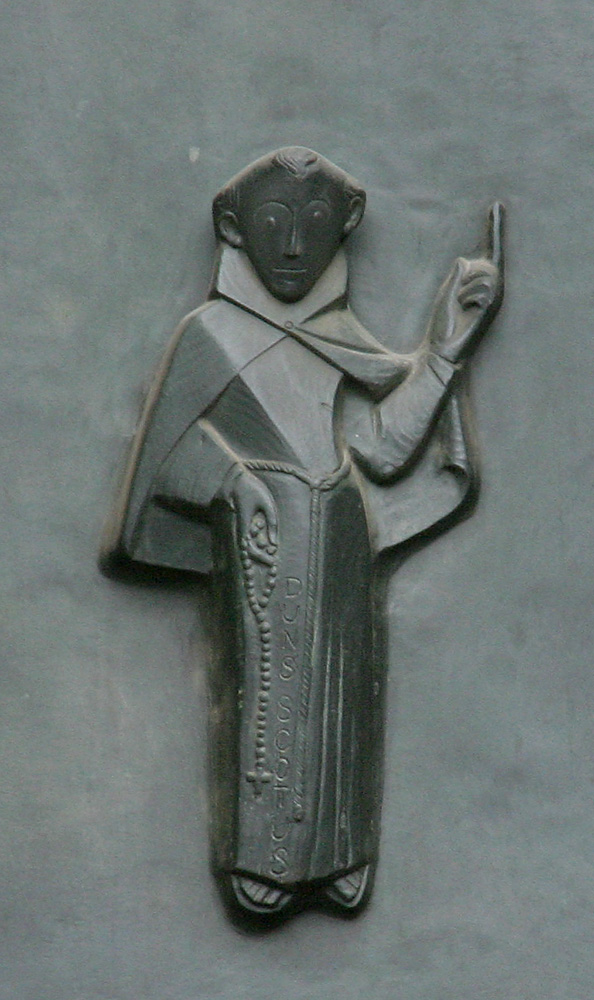
Johannes_duns_scotus_20060501

Scotus depicted in on the door of a Cologne Cathedral, 1948. He represents the supernatural gift of Understanding. (Source)
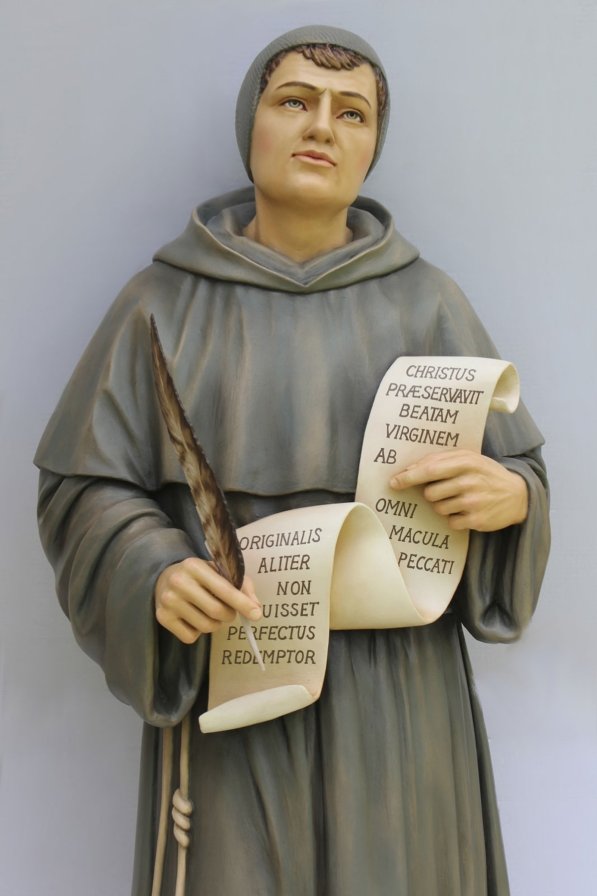
duns-scott_01

A contemporary statue of Scotus. (Source)
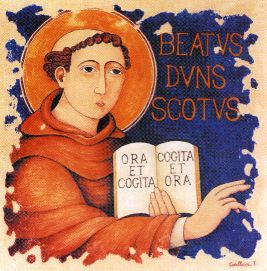
Scoto-2

Scotus with a modification of the Benedictine phrase. “Pray and Think. Think and Pray.” Not a bad motto. (Source)
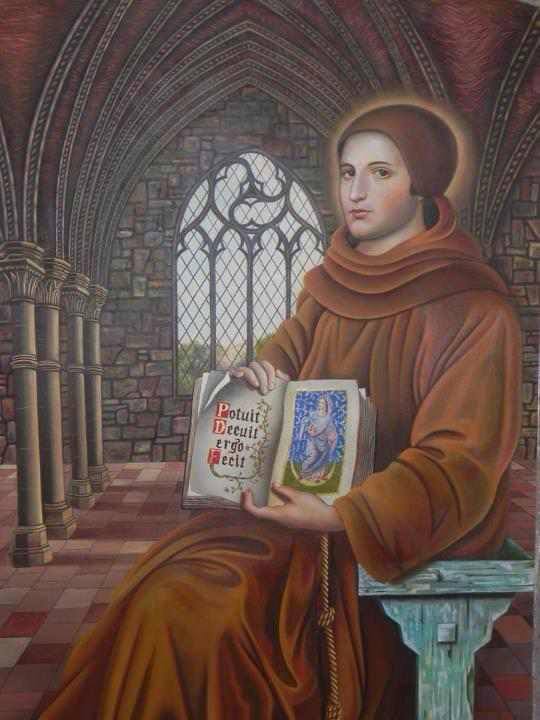
 

20thCScotus

A 20th or 21st century image of the Blessed Scotus (Source).
Excerpts for St. Austin’s Day

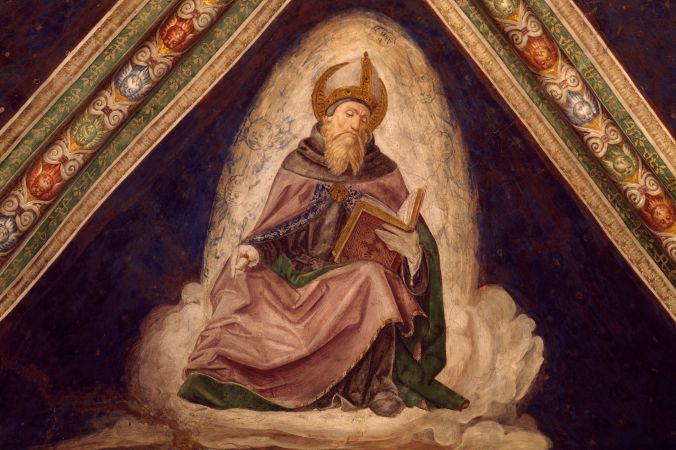
Saint-Augustine-Doctor-of-the-Church

St. Augustine, Ora Pro Nobis. (Source)

I read this passage from the Confessions today and it instantly became one of my favorites selections from St. Augustine. The translation by Maria Boulding OSB is much prettier, but it’s not public domain. What follows is Book X, Chapters 6-7 (Para. 8-11).

Not with uncertain, but with assured consciousness do I love You, O Lord. You have stricken my heart with Your word, and I loved You. And also the heaven, and earth, and all that is therein, behold, on every side they say that I should love You; nor do they cease to speak unto all, so that they are without excuse. Romans 1:20 But more profoundly will You have mercy on whom You will have mercy, and compassion on whom You will have compassion, otherwise do both heaven and earth tell forth Your praises to deaf ears. But what is it that I love in loving You? Not corporeal beauty, nor the splendour of time, nor the radiance of the light, so pleasant to our eyes, nor the sweet melodies of songs of all kinds, nor the fragrant smell of flowers, and ointments, and spices, not manna and honey, not limbs pleasant to the embracements of flesh. I love not these things when I love my God; and yet I love a certain kind of light, and sound, and fragrance, and food, and embracement in loving my God, who is the light, sound, fragrance, food, and embracement of my inner man— where that light shines unto my soul which no place can contain, where that sounds which time snatches not away, where there is a fragrance which no breeze disperses, where there is a food which no eating can diminish, and where that clings which no satiety can sunder. This is what I love, when I love my God.

And what is this? I asked the earth; and it answered, I am not He; and whatsoever are therein made the same confession. I asked the sea and the deeps, and the creeping things that lived, and they replied, We are not your God, seek higher than we. I asked the breezy air, and the universal air with its inhabitants answered, Anaximenes was deceived, I am not God. I asked the heavens, the sun, moon, and stars: Neither, say they, are we the God whom you seek? And I answered unto all these things which stand about the door of my flesh, You have told me concerning my God, that you are not He; tell me something about Him. And with a loud voice they exclaimed, He made us. My questioning was my observing of them; and their beauty was their reply. And I directed my thoughts to myself, and said, Who are you? And I answered, A man. And lo, in me there appear both body and soul, the one without, the other within. By which of these should I seek my God, whom I had sought through the body from earth to heaven, as far as I was able to send messengers— the beams of my eyes? But the better part is that which is inner; for to it, as both president and judge, did all these my corporeal messengers render the answers of heaven and earth and all things therein, who said, We are not God, but He made us. These things was my inner man cognizant of by the ministry of the outer; I, the inner man, knew all this— I, the soul, through the senses of my body. I asked the vast bulk of the earth of my God, and it answered me, I am not He, but He made me.

Is not this beauty visible to all whose senses are unimpaired? Why then does it not speak the same things unto all? Animals, the very small and the great, see it, but they are unable to question it, because their senses are not endowed with reason to enable them to judge on what they report. But men can question it, so that the invisible things of Him . . . are clearly seen, being understood by the things that are made; Romans 1:20 but by loving them, they are brought into subjection to them; and subjects are not able to judge. Neither do the creatures reply to such as question them, unless they can judge; nor will they alter their voice (that is, their beauty), if so be one man only sees, another both sees and questions, so as to appear one way to this man, and another to that; but appearing the same way to both, it is mute to this, it speaks to that— yea, verily, it speaks unto all but they only understand it who compare that voice received from without with the truth within. For the truth declares unto me, Neither heaven, nor earth, nor any body is your God. This, their nature declares unto him that beholds them. They are a mass; a mass is less in part than in the whole. Now, O my soul, you are my better part, unto you I speak; for you animate the mass of your body, giving it life, which no body furnishes to a body but your God is even unto you the Life of life.

What then is it that I love when I love my God? Who is He that is above the head of my soul? By my soul itself will I mount up unto Him. I will soar beyond that power of mine whereby I cling to the body, and fill the whole structure of it with life. Not by that power do I find my God; for then the horse and the mule, which have no understanding, might find Him, since it is the same power by which their bodies also live. But there is another power, not that only by which I quicken, but that also by which I endow with sense my flesh, which the Lord has made for me; bidding the eye not to hear, and the ear not to see; but that, for me to see by, and this, for me to hear by; and to each of the other senses its own proper seat and office, which being different, I, the single mind, do through them govern. I will soar also beyond this power of mine; for this the horse and mule possess, for they too discern through the body.

And I’ll add this paragraph from Chapter 17 (Para. 26), which strongly reminds me of Cardinal Newman’s project in the Apologia Pro Vita Sua:

Great is the power of memory; very wonderful is it, O my God, a profound and infinite manifoldness; and this thing is the mind, and this I myself am. What then am I, O my God? Of what nature am I? A life various and manifold, and exceeding vast. Behold, in the numberless fields, and caves, and caverns of my memory, full without number of numberless kinds of things, either through images, as all bodies are; or by the presence of the things themselves, as are the arts; or by some notion or observation, as the affections of the mind are, which, even though the mind does not suffer, the memory retains, while whatsoever is in the memory is also in the mind: through all these do I run to and fro, and fly; I penetrate on this side and that, as far as I am able, and nowhere is there an end. So great is the power of memory, so great the power of life in man, whose life is mortal. What then shall I do, O Thou my true life, my God? I will pass even beyond this power of mine which is called memory— I will pass beyond it, that I may proceed to You, O Thou sweet Light. What sayest Thou to me? Behold, I am soaring by my mind towards You who remainest above me. I will also pass beyond this power of mine which is called memory, wishful to reach You whence You can be reached, and to cleave unto You whence it is possible to cleave unto You. For even beasts and birds possess memory, else could they never find their lairs and nests again, nor many other things to which they are used; neither indeed could they become used to anything, but by their memory. I will pass, then, beyond memory also, that I may reach Him who has separated me from the four-footed beasts and the fowls of the air, making me wiser than they. I will pass beyond memory also, but where shall I find You, O Thou truly good and assured sweetness? But where shall I find You? If I find You without memory, then am I unmindful of You. And how now shall I find You, if I do not remember You?


A Challenge in Honor of the Sophianic Heart of Mary

ImmaculateHeartofMarySophianic

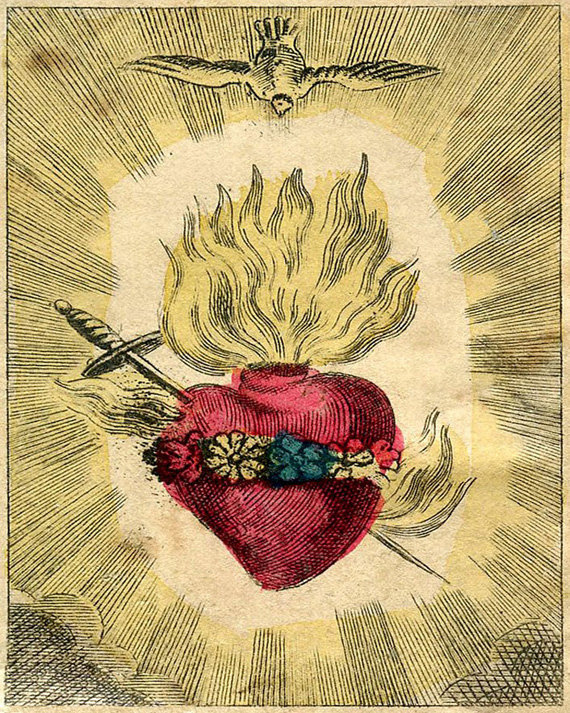
Sorrowful and Immaculate Heart of Mary, pray for us sinners. (Source).

August is consecrated to the Sorrowful and Immaculate Heart of Mary. Thus, it is a month in which the Church invites us to peer into the profound and luminous abyss of light at the very center of the Mother of God’s Sophianic life. In celebration of this occasion, I’ve decided to dedicate myself to producing or working on something creative every day for the rest of the month. Today, I have already written one poem and started an art project. The latter is especially exciting for me, as it’s been years since I last produced any real art. Too long, really. Pray for me in this sophiological endeavor! I would recommend the same challenge to any Catholic hoping to redeem this particular time.

The Advice of an Abbot

17thCenturyAbbot

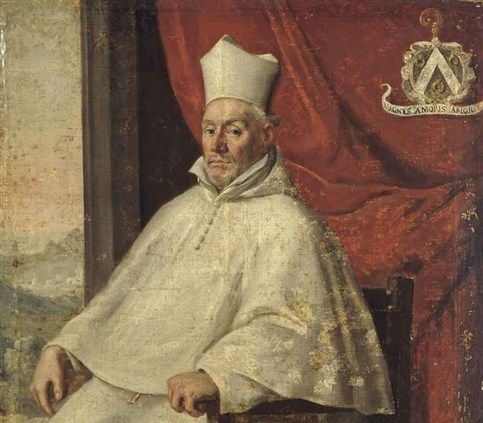
Portrait of an abbot, half-length, in a white cassock, before a draped curtain, a landscape beyond, Italian School, c. 17th century. (Source)

I came across this passage in Lady Amabel Kerr’s biography of Cardinal Baronius, as republished by Mediatrix Press in 2015. It comes a letter sent by the Abbot of St. Martin’s to Baronius when the latter was “in a fit of despondency…as to the real value of the Annals” (Kerr 154). I felt it was a good bit of advice generally, and thought I’d make it more readily available here for those who might derive some benefit therefrom. The translation is, no doubt, from Lady Kerr’s own hand. It can be found on page 154 of the volume.

Do not be cast down. Eat the bread of life and drink of eternal wisdom; and so will you more easily reach the Mount of God. You have not got to live for yourself alone, but for the Church of God and the good of your fellow men. Acquit yourself manfully, and your heart will be comforted, and God will sustain you. Truly it belongs to our mortality to be filled with fear when we look forward to the day of our judgment; but perceiving as we do so many earnests of our eternal happiness, and experiencing as we do the work of the Spirit of God within us, why should we be anxious and tormented of soul? Be of good heart, my Cesare, and think of nothing but of persevering until you have completed your work, which is so pleasing to the Church, and which will live for ever. When it is finished, then by all means devote yourself solely to the thoughts of eternal life; and I feel confident that at the last day the just Judge will give to you, who have worn yourself out by your labours for Him, a crown of justice.

Books I Have Finished This Summer

OldBooks

Old volumes. (Source).

I intend to keep updating this post as a running list of the books I have completed (though not necessarily started and completed) over the summer. I will include a short blurb and review for each title. Thus far:

1. The Benedict Option. Rod Dreher. 2017. Non-fiction.
An argument for focusing on Christian community-building in the face of an increasingly hostile secular liberal order. And a very flawed argument at that. But the book got me thinking about a better option, so as a provocation to thought and discussion, it works pretty well.
Score: 3/5.

2. A Litany of Mary. Ann Ball. 1987. Non-Fiction.
A lovely exposition of and meditation on various titles of Mary. Would recommend for anyone seeking a deeper understanding of Our Lady, her role, and her apparitions in the modern world. Particular highlights are some of the rarer titles such as Our Lady of the Cenacle and Our Lady of the Most Blessed Sacrament. If you have (or want) a devotion to Mary under one of her titles, this is the book for you.
Score: 4/5

3. Free Women, Free Men. Camille Paglia. 2017. Non-fiction.
The dissident feminist’s newest collection of essays. Gives a great taste of her style and scholarly concerns over the course of her long career. Topics range from The Real Housewives, “Southern Women,” BDSM, Puritanism, and all kinds of feminist spats. Her essay “On Abortion” is one of the most idiosyncratic and provocative takes on the issue I have yet read. Paglia never tires of displaying her acid wit and crackling prose. Perhaps her greatest flaw, beyond those points where she is simply wrong, is her irritating autobiographical tendency. I could do without the seventh mention of her childhood Halloween costumes. But all in all, a read well worth the effort.
Score: 4.25/5

4. The Leopard. Giuseppe di Lampedusa. 1958. Fiction.
The decline and fall of a Sicilian noble family. There’s romance, history, and a dollop of nostalgia that Lampedusa sprinkles with acerbically cynical observations about his characters. It’s uncommon to find a class commentary that doubles as a sensitive psychological portrait. The Leopard is just such a rare gem. Lampedusa has a knack for evocation. You can feel the heat of the Sicilian sun radiating from the pages; with Lampedusa, you can almost catch a faint whiff of ambergris over the rot. His style is a slow-moving delight, well-suited to his subject. There’s also a Great Dane, which is always a plus.
Score: 4.5/5

5. The Black Arts. Richard Cavendish. 1967. Non-fiction.
A helpful, if perhaps somewhat dated, exposition of occult history and practice. Cavendish presents a thorough overview of dark magic. His wry, understated humor makes it a great read (one quote: “[Éliphas Lévi’s] later books are less interesting, including his History of Magic (1860) and The Key of the Mysteries (1861), which he himself translated into when he was reincarnated as Aleister Crowley…The learned English occultist A. E. Waite, who was not a reincarnation of Lévi, but succeeded in translating the secrets of the Doctine and Ritual all the same” pg. 29). Would strongly recommend to anyone with a love of horror fiction, the macabre, Christopher Lee, the Kabbalah, Latin, and batsh*t crazy characters from the Victorian and Edwardian periods (including Montague Summers). It made me want to read Valentin Tomberg’s Meditations on the Tarot and watch Penny Dreadful.
Score: 4/5

6. Chickamauga. Charles Wright. 1995. Poetry.
Remarkable, luminous poetry by a professor at my alma mater. T.S. Eliot’s spiritual and stylistic successor. Reading him is like reading a mystic in motionmore ornate that Wendell Berry, more apophatic than William Blake. I cannot recommend him highly enough.
Score: 5/5


Plotinus on Beauty

4 T

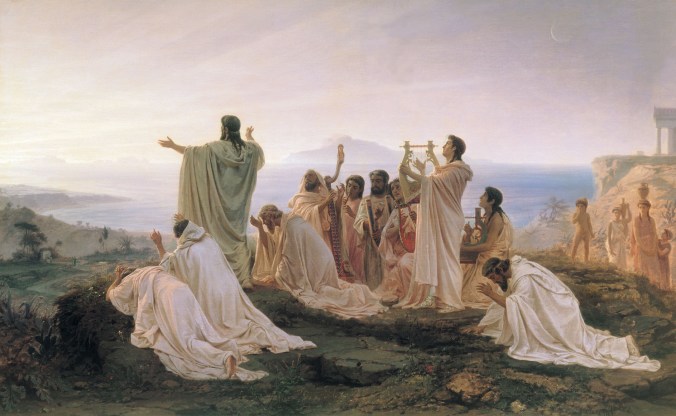
“Pythagoreans Celebrate Sunrise,” Fyodor Bronnikov, 1869. (Source).

A wonderful passage, taken from Ennead I.6. The translation is drawn from this page.

VI. For, as the ancient Oracle declares, temperance, fortitude and every virtue, aye, and wisdom herself, are purifications. Wherefore the sacred mysteries are right when they say enigmatically that he that is not purified shall, when he cometh to the House of Hades, lie in the mud. For, through their baseness, the filthy are friends of the mire, just as swine, whose bodies are unclean, delight to wallow in it.

For what is true temperance unless it be not to give oneself up to the pleasures of the body, and to flee from them as being neither pure nor belonging to that which is pure? And fortitude is not to fear death; and death is the separation of the soul from the body. He who desires to become alone will not fear this. Again, great-ness of soul is contempt of mortal concerns, and wisdom is the exercise of intellect turned away from that which is below and leading the soul upward to the heights.

When therefore the soul is purified, she becomes form and reason, altogether incorporeal, intellectual, and wholly of the divine order whence is the fountain of beauty and all that is akin thereto.

The soul borne upwards towards intellect puts on a marvellous beauty. Intellect, and that which comes from Intellect, is the beauty which truly belongs to her and is not foreign to her; because, when united to It, and then only, is she truly soul. Wherefore it is rightly said that the beauty and good of the soul consist in her assimilation to God; for it is thence that her beauty comes and the gift of a better lot than her present one. Moreover, beauty is that which has real being, but ugliness is the nature opposite to this. It is this that is the first evil; just as beauty is likewise the first of things beautiful and good. Or it may be that goodness and beauty are one and the same. Therefore, we must investigate the beautiful and good, and the ugly and evil, by the same process; and in the highest rank we must place the Beautiful Itself, which is also the Good Itself, of which Intellect is the immediate emanation and the first beautiful thing. But soul is beautiful through Intellect, and other things are beautiful because they, in turn, are formed by the soul, whether it be in actions or in pursuits and studies. And as to bodies, when these are spoken of as beautiful, it is still the soul that makes them so; for she, as something divine, and as it were a portion of the Beautiful Itself, makes beautiful, in so far as its nature will permit, all that she touches and overcomes.

Plotinus

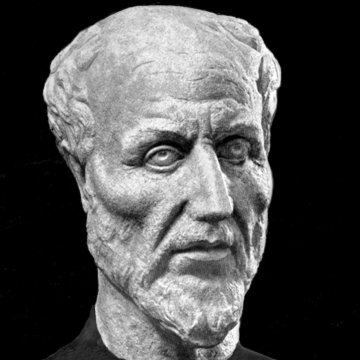
Plotinus. (Source)

VII. We must ascend, therefore, once more to the Good, which every soul desires. If anyone has beheld It, he will know what I say, and in what manner It is beautiful, for it is as good that It is desired, and all appetency is towards goodness. But the attainment of the Good is for those who mount upward to the heights, set their faces towards them, and strip off the garments with which we clothed ourselves as we descended hither. Just as those who penetrate into the innermost sanctuaries of the mysteries, after being first purified and divesting themselves of their garments, go forward naked, so must the soul continue, until anyone, passing in his ascent beyond all that is separative from God, by himself alone contemplates God alone, perfect, simple and pure, from Whom all things depend, to Whom all beings look, and in Whom they are, and live, and know. For He is the cause of Being, Life and Intelligence. If, then, anyone beheld Him, with what love would he be inspired, with what desire would he burn, in his eagerness to be united with Him! With what bliss would he be overcome! He that has not yet beheld Him may desire Him as Good, but, to him that has, it is given to love Him as Beauty, to be filled with wonder and delight, to be overwhelmed yet unharmed, to love with true love and keen desire, to laugh at other loves, and to despise the things he formerly thought beautiful. Of such a nature is the experience of those who have beheld visions of Gods or angels—no more do they seek aught of the beauty of other bodies. What, then, shall we think of one who beheld The Beautiful Itself and by Itself, pure and untouched by flesh or body, existing neither in earth nor in heaven, because of Its very purity? For all these are contingent things and mixed, nor are they primary but proceed from It. If, therefore, he beheld That which provides for all things, which, remaining in Itself, gives to all and receives nothing into Itself, and if, remaining in the contemplation of This and tasting of Its bliss, he should be assumed into Its likeness, of what other beauty would he then have need? For This, since It is Beauty Itself and the First Beauty, makes those who love It beautiful and beloved. And this is the greatest and ultimate task which lies before the soul, for the sake of which all her toils are undertaken— not to be left without portion in that most sublime vision, to obtain which is to be blessed by the vision of blessedness, but not to obtain it is wretchedness. For not he that has no share of beautiful colours or bodies, or of power or dominion or kingship, is unfortunate; but he that lacks this one thing alone, for the sake of which it were well to let go the possession and kingship and rule of the whole earth and of the sea, aye, and of the heaven itself, if a man, by leaving behind all these and looking beyond them, might be converted to This and behold It.

VIII. What, then, is the way? What are the means? How shall a man behold this ineffable Beauty which remains within, deep in Its holy sanctuaries, and proceeds not without where the profane may view It? He that is able, let him arise and follow into this inner sanctuary, nor look back towards those bodily splendours which he formerly admired. For when we behold the beauties of body we must not hurl ourselves at them, but know them for images, vestiges and shadows, and flee to That of which they are reflections. For if a man rushes towards them, seeking to grasp them for Beauty Itself, then it will be as though he should desire to grasp a beautiful image mirrored in water, and, like him of whom the myth tells, should sink beneath the surface of the stream and disappear. In like manner, he that reaches out after corporeal beauties, and will not let them go, will plunge not his body but his soul into gloomy depths abhorred by intellect, will remain blind in Hades, and both here and hereafter will have converse only with shadows.
How truly might someone exhort us—”Let us, then, fly to our dear country.” What therefore is this flight, and how shall we escape, like Odysseus in the story, from the enchantments of Circe and Calypso? There it tells symbolically how he remained unsatisfied although pleasant spectacles met his eyes and he was surrounded with all the beauty of sense. Our Fatherland is that country whence we came, and there our Father dwells. What, then, are the means for our escape thither? Our feet will not take us there, for all they can do is to carry us from one part of the earth to another. Nor will it avail to make ready horses for a chariot or ships on the sea: all these things we must let go. We must not even look, but with our eyes all but closed we must exchange our earthly vision for another, and awaken that, a vision which all possess but few use.

IX. What, then, does this interior vision see? When it is but lately awakened it cannot behold splendours too dazzling. The soul, therefore, must be accustomed first of all to contemplate beautiful pursuits, and next beautiful works, not those which are executed by craftsmen but those which are done by good men. After this, contemplate the souls of those who are the authors of such beautiful actions. How, then, may you behold the beauty of a virtuous soul? Withdraw into yourself and look; and if you do not yet behold yourself beautiful, do as does the maker of a statue which is to be beautiful; for he cuts away, shaves down, smooths and cleans it, until he has made manifest in the statue the beauty of the face which he portrays. So with yourself. Cut away that which is superfluous, straighten that which is crooked, purify that which is obscure: labour to make all bright, and never cease to fashion your statue until there shall shine out upon you the godlike splendour of virtue, until you behold temperance established in purity in her holy shrine. If you have become this, and have beheld it, and dwell within yourself in purity, and there is now nothing which prevents you from thus becoming one, when you have nothing foreign mingled with your interior nature, but your whole self is true light and light alone, not measured by size nor circumscribed by the limitation of any figure, not to be increased in magnitude because unbounded, but totally immeasurable, greater than all measure and mightier than every quantity—if you behold yourself grown to this, having now become vision itself, take courage and ascend yet higher, for now you need a guide no more. Gaze intently and see! This eye alone beholds that mighty Beauty. But if it approach the vision bleared by vices, unpurified, or weak through cowardice, so that it cannot bear to gaze upon such glory, then it sees nothing, even though another should be at hand to point out that which all may see. For he that beholds must be akin to that which he beholds, and must, before he comes to this vision, be transformed into its likeness. Never could the eye have looked upon the sun had it not become sun-like, and never can the soul see Beauty unless she has become beautiful. Let each man first become god-like and each man beautiful, if he would behold Beauty and God. For he will first arrive in his ascent at the region of Intellect and there he will know all the beauties of form, and will say that this is the beauty of Ideas, for all things are beautiful through these, the offspring and essence of Intellect. But that which is beyond Intellect we call the nature of the Good, from which the Beautiful radiates on every side, so that in common speech it is called the First Beauty. But if we distinguish between the Intelligibles, we may say that Intelligible Beauty belongs to the world of Ideas, but that the Good which is beyond these is the fountain and principle of the Beautiful. Or the Good and the First Beauty may be considered under one principle, apart from the beauty of the world of Ideas.

untitled  2.tif

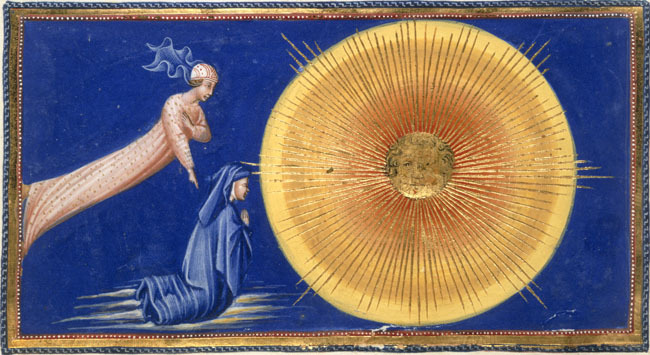
Dante sees the Primum Mobile (Source).