Twelve Ways to Sanctify Your COVID Crisis

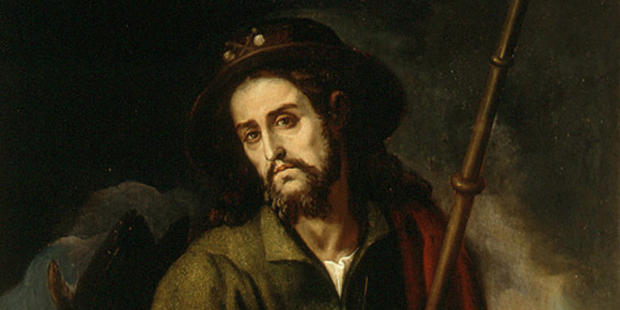
St. Roch, Patron against the plague, pray for us (Source)

The COVID-19 crisis is impacting all of us at some level. Yet we are not alone in the midst of our fear and pain. In His grace, the Good Lord provides so many ways for us to grow in holiness in the midst of this affair. I offer a few ideas here for the general edification of the faithful.

  1. Offer up your suffering for the salvation and sanctification of sinners

    The life of a Christian is the death of Christ. We can therefore unite all our sufferings – physical, emotional, mental – to the Cross. When we do so, we can impetrate tremendous graces for ourselves and others. If you are afflicted by the disease – offer it up. If you are worried for those you know who are ill – offer it up. If you are mourning – offer it up. If you are struggling with troubles related to work (or the lack thereof) – offer it up. If you are bored in quarantine – offer it up. Even minor inconveniences can become springs of grace when we offer them to the Great High Priest on high. A terrible crisis like the one we are now facing is also a marvelous opportunity to grow in holiness, to help others spiritually, and to nurture our abandonment to Divine Providence. Especially as we move through Lent.

  2. Devote time to pious reading, especially of the Holy Scripture

    It is the duty of every Christian to be conversant with the Holy Scriptures, especially the Gospels. The stories and teachings of the Divine Physician may be especially comforting in this difficult time. On the other hand, I can hardly think of circumstance more apt to induce us to read the Prophecies and Apocalyptic books of the Bible. Beyond the Scriptures, one might turn to such edifying texts as In Sinu Jesu, All For Jesus, or Revelations of Divine Love.

  3. Develop a friendship with one or more of the plague saints

    There are many saints whom Catholics have called upon to help them in times of plague and pestilence. I listed a few here. You might find yourself drawn to St. Rosalia, or St. Sebastian, or St. Charles Borromeo. I have set up a candle in my own prayer corner dedicated to St. Roch. He has been a good intercessor for me in times past, and as the patron of bachelors (I am unmarried) and of animals (my family has many pets), I think he is a very appropriate saint to honor while I am stuck at home during this crisis.

  4. Keep an extra day of special fasting, beyond Lenten Fridays

    Wednesday was historically a day of penance in addition to Fridays. You might set aside Wednesday (or Thursday, in honor of the Blessed Sacrament, or Saturday, in honor of Our Lord’s entombment) as a sort of “second Friday.” You don’t have to give up meat; you could add an extra penance you only keep on this second day, such as giving up alcohol, or sweets, or praying an extra set of prayers.

  5. Pray the Seven Penitential Psalms

    The Divine Office is superior option to sanctify the hours, but for those who may lack the resources or time to do so, praying the Seven Penitential Psalms is a great alternative. Psalms 6, 31, 37, 50, 101, 129, and 142 (6, 32, 38, 51, 102, 130, and 143 for those of you using Protestant translations) are a moving, profound way to express sorrow for one’s own sins and for those of the whole world.

  6. Pray the Rosary and the Divine Mercy Chaplet

    These popular devotions are widely-known, so I won’t go on at length here about their peculiar merits. They are to be commended for their brevity, depth, and penitential character. Both are particularly well-suited to a time when we must implore God to spare us in His mercy. The Rosary also has the added benefit of beseeching the aid of the Queen of Heaven, whose title “Health of the Sick” comes to mind as particularly apropos in view of present circumstances.

  7. Give to the poor and to religious houses

    The lack of employment and an inability to leave the house is hitting working class families especially hard in this period, not to mention the homeless, prisoners, and others among society’s most vulnerable. I don’t yet know how to directly help them in a time of social distancing, but would be happy to take and/or post suggestions in the comments to this article. That said, I do know that religious houses will be struggling as well. Please consider giving to these holy souls, many of whom rely on charitable donations to get by month to month. I would direct my readers especially to the good Fathers and Brothers of Silverstream Priory. And don’t just give – pick up one of their excellent handmade decals, books, or prayers to Mother Mectilde de Bar from their online store! I’m sure the monks could use all the help they can get in this time of economic crisis.

  8. Dedicate one hour daily to reparatory Adoration of the Most Blessed Sacrament through mental recollection

    You don’t need to go to a chapel or church to adore the Blessed Sacrament. Set aside an hour in your day as a time of adoration. It need not distract from your work or recreation (though an extra hour of prayer may be a good idea, if it does not become too laborious). We can simply say to God, “I give you the next hour,” then come back to adore Him mentally through the hour as we can recall. And why not take the opportunity to make reparation for offenses against Our Eucharistic Lord, or His neglect in the tabernacles and altars of the world? This is a sweet and easy means to preserve the presence of God. Done regularly, it will help us grow in the sense of God’s proximity and in the trust of His merciful Providence.

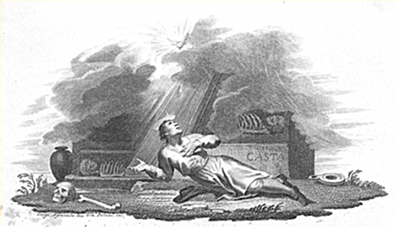
  9. Make a plague cross

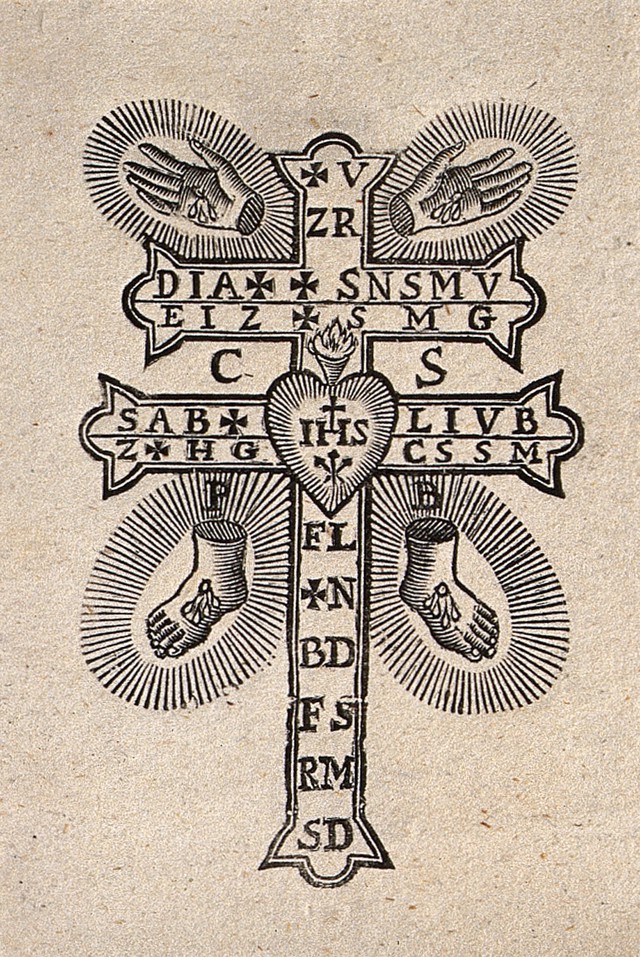
    Those who are feeling crafty might wish to draw or paint a version of one of the old plague crosses used in Europe during the late medieval and early modern periods. Examples abound online, as a quick Google search will reveal. This prayerful activity is not only a way to invoke the aid of great saints, but also a great way to connect with the history of Catholic devotion.

  10. Intercede for the dead and dying

    Fr. Faber recommends frequent, dedicated intercession for those in their last agony and for the holy souls of Purgatory. In a time of great mortality, it is an act of charity to pray in a special way for those who are succumbing to death. Indeed, praying for the dead is one of the seven spiritual works of mercy. You might begin by offering prayers for the dead and dying of your parish, then your diocese, then your state, then your nation, then the whole church, then the world. Let your prayer cast a wide net.

  11. Make spiritual communions and acts of reparation each Sunday

    This will, sadly, be necessary until public Masses are restored. But spiritual communions are not to be understood as somehow second-rate communions. When you are away from Mass in obedience to your bishop and through no fault of your own, you can still make a good communion with Our Lord. It may not possess the full sacramental character of a good Eucharistic communion, but it still binds us to the Eucharistic sacrifice. And any grace we receive as a result is indeed infused into us by the merits of Christ’s sacrifice. So let us come to love Acts of Spiritual Communion, an underappreciated and undervalued weapon in the Catholic arsenal in good times as well as in bad. You can find a variety all over the internet. I would add to these an Act of Reparation in time of plague.

  12. Pray for the grace of final perseverance

    St. Benedict teaches us that the Christian must “Keep death daily before one’s eyes” (Rule of St. Benedict, Chapter IV). In a time like this, it is hard not to follow this advice. And yet, we can put off the reality of our mortality by the unconscious assumption that it will never be us. Surely, death will pass us by. Surely, we have blood on our door. But the fact is, we don’t know when our time will come. The more seriously we take the prospect of our own mortality, the more shall we find ourselves drawn to ponder our own judgment. Let this salutary meditation induce us to pray for the graces of final repentance and perseverance and abandonment to the will of God.

And may the grace of Our Lord Jesus Christ, and the Love of God, and the Communion of the Holy Ghost, be with us all evermore. Amen.

A Litany in Time of Plague

A depiction of the Madonna and Child with Patron Saints against the Plague. Colored engraving by T. Van Merlen. (Source)

“Is it my will that a sinner should die, saith the Lord God, and not that he should be converted from his ways, and live?” – Ezekiel 18:23 DRA.

In Nomine Patris et Filii et Spiritus Sancti, Amen.

Stella Caeli extirpavit, quae lactavit Dominum:
mortis pestem quam plantavit primus parens hominum.
Ipsa stella nunc dignetur sidera compescere
quorum bella plebem caedunt dirae mortis ulcere.
O piisima Stella Maris, a peste succurre nobis.
Audi nos, Domina, nam filius tuus nihil negans te honorat.
Salva nos, Jesu, pro quibus virgo mater te orat.

Kyrie Eleison
Christe Eleison
Kyrie Eleison

God the Father Almighty, Maker of Heaven and Earth, have mercy on us.
God the Son, Redeemer of the World, have mercy on us.
God the Holy Ghost, Sanctifier and Vivifier of All Things, have mercy on us.

Holy Mary, Mother God, pray for us.
Our Lady, Queen of Heaven, pray for us.
Our Lady of Sorrows, pray for us.
Our Lady, Help of Christians, pray for us.
Our Lady, Health of the Sick, pray for us.
Our Lady, Salvation of the Roman People, pray for us.
Our Lady, Star of the Sea, pray for us.
Our Lady, Untier of Knots, pray for us.
St. John the Baptist, pray for us.
St. Joseph, pray for us.
St. Mary Magdalene, pray for us.
St. Michael and All Angels, pray for us.
St. Thecla, pray for us.
St. Valerian, pray for us.
St. Corona, pray for us.
SS. Cosmas and Damian, pray for us.
St. Zacharias of Jerusalem, pray for us.
St. Roch, pray for us.
St. Sebastian, pray for us.
St. Christopher, pray for us.
St. Adrian, pray for us.
St. Blaise, pray for us.
St. Macarius of Ghent, pray for us.
St. Patrick, pray for us.
St. Pantaleon, pray for us.
St. Dymphna, pray for us.
St. Rosalia, pray for us.
St. Anthony of Egypt, pray for us.
St. Benedict, pray for us.
St. Gregory, pray for us.
St. Bernardine of Siena, pray for us.
St. Anthony of Padua, pray for us.
St. Philip Neri, pray for us.
St. John Nepomuk, pray for us.
St. Charles Borromeo, pray for us.
St. Camillus of Lellis, pray for us.
St. Aloysius Gonzaga, pray for us.
St. Damien of Molokai, pray for us.
St. Thérèse of Lisieux, pray for us.

O Sacred Heart, Furnace of Charity, have mercy on us.
Lamb of God, Who takest away the sins of the world, spare us, O Lord.
Lamb of God, Who takest away the sins of the world, graciously hear us, O Lord.
Lamb of God, Who takest away the sins of the world, have mercy on us.

O Crux, ave spes unica
hoc Passionis tempore!
Piis adauge gratiam
reisque dele crimina.

We beseech Thee O Lord, in Thy compassion, to turn away from Thy People Thy wrath, which indeed we deserve for our sins, but which in our human frailty we cannot endure; therefore embrace us with that tenderness which Thou art wont to bestow on the unworthy; through Jesus Christ our Lord.

Gloria Patri, et Filio, et Spiritui Sancto,
Sicut erat in principio, et nunc, et semper, et in saecula saeculorum.
Amen.

A plague cross. (Source)

Bossuet on the Sufficiency of God

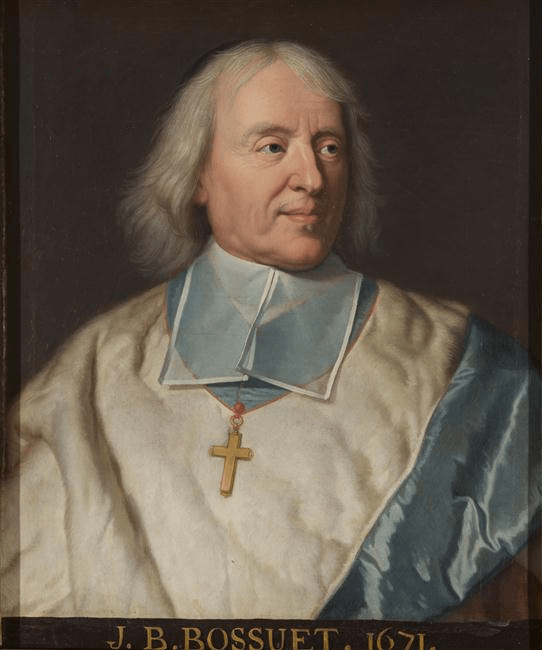
There are many candidates for the title of “Greatest Preacher in Christian History,” but my money’s on Jacques-Bénigne Bossuet (1627-1704), “The Eagle of Meaux,” Bishop and Tutor to the Grand Dauphin of France. Famed in his own day for the clarity of his doctrine, the incisive vigor of his spirituality, and the dazzling versatility of his oratorical skill, Bossuet stands as one of the late flowers of the Grand Siècle. Trumpet of the Gallicans and Hammer of Quietism, Bossuet nevertheless is not merely to be regarded as a relic of dusty seventeenth-century controversies. He still has much to teach us. In this excellent passage, excerpted from a recent translation and edited collection of his Meditations for Lent by Christopher O. Blum (Sophia Institute Press, 2013), we can see the essentially ascetic cast of Bossuet’s mind. This was the same man who, in a felicitious turn of phrase, elsewhere referred to the Rule of St. Benedict as “a little abridgment of the Gospel.” The relevant passage can be found on pages 10-12 of the source text.

Portrait of Bossuet by Charles Sevin de la Penaye, after Hyacinthe Rigaud, c. early 18th century (Source)

“Lord, show us the Father, and we shall be satisfied” (John 14:8). God alone suffices, and all we need to possess him is to see him, because in seeing him, we see all his goodness, as he himself explained to Moses: “I will make all my goodness pass before you” (Ex. 33:19). We see all that attracts our love, and we love him beyond all limits. Let us join St. Philip in saying with all our heart, “Lord, show us the Father, and we shall be satisfied.” He alone can fill all our emptiness, satisfy all our needs, content us, and make us happy.

Let us then empty our heart of all other things, for if the Father alone suffices, then we have no need for sensible goods, less for exterior wealth, and still less for the honor of men’s good opinion. We do not even need this mortal life; how then can we need those things necessary to preserve it? We need only God. He alone suffices. In possessing him we are content.

How courageous are these words of St. Philip! To say them truthfully, we must also be able to say with the apostles: “Lord, we have left everything and followed you” (cf. Matt. 19:27). At the least we must leave everything by way of affection, desire, and resolution, that is, by an invincible resolution to attach ourselves to nothing, to seek no support except in God alone. Happy are they who carry this desire to its limit, who make the final, lasting, and perfect renunciation! But let them not leave anything for themselves. Let them not say: “This little thing to which I am still attached, it is a mere nothing.” We know the nature of the human heart. Whenever a little thing is left to it, there the heart will place all its desires. Strip it all away; break from it; let it go. To own things as though one had nothing, to be married as though one were not, to make use of this world as though one were not using it, but as though it did not exist, and as though we were not a part of it: this is the true good for which we should strive. We are not Christians if we cannot say sincerely with St. Philip, “Show us the Father, and we shall be satisfied.”

It is from the very depths of faith that these words are spoken, and it is in a certain sense from the very foundation of nature itself. For in the depths of our nature we sense our need to posses God, that he alone is capable of fulfilling our nature, and that we are anxious and tormented when separated from him…Man, abandoned to himself, does not know what to do, nor what to become. His pleasures carry him off, and these very same pleasures destroy him. With each sin of the senses he gives himself a killing blow, and he not only kills his soul by his intemperance, in his blindness and ignorance he kills the very body that he would flatter. Since the Fall, man is born to be unhappy…We do not know how to desire or ask for what we need.

St. Philip’s words teach us everything. He limits himself to what Jesus taught us is the one thing needful. Lord, you are the way.

M. Olier on Patience for Christ

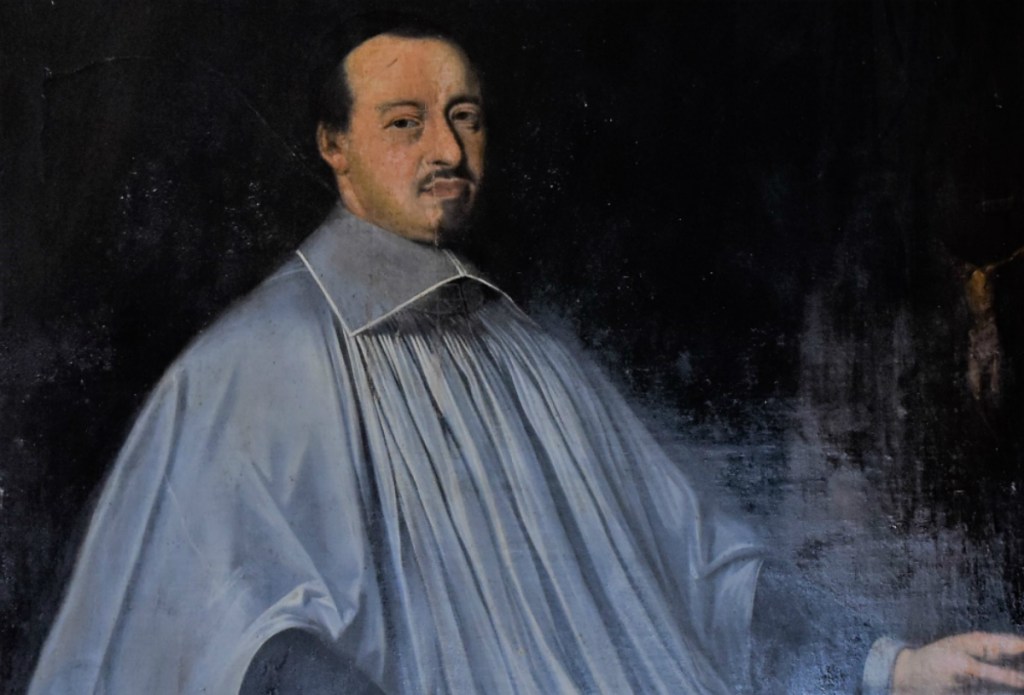
In week two of the Lenten Spirituality Series, we have another treasure from seventeenth-century France. One of the great exponents of the French School of Spirituality, M. Jean-Jacques Olier, writes movingly about our suffering in this life as a means of bringing us closer to Christ. His words on the virtue of Patience, though directly primarily to clerics, have a wider application to all Christians in their Royal Priesthood. The text is excerpted from M. Olier’s “Introduction to the Christian Life and Virtues,” translated by Lowell M. Glendon, S.S. in Bérulle and the French School: Selected Writings (Paulist Press, 1989), 244-47. M. Olier’s description of patience crescendos into a typically French, Eucharistic note.

Jean-Jacques Olier, founder of the Sulpicians and a spiritual master of the Grand Siècle. (Source)

We are obliged to be patient. First, in our condition as creatures; for God, sovereign master of life and death, on whom our existence depends absolutely, has the right to dispose of us as he chooses…

Second, as sinners. For in this condition, we must bear with the effects of his justice and wrath toward us. All the punishments that he carries out in this world are nothing compared to what we deserve and what he would make use suffer if he did not choose to be merciful toward us and to treat us with gentleness and clemency in this life. The punishments that God meted out to sinners, as we see in the holy scripture, even the torments of the damned and the penalties the demons suffer and will suffer eternally for one sin, should cause us not only to be at peace, but to rejoice in our sufferings…

Third, as Christians. For as such we should bear with many difficulties and sufferings. This is why we are intitiated into the church. For our Lord only admitted us into it to continue his life, which is a life of opposition, contradiction, and condemnation toward the flesh.

He must then humiliate it and subdue it in us, using the ways he knows and judges to be most useful, so as to win a complete victory, He first achieved victory in his own flesh, and he wishes to continue it in ours in order to show forth in us a sample of the universal triumph that he had achieved over it in his own person.

The church and Christians are only a handful of flesh compared to the whole world. Nevertheless, he still desires to be victorious in them to proclaim his triumph and to give definite signs of his victory. Thus, from this perspective, the Christian should be very faithful to the Spirit and completely abandoned to him in order to overcome the flesh and to destroy it completely.

There will be no lack of opportunities in this life, for he must suffer; first, the attacks of the world through scorn, calumny and persecution; second, the violent onslaughts of the flesh in its uprisings and its revolts; third, the battles with the devil in the temptations he sends us; finally, the ordeals from God through dryness, desolation, abandonment and other interior difficulties, which he afflicts on him in order to initiate him into the perfect crucifixion of the flesh.

Fourth, as clerics. For clerics should participate in the fulfillment of Christianity. This cannot exist without patience.

Patience is a sign that the soul is intimately united to God and that it is rooted in perfection. For it must be very much in God and fully possessed by him in order to bear difficulties and torments with peace, tranquility and even joy and beatitude in one’s heart.

It must be quite profoundly immersed in him and remain quite powerfully and strongly united to him, so that the flesh has no power at all to attract it to itself and share with him the feelings and aversions that it has towards suffering and endurance.

In this state the soul experiences the perfection attainable in this life, since it conforms to our Lord’s perfect submission to God during his sufferings. For although his flesh experienced aversion and revulsion for the cross, he paid no attention to it with his will. Rather, he always adhered perfectly to the wishes of his Father.

Therefore clerics, being perfect Christians chosen from the midst of the church to assist before the tabernacle of God, should pay particular attention to this virtue. This is their very nature. It is the sign by which they can be identified. This is what predisposes them for the honorable rank that they possess. This is how they are recognized as domestics and servants of God.

Finally, priests and pastors should have a very high degree of patience because, in Jesus Christ and with Jesus Christ, they are both priests and victims for the sins of the world. Jesus Christ the priest wished to be the victim of his sacrifice. He became the host-victim for all people. Since priests are like sacraments and representations of him who lives in them to continue his priesthood and whom he clothes with his external conduct and his interior dispositions, as well as with his power and his person, he wishes furthermore that they be interiorly rooted in the spirit and dispositions of a host-victim in order to suffer, endure, do penance, in short, to immolate themselves for the glory of God and the salvation of the people.

In imitation of our Lord, priests should not only be victims for sin through persecution, penance, internal and external sufferings, but also they should be like the victims of a holocaust. This is their true vocation. For they should not merely suffer, as he did, all sorts of difficulties both for their own sins and the sins of the people entrusted to them, but even more the should be entirely consumed with him through love.

The spirit of love strengthens and empowers us to endure affliction and suffering, no matter how great they are. Since he is infinite, he gives us as much as we need to endure those that can occur in our vocation.

All the torments of the world are nothing to a generous soul filled with the power of a God, who is able to shoulder countless sufferings more violent than all those that the world and the devil might afflict us with. It is with this Spirit that Saint Paul said: I can do all things in him who strengthens me (Phil 4:14). Everything he saw seemed little to do or suffer because of the God who dwelled in him.

It is through this same eternal, immense, and all-powerful Spirit that he called his sufferings light and momentary, because Jesus Christ who suffered and bore them in himself and allowed him to see and experience something of his eternity through his presence, caused him to look upon the entire duration of this life as but a moment. This is how our Lord, who allows us to experience interiorly that his power and his strength could support a thousand worlds, leads us to call his burden light.

St. Philip Neri and the God Who Dwells With Men

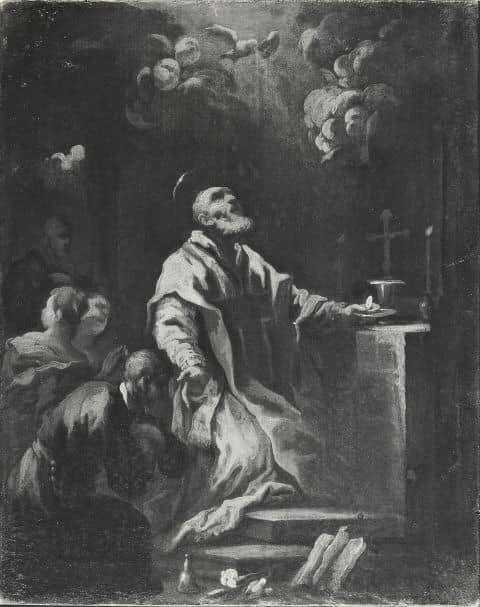
The Vision of St. Philip Neri, Giovanni Camillo Sagrestani (Source)

“Behold the tabernacle of God with men, and he will dwell with them. And they shall be his people; and God himself with them shall be their God.” – Revelation 21:3

St. Philip’s feast always falls within that sunny period of the Church’s year when, passing from Easter to Ascensiontide and following on to Pentecost and Corpus Christi, we find our days running over with the majesty of these great mysteries. The days grow longer, and so they seem to grow more golden with the ever-descending light of the Holy Ghost. We are in a season of peculiar glory. The culminating lesson of these mysteries is clear: God has made his dwelling among men, and in the midst of His people shall He reign.

St. Philip receives the Holy Ghost while at prayer in the catacombs. (Source)

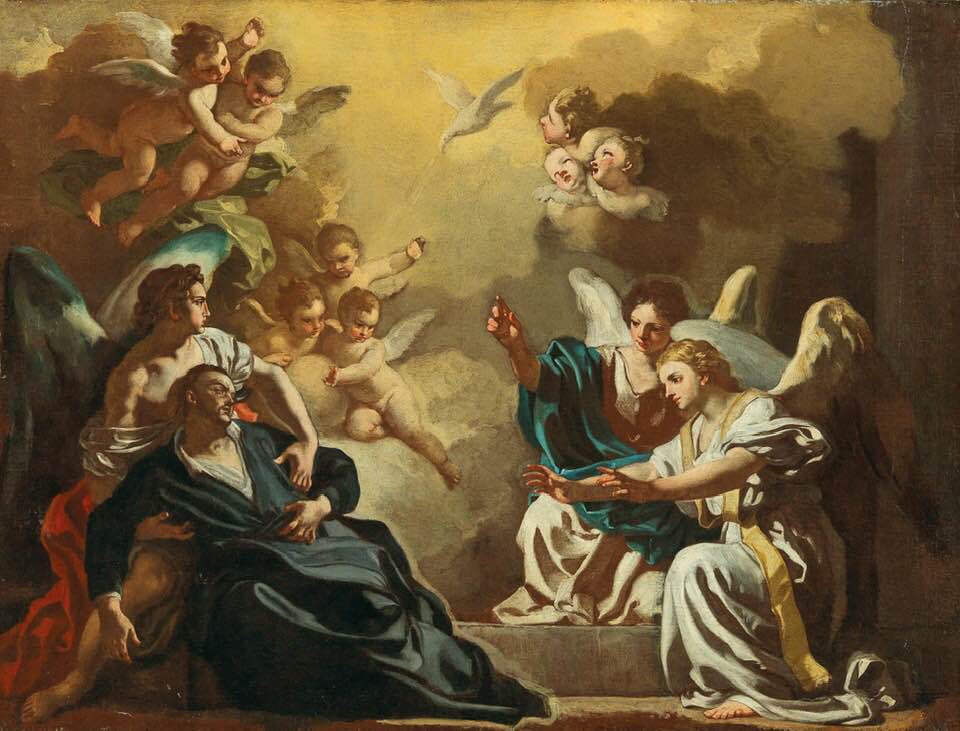
St. Philip knew this truth well. His whole life could well be described as a journey between Pentecost and Corpus Christi, the two feasts that most clearly teach us of God’s enduring presence in His Church. It was on the Vigil of Pentecost, 1544, that St. Philip received the grace that would define his vocation and the character of his sanctity. While praying in the catacombs of San Sebastiano, the Holy Ghost descended into St. Philip’s heart visibly and sensibly in the form of a ball of fire. This experience, which provided as much heat and pain as rapturous joy, marked the true beginning of St. Philip’s active ministry. In St. Philip, the Holy Ghost once again made His dwelling among men.

St. Philip Neri Receiving the Holy Spirit in the Catacombs of St. Sebastian, Francesco Solimena (Source)

From then on, St. Philip’s whole life would be marked by a singular union with the Holy Ghost. He became the “tabernacle of the Most High” and a living fountain of graces. His many miracles testify to the indwelling of the Spirit within him. So does his manifest oddity, his clear and salutary estrangement from the ways and works of ordinary men. The prophet writes, “For my thoughts are not your thoughts: nor your ways my ways, saith the Lord.” So does the Holy Ghost speak from the heart of St. Philip. For this reason, the Church applies the words of St. Paul to the new Apostle of Rome:

The love of God has been poured into our hearts
through the Spirit of God dwelling within us

Introit for the Feast of St. Philip Neri

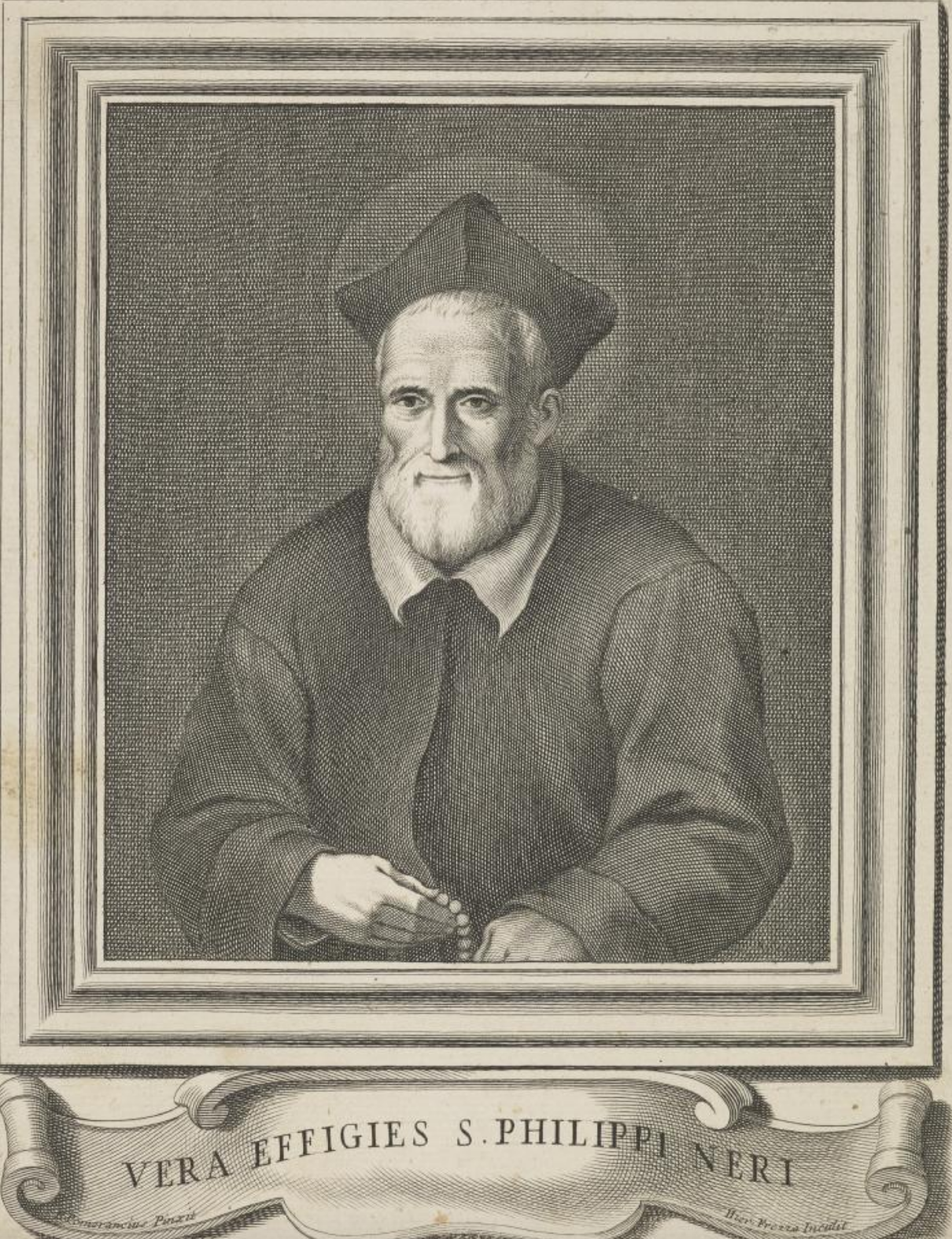
St. Philip’s priestly life was marked by the overwhelming presence of God. Everything about him spoke to the present reality of the supernatural. This reality took two chief forms. The most famous were the astounding miracles wrought by St. Philip – most notably the raising of Prince Paolo Massimo from the dead. But there was also St. Philip’s profound adoration of the Eucharist. His popularization of the Forty Hours’ Devotion was but the visible extension of his love of the Blessed Sacrament. So too were the Eucharistic ecstasies to which he was increasingly susceptible as he became older. St. Philip knew no sweeter hours than those that he spent at Mass as an old man, kneeling in darkness before the altar, lost in the rarefied heights of a contemplation we can barely begin to fathom.

Engraving of St. Philip Neri, Hieronymus Frezza (Source)

One particularly perceptive observer has written:

In recalling the holiness of Saint Philip, it occurs to me that it was essentially this: he was all priest. He was always and everywhere a priest. His priesthood suffused his very being, making him incandescent with the fire of the Cross and of the altar.

Vultus Christi

St. Philip’s extraordinary endowment with the Spirit was ordered towards his life as a priest – namely, towards the glory of God in the Eucharist. This is the case with all of us. The Spirit, God in us, is given precisely for us to receive the Eucharist, God with us. Confirmation, like all the other sacraments, exists with the Eucharist as its proper telos.

The Mass of St. Philip Neri, Circle of Giovanni Battista Piazzetta (Source)

How fitting, then, that St. Philip should pass into eternal life when he did. May the 25th, 1595, was the feast of Corpus Christi. As Fr. Faber has it,

Day set on Rome! its golden morn
Had seen the world’s Creator borne
Around St. Peter’s square
Trembling and weeping all the way,
God’s Vicar with his God that day
Made pageant brave and rare!

“St. Philip’s Death,” F.W. Faber

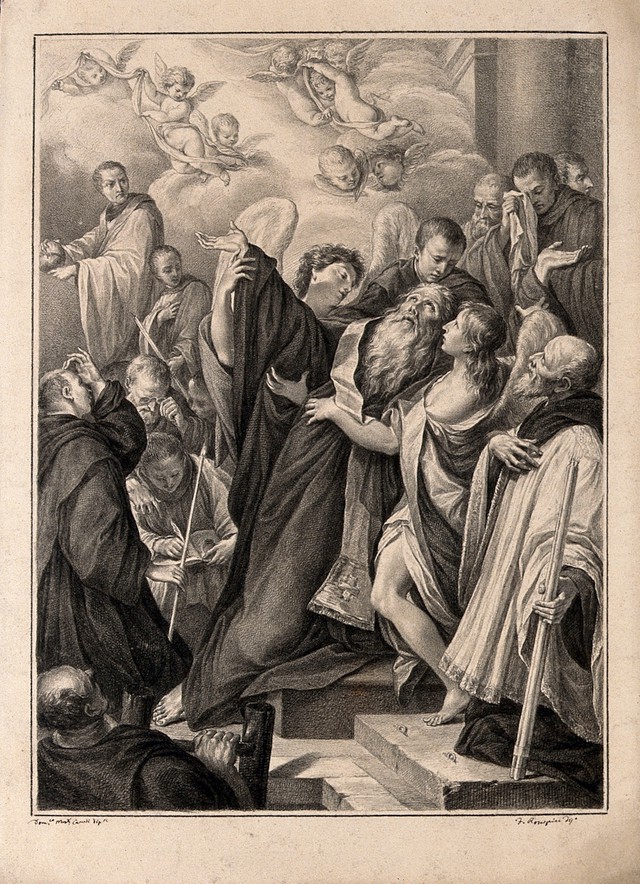
Providence often grants the saints a Christ-like death. It is a sign that, even in suffering and death, God is still dwelling with us. St. Benedict died in choro during a liturgy, just as Christ died in the fulfillment of His high priesthood. Many martyrdoms were accompanied by strange signs and mystical evocations of the Sacrifice of Christ. It should be no surprise that God would take St. Philip in a similarly edifying manner.

The Death of St. Benedict, F. Rosaspina, 1830, after D.M. Canuti. (Source)

In his death, St. Philip reminds us that we are all meant to imitate Christ in His Sacrifice, that is, in the Blessed Sacrament. There is no more perfect pedagogue in the life of the Spirit than the Son, who has presented Himself to us on all the altars of the world. Would that we might take this lesson to heart!

St. Philip died when he did because, by a singular grace of Providence, God was pleased to mark His servant’s passing with the Church’s celebration of the Most Holy Sacrament of the Altar. Just as St. Philip honored the Eucharistic God in his life, so did the Eucharistic God honor him in his death.

We, too, can honor the saint best by cleaving to the Lord. St. Philip’s words to a spiritual daughter are as true today as they once were:

“Let us concentrate ourselves so completely in the divine love, and enter so far into the living fountain of wisdom, through the wounded Side of our Incarnate God, that we may deny ourselves and our self-love, and so be unable to find our way out of that Wound again.”

St. Philip Neri

God dwells with us just as He once dwelt in the blessed heart of St. Philip. He comes to us just as He came once to the priestly hands of St. Philip. Let us abide in Him, just as St. Philip did once and does forevermore in the heights of Heaven.

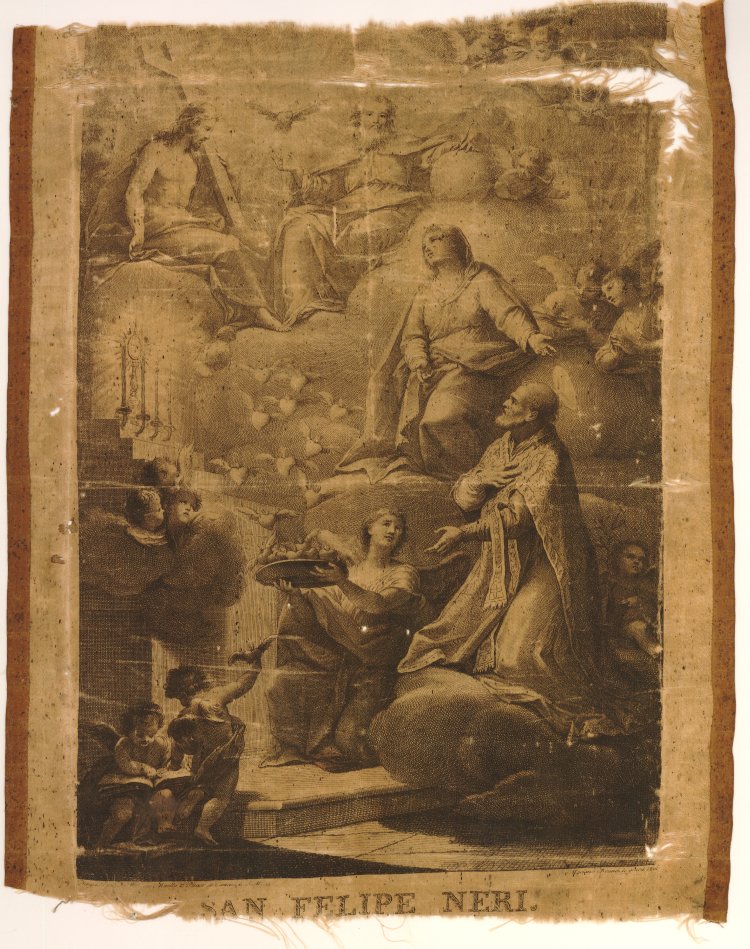
Votive image of St. Philip Neri from the British Museum. As they have it: “St Philip Neri kneeling on a cloud in front of altar; angel to right holding tray with burning hearts and ascending towards Holy Trinity; Virgin Mary mediating surrounded by angels, after Maella. 1801 Engraving, printed on silk.” Note the Eucharist enthroned in a monstrance. (Source)

Fénelon on Perseverance in Prayer

In Lent, I often return to the words of the great Bishop of Cambrai, François de Salignac de la Mothe-Fénelon. He is a perennially refreshing source of spiritual wisdom and guidance. Since we are finally in Passiontide, I thought this excerpt from Fénelon’s sermon on prayer, “The Saints Converse with God,” would be greatly edifying for all those of my readers keeping up with the Lenten Spirituality Series.

A portrait of Fénelon in excellent blue-purple episcopal garb (Source)

We must pray with perseverance. The perfect heart is never weary of seeking God. Ought we to complain if God sometimes leaves us to obscurity, and doubt, and temptation? Trials purify humble souls, and they serve to expiate the faults of the unfaithful. They confound those who, even in their prayers, have flattered their cowardice and pride. If an innocent soul, devoted to God, suffer from any secret disturbance, it should be humble, adore the designs of God, and redouble its prayers and its fervor. How often do we hear those who every day have to reproach themselves with unfaithfulness toward God complain that He refuses to answer their prayers! Ought they not to acknowledge that it is their sins which have formed a thick cloud between Heaven and them, and that God has justly hidden Himself from them? How often has He recalled us from our wanderings! How often, ungrateful as we are, have we been deaf to His voice and insensible to His goodness! He would make us feel that we are blind and miserable when we forsake Him. He would teach us, by privation, the value of the blessings that we have slighted. And shall we not bear our punishment with patience? Who can boast of having done all that he ought to have done; of having repaired all his past errors; of having purified his heart, so that he may claim as a right that God should listen to his prayer? Most truly, all our pride, great as it is, would not be sufficient to inspire such presumption! If then, the Almighty do not grant our petitions, let us adore His justice, let us be silent, let us humble ourselves, and let us pray without ceasing. This humble perseverance will obtain from Him what we should never obtain by our own merit. It will make us pass happily from darkness to light; for know, says St. Augustine, that God is near to us even when He appears far from us.

Crashaw on the Vision of God

Richard Crashaw, one of the great Catholic poets of the seventeenth century, is a perennial source of inspiration. His verse preserves a mystical sensibility that is as refreshing today as it was when it was first composed in the Baroque era. This selection, “A Song,” is one of my favorites. I first had to memorize it many years ago in an English class on prayers (at Mr. Jefferson’s famously secular University, no less). I keep returning to it only to find new riches and new consolations. It seems eminently suited to our mid-Lenten moment, when the faithful yearn to see the face of the Resurrected and Glorified Christ.

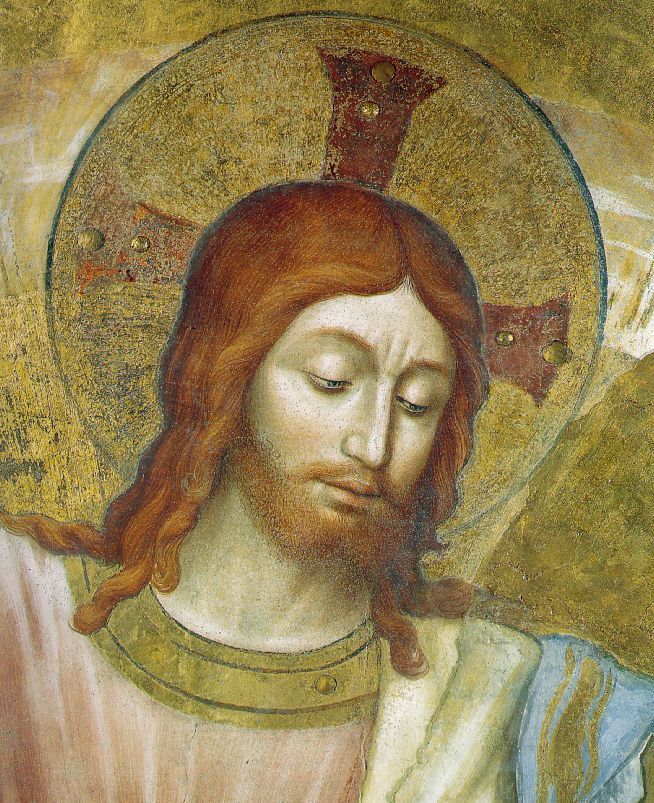
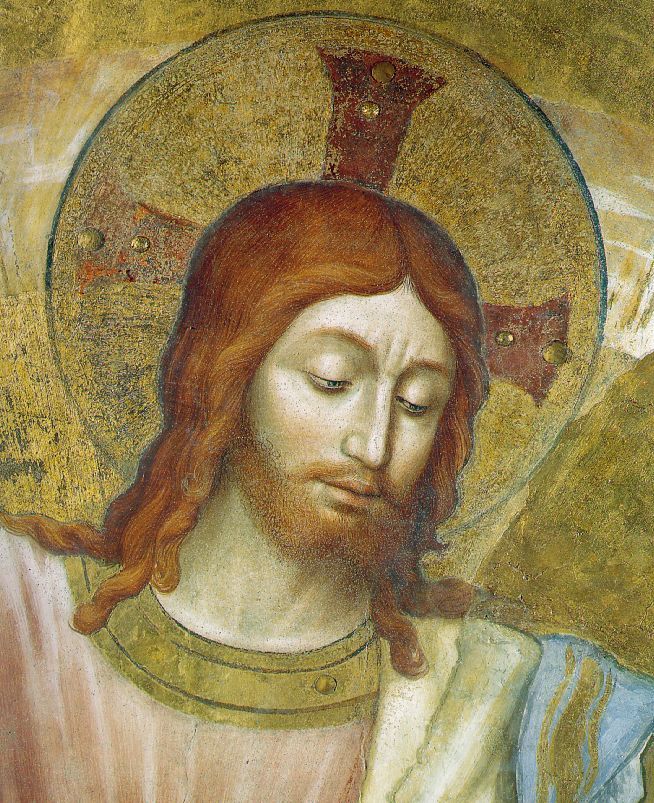
Fra Angelico, Christ the Judge (detail) – (Source)

LORD, when the sense of thy sweet grace
Sends up my soul to seek thy face.
Thy blessed eyes breed such desire,
I dy in love’s delicious Fire.

O love, I am thy Sacrifice.
Be still triumphant, blessed eyes.
Still shine on me, fair suns! that I
Still may behold, though still I dy.

Though still I dy, I live again;
Still longing so to be still slain,
So gainfull is such losse of breath.
I dy even in desire of death.

Still live in me this loving strife
Of living Death and dying Life.
For while thou sweetly slayest me
Dead to my selfe, I live in Thee.


Dame Julian of Norwich on the Thirst of Christ

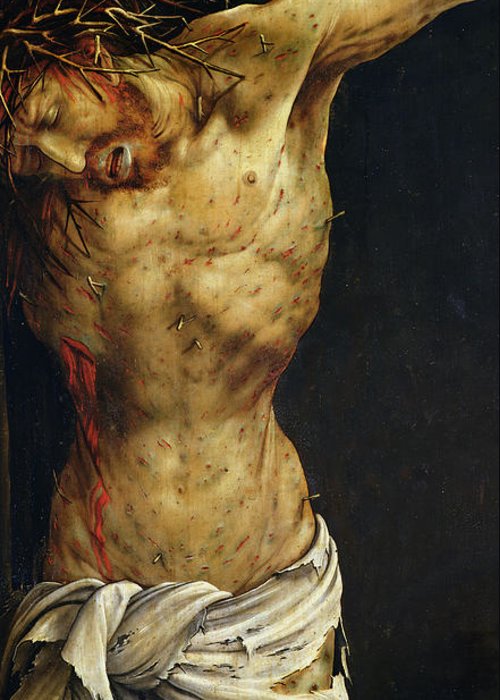
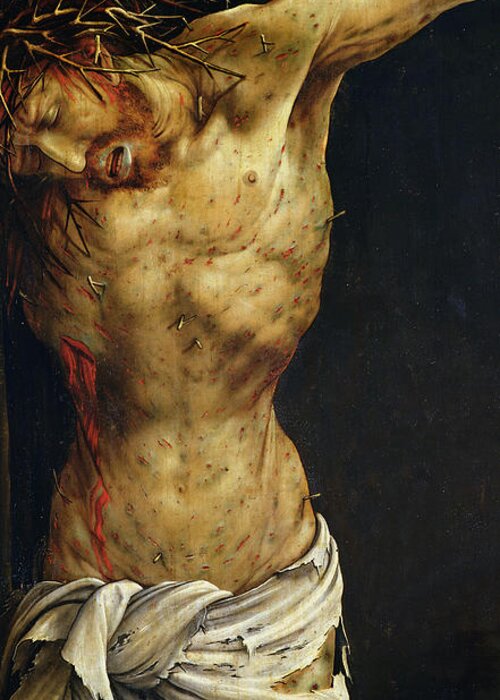
Christ on the Cross, from the Isenheim Altarpiece of Matthias Grünewald (Source)

As part of my Lenten Spirituality Series, here is Dame Julian of Norwich’s meditation on the thirst of Christ, Chapter XVII of Revelations of Divine Love:

“How might any pain be more to me than to see Him that is all my life, and all my bliss, and all my joy suffer?

And in this dying was brought to my mind the words of Christ: I thirst.

For I saw in Christ a double thirst: one bodily; another spiritual…

For this word was shewed for the bodily thirst: the which I understood was caused by failing of moisture. For the blessed flesh and bones was left all alone without blood and moisture. The blessed body dried alone long time with wringing of the nails and weight of the body. For I understood that for tenderness of the sweet hands and of the sweet feet, by the greatness, hardness, and grievousness of the nails the wounds waxed wide and the body sagged, for weight by long time hanging. And [therewith was] piercing and pressing of the head, and binding of the Crown all baked with dry blood, with the sweet hair clinging, and the dry flesh, to the thorns, and the thorns to the flesh drying; and in the beginning while the flesh was fresh and bleeding, the continual sitting of the thorns made the wounds wide. And furthermore I saw that the sweet skin and the tender flesh, with the hair and the blood, was all raised and loosed about from the bone, with the thorns where-through it were rent in many pieces, as a cloth that were sagging, as if it would hastily have fallen off, for heaviness and looseness, while it had natural moisture. And that was great sorrow and dread to me: for methought I would not for my life have seen it fall. How it was done I saw not; but understood it was with the sharp thorns and the violent and grievous setting on of the Garland of Thorns, unsparingly and without pity. This continued awhile, and soon it began to change, and I beheld and marvelled how it might be. And then I saw it was because it began to dry, and stint a part of the weight, and set about the Garland. And thus it encircled all about, as it were garland upon garland. The Garland of the Thorns was dyed with the blood, and that other garland [of Blood] and the head, all was one colour, as clotted blood when it is dry. The skin of the flesh that shewed (of the face and of the body), was small-rimpled [1] with a tanned colour, like a dry board when it is aged; and the face more brown than the body.

I saw four manner of dryings: the first was bloodlessness; the second was pain following after; the third, hanging up in the air, as men hang a cloth to dry; the fourth, that the bodily Kind asked liquid and there was no manner of comfort ministered to Him in all His woe and distress. Ah! hard and grievous was his pain, but much more hard and grievous it was when the moisture failed and began to dry thus, shrivelling.

These were the pains that shewed in the blessed head: the first wrought to the dying, while it had moisture; and that other, slow, with shrinking drying, [and] with blowing of the wind from without, that dried and pained Him with cold more than mine heart can think.

And other pains—for which pains I saw that all is too little that I can say: for it may not be told.

The which Shewing of Christ’s pains filled me full of pain. For I wist well He suffered but once, but [this was as if] He would shew it me and fill me with mind as I had afore desired. And in all this time of Christ’s pains I felt no pain but for Christ’s pains. Then thought-me: I knew but little what pain it was that I asked; and, as a wretch, repented me, thinking: If I had wist what it had been, loth me had been to have prayed it. For methought it passed bodily death, my pains.

I thought: Is any pain like this? And I was answered in my reason: Hell is another pain: for there is despair. But of all pains that lead to salvation this is the most pain, to see thy Love suffer. How might any pain be more to me than to see Him that is all my life, all my bliss, and all my joy, suffer? Here felt I soothfastly [2] that I loved Christ so much above myself that there was no pain that might be suffered like to that sorrow that I had to [see] Him in pain.

[1] or shrivelled.

[2] in sure verity.

St. Francis de Sales on Aridity in Prayer

This Lent, I will post a spiritual lesson every Friday. I start the series with a short passage out of St. Francis de Sales’ famous Introduction to the Devout Life, Part II, Chapter 9

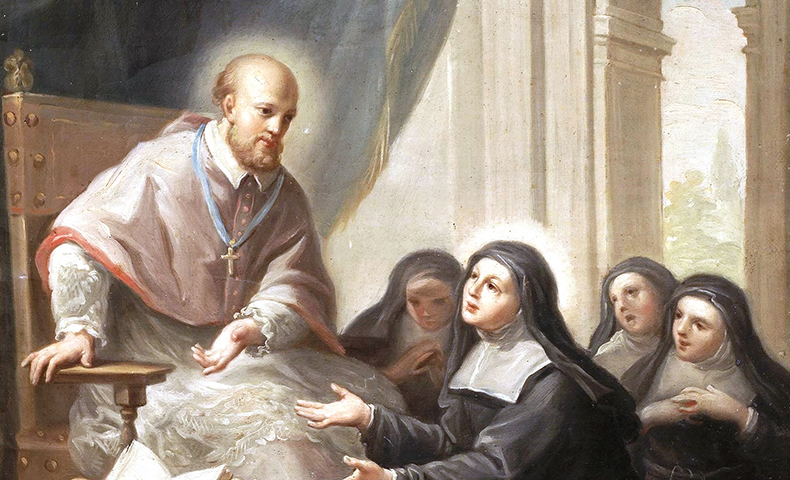
Let the Gentleman Saint help you this Lent. (Source)

SHOULD it happen sometimes, my daughter, that you have no taste for or consolation in your meditation, I entreat you not to be troubled, but seek relief in vocal prayer, bemoan yourself to our Lord, confess your unworthiness, implore His Aid, kiss His Image, if it be beside you, and say in the words of Jacob, “I will not let Thee go, except Thou bless me;” or with the Canaanitish woman, “Yes, Lord, I am as a dog before Thee, but the dogs eat of the crumbs which fall from their master’s table.”

Or you can take a book, and read attentively till such time as your mind is calmed and quickened; or sometimes you may find help from external actions, such as prostrating yourself folding your hands upon your breast, kissing your Crucifix,—that is, supposing you are alone. But if, after all this, you are still unrelieved, do not be disturbed at your dryness, however great it be, but continue striving after a devout attitude in God’s Sight. What numbers of courtiers appear a hundred times at court without any hope of a word from their king, but merely to pay their homage and be seen of him. Just so, my daughter, we ought to enter upon mental prayer purely to fulfil our duty and testify our loyalty. If it pleases God’s Divine Majesty to speak to us, and discourse in our hearts by His Holy Inspirations and inward consolations, it is doubtless a great honour, and very sweet to our soul; but if He does not vouchsafe such favours, but makes as though He saw us not,—as though we were not in His Presence,—nevertheless we must not quit it, but on the contrary we must remain calmly and devoutly before Him, and He is certain to accept our patient waiting, and give heed to our assiduity and perseverance; so that another time He will impart to us His consolations, and let us taste all the sweetness of holy meditation. But even were it not so, let us, my child, be satisfied with the privilege of being in His Presence and seen of Him.


“Reversed Thunder, Christ-Side-Piercing Spear”

The holy side-wound of Christ, from a Book of Hours (Source)

Today is the Anglican commemoration of George Herbert, the great English cleric and metaphysical poet of the 17th century. He died on March 1st, 1633. In honor of this bard of the spirit, I offer to my readers one of my favorite Herbert poems. Every time I return to it, I find new edification.

“Prayer (1)”

George Herbert

Prayer the church’s banquet, angel’s age,
God’s breath in man returning to his birth,
The soul in paraphrase, heart in pilgrimage,
The Christian plummet sounding heav’n and earth
Engine against th’ Almighty, sinner’s tow’r,
Reversed thunder, Christ-side-piercing spear,
The six-days world transposing in an hour,
A kind of tune, which all things hear and fear;
Softness, and peace, and joy, and love, and bliss,
Exalted manna, gladness of the best,
Heaven in ordinary, man well drest,
The milky way, the bird of Paradise,
Church-bells beyond the stars heard, the soul’s blood,
The land of spices; something understood.