Propositions for the Pious

I offer the following propositions to my readers in a spirit of inquiry. Are these not edifying, pious, and – in many cases – straightforwardly true maxims? I have arranged them in thematic paragraphs, but beyond that, they do not issue from my hand. They are indeed far older maxims, drawn from the writings of certain noteworthy Catholic divines. Nevertheless, I should be very curious what my readers think of them – especially those with a theological background.

Are these not, on the whole, quite salutary? Do they not breathe the spirit of the best Fathers and Doctors, especially of those glorious Patriarchs of the West, SS Augustine and Thomas? Or, if anyone should find anything objectionable in them, what is the flaw? I ask sincerely. Those with ears to hear, let them hear.

In vain, O Lord, do You command, if You do not give what you command. Thus, O Lord, all things are possible to him for whom You make all things possible by effecting those same things in him.

All knowledge of God, even natural knowledge, even in the pagan philosophers, cannot come except from God; and without grace knowledge produces nothing but presumption, vanity, and opposition to God Himself, instead of the affections of adoration, gratitude, and love. As there is no sin without love of ourselves, so there is no good work without love of God.

A mark of the Christian Church is that it is catholic, embracing all the angels of heaven, all the elect and the just on earth, and of all times. What is the Church except an assembly of the sons of God abiding in His bosom, adopted in Christ, subsisting in His person, redeemed by His blood, living in His spirit, acting through His grace, and awaiting the grace of the future life? The Church or the whole Christ has the Incarnate Word as head but all the saints as members. The Church is one single man composed of many members, of which Christ is the head, the life, the subsistence and the person- it is one single Christ composed of many saints, of whom He is the sanctifier. There is nothing more spacious than the Church of God; because all the elect and the just of all ages comprise it.

It is useful and necessary at all times, in all places, and for every kind of person, to study and to know the spirit, the piety, and the mysteries of Sacred Scripture. The reading of Sacred Scripture is for all. The sacred obscurity of the Word of God is no reason for the laity to dispense themselves from reading it. The Lord’s Day ought to be sanctified by Christians with readings of pious works and above all of the Holy Scriptures. It is harmful for a Christian to wish to withdraw from this reading. It is an illusion to persuade oneself that knowledge of the mysteries of religion should not be communicated to women by the reading of Sacred Scriptures. Not from the simplicity of women, but from the proud knowledge of men has arisen the abuse of the Scriptures and have heresies been born. To snatch away from the hands of Christians the New Testament, or to hold it closed against them by taking away from them the means of understanding it, is to close for them the mouth of Christ. To forbid Christians to read Sacred Scripture, especially the Gospels, is to forbid the use of light to the sons of light, and to cause them to suffer a kind of excommunication. To snatch from the simple people this consolation of joining their voice to the voice of the whole Church is a custom contrary to the apostolic practice and to the intention of God.

A method full of wisdom, light, and charity is to give souls time for bearing with humility. and for experiencing their state of sin, for seeking the spirit of penance and contrition, and for beginning at least to satisfy the justice of God, before they are reconciled.

To suffer in peace an excommunication and an unjust anathema rather than betray truth, is to imitate St. Paul; far be it from rebelling against authority or of destroying unity.

Nothing engenders a worse opinion of the Church among her enemies than to see exercised there an absolute rule over the faith of the faithful, and to see divisions fostered because of matters which do not violate faith or morals. Truths have descended to this, that they are, as it were, a foreign tongue to most Christians, and the manner of preaching them is, as it were, an unknown idiom, so remote is the manner of preaching from the simplicity of the apostles. and so much above the common grasp of the faithful; nor is there sufficient advertence to the fact that this defect is one of the greatest visible signs of the weakening of the Church and of the wrath of God on His sons. Stubbornness, investigation, and obstinacy in being unwilling either to examine something or to acknowledge that one has been deceived daily changes into an odor, as it were, of death, for many people, that which God has placed in His Church to be an odor of life within it, for instance, good books, instructions, holy examples, etc. Deplorable is the time in which God is believed to be honored by persecution of the truth and its disciples! This time has come…. To be considered and treated by the ministers of religion as impious and unworthy of all commerce with God, as a putrid member capable of corrupting everything in the society of saints, is to pious men a more terrible death than the death of the body. In vain does anyone flatter himself on the purity of his intentions and on a certain zeal for religion, when he persecutes honest men with fire and sword, if he is blinded by his own passion or carried away by that of another on account of which he does not want to examine anything. We frequently believe that we arc sacrificing an impious man to God, when we are sacrificing a servant of God to the devil.

Elsewhere: Keanu Heydari on the Coredemptrix

August is the Month of the Immaculate Heart of Mary. While I was too busy moving and adapting to life in Pennsylvania to write anything for Assumption Day, my good friend Keanu Heydari wrote a beautiful meditation on the meaning of the Assumption as well as on Our Lady’s co-redemptive role more generally. I offer it to my readers for their edification and delight as well as for the honor of Our Lady’s Sorrow and Immaculate Heart. Here’s a particularly puissant excerpt:

In this remarkable passage, as the Venerable Fulton Sheen has argued, John’s Jesus invokes the archetypical womanhood of Mary as the New Eve. Mary is the woman. Jesus affirms her role in undoing our devastated humanity in the Garden by affirming her role as the New Eve. Moreover, the Lord makes a startling claim about the dignity of Mary’s personhood and her role in the narrative arc of cosmic salvation as Coredemptrix and Mediatrix. What is true about Christ is also just as true of the Virgin. Only Mary could confess that she, in the purest way, was truly of the flesh of the Son of Man. 

Keanu Heydari

Keanu hits upon a fundamental truth of Catholicism, the Marian-Ecclesial analogy with Christ. What is predicated of Christ can be predicated of both the Church, His Bride, and, in a special way, His Mother. This is not to suggest that anyone other than Jesus Christ as a discreet person is the Logos, but to note that all that He is by nature, we can become by Grace – and Mary first of all.

Elsewhere: Catholic Kabbalah

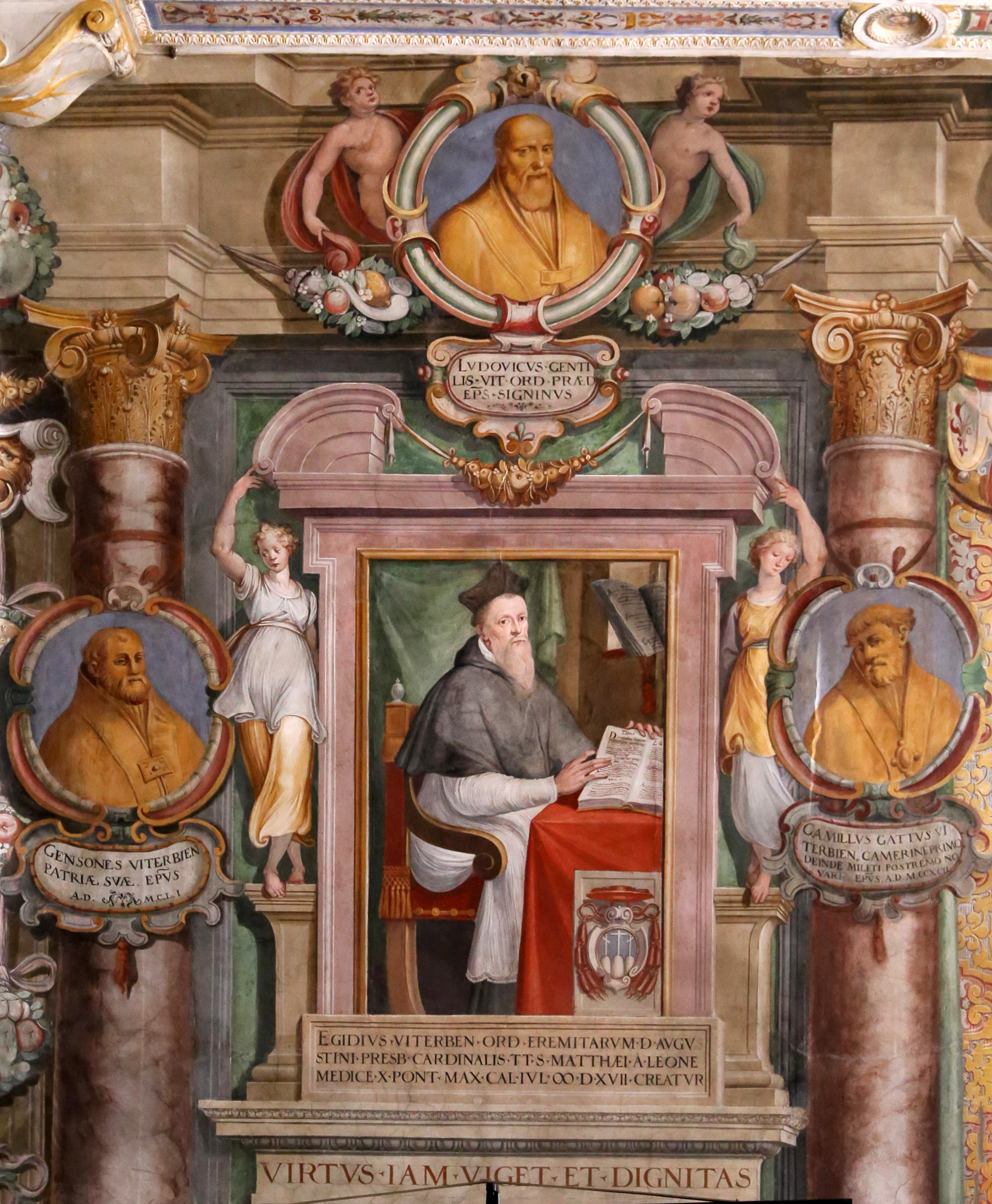
Portrait of Giles of Viterbo in his old Palazzo (Source)

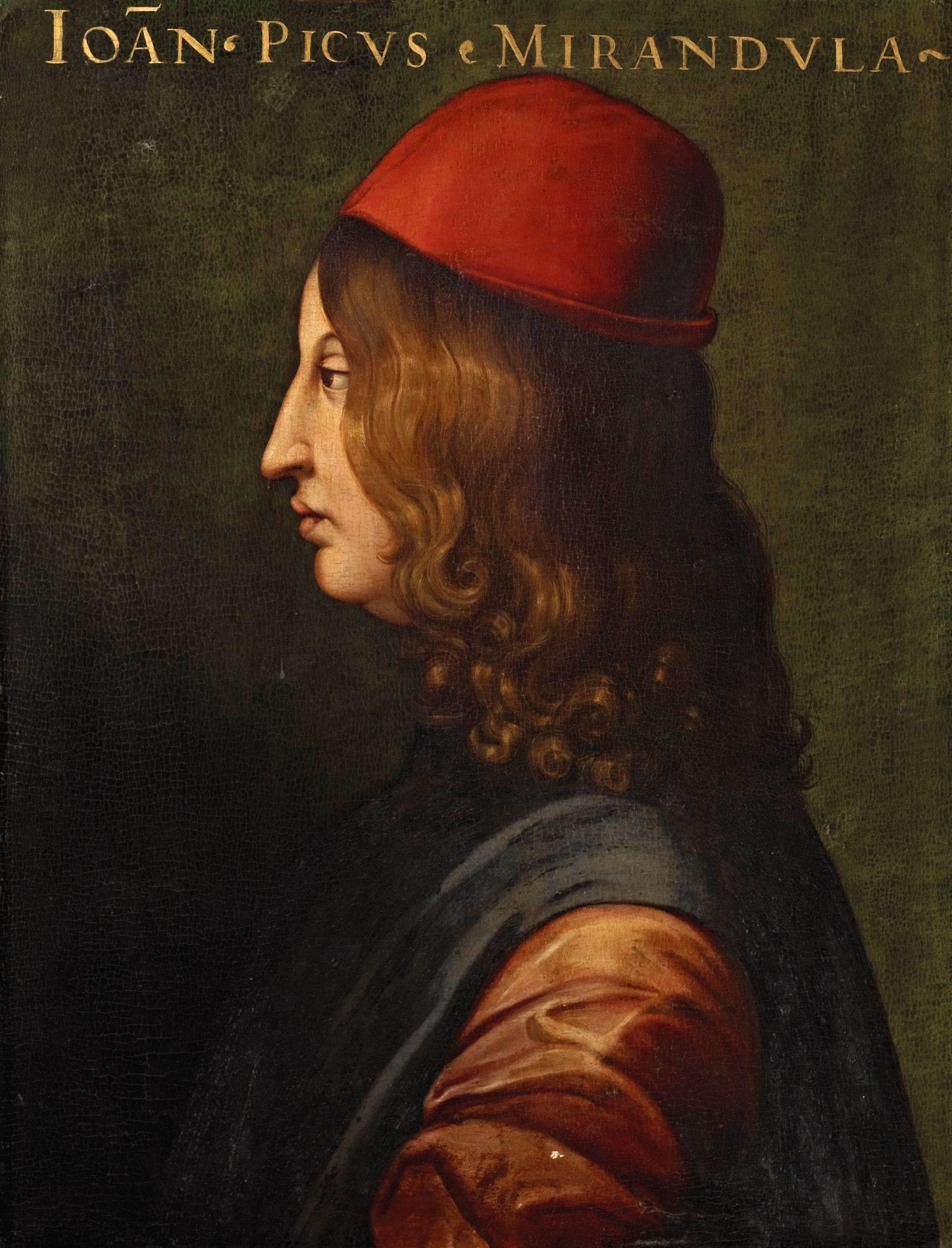
Over at Church Life Journal, Andrew Kuiper has a tour-de-force article on the history and theology of Catholic Kabbalah. His review of four Catholic Kabbalists – Pico della Mirandola, Johannes Reuchlin, Giles of Viterbo, and St. John Fisher – is a model of intellectual history. He does a great job showing the continuing relevance of Kabbalah for Catholic (and other Christian) thinkers throughout the centuries.

The piece is amply cited and provides several helpful theological considerations. I thought Kuiper’s nod towards Sophiology was particularly enlightening. If Christian Kabbalah has a place in Catholic theology today, I predict that it will be in the writings of latter-day Sophiologists.

If I were to offer a criticism of Kuiper’s piece, it would be a very minor one at that: he makes no reference to the works of Margaret Barker. Her research has shed a new light on the roots of Christianity and Jewish mysticism (in both its Merkabah and later Sephirotic developments) in the memory of the First Temple. Reading Kabbalistic texts through a Temple lens can ease their Christian interpretation. But I digress.

Pico della Mirandola, a pioneer in the Christian use of Kabbalah. (Source)

Perhaps the most exciting part of the article, for a historian of the period, is Kuiper’s various references to the Kabbalistic books written by these Christians of the 15th and 16th centuries. I would particularly keen on finding the text of Giles of Viterbo’s Shechina or Pico’s Heptaplus. Some of these hard-to-find volumes have never been translated into English.

It is not easy to summarize the teachings of the Jewish mystics, nor their Christian interpreters. Kuiper does both with commendable attention to detail and obvious competence, all while keeping things clear and concise enough for a lay reader. This article also provides a badly-needed defense of the respectability of Kabbalah as a field of study. Its bastardization in recent times, exemplified most clearly by Madonna et al., has led some to question whether Kabbalah is anything more than a gnostic mishmash of magic with Hebrew letters. I have heard colleagues dismiss it entirely as a field of serious inquiry for a historian or theologian. This tendency seems especially strong with Christian academics, many of whom retain outdated ideas about Jewish mysticism or who simply haven’t up with the post-Scholem rediscovery of Kabbalah. Kuiper’s intervention is a broadside against this boring complacency. It’s not exactly “a cruel angel’s thesis,” but it is one worth defending.

St. Philip Neri and the God Who Dwells With Men

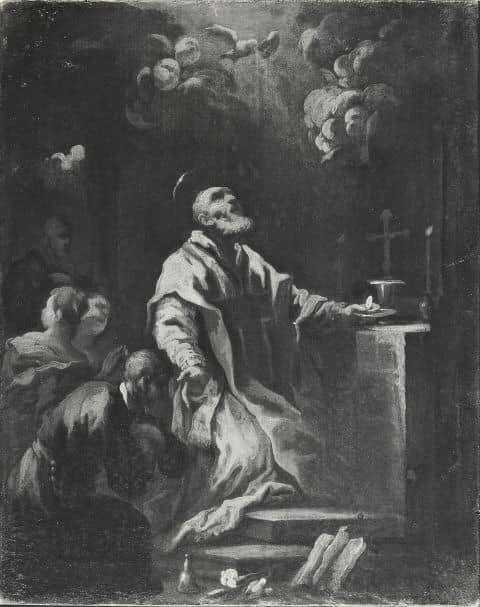
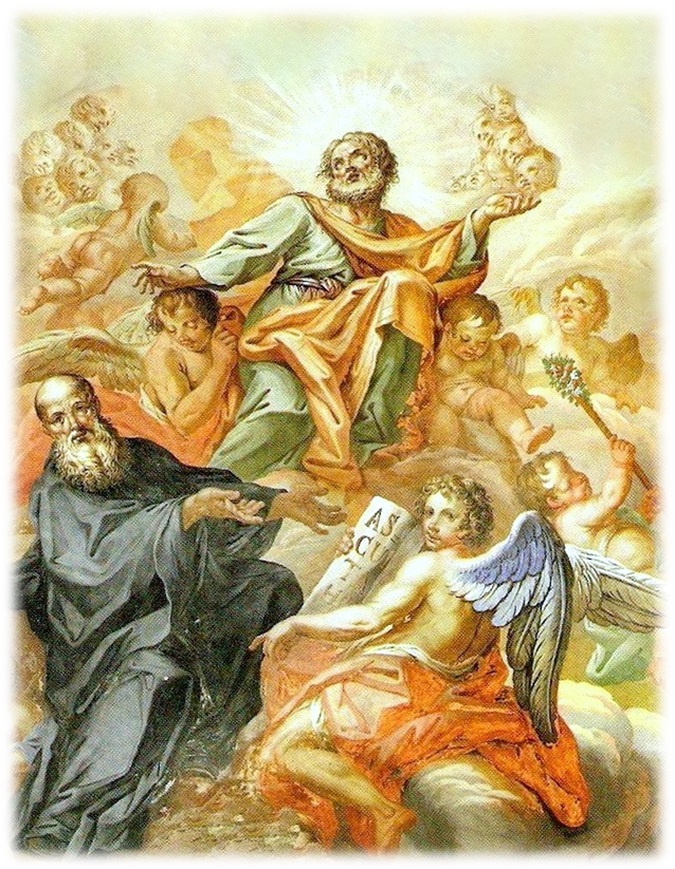
The Vision of St. Philip Neri, Giovanni Camillo Sagrestani (Source)

“Behold the tabernacle of God with men, and he will dwell with them. And they shall be his people; and God himself with them shall be their God.” – Revelation 21:3

St. Philip’s feast always falls within that sunny period of the Church’s year when, passing from Easter to Ascensiontide and following on to Pentecost and Corpus Christi, we find our days running over with the majesty of these great mysteries. The days grow longer, and so they seem to grow more golden with the ever-descending light of the Holy Ghost. We are in a season of peculiar glory. The culminating lesson of these mysteries is clear: God has made his dwelling among men, and in the midst of His people shall He reign.

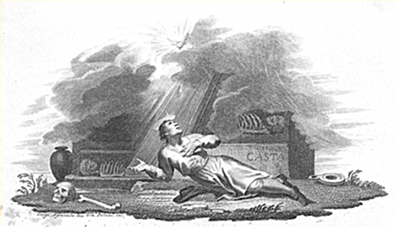
St. Philip receives the Holy Ghost while at prayer in the catacombs. (Source)

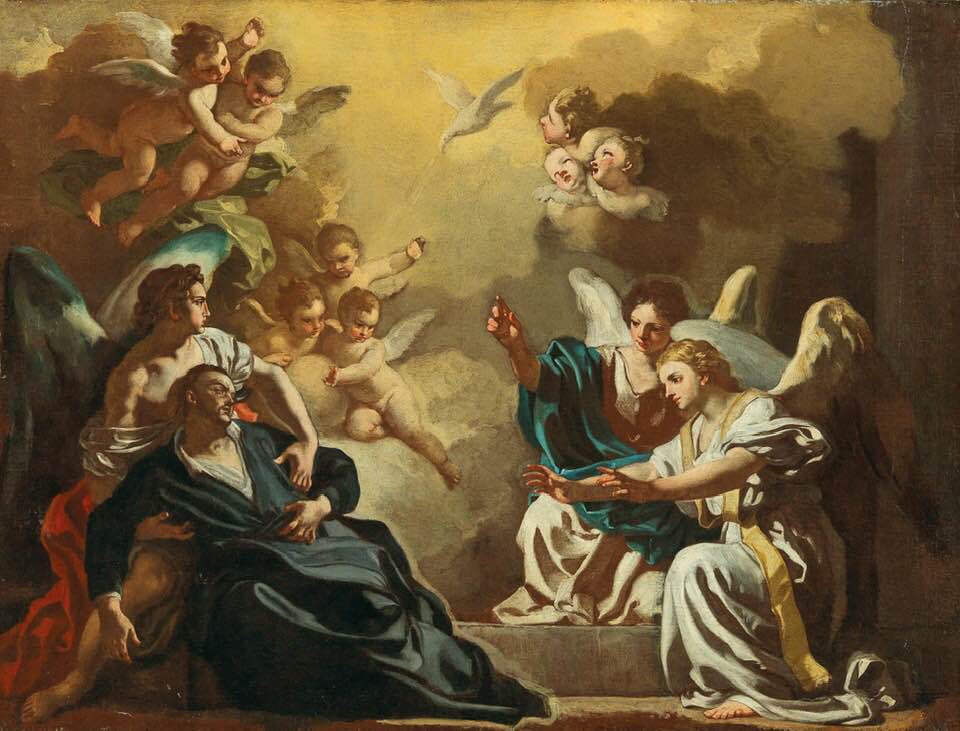
St. Philip knew this truth well. His whole life could well be described as a journey between Pentecost and Corpus Christi, the two feasts that most clearly teach us of God’s enduring presence in His Church. It was on the Vigil of Pentecost, 1544, that St. Philip received the grace that would define his vocation and the character of his sanctity. While praying in the catacombs of San Sebastiano, the Holy Ghost descended into St. Philip’s heart visibly and sensibly in the form of a ball of fire. This experience, which provided as much heat and pain as rapturous joy, marked the true beginning of St. Philip’s active ministry. In St. Philip, the Holy Ghost once again made His dwelling among men.

St. Philip Neri Receiving the Holy Spirit in the Catacombs of St. Sebastian, Francesco Solimena (Source)

From then on, St. Philip’s whole life would be marked by a singular union with the Holy Ghost. He became the “tabernacle of the Most High” and a living fountain of graces. His many miracles testify to the indwelling of the Spirit within him. So does his manifest oddity, his clear and salutary estrangement from the ways and works of ordinary men. The prophet writes, “For my thoughts are not your thoughts: nor your ways my ways, saith the Lord.” So does the Holy Ghost speak from the heart of St. Philip. For this reason, the Church applies the words of St. Paul to the new Apostle of Rome:

The love of God has been poured into our hearts
through the Spirit of God dwelling within us

Introit for the Feast of St. Philip Neri

St. Philip’s priestly life was marked by the overwhelming presence of God. Everything about him spoke to the present reality of the supernatural. This reality took two chief forms. The most famous were the astounding miracles wrought by St. Philip – most notably the raising of Prince Paolo Massimo from the dead. But there was also St. Philip’s profound adoration of the Eucharist. His popularization of the Forty Hours’ Devotion was but the visible extension of his love of the Blessed Sacrament. So too were the Eucharistic ecstasies to which he was increasingly susceptible as he became older. St. Philip knew no sweeter hours than those that he spent at Mass as an old man, kneeling in darkness before the altar, lost in the rarefied heights of a contemplation we can barely begin to fathom.

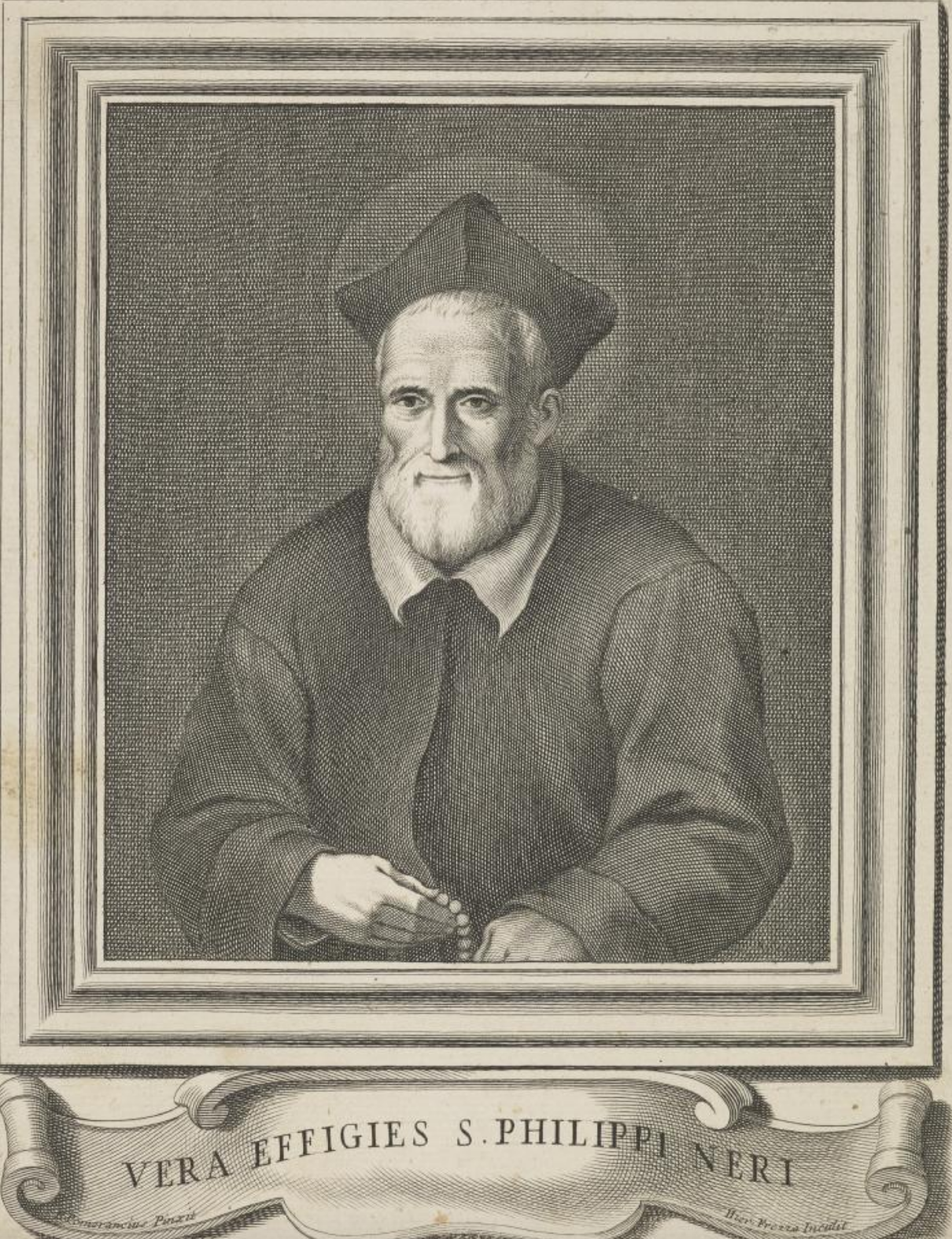
Engraving of St. Philip Neri, Hieronymus Frezza (Source)

One particularly perceptive observer has written:

In recalling the holiness of Saint Philip, it occurs to me that it was essentially this: he was all priest. He was always and everywhere a priest. His priesthood suffused his very being, making him incandescent with the fire of the Cross and of the altar.

Vultus Christi

St. Philip’s extraordinary endowment with the Spirit was ordered towards his life as a priest – namely, towards the glory of God in the Eucharist. This is the case with all of us. The Spirit, God in us, is given precisely for us to receive the Eucharist, God with us. Confirmation, like all the other sacraments, exists with the Eucharist as its proper telos.

The Mass of St. Philip Neri, Circle of Giovanni Battista Piazzetta (Source)

How fitting, then, that St. Philip should pass into eternal life when he did. May the 25th, 1595, was the feast of Corpus Christi. As Fr. Faber has it,

Day set on Rome! its golden morn
Had seen the world’s Creator borne
Around St. Peter’s square
Trembling and weeping all the way,
God’s Vicar with his God that day
Made pageant brave and rare!

“St. Philip’s Death,” F.W. Faber

Providence often grants the saints a Christ-like death. It is a sign that, even in suffering and death, God is still dwelling with us. St. Benedict died in choro during a liturgy, just as Christ died in the fulfillment of His high priesthood. Many martyrdoms were accompanied by strange signs and mystical evocations of the Sacrifice of Christ. It should be no surprise that God would take St. Philip in a similarly edifying manner.

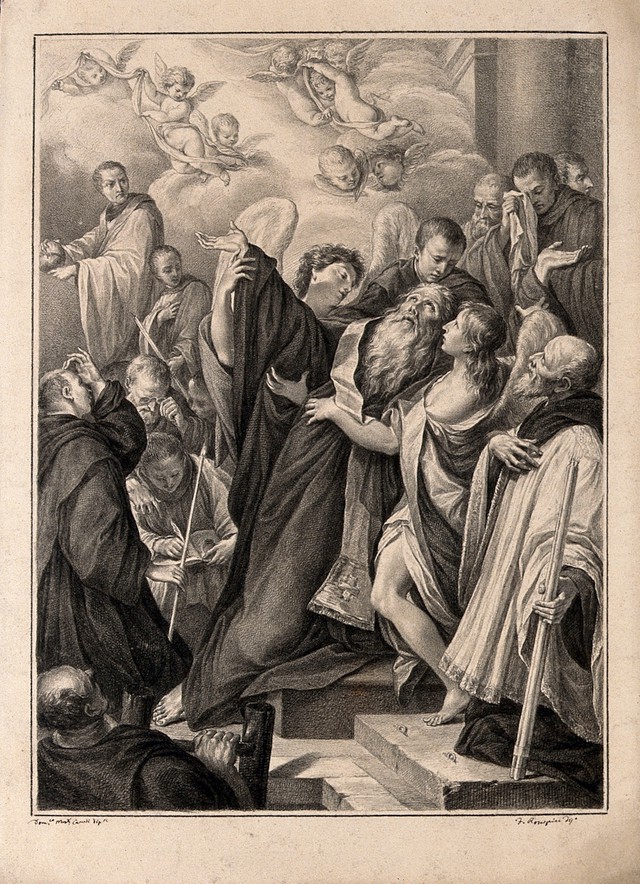
The Death of St. Benedict, F. Rosaspina, 1830, after D.M. Canuti. (Source)

In his death, St. Philip reminds us that we are all meant to imitate Christ in His Sacrifice, that is, in the Blessed Sacrament. There is no more perfect pedagogue in the life of the Spirit than the Son, who has presented Himself to us on all the altars of the world. Would that we might take this lesson to heart!

St. Philip died when he did because, by a singular grace of Providence, God was pleased to mark His servant’s passing with the Church’s celebration of the Most Holy Sacrament of the Altar. Just as St. Philip honored the Eucharistic God in his life, so did the Eucharistic God honor him in his death.

We, too, can honor the saint best by cleaving to the Lord. St. Philip’s words to a spiritual daughter are as true today as they once were:

“Let us concentrate ourselves so completely in the divine love, and enter so far into the living fountain of wisdom, through the wounded Side of our Incarnate God, that we may deny ourselves and our self-love, and so be unable to find our way out of that Wound again.”

St. Philip Neri

God dwells with us just as He once dwelt in the blessed heart of St. Philip. He comes to us just as He came once to the priestly hands of St. Philip. Let us abide in Him, just as St. Philip did once and does forevermore in the heights of Heaven.

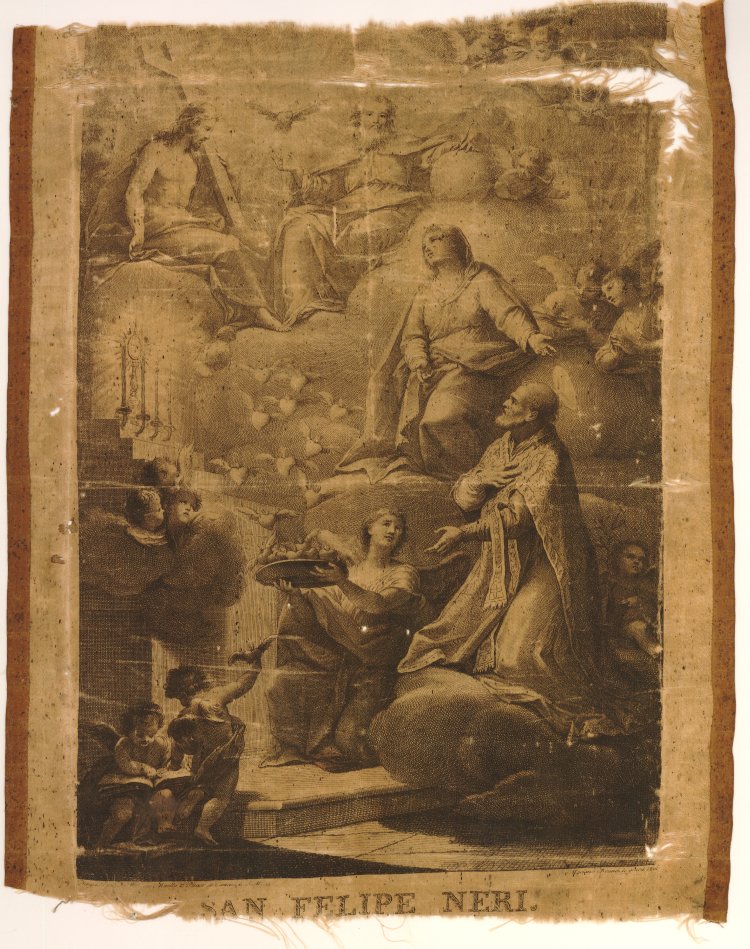
Votive image of St. Philip Neri from the British Museum. As they have it: “St Philip Neri kneeling on a cloud in front of altar; angel to right holding tray with burning hearts and ascending towards Holy Trinity; Virgin Mary mediating surrounded by angels, after Maella. 1801 Engraving, printed on silk.” Note the Eucharist enthroned in a monstrance. (Source)

Fénelon on Perseverance in Prayer

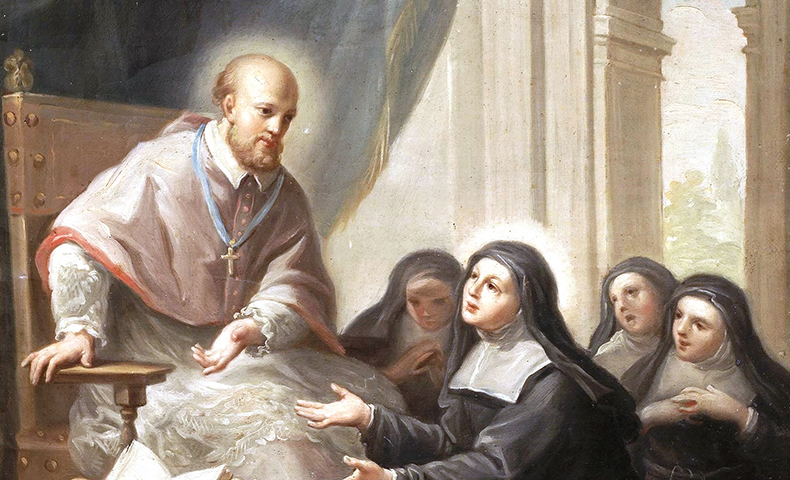
In Lent, I often return to the words of the great Bishop of Cambrai, François de Salignac de la Mothe-Fénelon. He is a perennially refreshing source of spiritual wisdom and guidance. Since we are finally in Passiontide, I thought this excerpt from Fénelon’s sermon on prayer, “The Saints Converse with God,” would be greatly edifying for all those of my readers keeping up with the Lenten Spirituality Series.

A portrait of Fénelon in excellent blue-purple episcopal garb (Source)

We must pray with perseverance. The perfect heart is never weary of seeking God. Ought we to complain if God sometimes leaves us to obscurity, and doubt, and temptation? Trials purify humble souls, and they serve to expiate the faults of the unfaithful. They confound those who, even in their prayers, have flattered their cowardice and pride. If an innocent soul, devoted to God, suffer from any secret disturbance, it should be humble, adore the designs of God, and redouble its prayers and its fervor. How often do we hear those who every day have to reproach themselves with unfaithfulness toward God complain that He refuses to answer their prayers! Ought they not to acknowledge that it is their sins which have formed a thick cloud between Heaven and them, and that God has justly hidden Himself from them? How often has He recalled us from our wanderings! How often, ungrateful as we are, have we been deaf to His voice and insensible to His goodness! He would make us feel that we are blind and miserable when we forsake Him. He would teach us, by privation, the value of the blessings that we have slighted. And shall we not bear our punishment with patience? Who can boast of having done all that he ought to have done; of having repaired all his past errors; of having purified his heart, so that he may claim as a right that God should listen to his prayer? Most truly, all our pride, great as it is, would not be sufficient to inspire such presumption! If then, the Almighty do not grant our petitions, let us adore His justice, let us be silent, let us humble ourselves, and let us pray without ceasing. This humble perseverance will obtain from Him what we should never obtain by our own merit. It will make us pass happily from darkness to light; for know, says St. Augustine, that God is near to us even when He appears far from us.

Six Years a Catholic

Allegory of the Heart of St. Joseph (Source)

On the 30th of March, 2013, I made the profession of faith at the Easter Vigil and received the sacraments of Confirmation and First Holy Communion from then-Bishop-Elect David Talley. I can still remember the night well. It was raining hard outside, and so we had to light the Paschal fire at the church door. We catechumens and confirmandi huddled in darkness while the rites began. It was a moment of profound holiness, and an Easter liturgy I will never forget.

Much has happened since that night. I am still a sinner, much as I was then. Perhaps I am a bit more aware of the fact, though. That’s a grace in itself. I have been a student, a pilgrim, and a devotee. I have made many friends in heaven and earth who have helped me along the way to God. I am grateful for every one of them, and I hope I have been able to do the same from time to time.

Ever since 2014, I have consecrated every year of my life as a Catholic to some Holy Person. My second year was dedicated to Our Lady, the third to the Holy Ghost, the fourth to the Sacred Heart of Jesus, and the fifth to the Sorrowful and Immaculate Heart of Mary. Keeping in this vein, I hereby consecrate my sixth year as a Catholic to the Most Chaste Heart of St. Joseph.

The Most Chaste Heart of St. Joseph (Source)

St. Joseph has been a great friend to me in the past, and has proven the power of his intercession on more than one occasion. I ask my readers to join me in praying now that St. Joseph will bless this coming year with abundant graces proper to my state of life, and especially an outpouring of those virtues which he so admirably exemplified: humility, purity, simplicity, detachment, submission to the will of God, reverence, and a constant, attentive devotion to Jesus and Mary.

St. Joseph with St Benedict and angels (Source)

Holy St. Joseph, pray for me.

Mighty St. Joseph, pray for me.

Humble St. Joseph, pray for me.

Pure St. Joseph, pray for me.

Pious St. Joseph, pray for me.

Sweet St. Joseph, pray for me.

Heart of St. Joseph, pray for me.

Amen.

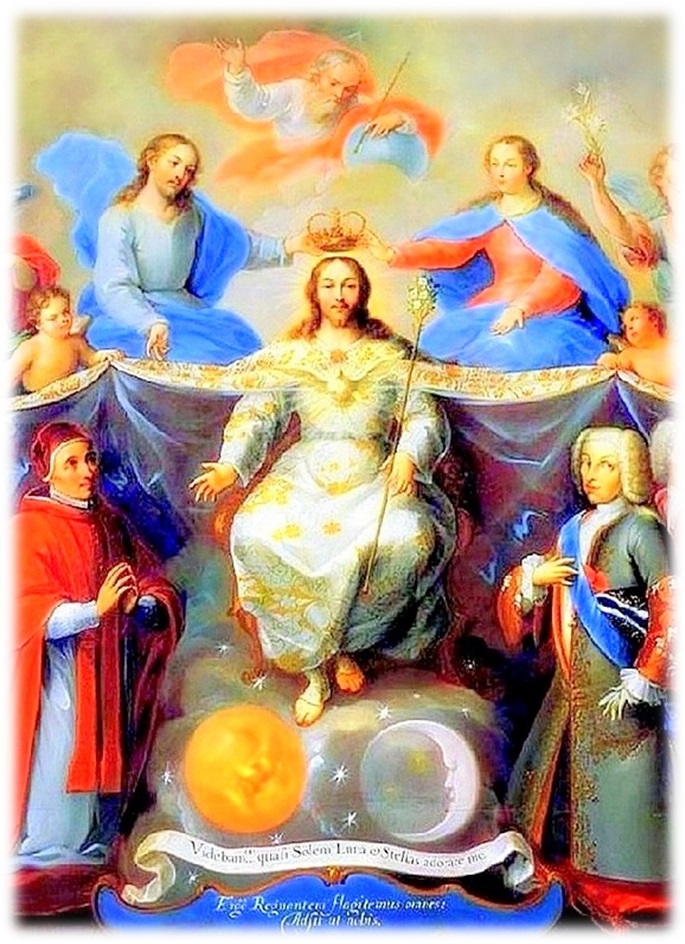
The Coronation of St. Joseph (Source)


Crashaw on the Vision of God

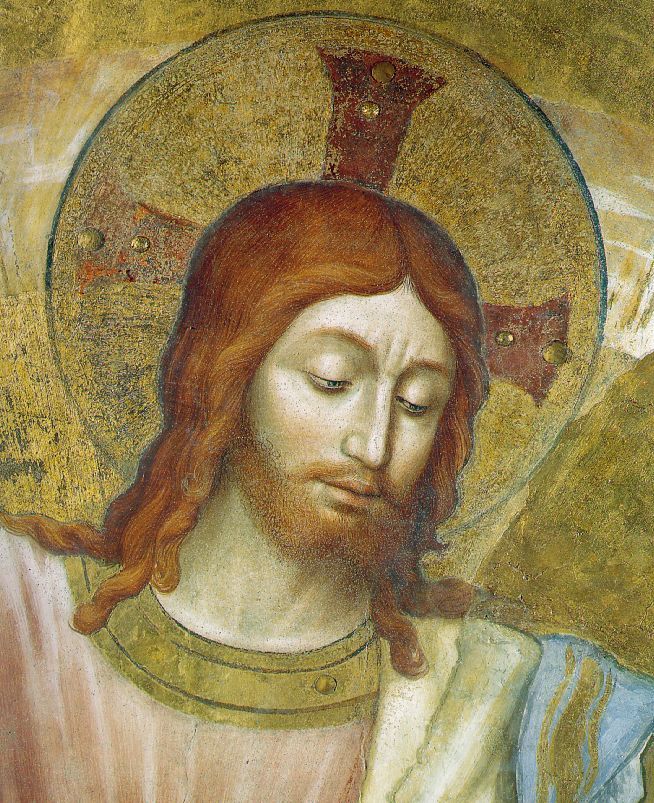
Richard Crashaw, one of the great Catholic poets of the seventeenth century, is a perennial source of inspiration. His verse preserves a mystical sensibility that is as refreshing today as it was when it was first composed in the Baroque era. This selection, “A Song,” is one of my favorites. I first had to memorize it many years ago in an English class on prayers (at Mr. Jefferson’s famously secular University, no less). I keep returning to it only to find new riches and new consolations. It seems eminently suited to our mid-Lenten moment, when the faithful yearn to see the face of the Resurrected and Glorified Christ.

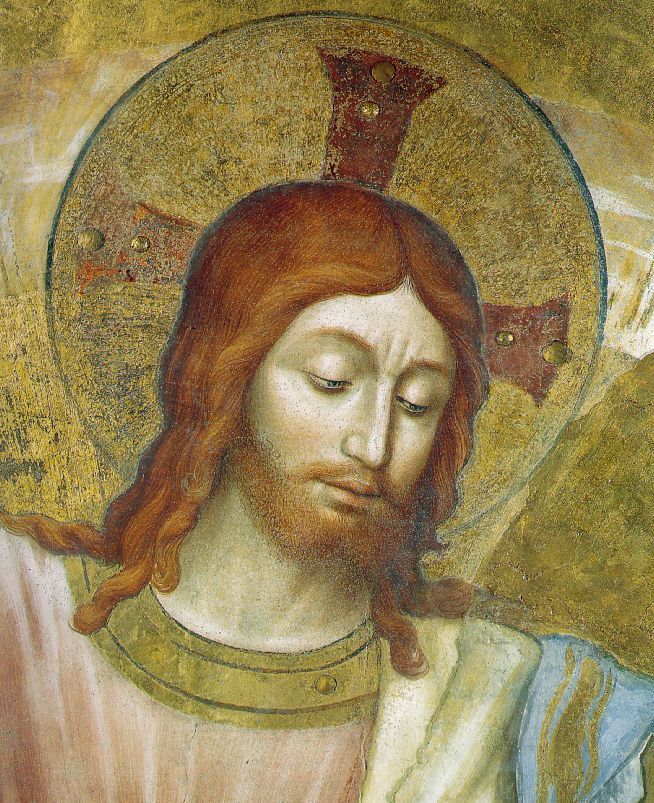
Fra Angelico, Christ the Judge (detail) – (Source)

LORD, when the sense of thy sweet grace
Sends up my soul to seek thy face.
Thy blessed eyes breed such desire,
I dy in love’s delicious Fire.

O love, I am thy Sacrifice.
Be still triumphant, blessed eyes.
Still shine on me, fair suns! that I
Still may behold, though still I dy.

Though still I dy, I live again;
Still longing so to be still slain,
So gainfull is such losse of breath.
I dy even in desire of death.

Still live in me this loving strife
Of living Death and dying Life.
For while thou sweetly slayest me
Dead to my selfe, I live in Thee.


Dame Julian of Norwich on the Thirst of Christ

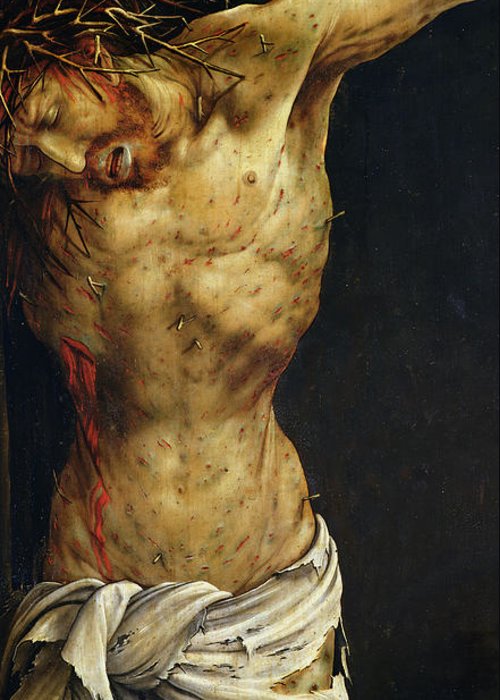
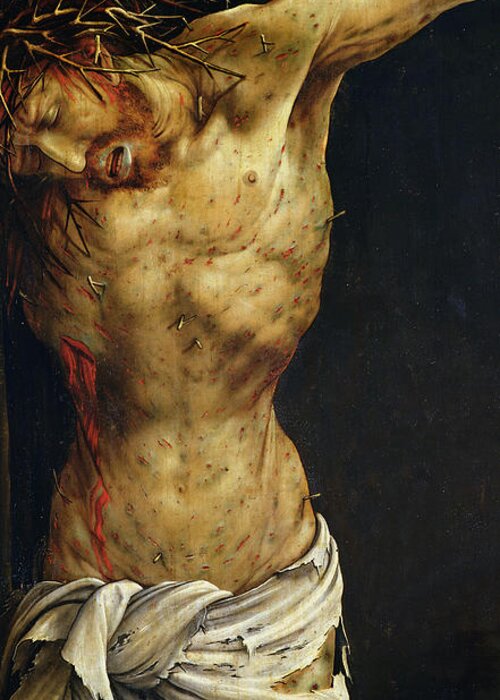
Christ on the Cross, from the Isenheim Altarpiece of Matthias Grünewald (Source)

As part of my Lenten Spirituality Series, here is Dame Julian of Norwich’s meditation on the thirst of Christ, Chapter XVII of Revelations of Divine Love:

“How might any pain be more to me than to see Him that is all my life, and all my bliss, and all my joy suffer?

And in this dying was brought to my mind the words of Christ: I thirst.

For I saw in Christ a double thirst: one bodily; another spiritual…

For this word was shewed for the bodily thirst: the which I understood was caused by failing of moisture. For the blessed flesh and bones was left all alone without blood and moisture. The blessed body dried alone long time with wringing of the nails and weight of the body. For I understood that for tenderness of the sweet hands and of the sweet feet, by the greatness, hardness, and grievousness of the nails the wounds waxed wide and the body sagged, for weight by long time hanging. And [therewith was] piercing and pressing of the head, and binding of the Crown all baked with dry blood, with the sweet hair clinging, and the dry flesh, to the thorns, and the thorns to the flesh drying; and in the beginning while the flesh was fresh and bleeding, the continual sitting of the thorns made the wounds wide. And furthermore I saw that the sweet skin and the tender flesh, with the hair and the blood, was all raised and loosed about from the bone, with the thorns where-through it were rent in many pieces, as a cloth that were sagging, as if it would hastily have fallen off, for heaviness and looseness, while it had natural moisture. And that was great sorrow and dread to me: for methought I would not for my life have seen it fall. How it was done I saw not; but understood it was with the sharp thorns and the violent and grievous setting on of the Garland of Thorns, unsparingly and without pity. This continued awhile, and soon it began to change, and I beheld and marvelled how it might be. And then I saw it was because it began to dry, and stint a part of the weight, and set about the Garland. And thus it encircled all about, as it were garland upon garland. The Garland of the Thorns was dyed with the blood, and that other garland [of Blood] and the head, all was one colour, as clotted blood when it is dry. The skin of the flesh that shewed (of the face and of the body), was small-rimpled [1] with a tanned colour, like a dry board when it is aged; and the face more brown than the body.

I saw four manner of dryings: the first was bloodlessness; the second was pain following after; the third, hanging up in the air, as men hang a cloth to dry; the fourth, that the bodily Kind asked liquid and there was no manner of comfort ministered to Him in all His woe and distress. Ah! hard and grievous was his pain, but much more hard and grievous it was when the moisture failed and began to dry thus, shrivelling.

These were the pains that shewed in the blessed head: the first wrought to the dying, while it had moisture; and that other, slow, with shrinking drying, [and] with blowing of the wind from without, that dried and pained Him with cold more than mine heart can think.

And other pains—for which pains I saw that all is too little that I can say: for it may not be told.

The which Shewing of Christ’s pains filled me full of pain. For I wist well He suffered but once, but [this was as if] He would shew it me and fill me with mind as I had afore desired. And in all this time of Christ’s pains I felt no pain but for Christ’s pains. Then thought-me: I knew but little what pain it was that I asked; and, as a wretch, repented me, thinking: If I had wist what it had been, loth me had been to have prayed it. For methought it passed bodily death, my pains.

I thought: Is any pain like this? And I was answered in my reason: Hell is another pain: for there is despair. But of all pains that lead to salvation this is the most pain, to see thy Love suffer. How might any pain be more to me than to see Him that is all my life, all my bliss, and all my joy, suffer? Here felt I soothfastly [2] that I loved Christ so much above myself that there was no pain that might be suffered like to that sorrow that I had to [see] Him in pain.

[1] or shrivelled.

[2] in sure verity.

St. Francis de Sales on Aridity in Prayer

This Lent, I will post a spiritual lesson every Friday. I start the series with a short passage out of St. Francis de Sales’ famous Introduction to the Devout Life, Part II, Chapter 9

Let the Gentleman Saint help you this Lent. (Source)

SHOULD it happen sometimes, my daughter, that you have no taste for or consolation in your meditation, I entreat you not to be troubled, but seek relief in vocal prayer, bemoan yourself to our Lord, confess your unworthiness, implore His Aid, kiss His Image, if it be beside you, and say in the words of Jacob, “I will not let Thee go, except Thou bless me;” or with the Canaanitish woman, “Yes, Lord, I am as a dog before Thee, but the dogs eat of the crumbs which fall from their master’s table.”

Or you can take a book, and read attentively till such time as your mind is calmed and quickened; or sometimes you may find help from external actions, such as prostrating yourself folding your hands upon your breast, kissing your Crucifix,—that is, supposing you are alone. But if, after all this, you are still unrelieved, do not be disturbed at your dryness, however great it be, but continue striving after a devout attitude in God’s Sight. What numbers of courtiers appear a hundred times at court without any hope of a word from their king, but merely to pay their homage and be seen of him. Just so, my daughter, we ought to enter upon mental prayer purely to fulfil our duty and testify our loyalty. If it pleases God’s Divine Majesty to speak to us, and discourse in our hearts by His Holy Inspirations and inward consolations, it is doubtless a great honour, and very sweet to our soul; but if He does not vouchsafe such favours, but makes as though He saw us not,—as though we were not in His Presence,—nevertheless we must not quit it, but on the contrary we must remain calmly and devoutly before Him, and He is certain to accept our patient waiting, and give heed to our assiduity and perseverance; so that another time He will impart to us His consolations, and let us taste all the sweetness of holy meditation. But even were it not so, let us, my child, be satisfied with the privilege of being in His Presence and seen of Him.


“Reversed Thunder, Christ-Side-Piercing Spear”

The holy side-wound of Christ, from a Book of Hours (Source)

Today is the Anglican commemoration of George Herbert, the great English cleric and metaphysical poet of the 17th century. He died on March 1st, 1633. In honor of this bard of the spirit, I offer to my readers one of my favorite Herbert poems. Every time I return to it, I find new edification.

“Prayer (1)”

George Herbert

Prayer the church’s banquet, angel’s age,
God’s breath in man returning to his birth,
The soul in paraphrase, heart in pilgrimage,
The Christian plummet sounding heav’n and earth
Engine against th’ Almighty, sinner’s tow’r,
Reversed thunder, Christ-side-piercing spear,
The six-days world transposing in an hour,
A kind of tune, which all things hear and fear;
Softness, and peace, and joy, and love, and bliss,
Exalted manna, gladness of the best,
Heaven in ordinary, man well drest,
The milky way, the bird of Paradise,
Church-bells beyond the stars heard, the soul’s blood,
The land of spices; something understood.