Reflections on Leaving Oxford

Sweet dreams are made of this… (Source)

I have, by the merciful grace of God, passed my M.Phil in Theology at Oxford. I could not have done so without the abundant help of my supervisors and tutors, principally Dr. Sarah Apetrei, as well as the many friends and family who supported me throughout the course of my studies there. Latterly this endeavor has caused me to neglect my blogging, for which I must beg pardon of my readers. Editing, submissions, an examination, travelling, and the arduous business of moving back across the Atlantic has distracted me. So has the bittersweet task of saying goodbye to so many friends, men and women I will miss in the years to come.

Oxford is most beautiful in the Spring. Photo taken by author.

I can understand why our soon-to-be-Saint Newman had so much trouble getting Oxford out of his blood. The place is a mirage in silver and stone. To have dwelt in such a dream-city for so long a time, to have been part of its inner life, to have shaped it according to one’s own character and to be shaped by it in turn, to watch the sun and the rain succeed in their seasons over streets imbued everywhere with a boundless sense of eternity…yes, I can see why Newman was always looking for a path back to this northern Eden. A Papal angel kept him from the gate. More prosaic barriers have turned me aside, namely, the prospects of an academic career in America.

But, in some way, the greater grief is leaving the United Kingdom. Shakespeare called Albion a swan’s nest in a stream. Having traveled from London to Birmingham, from Cardiff to York, from Tenby to Bournemouth, from Cambridge to Edinburgh, from Bath to Stratford, from Walsingham to Wakefield, in short, across the whole face of this country, I can start to see what he means. Britain possesses a peculiar beauty in grey-green and gold, something delicate and immortal that only reveals itself to an attentive foreigner. I shall miss it.
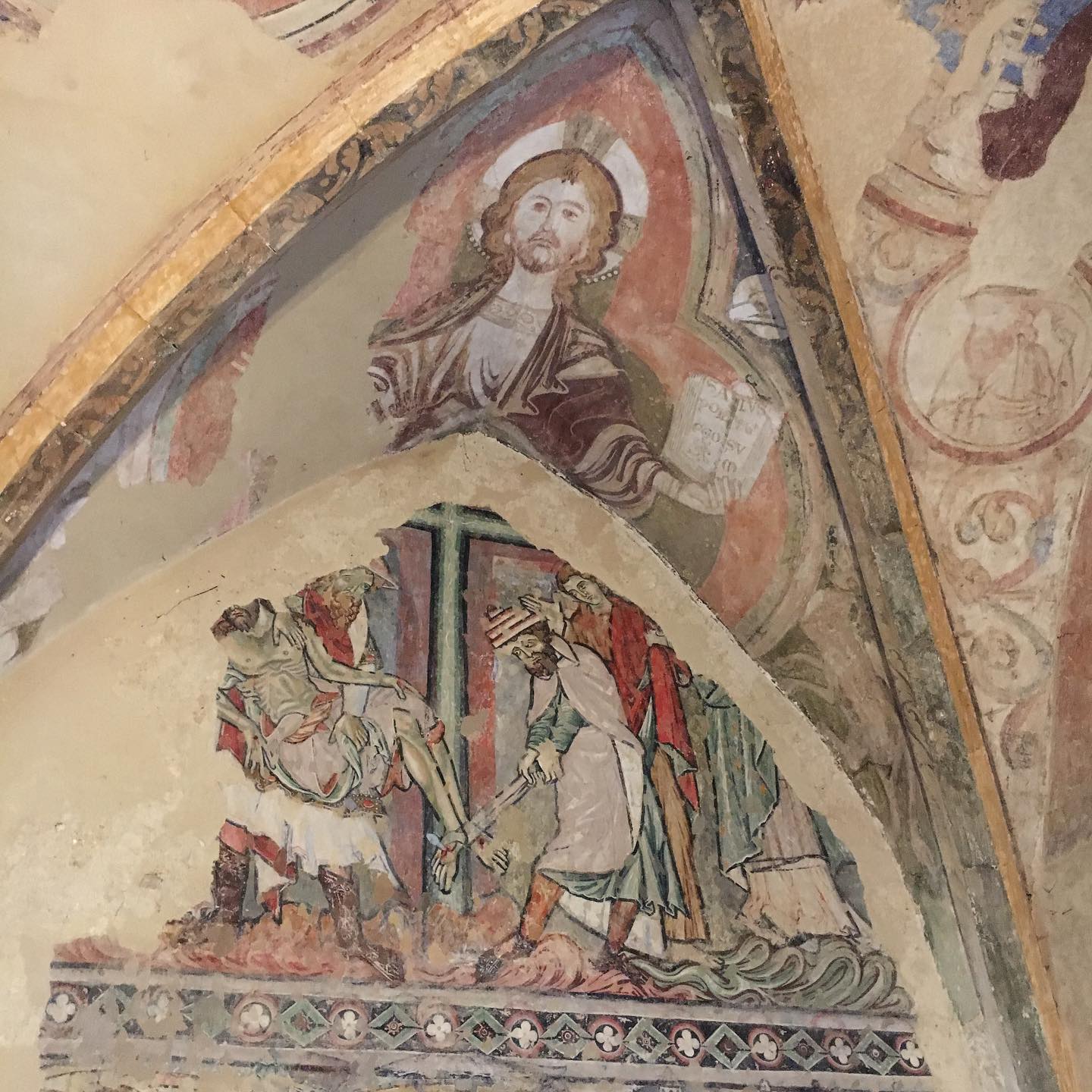
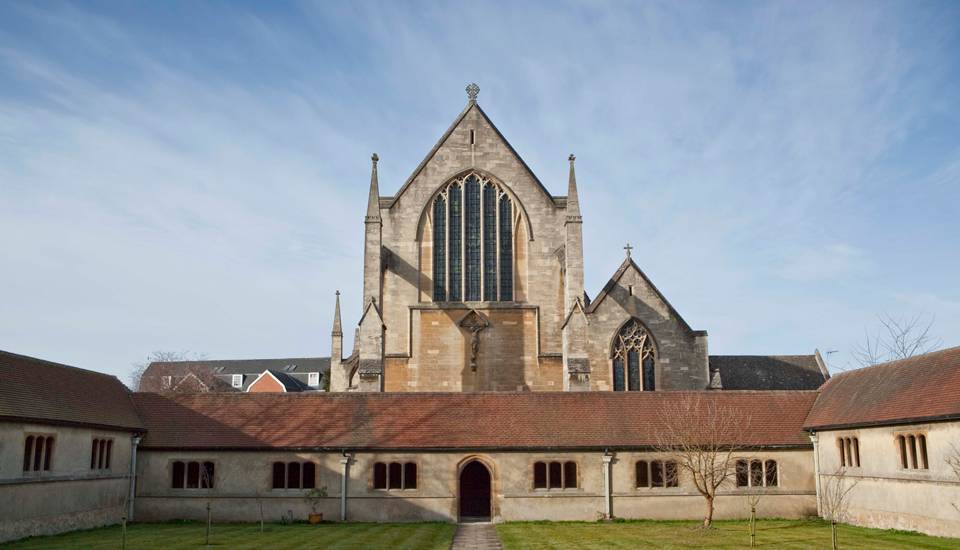
The St. Sepulchre Chapel, Winchester Cathedral. Photo taken by author.

More than that, I’ll miss the many friends I made in my two years abroad. Not just English either, though there were plenty of those – but also Canadians, Russians, Australians, Irish (both orange and green), French, Armenians, Italians, Romanians, Scots, Sri Lankans, Welsh, Poles, Chinese, and even some of my fellow countrymen. The story of my time in Oxford would not be complete without them. I will feel the absence of each, some more keenly than others.
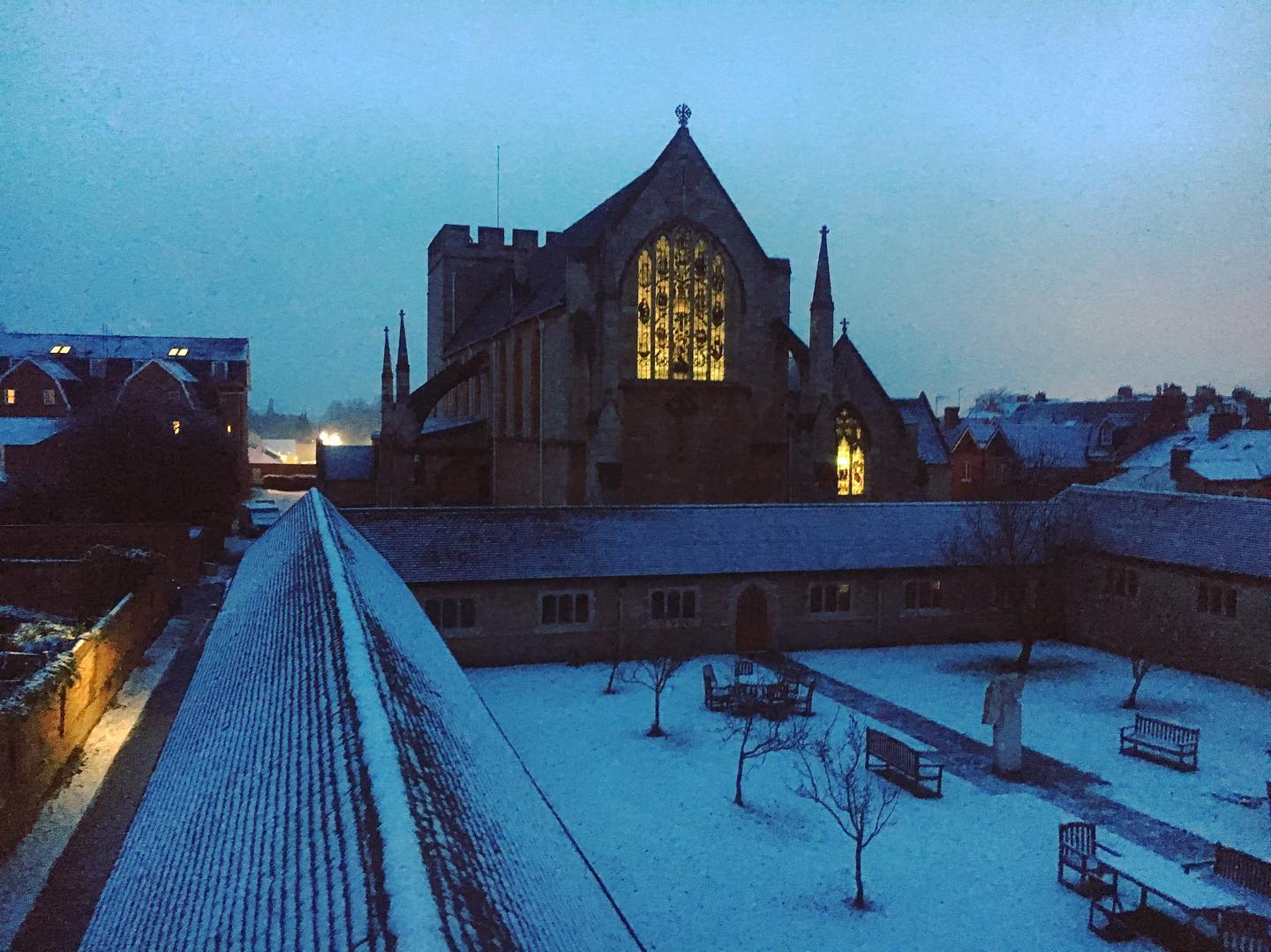
St. Stephen’s House in the snow, January 2019. Photo taken by author.

I suppose this is as good a time as ever to take stock of some of my travels through life at large. I am 24 years old. I have visited 12 countries beyond the borders of the United States:

The United Kingdom
France
Ireland
Belgium
The Netherlands
Italy
Austria
The Czech Republic
Hungary
Romania
Bermuda
Vatican City

And 14 if one includes layovers and train connections in Germany and Switzerland. I have stood at the banks of the following rivers:

The Thames in London
The Thames in Oxford (Isis)
The Thame in Dorchester (before it becomes the Thames)
The Cherwell
The Liffey
The Seine
The Amstel
The Arno
The Rhône
The Saône
The Tiber
The Danube
The Lys
The Usk
The Avon in Bath
The Loire
The Cam

I have spent quite a lot of time in churches. A few favorites in England include the Oxford Oratory, the York Oratory, the Birmingham Oratory, Magdalen College Chapel, Worcester College Chapel, Oriel College Chapel, Merton College Chapel, St. Stephen’s House Chapel, St. Etheldreda’s, Holborn, and the Anglican Shrine of Our Lady of Walsingham. My single favorite church in England remains the Brompton Oratory, as it has been since that first June day I stepped into its vast and holy darkness, four years ago.
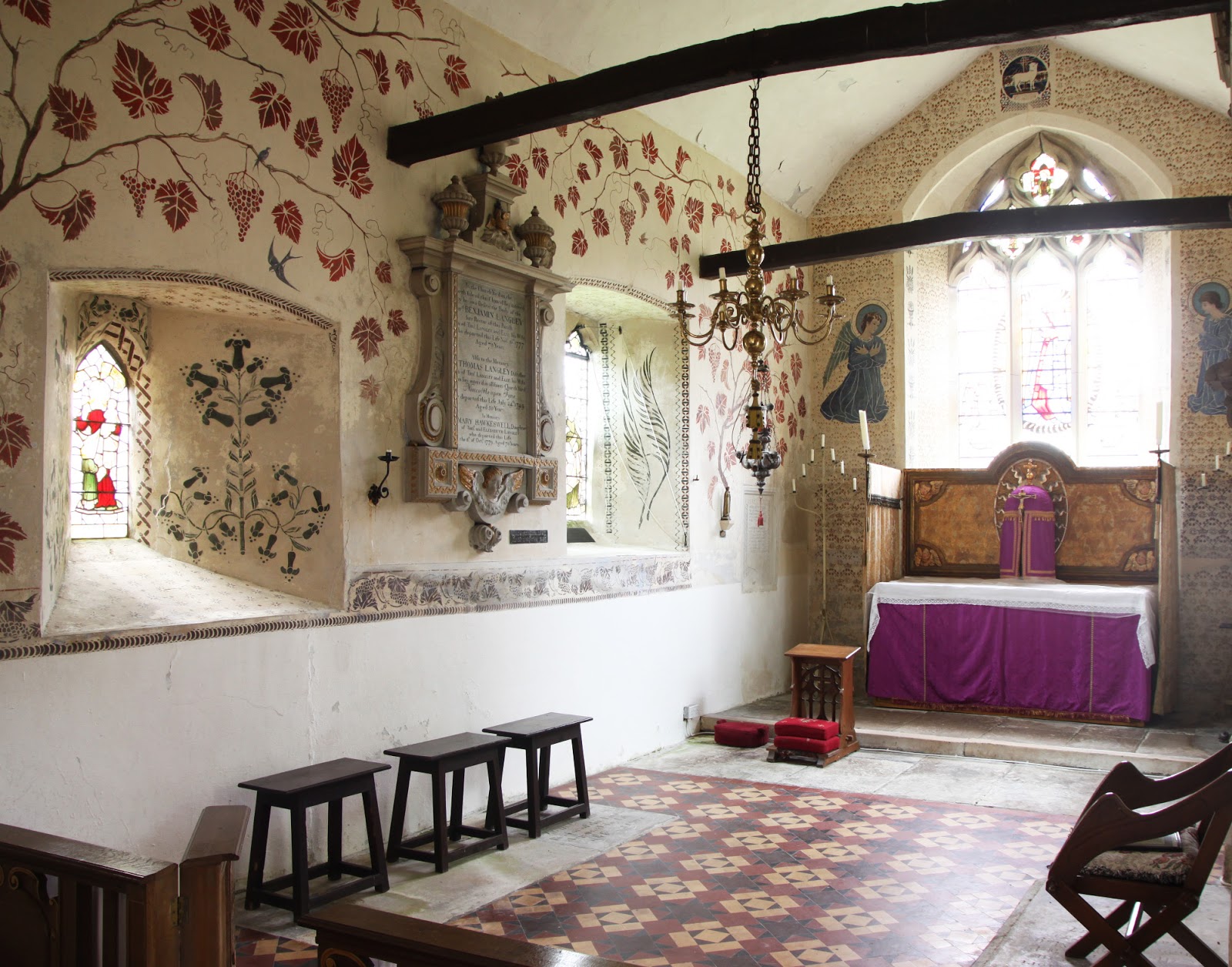
A favorite country church – St. Swithun’s, Compton Beauchamp. Full of delightfully ironic Georgian monuments and a complete refurbishment by Martin Travers in the 1930s. The setting is beautiful, too. (Source)

I have so far managed to get to the following Cathedrals (and Abbeys) in England, of which the first two are my favourites:

Winchester Cathedral
Gloucester Cathedral
Norwich Cathedral
Oxford Cathedral
St. Paul’s Cathedral
York Minster
Wakefield Cathedral
Salisbury Cathedral
St. Giles’s, Edinburgh
Westminster Cathedral
Westminster Abbey
Bath Abbey
Malmesbury Abbey

Plus some lovely country churches – East Coker, Burford, Stow-on-the-Wold, Binsey, and my very favorite, St. Swithun’s, Compton Beauchamp.

In Ireland, Silverstream Priory remains the most spiritually nourishing place I have ever been; its beauty and its holiness are always palpable.
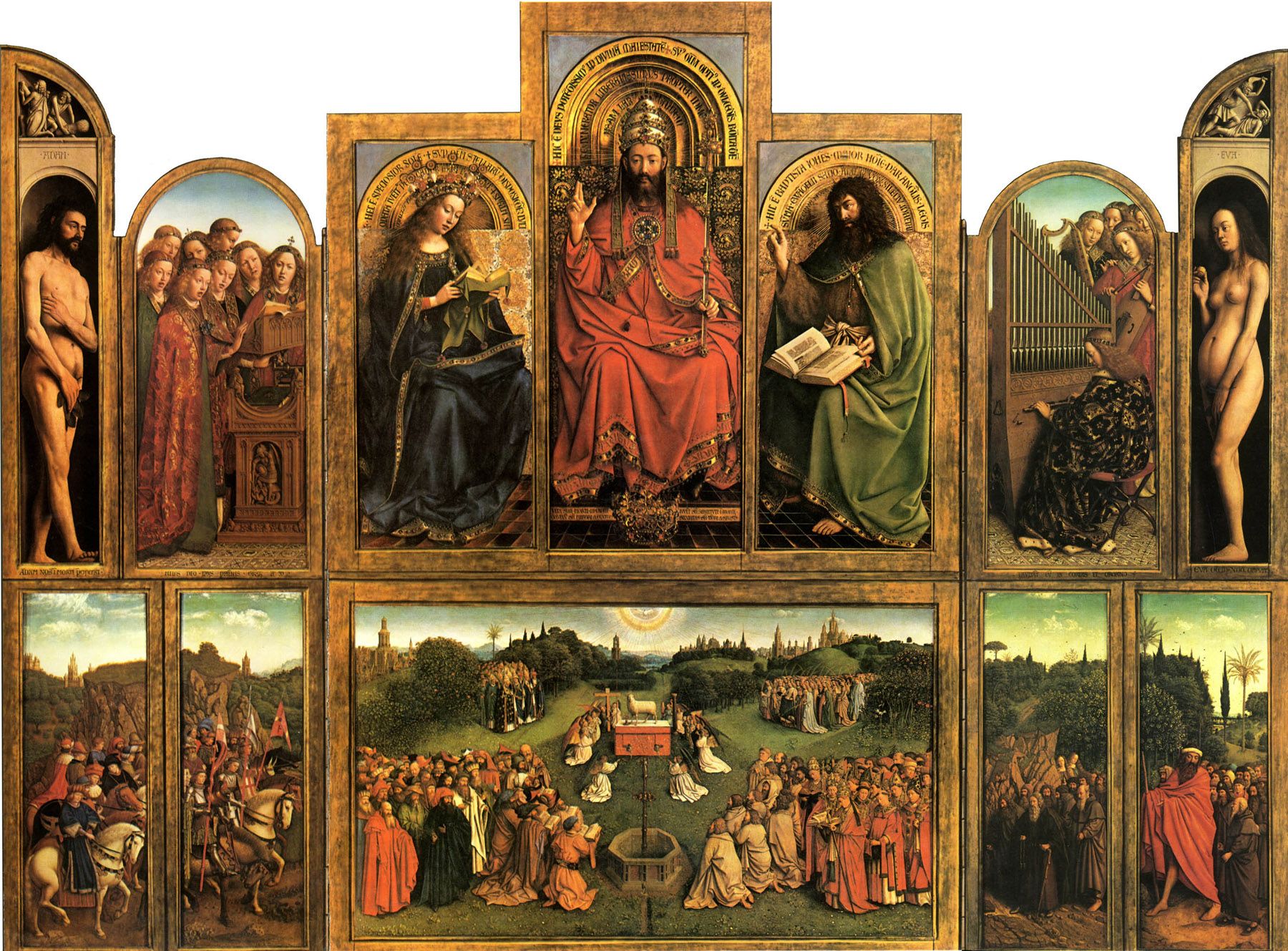
The Ghent Altarpiece. Seeing this for the first time last February in Saint Bavo’s Cathedral was one of the best moments of my two years abroad. (Source)

My travels on the Continent have been full of their own various ecclesiastical delights, so I’ll only mention a few highlights. My favorite cathedral in the world is St. Bavo’s, Ghent, which represents the perfect fusion of Gothic, Baroque, Rococo, and 19th Century styles. In France, the Chapel of the Miraculous Medal in the Rue du Bac, Saint-Étienne-du-Mont, Lyon Cathedral, Notre-Dame de Fourvière, and Saint-Just in Lyon are a few holy places I will not easily forget. Recently, I visited De Krijtberg in Amsterdam, which is the best example of painted Neo-Gothic I have seen beyond the Sainte-Chapelle. Italy is too full of wonderful churches to count, as are the old Hapsburg lands. If I were to choose a favorite in each, I suppose I would have to list the Chiesa Nuova (St. Philip Neri’s home and final resting place) in Italy, as well as Stift Heiligenkreuz in Austria, the Matthias Church in Hungary, and St. Vitus Cathedral in the Czech Republic. Though, to be fair, I visited several of these a few years ago rather than on this late sojourn in Europe.
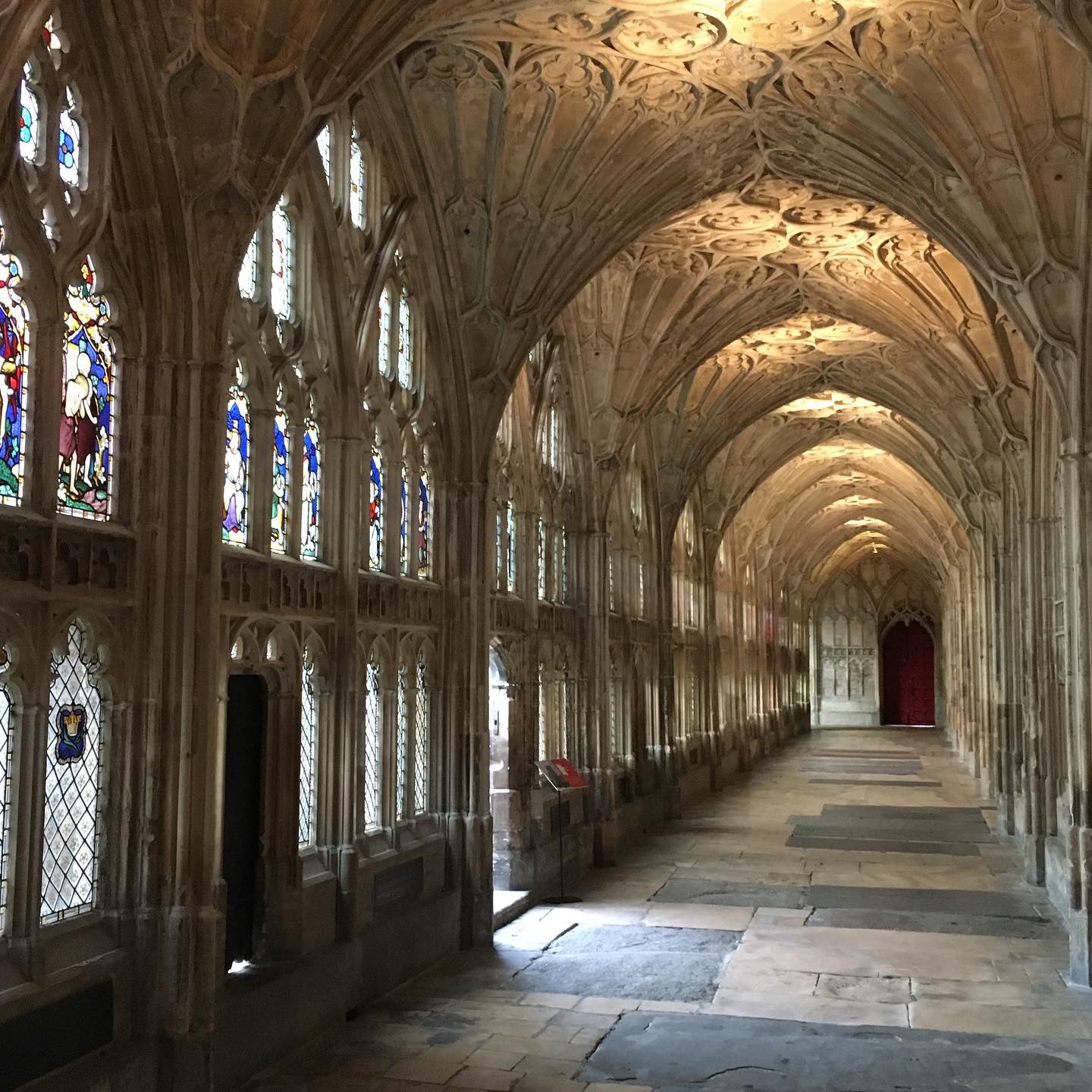
The cloisters, Gloucester Cathedral. America’s greatest fault probably lies in having no Medieval structures in situ. Photo taken by author.

I list these travels not out of any boasting, and, perhaps, not even for my readers. If anything, I do it for myself. I am more interested in remembering these places; writing about them has given me occasion to reminisce, to try and recapture something of the pleasure they gave me once.

I have been very blessed in life. I praise the Good Lord for allowing me the chance to see a bit of the world, to have done useful work, to have read interesting books, to have seen beautiful things, to have drank some good wine, and to have known such wonderful people. What more can one ask for in this brief life?

The Charism of Eccentricity

A-Priestridden-Village-BM

The 18th century was a Golden Age of clerical satire – and clerical eccentricity – in England. (Source)

What a day of loons it has been. After discovering the narrative of that wandering bishop which I brought to my readers’ attention earlier this afternoon, I have since come across two wonderful articles about the venerable tradition of eccentricity in the Church of England. The first is over at the Church Times. The Rev. Fergus Butler-Gallie, a curate in Liverpool, has written a book entitled A Field Guide to the English Clergy (One World Press, 2018). In his article at the CT, Butler-Gallie provides a taste of what is assuredly a very fun book indeed. Take just one of the bizarre figures he profiles:

William Buckland, a Victorian Dean of Westminster, became obsessed with eating as many animals as possible, from porpoise and panther to mole fricassee and mice on toast, even managing to gobble up the mummified heart of King Louis XIV while being shown round the Archbishop of York’s stately home.

He was no fool, though. The first person ever to excavate an entire dinosaur skeleton (although he was more interested in other prehistoric remains, writing on a desk made out of dinosaur faeces), he once disproved a supposed miracle in France by being able to prove (by taste, of course) that a supposed saint’s blood was, in fact, bat urine.

Or consider this parson:

The Revd Thomas Patten was a real-life Dr Syn, helping to run a smuggling operation on the north-Kent coast. Patten would preach interminably boring sermons until a parishioner held up a lemon, a sign that someone had agreed to buy his drinks for the evening at the tavern opposite, at which point he managed to terminate the service with astonishing alacrity (a ruse, I’m sure, no clergy reading this would even consider replicating).

If the rest of the book is as fascinating at these anecdotes suggest, it will be a classic in no time – right up there with Loose Canon and The Mitred Earl. Apparently it’s been getting rave reviews. (I’ll add that if any of you are looking for a Christmas gift for your favorite Catholic blogger, it’s going for under £10 at Amazon).

Today I also came across an article about one of Butler-Gallie’s subjects, the Rev. R.S. Hawker, also known as the “Mermaid of Morwenstow.” Alas, as I am not a subscriber to The Spectator, I cannot read it. Those who can are encouraged to do so.

One of my favorite clerical eccentrics whom I doubt that Butler-Gallie covers is the Rev. William Alexander Ayton, vicar of Chacombe in Oxfordshire.  You can read more about him in my article, “On the Wings of the Dawn – the Lure of the Occult.”

Though of course there are few stories of clerical eccentricity as amusing as the infamous dinner related by Brian Fothergill in his life of Frederick Hervey, Bishop of Derry. Fothergill tells us that

On one occasion when a particularly rich living had fallen vacant he invited the fattest of his clergy and entertained them with a splendid dinner. As they rose heavily from the table he proposed that they should run a race and that the winner should have the living as his prize. Greed contending with consternation the fat clerics were sent panting and purple-faced on their way, but the Bishop had so planned it that the course took them across a stretch of boggy ground where they were all left floundering and gasping in the mud, quite incapable of continuing. None reached the winning-point. The living was bestowed elsewhere and the Bishop, though hardly his exhausted and humiliated guests, found the evening highly diverting. (The Mitred Earl, 27).

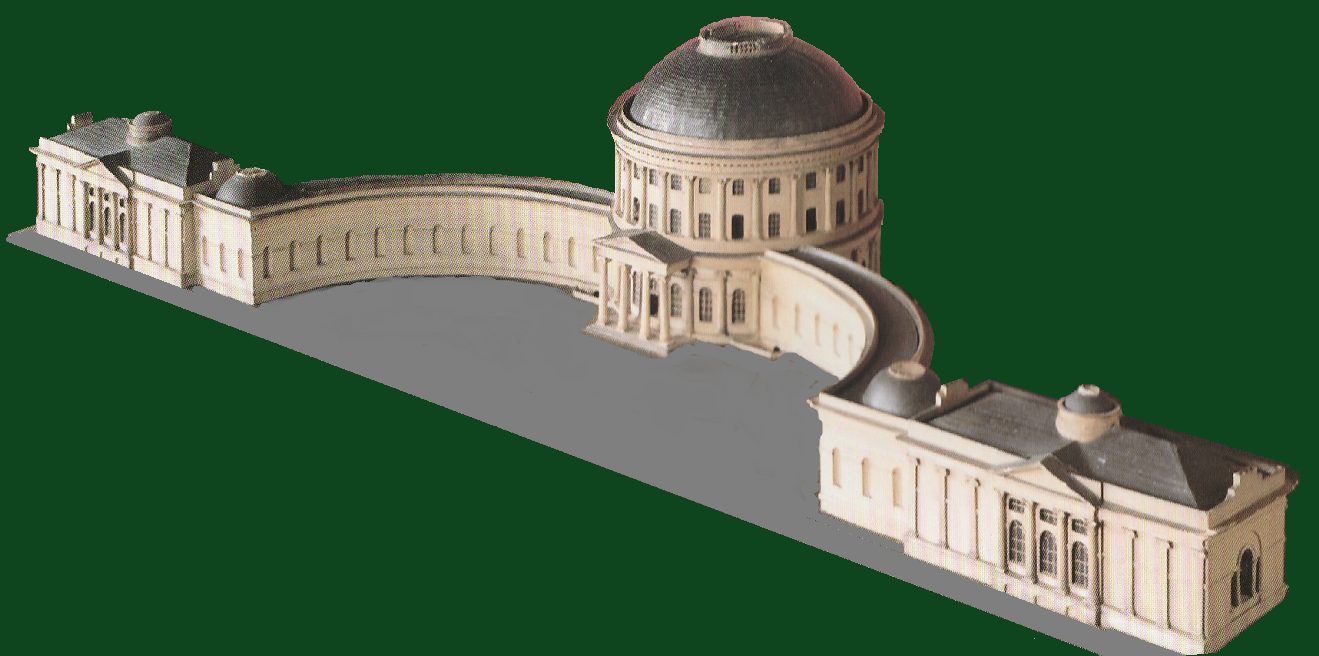
Ballyscullion

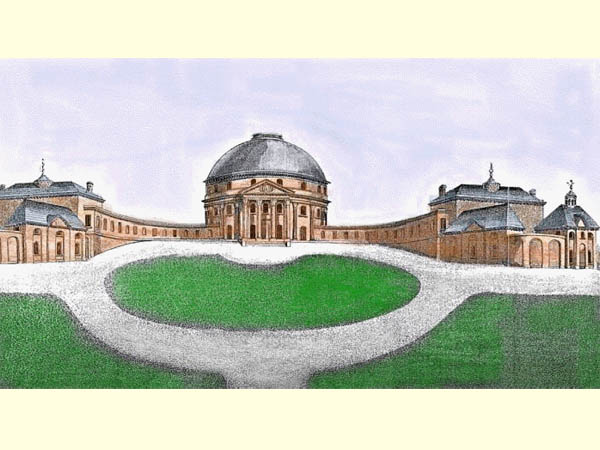
Hervey also built what must have been one of the greatest gems of British Palladian architecture, Ballyscullion House. Alas, it is no longer extant, but has been reduced to a respectable if far less elaborate mansion. (Source) For a 3D model, see here.

If there’s one thing for certain, it’s that Anglicanism as lived in history is not a dry religion.

Allow me to indulge in a bit of crude cultural observation. It occurs to me that the national church of the English would inevitably partake of that quintessential English quality – eccentricity. Americans don’t produce real eccentrics. We breed individualists and, less commonly, outright weirdos. But the great British loon is mostly unknown to us. Eccentricity requires a certain localism, even an urban one, that has been mostly lost in the sprawling homelands of the American empire. Suburbs don’t produce eccentrics.

And more to the point, why should strangeness be so unwelcome in the Church? Why should the Church be bland and conformist and comfortable? Why must we labor on through the nauseatingly boring bureaucratic lingo and platitudinous sound-bites that so often seem to make up the bulk of our ecclesisatical discourse? Where is the sizzling fire cast to earth? Where is the light and heat of the Holy Ghost? In reviewing the proceedings of the recent Youth Synod, I was dismayed to find so little that genuinely spoke of the sacred. It so often seems that our Bishops are more interested in crafting a Church of the self-righteous liberal bourgeoisie than they are in the Church that Jesus left to His Apostles.

Eccentricity may not be a strategy, but it’s at least has the potential to become a reminder that the supernatural reality is completely other. As that Doctor of the Church, David Lynch, once said, “I look at the world and I see absurdity all around me. People do strange things constantly, to the point that, for the most part, we manage not to see it.” Well, God does far stranger things far more often than we do. Eccentrics – especially the Fools for Christ – can speak to that.

Butler-Gallie gets at this well in his article when he writes,

Church of England with more rigour and vigour might have its appeal, but the evangelising potential of the strange increasingly appears to be a casualty of the drive to be more, not less, like the world around us. An embracing of our strangeness, failings, and folly might free us to eschew conversion via tales of our usefulness — be that in pastoral wizardry, wounded healing, or nifty management speak — and, instead, “impress people with Christ himself”, as suggested by Ignatius of Antioch (who, though not an Anglican, did share his fate with the 1930s Rector of Stiffkey, both being eaten by a lion).

…Perhaps less strangeness is a good thing. It is certainly an easier, safer thing from the bureaucratic and behavioural point of view. I’m more inclined, however, to agree with J. S. Mill — hardly a friend of the Church of England — who suggested that “the amount of eccentricity in a society has generally been proportional to the amount of genius, mental vigour, and moral courage it contained. That so few dare to be eccentric marks the chief danger of our time.” Or, to put it another way, a Church that represses its strangeness is one that is not more at ease with itself and the world, but less.

I can only applaud this point. Ross Douthat said much the same in my own communion when, in response to the Met Gala last Spring, he suggested we “Make Catholicism Weird Again.” Or what Fr. Ignatius Harrison CO was getting at when he gave that wonderful sermon on St. Philip Neri’s downright oddity. And though Flannery O’Connor may never have actually said it, I can’t help but agree that “You shall know the Truth, and the Truth shall make you odd.” Indeed, my readers will know that I have hammered on about this point ad nauseum. Butler-Gallie’s writing encourages me to keep at it until we in the Christian West more widely recognize the charism of eccentricity.

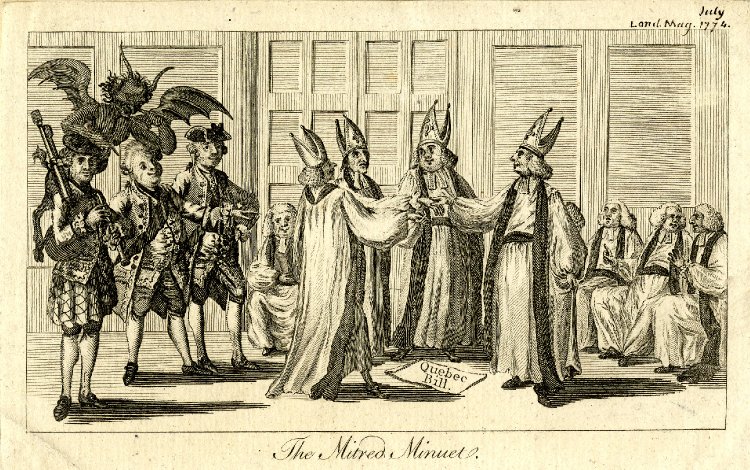
MitredMinuet

Prelates dancing to the Devil’s music. (Source)

Elsewhere: A New Blog on English Catholicism

image

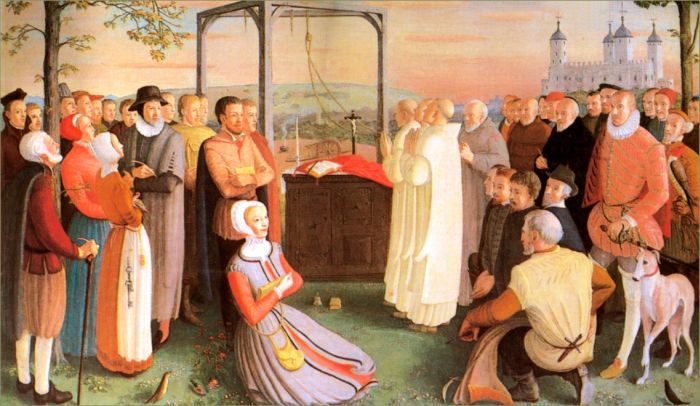
All ye holy English Martyrs, pray for us. (Source)

Anglo-Catholic readers will no doubt have mourned the demise of Conner McNeill’s Merrily on High, what was once among the best and most prolific AC blogs on the web. Never fear! Connor McNeill rides again. He’s back with a new blog called Mary’s Dowry. It looks as tasteful, reverent, and aesthetically sophisticated as the project that preceded it.

Mr. McNeill has decided to depart from the Church of England and join the Roman Communion. As he had been pursuing ordination with the C of E, this conversion is no small undertaking. Pray for him! And check out Mary’s Dowry while you’re at it.


Life Update: Graduate School

SSHChurchView

St. Stephen’s House, Oxford. Source.

This won’t come as a surprise to those of you who know me personally, but in the interest of honesty, archiving, and my own historical interests, I thought I’d post here that I have decided to attend the University of Oxford next year in pursuit of an M.Phil. in Theology, with a concentration in Ecclesiastical History. I will be living at St. Stephen’s House.

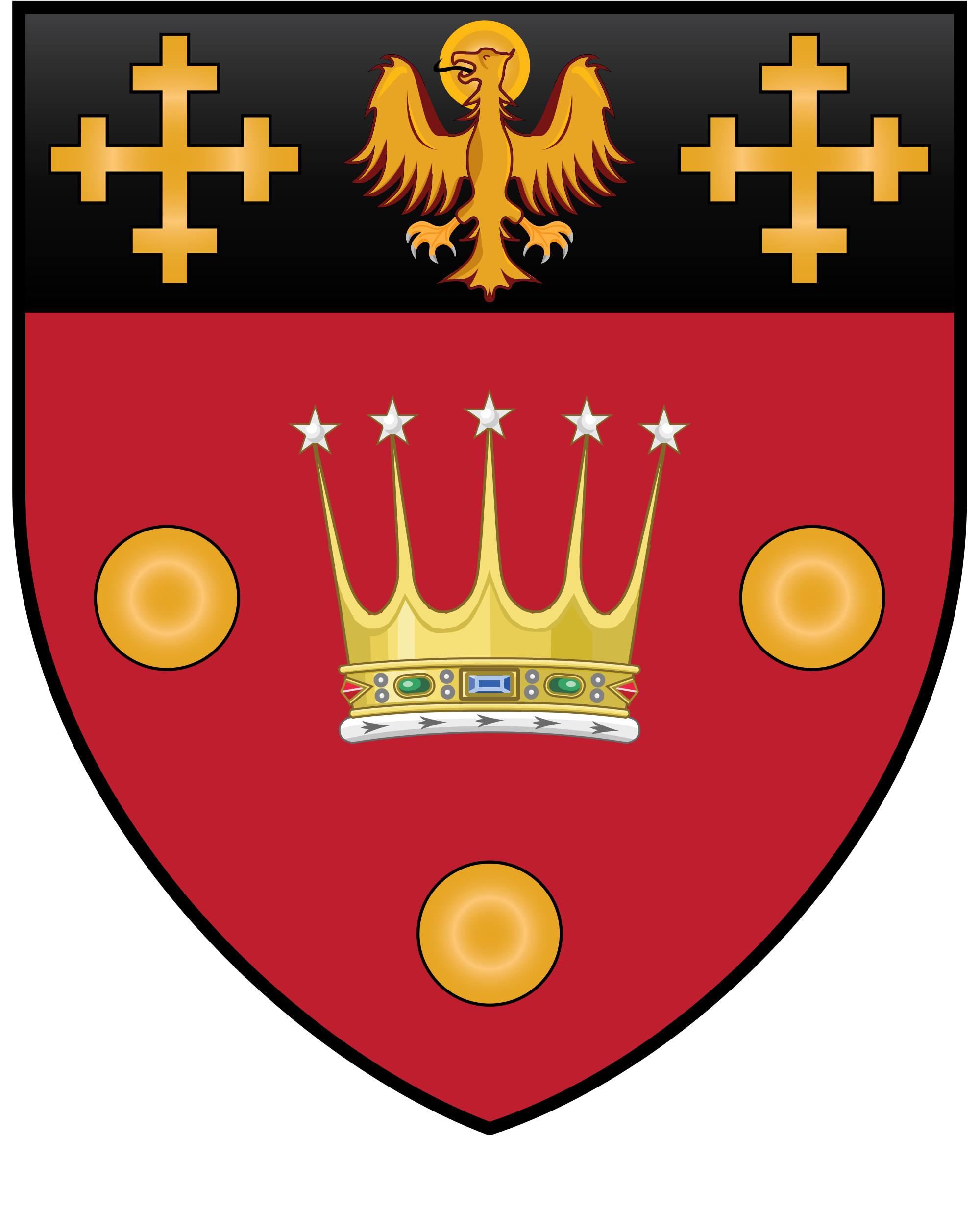
StaggersCrest.jpg

The coat of arms of St. Stephen’s House. It incorporates elements of the coat of arms of its founder, Bishop Edward King. (Source)

I’m very happy to be at St. Stephen’s. It is the Anglo-Catholic seminary in Oxford. I am guaranteed to be around people who are seeking ordination in the Church of England. And very high Anglo-Catholics at that. I’m really looking forward to morning and evening prayer every day. While it may not be the prayer of the whole Church in the Divine Office, the Book of Common Prayer is nevertheless a fine, beautiful way to pray and meditate on Scripture in community. I also think that the liturgical rhythms of life at “Staggers,” as it’s called, will be salutary on the whole. It’s even motivated me to try to memorize a few of the old collects, as Peter Hitchens demonstrates in this debate.

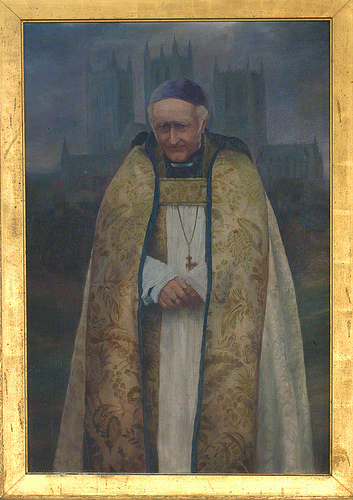
While I realize it has changed a great deal over time, the history of St. Stephen’s House is one of the reasons I’m happy to be here. It may not be one of the well-known colleges (it doesn’t even seem to have very much merchandising in the way of scarves, ties, pins, cufflinks, etc., like all the other ones). But Staggers did play its part in the history of Anglo-Catholicism. Founded by Bishop Edward King of Lincoln in 1876, the house soon became a major center of Anglo-Catholicism. It started to produce Tractarian priests by the dozens, and eventually gained a reputation as a factory of bishops and deans of cathedrals. This prolific connection to the Church of England’s highest chambers has continued into its more recent years.

edward-king

Edward King, Bishop of Lincoln. (Source)

Its relationship with Oxford, on the other hand, has varied. It only attained Permanent Private Hall status in 2003. In moving to that arrangement, it joined other historically religious foundations at Oxford: Blackfriars for the Dominicans, St. Benet’s for the Benedictines of Ampleforth, Wycliffe Hall for Evangelicals, Campion Hall for the Jesuits, and Regent’s Park (nominally) for the Baptists. It was at that time that the House broadened its emphasis to include those who were not seeking ordination in the C of E.

Moreover, Staggers has moved around Oxford. It started as a small community near the heart of town, and only much later moved to its present location across the Cherwell. To wit:

For the House’s first years, it was situated near the centre of Oxford, where the New Bodleian Library now stands. From 1919, the House had a site in Norham Gardens, near to the University Parks. In 1980 it moved to the current site…(St. Stephen’s House Blog).

The accommodations that the House took up were built by the Society of St. John the Evangelist, named alongside the parish church they ran (although it is now largely a concert venue, the House clergy still conduct liturgies there each week). The Society priests were also known as the Cowley Fathers. T.S. Eliot conducted at least one retreat there, although he was generally closer to the Benedictines at Nashdom and the Society of the Sacred Mission at Kelham (see Spurr’s biography, Anglo-Catholic in Religion).

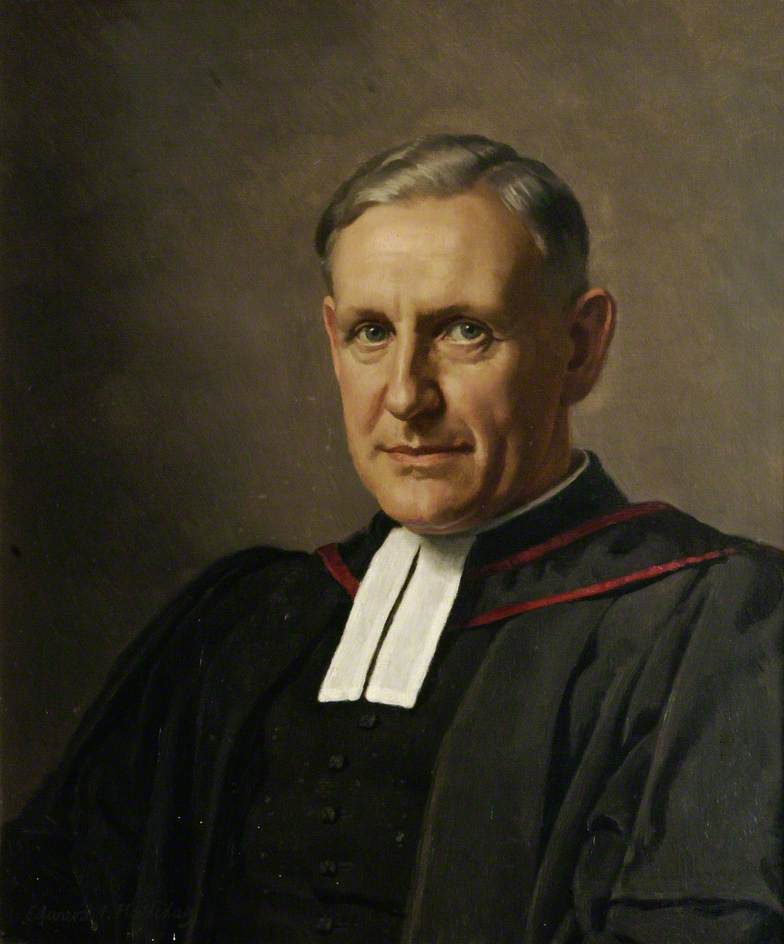
In the mid 20th century, the House prospered under the benevolent influence of Father Arthur Couratin, allegedly referred to by some as “Noël Coward in a clerical collar.”

Halliday, Edward Irvine, 1902-1984; Reverend Canon Arthur Couratin, Former Principal of St Stephen's House

Canon Arthur Couratin, Principal of St. Stephen’s House. (Source)

Although its ethos remains largely Anglican, the House has offered a few important alumni to the Church of Rome. Balthasar scholar and theologian Father John Saward graduated there, as did the one-time Bishop of Ebbsfleet and current priest of the English Ordinariate, Monsignor Andrew Burnham. Indeed, they’ve even produced the Primate of the Western Diocese of the Armenian Church of North America, Hovnan Derderian. He is the youngest Armenian archbishop.

Staggers also gave the Church of England Fr. Kenneth Leach, an important Christian Socialist priest. He was trained at St. Stephen’s when it had become a rather homoerotic place, and Leach would famously sum up his time there as “gin, lace, and backbiting.” The writer and Staggers alum A.N. Wilson composed a bitingly comedic satire of the House in those years, entitled Unguarded Hourswhich, as Ignatius Press’s reviewer puts it, is decidedly “not a Catholic novel.” Alas. Wilson, who would eventually return to Christianity after years of very public atheism, would later recall the custom formerly in vogue at Staggers of taking “religious names” that were actually rather saucy nicknames, often of the opposite sex. If Father Couratin was “Noël Coward in a clerical collar,” it seems that by the 1970’s, you were more likely to find Julian and Sandy in soutanes.

I seriously doubt that any of that persists. Women’s ordination in the C of E means that, while many Anglo-Catholics have become more liberal, their seminaries no longer smack of the kinds of homoerotic associations that fueled so many stereotypes (see Cousin Jasper’s famous quip in Brideshead Revisited). Staggers seems to remain as a pillar of sensible, ornate, properly Anglo-Catholic liturgy at its best.

StStephensLiturgy1

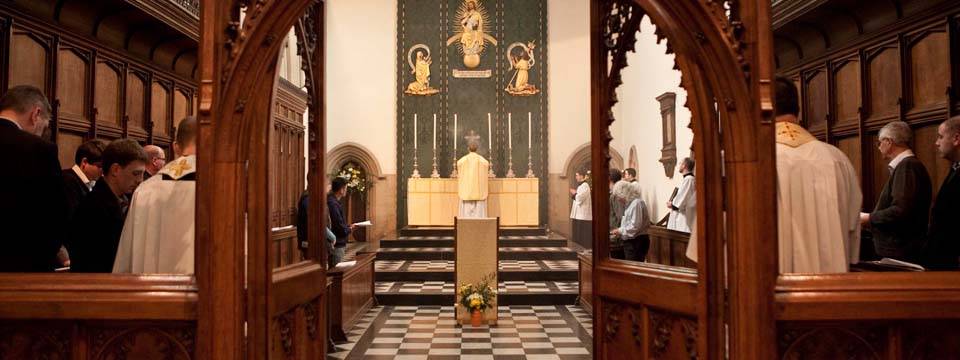
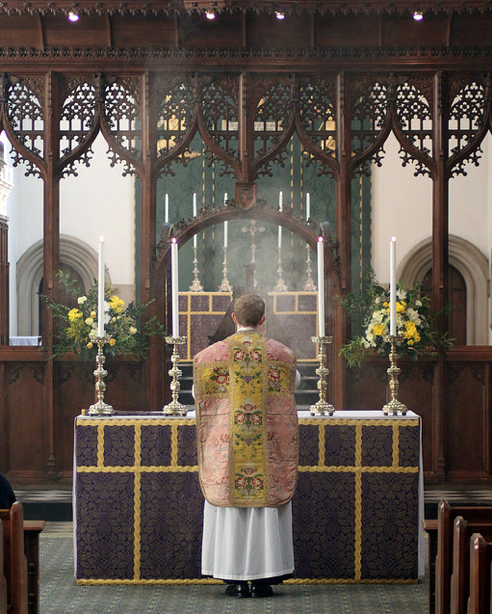
A liturgy at the parish church of St. John the Evangelist, St. Stephen’s House, Oxford. (Source).

Requiem

A requiem for the founders of the House. (Source)

StStephensHouseRose.jp

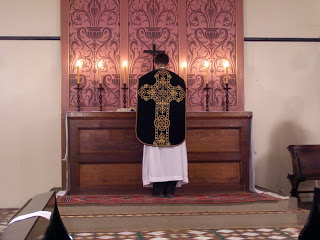
A priest says a Mass at St. Stephen’s House. I highly recommend the source I took this from, Merrily On High. An excellent source for all things Anglo-Catholic.

Of course, I could also emphasize the importance of Oxford in general as a center of CatholicismRoman and otherwise. Here, the Subtle Doctor “fired France for Mary without spot.” Here, Cardinal Wolsey established a college named for his office and, later, all of Christ’s Body on earth. Here, Archbishop Laud attempted to bring back devotion to Our Lady through a little portico on her church in town. Here, Charles I took refuge while his queen heard the Mass of Ages in Merton Chapel. Here, Keble railed against a “National Apostasy.” Here, Newman battled the liberals, and in doing so, broke ground for the Second Spring. Here, Gerard Manley Hopkins served briefly as curate. Here, Oscar Wilde flirted with men and the Church for the first time. Here, Monsignor Ronald Knox cut his clerical teeth as the chaplain of Trinity College. Here, Montague Summers was first haunted by the Vampyre’s shadow. Here, Tolkien and Lewis and Williams and their friends spoke about God long into the stout-softened night. Here, T.S. Eliot studied briefly before going on to greatness in London. Here, Evelyn Waugh thought up a story about two men and a teddy bear. Here, Father Martin D’Arcy pondered the ways of divine and human love. Here, the Oratory finally arrived in 1990 to fulfill Newman’s dream. Here, the late Stratford Caldecott wrote of God’s undying beauty in all things.

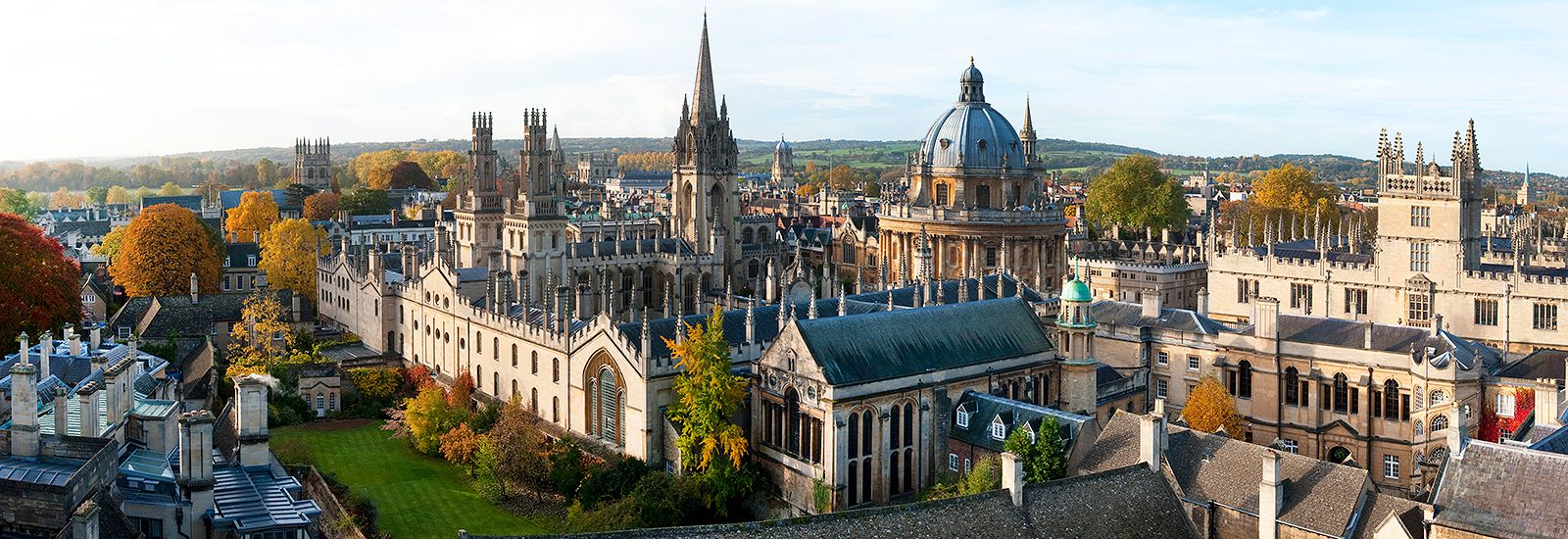
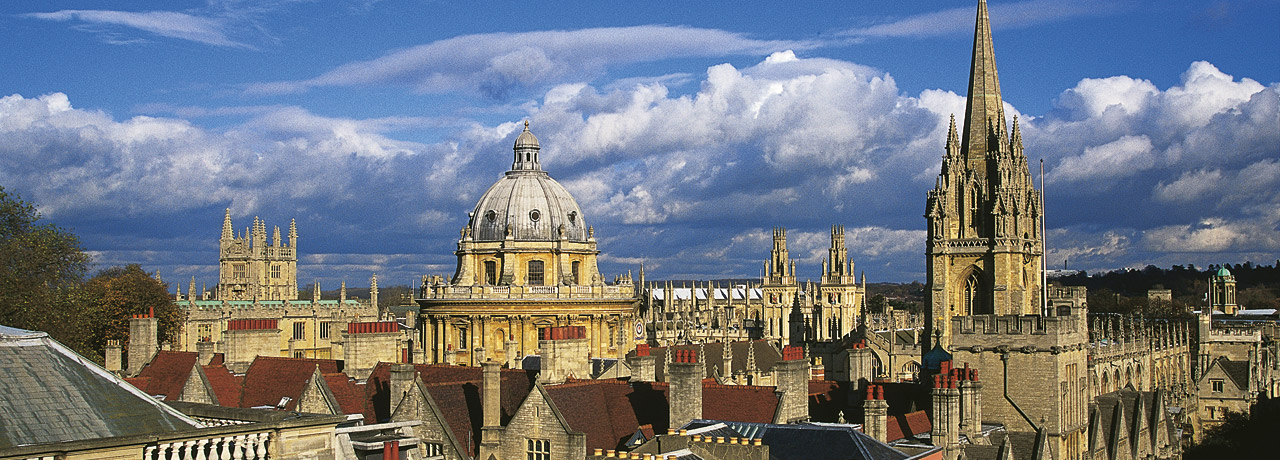
OxfordSkyline1

An Oxford morning. (Source).

I could name more ways in which Oxford has played a special role in the life of the Catholic Church. Perhaps I will do so in another post, or a series of posts. For now, I’m just happy to say that I’ll be in a place with a lot of Catholic history, learning about that history. And thank God for that.

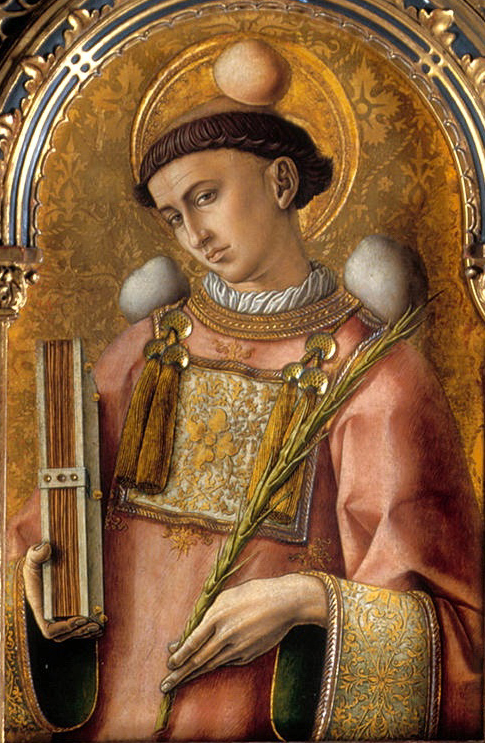
CrivelliStephen

“Saint Stephen,” by Carlo Crivelli. Proto-martyr and patron of St. Stephen’s House, Oxford (and perhaps a rather wan patron at that, by the look of this paintingis that asparagus in his hand?). (Source)

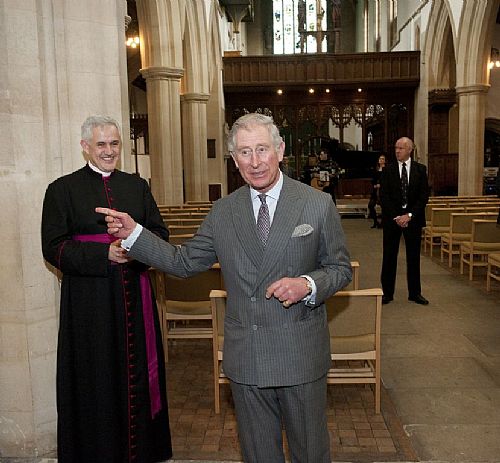
PrinceofWalesatStaggers

Also, apparently the Prince of Wales sometimes visits. (Source)

In Defense of the “Twice-Blessed Asparagus”

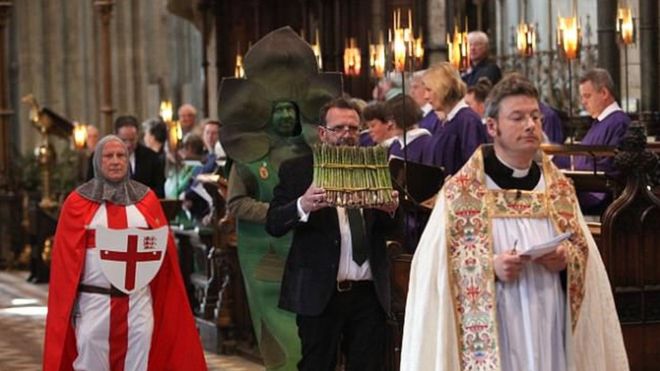
AsparagusLiturgy

There’s a punchline here somewhere. Source.

Recently, a minor storm of controversy has erupted over an unusual proceeding at Worcester Cathedral. For those of us blissfully unaware of the agrarian culture of the British Isles, the local Asparagus Festival celebrating the fine crop of the Vale of Evesham just opened to considerable acclaim. While there are, admittedly, a few suspect elements of the Festival, it does seem to be rather harmless on the whole. The kind of thing that would make a nice weekend in the country.

The rustic peace of the celebration was soon shattered. As The Telegraph reports, organizers of the Festival asked the Dean of the Cathedral if they might have a blessing of the asparagus to kick off the harvest season. And so, at evensong on Sunday, the 23rd of April, in the Year of Our Lord Two Thousand and Seventeen, a block of the stuff was carried in a procession up the chancel alongside two costumèd festival mascots, St. George and Gus the Asparagus Man. While it was indeed St. George’s Day, we can only imagine that this is the first liturgical appearance of the humanoid Asparagacea. As we read in The Telegraph:

Angela Tidmarsh, co-founder of the festival and tourism officer for Wychavon, said the cathedral’s management had been “really enthusiastic” about the idea. “We had the asparagus blessed by the vicar of Bretforton and then we took it to the cathedral, so it’s twice-blessed asparagus,” she said. 

This really did happen in real life.

The reactions have been fairly predictable. Archbishop Cranmer has led the chorus of detractors, writing in an extremely English timbre,

Would the Church of England permit a man dressed up as a baked bean to process behind a Heinz tin of the things, and sanctify the mummery with a facade of thanksgiving? And why only adoration of asparagus? Where’s the sprout liturgy, or equality for mushrooms? Would the Dean really permit a walking fungus to participate in an act of divine worship?

In a note of (understandable) exasperation, he writes, “This is church, for God’s sake. Really, for His sake, can the Church of England not offer something clean and undefiled in the worship of God?”

While I would not normally wish to disagree with His Grace on issues of the liturgy (except, of course, when it comes to the validity of Anglican Orders), I must dissent from his wholesale condemnation of the procession. Yes, the costumes were silly in the extreme. Both St. George and Gus the Asparagus Man should have been excluded from any kind of religious ritual within the Cathedral. Insofar as His Grace and others assail the ceremony on those grounds, I agree.

Nevertheless, on principle, I think the blessing of the asparagusnay, even its double blessing!is a good thing. Along with Rod Dreher, I say, “Still, I am in my heart of hearts an Asparagus-Blesser; here I stand, I can do nothing other.”

There is good Biblical precedent for precisely this kind of rite. In the twenty sixth chapter of the Book of Deuteronomy, we read,

And when thou art come into the land which the Lord thy God will give thee to possess, and hast conquered it, and dwellest in it: Thou shalt take the first of all thy fruits, and put them in a basket, and shalt go to the place which the Lord thy God shall choose, that his name may be invocated there: And thou shalt go to the priest that shall be in those days, and say to him: I profess this day before the Lord thy God, that I am come into the land, for which he swore to our fathers, that he would give it us. And the priest taking the basket at thy hand, shall set it before the altar of the Lord thy God…And therefore now I offer the firstfruits of the land which the Lord hath given me. And thou shalt leave them in the sight of the Lord thy God, adoring the Lord thy God.

As a matter of Biblical principle, the good people of the Vale of Evesham ought to be allowed to bring their own first fruits to the Cathedral, the seat of their bishop, and receive the Lord’s blessing. Moreover, similar practices are not unknown in the Church Universal. Byzantine Catholics and Eastern Orthodox bring forth their first-fruits on Transfiguration Day to be blessed. Indeed, Orthodox priests have been caught blessing all manner of strange articles. And within Anglicanism, the Book of Common Prayer (1928) allows for the following pious sentence to be recited at the beginning of Morning Prayer on occasions of thanksgiving:

Honour the LORD with thy substance, and with the first-fruits of all thine increase: so shall thy barns be filled with plenty, and thy presses shall burst out with new wine. Prov. iii. 9,10.

It is unclear whether the same can be said of the Ordinariate, which inherited so much of the 1928 Prayer Book’s “patrimony.” Within the Roman Ritual, we find all kinds of blessings – including some for herbs and seeds, though these are tied to specific, Marian days in the Church kalendar. One could write an intriguing sophiological meditation on this liturgical feature – but I digress. I will merely say that, all in all, it makes perfect theological sense to offer the crop to God. The cosmic character of the liturgy, the way it gathers in all the world in the offertory, was an insight suggested by the C of E’s own Dom Gregory Dix and brought to fruition in the work of theologians like, inter alia, Alexander Schmemann, Joseph Ratzinger, and William T. Cavanaugh, though of course it is a much older idea. While this procession did not occur at the offertory of a Mass, its placement during evensong suggests the deeper implications of the Eucharistic liturgy.

There are, as I can tell, only a few concerns worth considering here:

1) Those ridiculous costumed figures in the procession – or even in the Cathedral to begin with. I wouldn’t want either at a liturgical function.

2) The blessing wasn’t tied to any liturgical date, such as the blessing of Roses on the Feast of St. Rita or the blessing of animals on the Feast of St. Anthony the Abbot.

3) It’s not clear that the blessing should have taken place at Choral Evensong, within the nave of the Cathedral, during a procession. Most of the similar traditions don’t seem to involve that kind of performative element within the temple.

Point 1 stands. The photo above speaks for itself.

AsparagusVicar

The least Gus the Asparagus Man could have done is make sure he was properly vested in cassock and surplice, which Rev. Gilbert has attempted with only partial success in this shot from “An Easter Carol.” Source.

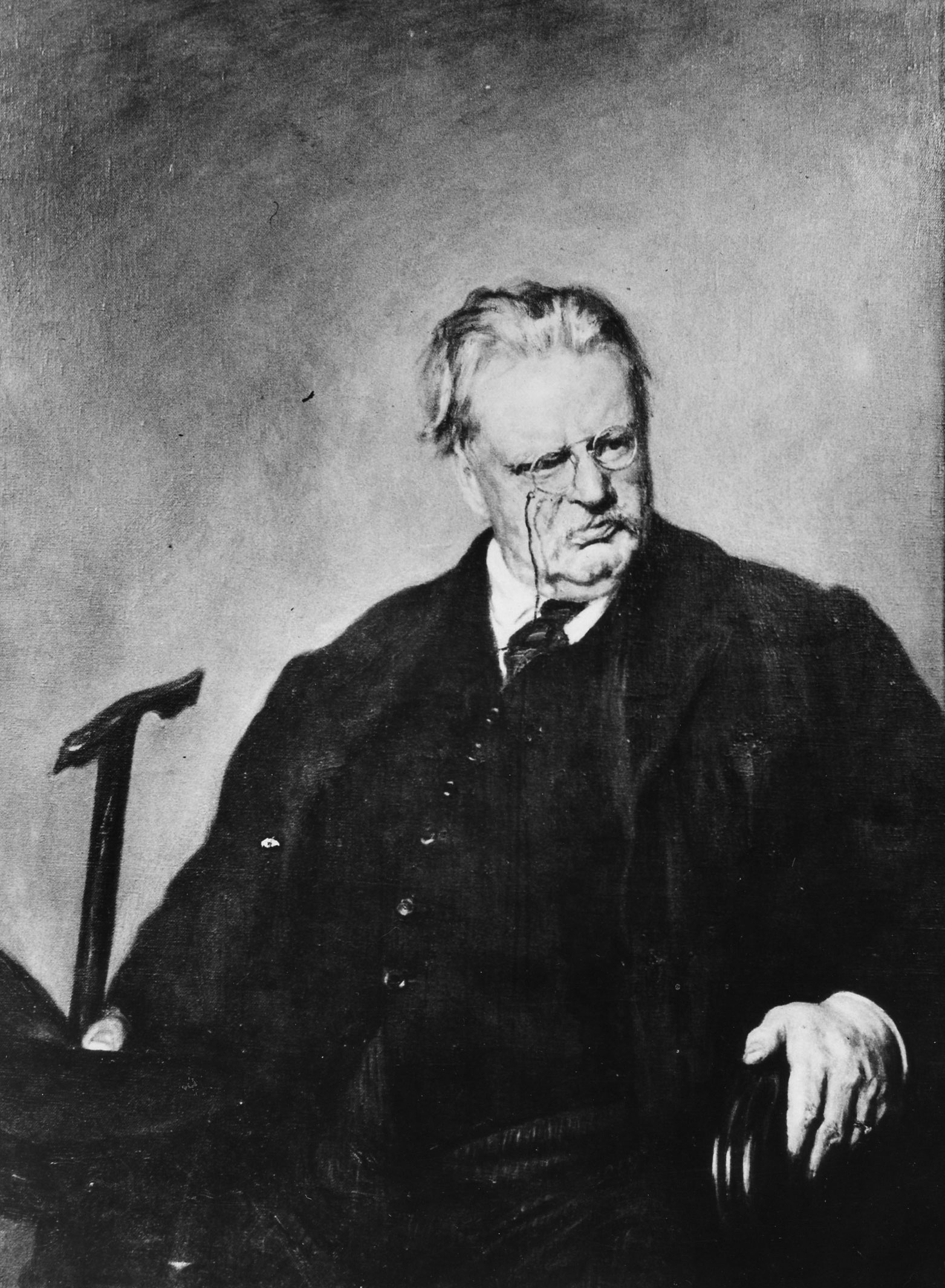
However, I do think Points 2 and 3 can be open to discretion. Priests bless things all the time when they are asked, and while there are some regulations governing that act (such as those surrounding the imposition of the Brown Scapular), most priests bless freely and willingly. Nor am I convinced it’s a problem that the good folk of Worcestershire wanted to incorporate the Church into their festival. Indeed, they went so far as to have their prize vegetable blessed twice! After all, ought not the Church stand as an institution blessing the communal life of the people, correcting their morals, teaching them the Way of Life, and communicating sanctifying grace to them in the sacraments? While it is certainly an open question as to whether the Church of England does this effectively (or even has the power to do so), the principle remains one that the English have always cherished in their own, peculiar way. There is an earthiness to English communal spirituality. One cannot imagine the same scene happening in Ireland or France or even Spain (though possibly in Italy, as English Christianity since the 19th century has approximated Italian spirituality in various unexpected ways; as Dreher notes, the Church of Siena blesses the horses before the Palio, and within the temple!). I confess, my immediate reaction to the blessing of the asparagus was laughter. The whole thing struck me as, well, so very Chestertonian. G.K. even devoted a 1914 essay to the plant.

Of course, I ought to come clean about one of my own biases. Asparagus is my favorite vegetable. Steamed, grilled, or baked, I find it a surpassing delight. I suppose that the Good Lord, who so lovingly and approvingly gave it to us on the third day of creation, agrees with me. Whether He shares my amusement at the procession of the blessed asparagus is another matter, and one I don’t presume to find out any time soon.

ChestertonFat

G.K. Chesterton: 100% would eat asparagus that has been blessed twice. Source.