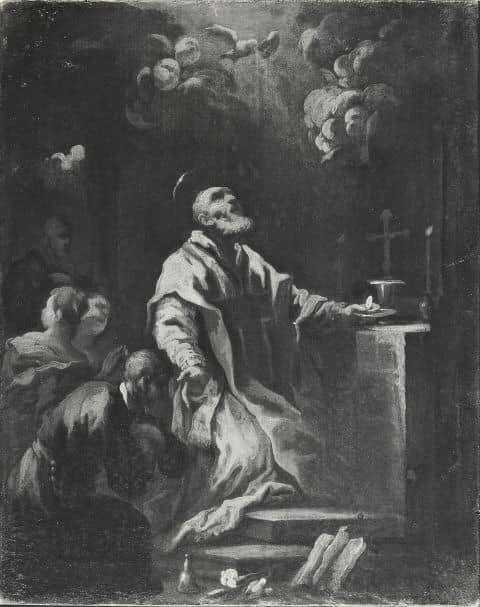
“Behold the tabernacle of God with men, and he will dwell with them. And they shall be his people; and God himself with them shall be their God.” – Revelation 21:3
St. Philip’s feast always falls within that sunny period of the Church’s year when, passing from Easter to Ascensiontide and following on to Pentecost and Corpus Christi, we find our days running over with the majesty of these great mysteries. The days grow longer, and so they seem to grow more golden with the ever-descending light of the Holy Ghost. We are in a season of peculiar glory. The culminating lesson of these mysteries is clear: God has made his dwelling among men, and in the midst of His people shall He reign.
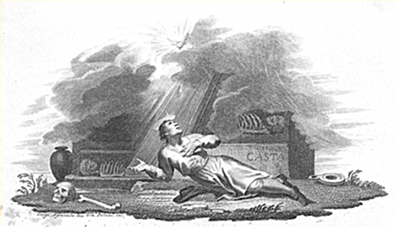
St. Philip knew this truth well. His whole life could well be described as a journey between Pentecost and Corpus Christi, the two feasts that most clearly teach us of God’s enduring presence in His Church. It was on the Vigil of Pentecost, 1544, that St. Philip received the grace that would define his vocation and the character of his sanctity. While praying in the catacombs of San Sebastiano, the Holy Ghost descended into St. Philip’s heart visibly and sensibly in the form of a ball of fire. This experience, which provided as much heat and pain as rapturous joy, marked the true beginning of St. Philip’s active ministry. In St. Philip, the Holy Ghost once again made His dwelling among men.
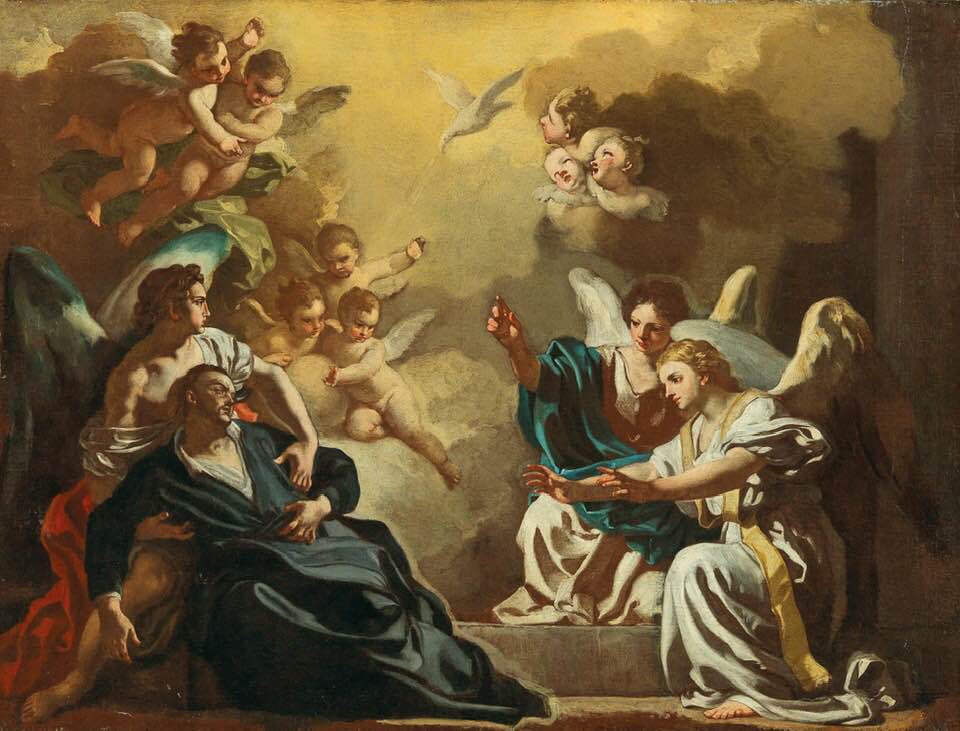
From then on, St. Philip’s whole life would be marked by a singular union with the Holy Ghost. He became the “tabernacle of the Most High” and a living fountain of graces. His many miracles testify to the indwelling of the Spirit within him. So does his manifest oddity, his clear and salutary estrangement from the ways and works of ordinary men. The prophet writes, “For my thoughts are not your thoughts: nor your ways my ways, saith the Lord.” So does the Holy Ghost speak from the heart of St. Philip. For this reason, the Church applies the words of St. Paul to the new Apostle of Rome:
The love of God has been poured into our hearts
Introit for the Feast of St. Philip Neri
through the Spirit of God dwelling within us
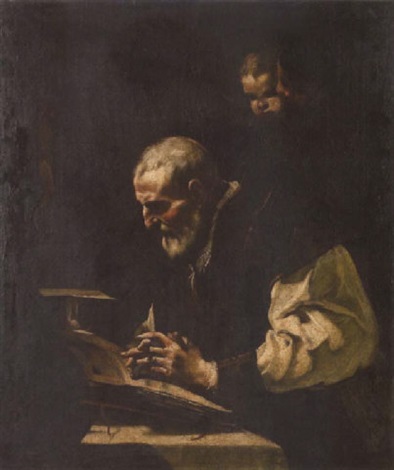
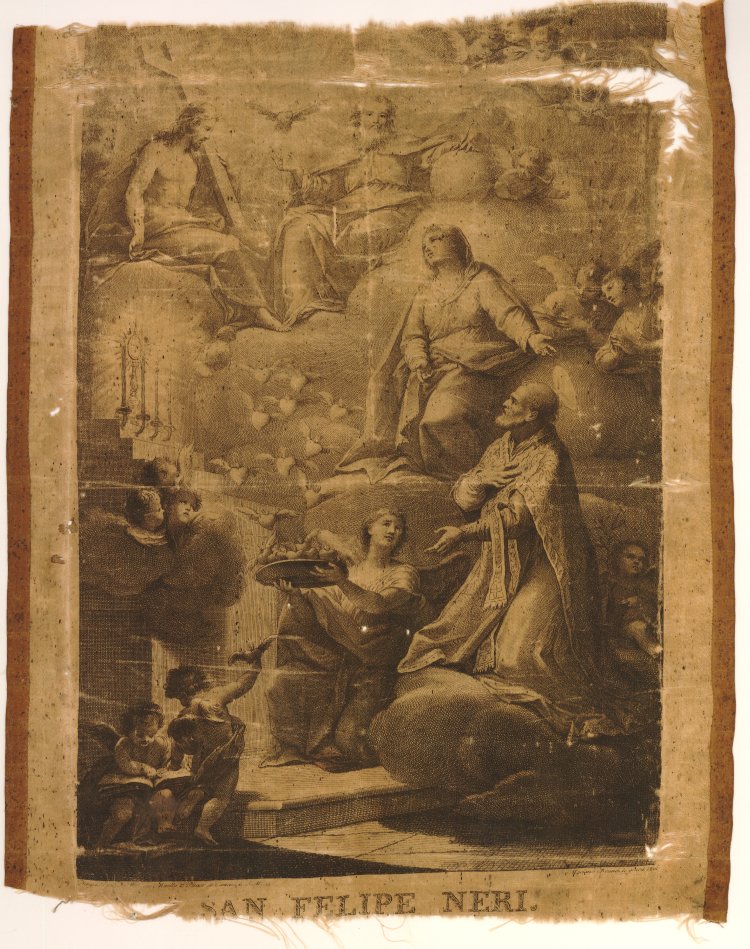
St. Philip’s priestly life was marked by the overwhelming presence of God. Everything about him spoke to the present reality of the supernatural. This reality took two chief forms. The most famous were the astounding miracles wrought by St. Philip – most notably the raising of Prince Paolo Massimo from the dead. But there was also St. Philip’s profound adoration of the Eucharist. His popularization of the Forty Hours’ Devotion was but the visible extension of his love of the Blessed Sacrament. So too were the Eucharistic ecstasies to which he was increasingly susceptible as he became older. St. Philip knew no sweeter hours than those that he spent at Mass as an old man, kneeling in darkness before the altar, lost in the rarefied heights of a contemplation we can barely begin to fathom.
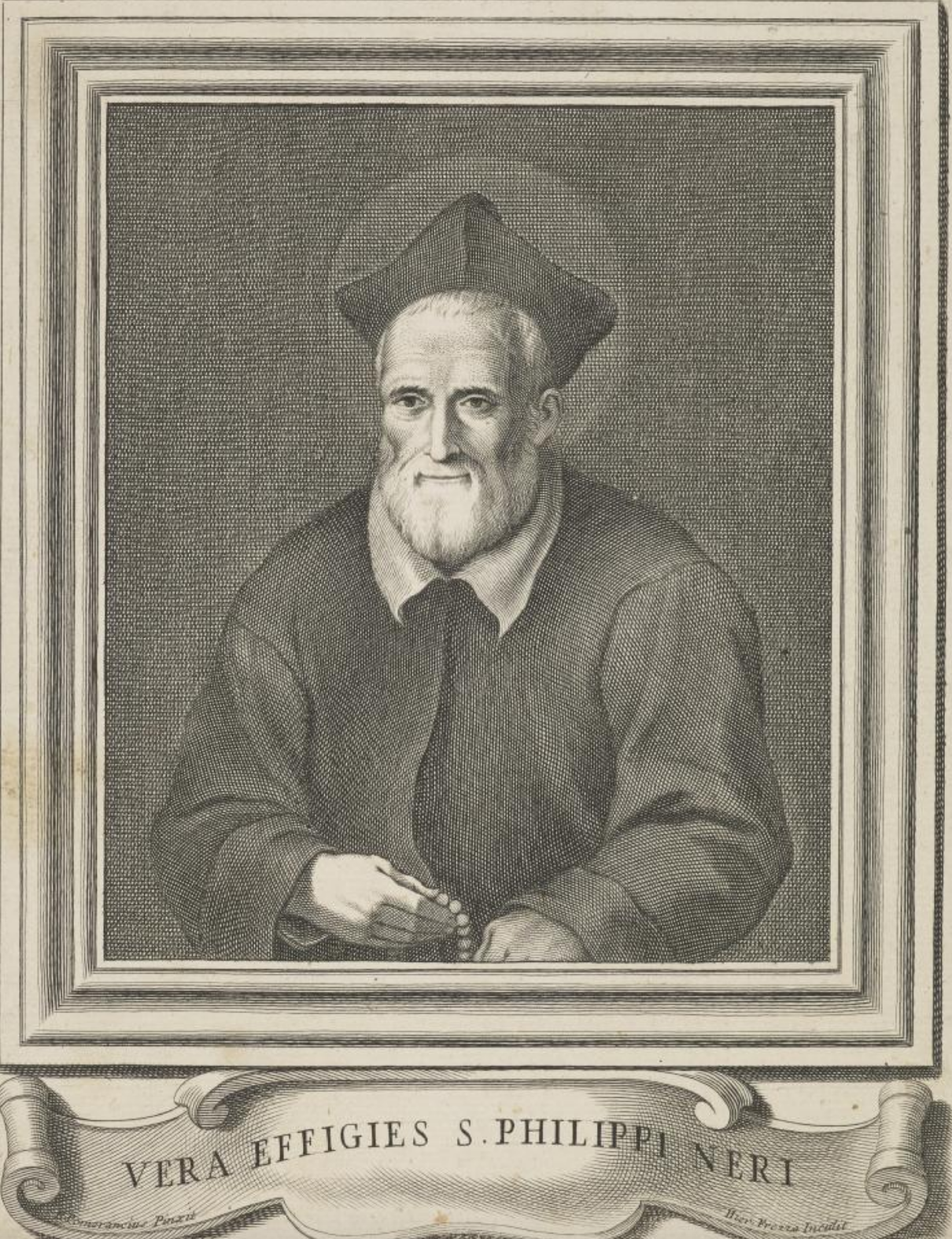
One particularly perceptive observer has written:
In recalling the holiness of Saint Philip, it occurs to me that it was essentially this: he was all priest. He was always and everywhere a priest. His priesthood suffused his very being, making him incandescent with the fire of the Cross and of the altar.
Vultus Christi
St. Philip’s extraordinary endowment with the Spirit was ordered towards his life as a priest – namely, towards the glory of God in the Eucharist. This is the case with all of us. The Spirit, God in us, is given precisely for us to receive the Eucharist, God with us. Confirmation, like all the other sacraments, exists with the Eucharist as its proper telos.
How fitting, then, that St. Philip should pass into eternal life when he did. May the 25th, 1595, was the feast of Corpus Christi. As Fr. Faber has it,
Day set on Rome! its golden morn
“St. Philip’s Death,” F.W. Faber
Had seen the world’s Creator borne
Around St. Peter’s square
Trembling and weeping all the way,
God’s Vicar with his God that day
Made pageant brave and rare!
Providence often grants the saints a Christ-like death. It is a sign that, even in suffering and death, God is still dwelling with us. St. Benedict died in choro during a liturgy, just as Christ died in the fulfillment of His high priesthood. Many martyrdoms were accompanied by strange signs and mystical evocations of the Sacrifice of Christ. It should be no surprise that God would take St. Philip in a similarly edifying manner.
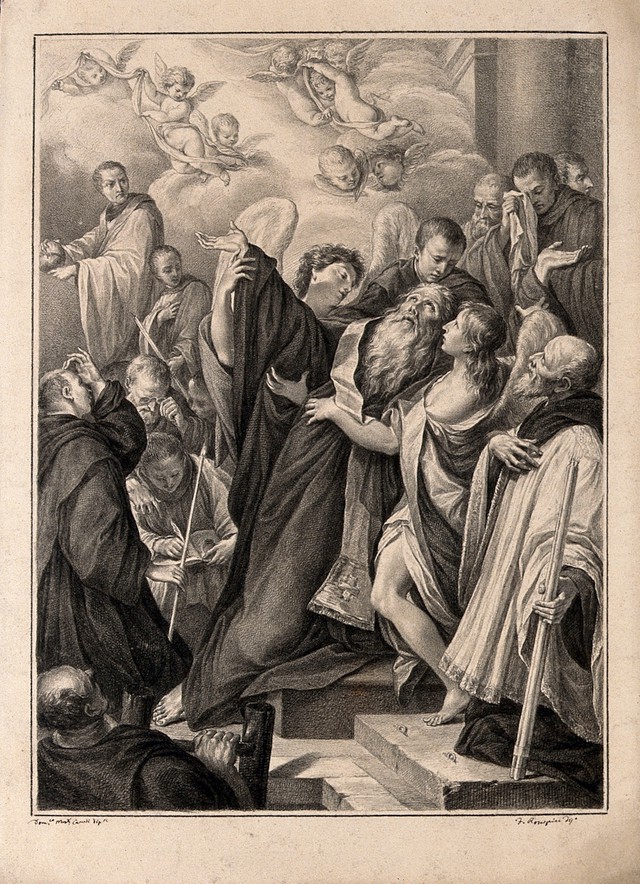
In his death, St. Philip reminds us that we are all meant to imitate Christ in His Sacrifice, that is, in the Blessed Sacrament. There is no more perfect pedagogue in the life of the Spirit than the Son, who has presented Himself to us on all the altars of the world. Would that we might take this lesson to heart!
St. Philip died when he did because, by a singular grace of Providence, God was pleased to mark His servant’s passing with the Church’s celebration of the Most Holy Sacrament of the Altar. Just as St. Philip honored the Eucharistic God in his life, so did the Eucharistic God honor him in his death.
We, too, can honor the saint best by cleaving to the Lord. St. Philip’s words to a spiritual daughter are as true today as they once were:
“Let us concentrate ourselves so completely in the divine love, and enter so far into the living fountain of wisdom, through the wounded Side of our Incarnate God, that we may deny ourselves and our self-love, and so be unable to find our way out of that Wound again.”
St. Philip Neri
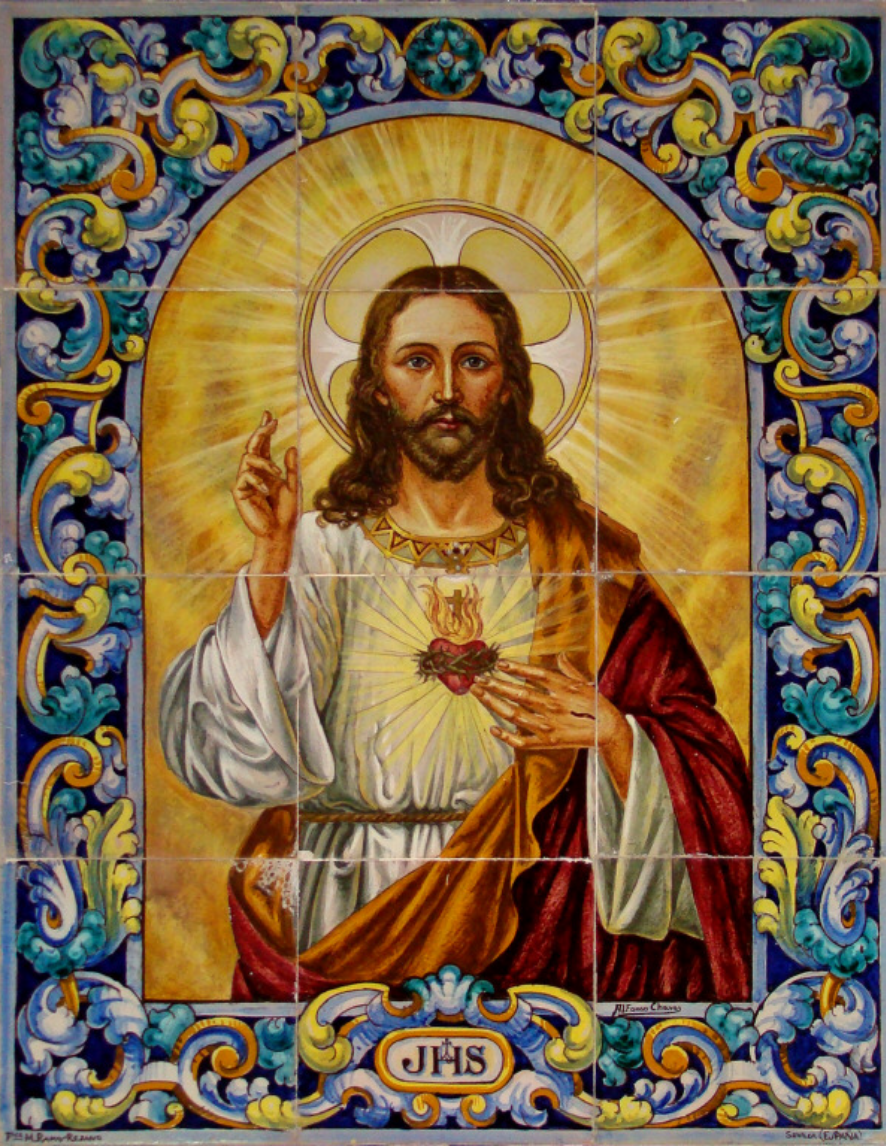
God dwells with us just as He once dwelt in the blessed heart of St. Philip. He comes to us just as He came once to the priestly hands of St. Philip. Let us abide in Him, just as St. Philip did once and does forevermore in the heights of Heaven.
 The Amish Catholic