Recently I had the great honor of being interviewed on the podcast Poststructuralist Tent Revival (PTR) about my research into Anglo-Catholic hermeticism and occultism in the late 19th and early 20th centuries. Thanks especially to Jacob Given for a great conversation. Please consider subscribing to PTR‘s Patreon! They do some really great stuff.
And for those who want to learn a little more about the broader phenomena I discuss here, you might want to check my brief article in The Church Times, Dec. 2018, on the same subject. While it doesn’t go as deeply as my actual academic work did, it gives an overview of the landscape.
I have, by the merciful grace of God, passed my M.Phil in Theology at Oxford. I could not have done so without the abundant help of my supervisors and tutors, principally Dr. Sarah Apetrei, as well as the many friends and family who supported me throughout the course of my studies there. Latterly this endeavor has caused me to neglect my blogging, for which I must beg pardon of my readers. Editing, submissions, an examination, travelling, and the arduous business of moving back across the Atlantic has distracted me. So has the bittersweet task of saying goodbye to so many friends, men and women I will miss in the years to come.
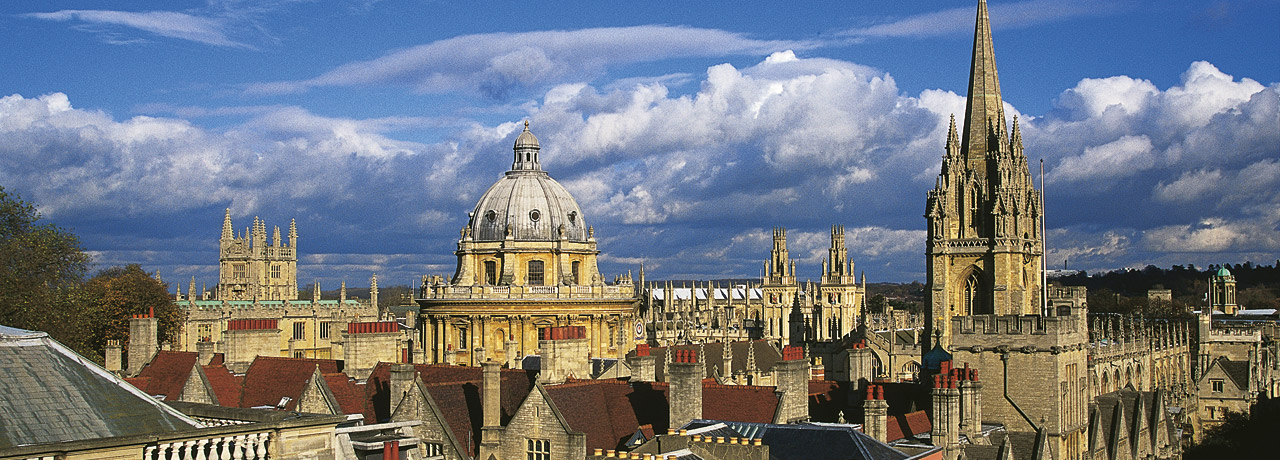
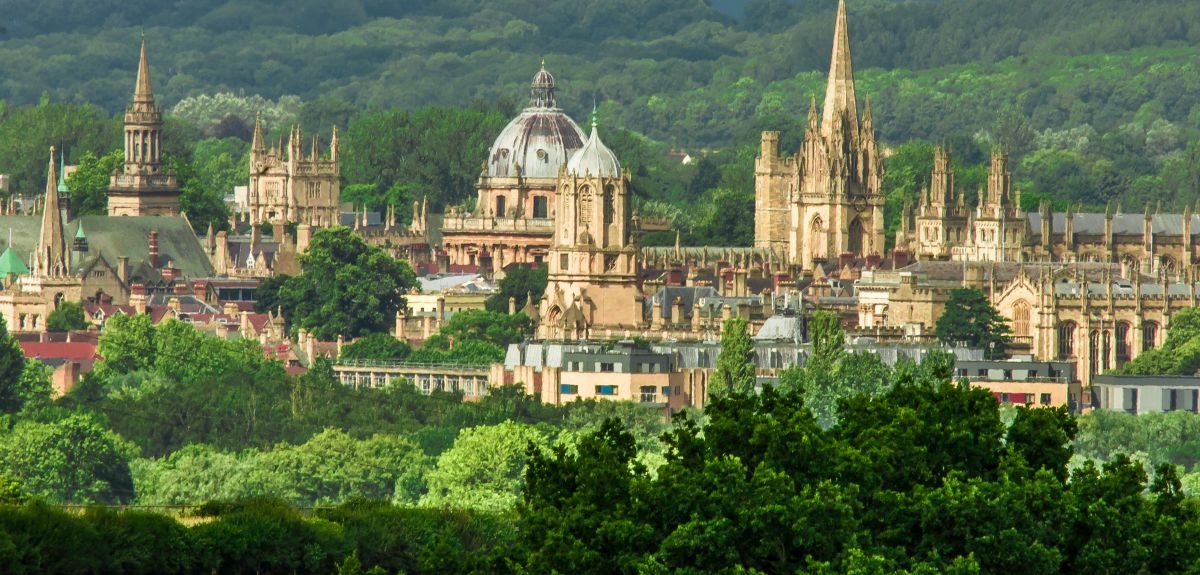
Oxford is most beautiful in the Spring. Photo taken by author.
I can understand why our soon-to-be-Saint Newman had so much trouble getting Oxford out of his blood. The place is a mirage in silver and stone. To have dwelt in such a dream-city for so long a time, to have been part of its inner life, to have shaped it according to one’s own character and to be shaped by it in turn, to watch the sun and the rain succeed in their seasons over streets imbued everywhere with a boundless sense of eternity…yes, I can see why Newman was always looking for a path back to this northern Eden. A Papal angel kept him from the gate. More prosaic barriers have turned me aside, namely, the prospects of an academic career in America.
But, in some way, the greater grief is leaving the United Kingdom. Shakespeare called Albion a swan’s nest in a stream. Having traveled from London to Birmingham, from Cardiff to York, from Tenby to Bournemouth, from Cambridge to Edinburgh, from Bath to Stratford, from Walsingham to Wakefield, in short, across the whole face of this country, I can start to see what he means. Britain possesses a peculiar beauty in grey-green and gold, something delicate and immortal that only reveals itself to an attentive foreigner. I shall miss it.
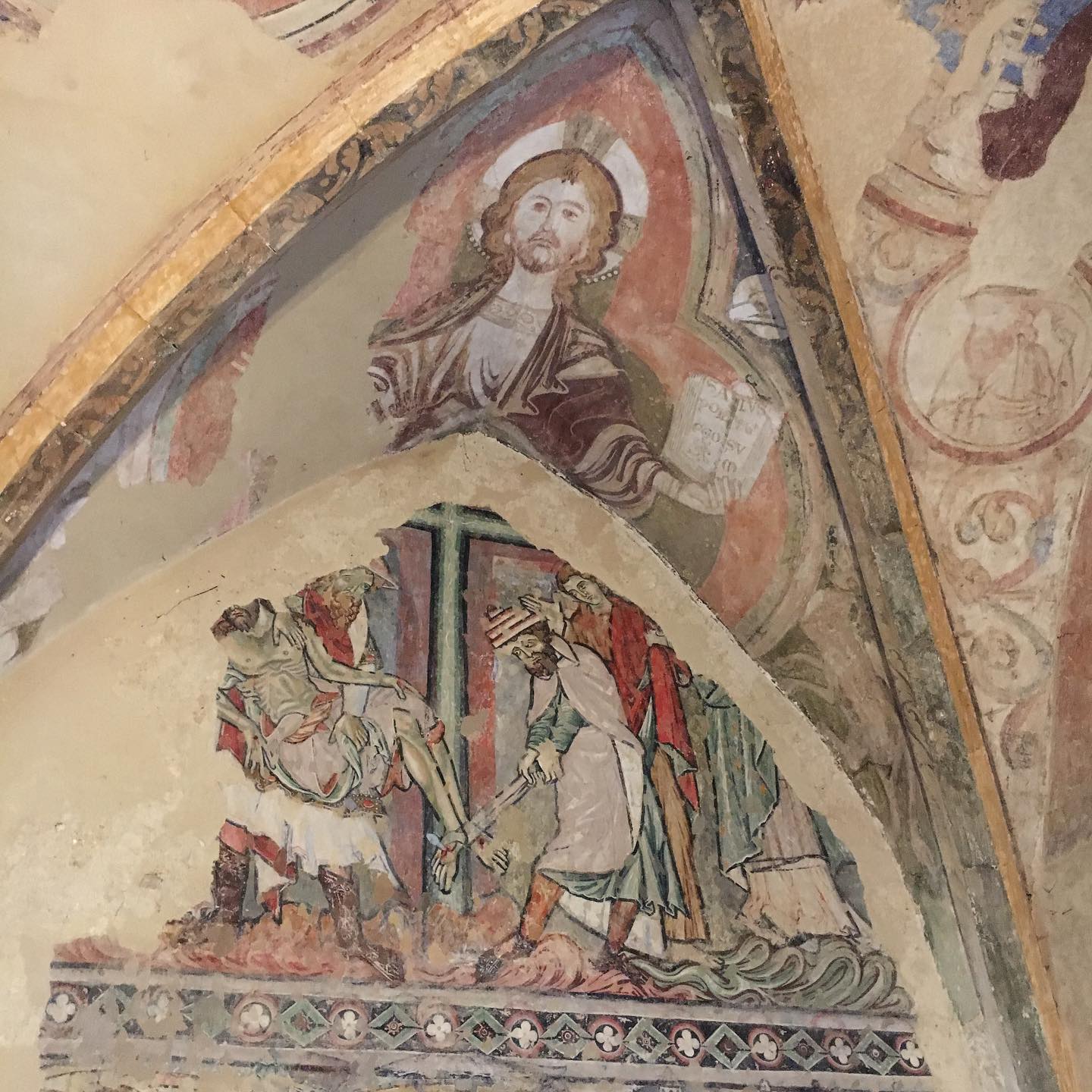
The St. Sepulchre Chapel, Winchester Cathedral. Photo taken by author.
More than that, I’ll miss the many friends I made in my two years abroad. Not just English either, though there were plenty of those – but also Canadians, Russians, Australians, Irish (both orange and green), French, Armenians, Italians, Romanians, Scots, Sri Lankans, Welsh, Poles, Chinese, and even some of my fellow countrymen. The story of my time in Oxford would not be complete without them. I will feel the absence of each, some more keenly than others.
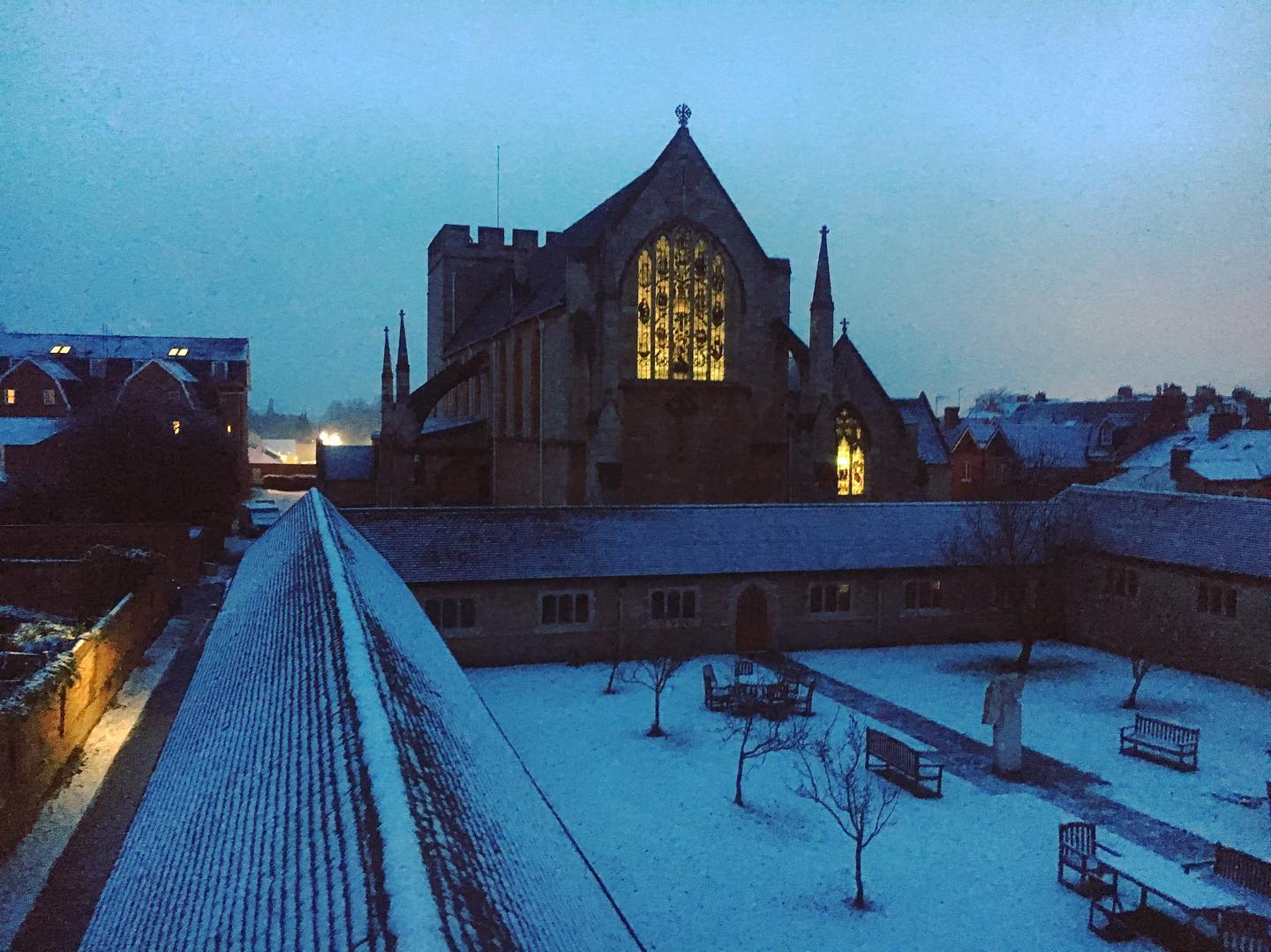
St. Stephen’s House in the snow, January 2019. Photo taken by author.
I suppose this is as good a time as ever to take stock of some of my travels through life at large. I am 24 years old. I have visited 12 countries beyond the borders of the United States:
The United Kingdom France Ireland Belgium The Netherlands Italy Austria The Czech Republic Hungary Romania Bermuda Vatican City
And 14 if one includes layovers and train connections in Germany and Switzerland. I have stood at the banks of the following rivers:
The Thames in London The Thames in Oxford (Isis) The Thame in Dorchester (before it becomes the Thames) The Cherwell The Liffey The Seine The Amstel The Arno The Rhône The Saône The Tiber The Danube The Lys The Usk The Avon in Bath The Loire The Cam
I have spent quite a lot of time in churches. A few favorites in England include the Oxford Oratory, the York Oratory, the Birmingham Oratory, Magdalen College Chapel, Worcester College Chapel, Oriel College Chapel, Merton College Chapel, St. Stephen’s House Chapel, St. Etheldreda’s, Holborn, and the Anglican Shrine of Our Lady of Walsingham. My single favorite church in England remains the Brompton Oratory, as it has been since that first June day I stepped into its vast and holy darkness, four years ago.
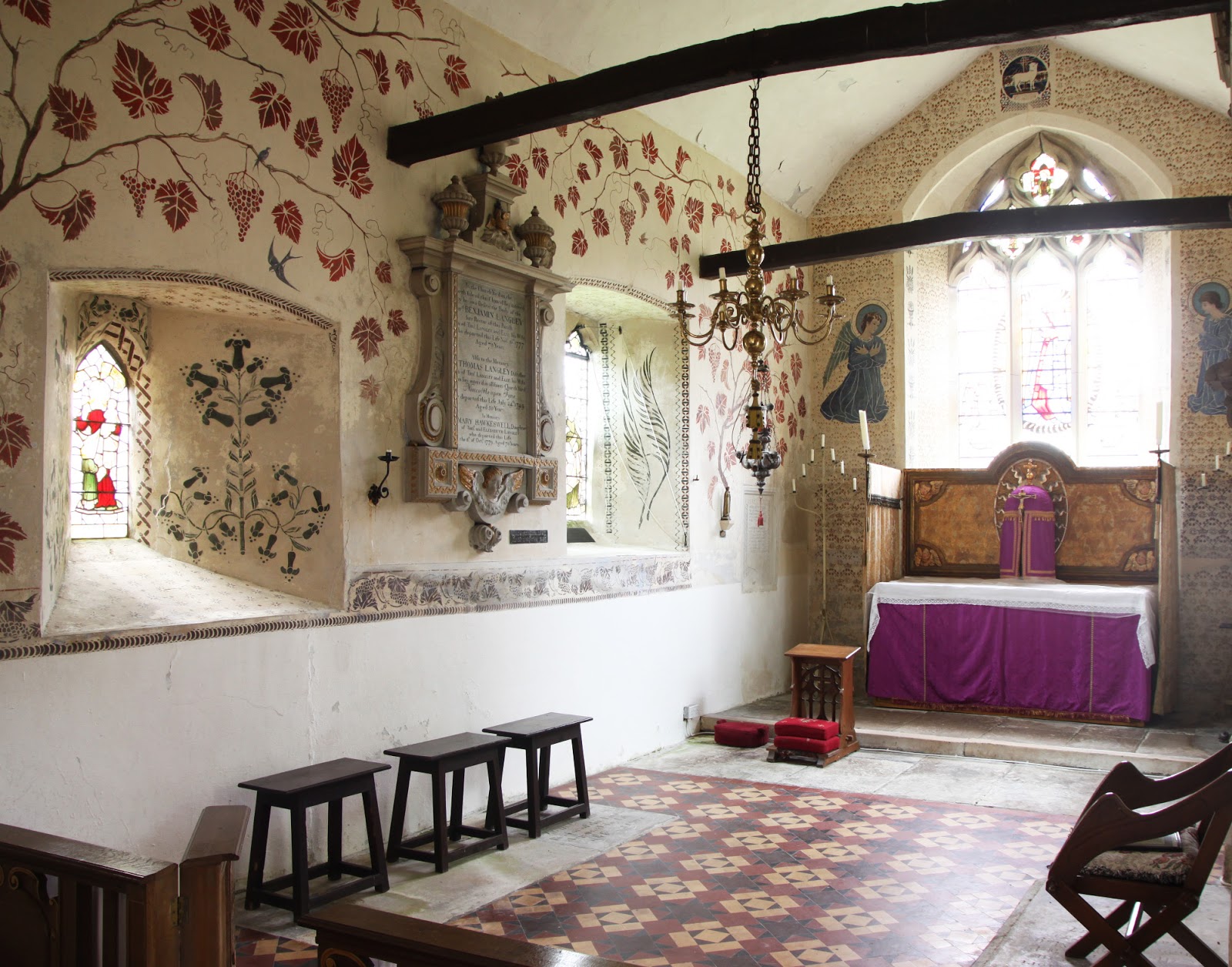
A favorite country church – St. Swithun’s, Compton Beauchamp. Full of delightfully ironic Georgian monuments and a complete refurbishment by Martin Travers in the 1930s. The setting is beautiful, too. (Source)
I have so far managed to get to the following Cathedrals (and Abbeys) in England, of which the first two are my favourites:
Winchester Cathedral Gloucester Cathedral Norwich Cathedral Oxford Cathedral St. Paul’s Cathedral York Minster Wakefield Cathedral Salisbury Cathedral St. Giles’s, Edinburgh Westminster Cathedral Westminster Abbey Bath Abbey Malmesbury Abbey
Plus some lovely country churches – East Coker, Burford, Stow-on-the-Wold, Binsey, and my very favorite, St. Swithun’s, Compton Beauchamp.
In Ireland, Silverstream Priory remains the most spiritually nourishing place I have ever been; its beauty and its holiness are always palpable.
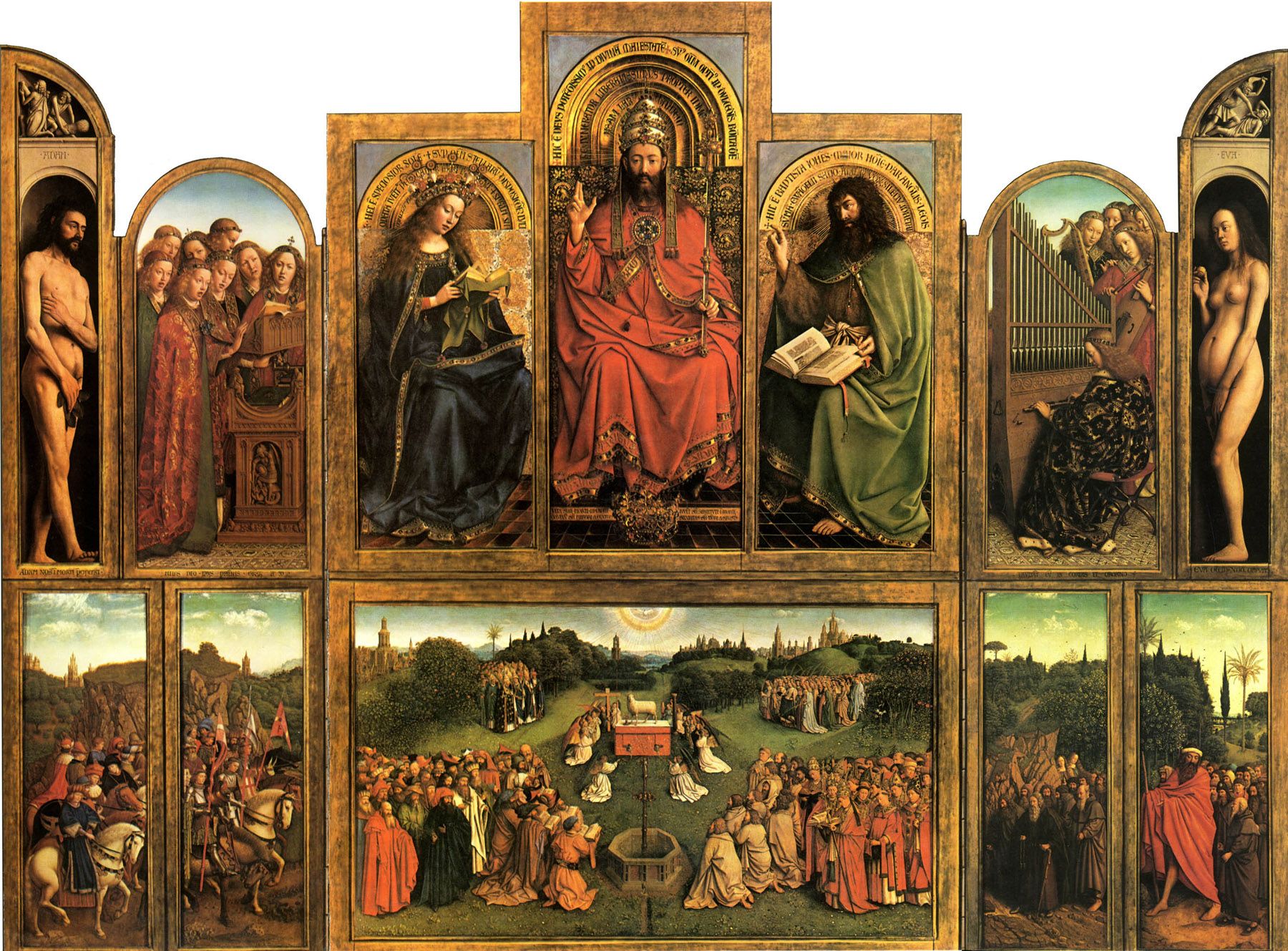
The Ghent Altarpiece. Seeing this for the first time last February in Saint Bavo’s Cathedral was one of the best moments of my two years abroad. (Source)
My travels on the Continent have been full of their own various ecclesiastical delights, so I’ll only mention a few highlights. My favorite cathedral in the world is St. Bavo’s, Ghent, which represents the perfect fusion of Gothic, Baroque, Rococo, and 19th Century styles. In France, the Chapel of the Miraculous Medal in the Rue du Bac, Saint-Étienne-du-Mont, Lyon Cathedral, Notre-Dame de Fourvière, and Saint-Just in Lyon are a few holy places I will not easily forget. Recently, I visited De Krijtberg in Amsterdam, which is the best example of painted Neo-Gothic I have seen beyond the Sainte-Chapelle. Italy is too full of wonderful churches to count, as are the old Hapsburg lands. If I were to choose a favorite in each, I suppose I would have to list the Chiesa Nuova (St. Philip Neri’s home and final resting place) in Italy, as well as Stift Heiligenkreuz in Austria, the Matthias Church in Hungary, and St. Vitus Cathedral in the Czech Republic. Though, to be fair, I visited several of these a few years ago rather than on this late sojourn in Europe.
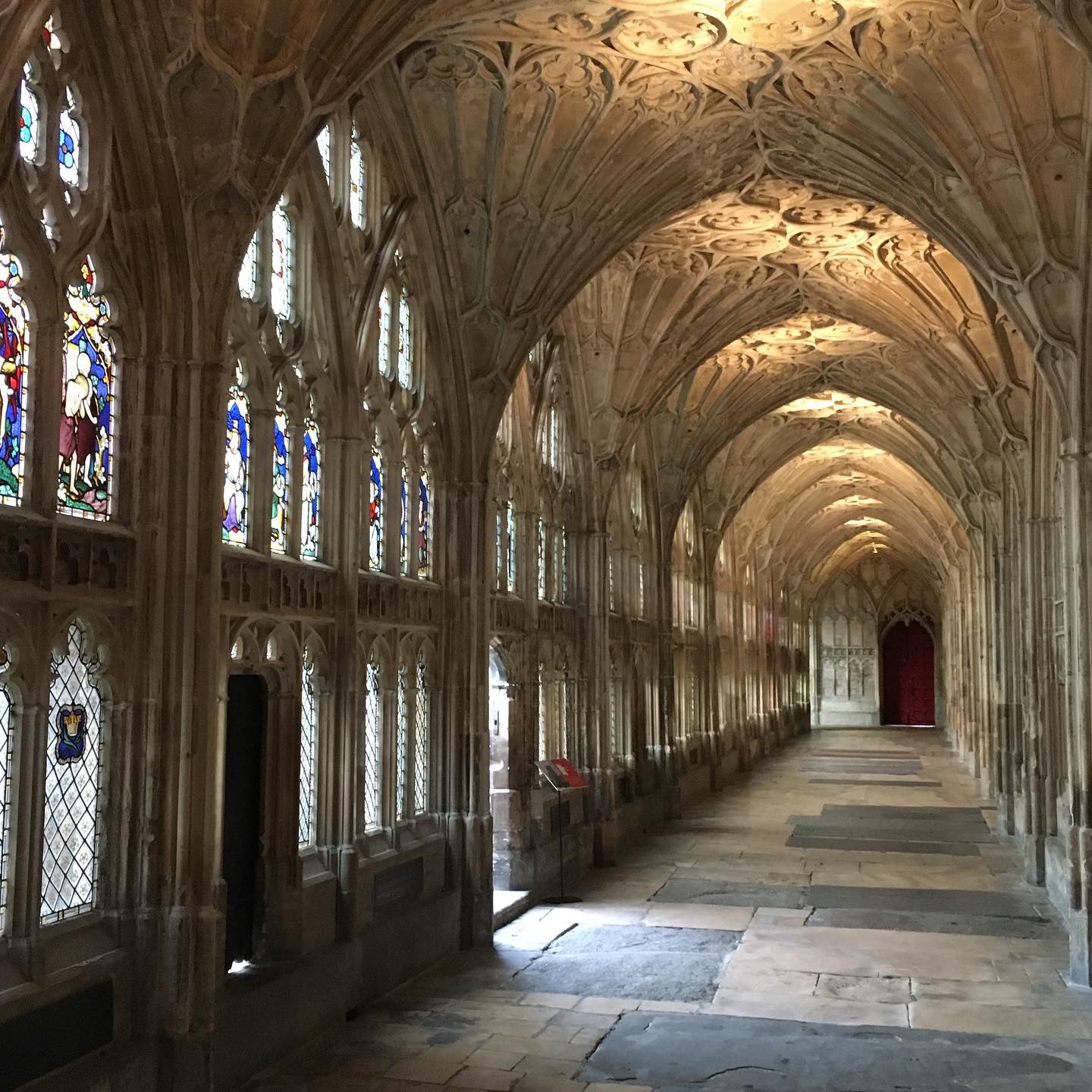
The cloisters, Gloucester Cathedral. America’s greatest fault probably lies in having no Medieval structures in situ. Photo taken by author.
I list these travels not out of any boasting, and, perhaps, not even for my readers. If anything, I do it for myself. I am more interested in remembering these places; writing about them has given me occasion to reminisce, to try and recapture something of the pleasure they gave me once.
I have been very blessed in life. I praise the Good Lord for allowing me the chance to see a bit of the world, to have done useful work, to have read interesting books, to have seen beautiful things, to have drank some good wine, and to have known such wonderful people. What more can one ask for in this brief life?
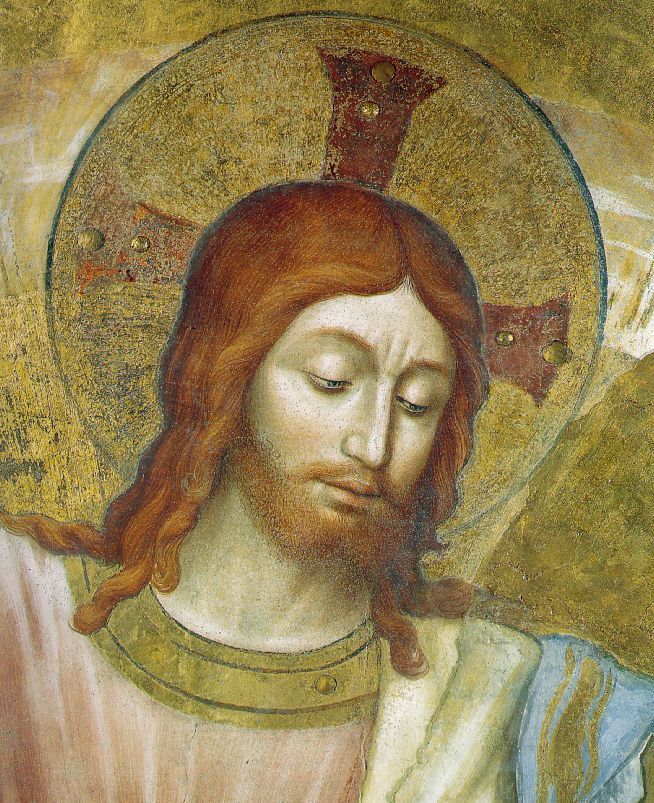
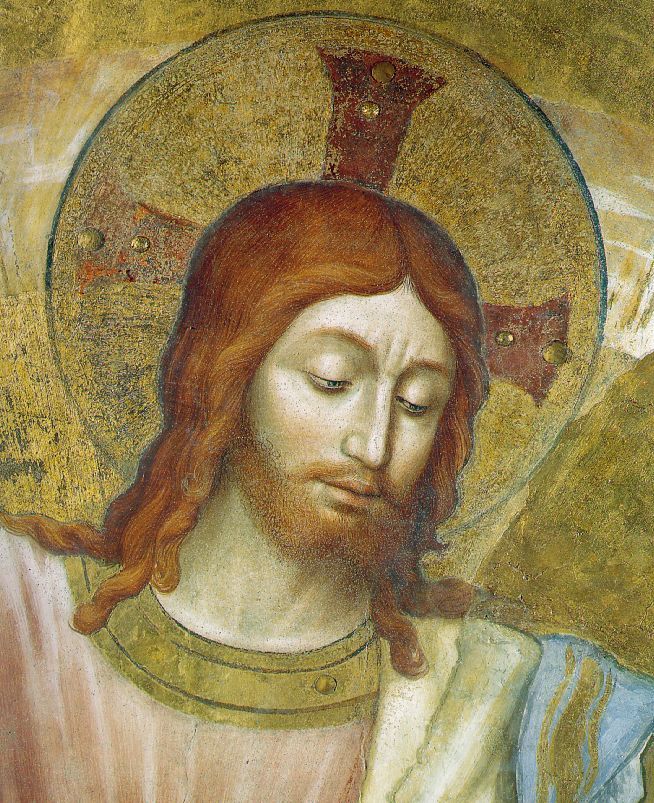
Richard Crashaw, one of the great Catholic poets of the seventeenth century, is a perennial source of inspiration. His verse preserves a mystical sensibility that is as refreshing today as it was when it was first composed in the Baroque era. This selection, “A Song,” is one of my favorites. I first had to memorize it many years ago in an English class on prayers (at Mr. Jefferson’s famously secular University, no less). I keep returning to it only to find new riches and new consolations. It seems eminently suited to our mid-Lenten moment, when the faithful yearn to see the face of the Resurrected and Glorified Christ.
Fra Angelico, Christ the Judge (detail) – (Source)
LORD, when the sense of thy sweet grace Sends up my soul to seek thy face. Thy blessed eyes breed such desire, I dy in love’s delicious Fire.
O love, I am thy Sacrifice. Be still triumphant, blessed eyes. Still shine on me, fair suns! that I Still may behold, though still I dy.
Though still I dy, I live again; Still longing so to be still slain, So gainfull is such losse of breath. I dy even in desire of death.
Still live in me this loving strife Of living Death and dying Life. For while thou sweetly slayest me Dead to my selfe, I live in Thee.
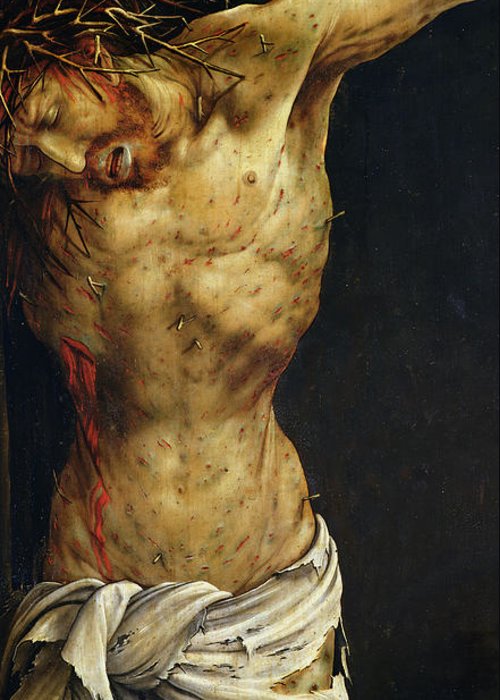
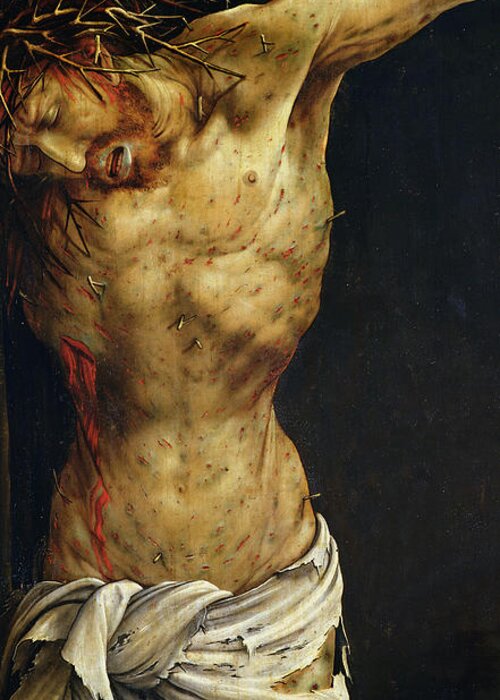
Christ on the Cross, from the Isenheim Altarpiece of Matthias Grünewald (Source)
As part of my Lenten Spirituality Series, here is Dame Julian of Norwich’s meditation on the thirst of Christ, Chapter XVII of Revelations of Divine Love:
“How might any pain be more to me than to see Him that is all my life, and all my bliss, and all my joy suffer?
And in this dying was brought to my mind the words
of Christ: I thirst.
For I saw in Christ a double thirst: one bodily; another spiritual…
For this word was shewed for the bodily thirst: the which I understood was caused by failing of moisture. For the blessed flesh and bones was left all alone without blood and moisture. The blessed body dried alone long time with wringing of the nails and weight of the body. For I understood that for tenderness of the sweet hands and of the sweet feet, by the greatness, hardness, and grievousness of the nails the wounds waxed wide and the body sagged, for weight by long time hanging. And [therewith was] piercing and pressing of the head, and binding of the Crown all baked with dry blood, with the sweet hair clinging, and the dry flesh, to the thorns, and the thorns to the flesh drying; and in the beginning while the flesh was fresh and bleeding, the continual sitting of the thorns made the wounds wide. And furthermore I saw that the sweet skin and the tender flesh, with the hair and the blood, was all raised and loosed about from the bone, with the thorns where-through it were rent in many pieces, as a cloth that were sagging, as if it would hastily have fallen off, for heaviness and looseness, while it had natural moisture. And that was great sorrow and dread to me: for methought I would not for my life have seen it fall. How it was done I saw not; but understood it was with the sharp thorns and the violent and grievous setting on of the Garland of Thorns, unsparingly and without pity. This continued awhile, and soon it began to change, and I beheld and marvelled how it might be. And then I saw it was because it began to dry, and stint a part of the weight, and set about the Garland. And thus it encircled all about, as it were garland upon garland. The Garland of the Thorns was dyed with the blood, and that other garland [of Blood] and the head, all was one colour, as clotted blood when it is dry. The skin of the flesh that shewed (of the face and of the body), was small-rimpled [1] with a tanned colour, like a dry board when it is aged; and the face more brown than the body.
I saw four manner of dryings: the first was bloodlessness;
the second was pain following after; the third,
hanging up in the air, as men hang a cloth to dry; the
fourth, that the bodily Kind asked liquid and there was
no manner of comfort ministered to Him in all His woe
and distress. Ah! hard and grievous was his pain, but
much more hard and grievous it was when the moisture
failed and began to dry thus, shrivelling.
These were the pains that shewed in the blessed head:
the first wrought to the dying, while it had moisture;
and that other, slow, with shrinking drying, [and] with
blowing of the wind from without, that dried and pained
Him with cold more than mine heart can think.
And other pains—for which pains I saw that all is
too little that I can say: for it may not be told.
The which Shewing of Christ’s pains filled me full of
pain. For I wist well He suffered but once, but [this
was as if] He would shew it me and fill me with mind
as I had afore desired. And in all this time of Christ’s
pains I felt no pain but for Christ’s pains. Then thought-me:
I knew but little what pain it was that I asked; and,
as a wretch, repented me, thinking: If I had wist what
it had been, loth me had been to have prayed it. For methought
it passed bodily death, my pains.
I thought: Is any pain like this? And I was answered in my reason: Hell is another pain: for there is despair. But of all pains that lead to salvation this is the most pain, to see thy Love suffer. How might any pain be more to me than to see Him that is all my life, all my bliss, and all my joy, suffer? Here felt I soothfastly [2] that I loved Christ so much above myself that there was no pain that might be suffered like to that sorrow that I had to [see] Him in pain.
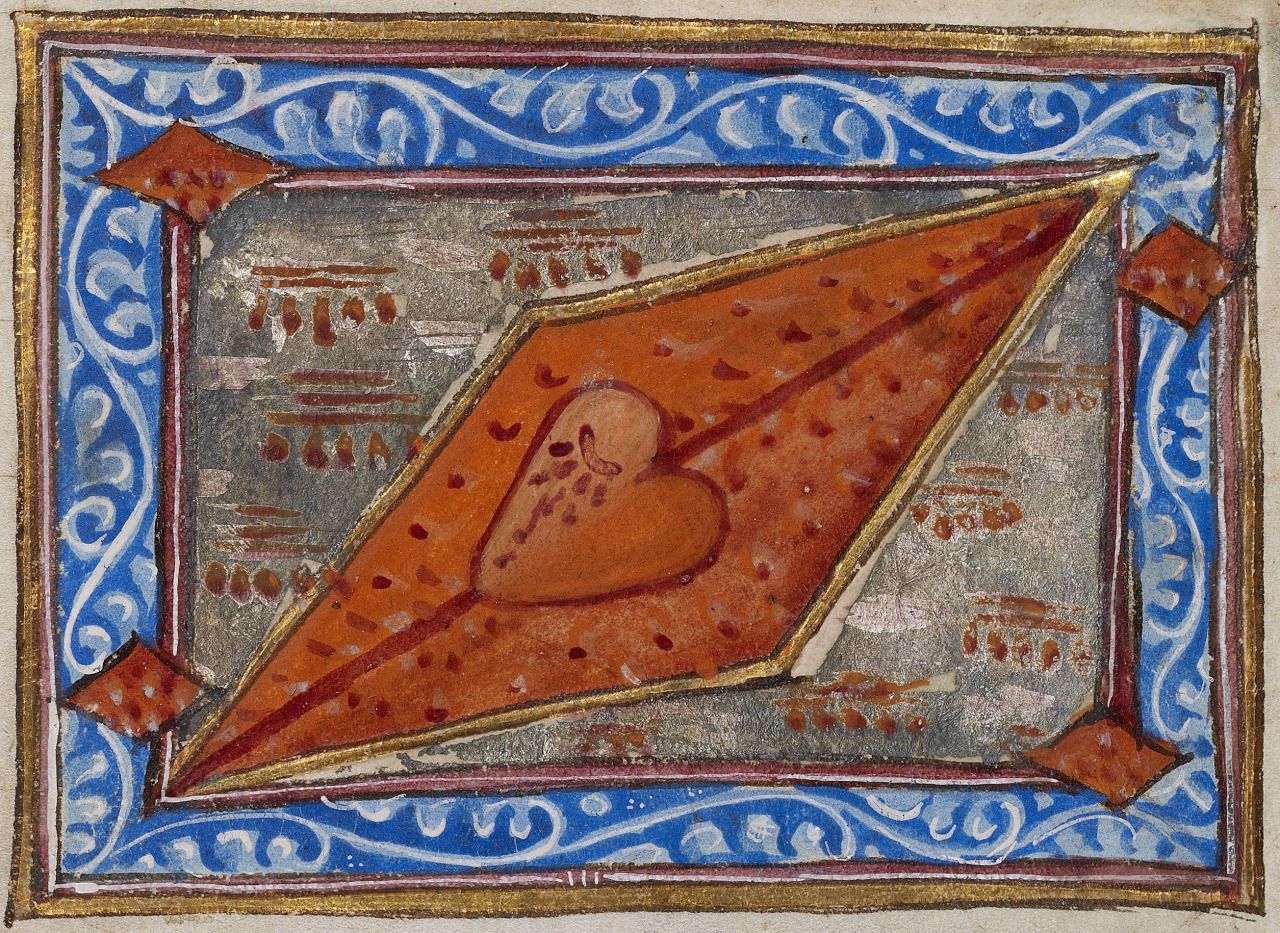
The holy side-wound of Christ, from a Book of Hours (Source)
Today is the Anglican commemoration of George Herbert, the great English cleric and metaphysical poet of the 17th century. He died on March 1st, 1633. In honor of this bard of the spirit, I offer to my readers one of my favorite Herbert poems. Every time I return to it, I find new edification.
“Prayer (1)”
George Herbert
Prayer the church’s banquet, angel’s age, God’s breath in man returning to his birth, The soul in paraphrase, heart in pilgrimage, The Christian plummet sounding heav’n and earth Engine against th’ Almighty, sinner’s tow’r, Reversed thunder, Christ-side-piercing spear, The six-days world transposing in an hour, A kind of tune, which all things hear and fear; Softness, and peace, and joy, and love, and bliss, Exalted manna, gladness of the best, Heaven in ordinary, man well drest, The milky way, the bird of Paradise, Church-bells beyond the stars heard, the soul’s blood, The land of spices; something understood.
I have just discovered that Once I Was a Clever Boy, a blog I used to enjoy but was sorry to see in hiatus, has returned. John Whitehead, the blog’s author, is a friend and a Brother of the Little Oratory here in Oxford. He hasn’t put up any new content recently. Nevertheless, there was a long time when for whatever technical reason – either on John’s end or mine, I was never sure – the blog was totally inaccessible. I’m very happy to see it’s back, and I look forward to more content from this quintessentially Oxonian blog.
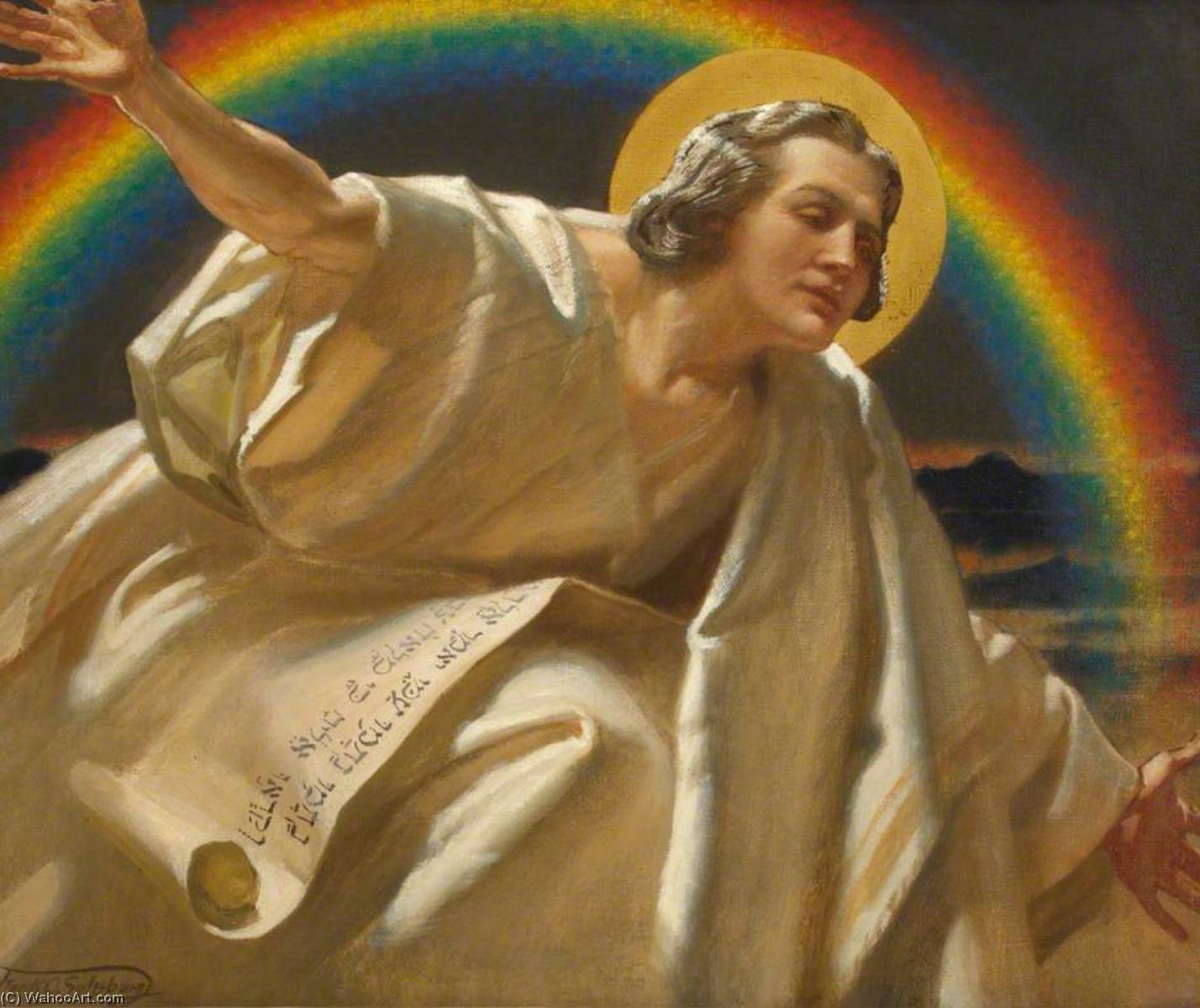
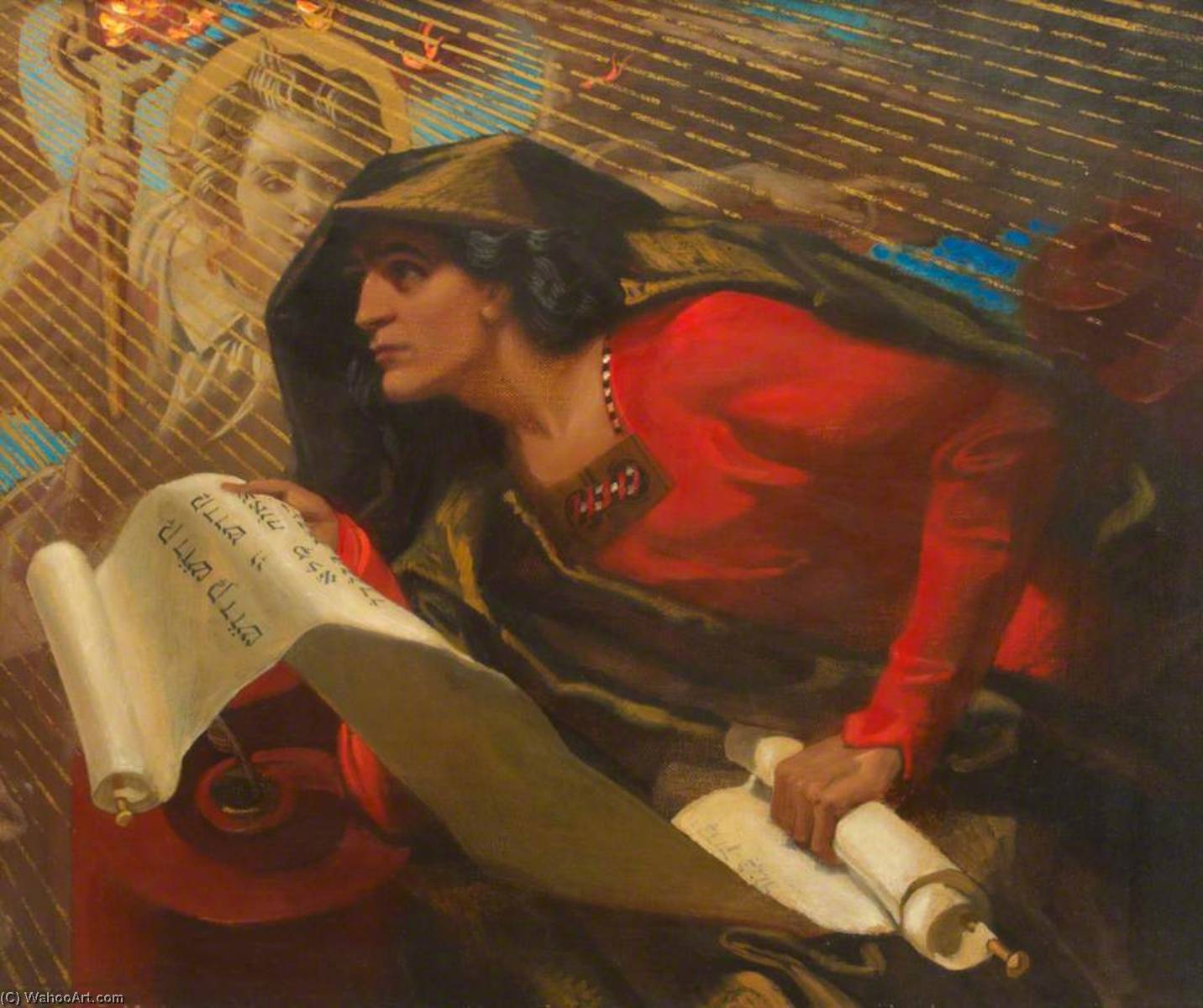
Second Isaiah: The Forerunner of God’s Great Day, Frank O. Salisbury (Source)
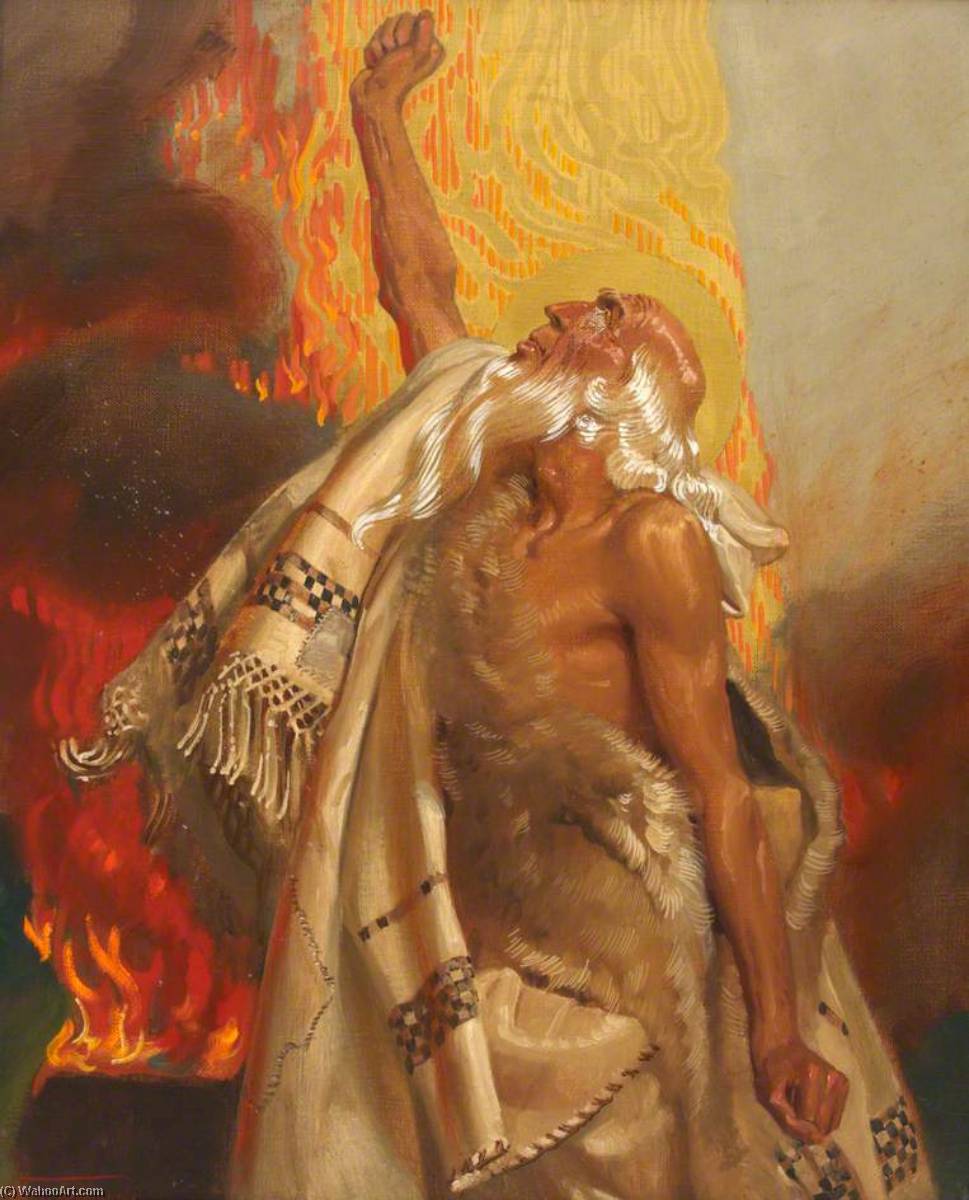
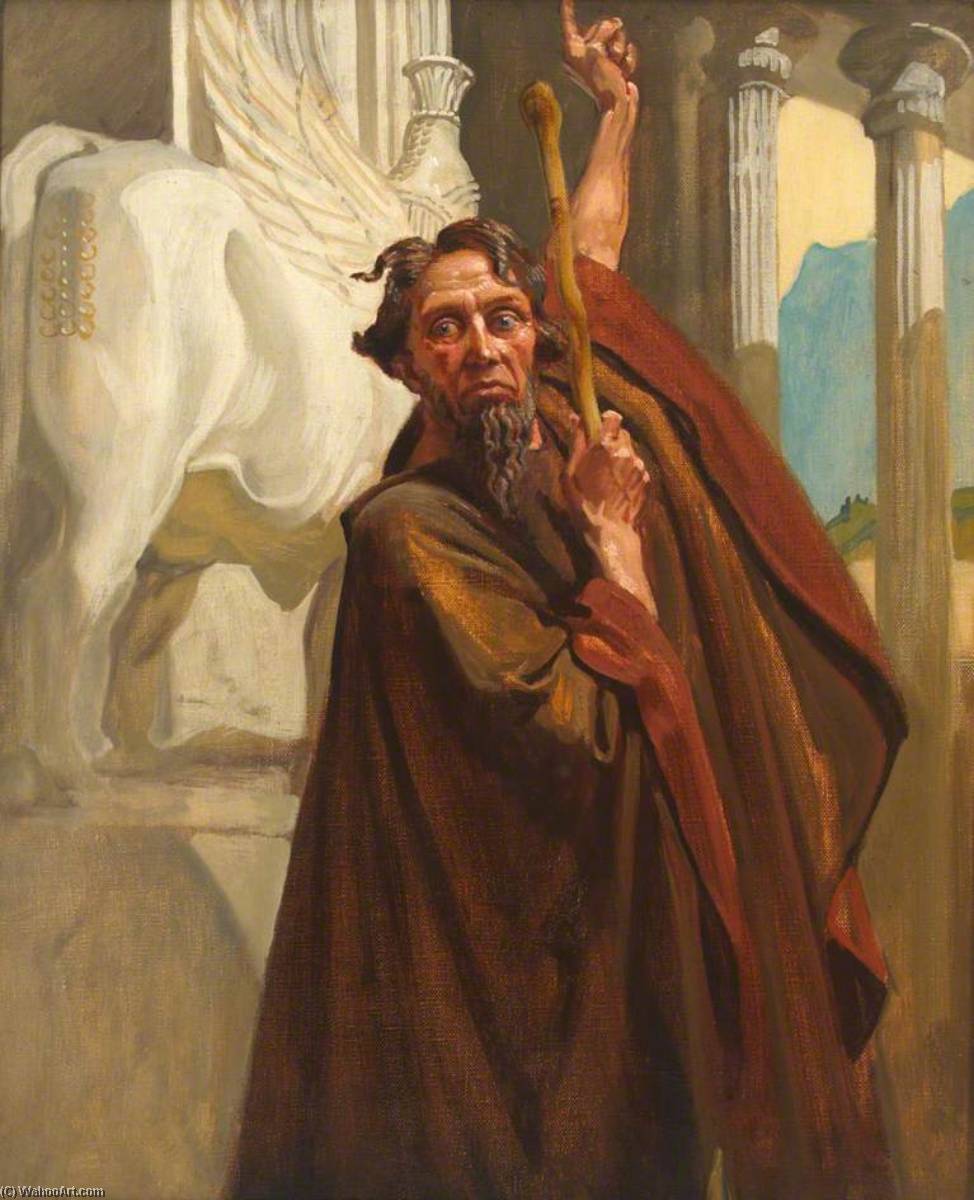
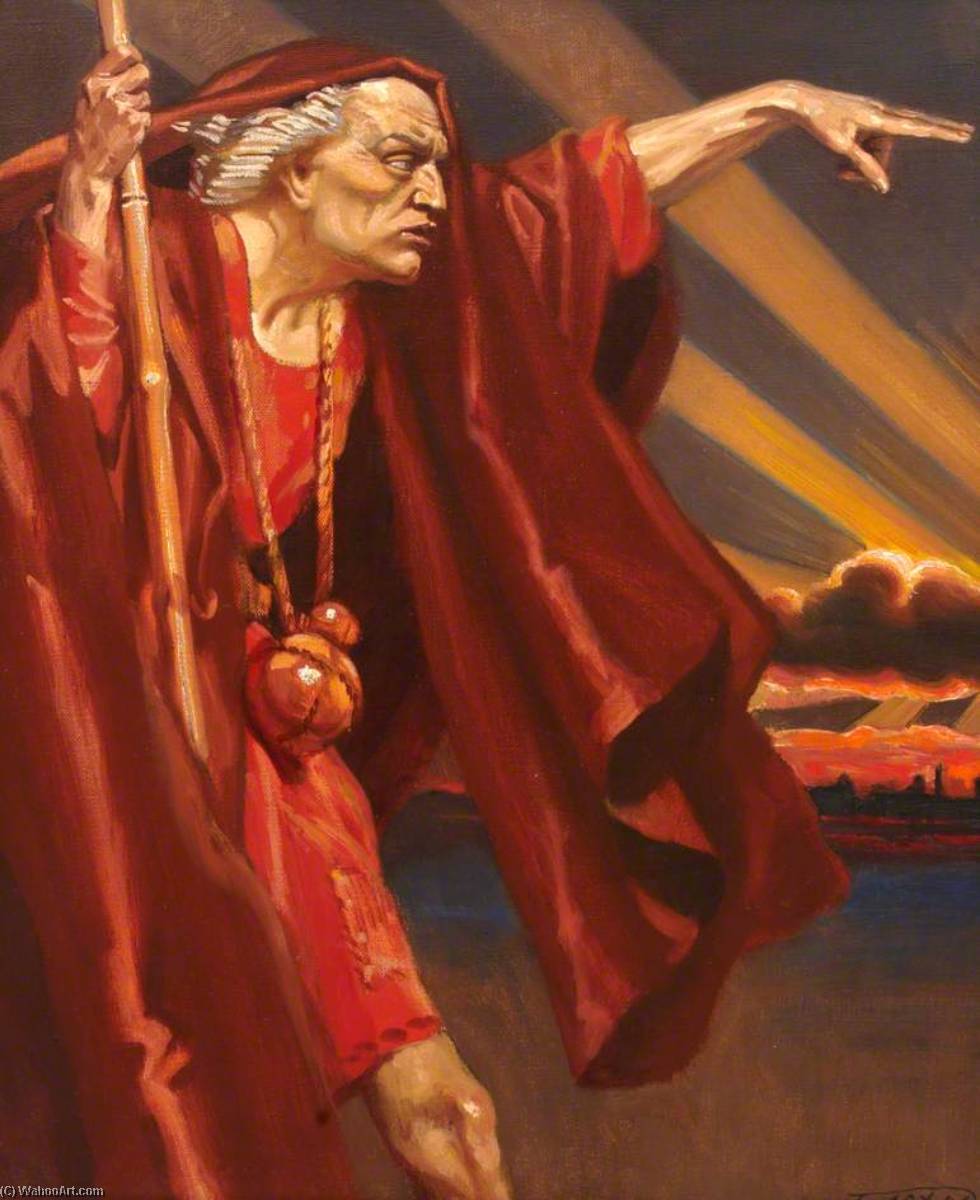
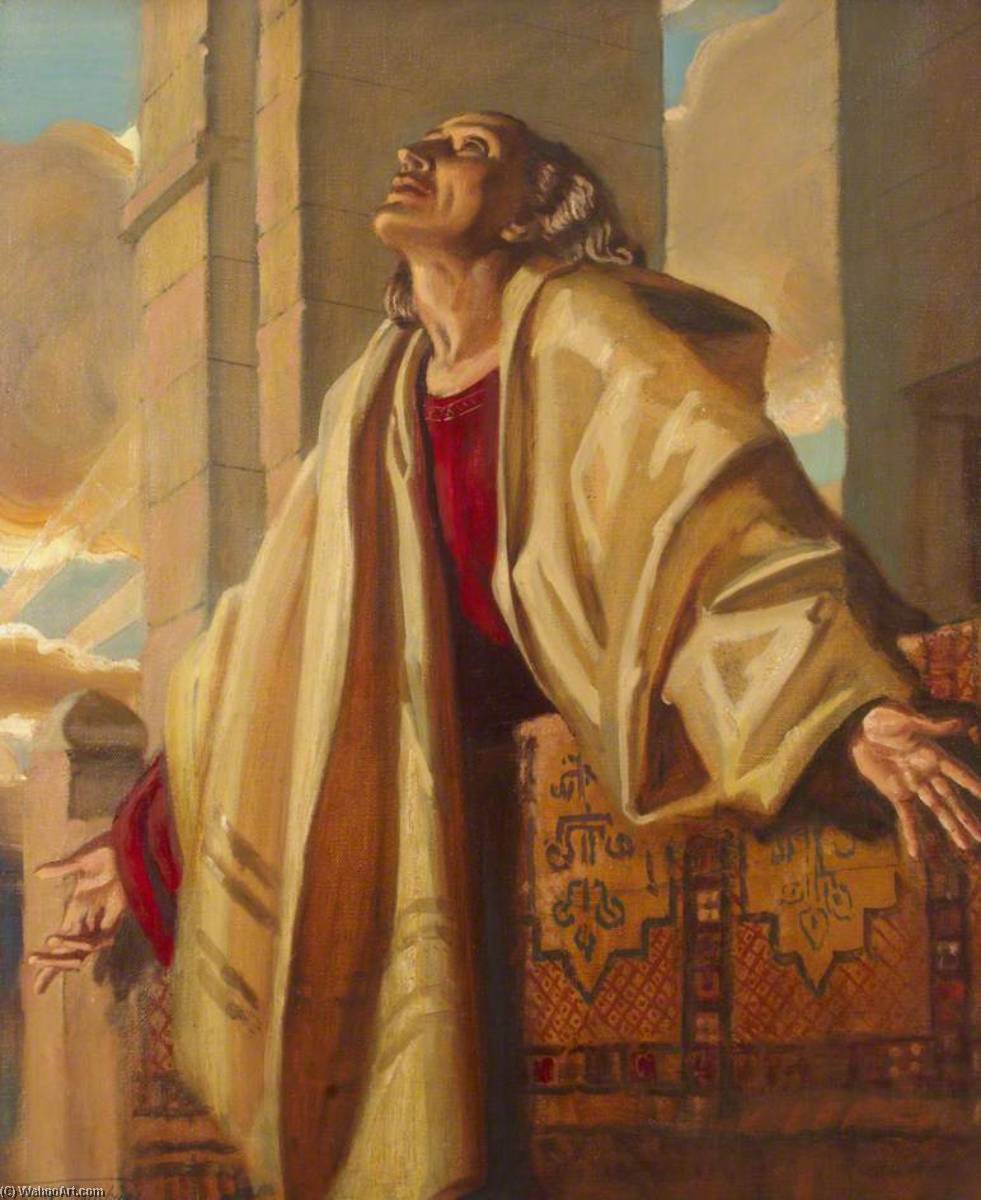
Advent is an apocalyptic season, in which we look forward to Our Lord’s “coming in the clouds on high.” For precisely this reason, it is also a deeply prophetic season. The Church’s selections from the prophets in her Advent liturgies are rich and bear much meditation. As a visual complement to this holy of the Church’s life, I give my readers a collection of images of the prophets.
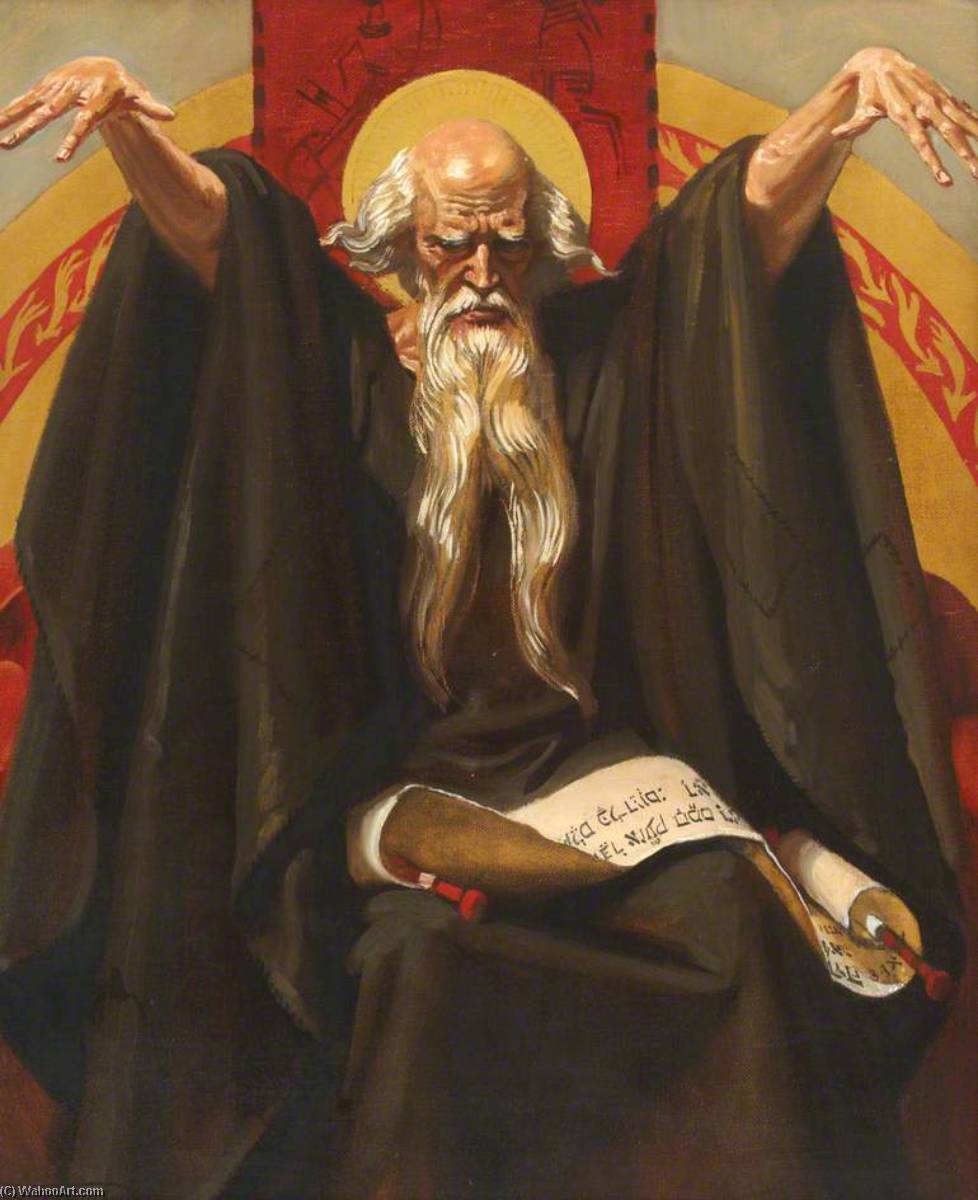
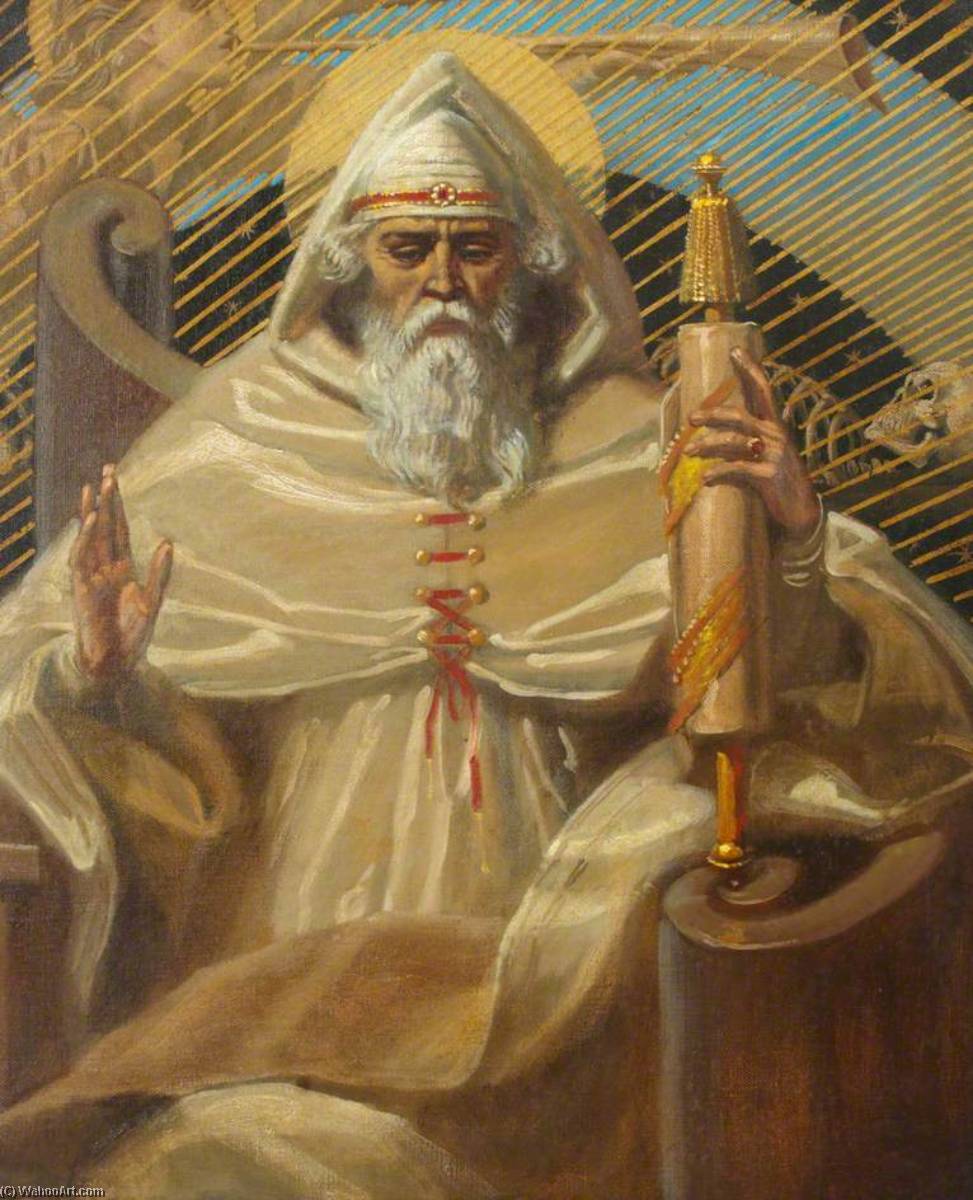
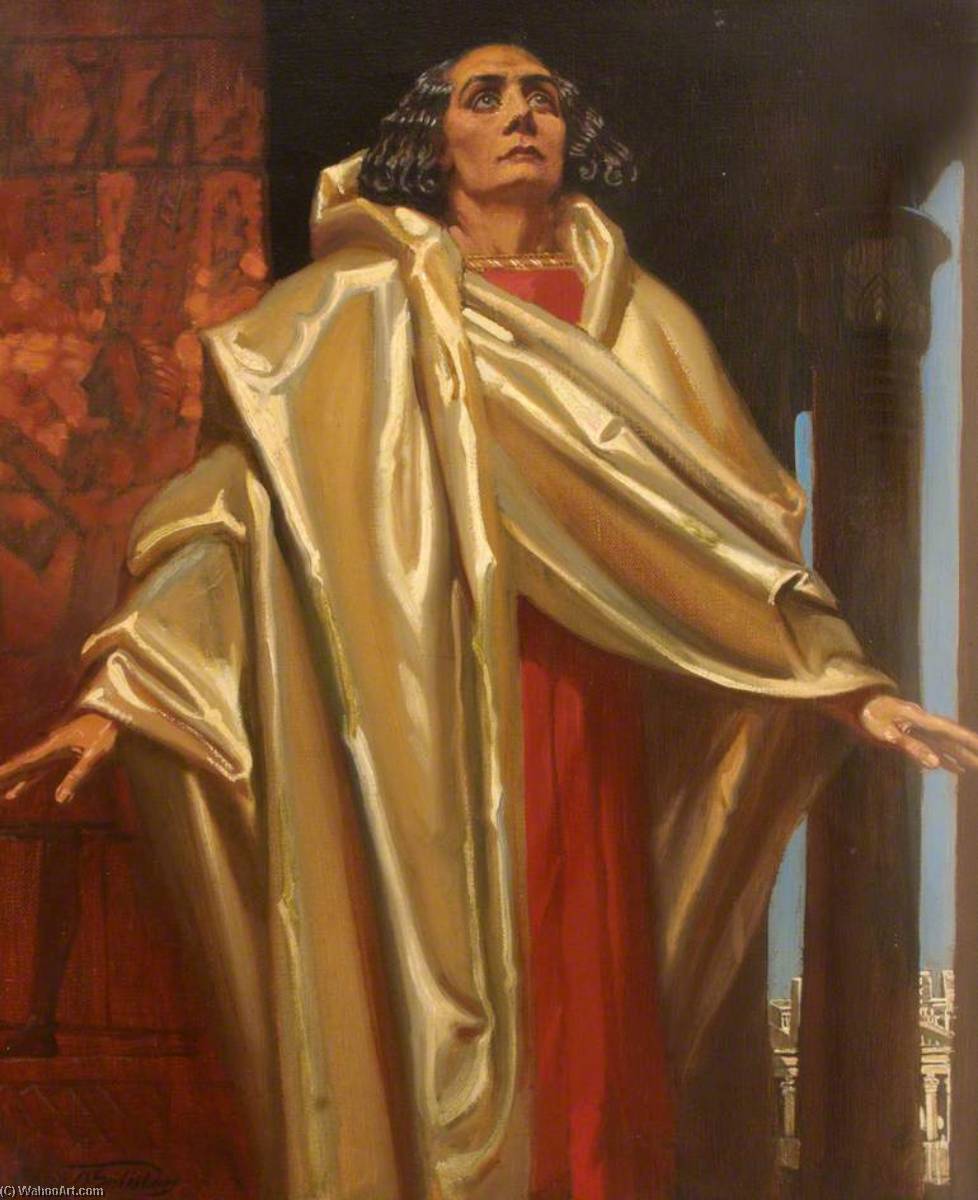
These paintings are by the great academic artist, Frank O. Salisbury (1874-1962), a man whose career has largely been forgotten but whose work is no less resplendent for that. Salisbury made enemies in the art world for this unrelenting attacks on modern art. His own oeuvre represents the acme of post-Sargent portraiture. It is hard to find a better master of the form. A devout Methodist, Salisbury also produced several religious paintings, usually centered on the human form.
In 1954, he executed a major series depicting the various prophets of the Bible. These refulgent images are, I must admit, a little tainted by the Cecil B. DeMille style of orientalism. But what purity of expression he captures! And in such vivid hues! Each is a gem worth pondering at great length.
I show them here for the delight and edification of my readers.
Isaiah: The Appointed of God, by Frank O. Salisbury (Source)
Jeremiah: The Mediator of God, Frank O. Salisbury (Source)
Ezekiel: The Priest-Prophet of God, Frank O. Salisbury. My own favorite among the series. (Source)
Daniel: The Statesman of God, Frank O. Salisbury (Source)
Moses: The Friend of God, Frank O. Salisbury (Source)
Elijah: The Warrior of God, Frank O. Salisbury (Source)
Amos: The Spokesman of God, Frank O. Salisbury (Source)
Jonah: The Messenger of God, Frank O. Salisbury (Source)
Habakkuk: The Sentinel of God, Frank O. Salisbury (Source)
And just as an added bonus, here’s his lovely Nativity, painted for and donated to St. Nicholas Church, Harpenden. You can read more about it here.
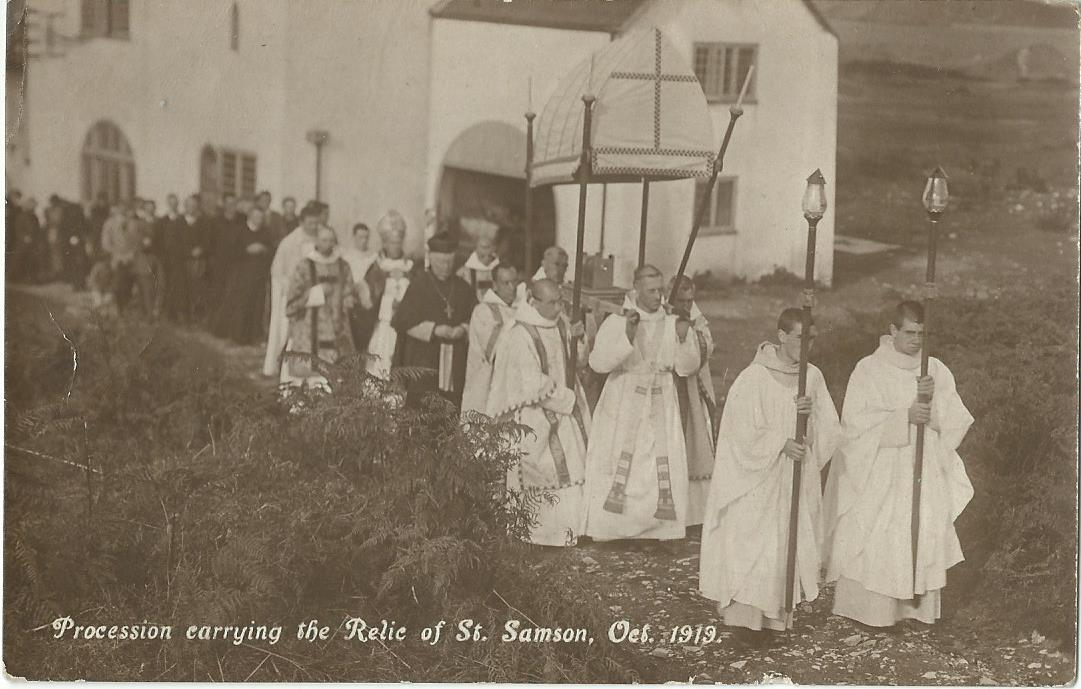
I’m not sure how I missed this astounding collection of photos of old Caldey, Prinknash, Pershore, Nashdom, and Farnborough when it came out last year, but I’m very glad to have discovered the trove yesterday. Some highlights include:
1. The barge fitted with heraldic devices that Peter Anson describes in Abbot Extraordinary, which was used specifically for the translation of St. Samson’s relics.
2. The silver sanctuary lamp in the shape of a galleon at full sail – once in Aelred Carlyle’s abbatial house (read: palace), now in the main oratory at Prinknash.
3. The various stones of dissolved abbeys brought to Caldey and placed into a single altar. If I’m not mistaken, Fr. Hope Patten must have gotten the idea for the Shrine at Walsingham from Caldey, as he knew Aelred Carlyle quite well.
4. Some lovely images of St. Samson and the Holy Face of Jesus used on printed material from the monasteries.
5. One or two excellent frontals, especially the one embroidered with seraphim at Prinknash.
6. An abbess of Kylemore Abbey in Ireland.
7. Peter Anson’s several drawings of Prinknash.
8. A procession for the 1964 Nashdom jubilee.
9. F.C. Eden’s terrifically English reredos at Caldey.
10. Scenes of the community’s collective reception into Rome in 1914 – including a shot of the Bl. Columba Marmion, who was an enthusiastic supporter of old Caldey.
Those who like Anglo-Catholic or monastic history will no doubt be as excited about this collection as I am.
UPDATE: A reader has kindly reminded me that, of course, Caldey Island is off the coast of Wales. So my title is perhaps a little misleading.
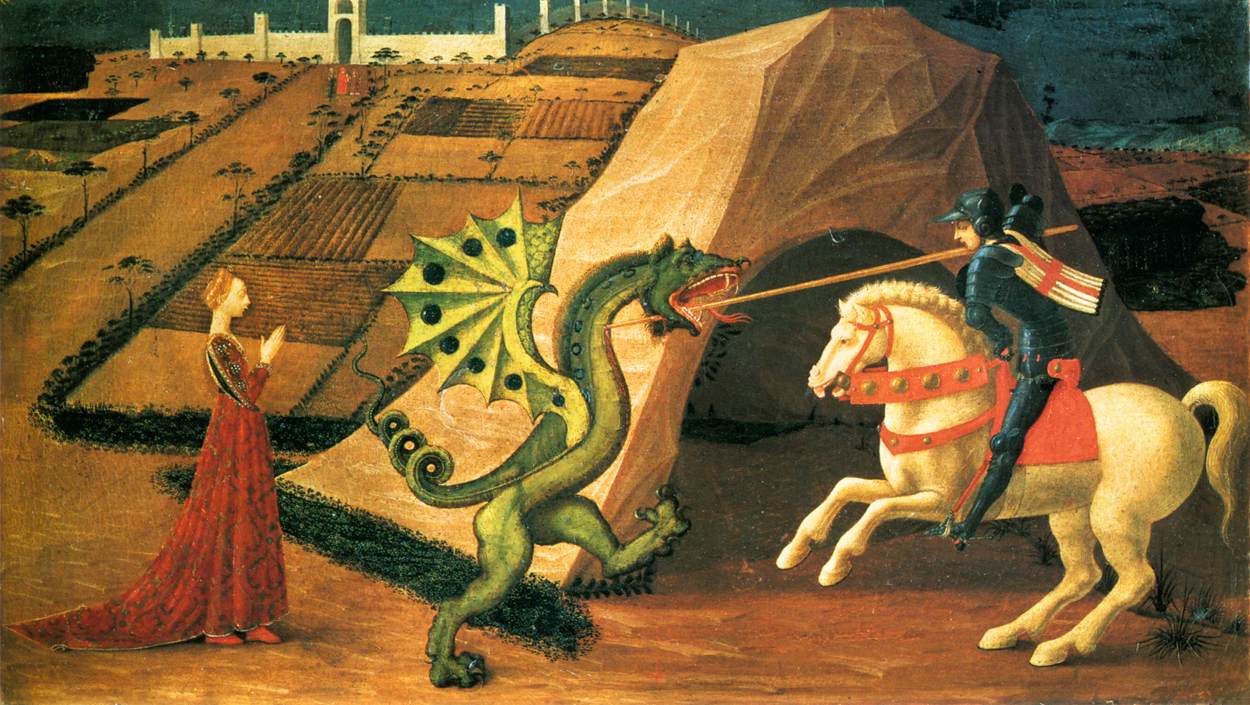
“Saint George and the Dragon,” Paolo Uccello, c. 1459 (Source)
The Englishman
G.K. Chesterton
St George he was for England,
And before he killed the dragon
He drank a pint of English ale
Out of an English flagon.
For though he fast right readily
In hair-shirt or in mail,
It isn’t safe to give him cakes
Unless you give him ale.
St George he was for England,
And right gallantly set free
The lady left for dragon’s meat
And tied up to a tree;
But since he stood for England
And knew what England means,
Unless you give him bacon
You mustn’t give him beans.
St George he is for England,
And shall wear the shield he wore
When we go out in armour
With battle-cross before.
But though he is jolly company
And very pleased to dine,
It isn’t safe to give him nuts
Unless you give him wine.
‘Catholicity, Antiquity, and consent of the Fathers, is the proper evidence of the fidelity or Apostolicity of a professed Tradition’ J.H. Newman, Lectures on the Prophetical Office of the Church, 1837, p. 51




 The Amish Catholic



_01.jpg)