Jean de Bernières on Humility and Communion

This week’s contribution to the Lenten Spirituality Series comes from Jean de Bernières-Louvigny (1602-1659), a pious lay mystic who lived and died in Caen. From his hermitage in this rainy Norman town, Jean de Bernières gave himself over to profound experiences of contemplative prayer. His spirituality, as expressed in the two volumes of his Le chrestien intérieur (Paris: 1661), was deeply indebted to the apophatic tradition of mystical theology. Although a solitaire, Jean de Bernières was engaged in ecclesiastical and charitable networks that included some of the greatest spiritual figures of his day. He was a member of the Compagnie du Saint-Sacrement in Caen and corresponded with such notable individuals as St. François de Montmorency-Laval, Bishop of Québec, and Mother Mectilde de Bar, Foundress of the Benedictines of Perpetual Adoration of the Most Blessed Sacrament of the Altar. He met the latter at Caen; she became, as it were, a dear friend. Translated into German in the eighteenth century, Jean de Bernières had an important influence on the trajectory of Pietism in that country. He has, as far as I can tell, never been fully translated into English. What I produce below is my own translation, in the hope it may offer some aid to pious souls in this time of temptation. The excerpt comes from the Second Volume, Book V, Chapter II of Le chrestien intérieur, pp. 6-11. I would add, for those who take an interest in such matters, that one of the extra difficulties in translating Jean de Bernières is that he uses Norman French vocabulary that no longer appears in standard French. I hope I have managed to capture his sense here.
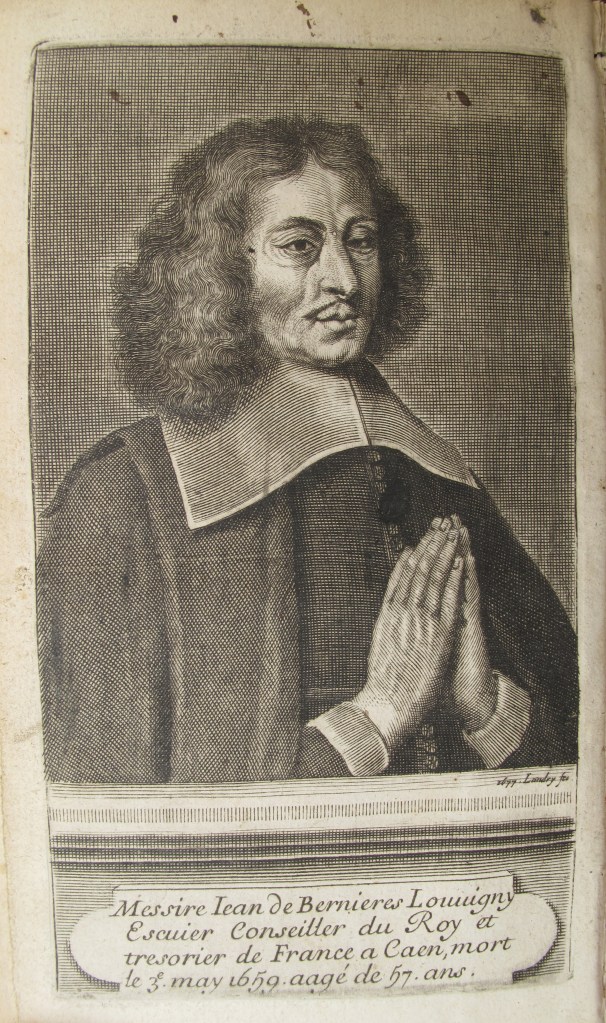
May the Blessed Hermit Jean de Bernières pray for us in this time of penance. (Source)

To commune worthily, one must place oneself in a state conformed to that of Jesus, in the Blessed Sacrament.

Jesus Christ wishes to give Himself to us in this august mystery, in a state of death with respect to the life of the senses, but as a source of life with respect to the interior life, the divine life, the life of grace, the life of contemplation and continuous application to the grandeurs of God His Father; a life poor and annihilated [aneantie] in exteriors, but entirely brilliant with majesty, and infinitely rich under the veil of the species that hide it from the eyes of the world. It is with these dispositions that that He comes to present Himself to us, wishing as well that we too should present ourselves to Him with dispositions conformed to His.

The Humanity that He gives to you in Communion has been elevated to the divine life by the hypostatic union; we too must be such by grace, that our understanding would be elevated to a high knowledge, and our will to a sublime sentiment of love of God, and that our soul would live the life of grace. O sublimity of the life of grace, you are so admirable, you are so high, you are so ineffable! You raise man from earth to heaven, and you make him live in God, and even of God, because you dispose him to live on the earth from the same substance by which the Blessed live in heaven. O great life of grace, you are poor to the exterior, but very rich in the interior: you seem low, but you are most high: you have ravished me with you beauty, I can no longer live a moment without thee, who make [me] live from a divine life, who places the soul in the heart of God, and who disposes her to see God placed in her heart.

Since the beauty of this life manifests itself to the soul, she leaves everything to embrace it, and everything else seems to her naught but death and corruption; we abandon the world, honors, and riches; we condemn ourselves to penances, to mortifications, to poverty, so as to live this divine life; and we feel a holy hunger for this adorable food that nurtures the soul. O that I might know it, my God, and that I might follow it, this divine life, so little known to the world, practiced by so few in the world, that also does not find itself altered by the waters of Thy eternal fountains! O Jesus, draw me after Thee in the actions of the life of grace, which is in its full exercise in misery and scorn. Draw me, Lord, I run after Thee in the odor of Thy perfumes. What pleasure, my soul, to behold you walking as a giant in the ways of grace, nourished and fortified in your course with the bread of grace: Ambulavit in fortitudine cibi illius usque ad montem Dei.

To live in one’s own death, as Jesus seems to us in the Blessed Sacrament, to lose one’s glory in contempt, to be ravished when one is annihilated [aneanti] and sacrificed; this is proper to the life of grace. Making everything dead to the exterior, it brings life to the interior, and gives principally the spirit of prayer, putting it almost continuously in exercise in the soul, applying itself to this infinite and incomprehensible Being that it adores, unable to comprehend It, and annihilating itself [s’aneantit] before Him, unable even to admire His divine grandeurs, as annihilated [aneanties] in the Eucharist. O my soul, how great is your vileness, how extreme your poverty! What is man, that You should have remembrance of him, Lord, and that You should visit him, and that You should take Thy delight from coming to dwell personally with him? His soul is drawn from nothing, and his body is nothing but a little mud, and Thou deignest to set Thine eyes upon him! How is it that this creature, so dirty, so minuscule, so coarse, could receive the infinite majesty of God? Humble thyself to the bottom of thy nothingness, and confess thy baseness, my soul. Lower thine eyes, and swear that thou art unworthy to turn them only towards that formidable grandeur; but be still more moved with admiration, of recognition and love of such excessive goodness, which deigns well to annihilate itself [s’aneantir] in that incomprehensible mystery, to bring itself to you even unto your nothingness.

We must truly love the state of interior captivity, where the soul, bound and tied up, stays in the obscurity of its prison. This state will honor the captivity of Jesus enclosed under the little host. This divine Lord place himself in a little prison for our love. The King of Glory is restricted under these small species, and thereby a captive and prisoner of man, He renders Himself, it seems, his slave, giving Himself entirely to him; He suffers, so to speak, and dies for him, and communicates to him all the merits of His Precious Blood. O divine Captive, captivate my heart so strongly, that it may never more return to natural liberty; but that all destroyed and annihilated [aneanti], it may not live another life than the superhuman, nor may it enjoy any other liberty than that of Thy children.

Each time that one takes Communion, Jesus Christ giving Himself entirely to all, there are all new obligations that we contract to live entirely for Him, and to render all our actions divine. It is necessary therefore for a good soul not to say: I have not such time to prepare myself for Communion; because she must not aim at another thing by all the actions of her life, but to receive the Bread of Life, in order to live the life of Jesus, and to persevere perpetually in similar dispositions to those that appear to us in the Blessed Sacrament.
St. Philip Neri and the God Who Dwells With Men

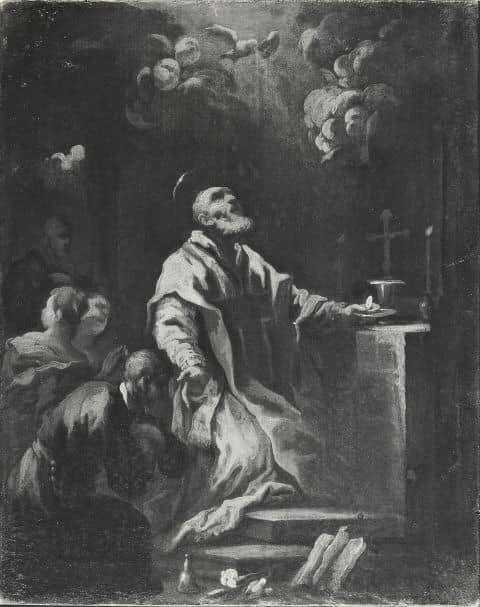
The Vision of St. Philip Neri, Giovanni Camillo Sagrestani (Source)

“Behold the tabernacle of God with men, and he will dwell with them. And they shall be his people; and God himself with them shall be their God.” – Revelation 21:3

St. Philip’s feast always falls within that sunny period of the Church’s year when, passing from Easter to Ascensiontide and following on to Pentecost and Corpus Christi, we find our days running over with the majesty of these great mysteries. The days grow longer, and so they seem to grow more golden with the ever-descending light of the Holy Ghost. We are in a season of peculiar glory. The culminating lesson of these mysteries is clear: God has made his dwelling among men, and in the midst of His people shall He reign.

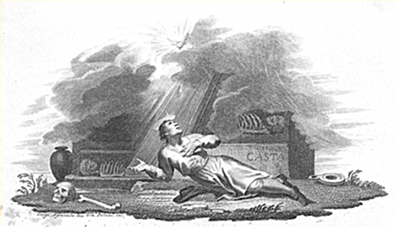
St. Philip receives the Holy Ghost while at prayer in the catacombs. (Source)

St. Philip knew this truth well. His whole life could well be described as a journey between Pentecost and Corpus Christi, the two feasts that most clearly teach us of God’s enduring presence in His Church. It was on the Vigil of Pentecost, 1544, that St. Philip received the grace that would define his vocation and the character of his sanctity. While praying in the catacombs of San Sebastiano, the Holy Ghost descended into St. Philip’s heart visibly and sensibly in the form of a ball of fire. This experience, which provided as much heat and pain as rapturous joy, marked the true beginning of St. Philip’s active ministry. In St. Philip, the Holy Ghost once again made His dwelling among men.

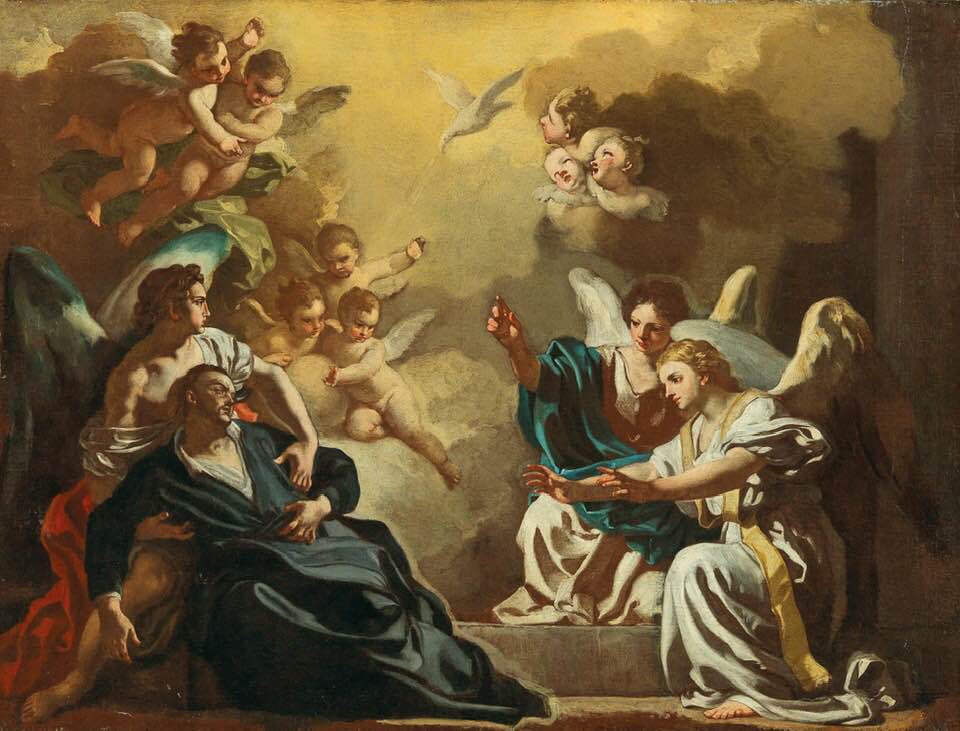
St. Philip Neri Receiving the Holy Spirit in the Catacombs of St. Sebastian, Francesco Solimena (Source)

From then on, St. Philip’s whole life would be marked by a singular union with the Holy Ghost. He became the “tabernacle of the Most High” and a living fountain of graces. His many miracles testify to the indwelling of the Spirit within him. So does his manifest oddity, his clear and salutary estrangement from the ways and works of ordinary men. The prophet writes, “For my thoughts are not your thoughts: nor your ways my ways, saith the Lord.” So does the Holy Ghost speak from the heart of St. Philip. For this reason, the Church applies the words of St. Paul to the new Apostle of Rome:

The love of God has been poured into our hearts
through the Spirit of God dwelling within us

Introit for the Feast of St. Philip Neri

St. Philip’s priestly life was marked by the overwhelming presence of God. Everything about him spoke to the present reality of the supernatural. This reality took two chief forms. The most famous were the astounding miracles wrought by St. Philip – most notably the raising of Prince Paolo Massimo from the dead. But there was also St. Philip’s profound adoration of the Eucharist. His popularization of the Forty Hours’ Devotion was but the visible extension of his love of the Blessed Sacrament. So too were the Eucharistic ecstasies to which he was increasingly susceptible as he became older. St. Philip knew no sweeter hours than those that he spent at Mass as an old man, kneeling in darkness before the altar, lost in the rarefied heights of a contemplation we can barely begin to fathom.

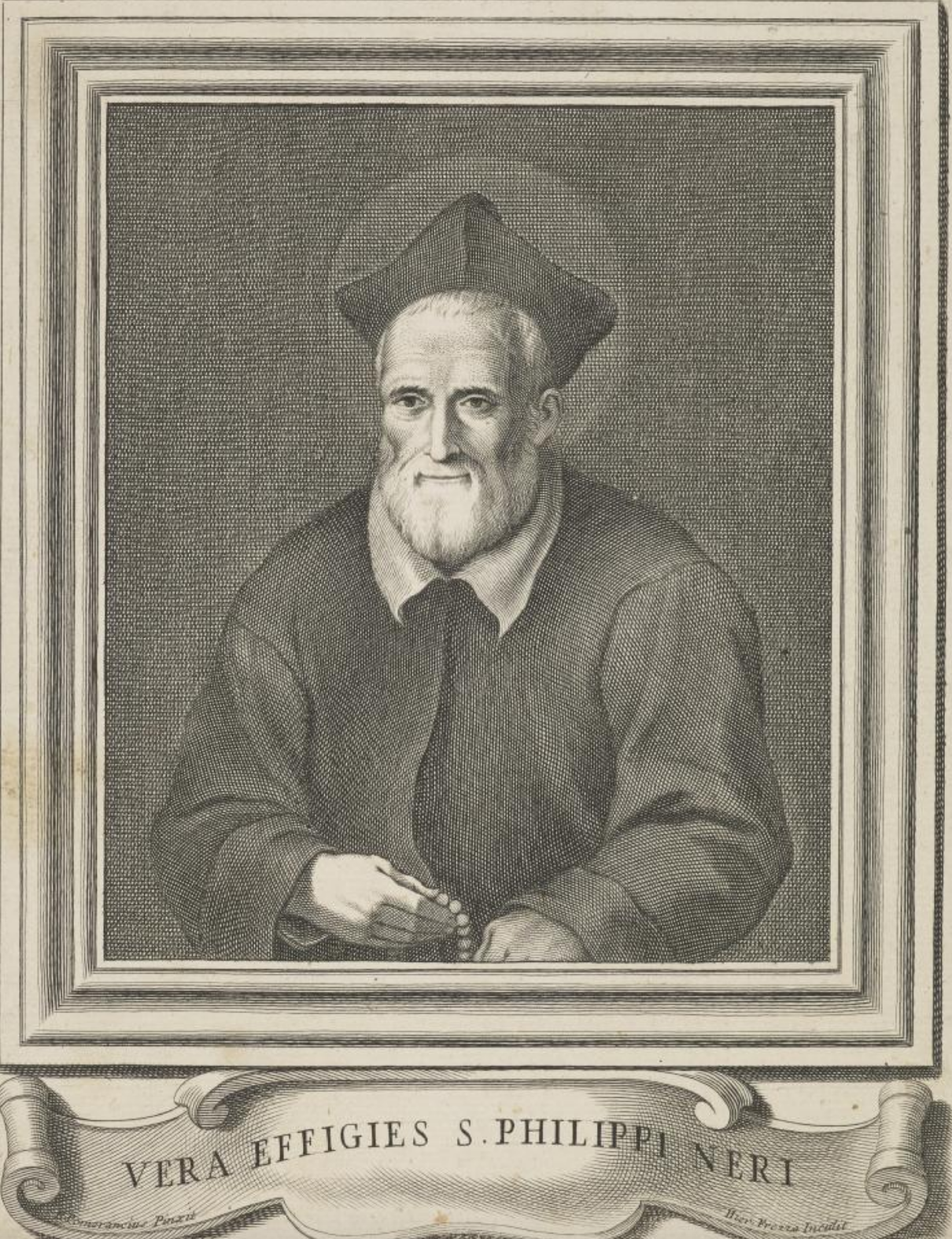
Engraving of St. Philip Neri, Hieronymus Frezza (Source)

One particularly perceptive observer has written:

In recalling the holiness of Saint Philip, it occurs to me that it was essentially this: he was all priest. He was always and everywhere a priest. His priesthood suffused his very being, making him incandescent with the fire of the Cross and of the altar.

Vultus Christi

St. Philip’s extraordinary endowment with the Spirit was ordered towards his life as a priest – namely, towards the glory of God in the Eucharist. This is the case with all of us. The Spirit, God in us, is given precisely for us to receive the Eucharist, God with us. Confirmation, like all the other sacraments, exists with the Eucharist as its proper telos.

The Mass of St. Philip Neri, Circle of Giovanni Battista Piazzetta (Source)

How fitting, then, that St. Philip should pass into eternal life when he did. May the 25th, 1595, was the feast of Corpus Christi. As Fr. Faber has it,

Day set on Rome! its golden morn
Had seen the world’s Creator borne
Around St. Peter’s square
Trembling and weeping all the way,
God’s Vicar with his God that day
Made pageant brave and rare!

“St. Philip’s Death,” F.W. Faber

Providence often grants the saints a Christ-like death. It is a sign that, even in suffering and death, God is still dwelling with us. St. Benedict died in choro during a liturgy, just as Christ died in the fulfillment of His high priesthood. Many martyrdoms were accompanied by strange signs and mystical evocations of the Sacrifice of Christ. It should be no surprise that God would take St. Philip in a similarly edifying manner.

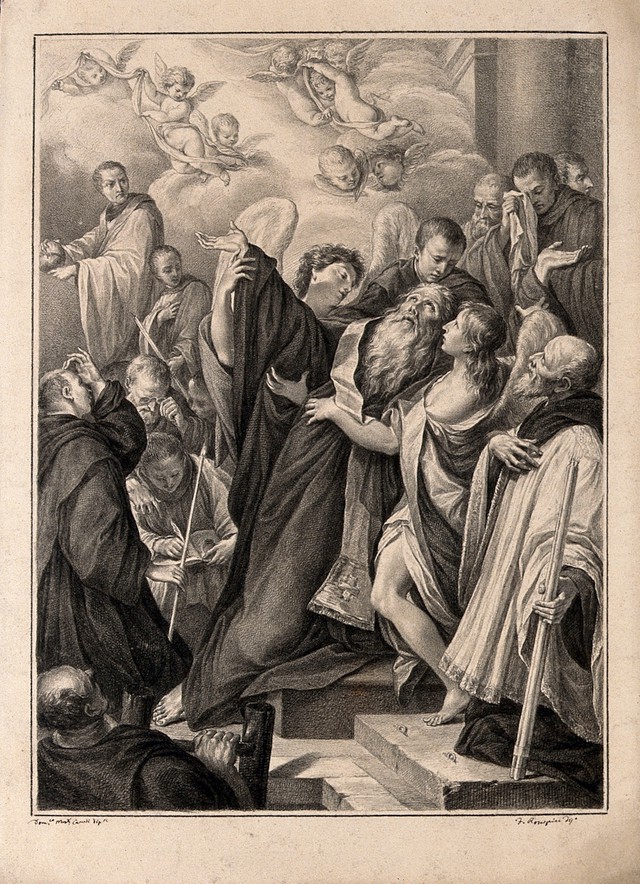
The Death of St. Benedict, F. Rosaspina, 1830, after D.M. Canuti. (Source)

In his death, St. Philip reminds us that we are all meant to imitate Christ in His Sacrifice, that is, in the Blessed Sacrament. There is no more perfect pedagogue in the life of the Spirit than the Son, who has presented Himself to us on all the altars of the world. Would that we might take this lesson to heart!
St. Philip died when he did because, by a singular grace of Providence, God was pleased to mark His servant’s passing with the Church’s celebration of the Most Holy Sacrament of the Altar. Just as St. Philip honored the Eucharistic God in his life, so did the Eucharistic God honor him in his death.

We, too, can honor the saint best by cleaving to the Lord. St. Philip’s words to a spiritual daughter are as true today as they once were:

“Let us concentrate ourselves so completely in the divine love, and enter so far into the living fountain of wisdom, through the wounded Side of our Incarnate God, that we may deny ourselves and our self-love, and so be unable to find our way out of that Wound again.”

St. Philip Neri

God dwells with us just as He once dwelt in the blessed heart of St. Philip. He comes to us just as He came once to the priestly hands of St. Philip. Let us abide in Him, just as St. Philip did once and does forevermore in the heights of Heaven.

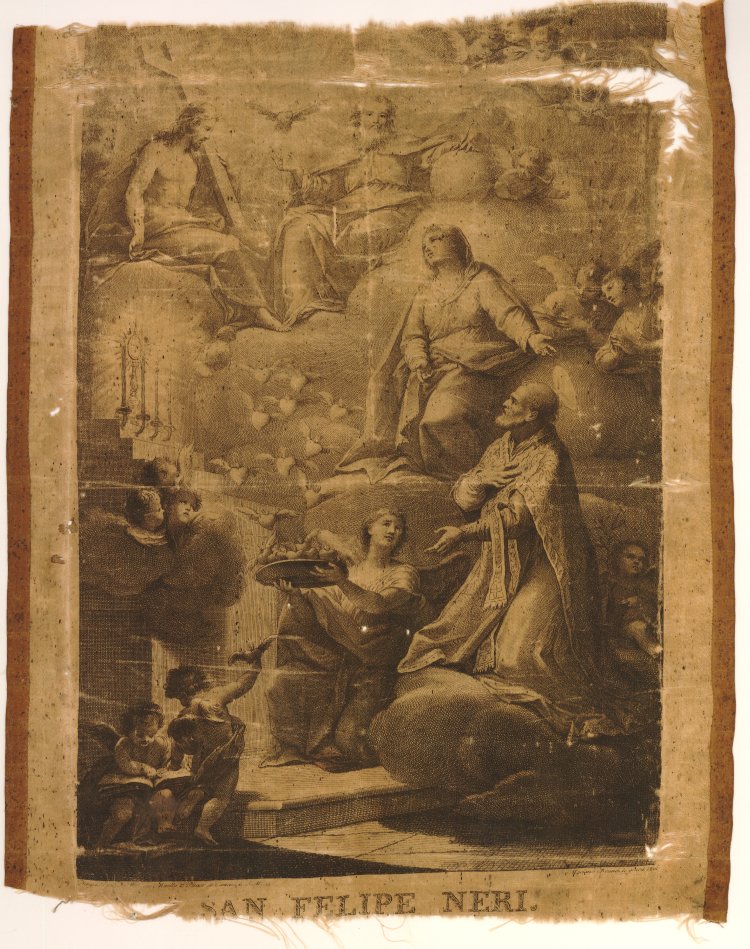
Votive image of St. Philip Neri from the British Museum. As they have it: “St Philip Neri kneeling on a cloud in front of altar; angel to right holding tray with burning hearts and ascending towards Holy Trinity; Virgin Mary mediating surrounded by angels, after Maella. 1801 Engraving, printed on silk.” Note the Eucharist enthroned in a monstrance. (Source)

5 Ideas for Advent Spiritual Reading

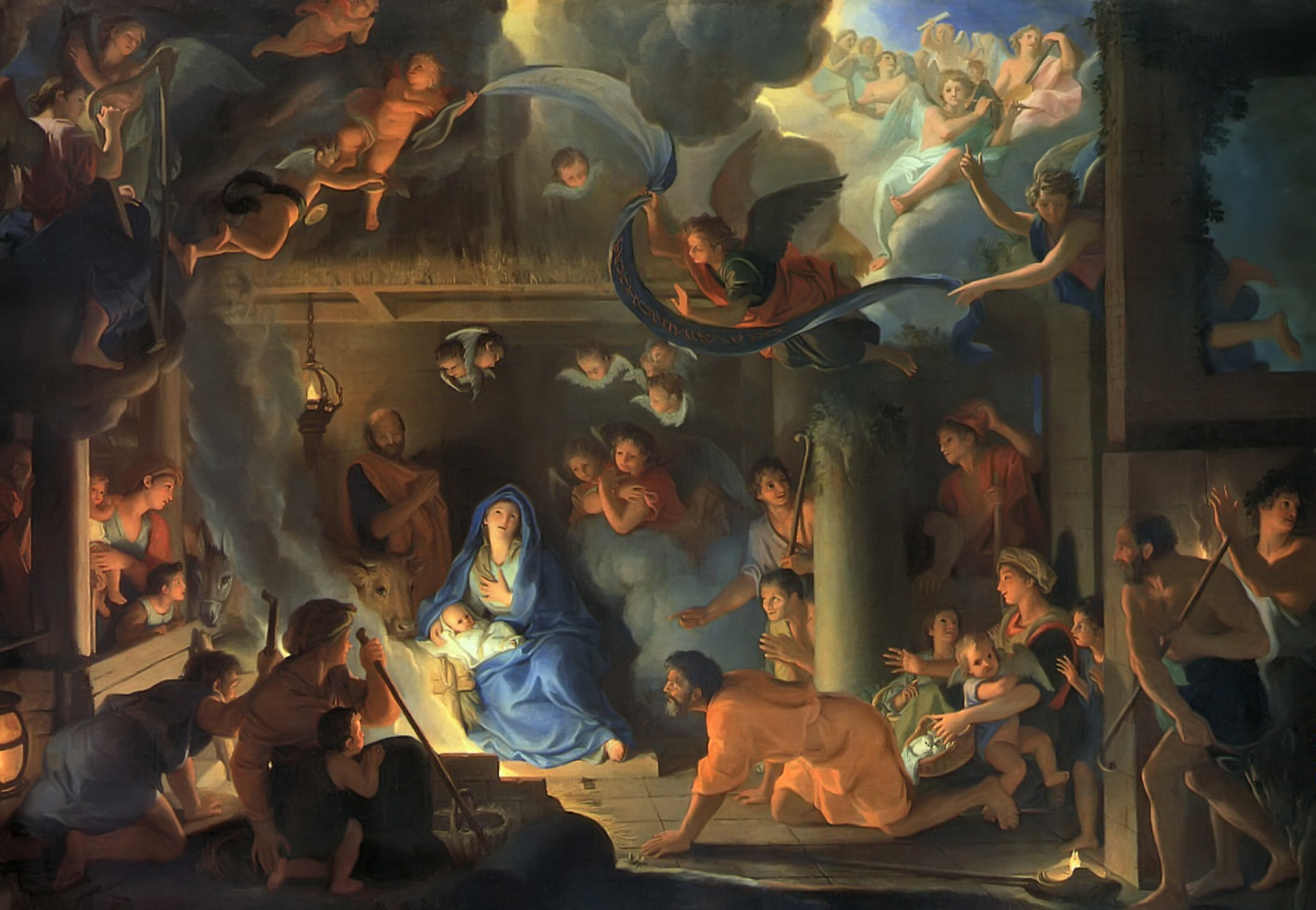
 The Adoration of the Shepherds, Charles le Brun, 1689. (Source)

I confess, I had meant to get this post out earlier. The end of term was hectic and the start of vacation distracting. So here I am, offering my thoughts on Advent reading when the season is already here and nearly halfway done. Still, we can begin to read true and edifying things on any day, especially in the a holy time set apart by the Church for reflection and contemplation of Our Lord in one of His cardinal mysteries. So I offer here a few reading ideas for those looking for a spiritual boost this winter.

1. In Sinu Jesu: When Heart Speaks to Heart – the Journal of a Priest at Prayer

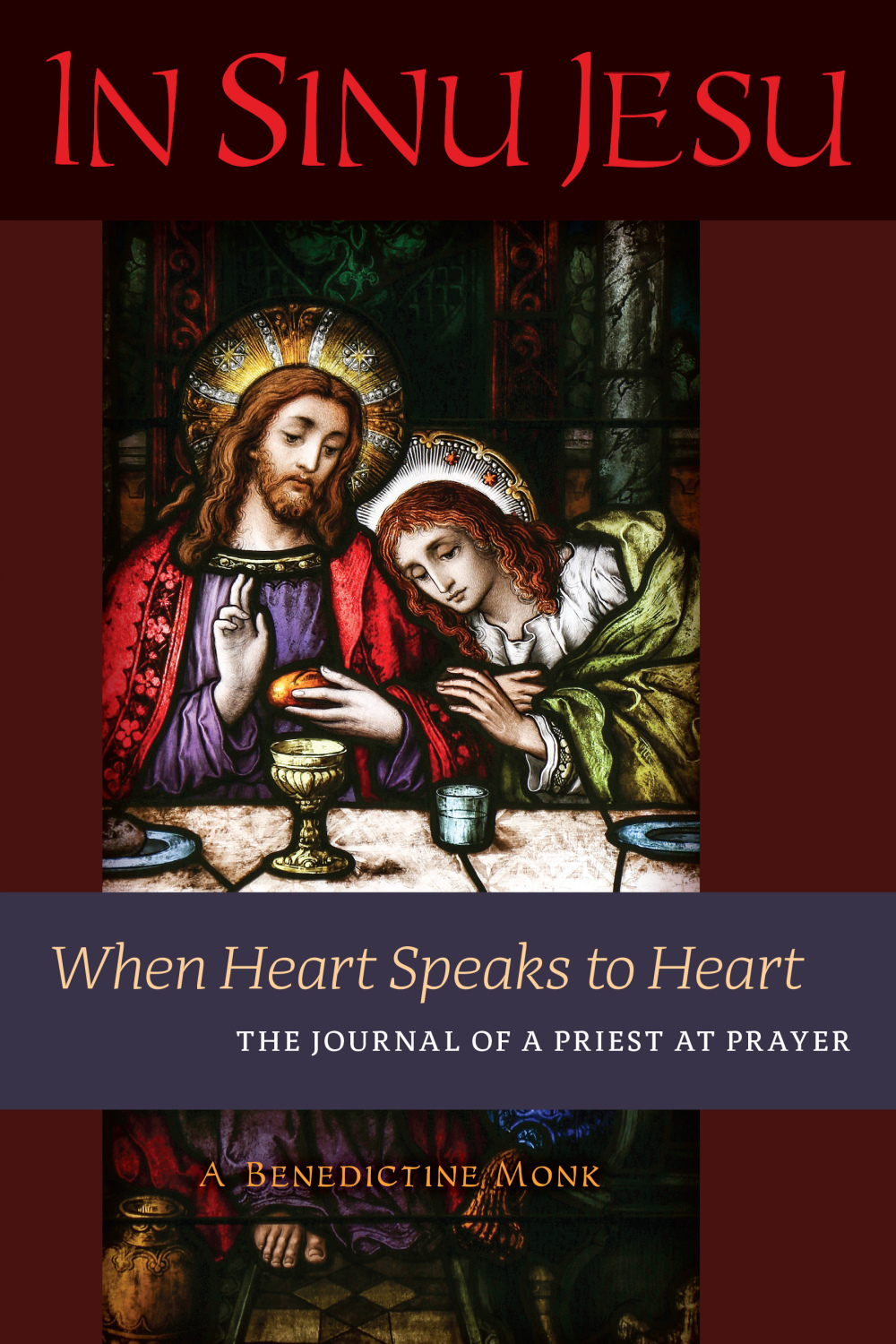
The cover of In Sinu Jesu (Source)

This meditative book is the sort of thing you’ll want to take to Adoration. Written by an anonymous Benedictine monk, it is jam-packed with consoling thoughts and inspiring messages. The author relates the various locutions from Our Lord and, occasionally, the Virgin and Saints, received in the inward ear of the heart in the course of profound prayer. Over the course of several years’ worth of journal entries, we read of the author’s deep vocation to reparation and adoration for the sanctification of priests. I would recommend this volume to any men considering a vocation of any kind. Its rhythmic, prayerful passages breathe and bristle with a sense of holiness rare among contemporary spiritual authors. The voice of Our Lord sings through it all, not as a trumpet or thunderclap, but as “a whistling of a gentle air” (1 Kings 19:12 DRA). Speaking only as a layman, I can say that this book completely revolutionized my spiritual life. I wonder where I should be now if it had not come into my hands a little over two years ago.

2. Bethlehem or 3. All For Jesus

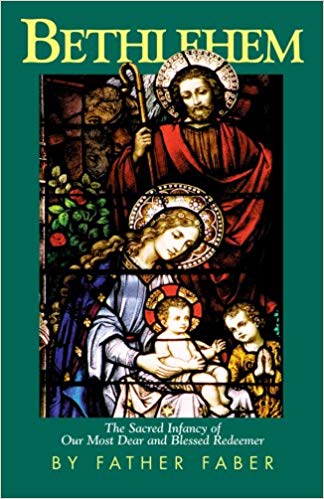
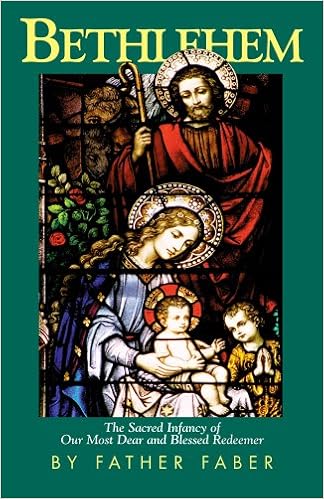
The cover of Bethlehem, by Fr. Frederick William Faber. (Source)

This list wouldn’t really be an Amish Catholic post about spiritual authors without some reference to Fr. Faber. The Apostle of London wrote many books about special devotions, graces, and mysteries of Our Lord’s life. His last volume, Bethlehem, is devoted to the birth and infancy of Jesus, making it especially suited for perusal at this season.

Like many of his other texts, Bethlehem is more devotional that practical. It is intended to inspire love for Our Lord under the particular mystery of his Incarnation. While this may be just what you need this Advent (and Christmas), you may desire something a bit more practical. How to grow in the practice of the love of Jesus? How to keep on in the unflagging task of Christian charity at a time so full of worldly distractions and weariness? How do we live out the Incarnation in our own lives?

Cover of All For Jesus, by Fr. Faber (Source)

If this is the sort of thing you’d prefer in your Advent reading, then perhaps turn to Fr. Faber’s first great devotional work, All For Jesus, or the Easy Ways of Divine Love.

In this great volume, it is Fr. Faber’s task to kindle the zeal of his readers by demonstrating the sheer ease of love. He points to concrete, simple practices by which to further what he calls “the Interests of Jesus,” to save other souls, and to sanctify our own.

All For Jesus is my main spiritual reading this Advent, and I have already found it working marvels. If you would love God with warmer enthusiasm and brighter joy, then read Fr. Faber!

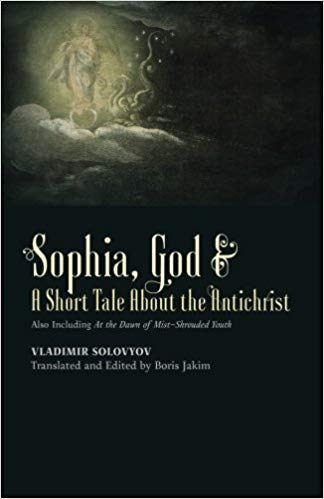
4. “A Short Tale About the Antichrist.”

You can find Boris Jakim’s translation of “A Short Tale About the Antichrist” in the collection Sophia, God, & A Short Tale About the Antichrist. (Source). 

This short story by Vladimir Solovyov, the “Russian Newman,” may seem like an odd choice for Advent. Yet Advent is the apocalyptic season par excellence. The liturgy turns our ears to the voices of the prophets and our  eyes towards the visions of the Last Day. And so it can be helpful to think creatively about what the end will be like.

I don’t believe Solovyov envisioned his (in some ways, rather prescient) tale of the future to be a literal prediction of what would happen. The man was not a fundamentalist, and this is not Left Behind. But he did see it as his spiritual last will and testament. The story is a powerful meditation on the nature of real evil, real Christian love, and what Christians will have to stand for in their last and terrible hour.

An edifying read, for sure.

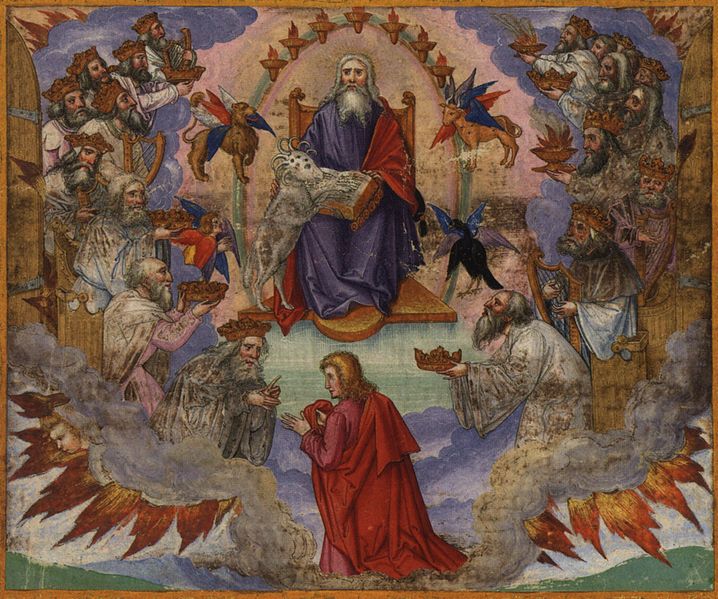
5. The Book of Revelation

An illustration of Rev. 4-5. (Source)

If you like your apocalypse unalloyed, then open your Bible, sit down, and read the entire Book of Revelation in one or two sittings. That may seem like a lot, but it brings lots of rewards. We often lose sight of the unity of the Bible’s individual books when we just pick at passages here and there. Reading the text fully through can help restore our vision of each book as what it is – an integral whole. With a book as symbol-laden as Revelation, that reclamation becomes even more important.

It is a holy and pious thing to meditate on the Second Coming of Our Lord in Advent. Reading the Apocalypse nourishes the soul’s sense of expectation and, indeed, her desire for the final judgment. The pious soul who seeks to be immersed in the text’s sapiential logic will gain many fruits. Those who go into it with only a narrow literalism will find nothing but an arid maze. This truth applies to all of Scripture, but most especially to its apocalyptic passages.

So, those are just five options for Advent reading. There are probably hundreds of other texts I could have chosen; thus we come one example of the great diversity that characterizes the true mind of the Church.

Advice from a French Nun

Screen Shot 2018-10-28 at 10.13.24 PM.png

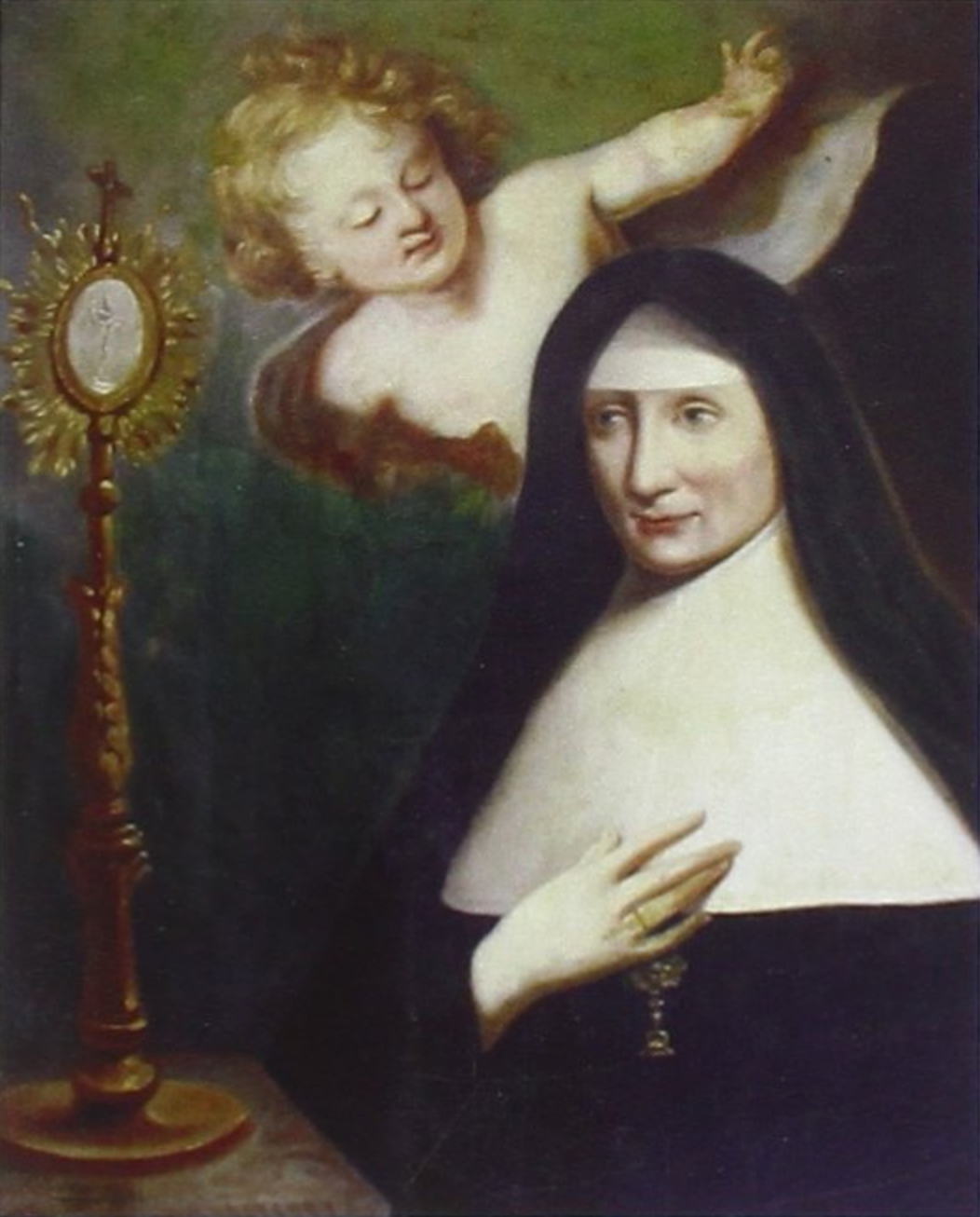
A portrait of Mother Mectilde de Bar adoring the Blessed Sacrament. (Source)

Sometimes readers ask me about more information on Mother Mectilde de Bar (1614-1698), the saintly foundress of the Benedictine Nuns of Perpetual Adoration of the Most Blessed Sacrament of the Altar. I would of course direct those who read French or Italian to any of the several biographical studies about Mother Mectilde that have come out in those languages. However, I would perhaps more eagerly urge my readers to a series of recent posts at Vultus Christi presenting what is, I believe, the first English translations of some of Mother Mectilde’s spiritual letters. Here they are with the titles the translator has given them at VC.

I. “So that I might begin to live in simplicity, like a child.”

II. “On the Meaning of Desolation and Sufferings.”

III. “The state in which you find yourself is of God.”

IV. “The divine labourer who works in you.”

V. “Yet ever thou art at my side.”

VI. “Nothingness doesn’t even attach itself to nothingness.”

VII. “Some sayings of Mother Mectilde.”

VIII. “He sets fire everywhere.”

IX. “All our discontent comes from self-will.”

And on top of all that, there’s a letter from the lay mystic Jean de Bernières to Mother Mectilde. Bernières is a good example of someone who, though posthumously condemned as a “Quietist,” is now being recovered as a source of valuable mystical insight. We have seen the same happen to Benet Canfield before, and it may yet occur to someone like Pietro Matteo Petrucci. More work needs to be done in this area. At any rate, translation of these early modern mystical works is badly needed.

Both as a practicing Catholic and as an historian of early modern Catholicism, I am encouraged that these works are being put into English for the first time. The English-speaking world is now getting a much better sense of the importance of this unique tradition within the Benedictine family. More translations, we are told, are coming. I eagerly await their publication.