St Philip Neri and the Sick

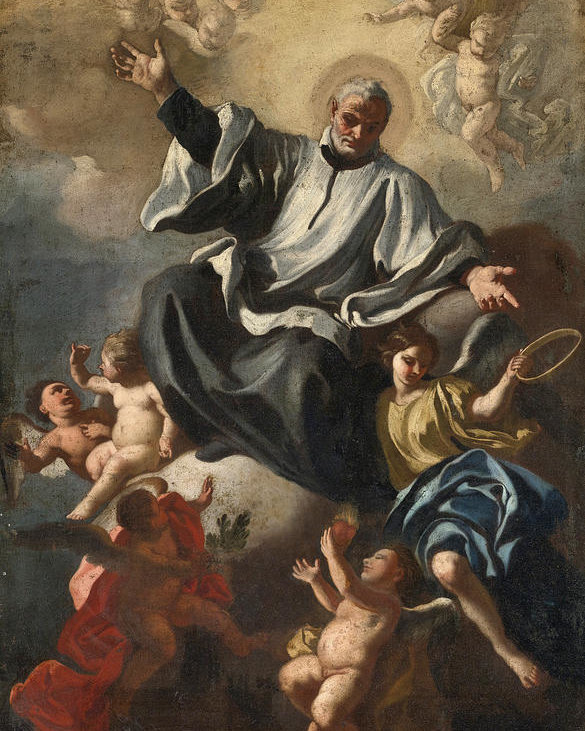
San Filippo Neri in Glory, Francesco da Mura (Source)

In this year of pestilence, I am reminded that St. Philip Neri began his good works in Rome by, among things, tending to the sick. The hospitals of sixteenth-century Italy were houses of profound mortification and little hope, not much more than palaces of death. They were chronically understaffed and overwhelmed with the indigent and the ill, who rarely recovered. The conditions were extremely unsanitary: the beds were filthy, the air putrid, the din of agony unremitting. Into these seething crowds of the desperate came St. Philip. He assisted the sick as best he could. His first biographer reports that, once he began to gather a following of disciples,

It was Philip’s custom on weekdays to divide his children in Christ into three or four groups and send them to the city hospitals. To begin with, he would himself go after dinner [lunch – RTY] to visit the sick in hospitals, to enkindle by his example in his followers a great desire to do this work; he would speak to the patients, tend them and do all sorts of things for them, which encouraged in his disciples an ardent desire to do the same. One example will serve to show you how devoted they were to the sick. Giovan Battista Salviati, being very dedicated, was in the hospital called the Consolazione, and headed straight for a patient intending to make his bed, asking him politely to get up so that he could do so. The patient thought he was being mocked. “No, my Lord,” he said, “don’t make fun of me, I’m a poor man.” He knew all about Giovan Battista’s licentious way of life, but was unaware of his marvellous change of character, by which he had wholeheartedly turned away from material concerns to the love of heaven. But what next? Giovan Battista urged him most earnestly, and the sick man was struck not only by his air of authority but even more so by his humility, and got out of bed, lost in admiration. Giovan Battista retained that style of life with an unwavering intent until the day of his death, and having once put his hand to the plough, he never looked behind him.

Antonio Gallonio, The Life of St. Philip Neri
Trans. Fr. Jerome Bertram Cong.Orat.

St. Philip inspired others to help the sick in whatever way the could manage. These works of mercy were the fruit of the genuine conversion he wrought in their hearts by that peculiar influence he possessed. The palpable indwelling of the Holy Ghost in his heart turned him into a living fountain of graces whose streams brought miracles to many souls. Some of these miracles healed the sick and even raised the dead. Yet we must never forget that it was not these extraordinary moments but, rather, the graces of repentance, of conversion, and of final perseverance that were truly the greatest fruits of St. Philip’s particular sanctity. St. Philip’s true fame rests in those whom he carried with him to Heaven, not in the strange and marvelous works that he effected while on earth. The story of Giovan Battista Salviati is one example among many of those who tasted of such sweet fruits. He actualized the grace of his conversion through works of charity towards the sick.

Subsequent writers have retained this act as a sine qua non of the Oratorian life, and then only because St. Philip so clearly demonstrates how essential it is to the Christian life per se.
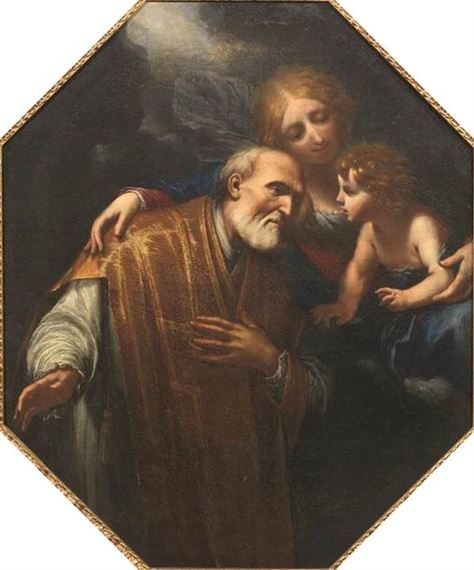
The Vision of St. Philip Neri, Florentine School, 17th c. (Source)

And it seems to me that on this, St. Philip’s feast day, we would be well-advised to do the same. We find ourselves in the midst of a new and terrifying pandemic. Death is everywhere. In the United States alone we have lost 100,000 souls with almost no public mourning. Many of these people have died alone, afraid, in pain, and deprived of the comfort of God’s Church. The nature of the disease means that most of us cannot actively assist in the hospitals for fear of transmission. All we can do is show kindness to our neighbors, help each other obtain the necessary supplies to stop the spread of the disease, and give blood if we have survived the sickness ourselves. That’s as far as practical action goes for most of us. So much for the corporal works of mercy.

But a Christian is never without a way to directly help his brethren. The first and last resort of the faithful must be prayer. Here, too, we can take St. Philip as our model. Lest we place too much emphasis on St. Philip’s merely material acts in visiting the sick, let us turn to the testimony of Giuseppe Crispino,

When we enter a sick-chamber, let us imitate the holy Father Philip, who was accustomed, immediately upon his arrival, to pray for the patients in their own room and to make the bystanders do the same, especially in the case of the dying. The Saint was also accustomed to retire into another room, and there to pray for the sufferer.

Giuseppe Crispino, The School of Saint Philip Neri, pg. 174
Trans. Frederick William Faber

As I have written elsewhere, we must offer intercession for our suffering fellows now more than ever. And we must do so in union with the whole communion of saints. Indeed, one small blessing of this crisis is that it can, if we let it, draw us closer to the “great cloud of witnesses” ever ready to help us. One of St. Philip’s spiritual sons, Fr. Agostino Manni, made special prayers to the Blessed Virgin whenever he went to the hospitals; the Blessed Juvenal Ancina likewise sought the prayers of the living when he ministered to the sick (Crispino 174-76). And that most perfectly Philippine of English Oratorians, Fr. Faber, conceives of intercession for the dying as an intrinsically Marian act. He tells us that

We learn [a lesson] from Mary about the deaths of others. It is, that devotion for those in their last agony is a Mary-like devotion, and most acceptable to her Immaculate Heart. There is not a moment of day or night in which that dread pomp of dying is not going on. There are persons like ourselves, or better than ourselves, and whose friends have with reason loved them more than ever ours have loved us, who are now straitened in their agony, and whose eternal sight of God is trembling anxiously in the balance. Can any appeal to our charity be more piteously eloquent than this?…Are not the dying our brothers and our sisters in the sweet motherhood of Mary? The family is concerned. We must not coldly absent ourselves. We must assist in spirit at every death that is died in the whole world over, deaths of heretics and heathens as well as Christians. For they, too, are our brothers and sisters; they have souls; they have eternities at stake; Mary has an interest in them…How much more must they need prayers, who have no sacraments!…How much more earnest must be the prayers, when not ordinary grace, but a miracle of grace, must be impetrated for them!

Fr. Frederick William Faber, The Foot of the Cross

I cannot help but hear a ringing call to intercession for our own times in these words of Fr. Faber. A greater and more fearsome calamity of general death demands a greater and more dedicated oblation of prayer. Especially when even our brethren in the Faith are so often deprived of the Sacraments that should be their final stay and consolation. Yet the power of God to furnish extraordinary grace is far mightier than any earthly sickness. Healing, protection, mercy, conversion, and consolation: let us boldly ask for these gifts on behalf of the ill, the dying, the dead, their caregivers, and their families…while we still can. The hour is late. Tomorrow we may be struck ill with the dread and deadly pestilence. And then, our every thought diverted, our breath failing, our bodies plunged into the depths of a fatigue from which we shall never rise again, we will be grateful for those pious souls who lift us up to the face of the Father in prayer.

So let us pray while we still can. If we do this in a spirit of charity, we will become true Sons and Daughters of St. Philip and more perfectly emulate the Divine Physician who desires to heal us in soul as well as in body.

May St. Philip Neri pray for us all in this troubled time.
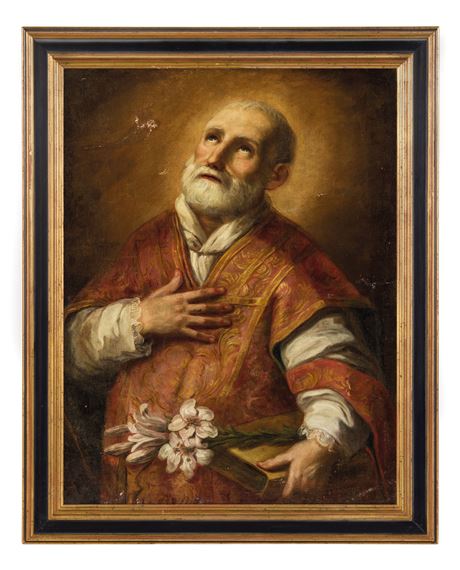
St. Philip Neri, Italian School, 18th c. (Source)

A Litany in Time of Plague

A depiction of the Madonna and Child with Patron Saints against the Plague. Colored engraving by T. Van Merlen. (Source)

“Is it my will that a sinner should die, saith the Lord God, and not that he should be converted from his ways, and live?” – Ezekiel 18:23 DRA.

In Nomine Patris et Filii et Spiritus Sancti, Amen.

Stella Caeli extirpavit, quae lactavit Dominum:
mortis pestem quam plantavit primus parens hominum.
Ipsa stella nunc dignetur sidera compescere
quorum bella plebem caedunt dirae mortis ulcere.
O piisima Stella Maris, a peste succurre nobis.
Audi nos, Domina, nam filius tuus nihil negans te honorat.
Salva nos, Jesu, pro quibus virgo mater te orat.

Kyrie Eleison
Christe Eleison
Kyrie Eleison

God the Father Almighty, Maker of Heaven and Earth, have mercy on us.
God the Son, Redeemer of the World, have mercy on us.
God the Holy Ghost, Sanctifier and Vivifier of All Things, have mercy on us.

Holy Mary, Mother God, pray for us.
Our Lady, Queen of Heaven, pray for us.
Our Lady of Sorrows, pray for us.
Our Lady, Help of Christians, pray for us.
Our Lady, Health of the Sick, pray for us.
Our Lady, Salvation of the Roman People, pray for us.
Our Lady, Star of the Sea, pray for us.
Our Lady, Untier of Knots, pray for us.
St. John the Baptist, pray for us.
St. Joseph, pray for us.
St. Mary Magdalene, pray for us.
St. Michael and All Angels, pray for us.
St. Thecla, pray for us.
St. Valerian, pray for us.
St. Corona, pray for us.
SS. Cosmas and Damian, pray for us.
St. Zacharias of Jerusalem, pray for us.
St. Roch, pray for us.
St. Sebastian, pray for us.
St. Christopher, pray for us.
St. Adrian, pray for us.
St. Blaise, pray for us.
St. Macarius of Ghent, pray for us.
St. Patrick, pray for us.
St. Pantaleon, pray for us.
St. Dymphna, pray for us.
St. Rosalia, pray for us.
St. Anthony of Egypt, pray for us.
St. Benedict, pray for us.
St. Gregory, pray for us.
St. Bernardine of Siena, pray for us.
St. Anthony of Padua, pray for us.
St. Philip Neri, pray for us.
St. John Nepomuk, pray for us.
St. Charles Borromeo, pray for us.
St. Camillus of Lellis, pray for us.
St. Aloysius Gonzaga, pray for us.
St. Damien of Molokai, pray for us.
St. Thérèse of Lisieux, pray for us.

O Sacred Heart, Furnace of Charity, have mercy on us.
Lamb of God, Who takest away the sins of the world, spare us, O Lord.
Lamb of God, Who takest away the sins of the world, graciously hear us, O Lord.
Lamb of God, Who takest away the sins of the world, have mercy on us.

O Crux, ave spes unica
hoc Passionis tempore!
Piis adauge gratiam
reisque dele crimina.

We beseech Thee O Lord, in Thy compassion, to turn away from Thy People Thy wrath, which indeed we deserve for our sins, but which in our human frailty we cannot endure; therefore embrace us with that tenderness which Thou art wont to bestow on the unworthy; through Jesus Christ our Lord.

Gloria Patri, et Filio, et Spiritui Sancto,
Sicut erat in principio, et nunc, et semper, et in saecula saeculorum.
Amen.

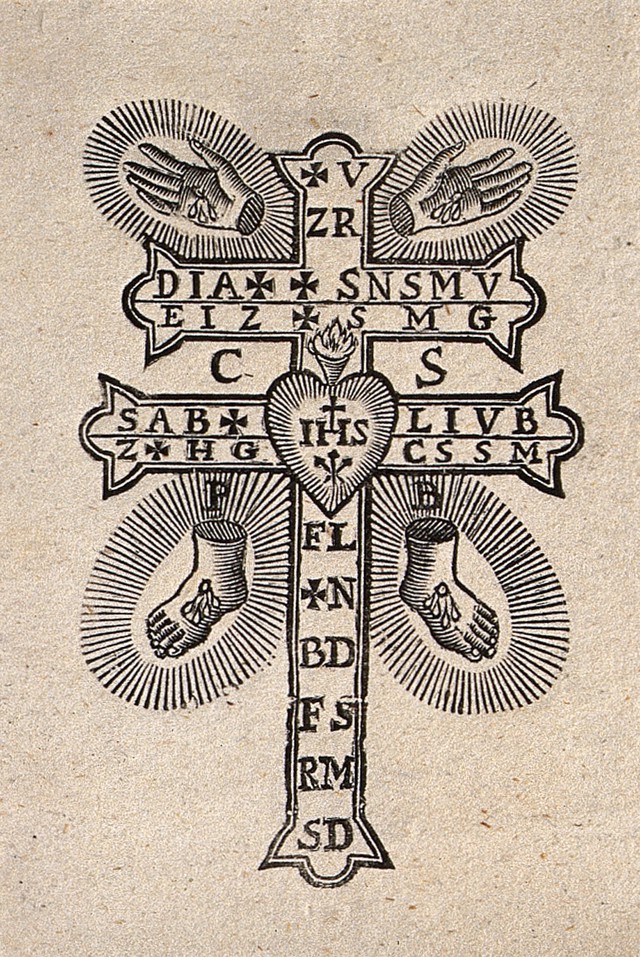
A plague cross. (Source)

Elsewhere: A Powerful Prayer of Deliverance

Our Lady of Angels

Icon of Our Lady of Angels. (Source)

Over at Vultus Christi, you can find a series of Chapter Talks on the Rule of Saint Benedict. Today’s commentary concludes with the story of a mighty prayer of deliverance given by the Blessed Virgin Mary to a French priest of the nineteenth century, Bl. Louis-Edoard Cestac. Here it is:

August Queen of Heaven, sovereign Mistress of the Angels, thou who from the beginning hast received from God the power and the mission to crush the head of Satan, we humbly beseech thee to send thy holy legions, that under thy command and by thy power they may pursue the evil spirits, encounter them on every side, resist their bold attacks, and drive them hence into eternal woe.

Who is like unto God?

O good and tender Mother, thou willest always to be our love and our hope.
O Mother of God, send thy holy Angels to defend us and drive far from us the cruel enemy.
Holy Angels and Archangels, defend us and keep us. Amen.

Go read the whole thing. In fact, all of the commentaries are edifying; read them all.

An Employment Triduo to St. Joseph

Recently, several people I know have been looking for jobs. Some were just fired. Others have had a long struggle seeking work. A few have been injured in ways that required them to take time off. All are in need of prayer.

Bearing these troubles in mind, I thought I would make a Triduo – a prayer of three days’ length – to St. Joseph the Worker, asking for his potent intercession, along with that of SS Anthony of Padua, Dymphna, Cecilia, John of God, Thomas More, Philip Neri, Thomas of Canterbury, Fiacre, and Martin of Tours. I hope my readers will join me in this intention.

The text comes from Bl. John Henry Newman’s Meditations and Devotions. I have also attached the Litany of St. Joseph for the last day.

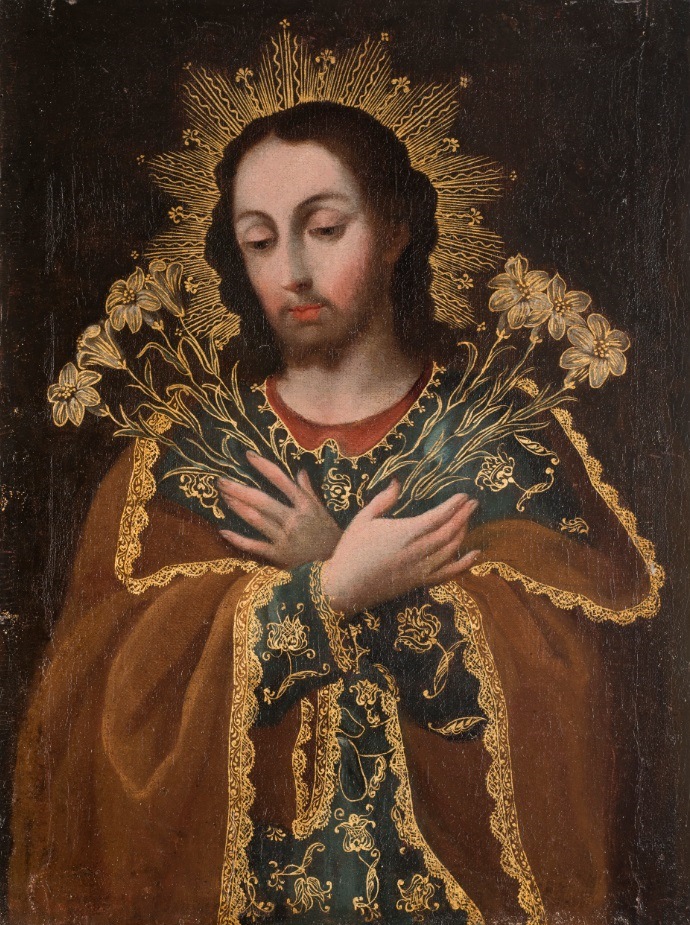
Cuzco-School-18th-century.jpog.jpg

St. Joseph, Ora Pro Nobis (Source)

A Triduo to St. Joseph

First Day
Consider the Glorious Titles of St. Joseph

He was the true and worthy Spouse of Mary, supplying in a visible manner the place of Mary’s Invisible Spouse, the Holy Ghost. He was a virgin, and his virginity was the faithful mirror of the virginity of Mary. He was the Cherub, placed to guard the new terrestrial Paradise from the intrusion of every foe.

V. Blessed be the name of Joseph.
R. Henceforth and forever. Amen.

LET US PRAY

God, who in Thine ineffable Providence didst vouchsafe to choose Blessed Joseph to be the husband of Thy most holy Mother, grant, we beseech Thee, that we may be made worthy to receive him for our intercessor in heaven, whom on earth we venerate as our holy Protector: who livest and reignest world without end. Amen.
(Vide “The Raccolta.”)

Second Day
Consider the Glorious Titles of St. Joseph

His was the title of father of the Son of God, because he was the Spouse of Mary, ever Virgin. He was our Lord’s father, because Jesus ever yielded to him the obedience of a son. He was our Lord’s father, because to him were entrusted, and by him were faithfully fulfilled, the duties of a father, in protecting Him, giving Him a home, sustaining and rearing Him, and providing Him with a trade.

V. Blessed be the name of Joseph.
R. Henceforth and for ever. Amen.

LET US PRAY

God, who in Thine ineffable Providence didst vouchsafe, &c.

Third Day
Consider the Glorious Titles of St. Joseph

He is Holy Joseph, because according to the opinion of a great number of doctors, he, as well as St. John Baptist, was sanctified even before he was born. He is Holy Joseph, because his office, of being spouse and protector of Mary, specially demanded sanctity. He is Holy Joseph, because no other Saint but he lived in such and so long intimacy and familiarity with the source of all holiness, Jesus, God incarnate, and Mary, the holiest of creatures.

V. Blessed be the name of Joseph.
R. Henceforth and for ever. Amen.

LET US PRAY

God, who in Thine ineffable Providence didst vouchsafe, &c.

The Litany of Saint Joseph

 For public or private use.

Lord, have mercy on us.
Christ, have mercy on us.
Lord, have mercy on us.
Christ, hear us.
Christ, graciously hear us.
God the Father of Heaven, Have mercy on us.
God the Son, Redeemer of the world, Have mercy on us.
God the Holy Spirit, Have mercy on us.
Holy Trinity, One God, Have mercy on us.
Holy Mary, pray for us .
Saint Joseph, pray for us.
Illustrious son of David, etc.
Light of the patriarchs,
Spouse of the Mother of God,
Chaste guardian of the Virgin,
Foster-father of the Son of God,
Watchful defender of Christ,
Head of the Holy Family,
Joseph most just,
Joseph most chaste,
Joseph most prudent,
Joseph most valiant,
Joseph most obedient,
Joseph most faithful,
Mirror of patience,
Lover of poverty,
Model of workmen ,
Glory of domestic life,
Guardian of virgins,
Pillar of families,
Solace of the afflicted,
Hope of the sick,
Patron of the dying,
Terror of demons,
Protector of Holy Church,

Lamb of God, Who takest away the sins of the world,
Spare us, O Lord.
Lamb of God, Who takest away the sins of the world,
Graciously hear us, O Lord.
Lamb of God, Who takest away the sins of the world,
Have mercy on us.

V. He made him the lord of His household,
R. And prince over all His possessions.

Let Us Pray.

O God, Who in Thine ineffable providence didst choose Blessed Joseph to be the spouse of Thy most Holy Mother, grant that as we venerate him as our protector on earth, we may deserve to have him as our intercessor in Heaven, Thou Who livest and reignest forever and ever. R. Amen.


A Benedictine Prayer to St. Philip Neri in Lenten Time

gueranger4-150dpi

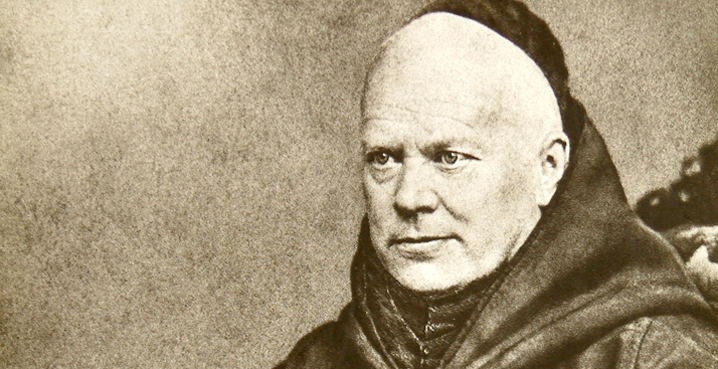
Ven. Dom Prosper Guéranger. (Source)

Many of my readers will know the Venerable Dom Prosper Guéranger (1805-1875) for his monumental work of sacramentology and liturgical exegesis, The Liturgical Year. I happened to be perusing a 1908 French edition of the text and came upon Dom Guéranger’s homage to St. Philip Neri in Volume 3 of his Easter writings. Naturally, this discovery was of great interest to me, as I have written before on the similarities between the Oratorian and Benedictine vocations. I thus present to you my own translation of the prayer, found on pages 548-50 in the edition I was using. I hope it may be thought a fair translation of the great monk’s words. At any rate, I have tried to render his prayer in an elevated style worthy to the subject.

Thou didst love the Lord Jesus, O Philip, and thy whole life was nothing but a continuous act of love; but thou didst not wish to enjoy the highest good alone. All thine efforts tended to make Him known by all men, such that all might love Him with thee and thus reach their supreme end. For forty years, thou wast the indefatigable apostle of the holy city, and nothing could subtract from the action of the divine fire that burned in thee. We who are the posterity of those who heard thy words and admired the celestial gifts in thee, we dare to beg of thee to cast thy gaze upon us as well. Teach us to love our Jesus resurrected. It does not suffice for us to adore Him and to rejoice in His triumph; we must love Him: for the train of His mysteries from His Incarnation to His Resurrection have no other aim but revealing to us, in an ever growing light, His divine kindness. It is by loving him ever more that we shall succeed in elevating ourselves to the mystery of His Resurrection, which fulfills in us the revelation of all the riches of His heart. The more He lifts Himself into the new life that He won in leaving His tomb, the more He appears full of love for us, and the more He desires that our hearts should be joined with His. Pray, O Philip, and beg that “our heart and our flesh might quake for the living God” [Ps. 83:2]. After the mystery of Easter, introduce us to that of the Ascension; dispose our hearts to receive the divine Spirit of Pentecost; and when the august mystery of the Eucharist shines before our eyes with all its fires in the solemnity that approaches, thou, O Philip, who didst celebrate it one last time here below, who didst rise at the end of the day to that eternal rest where Jesus shows Himself unveiled, do thou prepare our souls to receive and to taste “the living bread which giveth life to the world” [John 6:33].

The sanctity that shone in thee, O Philip, had as its character the momentum of thy soul towards God, and all those who approached thee soon participated in this disposition that alone could respond to the call of the divine Redeemer. Thou didst know that thou took hold of souls, and thou drovest them to perfection by the way of trust and generosity of heart. In this great work thy method was never to have any method at all, imitating the Apostles and the ancient Fathers, and thou didst trust in the virtue proper to the word of God. By thee the fervent frequenting of the sacraments reappeared as the surest sign of the Christian life. Pray for the faithful, and come to the aid of so many souls who grow restless and exhaust themselves in the paths that the hand of man hast traced, and that too often retard or prevent the intimate union of Creator and creature.

Thou didst most ardently love the Church, O Philip; and this love of the Church is the indispensable sign of sanctity. Thine elevated contemplation did not distract thee from the dolorous lot of this holy Bride of Christ, so tested in the century when thou wast born and died. The efforts of triumphant heresy in so many countries enkindled zeal in thy heart: obtain for us from the Holy Ghost this living sympathy for Catholic Truth that renders us sensible to its defeats and victories. It does not suffice for us to save our souls; we must desire with ardor and aid with all our means the advancement of the Reign of God on earth, the extirpation of heresy, and the exaltation of our mother the holy Church: it is in this condition that we are children of God. By thine examples, O Philip, inspire in us this ardor by which we must totally associate ourselves with the sacred interests of our common mother. Pray as well for the Church Militant which counted thee in her ranks as one of her best soldiers. Serve valiantly the cause of Rome, which holds as an honor the debt owed to thee for so many of thy services. You sanctified her during thy mortal life; hallow her again and defend her from heaven on high.

sc1119.jpg

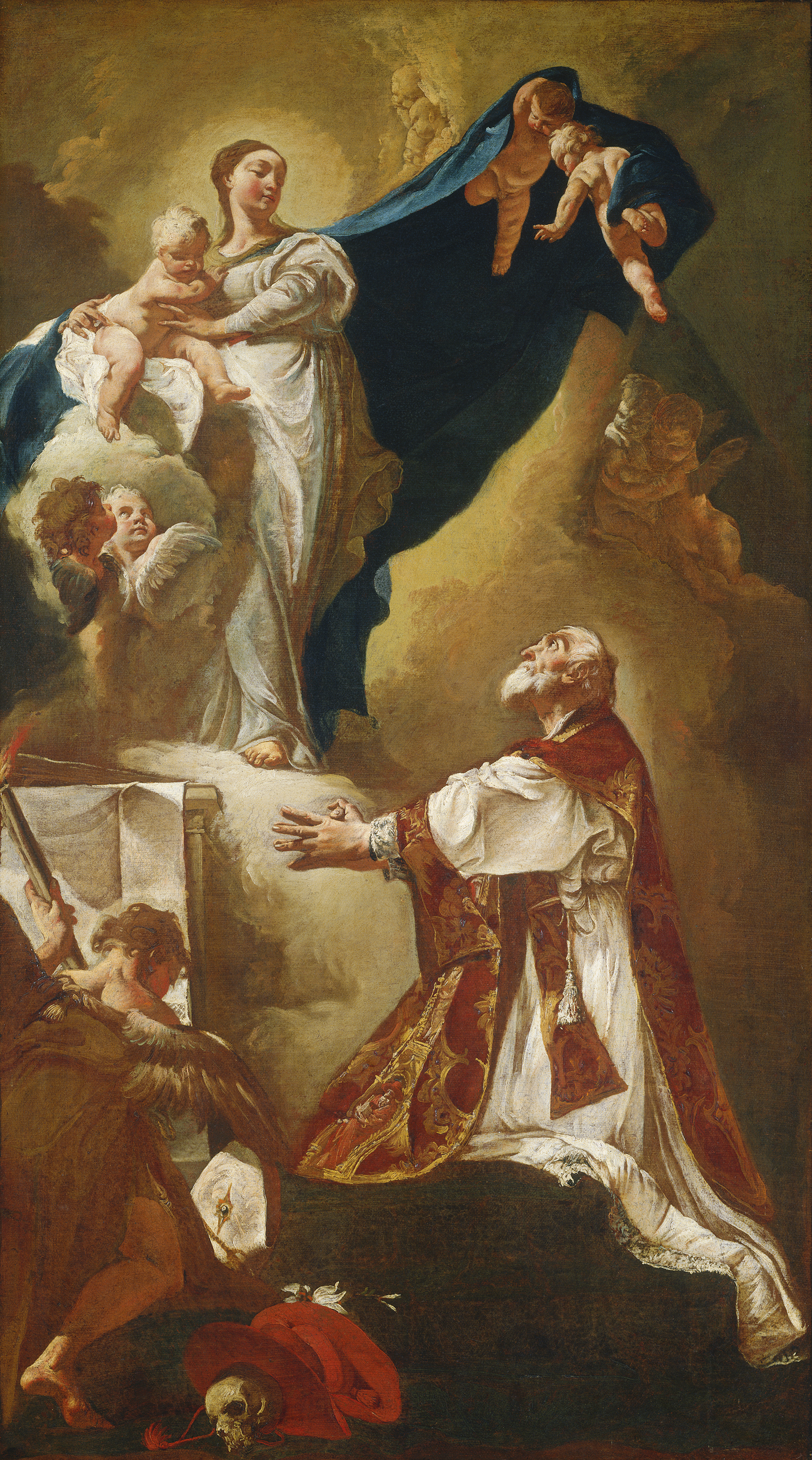
Madonna and Child Appearing to St. Philip Neri, Giovanni Battista Piazzetti, c. 1725. (Source)