New Chant from Silverstream

“In the midst of life we are in death” (Source)

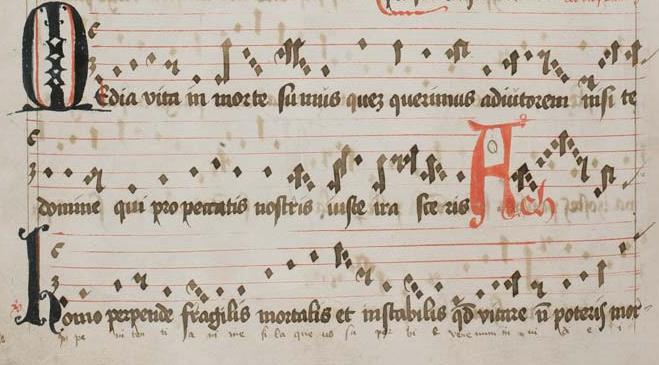
I must refer my readers to a new recording of some Gregorian chant from Silverstream Priory. The beautiful responsory, Media Vita, is very timely during this pandemic. Here is the translation, passed on by the Prior:

In the midst of life we are in death; from whom shall we seek help, save Thee, O Lord? Who for our sins art justly angered. * Holy God, Holy mighty One, Holy merciful Saviour, hand us not over to the bitterness of death.

1. In Thee our fathers hoped; they hoped, and Thou hast liberated them. * Holy God, Holy mighty One, Holy merciful Saviour, hand us not over to the bitterness of death.

2. To Thee our fathers cried; they cried and were not confounded. * Holy God, Holy mighty One, Holy merciful Saviour, hand us not over to the bitterness of death.

3. Glory be to the Father, and to the Son, and to the Holy Ghost. * Holy God, Holy mighty One, Holy merciful Saviour, hand us not over to the bitterness of death.

Translation of the Media Vita

I know I speak for the monks when I encourage you to give it a listen and take some comfort from this ancient prayer of the Church in a time when death is all around.

I would particularly note the highly idiosyncratic harmonic arrangement used here. I have not heard any other renditions of this chant like it. I grew up listening to the Benedictines of Santo Domingo do Silos, and although I like their hauntingly pure Media Vita, the Silverstream version has a complexity and depth that feels very different, if just as moving.

The accompanying film is also of very high quality. I have known the monks of Silverstream for six years. This is by far the best video I’ve seen from them. It does a good job capturing the peculiar beauty of that monastery in Springtime, as well as the powerful sense of holiness that radiates throughout the house and grounds from the Blessed Sacrament. And for those who care about such things, there’s a lovely conical requiem chasuble from 3:23 on.

Give it a listen, and please consider supporting the monks through a donation or by shopping at their excellent online store. The monks are streaming their masses and some of their offices throughout this crisis, and I recommend following them for what will no doubt be a stirring and holy Paschal Triduum (albeit at a distance).

The Funerary Rites of James II

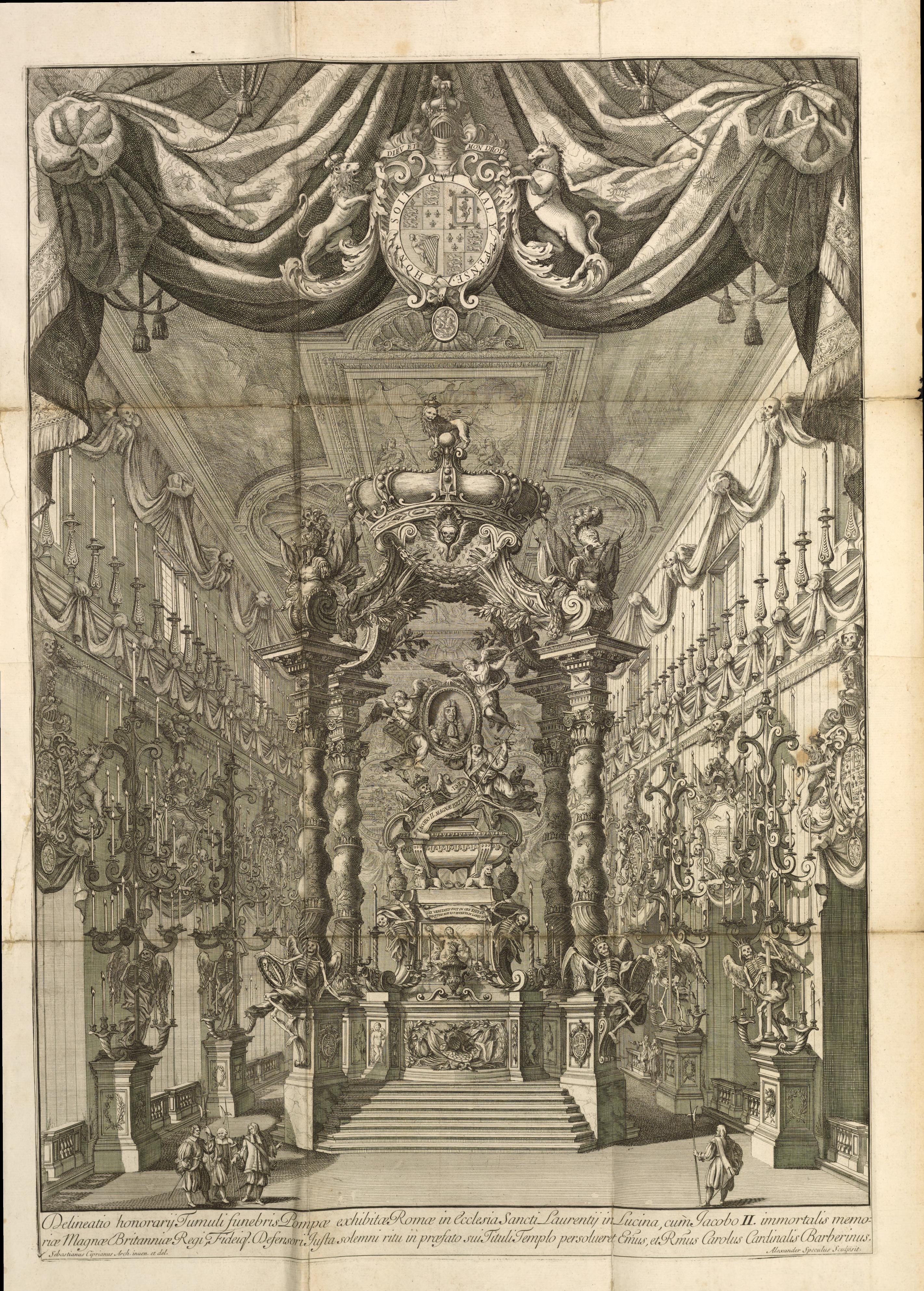
sacraexequialiai00aqui_00062.jpg

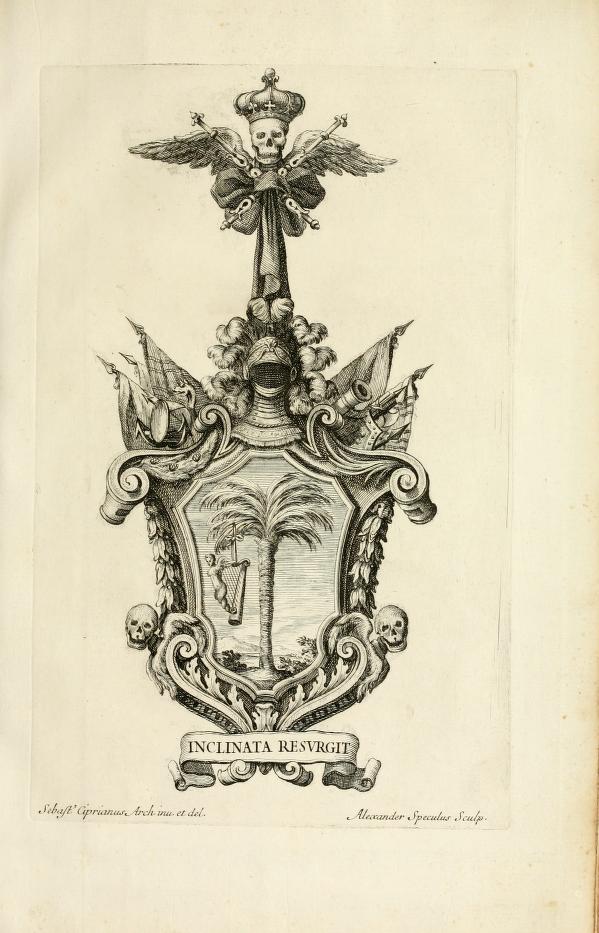
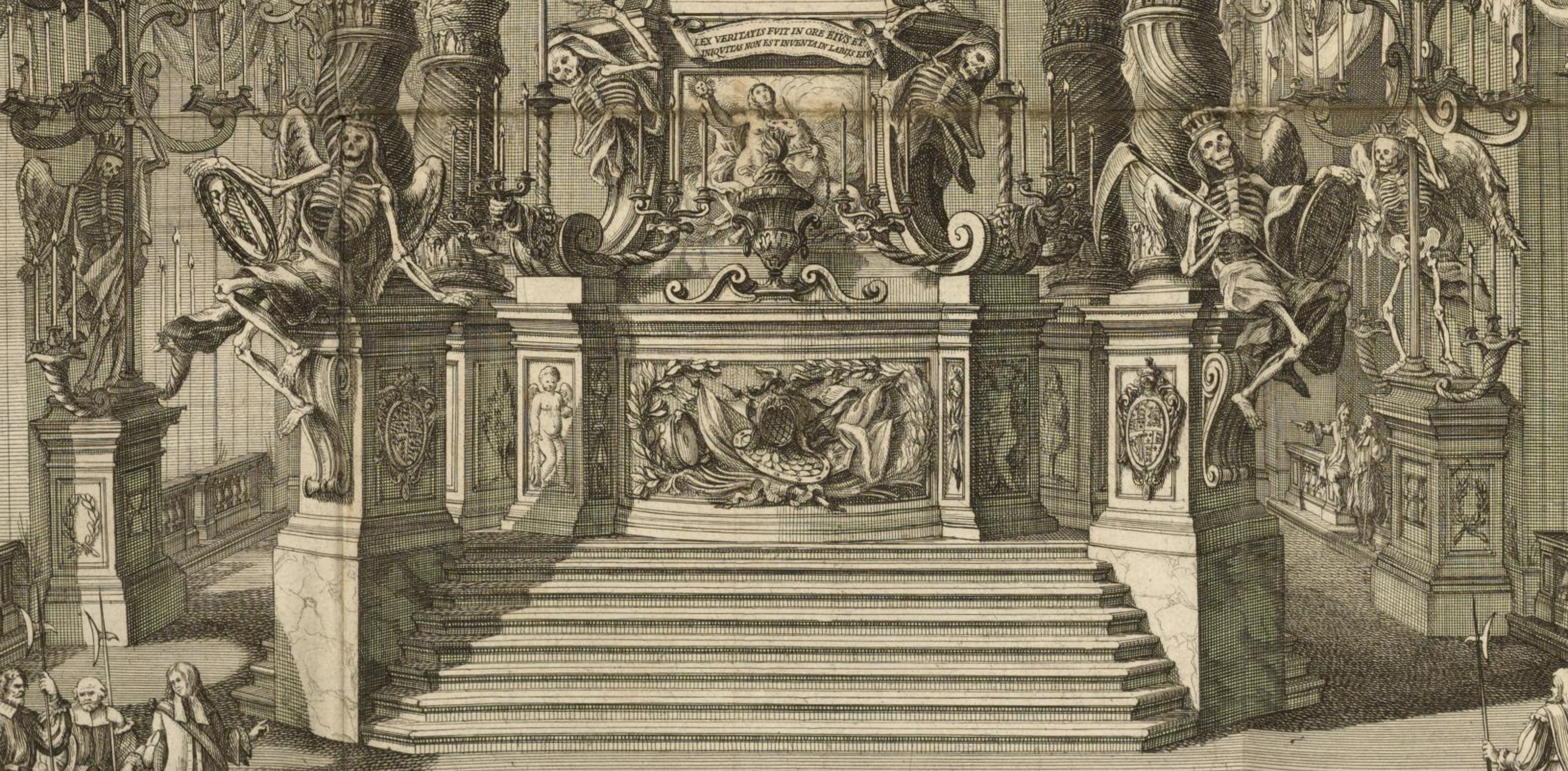
Frontispiece of the Sacra Exequialia. Note the skeletons at the base of the candelabra and baldachin columns. (Source)

A forgotten Latin text of 1702, the Sacra Exequialia in Funere Jacobi II, provides some wonderful views of early modern Catholic funerary rites. Or at least, as those rites were employed for dead monarchs. The central text is Cardinal Barberini’s funeral oration for the king at Rome. Fun fact: if you Google “Exequialia,” it’s the first and one of the only results. While it may not be a hapax legomenon, it’s the sort of rare word that makes epeolaters and logophiles drool.

At any rate, I’m not writing this post because of Barberini’s text. The book’s more delicious feature is its several illustrations, including the wild Baroque decoration of the church of San Lorenzo in Lucina as well as several emblems.

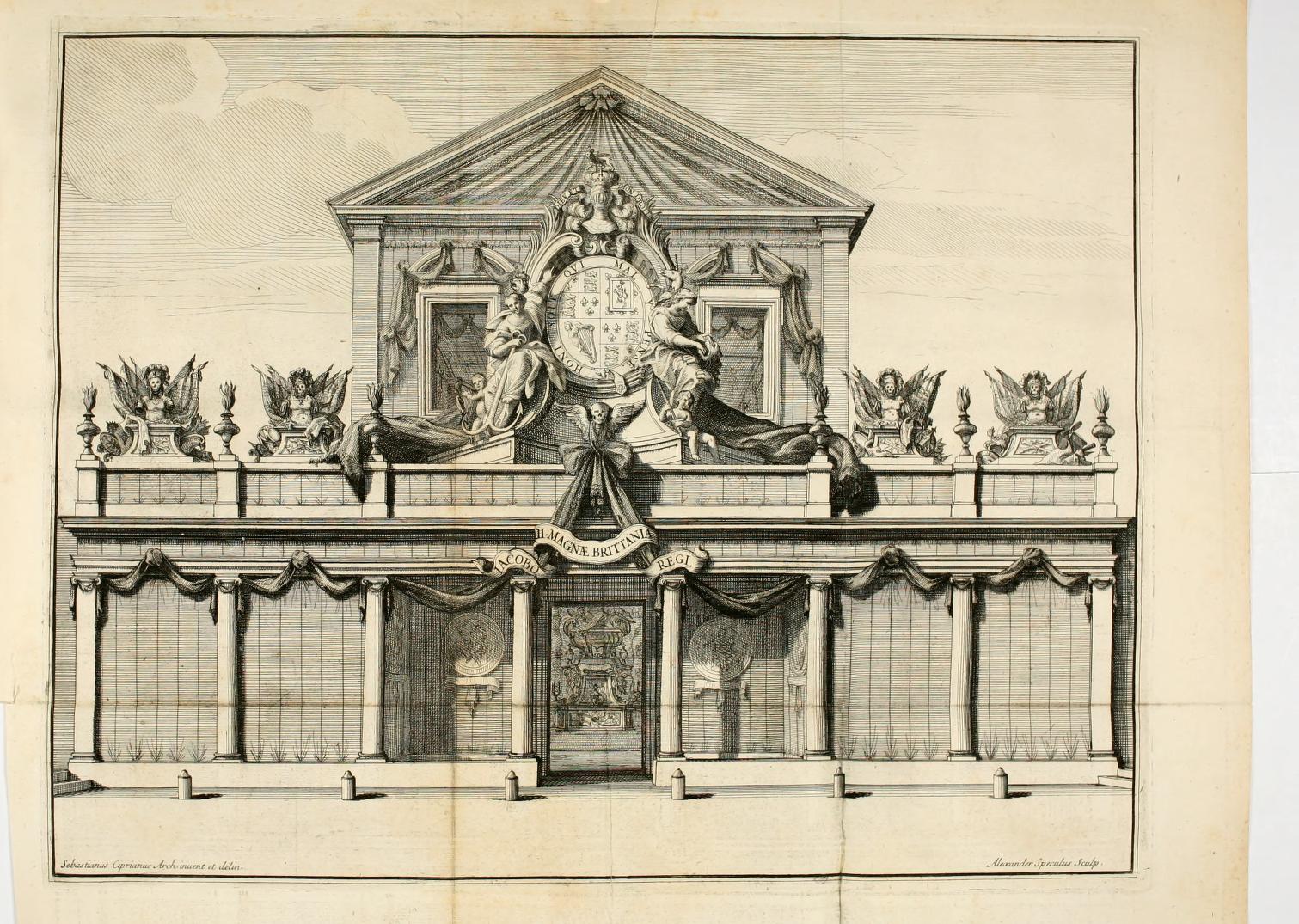
sacraexequialiai00aqui_0032

The decorations of San Lorenzo in Lucina for the occasion. (Source)

Of course, James II died in Paris and buried in the English Benedictine church there. It is a testament to the respect he was held in by the Papal court that a Cardinal of such standing as Carlo Barberini, Archpriest of the Vatican Basilica, should preach an oration for him in Rome.

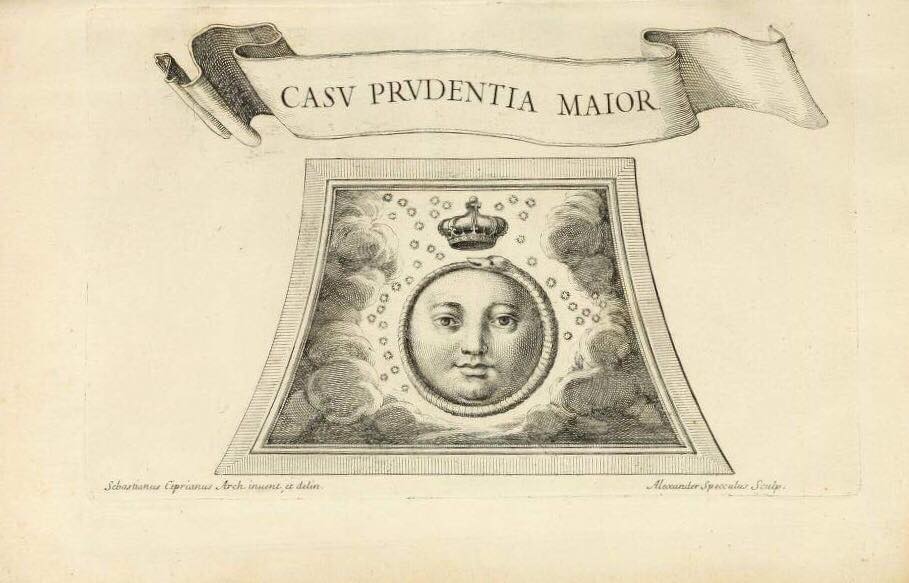
SacraExequialiaSunOurobouros

One of the marvellous emblems in the text. Note the Ouroboros. (Source)

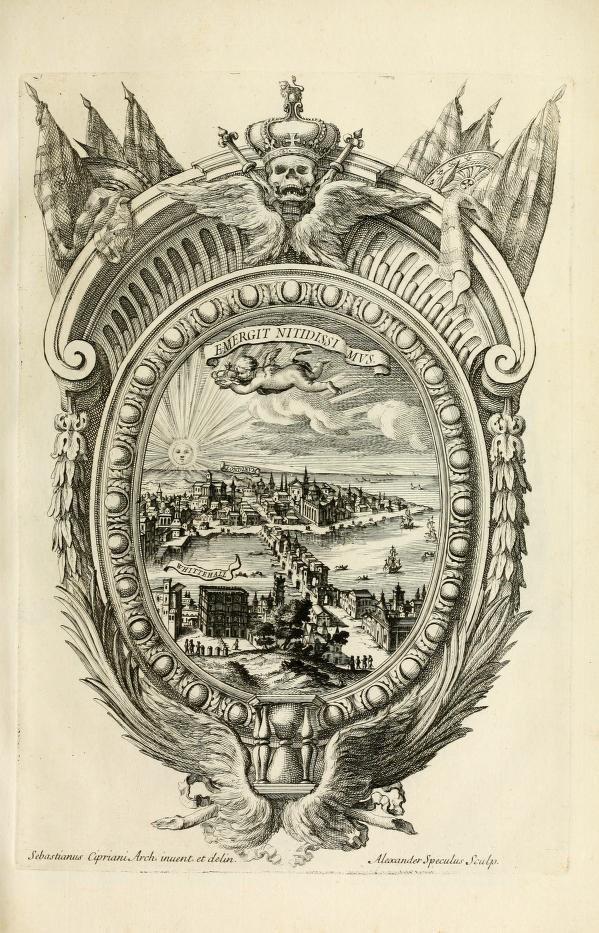
sacraexequialiai00aqui_0041

An image of London. There are similar views of Paris and Rome. All were at hung at the high altar behind the catafalque and its baldachin. (Source)

sacraexequialiai00aqui_0061

Another moral emblem. I’m particularly fond of this one as the harp recalls not only the exile in Babylon (and thus the Jacobite exile) but also the valiant Irish defense of James’s claim to the throne in 1689. These also would have adorned the walls of the church alongside the King’s arms. (Source)

sacraexequialiai00aqui_0066

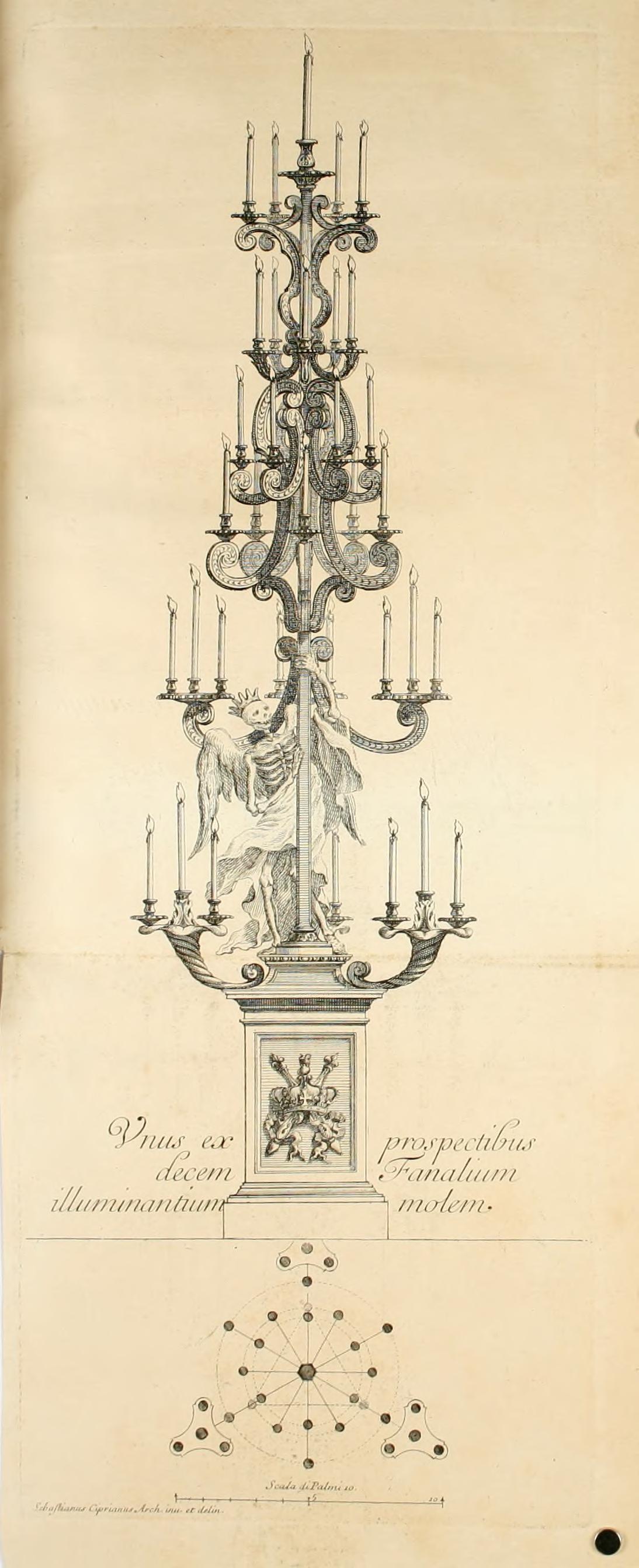
A closer view of the skeletal flambeaux. One can never have too many at a funeral. (Source)

Screen Shot 2018-11-02 at 10.07.34 AM.png

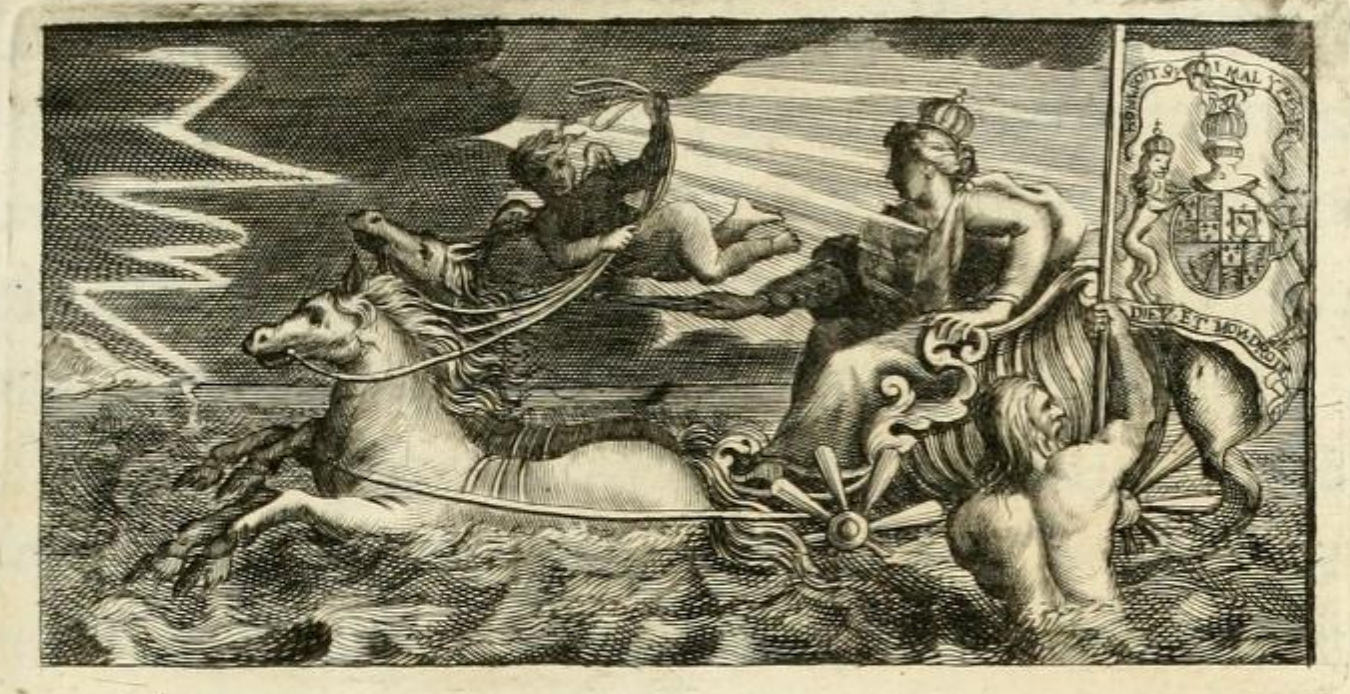
Jacobite emblem accompanying the text of the Oration. (Source)

Screen Shot 2018-11-02 at 10.10.05 AM.png

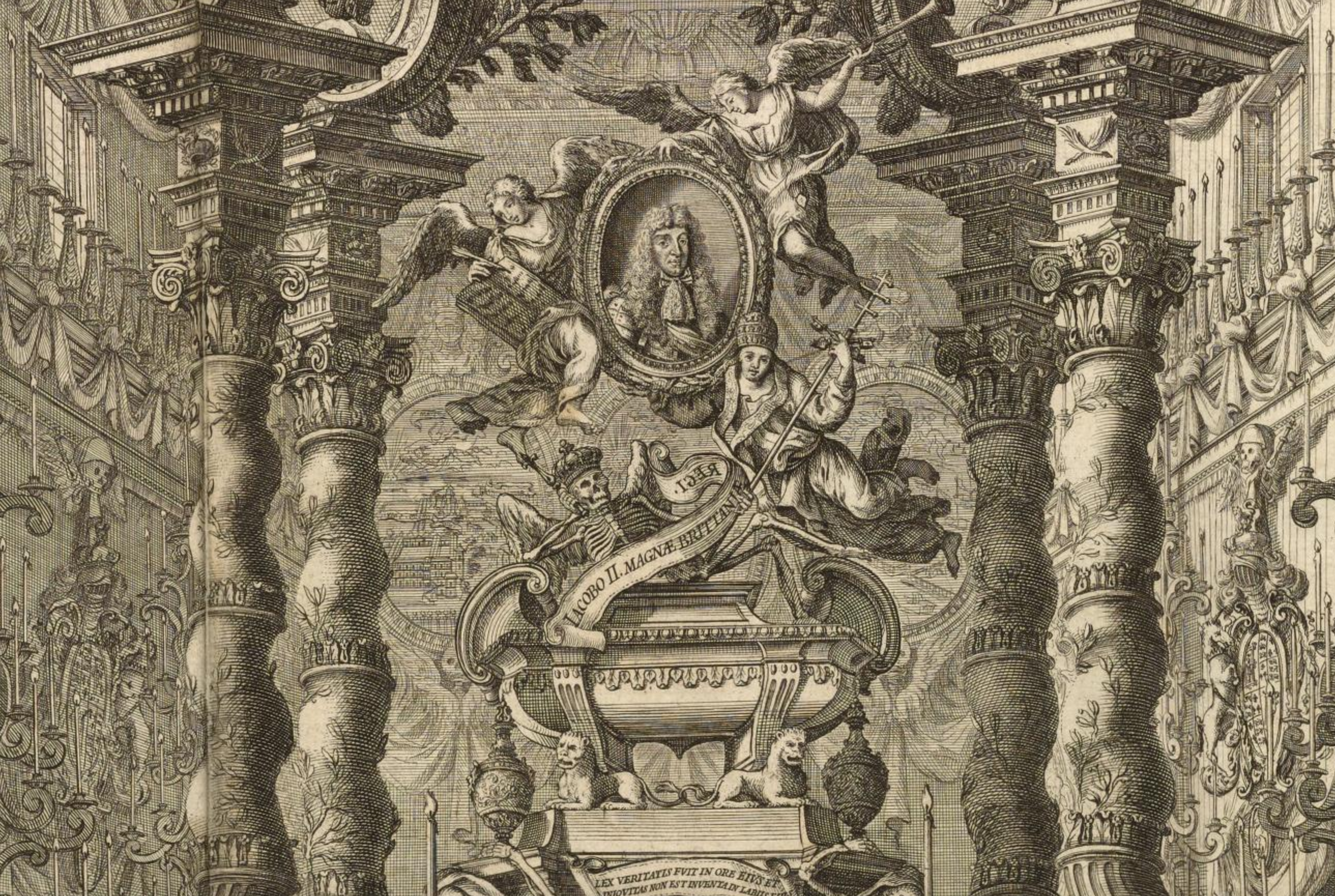
A closer view of the frontispiece. Note the Pope flying over the catafalque. (Source)

Screen Shot 2018-11-02 at 10.12.19 AM.png

Here you can see the spooky scary skeletons all around the room. (Source)


The Charism of Eccentricity

A-Priestridden-Village-BM

The 18th century was a Golden Age of clerical satire – and clerical eccentricity – in England. (Source)

What a day of loons it has been. After discovering the narrative of that wandering bishop which I brought to my readers’ attention earlier this afternoon, I have since come across two wonderful articles about the venerable tradition of eccentricity in the Church of England. The first is over at the Church Times. The Rev. Fergus Butler-Gallie, a curate in Liverpool, has written a book entitled A Field Guide to the English Clergy (One World Press, 2018). In his article at the CT, Butler-Gallie provides a taste of what is assuredly a very fun book indeed. Take just one of the bizarre figures he profiles:

William Buckland, a Victorian Dean of Westminster, became obsessed with eating as many animals as possible, from porpoise and panther to mole fricassee and mice on toast, even managing to gobble up the mummified heart of King Louis XIV while being shown round the Archbishop of York’s stately home.

He was no fool, though. The first person ever to excavate an entire dinosaur skeleton (although he was more interested in other prehistoric remains, writing on a desk made out of dinosaur faeces), he once disproved a supposed miracle in France by being able to prove (by taste, of course) that a supposed saint’s blood was, in fact, bat urine.

Or consider this parson:

The Revd Thomas Patten was a real-life Dr Syn, helping to run a smuggling operation on the north-Kent coast. Patten would preach interminably boring sermons until a parishioner held up a lemon, a sign that someone had agreed to buy his drinks for the evening at the tavern opposite, at which point he managed to terminate the service with astonishing alacrity (a ruse, I’m sure, no clergy reading this would even consider replicating).

If the rest of the book is as fascinating at these anecdotes suggest, it will be a classic in no time – right up there with Loose Canon and The Mitred Earl. Apparently it’s been getting rave reviews. (I’ll add that if any of you are looking for a Christmas gift for your favorite Catholic blogger, it’s going for under £10 at Amazon).

Today I also came across an article about one of Butler-Gallie’s subjects, the Rev. R.S. Hawker, also known as the “Mermaid of Morwenstow.” Alas, as I am not a subscriber to The Spectator, I cannot read it. Those who can are encouraged to do so.

One of my favorite clerical eccentrics whom I doubt that Butler-Gallie covers is the Rev. William Alexander Ayton, vicar of Chacombe in Oxfordshire.  You can read more about him in my article, “On the Wings of the Dawn – the Lure of the Occult.”

Though of course there are few stories of clerical eccentricity as amusing as the infamous dinner related by Brian Fothergill in his life of Frederick Hervey, Bishop of Derry. Fothergill tells us that

On one occasion when a particularly rich living had fallen vacant he invited the fattest of his clergy and entertained them with a splendid dinner. As they rose heavily from the table he proposed that they should run a race and that the winner should have the living as his prize. Greed contending with consternation the fat clerics were sent panting and purple-faced on their way, but the Bishop had so planned it that the course took them across a stretch of boggy ground where they were all left floundering and gasping in the mud, quite incapable of continuing. None reached the winning-point. The living was bestowed elsewhere and the Bishop, though hardly his exhausted and humiliated guests, found the evening highly diverting. (The Mitred Earl, 27).
Ballyscullion

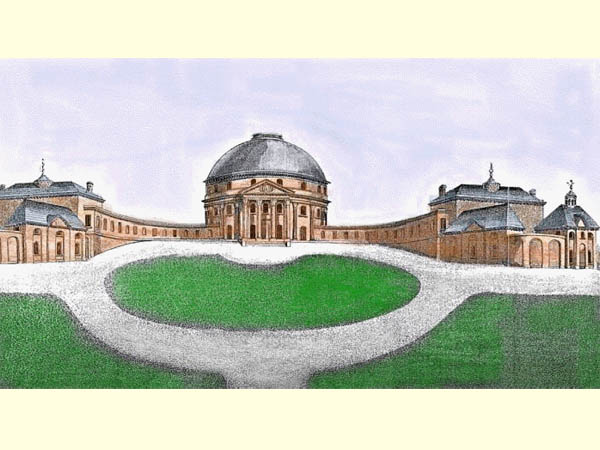
Hervey also built what must have been one of the greatest gems of British Palladian architecture, Ballyscullion House. Alas, it is no longer extant, but has been reduced to a respectable if far less elaborate mansion. (Source) For a 3D model, see here.

If there’s one thing for certain, it’s that Anglicanism as lived in history is not a dry religion.

Allow me to indulge in a bit of crude cultural observation. It occurs to me that the national church of the English would inevitably partake of that quintessential English quality – eccentricity. Americans don’t produce real eccentrics. We breed individualists and, less commonly, outright weirdos. But the great British loon is mostly unknown to us. Eccentricity requires a certain localism, even an urban one, that has been mostly lost in the sprawling homelands of the American empire. Suburbs don’t produce eccentrics.

And more to the point, why should strangeness be so unwelcome in the Church? Why should the Church be bland and conformist and comfortable? Why must we labor on through the nauseatingly boring bureaucratic lingo and platitudinous sound-bites that so often seem to make up the bulk of our ecclesisatical discourse? Where is the sizzling fire cast to earth? Where is the light and heat of the Holy Ghost? In reviewing the proceedings of the recent Youth Synod, I was dismayed to find so little that genuinely spoke of the sacred. It so often seems that our Bishops are more interested in crafting a Church of the self-righteous liberal bourgeoisie than they are in the Church that Jesus left to His Apostles.

Eccentricity may not be a strategy, but it’s at least has the potential to become a reminder that the supernatural reality is completely other. As that Doctor of the Church, David Lynch, once said, “I look at the world and I see absurdity all around me. People do strange things constantly, to the point that, for the most part, we manage not to see it.” Well, God does far stranger things far more often than we do. Eccentrics – especially the Fools for Christ – can speak to that.

Butler-Gallie gets at this well in his article when he writes,

Church of England with more rigour and vigour might have its appeal, but the evangelising potential of the strange increasingly appears to be a casualty of the drive to be more, not less, like the world around us. An embracing of our strangeness, failings, and folly might free us to eschew conversion via tales of our usefulness — be that in pastoral wizardry, wounded healing, or nifty management speak — and, instead, “impress people with Christ himself”, as suggested by Ignatius of Antioch (who, though not an Anglican, did share his fate with the 1930s Rector of Stiffkey, both being eaten by a lion).

…Perhaps less strangeness is a good thing. It is certainly an easier, safer thing from the bureaucratic and behavioural point of view. I’m more inclined, however, to agree with J. S. Mill — hardly a friend of the Church of England — who suggested that “the amount of eccentricity in a society has generally been proportional to the amount of genius, mental vigour, and moral courage it contained. That so few dare to be eccentric marks the chief danger of our time.” Or, to put it another way, a Church that represses its strangeness is one that is not more at ease with itself and the world, but less.

I can only applaud this point. Ross Douthat said much the same in my own communion when, in response to the Met Gala last Spring, he suggested we “Make Catholicism Weird Again.” Or what Fr. Ignatius Harrison CO was getting at when he gave that wonderful sermon on St. Philip Neri’s downright oddity. And though Flannery O’Connor may never have actually said it, I can’t help but agree that “You shall know the Truth, and the Truth shall make you odd.” Indeed, my readers will know that I have hammered on about this point ad nauseum. Butler-Gallie’s writing encourages me to keep at it until we in the Christian West more widely recognize the charism of eccentricity.
MitredMinuet

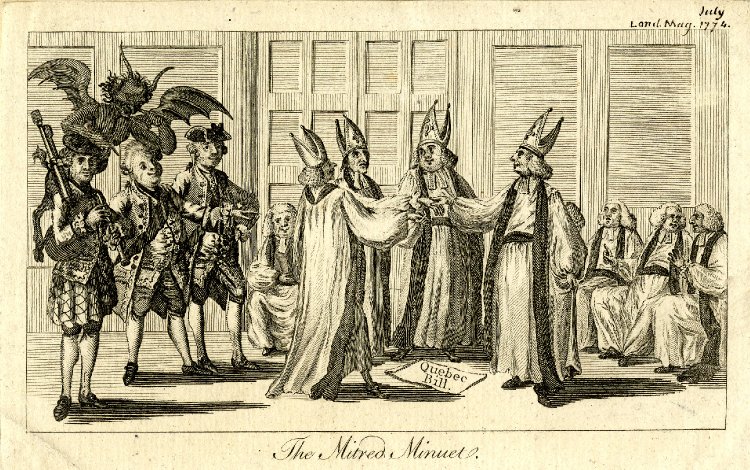
Prelates dancing to the Devil’s music. (Source)
The Best Monastic Documentaries

The monastic life is about as far as one can get from the flashy world of the entertainment industry. And yet, it has been the subject of some very good documentaries over the last fifteen years or so. For those curious about the various monks (and nuns) of the world, I thought I would provide a list of a few films with which to start.

Into Great Silence (2006)

Screen Shot 2018-05-16 at 10.05.16 PM.png

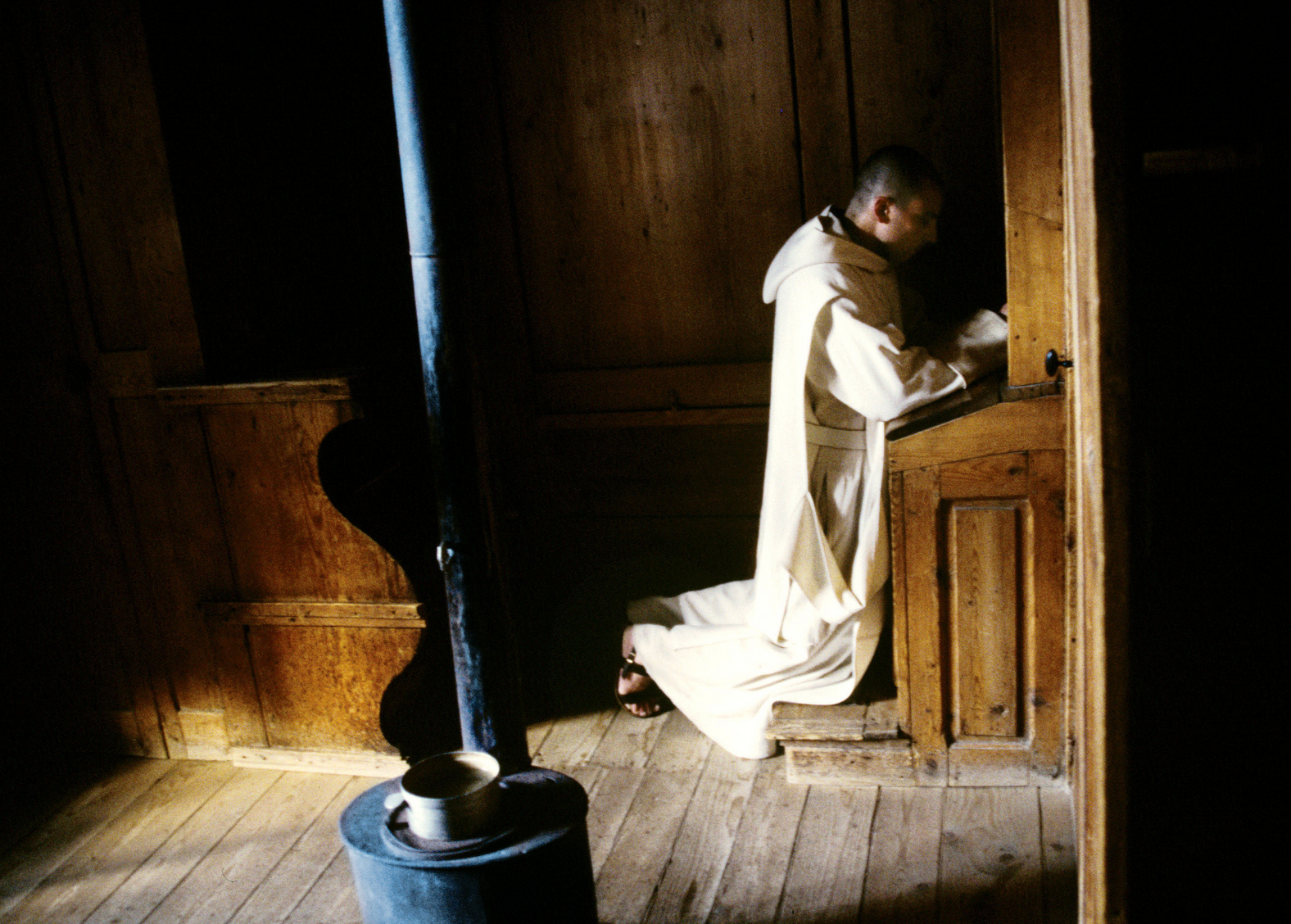
A Carthusian prays in his cell, from Into Great Silence (Source)

This stirring art film by Philip Gröning was produced over several years. Every shot is deeply meditative. We, the viewers, are drawn into a contemplative pose along with the monks themselves. As might be expected, there is very little dialogue – indeed, very little sound at all. We get a powerful sense of the holy silence that envelops the Carthusians of La Grande Chartreuse. Yet when the monks do speak, such as in an interview with an ancient, blind monk that comes towards the end of the film, the words mean something. The chant of the night office given prominent place in the film evokes all the centuries of virtually unchanged monastic life that have come down to us from St. Bruno. This film is hands down the most important and most spiritually insightful documentary about monasticism, and it has continued to exert a powerful influence on most such documentaries since.

Veilleurs dans la nuit (2011)

LeBarrouxMass

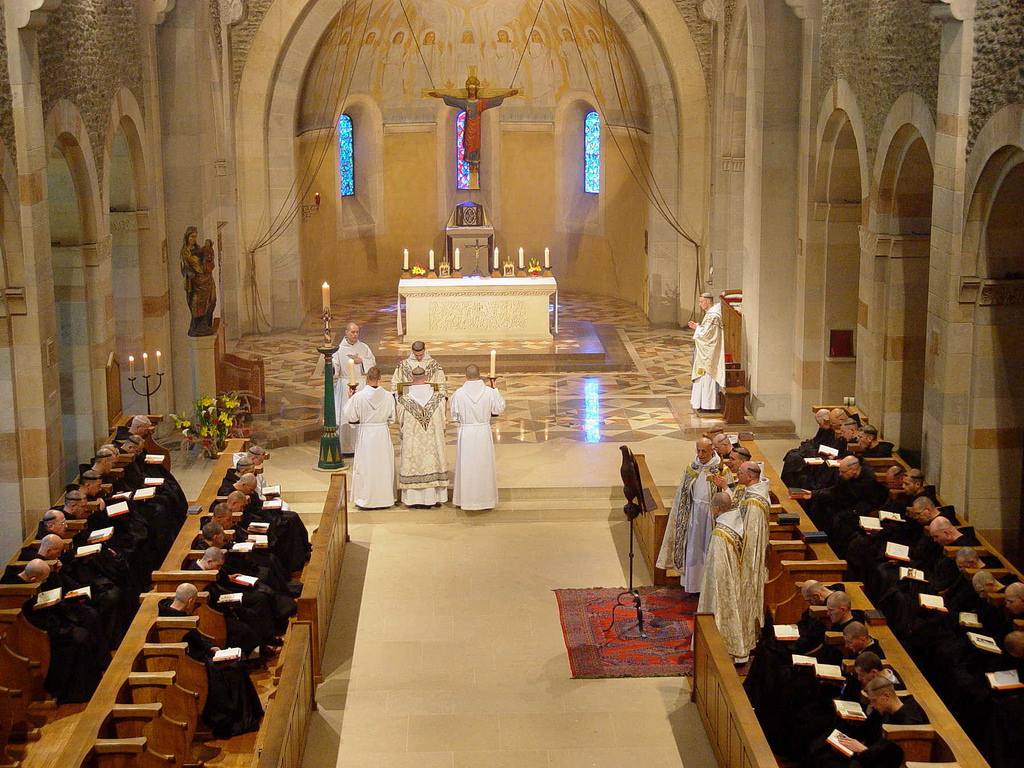
A liturgy at Le Barroux (Source)

The monastery of Sainte Marie-Madeleine du Barroux, founded in the wake of the Second Vatican Council, preserves much of the great tradition of French Benedictine life. It is one of the very few monasteries on earth which has preserved the form of tonsure once known as “the monastic crown.” It is also famous for its grand and elegant celebration of the liturgy, as well as the great holiness of its founder, Dom Gérard Calvet. This French documentary does a good job depicting their life through a mix of commentary and interviews. It is of an entirely different style than Into Great Silence, but it relates more actual information about the monks themselves.

Quaerere Deum (2011)

NorciaBeer

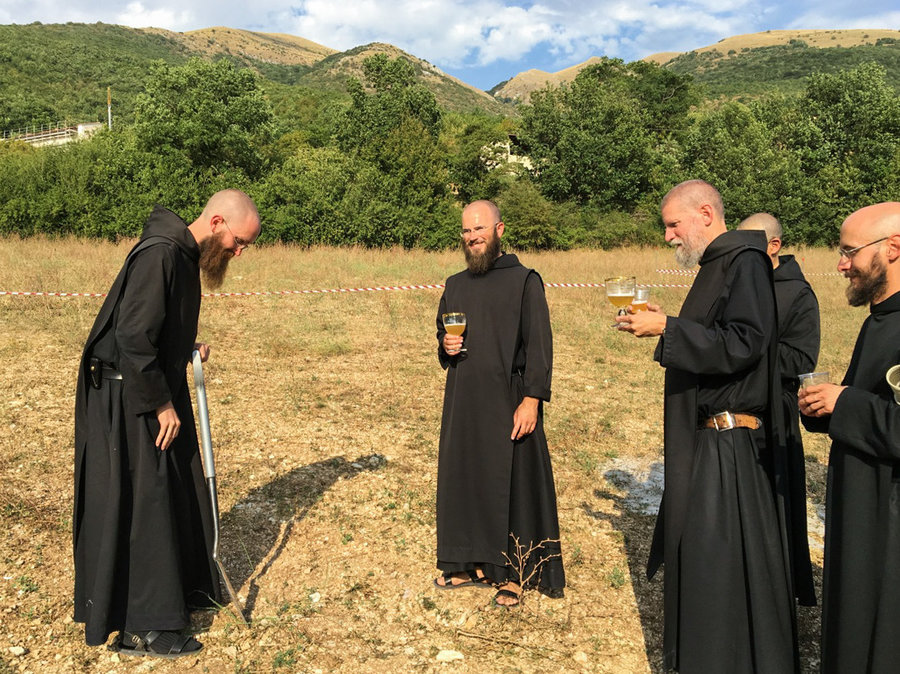
Some of the monks of Norcia with their famous beer (Source)

Filmmaker Peter Hayden of Wilderland Media has done some great and poetic work publicizing the various new monasteries founded in the old world by Americans. The first of these was the Monastero di San Benedetto in Norcia, established in 2000. It is only appropriate then that Hayden should have looked at them first. He produced a “day in the life” style documentary bearing clear influences from Into Great Silence. The slow pace, lack of commentary, and meditative minimalism all recall the best parts of that earlier work. Norcia itself – or what it was before the terrible earthquake of 2016 destroyed much of the town – emerges as a living community “seeking God.” A subdued sense of joy shines throughout.

Benedictine Monks, Ireland (2017)


BrJBAdoration

Br. John Baptist in adoration before the Blessed Sacrament, Silverstream. Photo taken by the author.

Peter Hayden’s second work on the monastic renewal is a more obviously promotional piece of filmmaking than Quaerere Deum. A profile of Silverstream Priory, Benedictine Monks, Ireland depicts the community life of adoration and reparation led by the monks there. Scenes from Mass, chapter, and refectory alternate with candid shots of the monks at work and leisure. Interviews with the Prior and Subprior provide spiritual as well as historical context. As someone who knows the monks personally, I found it a pretty good exposition of their spirit. That peculiarly Benedictine sense of place is evoked through gentle Irish music at various points. And the combined wisdom of Dom Mark and Dom Benedict is a great grounding to the beautiful visuals. I was very taken with the image of Dom Cassian, then only a postulant, in prayer at the pillar and candle.

My only criticism is that, in spite of all these good features, the film fails to capture the overwhelming sense of the supernatural that hangs about Silverstream. I’m not sure if it was the darkness of the year during filming, or the slightly uneven cinematography, or the lack of scenic order that scuttled it for me.  Benedictine Monks, Ireland needs a heavier dose of the contemplative stillness that so strongly marks both Into Great Silence and Quaerere Deum. Still, it’s a nice introduction to the place for those curious about the Benedictine Monks of Perpetual Adoration.

Présence à Dieu (2015)

Screen Shot 2018-05-16 at 10.39.43 PM.png

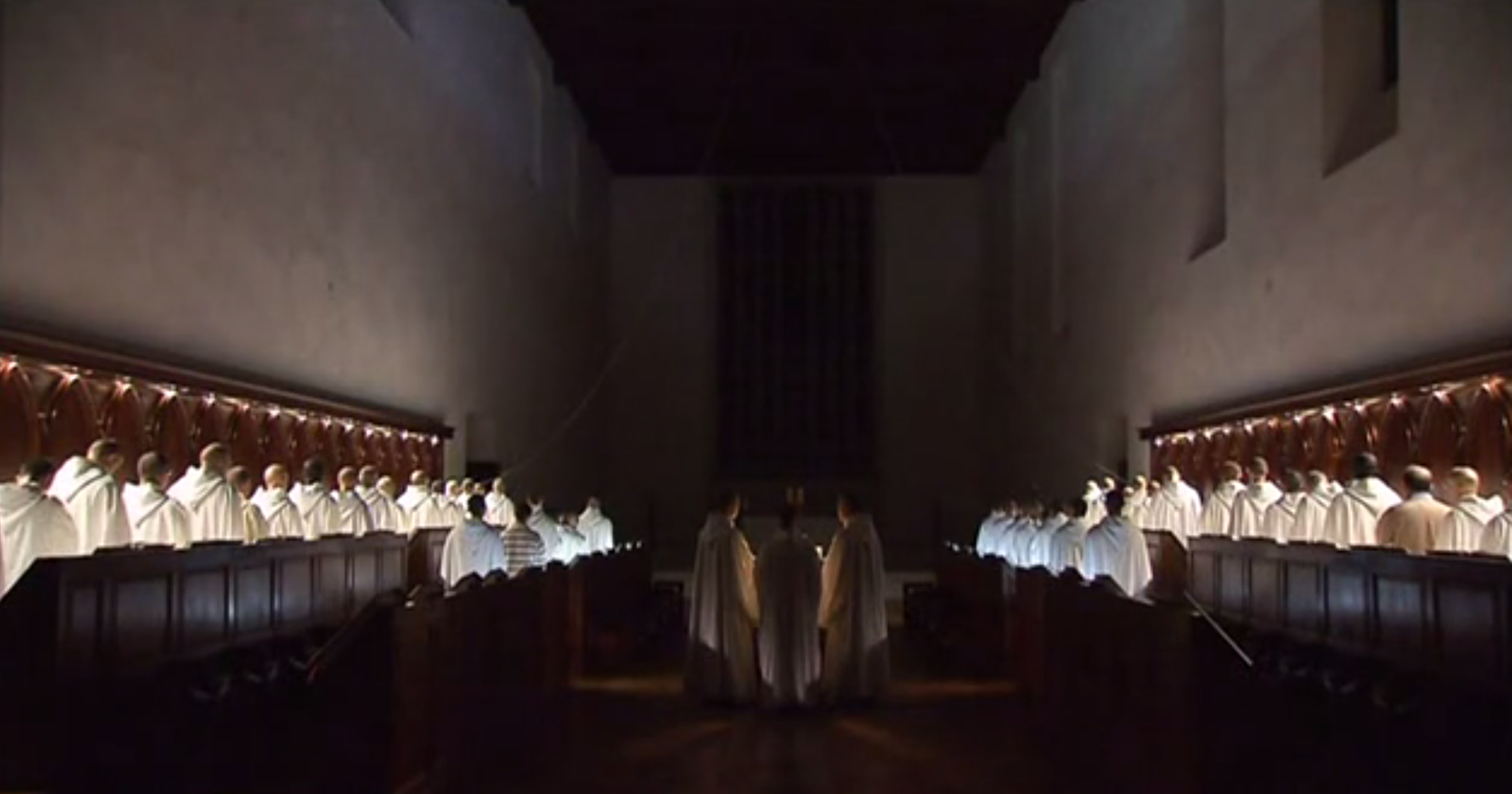
Matins at Sept-Fons, from Présence à Dieu (Source)

This short film, first brought to my attention by Fr. Joseph Koczera SJ, does a good job showing what a traditional monastery can look like, even if it embraces the new Mass and the vernacular office. Notre Dame de Sept-Fons is currently the largest Trappist monastery in the world, at least in terms of membership – it is also manifestly young and diverse. The film shows why the Abbey keeps getting vocations. A near constant soundtrack of chant carries the viewer along. Présence à Dieu is also full of the Abbot’s exposition of the Rule, which is a nice plus.

God is the Bigger Elvis (2011)

GodistheBiggerElvis

Mother Dolores Hart, wearing her trademark beret, from God is the Bigger Elvis (Source)

This one differs from the others in a few key respects. First, it’s an HBO production, rather than an Indie film. Secondly, it’s about nuns rather than monks. And third, there is a delicate sense of humor throughout that is a refreshing change from the other movies. It tells the story of Mother Dolores Hart, a starlet of the 1950’s who appeared in several features alongside Elvis before becoming a nun at the Benedictine monastery of Regina Laudis in Connecticut. She is now the prioress of the community. The documentary looks at her life and vocation as well as the daily ins and outs of the monastery. Not to be missed!

Life in Hidden Light (2016)

LifeinHIddenLight

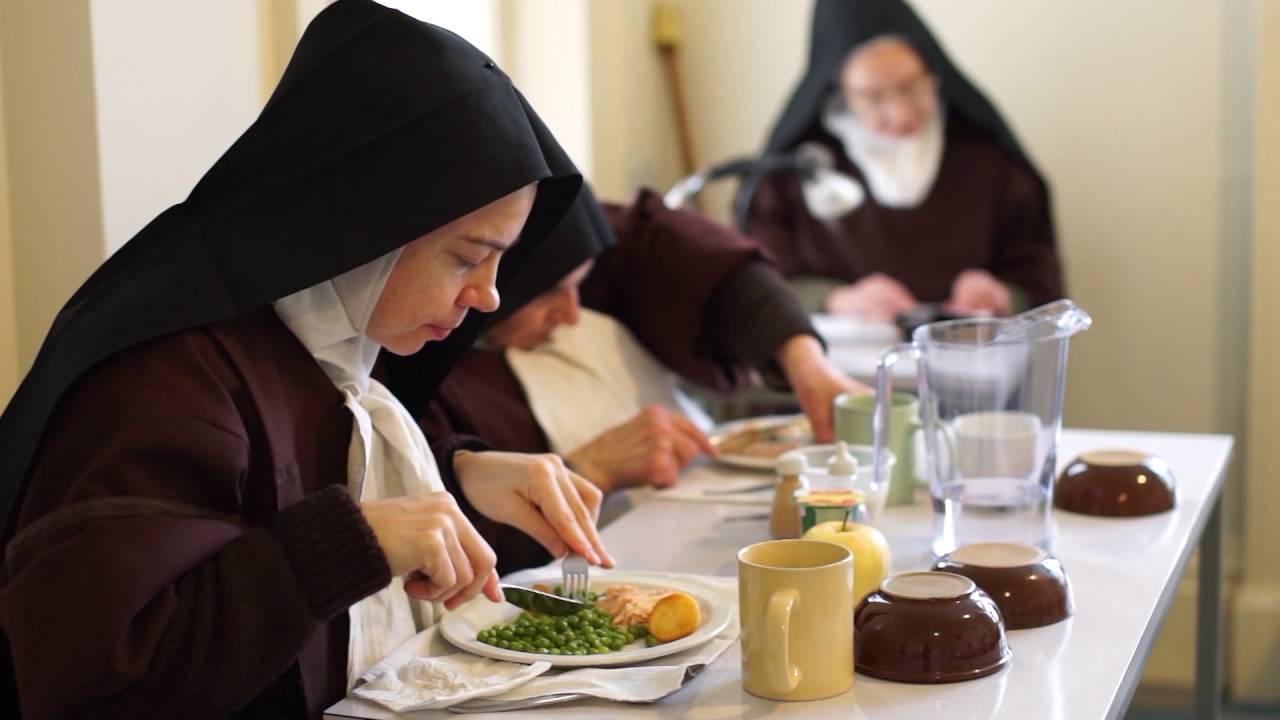
A scene in the refectory from Life in Hidden Light (Source)

Monasticism is not confined to the Benedictine family. As Life in Hidden Light reminds us, the Carmelites also have a great tradition of contemplative monasticism. Clearly influenced by Into Great Silence, this film does a great job balancing meditative cinematography and interviews with the Discalced Carmelite sisters of Wolverhampton. One in particular that stands out is the old, mostly deaf nun who speaks about the “mess” of the world and the love of God. I was reminded of Into Great Silence‘s blind Carthusian (not to mention the slightly grotesque Jesuit in “The Enduring Chill,” by Flannery O’Connor). The old nun’s message is a sound, salutary one that we should all hearken to in this day and age.

There are probably other such films out there, but these are a few that might be a good starting place for those interested in the monastic life.

St. Alphonsus on Christ’s Suffering

S_Alfonso02.jp

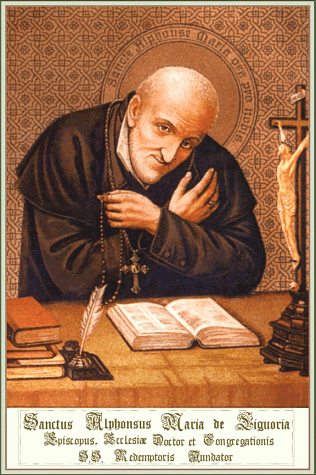
May St. Alphonsus pray for us always. (Source)
This Wednesday’s spiritual teacher is St. Alphonsus Liguori, Doctor of the Church and founder of the Redemptorists. He was known for his moral theology as well as his Mariological and devotional writings. Here is something Lenten by St. Alphonsus drawn, paradoxically, from The Incarnation, Birth, and Infancy of Jesus Christ (trans. 1927). The bibliographic information can be found on the page from which I took this text. 

The Desire that Jesus Had to Suffer for Us

Baptismo habeo baptizari; et quomodo coarctor, usquedum perficiatur?
“I have a baptism wherewith I am to be baptized; and how am I straitened until it be accomplished?”
—Luke, xii. 50.

I.
Jesus could have saved us without suffering; but He chose rather to embrace a life of sorrow and contempt, deprived of every earthly consolation, and a death of bitterness and desolation, only to make us understand the love which He bore us, and the desire which He had that we should love Him. He passed His whole life in sighing for the hour of His death, which He desired to offer to God, to obtain for us eternal salvation. And it was this desire which made Him exclaim: I have a baptism wherewith I am to be baptized; and how am I straitened until it be accomplished? He desired to be baptized in His Own Blood, to wash out, not, indeed, His Own, but our sins. O infinite Love, how miserable is he who does not know Thee, and does not love Thee!

II.
This same desire caused Him to say, on the night before His death, With desire I have desired to eat this pasch with you. By which words He shows that His only desire during His whole life had been to see the time arrive for His Passion and death, in order to prove to man the immense love which He bore him. So much, therefore, O my Jesus, didst Thou desire our love, that to obtain it Thou didst not refuse to die. How could I, then, deny anything to a God Who, for love of me, has given His Blood and His life?

III.
St. Bonaventure says that it is a wonder to see a God suffering for the love of men; but that it is a still greater wonder that men should behold a God suffering so much for them, shivering with cold as an infant in a manger, living as a poor boy in a shop, dying as a criminal on a Cross, and yet not burn with love to this most loving God; but even go so far as to despise this love, for the sake of the miserable pleasures of this earth. But how is it possible that God should be so enamoured with men, and that men, who are so grateful to one another, should be so ungrateful to God?

Alas! my Jesus, I find myself also among the number of these ungrateful ones. Tell me, how couldst Thou suffer so much for me, knowing the injuries that I should commit against Thee? But since Thou hast borne with me, and even desirest my salvation, give me, I pray Thee, a great sorrow for my sins, a sorrow equal to my ingratitude. I hate and detest, above all things, my Lord, the displeasure which I have caused Thee. If, during my past life, I have despised Thy grace, now I value it above all the kingdoms of the earth. I love Thee with my whole soul, O God, worthy of infinite love, and I desire only to live in order to love Thee. Increase the flames of Thy love, and give me more and more love. Keep alive in my remembrance the love that Thou hast borne me, so that my heart may always burn with love for Thee, as Thy heart burns with love for me. O burning heart of Mary, inflame my poor heart with holy love.

Christ_Carrying_the_Cross_1580.jpg

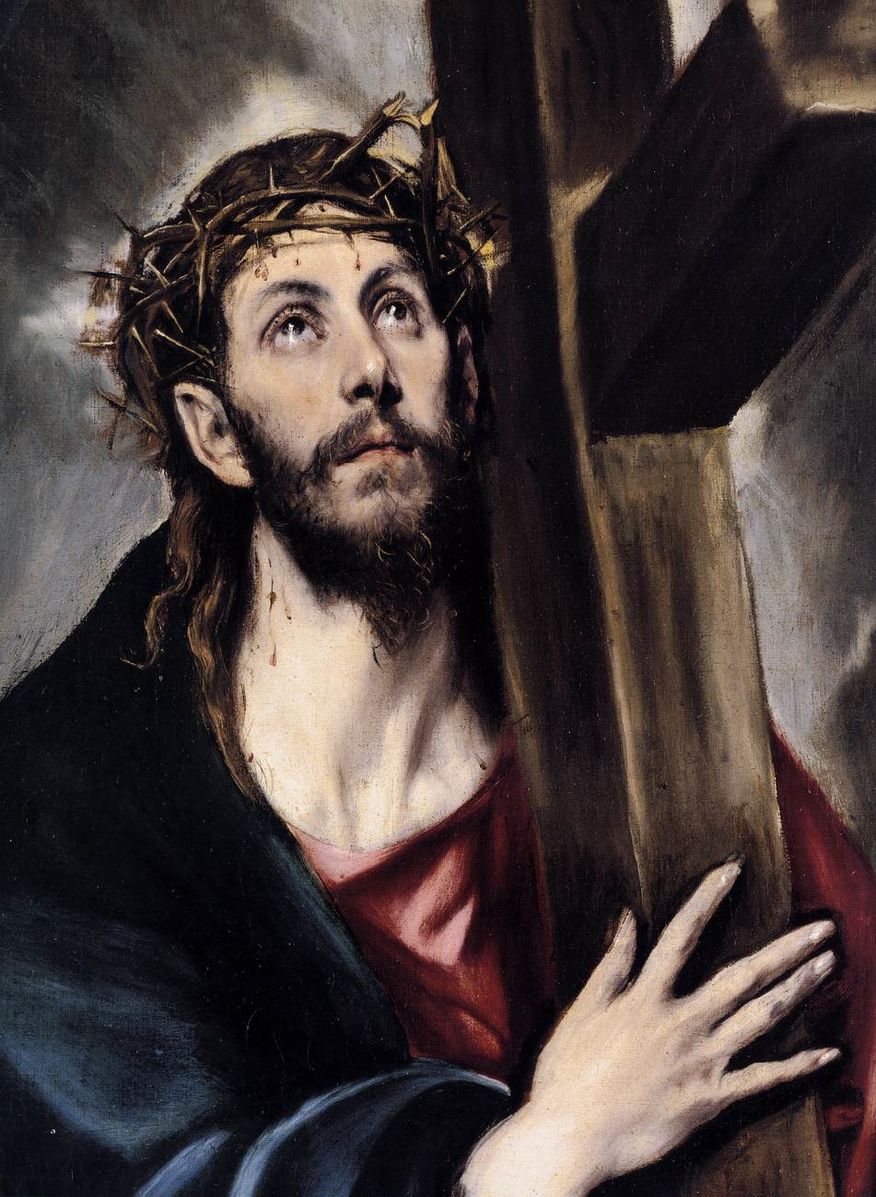
Detail of Christ Carrying the Cross, El Greco, 1580. (Source)

Prayer Request: Retreat

ImmaculateConceptionStatue

Maria Immaculata, Ora Pro Nobis. (Source)

I haven’t been as active on this blog as I had hoped for the last week or so, but I do have several good posts in store. In the meantime, please do pray for me. I’m off to Ireland for a retreat in honor of the Immaculate Conception, and I would appreciate your prayers as I spend this time unplugging and drawing near to Our Lord in His Blessed Infancy.

I noticed yesterday that I’ve accidentally timed the whole thing rather well. I leave England on the feast of St. Birinus, Bishop of Dorchester. He baptized Cynegils, King of the West Saxons, in what is now Dorchester on Thames, only a short bus ride from Oxford. I leave Ireland to return home to the United States on the feast of St. Juan Diego, the first indigenous saint of the Americas (and a deeply Marian one at that). And of course, the culmination of the retreat falls on the solemnity of the Immaculate Conception, America’s patronal feast. Providence works through these kinds of coincidences.

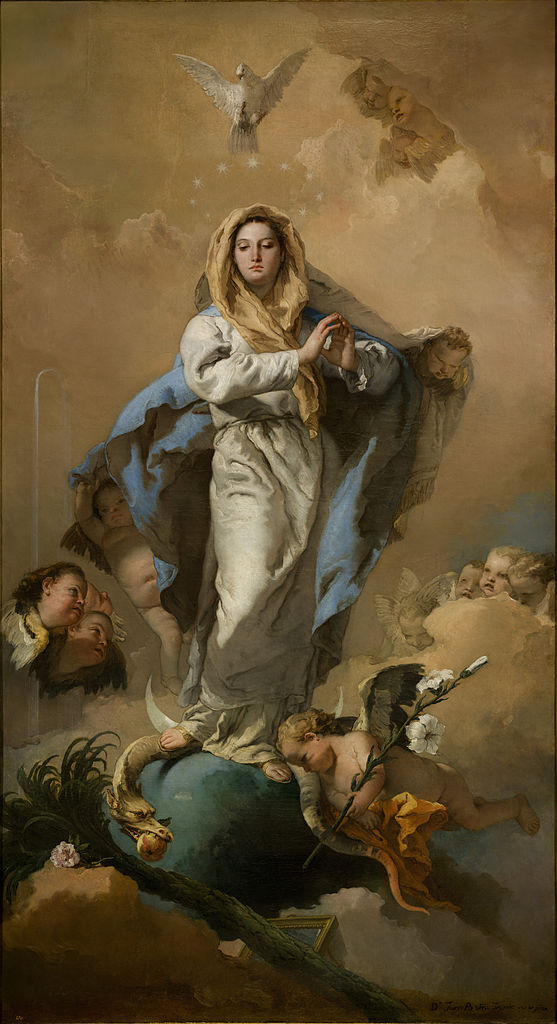
557px-The_Immaculate_Conception,_by_Giovanni_Battista_Tiepolo,_from_Prado_in_Google_Earth

The Immaculate Conception, Giovanni Battista Tiepolo, c.1767. I love Our Lady’s expression –  a mixture of humility before the Spirit above and regal contempt for the Devil at her feet. (Source)

Additionally, by a quirk of the academic calendar, this year is the first time in my life that I will have a genuine Advent. Since seventh grade, I’ve had exams deep into December. Since I became Catholic four and a half years ago, I haven’t had the chance to experience this season for what it is, a time of profound peace, penance, and prayer in preparation for the Nativity of Christ. All of which prompts me to beg for your prayers.

Our Lady, Immaculate, pray for us.
Our Lady, Theotokos, pray for us.
Our Lady, Queen of Heaven, pray for us.

immaculb

Immaculate Conception, José Claudio Antolinez, 17th century. (Source)

A Sophianic Documentary

Skelligs

The Puffins of Little Skellig, featured in the show. (Source)

Recently, I had the good fortune of watching Ireland’s Wild Coast, a PBS piece. I must recommend it in the highest possible terms. You can watch the trailer here. From PBS’s description:

Emmy Award-winning wildlife cameraman Colin Stafford-Johnson takes viewers on an authored odyssey along Ireland’s rugged Atlantic coast – the place he chooses to make his home after 30 years spent shooting some of the world’s most celebrated wildlife films.

The show goes far beyond what we’re used to in the usual nature documentaries. Stafford-Johnson’s skill with the camera is peerless. Many of his shots are photographic gems in their own right. His birds are a particular delight to watch. He captures them as they move in stillnessKestrel, Eagle, Swan. Brought together with beautiful music and sensitive narration over the course of two hours, the gorgeous shots elevate each other to the level of true documentary art.

WildGeese

Irish Swans, photo by Colin Stafford-Johnson. (Source)

Stafford-Johnson couldn’t be more different than, say, David Attenboroughdistant, officious, illustrative, objective, professorial. In a word, British.

Instead, he has given us a distinctly Irish documentary. Every scene is infused with an Irish sensibility. Gone is the slightly stuffy, very British narration conveying little more than scientific data about the life cycle and behavior of various animals; gone the humanitarian appeals for conservation or legislative action on climate change; gone, too, the very American emphasis on spectacle and action. While there’s some information about the creatures that inhabit the west coast of Ireland and the threats they face, it comes across in a very different way. British and American nature shows are prose, and sometimes clunky, technical prose at that. Ireland’s Wild Coast is pure poetry. Or even—dare I say it—a prayer.

At every turn, we can sense Stafford-Johnson’s affection for and intimacy with his subject. For example, Stafford-Johnson rather touchingly says that a stag in rut “has only one thing on his mind: fatherhood.” He admires the tenacity of the humble lamprey; “Any creature that has been around for that long has got life sorted.” He has a wonderful tendency to humanize the animals he films. Surrounded by humpback whales at rest after feeding, he says, “I like to think that other animals can be happy.” In some sense, that’s the whole point of Ireland’s Wild Coast. To show us the joy of the natural world, and help us rekindle our wonder in it.

Likewise, Stafford-Johnson’s environmental concerns are usually framed by a winsome sense of home. These animals are Ireland; they belong to the land and sea; they form an integral part of his home, and must be preserved as such. The Irish sense of place, an obsession that has formed the country’s art, literature, and politics for centuries, colors Stafford-Johnson’s narration in more ways than one. For this film is not just a nature documentary. At the Skelligs, at Great Blasket, at Corcomroe, and in his traditional rowboat, Stafford-Johnson reflects on the Irish people in their history and culture. He wistfully wonders what kind of life the men who built the beehive huts of Skellig Michael might have led. He contemplates the dissolution of the monasteries. And he tells us a few old Irish legends along the way.

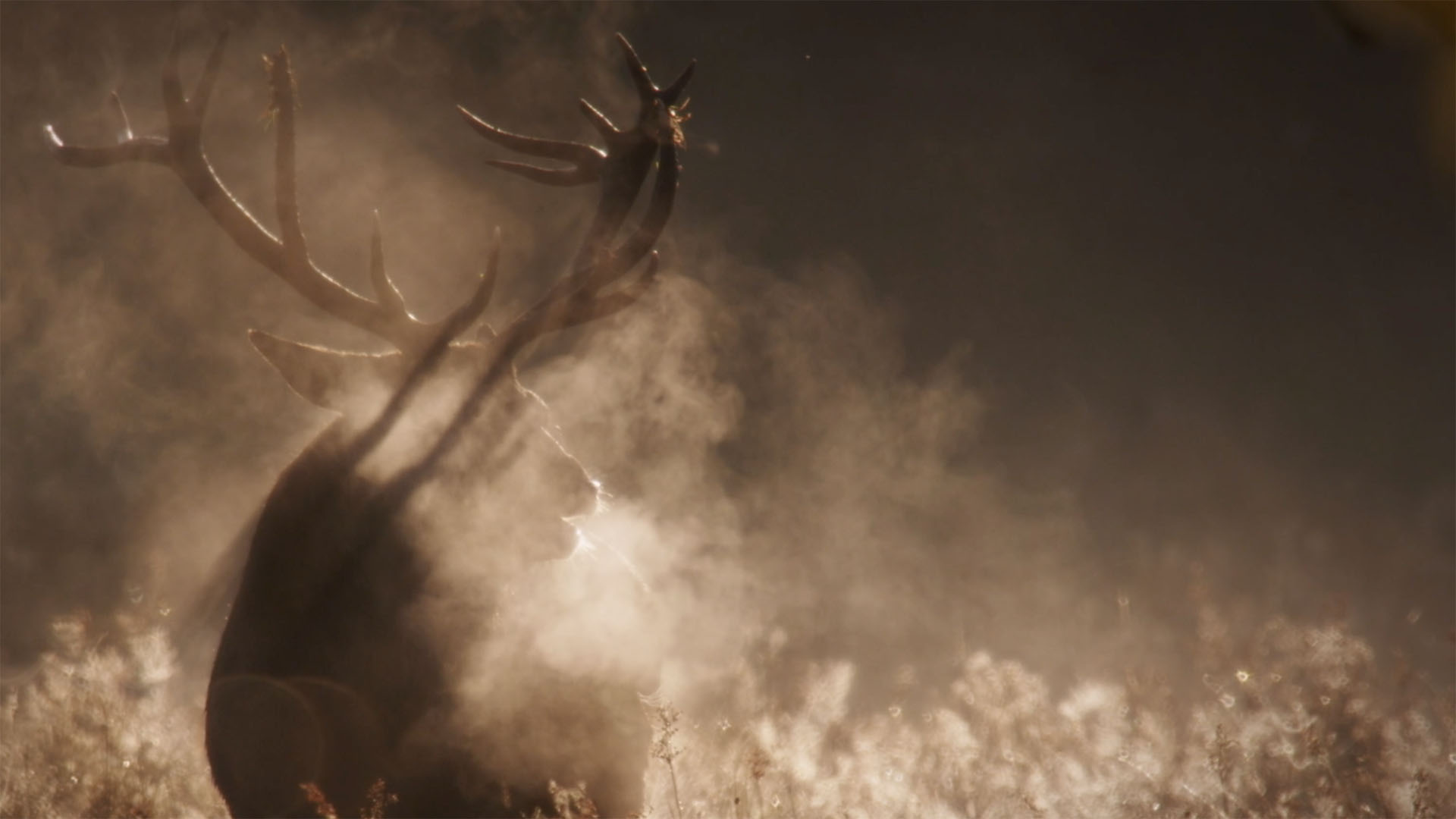
RedDeer

Red Deer Stag, by Colin Stafford-Johnson. Featured in the film. (Source).

The viewer is led to contemplate nature and history through a poetic lens. We become fellow-travelers with Stafford-Johnson as he winds his way up the West Coast on a watery pilgrimage. Any student of Sophiology will recognize in Ireland’s Wild Coast a perfect example of truly Sophianic art. As Michael Martin writes at the beginning of his essential text, The Submerged Reality: Sophiology and the Return to a Poetic Metaphysics:

For sophiology, especially as articulated from the 17th century onward, asks us to attend to the grace of God, his presence, in Creation: a presence which, despite the world’s fallenness, can only be described (in the words of Genesis) as “good.” (3)

That’s precisely the message that Stafford-Johnson most powerfully communicates. Not that the earth is in danger; not that wild animals live interesting and impressive lives; not even that Ireland has a unique and valuable ecosystem on its west coast. Nothing so pragmatic as that. Rather, we are left with the powerful sense of the goodness of creation. We are led to delight in it.

In watching the film—in rewatching it—in writing this piece—I am reminded not only of the lessons of latter-day sophiologists, but of that sophiologist malgré lui, Gerard Manley Hopkins. Specifically, the words of his great sonnet, “God’s Grandeur.”

And for all this, nature is never spent;
There lives the dearest freshness deep down things;
And though the last lights off the black West went
Oh, morning, at the brown brink eastward, springs —
Because the Holy Ghost over the bent
World broods with warm breast and with ah! bright wings.

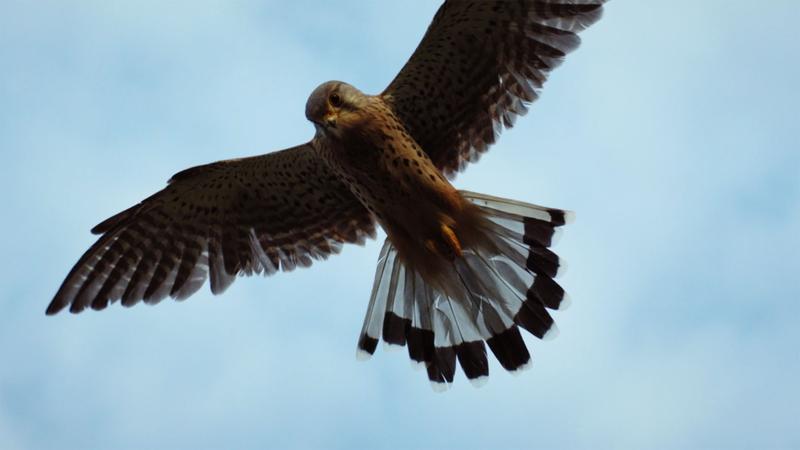
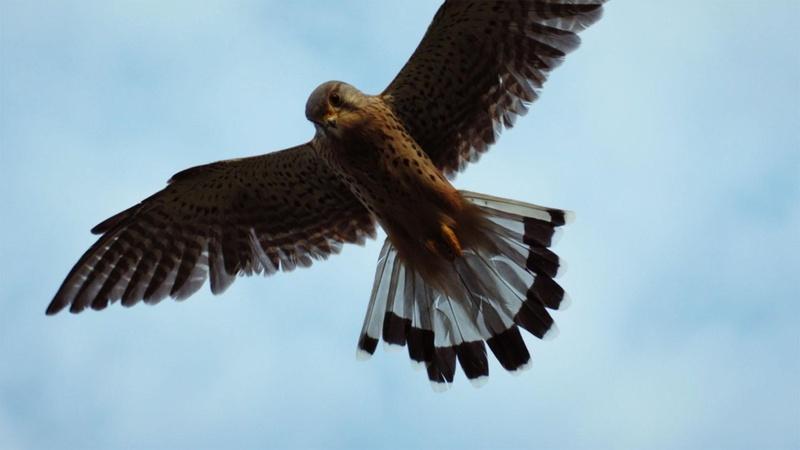
No words so perfectly describe the Kestrel of Corcomroe as it hovers, hesitates, and then glides down with Pentecostal grace upon its unsuspecting prey.

Kestrel

The Kestrel, shot by Colin Stafford-Johnson. It is impossible to understand how beautiful this bird is without seeing it in motion. (Source).

The Orange Pope

Yesterday was the 327th anniversary of the Battle of the Boyne, when the forces of Protestant Britain defeated the Catholic Irishmen fighting for James II, rightful king of England, Scotland, and Ireland. It is a black day for many Catholics, in no small part because many of them descend from Irish communities that remember the oppression that followed under the penal laws. In Northern Ireland today, July 12th remains a divisive date marked by sectarian tensions and the triumphalist pageantry of the native Scotch-Irish Protestants. One wonders whether the new Conservative-DUP alliance in the Commons will have had any affect on the infamous marches of the Orange Order, founded in remembrance of today’s events.As cursed as the memory of the Boyne remains for Catholics today, it’s worth remembering that things were a bit more complex in the 17th century. I enjoy a good bit of Jacobite nostalgia as much as the next trad, but I also think a more honest assessment of history is worth exploring. Human life is a complicated thing, and the strange story of the Williamite War is riddled with contradictions.

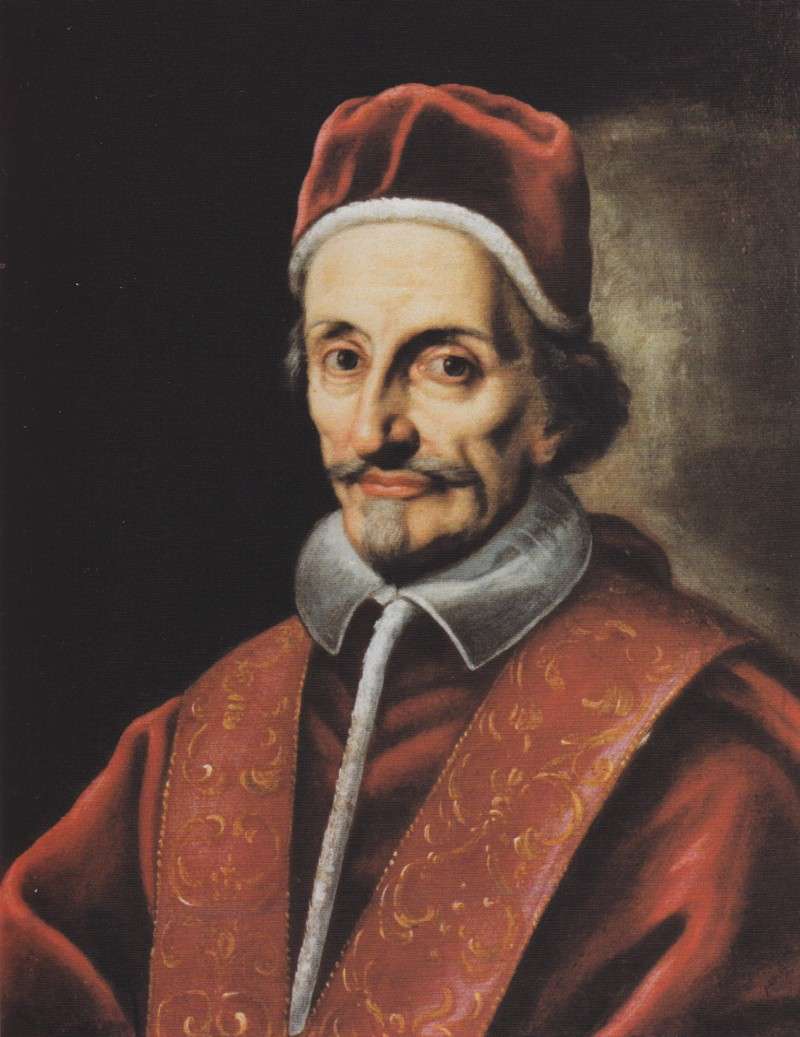
Tremendous irony lies at the heart of the Boyne and what it represents. William of Orange, the stalwart champion of Protestantism, overthrew the Catholic James while secretly in league with Pope Innocent XI.

InnocentXI

His Holiness, Innocent XI P.M. (Source).

Innocent’s political priorities centered on maintaining the balance of power in Europe. In 1690, that meant checking the bellicose Louis XIV. Ever since the marriage of Charles I and Henrietta Maria, the British Crown had been in an ever-closer relationship with France. James II was Louis’s only real ally, and Innocent knew it. The Pope also seems to have considered James a bit dull. He is known to have found his methods in the re-conversion of England more than a little imprudent (it was, in short, a massive failure of triangulation between the vitriolically anti-Catholic Whigs and the pro-Establishment Tories. James was not shrewd enough to manage the two, and ended up pleasing no one).

There was another threat on the table. The future of Catholic France was at stake. Louis XIV had, on the one hand, made moves designed to give him the appearance of Catholic zeal. The revocation of the Edict of Nantes, though not approved by the Pope, is perhaps the greatest example. More troublingly, Louis had rammed through the Four Articles that so antagonized the Papacy by more or less establishing Gallicanism throughout the land. Innocent fought against these measures.

Things came to a boiling point when the Pope, in league with almost all the crowned heads of Europe, clashed with Louis over who would fill the see of Cologne. When the election proved inconclusive, Innocent decided in favor of his own candidate. To quote the Catholic Encyclopedia: “Louis XIV retaliated by taking possession of the papal territory of Avignon, imprisoning the papal nuncio and appealing to a general council. Nor did he conceal his intention to separate the French Church entirely from Rome. The Pope remained firm.”

Enter the Dutch.

image.png
Willem III, Prince of Orange, King of England and Stadtholder, by Godfried Schalcken. c. 1692-97. (Source)

It is unclear to what extent Innocent might have aided William of Orange. An old legend current at the time asserts that the Pope had financed the expedition with a secret loan of 150,000 scudi. As one reporter puts it, “The sum, equivalent to more than £3.5 million today, equalled the Vatican’s annual budget deficit.” There is, it seems, some truth to this statement. The legend has been supported by more recent research, such as that conducted by the fiction authors Rita Monaldi and Francesco Sorti. They uncovered evidence that corroborated the longstanding claims of other historians.

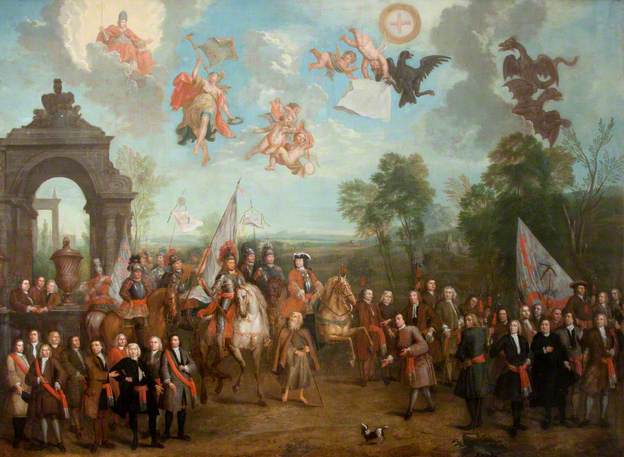
Which leads us to a singular painting by Pieter van der Meulen, The Entry of King William Into Ireland. It has played a controversial role in Northern Irish history. Purchased by the Unionist government of Ulster in 1933, it originally hung in the Great Hall of Stormont. After shifting locations several times, eventually the Rev. Dr. Ian Paisley (of all people) hung it in his office. It is presumably the only picture of the Pope in glory that Dr. Paisley ever liked.

(c) Northern Ireland Assembly; Supplied by The Public Catalogue Foundation

The Entry of King William Into Ireland, Pieter van der Meulen. (c) Northern Ireland Assembly; Supplied by The Public Catalogue Foundation. (Source).

So, why would a Pope act against a Catholic monarcheven covertly?

It seems that he sold Britain and Ireland to save France…and by extension, continental Catholicism. It was a gamble, and a costly one at that. But it seems to have worked in the short run. Although France would later see a terrible anti-Catholic upheaval of its own, Louis was forced to abandon his immediate moves towards schism. He did not become a French Henry VIII. Among all the terrible things that followed the Boyne, at least that one very important good came of it.


The Idea of a Gentleman

JohnHenryNewmanLateral

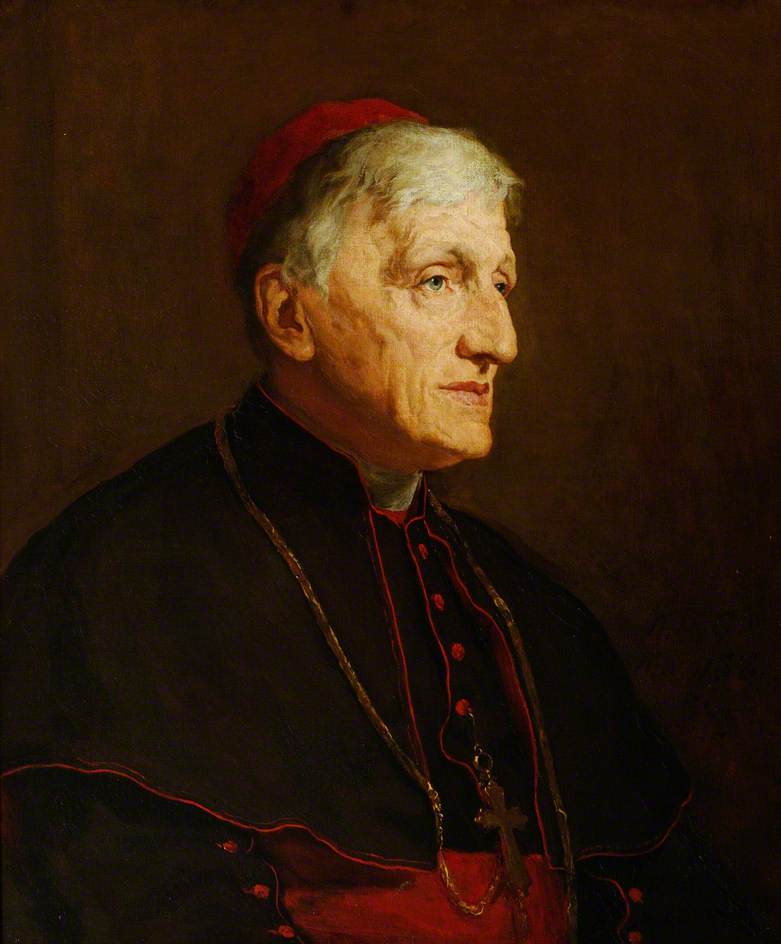
Blessed John Henry Cardinal Newman (Source).

In conducting research for another, soon to be completed blog post, I came across this wonderful passage by John Henry Newman. I first read these words a few years ago, but had since forgotten about them. I thought it might be worth bringing them to your attention. At the very least, I wanted a place to keep the passage so that I might easily and regularly find it again. I took the text, originally appearing in The Idea of a University, from here and here.

It’s worth noting that Newman elucidates his definition to suggest that there is no supernatural merit to being a gentleman. It is a generally commendable though by no means salutary disposition, and can be cultivated without any reference to religious truth. Newman later goes on to argue that a truly Catholic institution of higher learning will thus not be content to form gentlemen, though it will do that civilizing task as well. 

Hence it is that it is almost a definition of a gentleman to say that he is one who never inflicts pain. This description is both refined and, as far as it goes, accurate. He is mainly occupied in merely removing the obstacles which hinder the free and unembarrassed action of those about him; and he concurs with their movements rather than takes the initiative himself. His benefits may be considered as parallel to what are called comforts or conveniences in arrangements of a personal nature; like an easy chair or a good fire, which do their part in dispelling cold and fatigue, though nature provides both means of rest and animal heat without them. The true gentleman in like manner carefully avoids whatever may cause a jar or a jolt in the minds of those with whom he is cast — all clashing of opinion, or collision of feeling, all restraint, or suspicion, or gloom, or resentment; his great concern being to make every one at his ease and at home. He has his eyes on all his company; he is tender towards the bashful, gentle towards the distant, and merciful towards the absurd; he can recollect to whom he is speaking; he guards against unseasonable allusions, or topics which may irritate; he is seldom prominent in conversation, and never wearisome. He makes light of favors while he does them, and seems to be receiving when he is conferring. He never speaks of himself except when compelled, never defends himself by a mere retort; he has no ears for slander or gossip, is scrupulous in imputing motives to those who interfere with him, and interprets everything for the best. He is never mean or little in his disputes, never takes unfair advantage, never mistakes personalities or sharp saying for arguments, or insinuates evil which he dare not say out. From a long-sighted prudence, he observes the maxim of the ancient sage, that we should ever conduct ourselves towards our enemy as if he were one day to be our friend. He has too much good sense to be affronted at insults, he is too well employed to remember injuries, and too indolent to bear malice. He is patient, forbearing, and resigned, on philosophical principles; he submits to pain, because it is inevitable, to bereavement, because it is irreparable, and to death, because it is his destiny.

If he engages in controversy of any kind, his disciplined intellect preserves him from the blundering discourtesy of better, perhaps, but less educated minds; who, like blunt weapons, tear and hack instead of cutting clean, who mistake the point in argument, waste their strength on trifles, misconceive their adversary, and leave the question more involved than they find it. He may be right or wrong in his opinion, but he is too clear-headed to be unjust; he is as simple as he is forcible, and as brief as he is decisive. Nowhere shall we find greater candor, consideration, indulgence: he throws himself into the minds of his opponents, he accounts for their mistakes. He knows the weakness of human reason as well as its strength, its province and its limits.

If he be an unbeliever, he will be too profound and large-minded to ridicule religion or to act against it; he is too wise to be a dogmatist or fanatic in his infidelity. He respects piety and devotion; he even supports institutions as venerable, beautiful, or useful, to which he does not assent; he honors the ministers of religion, and it contents him to decline its mysteries without assailing or denouncing them. He is a friend of religious toleration, and that, not only because his philosophy has taught him to look on all forms of faith with an impartial eye, but also from the gentleness and effeminacy of feeling, which is the attendant on civilization.

Not that he may not hold a religion too, in his own way, even when he is not a Christian. In that case his religion is one of imagination and sentiment; it is the embodiment of those ideas of the sublime, majestic, and beautiful, without which there can be no large philosophy. Sometimes he acknowledges the being of God, sometimes he invests an unknown principle or quality with the attributes of perfection. And this deduction of his reason, or creation of his fancy, he makes the occasion of such excellent thoughts, and the starting-point of so varied and systematic a teaching, that he even seems like a disciple of Christianity itself. From the very accuracy and steadiness of his logical powers, he is able to see what sentiments are consistent in those who hold any religious doctrine at all, and he appears to others to feel and to hold a whole circle of theological truths, which exist in his mind no otherwise than as a number of deductions.