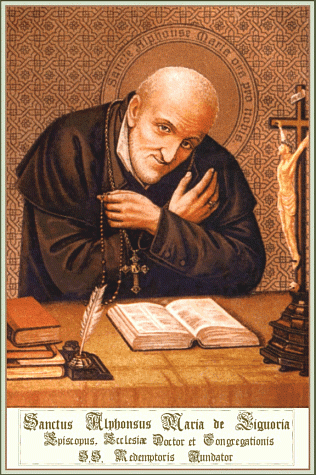
St. Alphonsus on Christ’s Suffering

S_Alfonso02.jp

May St. Alphonsus pray for us always. (Source)

This Wednesday’s spiritual teacher is St. Alphonsus Liguori, Doctor of the Church and founder of the Redemptorists. He was known for his moral theology as well as his Mariological and devotional writings. Here is something Lenten by St. Alphonsus drawn, paradoxically, from The Incarnation, Birth, and Infancy of Jesus Christ (trans. 1927). The bibliographic information can be found on the page from which I took this text. 

The Desire that Jesus Had to Suffer for Us

Baptismo habeo baptizari; et quomodo coarctor, usquedum perficiatur?
“I have a baptism wherewith I am to be baptized; and how am I straitened until it be accomplished?”
—Luke, xii. 50.

I.
Jesus could have saved us without suffering; but He chose rather to embrace a life of sorrow and contempt, deprived of every earthly consolation, and a death of bitterness and desolation, only to make us understand the love which He bore us, and the desire which He had that we should love Him. He passed His whole life in sighing for the hour of His death, which He desired to offer to God, to obtain for us eternal salvation. And it was this desire which made Him exclaim: I have a baptism wherewith I am to be baptized; and how am I straitened until it be accomplished? He desired to be baptized in His Own Blood, to wash out, not, indeed, His Own, but our sins. O infinite Love, how miserable is he who does not know Thee, and does not love Thee!

II.
This same desire caused Him to say, on the night before His death, With desire I have desired to eat this pasch with you. By which words He shows that His only desire during His whole life had been to see the time arrive for His Passion and death, in order to prove to man the immense love which He bore him. So much, therefore, O my Jesus, didst Thou desire our love, that to obtain it Thou didst not refuse to die. How could I, then, deny anything to a God Who, for love of me, has given His Blood and His life?

III.
St. Bonaventure says that it is a wonder to see a God suffering for the love of men; but that it is a still greater wonder that men should behold a God suffering so much for them, shivering with cold as an infant in a manger, living as a poor boy in a shop, dying as a criminal on a Cross, and yet not burn with love to this most loving God; but even go so far as to despise this love, for the sake of the miserable pleasures of this earth. But how is it possible that God should be so enamoured with men, and that men, who are so grateful to one another, should be so ungrateful to God?

Alas! my Jesus, I find myself also among the number of these ungrateful ones. Tell me, how couldst Thou suffer so much for me, knowing the injuries that I should commit against Thee? But since Thou hast borne with me, and even desirest my salvation, give me, I pray Thee, a great sorrow for my sins, a sorrow equal to my ingratitude. I hate and detest, above all things, my Lord, the displeasure which I have caused Thee. If, during my past life, I have despised Thy grace, now I value it above all the kingdoms of the earth. I love Thee with my whole soul, O God, worthy of infinite love, and I desire only to live in order to love Thee. Increase the flames of Thy love, and give me more and more love. Keep alive in my remembrance the love that Thou hast borne me, so that my heart may always burn with love for Thee, as Thy heart burns with love for me. O burning heart of Mary, inflame my poor heart with holy love.
Christ_Carrying_the_Cross_1580.jpg

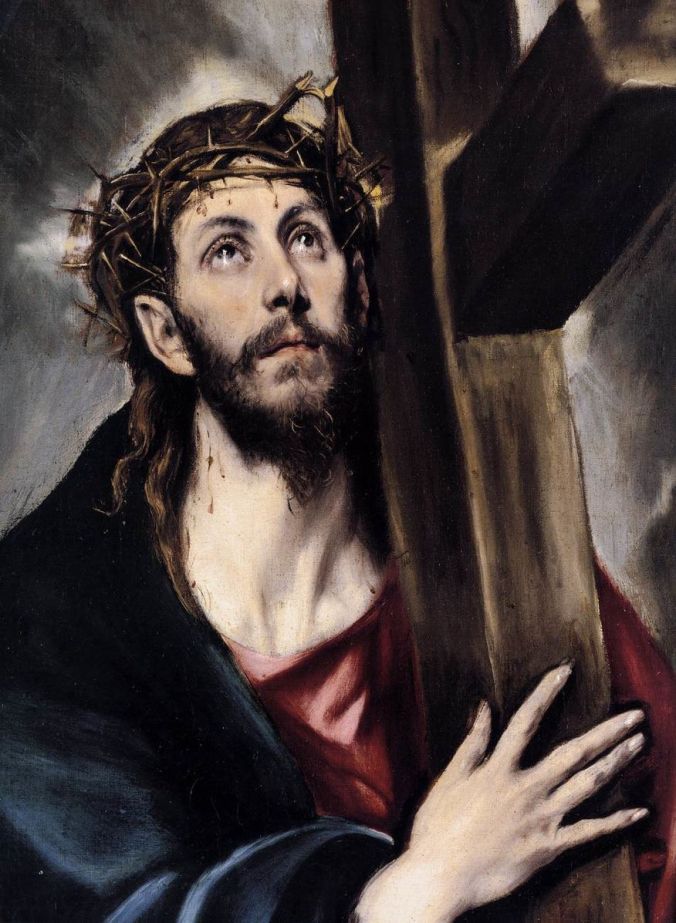
Detail of Christ Carrying the Cross, El Greco, 1580. (Source)
A Sophianic Documentary

Skelligs

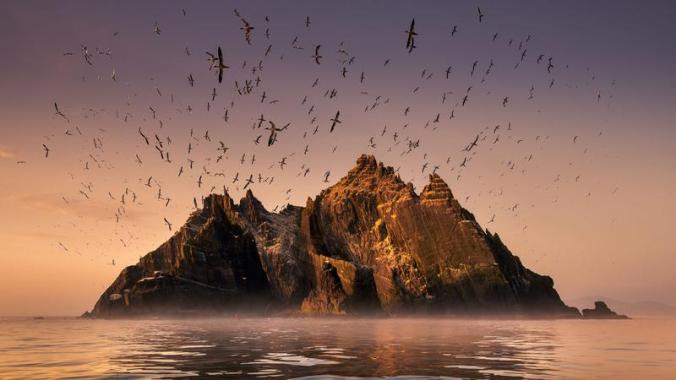
The Puffins of Little Skellig, featured in the show. (Source)

Recently, I had the good fortune of watching Ireland’s Wild Coast, a PBS piece. I must recommend it in the highest possible terms. You can watch the trailer here. From PBS’s description:

Emmy Award-winning wildlife cameraman Colin Stafford-Johnson takes viewers on an authored odyssey along Ireland’s rugged Atlantic coast – the place he chooses to make his home after 30 years spent shooting some of the world’s most celebrated wildlife films.

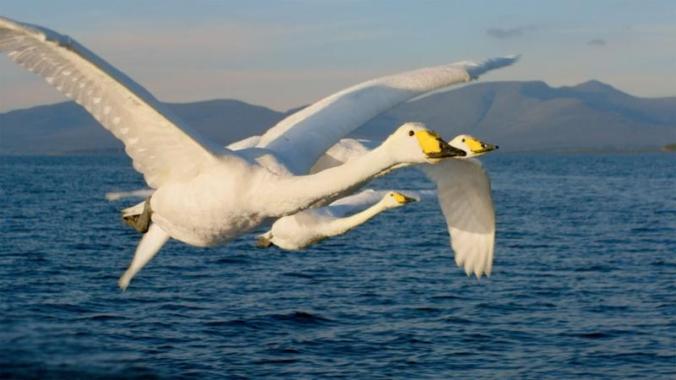
The show goes far beyond what we’re used to in the usual nature documentaries. Stafford-Johnson’s skill with the camera is peerless. Many of his shots are photographic gems in their own right. His birds are a particular delight to watch. He captures them as they move in stillnessKestrel, Eagle, Swan. Brought together with beautiful music and sensitive narration over the course of two hours, the gorgeous shots elevate each other to the level of true documentary art.

WildGeese

Irish Swans, photo by Colin Stafford-Johnson. (Source)

Stafford-Johnson couldn’t be more different than, say, David Attenboroughdistant, officious, illustrative, objective, professorial. In a word, British.

Instead, he has given us a distinctly Irish documentary. Every scene is infused with an Irish sensibility. Gone is the slightly stuffy, very British narration conveying little more than scientific data about the life cycle and behavior of various animals; gone the humanitarian appeals for conservation or legislative action on climate change; gone, too, the very American emphasis on spectacle and action. While there’s some information about the creatures that inhabit the west coast of Ireland and the threats they face, it comes across in a very different way. British and American nature shows are prose, and sometimes clunky, technical prose at that. Ireland’s Wild Coast is pure poetry. Or even—dare I say it—a prayer.

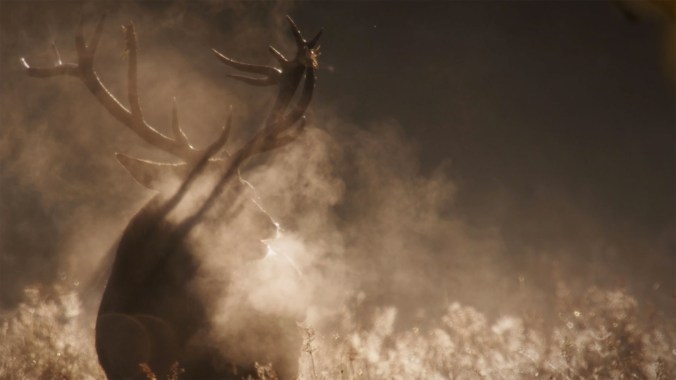
At every turn, we can sense Stafford-Johnson’s affection for and intimacy with his subject. For example, Stafford-Johnson rather touchingly says that a stag in rut “has only one thing on his mind: fatherhood.” He admires the tenacity of the humble lamprey; “Any creature that has been around for that long has got life sorted.” He has a wonderful tendency to humanize the animals he films. Surrounded by humpback whales at rest after feeding, he says, “I like to think that other animals can be happy.” In some sense, that’s the whole point of Ireland’s Wild Coast. To show us the joy of the natural world, and help us rekindle our wonder in it.

Likewise, Stafford-Johnson’s environmental concerns are usually framed by a winsome sense of home. These animals are Ireland; they belong to the land and sea; they form an integral part of his home, and must be preserved as such. The Irish sense of place, an obsession that has formed the country’s art, literature, and politics for centuries, colors Stafford-Johnson’s narration in more ways than one. For this film is not just a nature documentary. At the Skelligs, at Great Blasket, at Corcomroe, and in his traditional rowboat, Stafford-Johnson reflects on the Irish people in their history and culture. He wistfully wonders what kind of life the men who built the beehive huts of Skellig Michael might have led. He contemplates the dissolution of the monasteries. And he tells us a few old Irish legends along the way.

RedDeer

Red Deer Stag, by Colin Stafford-Johnson. Featured in the film. (Source).

The viewer is led to contemplate nature and history through a poetic lens. We become fellow-travelers with Stafford-Johnson as he winds his way up the West Coast on a watery pilgrimage. Any student of Sophiology will recognize in Ireland’s Wild Coast a perfect example of truly Sophianic art. As Michael Martin writes at the beginning of his essential text, The Submerged Reality: Sophiology and the Return to a Poetic Metaphysics:

For sophiology, especially as articulated from the 17th century onward, asks us to attend to the grace of God, his presence, in Creation: a presence which, despite the world’s fallenness, can only be described (in the words of Genesis) as “good.” (3)

That’s precisely the message that Stafford-Johnson most powerfully communicates. Not that the earth is in danger; not that wild animals live interesting and impressive lives; not even that Ireland has a unique and valuable ecosystem on its west coast. Nothing so pragmatic as that. Rather, we are left with the powerful sense of the goodness of creation. We are led to delight in it.

In watching the film—in rewatching it—in writing this piece—I am reminded not only of the lessons of latter-day sophiologists, but of that sophiologist malgré lui, Gerard Manley Hopkins. Specifically, the words of his great sonnet, “God’s Grandeur.”

And for all this, nature is never spent;
There lives the dearest freshness deep down things;
And though the last lights off the black West went
Oh, morning, at the brown brink eastward, springs —
Because the Holy Ghost over the bent
World broods with warm breast and with ah! bright wings.

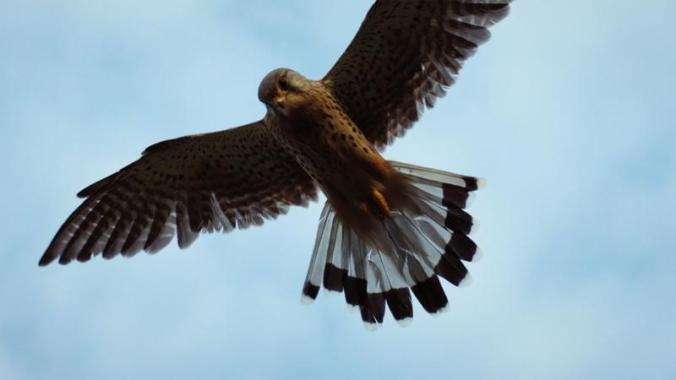
No words so perfectly describe the Kestrel of Corcomroe as it hovers, hesitates, and then glides down with Pentecostal grace upon its unsuspecting prey.

Kestrel

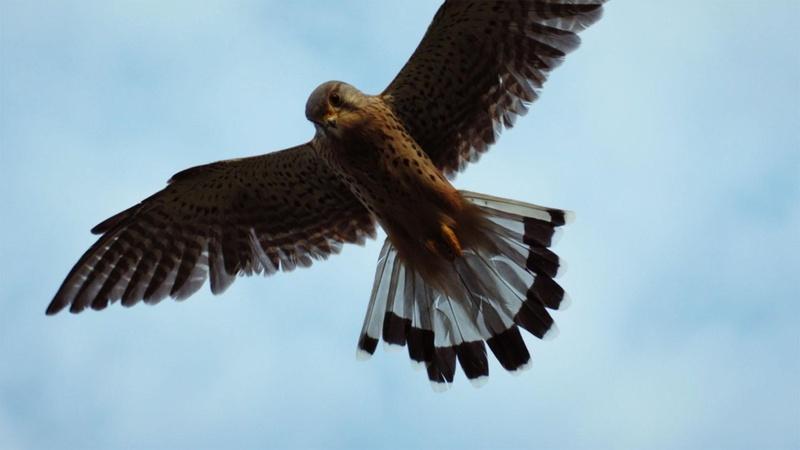
The Kestrel, shot by Colin Stafford-Johnson. It is impossible to understand how beautiful this bird is without seeing it in motion. (Source).