“A Vacuum He May Not Abhor”

RS Thomas Obituary

R.S. Thomas in a typical pose. One does wonder if he ever smiled. (Source)

R.S. Thomas (1913-2000), the Welsh nationalist, Anglican minister, and consummate poet belief and doubt has recently become a favorite. Here is a poem of his that, I think, is worth pondering in Lent.

The Absence

It is this great absence
that is like a presence, that compels
me to address it without hope
of a reply. It is a room I enter

from which someone has just
gone, the vestibule for the arrival
of one who has not yet come.
I modernise the anachronism

of my language, but he is no more here
than before. Genes and molecules
have no more power to call
him up than the incense of the Hebrews

at their altars. My equations fail
as my words do. What resources have I
other than the emptiness without him of my whole
being, a vacuum he may not abhor?

Fénelon on the Return to God

Fenelon

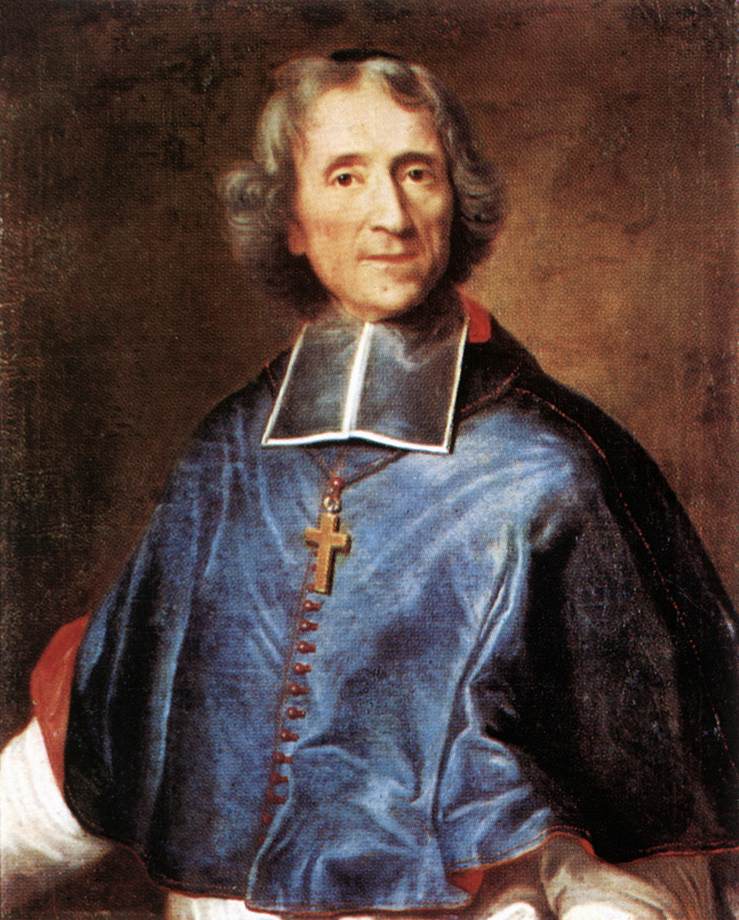
François de Salignac de la Mothe-Fénelon, Archbishop of Cambrai in the age of Louis XIV (Source)

Continuing my Lenten series of Wednesday spiritual masters, I present to you here a letter by Archbishop Fénelon to an officer, often identified as the Chevalier Colbert. The translation I am using comes from 1877, but I would also recommend to you the version by fellow Wahoo Chad Helms in the 2006 Paulist Press edition of Fénelon‘s Selected Writings. It struck me by its beauty and force of feeling, as well as its Lenten spirit. 

You have forgotten me, sir, but it is impossible for me to forget you. Something in my heart continually recalls you, and makes me want to hear of you, as I have more especially felt during the campaign and its perils. Your forgetfulness only makes me feel the more. The friendship you showed me once is of a kind never to be forgotten; and when I recall some of our conversations, my eyes are filled with tears. I trust that you remember how pleasant and hearty they were. Have you found anything since then more acceptable than God? Have the truths which then satisfied you failed? Is the pure light of the kingdom of God quenched? Has the world’s nothingness acquired some fresh value? Is that which was but a wretched dream not still the same? Is the God to Whom you poured out your soul, and Who filled you then with a peace beyond all earthly ken, no longer to be loved? Has the eternal beauty, ever so fresh to pure eyes, no longer charms for you? Is that source of heavenly joy, of unmarred happiness, which springs from the Father of Mercies and God of Consolation, dried up? No, for He has filled me with an urgent desire to recall you to Him. I cannot resist it: for long I have hesitated, and said to myself that I should only worry you. Even as I began this letter, I laid down a limit of discretion to myself; but after the first few words, my heart burst its bounds. Even should you not answer, or should think me absurd, I should not cease to speak sorrowfully to God of you, when unable to speak to you yourself any more. Once more, sir, forgive me if I exceed all due limits. I know it as well as you, but I feel irresistibly urged: God has not forgotten you, since He stirs up so eager a desire for your salvation in me.

What does He ask of you, save to be happy? Have you not realised that one is happy in loving Him? Have you not felt that there is no other real happiness, whatever excitement may be found in sensual pleasures, apart from Him? Since, then, you know where to find the Fountain of Life, and have of old drunk thereof, why would you seek foul, earthly cisterns? Bright, happy days, lighted up by the soft rays of loving mercy, when will ye return? When will it be given me to see this child of God reclaimed by His powerful Hand, filled with His favour, and the blessings of His holy Feast; causing joy in Heaven, despising earth, and acquiring an inexhaustible fund of humility and fervour from his experience of human frailty?
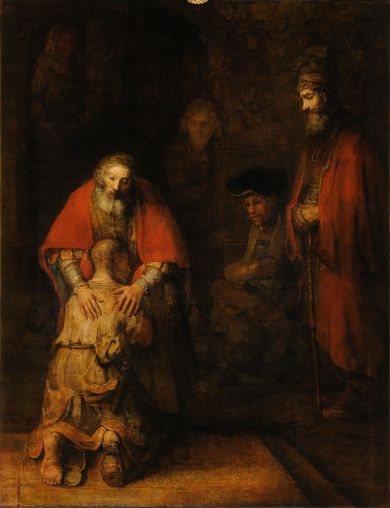
1280px-Rembrandt_Harmensz_van_Rijn_-_Return_of_the_Prodigal_Son_-_Google_Art_Project2

The Return of the Prodigal Son, Rembrandt van Rijn, c. 1661-69. (Source)

I am not dictating what you should do. God will Himself make that plain to you according to your needs, so long as you hearken inwardly to Him, and despise boldly that which is despicable. Do whatever you will, only love God, and let His Love, revived in your heart, be your guide. I have often thanked Him for having shielded you amid the perils of this campaign, in which your soul was even more exposed to risk than your body. Many a time I have trembled for you: put an end to my fears, and fill my heart with gladness. None can possibly be greater than to find myself once more with you in the house of God, united in heart and soul, looking together to one glorious hope, and the Coming of our Great God, Who will fill us with the flood of His pure delights. Your ears are not yet closed to the sublime language of truth, your heart is made to feel its charms. “Taste and see” the pleasant bread daily spread for us at our Father’s table. Why have you forsaken it? With such support, who can fear that anything else will be lacking? Even if you do not feel strong enough to regain the happy position where you were, at least answer me, at least do not shun me. I know what it is to be weak; I am a thousand times weaker than you. It is very profitable to have realised what one is; but do not add to that weakness, which is inseparable from human nature, an estrangement from the means of strength. You shall regulate our intercourse; I will only speak to you of such things as you are willing to hear. I will keep God’s secret in my heart, and shall be always, with unchanging affection and regard, etc.

 

A Benedictine Prayer to St. Philip Neri in Lenten Time

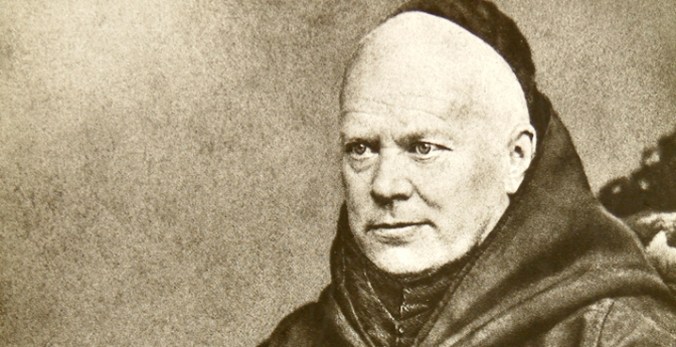
gueranger4-150dpi

Ven. Dom Prosper Guéranger. (Source)

Many of my readers will know the Venerable Dom Prosper Guéranger (1805-1875) for his monumental work of sacramentology and liturgical exegesis, The Liturgical Year. I happened to be perusing a 1908 French edition of the text and came upon Dom Guéranger’s homage to St. Philip Neri in Volume 3 of his Easter writings. Naturally, this discovery was of great interest to me, as I have written before on the similarities between the Oratorian and Benedictine vocations. I thus present to you my own translation of the prayer, found on pages 548-50 in the edition I was using. I hope it may be thought a fair translation of the great monk’s words. At any rate, I have tried to render his prayer in an elevated style worthy to the subject.

Thou didst love the Lord Jesus, O Philip, and thy whole life was nothing but a continuous act of love; but thou didst not wish to enjoy the highest good alone. All thine efforts tended to make Him known by all men, such that all might love Him with thee and thus reach their supreme end. For forty years, thou wast the indefatigable apostle of the holy city, and nothing could subtract from the action of the divine fire that burned in thee. We who are the posterity of those who heard thy words and admired the celestial gifts in thee, we dare to beg of thee to cast thy gaze upon us as well. Teach us to love our Jesus resurrected. It does not suffice for us to adore Him and to rejoice in His triumph; we must love Him: for the train of His mysteries from His Incarnation to His Resurrection have no other aim but revealing to us, in an ever growing light, His divine kindness. It is by loving him ever more that we shall succeed in elevating ourselves to the mystery of His Resurrection, which fulfills in us the revelation of all the riches of His heart. The more He lifts Himself into the new life that He won in leaving His tomb, the more He appears full of love for us, and the more He desires that our hearts should be joined with His. Pray, O Philip, and beg that “our heart and our flesh might quake for the living God” [Ps. 83:2]. After the mystery of Easter, introduce us to that of the Ascension; dispose our hearts to receive the divine Spirit of Pentecost; and when the august mystery of the Eucharist shines before our eyes with all its fires in the solemnity that approaches, thou, O Philip, who didst celebrate it one last time here below, who didst rise at the end of the day to that eternal rest where Jesus shows Himself unveiled, do thou prepare our souls to receive and to taste “the living bread which giveth life to the world” [John 6:33].

The sanctity that shone in thee, O Philip, had as its character the momentum of thy soul towards God, and all those who approached thee soon participated in this disposition that alone could respond to the call of the divine Redeemer. Thou didst know that thou took hold of souls, and thou drovest them to perfection by the way of trust and generosity of heart. In this great work thy method was never to have any method at all, imitating the Apostles and the ancient Fathers, and thou didst trust in the virtue proper to the word of God. By thee the fervent frequenting of the sacraments reappeared as the surest sign of the Christian life. Pray for the faithful, and come to the aid of so many souls who grow restless and exhaust themselves in the paths that the hand of man hast traced, and that too often retard or prevent the intimate union of Creator and creature.

Thou didst most ardently love the Church, O Philip; and this love of the Church is the indispensable sign of sanctity. Thine elevated contemplation did not distract thee from the dolorous lot of this holy Bride of Christ, so tested in the century when thou wast born and died. The efforts of triumphant heresy in so many countries enkindled zeal in thy heart: obtain for us from the Holy Ghost this living sympathy for Catholic Truth that renders us sensible to its defeats and victories. It does not suffice for us to save our souls; we must desire with ardor and aid with all our means the advancement of the Reign of God on earth, the extirpation of heresy, and the exaltation of our mother the holy Church: it is in this condition that we are children of God. By thine examples, O Philip, inspire in us this ardor by which we must totally associate ourselves with the sacred interests of our common mother. Pray as well for the Church Militant which counted thee in her ranks as one of her best soldiers. Serve valiantly the cause of Rome, which holds as an honor the debt owed to thee for so many of thy services. You sanctified her during thy mortal life; hallow her again and defend her from heaven on high.

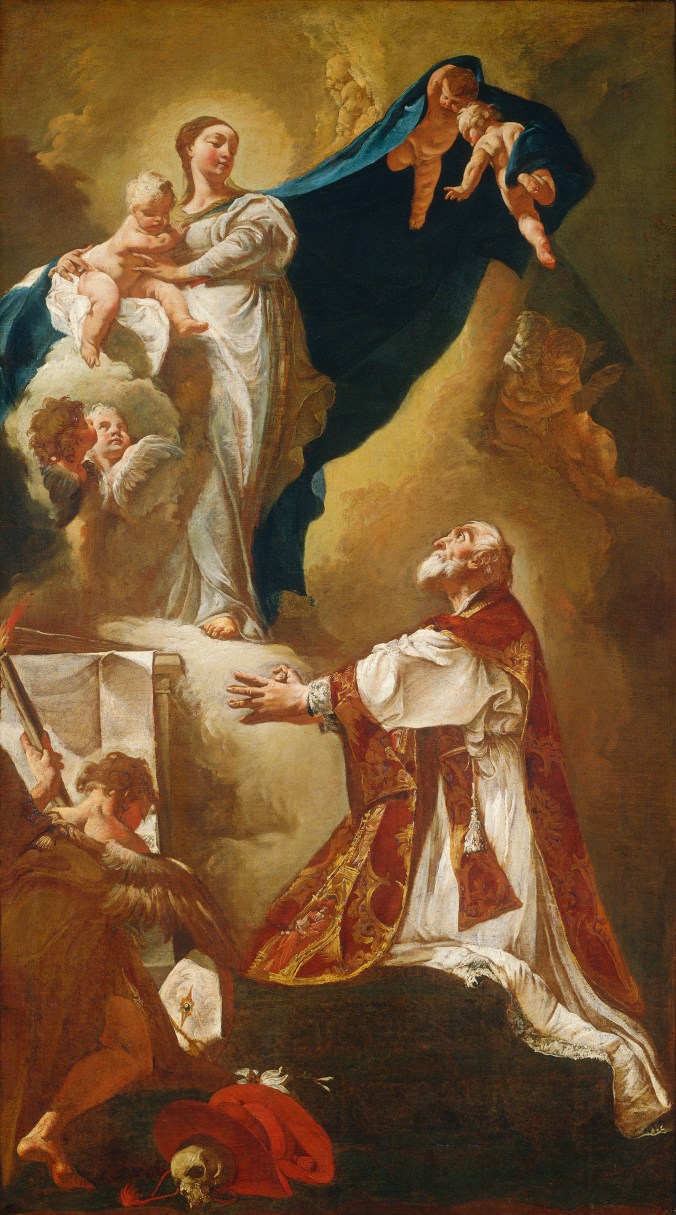
sc1119.jpg

Madonna and Child Appearing to St. Philip Neri, Giovanni Battista Piazzetti, c. 1725. (Source)


A Prayer of Union with the Will of God

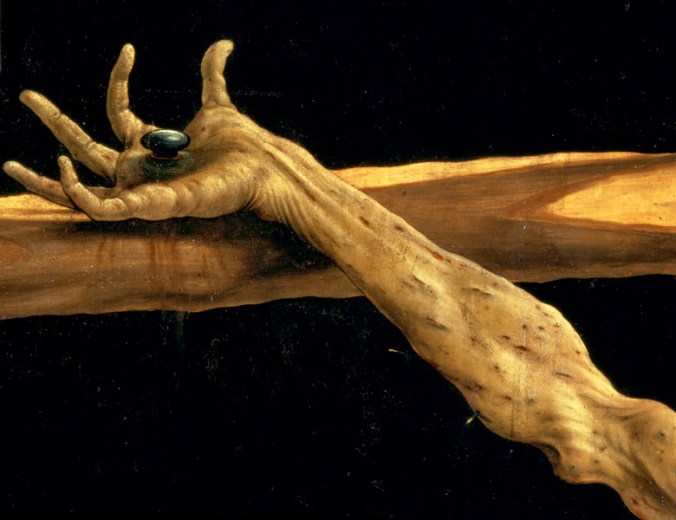
Crucifixion from the Isenheim Altarpiece, detail of Christ's right hand, c.1512-16 (oil on panel)

From the Isenheim Altarpiece of Matthias Grünewald. (Source)

Let me be Thy glove, O Lord,
that, acting not but by Thy hand,
I may be kept from the ways and works of evil.
Gather up all my five senses
unto Thee
as so many Providential fingers.
Let my heart be pierced with the wound
of Thy priestly palm.
So bound to Thee, I will fear not
for my salvation and everlasting bliss.
Through Our Lord Jesus Christ.

Amen.