Three New Books for Early Modernists

There are some very exciting publications coming out soon…especially for those of us who study religion in the early modern period.

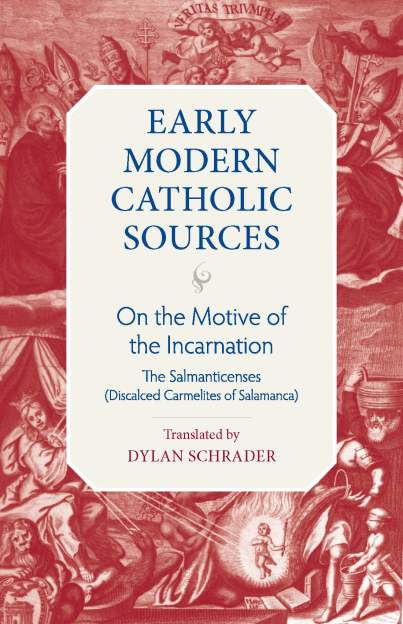
First, there’s a new series from CUA Press on Early Modern Catholic Sources, edited by Ulrich Lehner and Trent Pomplun. The first volume covers Christological debates among the Discalced Carmelites of the School of Salamanca. I think it’s a fair assumption that this material has never been translated before. The first volume should appear in 2019.

Salmanticenses-final-sketch

Vol. I of Early Modern Catholic Sources (Source)

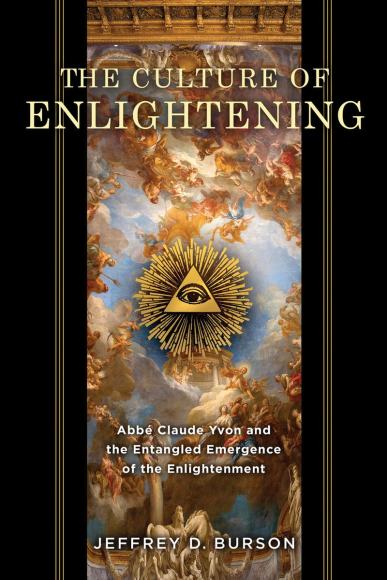
Second, and more germane to my own work, we have Jeffrey Burson’s very promising intervention into the perennial “Enlightenment” v. “Enlightenments” debate. His new book, Culture of Enlightening: Abbé Claude Yvon and the Entangled Emergence of the Enlightenment, is scheduled to be released from Notre Dame Press in May 2019. Burson has already established himself as a major scholar of the Catholic Enlightenment, and his newest foray promises to be his most ambitious work yet.

Bursonbook

Burson’s new book (Source)

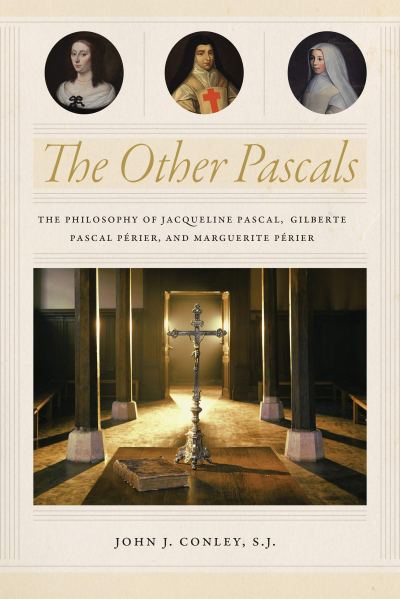
For those of you who, like me, take an interest in the Jansenists and in early modern Catholic women, you’ll be happy to know that there’s a new study of Pascal’s sisters by Rev. John J. Conley, S.J. The Other Pascals: The Philosophy of Jacqueline Pascal, Gilberte Pascal Périer, and Marguerite Périer, another ND Press piece slated for an April 2019 release, will no doubt shed new light on these fascinating figures. Conley has done important work before on Catholic women in the 17th century – I look forward to his newest treatment of the subject.

OtherPascals.jpg

A Jesuit writes about Jansenists (Source)

And if you’re just looking for general book recommendations, might I refer you to Incudi Reddere? You’ll find much more there.

The Horses of St. Bruno

Today is the Feast of St. Bruno, founder of the Carthusians. While many know of the Carthusians for their famous silence, their holy way of life preserved from corruption down the centuries, and that wonderful green liqueur they make, few are aware of another gift they have given the world: a breed of Andalusian horse known as the Cartujano.

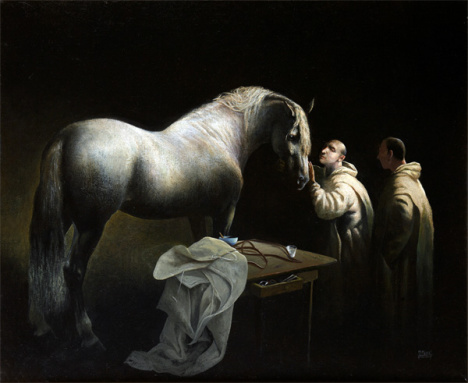
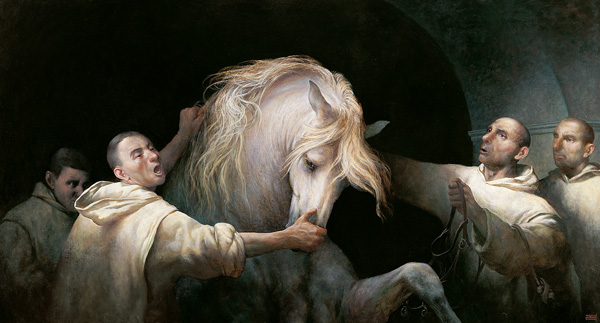
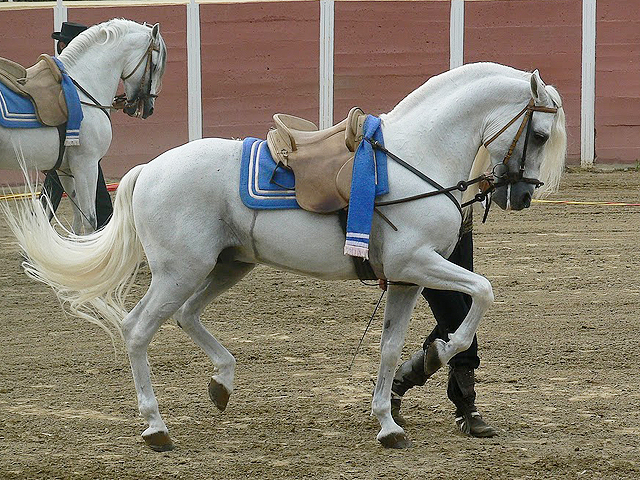
Cartujano1

Monks with their horse. (Source)

The breed emerged as early as the 1400’s, and had become an important strain of the Spanish equine population by the early modern period. They originated at the Charterhouse of Jerez. The story of their arrival at the monastery is a little uncertain, but one plausible theory holds that:

“Don Pedro Picado, was unable to pay his ground rent to the monks…decided to pay them…in kind by offering them his mares and colts. These animals had been bought…from the brothers Andrés and Diego Zamora…who formed this small stud farm from a stallion bought from a soldier, and one of its sons, a colt of extraordinary beauty and grace, called ‘Esclavo.'”

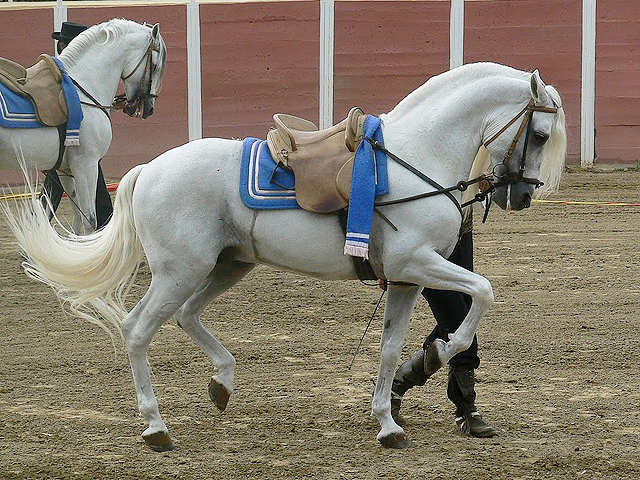
Cartujanotoday.jpg

A Cartujano today. (Source)

At any rate, the monks commenced a breeding program that lasted for hundreds of years – they only lost their monopoly on the line at the French invasion. The end result was what one source has called “the purest of Spanish horses.” Take a look at the numbers:

The Carthusian horse, or Cartujano is not a distinct breed of horse but rather an offshoot of the pure Spanish horse and is considered the purest strain remaining with one of the oldest stud books in the world. Roughly 82% of the Pura Raza Espanola (PRE) population in Spain contains Cartujano blood. But there are less than 3% pure Cartujano horses within the PRE population and only 500 pure Cartujanos in existence in Spain today.

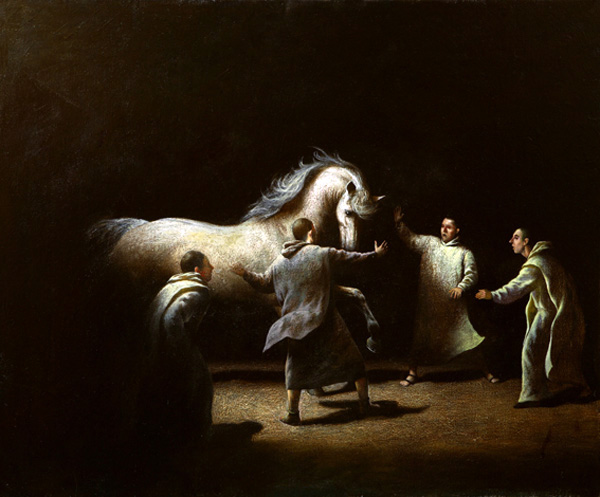
Music Study III_ 004

“The Cartujanos,” Jose Manuel Gomez. (Source)

Virtually all Cartujanos today are descended from that first horse at Jerez, that Jacob of horses – “Esclavo.” You can see one in action here.

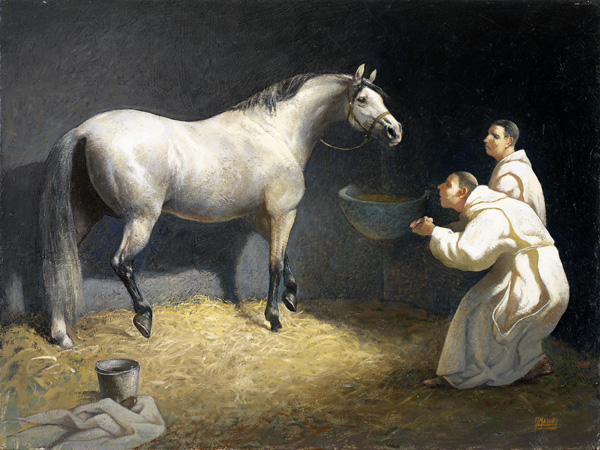
Cartujano2

Monks and their horse. (Source)

We need not justify the monastic life on terms other than its own final good – that is, union with God. Or even its secondary good – prayer for the world. But if one is seeking “useful” or “worldly” benefits of monasticism, look no further than the Cartujano horse. The continuity provided by the monastic state over centuries allowed proper record keeping and a meticulous attention to the intricacies of a sustained lineage. These beautiful creatures are one testament to the salutary work of monks in history.

Cartujano3

I’m sure there’s a spiritual metaphor here. (Source)


“Heaven in Epitome”

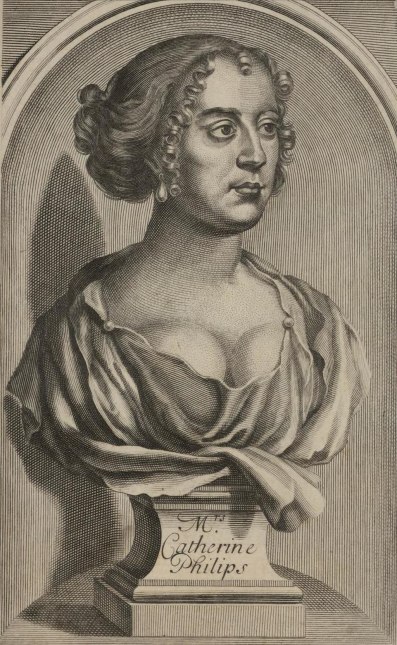
1024px-Portrait_of_Catherine_Philips_(4674221).jpg

Katherine (or Catherine) Philips. (Source)

One of the great poets of the seventeenth century was Katherine Philips, a Royalist, a major translator of Corneille, and a devotee of Platonic love. Her poetry often explores the deeper meaning of close friendship. She had a few such relationships, and led a society of fellow aristocrats dedicated to Friendship as such. She would often use allegorical names to refer to herself (“Orinda”), her husband (“Antenor”), and her best friend (“Lucasia”). I found these few poems to be particularly moving and insightful into the nature of true friendship.

A Friend

Love, nature’s plot, this great creation’s soul,
The being and the harmony of things,
Doth still preserve and propagate the whole,
From whence man’s happiness and safety springs:
The earliest, whitest, blessed’st times did draw
From her alone their universal law.

Friendship’s an abstract of this noble flame,
‘Tis love refined and purged from all its dross,
The next to angels’ love, if not the same,
As strong in passion is, though not so gross:
It antedates a glad eternity,
And is an heaven in epitome.

*        *        *        *        *

Essential honour must be in a friend,
Not such as every breath fans to and fro;
But born within, is its own judge and end,
And dares not sin though sure that none should know.
Where friendship’s spoke, honesty’s understood;
For none can be a friend that is not good.

*        *        *        *        *

Thick waters show no images of things;
Friends are each other’s mirrors, and should be
Clearer than crystal or the mountain springs,
And free from clouds, design, or flattery.
For vulgar souls no part of friendship share;
Poets and friends are born to what they are.

Friendship’s Mystery, To my Dearest Lucasia

1
Come, my Lucasia, since we see
That Miracles Mens faith do move,
By wonder and by prodigy
To the dull angry world let’s prove
There’s a Religion in our Love.
2
For though we were design’d t’ agree,
That Fate no liberty destroyes,
But our Election is as free
As Angels, who with greedy choice
Are yet determin’d to their joyes.
3
Our hearts are doubled by the loss,
Here Mixture is Addition grown ;
We both diffuse, and both ingross :
And we whose minds are so much one,
Never, yet ever are alone.
4
We court our own Captivity
Than Thrones more great and innocent :
’Twere banishment to be set free,
Since we wear fetters whose intent
Not Bondage is, but Ornament.
5
Divided joyes are tedious found,
And griefs united easier grow :
We are our selves but by rebound,
And all our Titles shuffled so,
Both Princes, and both Subjects too.
6
Our Hearts are mutual Victims laid,
While they (such power in Friendship lies)
Are Altars, Priests, and Off’rings made :
And each Heart which thus kindly dies,
Grows deathless by the Sacrifice.

To My Excellent Lucasia, on Our Friendship

I did not live until this time

    Crowned my felicity,
When I could say without a crime,
    I am not thine, but thee.
This carcass breathed, and walked, and slept,
    So that the world believed
There was a soul the motions kept;
    But they were all deceived.
For as a watch by art is wound
    To motion, such was mine:
But never had Orinda found
    A soul till she found thine;
Which now inspires, cures and supplies,
    And guides my darkened breast:
For thou art all that I can prize,
    My joy, my life, my rest.
No bridegroom’s nor crown-conqueror’s mirth
    To mine compared can be:
They have but pieces of the earth,
    I’ve all the world in thee.
Then let our flames still light and shine,
    And no false fear control,
As innocent as our design,
    Immortal as our soul.

Friendship

Let the dull brutish World that know not Love,
Continue heretics, and disapprove
That noble flame; but the refinèd know
‘Tis all the Heaven we have here below.
Nature subsists by Love, and they do tie
Things to their causes but by sympathy.
Love chains the different Elements in one
Great harmony, link’d to the Heav’nly Throne.
And as on earth, so the blest quire above
Of Saints and Angels are maintain’d by Love;
That is their business and felicity,
And will be so to all Eternity.
That is the ocean, our affections here
Are but streams borrow’d from the fountain there.
And ’tis the noblest argument to prove
A beauteous mind, that it knows how to Love.
Those kind impressions which Fate can’t control,
Are Heaven’s mintage on a worthy soul.
For Love is all the Arts’ epitome,
And is the sum of all Divinity.
He’s worse than beast that cannot love, and yet
It is not bought for money, pains or wit;
For no chance or design can spirits move,
But the eternal destiny of Love:
And when two souls are chang’d and mixèd so,
It is what they and none but they can do.
This, this is Friendship, that abstracted flame
Which grovelling mortals know not how to name.
All Love is sacred, and the marriage-tie
Hath much of honour and divinity.
But Lust, Design, or some unworthy ends
May mingle there, which are despis’d by Friends.
Passion hath violent extremes, and thus
All oppositions are contiguous.
So when the end is serv’d their Love will bate,
If Friendship make it not more fortunate:
Friendship, that Love’s elixir, that pure fire
Which burns the clearer ’cause it burns the higher.
For Love, like earthly fires (which will decay
If the material fuel be away)
Is with offensive smoke accompanied,
And by resistance only is supplied:
But Friendship, like the fiery element,
With its own heat and nourishment content,
Where neither hurt, nor smoke, nor noise is made,
Scorns the assistance of a forein aid.
Friendship (like Heraldry) is hereby known,
Richest when plainest, bravest when alone;
Calm as a virgin, and more innocent
Than sleeping doves are, and as much content
As Saints in visions; quiet as the night,
But clear and open as the summer’s light;
United more than spirits’ faculties,
Higher in thoughts than are the eagle’s eyes;
What shall I say? when we true friends are grown,
W’ are like—Alas, w’ are like ourselves alone.
 

“Lovely in Limbs, and Lovely in Eyes Not His”

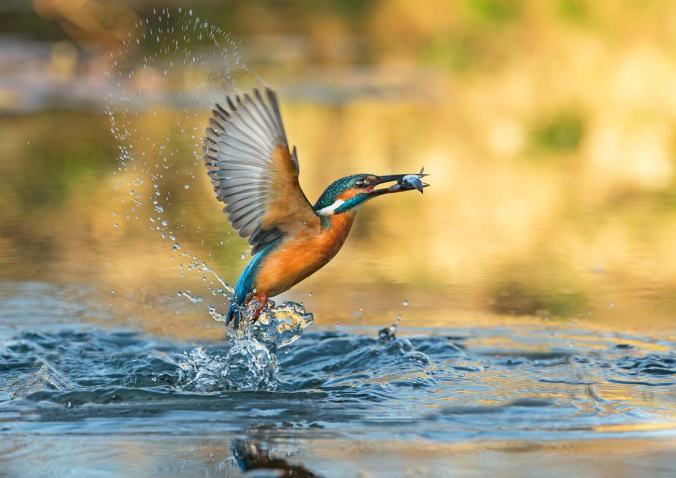
Kingfisher

Kingfisher in action. (Source)

It’s beautiful weather in Oxford today, so I thought I’d celebrate with a quick poem by Hopkins. It’s one of my favorites.

As Kingfishers Catch Fire

As kingfishers catch fire, dragonflies draw flame;
As tumbled over rim in roundy wells
Stones ring; like each tucked string tells, each hung bell’s
Bow swung finds tongue to fling out broad its name;
Each mortal thing does one thing and the same:
Deals out that being indoors each one dwells;
Selves — goes itself; myself it speaks and spells,
Crying Whát I dó is me: for that I came.
I say móre: the just man justices;
Keeps grace: thát keeps all his goings graces;
Acts in God’s eye what in God’s eye he is —
Chríst — for Christ plays in ten thousand places,
Lovely in limbs, and lovely in eyes not his
To the Father through the features of men’s faces.

Faber’s Oxford Poems: Part I

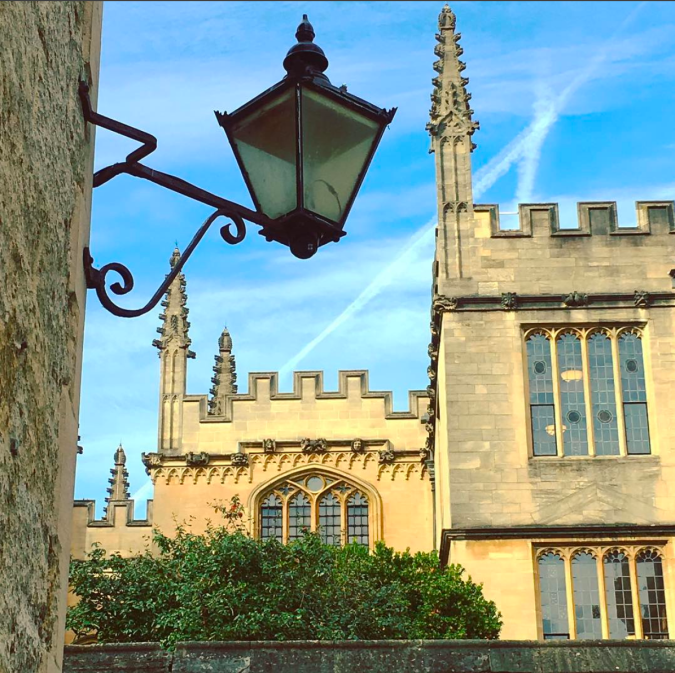
Screen Shot 2018-10-03 at 2.16.56 PM

A view of the Bodleian Library from Radcliffe Square. Photo taken by author.

Fr. Frederick William Faber, that great son of St. Philip, was one of the many Oxford converts. He was a Balliol man who later became a fellow of University College, where he embarked on an ecclesiastical career as an Anglican. Later, of course, he came to the Church of Rome and founded the London Oratory. But as I am now settling back into Oxford, I thought it might my readers might enjoy a few of his poems about life at the University. I’ll probably break the collection up into a few different posts. Although Faber was later famous as a hymn-writer, in his youth he was a Romantic poet who won the admiration of none other than Wordsworth, whom he met in the Lake District. Faber’s style may be rather too Victorian for our tastes today. They also represent his spirituality at a very immature stage, when he was still an Anglican. The contrast between “College Chapel’s” rather pathetic final line and Faber’s “Muscular” pose in “College Hall” amuses, to say the least. But occasionally, as in “College Garden,” his sensuality and yearning anticipate the best of the Decadents who came at the end of the century. Finally, I’ll add that Faber’s romantic attachment to the legends and traditions of the English medieval monastics once again confirms my point that there remains an abiding affinity between the Oratorian and Benedictine charisms. 

College Chapel

A shady seat by some cool mossy spring,
Where solemn trees close round, and make a gloom,
And faint and earthy smells, as from a tomb,
Unworldly thoughts and quiet wishes bring:
Such hast thou been to me each morn and eve;
Best loved when most thy call did interfere
With schemes of toil or pleasure, that deceive
And cheat young hearts; for then thou mad’st me feel
The holy Church more night, a thing to fear.
Sometimes, all day with books, thoughts proud and wild
Have risen, till I saw the sunbeams steal
Through painted glass at evensong, and weave
Their threefold tints upon the marble near,
Faith, prayer, and love, the spirit of a child!

College Hall

Still may the spirit of the ancient days
Rest on our feasts, nor self-indulgence strive
Nor languid softness to invade the rule,
Manly, severe, and chastethe hardy school
Wherein our might fathers learnt to raise
Their souls to Heaven, and virtue best could thrive.
They, who have felt how oft the hour is past
In idle, worldly talk, would fain recall
The brazen Eagle that in times of yore
Was wont to stand in each monastic hall;
From whence the Word, or some old Father’s lore,
Or Latin hymns that spoke of sin and death
Were gravely read; and lowly-listening faith
In silence grew, at feast as well as fast.

College Garden

Sacred to early morn and evening hours,
Another chapel reared for other prayers,
And full of gifts,smells after noon-day showers,
When bright-eyed birds look out from leafy bowers,
And natural perfumes shed on midnight airs,
And bells and old church-clocks and holy towers,
All heavenly images that cluster round.
The rose, and pink acacia, and green vine
Over the fretted wall together twine,
With creepers fair and many, woven up
Into religious allegories, made
All out of strange Church meanings, and inlaid
With golden thoughts, drunk from the dewy cup
Of morns and evenings spent in that dear ground!

College Library

A churchyard with a cloister running round
And quaint old effigies in act of prayer,
And painted banners mouldering strangely there
Where mitered prelates and grave doctors sleep,
Memorials of a consecrated ground!
Such is this antique room, a haunted place
Where dead men’s spirits come, and angels keep
Long hours of watch with wings in silence furled.
Early and late have I kept vigil here:
And I have seen the moonlight shadows trace
Dim glories on the missal’s blue and gold,
The work of my monastic sires that told
Of quiet ages men call dark and drear,
For Faith’s soft light is darkness to the world.