My Favorite Hymn to St. Philip Neri

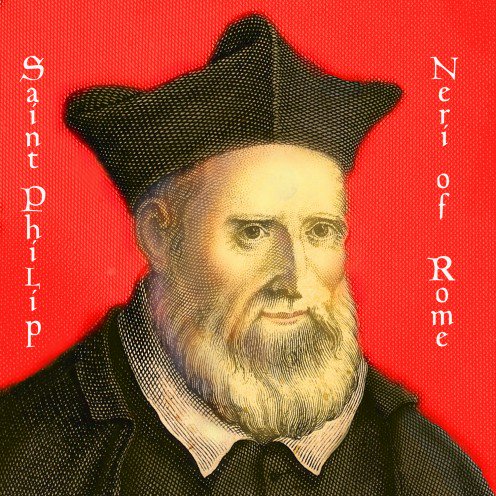
StPhilipImageRed

St. Philip, pray for us (Source)

As my readers will well know, St. Philip Neri is my favorite saint and has been for a long while now. I take every opportunity I can to sing his praises on this blog, and today happens to be one of them. In Oxford, we are celebrating the Feast of the Patronage of St. Philip, a local solemnity that honors the canonical erection of the house here as a Congregation of the Oratory. Please pray for the Oxford Fathers on this, their silver jubilee.

To celebrate, here is my favorite hymn to the Apostle of Rome – Pangamus Nerio, as sung by the choir of the Birmingham Oratory. It is the vesperal hymn of St. Philip.

Pangamus Nerio, debita cantica
Quem, supra nitidi sydera verticis,
Virtus et meritum sustulit inclytum,
Carpturum pia gaudia.

Noctes sub spectabus, corpora martyrum,
Quas implent, vigilat sedulus integras,
Ex ipsis satagens discere mortuis
Normam qua bene viveret.

Nocte dum Nereus fercula pauperi,
Gestans praecipitat, panniger Angelus
Tecto significat, qualiter excidat
Numquam fervida caritas.

Orantis penetrans cordis in intimum,
Laxavit spatium Spiritus impete
De Coelo veniens, esset ut hospiti
Immenso locus amplior!

Coelorum Domino, dum sacra munera
Libabat Nerius, saepius advolans,
Tellurem rapido corpore deserit,
Christo fiat ut obvius!

Corpus deseruit, cum Deus Hostiae
Fertur sub niveae tegmine conditus,
Prudens, in Patriam, pergere splendide
Nolens absque Viatico.

Amen.

Unfortunately, I don’t have an English translation (nor the time and energy to translate from the original myself). Alas.

May St. Philip Neri pray for Oxford, for the Oratorians there, and for all of us who call upon him in filial affection.


Another View of the Sacraments in the Eighteenth Century

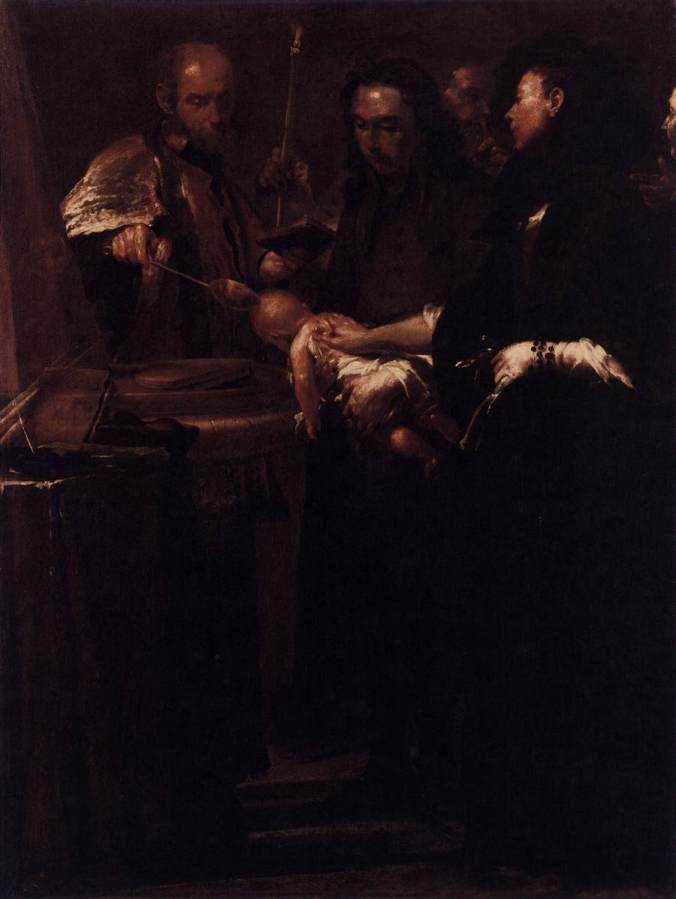
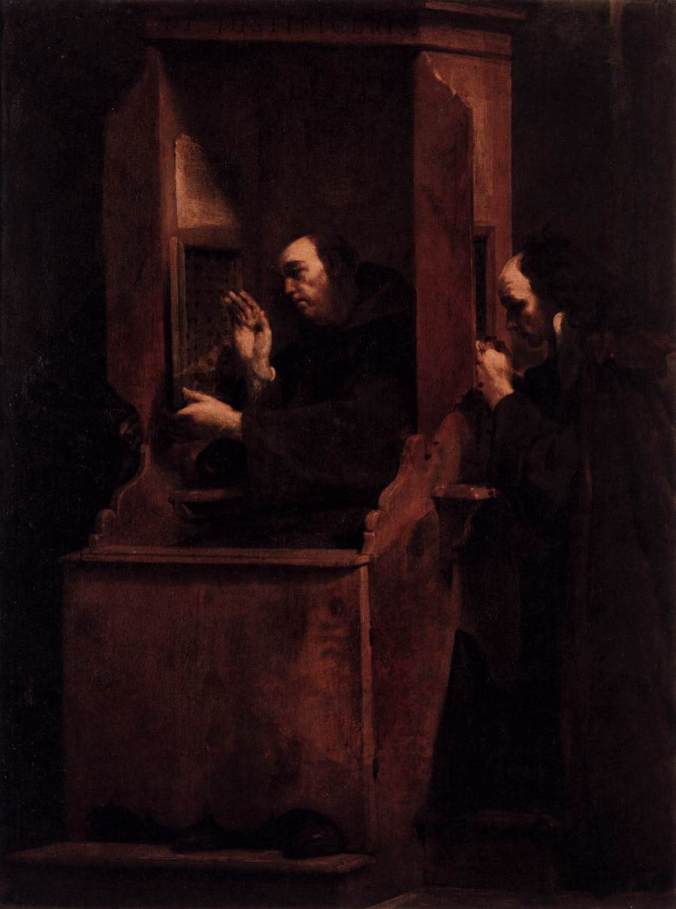
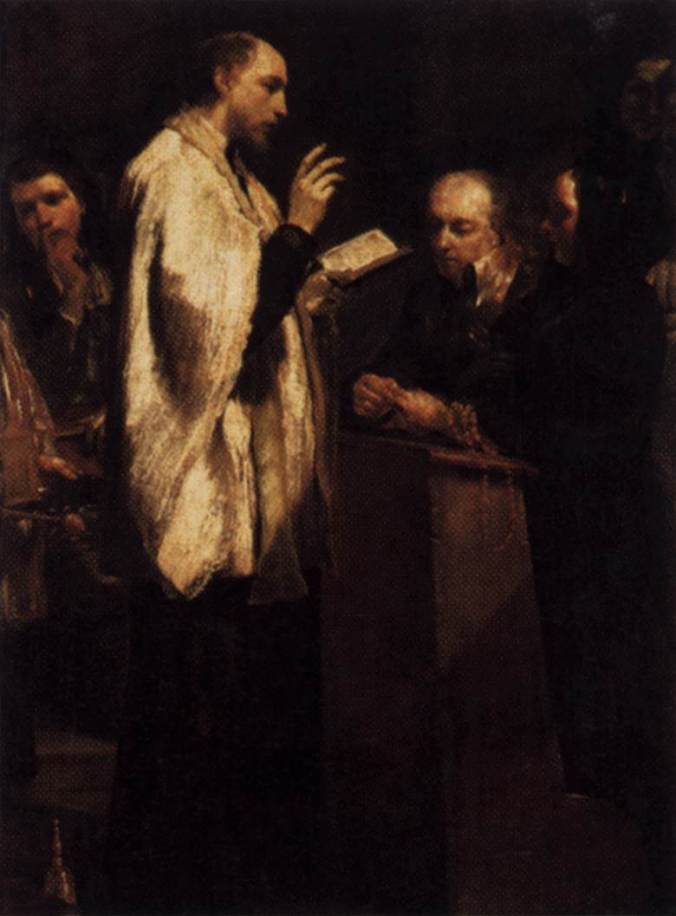
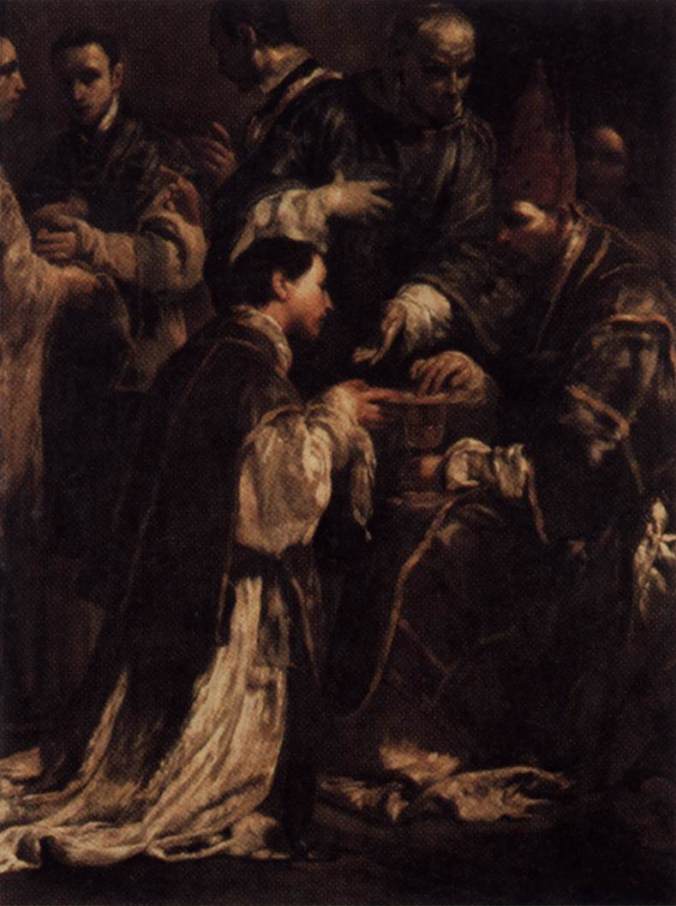
A while back I produced a short post entitled “A View of the Sacraments in the Age of Enlightenment.” Here I give you another series of similar images, this time from the hand of Giuseppe Maria Crespi, also known as “Lo Spagnuolo.” These paintings from 1712, so reminiscent of Rembrandt, hang in the Gemäldegalerie, Dresden. Originally commissioned by Cardinal Pietro Ottoboni, that towering figure of late Baroque culture, they passed posthumously up to Germany, where they made their way into collection of the Elector of Saxony.

Let me begin by saying that, as with the information in the above paragraph, all of the images can be found at Wikipedia.

Giuseppe_Maria_Crespi_-_Baptism_-_WGA05763

“Baptism.” Crespi’s sparing use of light demonstrates the central conjunction of the scene. Allowing our eyes to wander along the central line of illumination, we follow the arm of the priest pouring water on the head of the outstretched infant to the mother’s rosary-wrapped wrist just beyond. I am convinced that the use of light in all of these images is the key to their meaning. Crespi uses light to illustrate the work of sacramental grace, and darkness to emphasize the mortality, evanescence, and weariness of our ordinary world. “The people in darkness have seen a great light” – thus spake Isaiah.

Giuseppe_Maria_Crespi_-_Communion_-_WGA05766

“Communion.” The priest’s face is shrouded in darkness, and rightly so. It is not he who offers the bread of life, but Christ in him. Interesting collar, too. Sure looks familiar. Cardinal Ottoboni was patron of the Congregation of the Oratory at Rome for some time, and it’s entirely possible that Crespi would have taken the Oratorians as his model here. Besides that, the setting of the scene is strikingly barren. Crespi’s choice to leave out the probable altar rail lends the scene an intimacy that captures the very heart of the worship here portrayed.

Giuseppe_Maria_Crespi_-_Confirmation_-_WGA05765

“Confirmation.” Crespi’s lightest and most colorful piece in the series. The vivid red-orange of the boy’s robes call to mind the tongues of flame that appeared on Pentecost, as does the (relatively) diffuse light bathing the scene. The brightest part of the image is the Bishop’s arm, only just anointing the boy’s head.  The strong predominance of vertical and diagonal lines in this piece only reinforce the sense of descent. Like all the paintings, the scene here is crowded without being cramped. Crespi seems to have penetrated to the deeply ecclesial nature of the sacraments. The sacraments are what give the Christian community its underlying spiritual cohesion and form. To quote De Lubac, “The Eucharist makes the Church.”

Giuseppe_Maria_Crespi_-_Confession_-_WGA05764

“Confession.” Quite in contrast to “Confirmation,” we come to Crespi’s darkest piece in the series. The overwhelming color is black. Confession is the sacrament that deals most straightforwardly with the reality of sin. The narrow contraction of the light – it comes only from one side, and very weakly. The formal likeness between confessor and penitent reminds us of the condition of sin common to all men. This painting is also the only one in the series where we don’t see a crowd. Only two figures are visible. In the end, we are always “alone with the Alone.”

Giuseppe_Maria_Crespi_-_Matrimony_-_WGA05769

“Matrimony.” Perhaps the most human of Crespi’s scenes. But we find unusual notes, things I can’t quite interpret with satisfaction. For a painting of matrimony, we hardly see the couple. Indeed, the bride has almost been swallowed up by the shadows. Nigra sum sed formosa. Perhaps. The priest stands like a pillar of cloud before them, blessing their union. That seems straightforward enough. Yet why is the man on the left holding his hand to his mouth, as if to signal silence? Perhaps because the matter of this sacrament is always properly taken in secret…

Giuseppe_Maria_Crespi_-_Ordination_-_WGA05768

“Ordination.” This composition is a swirling mix of blacks, browns, subtle golds, and occasionally, whites. The point that stands out most is the break in this overall scheme – the youthful, rosy visage of the ordinand, coupled with the slightly ruddy shadows that fall across his hand. What a contrast with the other figures, all of whom are shrouded in darkness and invested with a manifest pallor. Here is an image of youth, a prospect of renewal against a backdrop of dignified decay.

Giuseppe_Maria_Crespi_-_Extreme_Unction_-_WGA05767

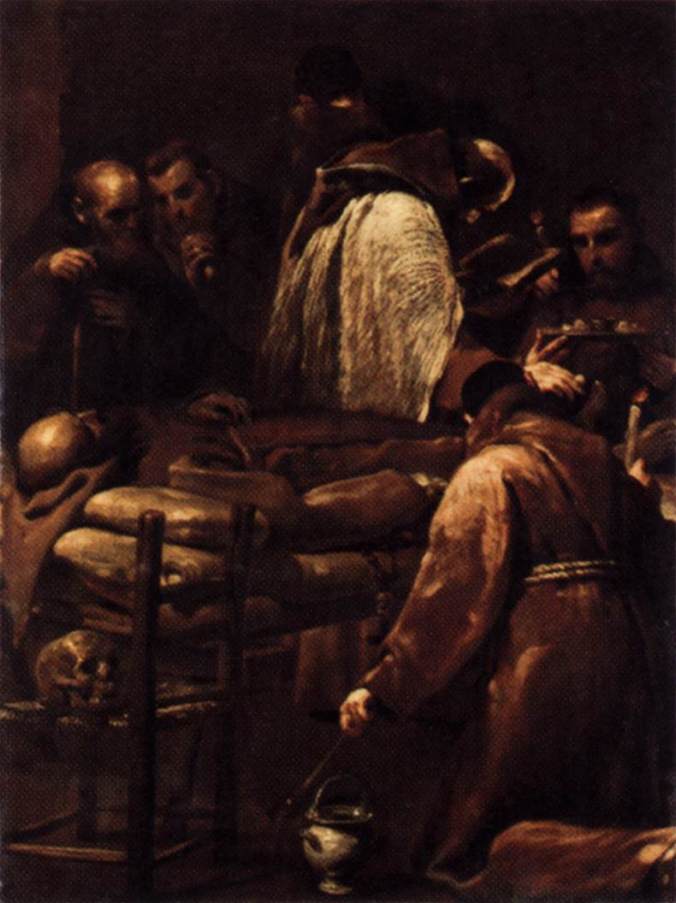
“Extreme Unction.” At last we come to the end, the place of the skull. It is only fitting that Crespi should choose to depict a collection of Franciscans for this sacrament. Religious life is always a preparation for death. Yet the bright patch of light improbably illuminating the shoulder of the attendant friar contrasts starkly with the shadowy body of the dying father and points to new hope.

Chesterton’s St. George

Saint_George_and_the_Dragon_by_Paolo_Uccello_(Paris)_01.jpg

“Saint George and the Dragon,” Paolo Uccello, c. 1459 (Source)

The Englishman

G.K. Chesterton

St George he was for England,
And before he killed the dragon
He drank a pint of English ale
Out of an English flagon.
For though he fast right readily
In hair-shirt or in mail,
It isn’t safe to give him cakes
Unless you give him ale.

St George he was for England,
And right gallantly set free
The lady left for dragon’s meat
And tied up to a tree;
But since he stood for England
And knew what England means,
Unless you give him bacon
You mustn’t give him beans.

St George he is for England,
And shall wear the shield he wore
When we go out in armour
With battle-cross before.
But though he is jolly company
And very pleased to dine,
It isn’t safe to give him nuts
Unless you give him wine.

Spring According to Pre-Raphaelites

Spring is here, and the Pre-Raphaelites are going to tell you how to celebrate.

WalterCraneSpringIf you’re not just lying about languidly in a meadow, you’re not really doing it right, are you?

SpringAppleBlossoms.jpgIt is also acceptable to lie there with an audience, preferably one enjoying a lovely picnic. And everyone must be the same gender and should, if at all possible, be dressed in very uncomfortable clothing.

Spring_Buckland
After you have wallowed in the flowers, be sure to pick some and stare vacantly into the middle distance.

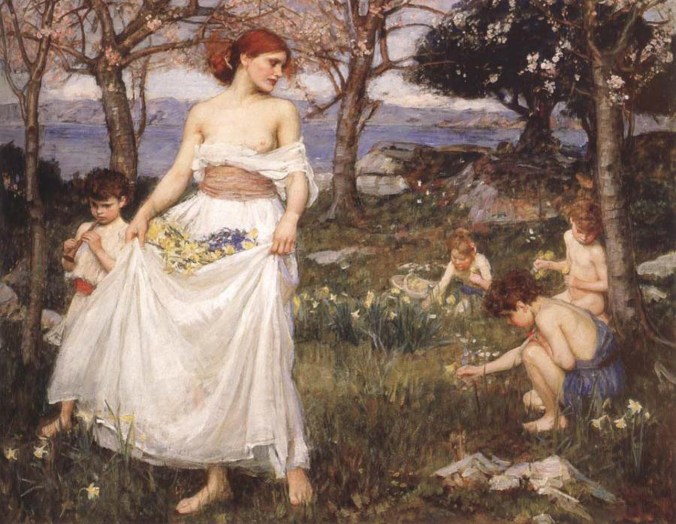
john_william_waterhouse_10_a_song_of_springtime.jpg And of course, you should be arrayed in an artfully disheveled white dress. To get that shabby chic look, you know?

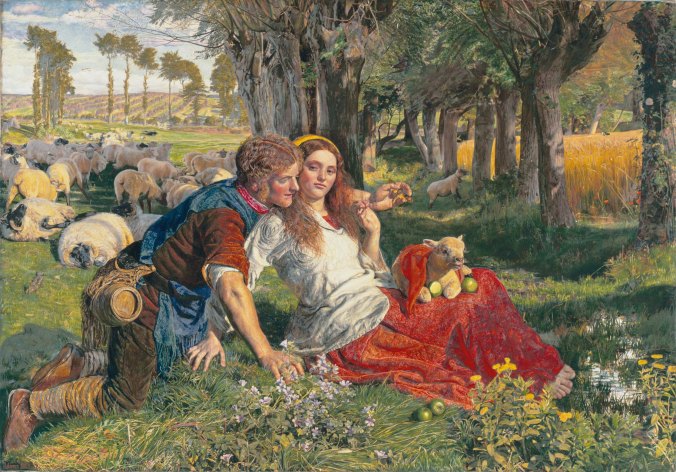
HirelingHolmanHunt.jpgHow you dishevel it is up to you.

InnerBeautyWaterhouse
Never let a gust of wind pass without posing.

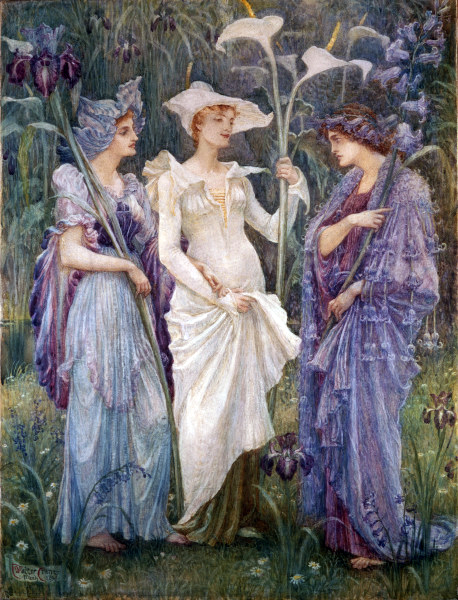
WalterCraneSignsofSpring
When it comes to flower-staffs, the bigger, the better.

the_fairy_wood
Only travel with an entourage of little people, so as better to accent your royal mien and bearing.

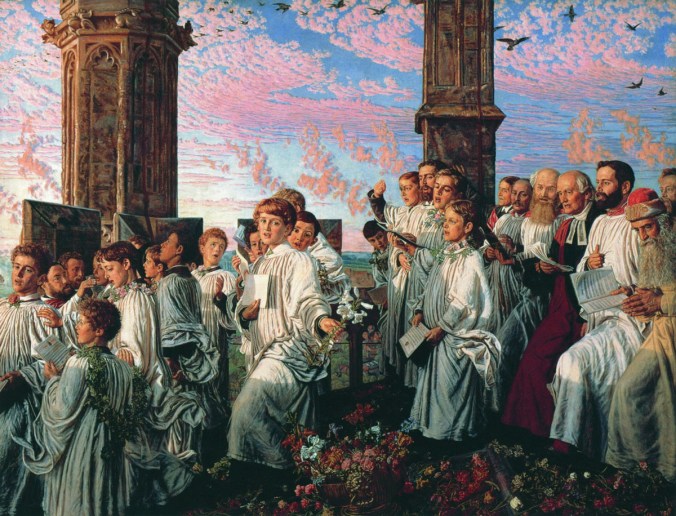
William_Holman_Hunt_-_May_Morning_on_Magdalen_Tower
Choir boys will also do.

Ophelia 1851-2 by Sir John Everett Millais, Bt 1829-1896
Spring is a lovely time for a refreshing dip.

Screen Shot 2018-04-21 at 9.54.52 PM.png
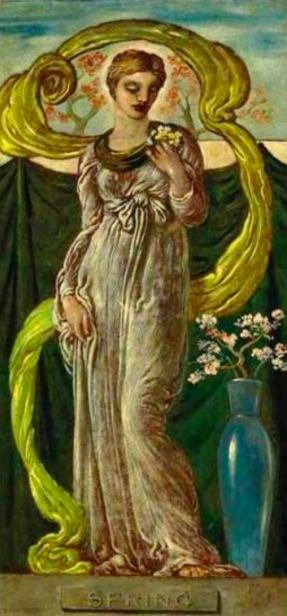
You know you’re having a good Spring day when, so enraptured by the little blossoms you’re holding, you don’t even notice your long green scarf blowing away.

The_Awakening_of_Adonis_-_John_William_Waterhouse_(1899)
If you happen to find half-naked classical youths asleep in a garden, surrounded by putti and doves, and stuck in an extraordinarily improbable pose, don’t worry. This is normal in Spring.

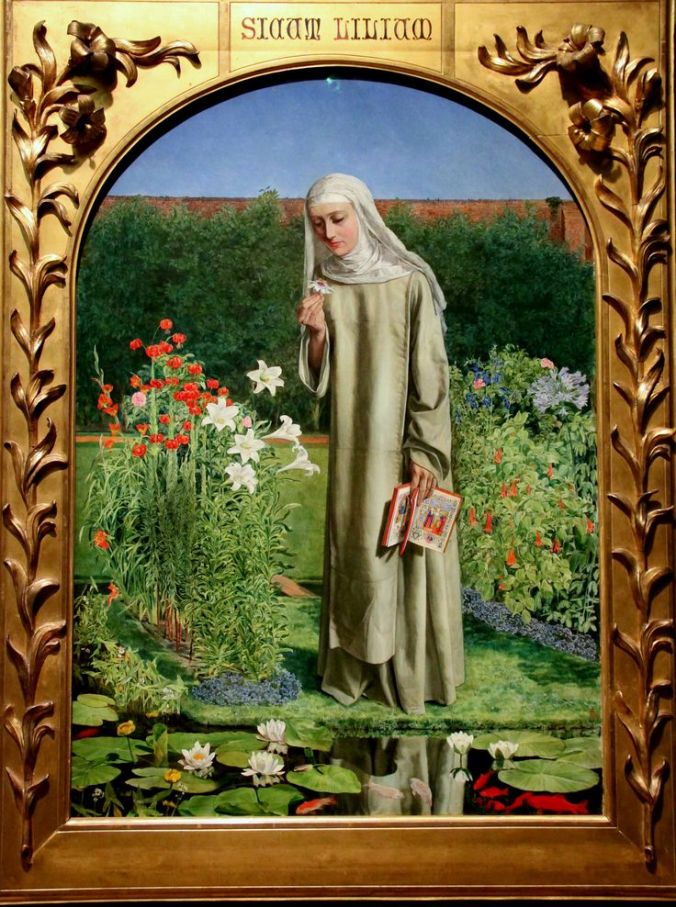
SicutLiliumPreRaph
Likewise, wild nuns emerge from hibernation and range freely again in the Spring.

Edward_Burne-Jones_-_The_Beguiling_of_Merlin.jpg
While it’s important to enjoy the season, it’s even more important not to get too caught up in it. This time of the year is when people are most at risk of being sealed into trees by nymphs.

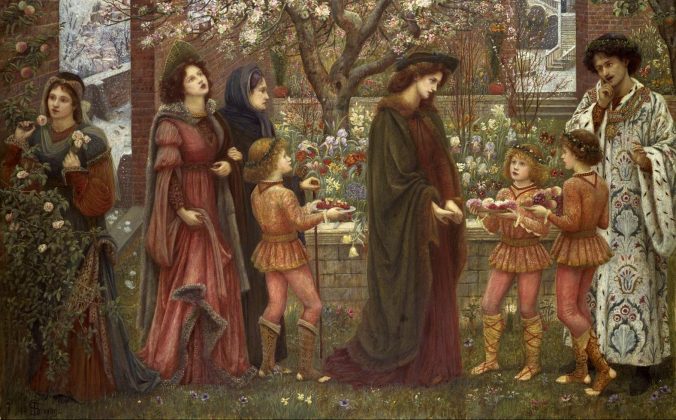
The-Enchanted-Garden-of-Messer-Ansaldo-1-e1480773352693
But surely the best thing about Spring is that it’s no longer Winter!

(Images from here, here, here, here, here, here, here, here, here, here, here, here, here, here, here)


A Ghastly Hymn for Good Shepherd Sunday

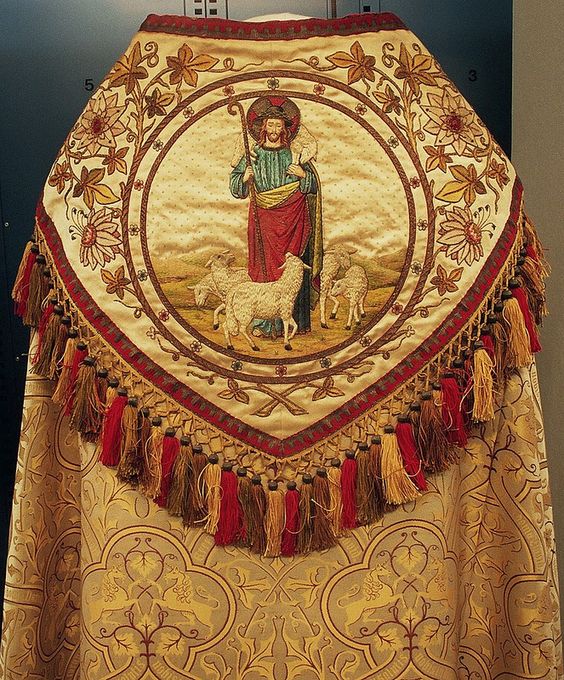
Cope2

A cope depicting the Good Shepherd. (Source)

I realize that technically last week was Good Shepherd Sunday in the traditional calendar, but as most of the Catholic world (alas) celebrates it tomorrow, I thought I’d offer up this truly dismal hymn from Fr. Faber. I have never yet heard it set to music, so if any of my readers happen to know of a recording, I would appreciate them kindly sharing it. Fr. Faber is one of my favorite spiritual writers and hymnodists…even when he’s outlandishly bad.

The True Shepherd

Fr. Frederick William Faber

I was wandering and weary
When my Saviour came unto me;
For the ways of sin grew dreary
And the world had ceased to woo me:
And I thought I heard Him say,
As He came along His way,
O silly souls! come near Me;
My sheep should never fear Me;
I am the Shepherd true.

At first I would not hearken,
And put off till the morrow;
But life began to darken,
And I was sick with sorrow;
And I thought I heard Him say,
As He came along His way,
O silly souls! come near Me;
My sheep should never fear Me;
I am the Shepherd true.

At last I stopped to listen,
His voice could not deceive me;
I saw His kind eyes glisten,
So anxious to relieve me:
And I thought I heard Him say,
As He came along His way,
O silly souls! come near Me;
My sheep should never fear Me;
I am the Shepherd true.

He took me on His shoulder,
And tenderly He kissed me;
He bade my love be bolder,
And said how He had missed me;
And I’m sure I heard Him say,
As He went along His way,
O silly souls! come near Me;
My sheep should never fear Me;
I am the Shepherd true.

Strange gladness seemed to move Him,
Whenever I did better;
And he coaxed me so to love Him,
As if He was my debtor;
And I always heard Him say,
As He went along His way,
O silly souls! come near Me;
My sheep should never fear Me;
I am the Shepherd true.

I thought His love would weaken,
As more and more He knew me;
But it burneth like a beacon;
And its light and heat go through me;
And I ever hear Him say,
As He goes along His way,
O silly souls! come near Me;
My sheep should never fear Me;
I am the Shepherd true.

Let us do then, dearest brothers!
What will best and longest please us,
Follow not the ways of others,
But trust ourselves to Jesus;
We shall ever hear Him say,
As He goes along His way,
O silly souls! come near Me;
My sheep should never fear Me;
I am the Shepherd true.

A Heathen Song in Time of War

justin_varg-3.jpg

“Then the black snake coursed the meadow,/The red dragon rose unwombed,/While the storm wailed like a shadow/To eternal anguish doomed.” – Johannes Carsten Hauch (Source)

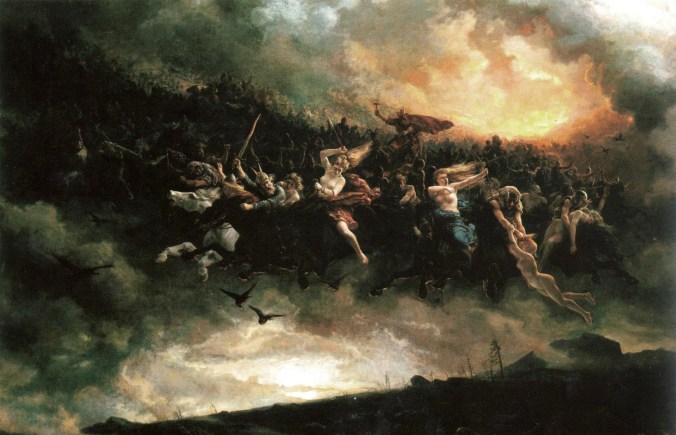
As the world seems to be reeling towards another horrendous conflict, I am reminded of one of the greatest, most Dionysian pieces of recent anti-war art, Veljo Tormis’s Raua Needmine (Curse Upon Iron). Bleak as the Baltic, majestic as the dark woods of the north, and terrifying as Ragnarok itself, the 1972 piece from Estonia managed to capture the frenzied devastation of war. It is music best listened to with eyes firmly shut.

Nostalgia Without Illusions

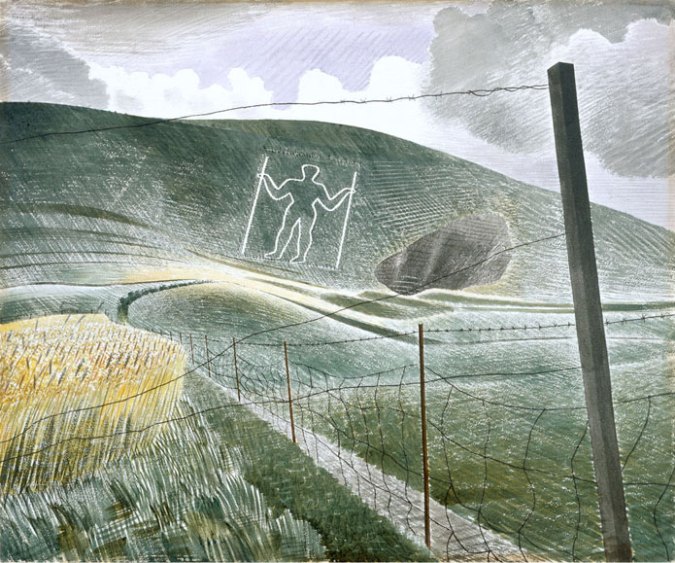
Ravilious-Wilmington-Giant

The Wilmington Giant, Eric Ravilious (Source)

Recently I read an article about a genre of music that had previously been unknown to me: Hauntology. In a nutshell, Hauntology is a throwback to the eerie, folksy world of British childhood in the 1970’s. The author summarizes the genre’s affective impact as “strange, melancholy disquiet.” Apparently music is being made today (and has been for some time) that conjures all at once that decade’s public broadcasting for children, the acoustic sounds of the English folk tradition, psychedelia, pagan chants, and synthesizers. Most of this material has been released through a few different labels: Ghost Box, Clay Pipe, and Trunk Records. Each specializes in a different variation of the general theme. On the whole, though, they all produce music that’s unsettling and evocative of a very particular place and time in the last century. There is something autumnal, something anachronistic, something broken in it all. In short, it’s music that’s haunted.

Many of the albums have cover art inspired by Eric Ravilious or John Nash or Sir Stanley Spencer or even Rex Whistler, those painters who so marvelously captured the quiet unease of the British landscape and its denizens. And the multimedia satirical phenomenon that is Scarfolk fits right into the broader movement. Hauntology is more than just a style of music. It’s an aesthetic.

In this respect, Hauntology is to the 1970’s what Vaporwave is to the late 1980’s and 90’s, or, for that matter, what David Lynch’s entire corpus is to the 1950’s.

vaporwavemall.jpg

Malls built in the early years of Bush I are the stuff of Vaporwave dreams. (Source)

Vaporwave derives its critical bite as well as its occasional airy ephemerality from a unifying sense of dread. Much the same could be said of Hauntology. Only instead of the zombie-like ascent of neoliberal late capitalism under the glittering haze of digital culture and advertising, Hauntology is still preoccupied with the anxieties of the analog age. Orwellian dystopia, the loss of the British countryside, and the destruction of innocence all hover under the surface. It’s drawing upon creepy public service announcements rather than Japanese soft drink commercials. Hauntology is to British Folk Horror as Vaporwave is to Cyberpunk.

BlueVelvet

A scene from Blue Velvet (1986), one of David Lynch’s most distinctive films. It set the tone for much of what was to follow in its powerful evocation and ultimately ruthless subversion of mid-century norms (Source).

The common denominator is nostalgia, but a nostalgia free of illusions. Each of these aesthetic representations of a remembered decade – Lynch’s 1950’s, Hauntology’s 1970’s, and Vaporwave’s Digital Age – contains a degree of attachment to that particular time. Usually because the main creators involved in producing the aesthetic grew up then, and thus they draw upon the dreamlike haze which alternately gilds and clouds our world in youth. But it’s all shot through with the very real understanding that the past was not as wonderful as we would like to believe. Something nasty lurks just beyond our peripheral vision. We cannot help remember, but in that remembrance, terror awaits.

I’m an American, and only in my early twenties. 1970’s Britain wasn’t a world I ever knew. Nevertheless, I immediately connected with the emotional phenomenon behind Hauntology. Certain relics of that earlier time appeared every now and then in childhood, and even those that weren’t directly from the United Kingdom of the 1970’s often bring to mind that same feeling of remembered unease. Many of Don Bluth’s films animate precisely this strange, sensitive part of my memory. So do Stephen Gammell’s original illustrations of the Scary Stories to Tell in the Dark books. So does The October Country, Ray Bradbury’s wonderful short story collection (which itself significantly predates the main era of Hauntology). So does anything by Lynd Ward. So do parts of Pink Floyd’s The Wall. So does that horrible movie, The Plague Dogs. There are probably more examples I could summon up if I thought about it long enough. I am no stranger to “strange, melancholy disquiet.”

I’ve always liked that sensation, and I’ve always been drawn to other peoples’ nostalgia. As such, I’m super pleased to have discovered Hauntology.

Letter to a Catechumen

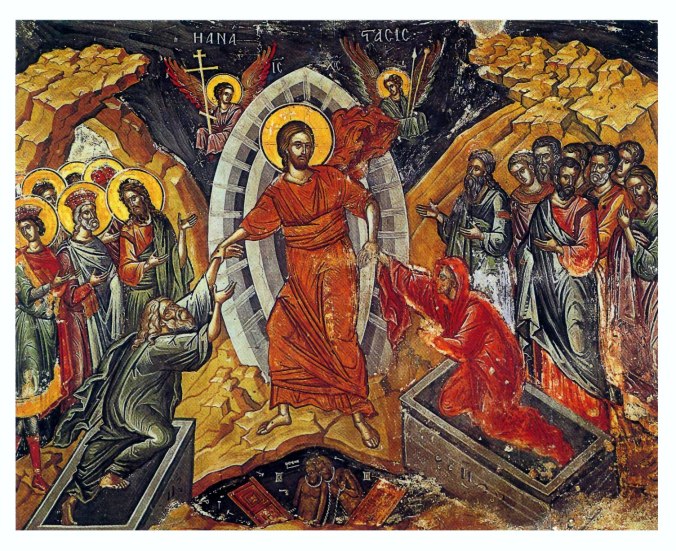
HarrowingHell

“Christ has risen from the dead, trampling down death by death.” (Source)

My Dear Brother Thomas Bede,

Easter brings us from darkness to light, from loss to gain, from death to life. Christ vanquishes the world, the flesh, and the devil. His victory reveals the true meaning of Easter—it is above all the feast of our conversion. The whole of the Christian message is for naught if Christ did not rise from the grave. But He did, and He invites us to share in the superabundance of His sanctity.

We cannot have holiness on our own terms. There is one model—a single life given to us by the Holy Ghost. It is a mercy and a wonder of God that Our Lord impresses His one divine image and likeness into the hearts of so many and so various saints. But light refracted through a prism is still light. We mortals cannot learn the ways of the divine life except by constant recourse to the God-Man.

And where do we receive this sacred pedagogy? Where can we savor the words that bring resurrection? Where do we set our hopes in the long trek through “this valley of tears?”

I think you already know the answer: the sacred liturgy. The Catholic life is drawn from, tied to, and led before the Tabernacle. The final end of our journey is to reach the Tabernacle veil, draw it aside with trembling hands, send forth our last breath in a sigh of consummate joy and relief, and step gracefully into the everlasting House of God. The Catholic life lived well is thus a pilgrimage from font to Tabernacle. Our Lord does not abandon us in this long journey. Like the good father of the parable, He rushes out to welcome His prodigal sons with open arms. He has prepared a great banquet in our honor. Indeed, the Savior who died for you gives you His flesh as feast. Every Mass is a homecoming. Every Holy Communion is a kiss of reconciliation.

I know all of this from experience, having already walked the path you are about to take. And I speak from experience when I say, dear brother, that everything in the Christian life must be brought back to the Tabernacle. If we don’t center our lives on the Blessed Sacrament, we shall be like ships adrift in a stormy sea. What fruitless turbulence enters the soul of one far from the Eucharist! What celestial treasures do we miss! Treasures given to us anew every year in the Sacred Triduum. Soon it will all be yours—yours the Supper, yours the Cross, yours the sojourn in the Tomb, yours the descent into Hell, and yours the Triumph in the Glorious Resurrection of Our Lord. In all of these mysteries, Our Lord wishes to imprint His image onto your soul. He will fashion you to be His servant. Pray that in the latter end, you may also be His saint.

You have no idea how long and how ardently Our Lord has desired your first Communion. From the very fathomless heights of eternity, He saw and loved you. As the whips broke His spotless flesh and the hateful wood of the cross bit into His back, He bore your face in mind. And when He hung there, dying, and said the blessed word—Sitio—“I thirst”—He spoke of your union with His heart. There is no point at which Christ did not desire you. He seeks to possess you in your entirety: body, blood, soul, and spirit. In the Eucharist, He offers Himself to you in precisely the same way. And as His gift of self is perfect, He shall make yours perfect, too.

When Dame Julian of Norwich was given a mystic vision of the world, she did not see sin. I believe this is because she was afforded a fleeting glimpse of the world as it will be in the Eschaton, the world as God sees it. Think of that, my brother. All the sins committed by you and me and every human being we have ever met, all the crimes that have soaked the pages of history in blood, all the atrocities that rightly call out to God for vengeance—all will be washed away. The past will be wiped clean.

Your conversion reproduces this grand act of divine mercy in miniature. You come to the altar of God a mere mortal, and a sin-sick one at that. Your burden would torment and crush you. The world of sin affords no rest. But my brother, you have chosen the path of freedom. You have set down one burden, but you are to take up another. Only this one is light and free and easy, giving strength to whoever bears it. It is the Cross, a deadening foolishness to the world, but the “pearl of great price” to those illumined by Divine Wisdom.

At the Easter Vigil, everything will change. When the water flows over your brow, when the oil touches the same spot, and when the Host alights on your lips, you will no longer be the same person you have been all your life. You will become instead one body with Christ crucified. Your life will no longer be yours; the act of surrender must be total. Your words, your breaths, your steps, your very heartbeats will belong to Christ. And He will use you to bring His peace into this world. By that whitest of magic, the sacraments, you will start to become a “little Christ,” a Christian. What an awful, beautiful fate.

I will not give you advice. There will be many closer to you who have a fuller knowledge of the Catholic life than I do. Go to them. Seek the wisdom grown only in many years of faith. And keep close to Mary. Remember that you are but an infant, and she is your mother. She will guide you.

Now, my very dear brother, it is time for you to take up your cross and know the Life Eternal.

In Christ,

Rick
Five Years a Catholic

ImmaculateHeartCard

May the Sorrowful and Immaculate Heart of Mary pray for us. (Source)

“To begin and end well, devotion to our Blessed Lady, the Mother of God, is nothing less than indispensable.” – St. Philip Neri, Maxims.

Five years ago, I was received into the Roman Catholic Church at the Easter Vigil. The journey since then has been an adventure, to say the least. Not all of it has been good. I’ve continued to make lots of mistakes, often failing in faith, hope, charity, and all the other virtues. Individual Catholics have often disappointed me. There were moments of doubt along the way, and, like the infamous Pillar of Salt, I am no stranger to the occasional backwards glance.

But in reflecting on those five years, the overwhelming feeling is one of gratitude. The many wonderful people I have met – and, more importantly, the graces I have received – have confirmed for me the essential soundness of my choice. I have no regrets. I only wish more people could know the abiding peace that comes with conversion to the Church that Christ established on St. Peter. And having consecrated myself to Mary, I feel as if I have had a new strength in the spiritual life since last Summer.

Thus far, I have dedicated each year to some mystery of the Faith. It is in that same spirit that I consecrate this sixth year of my Catholic life to the Sorrowful and Immaculate Heart of Mary. I pray that by her triumphant heart, she will continue to guide me to a more perfect knowledge of Her Father, Son, and Spouse. As St. Philip says, “Our Blessed Lady ought to be our love and consolation.” I hope that she ever will be mine.

And thus on this Good Friday, I beg your prayers and those of the saints, that I might persevere in the faith and grow in the love of God.

Most Sacred Heart of Jesus, pray for us.
Our Lady Immaculate, pray for us.
St. Joseph, pray for us.
St. Philip Neri, pray for us.

Amen.

HolyCardMary

The Queen of Heaven. (Source)

St. Francis de Sales on the Passion of Christ

frankydesales.jpg

St. Francis de Sales, pray for us. (Source)

In my final post of Wednesday spiritual masters, here is a passage from Part V, Chapter XIII of St. Francis de Sales’s Introduction to the Devout Life. I thought it was particularly appropriate for Holy Week.

The Love Which Jesus Christ Bears Us

Consider the Love with which our Dear Lord Jesus Christ bore so much in this world, especially in the Garden of Olives and on Mount Calvary; that Love bore you in mind, and through all those pains and toils He obtained your good resolutions for you, as also all that is needful to maintain, foster, strengthen and consummate those resolutions. How precious must the resolutions be which are the fruits of our Lord’s Passion! and how dear to my heart, since they were dear to that of Jesus! Saviour of my soul, Thou didst die to win them for me; grant me grace sooner to die than forget them. Be sure, my daughter, that the Heart of our most Dear Lord beheld you from the tree of the Cross and loved you, and by that Love He won for you all good things which you were ever to have, and amongst them your good resolutions. Of a truth we have all reason like Jeremiah to confess that the Lord knew us, and called us by our name or ever we were born, the more that His Divine Goodness in its Love and Mercy made ready all things, general and individual, which could promote our salvation, and among them our resolutions. A woman with child makes ready for the babe she expects, prepares its cradle, its swaddling clothes and its nurse; even so our Lord, while hanging on His Cross, prepared all that you could need for your happiness, all the means, the graces, the leadings, by which He leads your soul onwards towards perfection.

Surely we ought ever to remember this, and ask fervently: Is it possible that I was loved, and loved so tenderly by my Saviour, that He should have thought of me individually, and in all these details by which He has drawn me to Himself? With what love and gratitude ought I to use all He has given me? The Loving Heart of my God thought of my soul, loved it, and prepared endless means to promote its salvation, even as though there were no other soul on earth of which He thought; just as the sun shines on each spot of earth as brightly as though it shone nowhere else, but reserved all its brightness for that alone. So Our Dear Lord thought and cared for every one of His children as though none other existed. “Who loved me, and gave Himself for me,” S. Paul says, as though he meant, “for me alone, as if there were none but me He cared for.”

Let this be graven in your soul, my child, the better to cherish and foster your good resolutions, which are so precious to the Heart of Jesus.