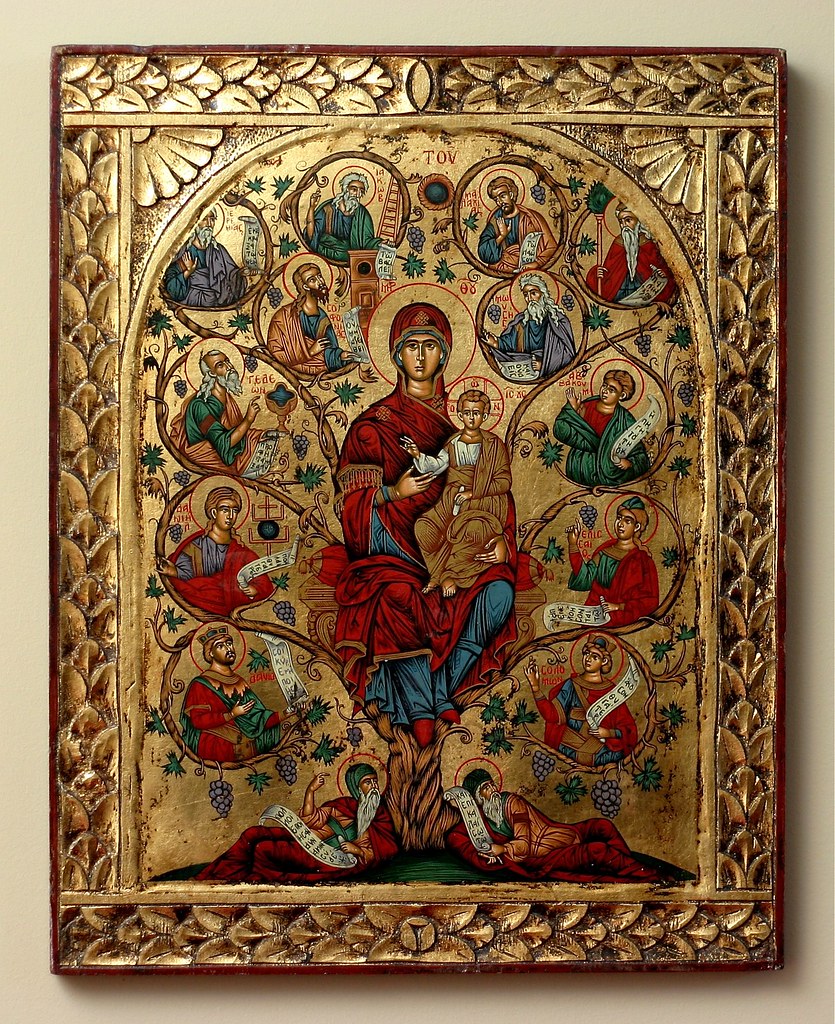
Let the Gentleman Saint help you this Lent. (Source)
SHOULD it happen sometimes, my daughter, that you have no taste for or consolation in your meditation, I entreat you not to be troubled, but seek relief in vocal prayer, bemoan yourself to our Lord, confess your unworthiness, implore His Aid, kiss His Image, if it be beside you, and say in the words of Jacob, “I will not let Thee go, except Thou bless me;” or with the Canaanitish woman, “Yes, Lord, I am as a dog before Thee, but the dogs eat of the crumbs which fall from their master’s table.”
Or you can take a book, and read attentively till such time as your mind is calmed and quickened; or sometimes you may find help from external actions, such as prostrating yourself folding your hands upon your breast, kissing your Crucifix,—that is, supposing you are alone. But if, after all this, you are still unrelieved, do not be disturbed at your dryness, however great it be, but continue striving after a devout attitude in God’s Sight. What numbers of courtiers appear a hundred times at court without any hope of a word from their king, but merely to pay their homage and be seen of him. Just so, my daughter, we ought to enter upon mental prayer purely to fulfil our duty and testify our loyalty. If it pleases God’s Divine Majesty to speak to us, and discourse in our hearts by His Holy Inspirations and inward consolations, it is doubtless a great honour, and very sweet to our soul; but if He does not vouchsafe such favours, but makes as though He saw us not,—as though we were not in His Presence,—nevertheless we must not quit it, but on the contrary we must remain calmly and devoutly before Him, and He is certain to accept our patient waiting, and give heed to our assiduity and perseverance; so that another time He will impart to us His consolations, and let us taste all the sweetness of holy meditation. But even were it not so, let us, my child, be satisfied with the privilege of being in His Presence and seen of Him.
“What a shock, Maximiliana has to be the life of the party AGAIN.”
“I think the real trouble in the Church today is the shortage of lace.”
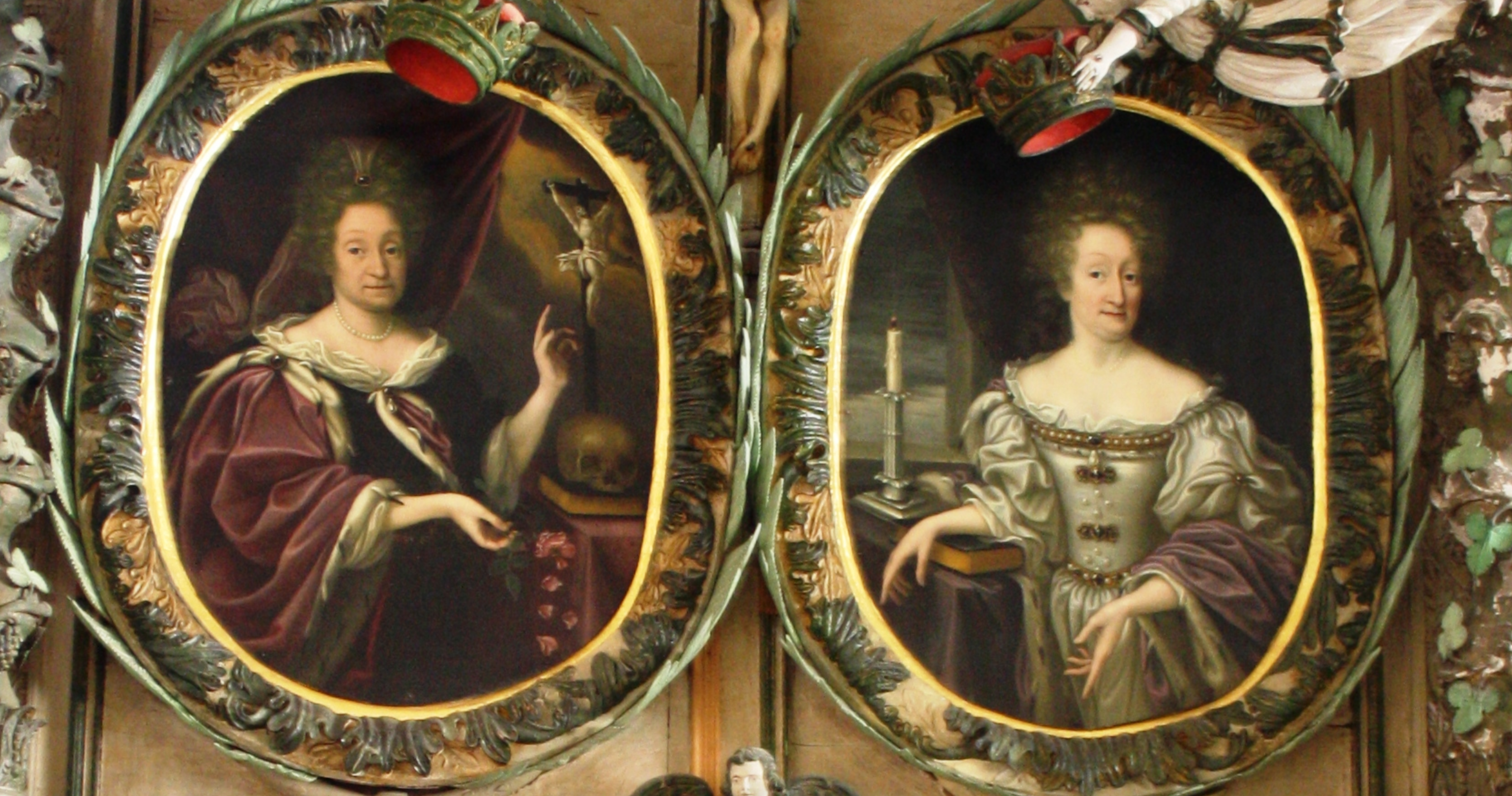
Princess-Abbess Christina zu Mecklenburg isn’t angry. She’s just disappointed.
“I’m not like a regular Princess-Abbess, I’m a cool Princess-Abbess. Observe my nude statues, dogs, and trendy collection of seashells.”
Winged headdresses are in this year.
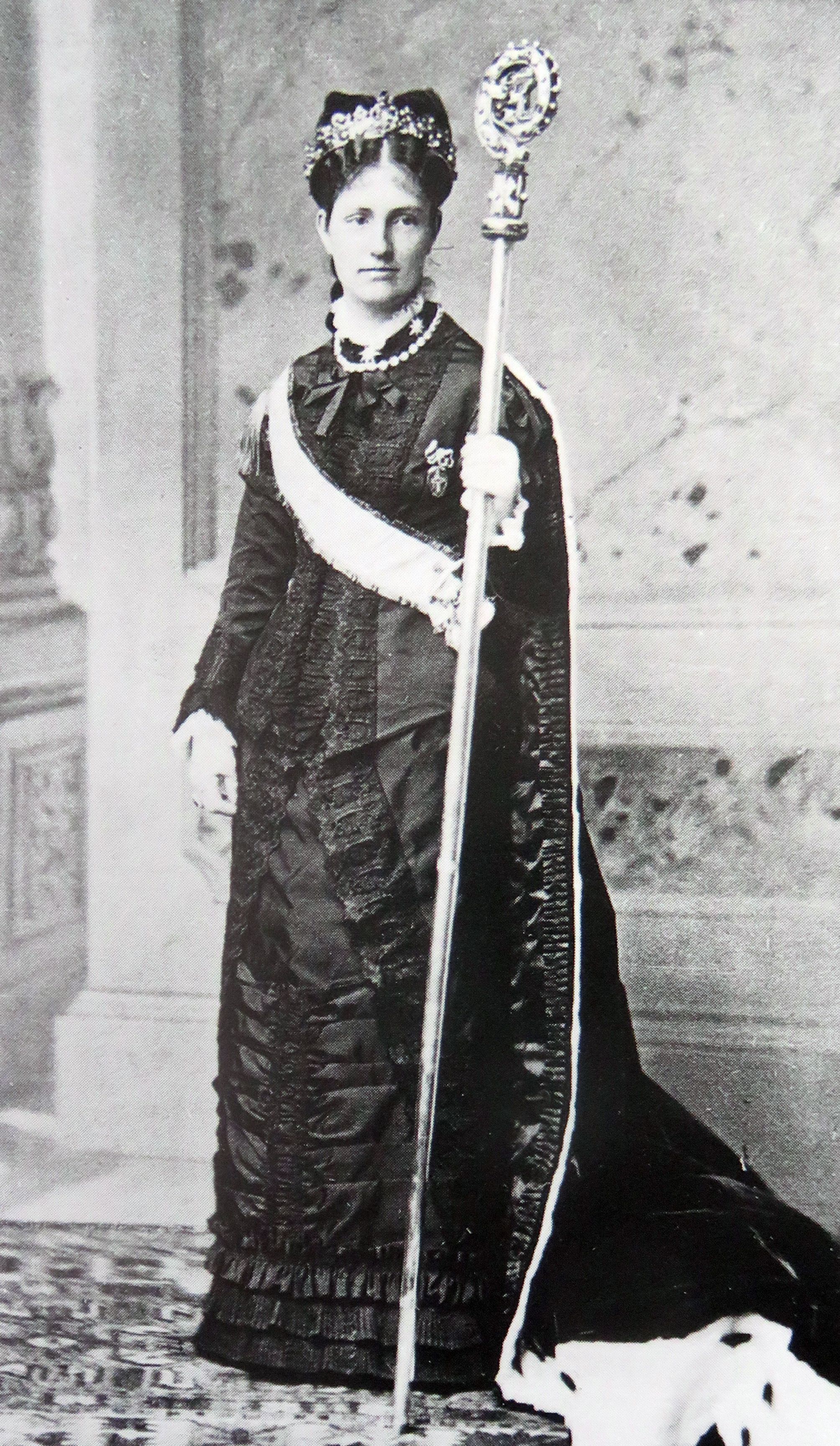
“This crosier was made by fifty leper goldsmiths on a Greek island owned by the Doge of Venice. My uncle, the Cardinal of Trieste and Titular Abbot of Unter-Festschrift, gave it to me at my accession.”
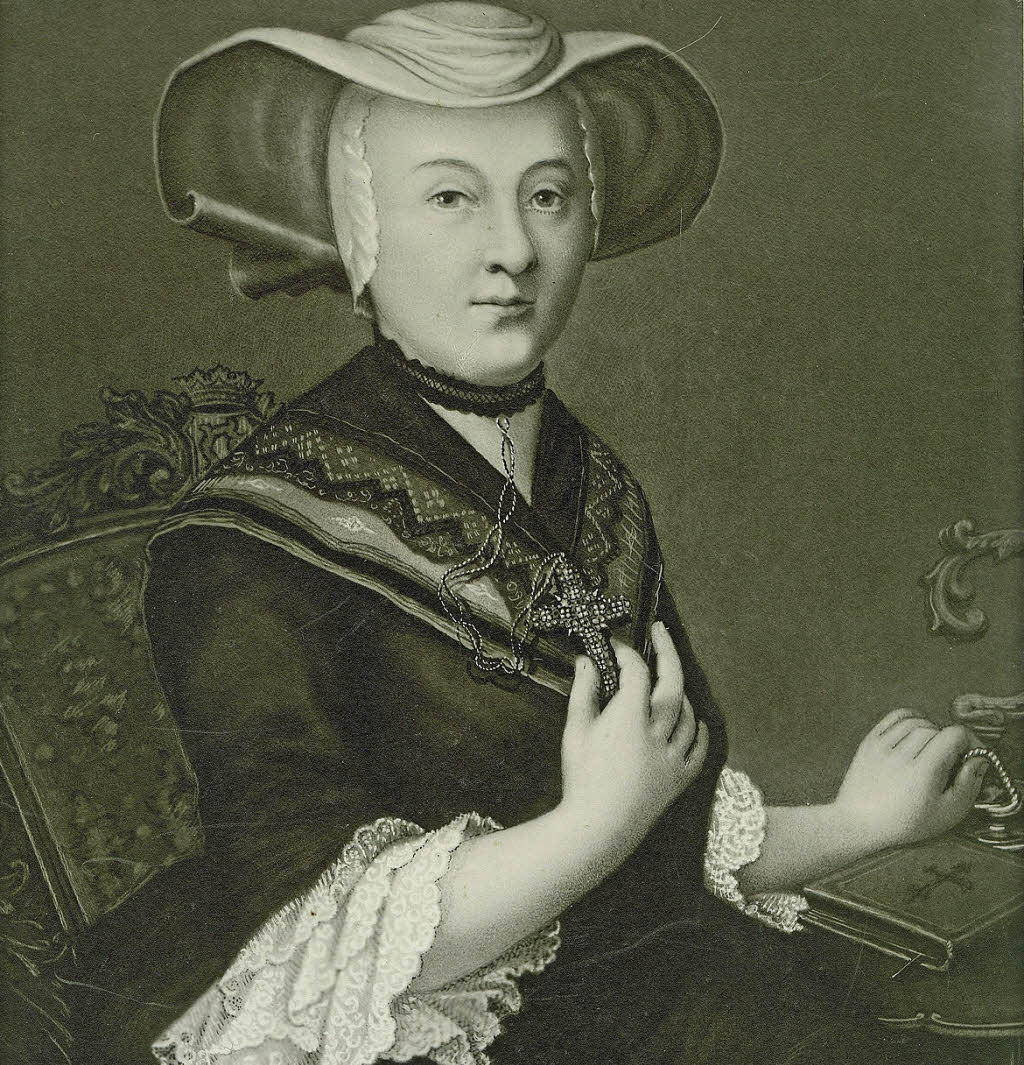
Therese Natalie of Brunswick-Wolfenbüttel, Princess-Abbess of Gandersheim, with her pendulous string of pearls, miniature portrait bracelet, powdered blue watered silk sash, ermine, and bejewelled Bible, is a model of noble simplicity.
“Well, grey is a penitential color, after all. More than what you’re wearing, heathen.”
“They told me it was the crown or the hair. I chose the hair.”
The face when you realize that someone has spilled ketchup and mustard everywhere.
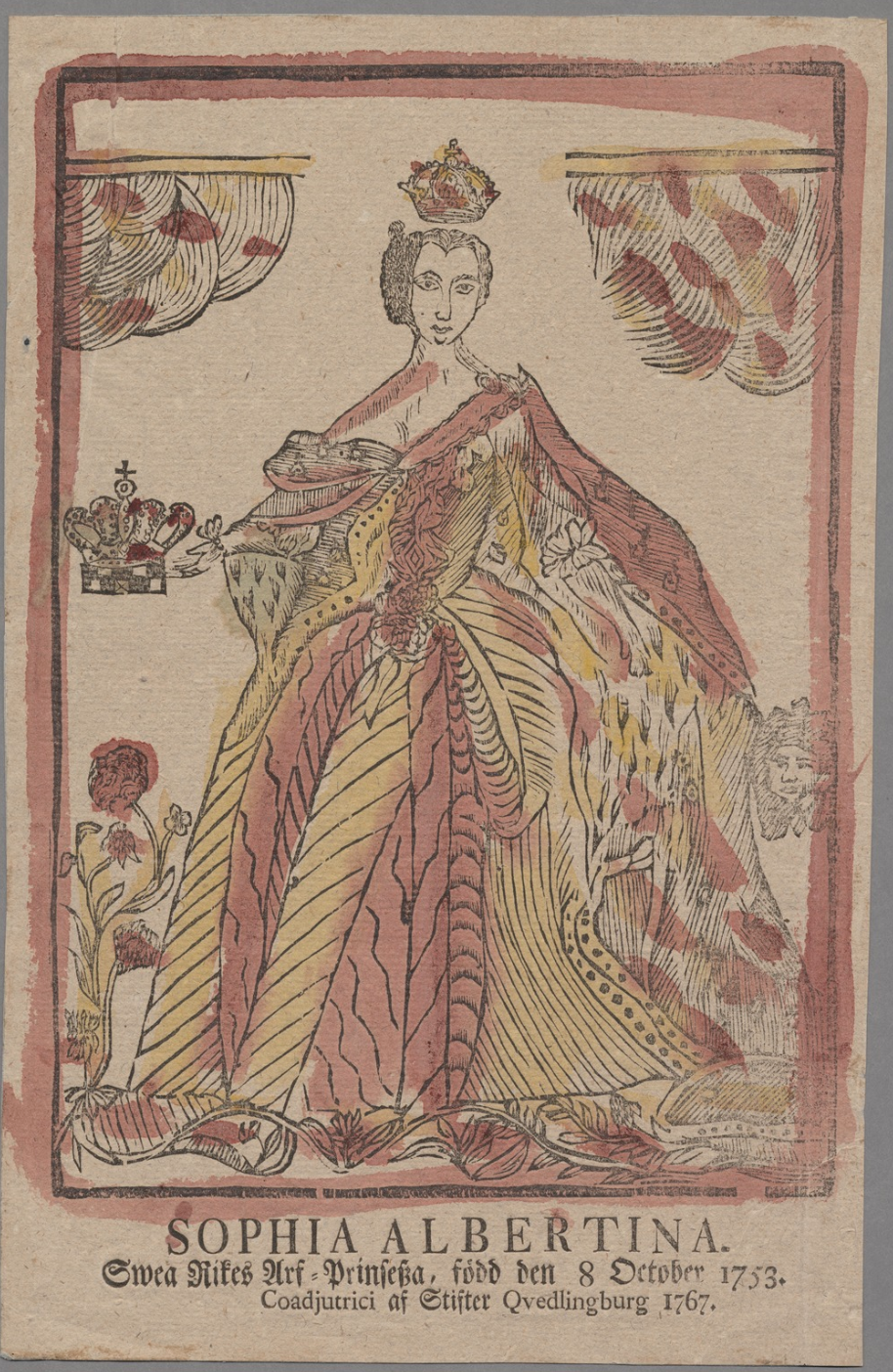
Marie Elisabeth von Holstein-Gottorf, Princess-Abbess of Quedlinburg, knows what you did. And she is not amused.
“What cloister is ever complete without tropical plants?”
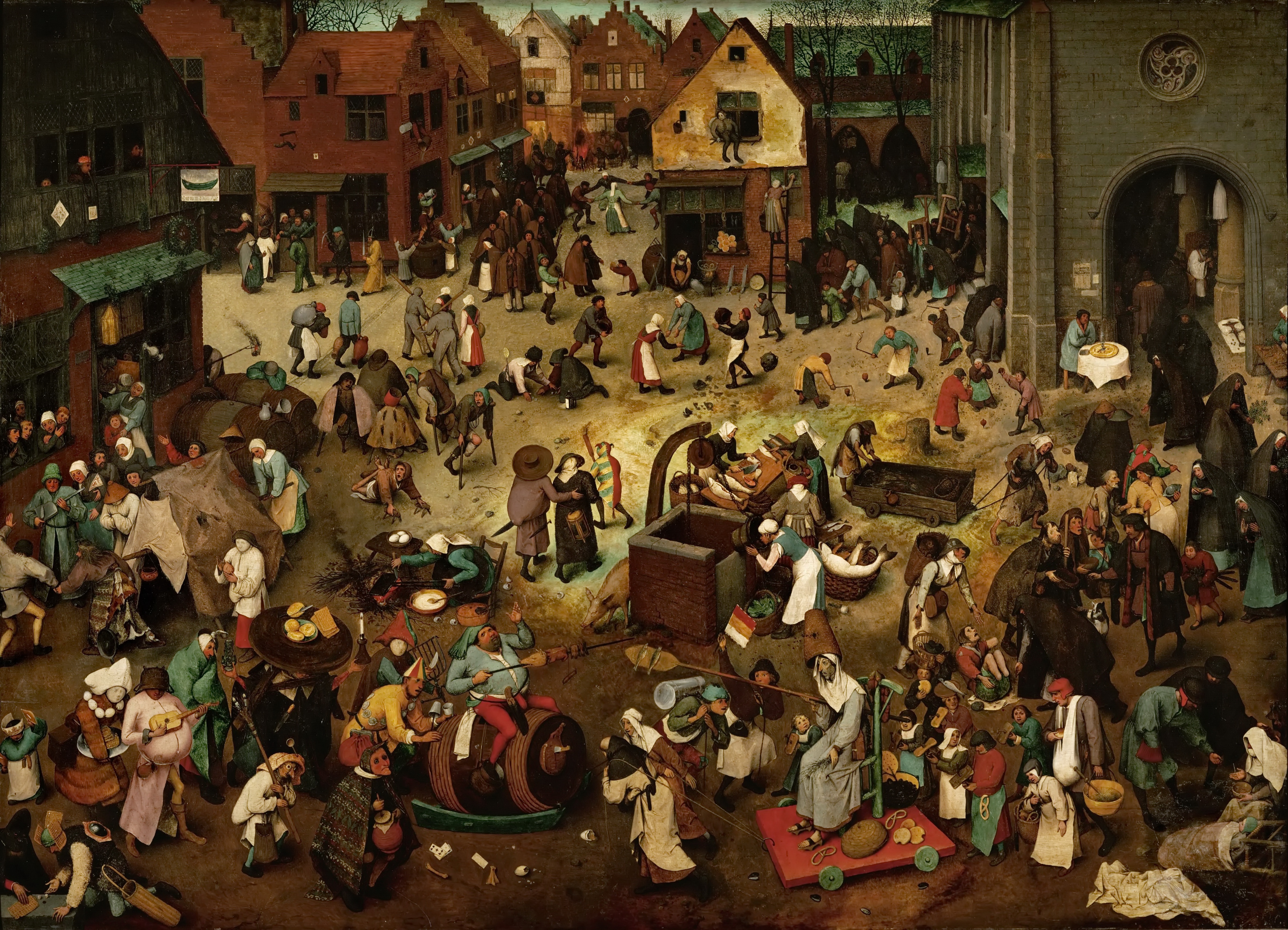
“The Fight Between Carnival and Lent,” Pieter Bruegel the Elder. Recently seen by the author in Brussels. (Source)
The pious among my readers will no doubt be aware that Lent will soon be upon us. Here are 100 ideas for how to have a successful and most fruitful season of penance.
Give up meat
Give up chocolate
Give up alcohol
Give up social media
Give up being a social media influencer
Give up films
Give up naughty films
Give up films that are very naughty but not the ones that are naughty while also being either smart or funny or historically dramatic in a passingly educational sort of way
Give up comic books
Give up music
Give up secular music
Give up Christian praise and worship music (for the love of God and all that is holy)
Give up lobster, though not on Fridays
Give up dairy
Give up various soft cheeses
Give up all cheeses from Poitou-Charente but not anywhere else in France
Give up Netflix
Give up “Netflix”
Give up petting zoos
Give up marsupials
Give up giraffes of any kind
Give up your ignorance of the various kinds of giraffe
Give up spy novels
Give up surprising all of your friends by suddenly screaming at them, apropos of nothing, “No, Mr. Bond, I expect you to die!”
Give up your longstanding telenovela addiction
Give up trying to learn Portuguese in favor of Esperanto
Give up learning Esperanto
Give up reading the poetry of William McGonagall, the Apollo of Dundee
Give up the various birds, stuffed and otherwise, that you are hoarding in your attic and basement
Give up your deeply-rooted habit of eating little fragments of ceramic statues
Give up your swimming lessons
Give up your avoidance of Luton, Slough, and Swindon
Give up the American news cycle
Give up the Busby Berkeley marathons you play in your living room every Friday evening
Give up pretending you are, in fact, the reincarnation of Senhor Doutor Plinio Corrêa de Oliveira
Give up whining
Give up long walks in the park
Give up spitting in public
Give up gossip
Give up gossip about me, please
Give up your general wanton demeanor and frowsy mien
Give up the chips
Give up all professional sports
Give up your various simultaneous affairs with the members of the Swazi National Curling Team
Give up the ghost
Give up your collection of Rococo snuff boxes depicting various prince-bishops in ermine
Give up practicing the kazoo at inappropriate hours of the night
Give up Morris dancing
Give up peanut butter and eel jelly sandwiches
Give up your place in line
Give up the furious Mah-Jong tournaments you regularly host for gangs of aged nuns
Give up reciting the poetry of William McGonagall, Bard of Dundee
Give up your participation in the capitalist system enslaving us all
Give up toast
Give up the secret alien knowledge you acquired through highly illegal methods of infiltrating government files
Give up felonies in general
Give up all the Skittles you have hoarded in your closet
Give up the various coffee table books of early brutalist architecture that you have received from work colleagues, many of whom have since passed on
Give up on modern architecture in toto
Give up writing emoji haikus
Give up your shoegaze band, Emoji Haiku
Give up on romance
Give up on romantic comedies
Give up those trashy bodice-rippers they sell in the supermarket book aisle (you know the ones)
Give up your seat in the Académie française
Give up your seat on the train to Timbuktu
Give up your seat on the Parish Council (here’s looking at you, Susan)
Give up your operatic emotional troubles
Give up addressing everyone in song
Give up asserting that you are, in fact, Madama Butterfly
Give up counting time in anything but the Mayan calendar
Give up your general estrangement from Mesoamerican culture
Give up your allergies
Give up your obstinate refusal to learn the Sasquatch language
Give up your unreliable narration
Give up your postmodern metairony
Give up your Twitter account
Give up treating your dogs like children
Give up treating your children like dogs
Give up treating your children better than your cats
Give up your claim to the long-defunct throne of the Polish-Lithuanian Commonwealth
Give up your alarming habit of musical flatulence
Give up your covert addiction to locomotive erotica
Give up your understated unibrow
Give up your long-awaited nose job
Give up your embittered attempt to remain Dean of a prominent English Cathedral
Give up memorizing the poetry of William McGonagall, the Orpheus of Dundee
Give up any expectations of amusement
Give up the pipe dream of tenure
Give up your position to the various paramilitary forces that are hunting you through the tundra
Give up break-dancing in public parks
Give up attending Hare Krishna services
Give up any association with the Libertarian Party
Give up all hope, ye who enter here.
Give up the secret recipe
Give up the art your late uncle Oswald took from various museums over the course of his long and chequered career as a forger and art thief
Give up approximately 1/4 of your bone marrow
Give up being lame
Give up all the excuses you always make for not keeping your Lenten penance
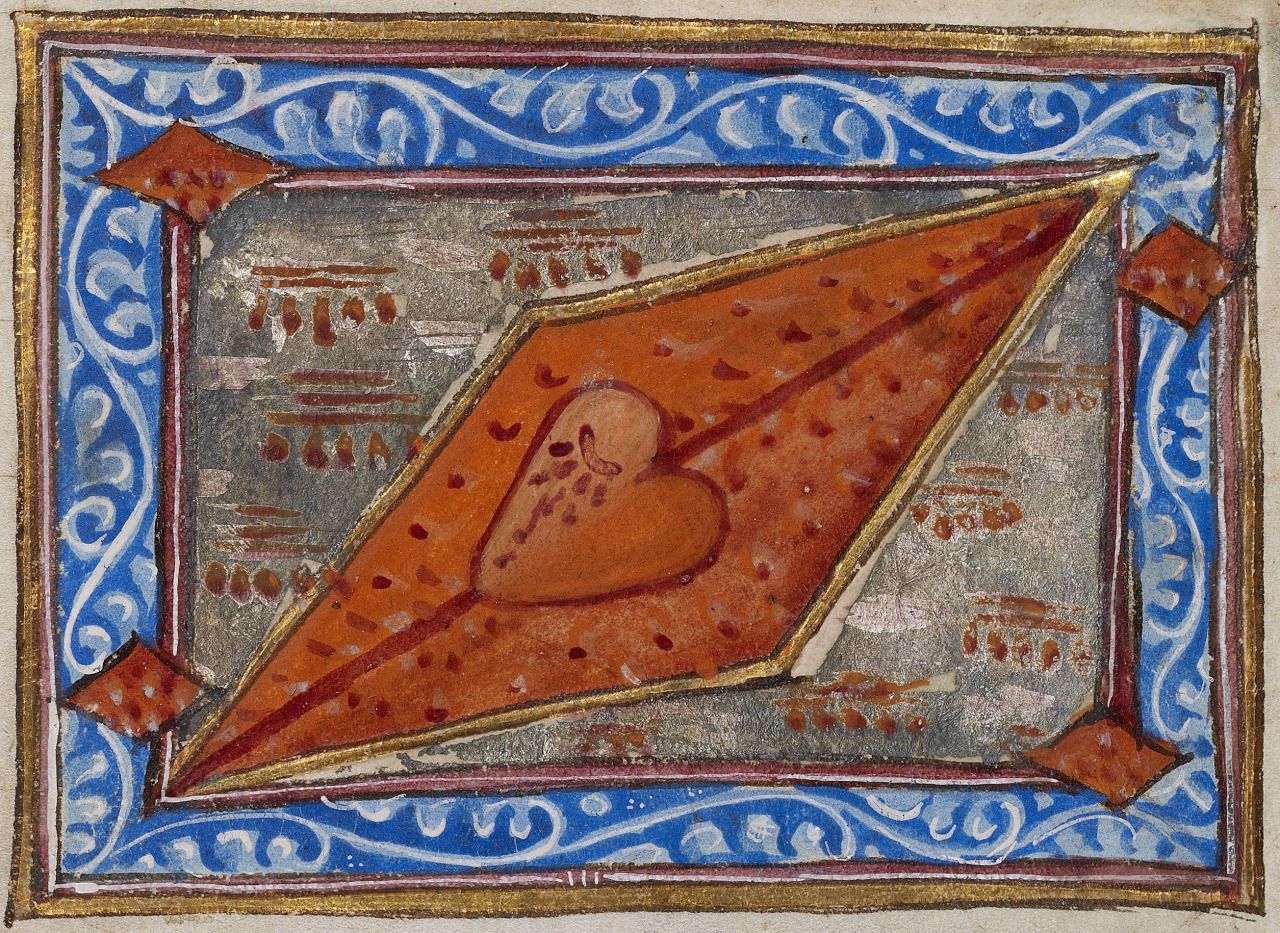
The holy side-wound of Christ, from a Book of Hours (Source)
Today is the Anglican commemoration of George Herbert, the great English cleric and metaphysical poet of the 17th century. He died on March 1st, 1633. In honor of this bard of the spirit, I offer to my readers one of my favorite Herbert poems. Every time I return to it, I find new edification.
“Prayer (1)”
George Herbert
Prayer the church’s banquet, angel’s age, God’s breath in man returning to his birth, The soul in paraphrase, heart in pilgrimage, The Christian plummet sounding heav’n and earth Engine against th’ Almighty, sinner’s tow’r, Reversed thunder, Christ-side-piercing spear, The six-days world transposing in an hour, A kind of tune, which all things hear and fear; Softness, and peace, and joy, and love, and bliss, Exalted manna, gladness of the best, Heaven in ordinary, man well drest, The milky way, the bird of Paradise, Church-bells beyond the stars heard, the soul’s blood, The land of spices; something understood.
I should like to apologize for my long hiatus in writing. This term has been especially busy. I have, for instance, just completed a major research trip on the Continent. Various forces seem to have conspired to prevent me from finding the time to write. However, I have a few posts in mind that will, I hope, appear forthwith. In the meantime, enjoy this lovely image of various Bishops of Ghent in ermine and blue-purple.
Excellent 18th century prelatical dress. Photo taken in Ghent Cathedral by the author, Feb. 2018.
I have just discovered that Once I Was a Clever Boy, a blog I used to enjoy but was sorry to see in hiatus, has returned. John Whitehead, the blog’s author, is a friend and a Brother of the Little Oratory here in Oxford. He hasn’t put up any new content recently. Nevertheless, there was a long time when for whatever technical reason – either on John’s end or mine, I was never sure – the blog was totally inaccessible. I’m very happy to see it’s back, and I look forward to more content from this quintessentially Oxonian blog.
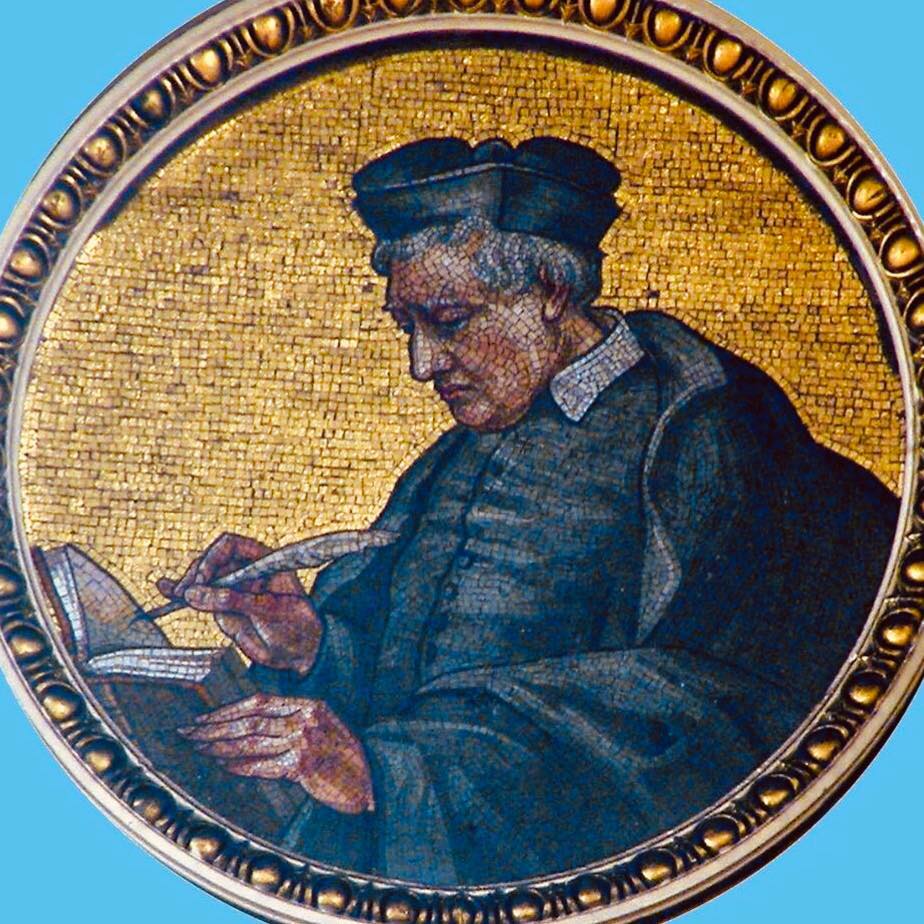
The mosaic of Fr. Faber in the nave of the Brompton Oratory. (Source)
I have just been made aware of a very exciting new social media apostlate, Consoling Thoughts From Fr. Faber. This Facebook page posts various pious meditations and, as the title would suggest, consoling passages from Fr. Faber. Those who share my devotion to the Apostle of London will no doubt find this page a serious and salutary addition to their diet of spiritual content. It has my full endorsement.
Thus concludes Anno Domini MMXVIII. I hope all my readers had a very fruitful year, and I pray for them all to know many blessings in this coming one. I have a lot to be grateful for this year. I made so many wonderful friends, both via this blog and otherwise. You know who you are. My work seems to be progressing well enough. And I was published in First Things, Jesus The Imagination, and The Church Times. This blog received its 100,000th view. So the year was full of activity.
I also feel that I gained more insight into who I am as a person. I’d like to think that in some ways, at least, I’ve become a more self-aware and honest man, and that I’ve learned a little bit more about humility this year.
I encountered God in new ways at different points of the liturgical year and in various holy places. I befriended new saints.
For all this, I am profoundly grateful.
Here are the top 10 posts I published this year, by readership:
Incidentally, my main New Year’s resolution for 2019 remains the same as it was in 2018. I don’t know if I lived up to it very well this past year, but I shall strive to do so in the next.
And to conclude my writings here for 2018,
Glory Be to the Father, and to the Son, and the Holy Spirit, As it was in the beginning, is now, and ever shall be, world without end. Amen.
O Wisdom, be enthroned in my heart, O Adonai, inflame my heart, O Root of Jesse, bloom in my heart, O Key of David, unlock my heart, O Dayspring, shine in my heart, O King of Nations, reign in my heart, O Emmanuel, abide in my heart, Now and forevermore.
Glory be to the Father, and to the Son, and the Holy Spirit, As it was in the beginning, is now, and ever shall be, world without end.
Perhaps the most ubiquitous tradition of Christmas in America is decorating a Christmas tree. Whether live or artificial, green or white, festooned in tinsel or bedecked with bells, the Christmas tree is the image that adorns all our houses and heralds the coming of the Yuletide. And not just the houses of Christians. Many who celebrate Christmas as a merely secular holiday will still put up a tree. It just wouldn’t really feel like Christmas without it.
One of the better meditations on the meaning of the Christmas tree. (Source)
Yet the Christian discerns in this symbol something more than just a festive sign of the season.
First, a short excursus about symbols in general. Metaphor opens the speaker to the experience of “augmented reality,” though not at all in the way that phrase has come to be understood in the world of cheap tricks and tacky technology. Pokemon Go is not a metaphor. It’s just an add-on. It discerns nothing essential and establishes no real connections between unlike objects. Metaphor can. The truer the metaphor, the firmer the connection. It’s a dialectical process. Or, if you like a Trinitarian one: two unlike things are drawn together by the speaker, thus forming an entirely new third.
The Sophianic potential of language lies in metaphor. Name and metaphor permit us to imprint, image, and discern a level of reality beyond the merely immediate and sensible. That is why metaphor is impossible in the face of the Beatific Vision. All words die away, since the soul experiences the most heightened level of reality – Being itself.
Sophianic vision relies upon this kind of metaphorical thinking. Without dissolving the dogmas of the faith, Sophiology reads them sideways so as to gain an insight into the mystical realities more properly understood via poetry than, say, the logical language of the manuals. American Sophiologist Dr. Michael Martin has called for a “poetic metaphysics” by which we more potently discern the presence of God in His Wisdom, seen throughout Creation.
What would this “poetic metaphysics” look like beyond textual confines? That is, what would it look like if people actually lived out this search for the Wisdom of God?
For one thing, the soul that sees all in Wisdom will be always immersed in metaphor. The eyes of their heart would discern the connection of lower things to the higher. This is not mere cataphasis, the use of images in prayer. I mean that the daily impressions of life are experienced as taking place on more than one level of reality. The events of the day are read as symbols and metaphors. We encounter this in the life of the Ven. Seraphina di Dio:
“…Anything I looked at I was able to turn into a meditation… When I saw it raining, I thought of the refreshment which the rain brought to the earth and that without it the earth would be arid. I would say: ‘If the water of divine grace did not fall on the soul, it would dry up without providing the fruits of good works.’ … The sight of fish swimming in the sea made me remember how the saints are immersed in God… And in such wise everything, even the slightest things, served me for my spiritual nourishment.”
-Ven. Seraphina di Dio
Such is one example of sapiential living. We might turn to another. Over at Sancrucensis, Pater Edmund Waldstein has furnished a charming passage from St. John of Karpathos:
Nothing is more weak and powerless than a spider. It has no possessions, makes no journeys overseas, does not engage in litigation, does not grow angry, and amasses no savings. Its life is marked by complete gentleness, self-restraint and extreme stillness. It does not meddle in the affairs of others, but minds its own business; calmly and quietly it gets on with its own work. To those who love idleness it says, in effect : ‘If anyone refuses to work, he should have nothing to eat’ (2 Thess. 3 : 1o). The spider is far more silent than Pythagoras, whom the ancient Greeks admired more than any other philosopher because of the control that he exercised over his tongue. Although Pythagoras did not talk with everyone, yet he did speak occasionally in secret with his closest friends; and often he lavished nonsensical remarks on oxen and eagles. He abstained altogether from wine and drank only water. The spider, however, achieves more than Pythagoras: it never utters a single word, and abstains from water as well as from wine. Living in this quiet fashion, humble and weak, never going outside or wandering about according to its fancy, always hard at work – nothing could be more lowly than the spider. Nevertheless the Lord, ‘who dwells on high but sees what is lowly’ (Ps . 1 1 3 : 5-6 . LXX), extends His providence even to the spider, sending it food every day, and causing tiny insects to fall into its web.
-St. John of Karpathos
One could name many other saints who exhibit this Sophianic tendency of vision through metaphor. For St. Paul of the Cross, as Fr. Faber notes,
St. Paul of the Cross, arguably the greatest Catholic mystic of the 18th century. (Source)
“…everything served to remind him of God, and he used to imagine that all creatures cried out to entreat the love of man for Him who made them. He was often observed, when walking in the fields, to gaze earnestly at the flowers as he went along and to touch them with his stick, saying, ‘Hold your tongues; hold your tongues!’ And he used to tell his religious that the flowers were always calling upon them to lift up their hearts in love and adoration toward their heavenly Creator.”
-Fr. Faber, All For Jesus, Ch. 6, pg. 153
When carefully fostered in the soul – usually by ascetic rigors and conscious efforts of love – it ceases to be merely Sophianic and takes on an iconographic character, such that everything in our field of sensible experience becomes a symbol of union with the higher realm it represents. Namely, God. Thus can we preserve the presence of God in our waking hours out of prayer.
So what does this have to do with Christmas trees?
The decoration of a Christmas tree is, in a certain sense, a concrete realization of this process. Bringing a part of the natural world into our home imprints something of the human and thus of the spiritual. We can see this with animals who have been domesticated. Cats and dogs become part of the family. We discern their personalities. They are not just “dog” but “Buster” or “Gabby.” Thus, name and metaphor go hand in hand in elevating the merely natural to something approximating the human.
We don’t personalize Christmas trees. But in placing them in our homes and filling them with glittering lights and baubles, we heighten the tree into something more than what it was. As we were commanded to do in Eden, we improve the creation and make it radiant. We lend it a new beauty, the fruit of our Godlike creativity. We place a star or an angel at its peak, and a reminder of Our Lord’s Nativity at its base. Thus we turn it into a little Tree of Life, reaching between Heaven and Earth, the natural world manifested in the splendor of its potential divinization.*
In other words, the power of metaphor allows us to experience the tree as something more than what it is at the purely material level. It becomes for us an icon of Holy Wisdom, of Christ abiding in His redeemed Creation.
I am reminded of today’s O Antiphon.
O Sapientia, quae ex ore Altissimi prodiisti,attingens a fine usque ad finem, fortiter suaviterque disponens omnia: veni ad docendum nos viam prudentiae.
O Wisdom, coming forth from the mouth of the Most High, reaching from one end to the other, mightily and sweetly ordering all things: Come and teach us the way of prudence.
-O Antiphon for 17 Dec.
These words are manifested in so many ways throughout time and space. They don’t just belong to Advent. Yet the Christmas Tree can (if we come to it with a Sophianic imagination) serve as one meditative example of Wisdom “sweetly ordering all things” in this holy season.
It’s no surprise that Archpriest Sergius Bulgakov wrote favorably of the Christmas Tree.
*I realize of course that not all families use real trees, and that they don’t all place a Nativity under it. But even here, the power of metaphor enters in. In calling an assemblage of wire or aluminum or plastic a “tree,” we are already entering into the world of metaphor and artifice. In that case, we are only one degree removed from what I have described above.
‘Catholicity, Antiquity, and consent of the Fathers, is the proper evidence of the fidelity or Apostolicity of a professed Tradition’ J.H. Newman, Lectures on the Prophetical Office of the Church, 1837, p. 51


















 The Amish Catholic