100 Things I Would Rather Listen To at Mass than Hymns from the 70’s and 80’s, In No Particular Order

cross17

A brilliant friend of mine pointed out that “We Are Called and Gifted By Our God,” “Gather Us In,” “On Eagle’s Wings,” etc. are basically the Catholic, musical equivalent of Thomas Kinkade: bad art enjoyed primarily by old people. (Source).

  1. Gregorian Chant
  2. Byzantine Chant
  3. Old Roman Chant
  4. Ambrosian Chant
  5. Mozarabic Chant
  6. Hildegard Von Bingen
  7. Palestrina
  8. Thomas Tallis
  9. Bruckner
  10. John Tavener
  11. John Taverner
  12. Henryk Gorecki
  13. Arvo Part
  14. Ralph Vaughan Williams
  15. Old Negro Spirituals
  16. The Mormon Tabernacle Choir
  17. Appalachian Shape-Note Singing
  18. Mongolian Throat Singing
  19. Swedish Black Metal
  20. Broadway Showtunes
  21. Spanish Versions of Broadway Showtunes
  22. Esperanto Versions of Broadway Showtunes
  23. Crappy Bootlegged Esperanto Versions of Broadway Showtunes
  24. DMX
  25. Patsy Cline
  26. Irish Folk Ceol
  27. The Game of Thrones Theme Song
  28. Melanie Martinez
  29. All 7 Hours of a Castro Speech
  30. Chris Tomlin (shudder)
  31. YouTube videos about Fitness
  32. RuPaul’s Drag Race
  33. “Shall We Gather at the River?”
  34. David Lynch Cooking Quinoa
  35. Schoenberg
  36. That Weird Russian Guy Who Dances and Makes That Noise with his Lips (you know the one)
  37. The Interviews of Edward Gorey
  38. The Collected Works of Charles Dickens Played Backwards
  39. Machine Metal Music
  40. The Sound of Two Hundred Bees Copulating Simultaneously
  41. A Giant Saw Cutting Off California from the Rest of the Union
  42. Musique concrète
  43. Dissertation Defenses by Statistics Ph.D’s
  44. Mark Zuckerberg (shudder)
  45. The Sound Made by Nikita Kruschev’s Shoe on the Podium, But on Infinite Loop
  46. The Sound Made by Justin Trudeau When He Announced The Year as If It Mattered, But on Infinite Loop
  47. Cats
  48. Ayn Rand Interviews
  49. Vaporwave Remixes of Ayn Rand Interviews
  50. Vaporwave Anything, Really
  51. “Always Look on the Bright Side of Life!”
  52. Mr. G’s Dance from Summer Heights High
  53. A Theory of Justice: The Musical
  54. “Universal Love, Said the Cactus Person”
  55. The Ambient Sounds Recorded at the Varsity in Atlanta
  56. Twelve Germans Arguing About Philology
  57. John Oliver
  58. Ethel Merman
  59. Untranslated Korean Horror Movies
  60. Buskers in the Tube
  61. Robert Nozick Gently Asking Me to Kill 10,000 Contented Cows
  62. Gypsy Music
  63. Fleet Foxes (actually this would be pretty great and like the only good “folk mass” conceivable in any way, shape, or form)
  64. “The Sash”
  65. Ambient Noise Recorded at the Louvre
  66. The Sound of Praying Mantises Fighting Each Other
  67. The Sound of Praying Nuns Fighting Each Other
  68. The Sound of Music
  69. Oral Histories of the Tennessee Valley Authority
  70. Smash Mouth
  71. The Collected Oeuvre of Insane Clown Posse
  72. Gargling
  73. Untranslatable Russian Poetry
  74. Donald Trump (shudder)
  75. Gordon Ramsay Insulting Hell’s Kitchen Contestants
  76. Hideous Yak Noises
  77. The Broken Wind of an Unusually Flatulent Old Vicar in Surrey
  78. Lobsters
  79. Tracey Emin Talking About Her Work As If It Mattered
  80. That Flute Played by Mr. Tumnus
  81. Road Rage
  82. Chevy Chase Reciting Edward Lear
  83. “Your Mom Goes to College”
  84. Lobsters, but Fighting
  85. Gilbert Gottfried Reciting The Faerie Queene
  86. “Just You…And I…Just You…And I…”
  87. The Unrestrained Moans of Passion from the Majestic Wombat in Rut
  88. All the Burps from Arlo: The Burping Pig
  89. All the Burps from Arlo Guthrie Over His Entire Life
  90. “Alice’s Restaurant Massacree” On A Day Other Than Thanksgiving
  91. This List, Recited in Swahili
  92. Little Jimmy Scott
  93. The National Anthem of the USSR
  94. “MacArthur Park” (the original, performed by Richard Harris)
  95. Cardinal Richelieu as Petula Clark
  96. A Medley from Die Dreigroschenoper
  97. Mark Gormley’s “Without You”
  98. A Headline Act from Branson
  99. Wing’s cover of “Dancing Queen”
  100. Silence

Original Art: First Four Pieces

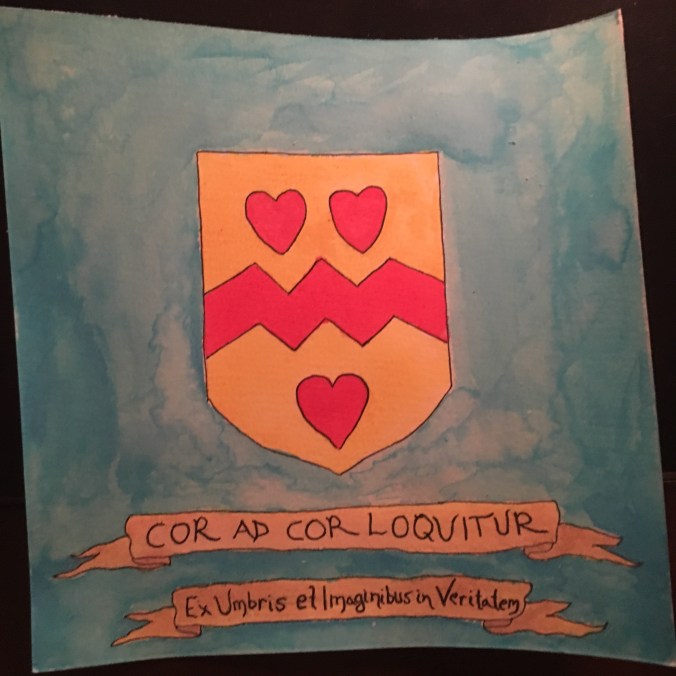
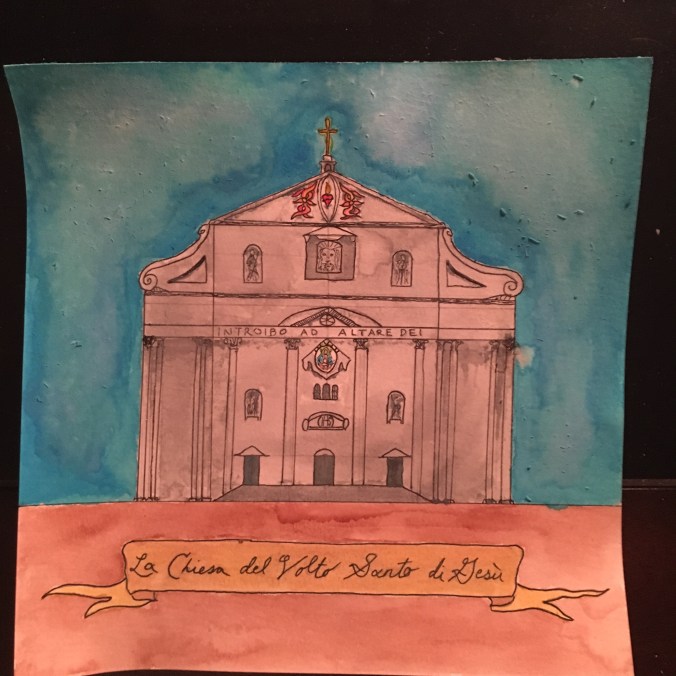
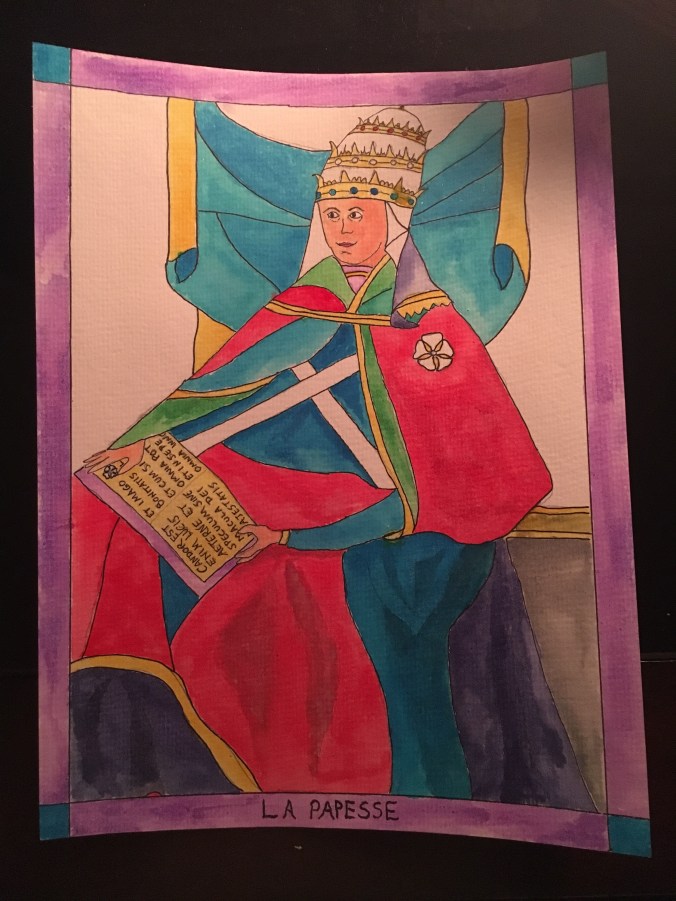
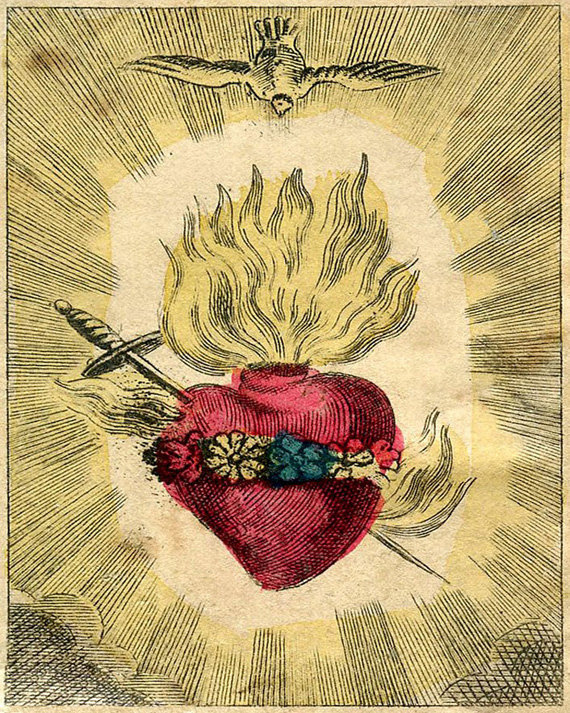
As part of my August challenge, I’ve gone back to painting. It’s been wonderful. Here are the first four works I have created. Apologies for the skewed black borders – some of the pages are a little warped from the watercolors. At this point, I’m primarily trying to get back my sea-legs, so to speak. Hopefully soon I’ll be able to move away from models and into more imaginative, creative territory. For now, I’m happy with the start I’ve made.

image

“Guardian Angel.” Photo taken by artist.

image

“Cardinal Newman’s Coat of Arms.” Photo taken by artist.

image

“La Chiesa del Volto Santo di Gesù.” Photo taken by artist. A riff on the Gesù proper. I worked from a photo and added my own design details.

image.jpeg

“The Papess.” Photo taken by artist. I used the Marseilles Tarot as my starting model, and made various changes. The Papess is one of my favorite cards, and I prefer the earlier, Christian versions to the orientalist pagan “High Priestess” that Pamela Colman Smith and A.E. Waite bequeathed to us.

The Catholic Poems of Oscar Wilde

OscarWildeBook

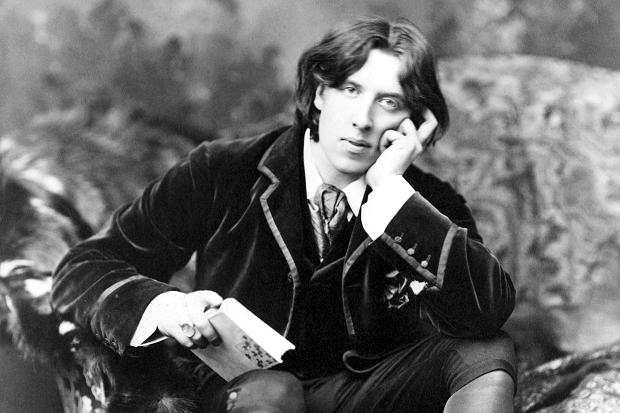
Oscar Fingal O’Flahertie Wills Wilde (Source).

As I mentioned in my last post, during the month of August, I am dedicating myself to daily acts of creativity in honor of Mary’s Immaculate and Sophianic Heart. As Providence would have it, the Holy Father’s intentions for August include prayers for artists. Thus, I’m going to make my blog especially aesthetic for the rest of the month.

And what better way to start than examining work by one of the modern era’s great philosophers of art, Oscar Wilde? It is not often remembered today that Oscar Wilde was a Catholic. True, he was only formally received on his death bed. But Wilde maintained a lifelong flirtation with the faith. Catholicism infused his imagination from very early on in his productive career. When he was a student at Oxford, he visited Rome and wrote quasi-Catholic poetry that even Cardinal Newman admired. In some of the work, the influence of Dante is manifest. The aesthetics and romance of Catholicism appealed to Wilde, and he was nearly converted by Fr. Sebastian Bowden of the London Oratory. Only much later did he definitively turn to the Lord, in his last hour. However, many members of his circle also converted…a topic I shall, perhaps, explore some other day.

Ave Maria Gratia Plena

Was this His coming! I had hoped to see
A scene of wondrous glory, as was told
Of some great God who in a rain of gold
Broke open bars and fell on Danae:
Or a dread vision as when Semele
Sickening for love and unappeased desire
Prayed to see God’s clear body, and the fire
Caught her white limbs and slew her utterly:
With such glad dreams I sought this holy place,
And now with wondering eyes and heart I stand
Before this supreme mystery of Love:
A kneeling girl with passionless pale face,
An angel with a lily in his hand,
And over both with outstretched wings the Dove.

Sonnet on Approaching Italy

I reached the Alps: the soul within me burned
Italia, my Italia, at thy name:
And when from out the mountain’s heart I came
And saw the land for which my life had yearned,
I laughed as one who some great prize had earned:
And musing on the story of thy fame
I watched the day, till marked with wounds of flame
The turquoise sky to burnished gold was turned,
The pine-trees waved as waves a woman’s hair,
And in the orchards every twining spray
Was breaking into flakes of blossoming foam:
But when I knew that far away at Rome
In evil bonds a second Peter lay,
I wept to see the land so very fair.

Urbs Sacra Æterna

Rome! what a scroll of History thine has been
In the first days thy sword republican
Ruled the whole world for many an age’s span:
Then of thy peoples thou wert crownèd Queen,
Till in thy streets the bearded Goth was seen;
And now upon thy walls the breezes fan
(Ah, city crowned by God, discrowned by man!)
The hated flag of red and white and green.
When was thy glory! when in search for power
Thine eagles flew to greet the double sun,
And all the nations trembled at thy rod?
Nay, but thy glory tarried for this hour,
When pilgrims kneel before the Holy One,
The prisoned shepherd of the Church of God.

Sonnet on Hearing the Dies Irae Sung in the Sistine Chapel

Nay, Lord, not thus! white lilies in the spring,
Sad olive-groves, or silver-breasted dove,
Teach me more clearly of Thy life and love
Than terrors of red flame and thundering.
The hillside vines dear memories of Thee bring:
A bird at evening flying to its nest
Tells me of One who had no place of rest:
I think it is of Thee the sparrows sing.
Come rather on some autumn afternoon,
When red and brown are burnished on the leaves,
And the fields echo to the gleaner’s song,
Come when the splendid fulness of the moon
Looks down upon the rows of golden sheaves,
And reap Thy harvest: we have waited long.

Holy Week at Genoa

I wandered through Scoglietto’s far retreat,
The oranges on each o’erhanging spray
Burned as bright lamps of gold to shame the day;
Some startled bird with fluttering wings and fleet
Made snow of all the blossoms; at my feet
Like silver moons the pale narcissi lay:
And the curved waves that streaked the great green bay
Laughed i’ the sun, and life seemed very sweet.
Outside the young boy-priest passed singing clear,
‘Jesus the son of Mary has been slain,
O come and fill His sepulchre with flowers.’
Ah, God! Ah, God! those dear Hellenic hours
Had drowned all memory of Thy bitter pain,
The Cross, the Crown, the Soldiers and the Spear.

San Miniato

See, I have climbed the mountain side
Up to this holy house of God,
Where once that Angel-Painter trod
Who saw the heavens opened wide,

And throned upon the crescent moon
The Virginal white Queen of Grace,–
Mary! could I but see thy face
Death could not come at all too soon.

O crowned by God with thorns and pain!
Mother of Christ! O mystic wife!
My heart is weary of this life
And over-sad to sing again.

O crowned by God with love and flame!
O crowned by Christ the Holy One!
O listen ere the searching sun
Show to the world my sin and shame.

Madonna Mia

A lily-girl, not made for this world’s pain,
With brown, soft hair close braided by her ears,
And longing eyes half veiled by slumberous tears
Like bluest water seen through mists of rain:
Pale cheeks whereon no love hath left its stain,
Red underlip drawn in for fear of love,
And white throat, whiter than the silvered dove,
Through whose wan marble creeps one purple vein.
Yet, though my lips shall praise her without cease,
Even to kiss her feet I am not bold,
Being o’ershadowed by the wings of awe.
Like Dante, when he stood with Beatrice
Beneath the flaming Lion’s breast, and saw
The seventh Crystal, and the Stair of Gold.

E Tenebris

Come down, O Christ, and help me! reach thy hand,
For I am drowning in a stormier sea
Than Simon on thy lake of Galilee:
The wine of life is spilt upon the sand,
My heart is as some famine-murdered land,
Whence all good things have perished utterly,
And well I know my soul in Hell must lie
If I this night before God’s throne should stand.
‘He sleeps perchance, or rideth to the chase,
Like Baal, when his prophets howled that name
From morn to noon on Carmel’s smitten height.’
Nay, peace, I shall behold before the night,
The feet of brass, the robe more white than flame,
The wounded hands, the weary human face.

At Verona

How steep the stairs within Kings’ houses are
For exile-wearied feet as mine to tread,
And O how salt and bitter is the bread
Which falls from this Hound’s table,–better far
That I had died in the red ways of war,
Or that the gate of Florence bare my head,
Than to live thus, by all things comraded
Which seek the essence of my soul to mar.

‘Curse God and die: what better hope than this?
He hath forgotten thee in all the bliss
Of his gold city, and eternal day’–
Nay peace: behind my prison’s blinded bars
I do possess what none can take away,
My love, and all the glory of the stars.

On the Massacre of the Christians in Bulgaria

Christ, dost Thou live indeed? or are Thy bones
Still straitened in their rock-hewn sepulchre?
And was Thy Rising only dreamed by her
Whose love of Thee for all her sin atones?
For here the air is horrid with men’s groans,
The priests who call upon Thy name are slain,
Dost Thou not hear the bitter wail of pain
From those whose children lie upon the stones?
Come down, O Son of God! incestuous gloom
Curtains the land, and through the starless night
Over Thy Cross a Crescent moon I see!
If Thou in very truth didst burst the tomb
Come down, O Son of Man! and show Thy might
Lest Mahomet be crowned instead of Thee!

Queen Henrietta Maria

In the lone tent, waiting for victory,
She stands with eyes marred by the mists of pain,
Like some wan lily overdrenched with rain:
The clamorous clang of arms, the ensanguined sky,
War’s ruin, and the wreck of chivalry,
To her proud soul no common fear can bring:
Bravely she tarrieth for her Lord the King,
Her soul a-flame with passionate ecstasy.
O Hair of Gold! O Crimson Lips! O Face
Made for the luring and the love of man!
With thee I do forget the toil and stress,
The loveless road that knows no resting place,
Time’s straitened pulse, the soul’s dread weariness,
My freedom and my life republican!

On Easter Day

The silver trumpets rang across the Dome:
The people knelt upon the ground with awe:
And borne upon the necks of men I saw,
Like some great God, the Holy Lord of Rome.
Priest-like, he wore a robe more white than foam,
And, king-like, swathed himself in royal red,
Three crowns of gold rose high upon his head:
In splendor and in light the Pope passed home.
My heart stole back across wide wastes of years
To One who wandered by a lonely sea,
And sought in vain for any place of rest:
“Foxes have holes, and every bird its nest,
I, only I, must wander wearily,
And bruise My feet, and drink wine salt with tears.”

Wilde did just that until he lost his duel with the wallpaper on November 30th, 1900. But having received the last rites of the Church, perhaps he is already in heaven as a saint. One can only imagine what he would think of his portrait bedecked with a golden halo.

A Challenge in Honor of the Sophianic Heart of Mary

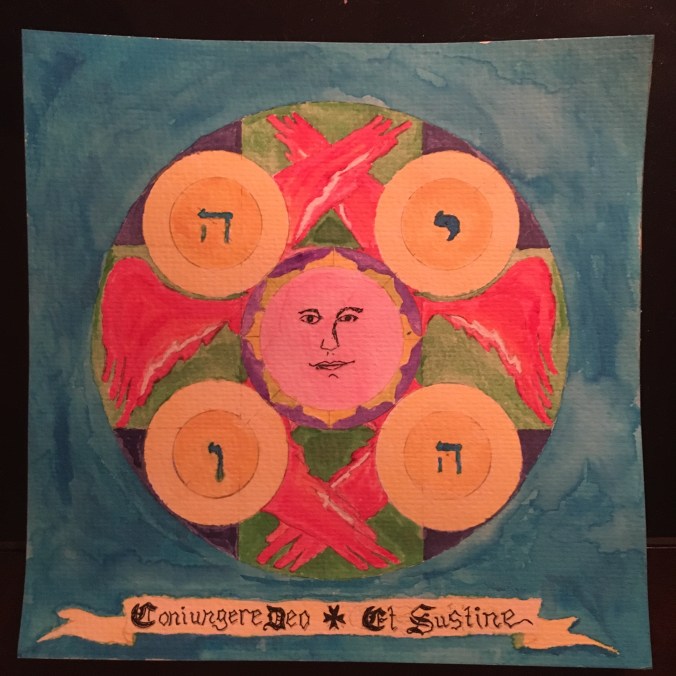
ImmaculateHeartofMarySophianic

Sorrowful and Immaculate Heart of Mary, pray for us sinners. (Source).

August is consecrated to the Sorrowful and Immaculate Heart of Mary. Thus, it is a month in which the Church invites us to peer into the profound and luminous abyss of light at the very center of the Mother of God’s Sophianic life. In celebration of this occasion, I’ve decided to dedicate myself to producing or working on something creative every day for the rest of the month. Today, I have already written one poem and started an art project. The latter is especially exciting for me, as it’s been years since I last produced any real art. Too long, really. Pray for me in this sophiological endeavor! I would recommend the same challenge to any Catholic hoping to redeem this particular time.

Elsewhere: A New Anglo-Catholic Blog

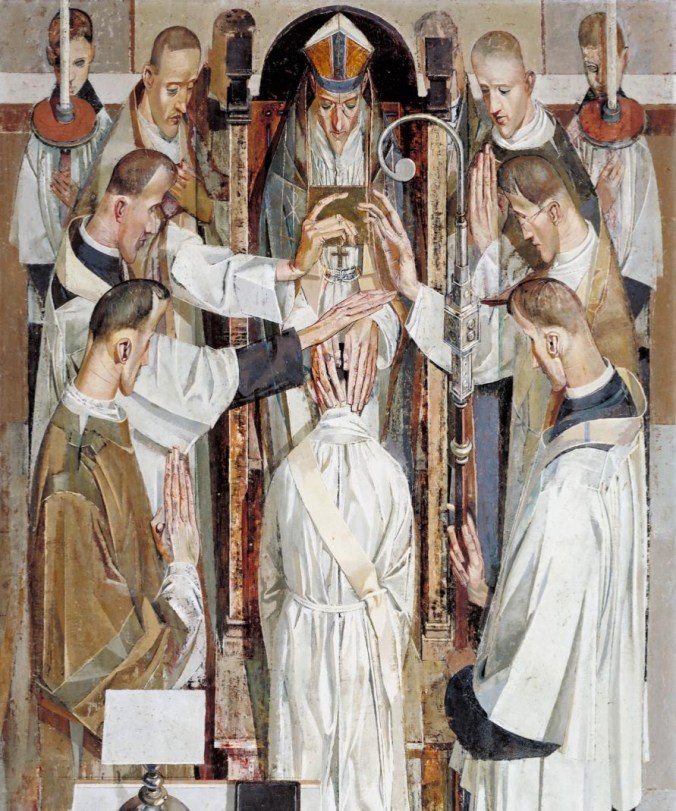
Ordination 1956 by Norman Blamey 1914-2000

“Ordination,” by Norman Blamey, 1956. (Source)

My friend, Archbishop Mark Haverland, Primate of the Anglican Catholic Church, has just started a new blog called “Anglican Catholic Liturgy and Theology.” You really get what it says on the tin with this one. For those of us with an interest in Anglo-Catholic history, theology, and practice, Archbishop Haverland’s blog will no doubt prove to be a great resource.

Baronius on Religious Writing

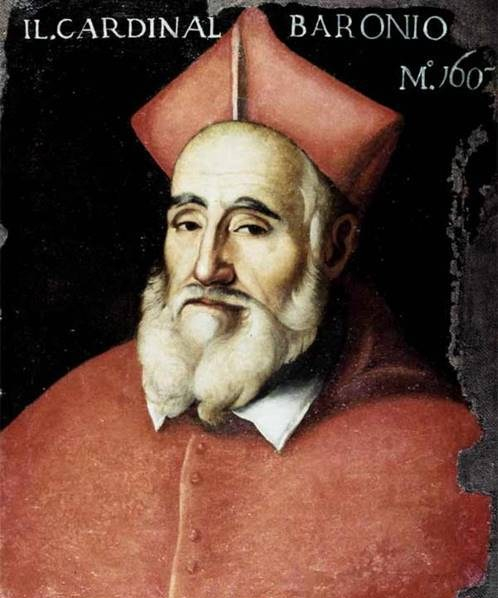
BaroniusColor

Portrait of Cesar Cardinal Baronius. (Source)

In a recent post, I quoted a letter sent by de Marquais, Abbot of St. Martin’s, to Cesar Baronius about humility and trust in the Providence of God whenever our work seems discouraging. The source I used, the Mediatrix Press edition of Lady Amabel Kerr’s biography of Baronius, has been a great read thus far. In the same chapter, I also found this excellent passage from the Annals, presumably also translated by Lady Kerr herself. She takes it from the dedication of the sixth volume of the Annals.

“No man, however distinguished in intellect or excellent in virtue, is sufficient of himself to handle sacred things. This is clearly demonstrated in Scripture by the example of that artificer who, though employed on only the mechanical structure of the place wherein God was to be worshipped, was declared by Moses to be thereby specially united to divine things. ‘The Lord has filled Bezaleel with the Spirit of God,’ said he, ‘with wisdom and understanding and knowledge and learning, and to work in gold, silver and brass, and in engraving stones and in carpenter’s work. Whatever can be devised artificially He hath given his hand.’ Yet Moses adds that even this work, so well done by aid of the Holy Spirit, was not to be used for God until it had been blessed. If then he who handled only the materials intended for the future service of God had to be himself given to God, how much more is expected of him on whom falls the burden of expounding those things which belong to the truth of the Church. Without doubt he should be ever filled with the Spirit of truth, so that he may complete his work standing firm in the truth.” (qtd. in Kerr 156-57)

As someone who hopes to someday write actual theology, I find these words both challenging and profound. I love the idea that a book can be a kind of little Tabernacle. I hope to carry out my own workacademic, creative, and whatever I can throw up on this blogin just such a spirit.

Too often, it seems that contemporary theologians treat their field as part of the Humanities rather than Divinity. They are overly concerned with political questions, or theories of signification and interpretation, or some such narrow province. On the other hand, some would go too far and forget the other side of the truth that Baronius expounds through his metaphor. The theologian, like Bezaleel, prepares a human work fit for a divine dwelling, but it is indeed a human work. It should speak a human language.

The proper posture, I think, is somewhere between the two. In other words—theologians must remember that their vocation, like all vocations, is theandric. The Sophiological Renaissance led by Michael Martin and the other folks over at Jesus: The Imagination seems to be a good example of that balance applied to actual religious writing. So is the deeply Eucharistic monastic theology of Dom Mark Daniel Kirby. In both of these (very different) cases, the writers achieve the divinity-humanity balance in their theology by hewing close to the sacraments and the sacramental worldview. As Sergius Bulgakov said, “one should imbibe theology from the bottom of the Eucharistic Chalice.”

I like to think that Cardinal Baronius might agree.

The Poetry of St. Philip Neri

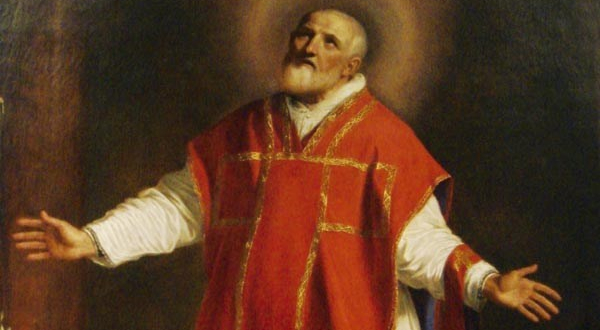
SanFelipeRed

He would be 502 years old today. (Source).

In honor of St. Philip Neri’s birthday today, I reproduce here the translations of two of his three surviving sonnets, taken from the Liturgia Latina collection of Oratorian materials. That site reports that the translations from the original Italian are by Fr Henry Ignatius Dudley Ryder, of the Birmingham Oratory.

I.

The soul derives from God her being high,
In one keen instant out of nothing brought,
Not painfully through second causes wrought;
How should she, then, submit to things that die?

To hope, desire, to joy, to enmity;
To her confusion by these guides mistaught,
Of One confronting her she knoweth naught,
One glimpse of Whom would lift her to the sky.

How should the baser nature dare rebel
Against the higher, nor, as meet, consent
To do its bidding, but essay to quell?

Why prison bars the aspiring soul prevent
From leaving earth, above the stars to dwell,
To die to self, to live to God, intent.

II.

I love, and loving must love ceaselessly,
So whole a conquest in me love hath won;
My love to Thee, Thy love to me doth run,
In Thee I live, and Thou dost live in me.

Surely the day is nigh when I may flee
From this dark gaol, for ever to have done
With vanity and blind oblivion,
Where, exiled from myself, I used to be.

Earth laughs and sky, green branches and soft air,
The winds are quiet, and the water still,
No sun before has shed so bright a day;

The gay birds sing, love’s joy is everywhere;
My heart alone has no responsive thrill,
My powers flag and shrink from joy away.

Elsewhere: Cooper on Edo Japan

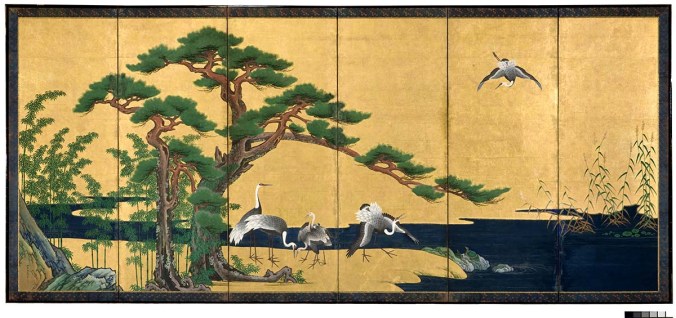
image

Some art of the Edo period. (Source).

Over at The Heavy Anglo-Orthodox, Matthew Franklin Cooper has an excellent  short post on the history of Edo Japan. I’ve never studied too much Japanese history in any depth, but found Mr. Cooper’s essay a pleasant and enlightening read. However, I did see Silence in January. One of the things about the film that most stood out to me was the simple beauty of 17th century Japan. It is difficult for me to understand how anyone could not find the aesthetics of this period deeply attractive…but de gustibus. 

The Orange Pope

Yesterday was the 327th anniversary of the Battle of the Boyne, when the forces of Protestant Britain defeated the Catholic Irishmen fighting for James II, rightful king of England, Scotland, and Ireland. It is a black day for many Catholics, in no small part because many of them descend from Irish communities that remember the oppression that followed under the penal laws. In Northern Ireland today, July 12th remains a divisive date marked by sectarian tensions and the triumphalist pageantry of the native Scotch-Irish Protestants. One wonders whether the new Conservative-DUP alliance in the Commons will have had any affect on the infamous marches of the Orange Order, founded in remembrance of today’s events.As cursed as the memory of the Boyne remains for Catholics today, it’s worth remembering that things were a bit more complex in the 17th century. I enjoy a good bit of Jacobite nostalgia as much as the next trad, but I also think a more honest assessment of history is worth exploring. Human life is a complicated thing, and the strange story of the Williamite War is riddled with contradictions.

Tremendous irony lies at the heart of the Boyne and what it represents. William of Orange, the stalwart champion of Protestantism, overthrew the Catholic James while secretly in league with Pope Innocent XI.

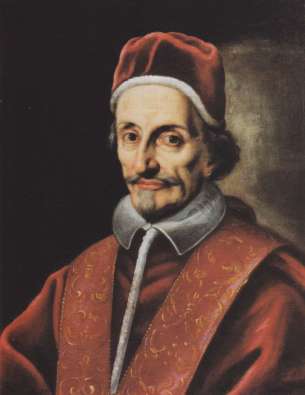
InnocentXI

His Holiness, Innocent XI P.M. (Source).

Innocent’s political priorities centered on maintaining the balance of power in Europe. In 1690, that meant checking the bellicose Louis XIV. Ever since the marriage of Charles I and Henrietta Maria, the British Crown had been in an ever-closer relationship with France. James II was Louis’s only real ally, and Innocent knew it. The Pope also seems to have considered James a bit dull. He is known to have found his methods in the re-conversion of England more than a little imprudent (it was, in short, a massive failure of triangulation between the vitriolically anti-Catholic Whigs and the pro-Establishment Tories. James was not shrewd enough to manage the two, and ended up pleasing no one).

There was another threat on the table. The future of Catholic France was at stake. Louis XIV had, on the one hand, made moves designed to give him the appearance of Catholic zeal. The revocation of the Edict of Nantes, though not approved by the Pope, is perhaps the greatest example. More troublingly, Louis had rammed through the Four Articles that so antagonized the Papacy by more or less establishing Gallicanism throughout the land. Innocent fought against these measures.

Things came to a boiling point when the Pope, in league with almost all the crowned heads of Europe, clashed with Louis over who would fill the see of Cologne. When the election proved inconclusive, Innocent decided in favor of his own candidate. To quote the Catholic Encyclopedia: “Louis XIV retaliated by taking possession of the papal territory of Avignon, imprisoning the papal nuncio and appealing to a general council. Nor did he conceal his intention to separate the French Church entirely from Rome. The Pope remained firm.”

Enter the Dutch.

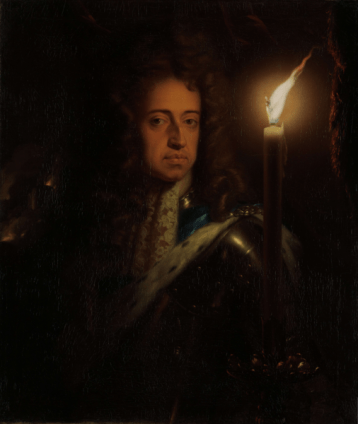
image.png
Willem III, Prince of Orange, King of England and Stadtholder, by Godfried Schalcken. c. 1692-97. (Source)

It is unclear to what extent Innocent might have aided William of Orange. An old legend current at the time asserts that the Pope had financed the expedition with a secret loan of 150,000 scudi. As one reporter puts it, “The sum, equivalent to more than £3.5 million today, equalled the Vatican’s annual budget deficit.” There is, it seems, some truth to this statement. The legend has been supported by more recent research, such as that conducted by the fiction authors Rita Monaldi and Francesco Sorti. They uncovered evidence that corroborated the longstanding claims of other historians.

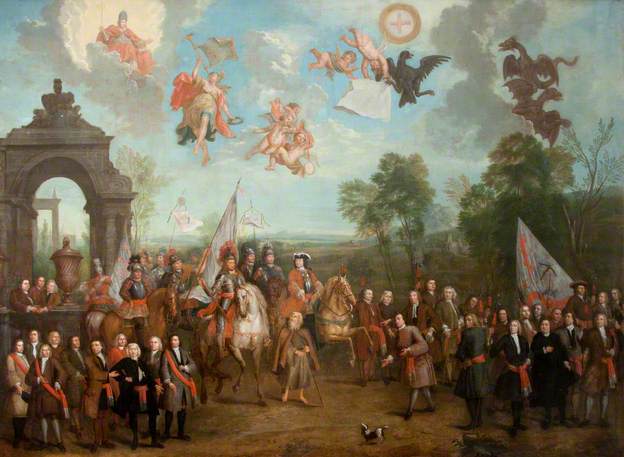
Which leads us to a singular painting by Pieter van der Meulen, The Entry of King William Into Ireland. It has played a controversial role in Northern Irish history. Purchased by the Unionist government of Ulster in 1933, it originally hung in the Great Hall of Stormont. After shifting locations several times, eventually the Rev. Dr. Ian Paisley (of all people) hung it in his office. It is presumably the only picture of the Pope in glory that Dr. Paisley ever liked.

(c) Northern Ireland Assembly; Supplied by The Public Catalogue Foundation

The Entry of King William Into Ireland, Pieter van der Meulen. (c) Northern Ireland Assembly; Supplied by The Public Catalogue Foundation. (Source).

So, why would a Pope act against a Catholic monarcheven covertly?

It seems that he sold Britain and Ireland to save France…and by extension, continental Catholicism. It was a gamble, and a costly one at that. But it seems to have worked in the short run. Although France would later see a terrible anti-Catholic upheaval of its own, Louis was forced to abandon his immediate moves towards schism. He did not become a French Henry VIII. Among all the terrible things that followed the Boyne, at least that one very important good came of it.


St. Benedict in Art History

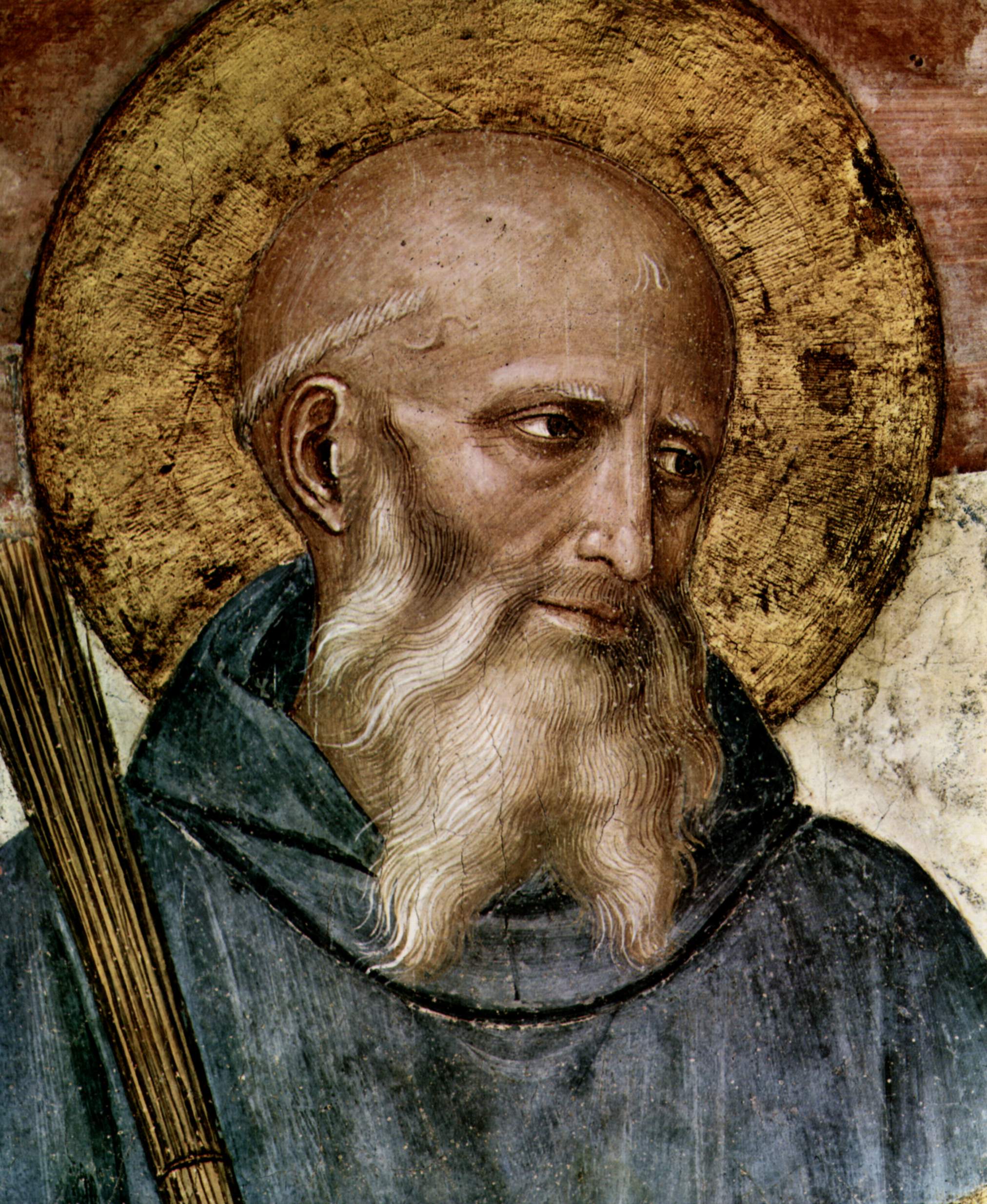
Certain saints haunt the Western canon. Who could fail to recognize slender St. Sebastian leaning languidly against a tree, or St. Lucy peering primly over her cup of eyes? St. Jerome is the only cardinal known for consorting with lions, and St. Mary Magdalene carries her jar of spikenard from century to century.

St. Benedict is one such ubiquitous saint. Today, in honor of his feast, I would like to offer a few examples of St. Benedict’s image drawn from the history of Western art. Each offers a unique view of the Patriarch of Monks, and each bears careful examination and meditation. St. Benedict may have one of the most stable iconographic traditions in the Church, but that doesn’t mean he hasn’t inspired a wide variety of artists to bring their own stamp to his image. His life and spirituality are too vast; he fills and spills beyond the few symbols allotted him. Thus, I give you these 21 representative selections.

Sancte Pater Benedicte, ora pro nobis.

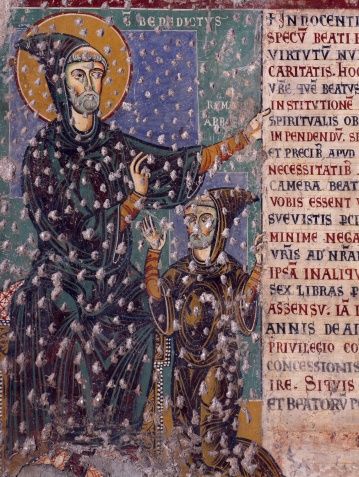
StBenedictThrone

St. Benedict enthroned with Roman abbot, fresco, c. 13th century. (Source)

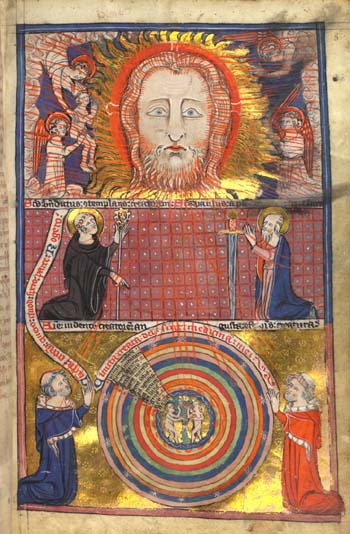
VisionStBenedict

St. Benedict’s Vision of the Universe. 14th century. (Source).

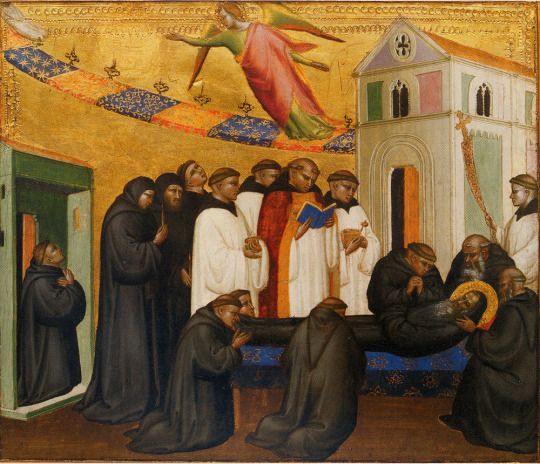
DeathofSt.Benedict

Death of Saint Benedict, Giovanni del Biondo, c. mid 14th century. (SourceSource)

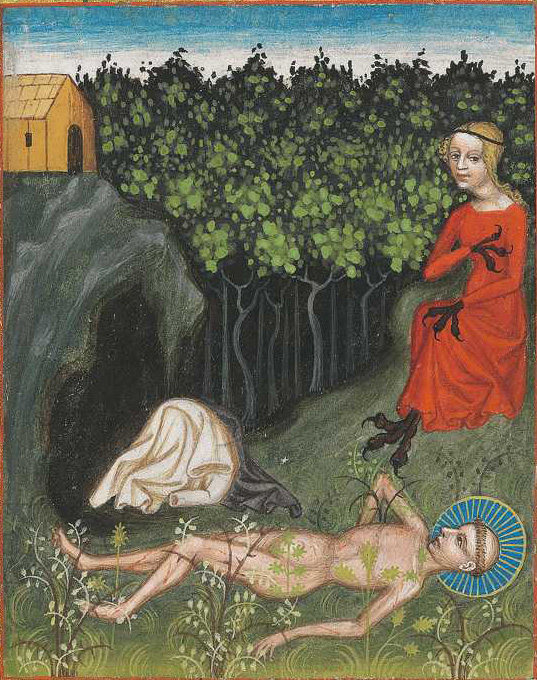
StBenedictTemptation

The temptation of St. Benedict from the Mettener Regel. 1414. (Source).

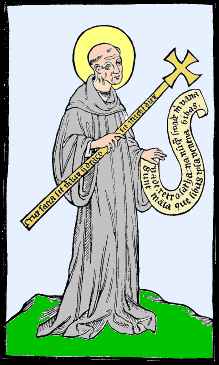
StBenedictVadeRetroSatana

Drawing of St. Benedict, 15th century. (Source).

St Benedict a Bohemian artist

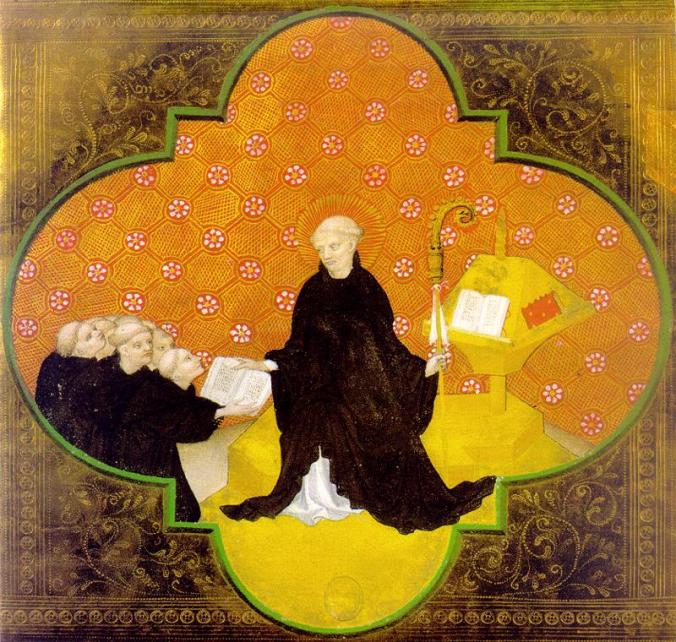
St. Benedict with monks by a Bohemian artist, probably c. mid 15th century. (Source).

Fra_Angelico_Benedict

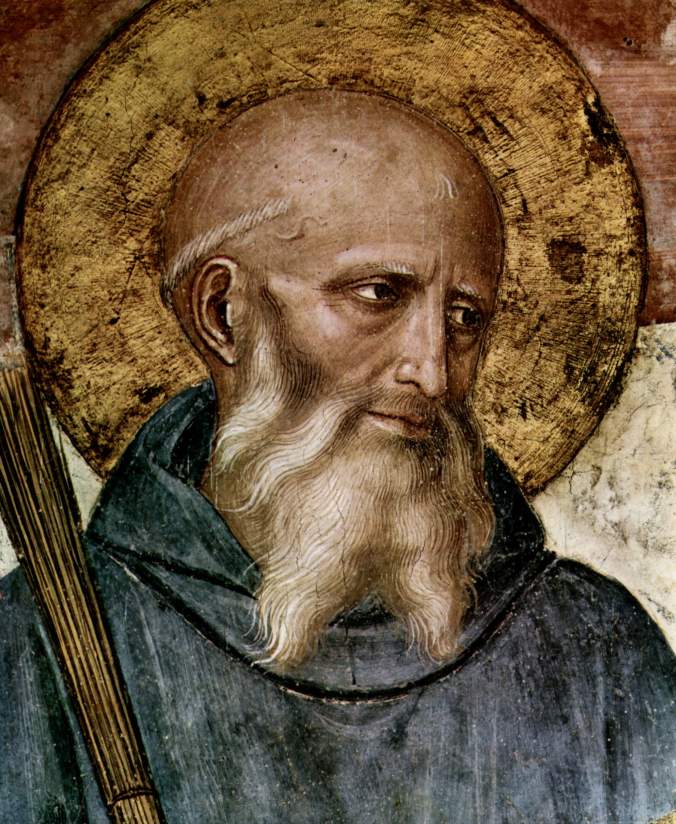
St. Benedict from Crucifixion With Saints, by Fra Angelico. c. 1441-42. San Marco, Florence. (Source)

BenedictTriptych.jpg

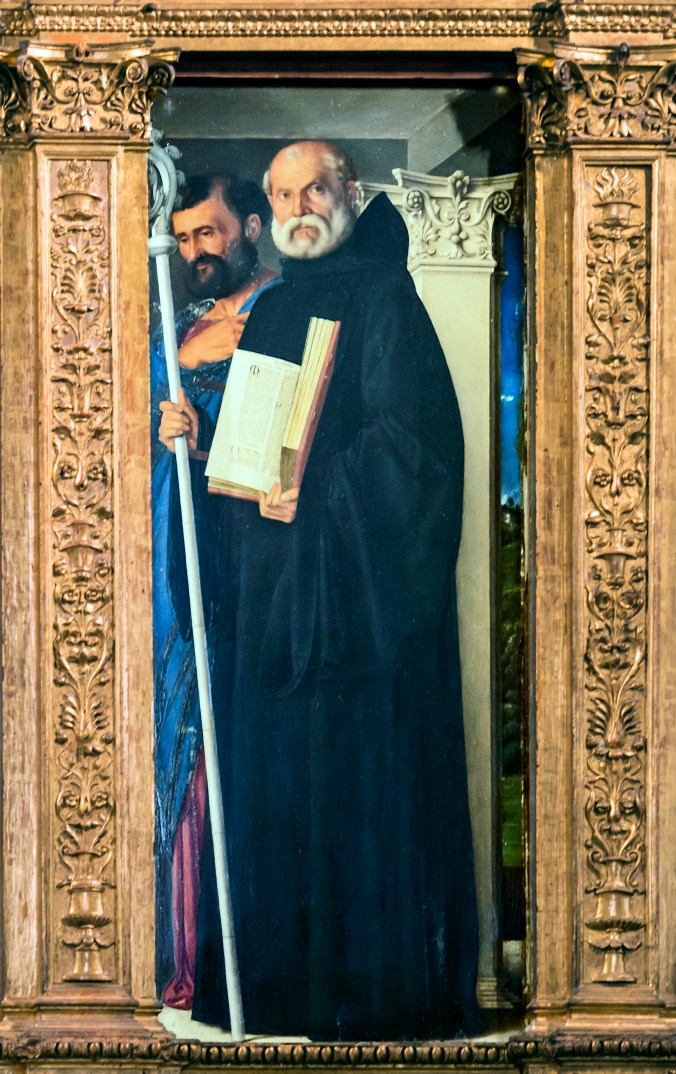
St. Benedict from a triptych by Bellini, c. 1488. (Source)

StPaulandStBenedict

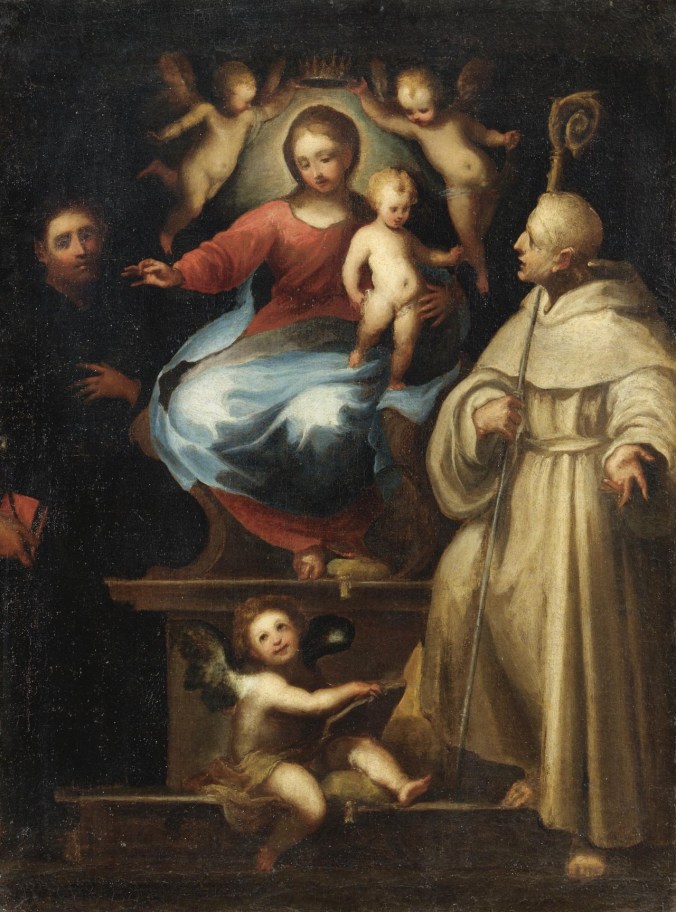
Madonna and Child with St. Paul and St. Benedict, attr. to Francesco Vanni. c. Late 16th century. (Source)

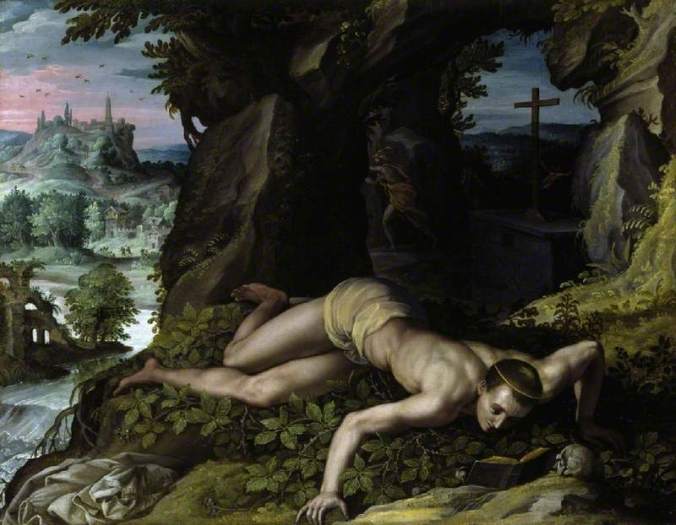
Allori, Alessandro, 1535-1607; The Temptation of St Benedict

The Temptation of St. Benedict, Alessandro Allori. c. 1587. The Fitzwilliam Museum. (Source).

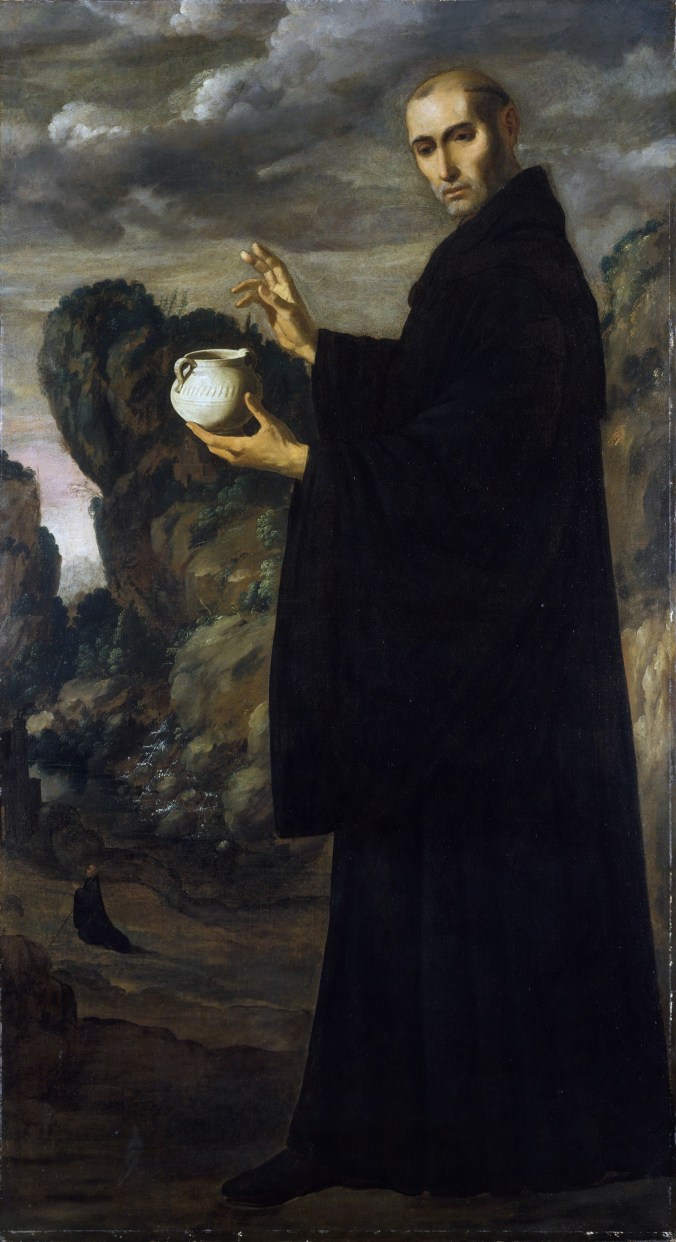
StBenedictZurbaran.jpg

Saint Benedict, by Fransisco de Zurbaran, c.1640-45. The Metropolitan Museum of Art. (Source).

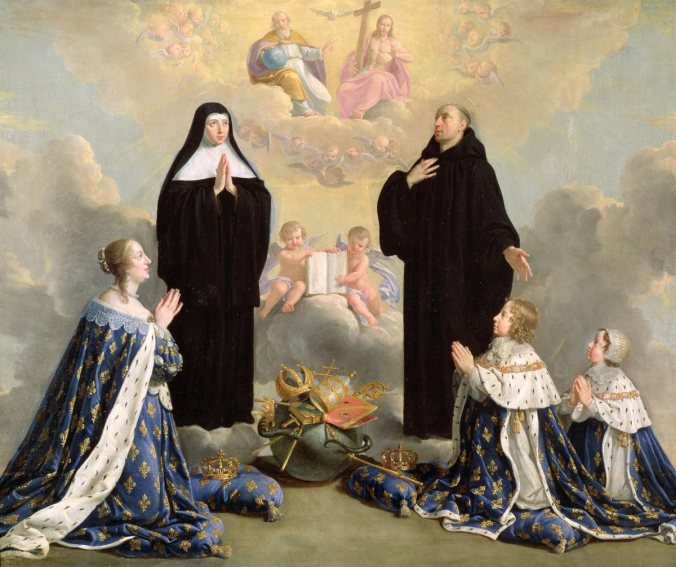
AnneofAustriaBenedictines

Anne of Austria and her Children at Prayer with St. Benedict and St. Scholastica, Philippe de Champaigne. 1646. Versailles. (Source).

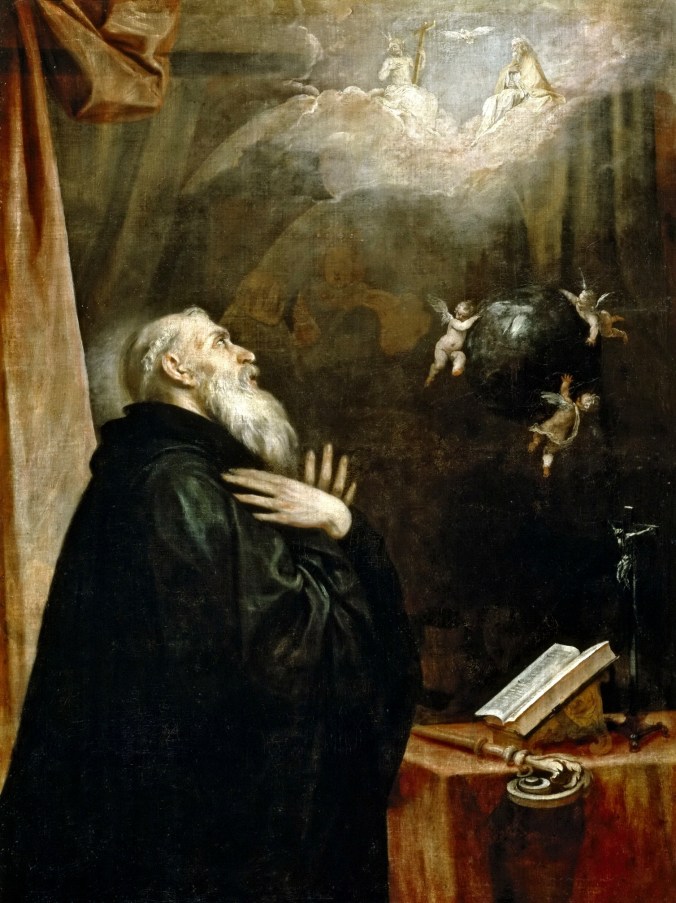
VisionofStBenedictCano

Vision of St. Benedict with Three Angels, Alonso Cano. c.1658-60. El Prado. (Source).

StBenedictMelk

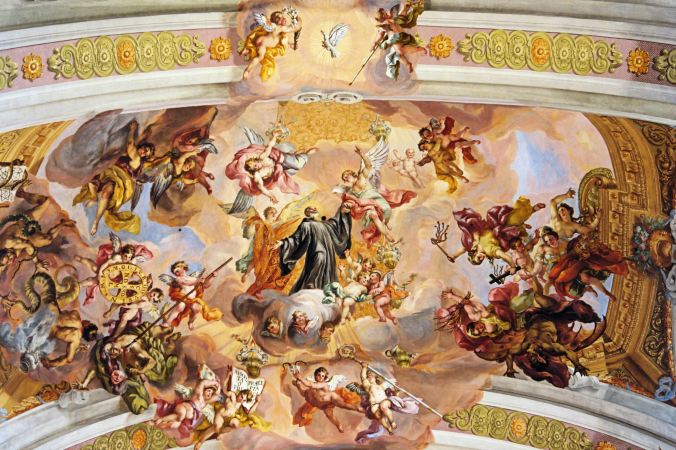
St. Benedict’s Triumphal Ascent to Heaven, by Johann Michael Rottmayr. 1721. Melk Abbey, (Source)

StBenedictStatueBook

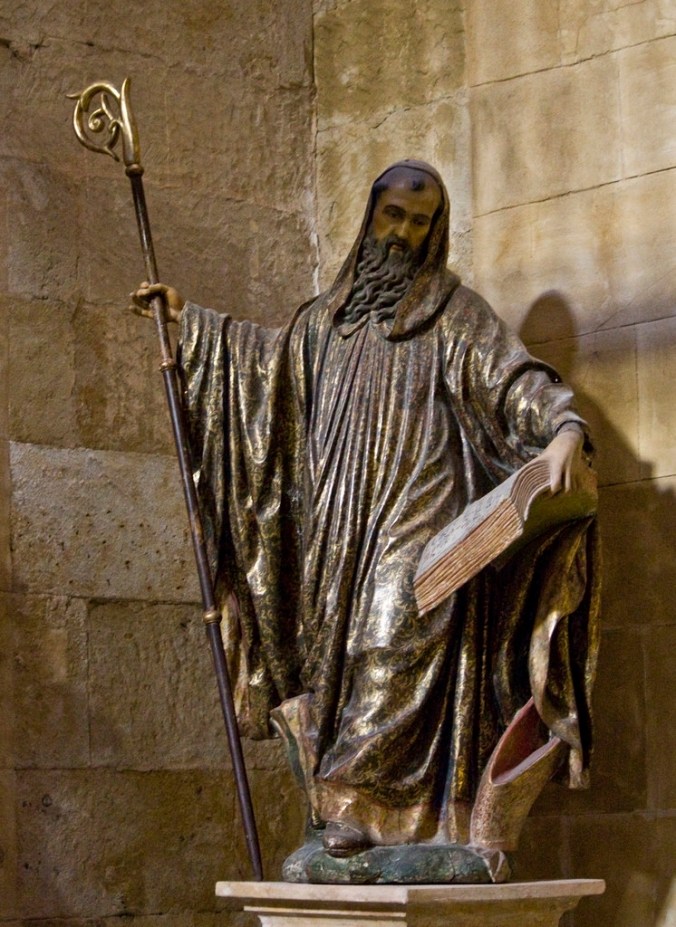
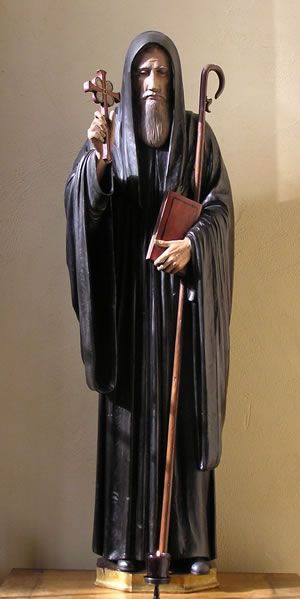
Statue of St. Benedict from the Augustinian church in Salamanca. Photo by Fr. Lawrence Lew OP.  c. 16th-19th century. (Source)

mauruskapelle_med

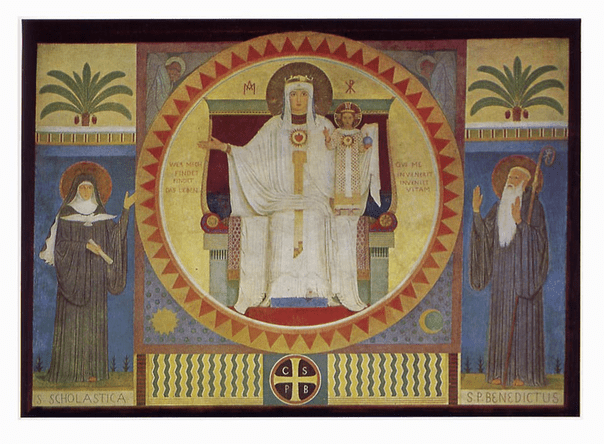
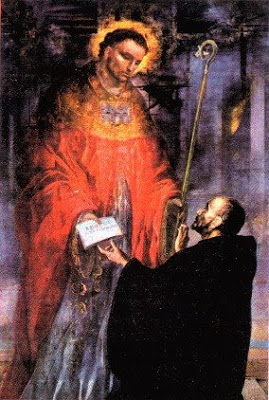
S.s Benedict and Scholastica with Our Lady and Jesus. Peter Lenz, 1869. Beuron (Source).


StBenedictHolyCard

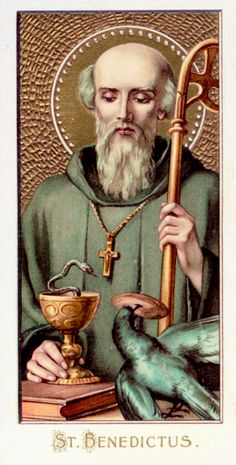
Holy card style portrait of St. Benedict (Source).

StatueStBenedictCross

St, Benedict in an English cowl. Date unknown, probably 19th or 20th century. (Source)

PietroAnnigoniStBenedictHandshisRuletoPopeVictorIII

St. Benedict Hands His Rule to Pope Victor III. Pietro Annigoni. c. Mid to Late 20th century. (Source)

DunstanMasseySt.Benedict

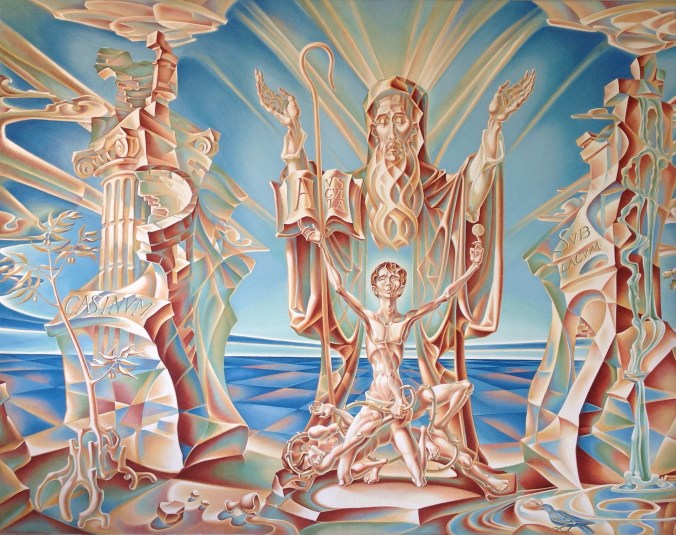
Fresco of St. Benedict, Dunstan Massey OSB. Late 20th century. (Source).

AnnigoniGloryofStBenedict

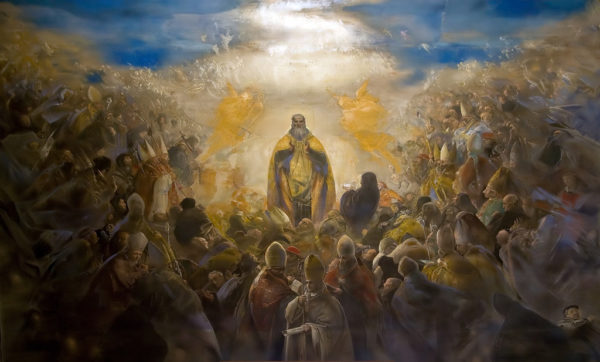
The Glory of St. Benedict, Pietro Annigoni. Late 20th century. (Source).