St Philip Neri and the Sick

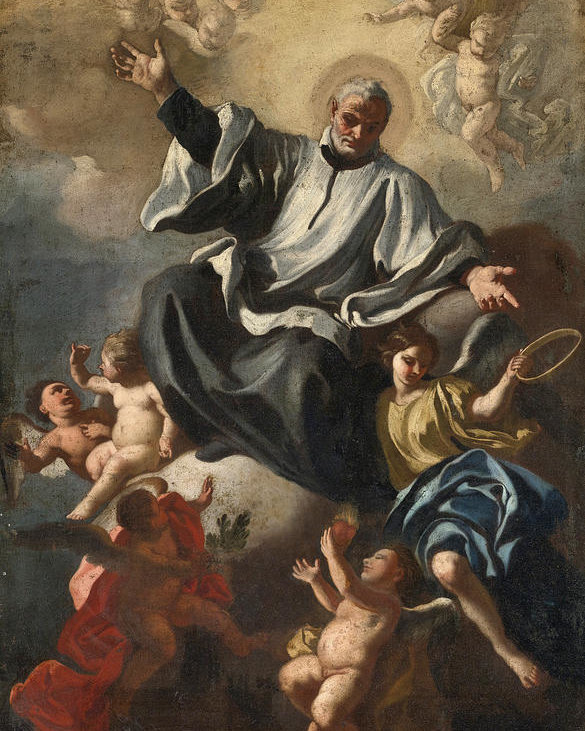
San Filippo Neri in Glory, Francesco da Mura (Source)

In this year of pestilence, I am reminded that St. Philip Neri began his good works in Rome by, among things, tending to the sick. The hospitals of sixteenth-century Italy were houses of profound mortification and little hope, not much more than palaces of death. They were chronically understaffed and overwhelmed with the indigent and the ill, who rarely recovered. The conditions were extremely unsanitary: the beds were filthy, the air putrid, the din of agony unremitting. Into these seething crowds of the desperate came St. Philip. He assisted the sick as best he could. His first biographer reports that, once he began to gather a following of disciples,

It was Philip’s custom on weekdays to divide his children in Christ into three or four groups and send them to the city hospitals. To begin with, he would himself go after dinner [lunch – RTY] to visit the sick in hospitals, to enkindle by his example in his followers a great desire to do this work; he would speak to the patients, tend them and do all sorts of things for them, which encouraged in his disciples an ardent desire to do the same. One example will serve to show you how devoted they were to the sick. Giovan Battista Salviati, being very dedicated, was in the hospital called the Consolazione, and headed straight for a patient intending to make his bed, asking him politely to get up so that he could do so. The patient thought he was being mocked. “No, my Lord,” he said, “don’t make fun of me, I’m a poor man.” He knew all about Giovan Battista’s licentious way of life, but was unaware of his marvellous change of character, by which he had wholeheartedly turned away from material concerns to the love of heaven. But what next? Giovan Battista urged him most earnestly, and the sick man was struck not only by his air of authority but even more so by his humility, and got out of bed, lost in admiration. Giovan Battista retained that style of life with an unwavering intent until the day of his death, and having once put his hand to the plough, he never looked behind him.

Antonio Gallonio, The Life of St. Philip Neri
Trans. Fr. Jerome Bertram Cong.Orat.

St. Philip inspired others to help the sick in whatever way the could manage. These works of mercy were the fruit of the genuine conversion he wrought in their hearts by that peculiar influence he possessed. The palpable indwelling of the Holy Ghost in his heart turned him into a living fountain of graces whose streams brought miracles to many souls. Some of these miracles healed the sick and even raised the dead. Yet we must never forget that it was not these extraordinary moments but, rather, the graces of repentance, of conversion, and of final perseverance that were truly the greatest fruits of St. Philip’s particular sanctity. St. Philip’s true fame rests in those whom he carried with him to Heaven, not in the strange and marvelous works that he effected while on earth. The story of Giovan Battista Salviati is one example among many of those who tasted of such sweet fruits. He actualized the grace of his conversion through works of charity towards the sick.

Subsequent writers have retained this act as a sine qua non of the Oratorian life, and then only because St. Philip so clearly demonstrates how essential it is to the Christian life per se.

The Vision of St. Philip Neri, Florentine School, 17th c. (Source)

And it seems to me that on this, St. Philip’s feast day, we would be well-advised to do the same. We find ourselves in the midst of a new and terrifying pandemic. Death is everywhere. In the United States alone we have lost 100,000 souls with almost no public mourning. Many of these people have died alone, afraid, in pain, and deprived of the comfort of God’s Church. The nature of the disease means that most of us cannot actively assist in the hospitals for fear of transmission. All we can do is show kindness to our neighbors, help each other obtain the necessary supplies to stop the spread of the disease, and give blood if we have survived the sickness ourselves. That’s as far as practical action goes for most of us. So much for the corporal works of mercy.

But a Christian is never without a way to directly help his brethren. The first and last resort of the faithful must be prayer. Here, too, we can take St. Philip as our model. Lest we place too much emphasis on St. Philip’s merely material acts in visiting the sick, let us turn to the testimony of Giuseppe Crispino,

When we enter a sick-chamber, let us imitate the holy Father Philip, who was accustomed, immediately upon his arrival, to pray for the patients in their own room and to make the bystanders do the same, especially in the case of the dying. The Saint was also accustomed to retire into another room, and there to pray for the sufferer.

Giuseppe Crispino, The School of Saint Philip Neri, pg. 174
Trans. Frederick William Faber

As I have written elsewhere, we must offer intercession for our suffering fellows now more than ever. And we must do so in union with the whole communion of saints. Indeed, one small blessing of this crisis is that it can, if we let it, draw us closer to the “great cloud of witnesses” ever ready to help us. One of St. Philip’s spiritual sons, Fr. Agostino Manni, made special prayers to the Blessed Virgin whenever he went to the hospitals; the Blessed Juvenal Ancina likewise sought the prayers of the living when he ministered to the sick (Crispino 174-76). And that most perfectly Philippine of English Oratorians, Fr. Faber, conceives of intercession for the dying as an intrinsically Marian act. He tells us that

We learn [a lesson] from Mary about the deaths of others. It is, that devotion for those in their last agony is a Mary-like devotion, and most acceptable to her Immaculate Heart. There is not a moment of day or night in which that dread pomp of dying is not going on. There are persons like ourselves, or better than ourselves, and whose friends have with reason loved them more than ever ours have loved us, who are now straitened in their agony, and whose eternal sight of God is trembling anxiously in the balance. Can any appeal to our charity be more piteously eloquent than this?…Are not the dying our brothers and our sisters in the sweet motherhood of Mary? The family is concerned. We must not coldly absent ourselves. We must assist in spirit at every death that is died in the whole world over, deaths of heretics and heathens as well as Christians. For they, too, are our brothers and sisters; they have souls; they have eternities at stake; Mary has an interest in them…How much more must they need prayers, who have no sacraments!…How much more earnest must be the prayers, when not ordinary grace, but a miracle of grace, must be impetrated for them!

Fr. Frederick William Faber, The Foot of the Cross

I cannot help but hear a ringing call to intercession for our own times in these words of Fr. Faber. A greater and more fearsome calamity of general death demands a greater and more dedicated oblation of prayer. Especially when even our brethren in the Faith are so often deprived of the Sacraments that should be their final stay and consolation. Yet the power of God to furnish extraordinary grace is far mightier than any earthly sickness. Healing, protection, mercy, conversion, and consolation: let us boldly ask for these gifts on behalf of the ill, the dying, the dead, their caregivers, and their families…while we still can. The hour is late. Tomorrow we may be struck ill with the dread and deadly pestilence. And then, our every thought diverted, our breath failing, our bodies plunged into the depths of a fatigue from which we shall never rise again, we will be grateful for those pious souls who lift us up to the face of the Father in prayer.

So let us pray while we still can. If we do this in a spirit of charity, we will become true Sons and Daughters of St. Philip and more perfectly emulate the Divine Physician who desires to heal us in soul as well as in body.

May St. Philip Neri pray for us all in this troubled time.
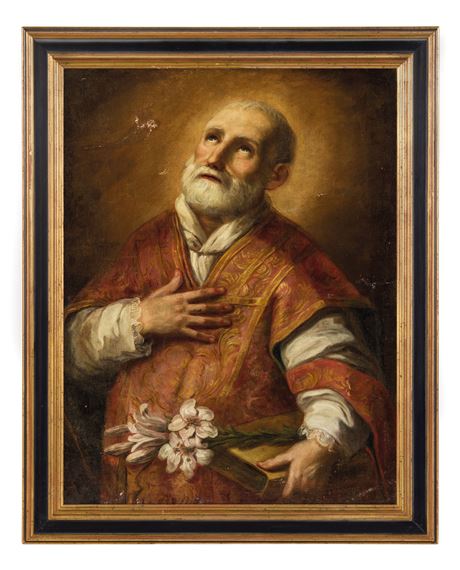
St. Philip Neri, Italian School, 18th c. (Source)

Two Reflections on the Present Crisis

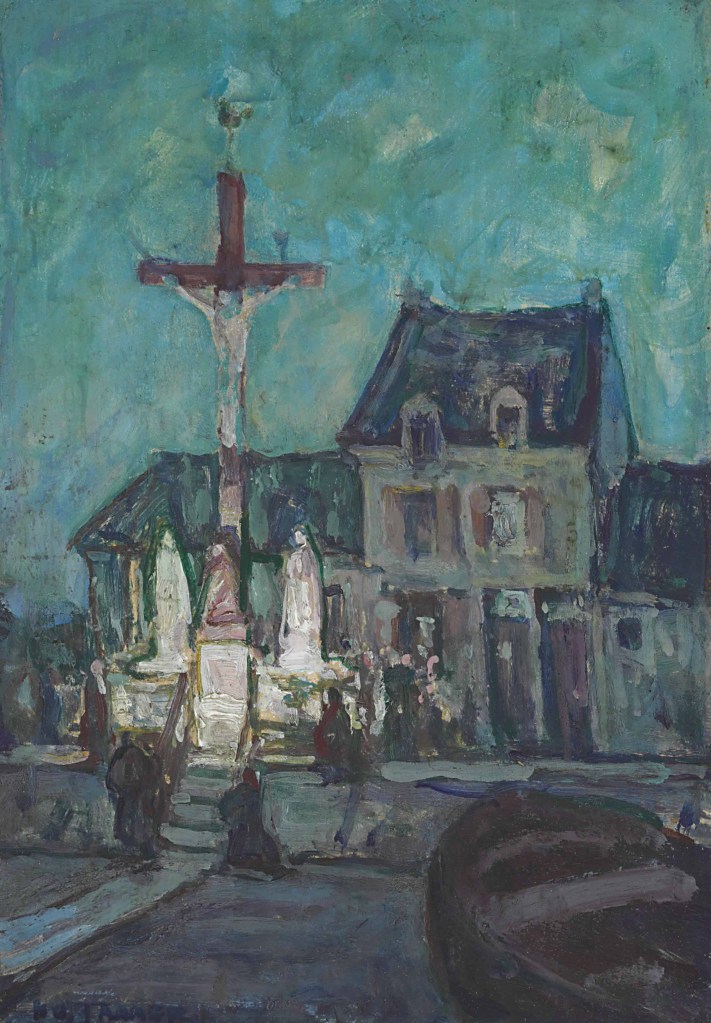
Fishermen’s Devotions, Étaples, Henry Ossawa Tanner, c. 1916 (Source)

I must refer my readers to two very moving pieces written by two dear friends of mine. Both are intensely personal and both are profound meditations on the present moment as a lived reality. The first is an almost Pascalian intervention from Mr. Jackson Wolford, who writes that our first task in this crisis – before any interpretations of what is going on all around us – is to witness the suffering. The second is a quiet reflection on impending fatherhood from Mr. Nathan Goodroe. He considers what it means to face the birth of a child in the midst of suffering through an extended look at the Holy Family’s trek to Bethlehem. We may be in Holy Week, but I still found his words to be very timely. In fact, both are. Please give them a read.

Seven Years a Catholic

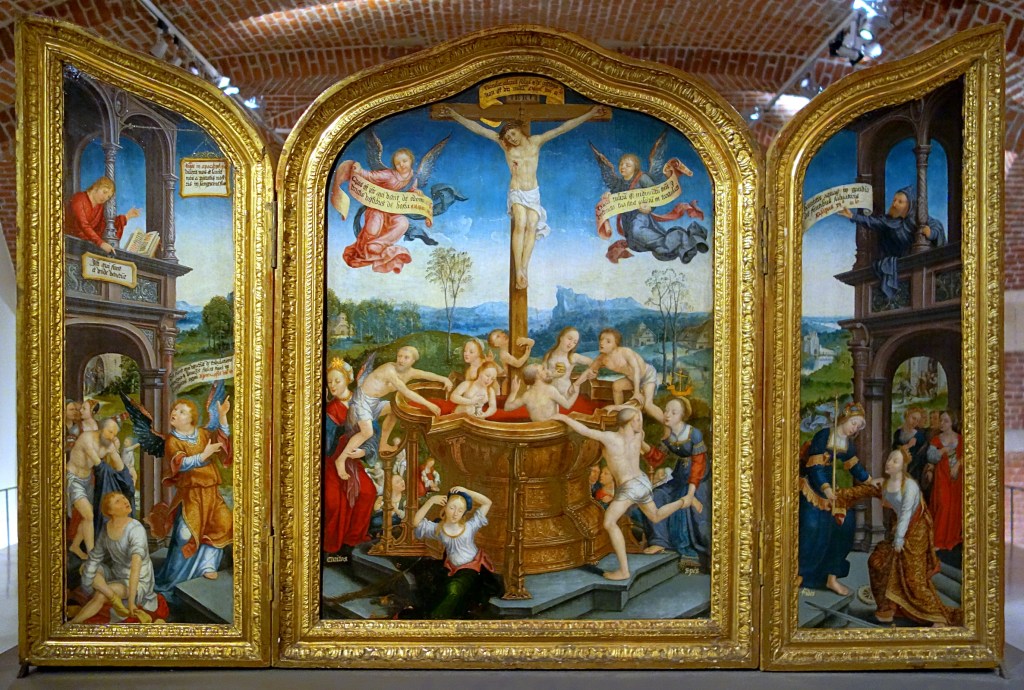
Triptych of the Mystic Bath, Jehan de Bellegambe, 16th c. (Source)

Seven years ago, on the evening of March 30th, 2013, I was received into the Church at the Easter Vigil. I took St. Thomas Aquinas as my patron saint, and I was confirmed by our pastor at St. Brigid’s Church, John’s Creek, Georgia. He has since gone on to become a bishop and is now the Ordinary of Memphis. I, meanwhile, have had many ups and downs in the life of the spirit. From 2014 on I have consecrated each year to a different Holy Person. I have not always been faithful to the spirit of these consecrations. I have often been useless and even actively unhelpful in my service to God and my neighbor. I have been known to set a bad example, and I know that from time to time I have offended or scandalized others. For that, I am truly sorry.

But throughout the years, I have never lost trust in the grace of God and my hope in the Blessed Sacrament.

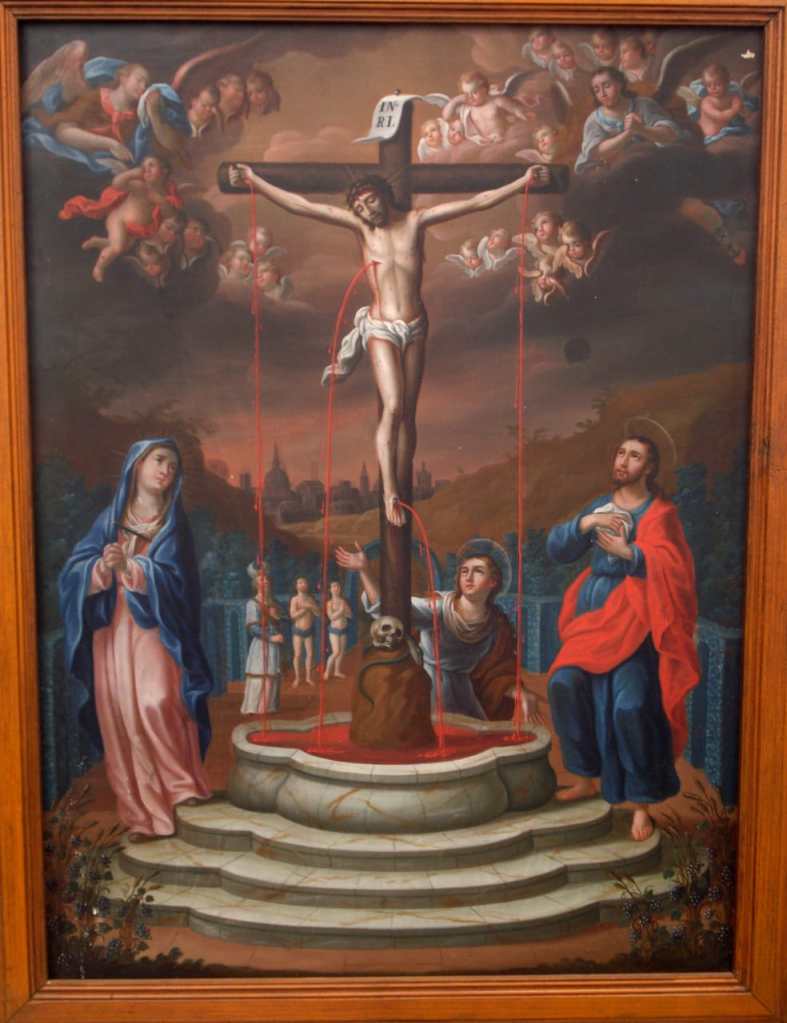
O Precious Blood of Jesus, source of all life and grace, have mercy on us (Source)

And it is in view of that hope that I consecrate this next year of my Catholic life to the Most Precious Blood of Jesus. I have long had a devotion to the Precious Blood, and I hope that this coming year will bring a renewed gratitude for that Blood so plenteously shed for the whole world.

Father Faber, in that marvelous book on the subject, writes,

The Precious Blood is invisible. Yet nothing in creation is half so potent. It is everywhere, practically everywhere, although it is not omnipresent. It becomes visible in the fruits of grace. It will become more visible in the splendors of glory. But it will itself be visible in Heaven in our Lord’s glorified Body as in crystalline vases of incomparable refulgence. It belongs to Him, the Second Person of the Most Holy Trinity, although its work is the work of the whole Trinity. In its efficacy and operation it is the most complete and most wonderful of all revelations of the Divine Perfections. The power, the wisdom, the goodness, the justice, the sanctity, of God, are most pre-eminently illustrated by the working of this Precious Blood.

Fr. Faber, The Precious Blood.
Source

It seems to me somehow appropriate as well to repair unto the Precious Blood in a time of tumult and pestilence, when dead seems to be all around. Every Christian, if a Christian he truly be, is only so by the merits of the Precious Blood. It is our common inheritance as adopted Sons of God.

And what a cause of joy! Is it any wonder that some of the finest hymns praise the Precious Blood with an exuberance and a delight that anticipates what we shall feel in the Parousia? Perhaps this is one of the great attractions of the devotion, at least for me. As someone with a pessimistic temperament and a profound sense of the centrality of suffering in the Christian life, I sometimes struggle to cultivate a joyful approach to faith. But can there be anything that kindles more joy than the absolute gratuity, liberality, and efficacy of the Precious Blood in redeeming us? I wish we could all feel what Father Faber felt when he contemplated the gift of the Precious Blood, which is neither more nor less than the whole mystery of our salvation:

The Word delights eternally in His Human Blood. Its golden glow beautifies the fires of the Holy Ghost. Its ministries beget inexplicable joys in the Unbegotten Father. I was upon the seashore; and my heart filled with love it knew not why. Its happiness went out over the wide waters and upon the unfettered wind, and swelled up into the free dome of blue sky until it filled it. The dawn lighted up the faces of the ivory cliffs, which the sun and sea had been blanching for centuries of God’s unchanging love. The miles of noiseless sands seemed vast as if they were the floor of eternity. Somehow the daybreak was like eternity. The idea came over me of that feeling of acceptance, which so entrances the soul just judged and just admitted into Heaven. To be saved! I said to myself, To be saved!

Then the thoughts of all the things implied in salvation came in one thought upon me; and I said, This is the one grand joy of life; and I clapped my hands like a child, and spoke to God aloud. But then there came many thoughts all in one thought, about the nature and manner of our salvation. To be saved with such a salvation! This was a grander joy, the second grand joy of life: and I tried to say some lines of a hymn; but the words were choked in my throat. The ebb was sucking the sea down over the sand quite silently; and the cliffs were whiter, and more day like. Then there came many more thoughts all in one thought; and I stood still without intending it. To be saved by such a Saviour! This was the grandest joy of all, the third grand joy of life; and it swallowed up the other joys; and after it there could be on earth no higher joy. I said nothing; but I looked at the sinking sea as it reddened in the morning. Its great heart was throbbing in the calm; and methought I saw the Precious Blood of Jesus in Heaven, throbbing that hour with real human love of me.   

Fr. Faber, The Precious Blood.
Source

Pray for me in this coming year, dear readers. Know that I will be praying for you and commending you always to the source of all life, all joy, all love, all purity, all sanctity, all wisdom, and all grace – the Most Precious Blood of Jesus. To whom be all glory, in the Name of the Father, and the Son, and the Holy Ghost, as it was in the beginning, is now, and every shall be, world without end. Amen.

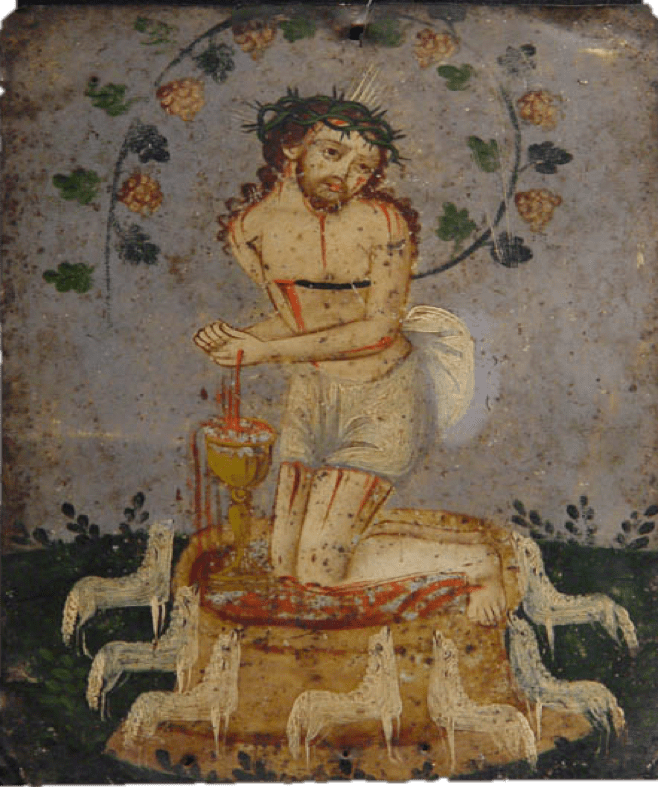
The Eucharistic Man of Sorrow/Mystical Vine, Anonymous, Mexican, 19th c. (Source)

Prosaic Relics

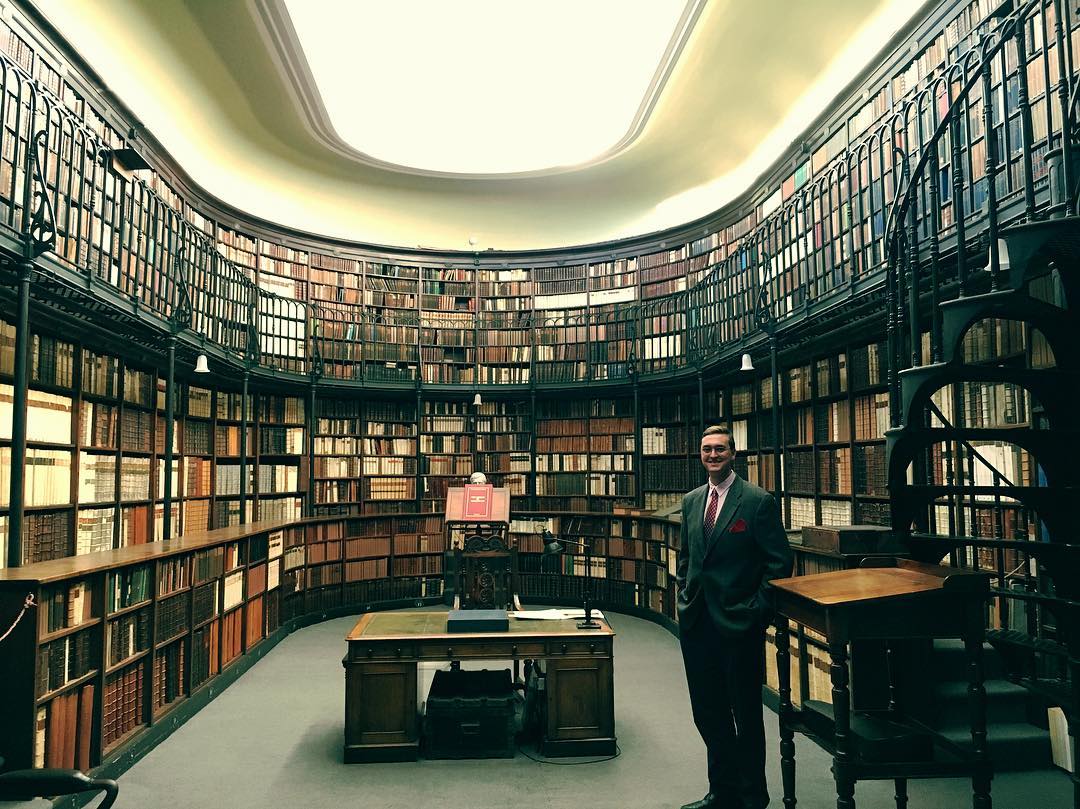
Earlier this week, I went to the Birmingham Oratory for the Feast of Bl. John Henry Newman. Fr. Ignatius Harrison, the Provost, was kind enough to open up the Oratory house to me. I must offer him my tremendous thanks for his hospitable willingness to let me see such an incredible (and, it must be said, holy) place. Likewise, I thank Br. Ambrose Jackson of the Cardiff Oratory for taking time out of his busy schedule to give me what was an extraordinarily memorable tour. I went away from the experience with a rekindled devotion to Cardinal Newman.

InNewmansLibrary

Your humble servant in Cardinal Newman’s own library. Photo taken by Br. Ambrose Jackson of the Cardiff Oratory. You can see Cardinal Newman’s violin case on the lower shelf of his standing desk at right.

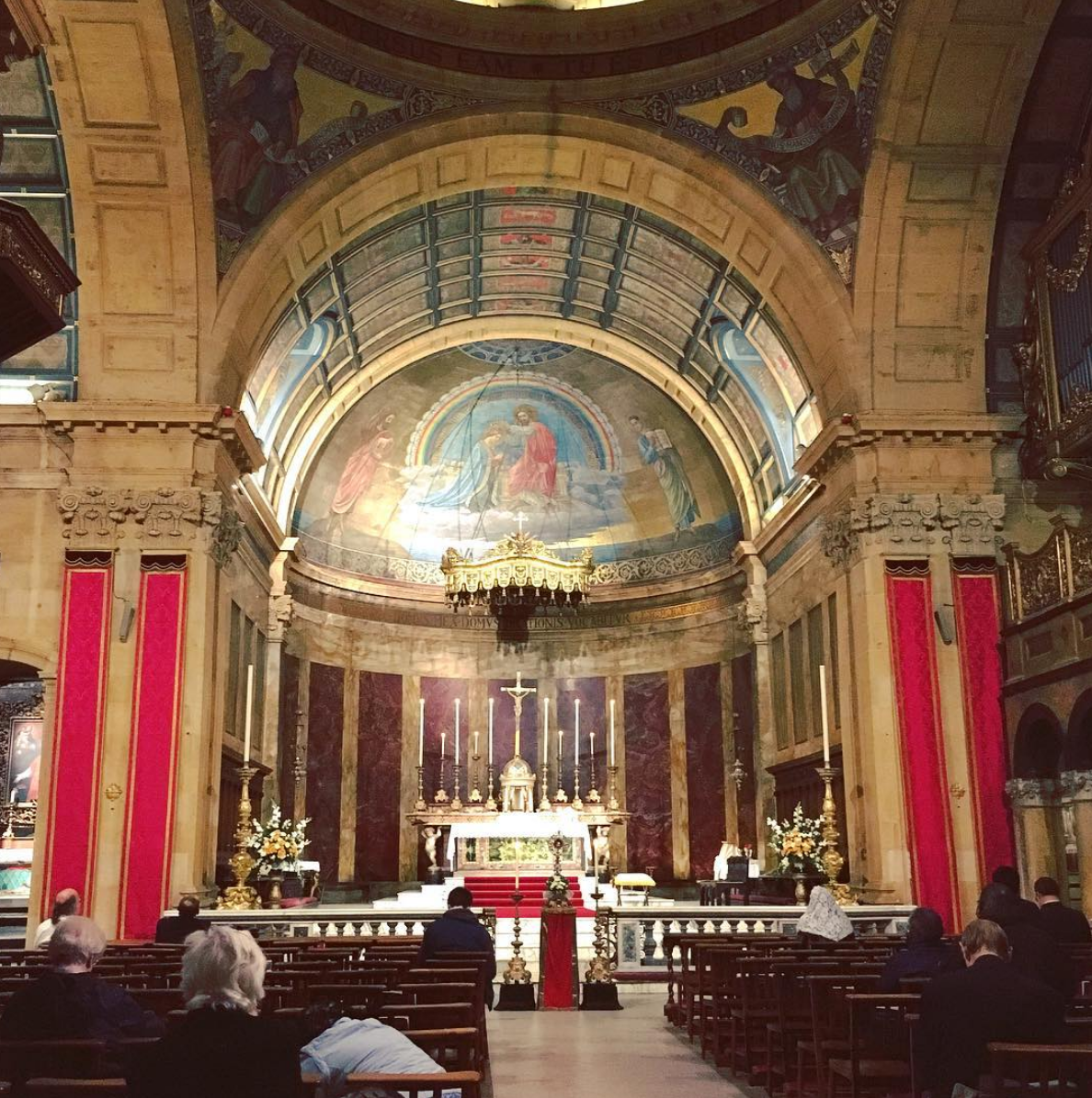
There were many striking and beautiful sights at the Oratory – not the least of which was the Pontifical High Mass in the Usus Antiquior, celebrated by His Excellency, Bishop Robert Byrne. Even from so short an experience, I can tell that the Birmingham Oratory is one of the places where Catholicism is done well, where the Beauty of Holiness is made manifest for the edification of all the faithful. I walked away from that Mass feeling drawn upwards into something supernal, something far beyond my ken. This place that so palpably breathes the essence of Cardinal Newman is, as it were, an island of grace and recollection amidst a worldand, sadly, a Churchso often inimical to things of the spirit.

Screen Shot 2018-10-10 at 10.44.57 PM.png

The Birmingham Oratory with the relics of the Blessed Cardinal displayed for veneration by the faithful. This photo was taken by the author shortly before Mass.

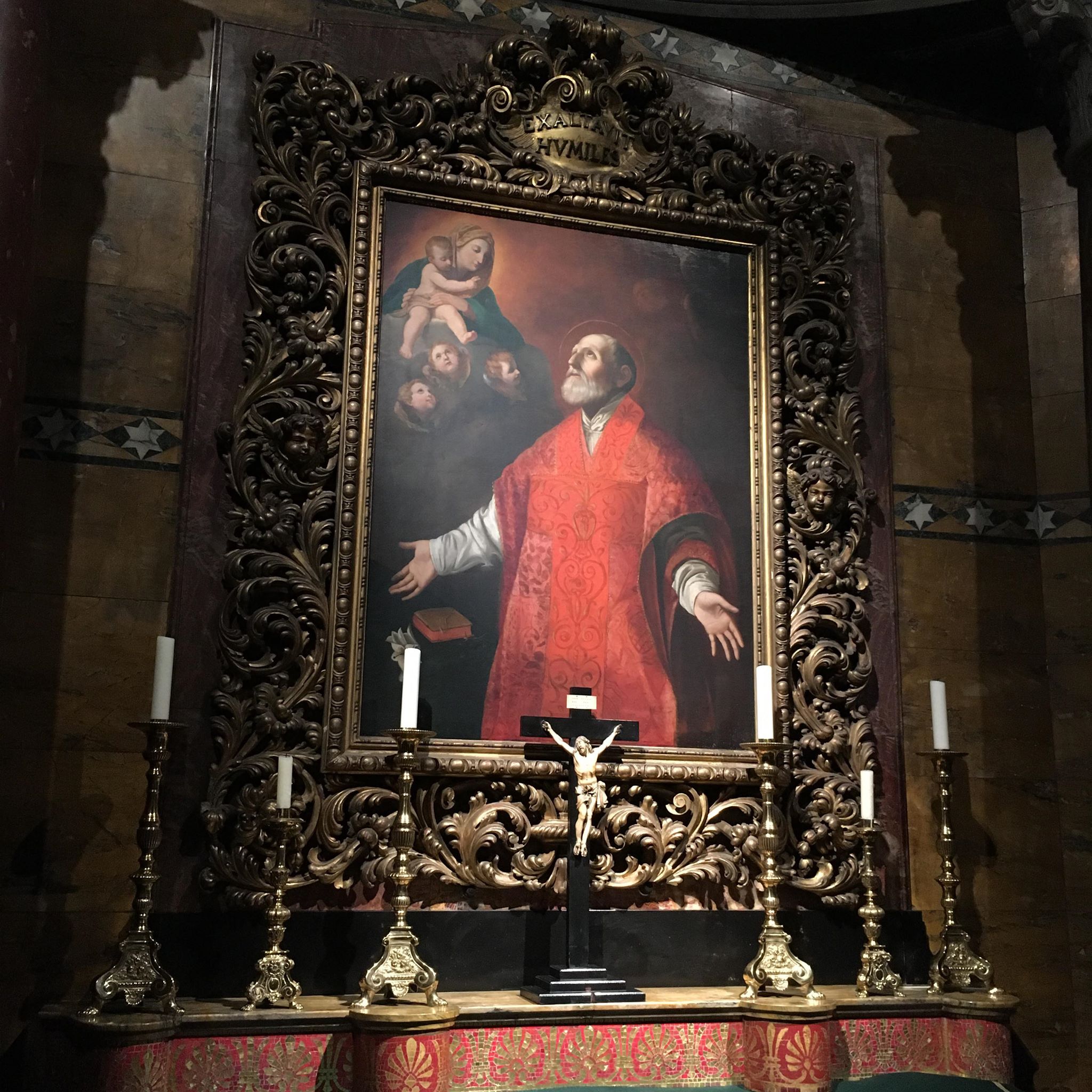
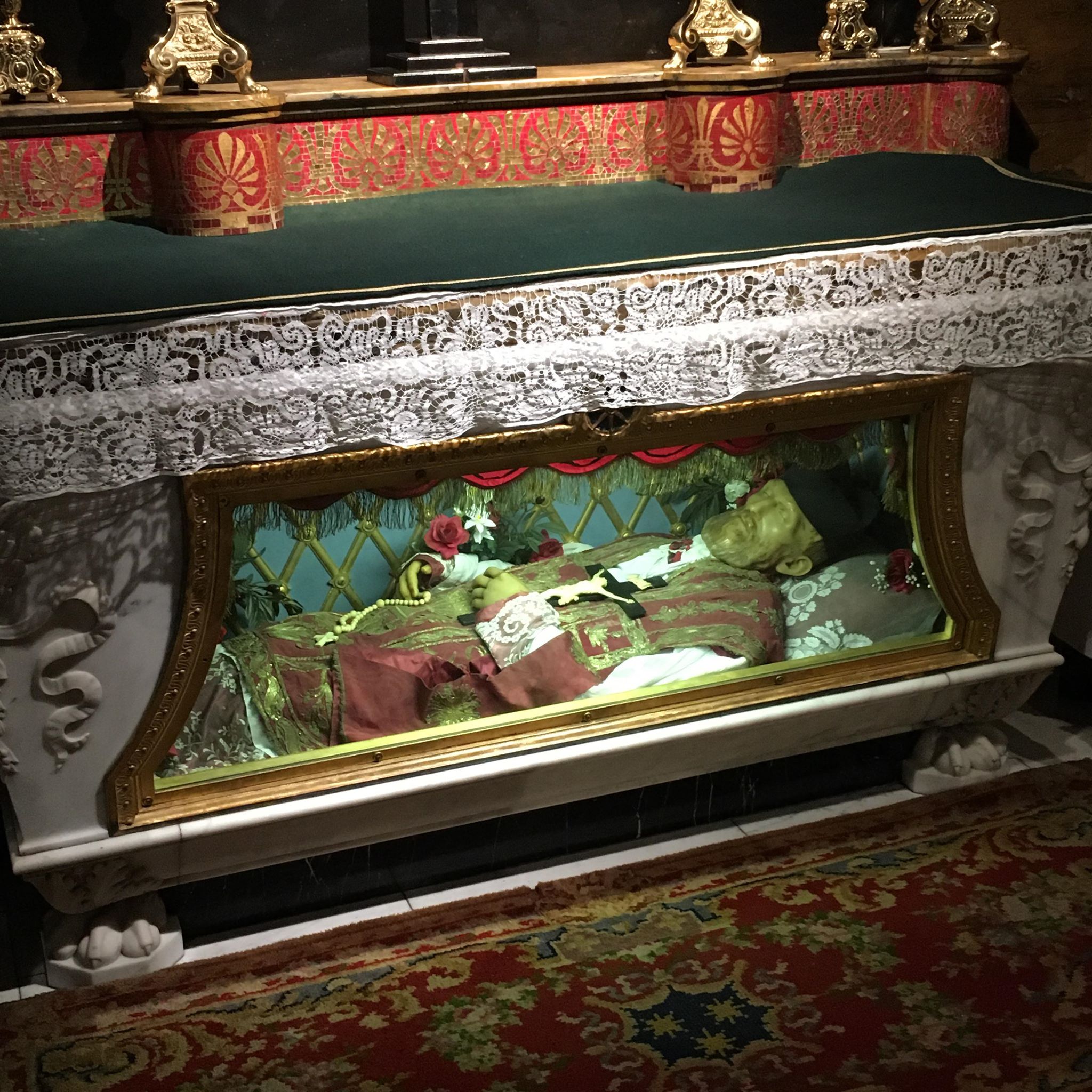
Yet amidst all this splendor, I found myself peculiarly drawn to one very quiet, very easy-to-miss relic. It lies in the little chapel to St. Philip Neri to the left of the altar; in this placement, one can see the influence of the Chiesa Nuova on Newman and his sons, who modeled their house’s customs on Roman models. And so it is only appropriate to find relics of St. Philip there in that small and holy place, so evocative of the great father’s final resting place.

StPhilipNeriPortraitBrum

The altar of St. Philip Neri, Birmingham Oratory. Photo taken by the author.

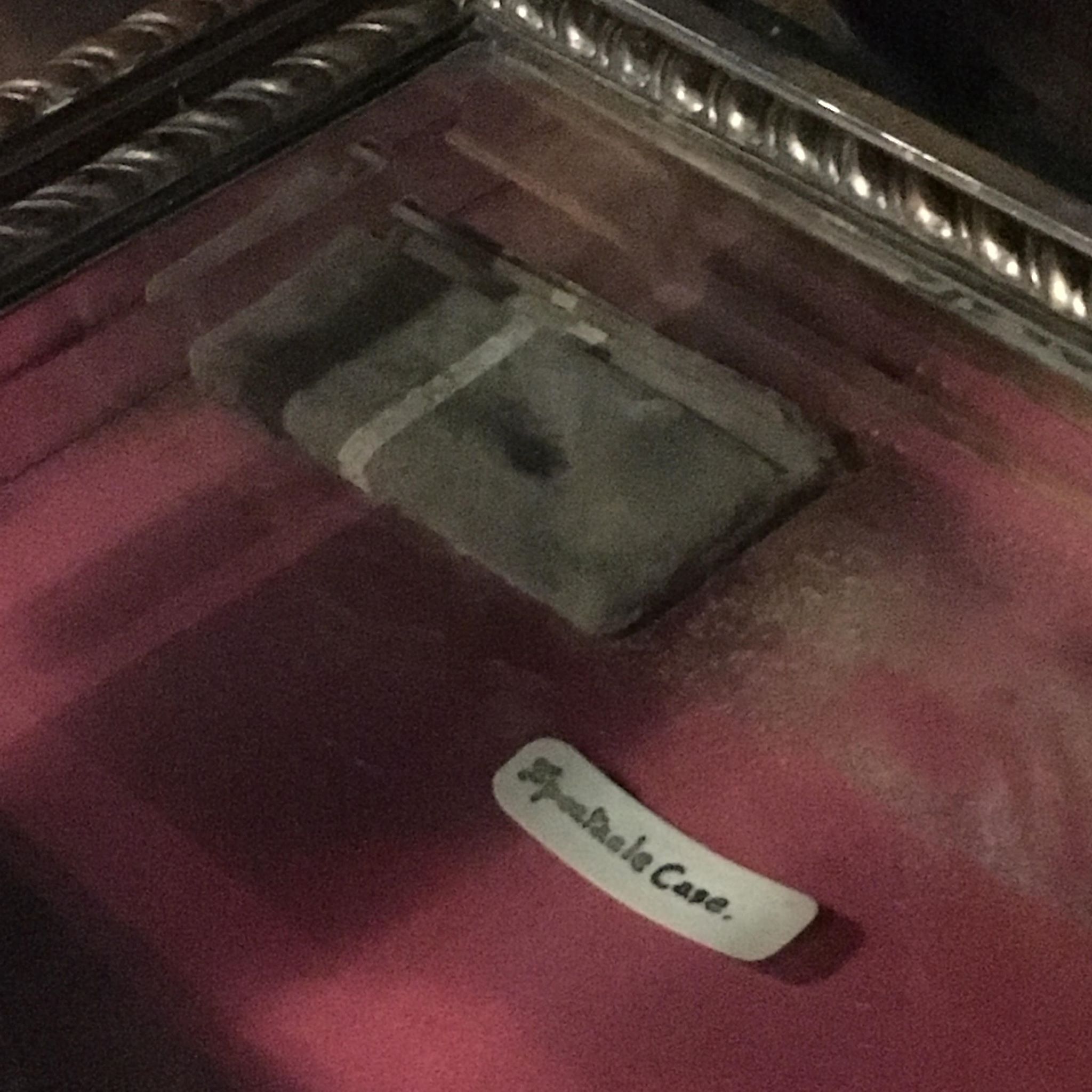
The collection of relics in the chapel are mostly second-class. These are not pieces of the body, but materials that touched St. Philip either in his life or after his death. One of these small items spoke to me in an especially strong way.

StPhilipsSpectacleCase

The little grey pouch you see to the left is St. Philip’s spectacle case. There is nothing terribly remarkable about it. It may not even be entirely intact, for all I know. A visible layer of dust covers the case, and a hard-to-read, handwritten label is all that identifies its use and provenance. No one comes to the Birmingham Oratory to see what once held St. Philip’s glasses. But of all the glorious relics I saw that day some encrusted in gold, some taken from rare and holy men, some evoking the perilous lives of saints who lived in a more heroic ageit was this humble artifact that most fired my imagination.

A spectacle case is no great thing. It does not shift the balance of empires or change the course of history. But humility and nobility are close cousins all the same. Here we come upon St. Philip in his quotidian life. A saint so marvelously strange, so crammed with the supernatural, so flame-like in darting from one miracle to another, nevertheless bent his fingers to the perfectly ordinary task of opening this case and taking out his spectacles so that he might see just a little better. It is a true maxim that grace builds upon nature. We have been told of St. Philip’s many graces. Here we find him in his nature; frail and imperfect and in need of just a little aid, so like our own.

The supernatural never erases the natural, and God is never more glorified than in our weakness. The hands that took up this case and opened it and drew forth its contents, perhaps a little fumblingly from time to time, are the very same thaumaturgic hands that lifted a prince out of death and Hell so that he might make his final confession. We know the story of the miracle. How rarely do we ponder the everyday conditions of its operation! How rarely do we consider those hands in their ordinary life.

There is a tendency with St. Philipas with many saints, and with Our Lord Himselfto reduce his life to one or two features. Some would make him an avuncular chap, always happy to laugh and thoroughly pleasant to be around, a jokester, a picture of joy and friend to all. On the other hand, we can get lost in the extraordinarily colorful miracles that mark St. Philip’s life, losing him in a fog of pious pictures and pablum. Neither captures his essence. The true middle way is to maintain a healthy sense of the bizarrean approach that recognizes the extraordinary in-breaking of the supernatural precisely because it appreciates the ordinary material of St. Philip’s day-to-day existence. It was this view that Fr. Ignatius himself recommended, though perhaps with a greater emphasis on the “weird,” in his homily delivered last St. Philip’s day.

I was reminded of this double reality when I saw St. Philip’s spectacle case. Prosaic relics carry this two-fold life within them more vividly than those upon which our ancestors’ piety has elaborated in glass and gold. Even Cardinal Newman’s violin case is not so markedly dual in this way; after all, every instrument belongs to that human portion of the supernatural we call “art.” Music, paintings, and other aesthetic forms all lift the human soul out of itself and into another world. In some ways, they are cousins both to Our Lady and to the Sacraments, God’s masterpieces of the sensible creation. Yet a spectacle casehow utilitarian. How plain. How merely functional. There is no poetry in a spectacle case. One can imagine writing a poem about a violinthe sinuous form of the wood almost suggests it, and more so when it carries a connection with so great a man as Newmanbut a spectacle case? Drab as this one is, its beauty comes only from the story it tells, from the life it once served, from the little help it gave its owner in his acquisition of beatitude.

Too often we wish to be God’s violins. In our quest for holiness, we wish to be admired, to cast our voice abroad, to give and seek beauty. These are not necessarily unworthy goals. But they are not the most important thing. Too infrequently do we turn our mind to the spectacle case. All too rarely do we seek our holiness in the gentle, quiet, everyday task of being useful, unnoticed, and present to God precisely when He needs us.

St. Philip knew how to be both, when he needed to be. May we learn to be like him in this as in so many respects.

StPhilipEffigyBrum

The effigy of Holy Father Philip, Chapel of St. Philip Neri, Birmingham Oratory. Photo taken by author.


Newman and Divine Providence

Bl. John Henry Newman, Doctor of Conscience and Doctor of Tradition, remains one of my dear friends in Heaven. Some of his prayers and devotions are as puissant today as they were when they were first composed. I am consoled by and draw courage from this extended passage of the Meditations and Devotions:

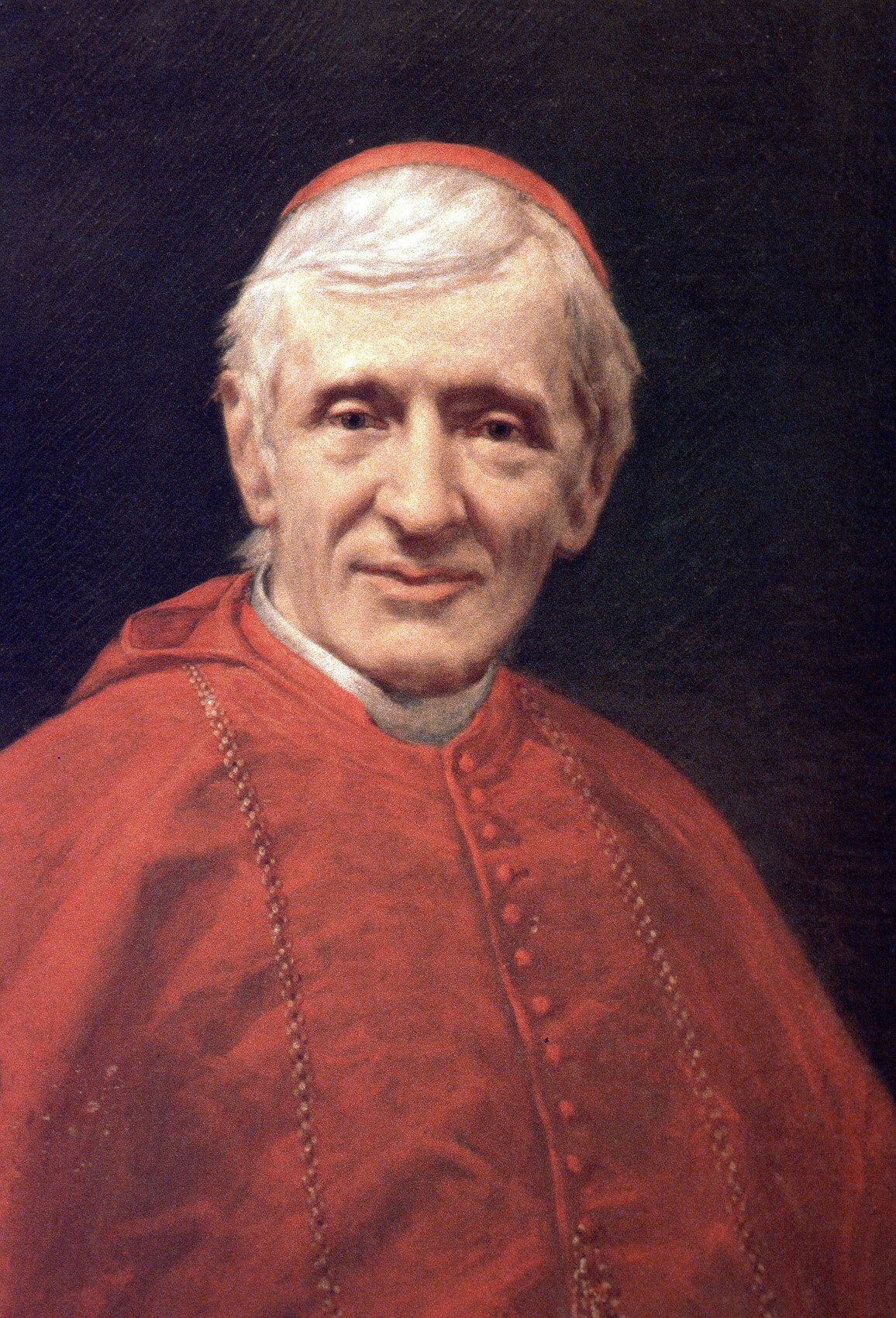
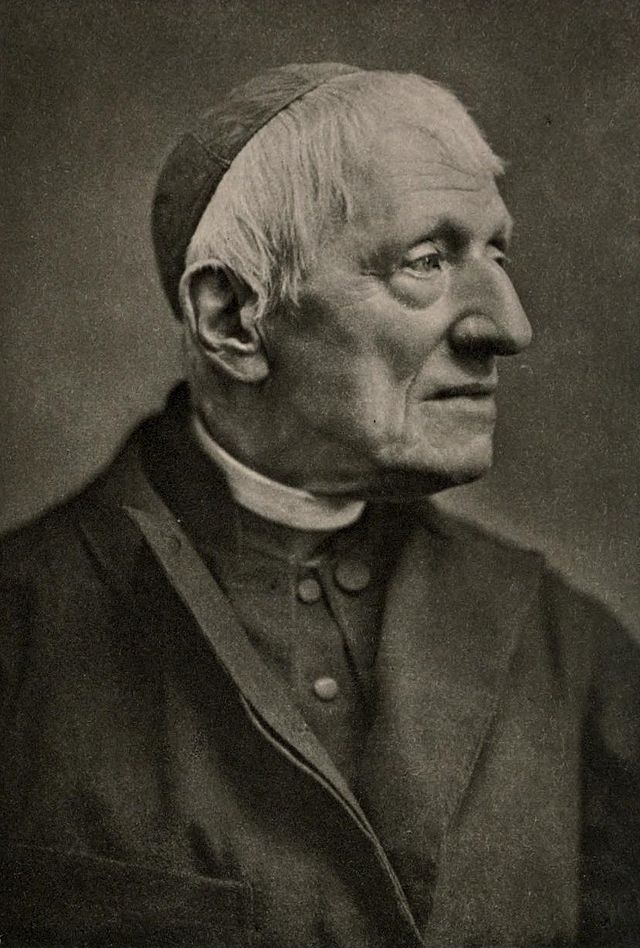
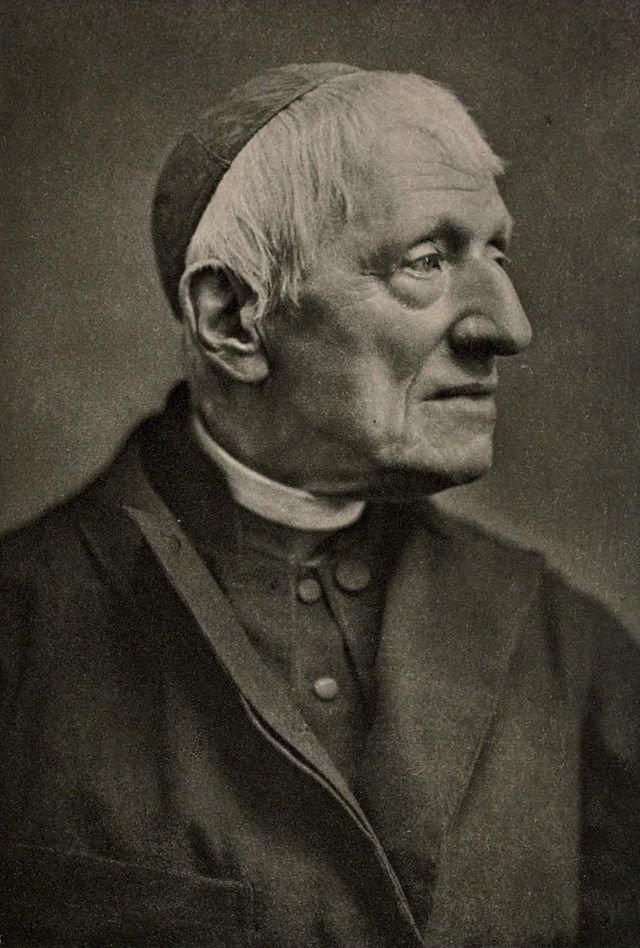
I have always thought this portrait captures the humanity and essential kindness of Cardinal Newman. (Source)

GOD has created all things for good; all things for their greatest good; everything for its own good. What is the good of one is not the good of another; what makes one man happy would make another unhappy. God has determined, unless I interfere with His plan, that I should reach that which will be my greatest happiness. He looks on me individually, He calls me by my name, He knows what I can do, what I can best be, what is my greatest happiness, and He means to give it me.

God knows what is my greatest happiness, but I do not. There is no rule about what is happy and good; what suits one would not suit another. And the ways by which perfection is reached vary very much; the medicines necessary for our souls are very different from each other. Thus God leads us by strange ways; we know He wills our happiness, but we neither know what our happiness is, nor the way. We are blind; left to ourselves we should take the wrong way; we must leave it to Him.

Let us put ourselves into His hands, and not be startled though He leads us by a strange way, a mirabilis via, as the Church speaks. Let us be sure He will lead us right, that He will bring us to that which is, not indeed what we think best, nor what is best for another, but what is best for us.

O, my God, I will put myself without reserve into Thy hands. Wealth or woe, joy or sorrow, friends or bereavement, honour or humiliation, good report or ill report, comfort or discomfort, Thy presence or the hiding of Thy countenance, all is good if it comes from Thee. Thou art wisdom and Thou art love—what can I desire more? Thou hast led me in Thy counsel, and with glory hast Thou received me. What have I in heaven, and apart from Thee what want I upon earth? My flesh and my heart faileth: but God is the God of my heart, and my portion for ever.

God has created me to do Him some definite service; He has committed some work to me which He has not committed to another. I have my mission—I never may know it in this life, but I shall be told it in the next. Somehow I am necessary for His purposes, as necessary in my place as an Archangel in his—if, indeed, I fail, He can raise another, as He could make the stones children of Abraham. Yet I have a part in this great work; I am a link in a chain, a bond of connexion between persons. He has not created me for naught. I shall do good, I shall do His work; I shall be an angel of peace, a preacher of truth in my own place, while not intending it, if I do but keep His commandments and serve Him in my calling.

Therefore I will trust Him. Whatever, wherever I am, I can never be thrown away. If I am in sickness, my sickness may serve Him; in perplexity, my perplexity may serve Him; if I am in sorrow, my sorrow may serve Him. My sickness, or perplexity, or sorrow may be necessary causes of some great end, which is quite beyond us. He does nothing in vain; He may prolong my life, He may shorten it; He knows what He is about. He may take away my friends, He may throw me among strangers, He may make me feel desolate, make my spirits sink, hide the future from me—still He knows what He is about.

O Adonai, O Ruler of Israel, Thou that guidest Joseph like a flock, O Emmanuel, O Sapientia, I give myself to Thee. I trust Thee wholly. Thou art wiser than I—more loving to me than I myself. Deign to fulfil Thy high purposes in me whatever they be—work in and through me. I am born to serve Thee, to be Thine, to be Thy instrument. Let me be Thy blind instrument. I ask not to see—I ask not to know—I ask simply to be used.

(Meditations and Devotions “Hope in God – Creator”)

Elsewhere: Mother Mectilde de Bar and the Prayer of Devekut

One of the great works of Vultus Christi has been the exposure of many English-speaking Catholics to the spiritual treasures of the continental Benedictine tradition, especially the life and work of Mother Mectilde de Bar. The good nun was a profound mystic of the Eucharist and a spiritual heir to the French School. Anyone with any interest in Benedictine life, Catholicism in early modern France, or spirituality generally should take note.

MechtildeBNF.jpg

Mother Mectilde de Bar (1614-1698), foundress of the Benedictines of Perpetual Adoration of the Most Blessed Sacrament of the Altar. (Source)

I am very happy to refer my readers to an excellent translation of one of Mother Mectilde’s letters of spiritual direction. The translator, an Oblate of Silverstream, has rendered the 17th century French into elegant and very readable English. A job well done!

Here’s a particularly potent excerpt:

The whole of Christian perfection consists in continual attention to Jesus Christ, and a constant adherence or submission to His good pleasure. These two points contain everything, and their faithful practice will lead you to the highest degree of perfection. Blessed is the soul who observes them.

The first point consists in seeing Jesus Christ in everything; in all events and in all our dealings; in such way that this divine sight removes from us the sight of creatures, ourselves, and our interests, in order to see nothing except Jesus Christ. In a word, it is to have the presence of God continually.

The second point consists in being constantly submissive to His holy will; in being so much subject to His good pleasure that we no longer have any return, at least voluntarily, by which we can withdraw from this respectful obedience.

I am reminded, in reading this passage, of a concept in Jewish mysticism called devekut. To practice devekut is to cleave to God constantly, even in the midst of everyday, profane activities. The Rabbis who founded and nurtured Hasidism in the 18th century made it a central feature of their mystical praxis, though the idea has roots in the Temple traditions of the Old Testament (vide Barker 2004, 37). Dr. Margaret Barker notes that, according to the older, priestly understanding of the word “cleaving” in Hebrew, “to cleave” meant quite literally to join. However, this sense was displaced when the Moses-focused Deuteronomist tradition came to ascendance. The new meaning of “cleaving” was, instead, obedience (Ibid. 37). Mother Mectilde has here joined both meanings in a salutary way.

Holy-Eucharist-Icon.jpg

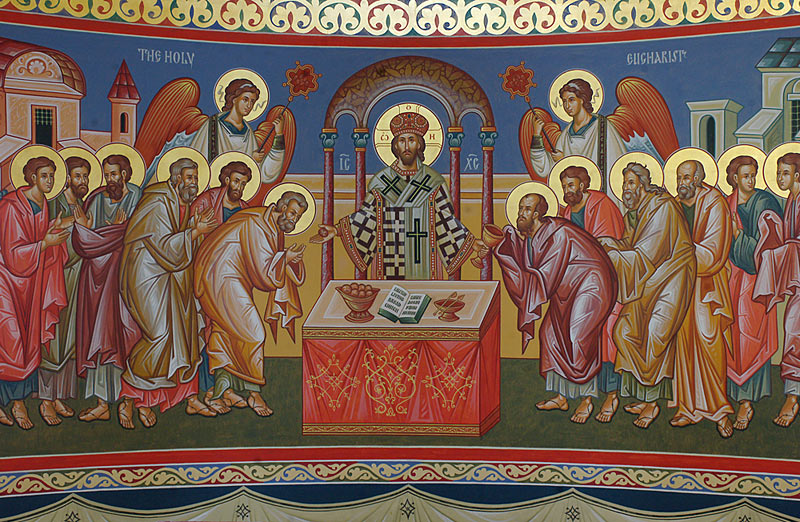
An icon of the Holy Eucharist, showing Christ the High Priest in the Holy of Holies. (Source)

However, I think she places a bit more emphasis on the first, as the primary and indispensable basis of the second. She goes on to write,

Have Jesus Christ imprinted and carved on the center of your soul. Have him in all the faculties of your mind. May your heart be able to think of and long for nothing except Jesus Christ.  May your whole inclination be to please Him. Attach all your fortunes and your happiness to knowing and loving Jesus Christ.[1] May nothing on earth, however great it seems, prevail in you against the constant union you should have with Jesus Christ. May neither heaven, nor earth, nor hell, nor any power, ever separate you from Him.[2]

She continues on and apostraphizes Divine Love, writing

O Jesus all powerful and all love, work in us these two effects of mercy: attract us by your omnipotence and transform us by your love into Yourself.

O love, O love divine, may you burn in us, and that you may consume in us everything that is contrary to you and opposed to your workings.

O life that is not animated by love, how can you be called life? You are a hideous death, and most terrible.

O pure and holy love of Jesus Christ, do not allow a single moment of my life to be spent without love; make me die and throw me into hell a thousand times rather than not to love Jesus Christ.

The first line here is the key; this is the loving and even conjugal language of devekut, not simple obedience. But obedience is implied as the sustaining force and natural result of such attentive love.

Hesychast.jpg

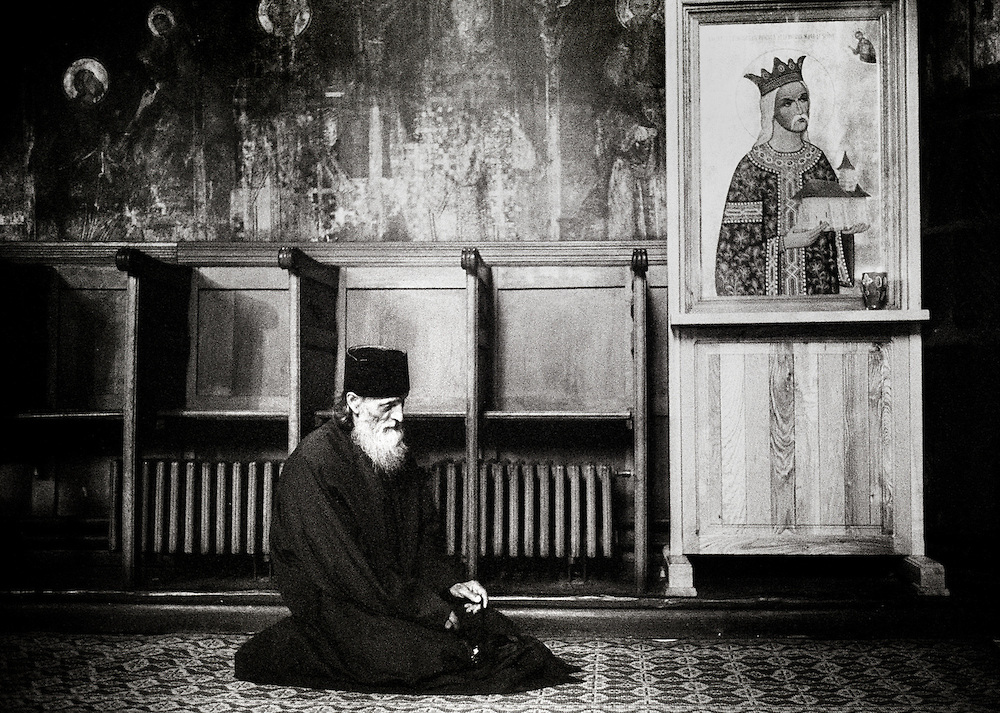
A hesychast at prayer. (Source)

It seems appropriate to me that Mother Mectilde, a Benedictine, should advocate for this kind of “cleaving” prayer, vigilant love in every moment. It has always been the task of the monastic throughout history to preserve this kind of remembrance of God that is itself a form of His presence in the heart. Precisely this “cleaving” constitutes the positive good underlying hesychasm in the East, but it can also be found in many monastic writers of both East and West. Mother Mectilde is not speaking alone. Indeed, she expresses the perennial Wisdom that has always infused the monastic life and made it fruitful.

Read the whole thing over at Vultus Christi.

Elsewhere: Two Readings for a First Friday

Screen Shot 2018-07-06 at 2.40.31 AM

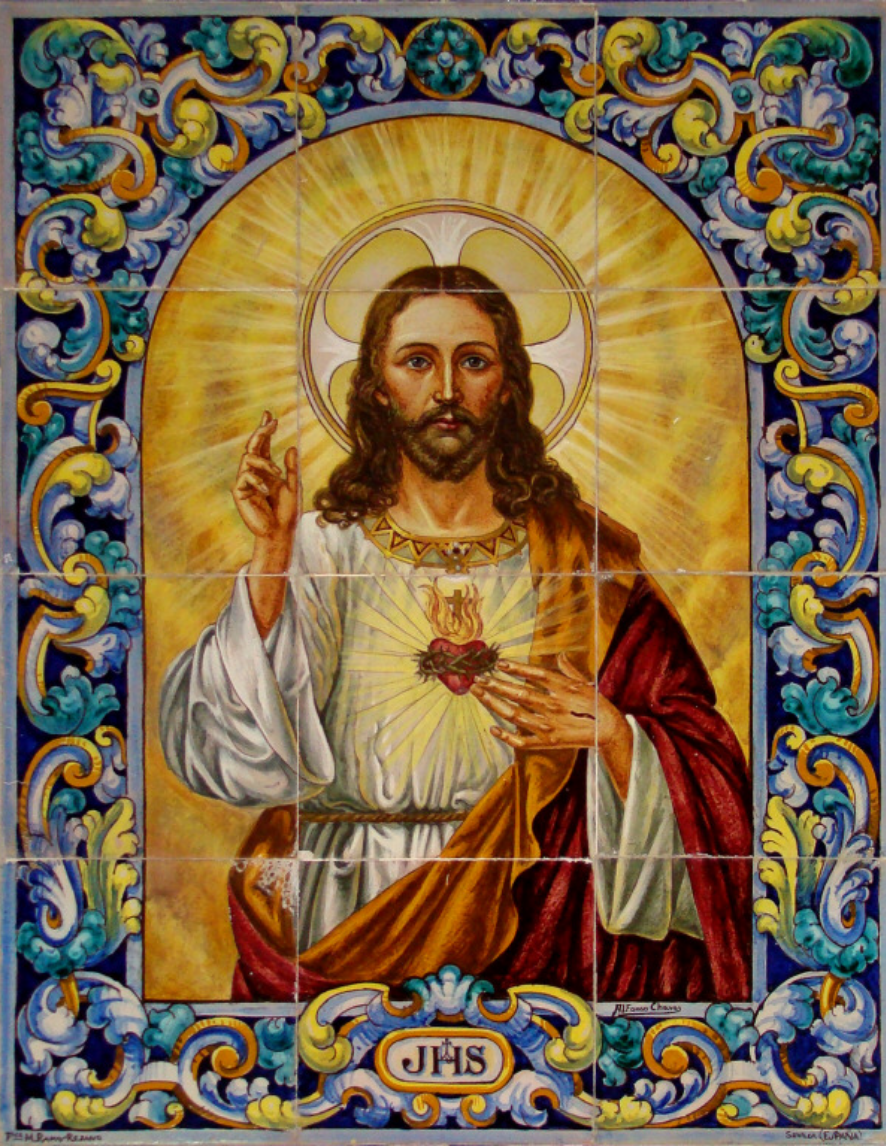
Sacred Heart of Jesus, have mercy on us. (Source)

I’m working on a big blog post that’s running rather long. In the meantime, I wanted to refer two posts that, although different in some ways, have a common center.

The first is a little old, though I rather sheepishly confess I only just read it. John Monaco has a very good post over at Inflammate Omnia on how the Sacred Heart devotion can help those struggling with mental illness. John goes over the history of the scrupulous, doubtful view of God’s love, most egregiously enshrined in the heresy of Jansenism. But he also looks at the ways that the Sacred Heart can lead those who suffer from scrupulosity and obsessive-compulsive disorder to approach a healthier, more accurate relationship with God.

The second is from an acquaintance of mine named Patrick McCoy who is both a fairly traditional Catholic and same-sex attracted. Over at his blog, O Crux Ave, he relates his recent experience engaging in street evangelism at St. Louis PrideFest, where he led a small team with the goal of sharing the Love of God with the LGBT community. Appropriately enough, he calls this ministry #SacredHeartLoves Outreach.

Although the two posts deal with different topics, together they form a kind of diptych about the Sacred Heart. Both are honest, even vulnerable personal narratives. Both proclaim the unconditional Love of God for stigmatized groups: the mentally ill and sexual minorities. Thus, both are fitting to read on this first Friday of July, the month of the Precious Blood of Jesus, spilled for all mankind.

St. Francis de Sales on the Passion of Christ

frankydesales.jpg

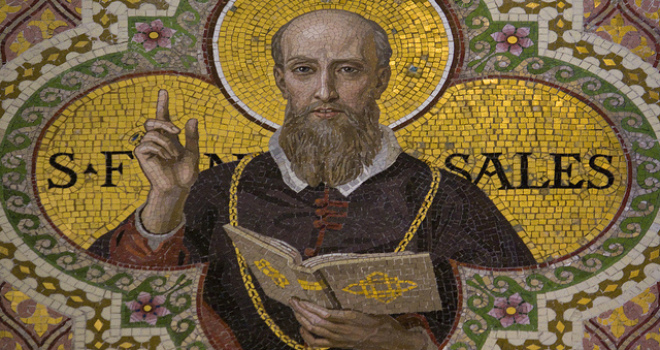
St. Francis de Sales, pray for us. (Source)

In my final post of Wednesday spiritual masters, here is a passage from Part V, Chapter XIII of St. Francis de Sales’s Introduction to the Devout Life. I thought it was particularly appropriate for Holy Week.

The Love Which Jesus Christ Bears Us

Consider the Love with which our Dear Lord Jesus Christ bore so much in this world, especially in the Garden of Olives and on Mount Calvary; that Love bore you in mind, and through all those pains and toils He obtained your good resolutions for you, as also all that is needful to maintain, foster, strengthen and consummate those resolutions. How precious must the resolutions be which are the fruits of our Lord’s Passion! and how dear to my heart, since they were dear to that of Jesus! Saviour of my soul, Thou didst die to win them for me; grant me grace sooner to die than forget them. Be sure, my daughter, that the Heart of our most Dear Lord beheld you from the tree of the Cross and loved you, and by that Love He won for you all good things which you were ever to have, and amongst them your good resolutions. Of a truth we have all reason like Jeremiah to confess that the Lord knew us, and called us by our name or ever we were born, the more that His Divine Goodness in its Love and Mercy made ready all things, general and individual, which could promote our salvation, and among them our resolutions. A woman with child makes ready for the babe she expects, prepares its cradle, its swaddling clothes and its nurse; even so our Lord, while hanging on His Cross, prepared all that you could need for your happiness, all the means, the graces, the leadings, by which He leads your soul onwards towards perfection.

Surely we ought ever to remember this, and ask fervently: Is it possible that I was loved, and loved so tenderly by my Saviour, that He should have thought of me individually, and in all these details by which He has drawn me to Himself? With what love and gratitude ought I to use all He has given me? The Loving Heart of my God thought of my soul, loved it, and prepared endless means to promote its salvation, even as though there were no other soul on earth of which He thought; just as the sun shines on each spot of earth as brightly as though it shone nowhere else, but reserved all its brightness for that alone. So Our Dear Lord thought and cared for every one of His children as though none other existed. “Who loved me, and gave Himself for me,” S. Paul says, as though he meant, “for me alone, as if there were none but me He cared for.”

Let this be graven in your soul, my child, the better to cherish and foster your good resolutions, which are so precious to the Heart of Jesus.

Fénelon on the Return to God

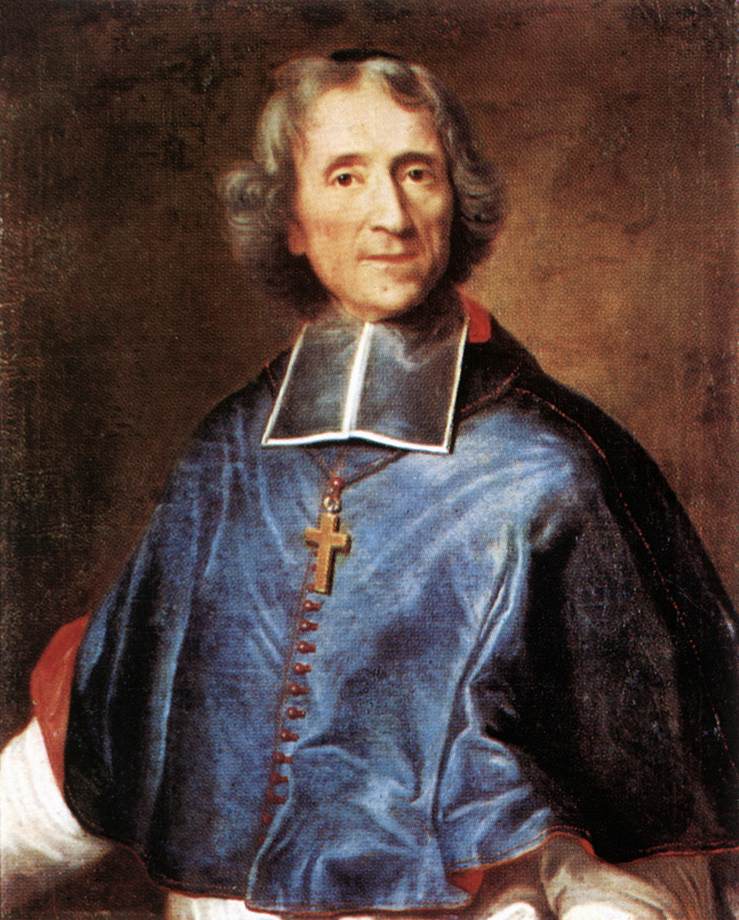
Fenelon

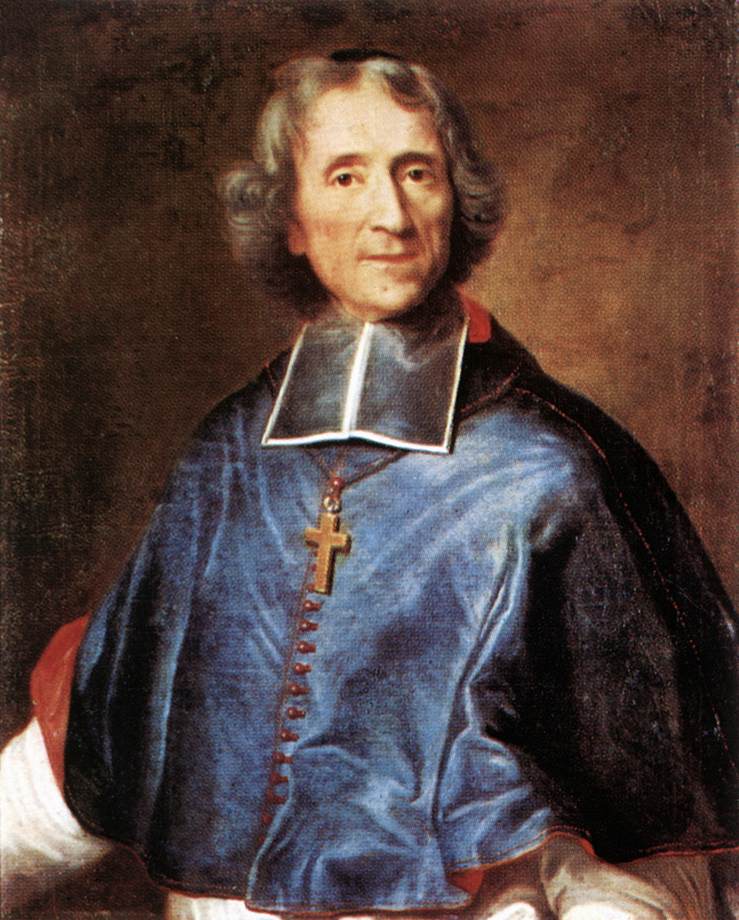
François de Salignac de la Mothe-Fénelon, Archbishop of Cambrai in the age of Louis XIV (Source)

Continuing my Lenten series of Wednesday spiritual masters, I present to you here a letter by Archbishop Fénelon to an officer, often identified as the Chevalier Colbert. The translation I am using comes from 1877, but I would also recommend to you the version by fellow Wahoo Chad Helms in the 2006 Paulist Press edition of Fénelon‘s Selected Writings. It struck me by its beauty and force of feeling, as well as its Lenten spirit. 

You have forgotten me, sir, but it is impossible for me to forget you. Something in my heart continually recalls you, and makes me want to hear of you, as I have more especially felt during the campaign and its perils. Your forgetfulness only makes me feel the more. The friendship you showed me once is of a kind never to be forgotten; and when I recall some of our conversations, my eyes are filled with tears. I trust that you remember how pleasant and hearty they were. Have you found anything since then more acceptable than God? Have the truths which then satisfied you failed? Is the pure light of the kingdom of God quenched? Has the world’s nothingness acquired some fresh value? Is that which was but a wretched dream not still the same? Is the God to Whom you poured out your soul, and Who filled you then with a peace beyond all earthly ken, no longer to be loved? Has the eternal beauty, ever so fresh to pure eyes, no longer charms for you? Is that source of heavenly joy, of unmarred happiness, which springs from the Father of Mercies and God of Consolation, dried up? No, for He has filled me with an urgent desire to recall you to Him. I cannot resist it: for long I have hesitated, and said to myself that I should only worry you. Even as I began this letter, I laid down a limit of discretion to myself; but after the first few words, my heart burst its bounds. Even should you not answer, or should think me absurd, I should not cease to speak sorrowfully to God of you, when unable to speak to you yourself any more. Once more, sir, forgive me if I exceed all due limits. I know it as well as you, but I feel irresistibly urged: God has not forgotten you, since He stirs up so eager a desire for your salvation in me.

What does He ask of you, save to be happy? Have you not realised that one is happy in loving Him? Have you not felt that there is no other real happiness, whatever excitement may be found in sensual pleasures, apart from Him? Since, then, you know where to find the Fountain of Life, and have of old drunk thereof, why would you seek foul, earthly cisterns? Bright, happy days, lighted up by the soft rays of loving mercy, when will ye return? When will it be given me to see this child of God reclaimed by His powerful Hand, filled with His favour, and the blessings of His holy Feast; causing joy in Heaven, despising earth, and acquiring an inexhaustible fund of humility and fervour from his experience of human frailty?

1280px-Rembrandt_Harmensz_van_Rijn_-_Return_of_the_Prodigal_Son_-_Google_Art_Project2

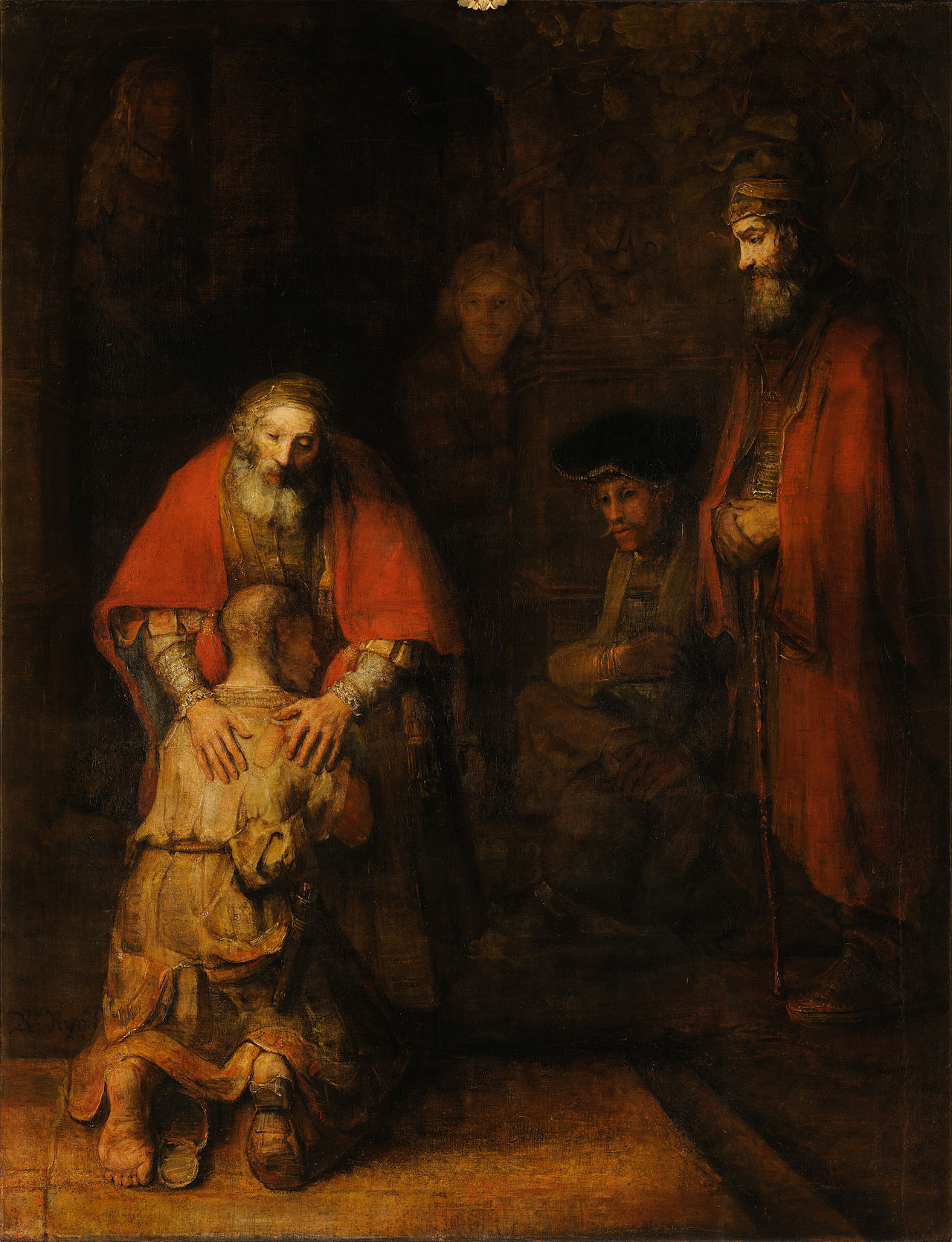
The Return of the Prodigal Son, Rembrandt van Rijn, c. 1661-69. (Source)

I am not dictating what you should do. God will Himself make that plain to you according to your needs, so long as you hearken inwardly to Him, and despise boldly that which is despicable. Do whatever you will, only love God, and let His Love, revived in your heart, be your guide. I have often thanked Him for having shielded you amid the perils of this campaign, in which your soul was even more exposed to risk than your body. Many a time I have trembled for you: put an end to my fears, and fill my heart with gladness. None can possibly be greater than to find myself once more with you in the house of God, united in heart and soul, looking together to one glorious hope, and the Coming of our Great God, Who will fill us with the flood of His pure delights. Your ears are not yet closed to the sublime language of truth, your heart is made to feel its charms. “Taste and see” the pleasant bread daily spread for us at our Father’s table. Why have you forsaken it? With such support, who can fear that anything else will be lacking? Even if you do not feel strong enough to regain the happy position where you were, at least answer me, at least do not shun me. I know what it is to be weak; I am a thousand times weaker than you. It is very profitable to have realised what one is; but do not add to that weakness, which is inseparable from human nature, an estrangement from the means of strength. You shall regulate our intercourse; I will only speak to you of such things as you are willing to hear. I will keep God’s secret in my heart, and shall be always, with unchanging affection and regard, etc.


For Blessed John Henry Newman

john-henry-newman

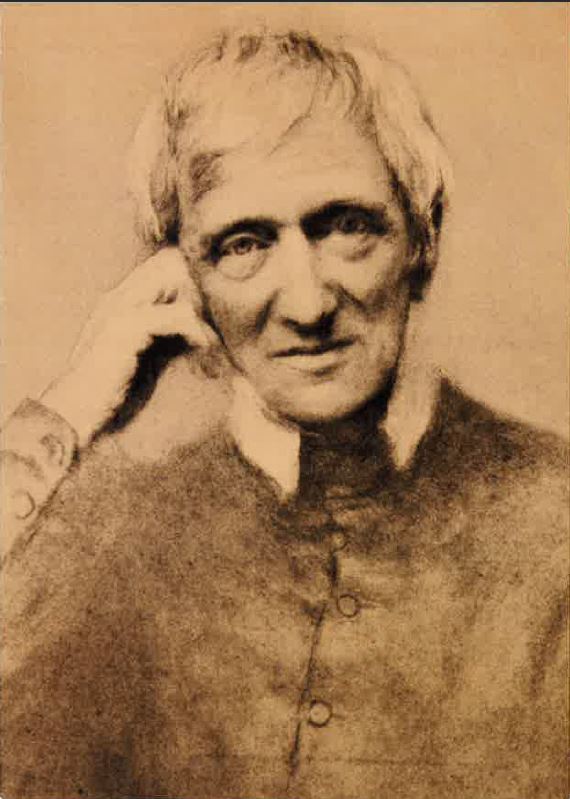
Bl. Newman in his Oratorian habit (Source).

There is so much I could write about Cardinal Newman, on this, his feast day. I have, indeed, already written posts about him many times in the past. But now that courses are starting, I don’t find that I can say as much as I would perhaps like. I also write this essay in some state of exhaustion, having just completed the walking pilgrimage from the Oxford Oratory to Littlemore in honor of Newman’s reception into the Church by the Blessed Dominic Barberi.

So instead of making this a terribly erudite post about a point in Newman’s life or theology, I thought I’d just express my profound gratitude. It can be gauche to make any feast of the Church about one’s self. That is not at all my intention, and I hope I will not be thought self-seeking in writing of my own experience. I don’t pretend that my story is terribly uniquebut it is mine, and no one else can tell it. I am emboldened to relate the history of my own friendship with Blessed John Henry because, as I was taught by Dom Mark Daniel Kirby, “a grace remembered is a grace renewed.” And of course, it’s not really about me. It’s about God, and what He has mercifully done for me through Blessed John Henry Newman.

Saints come to us at many stages of our life. They are always timely, making their appointments according to Heaven’s clock. The mysterious intervention of the saints provides us with one of the many beautiful aspects under which we might consider the manifold glories of providence. They are, as they were in life, God’s instruments; only now, in beatitude, they are eternally and perfectly so. By their intercession, they fill their afterlife with comings and goings, always about God’s business.

Like so many Catholics, I have known the prayers of a saint. Blessed John Henry Newman entered my life when I was still very young in the faith. Of course, I had heard of him before. His name looms large in the history of conversion, and as a convert myself, I found his story interesting if not overly compelling. All that was to change in the spring of my second year, when, in a class entitled, “The University, God, and Reason,” I had the chance to read the first half of his famous educational treatise, The Idea of a University. His magnificent prose and bold defense of knowledge for its own sake thrilled me. I made him my Lenten companion that spring. And in May, I tried (not entirely successfully) to go through all of his Marian meditations for the entire month. A few weeks later, I left for my study abroad.

John-Henry-Newman-2.jpg

Newman in later years. (Source)

This venture is, I think, one of the great privileges and turning-points of my life. The more I reflect on it, and where I have been since, the more I thank God for allowing me that study which was more a pilgrimage than anything else. On my very first day away from home, I had the chance to visit the Brompton Oratory. Leaving the hustle and bustle of Kensington in the late afternoon, stepping into that dark and immense well of stillness, I immediately thought, “This is God’s house.” I had never had that reaction in any other church before, and never yet have since. It was unbidden, unlooked-for, unimagined. Yet there, in the vast twilight of Fr. Faber’s church, I felt the unmistakable presence of God. And whose altar should I find, off in a niche, under a low-hanging balcony? Whose but Cardinal Newman’s? And from Cardinal Newman’s altar I walked up to the transeptsand found the effigy-altar of St. Philip Neri. To this day, it is still my firm conviction that I was led to befriend St. Philip by Blessed John Henry, his son.

That was my first introduction to the Oratory. While I had heard of it and understood some of its distinctives, these were merely academic realities to me until that long journey. Throughout the rest of my travels that summer, my mind turned constantly to Blessed John Henry and St. Philip. In Rome, the presence of the latter seeped from the very walls. I had the grace of visiting the Chiesa Nuova twice, and San Giovanni dei Fiorentini once (though at the time I did not know its history). And when I returned to England to complete the course I had signed up for, I started to find Cardinal Newman everywhere. Across the street from my college in Oxford was the Church of St. Mary the Virgin, where Newman was vicar. I visited Oriel and passed by Trinity, his two colleges. I worshiped weekly at the Oratoryyet another house of St. Philipwhere Newman had preached in his own life. I bought a small portrait of the man himself in the little church shop there. And while on a brief retreat with the monks of Silverstream, I providentially purchased a short biography of St. Philip Neri. It was the first I ever read, and I devoured it in a few days.

I have little to say of the time since my return to the United States in August of 2015. The year that followed was very bad, and my faith suffered greatly. But when I came back after so long a spiritual exile, I once again felt the prayers of Cardinal Newman moving me in the right direction. Slowly but surely, my sense of the presence of God healed. By this point, I was writing a thesis on Newman. I was also seriously pondering my future. I knew I wanted to continue my studies, but the question of where to do so was subject to a number of considerations. So I offered up the issue in prayer to a number of saints, including Our Lady of Walsingham and Bl. Cardinal Newman.

And now I am at Oxford, Newman’s beloved university. Indeed, I am at a college guided by the spirituality of the Anglican movement he began. Cardinal Newman has not failed me by his prayers. I have read so many works by and about him, yet still I feel I have so much more to learn from his life and teaching. He is for me many things at once: intellectual mentor, friend in Heaven, father in God. For someone training for the scholarly life, Newman is a model Catholic academic. He pursued Truth until he found it, and, not resting therein, never ceased following it until his death. I pray that I, too, may follow him out of shadows and images and into the “kindly light” of Truth.

Blessed John Henry Cardinal Newman, Pray for Us.

MIllaisNewman

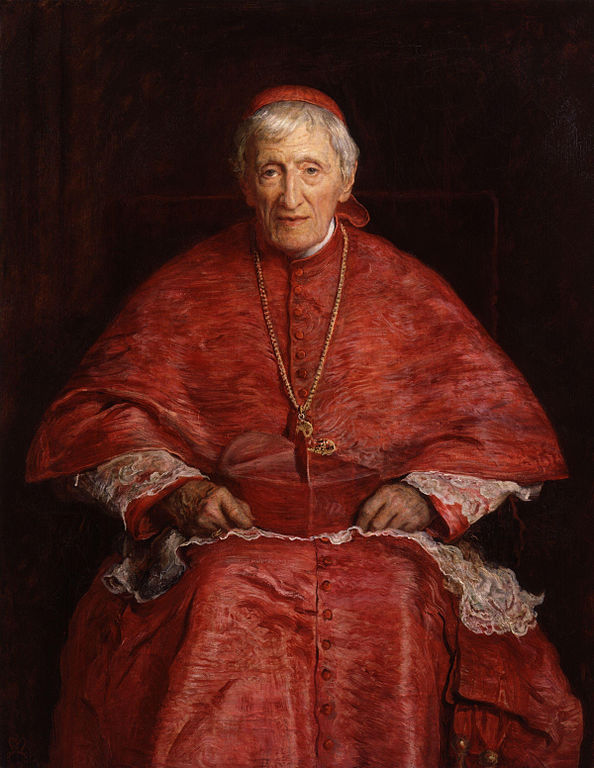
The Millais portrait of Cardinal Newman. (Source)