Here is my New Year’s Resolution, though I confess, it isn’t actually mine. It is rather taken from page 201 of The Spirit of Fr. Faber, Apostle of London.

Here is my New Year’s Resolution, though I confess, it isn’t actually mine. It is rather taken from page 201 of The Spirit of Fr. Faber, Apostle of London.
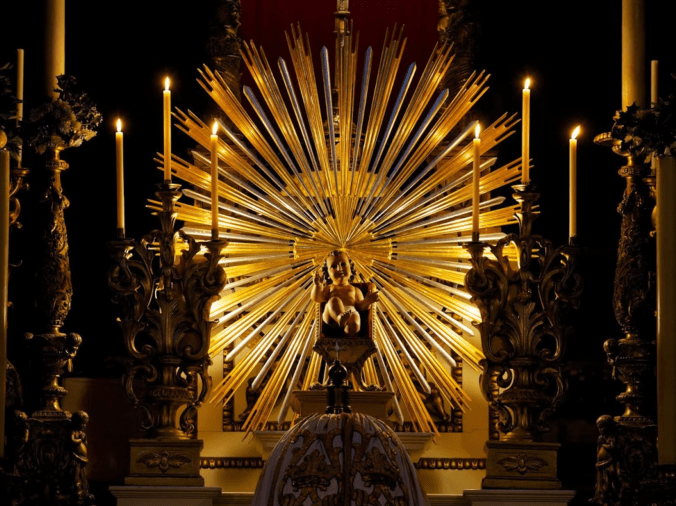
Christmas at the Brompton Oratory. (Source)
A phrase that St. Philip Neri was always repeating to his disciples was Amare Nesciri—”to love to be to unknown.” This injunction lies at the heart of St. Philip’s idiosyncratic sense of mortification. The chief thing was not to punish the body through long fasts and arduous ascesis. Far better was the mortification of the “razionale,” that proud and self-commanding reason common to us all. How often would St. Philip say to his penitents, “The sanctity of a man lies in the breadth of three fingers,” and pointedly lay those fingers on his forehead.

The Madonna Appearing to St. Philip Neri, Sebastiano Conca, 1740. It is no accident that the vast majority of St. Philip’s iconography shows him in an ecstasy, venerating the Virgin and Christ Child. (Source)
In a certain sense, this fact hardly strikes us as noteworthy. All the greatest saints were humble and taught humility to other, lesser souls. But how marvelously unique is St. Philip’s via humilitatis! To better grasp his singular path of perfection, it would behoove us to turn briefly to other saints first.
St. Benedict makes perfection in humility a physical, and even visible, matter. The monk who has achieved the Twelfth Degree of humility goes about with his head and eyes ever downcast, pondering his guilt and preparing himself for Judgment (Regula VII). In this state, the monk is spiritually united to Christ on the cross. As one eminent and trustworthy commentator has it, “The bowed head of the crucified Jesus, and of the monk in whom the Holy Ghost reproduces the image of His death, signifies a total adhesion to the will of the Father.” The monk’s humility is cruciform, stained by the Precious Blood as it flows freely from the holy wound in Christ’s side.
St. Ignatius stands apart as well. Ever spurring his sons on with a single battle cry— Magis! Magis!—“Greater! Greater!”—he demands a humility that can only grow in the self-effacing pursuit of excellence for God. Jesuits must act. Like Christ in His ministry, they have no place to lay their heads (Luke 9:58). But Christ was not always going to and fro. His active life was marked by a profound interiority. He was often withdrawing for times of recollection and prayer. And thus the Jesuit humbles himself like Christ through his Examen, a conscious effort at humbling one’s self before God in an honest review of the day. The Jesuit’s proper humility thus bears a striking resemblance to that of Our Lord during those three momentous years.
We could find similar likenesses all through the glorious garden of the Church. Consider the contemplative humility of Carmel, drawn doubly from Christ on Tabor and Christ in Nazareth. Or ponder the humility of St. Dominic, by which we disappear entirely in the singular and all-absorbing Truth of the Word. How like Christ the preacher is the Dominican in his humility! And need we point to the way in which Franciscans draw their model of humility from the unremitting poverty of Our Lord? Thus, the Holy Ghost has showered the Church with various views of Christ’s one inexhaustible humility.
What, then, is left to St. Philip? How may his peculiar spirit and sense of humility draw us closer to Christ’s own humility? In what way can we find the God of the Universe in the simple words, Amare Nesciri?

Nativity, Federico Barocci, 1597. Now in the Prado, Madrid. Barocci was St. Philip’s favorite artist. (Source)
St. Philip is eminently the saint of the Divine Arrival. His whole life was marked by Pentecost, and his devotion to the Eucharist was legendary. So, too, is he invisibly bound to the conception and birth of the God-Man. His own deeply domestic spirituality drew its core of humble charity from the life of the Holy Family in Bethlehem. See the characters laid out before us: silent St. Joseph, the all-meek Virgin, the wakeful and overawed shepherds. At the heart of it all lies the sleeping babe, “Verbum infans, the Word without a word; the eternal Word not able to speak a word” as Lancelot Andrewes puts it. What a picture of humility! Here is a delightful paradox. God has entered the world in darkness and obscurity, that He might commune more profoundly with those few quiet souls. Here we have no mere abasement, but a stripping away of everything extraneous so that a deeper knowledge might follow. The God who is self-diffusive Goodness nevertheless hides and loves to be unknown, that He might savor the intimacy which only true humility can find.
Let Angel choirs sound their celestial praises; let powers and principalities quake with awe; let even the sky hail a new champion among the sidereal host; yet “let all mortal flesh keep silence,” for here lies the newborn God asleep. Above, music. Below, silence. Christmas is not just about the joyful manifestation of God. It is just as much about the astounding paradox at the heart of our faith, the way that the Infinite and Omnipotent God deepened the mystery of all things by robing himself in lowly humanity. Neither Jew nor pagan could have conceived of such a scandalous humility.
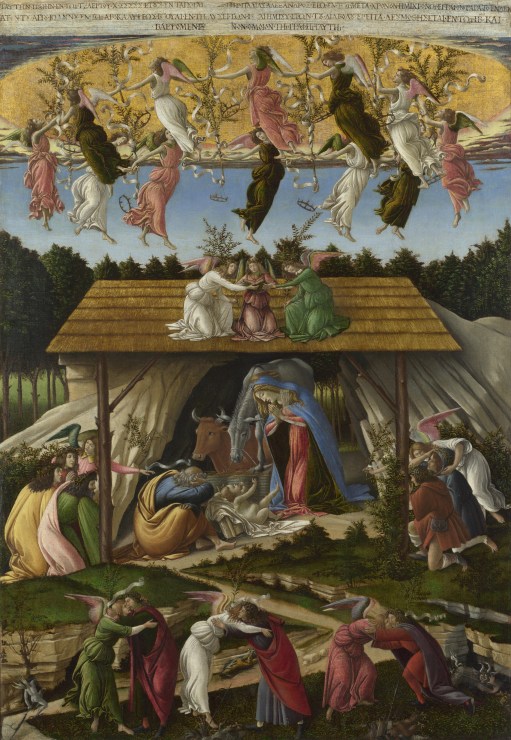
The Mystical Nativity, Sandro Botticelli, c. 1500-1501. National Gallery, London. (Source)
But where did St. Philip learn to emulate the humility of the Infant Christ? I think we can infer two chief sources.
It is the distinctive mark of the Oratory to discourse daily upon the Word of God in a free and familiar manner. Indeed, the very first exercises of the Oratory at San Girolamo always took the reading and discussion of Scripture as their central object. It stands to reason that St. Philip’s profound engagement with the Gospels would have shaped his sense of Christ’s own humility.
But perhaps a more important source can be glimpsed in St. Philip’s intensely Eucharistic life. Surely St. Philip would have entered into the mystery of Christ’s birth precisely as he encountered Him in the Mass. The Eucharistic silence of the Host is but an echo of the silence Christ kept that first Christmas night. God’s hiddenness upon the altar comes from the obscurity in which He enmantled himself on that first night of His human life.

Icon of The Inexhaustible Chalice. (Source)
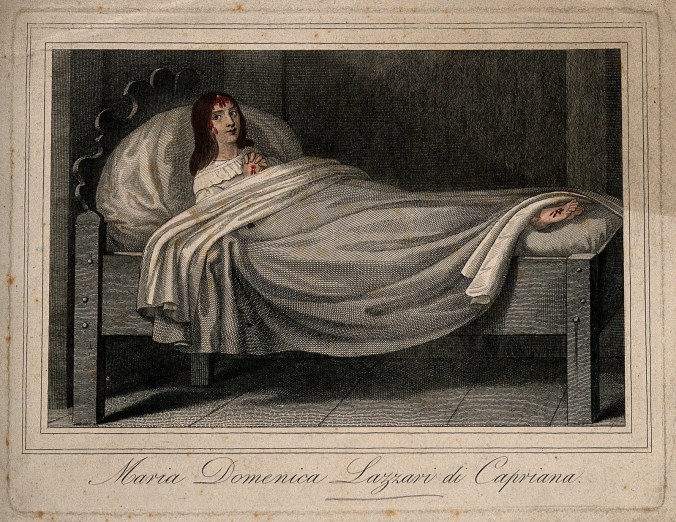
A stigmatic, c. 1840. (Source)
Recently two very worthy endeavors have come to my attention. The first is the blog of the Stigmatics Project at the Ruusbroec Institute, University of Antwerp. The project “studies the promotion and devotion of the hundreds of stigmatics reported in five European countries during the nineteenth and early twentieth century.” It takes a scholarly, non-confessional approach to its subject. No doubt this new venture will yield greater insights into the stigmata as a social phenomenon.
The second is a much more theological blog called Littlest Souls, and it presents a veritable treasure trove of mystic spirituality. The blogger has clearly read widely in the library of the soul passed on to us from age to age by the Church. He seems to place a special emphasis on the 19th and early 20th century mystics, much like the Stigmatics Project. In fact, they probably cover some of the same figures. But unlike the recently-founded work of the Ruusbroec Institute, Littlest Souls has been up and running since May 2012. There is consequently much more material here to review and contemplate. Fans of that other great blog, Mystics of the Church, will find much here to admire.
In my first post on Father Faber, I noted that he represented a kind of lost world of the faith. Today, it is hard to imagine a Catholicism that once supported the kind of imaginatively baroque and overtly sentimental spirituality that oozes from his pages. Father Faber looks odd to our cynical, postmodern eyes. But in exploring his writings now, I find much in them that’s salutary and beautiful. My hope is that I can play some small part in recovering those gems for our times.
Both of these blogs seem to do precisely that; one at the level of scholarship, and one at the level of spirituality. Both set out to investigate and present a spiritual school that often seems morbid, unhealthy, or slightly daft – certainly one that has little place in our age. But there are real values here, real impressions of humanity in communion with the divine. I can only commend their efforts as important contributions to the memory and mystical life of the Church Militant.
I’ve said it before, and I’ll say it again. The Church is weird because she is supernatural, and the supernatural is always strange. We should embrace that fact.

The Helix Nebula, also known as “The Eye of God.” (Source)
When I was an undergraduate, I spent an afternoon in one of my theological societies discussing how Christians should respond to the discovery of alien life, should it ever happen. Our group split between those who believed the question was null anyway, as there were no aliens, and those, like me, who held that if they did exist, we should baptize and catechize them anyway.
It seems that no less a figure than Father Faber himself should have something to say on the matter. Imagine my shock when, quite unexpectedly, I came across the following passage yesterday in Faber’s The Precious Blood (1860/1959):
God made the angels and the stars. The starry world is an overwhelming thing to think of. Its distances are so vast that they frighten us. The number of its separate worlds is so enormous that it bewilders us. Imagine a ray of light, which travels one hundred and ninety-two thousand miles in a second; and yet there are stars whose light would take a million of years to reach the earth. We know of two hundred thousand stars down to the ninth magnitude. In one single cluster of stars, eighteen millions of stars have been discovered between the tenth and eleventh magnitudes. Of these clusters men have already discovered more than four thousand. Each of these stars is not a planet, like earth; but a sun, like our sun, and perhaps with planets round it, like ourselves. Of these suns we know of some which are one hundred and forty-six times brighter than our sun. What an idea all this gives us of the grandeur and magnificence of God! Yet we know that all these stars were created for Jesus and because of Jesus. Mary’s Son is the King of the stars. His Precious Blood has something to do with all of them. Just as it merited graces for the angels, so does it merit blessings for the stars. If they have been inhabited before we were, or are inhabited now, or will at some future time begin to be inhabited, their inhabitants, whether fallen and redeemed, or unfallen and so not needing to be redeemed, will owe immense things to the Precious Blood. Yet earth, our little, humble earth, will always have the right to treat the Precious Blood with special endearments, because it is its native place. When the angels, as they range through space, see our little globe twinkling with its speck of colored light, it is to them as the little Holy House in the hollow glen of Nazareth, more sacred and more glorious than the amplest palaces in starry space. (The Precious Blood 20-21).
The passage stood out to me for a few reasons. First, we might note Fr. Faber’s charming vision of angels flying through outer space. It strikes me as typical of his imaginatively poetic spirituality to find all of reality brimming with several orders of hidden and divine life. Secondly, Faber anticipates the very sentiments that astronauts would feel and describe over a century later. But perhaps most strikingly, Faber seems to suggest both the plausibility of extraterrestrial life and its capacity for redemption, presumably through the sacramental work of the Church. I would never have anticipated this idea from a Victorian priest most famous for his effervescent devotions and moralizing sermons. Evidently Faber was well read in the science—and possibly the science fiction—of his day.
On this Feast of Christ the King, I also find Faber’s words particularly apt. There is no part of reality to which the sovereignty of Christ does not extend: “Mary’s Son is the King of the stars.” One imagines that Faber would have enthused over today’s solemnity, had he lived long enough to see its institution.
The whole chapter is a spiritual gem, but this strange little paragraph seemed particularly worthy of consideration. The more I read, the more disconsolate I am that Faber has been so widely neglected by today’s Catholics.
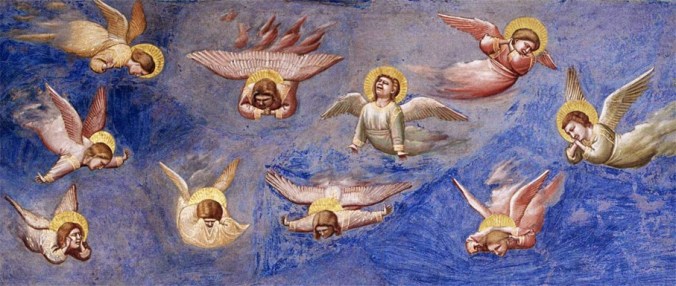
Angels by Giotto in the Scrovegni Chapel. (Source)

We should always remember to pray for the Holy Souls in Purgatory, especially in this, their month. (Source)
Today is Remembrance Sunday here in the U.K. We had a splendid Solemn High Requiem Mass at the Oxford Oratory, complete with black vestments. The setting was a Requiem by Haydn, which seem to draw us on the journey of a holy soul. From an Introit that sounds like the mournful ghosts of the dead, we proceed to a communion that is full of airy light and calm joy – with a great deal of drama in between.
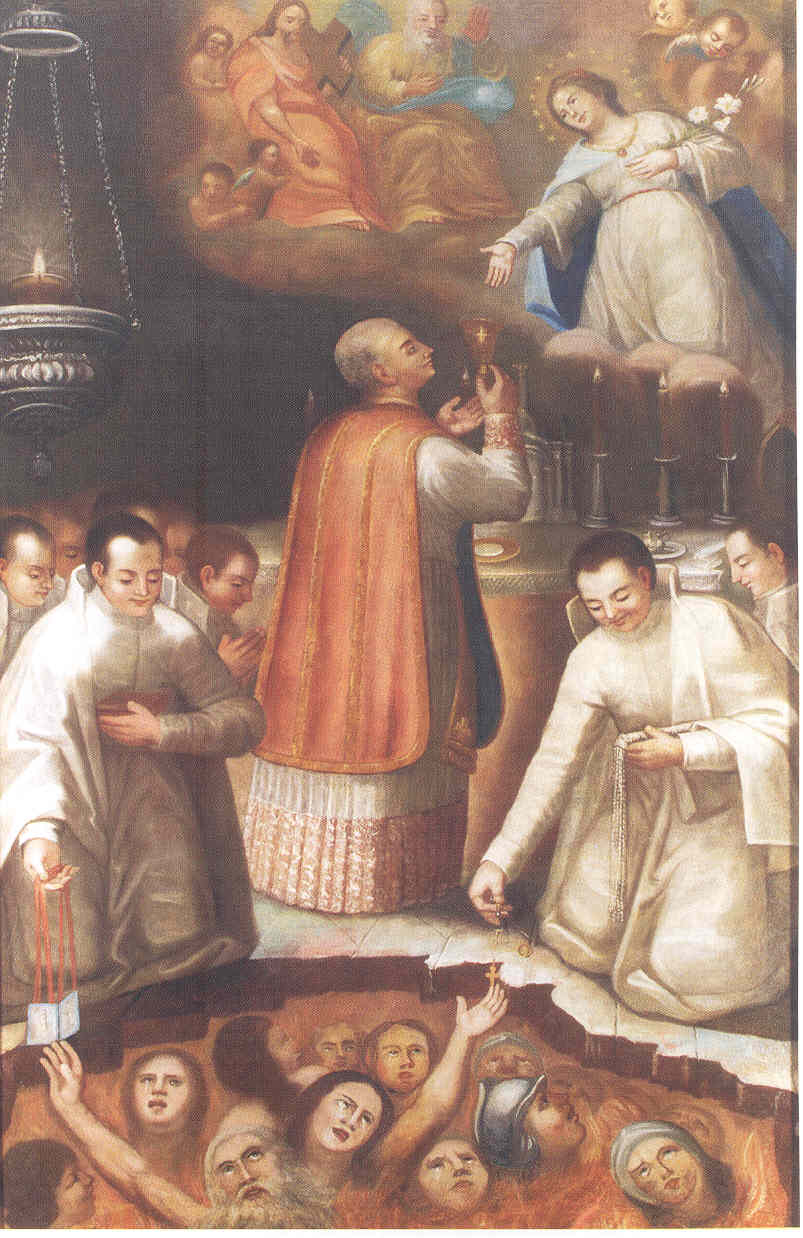
I realized that I had not posted anything for All Souls’ Day. Since today is yet another day set aside, at least by British Catholics, for praying on behalf of the dead, I decided I’d post something by that spiritual master, Father Frederick William Faber of the London Oratory. In his own life, Fr. Faber was known for his great devotion to the Holy Souls. One of his more famous texts deals with prayer for those in Purgatory. I have selected the following passage from that work, Fr. Faber’s Purgatory. You can also find it on this website. I offer it here for your consideration and in the hope that the good priest’s words might kindle in us a fonder and more steadfast devotion to the Faithful Departed.
Both views [of Purgatory within Catholicism] agree again in holding that what we in the world call very trivial faults are most severely visited in purgatory. St. Peter Damian gives us many instances of this, and others are collected and quoted by Bellarmine. Slight feelings of self-complacency, trifling inattentions in the recital of the Divine Office, and the like, occur frequently among them. Sister Francesca mentions the case of a girl of fourteen in purgatory, because she was not quite conformed to the will of God in dying so young: and one soul said to her: Ah men little think in the world how dearly they are going to pay here for faults they hardly note there. She even saw souls that were immensely punished only for having been scrupulous in this life; either, I suppose, because there is mostly self-will in scruples, or because they did not lay them down when obedience commanded. Wrong notions about small faults may thus lead us to neglect the dead, or leave off our prayers too soon, as well as lose a lesson for ourselves.
Then, again, both views agree as to the helplessness of the Holy Souls. They lie like the paralytic at the pool. It would seem as if even the coming of the angel were not an effectual blessing to them, unless there be some one of us to help them Some have even thought they cannot pray. Anyhow, they have no means of making themselves heard by us on whose charity they depend. Some writers have said that Our Blessed Lord will not help them without our co-operation; and that Our Blessed Lady cannot help them, except in indirect ways, because she is no longer able to make satisfaction; though I never like to hear anything our dearest mother cannot do; and I regard such statements with suspicion. Whatever may come of these opinions, they at least illustrate the strong way in which theologians apprehend the helplessness of the Holy Souls. Then another feature in their helplessness is the forgetfulness of the living, or the cruel flattery of relations who will always have it that those near or dear to them die the deaths of Saints. They would surely have a scruple, if they knew of how many Masses and prayers they rob the souls, by the selfish exaggeration of their goodness. I call it selfish, for it is nothing more than a miserable device to console themselves in their sorrow. The very state of the Holy Souls is one of the most unbounded helplessness. They cannot do penance; they cannot merit; they cannot satisfy; they cannot gain indulgences; they have no Sacraments; they are not under the jurisdiction of God’s Vicar, overflowing with the plentitude of means of grace and manifold benedictions. They are a portion of the Church without either priesthood or altar at their own command.
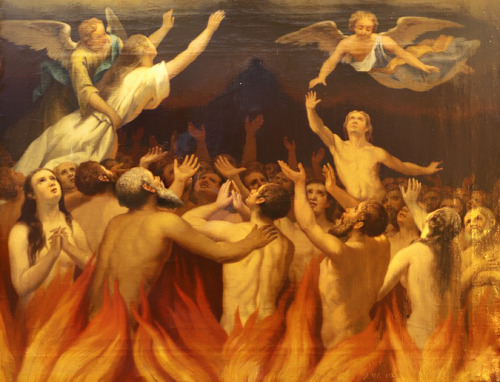
Pray for the Holy Souls in Purgatory. (Source)
Those are the points common to both views of purgatory; and how manifold are the lessons we learn from them, on our own behalf as well as on behalf of the Holy Souls. For ourselves, what light does all this throw on slovenliness, lukewarmness, and love of ease? What does it make us think of performing our devotions out of a mere spirit of formality, or a trick of habit? What diligence in our examens, confessions, Communions, and prayers! It seems as if the grace of all graces for which we should ever be importuning our dear Lord, would be to hate sin with something of the hatred wherewith He hated it in the garden of Gethsemane. Oh, is not the purity of God something awful, unspeakable, adorable? He, who is Himself a simple act, has gone on acting, multiplying acts since creation, yet he has incurred no stain! He is ever mingling with a most unutterable condescension with what is beneath Him-yet no stain! He loves His creatures with a love immeasurably more intense than the wildest passion of earth- yet no stain! He is omnipotent, yet it is beyond the limits of His power to receive a stain. He is so pure that the very vision of Him causes eternal purity and blessedness. Mary’s purity is but a fair thin shadow of it, and yet we, even we, are to dwell in His arms for ever, we are to dwell amid the everlasting burnings of that uncreated purity! Yet, let us look at our lives; let us trace our hearts faithfully through but one day, and see of what mixed intentions, human respects, self-love, and pusillanimous temper our actions, nay, even our devotions, are made up of; and does not purgatory, heated seven-fold and endured to the day of doom, seem but a gentle novitiate for the Vision of the All-holy?
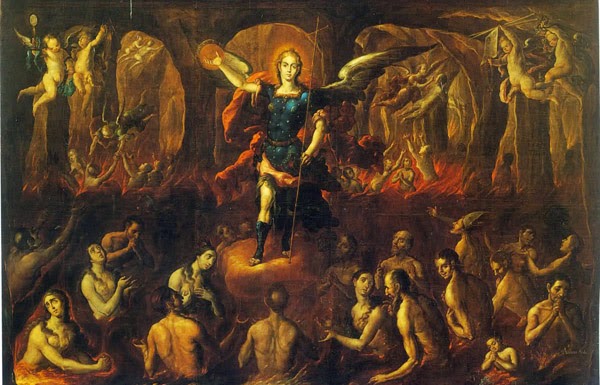
St. Michael the Archangel has traditionally been closely associated with the Holy Souls of Purgatory in the Church’s devotional life. (Source)
But some persons turn in anger from the thought of purgatory, as if it were not to be endured, that after trying all our lives long to serve God, we should accomplish the tremendous feat of a good death, only to pass from the agonies of the death-bed into fire, long, keen, searching, triumphant, incomparable fire. Alas! my dear friends, your anger will not help you nor alter facts. But have you thought sufficiently about God? Have you tried to realise His holiness and purity in assiduous meditation? Is there a real divorce between you and the world which youknow is God’s enemy? Do you take God’s side? Are you devoted to His interests? Do you long for His glory? Have you put sin alongside of our dear Saviours’ Passion, and measured the one by the other? Surely, if you had, purgatory would but seem to you the last, unexpected, and inexpressibly tender invention of an obstinate love, which was mercifully determined to save you in spite of yourself. It would be a perpetual wonder to you, a joyous wonder, fresh every morning, a wonder that would be meat and drink to your soul, that you, being what you know yourself to be, what God knows you to be, should be saved eternally. Remember what the suffering soul said so simply, yet with such force, to Sister Francesca: ‘ Ah! those on that side of the grave little reckonhow dearly they will pay on this side for the lives they live! To be angry because you are told you will go to purgatory! Silly, silly people Most likely it is a great false flattery, and that you will never be good enough to go there at all. Why, positively, you do not recognise your own good fortune, when you are told of it. And none but the humble go there. I remember Maria Crocifissa was told that although many of the Saints while on earth loved God more than some do even in heaven, yet that the greatest Saint on earth was not so humble as are the souls in purgatory. I do not think I ever read anything in the lives of the Saints which struck me so much as that. You see it is not well to be angry; for those only are lucky enough to get into purgatory who sincerely believe themselves to be worthy of hell.
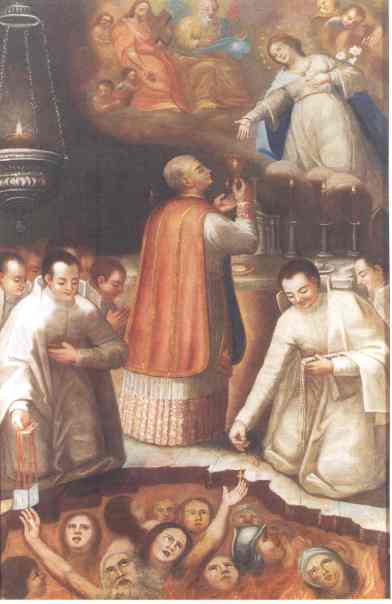
Masses and indulgences can be tremendously helpful to the souls suffering in Purgatory. (Source)
But we not only learn lessons for our own good, but for the good of the Holy Souls. We see that our charitable attention towards them must be far more vigorous and persevering than they have been; for men go to purgatory for very little matters, and remain there an unexpectedly long time. But their most touching appeal to us lies in their helplessness; and our dear Lord, with His usual loving arrangement, has made the extent of our power to help them more than commensurate with their ability to help themselves. Some theologians have said that prayer for the Holy Souls is not infallibly answered. I confess their arguments on this head do not convince me; but, conceding the point, how wonderful still is the power which we can exercise in favour of the departed! St. Thomas has at least taught us that prayer for the dead is more readily accepted with God than prayer for the living. We can offer and apply for them all the satisfactions of Our Blessed Lord. We can do vicarious penance for them. We can give to them all the satisfactions of our ordinary actions, and of our sufferings. We can make over to them, by way of suffrage, the indulgences we gain, provided the Church has made them applicable to the dead. We can limit and direct to them, or any one of them, the intention of the Adorable Sacrifice. The Church, which has no jurisdiction over them, can yet make indulgences applicable or inapplicable to them by way of suffrage; and by means of liturgy, commemoration, incense, holy water, and the like, can reach efficaciously to them, and most of all by her device of privileged altars. The Communion of Saints furnishes the veins and channels by which all these things reach them in Christ. Heaven itself condescends to act upon them through earth. Their Queen helps them by setting us to work for them, and the Angels and the Saints bestow their gifts through us, whom they persuade to be their almoners; nay, we are often their almoners without knowing that we are so. Our Blessed Lord vouchsafes to look to us, as if He would say: Here are my weapons, work for me! just as a father will let his child do a portion of his work, in spite of the risk he runs in having it spoiled. To possess such powers, and not to use them, would be the height of irreverence towards God, as well as of want of charity to men. There is nothing so irreverent, because nothing so unfilial, as to shrink from God’s gifts simply because of their exhuberance. Men have a feeling of safety in not meddling with the supernatural; but the truth is, we cannot stand aloof on one side and be safe. Naturalism is the unsafe thing. If we do not enter the system, and humbly take our place in it, it will draw us in, only to tear us to pieces when it has done so. The dread of the supernatural is the unsafest of feelings. The jealousy of it is a prophecy of eternal loss.
It is not saying too much to call devotion to the Holy Souls a kind of centre in which all Catholic devotions meet, and which satisfies more than any other single devotion our duties in that way; because it is a devotion all of love, and of disinterested love. If we cast an eye over the chief Catholic devotion, we shall see the truth of this. Take the devotion of St. Ignatius to the glory of God. This, if we may dare to use such an expression of Him, was the special and favourite devotion of Jesus. Now, purgatory is simply a field white for the harvest of God’s glory. Not a prayer can be said for the Holy Souls, but God is at once glorified, both by the faith and the charity of the mere prayer.
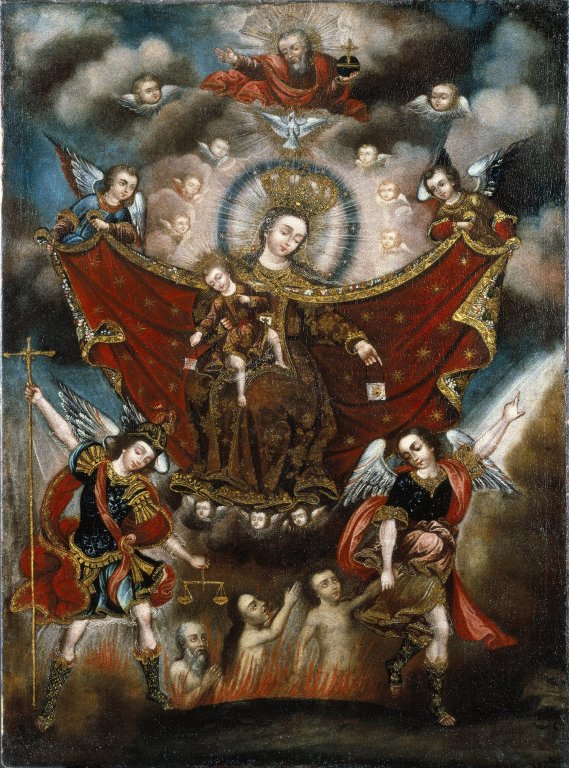
The Virgin of Carmel Saving Souls in Purgatory, Circle of Diego Quispe Tito, c. 17th century. Brooklyn Museum. (Source)
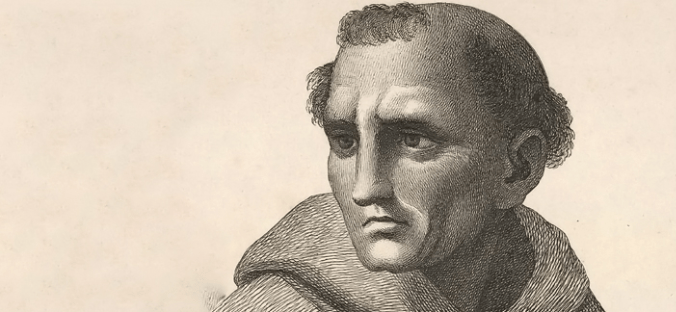
The Blessed John Duns Scotus (Source).
In my review of Rod Dreher’s The Benedict Option, I wrote the following:
I’m not suggesting that Dreher is necessarily wrong in his various judgments. He may well be correct in accusing the nominalists of a kind of cultural deicide (although it overlooks the Christian nominalist tendency, closely tied to empiricism, that numbers Berkeley, Burke, Hamann, Newman, and Chesterton among its ranks).
I subsequently received some pushback for making such a claim. After all, eminent philosophers and theologians had long made nominalism the villain of their narratives about the rise of an anti-Christian modernity. Others questioned my assertion about Newman in particular.
At that time, I defended myself by suggesting that, while I may be off in ascribing a specifically nominalist tendency to these thinkers, that nevertheless, they all do share, inter alia, a suspicion of universalizing abstraction, a respect for concrete particularity in its various forms, and a trust in prudence gained from experience. I interpreted this tendency as akin to the nominalist rejection of substantively existent universals. I also thought that one of the reasons this way of thinking might matter is in our dialogue with postmodernity, which is itself so suspicious of universals and grand narratives.
Nevertheless, I erred. I was mistaken to use that label of nominalism. I must thank my critics for pointing this out. In the many months since then, I have learned what would be the proper term to tie together these particular thinkers – not to mention Gerard Manley Hopkins and J.R.R. Tolkien.
The “nominalist tendency” is really a Scotist tendency. (The fact that I could make such an ironic error is, perhaps, a sign of my own ignorance. I own that. Scholasticism isn’t really my thing.) Chastened by my previous mistake, I hesitate to delve too deeply into the technical depths of Scotist philosophy. I will state briefly that a belief in the idea of haecceity as the unique thisness of each particular sums up the tendency’s core point. If I had time, I’d like to investigate if any firmer affinities could be found.
However, I believe I am now on much sounder territory. The Franciscan Daniel Horan’s work has focused on a postmodern engagement with Scotus, and the Scotism of Newman and Hopkins have been well-attested in the literature. Tolkien took up the theological note behind Hopkins’s ideas of inscape and instress, themselves poetic derivations of Scotist haecceity. More work still needs to be done in English on Hamann, but the image that is emerging is of a figure passionately devoted to the disruptive nature of ordinary, particular experience. His willingness to contest the established narratives of the Aufklärung predates postmodernism by a century and a half. Chesterton is cut from the same cloth. Bishop Berkeley, though perhaps not quite so colorful as either of these two, stakes his empiricism on the particularity of the thing perceived (ultimately, by God). And Burke transposes the idea into the realm of politics, tempered by a healthy respect for natural law.
Two observations come to mind. The first is that nearly all of these thinkers are English or Anglophone. An enquiry into the reasons behind English Scotism would be useful. In its absence, I will merely note that Scotus, that medieval Oxford theologian, seems to have been directly reintroduced into the life of modern English spirituality by another Oxford theologian, John Henry Newman. It was Newman’s influence that defined intellectual Catholicism in England until the conclusion of Vatican II.
The second is that several of these thinkers are literary figures in their own right. Hopkins is principally remembered as a poet, Chesterton as a journalist, novelist, and poet, and Tolkien as a novelist. Newman was a prolific writer across genres. He exerted a personal influence over Hopkins, Matthew Arnold, and Oscar Wilde. And Hamann’s own deeply bizarre output constantly blurs the rigid lines of 18th century drama (yet another way he foreshadows our own postmodern era).
I must wonder if Scotist thought is particularly apt for the production of theology in a poetic mode, as the Catholic Sophiologists of our own day are seeking to do. I certainly have friends who think so. At the very least, Scotus’s high Mariology accords well with the extremely high Mariology of some Sophiologists.
If I had more time, I should like to dive more deeply into these questions. For now, I seek only to explain myself a bit, and apologize for what was clearly a serious error.
ADDENDUM: I also meant to say that Delleuze’s appropriation of haecceity as a fundamental concept lends support to my own impulse of putting these thinkers in conversation with postmodernism.
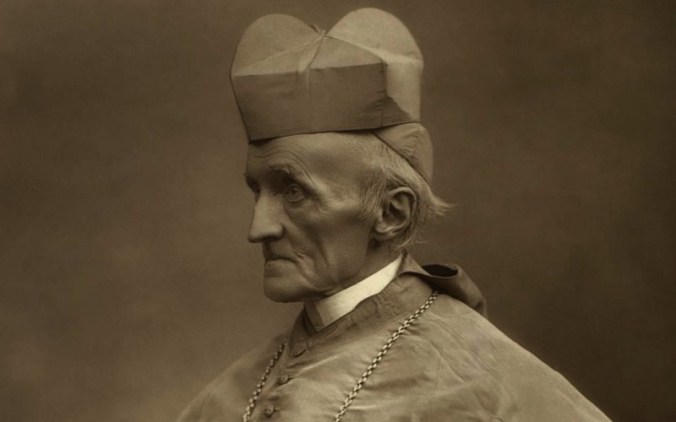
Henry Edward Cardinal Manning of Westminster (Source).
It occurs to me that some of the major differences between Newman and Manning’s later careers can already be glimpsed in their early lives. Specifically, in the reasons they converted.
Cardinal Manning converted after Newman when, in 1850, the Privy Council forced the Church of England to ordain an Evangelical who denied the salvific efficacy of Baptism. This move so shocked Manning that he immediately saw that the Church of England was essentially a political construct without any share of the Apostolic inheritance. It could not resist the demands of the state. And thus, he betook himself to Rome.
Newman became a great theologian; Manning became a great ecclesiastical politician. Newman suffered many troubles with controversies and the censure of the authorities; Manning labored as part of the Catholic establishment and did more than anyone else in England (and, due to his role at Vatican I, arguably the world) to advance the cause of Ultramontanism.
On an unrelated note, there is a rather amusing point of contrast in their biographies. Newman matriculated as an undergraduate at Trinity College, Oxford. Manning was at Balliol (like Faber). Anyone who’s been to Oxford will know that these two colleges are next to each other on Broad Street.
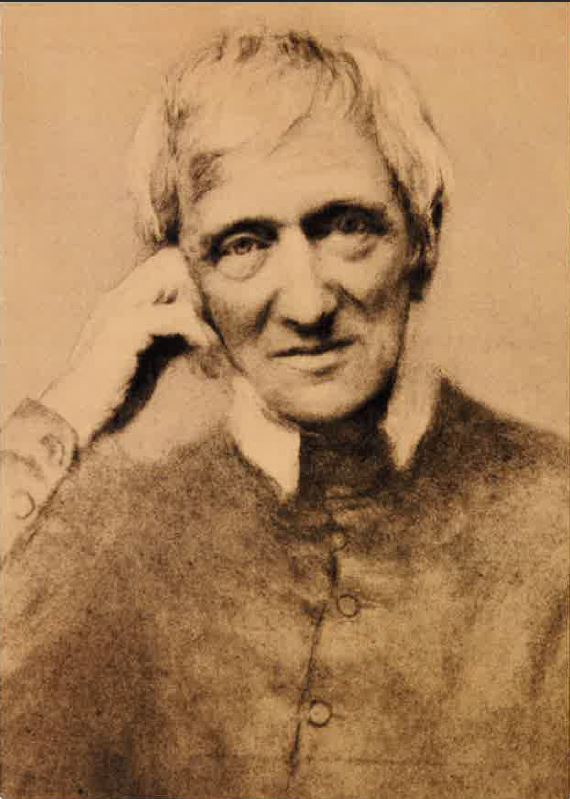
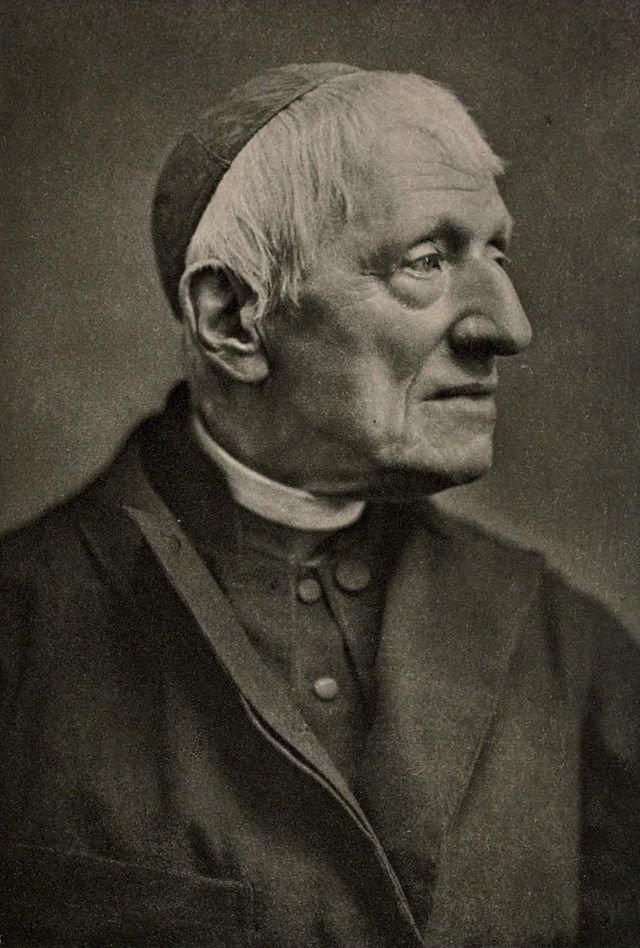
Bl. Newman in his Oratorian habit (Source).
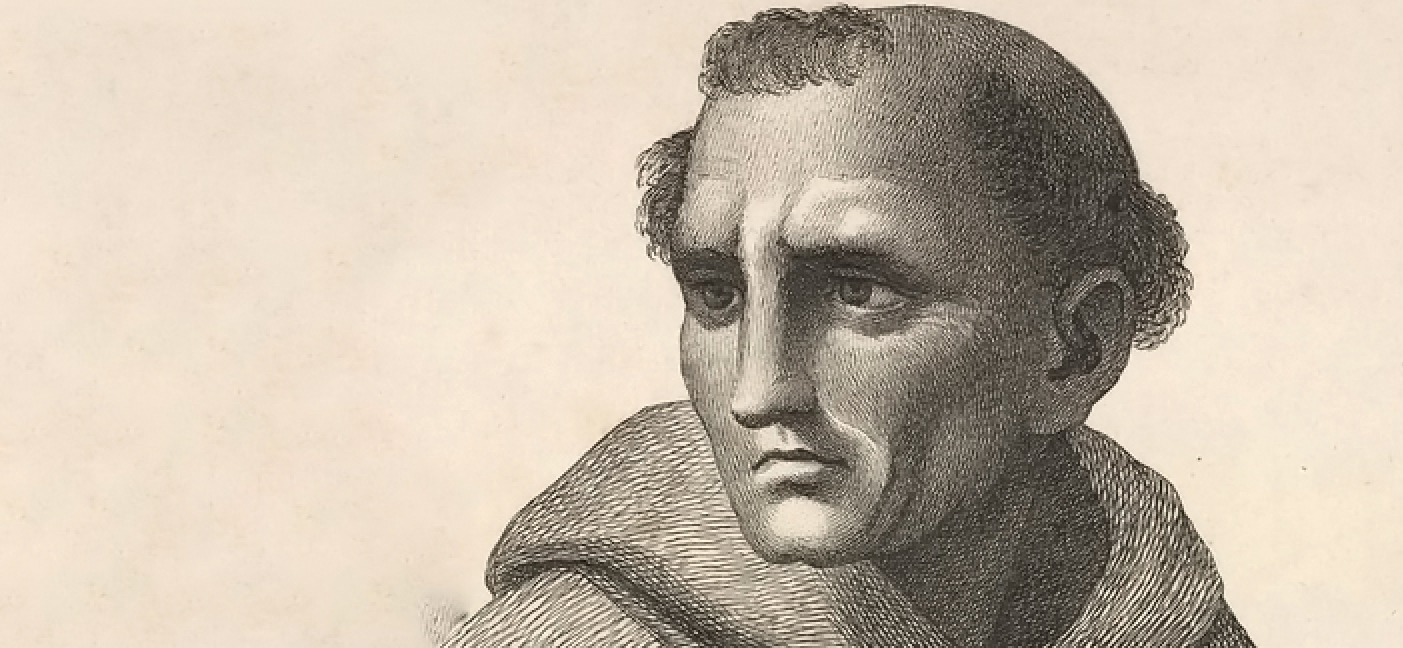
There is so much I could write about Cardinal Newman, on this, his feast day. I have, indeed, already written posts about him many times in the past. But now that courses are starting, I don’t find that I can say as much as I would perhaps like. I also write this essay in some state of exhaustion, having just completed the walking pilgrimage from the Oxford Oratory to Littlemore in honor of Newman’s reception into the Church by the Blessed Dominic Barberi.
So instead of making this a terribly erudite post about a point in Newman’s life or theology, I thought I’d just express my profound gratitude. It can be gauche to make any feast of the Church about one’s self. That is not at all my intention, and I hope I will not be thought self-seeking in writing of my own experience. I don’t pretend that my story is terribly unique—but it is mine, and no one else can tell it. I am emboldened to relate the history of my own friendship with Blessed John Henry because, as I was taught by Dom Mark Daniel Kirby, “a grace remembered is a grace renewed.” And of course, it’s not really about me. It’s about God, and what He has mercifully done for me through Blessed John Henry Newman.
Saints come to us at many stages of our life. They are always timely, making their appointments according to Heaven’s clock. The mysterious intervention of the saints provides us with one of the many beautiful aspects under which we might consider the manifold glories of providence. They are, as they were in life, God’s instruments; only now, in beatitude, they are eternally and perfectly so. By their intercession, they fill their afterlife with comings and goings, always about God’s business.
Like so many Catholics, I have known the prayers of a saint. Blessed John Henry Newman entered my life when I was still very young in the faith. Of course, I had heard of him before. His name looms large in the history of conversion, and as a convert myself, I found his story interesting if not overly compelling. All that was to change in the spring of my second year, when, in a class entitled, “The University, God, and Reason,” I had the chance to read the first half of his famous educational treatise, The Idea of a University. His magnificent prose and bold defense of knowledge for its own sake thrilled me. I made him my Lenten companion that spring. And in May, I tried (not entirely successfully) to go through all of his Marian meditations for the entire month. A few weeks later, I left for my study abroad.

Newman in later years. (Source)
This venture is, I think, one of the great privileges and turning-points of my life. The more I reflect on it, and where I have been since, the more I thank God for allowing me that study which was more a pilgrimage than anything else. On my very first day away from home, I had the chance to visit the Brompton Oratory. Leaving the hustle and bustle of Kensington in the late afternoon, stepping into that dark and immense well of stillness, I immediately thought, “This is God’s house.” I had never had that reaction in any other church before, and never yet have since. It was unbidden, unlooked-for, unimagined. Yet there, in the vast twilight of Fr. Faber’s church, I felt the unmistakable presence of God. And whose altar should I find, off in a niche, under a low-hanging balcony? Whose but Cardinal Newman’s? And from Cardinal Newman’s altar I walked up to the transepts—and found the effigy-altar of St. Philip Neri. To this day, it is still my firm conviction that I was led to befriend St. Philip by Blessed John Henry, his son.
That was my first introduction to the Oratory. While I had heard of it and understood some of its distinctives, these were merely academic realities to me until that long journey. Throughout the rest of my travels that summer, my mind turned constantly to Blessed John Henry and St. Philip. In Rome, the presence of the latter seeped from the very walls. I had the grace of visiting the Chiesa Nuova twice, and San Giovanni dei Fiorentini once (though at the time I did not know its history). And when I returned to England to complete the course I had signed up for, I started to find Cardinal Newman everywhere. Across the street from my college in Oxford was the Church of St. Mary the Virgin, where Newman was vicar. I visited Oriel and passed by Trinity, his two colleges. I worshiped weekly at the Oratory—yet another house of St. Philip—where Newman had preached in his own life. I bought a small portrait of the man himself in the little church shop there. And while on a brief retreat with the monks of Silverstream, I providentially purchased a short biography of St. Philip Neri. It was the first I ever read, and I devoured it in a few days.
I have little to say of the time since my return to the United States in August of 2015. The year that followed was very bad, and my faith suffered greatly. But when I came back after so long a spiritual exile, I once again felt the prayers of Cardinal Newman moving me in the right direction. Slowly but surely, my sense of the presence of God healed. By this point, I was writing a thesis on Newman. I was also seriously pondering my future. I knew I wanted to continue my studies, but the question of where to do so was subject to a number of considerations. So I offered up the issue in prayer to a number of saints, including Our Lady of Walsingham and Bl. Cardinal Newman.
And now I am at Oxford, Newman’s beloved university. Indeed, I am at a college guided by the spirituality of the Anglican movement he began. Cardinal Newman has not failed me by his prayers. I have read so many works by and about him, yet still I feel I have so much more to learn from his life and teaching. He is for me many things at once: intellectual mentor, friend in Heaven, father in God. For someone training for the scholarly life, Newman is a model Catholic academic. He pursued Truth until he found it, and, not resting therein, never ceased following it until his death. I pray that I, too, may follow him out of shadows and images and into the “kindly light” of Truth.
Blessed John Henry Cardinal Newman, Pray for Us.
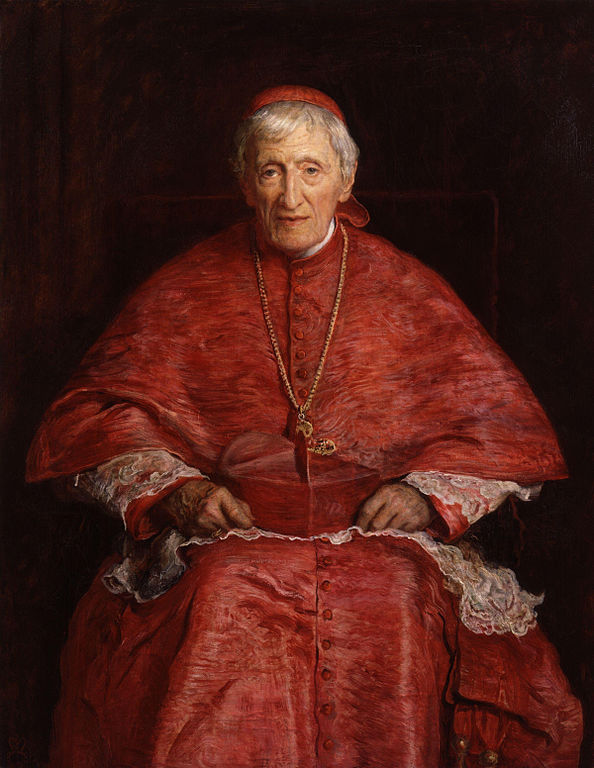
The Millais portrait of Cardinal Newman. (Source)
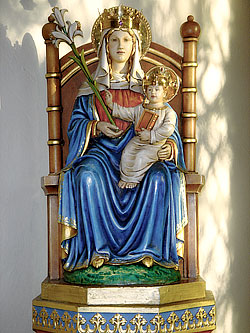
Our Lady of Walsingham, pray for us. (Source).
Today, on the double feast of Our Lady of Ransom and Our Lady of Walsingham, I was blessed to consecrate myself totally to the Mother of God at the Church of her Immaculate Heart, otherwise known as the Brompton Oratory. Thank you to everyone who prayed for me en route to this wonderful occasion. I look upon it as a momentous date, a renewal of my entrance into the Church four years ago,
The date and place are especially meaningful to me. I have long had a devotion to Our Lady of Walsingham, Patroness of England. During the stresses of my final year at Virginia, I entrusted all my major projects–in particular my thesis and my graduate school applications–to her. And over the course of the last few years, my love for St. Philip Neri and his sons has grown into a true devotion to the Oratorian way. Brompton was where that began for me, almost two and a half years ago. I date the start of my friendship with St. Philip to my first overawed trip to the Oratory in 2015. And I pronounced my vow of consecration at the altar of Our Lady of the Rosary, a grace that reminded me of all the wonderful Dominicans I have known over the short course of my life as a Catholic.
So thank you to all those who have prayed for me. And please pray still, that I might not forget my vow as the inevitable distractions, delights, and stresses of grad school set in.
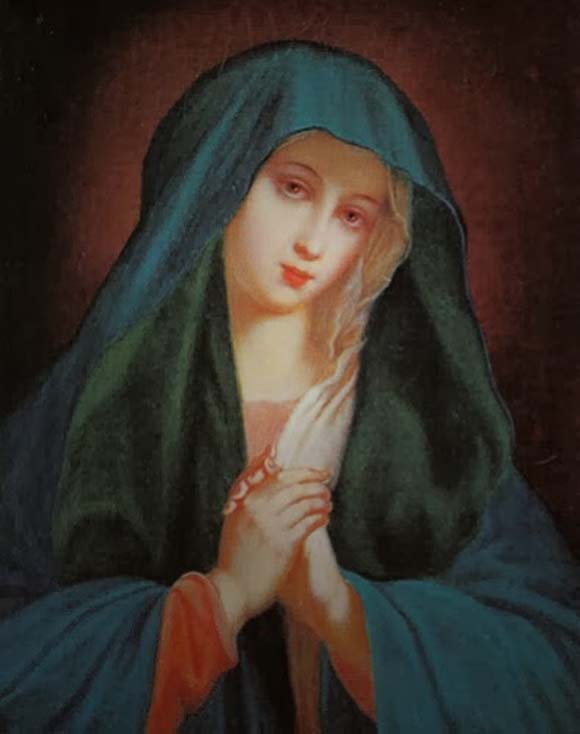
Yesterday, we celebrated the Feast of the Holy Cross. Today, naturally, we follow that sorrowful glory of Jesus with the sorrowful glory of Mary. And Crashaw remains our companion. Here is his “Sancta Maria Dolorum; or The Mothers of Sorrows, A Pathetical Descant upon the Devout Plainsong of Stabat Mater Dolorosa.” You can also find the text over here.
1.
My blog has something to tell you
Ordos, reflections, and thoughts on prayer
"My friends at least will accept them as such, whether they like their collective title or not." - George MacDonald
Exploring the heterodox in science, religion, and politics
A blog dedicated to particularities of the Catholic liturgy in Portugal
séminaire de recherche de l'IRSE et du CERPHI
writing from the soul and the mind
billectric
Politics & Culture from a Catholic perspective
Historian, folklorist, indexer, and translator
"...like the sun he heated the world with the warmth of his virtues and filled it with the splendor of his teaching."
herstory. poetry. recipes. rants.
A site dedicated to exploring ruins of years gone by in South Carolina.
A traditional Catholic blog on faith, life, and culture
Publication + Consultancy. Championing creative talent before a mass audience. Passionately global.
The Desire for the Transcendent
and the Catholicate of the West
An Homage to Bolton Morris Church Artist 1920-2004
Everything Catholic Today
Dixitque Deus, "Fiat lux", et facta est lux
Helping young Catholic men seek Heaven.
An exploration of the works of poet Charles Williams (1886-1945)
An Open-Access, Peer-Reviewed Journal
Highly unusual lives.
‘Catholicity, Antiquity, and consent of the Fathers, is the proper evidence of the fidelity or Apostolicity of a professed Tradition’ J.H. Newman, Lectures on the Prophetical Office of the Church, 1837, p. 51
 The Amish Catholic