The Seven Sacraments in Flannery O’Connor

image.jpeg

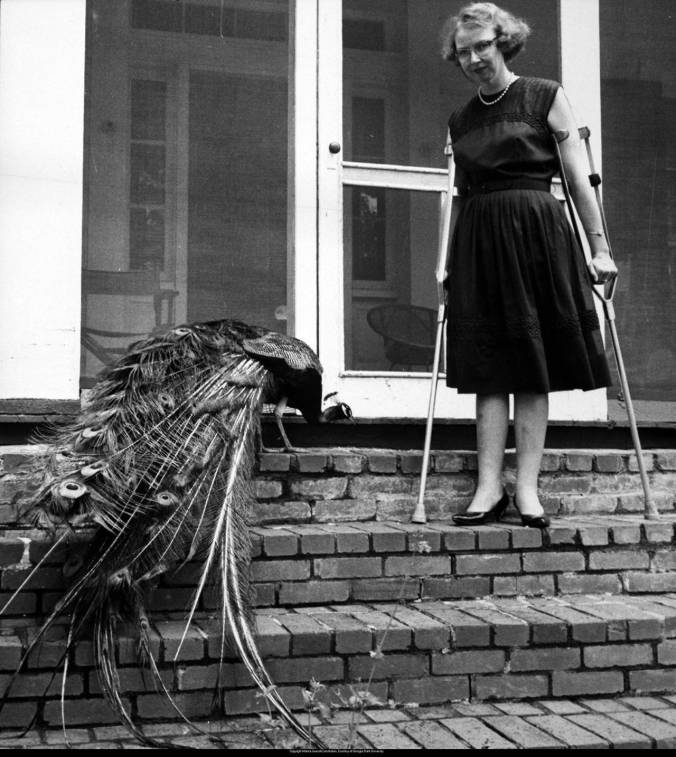
Flannery O’Connor at her farm, Andalusia, with one of her beloved peacocks. (Source).

Flannery O’Connor’s name is synonymous with the American short story tradition. What sets her apart from her peers, besides her mastery of plot and her succinct, grotesque style, is the deep concern for issues of faith and grace that animates all of her stories. As O’Connor once put it, “All my stories are about the action of grace on a character who is not very willing to support it, but most people think of these stories as hard, hopeless, brutal, etc.” There is a certain delicious cruelty to her work. The nasty fates she metes out to children, let alone the adults who deserve what they get, rank her with the best of the gothic writers (and a humorous one at that—we can only imagine the hysterical laughter that something like Der Struwwelpeter would have provoked in her).

Yet O’Connor never show us violence for its own sake, nor for mere moralizing, nor as a ploy for cheap entertainment. Violence is the only outlet for grace in a fallen, “Christ-haunted” world. Her pages are choked and sodden with the precious blood that flows from the Cross.

Seven_Sacraments_Rogier

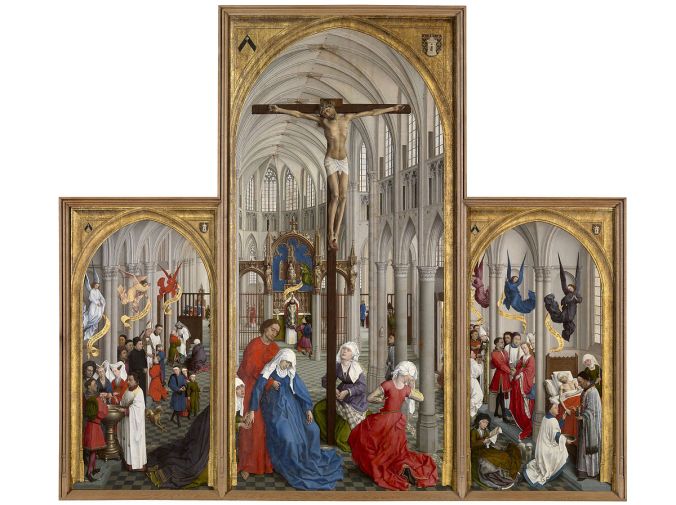
The Seven Sacraments, Rogier van der Weyden, c. 1448. O’Connor provides us with a (southern) gothic view of the sacraments. (Source)

It is a commonplace among critics that O’Connor’s writing is deeply sacramental. But to my knowledge, no author who has made that claim has also tried to find the fullness of the sacramental system present in her work.

I maintain that all seven sacraments appear in her fiction under different guises. Very often, we are given only implicit or twisted versions. It is common in O’Connor’s dark narratives to find flashes of grace in the inverse of sacraments; the truth emerges through its own negationhence her heavy use of violence. But all seven are all there, for those who “hath ears to hear” (Matt. 13:9 KJV).

In giving short descriptions of the following stories, my effort is not to justify my choices so much as to provoke further reading. As such, I will keep my descriptions succinct and relatively spoiler-free. Those who have read them may be able to see where I’m coming from. Those who haven’there’s some summer reading for you.

Baptism“The River”

This is one of O’Connor’s more overtly sacramental stories. The young son of irreligious parents accidentally gets himself baptized by a preacher in a Southern riverwith lethal consequences.

Honorable mention: The Violent Bear It Away. O’Connor thought about baptism a lot, probably because, as a rite of initiation, it is so centrally connected with questions of faith.

Confirmation“The Enduring Chill”

A sick and snobbish intellectual. A garrulous Jesuit. An overt reference to “A Simple Life” by Flaubert. Sometimes, the descent of the Holy Spirit doesn’t feel quite the way we expect.

Eucharist“A Temple of the Holy Ghost”

The only short story I know by any author that quotes the Tantum Ergo at length. There’s a good example of the “Red, Eucharistic Sun” motif that O’Connor was so fond of using. And lovers of the weird O’Connor will find her incarnational vision at a particularly grotesque note in this story.

The thinkpiece that uses “Temple” to discuss contemporary gender identity issues, sadly, has yet to be written.

ChurchDevilSign.jpg

O’Connor knew how to use a Protestant idiom to communicate Catholic doctrine. (Source).

Confession“The Lame Shall Enter First”

At one point, the liberal main character’s office is compared to a confessional. In confession, however, you hope that a good priest will comfort those who need comfort and afflict those who need affliction, for the edification and sanctification of all. Not so in Sheppard’s benevolently atheist bubble.

Marriage“Parker’s Back”

In this remarkable narrative, one of O’Connor’s most Catholic stories, we read the story of a marriage broken apart by a dramatically visible expression of extraordinary grace. Theological and moral Puritans won’t be pleased by the implications.

Holy OrdersWise Blood

What happens when you really, really, really don’t want to accept your vocation? You end up like Hazel Motes, and chase after a “Holy Church of Christ Without Christ.” The last chapter can be read as a meditation on the Imago Dei.

Unction“A Good Man is Hard to Find”

If only for that incredible, climactic line spoken by the Misfit, “She would of been a good woman…”

I may try to expand this list into a real academic work some day. For now, take this list for what it isa few reading suggestions for those of you who, like me, enjoy O’Connor, Southern Lit generally, and Catholicism.

Also peacocks.

Lots of peacocks.

CompleteStoriesFO

Cover of The Complete Stories. (Source).

On Graduating from the University of Virginia

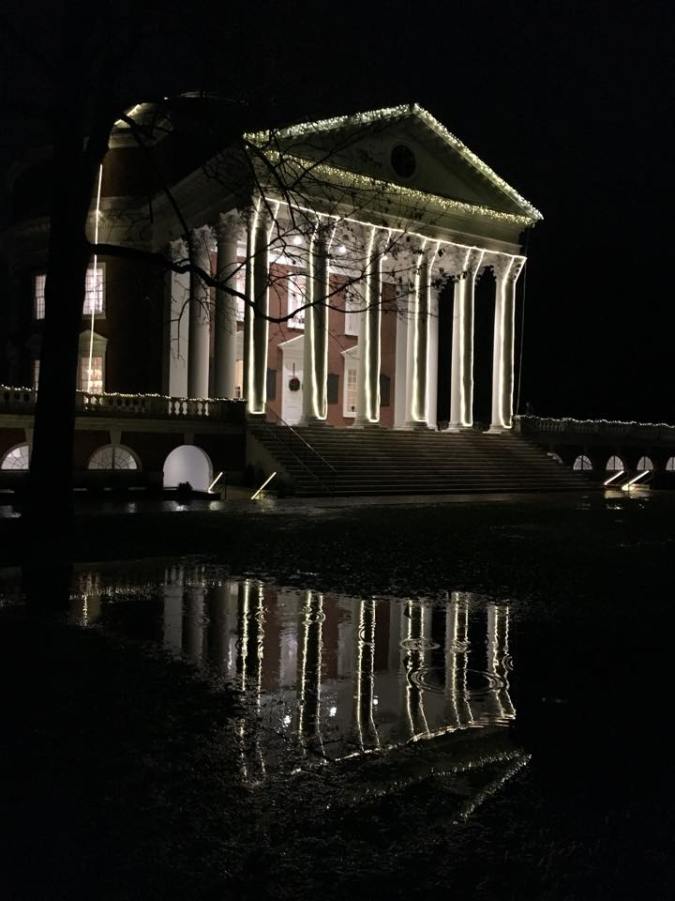
RotundaMay7

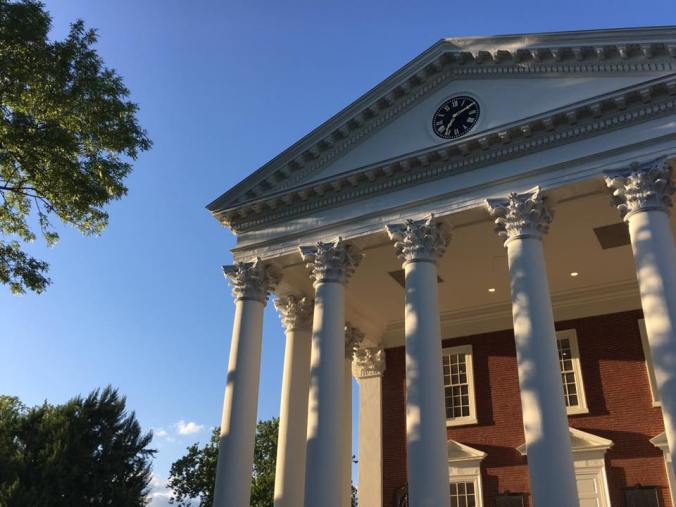
“Haggard, Inconstant Flashes of Beauty.” Photo by the Author, 7 May 2017.

“This is how it always ends. With death. But first there was life. Hidden beneath the blah, blah, blah, blah, blah. It’s all settled beneath the chitter chatter and the noise. Silence and sentiment. Emotion and fear. The haggard, inconstant flashes of beauty. And then the wretched squalor and miserable humanity. All buried under the cover of the embarrassment of being in the world, blah, blah, blah, blah…Beyond there is what lies beyond. I don’t deal with what lies beyond. Therefore…let this novel begin. After all…it’s just a trick. Yes, it’s just a trick.”

– Jep Gambardella, La Grande Bellezza (2013)

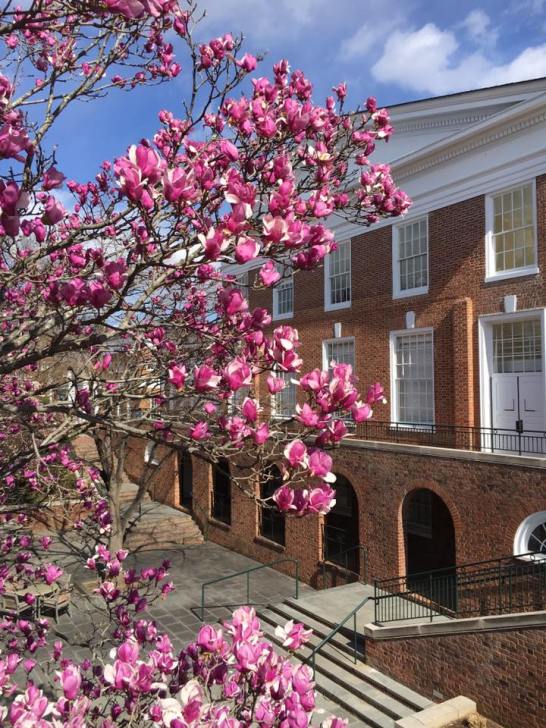
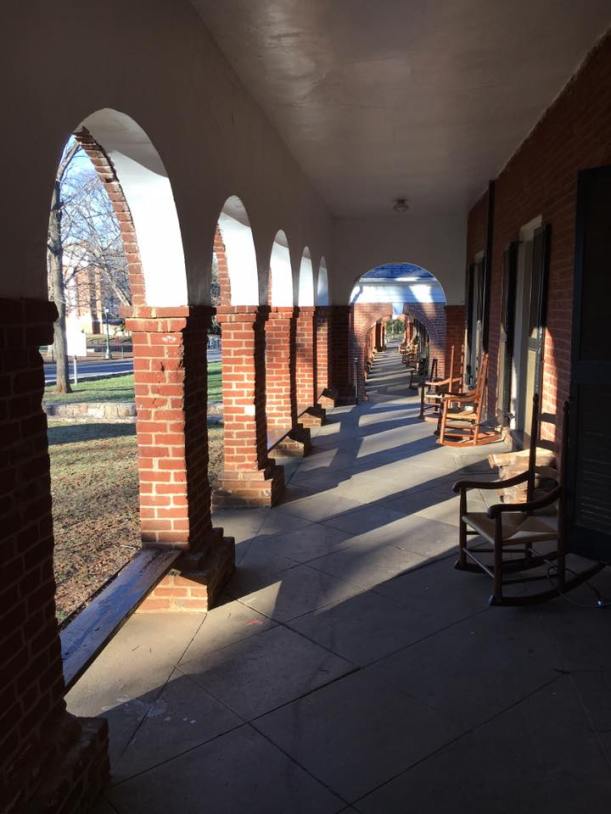
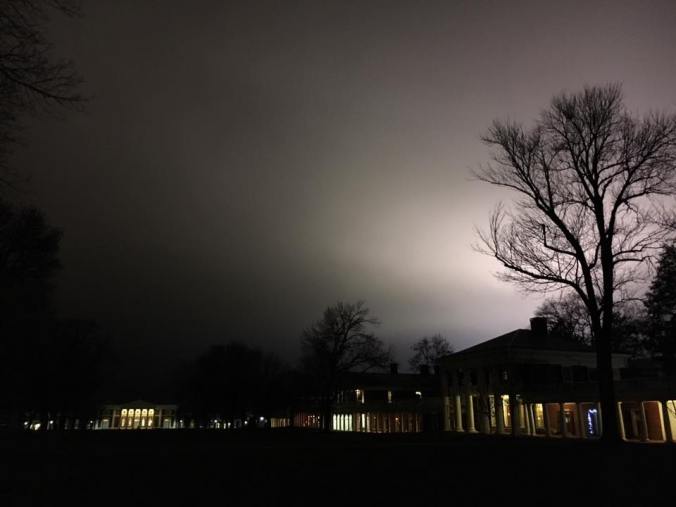
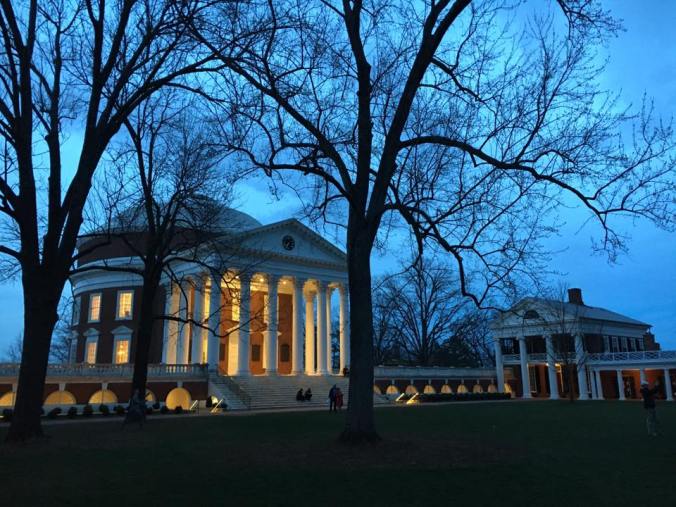
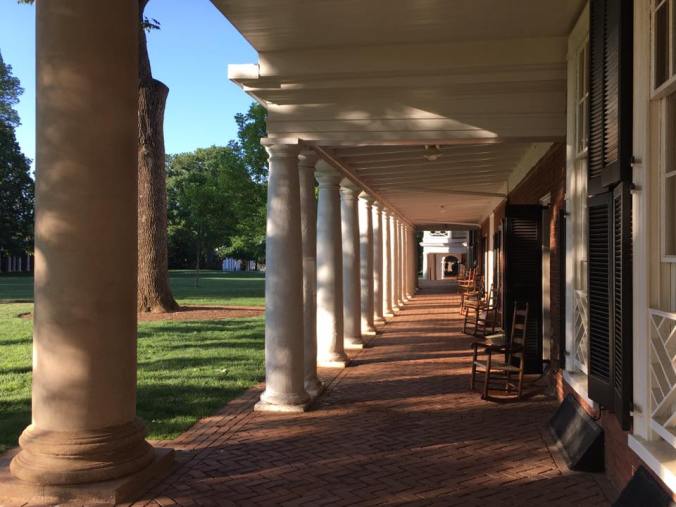
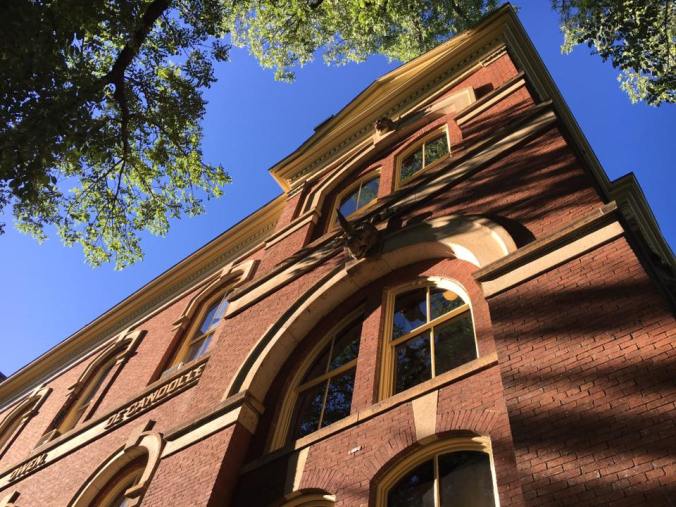
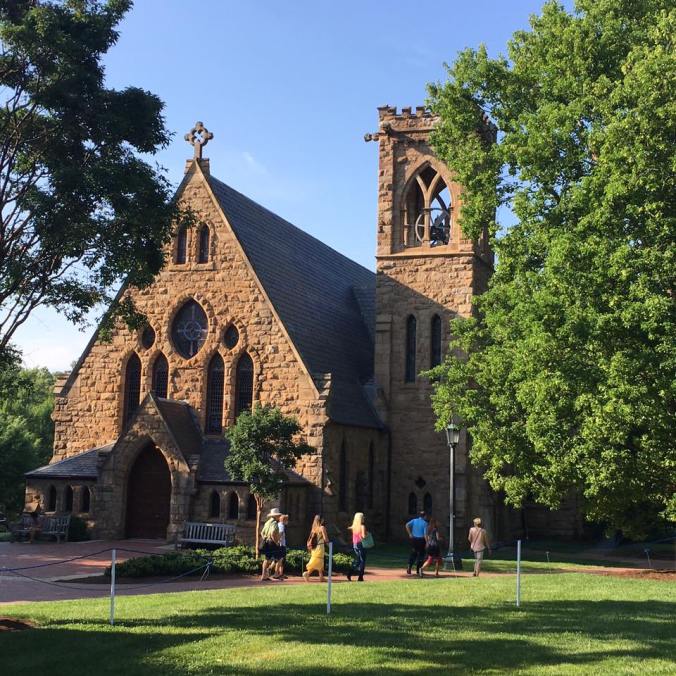
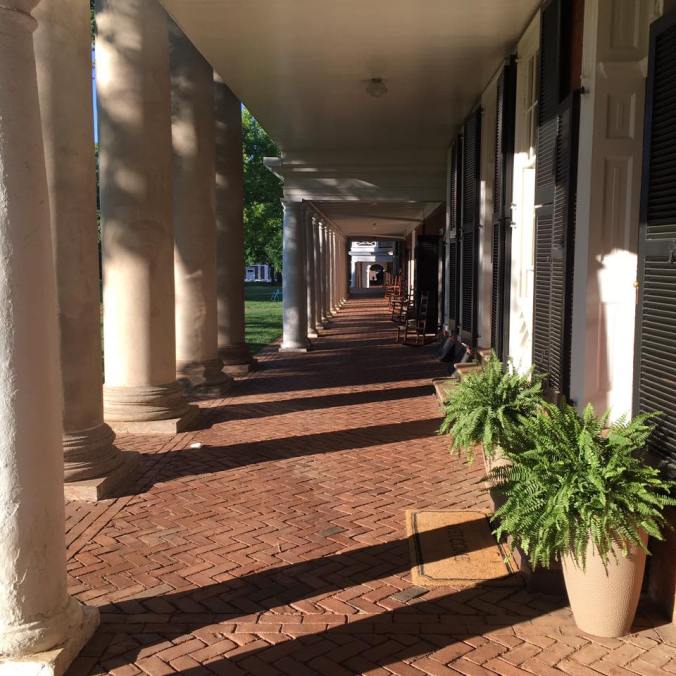
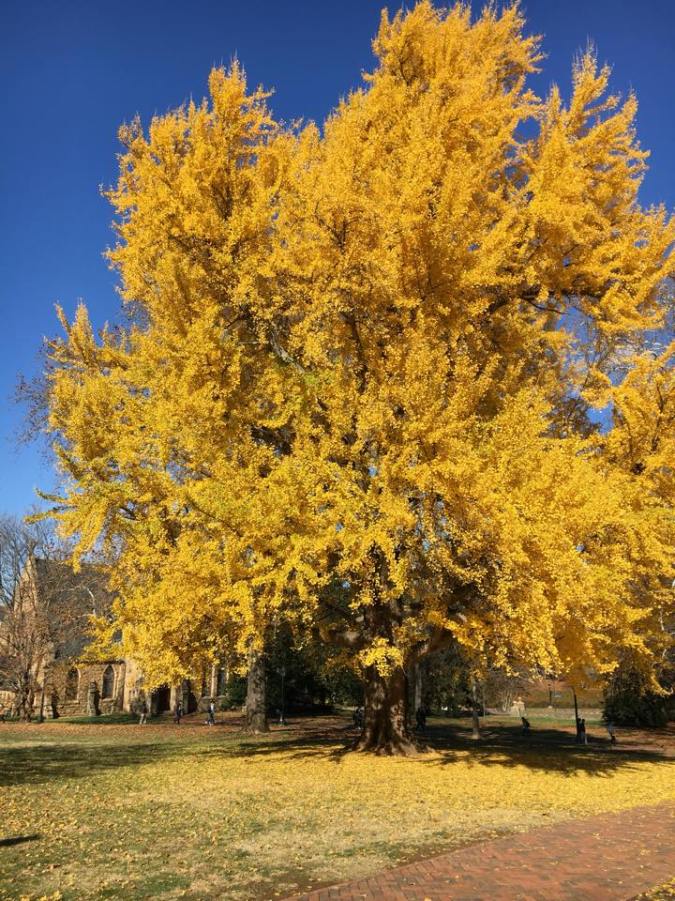
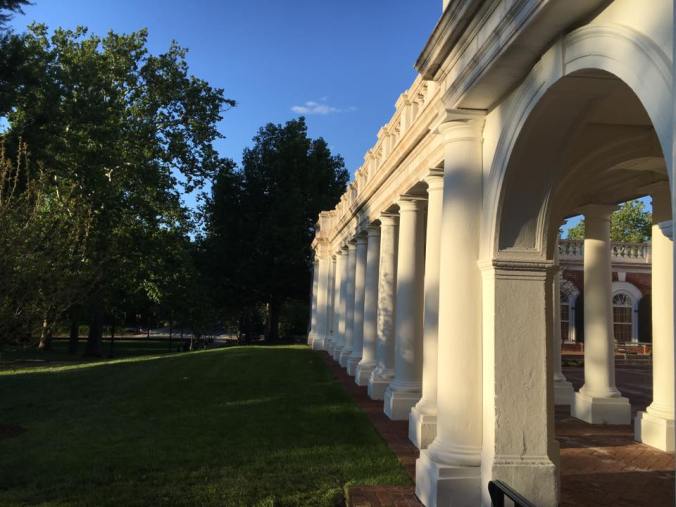
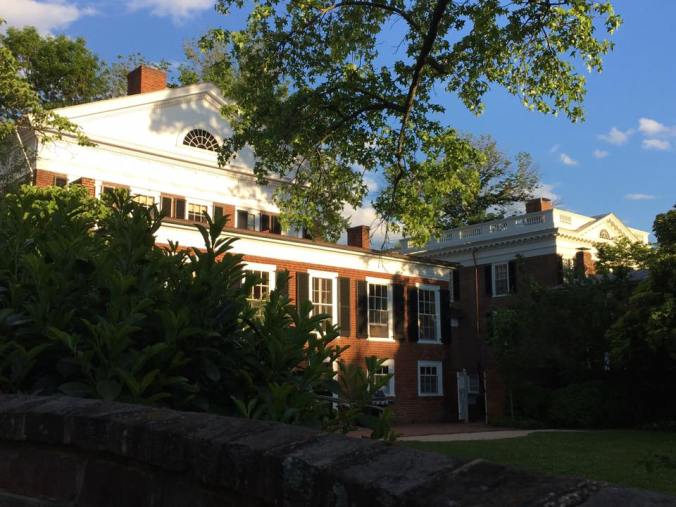
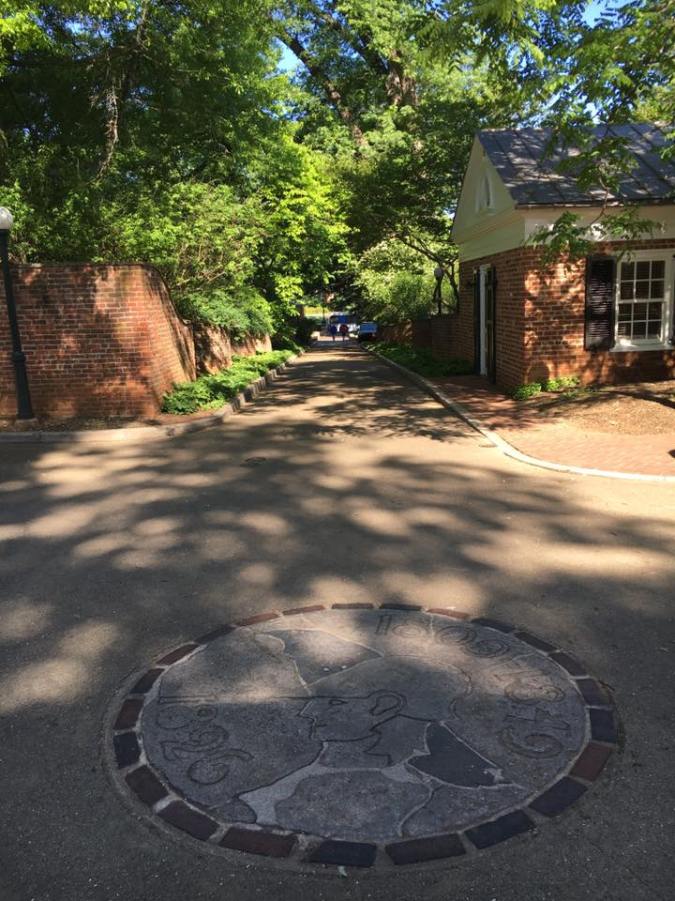
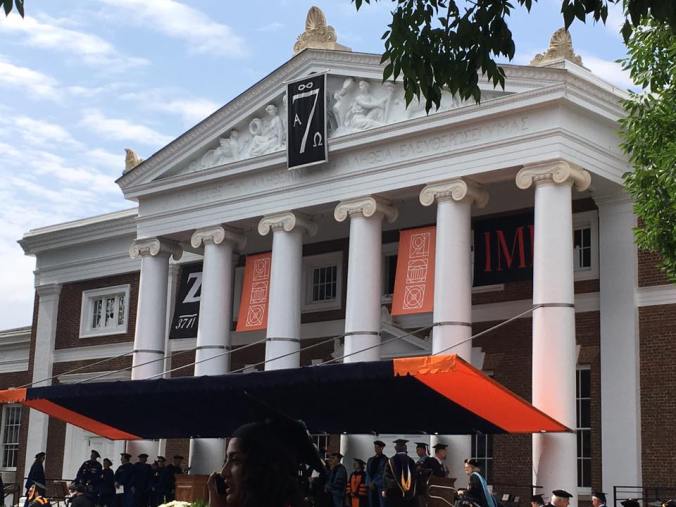
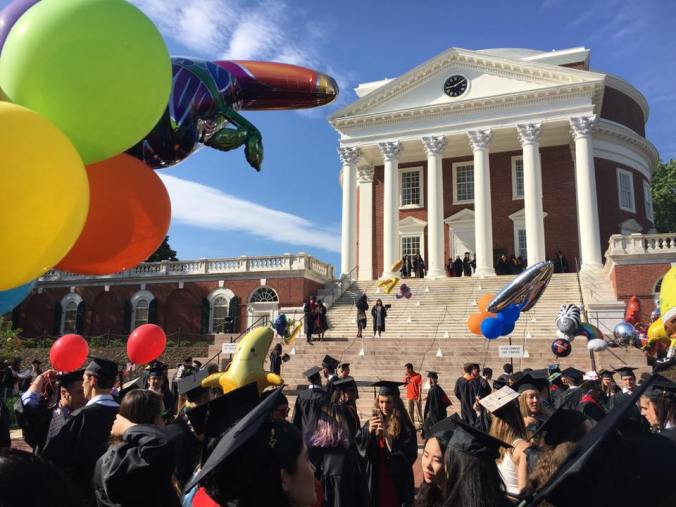
Here are some of those “haggard, inconstant flashes of beauty.” All photos were taken by the author during the 2016-2017 Academic Year.

HotelC1April

RedRotunda20Nov

PoeAlley2March

Peabody3Mar

WestRange15February.jpg

LawnFog30Nov

StrangeNightLawn21Jan

TwilightLawn20Mar

PavIII9May

WestColonnadeIII9May

BrooksHallGargoyles18May

ChapelMay18

OLofCharlottesville5May

I don’t know the name of this window, if it has one. But I refer to it as Our Lady of Charlottesville.

WestColonnadefrom7Up9May

WestColonnadefrom7Down9May

PavIIIatNight13May

ShadowLawn25Jan

PrattGingko1Dec2016

Oculus27Sep

ColonnadeRotunda7May

PavilionI7May

PoeAlleySeal9May

LoTLReflection6Dec

UpRotundaGreen18May

RotundaFrontNight18May

GraduationCabell20May

GraduationBalloons20May

SunsetatUVA19May

Sunset at UVA.


Life Update: Graduate School

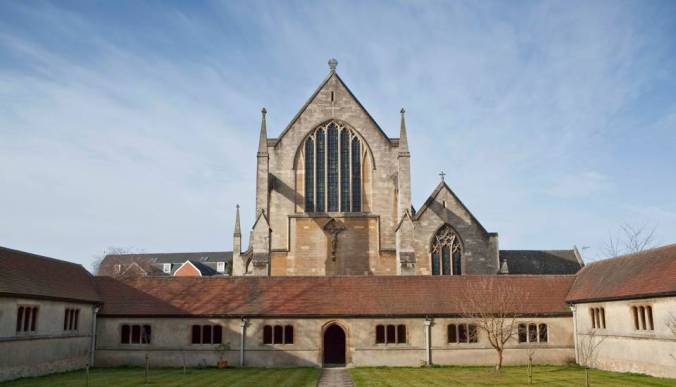
SSHChurchView

St. Stephen’s House, Oxford. Source.

This won’t come as a surprise to those of you who know me personally, but in the interest of honesty, archiving, and my own historical interests, I thought I’d post here that I have decided to attend the University of Oxford next year in pursuit of an M.Phil. in Theology, with a concentration in Ecclesiastical History. I will be living at St. Stephen’s House.

StaggersCrest.jpg

The coat of arms of St. Stephen’s House. It incorporates elements of the coat of arms of its founder, Bishop Edward King. (Source)

I’m very happy to be at St. Stephen’s. It is the Anglo-Catholic seminary in Oxford. I am guaranteed to be around people who are seeking ordination in the Church of England. And very high Anglo-Catholics at that. I’m really looking forward to morning and evening prayer every day. While it may not be the prayer of the whole Church in the Divine Office, the Book of Common Prayer is nevertheless a fine, beautiful way to pray and meditate on Scripture in community. I also think that the liturgical rhythms of life at “Staggers,” as it’s called, will be salutary on the whole. It’s even motivated me to try to memorize a few of the old collects, as Peter Hitchens demonstrates in this debate.

While I realize it has changed a great deal over time, the history of St. Stephen’s House is one of the reasons I’m happy to be here. It may not be one of the well-known colleges (it doesn’t even seem to have very much merchandising in the way of scarves, ties, pins, cufflinks, etc., like all the other ones). But Staggers did play its part in the history of Anglo-Catholicism. Founded by Bishop Edward King of Lincoln in 1876, the house soon became a major center of Anglo-Catholicism. It started to produce Tractarian priests by the dozens, and eventually gained a reputation as a factory of bishops and deans of cathedrals. This prolific connection to the Church of England’s highest chambers has continued into its more recent years.

edward-king

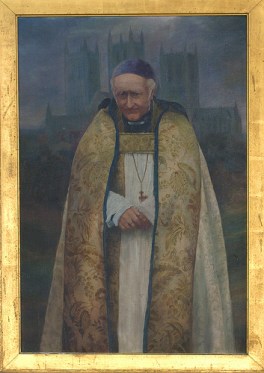
Edward King, Bishop of Lincoln. (Source)

Its relationship with Oxford, on the other hand, has varied. It only attained Permanent Private Hall status in 2003. In moving to that arrangement, it joined other historically religious foundations at Oxford: Blackfriars for the Dominicans, St. Benet’s for the Benedictines of Ampleforth, Wycliffe Hall for Evangelicals, Campion Hall for the Jesuits, and Regent’s Park (nominally) for the Baptists. It was at that time that the House broadened its emphasis to include those who were not seeking ordination in the C of E.

Moreover, Staggers has moved around Oxford. It started as a small community near the heart of town, and only much later moved to its present location across the Cherwell. To wit:

For the House’s first years, it was situated near the centre of Oxford, where the New Bodleian Library now stands. From 1919, the House had a site in Norham Gardens, near to the University Parks. In 1980 it moved to the current site…(St. Stephen’s House Blog).

The accommodations that the House took up were built by the Society of St. John the Evangelist, named alongside the parish church they ran (although it is now largely a concert venue, the House clergy still conduct liturgies there each week). The Society priests were also known as the Cowley Fathers. T.S. Eliot conducted at least one retreat there, although he was generally closer to the Benedictines at Nashdom and the Society of the Sacred Mission at Kelham (see Spurr’s biography, Anglo-Catholic in Religion).

In the mid 20th century, the House prospered under the benevolent influence of Father Arthur Couratin, allegedly referred to by some as “Noël Coward in a clerical collar.”

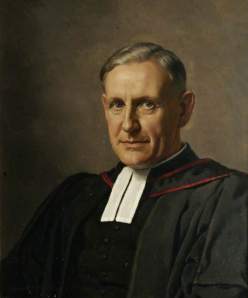
Halliday, Edward Irvine, 1902-1984; Reverend Canon Arthur Couratin, Former Principal of St Stephen's House

Canon Arthur Couratin, Principal of St. Stephen’s House. (Source)

Although its ethos remains largely Anglican, the House has offered a few important alumni to the Church of Rome. Balthasar scholar and theologian Father John Saward graduated there, as did the one-time Bishop of Ebbsfleet and current priest of the English Ordinariate, Monsignor Andrew Burnham. Indeed, they’ve even produced the Primate of the Western Diocese of the Armenian Church of North America, Hovnan Derderian. He is the youngest Armenian archbishop.

Staggers also gave the Church of England Fr. Kenneth Leach, an important Christian Socialist priest. He was trained at St. Stephen’s when it had become a rather homoerotic place, and Leach would famously sum up his time there as “gin, lace, and backbiting.” The writer and Staggers alum A.N. Wilson composed a bitingly comedic satire of the House in those years, entitled Unguarded Hourswhich, as Ignatius Press’s reviewer puts it, is decidedly “not a Catholic novel.” Alas. Wilson, who would eventually return to Christianity after years of very public atheism, would later recall the custom formerly in vogue at Staggers of taking “religious names” that were actually rather saucy nicknames, often of the opposite sex. If Father Couratin was “Noël Coward in a clerical collar,” it seems that by the 1970’s, you were more likely to find Julian and Sandy in soutanes.

I seriously doubt that any of that persists. Women’s ordination in the C of E means that, while many Anglo-Catholics have become more liberal, their seminaries no longer smack of the kinds of homoerotic associations that fueled so many stereotypes (see Cousin Jasper’s famous quip in Brideshead Revisited). Staggers seems to remain as a pillar of sensible, ornate, properly Anglo-Catholic liturgy at its best.

StStephensLiturgy1

A liturgy at the parish church of St. John the Evangelist, St. Stephen’s House, Oxford. (Source).

Requiem

A requiem for the founders of the House. (Source)

StStephensHouseRose.jp

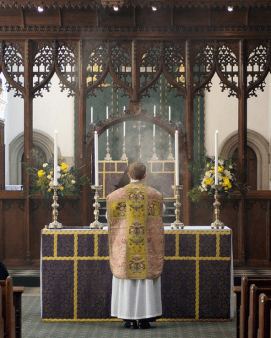
A priest says a Mass at St. Stephen’s House. I highly recommend the source I took this from, Merrily On High. An excellent source for all things Anglo-Catholic.

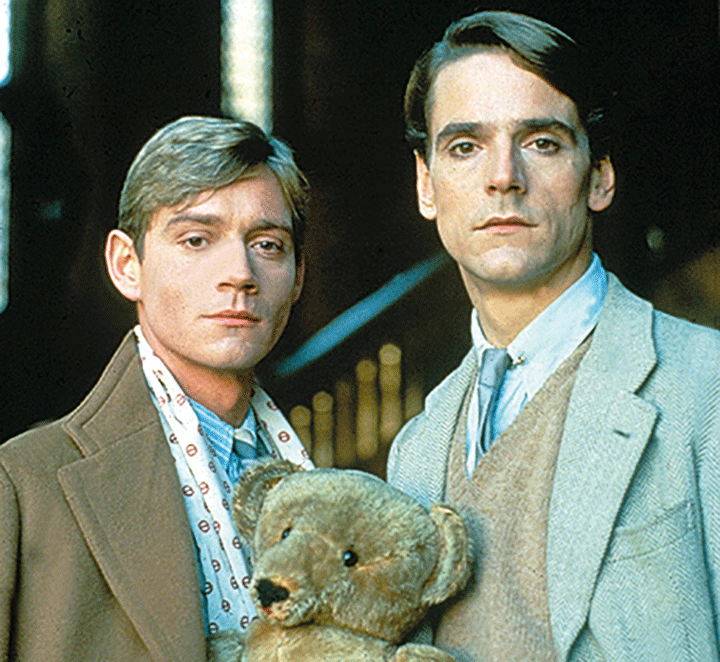
Of course, I could also emphasize the importance of Oxford in general as a center of CatholicismRoman and otherwise. Here, the Subtle Doctor “fired France for Mary without spot.” Here, Cardinal Wolsey established a college named for his office and, later, all of Christ’s Body on earth. Here, Archbishop Laud attempted to bring back devotion to Our Lady through a little portico on her church in town. Here, Charles I took refuge while his queen heard the Mass of Ages in Merton Chapel. Here, Keble railed against a “National Apostasy.” Here, Newman battled the liberals, and in doing so, broke ground for the Second Spring. Here, Gerard Manley Hopkins served briefly as curate. Here, Oscar Wilde flirted with men and the Church for the first time. Here, Monsignor Ronald Knox cut his clerical teeth as the chaplain of Trinity College. Here, Montague Summers was first haunted by the Vampyre’s shadow. Here, Tolkien and Lewis and Williams and their friends spoke about God long into the stout-softened night. Here, T.S. Eliot studied briefly before going on to greatness in London. Here, Evelyn Waugh thought up a story about two men and a teddy bear. Here, Father Martin D’Arcy pondered the ways of divine and human love. Here, the Oratory finally arrived in 1990 to fulfill Newman’s dream. Here, the late Stratford Caldecott wrote of God’s undying beauty in all things.

OxfordSkyline1

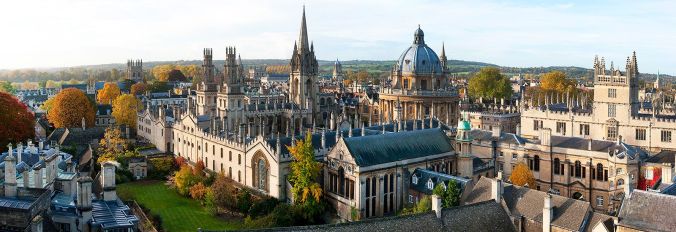
An Oxford morning. (Source).

I could name more ways in which Oxford has played a special role in the life of the Catholic Church. Perhaps I will do so in another post, or a series of posts. For now, I’m just happy to say that I’ll be in a place with a lot of Catholic history, learning about that history. And thank God for that.

CrivelliStephen

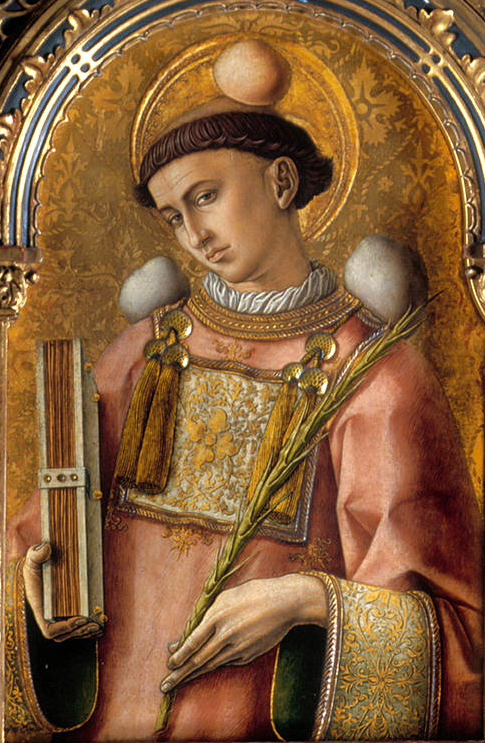
“Saint Stephen,” by Carlo Crivelli. Proto-martyr and patron of St. Stephen’s House, Oxford (and perhaps a rather wan patron at that, by the look of this paintingis that asparagus in his hand?). (Source)

PrinceofWalesatStaggers

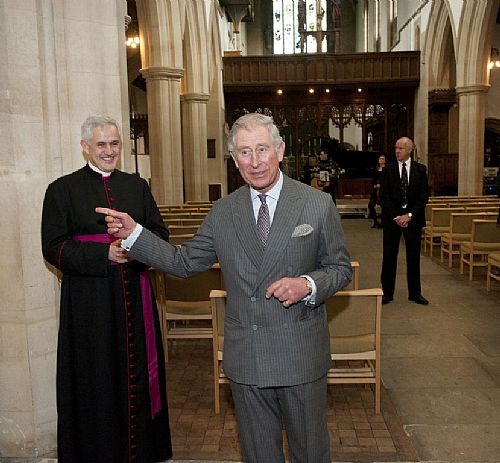
Also, apparently the Prince of Wales sometimes visits. (Source)

The Fifteen Most Important Films I Have Watched at UVA

In my time at the University of Virginia, I’m grateful to have received an unofficial aesthetic education parallel to (and sometimes part of) what I was learning in class. As part of a series of somewhat nostalgic posts, I’d like to revisit some of these and perhaps leave you with a few recommendations.

Some of this will be review. A great deal will be personal narrative. “Important” here is not an absolute quality, but rather a relative one. These films have been the most important to me over my four years. Moreover, there will be occasional spoilersthough, as with No. 5 and No. 4 on my list, I don’t spoil very much.

Keeping those disclaimers in mind, let’s begin.

15. What We Do in the Shadows
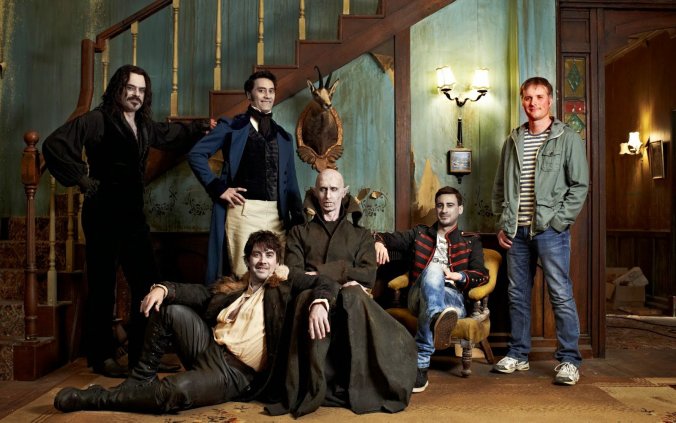
WhatWeDointheShadows

I watched this New Zealand horror comedy with a friend (whom I will call here and throughout by the name “Sherman Pine”). And I’m glad I did. What We Do in the Shadows is one of the best depictions of male friendship I have ever seen. Not only is the film by turns hilarious and macabre, it also manages to evoke the unique social pressures facing (post)modern man. It deals with issues of difference, acceptance, competition, and more.

And for anyone with a taste for blood – or at the very least, a good vampire story – the number of playfully subverted classic genre tropes in the film will certainly please.

WWDITS was also my introduction to Taika Waititi, whom some of you may recognize as the director of the upcoming Thor: Ragnarok.

14. Doctor Strange
null

Before I came to UVA, I wasn’t a fan of the Marvel universe. While I wasn’t exactly a DC partisan, I never paid much attention to the Avengers. I disliked the only Iron Man movie I had seen, and I had never bothered to watch any of the Thor or Captain America films.

But then came Guardians of the Galaxy, The Avengers: Age of Ultron, and Captain America: Civil War. Those three films and the conversations with friends that they engendered drastically changed my perspective on Marvel.

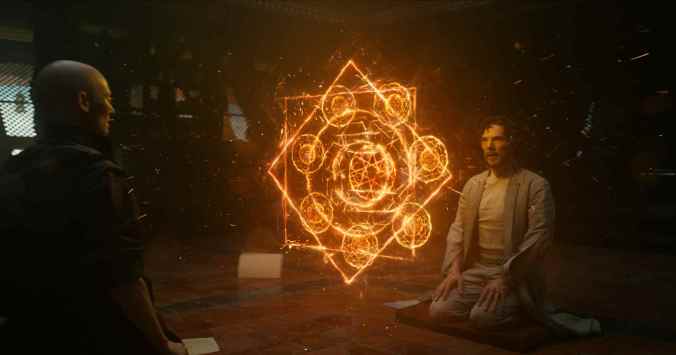
None of those, however, reached the artistic or philosophical heights of Doctor Strange. The beautifully kaleidoscopic special effects never drown out the excellent performances by Benedict Cumberbatch, Tilda Swinton, Mads Mikkelsen, and Chiwetel Ejiofor. And the plot contains a number of religious themes. It’s one of the few superhero movies I’ve seen that embraces a quasi-Christian worldview (the climax involves a kind of harrowing of hell).

In short, I guess I can now say that I’m a fan of the Marvel universe. Doctor Strange is just the best reason why.

13. Silence
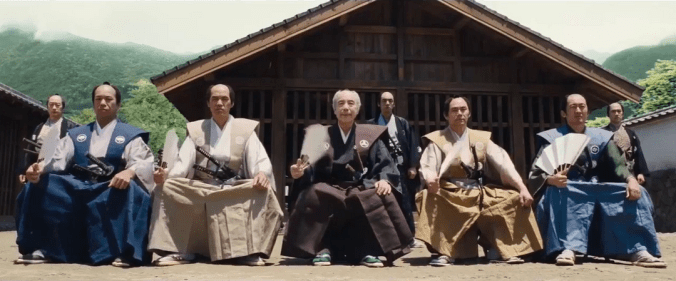
Screen Shot 2017-03-23 at 1.35.41 PM

Wrenching, problematic, and beautiful, Silence is the only Martin Scorsese film on this list. I saw it with friends from one of my oratorical societies. We all went in with different perspectives, and came out with different reactions. Mostly, I just felt numb. I couldn’t find any words at all, but like Job, felt it necessary to “lay mine hand upon my mouth” in awe (Job 40:4 KJV).

I could probably write at length about the various theological issues, cultural questions, and cinematic gems that the film poses. I won’t. I’ll merely say that, while I found it emotionally crushing, I appreciate that art doesn’t abide by the rules we try to set it. Good Christian art – even Sophianic art – never loses sight of the essential brokenness of our fallen world. If anything, perhaps the great take-away from Silence is something like the advice I was once given by a very holy priest: “Never despair of the mercy of God.”

I’ll add briefly that, as someone who wants to focus on early modern Catholicism, I found the film a helpful occasion to raise awareness about the history of Christian persecution in Japan. The reconstructed world of 17th century Japan is sumptuously simple. Every aesthetic note is perfectly put. It will almost certainly be remembered as Scorsese’s masterpiece.

12. Mulholland Drive
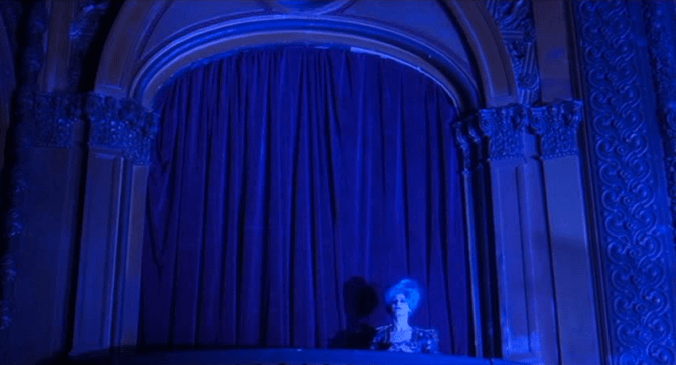
Screen Shot 2017-03-23 at 1.32.01 PM

We move from Silence to “Silencio.”

Last Fall, I decided to watch Twin Peaks. That process entailed a general inquiry into the works of David Lynch, whom I had long admired. I told Sherman Pine, who shares my appreciation of Lynch, that I had yet to see the director’s famous neo-noir Mulholland Drive, and he was kind enough to watch it with me.

I still don’t understand this movie. I won’t pretend to. But boy, is it a ride.

I’ll add that Lynch really smartly contrasts different musical styles, which mirrors the doubling in the plot (but I won’t spoil those details). I know of no other director who is so committed to staged performance as a portrayal of themes. Particularly as they relate to the underlying tensions of sex and gender present in much of his work.

11. Days of Heaven
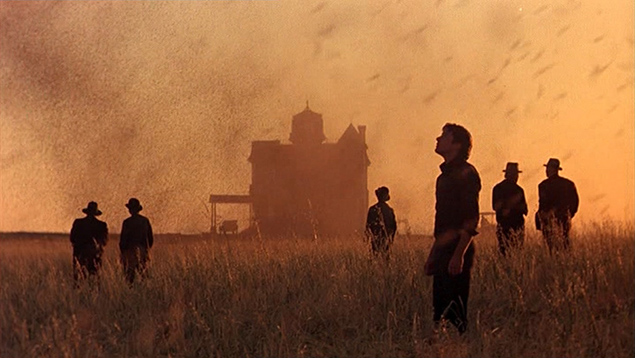
DaysofHeaven

My first Terrence Malick movie, but not the only one on this list. Watching Days of Heaven was like stepping into an Edward Hopper or Andrew Wyeth painting. Like a few other films – say, August: Osage County or NebraskaDays of Heaven stands as one of the quietly towering cinematic monuments of Midwestern life.

I also happened to watch the film with a friend (the aforementioned Sherman Pine) wile I was enrolled in an Anthropology class called “Language and Cinema,” which meant that I was particularly attuned to the way Malick crafts his story through sound. No other film that I know of uses such a wide range of realistic sounds so artfully. You can’t hear all the dialogue, and what you can hear, you can’t always understand. The voice-over narration is spoken by a child in the working-class accent of 1916 Chicago.

Of course, being a Malick film, the visuals are also gorgeous. A swarm of locusts is an inherently mythic phenomenon, but I think that only Malick could make them as beautiful as the sunlight they block and the fields they devour.

10. Do the Right Thing
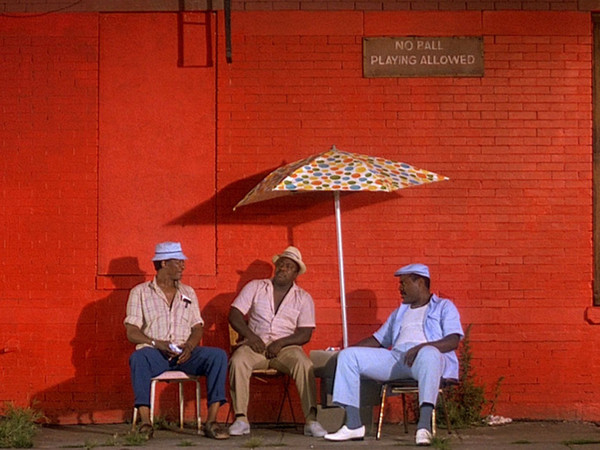
DoTheRightThing

Because I was in that “Language and Cinema” class, I had the opportunity to watch several films I had never seen before. A few worth mentioning include Zoot Suit, the 1939 edition of Stagecoach, and Smoke Signals. Of all of the films we watched, one that really stood out to me as an exceptional piece of art was Spike Lee’s famous 1989 movie, Do the Right Thing.

The script offers a remarkable variety of linguistic turns that make it a rich field of social analysis. The film also impressed me as a bitingly relevant commentary on racism and policing. As someone with no prior awareness of the issues surrounding police brutality in 1980’s New York City, the movie made me want to learn more about a dark and overlooked chapter of our history. Given the recent spate of police brutality incidents over the last few years, it seems to me that more people should return to this film, a movie that carefully treads the line between the two social values on Radio Raheem’s fists: love and hate.

9. Becket
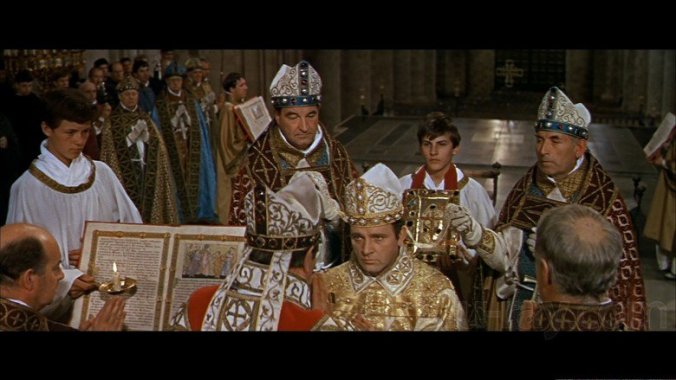
Becket

Becket is not the greatest Catholic film ever made, but it comes close. Gorgeously fabricated costumes, historically-conscious sets, a richly Romanesque liturgical sensibility, copious use of Gregorian Chant, and an excommunication scene that thrills the cockles of every cold Traditionalist heartwhat’s there not to love?

Beyond these largely aesthetic factors, Becket has two unique strengths. First, the movie lacks any of the problematic theology or complicated nuances that has marked more artistically impressive Catholic films (such as Silence and Calvary). Of course, there’s nothing wrong with art engaging in these questions, but occasionally a more affirming film can be helpful. Becket, like A Man for All Seasons, manages to unite faithfulness to the Church’s teachings with genuine artistry. The titular bishop often defends “the Honor of God” against a rapacious monarch. And that brings us to the movie’s second great strength: its depiction of a friendship gone awry. This is a theme that isn’t treated as often as it should be in movies.

Of course, I may be mistaking my own reading of the film and its objective strengths. I first saw Becket when I was in a similar situation. A friend had quickly and completely become an enemy, and I could relate to St. Thomas’s exasperated struggle against a corrupt king.

And on top of that, it’s about St. Thomas Becket, who is one of the coolest British saints.

8. The Witch
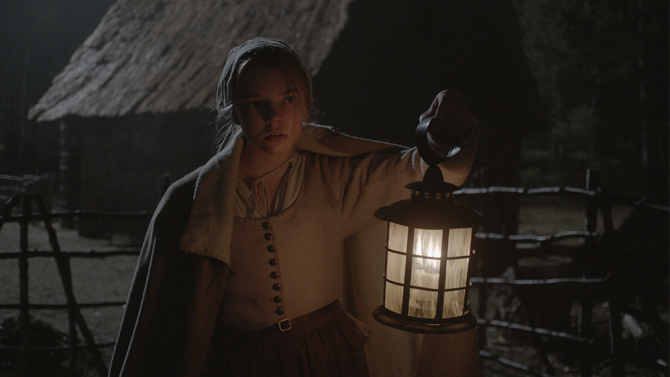
TheWitch1

If you know me personally, you know that I adore The Witch (aka The VVitch). It may well be one of the finest horror movies ever made. It features all the tropes of early modern witch lore, a soundtrack that evokes the terrors of the Puritan frontier, and dialogue in 17th century dialect (my jam). Its understated visual style allows the actors’ performances to shine through. And the goat! The goat! Just look at it!

This film rekindled my interest in the tradition of horror in New England, which I’ve blogged about before in relation to Lovecraft. It was also the first horror movie I had ever seen in a cinema. The Witch also established A24 in my mind as one of the leaders of the new horror, a genre trend that I hope it continues with the upcoming It Comes at Night.

I consider The Witch to be the greatest Protestant film ever made. Yes, the Satanic Temple really liked it. Yes, A24 consciously hyped the film’s satanic themes as part of its publicity efforts. Fine. But the movie’s horror works by letting us into the world of Puritan New England, a world where the devil is real, witches kill babies, and the livestock aren’t always what they seem. And we are meant to sympathize with these people. They’re not the dupes of McCarthyesque hysteria. They’re the victims of supernatural evil.

I also read The Witch as a cinematic meditation on original sin in its Calvinist interpretation. Everything in the movie happens because of the father’s pride. He’s unwilling to repent and submit to the colonial community, and as a result, the whole family is expelled into the wilderness. The subsequent deterioration and damnation mirrors our own condition under Adam.

Also, if you like Goya’s Black Paintings, you’ll really like The Witch.

7. Herz aus Glas
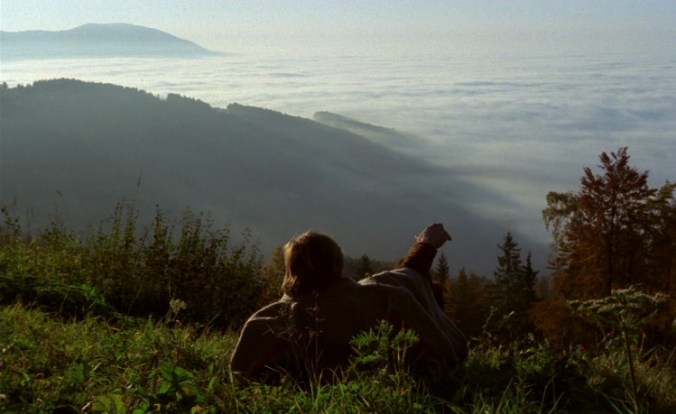
HerzausGlas

I saw Herz aus Glas (Heart of Glass) while on a Nietzsche kick in my second year. It messed with my head and made me want to read obscure Continental writers. I’ve always seen it as somehow quintessentially German. At the very least, Herz aus Glas introduced me to the remarkable oeuvre of Werner Herzog, who is my favorite European nihilist director. Not quite as grim as Béla Tarr, not quite as operatically depraved as Lars von Trier.

The film itself tells the story of a glass-producing village in Bavaria that descends into madness after the death of its chief glassblower. A highland prophet delivers cryptic messages throughout. The conclusion comes out of nowhere. At the end of the day, it’s probably a commentary on the German experience of capitalism and fascism, but who knows? Don’t question it.

6. Curse of the Golden Flower
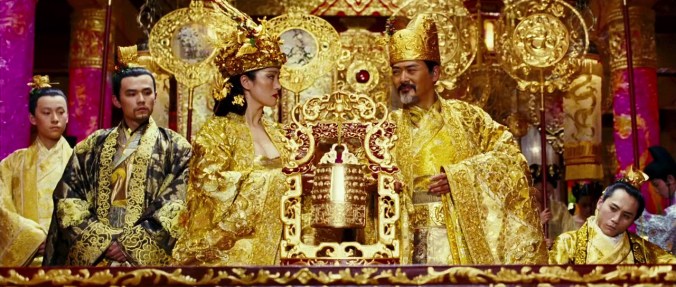
CurseoftheGoldenFlower1

I first saw Curse of the Golden Flower with fourth-year friends when I was a lowly first-year. For me, it will always be a symbol of the similarly golden days between Spring finals and graduation.

The film struck me then as one of the most visually striking movies I had ever seen. The highly stylized recreation of Tang Dynasty China probably speaks to that part of me that also takes a guilty pleasure in the orientalist paintings of Gérôme and Delacroix. Each shot is saturated with a carefully chosen array of colors. The costumes and set design work together to fashion a stunning aesthetic experience. Think Beijing Olympics Opening Ceremony, but with more swords and cloth-of-gold.

Everyone to whom I have showed it since has agreed with my own assessment. The action thrills, and all the actors put in excellent performances. I’d also highly recommend Curse of the Golden Flower to fans of Game of Thrones. The palace intrigue that makes up the bulk of the plot resonates with much of what goes on in Westeros.

5. The Great Beauty
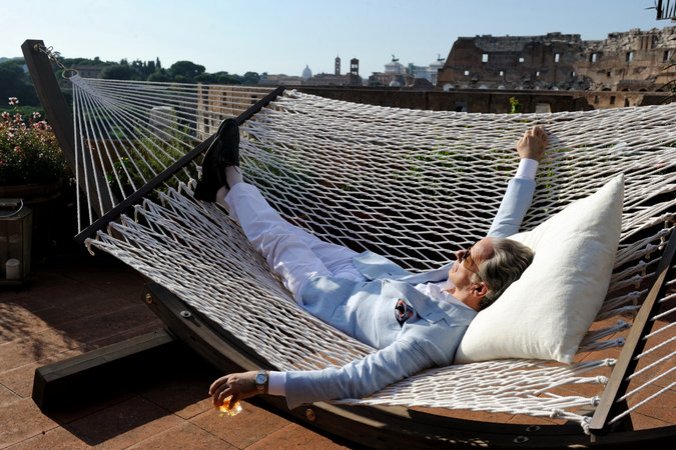
TheGreatBeautyhammock

When I started composing this list, The Great Beauty was down several places. But the longer I’ve thought about it, the higher I’ve ranked this film by Paolo Sorrentino. Readers of this blog will know that I kinda have a thing for his recent HBO limited series, The Young Pope. That show prompted me to look at Sorrentino’s cinematic work. The Great Beauty was the first of his movies that I watched. I’ve had the chance to watch it twice, and I may go back for round three in the next few weeks.

The film depicts the life of Jep Gambardella, a fictional Italian author who moves through the boozy and hedonistic world of the Roman intelligentsia. We see his interactions with other writers, strippers, a floundering performance artist, the wreck of the Costa Concordia, and more. He searches for the titular “grande bellezza,” only to find it after encountering love, suffering, and simplicity.

There isn’t much plot, but there is a whole lot of character development. Ensconced in a party lifestyle, Jep can’t produce any more books; he feels stuck. When he receives word that his first love has died, he goes through a period of intense introspection. As he looks back upon his life, he realizes that he’s lost any meaningful sense of joy. He’s caught in a malaise of memory. Only the wise words of a Mother Theresa-like nun whom everyone refers to as “the Saint” unlocks his situation.

She asks, “Do you know why I only eat roots?” Jep replies that he doesn’t know. She turns back, and without even a smile, says to him, “Because roots are important.” The terse, spiritual one-liners of The Great Beauty are typical Sorrentino fare. Similar lines appear throughout The Young Pope.

I first saw the film in February. I’ve been ruminating on it ever since. It has stayed with me and fermented in my soul like few other films. I can’t help but relate to the protagonistand not just because we share a similar sleep cycle. Jep Gambardella, played masterfully by Tony Servillo, strikes me as a character who could relate to the strange feelings of nostalgia and loss that I’ve had in the Spring of my fourth year. So much so, that along with the next two films, I consider it one of the triad of movies that has defined my final year at the University.

Also, the music in this film is totally gorgeous, and has given me a renewed appreciation of the Holy Minimalists. The soundtrack features both of the songs I described in a recent post on the Light of Tabor and Lent.

So go see it, because it really is too great a beauty to pass up.

4. The Mission
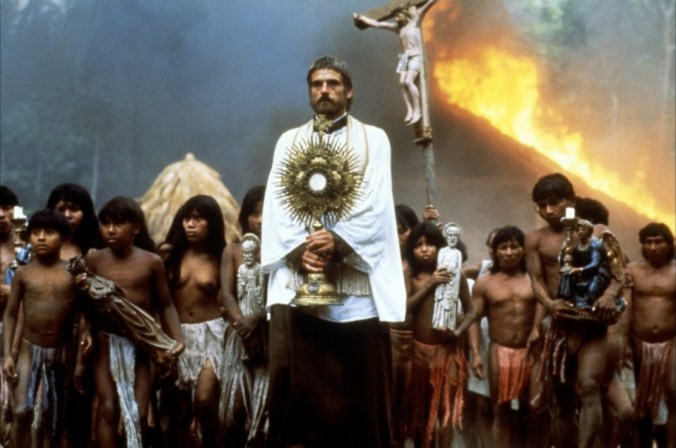
TheMission

Although I had heard of The Mission years ago, I only became really determined to watch it as the result of a class I took last fall, “Reformation Europe.” I’m glad I did. It also had a profound impact on me. I don’t think I know of a Catholic film that more perfectly depicts the difficult realities of balancing missionary work and the demands of Christian peace. The tension between the Jesuits played by Robert de Niro and Jeremy Irons is only undone through the reconciliation implicit in the climactic scene. It is the Eucharist, and the Eucharist alone, which can effect true peace – especially in the face of martyrdom.

A few ancillary personal notes. First, as an aspiring early modernist, I found that the film disposed me to take a much deeper interest in colonial South America. It also made me take a much more serious look into Christian pacifism. The best art should do that. It captures the imagination and lead us on from the beautiful to the true or the good. Secondly, “Gabriel’s Oboe” is also, for my money, the most uplifting music from any of the films I have listed in this post. Finally, it confirmed Jeremy Irons in my mind as the Most Catholic Non-Catholic currently acting in Hollywood (see Brideshead Revisited, The Borgias).

3. The Tree of Life

TheTreeofLife

For years, friends told me that I had to watch The Tree of Life. That it was an incredible piece of art. That it could never be adequately described. That it might just induce a religious experience.

Having watched it recently, I concur. The film is too vast to try and capture in any depth here. I’ll simply say that it is the most sophianic piece of cinema I have ever seen, and that if I have any time in the future, I may try to analyze it from a sophiological perspective. But not without one more viewing.

2. Into Great Silence
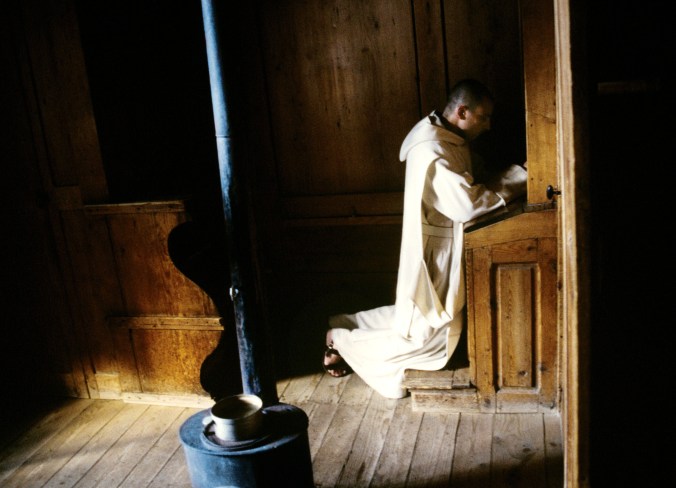
IntoGreatSilence.jpg

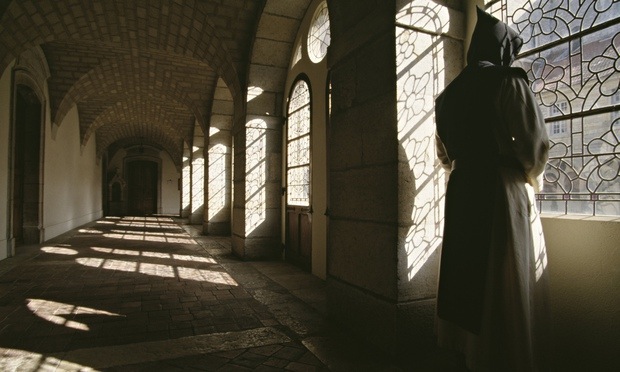
For a while, I made it a practice to watch Into Great Silence at least once per semester. I believe I first saw the film in the Fall of my First Year, and in that sense, it was my first real introduction to monastic spirituality. The simplicity and manifest holiness of the Carthusians in the movie captured my imagination. Their silence spoke to me.

Nothing happens. Insofar as there is a narrativeand I must emphasize, there really isn’t oneit’s the first year in the monastery of a newly-professed novice. But we don’t focus on him. Instead, we watch many of the monks as they go about life. We are brought into the rhythms of their own silence, the particular ways they fill it with prayer and work. When the monks do speak, they often drop deep little lines. The only interview in the documentary is conducted with an ancient, blind monk. At one point, he says,

The past, the present, these are human. In God there is no past. Solely the present prevails. And when God sees us, He always sees our entire life. And because He is an infinitely good being, He eternally seeks our well-being. Therefore there is no cause for worry in any of the things which happen to us.

These words are good theology, spoken by a saint, given for our practical sanctification. Or consider an even better, briefer quip spoken by a monk at recreation:

The symbols are not to be questionedwe are.

Words to live by.

If you are Catholic, the hauntingly beautiful scene that depicts the Carthusian night office will make you want to go to adoration at midnight. If you are not religious, the film will make you take the ascetic life more seriously. And if you are pondering the Catholic life, I can’t think of a better cinematic introduction to the Church’s spirituality.

Well, I suppose there’s Bishop Barron’s Catholicism series. But that’s a show, not a film.

  1. Baraka

Baraka

Without a doubt, this film has defined my time at UVA. I discovered Baraka by accident, and it stirred something in me that has never quite settled.

One part nature documentary, one part travelogue, one part blistering social criticism, Baraka can be summed up in one word: transcendent. Everything in the film points towards what is beyond it, towards what it dare not express in words. There is no dialogue. The central theme is that ritual and nature connect mankind with the mystery of his existence, and it proceeds to show how the way we break, deform, and reconstruct ritual in modernity has led to untold suffering. The film suggests that a return to the ancient wisdom of religion can restore the meaning we have lost in the 20th century.

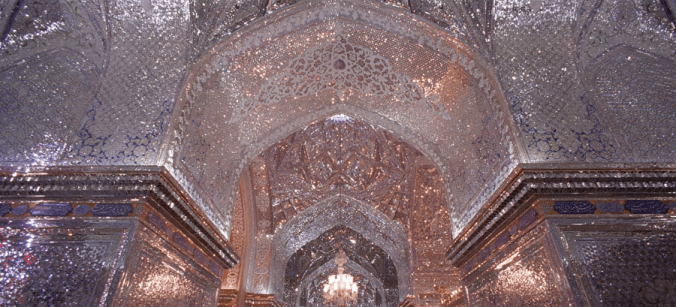
Whether you buy into that traditionalist interpretationor its postmodernist, ecofeminist, anti-colonialist, or anti-capitalist variantsthe film will stun you. Director Ron Fricke cut his teeth as director of photography for Koyaanisqatsi (1982) and director of Chronos (1985), the film’s spiritual antecedents. He would later go on to direct a sequel to Baraka, another beautiful film called Samsara (the featured image at the top of this article is a still from that movie). While all are worth seeing, Baraka is the best of the lot. It has the most coherent spiritual vision, the best music, and the most striking visuals.

I encountered Baraka my third year, at a time in my life when I was under tremendous personal stress, as I alluded to in my discussion of Becket. Maybe that slight desperation opened me to a film of Baraka‘s sensibilities. I don’t know. But I don’t think I watched a film while at UVA that more profoundly shaped my worldview and aesthetic. I’d say that everyone who studies or practices religion should see it, but that would be a lie. Everyone should see itperiod.
Eulogy For My Grandmother

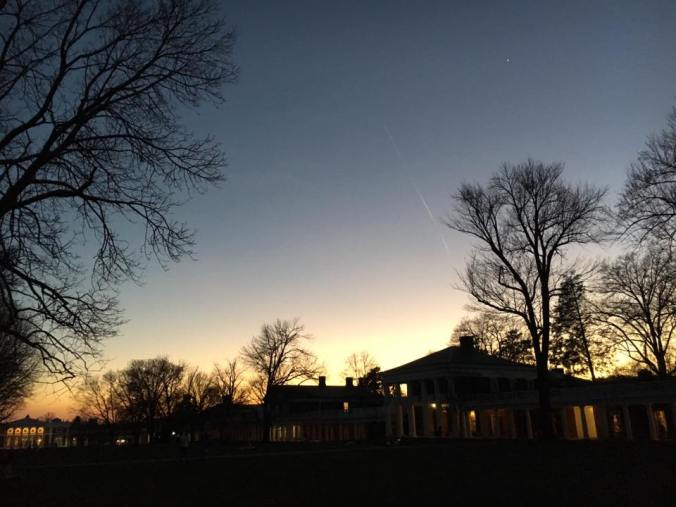
SunsetApril122017

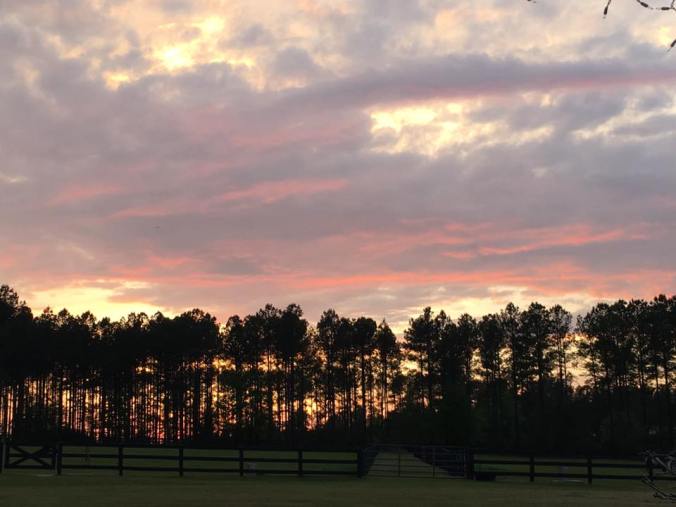
Sunset on the day of the funeral – 12 April, 2017

This was the eulogy I delivered at the funeral of Arline Grace Bence (29 Oct. 1929 – 5 Apr. 2017), my beloved Grandmother. The Requiem Mass was celebrated by the Rev. Fr. Gregory Wilson of St. Mary, Help of Christians, Aiken, SC. I also sang the Salve Regina during the Offertory. I’d like to thank everyone who has been so kind to express their concern and commiseration during this difficult time. I decided to put this rather personal document on my blog for those family and friends who could not attend the funeral, as well as to honor my grandmother’s memory.

I confess, when I learned last Wednesday that my Grandma Arline had finally passed away, I did not immediately feel the sorrow or grief I was expecting. Instead, I felt a twofold relief. First, I was relieved that after years of battling dementia and various other painful disorders, my grandmother was finally at peace. And secondly, I was glad that, having been consoled and fortified by the last rites of the Church, she would soon plunge through the cleansing fires of Purgatory and arrive safely in, as our Psalm today so beautifully puts it, “the land of the living” (Psalm 27:13).

And when the sadness came, it was mingled with tremendous gratitude. For when I remember my grandmotherwhen I see her coffin hereI am reminded of a woman who was one of the greatest blessings in my life. Few people more profoundly molded my character and dispositions. I’m sure that so many of us here can say much the same.

Arline Grace Bence, born the day the stock market crashed, a proud New Yorker and Italian to the end, was known to all as a simple and generous soul. In my own life, she expressed these virtues in different ways. She gave unstintingly of her time. For many years, we would both look forward to Friday nights. After the school week had concluded, I would mount the short staircase to her apartment above our garage, and the two of us would share a meal together. This was a precious time for both of us – if only there were more such time now! But in the years we passed in each other’s company, my Grandmother also fed my desire for learning. We spent many a weekend or summer’s day going out to lunchusually pizzafollowed by an outing to Barnes and Noble. She would let me roam the stacks for what seemed like hours, never complaining as she sat and read a magazine or two.

But this pattern of happy memories fails to capture the most important gift she gave me – the gift of faith. My grandmother was the first person to take me to Mass. She was the first person to buy me a book of saints. She was the first person to teach me the blessed words of the Ave Maria. And when I began my conversion in the last years of high school, she was the first to accompany me to weekly services. Although we were no longer spending Friday nights together, we both started to look forward to Sunday mornings instead. And we found a new closeness in doing so.
These giftsher steadfast love, the time we shared, the faith that sustained us in different ways – these happy memories are what will bring me something of her presence in her absence.

For now, she is gone. Thoughperhaps not in all ways.

The faithful departed are not really gone. They are, instead, much closer to us than they ever were before, for they have loosed the petty chains of time and space. In God, they are near to us – nearer than we can imagine. All those who have died in Christ and gone before us are waiting to help us as we, too, seek Heaven. And I can say with confidence that Arline Bence, our dear grandmother, aunt, cousin, in-law, friend, and mother, will very soon be interceding for us. Let us intercede for her now.

Everyone here loved her so very much. Perhaps even in ways that you could never quite express. I believe that I speak for us all when I say that my grandmother loved us deeply, if imperfectly. In this, she always proved her essential humanity. But now, as she enters her eternal life, she can love us all more perfectly, at last.

Eternal rest grant unto her, O Lord, and let perpetual light shine upon her. May she rest in peace.

Amen.

GrandmaWedding

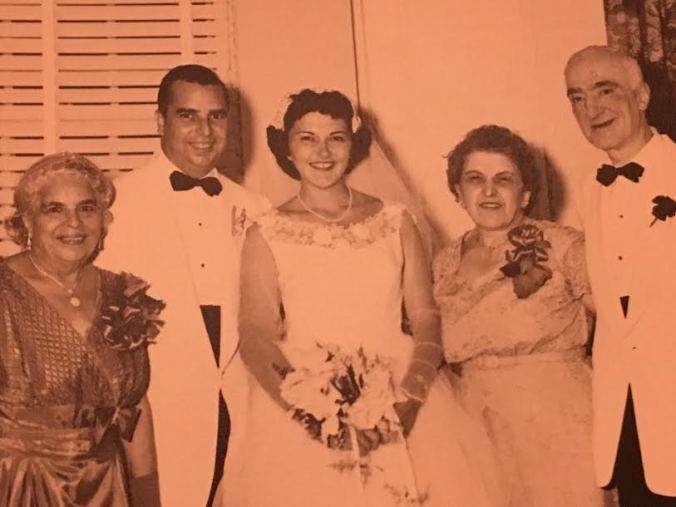
My grandmother’s wedding. She was a beautiful woman in her youth.

GrandmaBaby

My grandmother and me, 1995. We both lived in Florida then.

GrandmaCooking

Cooking with Grandma, c. 1998. Georgia.

Screen Shot 2017-04-13 at 11.20.16 PM

Grandma with Eeyore, Disney World, 1997.

GrandmaPluto

Grandma with Pluto, Disney World, 1997.

GrandmaBirthdayCake

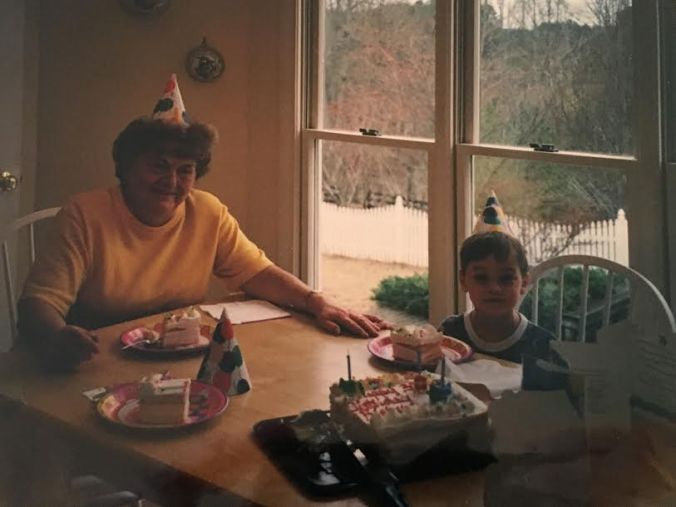
Grandma and me eating birthday cake. I don’t know if it’s my birthday or hers, but I’m sure the cake was satisfactory. c. 1998. Georgia.

GrandmaPool

My grandmother on a trip to Florida. c. 2000.

GrandmaMomFlorida

My mother and grandmother together in Florida, c. 2000.

GrandmaGraduation

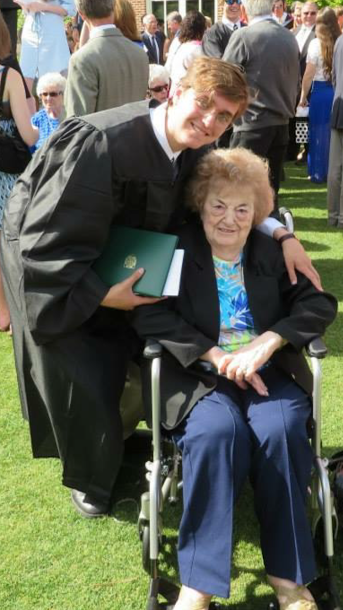
Grandma and me at my high school graduation, May 2013. Peachtree Corners, Georgia.


Four Years a Catholic

Sacred_Heart_1770

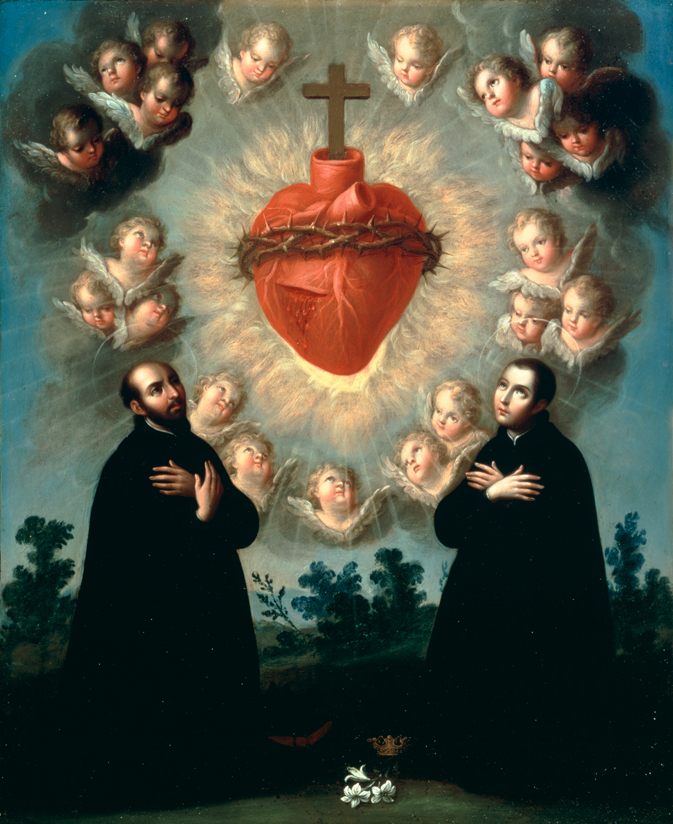
Sacred Heart of Jesus with Saint Ignatius of Loyola and Saint Louis Gonzaga, by Jose de Paez, Mexico, c. 1770

Four years ago today, I was received into the Roman Catholic Church. It’s been quite a journey since. I have often stumbled, often tarried, often limped along the way. My early zeal has often shattered under the pressure of my own bad habits and the various little demons of life. My idealism has been shaken by failures – my own and those of others. My faith has been sorely tested by this pontificate.

But I would never go back. There have been so many blessings and graces given to me over the course of my sacramental life that to abandon ship would be nothing less than the crassest betrayal. I have grown in spite of myself. I must express my gratitude to all those friends, in Heaven and earth, who have helped me along the way. Through the caked and crusted carapace of sin, I can still feel the heart of my faith beating strong. I have hope.

And it is with that hope that I entrust the next year of my life as a Catholic to the most Sacred Heart of Jesus. I had earlier given my second year to Our Lady, the third year to the Holy Spirit, and the fourth to the Holy Name. Now, I think it best to give over all that I may encounter, all that I may do, and all that I may suffer to the Heart which bleeds for me. In doing this, I hope to draw nearer to the God who abides temporally in the Tabernacles of the world and eternally in the Tabernacle of unapproachable light.

Lord, have mercy.
Christ, have mercy.
Lord, have mercy.

Most Sacred Heart of Jesus, Furnace of Charity, Tabernacle of the Most High, Desire of the Everlasting Hills, pray for me.

Gloria Patri, et Filio, et Spiritui Sancto, sicut erat in principio, et nunc, et semper, et in saecula saeculorum.

Amen.

UVA’s Honor Referendum is Undemocratic

rotunda1

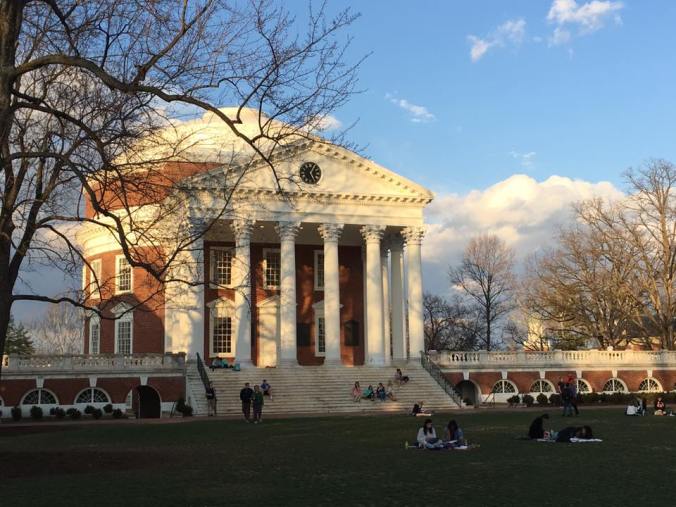
I took this photo of the Rotunda on Feb. 12 of this year, shortly before sunset.

What follows is an oped submited to the Cavalier Daily several days ago. As the newspaper has yet to publish it, and the polls open tomorrow, I feel a need to make it available through my own channels instead. If the piece is printed later, I will link to that here.  

Another election season has come, and with it, another Honor referendum. Instead of directly considering the question of the sanctioning system, Nathan Gonzalez and VJ Jenkins propose that we lower the threshold for Honor constitutional amendments from supermajority (60%) to qualified majority (55%). This isn’t necessarily an unreasonable idea. As Gonzalez and Jenkins rightly note, the Honor system should be responsive to the will of the student body.

Nevertheless, the proposal as it stands is unacceptable. Gonzalez and Jenkins elide the fact that the 60% mark is not the only threshold that checks the rate of change in Honor. As the Honor Constitution currently stands, at least 10% of the eligible student body must participate in the vote. That means that under the current system, 6% of the entire eligible student body can pass a binding amendment on Honor’s constitution.

The proposed change to the system would do nothing to alter this participation threshold. It would be deeply imprudent to pass it without first ensuring a much wider field of participation. This measure would in fact enable an even smaller coterie of students to make permanent changes to the system; titling it a “Democratization” amendment is a feat of mental gymnastics.

While Gonzalez and Jenkins display a real concern for the participation of minority voices in the processes that shape honor, their admirable efforts are misplaced. The focus for Honor going forward should be widening participation in voting efforts, not breaking down prudent limits that bolster the system. UBE reports that in the elections of Spring 2015, a total of 4,290 students voted in the controversial third referendum item dealing with the implementation of a multi-sanction system. Of those students, only 18.82 % of the entire student body, a mere 2,196 voted for the measure. Perhaps enough to carry the day, but in a student body of 22,800, hardly a mandate. The other referenda that year saw similar numbers and percentages. Numbers from last year’s election are better, but still dismal. Only 34.25% of the eligible student body voted on the Honor referendum (7553 out of 22,047). Within that group, 4,447 voted for Option 2, the multi-sanction measure. That’s only 20.17% of the entire University’s student body.

Under the provisions of the new amendment, not even these pitiful numbers would be necessary to enact far-reaching change to the Honor system. If the system is truly a community of trust for all, the ethical foundation of our life in common, it shouldn’t be changed hastily. The system has been responsive to student will in the past, particularly in the recent implementation of the Informed Retraction. But to lower the vote threshold without increasing the participation requirement makes the system less democratic, not more so.

Other problems with the proposal have already been identified by Olivier Weiss, who notes that the measure is a stalking horse for the failed multi-sanction proposals of the past. He argues persuasively that “The Honor Constitution should not have its permanent requirements for change diluted in the pursuit of a specific agenda.” And the Honor Committee has helpfully pointed out that, while Gonzalez and Jenkins invoke the simple-majority amendment process of 34 states, that comparison is deeply misleading. So, too, is their disingenuous representation of the Honor Committee as “entrenched” and “stubbornly resistant to change.” Any cursory glance at the recent news out of the Honor Committee would show that both the Honor Audit Commission and the IR Working Group are busily scrutinizing existing Honor institutions in light of recent elections. Jenkins, at least, is well aware of both of these initiatives, yet chooses to ignore them in his open letter. Moreover, Jenkins and Gonzalez assume that any opposition to their proposal (and implicitly to multi-sanction) is based on “elitism…traditionalism,” and racism. Never mind the abundant reasons offered by several competent writers over the years that have nothing to do with any of those nefarious -isms. It is difficult to understate the irresponsibility of this casual, needlessly divisive accusation and its impact on our collective discourse.

Regardless, the option should fail based on its own meritsor lack thereof. It doesn’t provide for the kind of smart oversight which should accompany any shift to the system. It makes the system less democratic, not more, by enabling fewer people to enact long-lasting change. And it’s built on false narratives about the history of Honor. The only reasonable option is to vote no.

First Post

cistercian-abbey-bolshevi-007

A new year always brings changes. New prospects, new challenges. This year, I’ve decided to take the plunge and start a blog. I had held off for several reasons. First, I’m still an undergraduate. I felt for a very long time that any kind of blog would be inevitably uninteresting, given my relative lack of life experience and knowledge of the world. Secondly, I was apprehensive about committing myself to any particular opinions in print. I know what it is to change one’s mind, and for that change to be nothing short of radical. I felt that if I put my thoughts down for all to see, I might be pigeon-holed later on. It seemed like a limit for my future freedom. Then, I knew what petty squabbling the blogosphere (particularly the religious corner of it) can produce, and I didn’t want to get bogged down in that sort of thing. Finally, there was the simple question of what I would blog about. A personal blog seemed too narcissistic, an art blog seemed too narrow, and a religious blog seemed to run the risk of devolving into the kind of preachy mess that characterizes so much of what’s produced online.

But, urged by some close companions over the last few months, I came to realize that many of my fears were disproportionate to the potential benefits a blog might offer. After all, I’ve had plenty of friends about my age who write blogs that are worth reading. I decided to mix all of the above topics into a distilled personal view of life, art, pop culture, religion, and more. I hope that I can entertain and, perhaps, enlighten. But mostly I just want to have a little fun.

A word about the blog title: I’m descended from Pennsylvania’s Amish community, including the first Amish bishop in America. But I converted to Catholicism a few years ago, and intend to make the study of Catholic theology my life’s work. I came up with the phrase “Amish Catholic” a few years ago in jest, and thought it might work for precisely this kind of publication. We’ll see.