I have, by the merciful grace of God, passed my M.Phil in Theology at Oxford. I could not have done so without the abundant help of my supervisors and tutors, principally Dr. Sarah Apetrei, as well as the many friends and family who supported me throughout the course of my studies there. Latterly this endeavor has caused me to neglect my blogging, for which I must beg pardon of my readers. Editing, submissions, an examination, travelling, and the arduous business of moving back across the Atlantic has distracted me. So has the bittersweet task of saying goodbye to so many friends, men and women I will miss in the years to come.
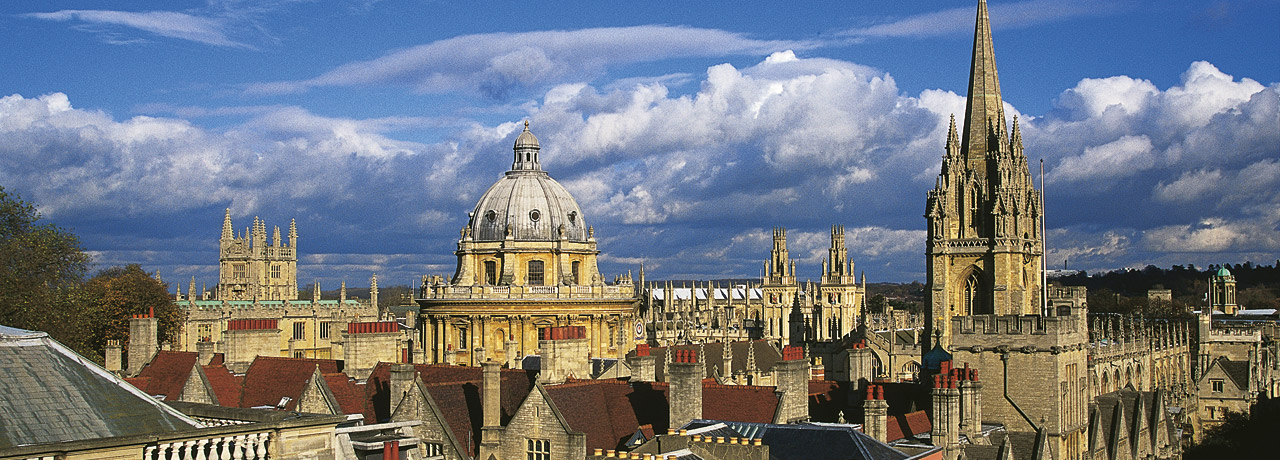
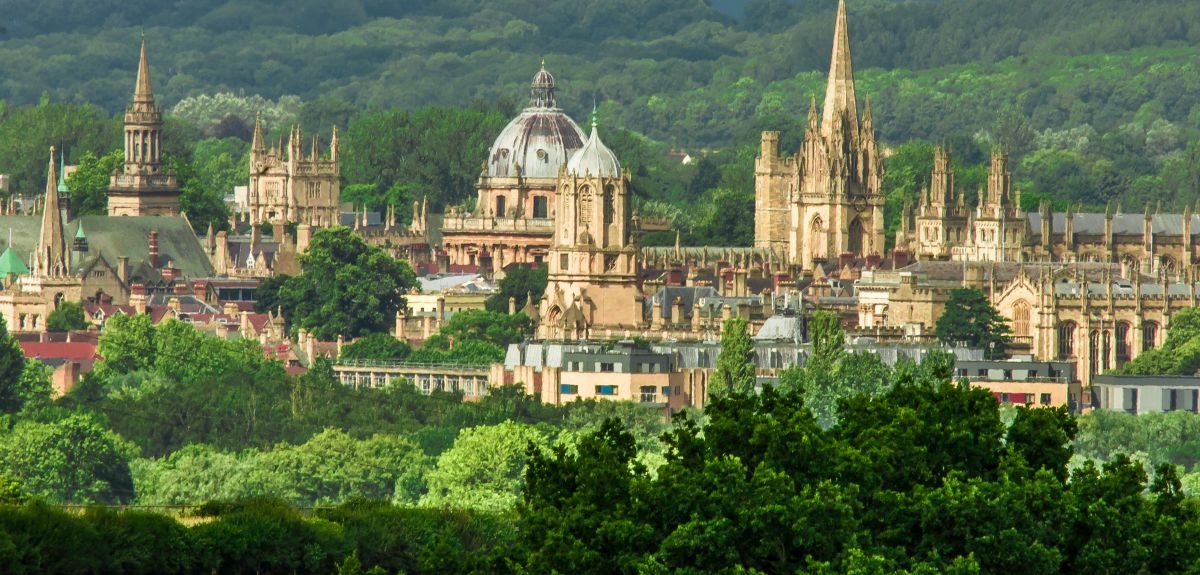
Oxford is most beautiful in the Spring. Photo taken by author.
I can understand why our soon-to-be-Saint Newman had so much trouble getting Oxford out of his blood. The place is a mirage in silver and stone. To have dwelt in such a dream-city for so long a time, to have been part of its inner life, to have shaped it according to one’s own character and to be shaped by it in turn, to watch the sun and the rain succeed in their seasons over streets imbued everywhere with a boundless sense of eternity…yes, I can see why Newman was always looking for a path back to this northern Eden. A Papal angel kept him from the gate. More prosaic barriers have turned me aside, namely, the prospects of an academic career in America.
But, in some way, the greater grief is leaving the United Kingdom. Shakespeare called Albion a swan’s nest in a stream. Having traveled from London to Birmingham, from Cardiff to York, from Tenby to Bournemouth, from Cambridge to Edinburgh, from Bath to Stratford, from Walsingham to Wakefield, in short, across the whole face of this country, I can start to see what he means. Britain possesses a peculiar beauty in grey-green and gold, something delicate and immortal that only reveals itself to an attentive foreigner. I shall miss it.
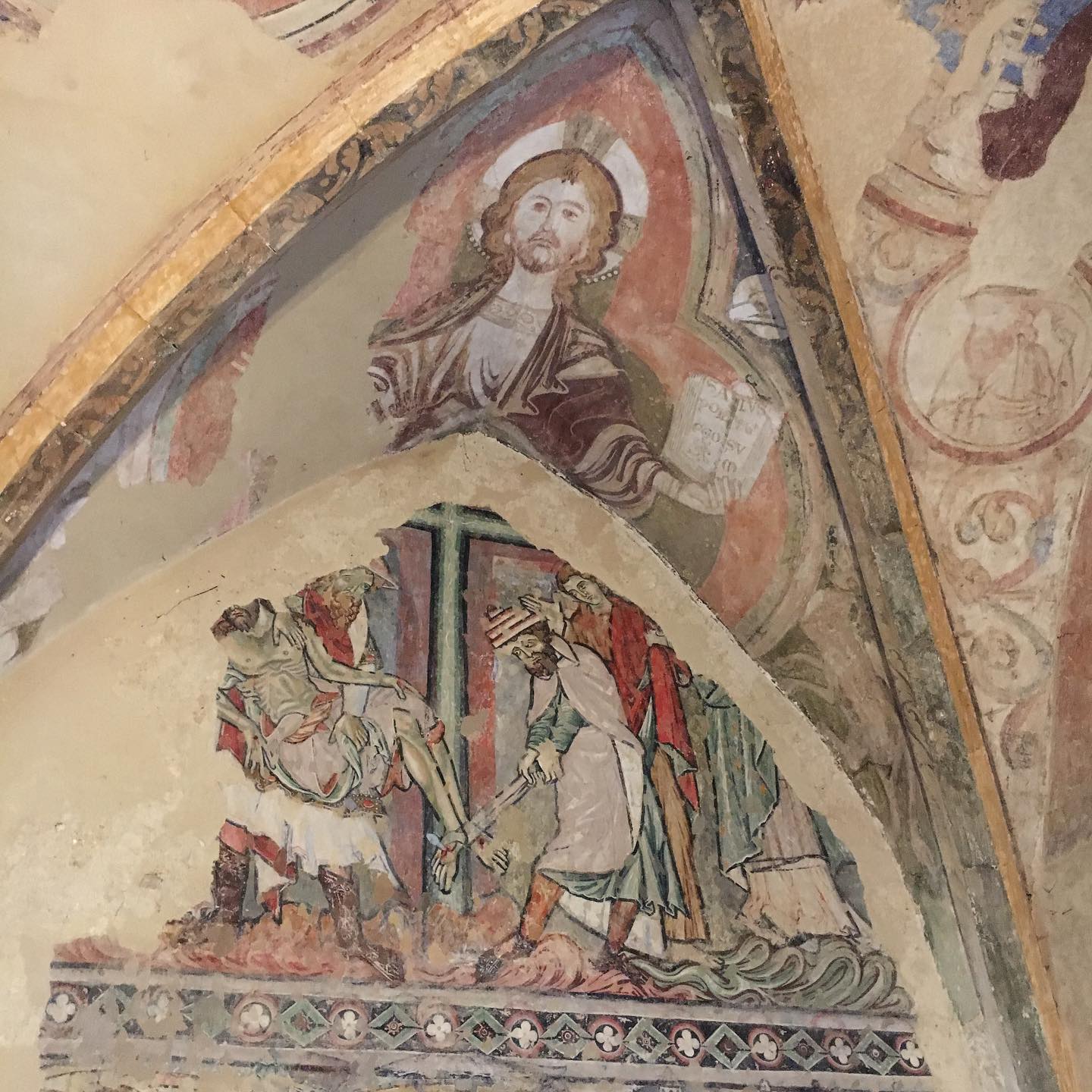
The St. Sepulchre Chapel, Winchester Cathedral. Photo taken by author.
More than that, I’ll miss the many friends I made in my two years abroad. Not just English either, though there were plenty of those – but also Canadians, Russians, Australians, Irish (both orange and green), French, Armenians, Italians, Romanians, Scots, Sri Lankans, Welsh, Poles, Chinese, and even some of my fellow countrymen. The story of my time in Oxford would not be complete without them. I will feel the absence of each, some more keenly than others.
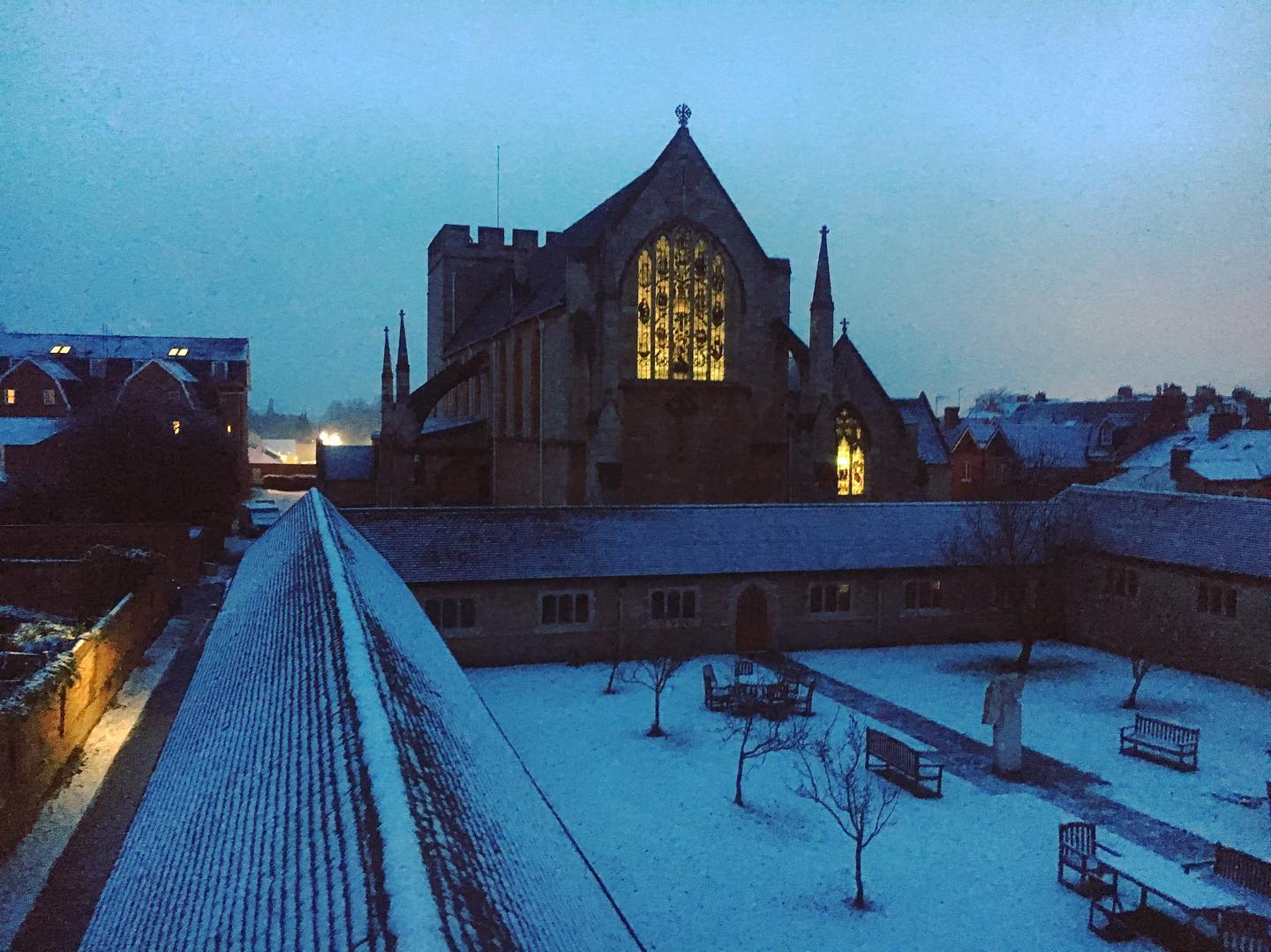
St. Stephen’s House in the snow, January 2019. Photo taken by author.
I suppose this is as good a time as ever to take stock of some of my travels through life at large. I am 24 years old. I have visited 12 countries beyond the borders of the United States:
The United Kingdom France Ireland Belgium The Netherlands Italy Austria The Czech Republic Hungary Romania Bermuda Vatican City
And 14 if one includes layovers and train connections in Germany and Switzerland. I have stood at the banks of the following rivers:
The Thames in London The Thames in Oxford (Isis) The Thame in Dorchester (before it becomes the Thames) The Cherwell The Liffey The Seine The Amstel The Arno The Rhône The Saône The Tiber The Danube The Lys The Usk The Avon in Bath The Loire The Cam
I have spent quite a lot of time in churches. A few favorites in England include the Oxford Oratory, the York Oratory, the Birmingham Oratory, Magdalen College Chapel, Worcester College Chapel, Oriel College Chapel, Merton College Chapel, St. Stephen’s House Chapel, St. Etheldreda’s, Holborn, and the Anglican Shrine of Our Lady of Walsingham. My single favorite church in England remains the Brompton Oratory, as it has been since that first June day I stepped into its vast and holy darkness, four years ago.
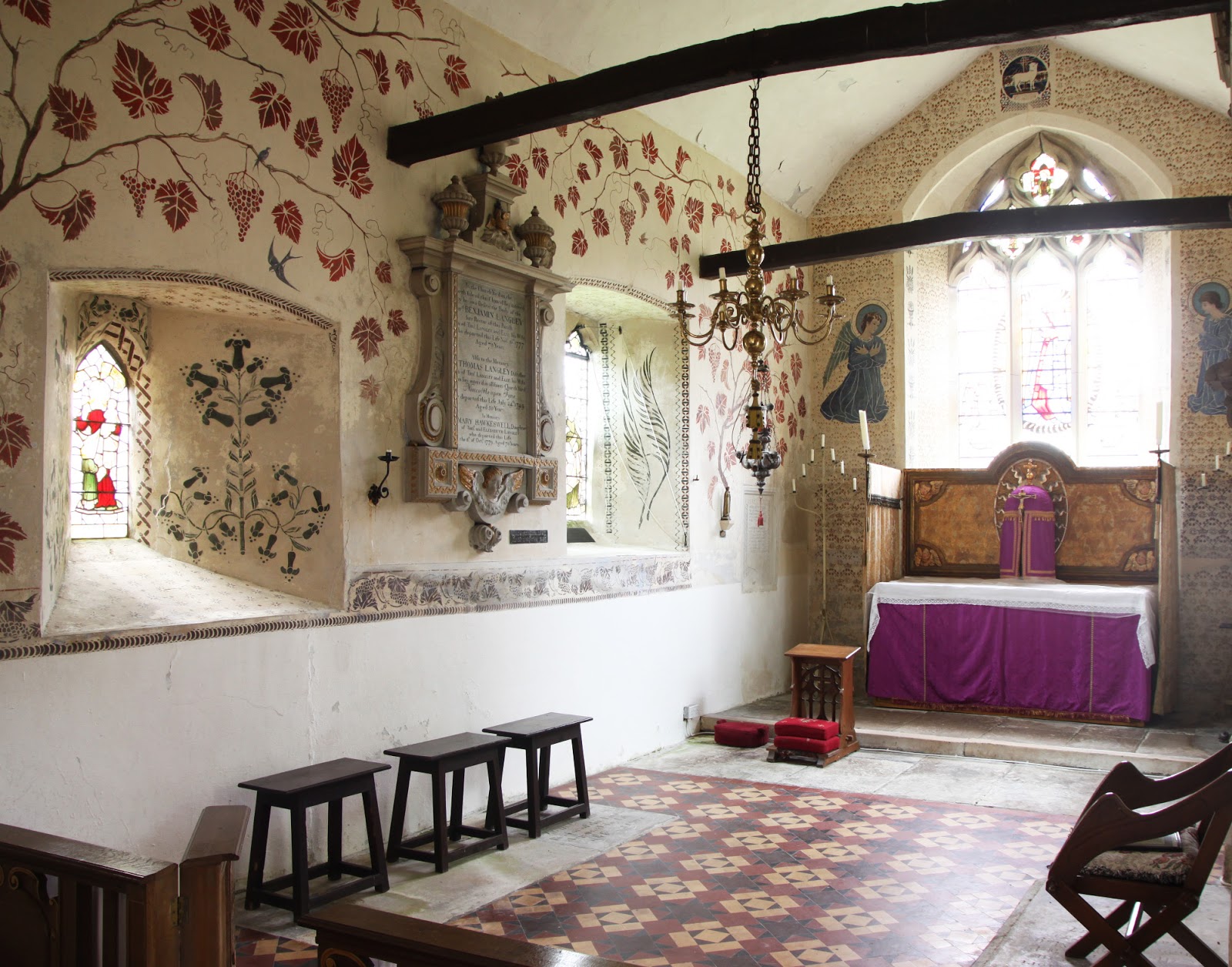
A favorite country church – St. Swithun’s, Compton Beauchamp. Full of delightfully ironic Georgian monuments and a complete refurbishment by Martin Travers in the 1930s. The setting is beautiful, too. (Source)
I have so far managed to get to the following Cathedrals (and Abbeys) in England, of which the first two are my favourites:
Winchester Cathedral Gloucester Cathedral Norwich Cathedral Oxford Cathedral St. Paul’s Cathedral York Minster Wakefield Cathedral Salisbury Cathedral St. Giles’s, Edinburgh Westminster Cathedral Westminster Abbey Bath Abbey Malmesbury Abbey
Plus some lovely country churches – East Coker, Burford, Stow-on-the-Wold, Binsey, and my very favorite, St. Swithun’s, Compton Beauchamp.
In Ireland, Silverstream Priory remains the most spiritually nourishing place I have ever been; its beauty and its holiness are always palpable.
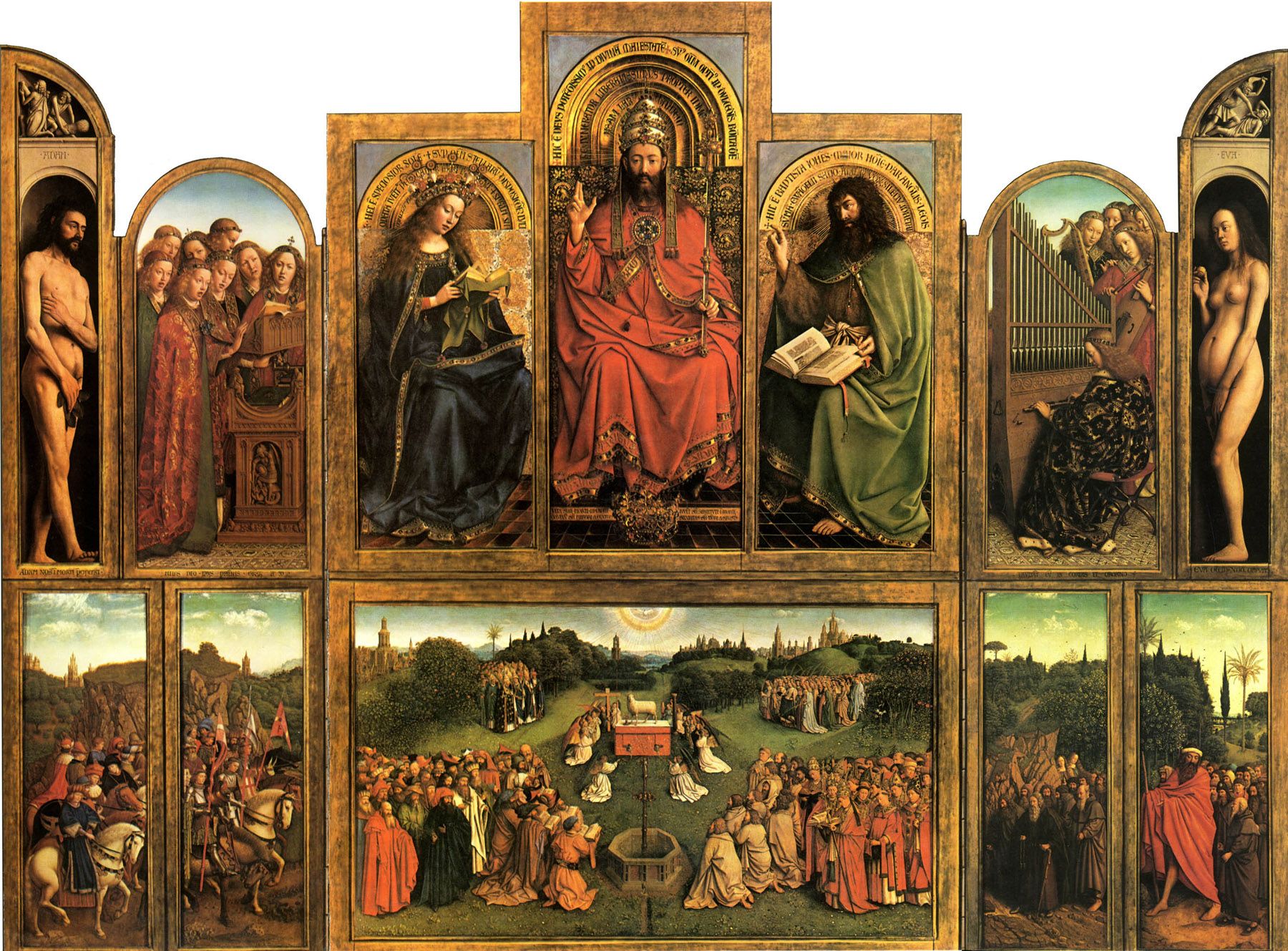
The Ghent Altarpiece. Seeing this for the first time last February in Saint Bavo’s Cathedral was one of the best moments of my two years abroad. (Source)
My travels on the Continent have been full of their own various ecclesiastical delights, so I’ll only mention a few highlights. My favorite cathedral in the world is St. Bavo’s, Ghent, which represents the perfect fusion of Gothic, Baroque, Rococo, and 19th Century styles. In France, the Chapel of the Miraculous Medal in the Rue du Bac, Saint-Étienne-du-Mont, Lyon Cathedral, Notre-Dame de Fourvière, and Saint-Just in Lyon are a few holy places I will not easily forget. Recently, I visited De Krijtberg in Amsterdam, which is the best example of painted Neo-Gothic I have seen beyond the Sainte-Chapelle. Italy is too full of wonderful churches to count, as are the old Hapsburg lands. If I were to choose a favorite in each, I suppose I would have to list the Chiesa Nuova (St. Philip Neri’s home and final resting place) in Italy, as well as Stift Heiligenkreuz in Austria, the Matthias Church in Hungary, and St. Vitus Cathedral in the Czech Republic. Though, to be fair, I visited several of these a few years ago rather than on this late sojourn in Europe.
The cloisters, Gloucester Cathedral. America’s greatest fault probably lies in having no Medieval structures in situ. Photo taken by author.
I list these travels not out of any boasting, and, perhaps, not even for my readers. If anything, I do it for myself. I am more interested in remembering these places; writing about them has given me occasion to reminisce, to try and recapture something of the pleasure they gave me once.
I have been very blessed in life. I praise the Good Lord for allowing me the chance to see a bit of the world, to have done useful work, to have read interesting books, to have seen beautiful things, to have drank some good wine, and to have known such wonderful people. What more can one ask for in this brief life?
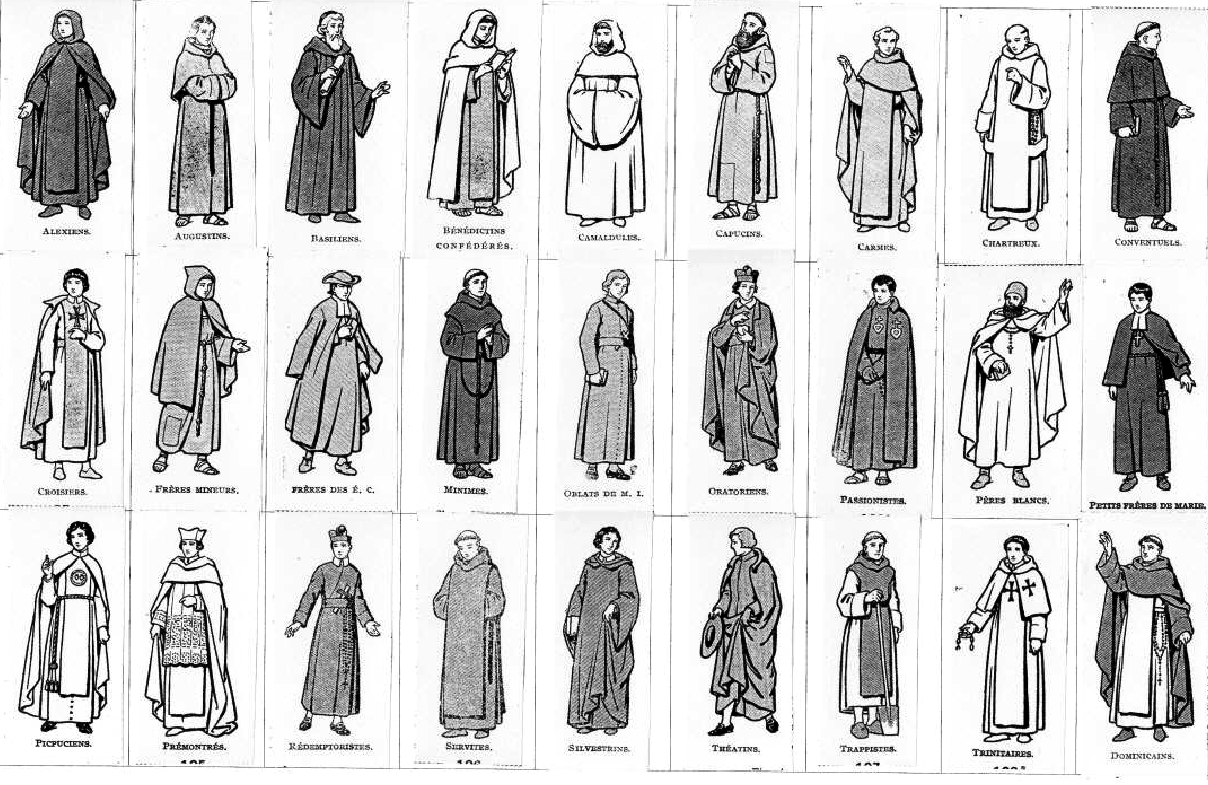
As my readers will no doubt be aware, most religious orders have a motto that encapsulates their particular charism. However, many of these are a bit tired and could use with some updating. Here are my proposals:
Benedictines: Prayer, Work, Monk-eying Around
Jesuits: Up to Something
Dominicans: Sed Contra
Franciscans: Need a Bath
Lazarists: Nolite Me Tangere o Pauperes
Carthusians: ——-
Carmelites: Better Than You
Oratorians: O Happy Flowers!
Trappists: Beer, Cheese, Keeping Death Daily Before One’s Eyes
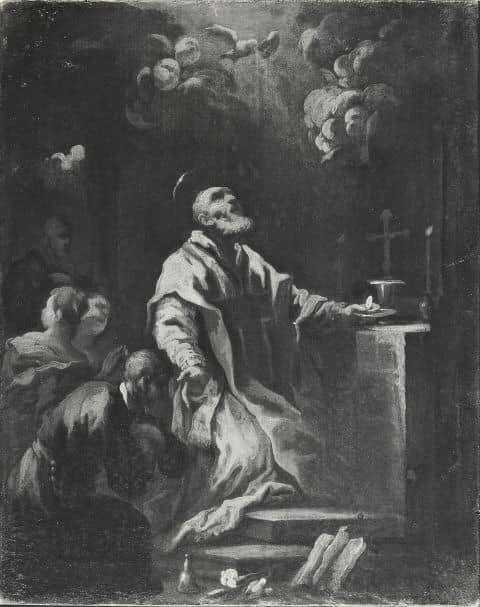
The Vision of St. Philip Neri, Giovanni Camillo Sagrestani (Source)
“Behold the tabernacle of God with men, and he will dwell with them. And they shall be his people; and God himself with them shall be their God.” – Revelation 21:3
St. Philip’s feast always falls within that sunny period of the Church’s year when, passing from Easter to Ascensiontide and following on to Pentecost and Corpus Christi, we find our days running over with the majesty of these great mysteries. The days grow longer, and so they seem to grow more golden with the ever-descending light of the Holy Ghost. We are in a season of peculiar glory. The culminating lesson of these mysteries is clear: God has made his dwelling among men, and in the midst of His people shall He reign.
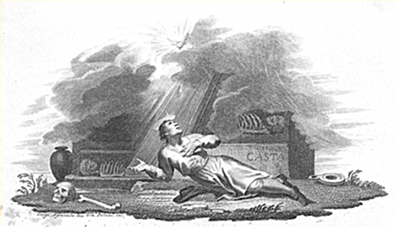
St. Philip receives the Holy Ghost while at prayer in the catacombs. (Source)
St. Philip knew this truth well. His whole life could well be described as a journey between Pentecost and Corpus Christi, the two feasts that most clearly teach us of God’s enduring presence in His Church. It was on the Vigil of Pentecost, 1544, that St. Philip received the grace that would define his vocation and the character of his sanctity. While praying in the catacombs of San Sebastiano, the Holy Ghost descended into St. Philip’s heart visibly and sensibly in the form of a ball of fire. This experience, which provided as much heat and pain as rapturous joy, marked the true beginning of St. Philip’s active ministry. In St. Philip, the Holy Ghost once again made His dwelling among men.
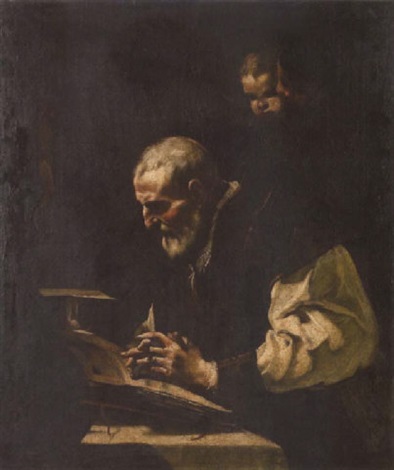
St. Philip Neri Receiving the Holy Spirit in the Catacombs of St. Sebastian, Francesco Solimena (Source)
From then on, St. Philip’s whole life would be marked by a singular union with the Holy Ghost. He became the “tabernacle of the Most High” and a living fountain of graces. His many miracles testify to the indwelling of the Spirit within him. So does his manifest oddity, his clear and salutary estrangement from the ways and works of ordinary men. The prophet writes, “For my thoughts are not your thoughts: nor your ways my ways, saith the Lord.” So does the Holy Ghost speak from the heart of St. Philip. For this reason, the Church applies the words of St. Paul to the new Apostle of Rome:
The love of God has been poured into our hearts through the Spirit of God dwelling within us
Introit for the Feast of St. Philip Neri
St. Philip’s priestly life was marked by the overwhelming presence of God. Everything about him spoke to the present reality of the supernatural. This reality took two chief forms. The most famous were the astounding miracles wrought by St. Philip – most notably the raising of Prince Paolo Massimo from the dead. But there was also St. Philip’s profound adoration of the Eucharist. His popularization of the Forty Hours’ Devotion was but the visible extension of his love of the Blessed Sacrament. So too were the Eucharistic ecstasies to which he was increasingly susceptible as he became older. St. Philip knew no sweeter hours than those that he spent at Mass as an old man, kneeling in darkness before the altar, lost in the rarefied heights of a contemplation we can barely begin to fathom.
Engraving of St. Philip Neri, Hieronymus Frezza (Source)
In recalling the holiness of Saint Philip, it occurs to me that it was essentially this: he was all priest. He was always and everywhere a priest. His priesthood suffused his very being, making him incandescent with the fire of the Cross and of the altar.
Vultus Christi
St. Philip’s extraordinary endowment with the Spirit was ordered towards his life as a priest – namely, towards the glory of God in the Eucharist. This is the case with all of us. The Spirit, God in us, is given precisely for us to receive the Eucharist, God with us. Confirmation, like all the other sacraments, exists with the Eucharist as its proper telos.
The Mass of St. Philip Neri, Circle of Giovanni Battista Piazzetta (Source)
How fitting, then, that St. Philip should pass into eternal life when he did. May the 25th, 1595, was the feast of Corpus Christi. As Fr. Faber has it,
Day set on Rome! its golden morn Had seen the world’s Creator borne Around St. Peter’s square Trembling and weeping all the way, God’s Vicar with his God that day Made pageant brave and rare!
“St. Philip’s Death,” F.W. Faber
Providence often grants the saints a Christ-like death. It is a sign that, even in suffering and death, God is still dwelling with us. St. Benedict died in choro during a liturgy, just as Christ died in the fulfillment of His high priesthood. Many martyrdoms were accompanied by strange signs and mystical evocations of the Sacrifice of Christ. It should be no surprise that God would take St. Philip in a similarly edifying manner.
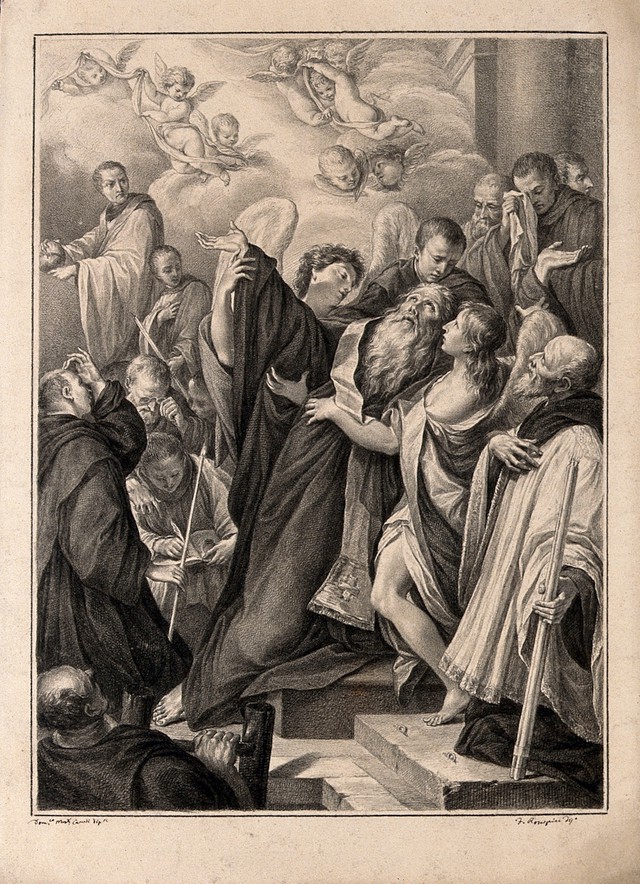
The Death of St. Benedict, F. Rosaspina, 1830, after D.M. Canuti. (Source)
In his death, St. Philip reminds us that we are all meant to imitate Christ in His Sacrifice, that is, in the Blessed Sacrament. There is no more perfect pedagogue in the life of the Spirit than the Son, who has presented Himself to us on all the altars of the world. Would that we might take this lesson to heart!
St. Philip died when he did because, by a singular grace of Providence, God was pleased to mark His servant’s passing with the Church’s celebration of the Most Holy Sacrament of the Altar. Just as St. Philip honored the Eucharistic God in his life, so did the Eucharistic God honor him in his death.
We, too, can honor the saint best by cleaving to the Lord. St. Philip’s words to a spiritual daughter are as true today as they once were:
“Let us concentrate ourselves so completely in the divine love, and enter so far into the living fountain of wisdom, through the wounded Side of our Incarnate God, that we may deny ourselves and our self-love, and so be unable to find our way out of that Wound again.”
St. Philip Neri
God dwells with us just as He once dwelt in the blessed heart of St. Philip. He comes to us just as He came once to the priestly hands of St. Philip. Let us abide in Him, just as St. Philip did once and does forevermore in the heights of Heaven.
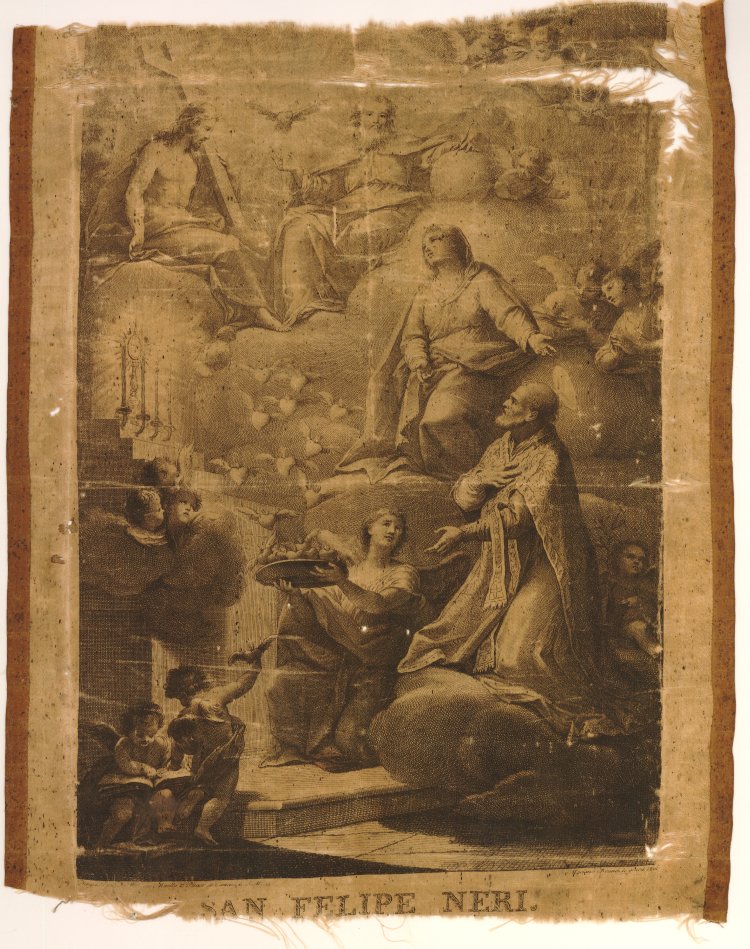
Votive image of St. Philip Neri from the British Museum. As they have it: “St Philip Neri kneeling on a cloud in front of altar; angel to right holding tray with burning hearts and ascending towards Holy Trinity; Virgin Mary mediating surrounded by angels, after Maella. 1801 Engraving, printed on silk.” Note the Eucharist enthroned in a monstrance. (Source)
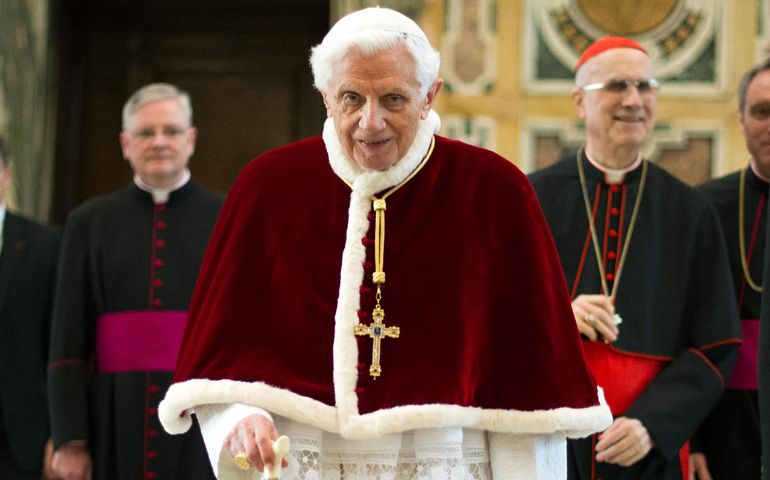
The Pope-Emeritus’s letter was a deeply unhelpful document on the whole. (Source)
In the ongoing sexual abuse crisis that has wracked the Roman Catholic Church, it is helpful to remember that the evil transpires on both spiritual and historical planes. That is to say, we can productively speak of sexual abuse as a spiritual attack upon the Church’s absolute purity, a purity she receives from Christ, her spouse and head. The violations committed by priests and religious is a stain upon that purity but nevertheless leaves the fundamental holiness of the Church intact. And this because the Church has no holiness that is not primarily the holiness of Jesus. All that is good in her flows from Him.
However, we can maintain this truth while simultaneously recognizing deep underlying structural problems in the Church’s culture and modus operandi. The holiness of the Church comes from above, not below; in the course of human history, we have often seen great evils nurtured within the very breast of the Church as a human institution. The sex abuse crisis is one such horror. Only a realistic attitude can bring us the reform that we so desperately need.
It’s because of this that I was disappointed to read Benedict XVI’s recent letter on the subject. There are certain passages that show the Pope-Emeritus’s continuing theological acumen. He writes movingly about the primacy of Faith, especially Faith in the Blessed Sacrament, as a foundational principle of renewal in our time. He also calls for a deeper ecclesial sensibility among the faithful. Catholics should meditate on these passages, which have a good deal of insight and even consoling power. His words on martyrdom are particularly profound and poignant, given his own impending mortality.
However, as a response to the egregious crimes committed by priests and other clerical personnel against innocents, the document represents a major failure.
This letter is a turgid, historically specious bit of sleight of hand. In treating the abuse crisis as a problem of laxity in moral teaching, the Pope turns sex abuse into a theological problem. He is closer to the heart of things when he discusses the evolution of the disciplinary measures in Canon Law and the various difficulties thrown up by legal “reforms” in the middle of the century. However, he also dissolves the very real psychological and social factors that permitted a culture of tolerance for pedophilia within the church to flourish for so long. Ratzinger writes, “Why did pedophilia reach such proportions? Ultimately, the reason is the absence of God.” This is, strictly speaking, a spiritual truth. Had the Pope-Emeritus treated this as a statement about the souls of the pedophiles, for whom God must be in some way ultimately unreal, the statement would be entirely defensible. However, Ratzinger is speaking historically. He immediately seems to attribute to the spread of pedophilia to secularization in Europe.
After the upheaval of the Second World War, we in Germany had still expressly placed our Constitution under the responsibility to God as a guiding principle. Half a century later, it was no longer possible to include responsibility to God as a guiding principle in the European constitution. God is regarded as the party concern of a small group and can no longer stand as the guiding principle for the community as a whole.
Joseph Ratzinger
The problem is relativism – namely, secular relativism as an other, as something outside the life of the Church. We read, “The long-prepared and ongoing process of dissolution of the Christian concept of morality was…marked by an unprecedented radicalism in the 1960s.” According to the Pope, “Part of the physiognomy of the Revolution of ‘68 was that pedophilia was then also diagnosed as allowed and appropriate…It was theorized only a short time ago as quite legitimate, but it has spread further and further.” He takes the cause of recent pedophilia, and thus of the scandals within the Church, to be the sexual revolution.
But apart from Gayle Rubin, the filmmakers who got Jodie Foster and Brooke Shields naked, and the perverts at NAMBLA, who exactly were the people trying to normalize pedophilia? C.C. Pecknold suggests it might be those activists in favor of “abolishing age-of-consent laws since the 1970s.” Possibly. At any rate, the Pope provides neither names nor sources. It’s a serious enough claim that he owes us that courtesy. To what extent were these efforts merely marginal phenomena? He seems to take them as a synecdoche of the broader movement, however implausibly.
By appealing to an established right-wing boogeyman (sixties revolutionaries), he dissolves the problem into a theological haze. He makes no mention of the complex psychological reasons for abuse, simply posits that relativism leads to sexual license. Nor does he prove any causes to tie together his case studies. He just asserts that various phenomena are connected without supplying proof. Given the genre of the piece, perhaps this brevity is to be expected. But is this schema really representative of Ratzinger’s mentality as he handled sex abuse cases in his tenure as head of the CDF and, later, as Pope? If so, no wonder things were so long mismanaged and so often minimized. Sex abuse is not a matter of which moral theologians you’re reading, and to treat it as such is profoundly irresponsible.
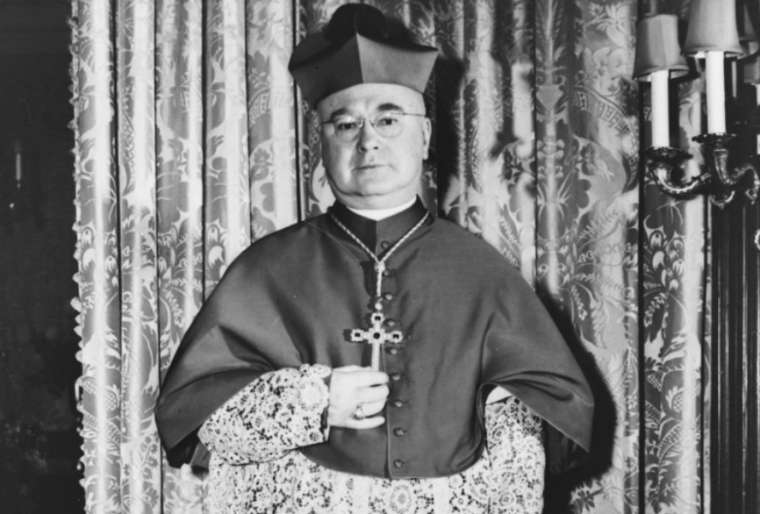
Francis Cardinal Spellman of New York, a voracious, predatory, and hypocritical homosexual who fostered a culture of abuse in his diocese in the 1950’s. Reports of him groping a West Point cadet during an interview have recently emerged. (Source)
The fact that Francis asked Benedict to prepare this statement suggests to me that it represents an attempt by both Popes to shoot the elephant (and scapegoat) in the room, namely, the homosexuality of the clergy. This phenomenon has become the cause célèbre of conservative and traditional Catholics trying to understand the sex abuse crisis. It has also been recently highlighted in a largely credible if somewhat sensationalist way by the gay activist Frédéric Martel, whose book on clerical homosexuality Catholics should read (if with a grain of salt). Too sharp a focus on homosexuality (a) doesn’t actually solve the problem of clerical sex abuse and (b) is too dangerous for all ideological camps (no pun intended) within the clerical establishment. Ratzinger’s letter here shifts the focus away from that particular systemic and more or less quantifiable phenomenon and onto an amorphous if politically-charged abstract. While I can’t be sure, the missive seems to be designed to influence Ratzinger’s own partisans and lead them away from the gay issue.
After all, the one narrative that Ratzinger doesn’t tell us is the one most favored by conservatives. Namely, as Pecknold puts it, “by the late 1980s the homosexual hierarchies that ruled now were descending, with greater frequency, into pedophilia.” But this is not what the Pope writes. In a passage worth quoting at length, Ratzinger tells us,
In various seminaries homosexual cliques were established, which acted more or less openly and significantly changed the climate in the seminaries. In one seminary in southern Germany, candidates for the priesthood and candidates for the lay ministry of the pastoral specialist [Pastoralreferent] lived together. At the common meals, seminarians and pastoral specialists ate together, the married among the laymen sometimes accompanied by their wives and children, and on occasion by their girlfriends. The climate in this seminary could not provide support for preparation to the priestly vocation. The Holy See knew of such problems, without being informed precisely. As a first step, an Apostolic Visitation was arranged of seminaries in the United States. As the criteria for the selection and appointment of bishops had also been changed after the Second Vatican Council, the relationship of bishops to their seminaries was very different, too. Above all, a criterion for the appointment of new bishops was now their “conciliarity,” which of course could be understood to mean rather different things. Indeed, in many parts of the Church, conciliar attitudes were understood to mean having a critical or negative attitude towards the hitherto existing tradition, which was now to be replaced by a new, radically open relationship with the world. One bishop, who had previously been seminary rector, had arranged for the seminarians to be shown pornographic films, allegedly with the intention of thus making them resistant to behavior contrary to the faith. There were — not only in the United States of America — individual bishops who rejected the Catholic tradition as a whole and sought to bring about a kind of new, modern “Catholicity” in their dioceses. Perhaps it is worth mentioning that in not a few seminaries, students caught reading my books were considered unsuitable for the priesthood. My books were hidden away, like bad literature, and only read under the desk. The Visitation that now took place brought no new insights, apparently because various powers had joined forces to conceal the true situation. A second Visitation was ordered and brought considerably more insights, but on the whole failed to achieve any outcomes. Nonetheless, since the 1970s the situation in seminaries has generally improved. And yet, only isolated cases of a new strengthening of priestly vocations came about as the overall situation had taken a different turn.
Joseph Ratzinger
That first line is the only explicit reference to homosexuality in the entire letter. In his his forceful First Things follow-up, Archbishop Chaput confirms this point:
He remains silent on what many see as the continuing resistance of Rome to candidly name the core issue of the clergy abuse problem, which is not primarily a matter of clerical privilege but rather a pattern of predatory homosexuality.
Archbishop Charles Chaput
Ratzinger is quick to move from the various gay circles among the seminarians of yesteryear to the presence of women in seminaries, and then on to theological liberalism in general. This is not the argument, put forward by so many, that homosexuality in the priesthood leads to sex abuse. It’s a broader case, one that sees homosexuality as only one part in a constellation of radicalism.
And it’s a radicalism that emphatically has its origins outside of the Church. Archbishop Chaput builds on Benedict, writing,
But priests and bishops have no miraculous immunity to the abnormality bubbling around them. Ratzinger locates the seed of the current crisis in the deliberate turn toward sexual anarchy that marked much of Europe in the 1960s, and the complete failure of Catholic moral theologians to counter it—a failure that more often resembled fellow-traveling.
Archbishop Charles Chaput
This is nothing less than an abdication of moral responsibility. The 1960’s did not produce pedophilia, ephebophilia, or the longstanding culture of omertà among the hierarchy (see the extensive research carried out by, inter alia, Richard Sipe). Indeed, predatory sexuality has been in the Church for a long time. I refer the reader to the cultures created by Cardinal Spellman in New York, Cardinal O’Connell in Boston, and Cardinal Wright in Worcester. The permissiveness in these dioceses was in place before the sexual revolution hit, and in each we see major flare-ups of the child sex abuse crisis. We could look back even further. There were pedophiles in the circle of St. Joseph Calasanz, and he died in 1648!
The cover-up, too, has a long life. As Ulrich Lehner has pointed out, the old practice used to be that religious orders had to destroy any incriminating files every five years; the use of special prisons for clergy and religious only added to the secrecy of the early modern ecclesiastical disciplinary apparatus. All of these points undermine the basic historical narrative Ratzinger tells us – namely, that the sexual revolution and subsequent buckling of Catholic moral theology lead to a simultaneous spread of pedophilia and a complete failure of the ecclesiastical establishment to respond.
One of the less edifying elements in the letter is that Ratzinger took the time to engage in subtle if unmistakeable academic score-settling throughout. Speaking of an ethicist he disagreed with, Ratzinger writes,
I shall never forget how then-leading German moral theologian Franz Böckle, who, having returned to his native Switzerland after his retirement, announced in view of the possible decisions of the encyclical Veritatis splendor that if the encyclical should determine that there were actions which were always and under all circumstances to be classified as evil, he would challenge it with all the resources at his disposal. It was God, the Merciful, that spared him from having to put his resolution into practice; Böckle died on July 8, 1991.
Joseph Ratzinger
Leaving aside the question of whether Böckle was right (and he wasn’t), the slight chuckle with which Benedict describes his death is extraordinarily petty. What a tawdry, sorry, cynical intervention from the ailing pontiff.
The letter fails in its description of the sources of pedophilia and ephebophilia. Yet at least Ratzinger attempts to make a case for why the priesthood has seen such widespread sexualization, with such prominent lapses, over the course of the last few decades. His letter does not, however, address the cover-up at all. If anything, he seems to end the letter on a rather troubling note:
Today, the accusation against God is, above all, about characterizing His Church as entirely bad, and thus dissuading us from it. The idea of a better Church, created by ourselves, is in fact a proposal of the devil, with which he wants to lead us away from the living God, through a deceitful logic by which we are too easily duped. No, even today the Church is not just made up of bad fish and weeds. The Church of God also exists today, and today it is the very instrument through which God saves us.
Joseph Ratzinger
I suppose that, on the spiritual level, the Pope is not wrong here. But it does rather seem to me that he is perhaps too concerned with the reputation of the Church – a holy body, yes, but also one riddled with both sexual predators and the venal men who protect them. In trying to end on a hopeful message, the Pope sounds a false note. He seems to have erased the mysterium iniquitatis. The effect is one of minimization of grave evil rather than a proper and reforming zelus domus Domini.
Yet the most frustrating feature of this letter, beyond its occasional historical errors and indulgence in the petty sparring of academia, is that it feeds into a narrative that conservative Catholics have used for years to exonerate themselves in the sex abuse crisis. That narrative chalks up clerical sex abuse to post-conciliar laxity alongside the sexual revolution. If only, these conservatives and traditionalists say, if only we hadn’t gone off the rails in 1968. Sex abuse becomes the exclusive property of ecclesiastical liberals.
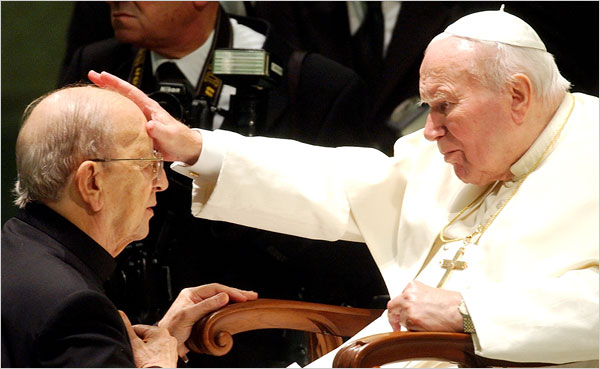
Fr. Marcial Maciel and Pope St. John Paul II, who admired and protected the Mexican sexual predator for years. (Source)
But this is a false narrative. It’s a lie – a half-truth, perhaps, but still a lie – that conceals the suffering of victims prior to that age as well as all those who have suffered abuse at the hands of conservative and traditionalist clergy. Men for whom the Revolution did not transpire. There are many examples of this kind of thing. One only needs to point to Marcial Maciel, Carlos Urrutigoity, Tony Anatrella, Fernando Karadima…the list goes on. None of these men were liberals. Some worked closely with John Paul II and Benedict XVI. Yet the narrative in this letter cheapens the experience of their victims and lulls conservatives and traditionalists into a false sense of self-righteous security – exactly the opposite of what we need if we are ever to get a handle on the problem of clerical sex abuse wherever it should rear its ugly head. It’s a narrative that helps us look the other way as more and more innocents get hurt. And it’s gravely irresponsible for the Pope-Emeritus to propagate this lie.
Richard Crashaw, one of the great Catholic poets of the seventeenth century, is a perennial source of inspiration. His verse preserves a mystical sensibility that is as refreshing today as it was when it was first composed in the Baroque era. This selection, “A Song,” is one of my favorites. I first had to memorize it many years ago in an English class on prayers (at Mr. Jefferson’s famously secular University, no less). I keep returning to it only to find new riches and new consolations. It seems eminently suited to our mid-Lenten moment, when the faithful yearn to see the face of the Resurrected and Glorified Christ.
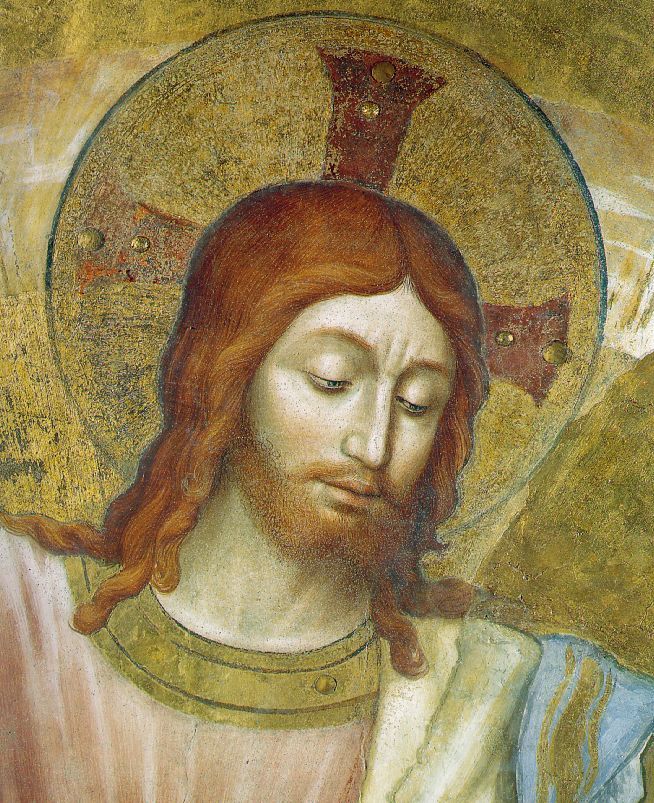
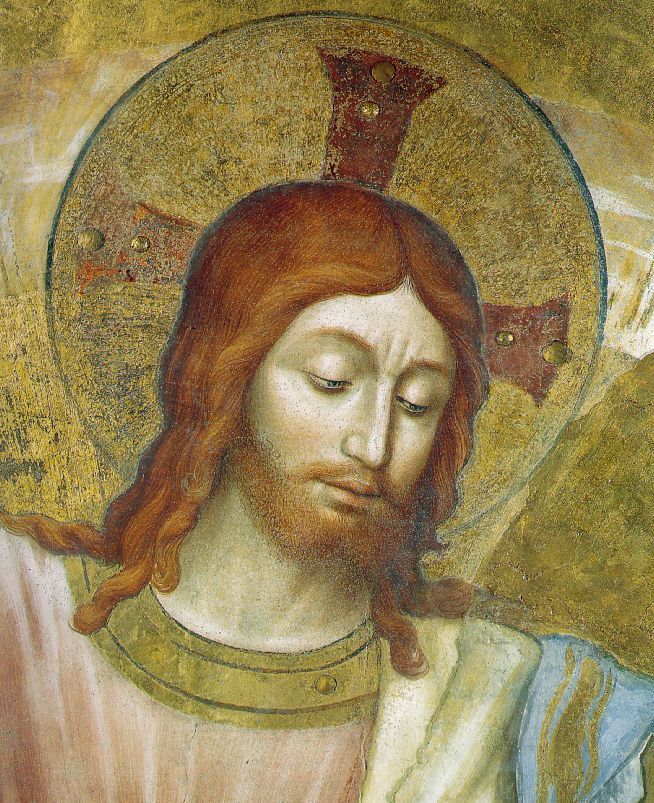
Fra Angelico, Christ the Judge (detail) – (Source)
LORD, when the sense of thy sweet grace Sends up my soul to seek thy face. Thy blessed eyes breed such desire, I dy in love’s delicious Fire.
O love, I am thy Sacrifice. Be still triumphant, blessed eyes. Still shine on me, fair suns! that I Still may behold, though still I dy.
Though still I dy, I live again; Still longing so to be still slain, So gainfull is such losse of breath. I dy even in desire of death.
Still live in me this loving strife Of living Death and dying Life. For while thou sweetly slayest me Dead to my selfe, I live in Thee.
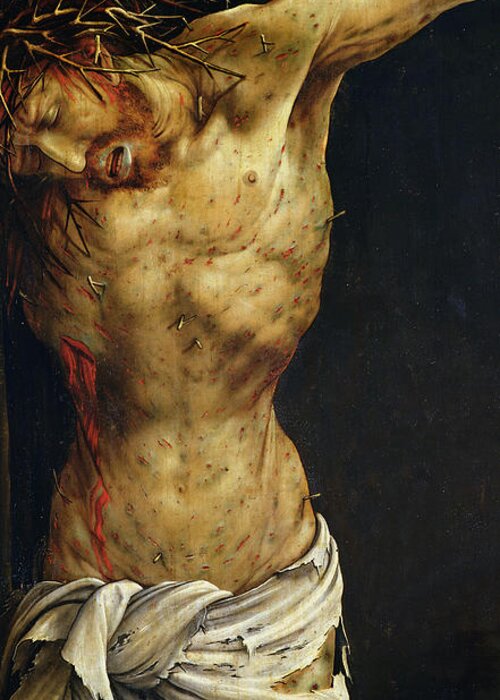
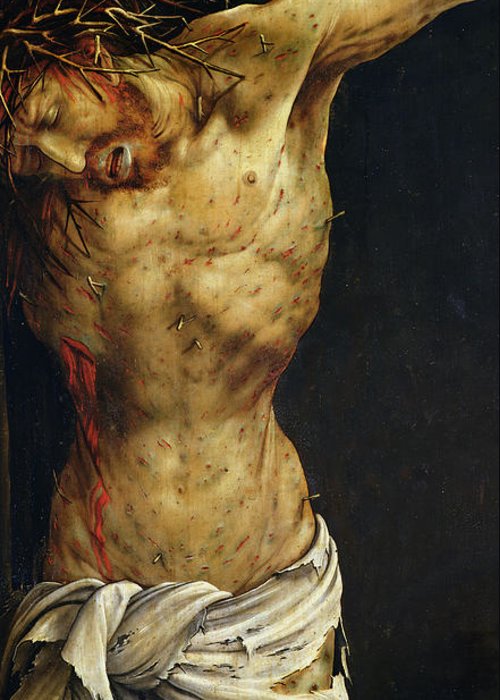
Christ on the Cross, from the Isenheim Altarpiece of Matthias Grünewald (Source)
As part of my Lenten Spirituality Series, here is Dame Julian of Norwich’s meditation on the thirst of Christ, Chapter XVII of Revelations of Divine Love:
“How might any pain be more to me than to see Him that is all my life, and all my bliss, and all my joy suffer?
And in this dying was brought to my mind the words
of Christ: I thirst.
For I saw in Christ a double thirst: one bodily; another spiritual…
For this word was shewed for the bodily thirst: the which I understood was caused by failing of moisture. For the blessed flesh and bones was left all alone without blood and moisture. The blessed body dried alone long time with wringing of the nails and weight of the body. For I understood that for tenderness of the sweet hands and of the sweet feet, by the greatness, hardness, and grievousness of the nails the wounds waxed wide and the body sagged, for weight by long time hanging. And [therewith was] piercing and pressing of the head, and binding of the Crown all baked with dry blood, with the sweet hair clinging, and the dry flesh, to the thorns, and the thorns to the flesh drying; and in the beginning while the flesh was fresh and bleeding, the continual sitting of the thorns made the wounds wide. And furthermore I saw that the sweet skin and the tender flesh, with the hair and the blood, was all raised and loosed about from the bone, with the thorns where-through it were rent in many pieces, as a cloth that were sagging, as if it would hastily have fallen off, for heaviness and looseness, while it had natural moisture. And that was great sorrow and dread to me: for methought I would not for my life have seen it fall. How it was done I saw not; but understood it was with the sharp thorns and the violent and grievous setting on of the Garland of Thorns, unsparingly and without pity. This continued awhile, and soon it began to change, and I beheld and marvelled how it might be. And then I saw it was because it began to dry, and stint a part of the weight, and set about the Garland. And thus it encircled all about, as it were garland upon garland. The Garland of the Thorns was dyed with the blood, and that other garland [of Blood] and the head, all was one colour, as clotted blood when it is dry. The skin of the flesh that shewed (of the face and of the body), was small-rimpled [1] with a tanned colour, like a dry board when it is aged; and the face more brown than the body.
I saw four manner of dryings: the first was bloodlessness;
the second was pain following after; the third,
hanging up in the air, as men hang a cloth to dry; the
fourth, that the bodily Kind asked liquid and there was
no manner of comfort ministered to Him in all His woe
and distress. Ah! hard and grievous was his pain, but
much more hard and grievous it was when the moisture
failed and began to dry thus, shrivelling.
These were the pains that shewed in the blessed head:
the first wrought to the dying, while it had moisture;
and that other, slow, with shrinking drying, [and] with
blowing of the wind from without, that dried and pained
Him with cold more than mine heart can think.
And other pains—for which pains I saw that all is
too little that I can say: for it may not be told.
The which Shewing of Christ’s pains filled me full of
pain. For I wist well He suffered but once, but [this
was as if] He would shew it me and fill me with mind
as I had afore desired. And in all this time of Christ’s
pains I felt no pain but for Christ’s pains. Then thought-me:
I knew but little what pain it was that I asked; and,
as a wretch, repented me, thinking: If I had wist what
it had been, loth me had been to have prayed it. For methought
it passed bodily death, my pains.
I thought: Is any pain like this? And I was answered in my reason: Hell is another pain: for there is despair. But of all pains that lead to salvation this is the most pain, to see thy Love suffer. How might any pain be more to me than to see Him that is all my life, all my bliss, and all my joy, suffer? Here felt I soothfastly [2] that I loved Christ so much above myself that there was no pain that might be suffered like to that sorrow that I had to [see] Him in pain.
Mesdames Victoire, Adélaide, and Louise, three of the pious daughters of Louis XV, known collectively as “Mesdames de France” or “Mesdames Tantes” after the accession of Louis XVI. Only Adélaide married; Louise later became a Carmelite prioress at Saint-Denis before having the extremely good fortune to die in 1787. Source
The inimitable John McManners, late Regius Professor of Ecclesiastical History at the University of Oxford, provides a window into the world of late Ancien Régime piety (or, rather, its dearth) in his monumental Church and Society in Eighteenth-Century France. He writes:
“To what extent was the fast of Lent observed? It was commonly said that the austerities of the penitential season were endured only by the poor. According to the Lenten pastoral letter of the archbishop of Sens in 1779, the rich often obtained medical certificates allowing them to eat what they liked. This was the fashionable thing to do. ‘Look at our bourgeois citizen and his wife in their (draper’s) shop, observing Lent strictly,’ said teh Jesuit Père Croisset in his Parallel des moeurs de ce siècle et la morale de Jesus-Christ (1727): ‘their fortune changes…and scarcely has the tape measure dropped from their hands than you see them putting on airs like people of quality and asking for dispensations from fasting.’ This class distinction was observed even in the kitchens of the Bastille: on the first Friday of his imprisonment, Marmontel gloomily at the meatless meal provided, not knowing that it had been meant for his servant. In any case, there were plenty of succulent dishes within the rules, for those who could afford them.
Empress Maria Theresa of Austria in the garb of a penitent (Source)
“Lent was the season to have tubs of fresh butter sent in from the countryside, and to ensure plentiful supplies of fish and water birds (the tes of an allowable fowl was: did the gravy remain uncongealed after fifteen minutes? – so a bishop gravely advised Mme Victoire, Louis XV’s pious but comfortable daughter). The peasant, whose existence is a perpetual Lent anyway, said Voltaire, awaits episcopal permission to eat his farmyard eggs, while the bishop himself looks forward to expensive dishes of soles. Certainly, things were well organized at Versailles. ‘A ray of grace has descended on us,’ wrote the duc de la Vallière in April 1756; ‘we fasted for three days a week during the whole of Lent, but on condition that we suffered no deprivations.’ Preachers were well aware that those with money and leisure could organize an attractive Lent for themselves: an occasional walk in a procession (a penitent’s garb was no disadvantage to a good-looking woman), extra time in bed to recuperate from privations, and food more delicately cooked and served than usual. ‘For some – God grant that there are none in my congregation today,’ thundered the Oratorian Surian, ‘Lent is a more agreeable time, in a sophisticated way, than the other seasons of the year.'”
“What a shock, Maximiliana has to be the life of the party AGAIN.”
“I think the real trouble in the Church today is the shortage of lace.”
Princess-Abbess Christina zu Mecklenburg isn’t angry. She’s just disappointed.
“I’m not like a regular Princess-Abbess, I’m a cool Princess-Abbess. Observe my nude statues, dogs, and trendy collection of seashells.”
Winged headdresses are in this year.
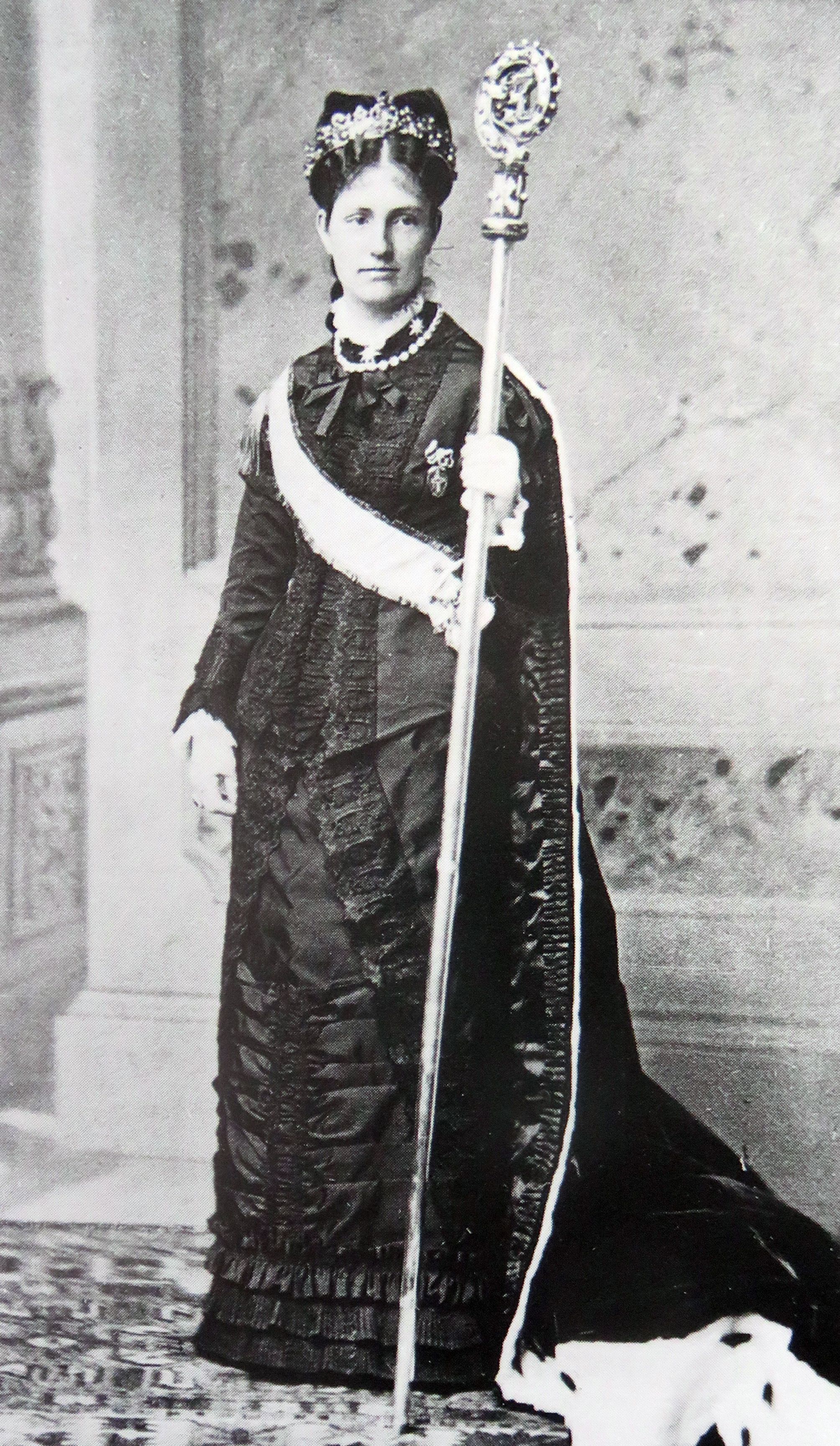
“This crosier was made by fifty leper goldsmiths on a Greek island owned by the Doge of Venice. My uncle, the Cardinal of Trieste and Titular Abbot of Unter-Festschrift, gave it to me at my accession.”
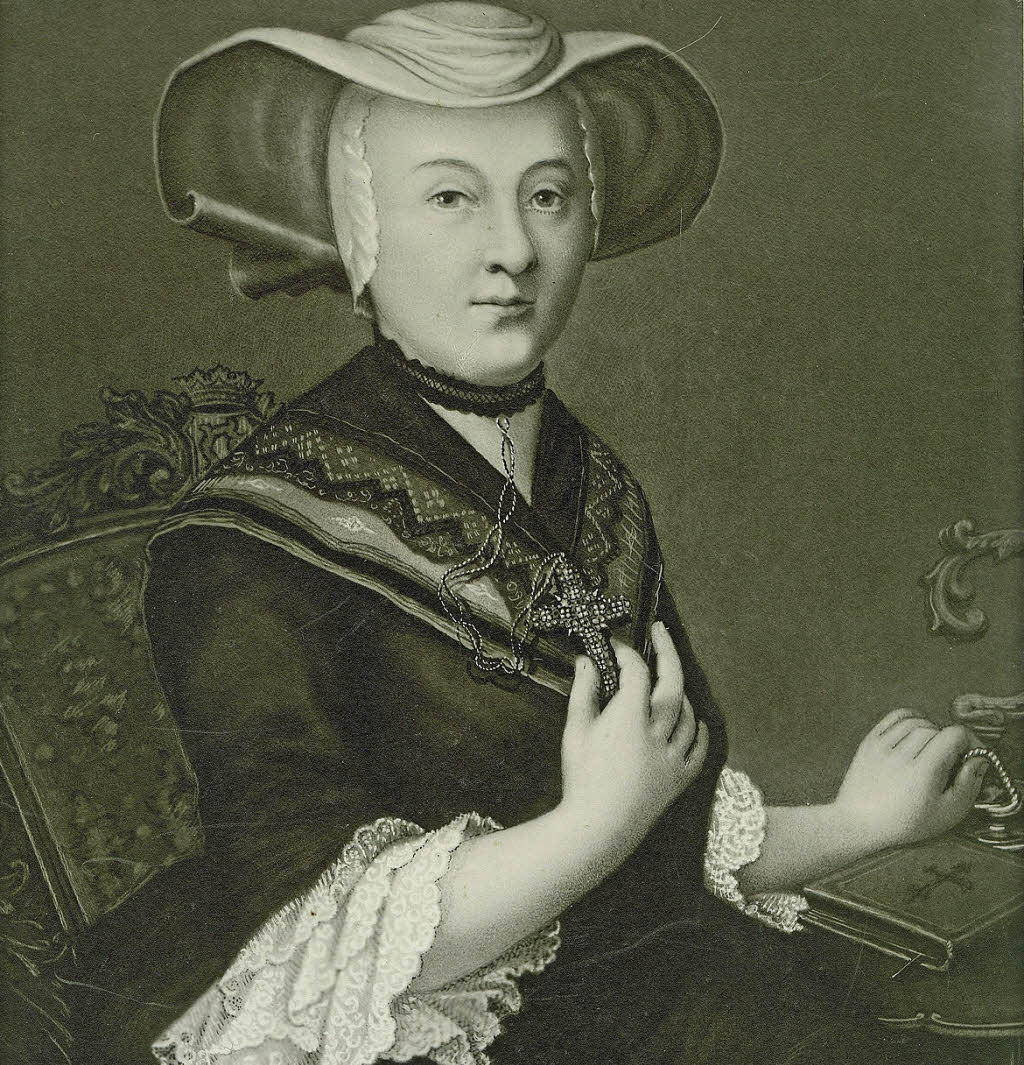
Therese Natalie of Brunswick-Wolfenbüttel, Princess-Abbess of Gandersheim, with her pendulous string of pearls, miniature portrait bracelet, powdered blue watered silk sash, ermine, and bejewelled Bible, is a model of noble simplicity.
“Well, grey is a penitential color, after all. More than what you’re wearing, heathen.”
“They told me it was the crown or the hair. I chose the hair.”
The face when you realize that someone has spilled ketchup and mustard everywhere.
Marie Elisabeth von Holstein-Gottorf, Princess-Abbess of Quedlinburg, knows what you did. And she is not amused.
“What cloister is ever complete without tropical plants?”
The holy side-wound of Christ, from a Book of Hours (Source)
Today is the Anglican commemoration of George Herbert, the great English cleric and metaphysical poet of the 17th century. He died on March 1st, 1633. In honor of this bard of the spirit, I offer to my readers one of my favorite Herbert poems. Every time I return to it, I find new edification.
“Prayer (1)”
George Herbert
Prayer the church’s banquet, angel’s age, God’s breath in man returning to his birth, The soul in paraphrase, heart in pilgrimage, The Christian plummet sounding heav’n and earth Engine against th’ Almighty, sinner’s tow’r, Reversed thunder, Christ-side-piercing spear, The six-days world transposing in an hour, A kind of tune, which all things hear and fear; Softness, and peace, and joy, and love, and bliss, Exalted manna, gladness of the best, Heaven in ordinary, man well drest, The milky way, the bird of Paradise, Church-bells beyond the stars heard, the soul’s blood, The land of spices; something understood.
I have just discovered that Once I Was a Clever Boy, a blog I used to enjoy but was sorry to see in hiatus, has returned. John Whitehead, the blog’s author, is a friend and a Brother of the Little Oratory here in Oxford. He hasn’t put up any new content recently. Nevertheless, there was a long time when for whatever technical reason – either on John’s end or mine, I was never sure – the blog was totally inaccessible. I’m very happy to see it’s back, and I look forward to more content from this quintessentially Oxonian blog.
‘Catholicity, Antiquity, and consent of the Fathers, is the proper evidence of the fidelity or Apostolicity of a professed Tradition’ J.H. Newman, Lectures on the Prophetical Office of the Church, 1837, p. 51



















 The Amish Catholic