Springtime Sophiology from St. Nicodemus

GateAddisons

Gate on Addison’s Walk, Magdalen College, Oxford. Photo by author.

Now there are of course those who do not use the senses and the subsequent meditation on creation and Holy Scripture to rise through them to the knowledge and love of God, who both spoke the Scriptures and created the world. On the contrary, such people use this sense perception simply for human aggrandizement, for the marvel and mere pleasure of the corruptible beauty in creatures, and for other bodily purposes. Or, at least, they simply remain on the level of the limited purposes of the creatures and of the Scriptures. They thus neglect to proceed further, to rise to the catholic and comprehensive view of things, to God’s wisdom through which all things are known and in which all the reasons for each creature are to be found, according to St. Maximos. “The Lord by wisdom founded the earth…When he established the heavens, I was there” (Prv. 3:19, 27). St. Basil the Great too had something to say on this point: “There are indeed certain reasons why the primordial wisdom of God was laid as a foundation to nature at the time of creation.” Now, those who do not rise – through the reason endowed in nature and in the Holy Scriptures – to the hypostatic Logos of God, those who do not love Him “through whom all things were made” (Jn 1:3), as most of the worldly philosophers do not, all of these people act contrary to the Creator’s purpose in nature and in Holy Scripture. And according to the wise and most insightful Kallistos, the thought of such people has lost its natural tendency and has become unnatural. This has occurred because they use the means as ends in themselves, and the causes as results, and they love the gifts more than the Giver and the creatures more than the Creator, as St. Augustine has said. Since creation was not created for itself, but for the vision and glory of its Creator, it is not proper that it should be seen and admired for its own sake, but rather for the sake of its Creator. It is the same with the mirror which one does not look at for its own sake, but for the sake of the one reflected in it.
nicodemus-IN-2.jpg

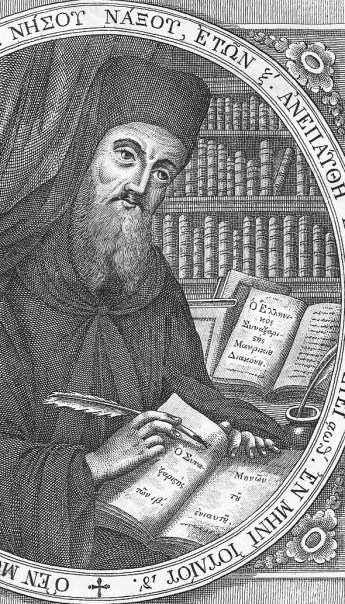
St. Nicodemus of the Holy Mountain (Source)

We may add, finally, that the secondary goal and purpose for the creation of the senses is so that the material body may be able to enjoy through them material nourishment, growth, and life. Truly, I do not know what to marvel at most: the “palace” that is so intricately constructed or the “king” who dwells therein. But of these two, I must certainly marvel most at the master artist and the Creator who with infinite wisdom not only created both of them, but also united the mind and body in such perfect harmony.

Quoted from Chapter One of A Handbook of Spiritual Counsel by Nicodemos of the Holy Mountain, Trans. Peter A. Chamberas, Paulist Press, 1989, pages 73 and 74. 

An Employment Triduo to St. Joseph

Recently, several people I know have been looking for jobs. Some were just fired. Others have had a long struggle seeking work. A few have been injured in ways that required them to take time off. All are in need of prayer.

Bearing these troubles in mind, I thought I would make a Triduo – a prayer of three days’ length – to St. Joseph the Worker, asking for his potent intercession, along with that of SS Anthony of Padua, Dymphna, Cecilia, John of God, Thomas More, Philip Neri, Thomas of Canterbury, Fiacre, and Martin of Tours. I hope my readers will join me in this intention.

The text comes from Bl. John Henry Newman’s Meditations and Devotions. I have also attached the Litany of St. Joseph for the last day.

Cuzco-School-18th-century.jpog.jpg

St. Joseph, Ora Pro Nobis (Source)

A Triduo to St. Joseph

First Day
Consider the Glorious Titles of St. Joseph

He was the true and worthy Spouse of Mary, supplying in a visible manner the place of Mary’s Invisible Spouse, the Holy Ghost. He was a virgin, and his virginity was the faithful mirror of the virginity of Mary. He was the Cherub, placed to guard the new terrestrial Paradise from the intrusion of every foe.

V. Blessed be the name of Joseph.
R. Henceforth and forever. Amen.

LET US PRAY

God, who in Thine ineffable Providence didst vouchsafe to choose Blessed Joseph to be the husband of Thy most holy Mother, grant, we beseech Thee, that we may be made worthy to receive him for our intercessor in heaven, whom on earth we venerate as our holy Protector: who livest and reignest world without end. Amen.
(Vide “The Raccolta.”)

Second Day
Consider the Glorious Titles of St. Joseph

His was the title of father of the Son of God, because he was the Spouse of Mary, ever Virgin. He was our Lord’s father, because Jesus ever yielded to him the obedience of a son. He was our Lord’s father, because to him were entrusted, and by him were faithfully fulfilled, the duties of a father, in protecting Him, giving Him a home, sustaining and rearing Him, and providing Him with a trade.

V. Blessed be the name of Joseph.
R. Henceforth and for ever. Amen.

LET US PRAY

God, who in Thine ineffable Providence didst vouchsafe, &c.

Third Day
Consider the Glorious Titles of St. Joseph

He is Holy Joseph, because according to the opinion of a great number of doctors, he, as well as St. John Baptist, was sanctified even before he was born. He is Holy Joseph, because his office, of being spouse and protector of Mary, specially demanded sanctity. He is Holy Joseph, because no other Saint but he lived in such and so long intimacy and familiarity with the source of all holiness, Jesus, God incarnate, and Mary, the holiest of creatures.

V. Blessed be the name of Joseph.
R. Henceforth and for ever. Amen.

LET US PRAY

God, who in Thine ineffable Providence didst vouchsafe, &c.

The Litany of Saint Joseph

 For public or private use.

Lord, have mercy on us.
Christ, have mercy on us.
Lord, have mercy on us.
Christ, hear us.
Christ, graciously hear us.
God the Father of Heaven, Have mercy on us.
God the Son, Redeemer of the world, Have mercy on us.
God the Holy Spirit, Have mercy on us.
Holy Trinity, One God, Have mercy on us.
Holy Mary, pray for us .
Saint Joseph, pray for us.
Illustrious son of David, etc.
Light of the patriarchs,
Spouse of the Mother of God,
Chaste guardian of the Virgin,
Foster-father of the Son of God,
Watchful defender of Christ,
Head of the Holy Family,
Joseph most just,
Joseph most chaste,
Joseph most prudent,
Joseph most valiant,
Joseph most obedient,
Joseph most faithful,
Mirror of patience,
Lover of poverty,
Model of workmen ,
Glory of domestic life,
Guardian of virgins,
Pillar of families,
Solace of the afflicted,
Hope of the sick,
Patron of the dying,
Terror of demons,
Protector of Holy Church,

Lamb of God, Who takest away the sins of the world,
Spare us, O Lord.
Lamb of God, Who takest away the sins of the world,
Graciously hear us, O Lord.
Lamb of God, Who takest away the sins of the world,
Have mercy on us.

V. He made him the lord of His household,
R. And prince over all His possessions.

Let Us Pray.

O God, Who in Thine ineffable providence didst choose Blessed Joseph to be the spouse of Thy most Holy Mother, grant that as we venerate him as our protector on earth, we may deserve to have him as our intercessor in Heaven, Thou Who livest and reignest forever and ever. R. Amen.


The Threefold Maternity of Mary

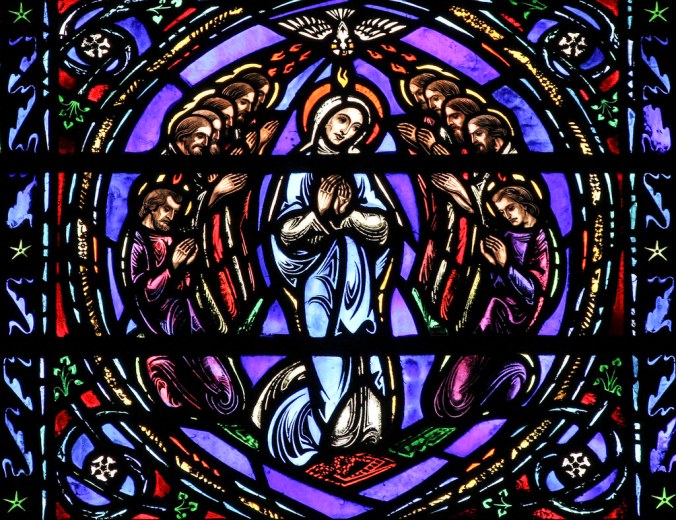
OurLadyCenacle.jpg

Our Lady of the Cenacle, pray for us. Photo by Lawrence Lew O.P. (Source)

God seems very fond of doing things in a Trinitarian way. Everywhere we look, in nature, in our lives, in the life of the Church, it seems that we constantly come upon things that speak of threeness-in-oneness. So it is with God’s finest creation, Our Lady. Or rather, with her maternity. She has but one singular motherhood – her highest title, Theotokos, means “Mother of God.” Nothing can surpass this supreme gift. Nothing greater can be said of the Lord’s chosen. Nothing can reveal more about Our Lady’s life and mission. Yet we detect a certain triune quality to this one eminent dignity. We can speak of the threefold maternity of Mary.

Screen Shot 2018-05-12 at 12.17.34 AM.png

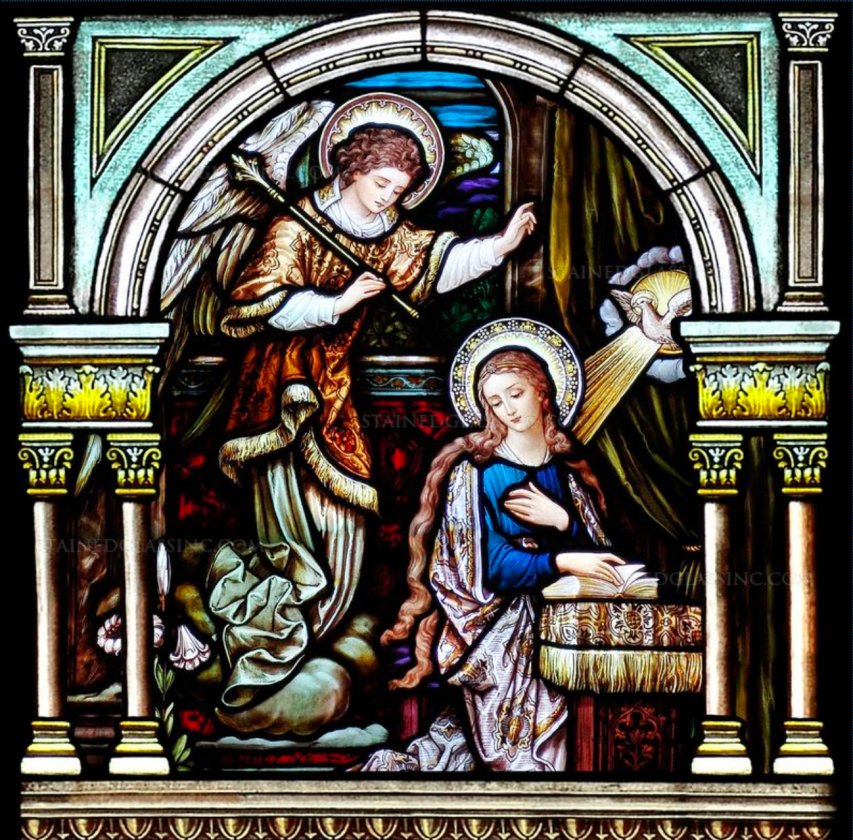
Our Lady of the Annunciation (Source)

First, we encounter Mary’s basic, physical motherhood of Jesus at the Annunciation. In welcoming the will of God into her life, she becomes the mother of the Most High, God Incarnate in Jesus Christ. The Holy Ghost, her divine spouse, conceives the Son in her womb. Her mystical partner and guardian in this parentage is St. Joseph. And in the joy of that maternity, we see Mary and Joseph as two models of chastity. Everything in those joyful mysteries becomes a parable of purity. The sanctity of the Holy Family consists in no small part in the innocence that pervades the hearts of each member. For that innocence is an opening to charity.

sorrowfulmotherwindow

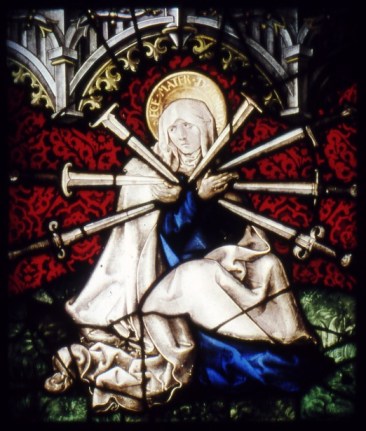
Our Lady of Sorrows (Source)

Then, after the three and thirty years, Mary stands mournful beneath the cross. It was there that she became Mother of the Eucharistic Christ. For, offering up the sorrow of her own Immaculate Heart in union with her son’s High Priestly sacrifice, she bound herself to all the altars of the world as first adorer and co-redemptrix. Gone is St. Joseph; in his stead we find St. John, the figure of all priests under Christ. He would share the Eucharistic life with Mary forever after, entrusted with her care. Here, the great virtue uniting both of the hearts below the Cross is obedience. Our Lady obeys the paramount Providence of God in consenting to the sacrifice of her son, and St. John obeys the words of Our Lord in taking responsibility for the Sorrowful Mother.

But it is today’s feast of Our Lady of the Cenacle that points to the full and final extension of these two prior forms of motherhood. It falls on a most interesting point in the calendar, Saturday in the Octave of the Ascension. It is as if we are standing in the middle of a bridge between two shining cities, and can hear the mingled music of both. This liminal quality is important. For the feast we celebrate today has a double meaning. Two feasts of different but equal importance and dignity seem to unite in this celebration.

We have just left Christ in his Ascension. The Ascension is a memorial of Christ’s High Priesthood. It is like the prayers at the foot of the altar in the Cosmic Liturgy. Pentecost is a glorious theophany, the arrival of the Holy Ghost. We are thus mid-way between a mystery of veiling, and mystery of unveiling. And who do we turn to, but Mary, she who both hid and manifested God in her person?

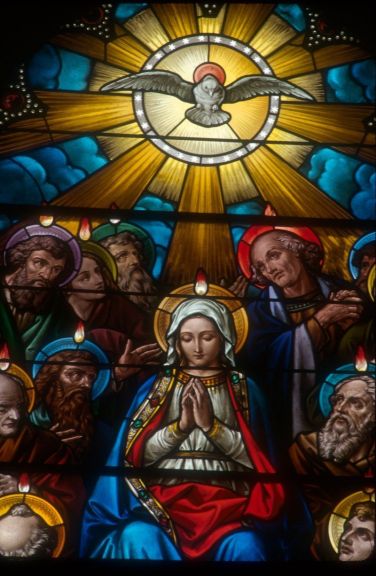
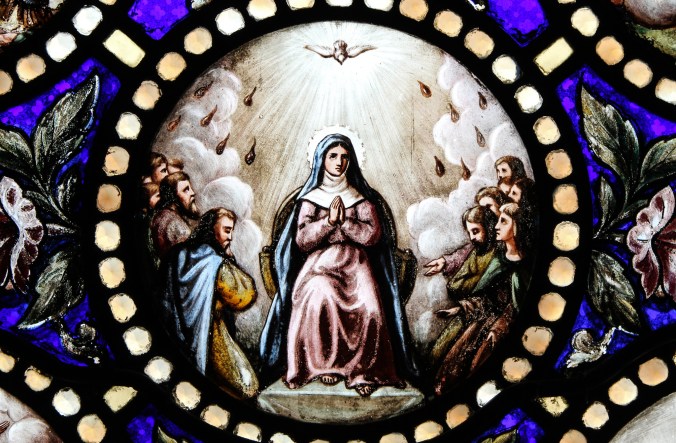
When we celebrate Our Lady of the Cenacle, we commemorate her vigil of silent prayer with the Apostles in the upper room in those intense days following Our Lord’s Ascension. But we also remember the descent of the Holy Ghost into her own Immaculate Heart and into those of her companions. At the deepest level of reality, these constitute a single event in the History of Salvation. And they give us a sense of Mary’s deepening, widening maternity.

MaryCenacleSpirit.jpg

Our Lady of the Cenacle (Source)

Wherever Mary communes with her divine spouse, the Holy Ghost, there is conceived the Body of Christ. First, that meant the physically Incarnate Word. Then it was the Eucharist extended throughout all time. And finally, as a consequence of these two forms of motherhood, we come to Mary’s maternity of the Church. This maternity is the crown of the other two, for it has never ended. The Holy Spirit came to that silver throne, the Immaculate Heart of Mary, and has never left. In all the rest of Mary’s earthly life and eternal existence in beatitude, she has never been deprived of that intimate union begun in Pentecost. And so the Church remains. Mary’s union with the Holy Ghost is at the very heart of the Church’s being. That union brought forth Christ once. It brings forth the Eucharist at every Mass. And now, at Pentecost, it brings forth the Eucharistic community, Christ in His members.

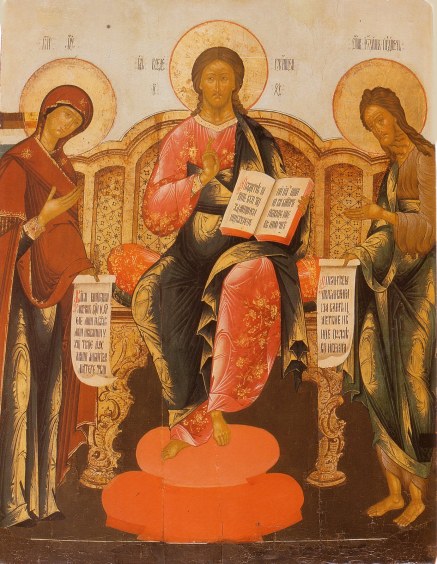
Yet in what does this exalted maternity consist? Prayer, offered perfectly in the Immaculate Heart united to the Holy Ghost. Contemplation, adoration, reparation, intercession – in all its forms, prayer rises from Mary’s heart like huge storms of incense blowing across a desert plain, raining down graces to make it fertile. Yet one form of prayer does not. Mary cannot be contrite. She has never sinned. But we turn to her mystic partner in this maternity, and find a pillar of penance. Who else shares in the life of the Spirit in such a fiery way, but St. John the Baptist? Such is the heavenly reality expressed by the Deisis icon. It shows the Blessed Virgin Mary, paragon of prayer, and St. John the Baptist, archetype of penance, adoring Christ the Lord. Both Our Lady and St. John represent the twin realities of the Ecclesial life – prayer and penance – ordered to Christ – the Sacraments. We might thus speak of Mary’s motherhood of the Church as her Sophianic Maternity, for it is entirely drawn from and oriented to the Divine Wisdom.

Deisis.jpg

A typical deisis. (Source)

The feast of Our Lady of the Cenacle is thus a profoundly maternal day in the Church’s liturgy. Let us join her in prayer. Perhaps we shall taste something of that everlasting life granted to her in the Cenacle.

CenacleRound.jpg

Monstra Te Esse Matrem (Source)

Chesterton’s St. George

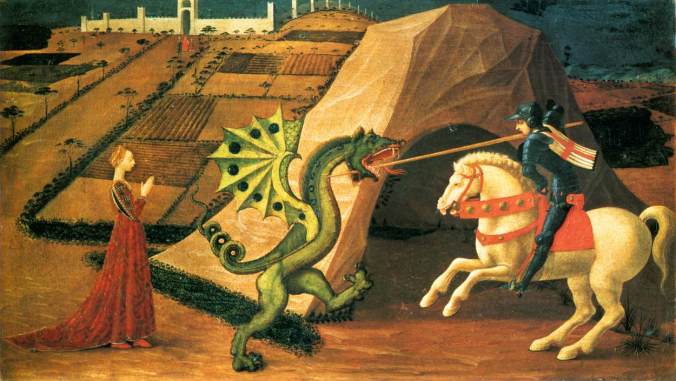
Saint_George_and_the_Dragon_by_Paolo_Uccello_(Paris)_01.jpg

“Saint George and the Dragon,” Paolo Uccello, c. 1459 (Source)

The Englishman

G.K. Chesterton

St George he was for England,
And before he killed the dragon
He drank a pint of English ale
Out of an English flagon.
For though he fast right readily
In hair-shirt or in mail,
It isn’t safe to give him cakes
Unless you give him ale.

St George he was for England,
And right gallantly set free
The lady left for dragon’s meat
And tied up to a tree;
But since he stood for England
And knew what England means,
Unless you give him bacon
You mustn’t give him beans.

St George he is for England,
And shall wear the shield he wore
When we go out in armour
With battle-cross before.
But though he is jolly company
And very pleased to dine,
It isn’t safe to give him nuts
Unless you give him wine.

Letter to a Catechumen

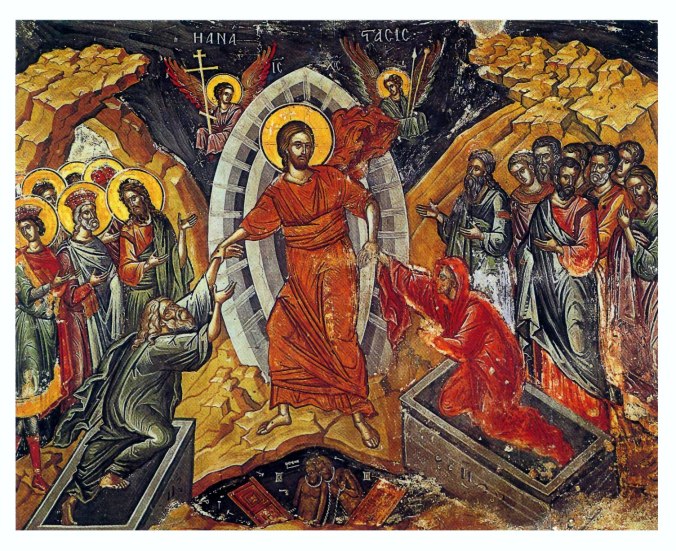
HarrowingHell

“Christ has risen from the dead, trampling down death by death.” (Source)

My Dear Brother Thomas Bede,

Easter brings us from darkness to light, from loss to gain, from death to life. Christ vanquishes the world, the flesh, and the devil. His victory reveals the true meaning of Easter—it is above all the feast of our conversion. The whole of the Christian message is for naught if Christ did not rise from the grave. But He did, and He invites us to share in the superabundance of His sanctity.

We cannot have holiness on our own terms. There is one model—a single life given to us by the Holy Ghost. It is a mercy and a wonder of God that Our Lord impresses His one divine image and likeness into the hearts of so many and so various saints. But light refracted through a prism is still light. We mortals cannot learn the ways of the divine life except by constant recourse to the God-Man.

And where do we receive this sacred pedagogy? Where can we savor the words that bring resurrection? Where do we set our hopes in the long trek through “this valley of tears?”

I think you already know the answer: the sacred liturgy. The Catholic life is drawn from, tied to, and led before the Tabernacle. The final end of our journey is to reach the Tabernacle veil, draw it aside with trembling hands, send forth our last breath in a sigh of consummate joy and relief, and step gracefully into the everlasting House of God. The Catholic life lived well is thus a pilgrimage from font to Tabernacle. Our Lord does not abandon us in this long journey. Like the good father of the parable, He rushes out to welcome His prodigal sons with open arms. He has prepared a great banquet in our honor. Indeed, the Savior who died for you gives you His flesh as feast. Every Mass is a homecoming. Every Holy Communion is a kiss of reconciliation.

I know all of this from experience, having already walked the path you are about to take. And I speak from experience when I say, dear brother, that everything in the Christian life must be brought back to the Tabernacle. If we don’t center our lives on the Blessed Sacrament, we shall be like ships adrift in a stormy sea. What fruitless turbulence enters the soul of one far from the Eucharist! What celestial treasures do we miss! Treasures given to us anew every year in the Sacred Triduum. Soon it will all be yours—yours the Supper, yours the Cross, yours the sojourn in the Tomb, yours the descent into Hell, and yours the Triumph in the Glorious Resurrection of Our Lord. In all of these mysteries, Our Lord wishes to imprint His image onto your soul. He will fashion you to be His servant. Pray that in the latter end, you may also be His saint.

You have no idea how long and how ardently Our Lord has desired your first Communion. From the very fathomless heights of eternity, He saw and loved you. As the whips broke His spotless flesh and the hateful wood of the cross bit into His back, He bore your face in mind. And when He hung there, dying, and said the blessed word—Sitio—“I thirst”—He spoke of your union with His heart. There is no point at which Christ did not desire you. He seeks to possess you in your entirety: body, blood, soul, and spirit. In the Eucharist, He offers Himself to you in precisely the same way. And as His gift of self is perfect, He shall make yours perfect, too.

When Dame Julian of Norwich was given a mystic vision of the world, she did not see sin. I believe this is because she was afforded a fleeting glimpse of the world as it will be in the Eschaton, the world as God sees it. Think of that, my brother. All the sins committed by you and me and every human being we have ever met, all the crimes that have soaked the pages of history in blood, all the atrocities that rightly call out to God for vengeance—all will be washed away. The past will be wiped clean.

Your conversion reproduces this grand act of divine mercy in miniature. You come to the altar of God a mere mortal, and a sin-sick one at that. Your burden would torment and crush you. The world of sin affords no rest. But my brother, you have chosen the path of freedom. You have set down one burden, but you are to take up another. Only this one is light and free and easy, giving strength to whoever bears it. It is the Cross, a deadening foolishness to the world, but the “pearl of great price” to those illumined by Divine Wisdom.

At the Easter Vigil, everything will change. When the water flows over your brow, when the oil touches the same spot, and when the Host alights on your lips, you will no longer be the same person you have been all your life. You will become instead one body with Christ crucified. Your life will no longer be yours; the act of surrender must be total. Your words, your breaths, your steps, your very heartbeats will belong to Christ. And He will use you to bring His peace into this world. By that whitest of magic, the sacraments, you will start to become a “little Christ,” a Christian. What an awful, beautiful fate.

I will not give you advice. There will be many closer to you who have a fuller knowledge of the Catholic life than I do. Go to them. Seek the wisdom grown only in many years of faith. And keep close to Mary. Remember that you are but an infant, and she is your mother. She will guide you.

Now, my very dear brother, it is time for you to take up your cross and know the Life Eternal.

In Christ,

Rick

Five Years a Catholic

ImmaculateHeartCard

May the Sorrowful and Immaculate Heart of Mary pray for us. (Source)

“To begin and end well, devotion to our Blessed Lady, the Mother of God, is nothing less than indispensable.” – St. Philip Neri, Maxims.

Five years ago, I was received into the Roman Catholic Church at the Easter Vigil. The journey since then has been an adventure, to say the least. Not all of it has been good. I’ve continued to make lots of mistakes, often failing in faith, hope, charity, and all the other virtues. Individual Catholics have often disappointed me. There were moments of doubt along the way, and, like the infamous Pillar of Salt, I am no stranger to the occasional backwards glance.

But in reflecting on those five years, the overwhelming feeling is one of gratitude. The many wonderful people I have met – and, more importantly, the graces I have received – have confirmed for me the essential soundness of my choice. I have no regrets. I only wish more people could know the abiding peace that comes with conversion to the Church that Christ established on St. Peter. And having consecrated myself to Mary, I feel as if I have had a new strength in the spiritual life since last Summer.

Thus far, I have dedicated each year to some mystery of the Faith. It is in that same spirit that I consecrate this sixth year of my Catholic life to the Sorrowful and Immaculate Heart of Mary. I pray that by her triumphant heart, she will continue to guide me to a more perfect knowledge of Her Father, Son, and Spouse. As St. Philip says, “Our Blessed Lady ought to be our love and consolation.” I hope that she ever will be mine.

And thus on this Good Friday, I beg your prayers and those of the saints, that I might persevere in the faith and grow in the love of God.

Most Sacred Heart of Jesus, pray for us.
Our Lady Immaculate, pray for us.
St. Joseph, pray for us.
St. Philip Neri, pray for us.

Amen.

HolyCardMary

The Queen of Heaven. (Source)

St. Francis de Sales on the Passion of Christ

frankydesales.jpg

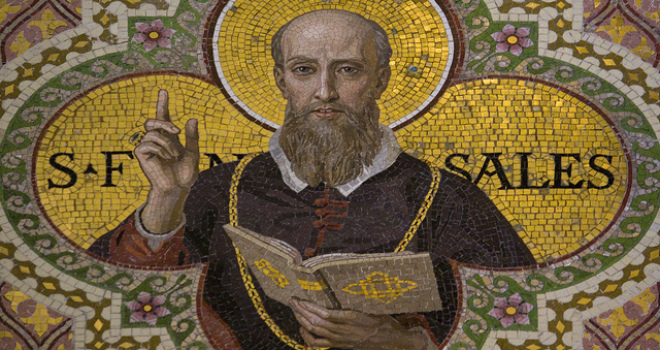
St. Francis de Sales, pray for us. (Source)

In my final post of Wednesday spiritual masters, here is a passage from Part V, Chapter XIII of St. Francis de Sales’s Introduction to the Devout Life. I thought it was particularly appropriate for Holy Week.

The Love Which Jesus Christ Bears Us

Consider the Love with which our Dear Lord Jesus Christ bore so much in this world, especially in the Garden of Olives and on Mount Calvary; that Love bore you in mind, and through all those pains and toils He obtained your good resolutions for you, as also all that is needful to maintain, foster, strengthen and consummate those resolutions. How precious must the resolutions be which are the fruits of our Lord’s Passion! and how dear to my heart, since they were dear to that of Jesus! Saviour of my soul, Thou didst die to win them for me; grant me grace sooner to die than forget them. Be sure, my daughter, that the Heart of our most Dear Lord beheld you from the tree of the Cross and loved you, and by that Love He won for you all good things which you were ever to have, and amongst them your good resolutions. Of a truth we have all reason like Jeremiah to confess that the Lord knew us, and called us by our name or ever we were born, the more that His Divine Goodness in its Love and Mercy made ready all things, general and individual, which could promote our salvation, and among them our resolutions. A woman with child makes ready for the babe she expects, prepares its cradle, its swaddling clothes and its nurse; even so our Lord, while hanging on His Cross, prepared all that you could need for your happiness, all the means, the graces, the leadings, by which He leads your soul onwards towards perfection.

Surely we ought ever to remember this, and ask fervently: Is it possible that I was loved, and loved so tenderly by my Saviour, that He should have thought of me individually, and in all these details by which He has drawn me to Himself? With what love and gratitude ought I to use all He has given me? The Loving Heart of my God thought of my soul, loved it, and prepared endless means to promote its salvation, even as though there were no other soul on earth of which He thought; just as the sun shines on each spot of earth as brightly as though it shone nowhere else, but reserved all its brightness for that alone. So Our Dear Lord thought and cared for every one of His children as though none other existed. “Who loved me, and gave Himself for me,” S. Paul says, as though he meant, “for me alone, as if there were none but me He cared for.”

Let this be graven in your soul, my child, the better to cherish and foster your good resolutions, which are so precious to the Heart of Jesus.

St. Alphonsus on Christ’s Suffering

S_Alfonso02.jp

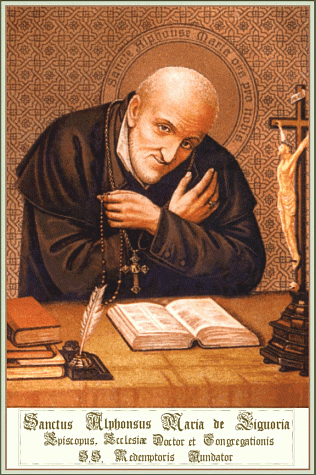
May St. Alphonsus pray for us always. (Source)

This Wednesday’s spiritual teacher is St. Alphonsus Liguori, Doctor of the Church and founder of the Redemptorists. He was known for his moral theology as well as his Mariological and devotional writings. Here is something Lenten by St. Alphonsus drawn, paradoxically, from The Incarnation, Birth, and Infancy of Jesus Christ (trans. 1927). The bibliographic information can be found on the page from which I took this text. 

The Desire that Jesus Had to Suffer for Us

Baptismo habeo baptizari; et quomodo coarctor, usquedum perficiatur?
“I have a baptism wherewith I am to be baptized; and how am I straitened until it be accomplished?”
—Luke, xii. 50.

I.
Jesus could have saved us without suffering; but He chose rather to embrace a life of sorrow and contempt, deprived of every earthly consolation, and a death of bitterness and desolation, only to make us understand the love which He bore us, and the desire which He had that we should love Him. He passed His whole life in sighing for the hour of His death, which He desired to offer to God, to obtain for us eternal salvation. And it was this desire which made Him exclaim: I have a baptism wherewith I am to be baptized; and how am I straitened until it be accomplished? He desired to be baptized in His Own Blood, to wash out, not, indeed, His Own, but our sins. O infinite Love, how miserable is he who does not know Thee, and does not love Thee!

II.
This same desire caused Him to say, on the night before His death, With desire I have desired to eat this pasch with you. By which words He shows that His only desire during His whole life had been to see the time arrive for His Passion and death, in order to prove to man the immense love which He bore him. So much, therefore, O my Jesus, didst Thou desire our love, that to obtain it Thou didst not refuse to die. How could I, then, deny anything to a God Who, for love of me, has given His Blood and His life?

III.
St. Bonaventure says that it is a wonder to see a God suffering for the love of men; but that it is a still greater wonder that men should behold a God suffering so much for them, shivering with cold as an infant in a manger, living as a poor boy in a shop, dying as a criminal on a Cross, and yet not burn with love to this most loving God; but even go so far as to despise this love, for the sake of the miserable pleasures of this earth. But how is it possible that God should be so enamoured with men, and that men, who are so grateful to one another, should be so ungrateful to God?

Alas! my Jesus, I find myself also among the number of these ungrateful ones. Tell me, how couldst Thou suffer so much for me, knowing the injuries that I should commit against Thee? But since Thou hast borne with me, and even desirest my salvation, give me, I pray Thee, a great sorrow for my sins, a sorrow equal to my ingratitude. I hate and detest, above all things, my Lord, the displeasure which I have caused Thee. If, during my past life, I have despised Thy grace, now I value it above all the kingdoms of the earth. I love Thee with my whole soul, O God, worthy of infinite love, and I desire only to live in order to love Thee. Increase the flames of Thy love, and give me more and more love. Keep alive in my remembrance the love that Thou hast borne me, so that my heart may always burn with love for Thee, as Thy heart burns with love for me. O burning heart of Mary, inflame my poor heart with holy love.

Christ_Carrying_the_Cross_1580.jpg

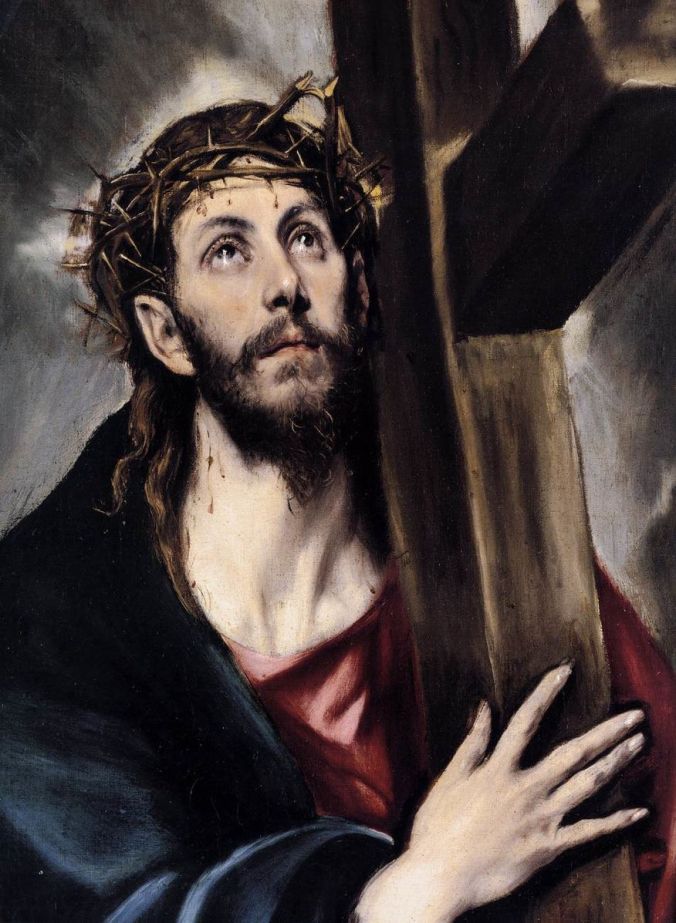
Detail of Christ Carrying the Cross, El Greco, 1580. (Source)

Elsewhere: A Blog on Saintly Cadavers

SantaVittoria.jpg

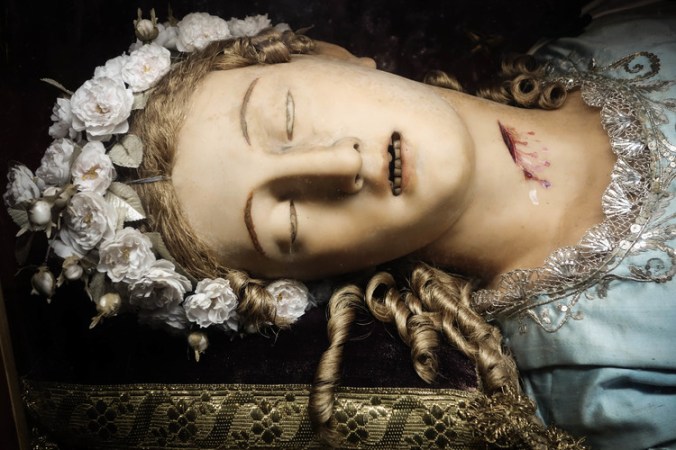
A photograph of Santa Vittoria by Elizabeth Harper. (Source)

A friend has just brought to my attention a blog entitled All the Saints You Should Know. It’s run by someone named Elizabeth Harper, a scholar and photographer based in Los Angeles. Her work is guided by three principles:

  • I believe Catholic churches are memory theaters where nature, science, arts, humanity, math, politics, and the divine mingle in miniature. There’s a wealth of knowledge locked inside sacred objects, though it’s often hidden in plain sight.
  • I’ve found that the Catholic comfort with death and death imagery is life-affirming. It offers believers and skeptics alike an important cultural reference that opposes modern death denial.
  • I love to learn about the past. I love it more when the past teaches me about the present.

These are all sound and salutary beliefs, and the blog is truly beautiful. If you’re like me and find joy in all things morbid (and all things Catholic, while we’re at it), you will no doubt peruse Ms. Harper’s work with as much pleasure as I do. As I’ve said before, the Sacred can be strange. Ms. Harper’s website is a welcome reminder of that fact.

Not a blog to be overlooked!

A Spanish Mystic of the Sacred Heart

Providence sometimes ordains that we should come across new friends in Heaven at exactly the right time. This happy accident of grace has just occurred to me.

SacredHeartTimesSix.jpg

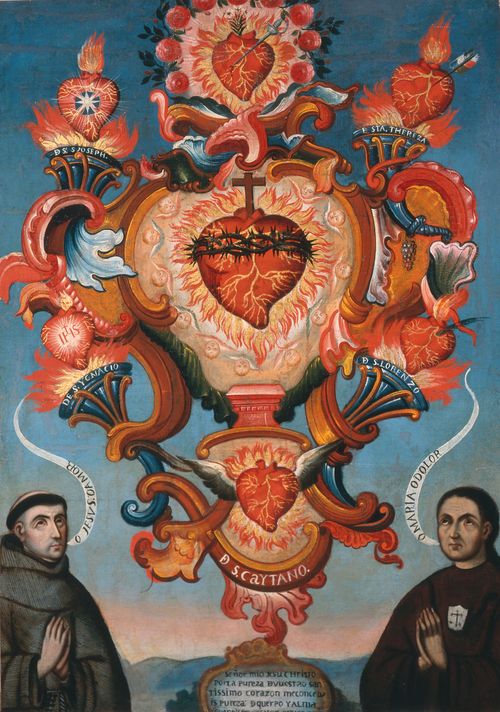
Holocausto de Corazones al Sagrado Corazon de Jesus, 17th century Mexican. (Source)

I’ve been reading about the Jesuits of the late 17th and early 18th centuries quite a lot recently in connection with my research. My admiration for them has grown tremendously. I always used to have a devotion to the Jesuit martyrs of Elizabethan and Jacobean England, and to an extent, I still do. But the Continental Jesuits who did so much to combat the spread of Jansenism are a marvel to behold. For all my jokes about the suppression of the Jesuits and my appreciation of Pascal, I have to say that the Jansenists were a nasty bunch. The more one studies their history and doctrines, the colder one feels. Thus, I especially admire those tireless evangelists of the Sacred Heart such as St. Claude de la Colombière, whose feast we celebrated yesterday. Along with this revived interest in the Continental Jesuits, I’ve found myself drawn to the Sacred Heart in recent weeks.

librohoyos

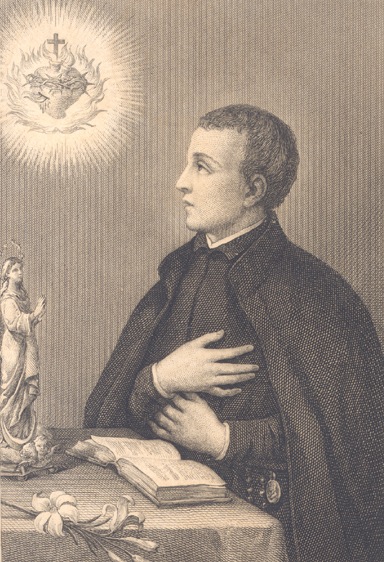
Bl. Bernardo Francisco de Hoyos S.J. (Source)

Into this recent ferment of the spirit came an unexpected intrusion of grace. As I was scrolling through Facebook, I saw that in one of my Catholic groups, someone had posted an article about a mystic and asked what we all thought. I opened the link and discovered a new and remarkable saint: the Blessed Bernardo Francisco de Hoyos, S.J.

The Blessed Bernardo entered the Jesuit novitiate in 1726 when he was not yet fifteen. In the early years of his formation, he felt a strong attraction to the (then) Blessed John Berchmans, a model of Jesuit youth, seeking to emulate him in all things. The young saint later had a powerful “dark night of the soul” that involved demonic torments. When he came out on the other side, however, the Lord appeared to him in some of the most remarkable visions of the age. To wit:

Always holding my right hand, the Lord had me occupy the empty throne; then He fitted on my finger a gold ring…“May this ring be an earnest of our love. You are Mine, and I am yours. You may call yourself and sign Bernardo de Jesus, thus, as I said to my spouse, Santa Teresa, you are Bernardo de Jesus and I am Jesus de Bernardo. My honor is yours; your honor is Mine. Consider My glory that of your Spouse; I will consider yours, that of My spouse. All Mine is yours, and all yours is Mine. What I am by nature you share by grace. You and I are one!” – The Visions of Bernard Francis De Hoyos, S.J., Henri Béchard, S.J.

bernardfrancishoyos

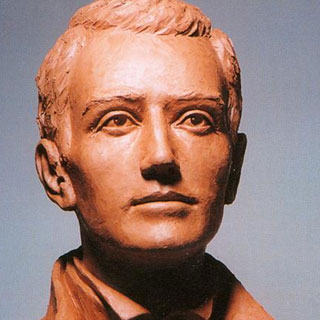
A modern rendition of Bl. Bernardo. (Source)

Assuming this quote is accurate – like the author from whom I took it, I am unable to verify it (Bechard’s book is extremely rare) – it evinces an eminent degree of spiritual maturity. Dom Mark Daniel Kirby reports on more of the young saint’s experiences:

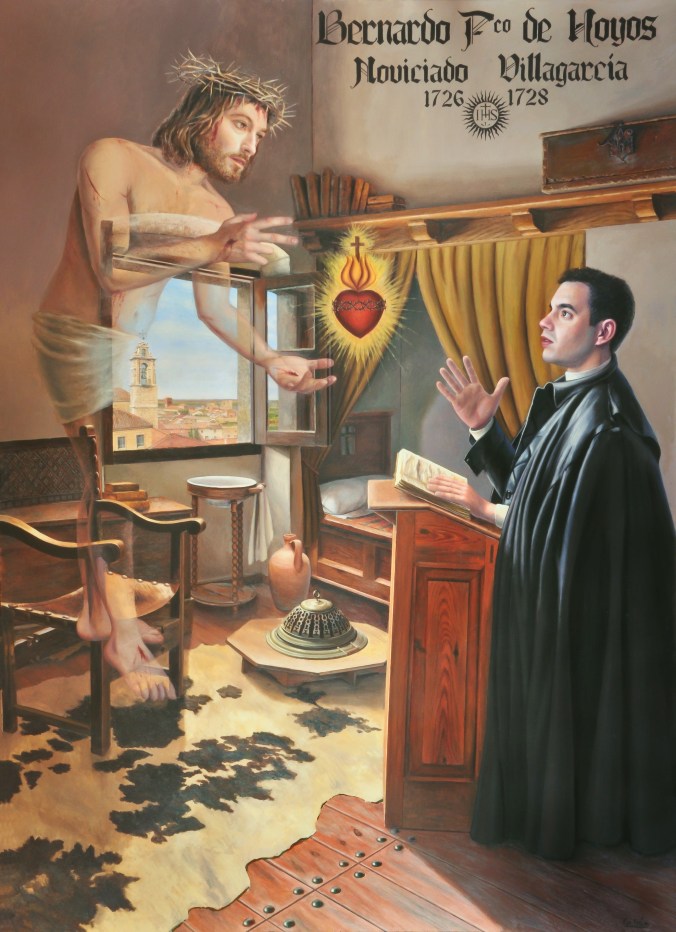
On August 10, 1729, the Saviour, covered with His Precious Blood, appeared to Bernardo, and showing him the wound in His Side, said, “Rejected by humanity, I come to find my consolation with chosen souls.” Bernardo’s experience closely resembles that of Saint Margaret Mary Alacoque fifty-three years earlier in the Visitation Monastery of Paray-le-Monial in France.

SacredHeartprint

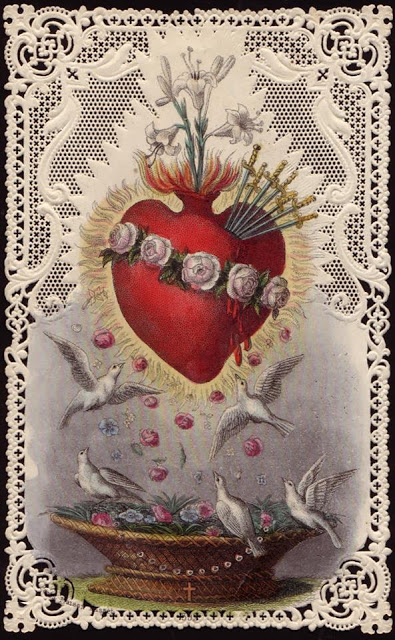
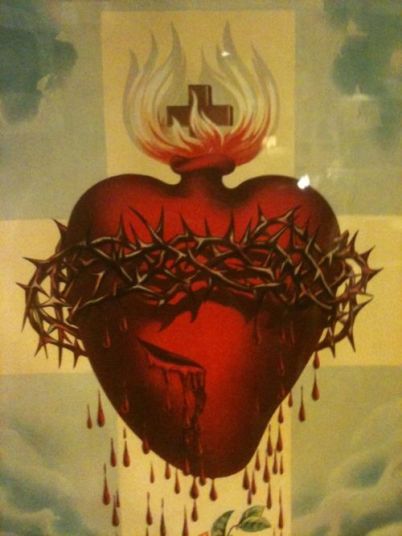
The Sacred Heart of Jesus. (Source)

It should be no surprise to us, then, that Bl. Bernardo was a profound devotee and propagator of the Sacred Heart of Jesus. In 1732, when he was only 22, the Lord entrusted him with the mission of spreading love for the Sacred Heart, both “as a means of personal sanctification and as an effective means for accomplishing the apostolate.” That year, he consecrated himself to the Sacred Heart using St. Claude’s formula. Shortly after, he collaborated on a book about the devotion entitled The Hidden Treasure (alas, I don’t know if it has been translated into English). His brief priesthood – he died of typhus less than a year after ordination – was a total gift to the Sacred Heart. He was known to say, “Oh, how good it is to dwell in the Heart of Jesus.” These were, no doubt, the words of one who dwelt there indeed.

Bl. Bernardo was beatified in Valladolid on April 19, 2010. He is a special patron against the sin of impurity, perhaps because his own chastity was sealed in a mystical marriage to Jesus.

One of the things that truly struck me about Bl. Bernardo’s story – aside from his devotion to the Sacred Heart, which is, as I mention, timely – was his youth. He was only a year older than me when he died. To think that someone could achieve such heights of holiness in such a short time is a wonderful encouragement.

But of course, the growth of a soul is not, strictly speaking, a matter of our own effort. It is the work of the Holy Ghost in us. Bl. Bernardo is an example of what happens when we open ourselves totally to the operations of the Holy Ghost. Not everyone will receive visions. In fact, very few souls are so privileged. But they are given to the Memory of the Church so that we who are less favored may take some inspiration by their example and glimpse more perfectly some aspect of Our Savior. Christ is the one light caught by so many prisms through the centuries. Bl. Bernardo is one such pure glass, shining through the ages to light our way. May he pray for us in this Lenten season.

Bernardo_Fco_de_Hoyos.jpg

Bl. Bernardo Francisco de Hoyos’s vision of the Sacred Heart. (Source)