“A Wandering Bishop I, a Thing of Shreds and Patches”

Loons1

“…of miters, rings, and snatches / of episcopacy!” (Source)

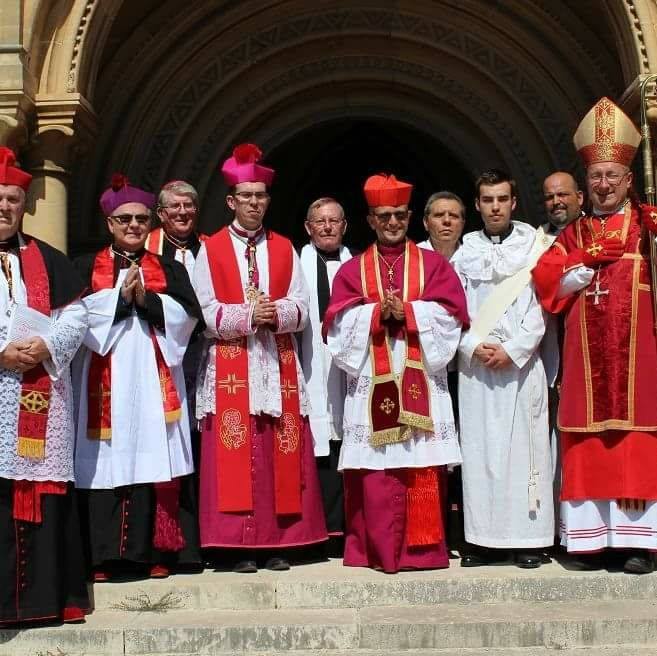
Those of my readers who take an interest in such things will no doubt find a series of articles over at the Anglicanorum Coetibus Society about the (inevitably) strange case of a modern episcopus vagans. It’s got everything: multi-syllabic titles of nonexistent sees, complicated episcopal genealogies, a brush with the Old Catholics, incongruous vestments, a sex scandal, batty old women, Freemasons, just a whiff of diabolism, alleged “Patriarchal Cathedrals” in mortuary chapels, Gnosticism, a false knighthood, Dracula’s seaside town of Whitby, suspicious jaunts off to Malta, obscure saints, a drunken celebrant, and false triple-barrelled names.

Whither Anson and Brandreth?

If these are the sorts of things that might divert you as we enter into All Hallowtide, do give the good folks at ACS a few views. We are in debt to Simon Dennerly for his painstaking reporting on this troubling narrative. Connecting all the dots in that field of very bizarre orders and bishops and patriarchs and abbots and princes can be dizzying work. One must have a great deal of patience – not to mention the stomach for it.

Here are the articles:

James Atkinson-Wake: “who wears the Mitre of Satan”

(Incidentally, “Who Wears the Mitre of Satan” sounds like one of those wonderful old Hammer Horror films starring Christopher Lee).

Philip James French: the Fake Catholic Bishop of Whitby


The Reckoning of the Fake Catholic Bishop of Whitby?

One rather wonders how the story will end. Then again, we know how all stories end: death, judgment, Heaven, and Hell.

Advice from a French Nun

Screen Shot 2018-10-28 at 10.13.24 PM.png

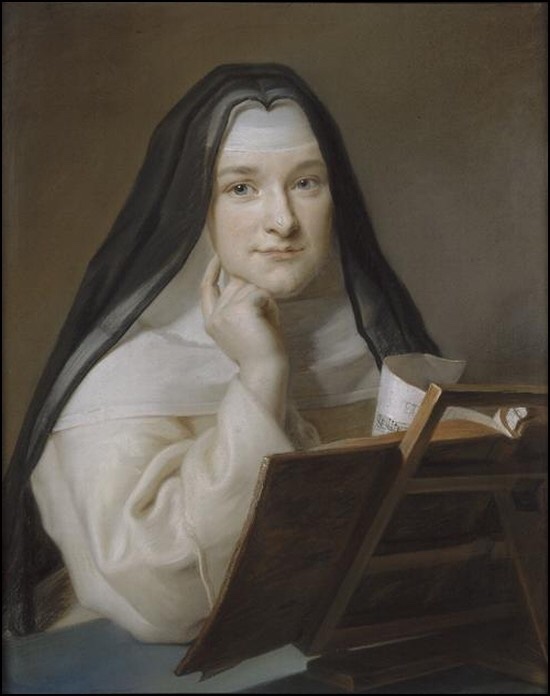
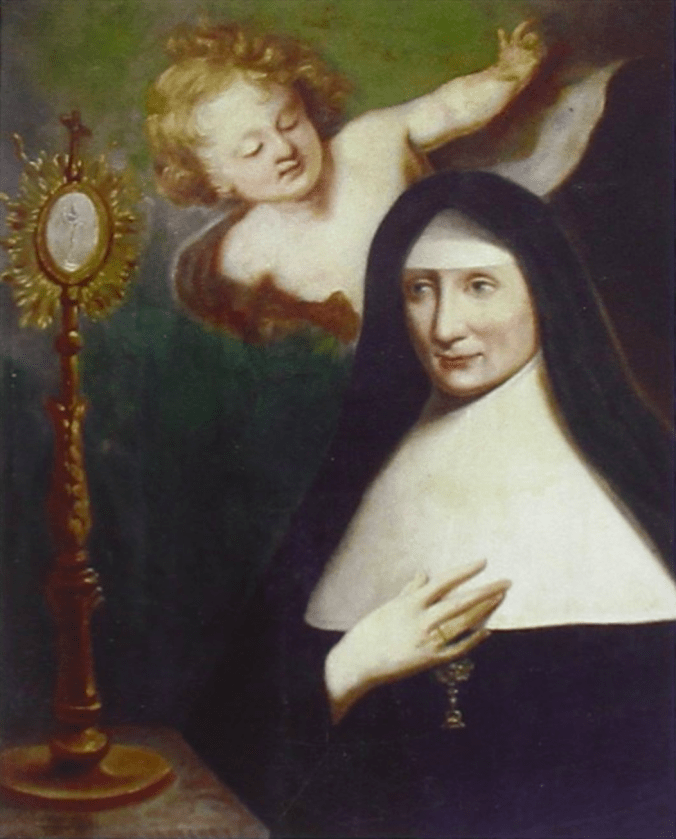
A portrait of Mother Mectilde de Bar adoring the Blessed Sacrament. (Source)

Sometimes readers ask me about more information on Mother Mectilde de Bar (1614-1698), the saintly foundress of the Benedictine Nuns of Perpetual Adoration of the Most Blessed Sacrament of the Altar. I would of course direct those who read French or Italian to any of the several biographical studies about Mother Mectilde that have come out in those languages. However, I would perhaps more eagerly urge my readers to a series of recent posts at Vultus Christi presenting what is, I believe, the first English translations of some of Mother Mectilde’s spiritual letters. Here they are with the titles the translator has given them at VC.

I. “So that I might begin to live in simplicity, like a child.”

II. “On the Meaning of Desolation and Sufferings.”

III. “The state in which you find yourself is of God.”

IV. “The divine labourer who works in you.”

V. “Yet ever thou art at my side.”

VI. “Nothingness doesn’t even attach itself to nothingness.”

VII. “Some sayings of Mother Mectilde.”

VIII. “He sets fire everywhere.”

IX. “All our discontent comes from self-will.”

And on top of all that, there’s a letter from the lay mystic Jean de Bernières to Mother Mectilde. Bernières is a good example of someone who, though posthumously condemned as a “Quietist,” is now being recovered as a source of valuable mystical insight. We have seen the same happen to Benet Canfield before, and it may yet occur to someone like Pietro Matteo Petrucci. More work needs to be done in this area. At any rate, translation of these early modern mystical works is badly needed.

Both as a practicing Catholic and as an historian of early modern Catholicism, I am encouraged that these works are being put into English for the first time. The English-speaking world is now getting a much better sense of the importance of this unique tradition within the Benedictine family. More translations, we are told, are coming. I eagerly await their publication.


Prosaic Relics

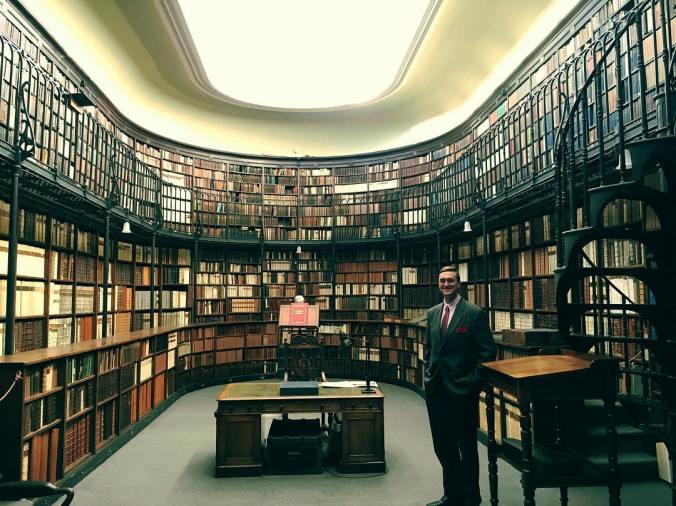
Earlier this week, I went to the Birmingham Oratory for the Feast of Bl. John Henry Newman. Fr. Ignatius Harrison, the Provost, was kind enough to open up the Oratory house to me. I must offer him my tremendous thanks for his hospitable willingness to let me see such an incredible (and, it must be said, holy) place. Likewise, I thank Br. Ambrose Jackson of the Cardiff Oratory for taking time out of his busy schedule to give me what was an extraordinarily memorable tour. I went away from the experience with a rekindled devotion to Cardinal Newman.
InNewmansLibrary

Your humble servant in Cardinal Newman’s own library. Photo taken by Br. Ambrose Jackson of the Cardiff Oratory. You can see Cardinal Newman’s violin case on the lower shelf of his standing desk at right.

There were many striking and beautiful sights at the Oratory – not the least of which was the Pontifical High Mass in the Usus Antiquior, celebrated by His Excellency, Bishop Robert Byrne. Even from so short an experience, I can tell that the Birmingham Oratory is one of the places where Catholicism is done well, where the Beauty of Holiness is made manifest for the edification of all the faithful. I walked away from that Mass feeling drawn upwards into something supernal, something far beyond my ken. This place that so palpably breathes the essence of Cardinal Newman is, as it were, an island of grace and recollection amidst a worldand, sadly, a Churchso often inimical to things of the spirit.

Screen Shot 2018-10-10 at 10.44.57 PM.png

The Birmingham Oratory with the relics of the Blessed Cardinal displayed for veneration by the faithful. This photo was taken by the author shortly before Mass.

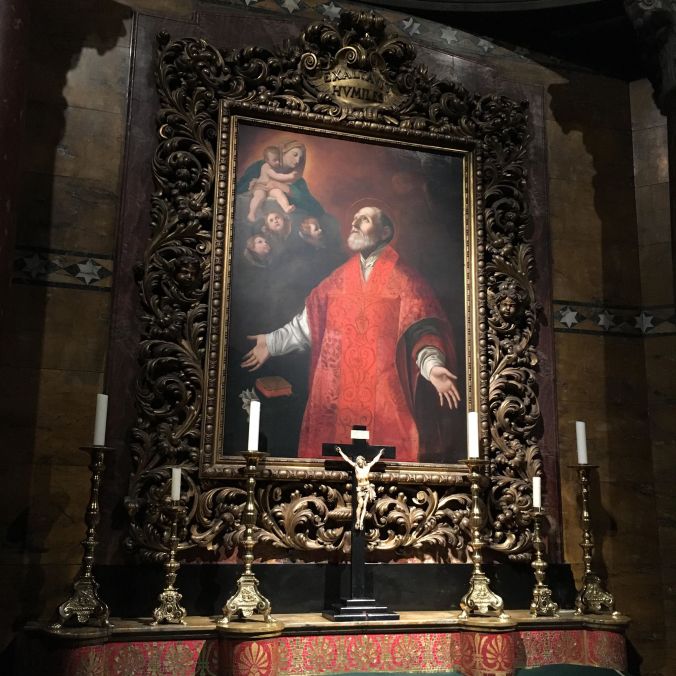
Yet amidst all this splendor, I found myself peculiarly drawn to one very quiet, very easy-to-miss relic. It lies in the little chapel to St. Philip Neri to the left of the altar; in this placement, one can see the influence of the Chiesa Nuova on Newman and his sons, who modeled their house’s customs on Roman models. And so it is only appropriate to find relics of St. Philip there in that small and holy place, so evocative of the great father’s final resting place.
StPhilipNeriPortraitBrum

The altar of St. Philip Neri, Birmingham Oratory. Photo taken by the author.

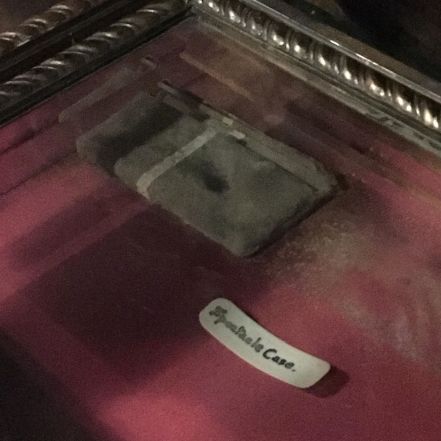
The collection of relics in the chapel are mostly second-class. These are not pieces of the body, but materials that touched St. Philip either in his life or after his death. One of these small items spoke to me in an especially strong way.
StPhilipsSpectacleCase

The little grey pouch you see to the left is St. Philip’s spectacle case. There is nothing terribly remarkable about it. It may not even be entirely intact, for all I know. A visible layer of dust covers the case, and a hard-to-read, handwritten label is all that identifies its use and provenance. No one comes to the Birmingham Oratory to see what once held St. Philip’s glasses. But of all the glorious relics I saw that day some encrusted in gold, some taken from rare and holy men, some evoking the perilous lives of saints who lived in a more heroic ageit was this humble artifact that most fired my imagination.

A spectacle case is no great thing. It does not shift the balance of empires or change the course of history. But humility and nobility are close cousins all the same. Here we come upon St. Philip in his quotidian life. A saint so marvelously strange, so crammed with the supernatural, so flame-like in darting from one miracle to another, nevertheless bent his fingers to the perfectly ordinary task of opening this case and taking out his spectacles so that he might see just a little better. It is a true maxim that grace builds upon nature. We have been told of St. Philip’s many graces. Here we find him in his nature; frail and imperfect and in need of just a little aid, so like our own.

The supernatural never erases the natural, and God is never more glorified than in our weakness. The hands that took up this case and opened it and drew forth its contents, perhaps a little fumblingly from time to time, are the very same thaumaturgic hands that lifted a prince out of death and Hell so that he might make his final confession. We know the story of the miracle. How rarely do we ponder the everyday conditions of its operation! How rarely do we consider those hands in their ordinary life.

There is a tendency with St. Philipas with many saints, and with Our Lord Himselfto reduce his life to one or two features. Some would make him an avuncular chap, always happy to laugh and thoroughly pleasant to be around, a jokester, a picture of joy and friend to all. On the other hand, we can get lost in the extraordinarily colorful miracles that mark St. Philip’s life, losing him in a fog of pious pictures and pablum. Neither captures his essence. The true middle way is to maintain a healthy sense of the bizarrean approach that recognizes the extraordinary in-breaking of the supernatural precisely because it appreciates the ordinary material of St. Philip’s day-to-day existence. It was this view that Fr. Ignatius himself recommended, though perhaps with a greater emphasis on the “weird,” in his homily delivered last St. Philip’s day.

I was reminded of this double reality when I saw St. Philip’s spectacle case. Prosaic relics carry this two-fold life within them more vividly than those upon which our ancestors’ piety has elaborated in glass and gold. Even Cardinal Newman’s violin case is not so markedly dual in this way; after all, every instrument belongs to that human portion of the supernatural we call “art.” Music, paintings, and other aesthetic forms all lift the human soul out of itself and into another world. In some ways, they are cousins both to Our Lady and to the Sacraments, God’s masterpieces of the sensible creation. Yet a spectacle casehow utilitarian. How plain. How merely functional. There is no poetry in a spectacle case. One can imagine writing a poem about a violinthe sinuous form of the wood almost suggests it, and more so when it carries a connection with so great a man as Newmanbut a spectacle case? Drab as this one is, its beauty comes only from the story it tells, from the life it once served, from the little help it gave its owner in his acquisition of beatitude.

Too often we wish to be God’s violins. In our quest for holiness, we wish to be admired, to cast our voice abroad, to give and seek beauty. These are not necessarily unworthy goals. But they are not the most important thing. Too infrequently do we turn our mind to the spectacle case. All too rarely do we seek our holiness in the gentle, quiet, everyday task of being useful, unnoticed, and present to God precisely when He needs us.

St. Philip knew how to be both, when he needed to be. May we learn to be like him in this as in so many respects.
StPhilipEffigyBrum

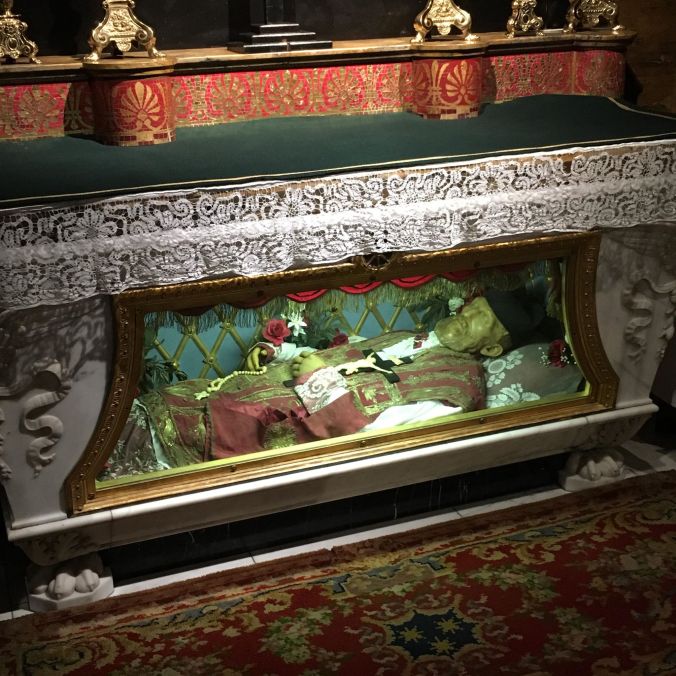
The effigy of Holy Father Philip, Chapel of St. Philip Neri, Birmingham Oratory. Photo taken by author.
 

Newman and Divine Providence

Bl. John Henry Newman, Doctor of Conscience and Doctor of Tradition, remains one of my dear friends in Heaven. Some of his prayers and devotions are as puissant today as they were when they were first composed. I am consoled by and draw courage from this extended passage of the Meditations and Devotions:

I have always thought this portrait captures the humanity and essential kindness of Cardinal Newman. (Source)

GOD has created all things for good; all things for their greatest good; everything for its own good. What is the good of one is not the good of another; what makes one man happy would make another unhappy. God has determined, unless I interfere with His plan, that I should reach that which will be my greatest happiness. He looks on me individually, He calls me by my name, He knows what I can do, what I can best be, what is my greatest happiness, and He means to give it me.

God knows what is my greatest happiness, but I do not. There is no rule about what is happy and good; what suits one would not suit another. And the ways by which perfection is reached vary very much; the medicines necessary for our souls are very different from each other. Thus God leads us by strange ways; we know He wills our happiness, but we neither know what our happiness is, nor the way. We are blind; left to ourselves we should take the wrong way; we must leave it to Him.

Let us put ourselves into His hands, and not be startled though He leads us by a strange way, a mirabilis via, as the Church speaks. Let us be sure He will lead us right, that He will bring us to that which is, not indeed what we think best, nor what is best for another, but what is best for us.

O, my God, I will put myself without reserve into Thy hands. Wealth or woe, joy or sorrow, friends or bereavement, honour or humiliation, good report or ill report, comfort or discomfort, Thy presence or the hiding of Thy countenance, all is good if it comes from Thee. Thou art wisdom and Thou art love—what can I desire more? Thou hast led me in Thy counsel, and with glory hast Thou received me. What have I in heaven, and apart from Thee what want I upon earth? My flesh and my heart faileth: but God is the God of my heart, and my portion for ever.

God has created me to do Him some definite service; He has committed some work to me which He has not committed to another. I have my mission—I never may know it in this life, but I shall be told it in the next. Somehow I am necessary for His purposes, as necessary in my place as an Archangel in his—if, indeed, I fail, He can raise another, as He could make the stones children of Abraham. Yet I have a part in this great work; I am a link in a chain, a bond of connexion between persons. He has not created me for naught. I shall do good, I shall do His work; I shall be an angel of peace, a preacher of truth in my own place, while not intending it, if I do but keep His commandments and serve Him in my calling.

Therefore I will trust Him. Whatever, wherever I am, I can never be thrown away. If I am in sickness, my sickness may serve Him; in perplexity, my perplexity may serve Him; if I am in sorrow, my sorrow may serve Him. My sickness, or perplexity, or sorrow may be necessary causes of some great end, which is quite beyond us. He does nothing in vain; He may prolong my life, He may shorten it; He knows what He is about. He may take away my friends, He may throw me among strangers, He may make me feel desolate, make my spirits sink, hide the future from me—still He knows what He is about.

O Adonai, O Ruler of Israel, Thou that guidest Joseph like a flock, O Emmanuel, O Sapientia, I give myself to Thee. I trust Thee wholly. Thou art wiser than I—more loving to me than I myself. Deign to fulfil Thy high purposes in me whatever they be—work in and through me. I am born to serve Thee, to be Thine, to be Thy instrument. Let me be Thy blind instrument. I ask not to see—I ask not to know—I ask simply to be used.

(Meditations and Devotions “Hope in God – Creator”)

Saint-Denis, Liturgy, and a Royal Nun

StDenis

St. Denys, pray for us! (Source)

Canticum Salomonis has a great little piece on the Sequence of St. Denys. Liturgical nerds will find it of particular interest. It mainly attracts my own attention due to a fascinating tidbit:

Beginning with the new Parisian missal promulgated by the Lord Archbishop François de Harlay in 1684, the neo-Gallican liturgical books that festered in France during the Enlightenment Age altered this sequence to expunge any connection between St Dionysius the Areopagite and St Dionysius of Paris. The Abbey of St-Denys, however, remained firm in defending the Greek origins of its patron, and sung the original text until the Revolution.

I’m unaware of any serious scholarship so far that has plunged into the liturgical dynamics of the Revolution – though certainly, the Gallicans, Jansenists, and Cisalpines all had ideas about liturgical reform. What an intriguing project a deeper study might be. Perhaps John McManners has looked at it all already, and I simply haven’t gotten to that part of his famous and positively rococo two-volume study, Church and Society in Eighteenth-Century France.

Madame Louise, Prioress of Saint-Denis. (Source)

Saint-Denis was an important place in the 1780’s. Madame Louise, daughter of Louis XV and aunt of Louis XVI, entered the Carmel of Saint-Denis while her father was still alive. As Sister Thérèse de Saint-Augustin, she eventually rose to the rank of Prioress. Saint-Denis thus became a center of the Parti Dévot, the most conservative (some would say reactionary) part of the French court and church. It’s hardly surprising that the great Abbey there would likewise remain a bastion of liturgy that might otherwise be regarded as “superstitious” or “backwards” by the more radical portions of the French church.

Elsewhere: Two Links on the Rosary

Screen Shot 2018-10-07 at 11.46.00 PM

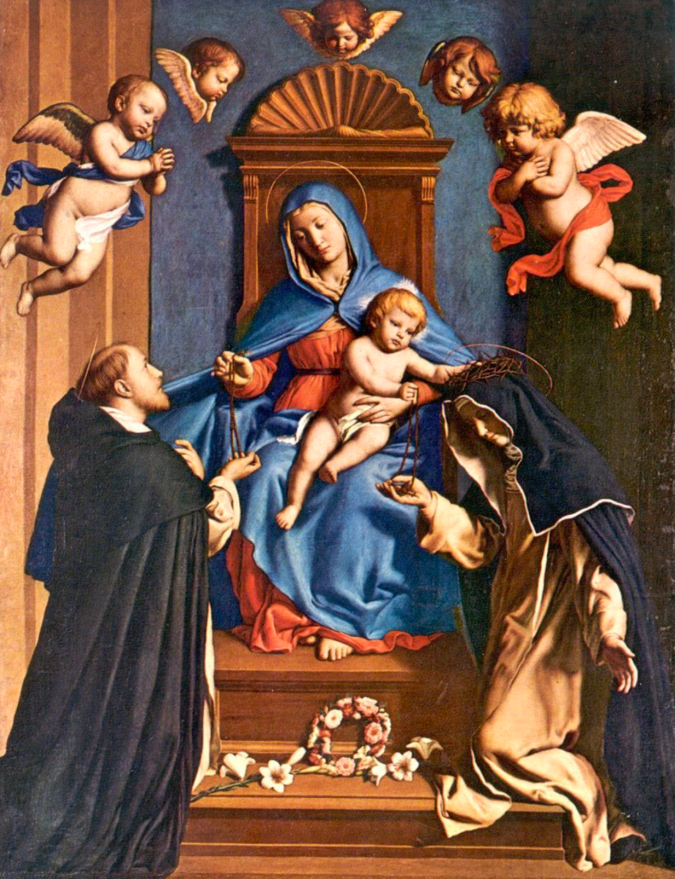
May Our Lady of the Rosary pray for us. (Source)

Over on Twitter, I refer my readers to an incredible thread from Joshua Jennings, who has posted images from an antique book on the fifteen mysteries of the Rosary. The illustrations are delightful, the devotion is manifest, and the typology is sound. Do give it a look.

At Vultus Christi, there is an excellent meditation on the spiritual power of the Rosary. Here’s an excerpt:

The Rosary confounds complexity and decapitates spiritual pride. There is no problem or difficulty that cannot be solved or resolved by faithful persevering recourse to Mary’s Psalter. The Rosary is the gift of the Mother of God to the poor and the powerless, who alone are capable of hearing the Gospel in all its purity, and of responding to it with a generous heart. It is to such as these — the childlike and the weak, the poor and the trusting — that the Rosary is given. It is to such as these that the Rosary belongs.

Read the whole thing.

“Lovely in Limbs, and Lovely in Eyes Not His”

Kingfisher

Kingfisher in action. (Source)

It’s beautiful weather in Oxford today, so I thought I’d celebrate with a quick poem by Hopkins. It’s one of my favorites.

As Kingfishers Catch Fire

As kingfishers catch fire, dragonflies draw flame;
As tumbled over rim in roundy wells
Stones ring; like each tucked string tells, each hung bell’s
Bow swung finds tongue to fling out broad its name;
Each mortal thing does one thing and the same:
Deals out that being indoors each one dwells;
Selves — goes itself; myself it speaks and spells,
Crying Whát I dó is me: for that I came.
I say móre: the just man justices;
Keeps grace: thát keeps all his goings graces;
Acts in God’s eye what in God’s eye he is —
Chríst — for Christ plays in ten thousand places,
Lovely in limbs, and lovely in eyes not his
To the Father through the features of men’s faces.

Faber’s Oxford Poems: Part I

Screen Shot 2018-10-03 at 2.16.56 PM

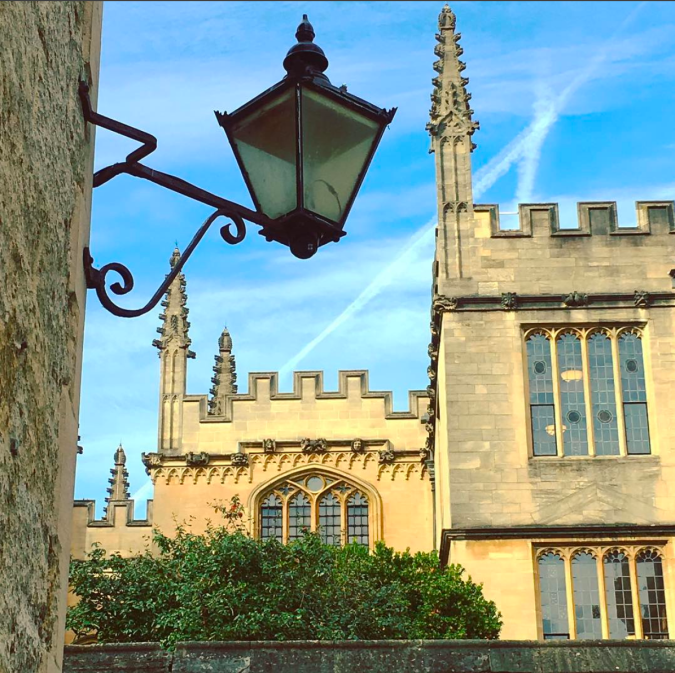
A view of the Bodleian Library from Radcliffe Square. Photo taken by author.

Fr. Frederick William Faber, that great son of St. Philip, was one of the many Oxford converts. He was a Balliol man who later became a fellow of University College, where he embarked on an ecclesiastical career as an Anglican. Later, of course, he came to the Church of Rome and founded the London Oratory. But as I am now settling back into Oxford, I thought it might my readers might enjoy a few of his poems about life at the University. I’ll probably break the collection up into a few different posts. Although Faber was later famous as a hymn-writer, in his youth he was a Romantic poet who won the admiration of none other than Wordsworth, whom he met in the Lake District. Faber’s style may be rather too Victorian for our tastes today. They also represent his spirituality at a very immature stage, when he was still an Anglican. The contrast between “College Chapel’s” rather pathetic final line and Faber’s “Muscular” pose in “College Hall” amuses, to say the least. But occasionally, as in “College Garden,” his sensuality and yearning anticipate the best of the Decadents who came at the end of the century. Finally, I’ll add that Faber’s romantic attachment to the legends and traditions of the English medieval monastics once again confirms my point that there remains an abiding affinity between the Oratorian and Benedictine charisms. 

College Chapel

A shady seat by some cool mossy spring,
Where solemn trees close round, and make a gloom,
And faint and earthy smells, as from a tomb,
Unworldly thoughts and quiet wishes bring:
Such hast thou been to me each morn and eve;
Best loved when most thy call did interfere
With schemes of toil or pleasure, that deceive
And cheat young hearts; for then thou mad’st me feel
The holy Church more night, a thing to fear.
Sometimes, all day with books, thoughts proud and wild
Have risen, till I saw the sunbeams steal
Through painted glass at evensong, and weave
Their threefold tints upon the marble near,
Faith, prayer, and love, the spirit of a child!

College Hall

Still may the spirit of the ancient days
Rest on our feasts, nor self-indulgence strive
Nor languid softness to invade the rule,
Manly, severe, and chastethe hardy school
Wherein our might fathers learnt to raise
Their souls to Heaven, and virtue best could thrive.
They, who have felt how oft the hour is past
In idle, worldly talk, would fain recall
The brazen Eagle that in times of yore
Was wont to stand in each monastic hall;
From whence the Word, or some old Father’s lore,
Or Latin hymns that spoke of sin and death
Were gravely read; and lowly-listening faith
In silence grew, at feast as well as fast.

College Garden

Sacred to early morn and evening hours,
Another chapel reared for other prayers,
And full of gifts,smells after noon-day showers,
When bright-eyed birds look out from leafy bowers,
And natural perfumes shed on midnight airs,
And bells and old church-clocks and holy towers,
All heavenly images that cluster round.
The rose, and pink acacia, and green vine
Over the fretted wall together twine,
With creepers fair and many, woven up
Into religious allegories, made
All out of strange Church meanings, and inlaid
With golden thoughts, drunk from the dewy cup
Of morns and evenings spent in that dear ground!

College Library

A churchyard with a cloister running round
And quaint old effigies in act of prayer,
And painted banners mouldering strangely there
Where mitered prelates and grave doctors sleep,
Memorials of a consecrated ground!
Such is this antique room, a haunted place
Where dead men’s spirits come, and angels keep
Long hours of watch with wings in silence furled.
Early and late have I kept vigil here:
And I have seen the moonlight shadows trace
Dim glories on the missal’s blue and gold,
The work of my monastic sires that told
Of quiet ages men call dark and drear,
For Faith’s soft light is darkness to the world.

Elsewhere: Keanu Heydari on Conversion

Peter_Fendi_(Austrian_-_Fridolin_Assists_with_the_Holy_Mass_-_Google_Art_Project

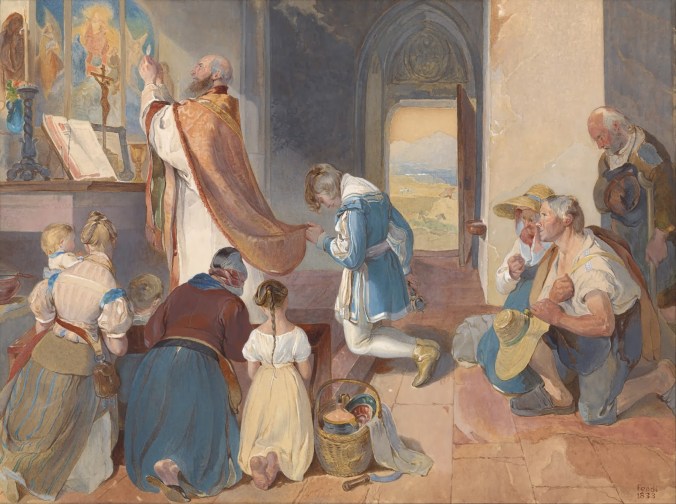
Fridolin Assists with the Holy Mass, Peter Fendi. (Source)

Earlier this month, my friend Keanu Heydari penned what is, I think, a very good essay about his own conversion and about conversion in general. I thought these two paragraphs were especially poignant:

If Jesus is the slain Lamb of God, the content of reconciliation is substantial rather than conceptual, or even primarily juridical. Forgiveness is freely given by God, but rather than bestowed, it is—like a substance—dealt with. It is held, beheld, and shared. I am speaking, of course, of understanding reconciliation as a sacramental event rather than as (primarily) juridical proclamation. The removal of our guilt is a free gift of the gracious God, yet it is not as a word, spoken in a booming voice. It is the material, densely textured experience of Jesus Christ, the Word, the Lamb of God, as he dies on Calvary, by the Church community, in the reception of the sacraments, wherein we receive God. The Psalmist implores, “O taste and see that the Lord is good!” (Ps. 34:8, RSV2CE). We taste and see, we behold, the forgiveness of God.

But pictures say more than words ever can. The Catholic artistic paradigm overflows with meaning. It is effusive, dynamic, and embodied. It is densely textured, thickly self-describing, multi-dimensional, and frankly excessive. But it is precisely in these Rabelaisian excesses that Catholic aesthetics gesture, even more powerfully, towards the ineffable, over and above the words themselves that are used in the liturgy. Sacramentally, we can truly say “Ecce homo.” Artistically, we are reminded that things are really happening outside of us, that we aren’t automata aimlessly generating profit for managers and selling our productivity to survive. We are more than the sum of our extrinsically imposed reductive component parts. The liturgy revels in its (in Cartesian terms) obscene uselessness. The defiance of the mass is its strongest selling point, as it were.

Read the whole thing. In what is proving to be an extraordinarily dark time for the Church, Keanu’s essay brings a good deal of hope in the fundamental promise of salvation.

Elsewhere: Mother Mectilde de Bar and the Prayer of Devekut

One of the great works of Vultus Christi has been the exposure of many English-speaking Catholics to the spiritual treasures of the continental Benedictine tradition, especially the life and work of Mother Mectilde de Bar. The good nun was a profound mystic of the Eucharist and a spiritual heir to the French School. Anyone with any interest in Benedictine life, Catholicism in early modern France, or spirituality generally should take note.

MechtildeBNF.jpg

Mother Mectilde de Bar (1614-1698), foundress of the Benedictines of Perpetual Adoration of the Most Blessed Sacrament of the Altar. (Source)

I am very happy to refer my readers to an excellent translation of one of Mother Mectilde’s letters of spiritual direction. The translator, an Oblate of Silverstream, has rendered the 17th century French into elegant and very readable English. A job well done!

Here’s a particularly potent excerpt:

The whole of Christian perfection consists in continual attention to Jesus Christ, and a constant adherence or submission to His good pleasure. These two points contain everything, and their faithful practice will lead you to the highest degree of perfection. Blessed is the soul who observes them.

The first point consists in seeing Jesus Christ in everything; in all events and in all our dealings; in such way that this divine sight removes from us the sight of creatures, ourselves, and our interests, in order to see nothing except Jesus Christ. In a word, it is to have the presence of God continually.

The second point consists in being constantly submissive to His holy will; in being so much subject to His good pleasure that we no longer have any return, at least voluntarily, by which we can withdraw from this respectful obedience.

I am reminded, in reading this passage, of a concept in Jewish mysticism called devekut. To practice devekut is to cleave to God constantly, even in the midst of everyday, profane activities. The Rabbis who founded and nurtured Hasidism in the 18th century made it a central feature of their mystical praxis, though the idea has roots in the Temple traditions of the Old Testament (vide Barker 2004, 37). Dr. Margaret Barker notes that, according to the older, priestly understanding of the word “cleaving” in Hebrew, “to cleave” meant quite literally to join. However, this sense was displaced when the Moses-focused Deuteronomist tradition came to ascendance. The new meaning of “cleaving” was, instead, obedience (Ibid. 37). Mother Mectilde has here joined both meanings in a salutary way.

Holy-Eucharist-Icon.jpg

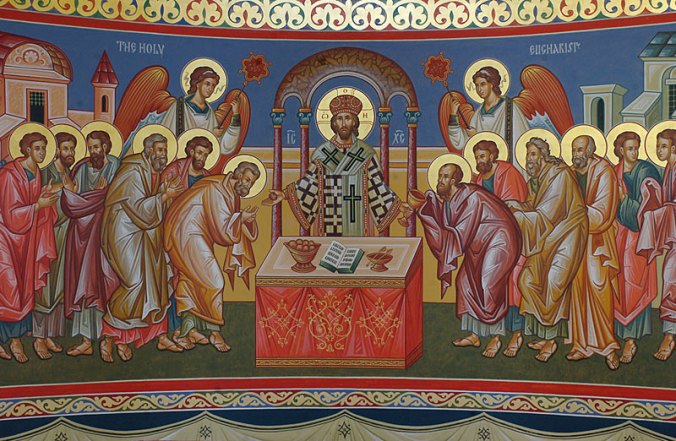
An icon of the Holy Eucharist, showing Christ the High Priest in the Holy of Holies. (Source)

However, I think she places a bit more emphasis on the first, as the primary and indispensable basis of the second. She goes on to write,

Have Jesus Christ imprinted and carved on the center of your soul. Have him in all the faculties of your mind. May your heart be able to think of and long for nothing except Jesus Christ.  May your whole inclination be to please Him. Attach all your fortunes and your happiness to knowing and loving Jesus Christ.[1] May nothing on earth, however great it seems, prevail in you against the constant union you should have with Jesus Christ. May neither heaven, nor earth, nor hell, nor any power, ever separate you from Him.[2]

She continues on and apostraphizes Divine Love, writing

O Jesus all powerful and all love, work in us these two effects of mercy: attract us by your omnipotence and transform us by your love into Yourself.

O love, O love divine, may you burn in us, and that you may consume in us everything that is contrary to you and opposed to your workings.

O life that is not animated by love, how can you be called life? You are a hideous death, and most terrible.

O pure and holy love of Jesus Christ, do not allow a single moment of my life to be spent without love; make me die and throw me into hell a thousand times rather than not to love Jesus Christ.

The first line here is the key; this is the loving and even conjugal language of devekut, not simple obedience. But obedience is implied as the sustaining force and natural result of such attentive love.

Hesychast.jpg

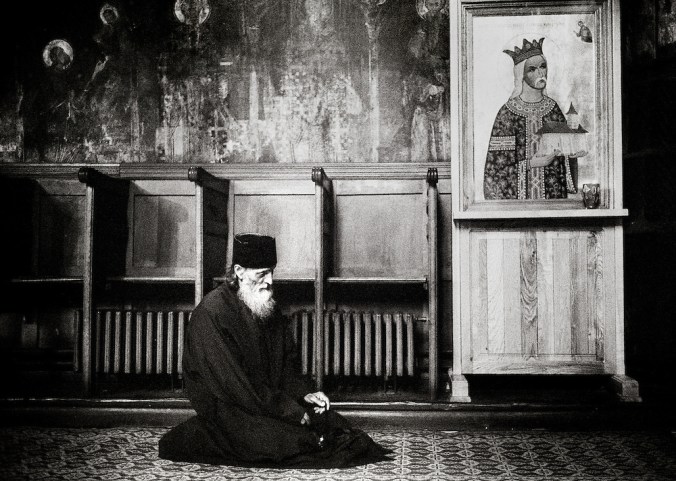
A hesychast at prayer. (Source)

It seems appropriate to me that Mother Mectilde, a Benedictine, should advocate for this kind of “cleaving” prayer, vigilant love in every moment. It has always been the task of the monastic throughout history to preserve this kind of remembrance of God that is itself a form of His presence in the heart. Precisely this “cleaving” constitutes the positive good underlying hesychasm in the East, but it can also be found in many monastic writers of both East and West. Mother Mectilde is not speaking alone. Indeed, she expresses the perennial Wisdom that has always infused the monastic life and made it fruitful.

Read the whole thing over at Vultus Christi.