Elsewhere: A Powerful Prayer of Deliverance

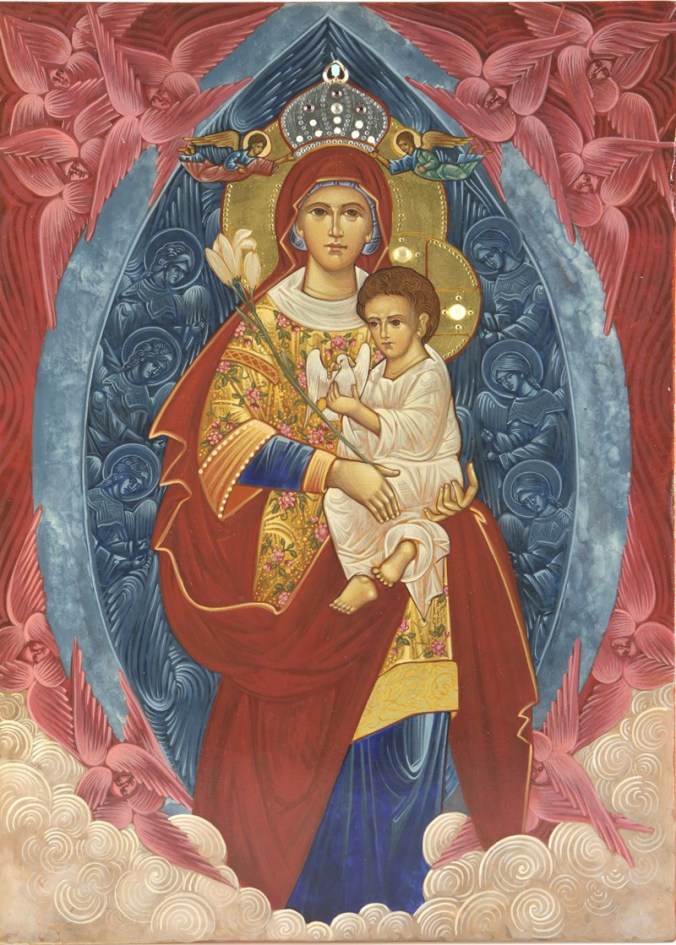
Our Lady of Angels

Icon of Our Lady of Angels. (Source)

Over at Vultus Christi, you can find a series of Chapter Talks on the Rule of Saint Benedict. Today’s commentary concludes with the story of a mighty prayer of deliverance given by the Blessed Virgin Mary to a French priest of the nineteenth century, Bl. Louis-Edoard Cestac. Here it is:

August Queen of Heaven, sovereign Mistress of the Angels, thou who from the beginning hast received from God the power and the mission to crush the head of Satan, we humbly beseech thee to send thy holy legions, that under thy command and by thy power they may pursue the evil spirits, encounter them on every side, resist their bold attacks, and drive them hence into eternal woe.

Who is like unto God?

O good and tender Mother, thou willest always to be our love and our hope.
O Mother of God, send thy holy Angels to defend us and drive far from us the cruel enemy.
Holy Angels and Archangels, defend us and keep us. Amen.

Go read the whole thing. In fact, all of the commentaries are edifying; read them all.

“Love is His Bond”

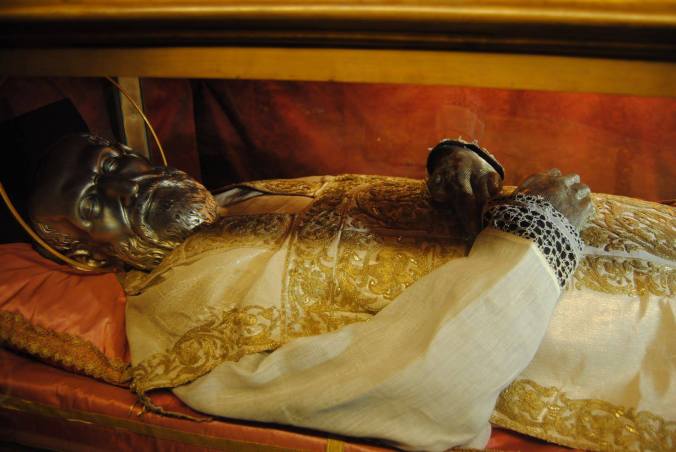
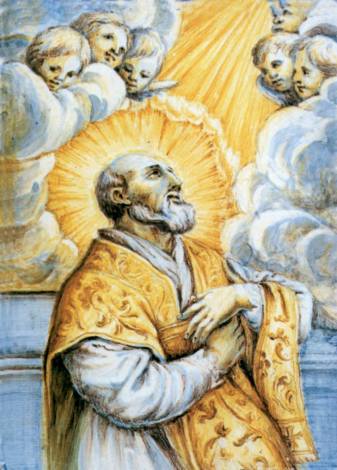
stphilipneribody

St. Philip, pray for us. (Source)

The Mass of St. Philip Neri is a little lesson in joy. The propers again and again stress a common theme: namely, the great saint’s joy, built upon his constant and fiery communion with the Holy Ghost. Holy Mother Church lifts her voice and sings in the Introit, “The love of God is shed abroad in our hearts by the Holy Ghost which dwelleth in us. Praise the Lord, O my soul; and all that is within me praise His holy name.” At the Collect, we pray to God to “mercifully grant that we, who rejoice in his solemnity, may be profited by the example of his virtues.” When, in the third reading, we hear of the saint’s overpowering love of “the spirit of wisdom,” we learn as well that “All good things together came to me with her…and I rejoiced in them all” (from Wisdom 7). The Offertory likewise proclaims with the Psalmist, “I will run the way of Thy commandments, when Thou hast set my heart at liberty” (Ps. 118). Everywhere we turn, we find the joy and freedom that alone springs from communion with the Holy Ghost.

And then we come to a remarkable moment. In the Secret, the priest prays over the offerings,

We beseech Thee, O Lord, favorably to regard these present sacrifices: and grant that the Holy Spirit may inflame us with that fire, wherewith he wondrously penetrated the heart of blessed Philip.

The Church has here enshrined a stunning and highly instructive truth. Yet it is easy to miss.

The very heart of St. Philip – that organ claimed so powerfully by the Holy Ghost in the catacombs of St. Sebastian, ever converting those sinners with the happy fortune of touching Philip’s breast, inflaming the saint with the deathless ardor of love, bearing such close likeness to those sacred hearts of Christ, Our Lady, and St. Joseph, beloved by generations upon generations – that heart is set up for us here in parallel to the Eucharist. For just as it is the Spirit who will so shortly transform bread into the most holy and eternal heart of Jesus, so it is that same Spirit who made of St. Philip’s heart a “hostia pura, hostia sancta, hostia immaculata.” Christ gives himself entirely to us by the Holy Ghost in the Liturgy, and St. Philip Neri became entirely Christ’s by the arrival of the Holy Ghost in those dark catacombs. To possess the heart is to possess the whole man.

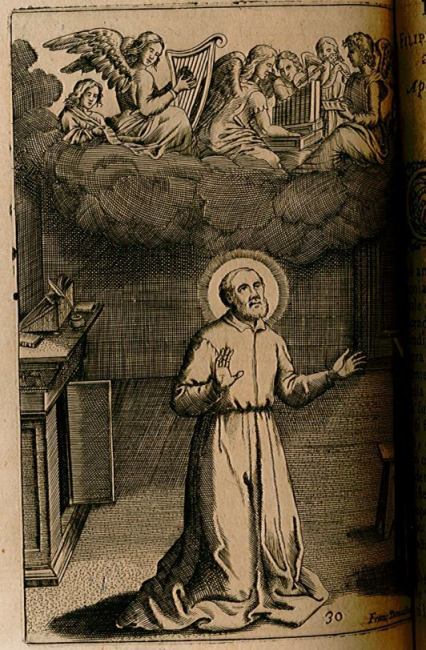
RarePlatePNCardiff

A plate illustrating the life of St. Philip from a rare 1699 Vita, kindly shown to me and since publicly shared by the Cardiff Oratorians. (Source)

This mutual possession of God and man animates everything for the Christian. The more we are given over to it, the more God allows us to partake of His own life. The more we are His, the more He becomes ours. This spiritual truth was well understood by St. Philip, who enshrined it as the principal of unvowed community life in the Oratory. In the words of Bl. John Henry Newman, “Love is his bond, he knows no other fetter.” This line, written of St. Philip, could apply just as well to Our Savior, Jesus Christ. For it is by His indwelling love that we come to love Him. It is by love that we can join our hearts to His in the Eucharist. It is truly by love that we share “that fire, wherewith [the Holy Spirit] wondrously penetrated the heart of blessed Philip.”

The 83rd Psalm comes to the Church’s lips at the Communion. She sings, “My heart and my flesh rejoice in the living God.” These are not only St. Philip’s words, but those of every soul who gives herself over to the indwelling love of God. And at the Postcommunion, the Church prays,

O Lord, who hast fulfilled us with Thy heavenly delights: we beseech Thee, that by the merits of blessed Philip Thy Confessor, and by following him, we may ever earnestly seek after those things whereby we truly live.

filippo-neri

St Philip lived a preeminently liturgical life. (Source)

What are “those things whereby we truly live?” The Holy Ghost, the Eucharist, and prayer – those things, if it be not too blasphemous to speak of them as “things,” which were ever St. Philip’s “heavenly delights.” Or, more properly, that mystic unity of the three in the Liturgy. In his own words, “A man without prayer is like an animal without the use of reason.” And it is surely the grand and orderly and perfect prayer of Christ the Priest and Victim that St. Philip means when he speaks of our super-sensual reason.

What, then, does it mean to “truly live?” If I may be permitted to tie together a few of St. Philip’s maxims, we can discern his own answer to this question:

In the spiritual life there are three degrees: the first may be called the animal life; this is the life of those who run after sensible devotion, which God generally gives to beginners, to allure them onwards by that sweetness to the spiritual life, just as an animal is drawn on by a sensible object. The second degree may be called the human life; this is the life of those who do not experience any sensible sweetness, but by the help of virtue combat their own passions. The third degree may be called the angelic life; this is the life which they come to, who, having been exercised for a long time in the taming of their own passions, receive from God a quiet, tranquil, and almost angelic life, even in this world, feeling no trouble or repugnance in anything. Of these three degrees it is well to persevere in the second, because the Lord will grant the third in His own good time.

A departure from the passions and a cleaving to virtue; mortification mixed with convivial, holy companionship; and above all, an overriding joy.  These are the manifestations of the indwelling love of God. These constitute a life “truly lived.” These are the fragrant flowers accompanying the fruits of the Holy Ghost. “Thou hast set my heart at liberty;” the saint embodies the song of the Offertory.

St. Philip’s life was marked in every way by such a communion with the Holy Ghost, first in a singular and miraculous way in the catacombs, and then again at every Mass. The love of God made him the most perfect model of the very “angelic life” he described to his sons and companions. Those of us privileged enough to count him among our heavenly friends may, by his merciful intercession, hope to share that one Divine Joy he knew so well. May he so pray for us on this, his feast.

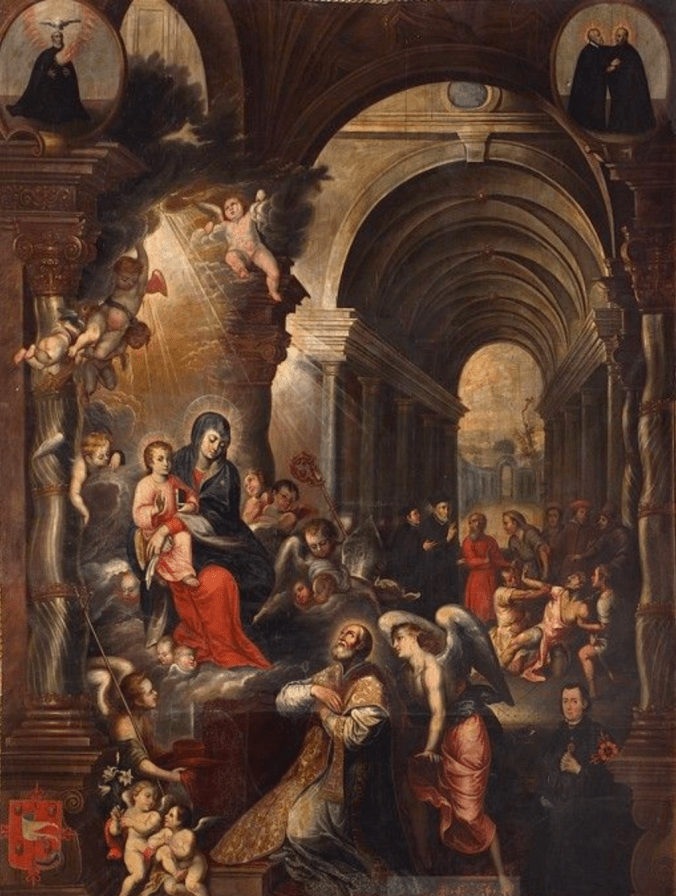
Screen Shot 2018-05-22 at 11.27.28 PM.png

Aparición de la Virgen a San Felipe Neri, Mexico, detail. (Source)


Springtime Sophiology from St. Nicodemus

GateAddisons

Gate on Addison’s Walk, Magdalen College, Oxford. Photo by author.

Now there are of course those who do not use the senses and the subsequent meditation on creation and Holy Scripture to rise through them to the knowledge and love of God, who both spoke the Scriptures and created the world. On the contrary, such people use this sense perception simply for human aggrandizement, for the marvel and mere pleasure of the corruptible beauty in creatures, and for other bodily purposes. Or, at least, they simply remain on the level of the limited purposes of the creatures and of the Scriptures. They thus neglect to proceed further, to rise to the catholic and comprehensive view of things, to God’s wisdom through which all things are known and in which all the reasons for each creature are to be found, according to St. Maximos. “The Lord by wisdom founded the earth…When he established the heavens, I was there” (Prv. 3:19, 27). St. Basil the Great too had something to say on this point: “There are indeed certain reasons why the primordial wisdom of God was laid as a foundation to nature at the time of creation.” Now, those who do not rise – through the reason endowed in nature and in the Holy Scriptures – to the hypostatic Logos of God, those who do not love Him “through whom all things were made” (Jn 1:3), as most of the worldly philosophers do not, all of these people act contrary to the Creator’s purpose in nature and in Holy Scripture. And according to the wise and most insightful Kallistos, the thought of such people has lost its natural tendency and has become unnatural. This has occurred because they use the means as ends in themselves, and the causes as results, and they love the gifts more than the Giver and the creatures more than the Creator, as St. Augustine has said. Since creation was not created for itself, but for the vision and glory of its Creator, it is not proper that it should be seen and admired for its own sake, but rather for the sake of its Creator. It is the same with the mirror which one does not look at for its own sake, but for the sake of the one reflected in it.

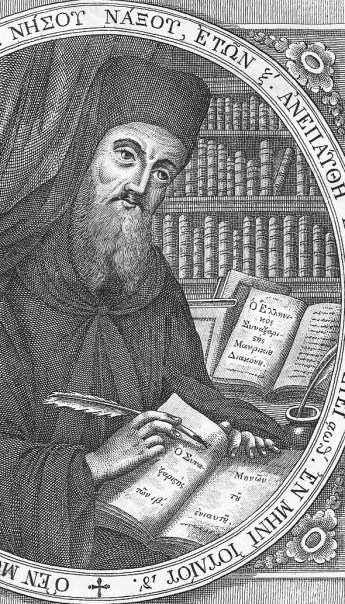
nicodemus-IN-2.jpg

St. Nicodemus of the Holy Mountain (Source)

We may add, finally, that the secondary goal and purpose for the creation of the senses is so that the material body may be able to enjoy through them material nourishment, growth, and life. Truly, I do not know what to marvel at most: the “palace” that is so intricately constructed or the “king” who dwells therein. But of these two, I must certainly marvel most at the master artist and the Creator who with infinite wisdom not only created both of them, but also united the mind and body in such perfect harmony.

Quoted from Chapter One of A Handbook of Spiritual Counsel by Nicodemos of the Holy Mountain, Trans. Peter A. Chamberas, Paulist Press, 1989, pages 73 and 74. 

The Threefold Maternity of Mary

OurLadyCenacle.jpg

Our Lady of the Cenacle, pray for us. Photo by Lawrence Lew O.P. (Source)

God seems very fond of doing things in a Trinitarian way. Everywhere we look, in nature, in our lives, in the life of the Church, it seems that we constantly come upon things that speak of threeness-in-oneness. So it is with God’s finest creation, Our Lady. Or rather, with her maternity. She has but one singular motherhood – her highest title, Theotokos, means “Mother of God.” Nothing can surpass this supreme gift. Nothing greater can be said of the Lord’s chosen. Nothing can reveal more about Our Lady’s life and mission. Yet we detect a certain triune quality to this one eminent dignity. We can speak of the threefold maternity of Mary.

Screen Shot 2018-05-12 at 12.17.34 AM.png

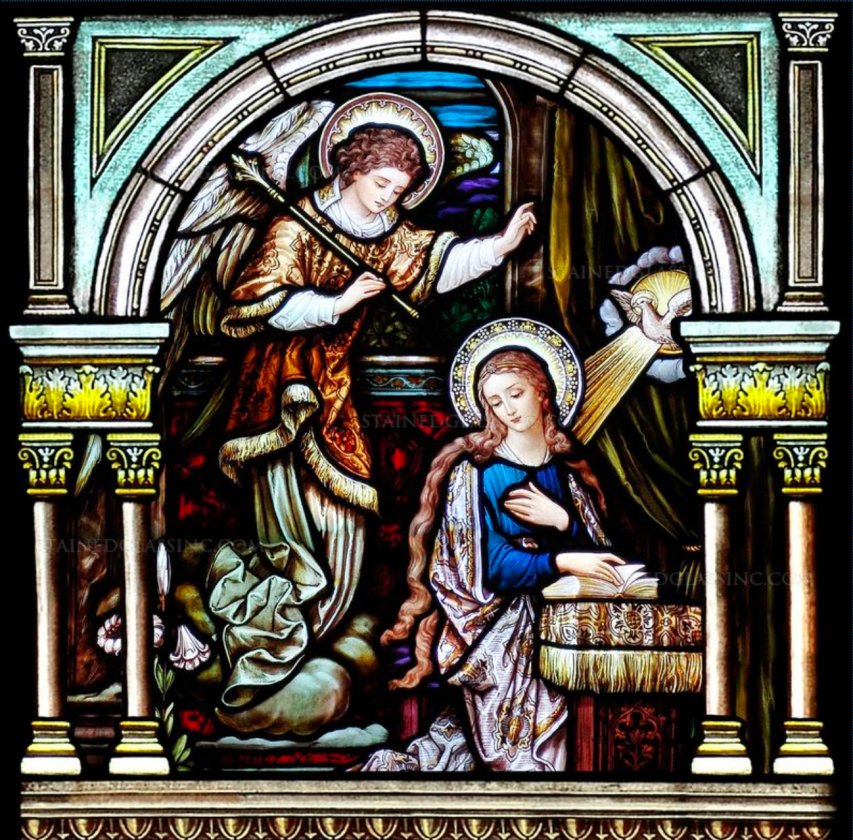
Our Lady of the Annunciation (Source)

First, we encounter Mary’s basic, physical motherhood of Jesus at the Annunciation. In welcoming the will of God into her life, she becomes the mother of the Most High, God Incarnate in Jesus Christ. The Holy Ghost, her divine spouse, conceives the Son in her womb. Her mystical partner and guardian in this parentage is St. Joseph. And in the joy of that maternity, we see Mary and Joseph as two models of chastity. Everything in those joyful mysteries becomes a parable of purity. The sanctity of the Holy Family consists in no small part in the innocence that pervades the hearts of each member. For that innocence is an opening to charity.

sorrowfulmotherwindow

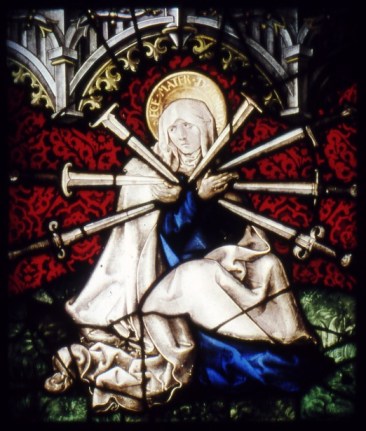
Our Lady of Sorrows (Source)

Then, after the three and thirty years, Mary stands mournful beneath the cross. It was there that she became Mother of the Eucharistic Christ. For, offering up the sorrow of her own Immaculate Heart in union with her son’s High Priestly sacrifice, she bound herself to all the altars of the world as first adorer and co-redemptrix. Gone is St. Joseph; in his stead we find St. John, the figure of all priests under Christ. He would share the Eucharistic life with Mary forever after, entrusted with her care. Here, the great virtue uniting both of the hearts below the Cross is obedience. Our Lady obeys the paramount Providence of God in consenting to the sacrifice of her son, and St. John obeys the words of Our Lord in taking responsibility for the Sorrowful Mother.

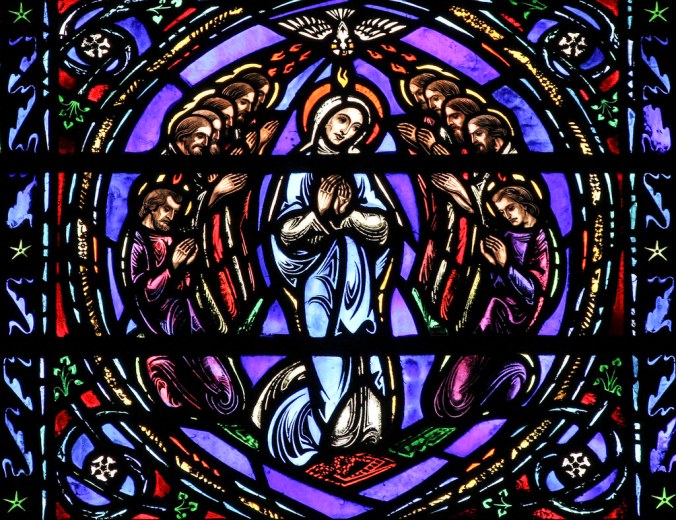
But it is today’s feast of Our Lady of the Cenacle that points to the full and final extension of these two prior forms of motherhood. It falls on a most interesting point in the calendar, Saturday in the Octave of the Ascension. It is as if we are standing in the middle of a bridge between two shining cities, and can hear the mingled music of both. This liminal quality is important. For the feast we celebrate today has a double meaning. Two feasts of different but equal importance and dignity seem to unite in this celebration.

We have just left Christ in his Ascension. The Ascension is a memorial of Christ’s High Priesthood. It is like the prayers at the foot of the altar in the Cosmic Liturgy. Pentecost is a glorious theophany, the arrival of the Holy Ghost. We are thus mid-way between a mystery of veiling, and mystery of unveiling. And who do we turn to, but Mary, she who both hid and manifested God in her person?

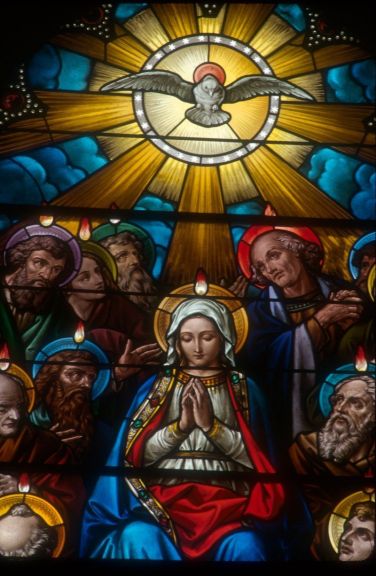
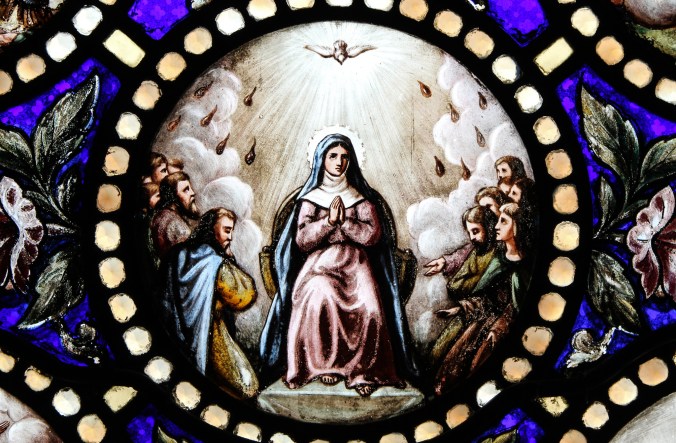
When we celebrate Our Lady of the Cenacle, we commemorate her vigil of silent prayer with the Apostles in the upper room in those intense days following Our Lord’s Ascension. But we also remember the descent of the Holy Ghost into her own Immaculate Heart and into those of her companions. At the deepest level of reality, these constitute a single event in the History of Salvation. And they give us a sense of Mary’s deepening, widening maternity.

MaryCenacleSpirit.jpg

Our Lady of the Cenacle (Source)

Wherever Mary communes with her divine spouse, the Holy Ghost, there is conceived the Body of Christ. First, that meant the physically Incarnate Word. Then it was the Eucharist extended throughout all time. And finally, as a consequence of these two forms of motherhood, we come to Mary’s maternity of the Church. This maternity is the crown of the other two, for it has never ended. The Holy Spirit came to that silver throne, the Immaculate Heart of Mary, and has never left. In all the rest of Mary’s earthly life and eternal existence in beatitude, she has never been deprived of that intimate union begun in Pentecost. And so the Church remains. Mary’s union with the Holy Ghost is at the very heart of the Church’s being. That union brought forth Christ once. It brings forth the Eucharist at every Mass. And now, at Pentecost, it brings forth the Eucharistic community, Christ in His members.

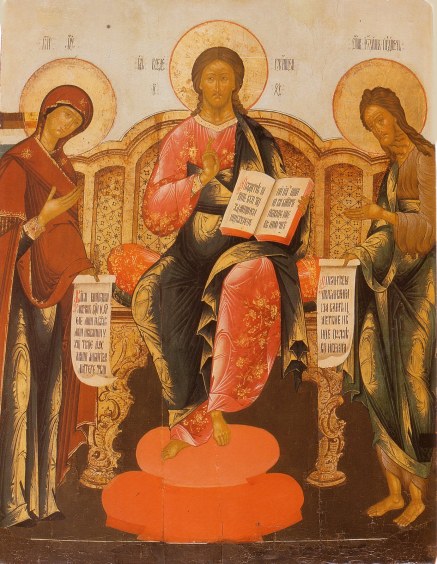
Yet in what does this exalted maternity consist? Prayer, offered perfectly in the Immaculate Heart united to the Holy Ghost. Contemplation, adoration, reparation, intercession – in all its forms, prayer rises from Mary’s heart like huge storms of incense blowing across a desert plain, raining down graces to make it fertile. Yet one form of prayer does not. Mary cannot be contrite. She has never sinned. But we turn to her mystic partner in this maternity, and find a pillar of penance. Who else shares in the life of the Spirit in such a fiery way, but St. John the Baptist? Such is the heavenly reality expressed by the Deisis icon. It shows the Blessed Virgin Mary, paragon of prayer, and St. John the Baptist, archetype of penance, adoring Christ the Lord. Both Our Lady and St. John represent the twin realities of the Ecclesial life – prayer and penance – ordered to Christ – the Sacraments. We might thus speak of Mary’s motherhood of the Church as her Sophianic Maternity, for it is entirely drawn from and oriented to the Divine Wisdom.

Deisis.jpg

A typical deisis. (Source)

The feast of Our Lady of the Cenacle is thus a profoundly maternal day in the Church’s liturgy. Let us join her in prayer. Perhaps we shall taste something of that everlasting life granted to her in the Cenacle.

CenacleRound.jpg

Monstra Te Esse Matrem (Source)

Monsieur Olier on the Ascension

QueensCollegeAscension.jpg

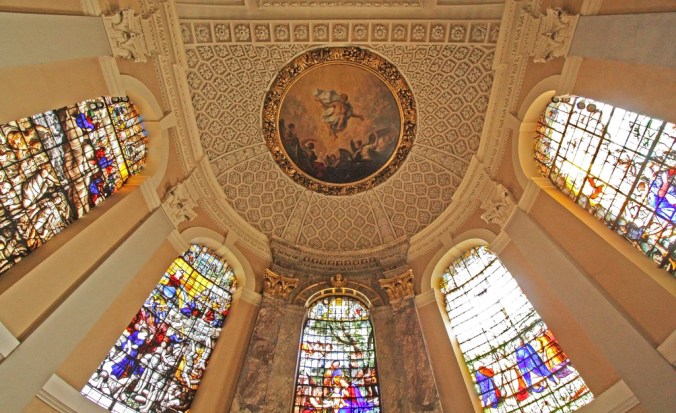
The Ascension fresco at Queen’s College Chapel, Oxford – perhaps my favorite chapel in the entire University. Photo by Fr. Lawrence Lew OP. (Source)

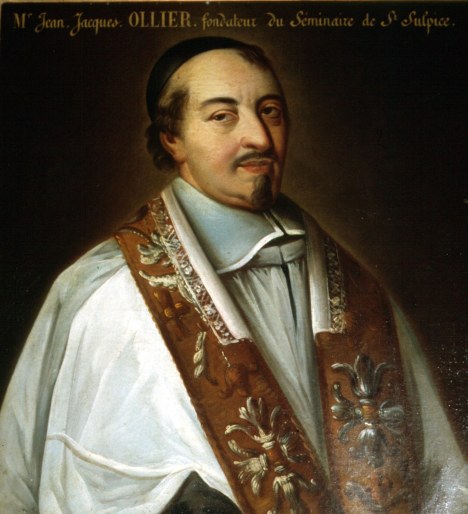
One of the greatest luminaries of the French Church in the 17th century, that period known as the Grand Siècle, was Jean-Jacques Olier. Though barely read today, he exerted a profound influence upon the formation of the French School of Spirituality through his work in founding the Sulpician Order. He was a close associate of St. Vincent de Paul, who always regarded him as a saint.

M.Olier.jpg

M. Olier, priez pour nous! (Source)

I have excerpted here his short chapter on the Ascension from his book, The Interior Life of the Most Holy Virgin. I must ask my readers to forgive me for not translating this edifying work, as I did not have the time. Those with French, however, will appreciate the depth of M. Olier’s insight.

***

Le sacrifice de Jésus-Christ étant offert pour l’Église, qui est visible, devait être visible lui-même dans toutes ses parties, afin de nous donner une certitude parfaite de notre réconciliation avec Dieu. Marie, dans le jour de la Purification, avait paru à l’offrande de la victime, en présentant elle-même, au nom de l’Église, Jésus-Christ notre hostie, et en le dévouant à l’immolation. Elle avait aussi été présente à la deuxième partie du sacrifice, à l’immolation réelle de Jésus-Christ sur la croix. La troisième, qui était la consommation ou le transport de la victime en Dieu, avait eu lieu dans le mystère de la Résurrection. Mais cette consommation s’était opérée d’une manière invisible; et la bonté de Dieu voulait que, pour notre consolation, cette partie du sacrifice devînt visible aussi bien que les deux autres, ou plutôt que Notre-Seigneur montât au ciel pour aller se perdre dans le sein de Dieu non-seulement à la vue de la très-sainte Vierge sa mère, mais encore sous les yeux de tous les apôtres par qui l’Église était représentée. C’est ce qu’avait figuré autrefois Élie montant au ciel dans un char de feu à la vue d’Élisée ; et ce prophète avait déclaré expressément à son disciple que, s’il le voyait monter, il aurait son double esprit. Don mystérieux, qui exprimait le fruit du sacrifice, c’est-à-dire l’esprit de mort et de résurrection ou de vie divine, que Jésus-Christ devait laisser à l’Église figurée par Élisée.

Après sa résurrection, il communiquait toutes les dispositions et tous les sentiments de son âme à sa bénite Mère. Il lui exprimait spécialement les désirs ardents qui le pressaient d’aller enfin se réunir à Dieu son Père, pour le louer et le glorifier dans le ciel. Marie, de son côté, éprouvait un véhément désir d’y accompagner son Fils, pour s’unir à ses louanges; et sans doute qu’elle eût terminé alors sa vie et l’eût suivi dans les cieux, s’il n’eût voulu se servir d’elle pour aider l’Église dans ses commencements.

L’oeuvre de cette divine Mère était encore incomplète. Après avoir donné, par Marie, naissance au chef, Dieu voulait procurer aussi, par elle, la formation de tout le corps. Il voulait la rendre mère de sa famille entière, de Jésus-Christ et de tous ses enfants d’adoption. Par zèle pour la gloire de Dieu et par charité pour nous, elle accepte avec joie la commission que Notre-Seigneur lui laisse de travailler à faire honorer son Père par les hommes, et de demeurer sur la terre jusqu’à ce que l’Église ait été bien affermie.

Le quarantième jour après la Résurrection étant donc venu, Jésus-Christ- se rend à Béthanie avec sa sainte Mère et ses apôtres; là élevant les mains et les bénissant, il se sépare d’eux, et en leur présence s’élève vers le ciel. Ils l’y suivirent des yeux, jusqu’à ce qu’enfin une nuée le dérobe à leur vue; et comme néanmoins ils tenaient toujours leurs regards fixés au ciel, deux anges vêtus de blanc leur apparurent et leur dirent : Pourquoi vous arrêtez-vous à regarder le ciel? Ce Jésus, qui a été attiré du milieu de vous dans le ciel, viendra de la même manière que vous l’avez vu monter au ciel. Ainsi Dieu voulut-il que l’acceptation solennelle qu’il faisait de notre hostie, eût pour témoins non-seulement tous les apôtres et la très-sainte Vierge, qui l’avait produite de sa propre substance, mais les anges eux-mêmes.

En montant dans les cieux, Jésus-Christ élève avec lui tous les saints patriarches et les autres justes qu’il avait retirés des limbes, et va les offrir à son Père, comme les premières dépouilles qu’il a ravies au démon par sa mort. Enfin, dérobé par la nuée à la vue de ses disciples, il laisse rejaillir la splendeur de sa gloire, qu’ils n’auraient pu soutenir et dont il avait retenu l’éclat dans ses diverses apparitions.

Comme les enfants des rois donnent des présents à leurs sujets, en faisant leur entrée dans leur royaume, Jésus-Christ, montant à la droite de son Père pour prendre possession de son trône, voulait envoyer à ses apôtres son esprit et ses dons, c’est-à-dire dilater son coeur en faisant entrer les hommes dans ses sentiments de religion envers Dieu son Père, et achever ainsi son ouvrage. Dans ce dessein et par son commandement, les disciples s’assemblèrent à Jérusalem avec la très-sainte Vierge et plusieurs saintes femmes; et là ils étaient en prière, louant, bénissant le nom de Dieu, et attendant la venue de l’Esprit-Saint. Marie était au milieu d’eux et présidait ce sacré concile, comme ayant, pour aviser à établir la gloire de Dieu dans le monde, une grâce qui excellait par-dessus celle de tous les apôtres. Quoique Jésus-Christ n’eût pas voulu qu’elle fût présente à la Cène, ni qu’elle offrît extérieurement le saint sacrifice, ni qu’elle fût prêtre selon l’ordre de Melchisédech, il voulait néanmoins que Marie, destinée à être la mère des vivants, se trouvât dans le Cénacle avec les apôtres, afin de verser la plénitude de son esprit en elle, comme dans le réservoir de la vie divine, et de la distribuer par elle à tous ses enfants, et aussi pour apprendre à l’Église que jamais elle ne serait renouvelée qu’en la société de sa divine Mère et en participant à son esprit.

rococoascensionaltar

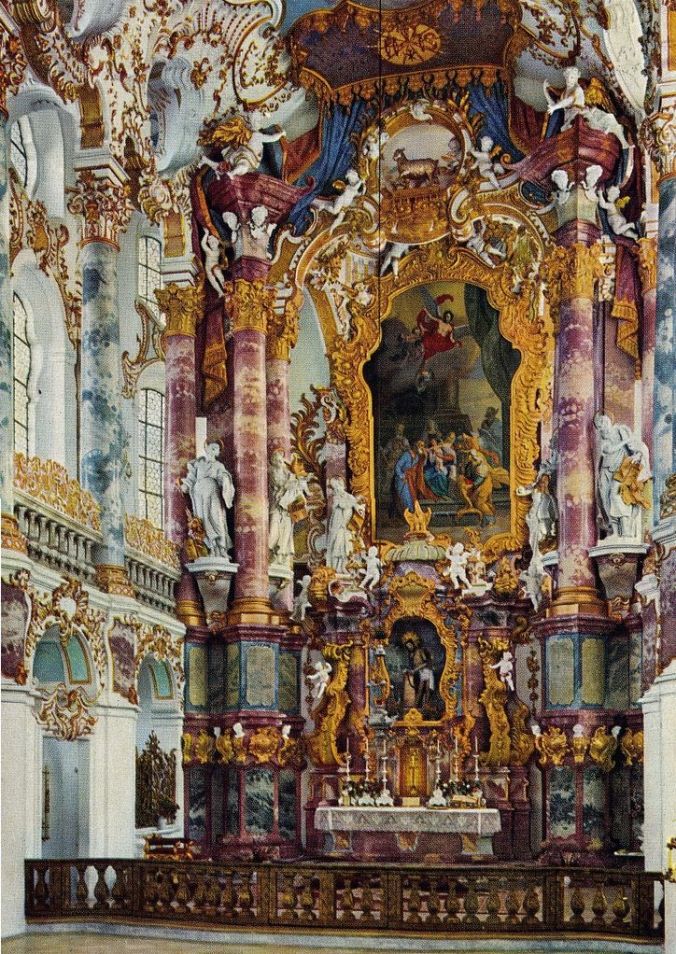
A rococo altar depicting the Ascension, Ottobeuren, Germany. (Source)

A Forgotten Feast

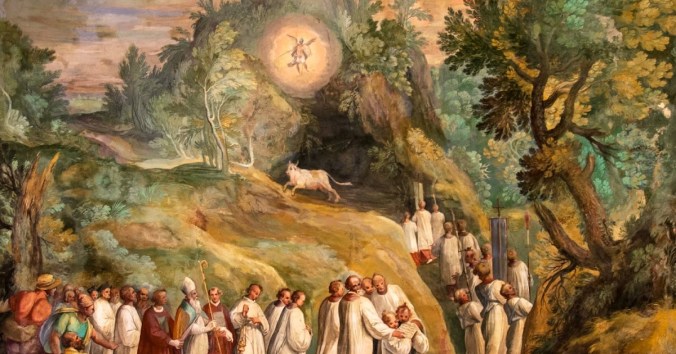
Aparición de San Miguel Arcángel en Monte Gargano

St. Michael, pray for us. (Source)

One of the great victims of the liturgical reform was a whole set of very odd, very particular feasts. The homogenizing, unpleasantly modern mindset of so many reformers back in the 1960’s and 70’s seems to have left no room for anything that could be remotely construed as anachronistic or legendary. Thus vanished the Invention of the Holy Cross, which would have fallen only a few days ago. Another feast lost to us is the one that would, in the old calendar, have come today: the Feast of the Apparition of St. Michael. How wonderful that the Liturgical Providence of God should grant us a feast simply to recall the visible presence of the Angelic Powers in our lives.

Allow me to quote Dom Gueranger at length:

Devotion to St. Michael was sure to spread through the Church, especially after the worship of idols had been banished from the various countries, and men were no longer tempted to give divine honor to creatures. Constantine built a celebrated Church called Michaelion in honor of the great Archangel, and at the time when Constantinople fell under the power of the Turks, there were no fewer than fifteen churches bearing the name of St. Michael, either in the city or the suburbs. In other parts of Christendom the devotion took root only by degrees; and it was through apparitions of the holy Archangel that the faithful were prompted to have recourse to him. These apparitions were local and for reasons which to us might seem of secondary importance; but God, Who from little causes produces great effects, made use of them whereby to excite Christians to have confidence in their heavenly protector. The Greeks celebrate the apparition that took place at Chone, the ancient Colossae in Phrygia. There was in that city a church dedicated to St. Michael and it was frequently visited by a holy man named Archippus, who was violently persecuted by the pagans. One day, when Archippus was at his devotions in his favorite St. Michael’s, his enemies resolved to destroy both him and the church. Hard by ran a brook which flowed into the river Lycus; they turned it aside and flooded the ground on which the church stood. Suddenly there appeared the Archangel St. Michael holding a rod in his hand; the water immediately receded, and flowed into a deep gulf near Colossae where the Lycus empties itself and disappears. The date of this apparition is not certain, but it occurred at the time when pagans were still numerous enough in Colossae to harass the Christians.

Another apparition which encouraged devotion to St. Michael in Italy, took place on Mount Gargano, in Apulia; it is the one honored by today’s Feast. A third happened on Mont Tombe (Mont Saint-Michel; see images at left and at bottom), on the coast of Normandy; it is commemorated on the 16th of October.

The Feast we are keeping today is not so solemn as the one of September 29th; it is, however, more exclusively in honor of St. Michael, inasmuch as the Autumn Feast includes all the choirs of the Angelic hierarchy. The Roman Breviary gives us the following account of the Apparition on Mount Gargano:

That the Blessed Archangel Michael has often appeared to men, is attested both by the authority of Sacred Scripture, and by the ancient tradition of the Saints. Hence, the memory of these apparitions is commemorated in divers places. As heretofore St. Michael was honored by the Synagogue of the Jews as Guardian and Patron, so is he now by the Church of God. A celebrated apparition of the Archangel took place, under the Pontificate of Gelasius I, in Apulia, on the top of Mount Gargano, at whose foot lies the town of Siponto.

A bull belonging to a man who lived on the mountain, having strayed from the herd, was, after much searching, found hemmed fast in the mouth of a cave. One of its pursuers shot an arrow, with a view to rouse the animal by a wound; but the arrow rebounding struck him that sent it. This circumstance excited so much fear in the bystanders and in them who heard of it, that no one dared to go near the cave. The inhabitants of Siponto, therefore, consulted the Bishop; he answered that in order to know God’s will, they must spend three days in fasting and prayer.

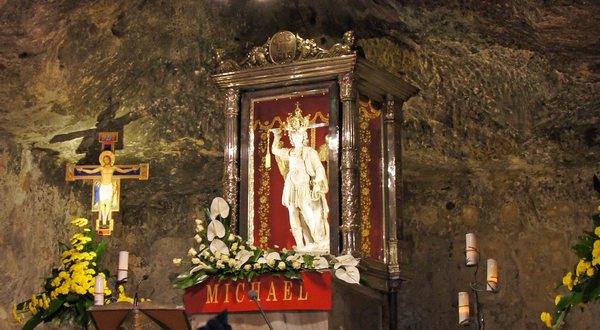
At the end of the three days, the Archangel Michael warned the Bishop that the place was under his protection, and that what had occurred was an indication of his will that God should be worshiped there, in honor of himself and the Angels. Whereupon the Bishop repaired to the cave, together with his people. They found it like a church in shape, and began to use it for the celebration of the divine offices (see image below). Many miracles were afterward wrought there. Not long after, Pope Boniface dedicated a church in honor of St. Michael in the great Circus of Rome, on the third of the Kalends of October (September 29), the day on which the Church celebrates the memory of all the Angels. But today’s Feast is kept in commemoration of the Apparition of St. Michael the Archangel.

gargano

The shrine to St. Michael on Monte Gargano (Source)

Yet these stories, reflecting Medieval devotional practice more than any Biblical story or the life of any particular saint, have no place in the new calendar. It is one thing to accept Our Lady of Guadalupe, beloved by millions. It is quite another to countenance a similar story which might only be of local interest. Yet the liturgy is never purely provincial. While there has always been great variety among local rites and practices, the Mind of the Church synthesizes this diversity into an underlying, supernatural harmony. There is only one High Priest, and the liturgy is His eternal prayer as shared by His bride and body, the Church.

The irony of course, is that the reformers seem to have grasped that principal, but then applied it perversely. They acknowledged the universality of the liturgy, but understood it with prejudice against the forest of particularities that had sprung up over the whole Catholic world over the course of nearly two millennia. They could stand on the precedent of Trent and the suppression of most other rites by Quo Primum (1570). Yet that bull at least allowed those liturgies in existence prior to 1370.

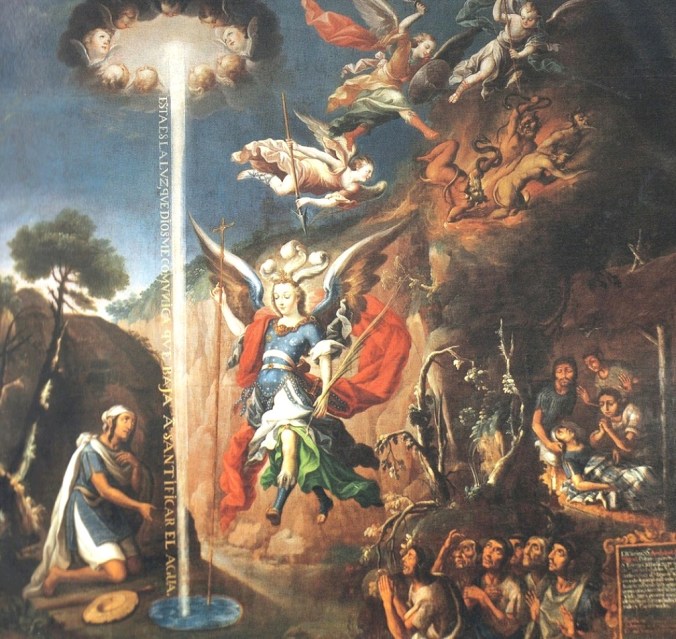
Apparition of St Michael the Archangel to Diego Lázaro, Santuario de San Miguel del Milagro, Nativitas, Tlaxcala

Apparition of St Michael the Archangel to Diego Lázaro, Santuario de San Miguel del Milagro, Nativitas, Tlaxcala, Mexico (Source)

It occurs to me that, in removing feasts like the Apparition of St. Michael, we have allowed ourselves to forget many of those little stories and details that were once part of a common Catholic heritage. That forgetting coincided with a general turn away from the supernatural in Western civilization. The middle of the twentieth century saw a retreat from those doctrines of the invisible world that today’s feast (and others like it) commemorate. The result? A proliferation of “new religious movements” seeking the transcendent in a host of spurious, unsound practices. The mumblings of Victorian cranks were garbled together with bastardized Buddhism and reconstructed paganism, garnished with a generous helping of hallucinogens. And that’s just the New Age.

The task that faces us now is to remember all those things we forgot. May St. Michael pray for us in this critical venture.

A Ghastly Hymn for Good Shepherd Sunday

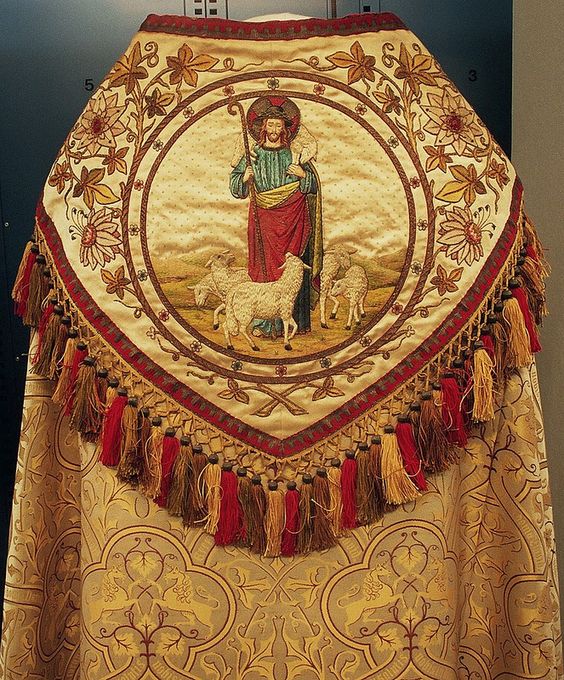
Cope2

A cope depicting the Good Shepherd. (Source)

I realize that technically last week was Good Shepherd Sunday in the traditional calendar, but as most of the Catholic world (alas) celebrates it tomorrow, I thought I’d offer up this truly dismal hymn from Fr. Faber. I have never yet heard it set to music, so if any of my readers happen to know of a recording, I would appreciate them kindly sharing it. Fr. Faber is one of my favorite spiritual writers and hymnodists…even when he’s outlandishly bad.

The True Shepherd

Fr. Frederick William Faber

I was wandering and weary
When my Saviour came unto me;
For the ways of sin grew dreary
And the world had ceased to woo me:
And I thought I heard Him say,
As He came along His way,
O silly souls! come near Me;
My sheep should never fear Me;
I am the Shepherd true.

At first I would not hearken,
And put off till the morrow;
But life began to darken,
And I was sick with sorrow;
And I thought I heard Him say,
As He came along His way,
O silly souls! come near Me;
My sheep should never fear Me;
I am the Shepherd true.

At last I stopped to listen,
His voice could not deceive me;
I saw His kind eyes glisten,
So anxious to relieve me:
And I thought I heard Him say,
As He came along His way,
O silly souls! come near Me;
My sheep should never fear Me;
I am the Shepherd true.

He took me on His shoulder,
And tenderly He kissed me;
He bade my love be bolder,
And said how He had missed me;
And I’m sure I heard Him say,
As He went along His way,
O silly souls! come near Me;
My sheep should never fear Me;
I am the Shepherd true.

Strange gladness seemed to move Him,
Whenever I did better;
And he coaxed me so to love Him,
As if He was my debtor;
And I always heard Him say,
As He went along His way,
O silly souls! come near Me;
My sheep should never fear Me;
I am the Shepherd true.

I thought His love would weaken,
As more and more He knew me;
But it burneth like a beacon;
And its light and heat go through me;
And I ever hear Him say,
As He goes along His way,
O silly souls! come near Me;
My sheep should never fear Me;
I am the Shepherd true.

Let us do then, dearest brothers!
What will best and longest please us,
Follow not the ways of others,
But trust ourselves to Jesus;
We shall ever hear Him say,
As He goes along His way,
O silly souls! come near Me;
My sheep should never fear Me;
I am the Shepherd true.

Five Years a Catholic

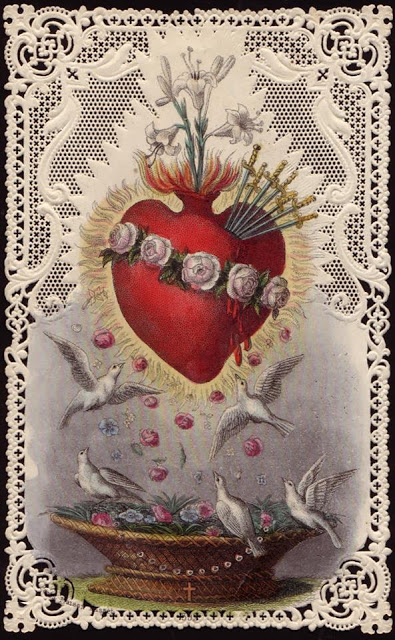
ImmaculateHeartCard

May the Sorrowful and Immaculate Heart of Mary pray for us. (Source)

“To begin and end well, devotion to our Blessed Lady, the Mother of God, is nothing less than indispensable.” – St. Philip Neri, Maxims.

Five years ago, I was received into the Roman Catholic Church at the Easter Vigil. The journey since then has been an adventure, to say the least. Not all of it has been good. I’ve continued to make lots of mistakes, often failing in faith, hope, charity, and all the other virtues. Individual Catholics have often disappointed me. There were moments of doubt along the way, and, like the infamous Pillar of Salt, I am no stranger to the occasional backwards glance.

But in reflecting on those five years, the overwhelming feeling is one of gratitude. The many wonderful people I have met – and, more importantly, the graces I have received – have confirmed for me the essential soundness of my choice. I have no regrets. I only wish more people could know the abiding peace that comes with conversion to the Church that Christ established on St. Peter. And having consecrated myself to Mary, I feel as if I have had a new strength in the spiritual life since last Summer.

Thus far, I have dedicated each year to some mystery of the Faith. It is in that same spirit that I consecrate this sixth year of my Catholic life to the Sorrowful and Immaculate Heart of Mary. I pray that by her triumphant heart, she will continue to guide me to a more perfect knowledge of Her Father, Son, and Spouse. As St. Philip says, “Our Blessed Lady ought to be our love and consolation.” I hope that she ever will be mine.

And thus on this Good Friday, I beg your prayers and those of the saints, that I might persevere in the faith and grow in the love of God.

Most Sacred Heart of Jesus, pray for us.
Our Lady Immaculate, pray for us.
St. Joseph, pray for us.
St. Philip Neri, pray for us.

Amen.

HolyCardMary

The Queen of Heaven. (Source)

St. Francis de Sales on the Passion of Christ

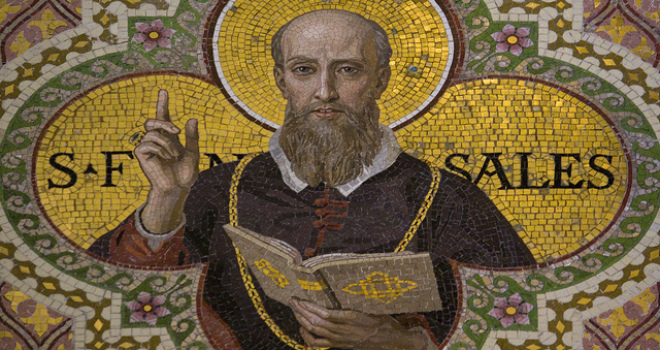
frankydesales.jpg

St. Francis de Sales, pray for us. (Source)

In my final post of Wednesday spiritual masters, here is a passage from Part V, Chapter XIII of St. Francis de Sales’s Introduction to the Devout Life. I thought it was particularly appropriate for Holy Week.

The Love Which Jesus Christ Bears Us

Consider the Love with which our Dear Lord Jesus Christ bore so much in this world, especially in the Garden of Olives and on Mount Calvary; that Love bore you in mind, and through all those pains and toils He obtained your good resolutions for you, as also all that is needful to maintain, foster, strengthen and consummate those resolutions. How precious must the resolutions be which are the fruits of our Lord’s Passion! and how dear to my heart, since they were dear to that of Jesus! Saviour of my soul, Thou didst die to win them for me; grant me grace sooner to die than forget them. Be sure, my daughter, that the Heart of our most Dear Lord beheld you from the tree of the Cross and loved you, and by that Love He won for you all good things which you were ever to have, and amongst them your good resolutions. Of a truth we have all reason like Jeremiah to confess that the Lord knew us, and called us by our name or ever we were born, the more that His Divine Goodness in its Love and Mercy made ready all things, general and individual, which could promote our salvation, and among them our resolutions. A woman with child makes ready for the babe she expects, prepares its cradle, its swaddling clothes and its nurse; even so our Lord, while hanging on His Cross, prepared all that you could need for your happiness, all the means, the graces, the leadings, by which He leads your soul onwards towards perfection.

Surely we ought ever to remember this, and ask fervently: Is it possible that I was loved, and loved so tenderly by my Saviour, that He should have thought of me individually, and in all these details by which He has drawn me to Himself? With what love and gratitude ought I to use all He has given me? The Loving Heart of my God thought of my soul, loved it, and prepared endless means to promote its salvation, even as though there were no other soul on earth of which He thought; just as the sun shines on each spot of earth as brightly as though it shone nowhere else, but reserved all its brightness for that alone. So Our Dear Lord thought and cared for every one of His children as though none other existed. “Who loved me, and gave Himself for me,” S. Paul says, as though he meant, “for me alone, as if there were none but me He cared for.”

Let this be graven in your soul, my child, the better to cherish and foster your good resolutions, which are so precious to the Heart of Jesus.