The Lord High Inquisitor’s Song

HighInquisitors

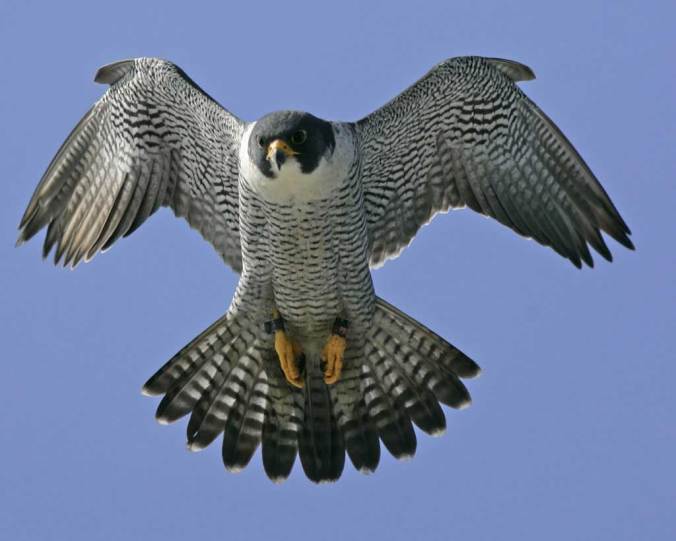
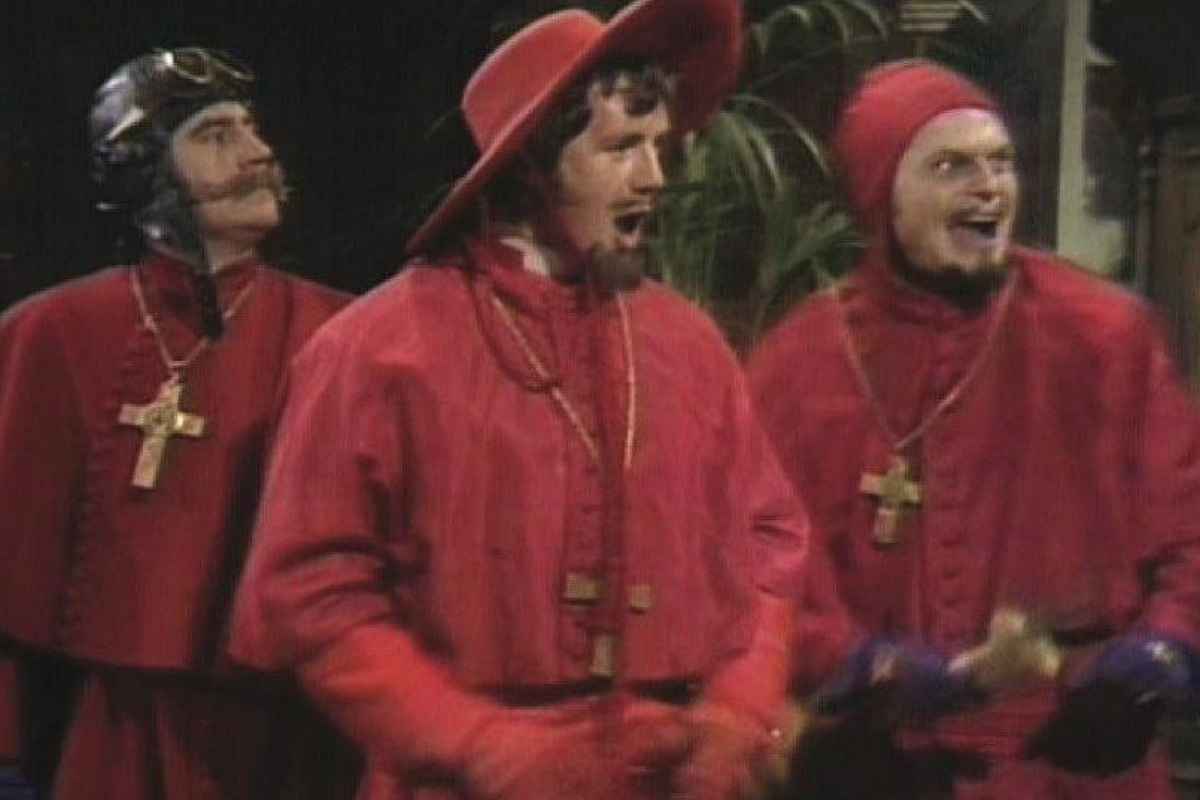
Nobody expects it. (Source)

The Lord High Inquisitor’s Song

(tune)

Cardinal Ko-Ko
As some day it may happen that a victim must be found,
I’ve got a little list—I’ve got a little list
Of ecclesial offenders who might well be underground,
And who never would be missed—who never would be missed!
There’s the pestilential journalists who write for NCR,
and all the ultramontanists who think the Pope’s a Czar—
All clergy who wear ugly stoles and vestments as they pray—
And philistines who think that lace is just a little fey—
Theologians from the Argentine who study how to kiss.
They’d none of ’em be missed—they’d none of ’em be missed!

Chorus
He’s got ’em on the list—he’s got ’em on the list;
And they’ll none of ’em be missed—they’ll none of ’em be missed.

Cardinal Ko-Ko
There’s the Jesuit on Twitter who does not believe in hell.
Since God he does resist—I’ve got him on my list!
Then there’s the German Cardinals who pray to Martin L.
They’re just “ecumenist”—they never would be missed!
Then the liberal who praises, with some social justice rage,
The “spiritual but not religious” tenor of the age;
And the parish secretary who makes fruitcake every year
For the congregation’s Christmas Party (and inspires fear);
And that odd phenomenon, theologians feminist
I don’t think they’d be missed—I’m sure they’ll not be missed!

Chorus
He’s got them on the list—he’s got them on the list;
And I don’t think they’ll be missed—I’m sure they’ll not be missed!

Cardinal Ko-Ko
And those mouth-foaming maniacs who write LifeSite clickbait,
Would that they might desist—I’ve got them on the list!
The Neo-Caths at Crisis in a moral panic state.
And a Two-Tiered Thomist—you know he’s on the list!
Then the smug and smarmy statesman who still wears the scarlet hat
Who bows to tyrants’ wishes from a desk chair in the Vat—
And the bishops who decide they want obedience, not truth
All baby boomers who attack the faithful of the youth—
And all the heretics who can be judged quite Modernist.
They’ll none of ’em be missed—they would none of ’em be missed!

Chorus
You may put ’em on the list—you may put ’em on the list;
And they’ll none of ’em be missed—they’ll none of ’em be missed!
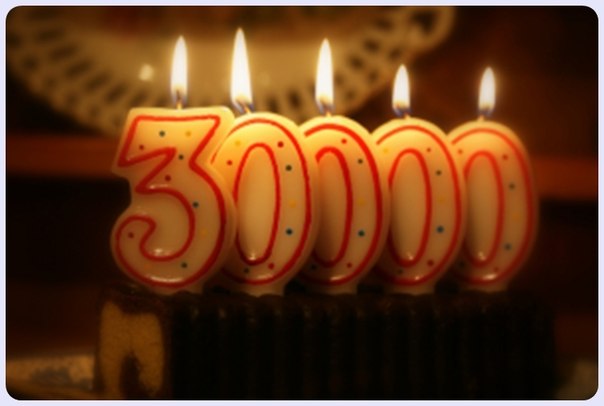

30,000 Views

30000words

Huzzah. (Source)

Today, I hit 30,000 views on my blog. I’ve also nearly reached 20,000 discreet visitors. I can’t say I ever envisioned The Amish Catholic getting this big, especially within the first year of starting.

Thank you to everyone who has taken the time to read what I write and publish here. And thank you especially to all those who have publicized, responded to, or written about my work. There are so many of you that I would fear to leave anyone out if I named names. Please know that I am aware of your generosity and consideration. I hope I can continue to produce content that piques your interest.

Elsewhere: A New Blog on English Catholicism

image

All ye holy English Martyrs, pray for us. (Source)

Anglo-Catholic readers will no doubt have mourned the demise of Conner McNeill’s Merrily on High, what was once among the best and most prolific AC blogs on the web. Never fear! Connor McNeill rides again. He’s back with a new blog called Mary’s Dowry. It looks as tasteful, reverent, and aesthetically sophisticated as the project that preceded it.

Mr. McNeill has decided to depart from the Church of England and join the Roman Communion. As he had been pursuing ordination with the C of E, this conversion is no small undertaking. Pray for him! And check out Mary’s Dowry while you’re at it.


A Prayer Request for St. Mary’s Day

OurLadyWalsinghamStBede

The National Shrine of Our Lady of Walsingham, St. Bede, Williamsburg, VA. (Source)

Of your charity, please pray for me. Today I begin a 33-day retreat for Marian Consecration. Normally I would not wish to broadcast such a spiritual undertaking on my blog, but since I know several of you, I would rather avail myself of your prayers than keep silent.

Astute Kalendar watchers will know that if I start today, on the Feast of Our Lady, Queen of Heaven, then the day of consecration will fall on September 24th. That’s the feast of Our Lady of Walsingham (well, technically not since it’s on a Sunday this year, but I don’t really care). I’ll be in London. Please pray that I might be able to pronounce the prayer at the Brompton Oratory if at all possible, and more importantly, that I might truly and obediently submit to Mary’s gentle guidance in all things.

Hail, holy Queen, Mother of mercy,
hail, our life, our sweetness and our hope.
To thee do we cry, poor banished children of Eve:
to thee do we send up our sighs,
mourning and weeping in this valley of tears.
Turn then, most gracious Advocate,
thine eyes of mercy toward us,
and after this our exile,
show unto us the blessed fruit of thy womb, Jesus.
O clement, O loving, O sweet Virgin Mary!

V. Pray for us, O Holy Mother of God,
R. That we might be made worthy of the promises of Christ.

Amen.

Elsewhere: Fr. Hunwicke on Liturgical Wigs

image

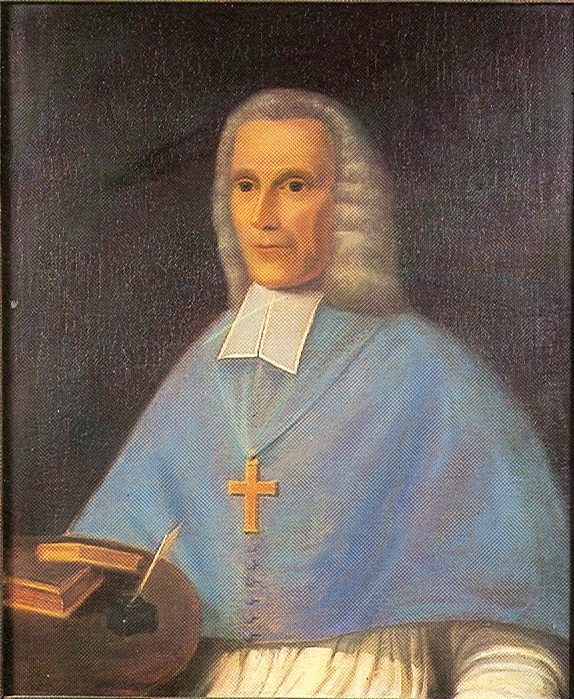
The famous portrait of Bishop Challoner to which Fr. Hunwicke refers in his piece. (Source)

I haven’t written much this week, as I’ve been traveling. However, on this beautiful  St. Bernard’s Day, I thought I’d share this brief and wonderful gem of a piece by Fr. John Hunwicke of the Ordinariate.

An excerpt:

I’m sure there are zillions of you out there who have the following sort of information right at your snuff-stained finger tips: did prelates eo fere tempore wear their wigs all through Mass? Even after their zucchetto had been removed as they approached the Consecration? When did Catholic bishops stop wearing wigs? (I think it went out of fashion in Anglican cicles in the 1830s.)

He also gets into the question of blue episcopal choir dress, mainly used in France and Ireland. Read the whole thing.

Clerical dress is one of my longstanding interests, as is the history of 18th century Catholicism. I’m glad Fr. Hunwicke is using his formidable celebrity to draw attention to these matters. While some may dismiss clerical fashion (particularly that of the Ancien Régime) as a trivial matter, I beg to differ. Clerical dress both during and outside of the liturgy is one more aesthetic component by which we can present “the beauty of holiness.” The nondescript threads worn by so many clergy and religious today are, alas, one more surrender to the cult of stark utility, false equality, failed individuality, and, in the end, boring homogeneity.

At the moment, I don’t have the time or capacity to research the questions Fr. Hunwicke raises. But The Amish Catholic will follow this story with all due attention and gravity. You can count on that. In the meantime, I’ll feast my eyes on this doozy of a cappa magna.

A Challenge in Honor of the Sophianic Heart of Mary

ImmaculateHeartofMarySophianic

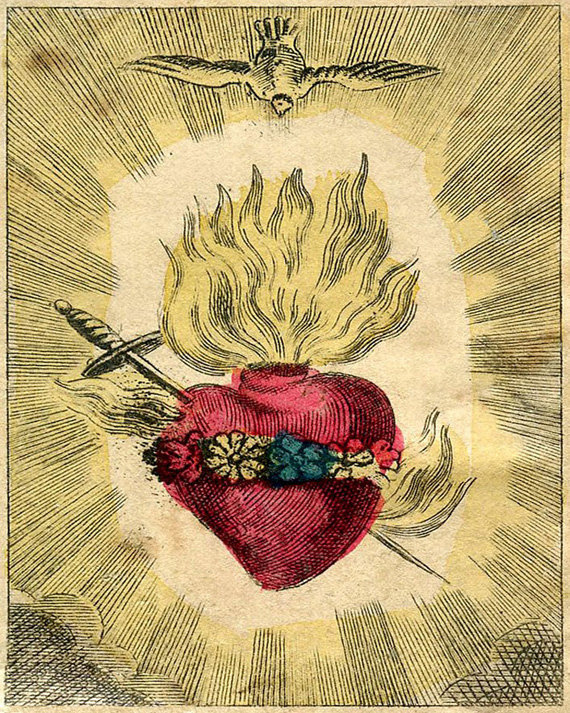
Sorrowful and Immaculate Heart of Mary, pray for us sinners. (Source).

August is consecrated to the Sorrowful and Immaculate Heart of Mary. Thus, it is a month in which the Church invites us to peer into the profound and luminous abyss of light at the very center of the Mother of God’s Sophianic life. In celebration of this occasion, I’ve decided to dedicate myself to producing or working on something creative every day for the rest of the month. Today, I have already written one poem and started an art project. The latter is especially exciting for me, as it’s been years since I last produced any real art. Too long, really. Pray for me in this sophiological endeavor! I would recommend the same challenge to any Catholic hoping to redeem this particular time.

Elsewhere: A New Anglo-Catholic Blog

Ordination 1956 by Norman Blamey 1914-2000

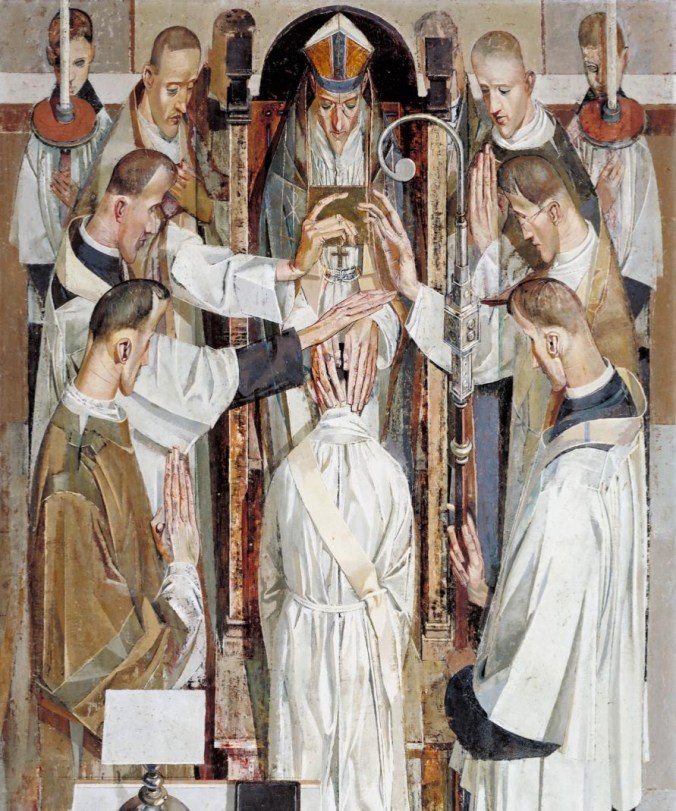
“Ordination,” by Norman Blamey, 1956. (Source)

My friend, Archbishop Mark Haverland, Primate of the Anglican Catholic Church, has just started a new blog called “Anglican Catholic Liturgy and Theology.” You really get what it says on the tin with this one. For those of us with an interest in Anglo-Catholic history, theology, and practice, Archbishop Haverland’s blog will no doubt prove to be a great resource.

10,000 Views and Counting

image.jpeg

Hopefully many more posts will come. (Source)

I have just reached 10,000 views on this blog. Deo Gratias! Never in my wildest hopes did I anticipate breaking this milestone…let alone within a year of starting. To God be the glory, and may He continue to guide my steps in this venture. Thank you to everyone who has given their time and consideration to read and share what I have written.

Books I Have Finished This Summer

OldBooks

Old volumes. (Source).

I intend to keep updating this post as a running list of the books I have completed (though not necessarily started and completed) over the summer. I will include a short blurb and review for each title. Thus far:

1. The Benedict Option. Rod Dreher. 2017. Non-fiction.
An argument for focusing on Christian community-building in the face of an increasingly hostile secular liberal order. And a very flawed argument at that. But the book got me thinking about a better option, so as a provocation to thought and discussion, it works pretty well.
Score: 3/5.

2. A Litany of Mary. Ann Ball. 1987. Non-Fiction.
A lovely exposition of and meditation on various titles of Mary. Would recommend for anyone seeking a deeper understanding of Our Lady, her role, and her apparitions in the modern world. Particular highlights are some of the rarer titles such as Our Lady of the Cenacle and Our Lady of the Most Blessed Sacrament. If you have (or want) a devotion to Mary under one of her titles, this is the book for you.
Score: 4/5

3. Free Women, Free Men. Camille Paglia. 2017. Non-fiction.
The dissident feminist’s newest collection of essays. Gives a great taste of her style and scholarly concerns over the course of her long career. Topics range from The Real Housewives, “Southern Women,” BDSM, Puritanism, and all kinds of feminist spats. Her essay “On Abortion” is one of the most idiosyncratic and provocative takes on the issue I have yet read. Paglia never tires of displaying her acid wit and crackling prose. Perhaps her greatest flaw, beyond those points where she is simply wrong, is her irritating autobiographical tendency. I could do without the seventh mention of her childhood Halloween costumes. But all in all, a read well worth the effort.
Score: 4.25/5

4. The Leopard. Giuseppe di Lampedusa. 1958. Fiction.
The decline and fall of a Sicilian noble family. There’s romance, history, and a dollop of nostalgia that Lampedusa sprinkles with acerbically cynical observations about his characters. It’s uncommon to find a class commentary that doubles as a sensitive psychological portrait. The Leopard is just such a rare gem. Lampedusa has a knack for evocation. You can feel the heat of the Sicilian sun radiating from the pages; with Lampedusa, you can almost catch a faint whiff of ambergris over the rot. His style is a slow-moving delight, well-suited to his subject. There’s also a Great Dane, which is always a plus.
Score: 4.5/5

5. The Black Arts. Richard Cavendish. 1967. Non-fiction.
A helpful, if perhaps somewhat dated, exposition of occult history and practice. Cavendish presents a thorough overview of dark magic. His wry, understated humor makes it a great read (one quote: “[Éliphas Lévi’s] later books are less interesting, including his History of Magic (1860) and The Key of the Mysteries (1861), which he himself translated into when he was reincarnated as Aleister Crowley…The learned English occultist A. E. Waite, who was not a reincarnation of Lévi, but succeeded in translating the secrets of the Doctine and Ritual all the same” pg. 29). Would strongly recommend to anyone with a love of horror fiction, the macabre, Christopher Lee, the Kabbalah, Latin, and batsh*t crazy characters from the Victorian and Edwardian periods (including Montague Summers). It made me want to read Valentin Tomberg’s Meditations on the Tarot and watch Penny Dreadful.
Score: 4/5

6. Chickamauga. Charles Wright. 1995. Poetry.
Remarkable, luminous poetry by a professor at my alma mater. T.S. Eliot’s spiritual and stylistic successor. Reading him is like reading a mystic in motionmore ornate that Wendell Berry, more apophatic than William Blake. I cannot recommend him highly enough.
Score: 5/5