Another View of the Sacraments in the Eighteenth Century

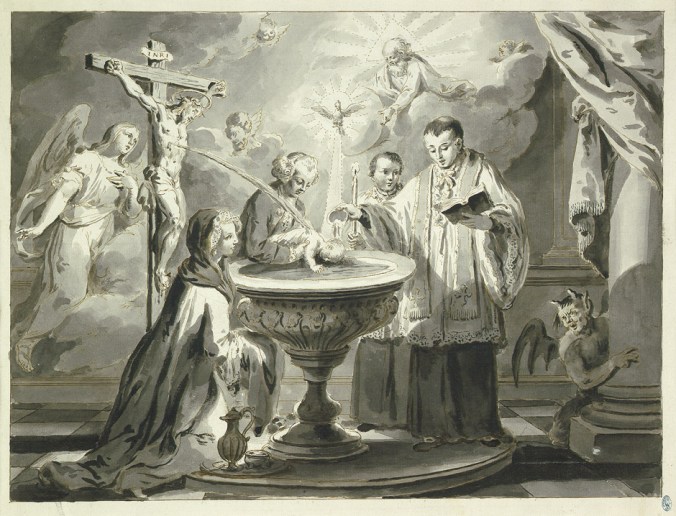
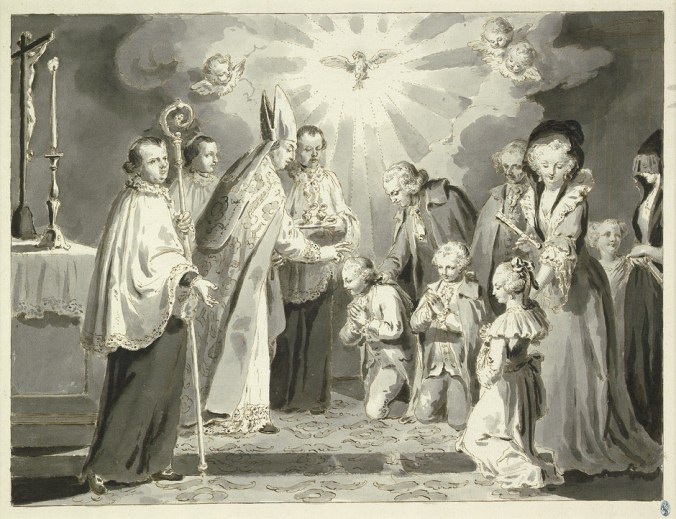
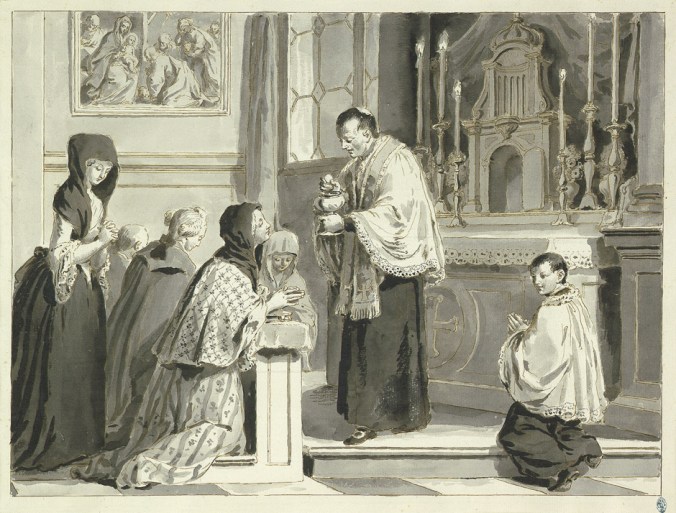
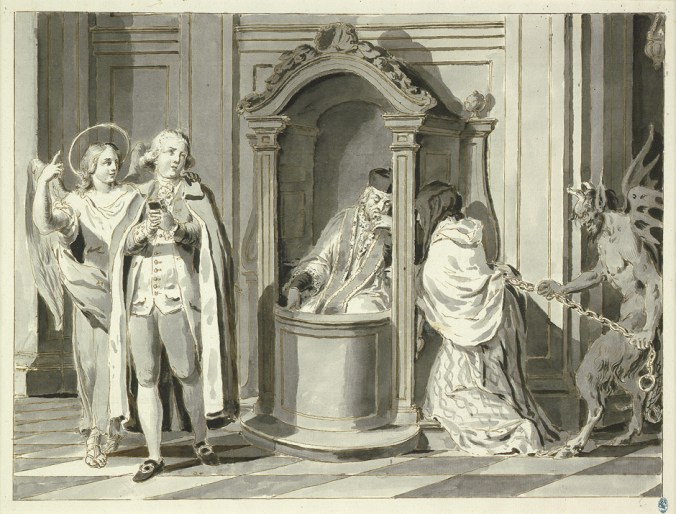
A while back I produced a short post entitled “A View of the Sacraments in the Age of Enlightenment.” Here I give you another series of similar images, this time from the hand of Giuseppe Maria Crespi, also known as “Lo Spagnuolo.” These paintings from 1712, so reminiscent of Rembrandt, hang in the Gemäldegalerie, Dresden. Originally commissioned by Cardinal Pietro Ottoboni, that towering figure of late Baroque culture, they passed posthumously up to Germany, where they made their way into collection of the Elector of Saxony.

Let me begin by saying that, as with the information in the above paragraph, all of the images can be found at Wikipedia.
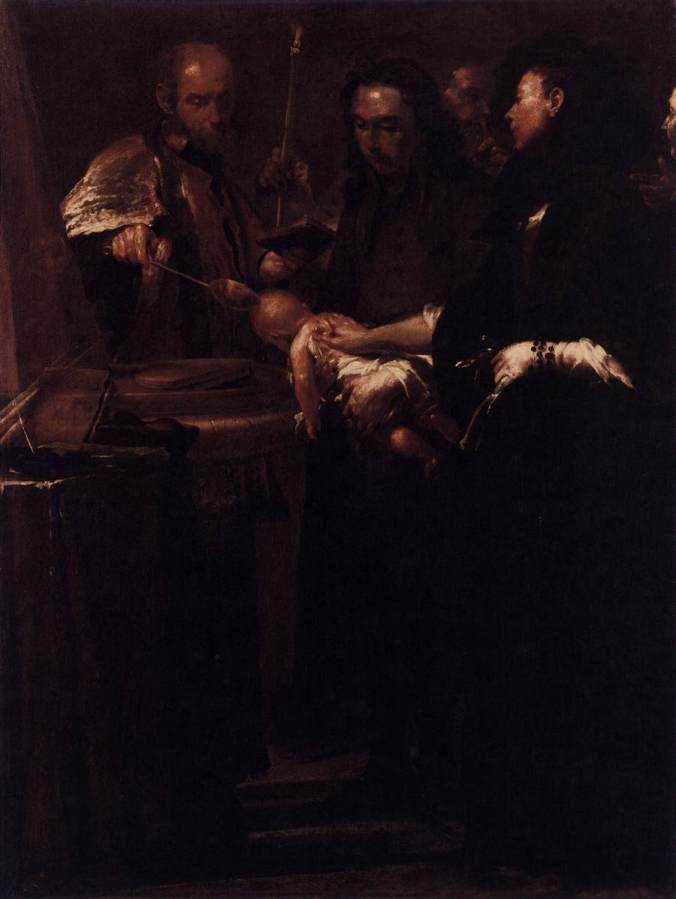
Giuseppe_Maria_Crespi_-_Baptism_-_WGA05763

“Baptism.” Crespi’s sparing use of light demonstrates the central conjunction of the scene. Allowing our eyes to wander along the central line of illumination, we follow the arm of the priest pouring water on the head of the outstretched infant to the mother’s rosary-wrapped wrist just beyond. I am convinced that the use of light in all of these images is the key to their meaning. Crespi uses light to illustrate the work of sacramental grace, and darkness to emphasize the mortality, evanescence, and weariness of our ordinary world. “The people in darkness have seen a great light” – thus spake Isaiah.
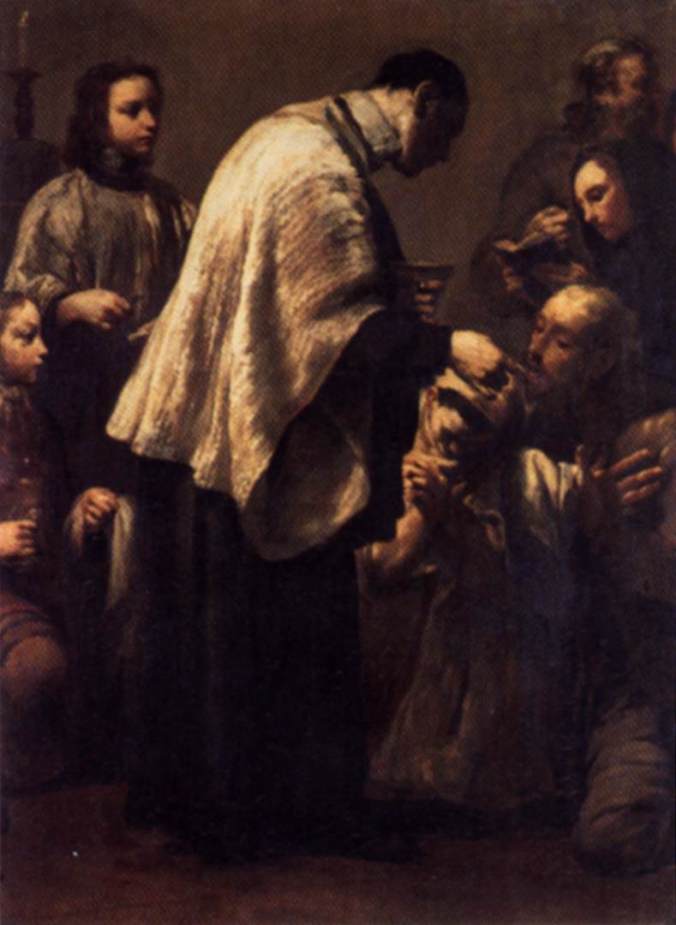
Giuseppe_Maria_Crespi_-_Communion_-_WGA05766

“Communion.” The priest’s face is shrouded in darkness, and rightly so. It is not he who offers the bread of life, but Christ in him. Interesting collar, too. Sure looks familiar. Cardinal Ottoboni was patron of the Congregation of the Oratory at Rome for some time, and it’s entirely possible that Crespi would have taken the Oratorians as his model here. Besides that, the setting of the scene is strikingly barren. Crespi’s choice to leave out the probable altar rail lends the scene an intimacy that captures the very heart of the worship here portrayed.
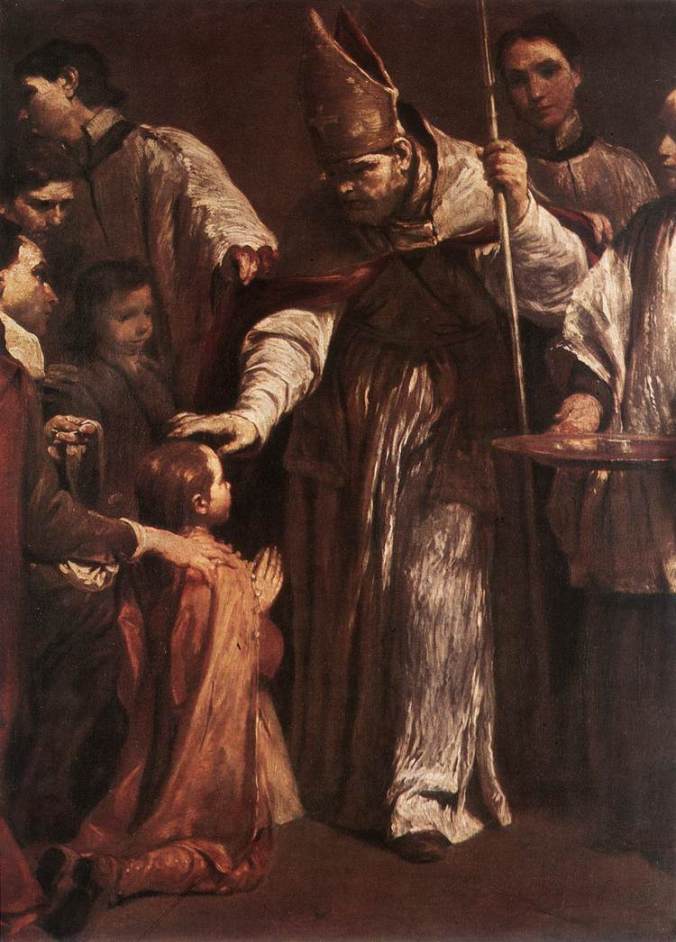
Giuseppe_Maria_Crespi_-_Confirmation_-_WGA05765

“Confirmation.” Crespi’s lightest and most colorful piece in the series. The vivid red-orange of the boy’s robes call to mind the tongues of flame that appeared on Pentecost, as does the (relatively) diffuse light bathing the scene. The brightest part of the image is the Bishop’s arm, only just anointing the boy’s head.  The strong predominance of vertical and diagonal lines in this piece only reinforce the sense of descent. Like all the paintings, the scene here is crowded without being cramped. Crespi seems to have penetrated to the deeply ecclesial nature of the sacraments. The sacraments are what give the Christian community its underlying spiritual cohesion and form. To quote De Lubac, “The Eucharist makes the Church.”
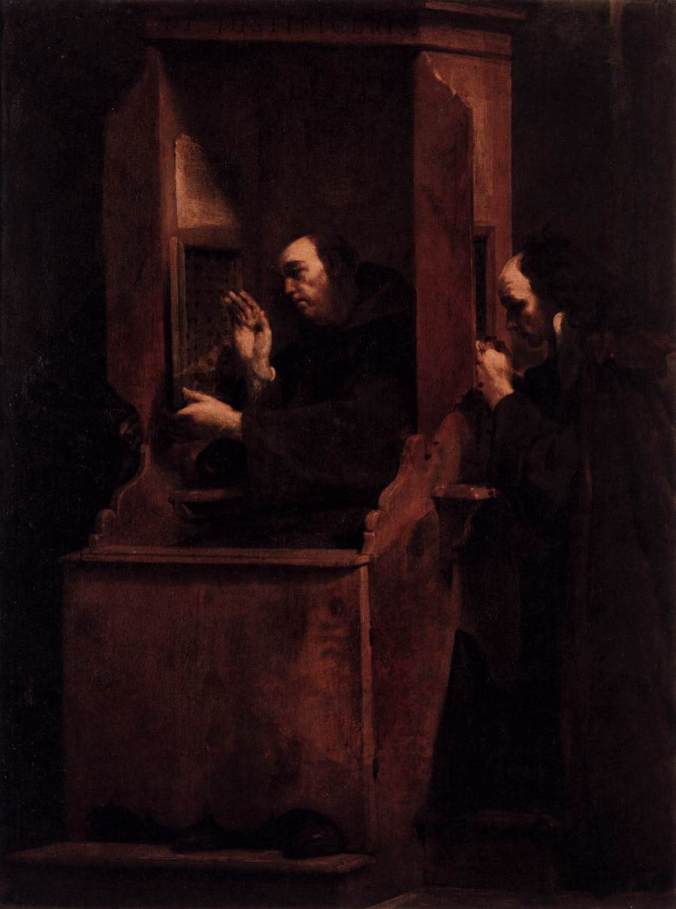
Giuseppe_Maria_Crespi_-_Confession_-_WGA05764

“Confession.” Quite in contrast to “Confirmation,” we come to Crespi’s darkest piece in the series. The overwhelming color is black. Confession is the sacrament that deals most straightforwardly with the reality of sin. The narrow contraction of the light – it comes only from one side, and very weakly. The formal likeness between confessor and penitent reminds us of the condition of sin common to all men. This painting is also the only one in the series where we don’t see a crowd. Only two figures are visible. In the end, we are always “alone with the Alone.”
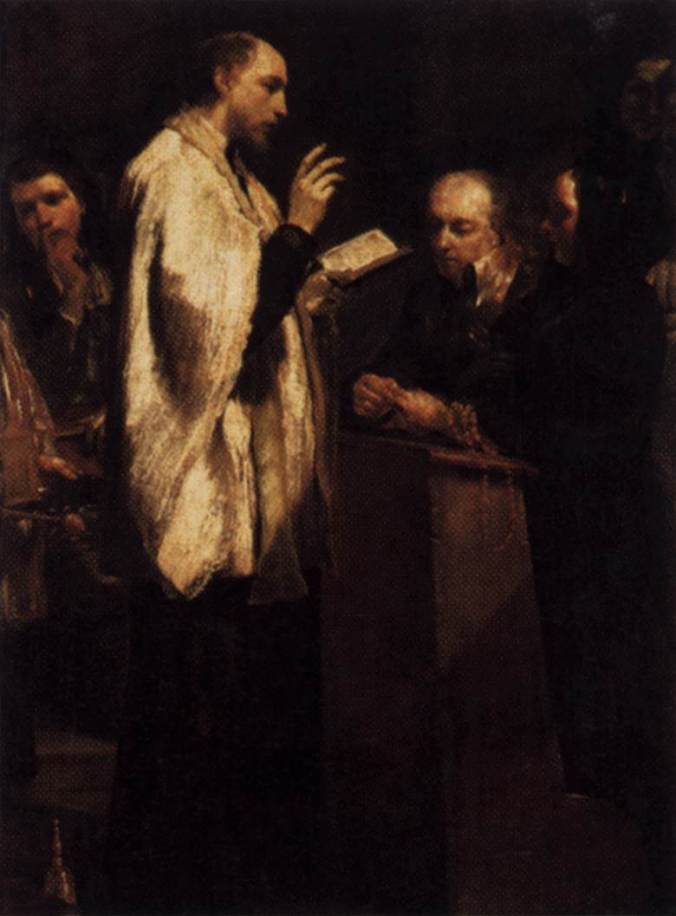
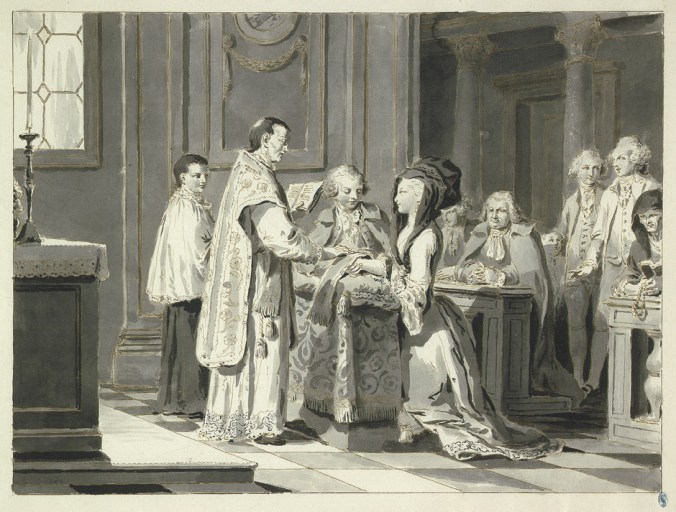
Giuseppe_Maria_Crespi_-_Matrimony_-_WGA05769

“Matrimony.” Perhaps the most human of Crespi’s scenes. But we find unusual notes, things I can’t quite interpret with satisfaction. For a painting of matrimony, we hardly see the couple. Indeed, the bride has almost been swallowed up by the shadows. Nigra sum sed formosa. Perhaps. The priest stands like a pillar of cloud before them, blessing their union. That seems straightforward enough. Yet why is the man on the left holding his hand to his mouth, as if to signal silence? Perhaps because the matter of this sacrament is always properly taken in secret…
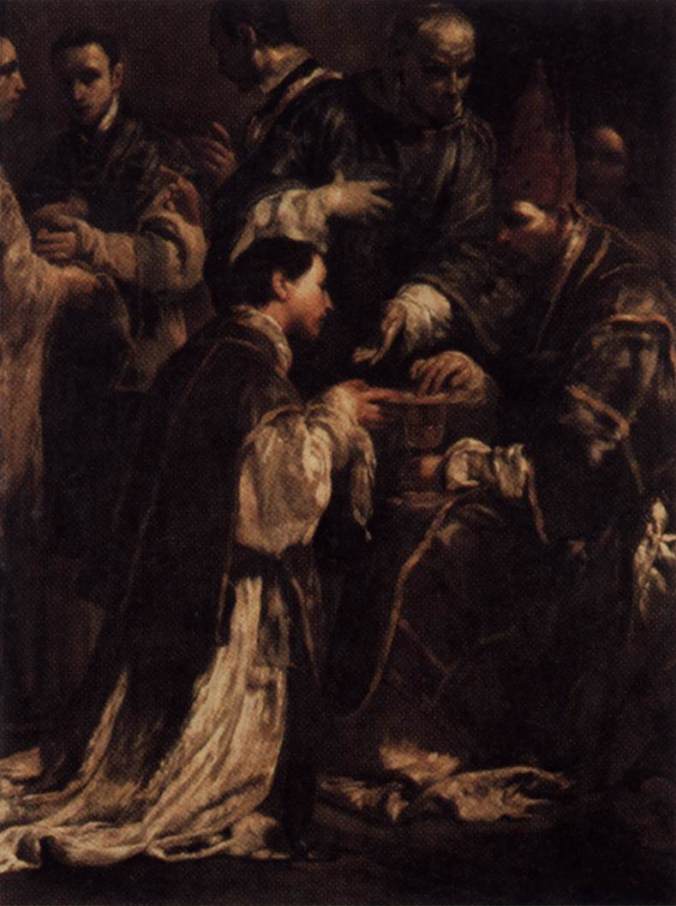
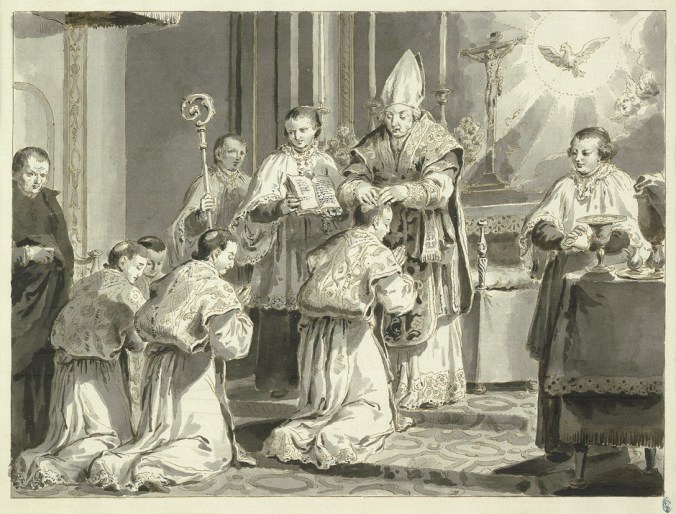
Giuseppe_Maria_Crespi_-_Ordination_-_WGA05768

“Ordination.” This composition is a swirling mix of blacks, browns, subtle golds, and occasionally, whites. The point that stands out most is the break in this overall scheme – the youthful, rosy visage of the ordinand, coupled with the slightly ruddy shadows that fall across his hand. What a contrast with the other figures, all of whom are shrouded in darkness and invested with a manifest pallor. Here is an image of youth, a prospect of renewal against a backdrop of dignified decay.
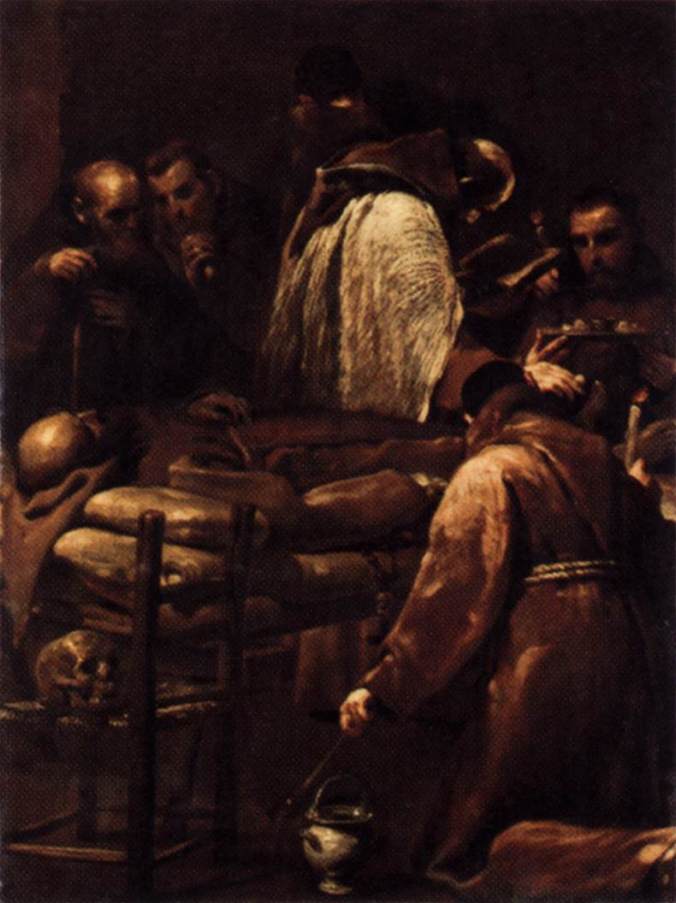
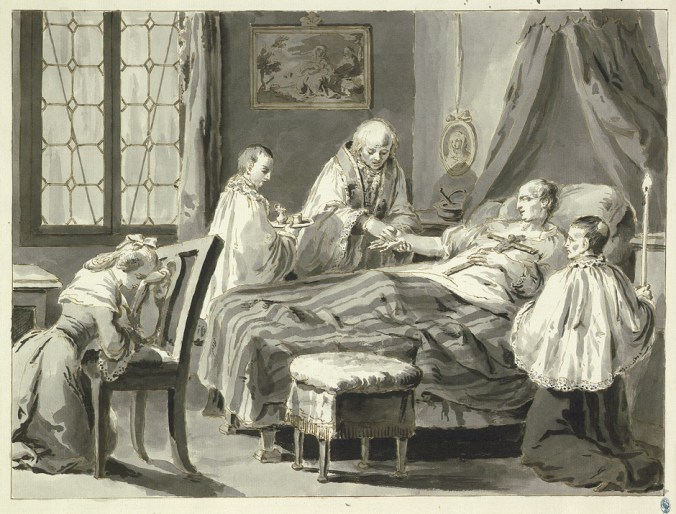
Giuseppe_Maria_Crespi_-_Extreme_Unction_-_WGA05767

“Extreme Unction.” At last we come to the end, the place of the skull. It is only fitting that Crespi should choose to depict a collection of Franciscans for this sacrament. Religious life is always a preparation for death. Yet the bright patch of light improbably illuminating the shoulder of the attendant friar contrasts starkly with the shadowy body of the dying father and points to new hope.
God is Real, Not Nice

Moses-and-the-Ten-Commandments-GettyImages-171418029-5858376a3df78ce2c3b8f56d.jpg

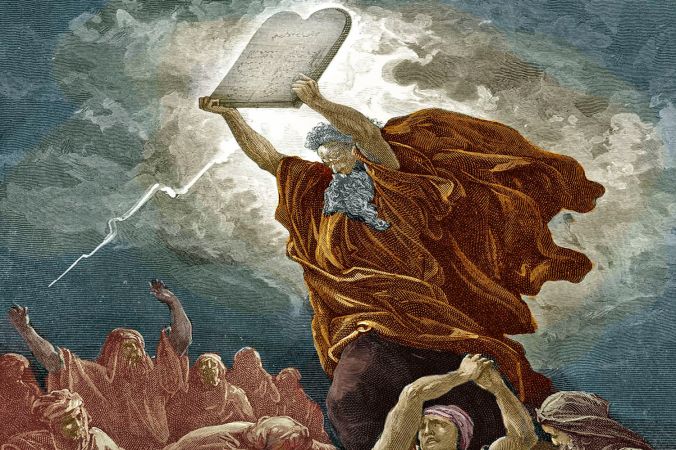
Colorized detail of Moses Breaking the Tables of the Law, by Gustave Dore. (Source)

Rabbi Samson Raphael Hirsch, the spiritual father of Modern Orthodox Judaism, launched his movement in the nineteenth century with an assault on the Frankfurt Reformers entitled “Religion Allied to Progress.” Hirsch decries the new forms of liberal, secular religion he saw animating the well-to-do populations of Jews in Germany.

“But behold! The prophet of the new message came into their midst with the cry of ‘religion allied to progress’; he filled the blank, pacified their conscience and wiped out their shame. With this magic word he turned irreligion into Godliness, apostasy into priesthood, sin into merit, frivolity into virtue, weakness into strength, thoughtlessness into profundity. By this one magic phrase he distilled the ancient world-ranging spirit of the Torah into a single aromatic drop of perfume so fragrant that in the most elegant party dress they could carry it round with them in their waistcoat pockets without being ashamed. By means of it, he carved out of the ponderous old rock-hewn Tablets of the Law ornamental figures so tiny that people gladly found room for them on smart dressing tables, in drawing-rooms and ballrooms. By means of this one magic phrase he so skilfully loosened the rigid bonds of the old law with its 613 locks and chains that the Divine Word which until then had inflexibly prohibited many a desire and demanded many a sacrifice, henceforth became the heavenly manna which merely reflected everybody’s own desires, echoed their own thoughts, sanctified their own aspirations and said to each one: ‘Be what you are, enjoy what you fancy, aspire to what you will, whatever you may be you are always religious, whatever you may do–all is religion; continue to progress, for the more you progress the further you move from the ancient way, and the more you cast off old Jewish customs the more religious and acceptable to God will you be….'”

These prophetic words came to mind as I was reading Dr. Ulrich Lehner’s excellent new offering, God Is Not Nice (2017). Published by Ave Maria Press, the book is a cannon-blast through America’s spiritual miasma. His target? The false image of God as a nice guy. I’m afraid that, as the book shows, He isn’t very “nice” at all. He’s so much better than that.

Each chapter considers one of God’s attributes as revealed in the Scriptures, the Magisterium, and Church History. How wonderful to come across a work of theology that isbrace yourselfactually about God! Gone are the boring and programmatic encumberments that so often clog up the pages of the theological press. Lehner is centrally concerned with God’s character, and only secondarily with what that must mean to us, His creations.

TheBurningBush.jpg

Lehner drinks deeply of the Scriptures. He often returns to Old Testament narratives of encounter with a God who surpasses every expectation. (Source)

It is also one of the most erudite pieces of popular religious writing I have ever read. Sprinkled in among the obligatory references to the Inklings are much heavier hitters. One finds ideas drawn from Martin Buber, Gabriel Marcel, John Crowe Ransom, Rodney Stark, Robert Spaemann, Dietrich von Hildebrand, and many more. Lehner’s prodigious knowledge of philosophy was especially apparent, as he deftly maneuvered between classical Thomism and recent German thoughtnot exactly the fare one expects from a major Church Historian. God Is Not Nice also has the distinction of being the only book of popular devotion I’ve encountered that speaks favorably of Erich Fromm (and cribs some of his ideas). It is to Lehner’s credit as a teacher that the reader never feels as if he’s suddenly entered rare air. He presents some difficult concepts with a simplicity that never sacrifices substance. An eighth grader could read and, more importantly, understand the text. So could an Evangelical. The book never ceases to be Catholic, but one is hard-pressed to find many insights that are so uniquely Papist as to dissuade Protestant readers. Its broad appeal comes not from a watering down of the Faith’s distinctives, but a consistent penetration of those things which lie at the very heart of the Christian life.

The book is also imbued with a deep humanity. First, Lehner’s understated humor crops up now and again, such as the time he casually compares the Prosperity Gospel preachers to Nazis (62). Or when, at the start of a chapter on intimacy with God, he writes, “Nakedness in public is a clear no-no” (80). It is difficult to imagine Lehner writing that line with a straight face, and impossible to read it with one.

The humanity of the text lies in its content as well as its style. Although Lehner hardly ever proposes specific ideas for spiritual renewal, the call to conversion is constant, simple, and universal enough that it all feels eminently practical. It works in large part because Lehner never invests his project with the unwieldy freight of, say, the hopes and failures of socially conservative American Christianity. This book is not The Benedict Option. Sure enough, Lehner is critical; for example, I was surprised to see such a forthright condemnation of the Enlightenment from an author who has made it is his life’s study. But Lehner never carries his criticism into the unpleasant realm of polemic, as Dreher so often does in his own book. What matters to Lehner is the individual human soul, not the social conditions under which the Church must forge her way through history. He is realistic about the quotidian quality of our spiritual lives. Everything must come back to the individual’s relationship with God, a relationship largely shaped by the perfectly ordinary moments of our day. The book never leaves this vision.

That isn’t to say that Lehner advocates a purely individualistic spirituality, like some eighteenth-century revivalist, red in the face, handkerchief flailing. I was struck many times by the familial note in Lehner’s work. Instead of shying away from appearing in his own workthe hallmark of a bloodless academicLehner grounds his spiritual call to arms in his own life. Lots of the book’s wisdom is drawn from its author’s experience of parenting. We read, in a chapter on God and suffering:

In fact, many of our children learn from the first hour of Sunday school that God wants everybody to be happy. Some parents might object that a different image of God would terrify children. I don’t think so – and I am speaking with the experience of parenting five kids. (100)

Or elsewhere, in a discussion of the Redemption:

A nice god might pardon us without care for our repentance, but so would a terrible parent who is not interested in us becoming mature and responsible persons. (118)

Or this charming anecdote, while pondering human freedom and what we really mean when we say that the Lord is “a God of Surprises”:

Of course, God is omniscient regarding all our actions and thoughts, but he leaves us our freedom and seems to choose to be surprised. I cannot help but compare this to my own parenting. When my younger children prepare a surprise present for my birthday, I usually find traces in the kitchen and the living room: crayons, pieces of paper, glue sticks, and first drafts with ‘Happy Birthday’ on them. Nevertheless, I choose to be surprised when they hand me their work of art. I think that with an omniscient God, it must be somehow like this. (126)

It thus didn’t come as too great a surprise when, at the end of his text, Lehner turned to a brief yet powerful meditation on St. Joseph. In some sense, St. Joseph is the paragon of all that Lehner advocates. He dwelt with God day to day in an intimacy unclouded by the various pretty illusions to which we all fall prey. Instead, St. Joseph drew the strength he needed from a true knowledge of God’s character. That knowledge created a great love and humble awe in him. For us, as for the Frankfurt Jews of Hirsh’s day, God is little more than a plaything or bric-a-brac, “relegated to a mantelpiece long ago and…only taken down on Sundays.” (106).

It was not so with St. Joseph. He knew the awful and living God as a human being, as one beloved. But for St. Joseph, that God wasn’t “nice.” After reading Lehner’s book, we too may be lucky enough to know that God’s not nice. He’s real.

A View of the Sacraments in the Age of Enlightenment

I just stumbled across Pietro Antonio Novelli’s engravings on the Seven Sacraments, completed in 1779. They give a fascinating view of ecclesiastical life in the late 18th century – Novelli would have moved to Rome from Venice about this time, so it’s unclear which part of Italy these were drawn from. Either way, they’re worth a look through. All are taken from Wikimedia Commons.

NovelliBaptism

Baptism. Note the prominent Angel and Devil.

NovelliConfirmation

Confirmation. Strong and sound emphasis placed upon the role of the Holy Ghost.

NovelliEucharist

The Eucharist. The arrangement of the Altar and rail suggests that this is a low mass. Very odd that the Priest has no chasuble, but surplice and stole.

NovelliConfession

Penance. Once again, we see the Angel-Devil dichotomy. Lovely open confessional, too.

NovelliHolyOrders

Holy Orders. It is entirely unclear to me where the Altar is supposed to be in this image. Nevertheless, the Bishop is wearing a wig, which answers a question of Fr. Hunwicke’s.

NovelliMarriage

Holy Matrimony. A fairly straightforward scene with lovely, somewhat spare Neoclassical church architecture in the background.

NovelliUnction

Unction. The attendance of two servers is a custom long since out of fashion. One rather wonders when their presence was removed from the rubrics.


Mea Culpa, Mea Culpa, Mea Scholastica Culpa

BlessedJohnDunsScotus

The Blessed John Duns Scotus (Source).

In my review of Rod Dreher’s The Benedict Option, I wrote the following:

I’m not suggesting that Dreher is necessarily wrong in his various judgments. He may well be correct in accusing the nominalists of a kind of cultural deicide (although it overlooks the Christian nominalist tendency, closely tied to empiricism, that numbers Berkeley, Burke, Hamann, Newman, and Chesterton among its ranks).

I subsequently received some pushback for making such a claim. After all, eminent philosophers and theologians had long made nominalism the villain of their narratives about the rise of an anti-Christian modernity. Others questioned my assertion about Newman in particular.

At that time, I defended myself by suggesting that, while I may be off in ascribing a specifically nominalist tendency to these thinkers, that nevertheless, they all do share, inter alia, a suspicion of universalizing abstraction, a respect for concrete particularity in its various forms, and a trust in prudence gained from experience. I interpreted this tendency as akin to the nominalist rejection of substantively existent universals. I also thought that one of the reasons this way of thinking might matter is in our dialogue with postmodernity, which is itself so suspicious of universals and grand narratives.

Nevertheless, I erred. I was mistaken to use that label of nominalism. I must thank my critics for pointing this out. In the many months since then, I have learned what would be the proper term to tie together these particular thinkers – not to mention Gerard Manley Hopkins and J.R.R. Tolkien.

The “nominalist tendency” is really a Scotist tendency. (The fact that I could make such an ironic error is, perhaps, a sign of my own ignorance. I own that. Scholasticism isn’t really my thing.) Chastened by my previous mistake, I hesitate to delve too deeply into the technical depths of Scotist philosophy. I will state briefly that a belief in the idea of haecceity as the unique thisness of each particular sums up the tendency’s core point. If I had time, I’d like to investigate if any firmer affinities could be found.

However, I believe I am now on much sounder territory. The Franciscan Daniel Horan’s work has focused on a postmodern engagement with Scotus, and the Scotism of Newman and Hopkins have been well-attested in the literature. Tolkien took up the theological note behind Hopkins’s ideas of inscape and instress, themselves poetic derivations of Scotist haecceity. More work still needs to be done in English on Hamann, but the image that is emerging is of a figure passionately devoted to the disruptive nature of ordinary, particular experience. His willingness to contest the established narratives of the Aufklärung predates postmodernism by a century and a half. Chesterton is cut from the same cloth. Bishop Berkeley, though perhaps not quite so colorful as either of these two, stakes his empiricism on the particularity of the thing perceived (ultimately, by God). And Burke transposes the idea into the realm of politics, tempered by a healthy respect for natural law.

Two observations come to mind. The first is that nearly all of these thinkers are English or Anglophone. An enquiry into the reasons behind English Scotism would be useful. In its absence, I will merely note that Scotus, that medieval Oxford theologian, seems to have been directly reintroduced into the life of modern English spirituality by another Oxford theologian, John Henry Newman. It was Newman’s influence that defined intellectual Catholicism in England until the conclusion of Vatican II.

The second is that several of these thinkers are literary figures in their own right. Hopkins is principally remembered as a poet, Chesterton as a journalist, novelist, and poet, and Tolkien as a novelist. Newman was a prolific writer across genres. He exerted a personal influence over Hopkins, Matthew Arnold, and Oscar Wilde. And Hamann’s own deeply bizarre output constantly blurs the rigid lines of 18th century drama (yet another way he foreshadows our own postmodern era).

I must wonder if Scotist thought is particularly apt for the production of theology in a poetic mode, as the Catholic Sophiologists of our own day are seeking to do. I certainly have friends who think so. At the very least, Scotus’s high Mariology accords well with the extremely high Mariology of some Sophiologists.

If I had more time, I should like to dive more deeply into these questions. For now, I seek only to explain myself a bit, and apologize for what was clearly a serious error.

ADDENDUM: I also meant to say that Delleuze’s appropriation of haecceity as a fundamental concept lends support to my own impulse of putting these thinkers in conversation with postmodernism.

The Vampirologist: Dom Augustin Calmet OSB

DomAugustinCalmet.jpg

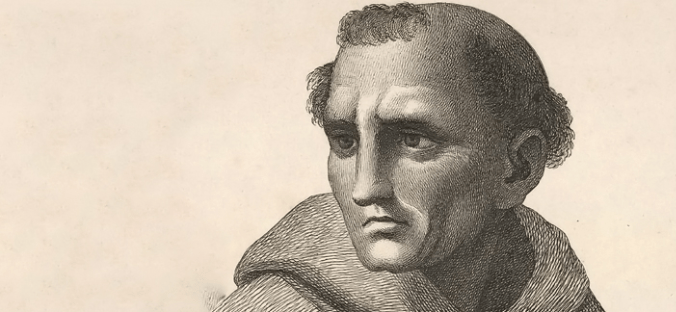
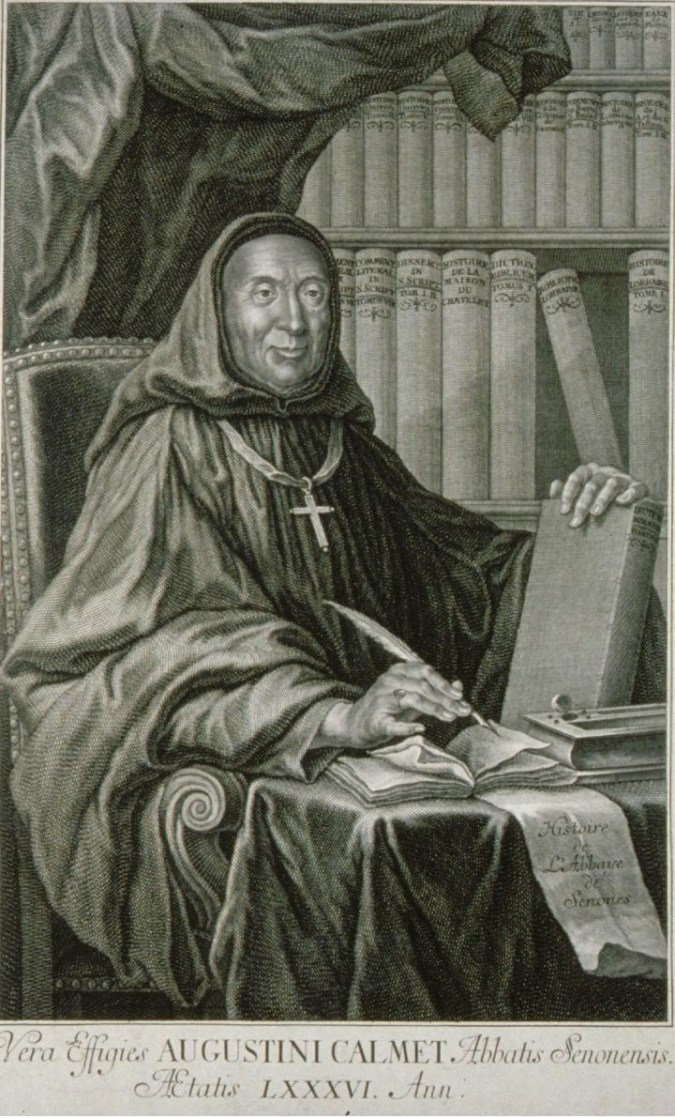
Vera Effigies Augustini Calmet Abbatis Senonensis. (Source).

I was recently asked by the administrator of Catholics from the Crypt to write a brief introduction to Dom Augustin Calmet, Abbot-General of the Congregation of St. Vanne. My qualifications for this task are minimal but, I think, sufficient. First, I know a little about Calmet, which is, sadly, more than many can say. He is an unfairly overlooked figure in our religious and cultural landscape. Secondly, I hope to write my Master’s Thesis on Calmet’s Histoire Universelle, though of course the actual process of research might change my direction. For the time being, I am glad of the challenge, and will likely turn this into the first of a series of short biographies of weird religious figures.

Dom Calmet, born on the 26th of February, 1672, in the then-Duchy of Bar (now Lorraine, France) had a long and impressive career. Entering religious life at the Benedictine Priory of Breuil, he moved around over the years to obtain his education at various abbeys. His itinerary reads like an honor roll of some of the finest establishments of the Franco-German monastic intelligentsia: St. Mansuy, St. Èvre, Munster, Mouyenmoutier, Lay-Saint-Christophe, St. Leopold. Yet the two monasteries most closely associated with his career are Senones Saint-Pierre and Vosges, where he eventually died a holy death.

He achieved widespread scholarly respect for his work in three different fields. First, Calmet distinguished himself as an Exegete. His Biblical method differed from more classical forms of exegesis by focusing entirely on the literal meaning of the text; this exposed him to criticism, even amidst the general acclaim which the book and its abridgements garnered.

DomCalmetTitlePageVampires

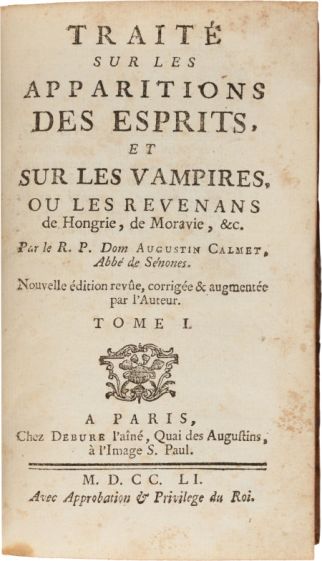
Title page of Book I of his most famous work on Vampires. (Source).

Second, he became an eminent author of sacred and profane history. While my own interest lies most heavily with his Histoire Universelle (1735-47), Calmet also devoted considerable attention to more specific topics. It should come as no surprise, given the libraries to which he had access, that he devoted special care to the region which bore him. His titles include History of the Famous Men of Lorraine (1750), Dissertation on the Highways of Lorraine (1727), Genealogical History of the House of Châtelet (1741), and posthumous histories of both Senones (1877-81) and Munster (1882).

However, Calmet achieved lasting fame for his extremely popular work on Vampires: first, Dissertations on the Apparitions of Angels, Demons, and Spirits, and on the Revenants and Vampires of Hungary, Bohemia, Moravia, and Silesia (1746) He later expanded the text into his famous Treatise on the Apparitions of Spirits and on the Vampires or Revenants of Hungary, of Moravia, &c. in 1752. These texts were, to the best of my knowledge, the first attempt to apply scientific rigor to the tales of the undead then current throughout Europe.

The books were a huge hit, and remain widely respected by occult writers today. To quote one source:

Re-released in 1748, with the most complete edition in 1751, this book is considered to be [the] authoritative treatment on the subject, containing an unprecedented collection of ghostly stories of revenants. It was a best seller for the period, quickly translated into German and Italian for a broader audience. Calmet’s tone considers the possibility of vampires with a certain ambiguity, possibly in light of the larger body of his publications for the church. Still, this is widely regarded as the starting point of all vampiric literature.


The work garnered critical attention from no less a figure than Voltaire. As that eminent source, Wikipedia, relates, Voltaire wrote of Calmet with no small astonishment:

What! It is in our 18th century that there have been vampires! It is after the reign of Locke, of Shaftesbury, of Trenchard, of Collins; it is under the reign of d’Alembert, of Diderot, of Saint-Lambert, of Duclos that one has believed in vampires, and that the Reverend Priest Dom Augustin Calmet, priest, Benedictine of the Congregation of Saint-Vannes and Saint-Hydulphe, abbot of Senones, an abbey of a hundred thousand livres of rent, neighbor of two other abbeys of the same revenue, has printed and re-printed the History of Vampires, with the approbation of the Sorbonne, signed by Marcilli!

[NB: translation is my own]

We can only imagine what conversation transpired between the two thinkers when Voltaire stayed at Senones in 1754, only a few years before the abbot’s death.

It is perhaps unusual that a monk who was, by all accounts, part of the same intellectual circles as the Maurist Enlighteners and the Philosophes would take to such a strange subject. Calmet certainly saw himself as partaking of that wider project. He writes in his preface to the Treatise,

My goal is not at all to foment superstition, nor to maintain the vain curiosity of Visionaries, and of those who believe without examination all that one tells them, as soon as they find therein the marvelous and the supernatural. I do not write but for those reasonable and unprejudiced spirits, who examine things seriously and with sang-froid; I do not speak but for those who do not give their consent to known truths but with maturity, who know to doubt things uncertain, to suspend their judgment in things doubtful, and to refute that which is manifestly false. (Calmet ii).

[NB: translation is my own]

Perhaps we should not be so surprised. After all, the religious history of Europe is peppered with eccentric and erudite men drawn to esoteric studies. And by the time that Dom Calmet died in 1757, the French monastics had not yet reached the height of their oddity. That would come later, with the well-traveled and thoroughly bizarre Swedenborgian and Martinist monk Antoine-Joseph Pernety, whom I hope to someday investigate more thoroughly.

The Revolution changed all that. No longer could monks live their lives freely, let alone attempt serious academic inquiry. It would take the genius of men like Dom Prosper Guéranger to restore the French Benedictines to their former glory.

800px-Senones_88_Saint-Gondelbert.jpg

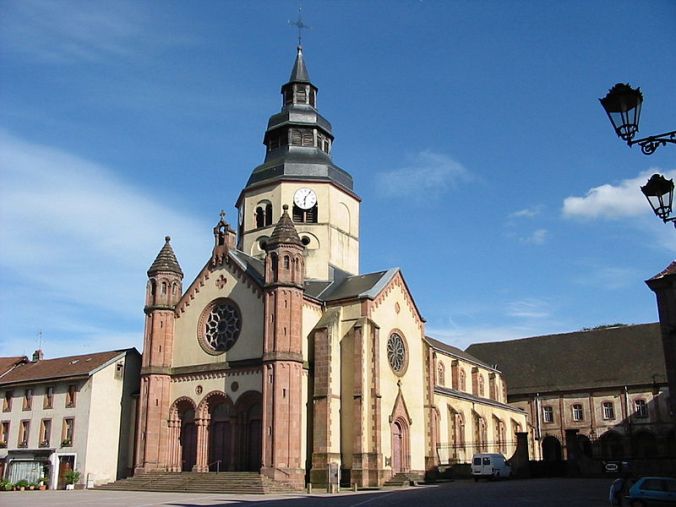
Senones Abbey today. The monastery was dissolved by Revolutionary forces in 1793, then later sold off as State Property and converted into a textile mill. This desecration continued until 1993, when what was left of the abbey became a Monument historique. (Source).