A View of the Sacraments in the Age of Enlightenment

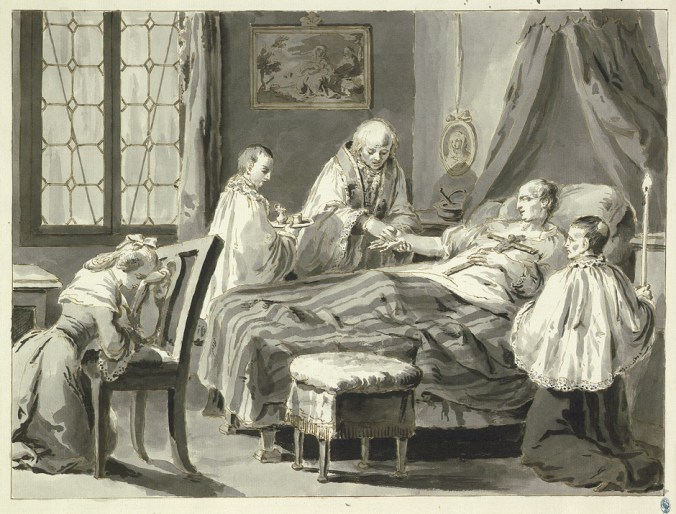
I just stumbled across Pietro Antonio Novelli’s engravings on the Seven Sacraments, completed in 1779. They give a fascinating view of ecclesiastical life in the late 18th century – Novelli would have moved to Rome from Venice about this time, so it’s unclear which part of Italy these were drawn from. Either way, they’re worth a look through. All are taken from Wikimedia Commons.

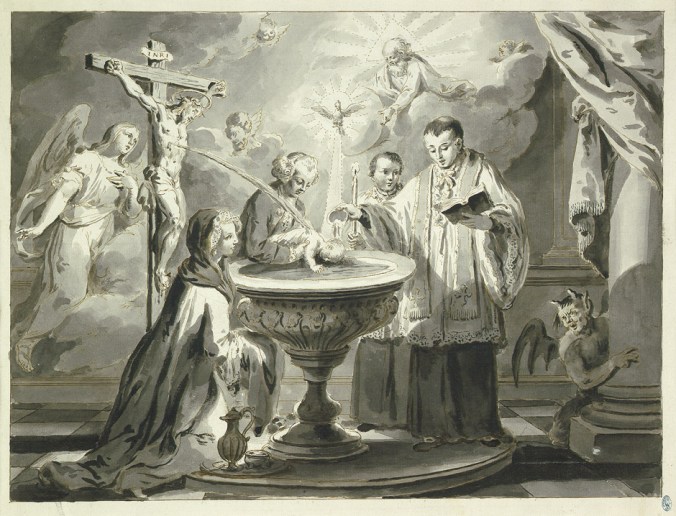
NovelliBaptism

Baptism. Note the prominent Angel and Devil.

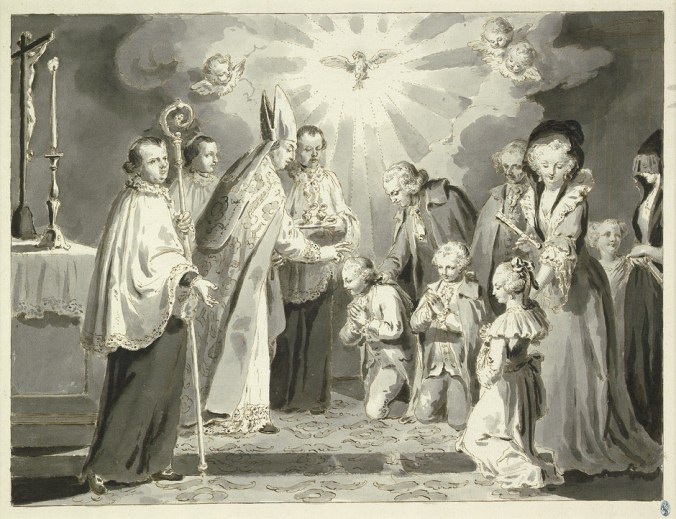
NovelliConfirmation

Confirmation. Strong and sound emphasis placed upon the role of the Holy Ghost.

NovelliEucharist

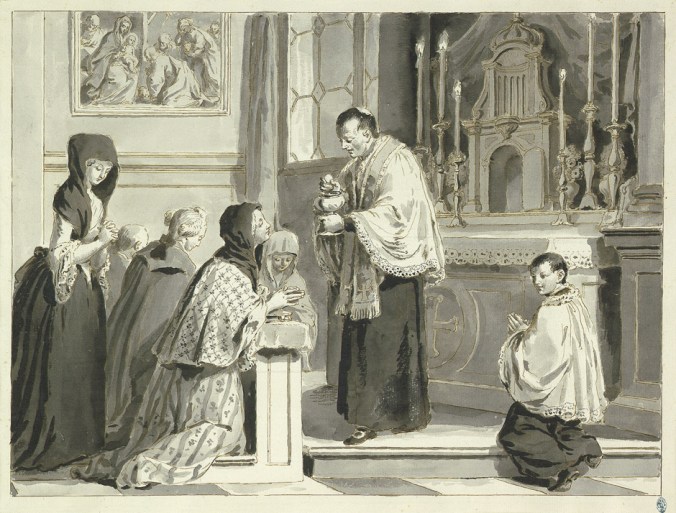
The Eucharist. The arrangement of the Altar and rail suggests that this is a low mass. Very odd that the Priest has no chasuble, but surplice and stole.

NovelliConfession

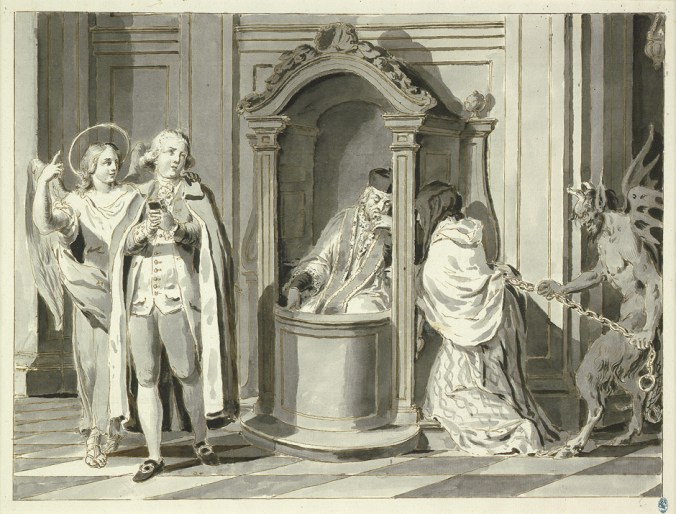
Penance. Once again, we see the Angel-Devil dichotomy. Lovely open confessional, too.

NovelliHolyOrders

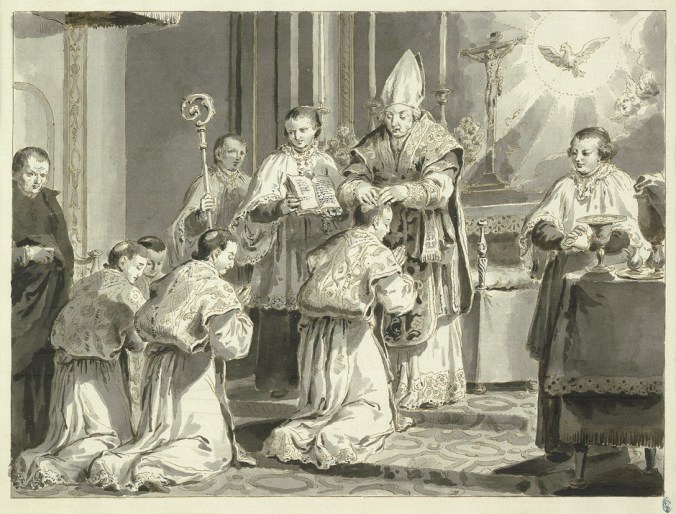
Holy Orders. It is entirely unclear to me where the Altar is supposed to be in this image. Nevertheless, the Bishop is wearing a wig, which answers a question of Fr. Hunwicke’s.

NovelliMarriage

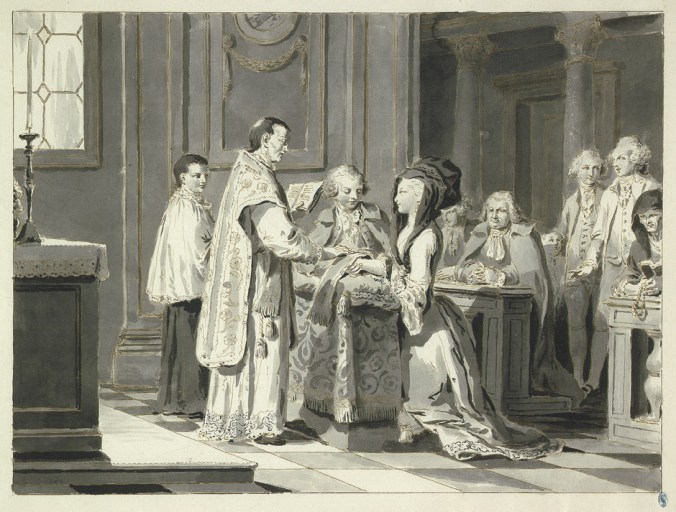
Holy Matrimony. A fairly straightforward scene with lovely, somewhat spare Neoclassical church architecture in the background.

NovelliUnction

Unction. The attendance of two servers is a custom long since out of fashion. One rather wonders when their presence was removed from the rubrics.


A Startling Passage out of Peter Anson

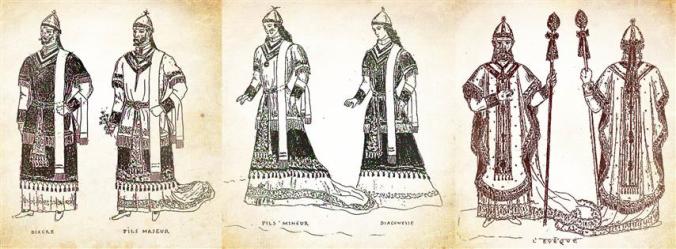
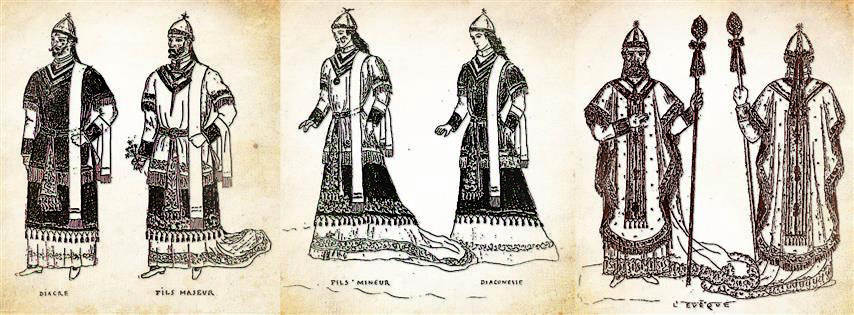
GnosticVestments

“Gnostic Catholic” vestments from Third Republic France. Note in particular the episcopal vesture at right. (Source)

In Peter Anson’s remarkable volume, Bishops at Large: Some Autocephalous Churches of the Past Hundred Years and their Founders (1964), we learn of many episcopi vagantes and their kindred spirits. It seems that several of these strange fellows dabbled (or more than dabbled) in the occult. Many also coupled that occultism with an interest in ancient heresies, which they sought to resurrect. In a chapter on the succession from René Vilatte, we stumble across a shocking little paragraph:

Mgr. Giraud and most of the priests and layfolk of the Gallican Church, even if not Gnostics themselves, were closely associated with them. Gnosticism was very much in the air fifty or sixty years ago. Even the Benedictine monks of Solesmes felt it worth their while to study what are known as the ‘Magic Vowels’ used in Gnostic rites and ceremonies. In 1901 they published a book entitled Le chant gnostico-magique. (Anson 309)

What an extraordinary claim. The monks of Solesmes, Dom Prosper Gueranger’s own sons, publishing studies of Gnostic chants! Dear readers, do any of you have any information on this bizarre note? I have been able to find evidence, however scanty, that the book Anson mentions was indeed published. But it surely must count as one of the rarest volumes in the assembled miscellanea of liturgical history. I would appreciate any leads whatsoever. Might some of my liturgically minded friends have any clue? Whatever comes of it, there is no doubt a very interesting story lurking behind this utterly unique publication.

Elsewhere: Two New Blogs on Mystics

lazzari+print

A stigmatic, c. 1840. (Source)

Recently two very worthy endeavors have come to my attention. The first is the blog of the Stigmatics Project at the Ruusbroec Institute, University of Antwerp. The project “studies the promotion and devotion of the hundreds of stigmatics reported in five European countries during the nineteenth and early twentieth century.” It takes a scholarly, non-confessional approach to its subject. No doubt this new venture will yield greater insights into the stigmata as a social phenomenon.

The second is a much more theological blog called Littlest Souls, and it presents a veritable treasure trove of mystic spirituality. The blogger has clearly read widely in the library of the soul passed on to us from age to age by the Church. He seems to place a special emphasis on the 19th and early 20th century mystics, much like the Stigmatics Project. In fact, they probably cover some of the same figures. But unlike the recently-founded work of the Ruusbroec Institute, Littlest Souls has been up and running since May 2012. There is consequently much more material here to review and contemplate. Fans of that other great blog, Mystics of the Church, will find much here to admire.

In my first post on Father Faber, I noted that he represented a kind of lost world of the faith. Today, it is hard to imagine a Catholicism that once supported the kind of imaginatively baroque and overtly sentimental spirituality that oozes from his pages. Father Faber looks odd to our cynical, postmodern eyes. But in exploring his writings now, I find much in them that’s salutary and beautiful. My hope is that I can play some small part in recovering those gems for our times.

Both of these blogs seem to do precisely that; one at the level of scholarship, and one at the level of spirituality. Both set out to investigate and present a spiritual school that often seems morbid, unhealthy, or slightly daft – certainly one that has little place in our age. But there are real values here, real impressions of humanity in communion with the divine. I can only commend their efforts as important contributions to the memory and mystical life of the Church Militant.

I’ve said it before, and I’ll say it again. The Church is weird because she is supernatural, and the supernatural is always strange. We should embrace that fact.

Our Lady of the Vallicella

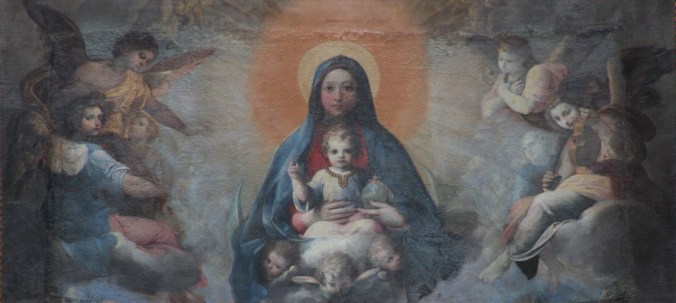
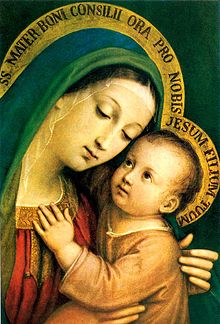
MadonnaoftheVallicella1

Our Lady of the Vallicella. I don’t know who painted this version. (Source)

Today is the Feast of Our Lady’s nativity. Nine months after the Immaculate Conception, we celebrate the luminous and holy birth of the one who would some day give birth to God Himself. As the Church rejoices with S.s. Anne and Joachim, perhaps we should consider the manifold titles under which Mary has come to be known over the centuries.

Some religious orders have devotions to Our Lady under particular titles. The Cenacle Sisters are devoted to Our Lady of the Cenacle, the Institute of the Incarnate Word takes as its patron the Virgin of Luján, and most famously, the Redemptorists were commissioned by Pope Pius IX to care for and propagate devotion to Our Lady of Perpetual Help. The Dominicans appeal to Our Lady of the Rosary, the Augustinians to Our Lady of Good Counsel, and the Franciscans to Our Lady, Queen of Angels.

But what of the Congregation of the Oratory of St. Philip Neri? Is there a Marian image, title, or devotion proper to the Oratorians? Since the Oratory is not a religious order, the question may seem ill-put. Nevertheless, some research shows that there is in fact a specifically Oratorian icon of the Mother of God: Our Lady of the Vallicella.

It is related in various lives of St. Philip that, during the construction of the Chiesa Nuova, Our Lady miraculously saved the church. As Gallonio relates in his Vita:

In the following year, 1576, something happened during the building works, which I must not pass over in silence. When the old church had been demolished, along with other buildings on the site of the new construction, one little hovel remained roofed, after the others had been levelled. Suddenly one day Philip had Giovan Antonio, the clerk of works, summoned, and as soon as he arrived he told him to have the roof taken off the hovel immediately. “Last night,” he explained, “I saw the Holy Mother of God, who was holding it up with her own hands.” (The place was being used as a chapel to say Mass and administer the sacraments to the people, for the old church had the responsibility of souls attached to it.) Giovan Antonio went back and ordered the workmen to demolish the roof. As soon as they set to, they noticed that the beam which supported the roof had no support for itself; one of its ends (what they call the beam’s head) was quite out of the wall, which quite astonished those who saw it [Gallonio, Para. 112 – trans. Fr. Jerome Bertram CO].

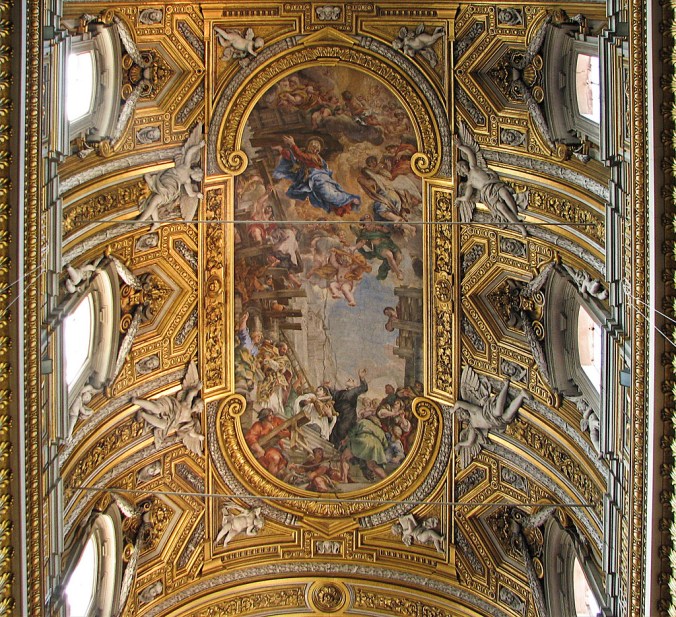
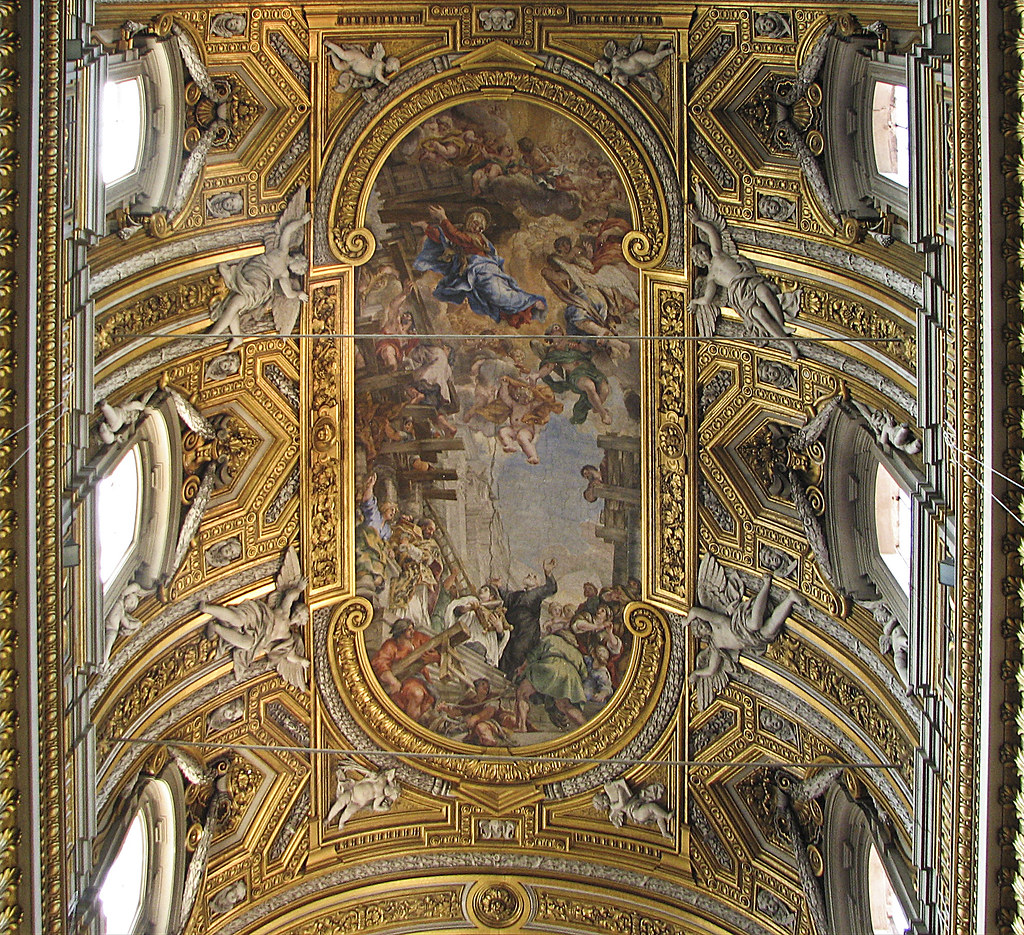
This incident is memorialized in the ceiling of the Chiesa Nuova.

CNCeiling.jpg

The ceiling of the Chiesa Nuova, in which is depicted the scene of Our Lady preserving the Vallicella from collapse and ruin. (Source)

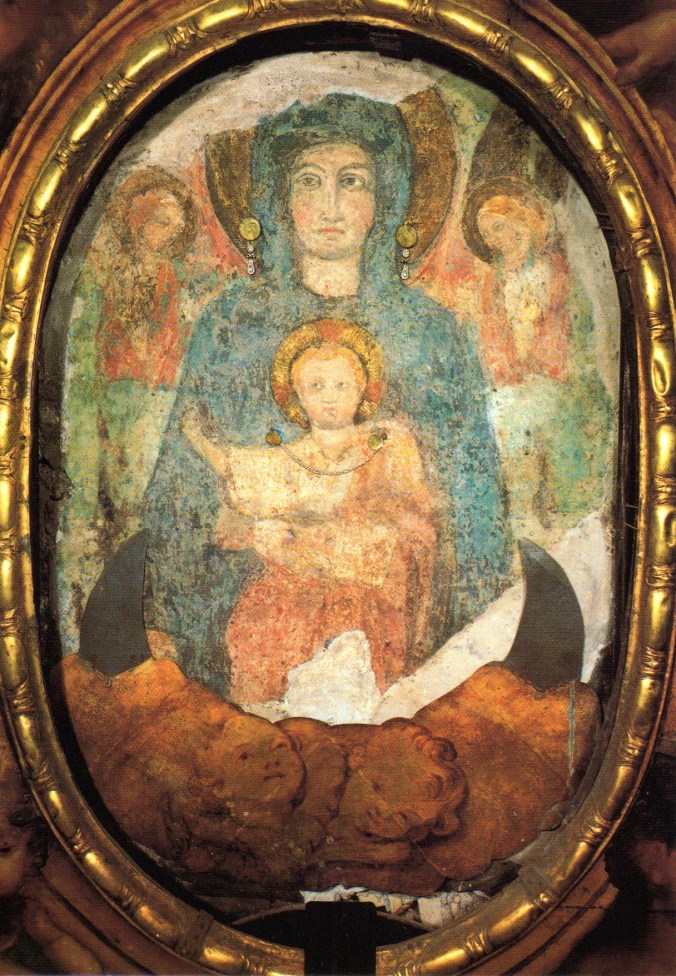
It is my understanding that the Saint and his sons attributed the miraculous intervention of Our Lady to an ancient fresco they uncovered during construction. The image depicts Our Lady in blue holding the Infant Christ. Jesus raises his hand in blessing. Both are seated in the moon, while three adoring cherubs look up with rapt attention. These are the essentials of the icon, which canonically follows the “Nicopeia (bringer of victory) or Kyriotissa (enthroned) type.”

This conjunction suggests something about the icon’s meaning. The Mother of God brings us the ultimate victory, Christ Himself; His victory over death is truly her victory and, by extension, ours. What’s more, their relationship is a mutual enthronement. She takes all of her dignity as Queen of Heaven from Christ, and He is most magnified in Her Heart.

It seems appropriate that an image that bears such a meaning would fall to St. Philip and his sons as a kind of special inheritance. After all, Cardinal Newman’s motto encapsulates the entirety of Oratorian life: Cor ad Cor Loquitur, “Heart Speaks to Heart.” This phrase of the Psalmist describes God’s Liturgical communion with us, our spiritual communion with each other, the key process of evangelizationbut also the intimacy between the Sacred Heart of Jesus and the Immaculate Heart of Mary. And let us not forget that third heart, the Flaming Heart of St. Philip Neri. All in all, communion and reciprocity are key to Oratorian spirituality in a way that is perhaps more pronounced than in other religious families.

12-vallicelliana

The ancient, miraculous fresco-icon of Our Lady of the Vallicella. Currently hidden in the Chiesa Nuova behind the Rubens rendition. (Source)

The story of Our Lady of the Vallicella is not just theological, though. It also winds through some of the more important chapters of Art History.

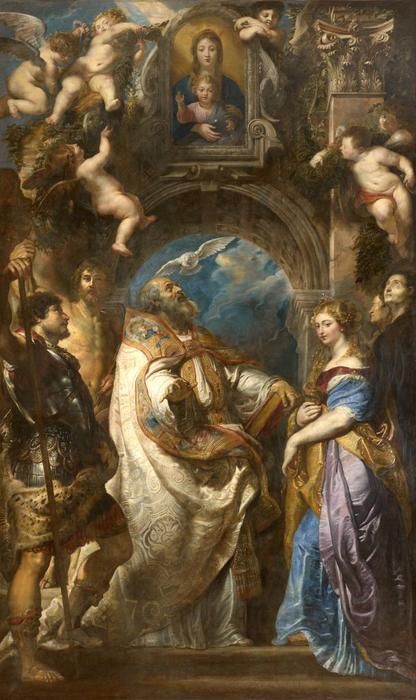
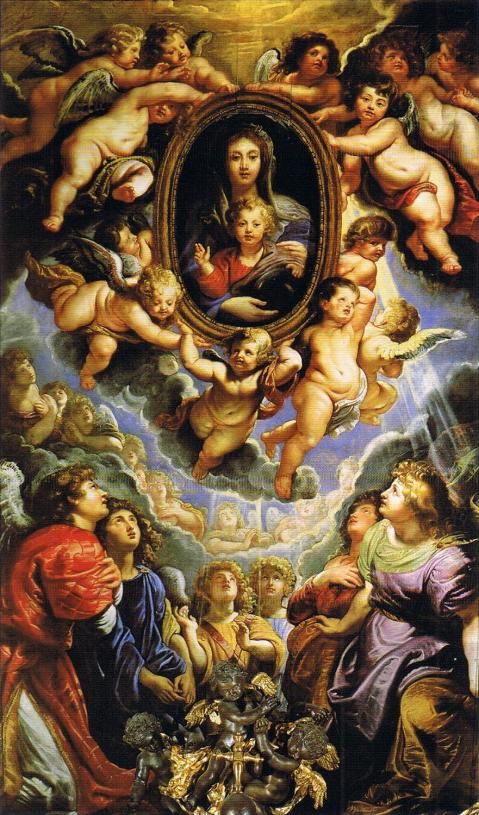
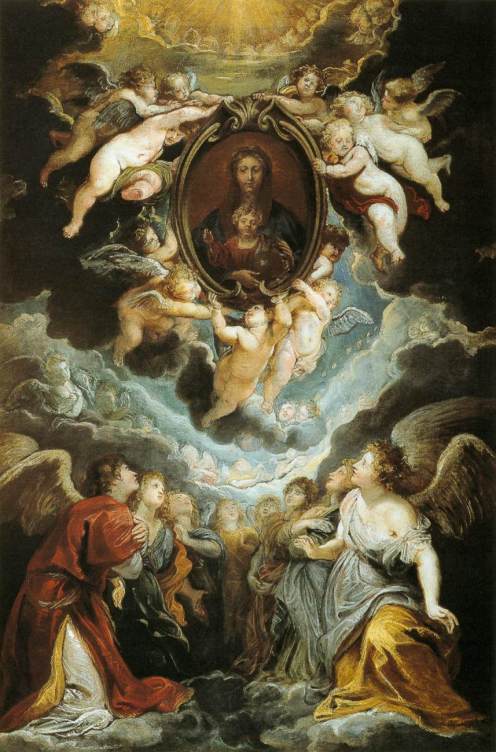
The great Baroque artist Peter Paul Rubens was commissioned by the fathers of the Roman Oratory to paint the church’s high altar. He ended up painting a few. The first, a canvas, was rejected because it was too reflective and is now in a museum at Grenoble. The second, a painting on slate, remains in situ. He later painted a somewhat rougher third version that now hangs in the Academy of Fine Arts in Vienna.

RubensVallicella1

Pope St. Gregory, Surrounded by Saints, Venerating the Miraculous Image of the Virgin and Infant, called Santa Maria of the Vallicella, Rubens, c. 1606-07. The first altarpiece of the Chiesa Nuova, now in Grenoble. (Source)

RubensVallicella2

Madonna della Vallicella, Rubens, 1606-08. The second altarpiece, now in situ at the Roman Oratory. The central image of the Madonna is removable and covers the miraculous fresco. (Source).

RubensValicella3

The Madonna della Vallicella Adored by Seraphim and Cherubim, Rubens, 1608. Now in Vienna. (Source)

Of course, devotion to Our Lady of the Vallicella is, like so many other elements of Oratoriana, not restricted to the sons of St. Philip. As the whole city of Rome is imbued with his spirit, we find her image among the many picturesque street shrines that stand as one of the Eternal City’s most distinctive forms of public piety.

AleteiaValicella.jpg

Our Lady of the Vallicella in a Roman street shrine. Note the way the hands are positioned; Our Lord’s left hand on the Orbis Mundi, with Our Lady’s right. Conversely, His right hand rises in blessing as her left seems to hold or even crown him. This posture is consistent with earlier renditions. (Source).

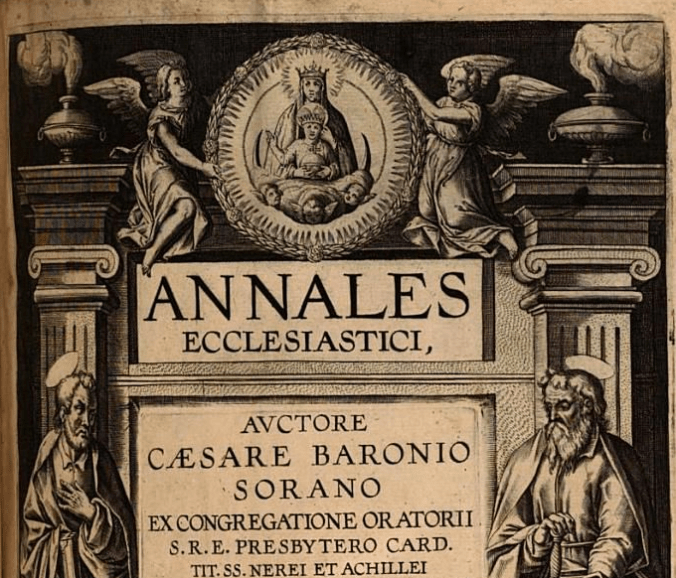
Regardless, Our Lady of the Vallicella quickly became a major emblem of the Congregation. She adorns most of the first-edition title pages of Baronius’s Annales Ecclesastici, as you can seen in this image from the Twelfth Volume.

Screen Shot 2017-09-08 at 2.02.58 AM.png

The title page of the Twelfth Volume of the Ecclesiastical Annals of Cardinal Baronius. (Source)

image.jpeg

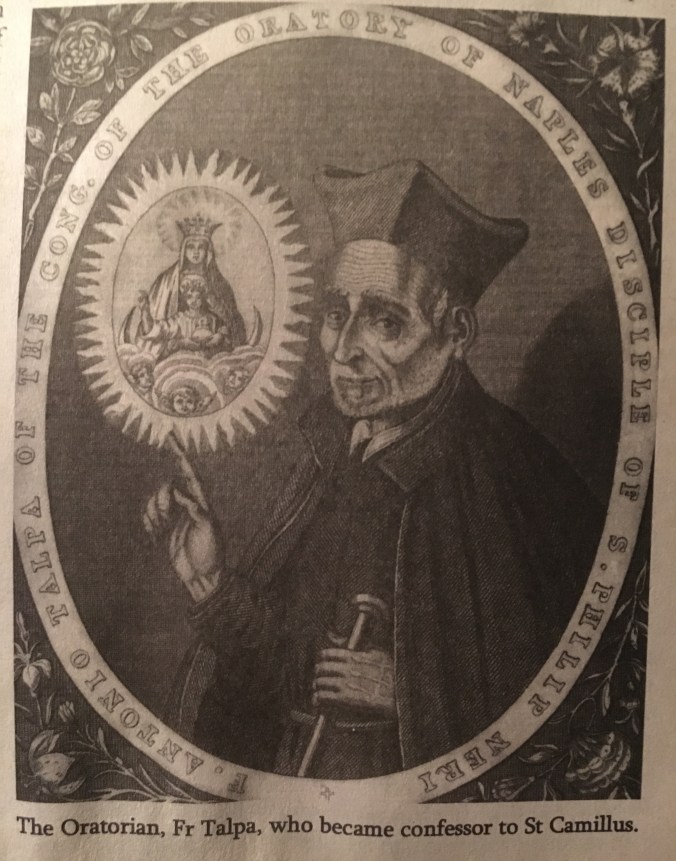
Our Lady of the Vallicella in a portrait of Fr. Antonio Talpa, one of the founders of the Naples Oratory and the confessor of St. Camillus of Lellis. I don’t know how old the image originally is. Photo taken from the 2008 English Edition of Cardinal Capecelatro’s Good Philip, produced by The Desert Will Bloom Press. Page 111.

Later Oratorians also made use of the icon in their publications. This was particularly true of works brought out by the Fathers of the London Oratory. A publication of Fr. Faber’s Spiritual Conferences from 1859 includes the following sigil on its title page:

Screen Shot 2017-09-08 at 2.11.38 AM.png

Our Lady of the Vallicella in one of Father Faber’s many books (Source).

More recent Oratorians have also included this image of the Mother of God on the volumes they have published. For example:

image

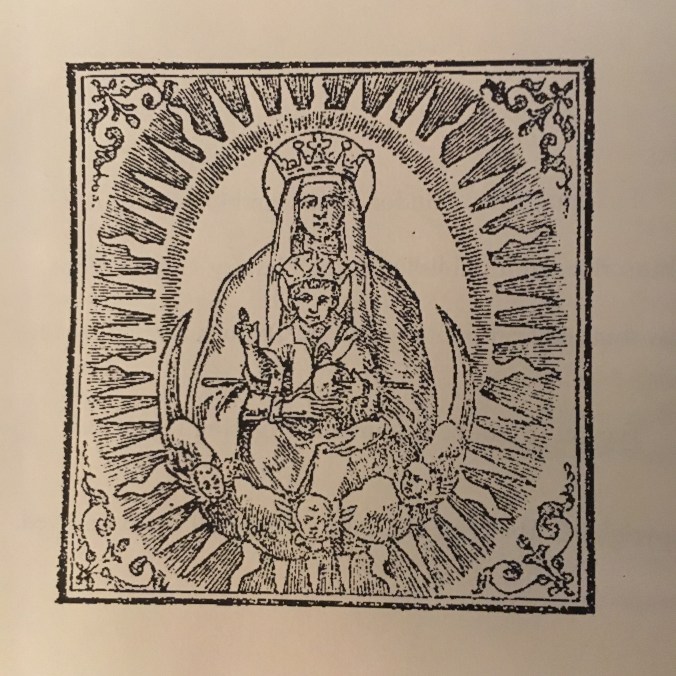
Our Lady of the Vallicella as seen on the title page of my copy of Agnelli’s The Excellences of the Congregation of the Oratory of St. Philip Neri, Third Edition (Oxford 2012).

What I have not found yet is any evidence that Our Lady of the Vallicella was enshrined or venerated as an icon anywhere outside of the Roman Oratory. Further research may prove otherwise. Nevertheless, it is my sincere hope on this Feast of the Nativity of Mary that, as we are living in an Oratorian age, devotion to Mary under her Oratorian title will continue to spread.


Excerpts for St. Austin’s Day

Saint-Augustine-Doctor-of-the-Church

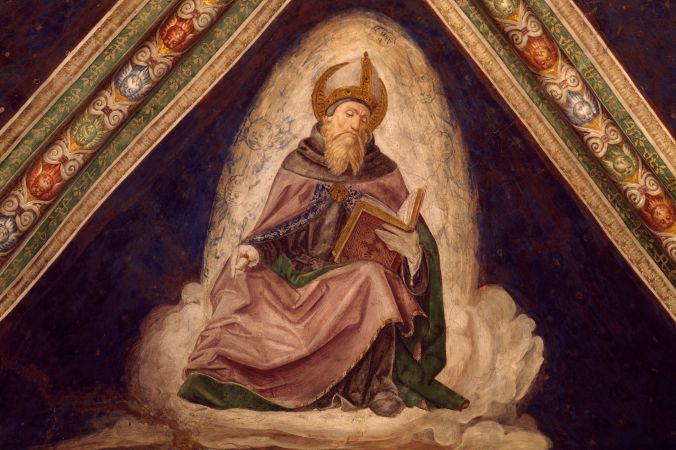
St. Augustine, Ora Pro Nobis. (Source)

I read this passage from the Confessions today and it instantly became one of my favorites selections from St. Augustine. The translation by Maria Boulding OSB is much prettier, but it’s not public domain. What follows is Book X, Chapters 6-7 (Para. 8-11).

Not with uncertain, but with assured consciousness do I love You, O Lord. You have stricken my heart with Your word, and I loved You. And also the heaven, and earth, and all that is therein, behold, on every side they say that I should love You; nor do they cease to speak unto all, so that they are without excuse. Romans 1:20 But more profoundly will You have mercy on whom You will have mercy, and compassion on whom You will have compassion, otherwise do both heaven and earth tell forth Your praises to deaf ears. But what is it that I love in loving You? Not corporeal beauty, nor the splendour of time, nor the radiance of the light, so pleasant to our eyes, nor the sweet melodies of songs of all kinds, nor the fragrant smell of flowers, and ointments, and spices, not manna and honey, not limbs pleasant to the embracements of flesh. I love not these things when I love my God; and yet I love a certain kind of light, and sound, and fragrance, and food, and embracement in loving my God, who is the light, sound, fragrance, food, and embracement of my inner man— where that light shines unto my soul which no place can contain, where that sounds which time snatches not away, where there is a fragrance which no breeze disperses, where there is a food which no eating can diminish, and where that clings which no satiety can sunder. This is what I love, when I love my God.

And what is this? I asked the earth; and it answered, I am not He; and whatsoever are therein made the same confession. I asked the sea and the deeps, and the creeping things that lived, and they replied, We are not your God, seek higher than we. I asked the breezy air, and the universal air with its inhabitants answered, Anaximenes was deceived, I am not God. I asked the heavens, the sun, moon, and stars: Neither, say they, are we the God whom you seek? And I answered unto all these things which stand about the door of my flesh, You have told me concerning my God, that you are not He; tell me something about Him. And with a loud voice they exclaimed, He made us. My questioning was my observing of them; and their beauty was their reply. And I directed my thoughts to myself, and said, Who are you? And I answered, A man. And lo, in me there appear both body and soul, the one without, the other within. By which of these should I seek my God, whom I had sought through the body from earth to heaven, as far as I was able to send messengers— the beams of my eyes? But the better part is that which is inner; for to it, as both president and judge, did all these my corporeal messengers render the answers of heaven and earth and all things therein, who said, We are not God, but He made us. These things was my inner man cognizant of by the ministry of the outer; I, the inner man, knew all this— I, the soul, through the senses of my body. I asked the vast bulk of the earth of my God, and it answered me, I am not He, but He made me.

Is not this beauty visible to all whose senses are unimpaired? Why then does it not speak the same things unto all? Animals, the very small and the great, see it, but they are unable to question it, because their senses are not endowed with reason to enable them to judge on what they report. But men can question it, so that the invisible things of Him . . . are clearly seen, being understood by the things that are made; Romans 1:20 but by loving them, they are brought into subjection to them; and subjects are not able to judge. Neither do the creatures reply to such as question them, unless they can judge; nor will they alter their voice (that is, their beauty), if so be one man only sees, another both sees and questions, so as to appear one way to this man, and another to that; but appearing the same way to both, it is mute to this, it speaks to that— yea, verily, it speaks unto all but they only understand it who compare that voice received from without with the truth within. For the truth declares unto me, Neither heaven, nor earth, nor any body is your God. This, their nature declares unto him that beholds them. They are a mass; a mass is less in part than in the whole. Now, O my soul, you are my better part, unto you I speak; for you animate the mass of your body, giving it life, which no body furnishes to a body but your God is even unto you the Life of life.

What then is it that I love when I love my God? Who is He that is above the head of my soul? By my soul itself will I mount up unto Him. I will soar beyond that power of mine whereby I cling to the body, and fill the whole structure of it with life. Not by that power do I find my God; for then the horse and the mule, which have no understanding, might find Him, since it is the same power by which their bodies also live. But there is another power, not that only by which I quicken, but that also by which I endow with sense my flesh, which the Lord has made for me; bidding the eye not to hear, and the ear not to see; but that, for me to see by, and this, for me to hear by; and to each of the other senses its own proper seat and office, which being different, I, the single mind, do through them govern. I will soar also beyond this power of mine; for this the horse and mule possess, for they too discern through the body.

And I’ll add this paragraph from Chapter 17 (Para. 26), which strongly reminds me of Cardinal Newman’s project in the Apologia Pro Vita Sua:

Great is the power of memory; very wonderful is it, O my God, a profound and infinite manifoldness; and this thing is the mind, and this I myself am. What then am I, O my God? Of what nature am I? A life various and manifold, and exceeding vast. Behold, in the numberless fields, and caves, and caverns of my memory, full without number of numberless kinds of things, either through images, as all bodies are; or by the presence of the things themselves, as are the arts; or by some notion or observation, as the affections of the mind are, which, even though the mind does not suffer, the memory retains, while whatsoever is in the memory is also in the mind: through all these do I run to and fro, and fly; I penetrate on this side and that, as far as I am able, and nowhere is there an end. So great is the power of memory, so great the power of life in man, whose life is mortal. What then shall I do, O Thou my true life, my God? I will pass even beyond this power of mine which is called memory— I will pass beyond it, that I may proceed to You, O Thou sweet Light. What sayest Thou to me? Behold, I am soaring by my mind towards You who remainest above me. I will also pass beyond this power of mine which is called memory, wishful to reach You whence You can be reached, and to cleave unto You whence it is possible to cleave unto You. For even beasts and birds possess memory, else could they never find their lairs and nests again, nor many other things to which they are used; neither indeed could they become used to anything, but by their memory. I will pass, then, beyond memory also, that I may reach Him who has separated me from the four-footed beasts and the fowls of the air, making me wiser than they. I will pass beyond memory also, but where shall I find You, O Thou truly good and assured sweetness? But where shall I find You? If I find You without memory, then am I unmindful of You. And how now shall I find You, if I do not remember You?


Elsewhere: A New Blog on English Catholicism

image

All ye holy English Martyrs, pray for us. (Source)

Anglo-Catholic readers will no doubt have mourned the demise of Conner McNeill’s Merrily on High, what was once among the best and most prolific AC blogs on the web. Never fear! Connor McNeill rides again. He’s back with a new blog called Mary’s Dowry. It looks as tasteful, reverent, and aesthetically sophisticated as the project that preceded it.

Mr. McNeill has decided to depart from the Church of England and join the Roman Communion. As he had been pursuing ordination with the C of E, this conversion is no small undertaking. Pray for him! And check out Mary’s Dowry while you’re at it.


On the Coronation of the Coredemptrix

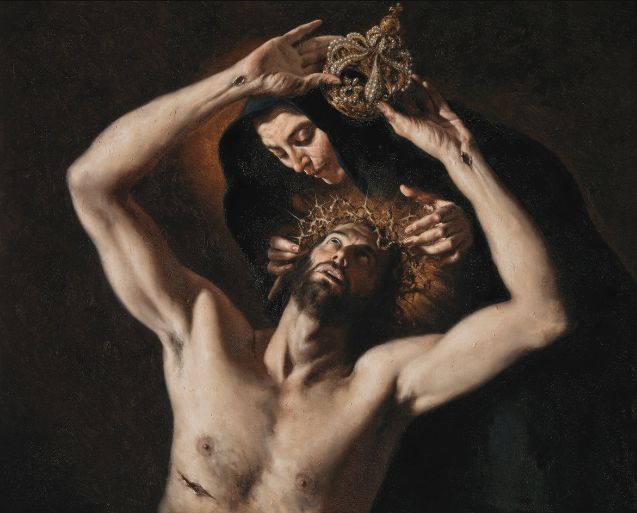
Corredenzione2

Corredenzione, by Giovanni Gasparro. This painting convinced my heart of the doctrine of the Co-Redemption of Mary. (Source).

It is appropriate on this Feast of Our Lady’s Coronation and Everlasting Queenship that we contemplate the fleeting thrones of this lesser world. Let us commemorate the loss of two great English dynasties, fixed on this day by Providence.

On Aug. 22, 1485, His Majesty King Richard III was defeated on Bosworth Field by a usurper from the House of the Tudors. The Red Dragon of Wales eclipsed the White Rose of York; years later, T.S. Eliot would wear the flower every 22nd of August.

RIII-Banner-RIIIF

The Personal Standard of Richard III. (Source).

On Aug. 22, 1642, His Majesty King Charles I raised the Royal Standard at Nottingham. This act has widely been considered the formal start of the English Civil War that would end in Puritan dictatorship, the slaughter of the Irish and Scots, and the martyrdom of the King himself for the doctrine of Episcopacy.

RoyalStandardStuarts.jpg

The Royal Standard of the Stuarts, 1603-1649. (Source).

Consider the leaden weight of these crowns. Worn by men alternately noble and feeble, loyal and inconstant, heroic and fearful, they rot away with the passage of time. The gilt of their craft and the earthly acclaim of their subjects have gone the way of all flesh. Those crowns are memories, but even in memory they do not earn the glory and affection they once inspired. Their reputations are occulted with cumbersome connotations. Richard has been much maligned ever since his death, in part by no less a personage than Shakespeare himself. Charles, a more complicated figure, has been swallowed up by his role as the symbolic center of Tory anxieties and Whig acrimony for the better part of four centuries. More bitterly, both kings “Accept the constitution of silence/And are folded in a single party.” They have become an unimportant datum of historical trivia for most people, even in England.

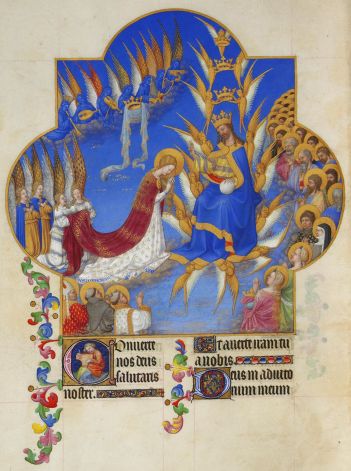
the-coronation-of-the-virginLimbourg.jpg

The Coronation of the Virgin, by the Limbourg Brothers. (Source)

How unlike those crowns is that won by Mary! She who was immaculately conceived and preserved from every stain of sin never sullies her crown by any failure of virtue. Having borne the Son of God in her womb, no other glory could ever outstrip what she has already known in her perpetually virginal maternity. Assumed into heaven, she is preserved from the terrible corruption of the grave. And now, as the Church celebrates the Octave Day of the Assumption, we contemplate the eternal joy which her coronation engenders in all the ranks of the blessed. All generations have called her blessed, and all will forevermore. She will never be reduced in the eyes of the world, because no one is more perfect in the eyes of God.

Has there ever been so marvelous a creature as Mary? Can we name, in the orderly chaos of the creation, a being more closely united to the Trinity? Who else among mere mortals has been lauded as “More honorable than the Cherubim, and more glorious beyond compare than the Seraphim?” In her burns the fire of charity; in her grows the ground of humility; in her flows the water of purity; in her soars the mighty wind of patience. She is the New and Sophianic Eve, in which the Wisdom of God is most clearly manifest.

And why? Because she is the threefold Mother of the Redeemer. First, by her Fiat, she assents to a physical maternity of the Word Incarnate. Second, by the sorrows of her Immaculate Heart at the Cross, she wins a sacramental maternity of Christ in the Eucharist. And third, by her prayer in the Cenacle on Pentecost, she gains a mystical maternity of Christ in the whole Church. This threefold motherhood is but one theandric maternityand thus we see the Trinitarian character of Our Lady’s co-redemption. She and she alone of all mankind is so favored and so bound to the work of Christ.

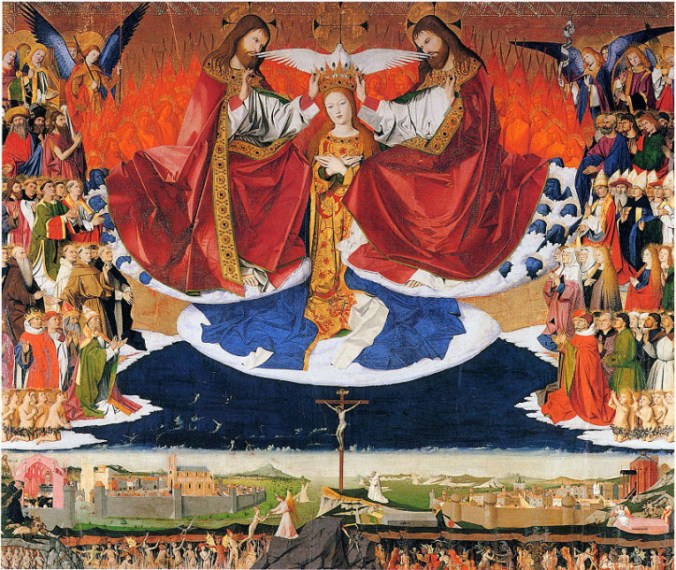
art-and-liturgy-enguerrand-quarton-coronation-of-the-virgin-1454

Coronation of the Virgin, Enguerrand Quarton. 1454. (Source). Mary crowned by the Trinity is surely an icon of the Eschaton.

A friend of mine passed on this passage from St. Amadeus of Lausanne, a Cistercian most famous for his eight homilies in praise of the Mother of God. He took it from Universalis, which gives the full liturgy of the hours online. Thus, the Church particularly commends these words to us on this holy day:

Observe how fitting it was that even before her assumption the name of Mary shone forth wondrously throughout the world. Her fame spread everywhere even before she was raised above the heavens in her magnificence. Because of the honour due her Son, it was indeed fitting for the Virgin Mother to have first ruled upon earth and then be raised up to heaven in glory. It was fitting that her fame be spread in this world below, so that she might enter the heights of heaven on overwhelming blessedness. Just as she was borne from virtue to virtue by the Spirit of the Lord, she was transported from earthly renown to heavenly brightness.

So it was that she began to taste the fruits of her future reign while still in the flesh. At one moment she withdrew to God in ecstasy; at the next she would bend down to her neighbours with indescribable love. In heaven angels served her, while here on earth she was venerated by the service of men. Gabriel and the angels waited upon her in heaven. The virgin John, rejoicing that the Virgin Mother was entrusted to him at the cross, cared for her with the other apostles here below. The angels rejoiced to see their queen; the apostles rejoiced to see their lady, and both obeyed her with loving devotion.

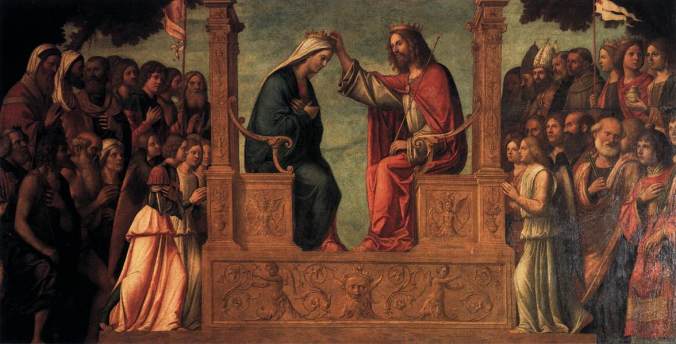
the-coronation-of-the-virginCimaThe Coronation of the Virgin, Cima da Conegliano. (Source).

Dwelling in the loftiest citadel of virtue, like a sea of divine grace or an unfathomable source of love that has everywhere overflowed its banks, she poured forth her bountiful waters on trusting and thirsting souls. Able to preserve both flesh and spirit from death she bestowed health-giving salve on bodies and souls. Has anyone ever come away from her troubled or saddened or ignorant of the heavenly mysteries? Who has not returned to everyday life gladdened and joyful because his request had been granted by the Mother of God?

She is a bride, so gentle and affectionate, and the mother of the only true bridegroom. In her abundant goodness she has channelled the spring of reason’s garden, the well of living and life-giving waters that pour forth in a rushing stream from divine Lebanon and flow down from Mount Zion until they surround the shores of every far-flung nation. With divine assistance she has redirected these waters and made them into streams of peace and pools of grace. Therefore, when the Virgin of virgins was led forth by God and her Son, the King of kings, amid the company of exulting angels and rejoicing archangels, with the heavens ringing with praise, the prophecy of the psalmist was fulfilled, in which he said to the Lord: At your right hand stands the queen, clothed in gold of Ophir.

WomanClothedWiththeSun

An illustration of “The Woman Clothed With the Sun.” (Source)

St. Amadeus is right; “Has anyone ever come away from her troubled or saddened or ignorant of the heavenly mysteries? Who has not returned to everyday life gladdened and joyful because his request had been granted by the Mother of God?” We who still struggle with sin on the path to beatitude cannot hope to achieve our goal if we will not be with and like Mary. We, too, are promised crowns. The scriptures mention five: the imperishable crown (1 Cor. 5:24-25), the crown of rejoicing (1 Thess. 2:19), the crown of righteousness (2 Tim. 4:8), the crown of glory (1 Pet. 5:4), and the crown of life (Rev. 2:10). Our Lady wears all these and seven more, for she is the “woman clothed with the sun, and the moon under her feet, and upon her head a crown of twelve stars” (Rev. 12:1 KJV). Are these other seven stars the seven gifts of the Holy Spirit, her spouse? Or the seven cardinal virtues? Or the seven sacraments that constitute the Church? Or the seven lesser ranks of the angels in praise of their queen? Impossible to say. Mary is not only the fountain of all holiness, but the mother of the Church’s deepest mysteries.

How might I end this praise of Our Lady that could properly continue ad infinitum? By returning to those lesser crowns with which I began.

Earthly splendor is no great thing. It can only be built on sufferingeither our own or that of others. Even when turned to good (as, I would argue, Charles I attempted to use his power), it reflects something of our fallen state. It is slippery, contingent, and as mortal as we are. But the glory of heaven is without end. Incorrupt and incorruptible, it abides in the gaze of the Father. Mary, above all creation, receives this kind of glory. She, the New Eve to the New Adam, mirrors Him in all things. Let us run after the course she trod before us, the course of Her Son’s redemption! Only by pursuing a life like Christ’s can we hope for a reward like Mary’s.

May she pray for us as we celebrate her feast today.

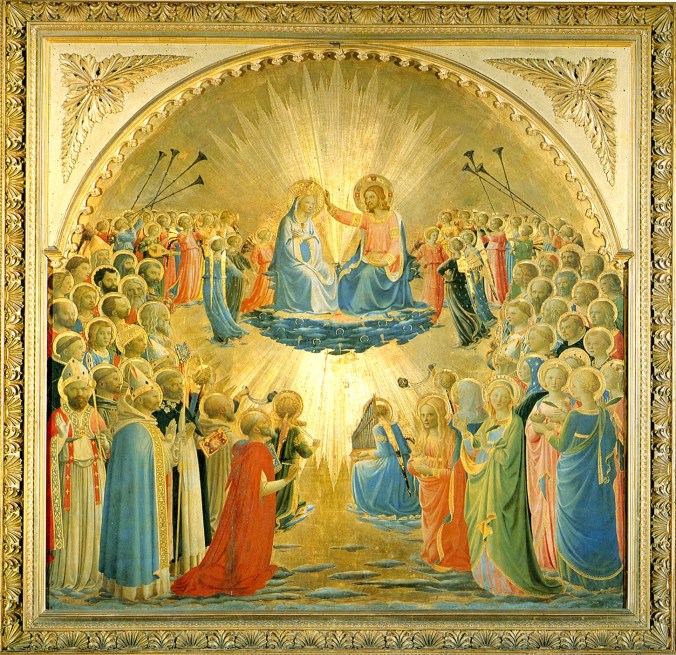
coronation-of-the-virgin-fra-angelico-big.jpg

“Coronation of the Virgin,” Fra Angelico. (Source). The Blessed Angelico returned to this subject throughout his career, but this version, hanging in the Uffizi Gallery, is my favorite.

Elsewhere: Fr. Hunwicke on Liturgical Wigs

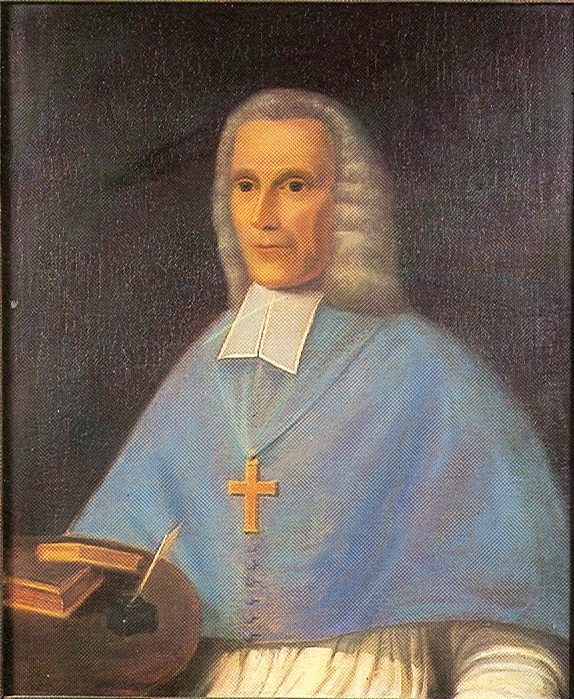
image

The famous portrait of Bishop Challoner to which Fr. Hunwicke refers in his piece. (Source)

I haven’t written much this week, as I’ve been traveling. However, on this beautiful  St. Bernard’s Day, I thought I’d share this brief and wonderful gem of a piece by Fr. John Hunwicke of the Ordinariate.

An excerpt:

I’m sure there are zillions of you out there who have the following sort of information right at your snuff-stained finger tips: did prelates eo fere tempore wear their wigs all through Mass? Even after their zucchetto had been removed as they approached the Consecration? When did Catholic bishops stop wearing wigs? (I think it went out of fashion in Anglican cicles in the 1830s.)

He also gets into the question of blue episcopal choir dress, mainly used in France and Ireland. Read the whole thing.

Clerical dress is one of my longstanding interests, as is the history of 18th century Catholicism. I’m glad Fr. Hunwicke is using his formidable celebrity to draw attention to these matters. While some may dismiss clerical fashion (particularly that of the Ancien Régime) as a trivial matter, I beg to differ. Clerical dress both during and outside of the liturgy is one more aesthetic component by which we can present “the beauty of holiness.” The nondescript threads worn by so many clergy and religious today are, alas, one more surrender to the cult of stark utility, false equality, failed individuality, and, in the end, boring homogeneity.

At the moment, I don’t have the time or capacity to research the questions Fr. Hunwicke raises. But The Amish Catholic will follow this story with all due attention and gravity. You can count on that. In the meantime, I’ll feast my eyes on this doozy of a cappa magna.

The Catholic Poems of Oscar Wilde

OscarWildeBook

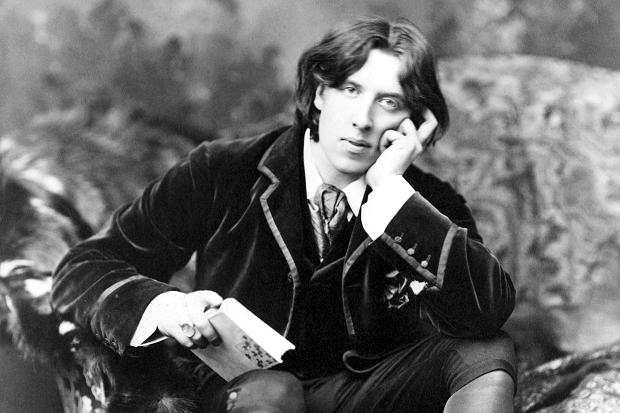
Oscar Fingal O’Flahertie Wills Wilde (Source).

As I mentioned in my last post, during the month of August, I am dedicating myself to daily acts of creativity in honor of Mary’s Immaculate and Sophianic Heart. As Providence would have it, the Holy Father’s intentions for August include prayers for artists. Thus, I’m going to make my blog especially aesthetic for the rest of the month.

And what better way to start than examining work by one of the modern era’s great philosophers of art, Oscar Wilde? It is not often remembered today that Oscar Wilde was a Catholic. True, he was only formally received on his death bed. But Wilde maintained a lifelong flirtation with the faith. Catholicism infused his imagination from very early on in his productive career. When he was a student at Oxford, he visited Rome and wrote quasi-Catholic poetry that even Cardinal Newman admired. In some of the work, the influence of Dante is manifest. The aesthetics and romance of Catholicism appealed to Wilde, and he was nearly converted by Fr. Sebastian Bowden of the London Oratory. Only much later did he definitively turn to the Lord, in his last hour. However, many members of his circle also converted…a topic I shall, perhaps, explore some other day.

Ave Maria Gratia Plena

Was this His coming! I had hoped to see
A scene of wondrous glory, as was told
Of some great God who in a rain of gold
Broke open bars and fell on Danae:
Or a dread vision as when Semele
Sickening for love and unappeased desire
Prayed to see God’s clear body, and the fire
Caught her white limbs and slew her utterly:
With such glad dreams I sought this holy place,
And now with wondering eyes and heart I stand
Before this supreme mystery of Love:
A kneeling girl with passionless pale face,
An angel with a lily in his hand,
And over both with outstretched wings the Dove.

Sonnet on Approaching Italy

I reached the Alps: the soul within me burned
Italia, my Italia, at thy name:
And when from out the mountain’s heart I came
And saw the land for which my life had yearned,
I laughed as one who some great prize had earned:
And musing on the story of thy fame
I watched the day, till marked with wounds of flame
The turquoise sky to burnished gold was turned,
The pine-trees waved as waves a woman’s hair,
And in the orchards every twining spray
Was breaking into flakes of blossoming foam:
But when I knew that far away at Rome
In evil bonds a second Peter lay,
I wept to see the land so very fair.

Urbs Sacra Æterna

Rome! what a scroll of History thine has been
In the first days thy sword republican
Ruled the whole world for many an age’s span:
Then of thy peoples thou wert crownèd Queen,
Till in thy streets the bearded Goth was seen;
And now upon thy walls the breezes fan
(Ah, city crowned by God, discrowned by man!)
The hated flag of red and white and green.
When was thy glory! when in search for power
Thine eagles flew to greet the double sun,
And all the nations trembled at thy rod?
Nay, but thy glory tarried for this hour,
When pilgrims kneel before the Holy One,
The prisoned shepherd of the Church of God.

Sonnet on Hearing the Dies Irae Sung in the Sistine Chapel

Nay, Lord, not thus! white lilies in the spring,
Sad olive-groves, or silver-breasted dove,
Teach me more clearly of Thy life and love
Than terrors of red flame and thundering.
The hillside vines dear memories of Thee bring:
A bird at evening flying to its nest
Tells me of One who had no place of rest:
I think it is of Thee the sparrows sing.
Come rather on some autumn afternoon,
When red and brown are burnished on the leaves,
And the fields echo to the gleaner’s song,
Come when the splendid fulness of the moon
Looks down upon the rows of golden sheaves,
And reap Thy harvest: we have waited long.

Holy Week at Genoa

I wandered through Scoglietto’s far retreat,
The oranges on each o’erhanging spray
Burned as bright lamps of gold to shame the day;
Some startled bird with fluttering wings and fleet
Made snow of all the blossoms; at my feet
Like silver moons the pale narcissi lay:
And the curved waves that streaked the great green bay
Laughed i’ the sun, and life seemed very sweet.
Outside the young boy-priest passed singing clear,
‘Jesus the son of Mary has been slain,
O come and fill His sepulchre with flowers.’
Ah, God! Ah, God! those dear Hellenic hours
Had drowned all memory of Thy bitter pain,
The Cross, the Crown, the Soldiers and the Spear.

San Miniato

See, I have climbed the mountain side
Up to this holy house of God,
Where once that Angel-Painter trod
Who saw the heavens opened wide,

And throned upon the crescent moon
The Virginal white Queen of Grace,–
Mary! could I but see thy face
Death could not come at all too soon.

O crowned by God with thorns and pain!
Mother of Christ! O mystic wife!
My heart is weary of this life
And over-sad to sing again.

O crowned by God with love and flame!
O crowned by Christ the Holy One!
O listen ere the searching sun
Show to the world my sin and shame.

Madonna Mia

A lily-girl, not made for this world’s pain,
With brown, soft hair close braided by her ears,
And longing eyes half veiled by slumberous tears
Like bluest water seen through mists of rain:
Pale cheeks whereon no love hath left its stain,
Red underlip drawn in for fear of love,
And white throat, whiter than the silvered dove,
Through whose wan marble creeps one purple vein.
Yet, though my lips shall praise her without cease,
Even to kiss her feet I am not bold,
Being o’ershadowed by the wings of awe.
Like Dante, when he stood with Beatrice
Beneath the flaming Lion’s breast, and saw
The seventh Crystal, and the Stair of Gold.

E Tenebris

Come down, O Christ, and help me! reach thy hand,
For I am drowning in a stormier sea
Than Simon on thy lake of Galilee:
The wine of life is spilt upon the sand,
My heart is as some famine-murdered land,
Whence all good things have perished utterly,
And well I know my soul in Hell must lie
If I this night before God’s throne should stand.
‘He sleeps perchance, or rideth to the chase,
Like Baal, when his prophets howled that name
From morn to noon on Carmel’s smitten height.’
Nay, peace, I shall behold before the night,
The feet of brass, the robe more white than flame,
The wounded hands, the weary human face.

At Verona

How steep the stairs within Kings’ houses are
For exile-wearied feet as mine to tread,
And O how salt and bitter is the bread
Which falls from this Hound’s table,–better far
That I had died in the red ways of war,
Or that the gate of Florence bare my head,
Than to live thus, by all things comraded
Which seek the essence of my soul to mar.

‘Curse God and die: what better hope than this?
He hath forgotten thee in all the bliss
Of his gold city, and eternal day’–
Nay peace: behind my prison’s blinded bars
I do possess what none can take away,
My love, and all the glory of the stars.

On the Massacre of the Christians in Bulgaria

Christ, dost Thou live indeed? or are Thy bones
Still straitened in their rock-hewn sepulchre?
And was Thy Rising only dreamed by her
Whose love of Thee for all her sin atones?
For here the air is horrid with men’s groans,
The priests who call upon Thy name are slain,
Dost Thou not hear the bitter wail of pain
From those whose children lie upon the stones?
Come down, O Son of God! incestuous gloom
Curtains the land, and through the starless night
Over Thy Cross a Crescent moon I see!
If Thou in very truth didst burst the tomb
Come down, O Son of Man! and show Thy might
Lest Mahomet be crowned instead of Thee!

Queen Henrietta Maria

In the lone tent, waiting for victory,
She stands with eyes marred by the mists of pain,
Like some wan lily overdrenched with rain:
The clamorous clang of arms, the ensanguined sky,
War’s ruin, and the wreck of chivalry,
To her proud soul no common fear can bring:
Bravely she tarrieth for her Lord the King,
Her soul a-flame with passionate ecstasy.
O Hair of Gold! O Crimson Lips! O Face
Made for the luring and the love of man!
With thee I do forget the toil and stress,
The loveless road that knows no resting place,
Time’s straitened pulse, the soul’s dread weariness,
My freedom and my life republican!

On Easter Day

The silver trumpets rang across the Dome:
The people knelt upon the ground with awe:
And borne upon the necks of men I saw,
Like some great God, the Holy Lord of Rome.
Priest-like, he wore a robe more white than foam,
And, king-like, swathed himself in royal red,
Three crowns of gold rose high upon his head:
In splendor and in light the Pope passed home.
My heart stole back across wide wastes of years
To One who wandered by a lonely sea,
And sought in vain for any place of rest:
“Foxes have holes, and every bird its nest,
I, only I, must wander wearily,
And bruise My feet, and drink wine salt with tears.”

Wilde did just that until he lost his duel with the wallpaper on November 30th, 1900. But having received the last rites of the Church, perhaps he is already in heaven as a saint. One can only imagine what he would think of his portrait bedecked with a golden halo.
On the Birthday of Cardinal Baronius

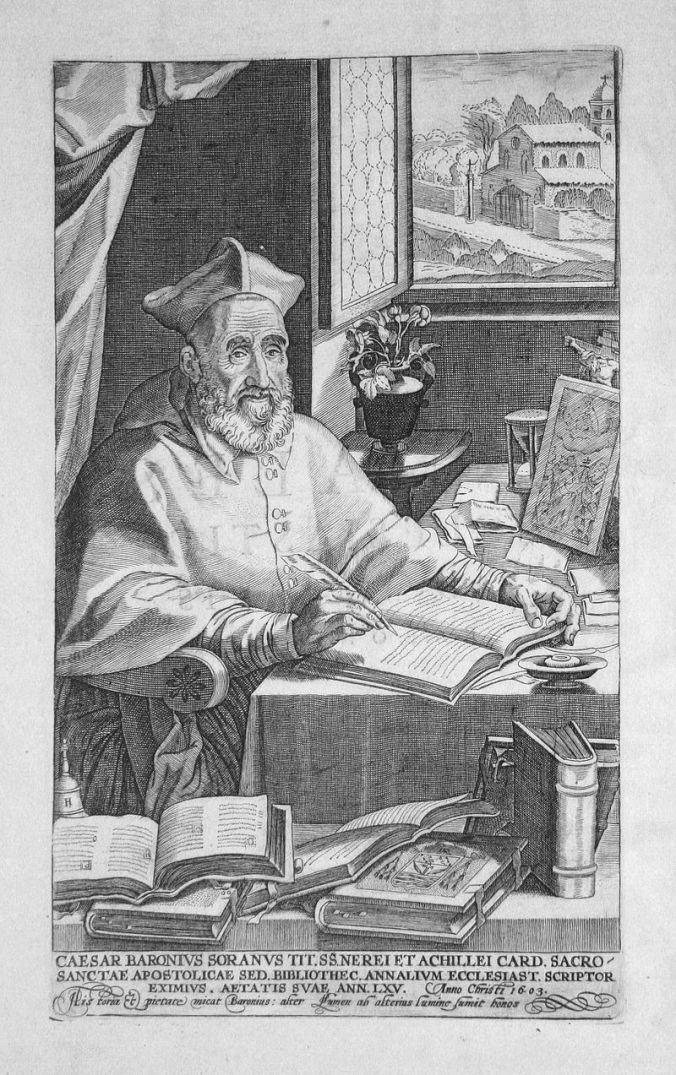
BaroniusPortraitbw

The Venerable Cardinal himself. This portrait is one of the few where his Cardinalatial arms can be glimpsed, on the cover of a book in the foreground. (Source).

Readers of this blog will learn with no surprise that, having finished Lady Amabel Kerr’s biography of the Venerable Cardinal Baronius, my admiration for this great Oratorian has increased tenfold. As I have concluded the volume, so lovingly edited and reprinted by Mediatrix Press, on the very birthday of the illustrious historian, I thought I might reproduce here two extended passages from Baronius’s correspondence that I found particularly edifying.

The first passage is taken from a letter that Baronius wrote to one Justin Calvin. I have thus far been unable to locate much further information about said Calvin, unrelated, I think, to the heresiarch Reformer. Baronius’s Annales and extended correspondence with Justin led to the latter’s eventual conversion. Calvin (or Justus Baronius Calvinus, as he was called once he added Baronius’s name to his own) went on to become a priest and author of, among other works, an Apologia that justified his conversion. God manifestly works in mysterious ways within the long lives of religious orders. He is inordinately fond of strange and unintended coincidences.

Baronius writes to the young convert:

I return many thanks to the great and most high God, whose tender mercies, as sings David, are over all His works, for having called you out of darkness into His marvellous light. No benefit, no grace can be greater than this, so see that you cherish it carefully and guard it jealously. Do not indulge in paeans of victory; but rather remember that exhortation of the Apostle to walk circumspectly, not as unwise but as wise, redeeming the time because the days are evil…When the devil has been overthrown, he is apt to rise up with renewed vigour, and assault his former conqueror more violently than ever. Our Lord tells us of the wicked spirit who, having gone out of a man, did not rest, but fetched seven other spirits more wicked than himself, and retook by fraud the soul whence he had been driven…Be sure that he will seek you who have escaped him and are now fighting in the ranks of the Church. He may not betray his designs, for he fears lest Saul-converted into Paul by his reconciliation to the Church-should by the first of divine love deal destruction on the lies by which he is wont to overcome men. You, a soldier of Jesus Christ, beware, and lose not hold on the shield of faith which you have taken up. Be master of yourself, overcome yourself, and take heed that you, who were once in the employ of the prince of darkness, be not ashamed of being enrolled under the banner of Christ your Captain…You have, however, no real cause for fear, but only for joy. Rejoice if you are found worthy to suffer anything for the Catholic faith and in defence of the truth. I showed your letter to our Supreme Pastor, who rejoiced to hear the bleating of his one-time lost sheep, who has been found worthy to hear the voice of the Shepherd. He is addressing to you an Apostolic letter, by which he embraces you as if with extended arms, and by his written words places you on his shoulders rejoicing. In him you will always find a true pastor and father. (Kerr 295-96).

There is much rich advice here for any convert. Baronius also displayed his perennial wisdom when he replied to a number of fellow Cardinals who censured the liberty with which he defended the independence of the Church against the claims of various princes and potentatesabove all, the King of Spain. His response is inspiring for anyone who hopes to engage in the life of the mind. We read:

It behoves me to imitate our Lord and Master Jesus Christ, of whom the Gospel says that He taught as one having authority and not as the scribes, which means that He preached with truth and liberty, whereas they, in their adulation of Herod, yielded to that king’s taste in everything. Far be it from me, I repeat, to write like the scribes, and not declare the truth freely as did Christ. After Him I turn to the holy fathers of the Church, whose example, in writing, it behoves me to follow. In their maintenance of the truth in the face of those who attacked it, they displayed unbending constancy of soul. They did not make use of cringing, diluted, soft expressions, but, on the contrary, employed a language both grand and strong, mingling with it a sharpness of censure which converted their sentences into so many flashes of lightning. If you look through the Annals you will find scarcely a year in which some such example is not cited.

By studying the fathers and relating their acts I have by habit adopted their manner of speaking, which should not, in my opinion, be despised, for such speech is bestowed as a gift of the Spirit rather than obtained by human learning. When dealing with heretic or schismatic innovators, or else with princes who corrupt ecclesiastical discipline by their violation of the laws of the Church, or endeavour by their tyranny to reduce her to servitude, I have acquired the habit of writing with the indiscretion which you censure. The words of the prophet, “Cry, cease not, lift up thy voice like a trumpet, and show my people their wicked doings,” keep resounding in my ears as if from heaven. When Eugenius IV was made Pope, St. Bernard exhorted him to nominate Cardinals who should act as John did towards Herod, Moses towards the Egyptians, Phineas towards the fornicators, Elias towards the idolaters, Eliseus towards misers, Peter towards liars, Paul towards blasphemers, and, finally, as our Lord Himself acted towards traffickers in the temple. In other words he urged the Pope to choose men armed with zeal against sinners, who should act everywhere and in every way in such a manner as to sweep away the workers of iniquity. Such is the model drawn for us by the Holy Ghost, and if we do not conform ourselves to it we shall be convicted of deformity. (Kerr 318-20).

These are just some of the words which the Venerable Cardinal let slip as so much nectar from his pen and tongue. He was truly one of the greatest scholars that the Church has ever produced, and he revolutionized the discipline of ecclesiastical history. Yet Baronius always saw the Annales as a secondary work to the simple task of salvation. His humility was legendary, and Kerr’s portrait of Baronius captures this peculiar virtue in all its many expressions.

Fénelon writes somewhere that we are all saved with our disposition. And Baronius’s scholarly predilections color his devotional life. Kerr tells us of one of his favorite prayers in a brief but vivid scene:

It may be said that he never wasted a moment of that rare though precious time when it was permitted him to turn his thoughts directly to God. While driving about in his coach he used to pull down the blinds and give himself over unrestrainedly to the things of the soul, bidding his companion recall him to himself if anything occurred which required his attention. When thus shut into darkness he usually repeated the Holy Name over and over again, or else dwelt lovingly on his favourite interjection, “Eternitas, eternitas,” words which were but the epitome of his ceaseless longing for death and the state beyond the grave. (Kerr 282).

Baronius teaches us to use time—that is, our place in historywell. May we follow in his glorious footsteps and one day enjoy with him the eternity he so ardently desired.