Original Art: Four More Pieces

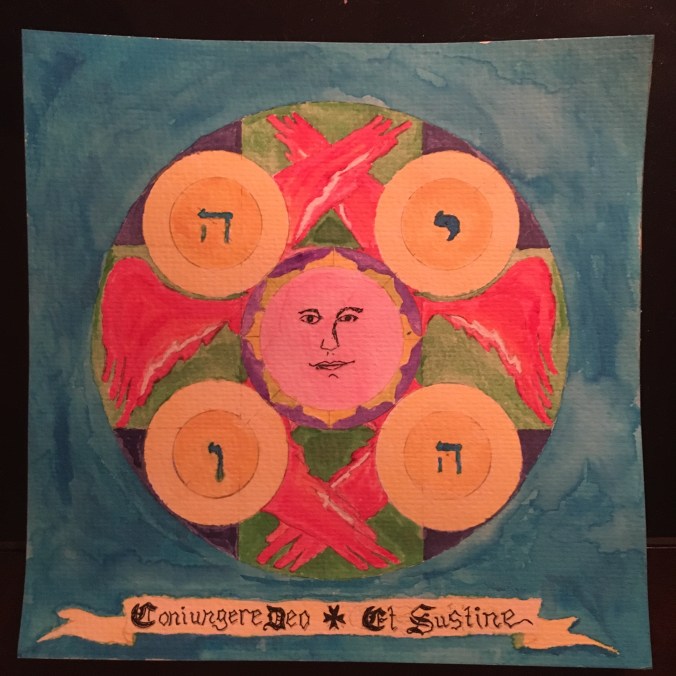
Here are the fruits of my labor for the last week or so.

image

“The Madonna of the Vallicella,” photo taken by artist. The chief Marian icon associated with the Oratory of St. Philip Neri. This is a smaller study for what I hope will one day be a larger piece.

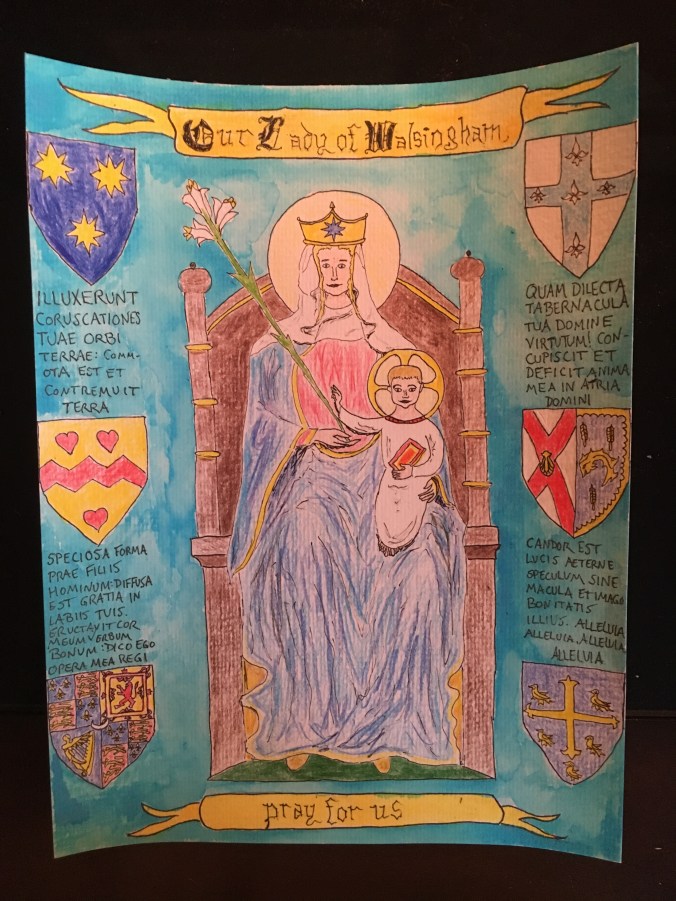
image

“Our Lady of Walsingham,” photo taken by artist. Included are the arms of (top to bottom): on the left, the Oxford Oratory, Cardinal Newman, and the Cardinal Duke of York, and on the right, Our Lady of Walsingham, St. John Fisher, and St. Edward the Confessor.

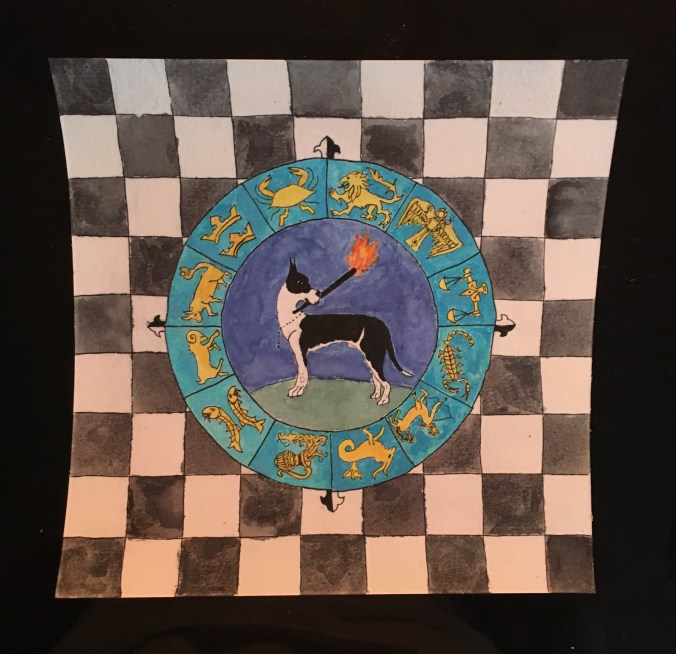
image

“St. Dominic,” photo taken by artist. Dedicated to all the wonderful Dominicans in my life.

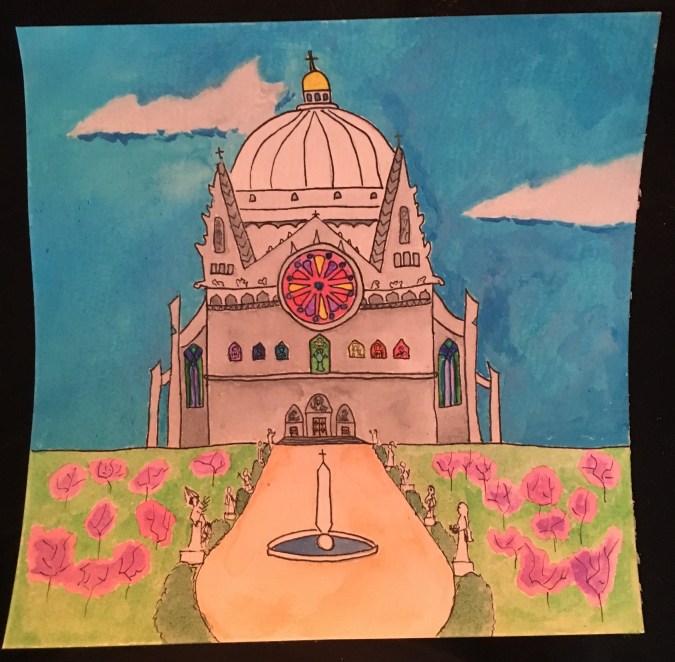
image

“The Basilica of Saints Catherine and Lucy,” photo taken by artist. Very pleased with how this turned out, as it’s my first largely free-drawn project, and my first without any use of a model.

100 Things I Would Rather Listen To at Mass than Hymns from the 70’s and 80’s, In No Particular Order

cross17

A brilliant friend of mine pointed out that “We Are Called and Gifted By Our God,” “Gather Us In,” “On Eagle’s Wings,” etc. are basically the Catholic, musical equivalent of Thomas Kinkade: bad art enjoyed primarily by old people. (Source).

  1. Gregorian Chant
  2. Byzantine Chant
  3. Old Roman Chant
  4. Ambrosian Chant
  5. Mozarabic Chant
  6. Hildegard Von Bingen
  7. Palestrina
  8. Thomas Tallis
  9. Bruckner
  10. John Tavener
  11. John Taverner
  12. Henryk Gorecki
  13. Arvo Part
  14. Ralph Vaughan Williams
  15. Old Negro Spirituals
  16. The Mormon Tabernacle Choir
  17. Appalachian Shape-Note Singing
  18. Mongolian Throat Singing
  19. Swedish Black Metal
  20. Broadway Showtunes
  21. Spanish Versions of Broadway Showtunes
  22. Esperanto Versions of Broadway Showtunes
  23. Crappy Bootlegged Esperanto Versions of Broadway Showtunes
  24. DMX
  25. Patsy Cline
  26. Irish Folk Ceol
  27. The Game of Thrones Theme Song
  28. Melanie Martinez
  29. All 7 Hours of a Castro Speech
  30. Chris Tomlin (shudder)
  31. YouTube videos about Fitness
  32. RuPaul’s Drag Race
  33. “Shall We Gather at the River?”
  34. David Lynch Cooking Quinoa
  35. Schoenberg
  36. That Weird Russian Guy Who Dances and Makes That Noise with his Lips (you know the one)
  37. The Interviews of Edward Gorey
  38. The Collected Works of Charles Dickens Played Backwards
  39. Machine Metal Music
  40. The Sound of Two Hundred Bees Copulating Simultaneously
  41. A Giant Saw Cutting Off California from the Rest of the Union
  42. Musique concrète
  43. Dissertation Defenses by Statistics Ph.D’s
  44. Mark Zuckerberg (shudder)
  45. The Sound Made by Nikita Kruschev’s Shoe on the Podium, But on Infinite Loop
  46. The Sound Made by Justin Trudeau When He Announced The Year as If It Mattered, But on Infinite Loop
  47. Cats
  48. Ayn Rand Interviews
  49. Vaporwave Remixes of Ayn Rand Interviews
  50. Vaporwave Anything, Really
  51. “Always Look on the Bright Side of Life!”
  52. Mr. G’s Dance from Summer Heights High
  53. A Theory of Justice: The Musical
  54. “Universal Love, Said the Cactus Person”
  55. The Ambient Sounds Recorded at the Varsity in Atlanta
  56. Twelve Germans Arguing About Philology
  57. John Oliver
  58. Ethel Merman
  59. Untranslated Korean Horror Movies
  60. Buskers in the Tube
  61. Robert Nozick Gently Asking Me to Kill 10,000 Contented Cows
  62. Gypsy Music
  63. Fleet Foxes (actually this would be pretty great and like the only good “folk mass” conceivable in any way, shape, or form)
  64. “The Sash”
  65. Ambient Noise Recorded at the Louvre
  66. The Sound of Praying Mantises Fighting Each Other
  67. The Sound of Praying Nuns Fighting Each Other
  68. The Sound of Music
  69. Oral Histories of the Tennessee Valley Authority
  70. Smash Mouth
  71. The Collected Oeuvre of Insane Clown Posse
  72. Gargling
  73. Untranslatable Russian Poetry
  74. Donald Trump (shudder)
  75. Gordon Ramsay Insulting Hell’s Kitchen Contestants
  76. Hideous Yak Noises
  77. The Broken Wind of an Unusually Flatulent Old Vicar in Surrey
  78. Lobsters
  79. Tracey Emin Talking About Her Work As If It Mattered
  80. That Flute Played by Mr. Tumnus
  81. Road Rage
  82. Chevy Chase Reciting Edward Lear
  83. “Your Mom Goes to College”
  84. Lobsters, but Fighting
  85. Gilbert Gottfried Reciting The Faerie Queene
  86. “Just You…And I…Just You…And I…”
  87. The Unrestrained Moans of Passion from the Majestic Wombat in Rut
  88. All the Burps from Arlo: The Burping Pig
  89. All the Burps from Arlo Guthrie Over His Entire Life
  90. “Alice’s Restaurant Massacree” On A Day Other Than Thanksgiving
  91. This List, Recited in Swahili
  92. Little Jimmy Scott
  93. The National Anthem of the USSR
  94. “MacArthur Park” (the original, performed by Richard Harris)
  95. Cardinal Richelieu as Petula Clark
  96. A Medley from Die Dreigroschenoper
  97. Mark Gormley’s “Without You”
  98. A Headline Act from Branson
  99. Wing’s cover of “Dancing Queen”
  100. Silence

Original Art: First Four Pieces

As part of my August challenge, I’ve gone back to painting. It’s been wonderful. Here are the first four works I have created. Apologies for the skewed black borders – some of the pages are a little warped from the watercolors. At this point, I’m primarily trying to get back my sea-legs, so to speak. Hopefully soon I’ll be able to move away from models and into more imaginative, creative territory. For now, I’m happy with the start I’ve made.

image

“Guardian Angel.” Photo taken by artist.

image

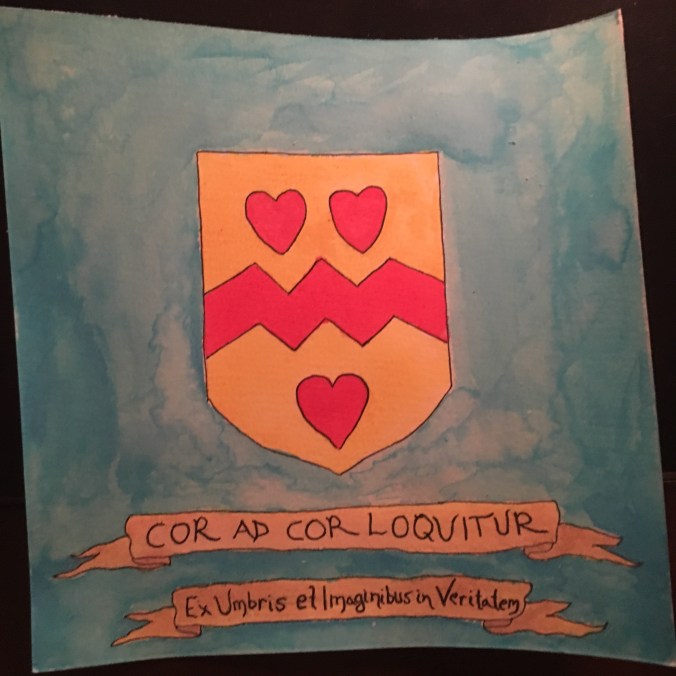
“Cardinal Newman’s Coat of Arms.” Photo taken by artist.

image

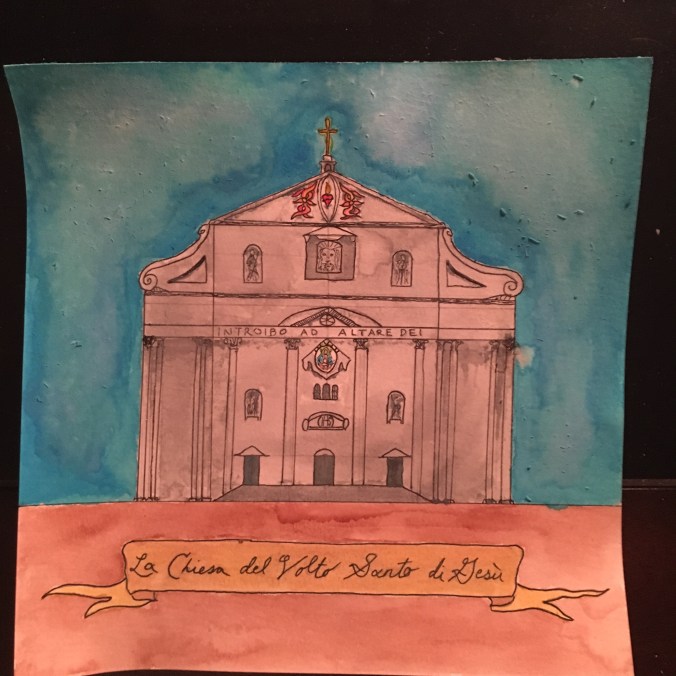
“La Chiesa del Volto Santo di Gesù.” Photo taken by artist. A riff on the Gesù proper. I worked from a photo and added my own design details.

image.jpeg

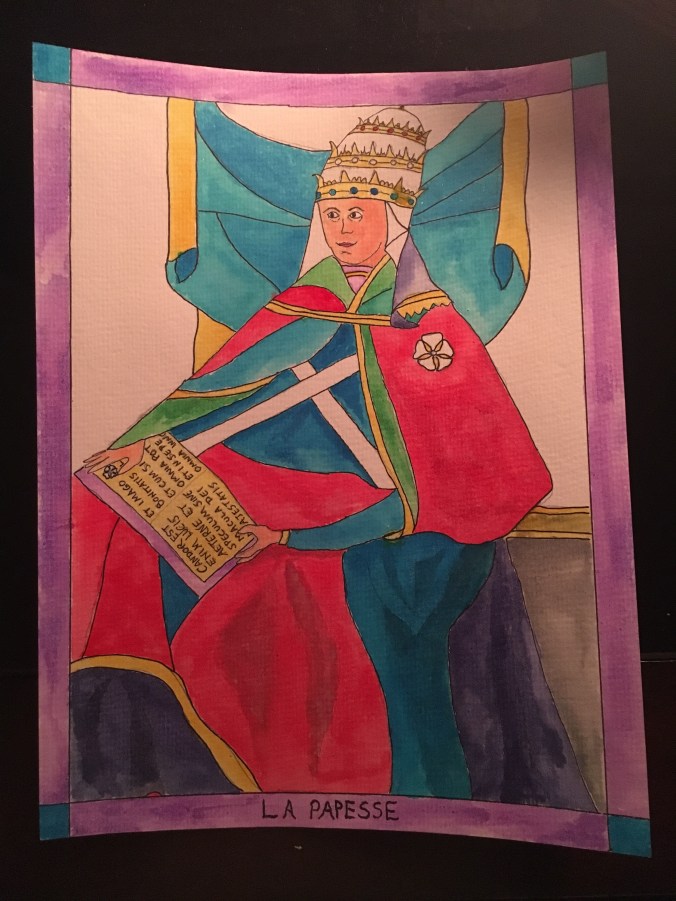
“The Papess.” Photo taken by artist. I used the Marseilles Tarot as my starting model, and made various changes. The Papess is one of my favorite cards, and I prefer the earlier, Christian versions to the orientalist pagan “High Priestess” that Pamela Colman Smith and A.E. Waite bequeathed to us.

A Challenge in Honor of the Sophianic Heart of Mary

ImmaculateHeartofMarySophianic

Sorrowful and Immaculate Heart of Mary, pray for us sinners. (Source).

August is consecrated to the Sorrowful and Immaculate Heart of Mary. Thus, it is a month in which the Church invites us to peer into the profound and luminous abyss of light at the very center of the Mother of God’s Sophianic life. In celebration of this occasion, I’ve decided to dedicate myself to producing or working on something creative every day for the rest of the month. Today, I have already written one poem and started an art project. The latter is especially exciting for me, as it’s been years since I last produced any real art. Too long, really. Pray for me in this sophiological endeavor! I would recommend the same challenge to any Catholic hoping to redeem this particular time.

10,000 Views and Counting

image.jpeg

Hopefully many more posts will come. (Source)

I have just reached 10,000 views on this blog. Deo Gratias! Never in my wildest hopes did I anticipate breaking this milestone…let alone within a year of starting. To God be the glory, and may He continue to guide my steps in this venture. Thank you to everyone who has given their time and consideration to read and share what I have written.

Books I Have Finished This Summer

OldBooks

Old volumes. (Source).

I intend to keep updating this post as a running list of the books I have completed (though not necessarily started and completed) over the summer. I will include a short blurb and review for each title. Thus far:

1. The Benedict Option. Rod Dreher. 2017. Non-fiction.
An argument for focusing on Christian community-building in the face of an increasingly hostile secular liberal order. And a very flawed argument at that. But the book got me thinking about a better option, so as a provocation to thought and discussion, it works pretty well.
Score: 3/5.

2. A Litany of Mary. Ann Ball. 1987. Non-Fiction.
A lovely exposition of and meditation on various titles of Mary. Would recommend for anyone seeking a deeper understanding of Our Lady, her role, and her apparitions in the modern world. Particular highlights are some of the rarer titles such as Our Lady of the Cenacle and Our Lady of the Most Blessed Sacrament. If you have (or want) a devotion to Mary under one of her titles, this is the book for you.
Score: 4/5

3. Free Women, Free Men. Camille Paglia. 2017. Non-fiction.
The dissident feminist’s newest collection of essays. Gives a great taste of her style and scholarly concerns over the course of her long career. Topics range from The Real Housewives, “Southern Women,” BDSM, Puritanism, and all kinds of feminist spats. Her essay “On Abortion” is one of the most idiosyncratic and provocative takes on the issue I have yet read. Paglia never tires of displaying her acid wit and crackling prose. Perhaps her greatest flaw, beyond those points where she is simply wrong, is her irritating autobiographical tendency. I could do without the seventh mention of her childhood Halloween costumes. But all in all, a read well worth the effort.
Score: 4.25/5

4. The Leopard. Giuseppe di Lampedusa. 1958. Fiction.
The decline and fall of a Sicilian noble family. There’s romance, history, and a dollop of nostalgia that Lampedusa sprinkles with acerbically cynical observations about his characters. It’s uncommon to find a class commentary that doubles as a sensitive psychological portrait. The Leopard is just such a rare gem. Lampedusa has a knack for evocation. You can feel the heat of the Sicilian sun radiating from the pages; with Lampedusa, you can almost catch a faint whiff of ambergris over the rot. His style is a slow-moving delight, well-suited to his subject. There’s also a Great Dane, which is always a plus.
Score: 4.5/5

5. The Black Arts. Richard Cavendish. 1967. Non-fiction.
A helpful, if perhaps somewhat dated, exposition of occult history and practice. Cavendish presents a thorough overview of dark magic. His wry, understated humor makes it a great read (one quote: “[Éliphas Lévi’s] later books are less interesting, including his History of Magic (1860) and The Key of the Mysteries (1861), which he himself translated into when he was reincarnated as Aleister Crowley…The learned English occultist A. E. Waite, who was not a reincarnation of Lévi, but succeeded in translating the secrets of the Doctine and Ritual all the same” pg. 29). Would strongly recommend to anyone with a love of horror fiction, the macabre, Christopher Lee, the Kabbalah, Latin, and batsh*t crazy characters from the Victorian and Edwardian periods (including Montague Summers). It made me want to read Valentin Tomberg’s Meditations on the Tarot and watch Penny Dreadful.
Score: 4/5

6. Chickamauga. Charles Wright. 1995. Poetry.
Remarkable, luminous poetry by a professor at my alma mater. T.S. Eliot’s spiritual and stylistic successor. Reading him is like reading a mystic in motionmore ornate that Wendell Berry, more apophatic than William Blake. I cannot recommend him highly enough.
Score: 5/5


Poem: “To the Romanian”

RomaniaSmoke

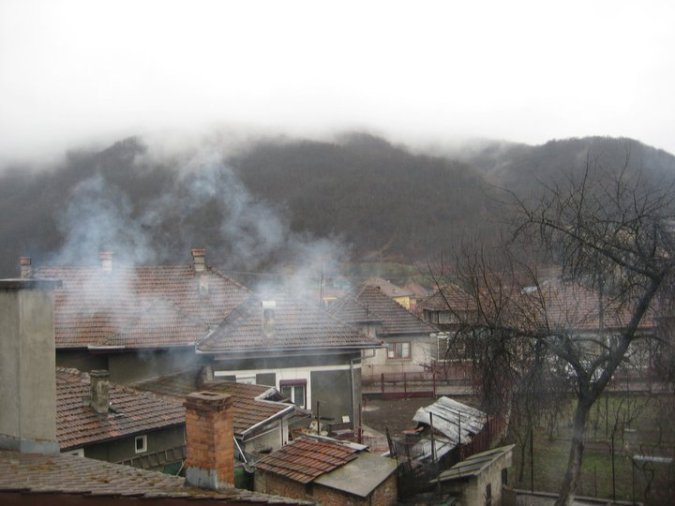
Romania. Photo taken by the author, March 2011.

Since the response to my last two original poems has been so positive, I thought I’d publish a little more. I wrote this piece a few years ago.

To the Romanian

I am opening a window in my mind again.
I am peering into the sodden landscape
Of stone, snow, and parted lips of lead,
The chalice which catches the wax
Imported from Carinthia—like the
Ring that snags on the
Crow’s ashen teeth.
The shudders are snapping in the wind;
Smoke is rising from the valley.

Why I Am a Catholic

Paris-N-Dame-N

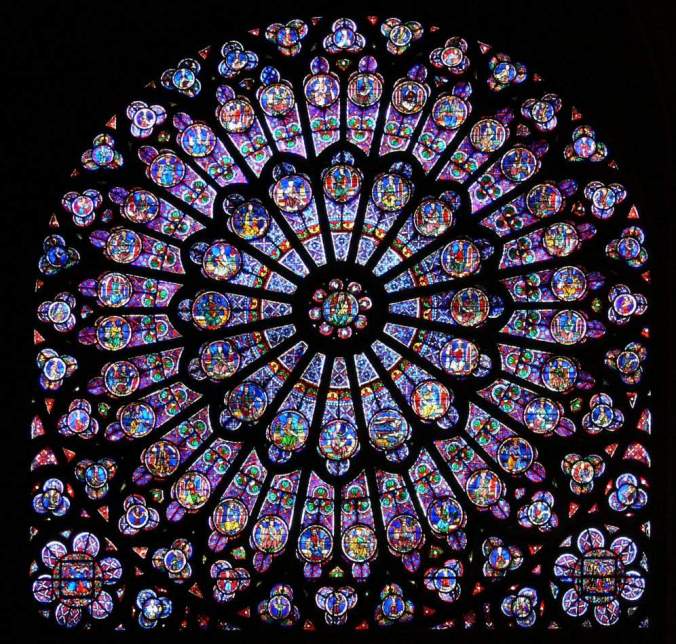
The North Rose Window of Notre Dame de Paris. (Source).

Right around January of 2016, Mr. Owen White (formerly?) of The Ochlophobist, issued a challenge to the religious blogosphere asking writers why they adhered to their faiths. The challenge lay in the rules; if memory serves correctly, you could only answer with five or so selections of media by figures who, to the best of your knowledge, were outside that faith. I wrote up my own list, but as I wasn’t blogging at the time, I didn’t publish it anywhere. I just found it again, decided to add an extra two pieces, and thought I’d put it here for anyone who might care. 

The dove descending breaks the air
With flame of incandescent terror
Of which the tongues declare
The one discharge from sin and error.
The only hope, or else despair
Lies in the choice of pyre of pyre-
To be redeemed from fire by fire.

Who then devised the torment? Love.
Love is the unfamiliar Name
Behind the hands that wove
The intolerable shirt of flame
Which human power cannot remove.
We only live, only suspire
Consumed by either fire or fire.

TS. Eliot, “Little Gidding”


O sages standing in God’s holy fire
As in the gold mosaic of a wall,
Come from the holy fire, perne in a gyre,
And be the singing-masters of my soul.
Consume my heart away; sick with desire
And fastened to a dying animal
It knows not what it is; and gather me
Into the artifice of eternity.

W. B. Yeats, “Sailing to Byzantium”


Rest your cheek, for a moment, on this drunken cheek.
Let me forget the war and cruelty inside myself.
I hold these silver coins in my hand;
Give me your wine of golden light.
You have opened the seven doors of heaven;
Now lay your hand generously on my tightened heart.
All I have to offer is this illusion, my self.
Give it a nickname at least that is real.
Only you can restore what you have broken;
Help my broken head.
I’m not asking for some sweet pistachio candy,
But your everlasting love.
Fifty times I’ve said,
“Heart, stop hunting and step into this net.”

Rumi, “The War Inside,” trans. Kabir Helminski


Somehow it has all
added up to song
earth, air, rain and light,
the labor and the heat,
the mortality of the young.
I will go free of other
singing, I will go
into the silence
of my songs, to hear
this song clearly.

Wendell Berry, “A Song Sparrow Singing in the Fall”


Helplessness Blues” by Fleet Foxes


The Tree of Life, by Terrence Malick


mother-of-the-world-1924.jpg

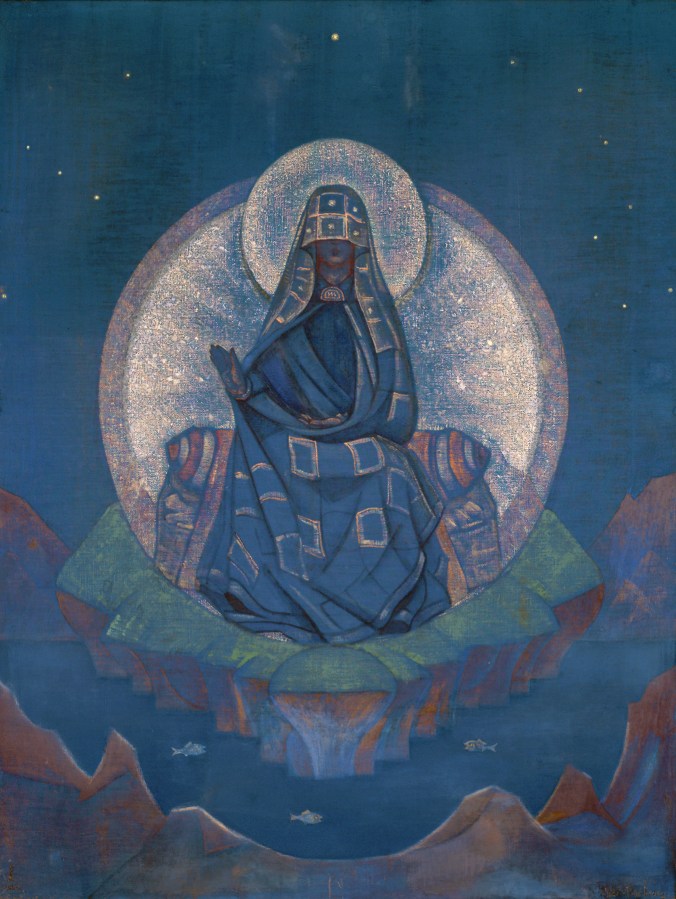
“Mother of the World,” Nicholas Roerich, 1924. (Source).

Poem: “Southern Storm”

CloudsBW

Clouds. (Source).

Another original piece from the old notebook, spruced up a bit. As I mentioned in my earlier poem, at this point I don’t really plan on putting too much of my own stuff here. But in lieu of some other posts that are taking longer to finish than I had hoped, here you go.  

He is the ghost that fogs the mirror
before you rise to greet your Sunday face,
beer-swilling face with stubble like termites
tumbling through your grandmother’s antique chair
as she sings half-bred hymns to you in a
Gypsy tongue she learned off a carnival
barker. He stands before the black bookshelf,
pondering the glass veil between Word
and Man, wondering if sand or stone would
feel better in an old shoe, or like a
paper Mephistopheles, he leaps now
into the street, wild, un-tame and unkempt,
with matted hair drawn into a loose bun
or some pin-stuck old Indian style.
He offers you his body for consolation.
He offers you his tongue in lieu of words,
they are all tied up in leather behind
the shimmering partition like a
coquette calling from her Japanese screen.
And he dances lugubriously,
inebriate on the sound of
jazz funerals winding their way down dirt
roads to the noose-cackle of strings and the
lantern-glow of heat-lightning.

The Idea of a Gentleman

JohnHenryNewmanLateral

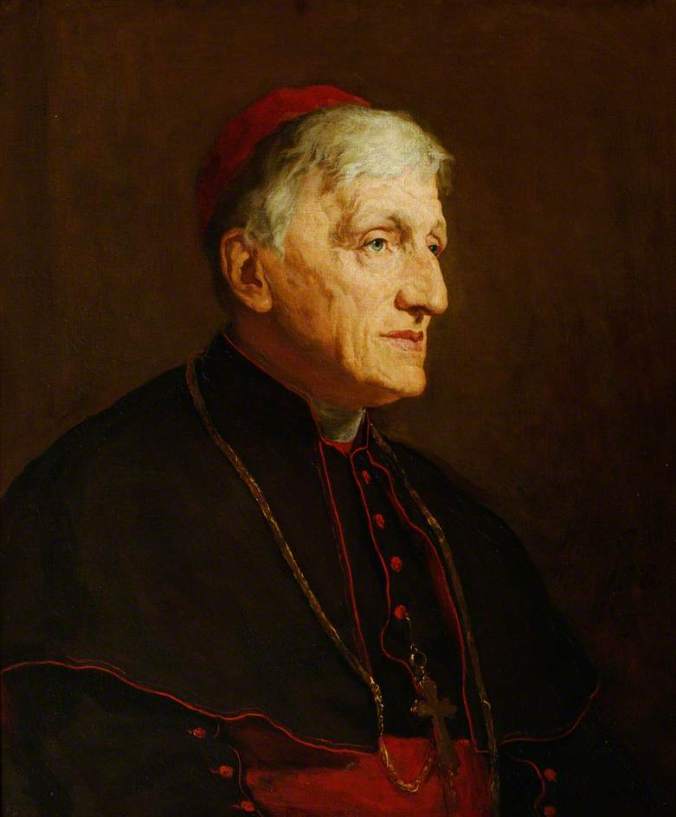
Blessed John Henry Cardinal Newman (Source).

In conducting research for another, soon to be completed blog post, I came across this wonderful passage by John Henry Newman. I first read these words a few years ago, but had since forgotten about them. I thought it might be worth bringing them to your attention. At the very least, I wanted a place to keep the passage so that I might easily and regularly find it again. I took the text, originally appearing in The Idea of a University, from here and here.

It’s worth noting that Newman elucidates his definition to suggest that there is no supernatural merit to being a gentleman. It is a generally commendable though by no means salutary disposition, and can be cultivated without any reference to religious truth. Newman later goes on to argue that a truly Catholic institution of higher learning will thus not be content to form gentlemen, though it will do that civilizing task as well. 

Hence it is that it is almost a definition of a gentleman to say that he is one who never inflicts pain. This description is both refined and, as far as it goes, accurate. He is mainly occupied in merely removing the obstacles which hinder the free and unembarrassed action of those about him; and he concurs with their movements rather than takes the initiative himself. His benefits may be considered as parallel to what are called comforts or conveniences in arrangements of a personal nature; like an easy chair or a good fire, which do their part in dispelling cold and fatigue, though nature provides both means of rest and animal heat without them. The true gentleman in like manner carefully avoids whatever may cause a jar or a jolt in the minds of those with whom he is cast — all clashing of opinion, or collision of feeling, all restraint, or suspicion, or gloom, or resentment; his great concern being to make every one at his ease and at home. He has his eyes on all his company; he is tender towards the bashful, gentle towards the distant, and merciful towards the absurd; he can recollect to whom he is speaking; he guards against unseasonable allusions, or topics which may irritate; he is seldom prominent in conversation, and never wearisome. He makes light of favors while he does them, and seems to be receiving when he is conferring. He never speaks of himself except when compelled, never defends himself by a mere retort; he has no ears for slander or gossip, is scrupulous in imputing motives to those who interfere with him, and interprets everything for the best. He is never mean or little in his disputes, never takes unfair advantage, never mistakes personalities or sharp saying for arguments, or insinuates evil which he dare not say out. From a long-sighted prudence, he observes the maxim of the ancient sage, that we should ever conduct ourselves towards our enemy as if he were one day to be our friend. He has too much good sense to be affronted at insults, he is too well employed to remember injuries, and too indolent to bear malice. He is patient, forbearing, and resigned, on philosophical principles; he submits to pain, because it is inevitable, to bereavement, because it is irreparable, and to death, because it is his destiny.

If he engages in controversy of any kind, his disciplined intellect preserves him from the blundering discourtesy of better, perhaps, but less educated minds; who, like blunt weapons, tear and hack instead of cutting clean, who mistake the point in argument, waste their strength on trifles, misconceive their adversary, and leave the question more involved than they find it. He may be right or wrong in his opinion, but he is too clear-headed to be unjust; he is as simple as he is forcible, and as brief as he is decisive. Nowhere shall we find greater candor, consideration, indulgence: he throws himself into the minds of his opponents, he accounts for their mistakes. He knows the weakness of human reason as well as its strength, its province and its limits.

If he be an unbeliever, he will be too profound and large-minded to ridicule religion or to act against it; he is too wise to be a dogmatist or fanatic in his infidelity. He respects piety and devotion; he even supports institutions as venerable, beautiful, or useful, to which he does not assent; he honors the ministers of religion, and it contents him to decline its mysteries without assailing or denouncing them. He is a friend of religious toleration, and that, not only because his philosophy has taught him to look on all forms of faith with an impartial eye, but also from the gentleness and effeminacy of feeling, which is the attendant on civilization.

Not that he may not hold a religion too, in his own way, even when he is not a Christian. In that case his religion is one of imagination and sentiment; it is the embodiment of those ideas of the sublime, majestic, and beautiful, without which there can be no large philosophy. Sometimes he acknowledges the being of God, sometimes he invests an unknown principle or quality with the attributes of perfection. And this deduction of his reason, or creation of his fancy, he makes the occasion of such excellent thoughts, and the starting-point of so varied and systematic a teaching, that he even seems like a disciple of Christianity itself. From the very accuracy and steadiness of his logical powers, he is able to see what sentiments are consistent in those who hold any religious doctrine at all, and he appears to others to feel and to hold a whole circle of theological truths, which exist in his mind no otherwise than as a number of deductions.