Across Another River

The Lamb of God at the Anglican Shrine of Our Lady of Walsingham, Walsingham, Norfolk. Photo taken by the author.

Then, at last, when he had crossed the Old Road, and had gone by the Lightning-struck Land and the Fisherman’s Well, he found, between the forest and the mountain, a very ancient and little chapel; and now he heard the bell of the saint ringing clearly and so sweetly that it was as it were the singing of the angels. Within it was very dark and there was silence. He knelt and saw scarcely that the chapel was divided into two parts by a screen that rose up to the round roof. There was a glinting of shapes as if golden figures were painted on this screen, and through the joinings of its beams there streamed out thin needles of white splendour as if within there was a light greater than that of the sun at noonday. And the flesh began to tremble, for all the place was filled with the odours of Paradise, and he heard the ringing of the Holy Bell and the voices of the choir that out-sang the Fairy Birds of Rhiannon, crying and proclaiming:

Glory and praise to the Conqueror of Death: to the Fountain of Life Unending.

Nine times they sang this anthem, and then the whole place was filled with blinding light. For a door in the screen had been opened, and there came forth an old man, all in shining white, on whose head was a gold crown. Before him went one who rang the bell; on each side there were young men with torches; and in his hands he bore the Mystery of Mysteries wrapped about in veils of gold and of all colours, so that it might not be discerned; and so he passed before the screen, and the light of heaven burst forth from that which he held. Then he entered in again by a door that was on the other side, and the Holy Things were hidden.

Arthur Machen, The Secret Glory, Chapter II

Yesterday was a liturgical confluence of some personal importance for me: St. Philip Neri, St. Augustine of Canterbury, and the Ascension. The liturgical Providence of God thus epitomized my full life of faith on one day. St. Philip Neri, whom I love particularly among all the saints, stands as a good figure for my past. The Ascension points to my own future hope of salvation, when I might join the Ascended Christ, my King and High Priest, in Heaven. To quote a favorite hymn:

The great I AM hath sworn; I on His oath depend.
I shall, on eagle wings upborne, to heaven ascend.
I shall behold His face; I shall His power adore,
and sing the wonders of His grace forevermore.

That leaves St. Augustine of Canterbury, father of the English Church. He is the sign of my present.

On that triple feast, I made my confession in the Episcopal Church and was conditionally baptized under the patronage of the Blessed Patriarch Enoch, “who walked with God” (Gen. 5:24). I then took communion for the first time since Leap Day 2020. As Pascal put it, “Joie, joie, joie, pleurs de joie.”
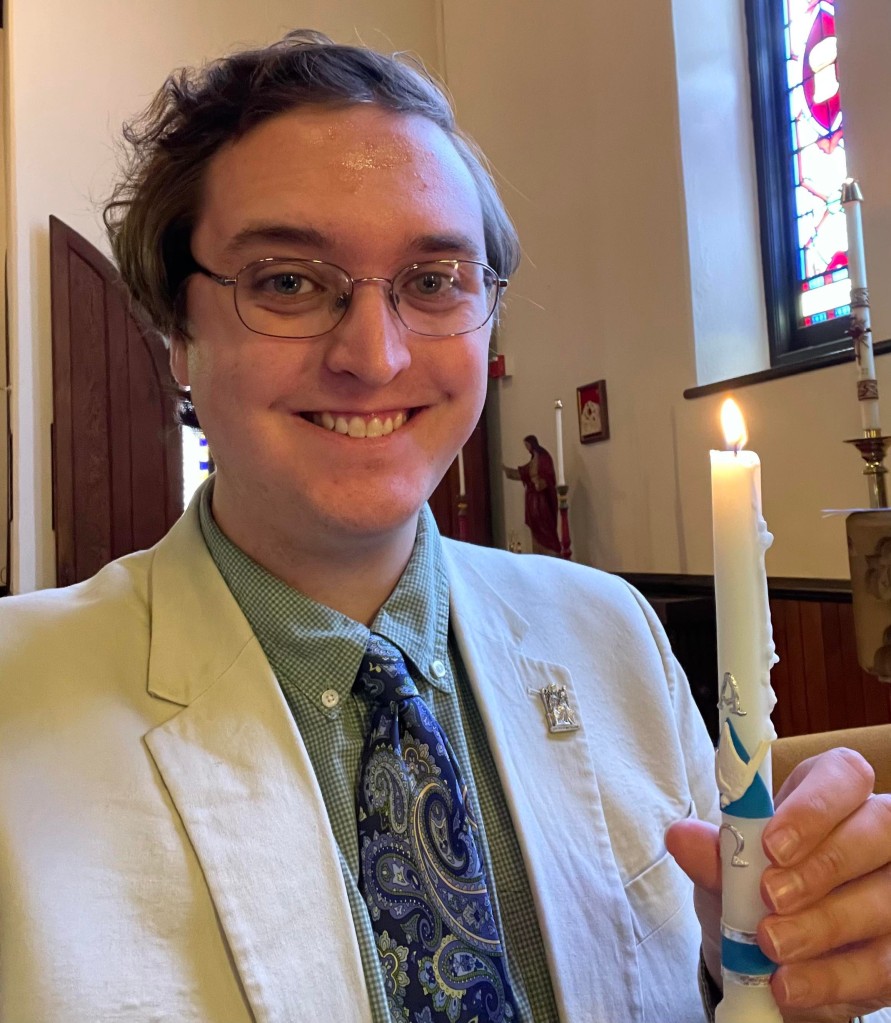
A post-baptismal selfie.

I have long held some doubts about the validity of my Methodist baptism as an infant in 1995—for which I have no records beyond family photos, but which was for some reason acceptable to my parish and Archdiocese when I completed RCIA. I thus felt it was necessary to rectify that situation. I am now, without any doubt, baptized in the name of the Father, the Son, and the Holy Spirit. 

The reason I did this in the Episcopal Church and not a Roman Catholic one is that, for nearly a year, I have been attending my local Anglo-Catholic parish. St. John’s, Bellefonte, has been a tremendously edifying community. Indeed, it is the only parish where I have felt genuinely wanted, and not simply tolerated. I started attending last summer in the midst of a very deep spiritual crisis. This crisis, which had been percolating off and on since August of 2018, was one that, had I stayed a churchgoing Roman, would certainly have caused me to leave Christianity altogether. It was only by the grace of God that I found spiritual sustenance and safe harbor at St. John’s. It felt like escaping into fresh air from a very large building which is slowly filling with smoke, because an unchecked fire is raging in its wings. It felt like jumping into a lifeboat from a rather majestic cruise-ship that is sinking, even as people keep dancing and the band plays on. It felt like escaping to a beloved aunt from a bad mother who beats you mercilessly (even when you do what she says!) and denigrates you at every opportunity, taking every chance to remind you how much better your siblings are—all while claiming to love you. A mother who asks for tremendous sacrifices and gives no help to accomplish them. A mother who requires all until she forbids all, and forbids all until she requires all, and then demands you forget everything that came before. The Church is a bad mother, not just because of her many spiritual abuses, but precisely because she is inconsistent, all while claiming that such inconsistency is impossible! And who do we believe: the Church, or our lying eyes? 

I did not advertise my transition to regular worship in a TEC church because I wanted to see if I might find any reason to stay in Rome, both through my online interactions and when I went to Catholic Masses upon my visits home. But the hook that I was half-hoping would convince me to stay on the far side of the Tiber never appeared. If anything, I became even more convinced that I should leave. And then, as the day drew near and the details were finalized, I did not tell anyone because I did not want to risk losing my nerve in the face of the old psychological traps. But now that the deed is done, I can, like Ozymandias, explain my “master-stroke” a bit.

I have never written the story of my conversion to Roman Catholicism; somehow, describing my loss of faith is even harder. I am not going to do that here. This is not my Apologia Pro Vita Sua. And I am not here to write a Chick Tract; I remain grateful for much of what I received in the Church of Rome in happier days. I know that no matter what I say, it will not be adequate to describe my own sense of disillusionment, of loss, of bitterness. And I know that, even were I to express at great length, with reason and evidence, all of my historical and theological misgivings about the post-Vatican I Papal Church, or my serious doubts engendered by the still-unresolved Silverstream scandal and similar cases, it would still not matter; many of you will attribute everything to my personal life. So be it.

The chapel of St. Stephen’s House, Oxford, on the very first morning I set foot there nearly five years ago. I will, happily, be able to receive communion there upon my next visit.

I don’t feel that I need to justify myself. But I will state my position, briefly.

I have done what I needed to do for the very survival of my faith in the God of Abraham, Isaac, and Jacob. I repudiate nothing of Catholic Tradition that is true, and good and beautiful; I reject everything that causes scandal, disedification, and injury to the Kingdom of God. I embrace the traditional, episcopal, conciliar constitution of the Church which still exists, however imperfectly, in the Anglican Communion (itself in communion with the Old Catholic Church of Utrecht). And, with all my heart, I abjure the Pope.

I emphatically don’t wish to burn any bridges with my many Roman acquaintances by this disagreement with their theology and separation from their communion. Mostly, I am leaving behind friends. That is my only sadness. I have countless fond memories—Easter Vigils in Charlottesville celebrated with friends, stirring moments of devotion and worship next to friends at the various British Oratories of St. Philip Neri, giving the eulogy at my own grandmother’s Catholic funeral in Aiken, and everywhere engaging in edifying conversations with friends who genuinely believe in Christ and will reach Heaven before me. I wish them well. As long as I could focus on orthopraxy beside such wonderful people, I could ignore the tremendous unpleasantness and the doublethink that being a Roman Catholic actually entailed for me personally.

But I can’t do it anymore. I have no regrets about my decision. God will draw us all together in the last day. I have no doubt that I have not left the one eternal Church of Christ. I have simply moved to a different (healthier?) part of it, one where God in His mercy has deigned to meet me in my terrible distress. To quote a man holier than me, “A mark of the Christian Church is that it is catholic, embracing all the angels of heaven, all the elect and the just on earth, and of all times.” And again: “There is nothing more spacious than the Church of God; because all the elect and the just of all ages comprise it.”

I have come to realize that all I can do to persevere in that Church is trust in the grace of God, focus on the local, and work out my salvation in fear and trembling (Philippians 2:12). I am under no illusions that my new home will be perfect, that it is free of divisive error, or that I will always be happy here. But neither is Rome: it was full of rather shocking evil, various divisive errors, and keen, mounting unhappiness for me personally.
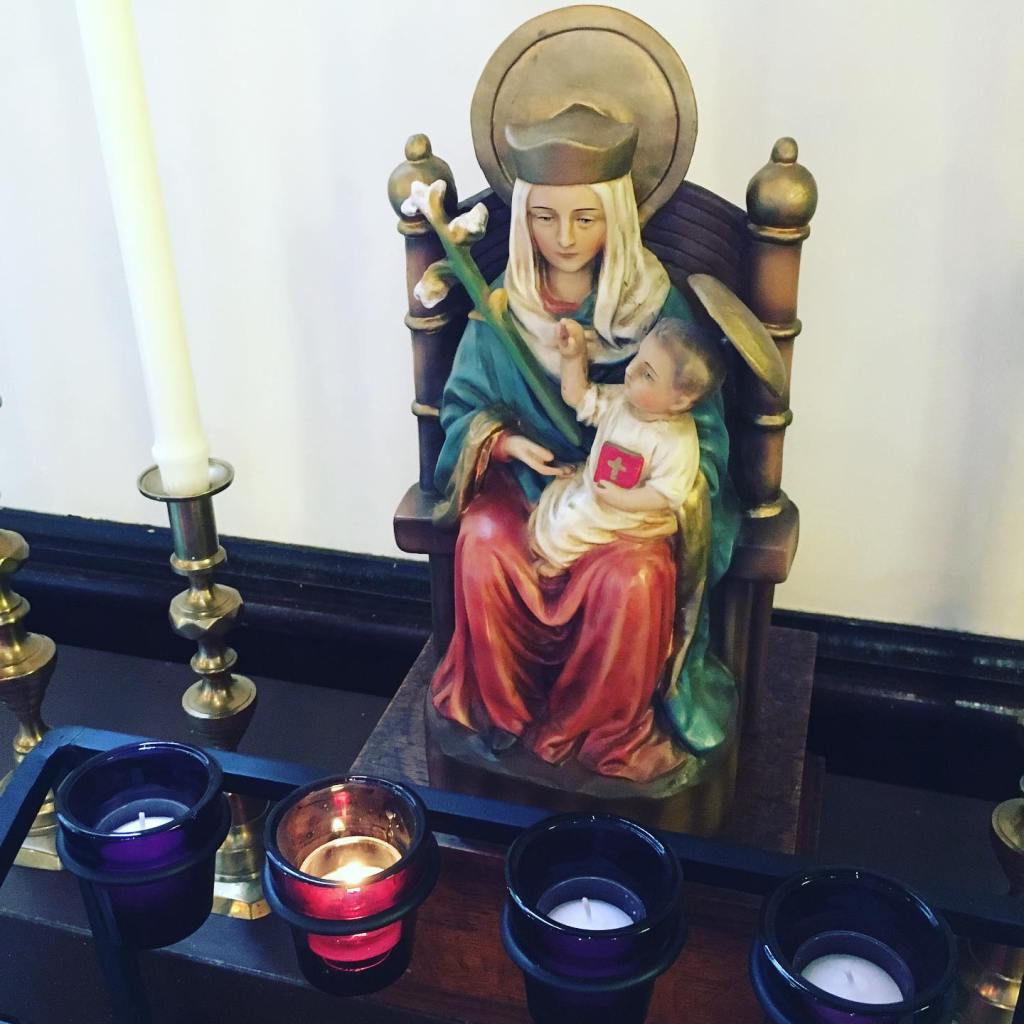
Our Lady of Walsingham, St. John’s Episcopal Church, Bellefonte, PA. Photo by author.

Anglicanism is not perfect. Even as someone convinced of the historical validity of Anglican orders, I recognize this. It is wracked with schism. There are rather atrocious liturgical abuses from time to time. People like John Shelby Spong, James Pike, and John A.T. Robinson exist in their episcopate. Most seriously, there are sexual abuse scandals here, too.  

But Anglicans’ focus on Christ and the Scriptures, their minimalist approach to doctrine, their “inclusive orthodoxy,” their localism, their seemly forms of vernacular worship, their quiet and decorous approach to personal holiness, their epistemic humility, their irenic stance towards Christians beyond their communion, their welcome to LGBT people, their poetic and moderate devotions, their customary aversion to dogmatism and legalism and enthusiasm, their respect for conscience, their aestheticism, even their sense of humor—all of it is vastly superior to what I have found to be the modus operandi in the Roman Church, whether in the typical Novus Ordo parish or in one of the Traditionalist ghettos. But above all, I am attracted to Anglicanism because I find the faith, hope, and charity of Christ there.

And so, “I was glad when they said unto me: We will go into the house of the Lord” (Ps. 122:1 BCP). Michael Ramsey, Archbishop of Canterbury, once wrote,

For while the Anglican church is vindicated by its place in history, with a strikingly balanced witness to Gospel and Church and sound learning, its greater vindication lies in its pointing through its own history to something of which it is a fragment. Its credentials are its incompleteness, with the tension and the travail in its souls. It is clumsy and untidy, it baffles neatness and logic. For it is sent not to commend itself as “the best type of Christianity,” but by its very brokenness to point to the universal Church wherein all have died. Hence its story can never differ from the story of the Corinth to which the Apostle wrote. Like Corinth, it has those of Paul, of Peter, or Apollos; like Corinth, it has nothing that it has not received; like Corinth, it learns of unity through its nothingness before the Cross of Christ; and, like Corinth, it sees in the Apostolate its dependence upon the one people of God, and the death by which every member and every Church bears witness to the Body which is one.

Michael Ramsey, The Gospel and the Catholic Church, pg, 188; emphasis my own

This ecclesiological vision rather perfectly captures my own view of the Church, a view I have tried to express elsewhere.
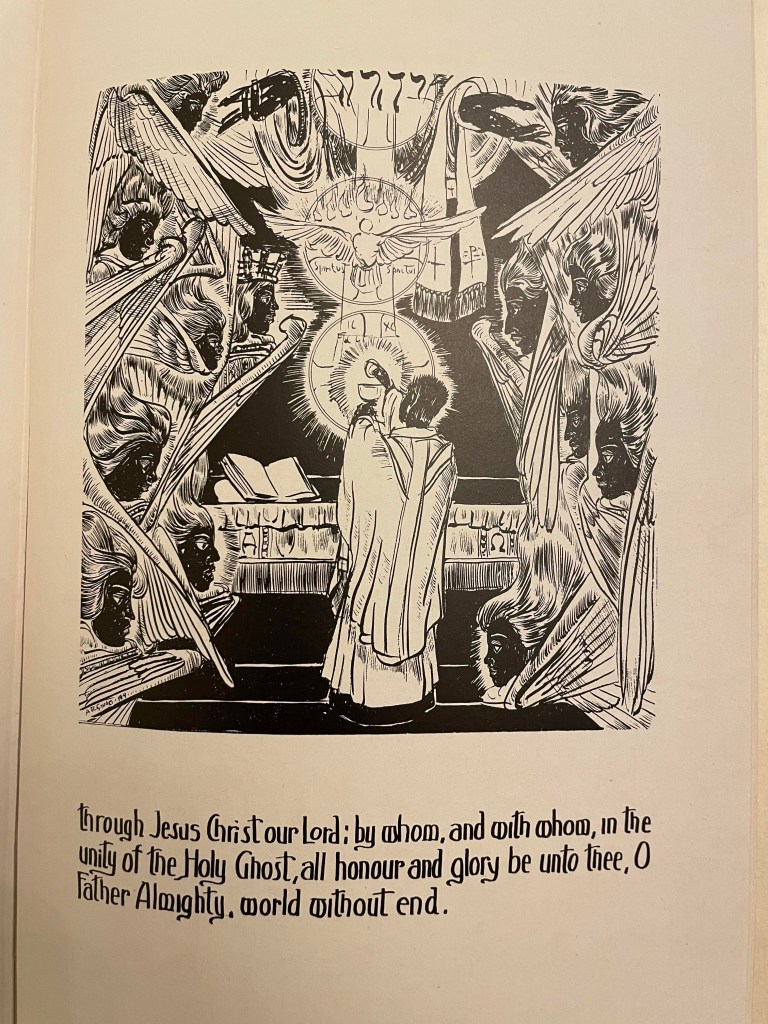
Illustration from All Glory: Brush Drawing Meditations on the Prayer of Consecration, by Allan Rohan Crite (Cambridge, Mass: Society of Saint John the Evangelist, 1947). My priest was kind enough to give me his copy of this absolutely extraordinary work as a baptismal gift, from which this photo is taken.

And to be quite honest, becoming an Anglican feels a bit like coming home. And not just because, during the Evensong which immediately preceded my baptism, we happened to recite Psalm 24, my old school Psalm. During my first conversion, family friends in the Anglican Continuum were very kind to me and nurtured my fledgling faith. My first copy of the Book of Common Prayer was given to me by another dear family friend, who has since departed this mortal life. Her funeral in Virginia was, I think, one of the first proper Episcopalian liturgies I ever attended (and sang at). I spent two years as a graduate student at St. Stephen’s House, Oxford, one of the most Anglo-Catholic seminaries in the Church of England. It is a community of men and women to whom I will be forever grateful. There are many others to thank, among whom I will mention only those who directly and personally encouraged my conversion since last summer: Father B., Mother R., Father J., Father S., CD, KH, RB, JC, and my interlocutors in the EC. You know who you are. I confess, I am grateful as well to those few Roman Catholic friends who, whether out of affection for me or sincere piety, did try to persuade me to stay.

Most of all, I have to thank the people of St. John’s, including my priest, Fr. Carlos de la Torre, a truly tremendous pastor, and Deacon Alex Dyakiw, who has shown me nothing but kindness and who stood as godfather for me. If I ever reach heaven, it will be in no small part due to the example, charity, and prayers of these two good and faithful servants.

There was a moment at the last Easter Vigil that furnished a perfect picture of what I have received at St. John’s. I got to the church early and was so absorbed in my pre-Mass readings that I forgot to pick up a candle. Once the Vigil started at the back of the nave, I realized that I was the only one without a light. Yet my priest, seeing my lack, brought me one. He graciously let me light it—while he was processing with the paschal candle up the aisle. He even paused the procession to give me the flame. This little moment, which no one but me would remember, was a powerful image of grace itself, and how it works in our hearts. That grace, which binds us to the very life of Christ, brings us into the New Jerusalem, builds us into the Eternal Temple, and makes us members incorporate of the Kingdom of God—that almighty grace is “the one thing needful” (Luke 10:42). It is because of that grace that I can say, with a confidence born of faith,

One thing have I desired of the Lord, that will I seek after;
that I may dwell in the house of the Lord all the days of my life,
to behold the beauty of the Lord, and to enquire in his temple.

Psalm 27:4 KJV

It by that grace that I have been baptized into the Jordan, by that grace that I have swum the Thames, and by that grace that II hope to drink one day from another, supernal river, flowing from the Throne of God and the Lamb (Rev. 22:1). I beg your prayers that I may always be faithful to the grace that I have received.

On Faith and the Priesthood of Christ

And he led them out as far as to Bethany, and he lifted up his hands, and blessed them. And it came to pass, while he blessed them, he was parted from them, and carried up into heaven. And they worshipped him, and returned to Jerusalem with great joy: And were continually in the temple, praising and blessing God. Amen. – Luke 24: 50-53

Many years ago, shortly after the start of my faith journey, I received some very good advice from an Anglican friend of mine. Or rather, I received a very good prayer. She told me that whenever she was anxious or worried or stressed about anything, she resorted to a prayer that ran like this:

“Jesus Christ is my High Priest, and He will always see me through.”

There is much consolation in these simple words, as I have had frequent occasion to learn in the years since then. And, to be honest, I am most drawn to Christ in the mystery of His High Priesthood. I often find myself asking Him to pray for me, not in the sense that one asks a friend or a saint to pray, but as one can only ask a sovereign and perfect intercessor. This sense of Christ as High Priest has become part of the basic structure of my own faith. Yet today’s feast, the Ascension of Our Lord into Heaven, invites us all to dwell upon this mystery in a more explicit way.

The Ascension from the Très Riches Heures du Duc de Berry ©Photo. R.M.N. / R.-G. OjŽda (Source)

It is a curious fact of the Church’s kalendar that in those solemnities when she most fervently celebrates the Incarnation, she also insists most firmly upon the hiddenness of God. In Christmas, we observe Christ born in a lowly shed at night, disclosing His presence only to those shepherds who resemble Him in their poverty, humility, and obscurity. Today’s feast of the Ascension is composed of a similar doubling. It brings before our eyes the Incarnation in its most radical implications—while reminding us that we live in and with Christ’s apparent absence.

It is, therefore, a salutary lesson in the virtue of Faith. I think that we too often lose sight of what Faith really is. Scripture tells us: “Now faith is the substance of things hoped for, the evidence of things not seen” (Heb. 11:1 KJV). But what does this really mean?

God’s absence is felt in two ways. First, we feel it through the insistent reality of evil. The agony of the world we live in is too great, too universal, and too obvious to need any underlining. The Church is no different. How many malicious and mediocre priests seem to cloud the pure light of the Gospel! Their sin weighs more heavily, for they have been given a greater charge. Yet there is some comfort in the High Priesthood of Christ. If our earthly priests falter and fail, Christ never will. He remains forever a spotless offering in the sight of the Father, and His blood is all-cleansing. The invisible pontiff of an invisible, all-embracing, and everlasting temple, Christ never abandons His children, who linger below with expectant eyes.

Let us pass on to the second sense in which God hides Himself, leaving us with, in the words of R.S. Thomas,

this great absence
that is like a presence, that compels
me to address it without hope
of a reply.

R.S. Thomas, “The Absence”

The past is forever dead to us, an enormous absence, a distantly glimmering mirage that fades even as we approach it. Sacred History, even supported by texts and archaeology, is not a special case. There is a sense in which the facts of the Incarnation, Death, and Resurrection of Christ are no different here. We may participate in them, but we cannot directly experience them as historical events, in historical time.

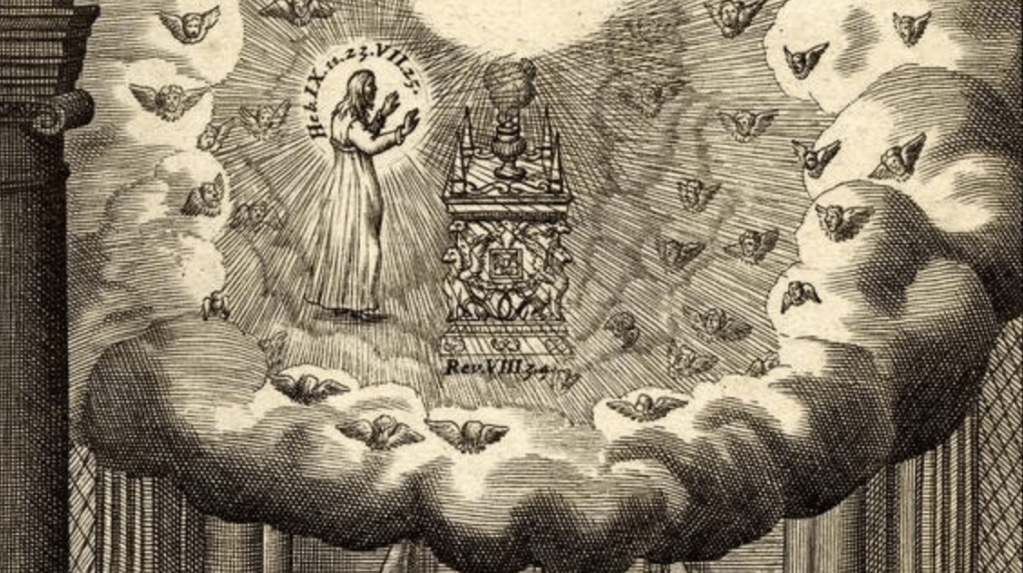
The great High Priest in Heaven. (Source)

So, what are we to do? How do we deal with the fact that God’s acts of revelation lie hidden behind the curtain of time? Quite simply, we must have faith. We must declare that faith is not certainty and not knowledge, but an engraced movement to trust those little lights given unto us. Those lights are, mainly, Scripture and Tradition, particularly the Liturgy, in which the Church as a body transcends the limits of earthly time through her collective remembrance. There is a tendency in Catholicism to downplay the “memorial” function of liturgy. This is a mistake. In fact, there is a sense in which the essence of the Liturgy (or rather, the Liturgies of the various Catholic Churches) is memory. But it is the memory of the Church as the very Body of Christ, a memory which realizes and re-presents the object of remembrance, not mere empty symbolism. Orthodox theologians have been better on this point than Western ones, perhaps because they have not been so fearful of the specter of Zwingli. But I digress.

All of this is to say that we cannot state with the certainty of historical science whether Sacred History is true. There is no real evidence for most of revelation, and we should not let the apologists delude us on this point. They’re far more addled by modernity than they realize. But by grace we can and should leap boldly across the chasm of our natural uncertainty, avoiding the Scylla of Apologetic Positivism and the Charybdis of Naturalistic Doubt. The result is not knowledge, which has no meaning here, but faith.

We would all be better off in a position of greater epistemological humility. For instance—let’s be honest—we have absolutely no knowledge of what happens after death. The data is inconclusive: annihilation, a flash of light, reincarnation, hauntings, purgatory, heaven and hell. We know nothing. It may seem like a commonplace, but it bears repeating, that our fate after death is a mystery. All we can do is have faith that what we have been promised is true. But none of this is certainty, not even for our own salvation. Do you know you will be saved? No. For no one can know what comes after death. Eternal hellfire or an infinity of mute blackness or a strange new human life could come instead. The only thing to do is to pray for mercy “in fear and trembling,” placing our faith in the Hidden God (Philip. 2:12).

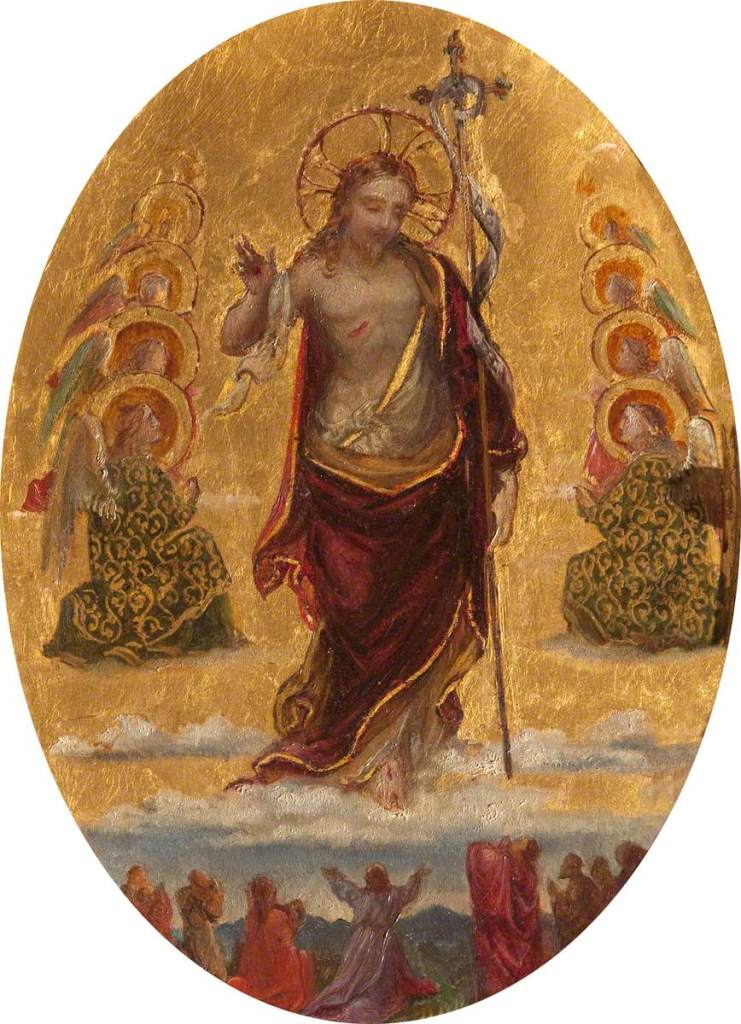
Rebecca Dulcibella Orpen, The Risen Christ (The Ascension), National Trust, Baddesley Clinton (Source)

Do not say to me that you “know” these things because you “know” your Bible or because you “know” Church teaching or even because you “know” Jesus. To be frank, I don’t believe it. In fact, I’m not confident we can know God at all, in the sense of positive knowledge. God’s existence is not like a mathematical theorem or the date of the Battle of Waterloo. Nor do I think you can know God or any of His saving mysteries like you can know another person. You cannot see God; you cannot touch Him; you cannot hear Him like you can hear a friend or lover or even a stranger passing in the street. Simply put, I don’t believe that our “knowledge” of God, the Infinite and loving ground of Being, should be called “knowledge” at all. In fact, I rather suspect that this fixation with “knowledge” has been a very substantial problem for the Church throughout her history.

To interject a personal note; I look back at my life and I sometimes wonder if I ever really knew Christ. There are others I doubt as well. False mystics and visionaries abound, as the Church chokes on her own prelest. But when I look at my own case, I remain unsure. I certainly know a lot about the Church, and have ever since I eagerly began RCIA nearly ten years ago. But did I know Christ? Was I just enamored with my own exaltation, with the fool’s-gold assurances of spiritual certainty, with the glittering baubles that float like empty bottles down the Tiber? Is it even possible to know Him? Or must we just choose, by grace, to have faith—to place our confidence in Him, trusting that He will guide us through the overwhelming darkness of uncertainty which is the very tissue of our lives?

I have come around to the latter position. The virtue of Faith has nothing to do with knowledge per se, and is as far from certainty as East from West. It is granted to us precisely because we lack certain knowledge of the immense realities it comprehends, and probably must by our very nature. Eliot writes in “Burnt Norton” that “Human kind/cannot bear very much reality.” We forget our weakness too easily.

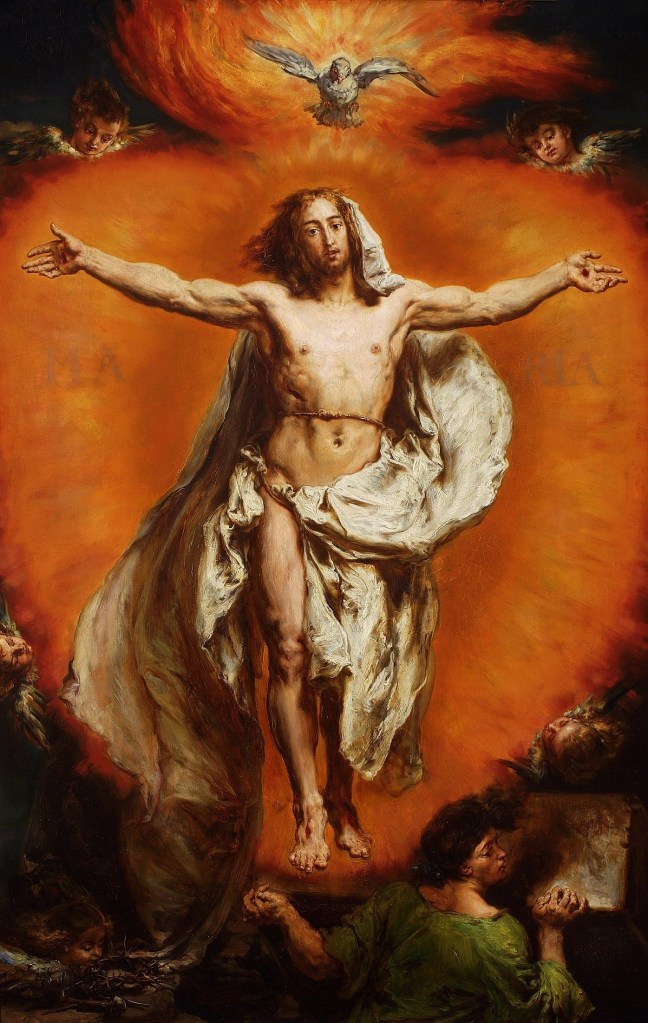
Jan Matejko, The Ascension of Christ, 1884 (Source)

Happily, the substance of our faith does not reside in the natural faculties of understanding. As Pascal says, “It is the heart which experiences God, and not the reason. This, then, is faith: God felt by the heart, not by the reason.” In a sense, the Ascension is the true beginning of the Christian faith in history, for it inaugurates our sensible separation from Christ. Our eyes grow dim, but not our hearts. The blindness of nature is transformed into sight by grace.

In Exodus, God tells Moses that “Thou canst not see my face: for there shall no man see me, and live.” (Ex. 33:20 KJV). The Ascension is the triumphant reversal of these words. For today, a man greater than Moses, a man greater than Enoch and greater than Elijah, but a man all the same, sees the Face of the Father. He has “ascended into Heaven, and sitteth on the right hand of God, the Father Almighty.” Godhead wraps Himself in human nature, and humanity is plunged into the abyss of everlasting Light. A human being stands at the threshold of eternity. The Ascension brings humanity into the very Holy of Holies of the cosmos. We truly participate in this Ascension if we unite ourselves to Christ through the grace given us, especially the grace of the sacraments. If we one day enjoy the Blessed Vision of the Divine Essence, it will be through the eyes of our High Priest, our Head, the Lamb who is the Lamp of the New Jerusalem (Rev. 21:23). John Donne puts it thus:

Behold the Highest, parting hence away,
Lightens the dark clouds, which He treads upon;
Nor doth he by ascending show alone,
But first He, and He first enters the way.

John Donne, “Ascension”

By grace, we shall follow these luminous steps, someday. So many saints have – including today’s great saint, Philip Neri, Apostle of Rome. Their stories remind us that now is the time of faith, and hope, and the charity that breathes life into both.   

If the Ascension is a lesson in Faith, it is just as much a lesson in Hope. It shows us which way we must go. It tells us that we must look to the hills, from whence cometh our help (Ps. 121:1). We need go neither backwards nor forwards, neither to the East nor to the West—but rather, up. Up, into the hidden mystery of the Divine Life. Our help is not from man but from the God-Man, the one who brought our very nature beyond the veil of the celestial temple. And what do the Apostles do? They imitate their Head and repair to the visible and earthly temple, there to sing and praise and preach the Gospel of the Lord. So have all the saints throughout the long, dark centuries since the Ascension. And so should we.  

But even as we tabernacle in the visible Church, we are truly cloistered in the heart of the Most High. As St. Paul writes to the Colossians,

If ye then be risen with Christ, seek those things which are above, where Christ sitteth on the right hand of God. Set your affection on things above, not on things on the earth. For ye are dead, and your life is hid with Christ in God.

Colossians 3:1-3

Let us pray with the Apostles that we might one day ascend with Christ. And let us ever hold in remembrance that Jesus Christ is our High Priest, and He will always see us through.

An Ecclesiological Note

Perhaps the fundamental flaw of our ecclesiology is that we think the Church was founded. By that I mean, that Christ came, set up the Church, sent the Holy Spirit, and it’s all been moving onward, outward, and upward ever since. One points to the words of Our Savior – “thou art Peter, and upon this rock I will build my church; and the gates of hell shall not prevail against it” – and leaves the question at that. (Matt. 16:18). A somewhat more sophisticated version of this argument extends the Church’s life – her gestation, if you will – into the covenants of the Old Testament.

This kind of ecclesiology weds the Church to the vicissitudes of history, and the necessary fruit of this unhappy union is a Tradition that oscillates between mythopoetic antiquarianism and charismatic presentism. Tradition is either an ark to carry us across the sea of changes, or the constantly renewed speech-act of the Pope, or people, or Council, or some ill-defined combination of the three. And whether one reads this historical narrative in a traditionalist or a progressive key, one always ends up interpreting the story of the Church in the light of the past’s dying embers.

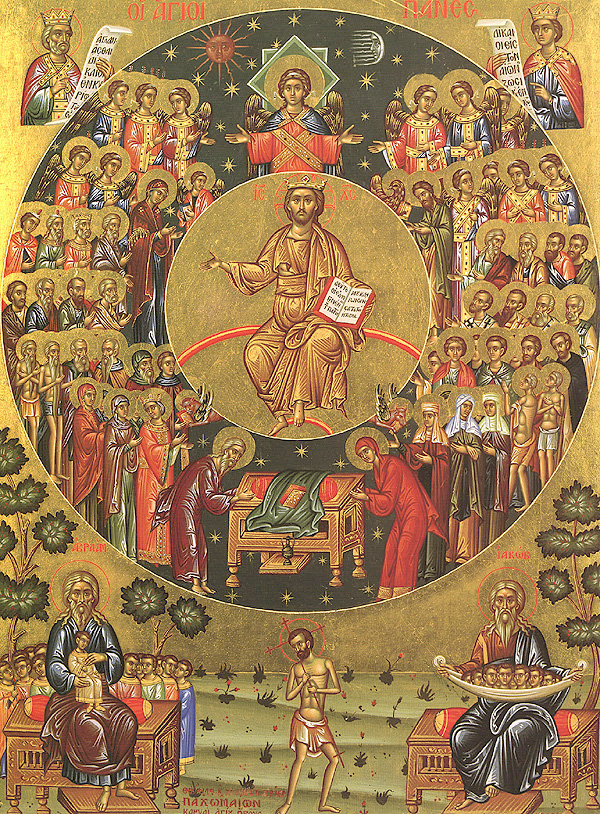
Icon of the Synaxis of All Saints. (Source)

But that is not the model of the Church we find in Scripture. The Church which is the Holy City, the New Jerusalem, the Redeemed Heaven and Earth, all this is the self-same Church that sojourns in history (Rev. 21:1-2). But in the Apocalypse we observe her at her true birth beyond time. It is in the culminating moment of all creaturely existence, in her final and lasting Union with God in His essence eternal, that the Church takes her true being. It is the bright light of that ageless day which illuminates history, and not the ever-dimming torches of chronological time. Indeed, history furnishes no light of its own, only dim reflections of God’s glory that we misunderstand in uncountable ways. In the words of the Apostle, “For now we see through a glass, darkly; but then face to face: now I know in part; but then shall I know even as also I am known.” (1 Cor. 13:12).

In the same letter, he writes, “And when all things shall be subdued unto him, then shall the Son also himself be subject unto him that put all things under him, that God may be all in all.” (1 Cor. 15:28). Here we have an image of the eschaton – that redeemed dimension in which everything that is, is Christ, by the grace of participation in Him. The eschaton is thus non-different from both Christ and the Church. All souls participating in the eschaton likewise share in Christ’s singular mediation before the Father, albeit in ways proper to their scope. Humans are His Body, the Angels are His High Priestly garments, and the new heavens and the new earth are the temple. For the eschaton – the Wedding Feast of the Lamb – mediates God’s salvific action with creaturely, chronological reality (Rev. 19:9). It is like the upmost layer or outer shell of time, giving all creation its true shape. It is the blissful union by which God weds the cosmos.

A genuinely eschatological ecclesiology, an ecclesiology that takes apocalypse seriously, must demote any definition of Catholicity that relies too heavily upon the unstable facts of history. If the Church is, as the Apostle writes, “the pillar and ground of the truth,” then it must be rooted in a life that exists beyond the vicissitudes and fallibility of the creaturely world. (1 Tim. 3:15). However, this raises a question of knowledge with soteriological ramifications.

Too often we hear from Catholics (or Orthodox) in an apologetic mood that “We know we are in the True Church because we have Apostolic Succession.” No, you are in the Church because you are saved by the grace of Christ; your Judgment has already taken place beyond time, your eternal place in glory allotted, your soul blissfully united to the Lord – but you haven’t consciously arrived there yet. This is the mystery of Predestination, but not, as commonly misconceived, in a linear, chronologically anterior direction. Election does not happen before time, but above it – or rather, both before and after history. When St. Paul writes, “And whom he predestinated, them he also called. And whom he called, them he also justified. And whom he justified, them he also glorified,” he is fundamentally describing a single divine work in the eschaton. (Rom. 8:30). To be in the Church is to be a child of God. However, the grace of divine adoption is eschatological in both its root and in its orientation. Scripture says, “He that overcometh shall inherit all things; and I will be his God, and he shall be my son.” (Rev. 21:7). And elsewhere, “Behold, the tabernacle of God is with men, and he will dwell with them, and they shall be his people, and God Himself shall be with them, and be their God.” (Rev. 21:3). This image, which comes from one of the final visions of St. John, depicts the Church’s eschatological life, and not her earthly existence. Thus, only the Saints in Heaven are the Church, properly speaking; the damned have no part in Christ’s Body. Ultimately, there is no third category.

The True Church is thus, like God Himself, hidden. She abides in and beneath the purple trappings of worldly glory, but takes no part in it. The tendrils of grace that reach down from the supernal world move invisibly and invincibly to the hearts that are hers; they are as so many crooked and narrow paths up to the temple, lit by the lamp of Revelation. As the Psalmist sings, “Thy word is a lamp unto my feet, and a light unto my path.” (Psalm 118/119: 105).

This is not to say that apostolic succession is unimportant. It has its uses, insofar as it preserves and passes on the saving truth of the Scriptures and Creeds, the threefold order of ministry, and the seven sacraments by which we receive certain graces. In this sense, it is a gift of God’s condescension to us mortals. But apostolic succession is not constitutive of the Church’s essence. Only final participation in the eternal life of Christ can do that.

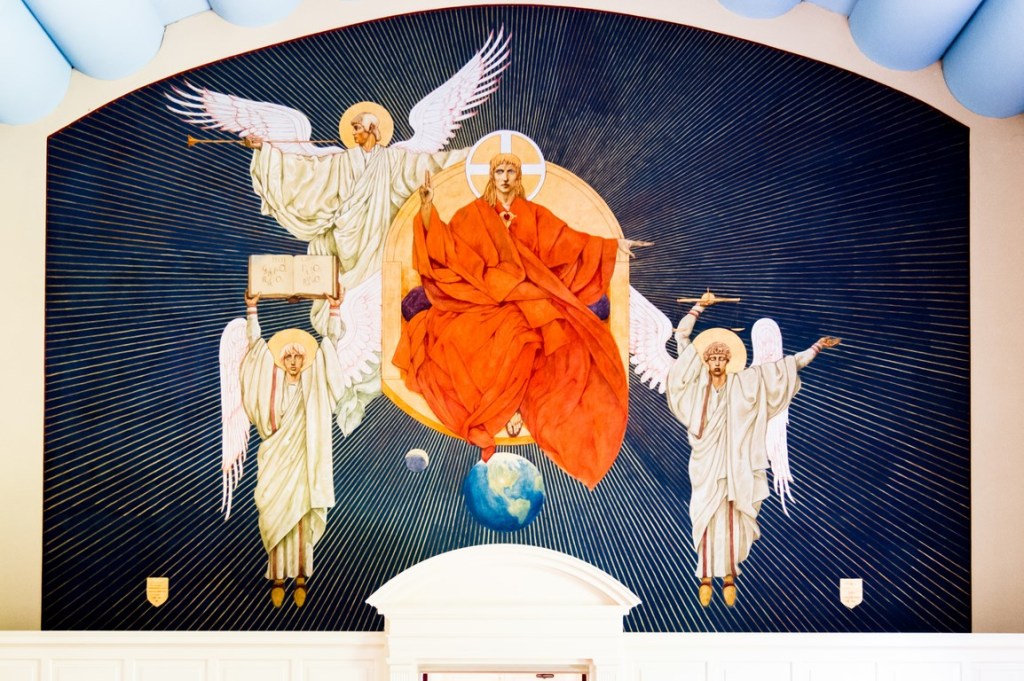
Christ the Judge, mural in St. John’s Episcopal Church, Memphis, TN. Mural by John DeRosen. (Source)

Which brings me to a question I have been wrestling with lately: what is Catholicity? When we confess in the Nicene Creed that the Church is “Catholic,” what does that really mean? The common answers one usually hears on this point are either “communion with the Pope” or “possesses apostolic succession.” The first of these is an irrelevant, Ultramontane fable. The second simply confounds the question of Catholicity with the question of Apostolicity.

My own attempt at an answer would divide the question thus: we may speak of what Catholicity looks like, and we may speak of what Catholicity is. Catholicity looks like those things I have already mentioned: teaching the faith of the Scriptures and Creeds, prayerfully distributing the seven sacraments, and preserving the threefold ministry of bishops, priests, and deacons in apostolic succession. In what it seems to be, Catholicity means wholeness. But Catholicity is participation in the eschatological Church which is already united to Christ, that is, the whole body of the saved, whosoever and wheresoever they might be. In this sense of its utmost reality, Catholicity means universality. Thus, Catholicity means different things when applied to the Church visible and the Church invisible, with the latter taking priority.

The temporary Church visible and the everlasting Church invisible are never completely commensurate. But one can nevertheless “work out your own salvation with fear and trembling” more confidently in a church with these elements, and where one can be reasonably sure that the priest is offering a true oblation to the Father. (Phil. 2:12). One can never truly be sure that one is a member of the Universal Church simply by virtue of the necessary historical features I have outlined. A Christian can still be damned, even if he is a churchgoer; surely, no Catholic who is paying attention could say otherwise. As we move through time, who can know whether any of us will prove to be Saints in that last and most surprising Day? “Watch and pray.” (Matt. 26:41). As M. Quesnel said of the two thieves at the Crucifixion, “Un se convertit à la mort, espérez; un seul, craignez.”

I said earlier that this issue is a question of knowledge with implications for our salvation. But that’s not quite true. One’s adherence to the True Church is not a question of knowledge, even with all the best historical or empirical evidence we can gather. It is, rather, a question of faith. Too many Catholics are uncomfortable with real faith. The over-exalted epistemic claims of our church means that far too often we treat our doctrines and even our own salvation as matters of knowable fact, and end up forgetting that “faith is the substance of things hoped for, the evidence of things not seen.” (Heb. 11:1). Let us pray to receive the grace of rediscovering epistemic humility, for with it, faith will follow.

On Joy

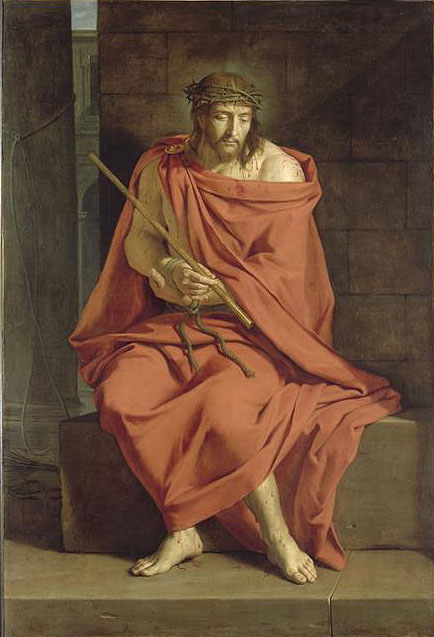
Le Christ aux outrages, Philippe de Champaigne, 17th c. (Source)

“Jesus Christ will be in agony until the end of the world” – Blaise Pascal

We shall not be blamed for not having worked miracles, or for not having been theologians, or not having been rapt in divine visions. But we shall certainly have to give an account to God of why we have not unceasingly mourned.” – St John Climacus

Recently I have had occasion to consider the role of joy in the Christian life. While I don’t believe that any particular emotions as such are intrinsic to Christianity, I sometimes feel that there is in the Church’s culture a kind of low-level idolatry of affective joy that makes it a good in itself and, more poisonously, demonizes those who do not share in it. This rather shallow (and ultimately false) view of joy as relentless and mandatory happiness has at times eclipsed the demands of the Cross, and has little to offer the suffering, the infirm, the distressed, the depressed, the sorrowful, the anxious, and the temperamentally gloomy. Are they to be excluded from heaven if they cannot force a smile? This soft and implicit Pelagianism of the emotions is a greater discouragement to souls than an honest reckoning with the sorrows of life and the terrible demands of the Cross.[1]

So, I thought I would put down a few very brief meditations on true and false joy. I would not wish to speak in absolute and general terms, but rather, out of the fullness of my heart, and all that I – a mere layman – have gleaned from seven years in the faith, the reading of Scripture, and the study of the Church’s spiritual history.

St. Paul tells us that joy is a fruit of the Spirit; he does not promise us that we shall have all those fruits at all times, or that they grow in us for own profit alone.[2] If I may alter the metaphor a bit for illustrative purposes (without in any way denying the truth St. Paul teaches), I would say that joy is the flower, and not the root or the fruit, of the Christian life as such.[3] It is chiefly given to us by God so that we might advance His Kingdom. Like the pleasant blooms of spring, joy is meant to attract souls who do not yet know the grace of God, and thereby to spread the life of the spirit. As soon as we have it, we must give it away. It is like an ember in our hands – giving light and heat, but liable to burn us if we hold on to it. For who are we to keep it, we who are nothing? And so, we should not be surprised if even this true joy is fleeting, and given to us only in rare occasions as a special grace. For the joy of God is not like the joy of the world. The former is rare as gold, and the latter as common as fool’s gold.

And as fool’s gold will not purchase what true gold can buy, so does a false joy fail in this paramount duty of conversion. We should not force ourselves to seem happier than we really are; a certain virtuous attempt at good cheer in the face of sorrow is always welcome, and we generally should not air our griefs too freely. I believe this virtue, built upon a detachment from our worldly disposition, is what the Apostle refers to when he tells us to “Rejoice always.”[4] But let us not delude ourselves into thinking that this human cheer can ever compare with the supernatural joy that comes only from God, and which many just souls have not been granted. To do so approaches dishonesty, both to ourselves and to our neighbor. Let us not pretend that our faith cheers us more than it really does; let us instead recognize that it promises us suffering, and a yoke that, though light, is nevertheless still a yoke.[5] And under that yoke, someone else will lead us where we do not wish to go.[6]

Joy is only true if it comes from, is ordered to, and brings us back to the Cross. The joy that God gives is always stained with the Precious Blood. But even then, we are not entitled even to this joy in our present life; rather, we are given the Cross as our inheritance. For what is the world if not a land of false joys? They come from nothing, they come to nothing; in their essence, they are nothing. Well and truly does the Sage condemn it all as vanity.[7] Well and truly does the Psalmist speak of it as “the valley of the shadow of death.”[8] Well and truly do we address the Mother of God from “this valley of tears.” We can do no other.

This life of the Cross is a gradual annihilation – what the French call anéantissement – a fearsome but salutary tutelage in humility and in the growing recognition of our own nothingness. To live and die on the Cross is to say every day with St. John the Baptist that “He must increase, I must decrease.”[9] Yet how hard this is! We lose sight of the fact that at the end, when we are nothing again, we can grasp the God who is No-Thing, the One who is beyond the traps, illusions, trinkets, clutter, disappointments, and, indeed, the joys of this world. We efface ourselves now so we may one day face Him. We mourn our sins today so we may rejoice in attaining God on the last day.

That is the true joy of the Cross – that, in mounting it, we can see God. But how rare is such a grace in this life! Most of us are caught up into the business of the world. Most of our lives are a long distraction. Most of us will only achieve the vision of God after the sorrows of this life and the pains of purgatory. And so, let us never forget that to be a Christian is to let Christ suffer and die in us, so that one day, we too may rise with Him.[10]


[1] James 4:4.

[2] Galatians 5:22-23.

[3] The root is faith, and the fruits are redemptive suffering and acts of charity.

[4] 1 Thessalonians 5:16.

[5] Matthew 11:28-30.

[6] John 21:18.

[7] Ecclesiastes 1:2.

[8] Psalm 22 (23): 4.

[9] John 3:30.

[10] Galatians 2:20; 2 Corinthians 4:11; 2 Timothy 2:11; Philippians 1:21

Bossuet on the Sufficiency of God

There are many candidates for the title of “Greatest Preacher in Christian History,” but my money’s on Jacques-Bénigne Bossuet (1627-1704), “The Eagle of Meaux,” Bishop and Tutor to the Grand Dauphin of France. Famed in his own day for the clarity of his doctrine, the incisive vigor of his spirituality, and the dazzling versatility of his oratorical skill, Bossuet stands as one of the late flowers of the Grand Siècle. Trumpet of the Gallicans and Hammer of Quietism, Bossuet nevertheless is not merely to be regarded as a relic of dusty seventeenth-century controversies. He still has much to teach us. In this excellent passage, excerpted from a recent translation and edited collection of his Meditations for Lent by Christopher O. Blum (Sophia Institute Press, 2013), we can see the essentially ascetic cast of Bossuet’s mind. This was the same man who, in a felicitious turn of phrase, elsewhere referred to the Rule of St. Benedict as “a little abridgment of the Gospel.” The relevant passage can be found on pages 10-12 of the source text.

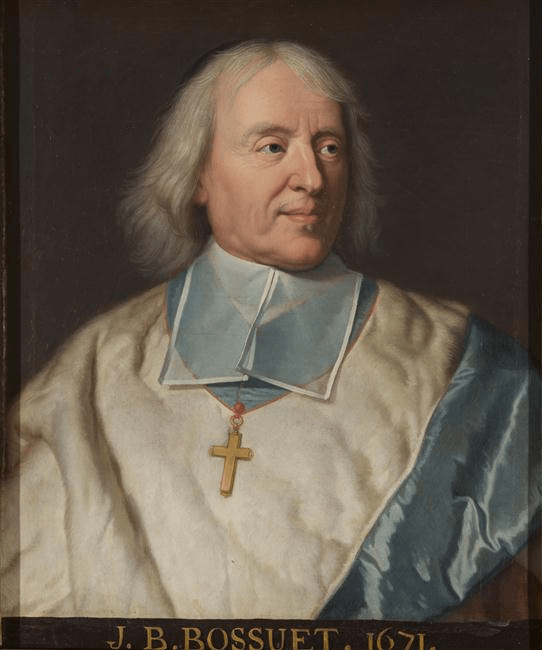
Portrait of Bossuet by Charles Sevin de la Penaye, after Hyacinthe Rigaud, c. early 18th century (Source)

“Lord, show us the Father, and we shall be satisfied” (John 14:8). God alone suffices, and all we need to possess him is to see him, because in seeing him, we see all his goodness, as he himself explained to Moses: “I will make all my goodness pass before you” (Ex. 33:19). We see all that attracts our love, and we love him beyond all limits. Let us join St. Philip in saying with all our heart, “Lord, show us the Father, and we shall be satisfied.” He alone can fill all our emptiness, satisfy all our needs, content us, and make us happy.

Let us then empty our heart of all other things, for if the Father alone suffices, then we have no need for sensible goods, less for exterior wealth, and still less for the honor of men’s good opinion. We do not even need this mortal life; how then can we need those things necessary to preserve it? We need only God. He alone suffices. In possessing him we are content.

How courageous are these words of St. Philip! To say them truthfully, we must also be able to say with the apostles: “Lord, we have left everything and followed you” (cf. Matt. 19:27). At the least we must leave everything by way of affection, desire, and resolution, that is, by an invincible resolution to attach ourselves to nothing, to seek no support except in God alone. Happy are they who carry this desire to its limit, who make the final, lasting, and perfect renunciation! But let them not leave anything for themselves. Let them not say: “This little thing to which I am still attached, it is a mere nothing.” We know the nature of the human heart. Whenever a little thing is left to it, there the heart will place all its desires. Strip it all away; break from it; let it go. To own things as though one had nothing, to be married as though one were not, to make use of this world as though one were not using it, but as though it did not exist, and as though we were not a part of it: this is the true good for which we should strive. We are not Christians if we cannot say sincerely with St. Philip, “Show us the Father, and we shall be satisfied.”

It is from the very depths of faith that these words are spoken, and it is in a certain sense from the very foundation of nature itself. For in the depths of our nature we sense our need to posses God, that he alone is capable of fulfilling our nature, and that we are anxious and tormented when separated from him…Man, abandoned to himself, does not know what to do, nor what to become. His pleasures carry him off, and these very same pleasures destroy him. With each sin of the senses he gives himself a killing blow, and he not only kills his soul by his intemperance, in his blindness and ignorance he kills the very body that he would flatter. Since the Fall, man is born to be unhappy…We do not know how to desire or ask for what we need.

St. Philip’s words teach us everything. He limits himself to what Jesus taught us is the one thing needful. Lord, you are the way.

5 Ideas for Advent Spiritual Reading

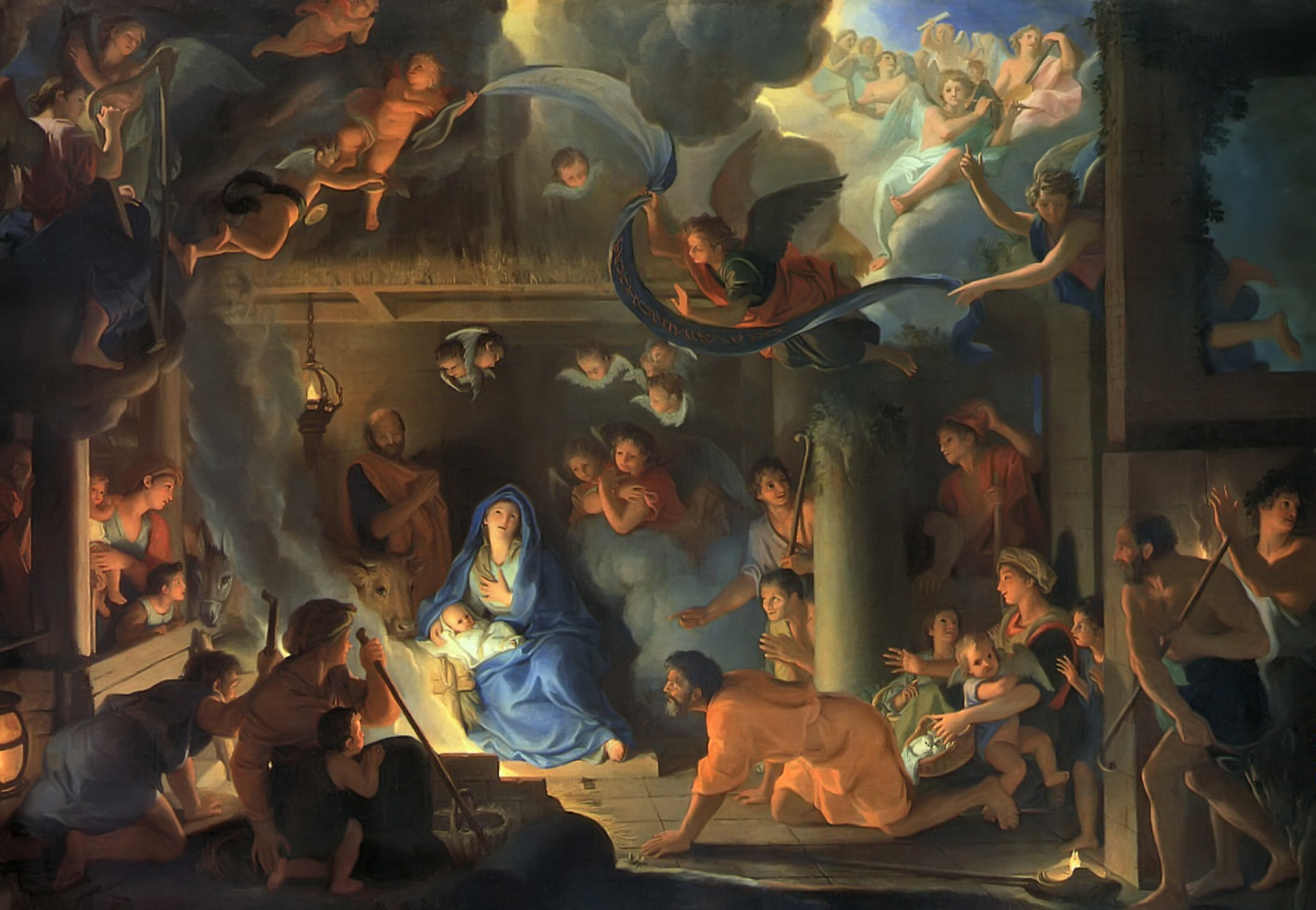
 The Adoration of the Shepherds, Charles le Brun, 1689. (Source)

I confess, I had meant to get this post out earlier. The end of term was hectic and the start of vacation distracting. So here I am, offering my thoughts on Advent reading when the season is already here and nearly halfway done. Still, we can begin to read true and edifying things on any day, especially in the a holy time set apart by the Church for reflection and contemplation of Our Lord in one of His cardinal mysteries. So I offer here a few reading ideas for those looking for a spiritual boost this winter.

1. In Sinu Jesu: When Heart Speaks to Heart – the Journal of a Priest at Prayer

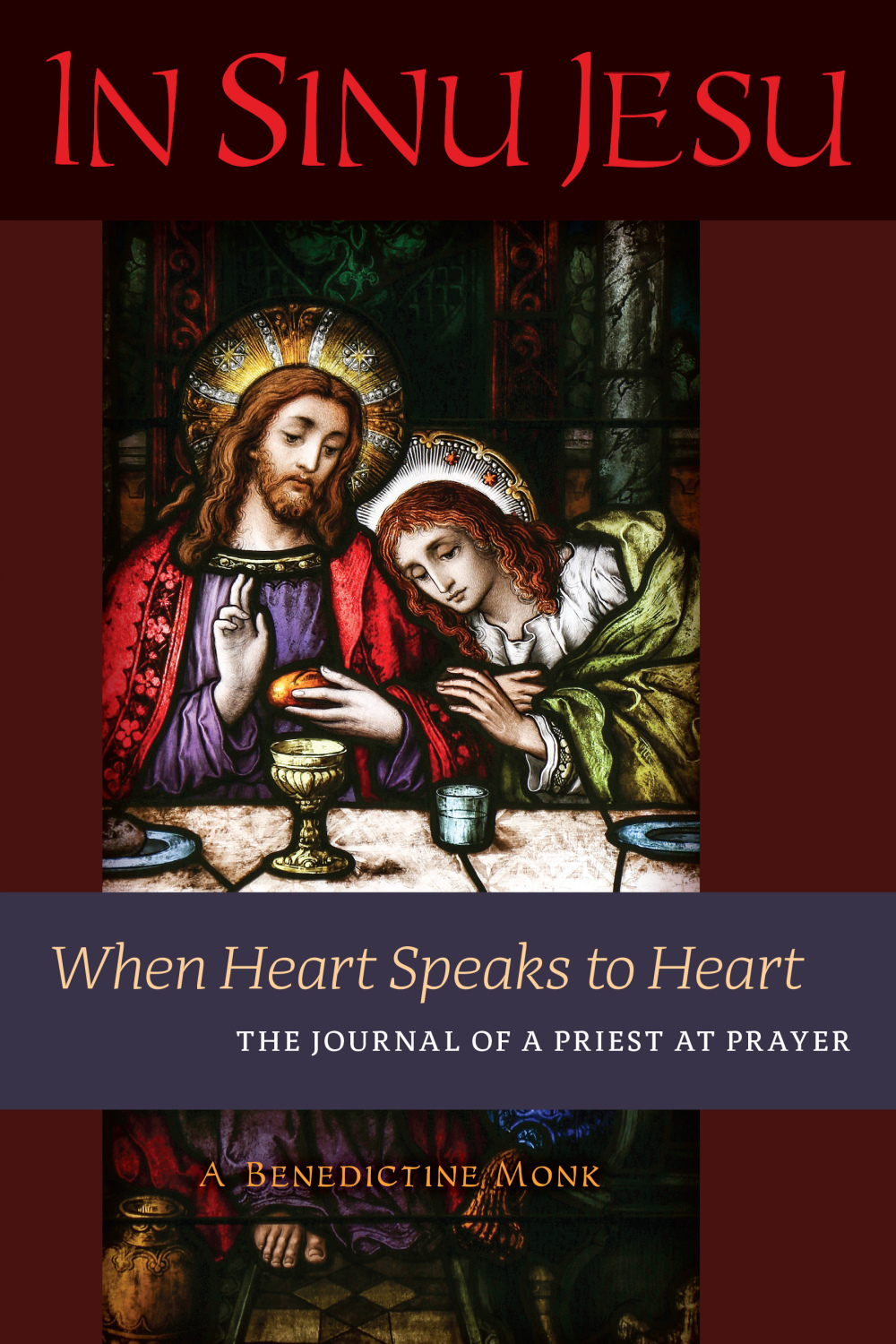
The cover of In Sinu Jesu (Source)

This meditative book is the sort of thing you’ll want to take to Adoration. Written by an anonymous Benedictine monk, it is jam-packed with consoling thoughts and inspiring messages. The author relates the various locutions from Our Lord and, occasionally, the Virgin and Saints, received in the inward ear of the heart in the course of profound prayer. Over the course of several years’ worth of journal entries, we read of the author’s deep vocation to reparation and adoration for the sanctification of priests. I would recommend this volume to any men considering a vocation of any kind. Its rhythmic, prayerful passages breathe and bristle with a sense of holiness rare among contemporary spiritual authors. The voice of Our Lord sings through it all, not as a trumpet or thunderclap, but as “a whistling of a gentle air” (1 Kings 19:12 DRA). Speaking only as a layman, I can say that this book completely revolutionized my spiritual life. I wonder where I should be now if it had not come into my hands a little over two years ago.

2. Bethlehem or 3. All For Jesus

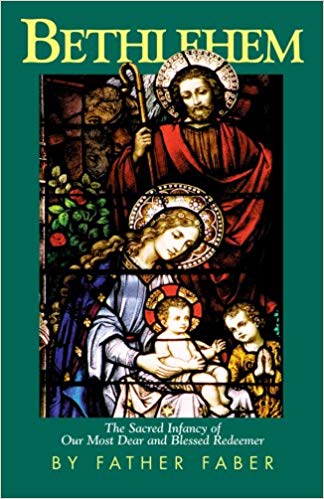
The cover of Bethlehem, by Fr. Frederick William Faber. (Source)

This list wouldn’t really be an Amish Catholic post about spiritual authors without some reference to Fr. Faber. The Apostle of London wrote many books about special devotions, graces, and mysteries of Our Lord’s life. His last volume, Bethlehem, is devoted to the birth and infancy of Jesus, making it especially suited for perusal at this season.

Like many of his other texts, Bethlehem is more devotional that practical. It is intended to inspire love for Our Lord under the particular mystery of his Incarnation. While this may be just what you need this Advent (and Christmas), you may desire something a bit more practical. How to grow in the practice of the love of Jesus? How to keep on in the unflagging task of Christian charity at a time so full of worldly distractions and weariness? How do we live out the Incarnation in our own lives?

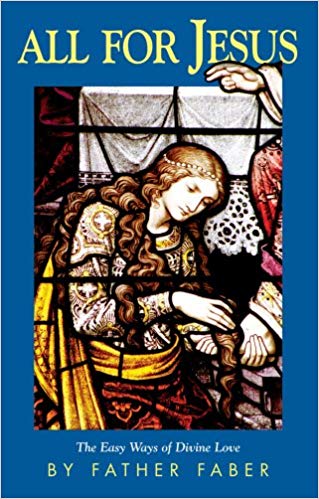
Cover of All For Jesus, by Fr. Faber (Source)

If this is the sort of thing you’d prefer in your Advent reading, then perhaps turn to Fr. Faber’s first great devotional work, All For Jesus, or the Easy Ways of Divine Love.

In this great volume, it is Fr. Faber’s task to kindle the zeal of his readers by demonstrating the sheer ease of love. He points to concrete, simple practices by which to further what he calls “the Interests of Jesus,” to save other souls, and to sanctify our own.

All For Jesus is my main spiritual reading this Advent, and I have already found it working marvels. If you would love God with warmer enthusiasm and brighter joy, then read Fr. Faber!

4. “A Short Tale About the Antichrist.”

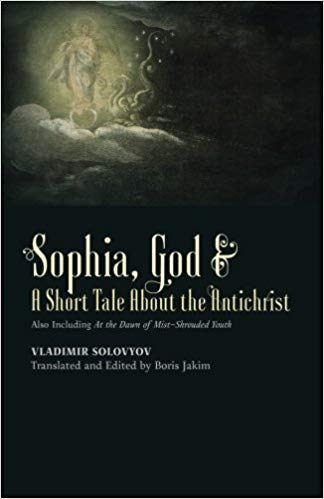
You can find Boris Jakim’s translation of “A Short Tale About the Antichrist” in the collection Sophia, God, & A Short Tale About the Antichrist. (Source). 

This short story by Vladimir Solovyov, the “Russian Newman,” may seem like an odd choice for Advent. Yet Advent is the apocalyptic season par excellence. The liturgy turns our ears to the voices of the prophets and our  eyes towards the visions of the Last Day. And so it can be helpful to think creatively about what the end will be like.

I don’t believe Solovyov envisioned his (in some ways, rather prescient) tale of the future to be a literal prediction of what would happen. The man was not a fundamentalist, and this is not Left Behind. But he did see it as his spiritual last will and testament. The story is a powerful meditation on the nature of real evil, real Christian love, and what Christians will have to stand for in their last and terrible hour.

An edifying read, for sure.

5. The Book of Revelation

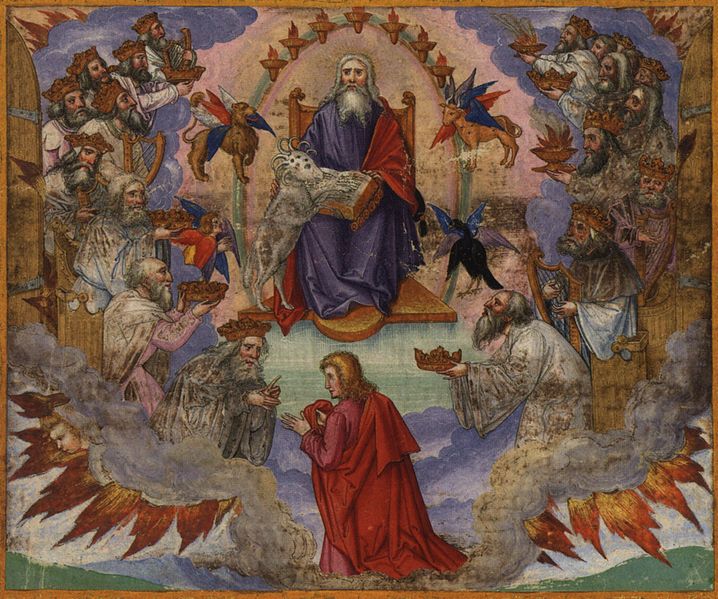
An illustration of Rev. 4-5. (Source)

If you like your apocalypse unalloyed, then open your Bible, sit down, and read the entire Book of Revelation in one or two sittings. That may seem like a lot, but it brings lots of rewards. We often lose sight of the unity of the Bible’s individual books when we just pick at passages here and there. Reading the text fully through can help restore our vision of each book as what it is – an integral whole. With a book as symbol-laden as Revelation, that reclamation becomes even more important.

It is a holy and pious thing to meditate on the Second Coming of Our Lord in Advent. Reading the Apocalypse nourishes the soul’s sense of expectation and, indeed, her desire for the final judgment. The pious soul who seeks to be immersed in the text’s sapiential logic will gain many fruits. Those who go into it with only a narrow literalism will find nothing but an arid maze. This truth applies to all of Scripture, but most especially to its apocalyptic passages.

So, those are just five options for Advent reading. There are probably hundreds of other texts I could have chosen; thus we come one example of the great diversity that characterizes the true mind of the Church.

Springtime Sophiology from St. Nicodemus

GateAddisons

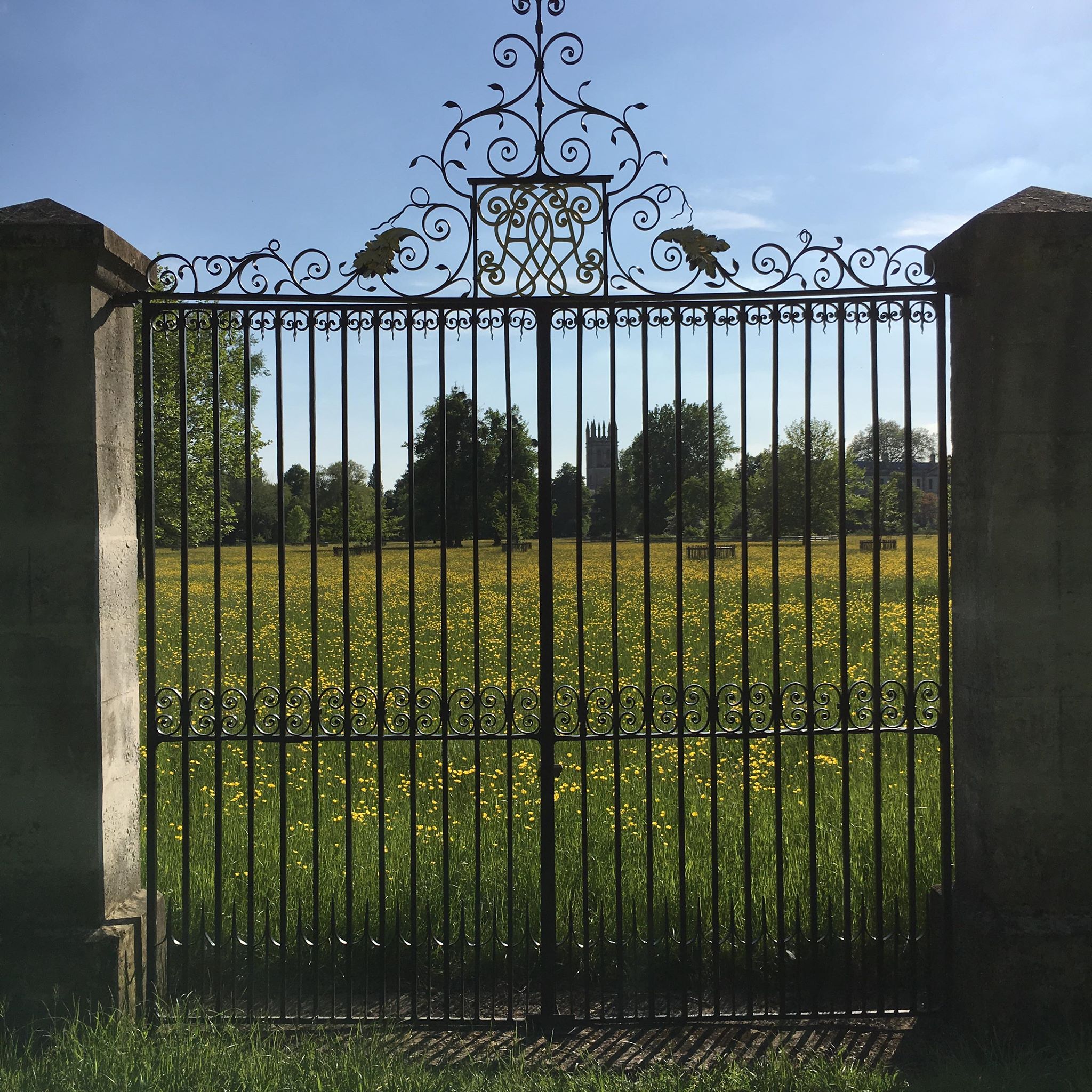
Gate on Addison’s Walk, Magdalen College, Oxford. Photo by author.

Now there are of course those who do not use the senses and the subsequent meditation on creation and Holy Scripture to rise through them to the knowledge and love of God, who both spoke the Scriptures and created the world. On the contrary, such people use this sense perception simply for human aggrandizement, for the marvel and mere pleasure of the corruptible beauty in creatures, and for other bodily purposes. Or, at least, they simply remain on the level of the limited purposes of the creatures and of the Scriptures. They thus neglect to proceed further, to rise to the catholic and comprehensive view of things, to God’s wisdom through which all things are known and in which all the reasons for each creature are to be found, according to St. Maximos. “The Lord by wisdom founded the earth…When he established the heavens, I was there” (Prv. 3:19, 27). St. Basil the Great too had something to say on this point: “There are indeed certain reasons why the primordial wisdom of God was laid as a foundation to nature at the time of creation.” Now, those who do not rise – through the reason endowed in nature and in the Holy Scriptures – to the hypostatic Logos of God, those who do not love Him “through whom all things were made” (Jn 1:3), as most of the worldly philosophers do not, all of these people act contrary to the Creator’s purpose in nature and in Holy Scripture. And according to the wise and most insightful Kallistos, the thought of such people has lost its natural tendency and has become unnatural. This has occurred because they use the means as ends in themselves, and the causes as results, and they love the gifts more than the Giver and the creatures more than the Creator, as St. Augustine has said. Since creation was not created for itself, but for the vision and glory of its Creator, it is not proper that it should be seen and admired for its own sake, but rather for the sake of its Creator. It is the same with the mirror which one does not look at for its own sake, but for the sake of the one reflected in it.

nicodemus-IN-2.jpg

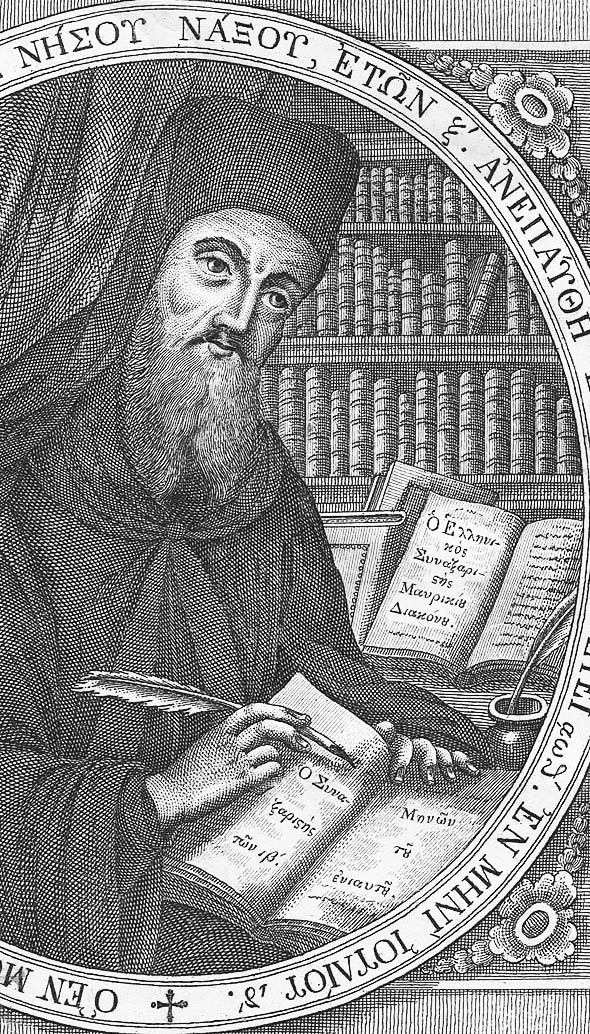
St. Nicodemus of the Holy Mountain (Source)

We may add, finally, that the secondary goal and purpose for the creation of the senses is so that the material body may be able to enjoy through them material nourishment, growth, and life. Truly, I do not know what to marvel at most: the “palace” that is so intricately constructed or the “king” who dwells therein. But of these two, I must certainly marvel most at the master artist and the Creator who with infinite wisdom not only created both of them, but also united the mind and body in such perfect harmony.

Quoted from Chapter One of A Handbook of Spiritual Counsel by Nicodemos of the Holy Mountain, Trans. Peter A. Chamberas, Paulist Press, 1989, pages 73 and 74. 

“And the Light Shineth in Darkness; and the Darkness Comprehended It Not.”

Cybele.jpg

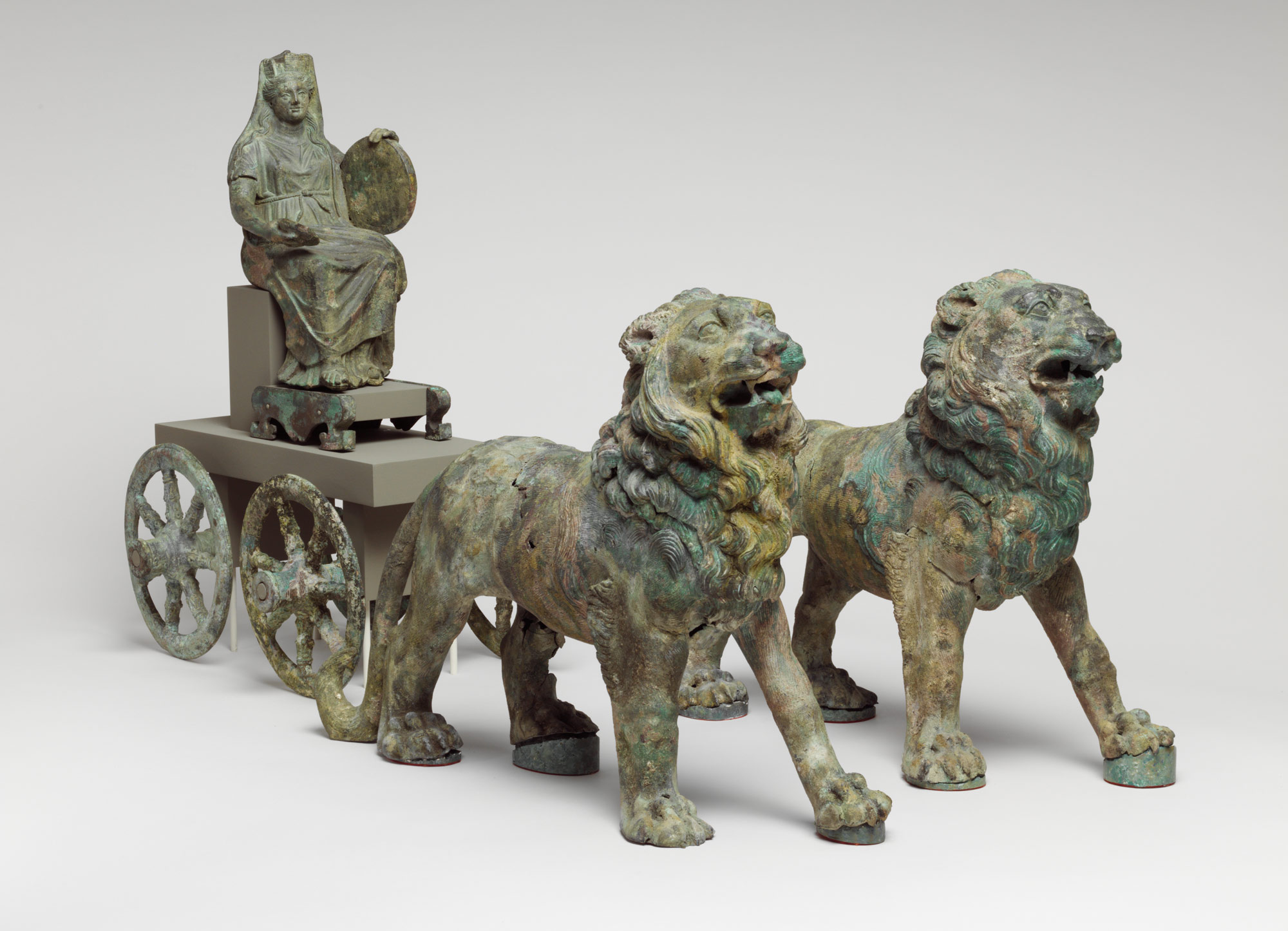
Cybele, the Magna Mater, on her triumphal car pulled by two lions. Has there ever been a more perfect likeness to the Whore of Babylon? (Source)

March 24th is the traditional Dies Sanguinis of the ancient Roman calendar, when the painted eunuch-priests of Cybele and the votaries of Attis in their Phrygian caps would join with the servants of warlike Bellona in the most vile public atrocities. On that day, hideous pipes stirred the wicked throng into a fever of unutterable terror, and as the revelers danced in an ever more demoniac fashion, they mutilated their flesh and let out copious torrents of blood upon the stones of forum and temple. Then they drank from their own spilled blood, descending even lower than the beasts in their frenzy and taking on instead the aspect of lustful aegypans. The summit of these evil ecstasies came when, before the altar of the Magna Mater, devotees castrated themselves. Only thus could they enter the service of that infernal priesthood.

vhod-gospoden-v-ierusalim_palermo

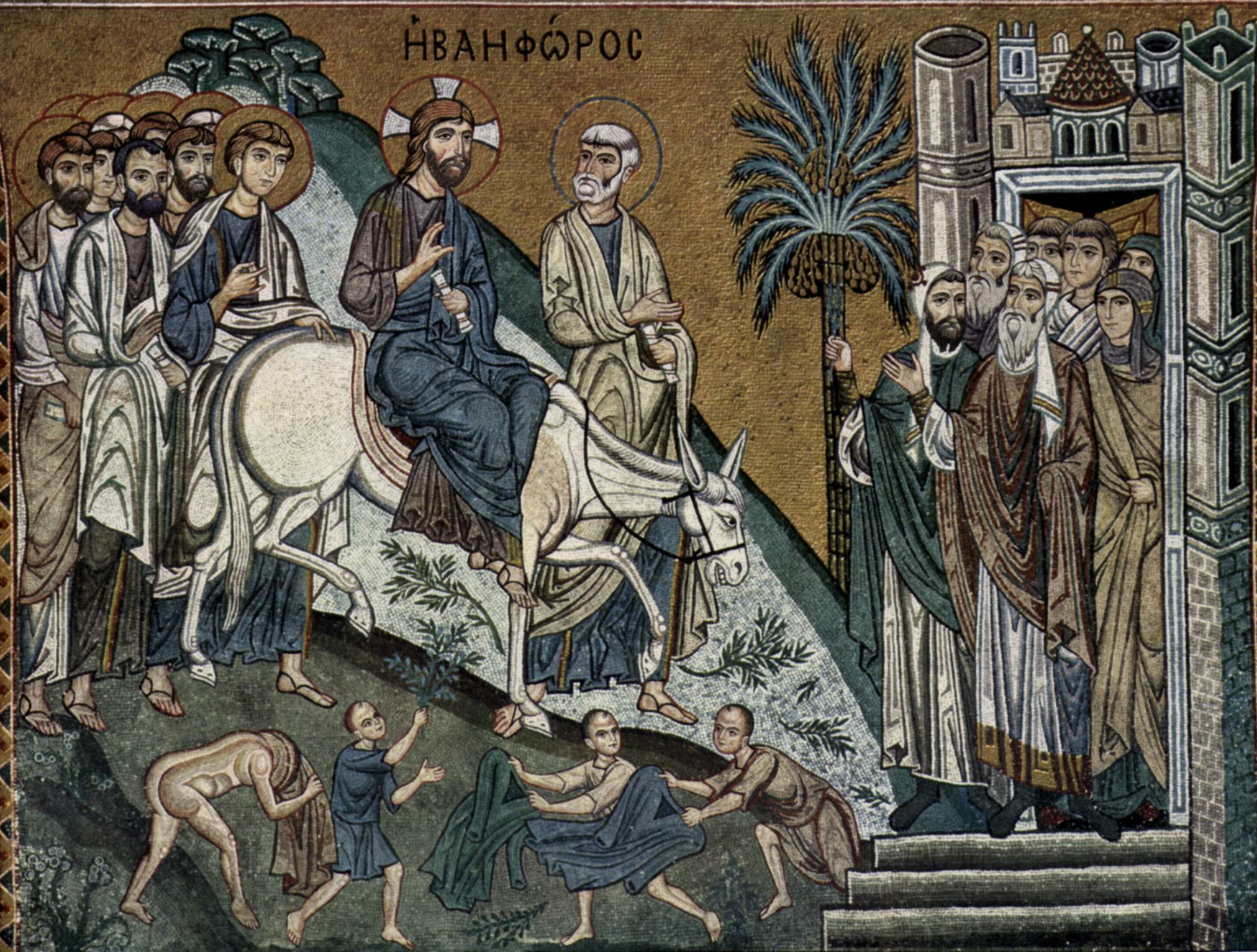
The Triumphal Entrance of Christ, mosaic, Palermo. (Source)

This was the culture that Christianity conquered. And it is with these satanic rites in mind that we look forward to a double feast of rather a different sort tomorrow. For tomorrow, on the 25th of March, we celebrate Palm Sunday and the Annunciation, falling providentially on the same day.

“And the light shineth in darkness; and the darkness comprehended it not.”

Botticelli,_annunciazione_di_cestello_02

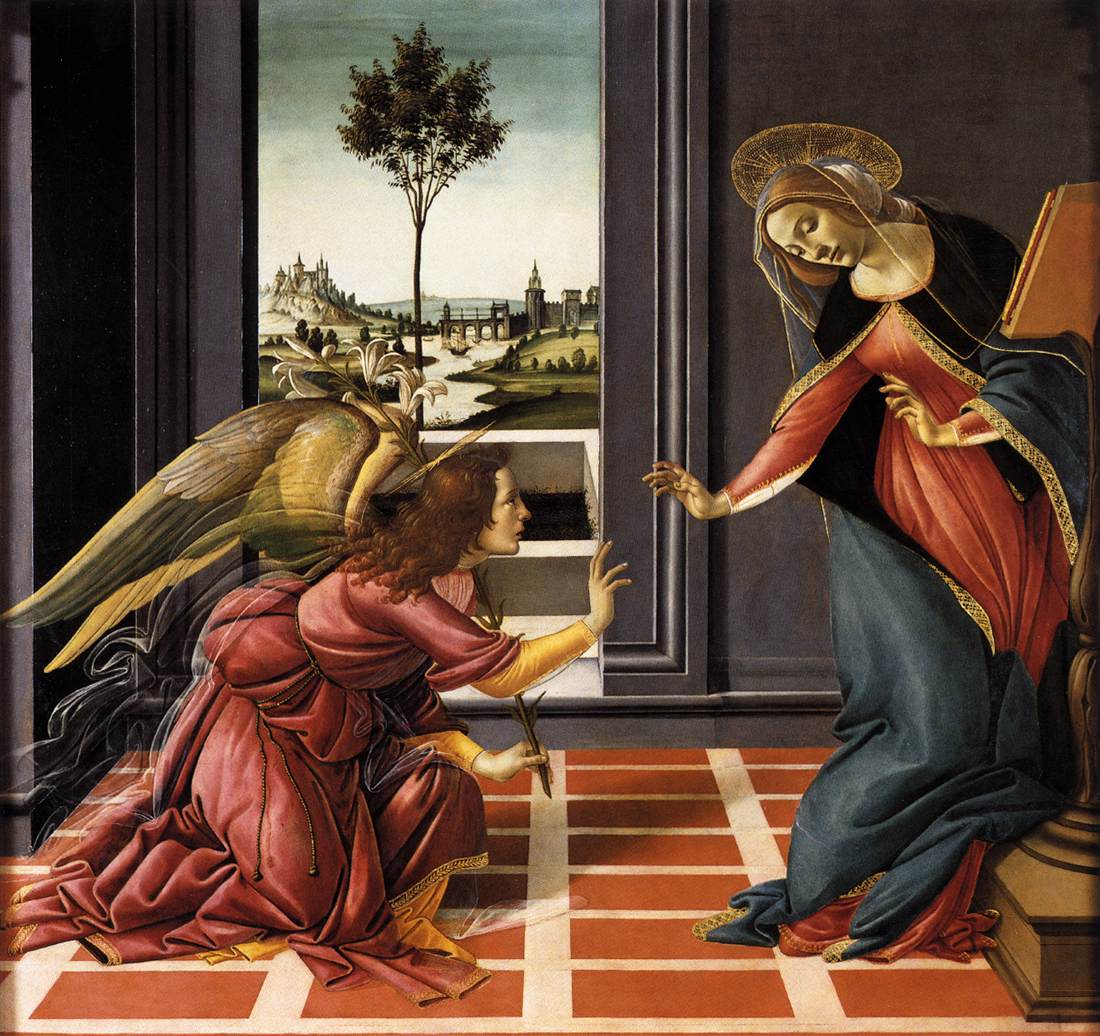
The Cestello Annunciation, Botticelli, 1489-90. My favorite of all Annunciations. (Source).


A Letter on Loneliness

Veronese-Cristo-nell-orto-del-Getsemani-1024x797

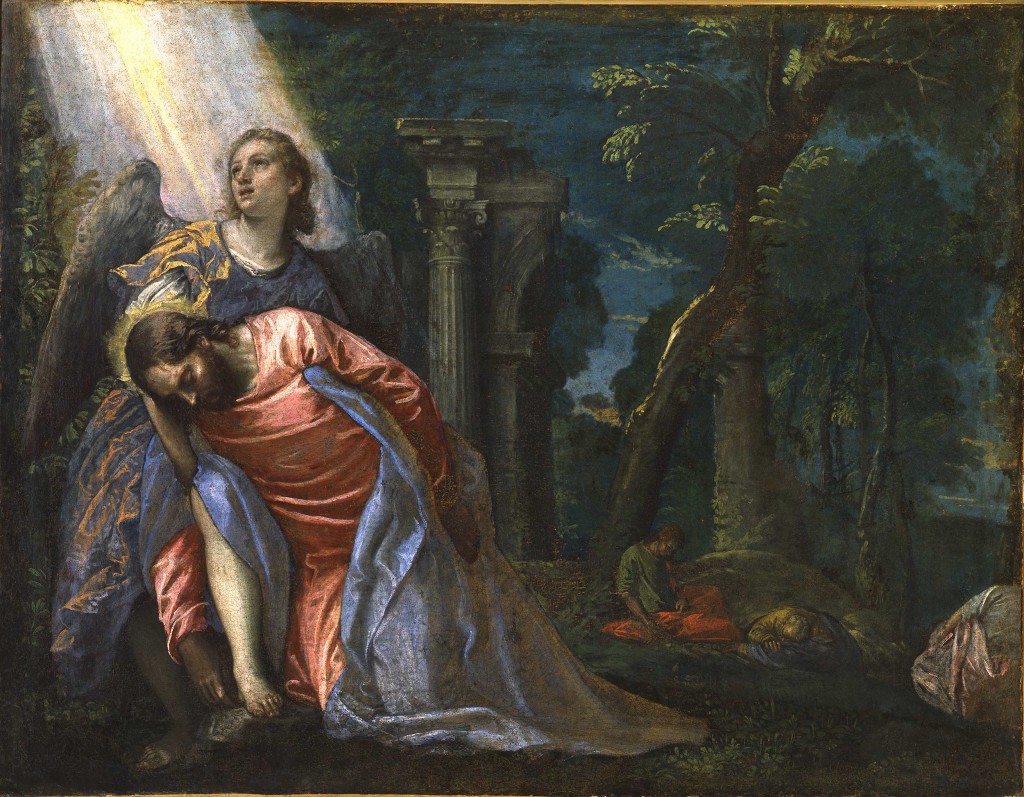
Christ in the Garden of Gethsemane, Veronese. Pinacoteca di Brera (Source)

My Dear Brother Josiah,

I received your last correspondence with a mixture of joy and sorrow. Joy, for all the good news you shared of our friends and familiars; sorrow, for those matters closer to your own heart that weigh so heavily upon your soul. Normally, I would not venture to offer unsolicited advice. However, as you have come to me seeking counsel, I will try to speak from what little light I have been granted. I will offer you, I hope, nothing but the constant teaching of the saints, nor anything I would not myself seek to follow. So much of what I must share is rooted in my own experience, the fruit of suffering not in all respects unlike your own.

You tell me that you worry about God’s blessing. You write that, in view of your griefs, you no longer trust that the Lord will bless you. This is a failure of Christian hope, but an understandable one. Faced with one reversal after another, it is easy to despair. I will point you first to the book of Job, a well from whose water I know you have already imbibed in more bitter times. What else could I tell you? The key practical thing is to recollect often those graces you have received. Savor them. Go over each, holding them close to your heart in memory. Make space in your week – better yet, your day – to ponder the grand and little mercies of God. I commend to you one of the very greatest pieces of wisdom I have received, that “a grace remembered is a grace renewed.” Continual recollection means that we are never really bereft of those graces once delivered unto us.
Look over your current state of life. The world, at least, sees your success. Many would desire your place. Thank God for what He has seen fit to give you so far.

But I know how incomparably small all of those worldly triumphs seem next to the losses you’ve suffered. I see what you mean when you say that you don’t trust God to bless you anymore. You aren’t speaking of those tangible blessings the world prizes in its vanity. You speak instead of the love of those taken from you. That golden blessing is worth all the others combined.

And so, we come to what seems to me to be the basic problem; not despair, but loneliness. The chill that stains even the brightest happiness and reveals the joys of this world to be fool’s gold. Have you considered loneliness in itself? Perhaps you have. It is a dark and loathsome thing. Perhaps you have found it buried down in your soul. A void. A hole that, like a carious tooth, aches and aches until it cries out for your full attention. A little black space at the bottom of things. You carry it around with you and never set it down. Grief carved it out, shaped it to its own image, and colors it even today.

I don’t know if you will always bear that burden. Some of us must. But I would encourage you to embrace it. That emptiness is, in the words of R.S. Thomas, “a vacuum he may not abhor.” Come close to the void. Peer at it. Ecce lignum crucis! It is the cross you have been given. Fasten your heart to its center with the very nails of Our Lord’s passion. Accept His invitation, and you will be able to endure those long and painful hours when hope fails. One day, when you are least expecting it, something may very well happen. You may be at prayer in your room. You may be savoring the Eucharist at Mass. You may be finishing the sorrowful mysteries of the rosary. But suddenly, unbidden, the Holy Ghost will visit you. The darkness will turn to dazzling light. By some strange alchemy known only in heaven, the emptiness will all at once turn into a full fountain of molten gold. The cavern will become a cup that runneth over. The silence will become song beyond sound or human voice. And your heart will be seized by the beautiful and terrifying realization that the Living God sees you. If only for a moment, you will know what it is to be “alone with the Alone.” Then will your heart become one with His. Then will you know a communion that obliterates all loneliness and a joy that erases all grief.

This moment cannot be rushed. God will not come but in His own way and in His own time. All the same, one can prepare.

First and foremost, take your loneliness and grief to the sacraments. When you are at the offertory or some other convenient point at the Mass, give your heart to the Eucharistic Christ. Ask to be alone with Him in the Tabernacle. Cleave to it as to the one rock of safety in a stormy sea. Consider, too, how Our Lord suffers loneliness in the Tabernacle. Think how He is neglected in His tabernacles through all the world. Think how He desires your consolation – yours! Truly, He wishes to make that emptiness in your soul His true and everlasting Tabernacle. Will you deny your Lord? For in the Tabernacle, He is at once most suffering and most glorious. So, too, where you are most suffering, He will render you most glorious.

Second, make a point of consciously drawing near to Christ crucified in your daily prayer. One thing I’ve done in the past – though, I confess, I have lately been lax about it – is to pray the Divine Mercy chaplet and dedicate each decade to one of the Holy Wounds. Start by contemplating Our Lord’s feet, His physical presence on Earth during His lifetime and evermore in the Eucharist. Consider His comings and goings, and how He willingly ceases all of that to offer Himself to the Father on the cross. Then consider His left hand, the Kingly hand that holds the orb of the world. Ponder the ways of His Providence. Take heart in His mercy towards the penitent and His just judgment of the wicked. Praise Him for His true and final victory over the forces of evil, for scattering the proud in their conceit. Then, move to His right hand, the Priestly hand of blessing. Think of how He has transformed all things by the peace wrought with His right hand, under the sign of His blessing. Look forward to the world as it shall be on the day of His Wisdom’s Triumph. It is a world we can already enter at the Mass. Bring your gaze up to the Holy Face, wounded by the crown of thorns. Offer him your anxieties, your fears for the future, and all those worries that come from not knowing what you must do or why some calamity has transpired. Consider the crown of thorns as the mortification of your very reason. As Our Lord unquestioningly accepted the will of His Father, may you do the same. But remember to gaze into the Holy Face as into the very countenance of the Living God. Ponder Jesus Christ in His humanity. God is a person; nor is he just any person, but a person who suffered all that we suffer, and more. Finally, move to the wound in the Holy Side and the Sacred Heart. Give yourself up to as pure an expression of love for your Savior as you can muster. Consider the flood of water and blood that fell from those triumphant gates, so rudely torn open. Think, if you can, of the power so much as one drop of either precious liquid would have to redeem not just one soul, but millions and millions of universes teeming with the souls of the very worst sinners. Ponder what it means that you may receive the Precious Blood at even a low Mass. Fix your gaze beyond the Holy Side, passing into the darkness of Our Lord’s chest. Dwell upon the Sacred Hear in its quiet and eternal radiance. Know that Our Lord’s chest cavity is so very much like the void to which I have already alluded, and so like the Tabernacle. For in both, we find the Heart of God! Imagine yourself receiving the Sacred Heart in the Eucharist. Meditate upon the immense fire of Love pulsing there until the last shudder of death – and, as you come to the Trisagion, recall how that love blazed forth again on Easter Morn, never to be extinguished.

Third, keep in mind the words of St. Philip Neri. Amare Nesciri – “Love to be unknown.” One thinks of St. Benedict. In his rule, St. Benedict enjoins his children to overcome the temptations of lust with a similarly simple phrase, “Love chastity” (RB IV). St. Philip’s words carry many meanings. They are a wonderful program of humility, of perfection, of freedom, but also of loneliness and grief. Love to be unknown. Find God in the moment when no one else notices you. Don’t do what you do to be recognized, as the Scribes and Pharisees (Matt. 6:3, 16, Luke 18:9-14). Be content that God sees and knows you. It will take time to grow into this practice, but you will come to recognize its benefit. You may someday find someone to share or alleviate the yoke of your sorrows – maybe even someone to love. But until then, embrace Solitude as St. Benedict would have us embrace Chastity; that is, as a beloved spouse. Focus on that task, the one you have been given for now, and the rest will come to you as God sees fit in His own time. I would wager that it will make you happier and help you love others more perfectly.

Fourth, do not depart from under Mary’s mantle. If you wish to see the very picture of loss, I will show you the woman who, though the only one free of sin among the whole human race, suffered the loss of her parents, her husband, and her son. Turn your eyes to Mary. The sorrows of her Immaculate Heart demand your attention. We have no greater advocate and comfort in our own suffering than Mary, in union with her eternal spouse, the Paraclete.

Finally – hardest of all – you must forgive. Jesus’s death was not just a perfect sacrifice because He was an innocent and willing victim. He forgave His murderers. If we are to have a share in that death, we must learn the extremely difficult discipline of forgiveness. It is the only way we can be truly free.

I would be remiss in giving you these counsels if I did not add with all due caution that, insofar as any of it applies to me, I often fail. But I feel no shame in saying so, since Our Lord is magnified in weakness. Don’t rely only on my words, narrow and feeble as they are. If anything I have said is contradicted by the example of the saints and the teaching of God’s holy Church, refer to their superior model. After all, I’m not a priest. I’m not even all that well versed in theology. Seek out a spiritual father who can help your soul more intimately than a friend can.

For all that, be assured of my prayers and affection. I hope you find the hope that can only come from the Lord, my dear brother. May He bless you and keep you, and make His face shine upon you, and be gracious to you; may He turn His countenance upon you, and give you peace.

In Christ,

RTY

Terrible as An Army Set in Array

GuadalupeHead

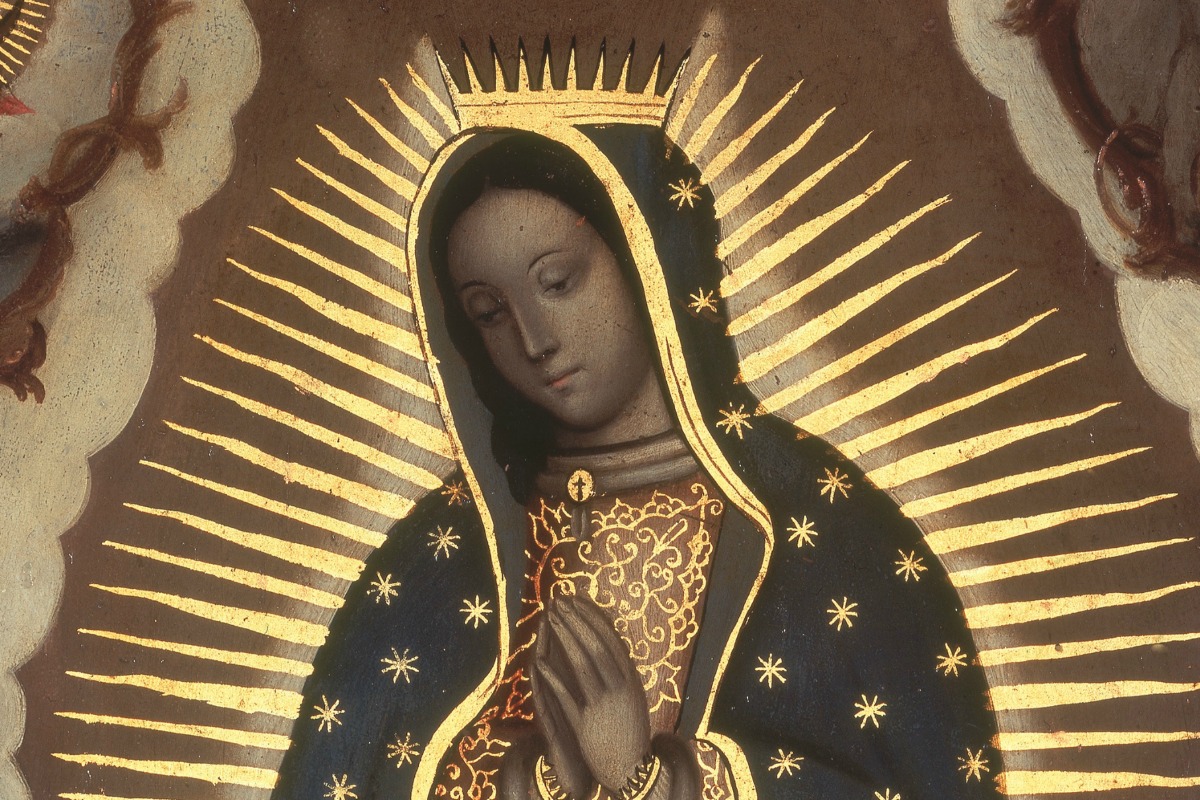
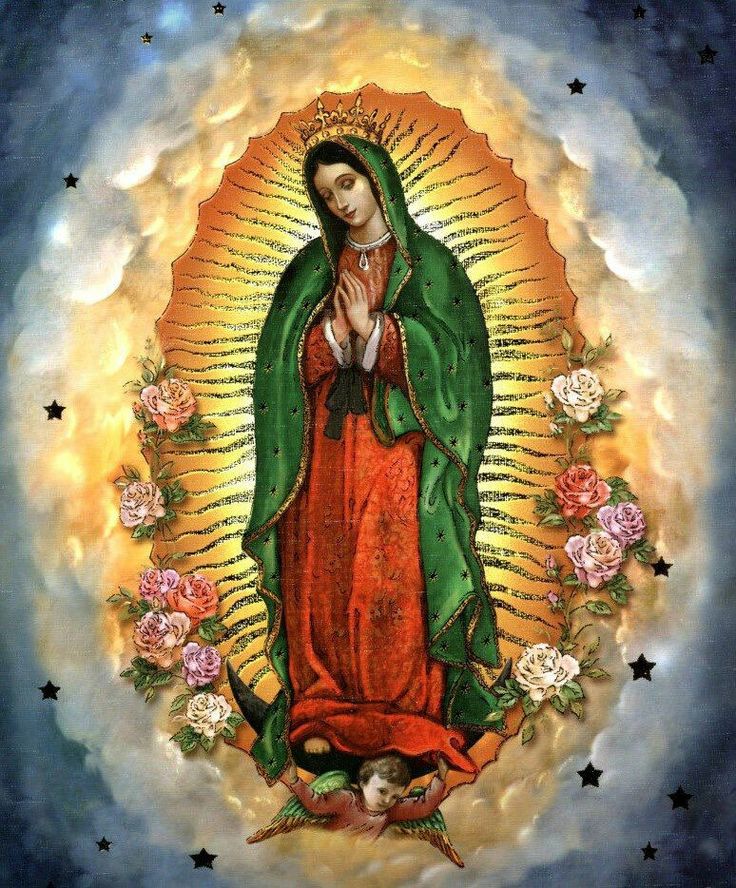
Our Lady of Guadalupe, pray for us. (Source)

“Your deed of hope will never be forgotten by those who tell of the might of God. You are the highest honor of our race.”

Thus does the whole Church sing at Mass today, on the Feast of Our Lady of Guadalupe. And no mean words are they! The Psalm is drawn from the Book of Judith – a frequent verse for feasts of Our Lady – and it lands on our ears like a shout of proleptic joy in this season of preparation and penance. The liturgy draws two special comparisons between Mary and the women of the Old Testament: Mary as the new Eve, and Mary as the second Judith. Today’s feast draws its special energy, its exegetical verve, from the mystical connection between Mary and Judith.

trinityguadalupe

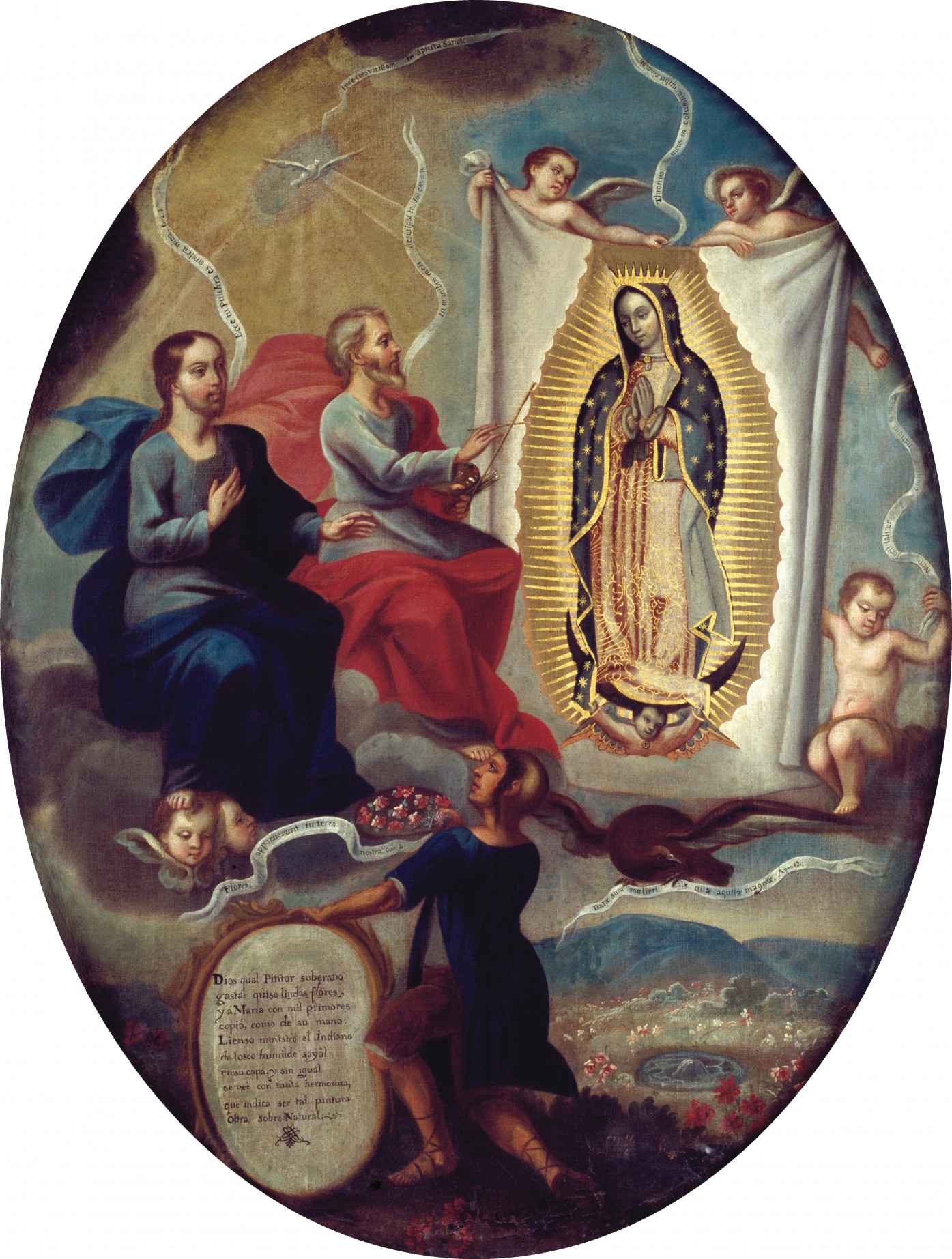
Our Lady of Guadalupe painted by the Trinity. An image worth meditating on. (Source)

The particular verse that the Church applies to Mary comes from Uzziah’s praise of Judith after she has already beheaded Holofernes the Assyrian. Let us turn briefly to the immediately preceding passage.

Then she took the head out of the bag, showed it to them, and said: “Here is the head of Holofernes, the ranking general of the Assyrian forces, and here is the canopy under which he lay in his drunkenness. The Lord struck him down by the hand of a female! Yet I swear by the Lord, who has protected me in the way I have walked, that it was my face that seduced Holofernes to his ruin, and that he did not defile me with sin or shame.” All the people were greatly astonished. They bowed down and worshiped God, saying with one accord, “Blessed are you, our God, who today have humiliated the enemies of your people.” (Judith 13:15-17).

Then come our Psalm verses.

JudithBeheading

Judith Beheading Holofernes, Caravaggio, c. 1602. (Source)

Why would the Church draw our attention to this violent episode on a feast of Our Lady falling so soon after the Immaculate Conception? Haven’t we just contemplated her Sophianic existence? Haven’t we just basked in the light of the Holy Spirit resting upon her Immaculate Heart? Why must we leave those pleasant snow-caps of the spirit? Why turn instead to this grisly tale of murderous deliverance?

We must recall that, although Mary is all sweetness and concord to those who love her Son, she is the terror of demons. Her litanies and devotions include many titles that evoke the clamor of warfare: “Tower of David,” “Tower of Ivory,” even “Gate of Heaven.” She crushes the head of the Serpent. The sword that pierces her heart becomes, by the union of her suffering with that of her Son, a fearful weapon in her mighty hands.

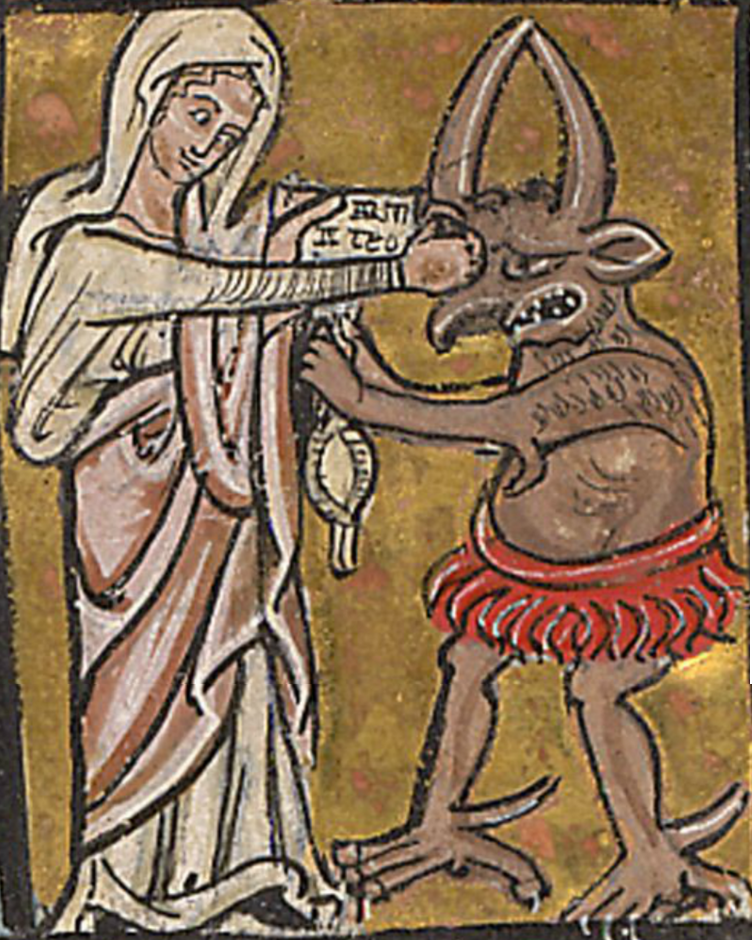
MaryPunchingDevil

“Hail Mary, full of grace, punch the devil in the face.” (Source)

The story of Guadalupe is just one example of Our Lady exercising this power. Her appearance on Tepeyac, and the miracle wrought on the tilma of St. Juan Diego, was the beginning of the end of Aztec paganism. The demons that held that great people in thrall to the murderous rites of human sacrifice were totally vanquished. Like Judith, Mary rode out from Heaven into the  very camp of the enemy. Like Judith, she conquered. Like Judith, she proclaimed her victory with a visible sign – only, Our Lady’s sign was far more glorious. Judith held up the head of the vanquished foe, the bloody remains of a wicked oppressor. The Mother of God gave us her own image, miraculously imprinted into the convert’s cloak.

Judith delivered the Jews from the army of the Assyrians. Mary came forth to Tepeyac to convert the Mexican people, lifting from them the demonic yoke of a bloodthirsty paganism. What a glorious victory she won! Nine million Aztecs converted within the first ten years of the apparitions. Even today, she continues to spur us to conquer those terrible forces of injustice that oppress so many of God’s people. The collect prayer for today’s feast reads:

O God, Father of mercies, who placed your people under the singular protection of your Son’s most holy Mother, grant that all who invoke the Blessed Virgin of Guadalupe, may seek with ever more lively faith the progress of peoples in the ways of justice and of peace. (Source; emphasis mine)

These days it is rather in vogue to lament a certain kind of triumphalism that is built on self-centered pride. But too often we forget that there is another triumphalism, the shout of a people who have seen their salvation coming from the Lord:

Blessed are you, daughter, by the Most High God,
above all the women on earth;
and blessed be the LORD God,
the creator of heaven and earth
(Judith 13:18).

The Church herself enjoins us to celebrate the works and ways of God through His chosen instruments. And in today’s Mass, we are called to join that praise to the sacrifice of Christ in the Eucharist.

GuadalupeHeresy

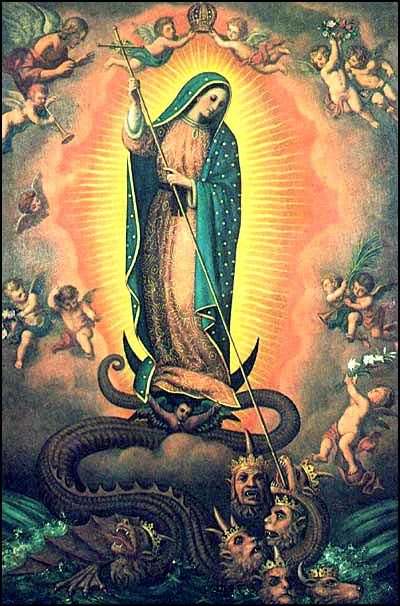
Our Lady of Guadalupe, Victrix over All Heresies and Demons. (Source)

In considering Our Lady of Guadalupe and the zeal with which she overcame the forces of evil and in contemplating the beauty of her miraculous portrait, a verse of Scripture comes to mind.

“Who is she that cometh forth as the morning rising, fair as the moon, bright as the sun, terrible as an army set in array?” (Cant. 6:10 DRA)

We who have seen the tilma through the eyes of faith know the answer.

GuadalupeRoses

Our Lady of Guadalupe, Mystical Rose. (Source)