A Few Points of Contrast Between the English Cardinals

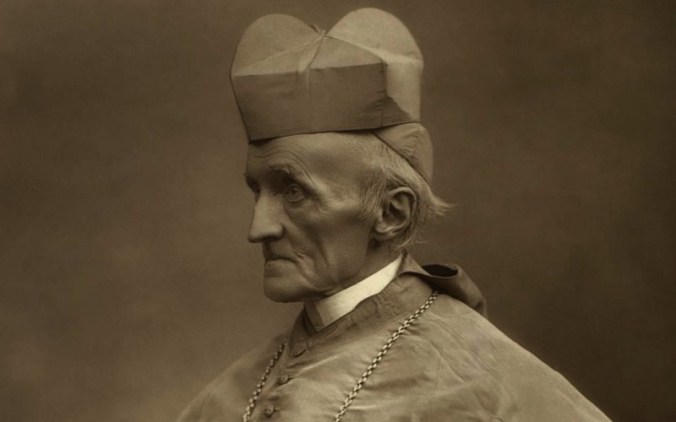
manning_this-800x500

Henry Edward Cardinal Manning of Westminster (Source).

It occurs to me that some of the major differences between Newman and Manning’s later careers can already be glimpsed in their early lives. Specifically, in the reasons they converted.

Cardinal Newman converted as the result of long study of the history of doctrine (especially the Church and due to the attacks on Tract 90, which suggested to him that the Bishops of England had no intention of reading the 39 Articles with a Catholic sense. His conversion was thus the result of a deep meditation of a chiefly historical and doctrinal nature, coupled with an affliction from church authorities.

Cardinal Manning converted after Newman when, in 1850, the Privy Council forced the Church of England to ordain an Evangelical who denied the salvific efficacy of Baptism. This move so shocked Manning that he immediately saw that the Church of England was essentially a political construct without any share of the Apostolic inheritance. It could not resist the demands of the state. And thus, he betook himself to Rome.

Newman became a great theologian; Manning became a great ecclesiastical politician. Newman suffered many troubles with controversies and the censure of the authorities; Manning labored as part of the Catholic establishment and did more than anyone else in England (and, due to his role at Vatican I, arguably the world) to advance the cause of Ultramontanism.

On an unrelated note, there is a rather amusing point of contrast in their biographies. Newman matriculated as an undergraduate at Trinity College, Oxford. Manning was at Balliol (like Faber). Anyone who’s been to Oxford will know that these two colleges are next to each other on Broad Street.

A Poem by Richard Crashaw for St. Teresa’s Day


Giuseppe_Bazzani_-_The_Ecstasy_of_St_Therese_-_WGA01527

“The Ecstasy of St. Teresa,” Giuseppe Bazzani, c. 1747 (Source).

The Flaming Heart

VPON THE BOOK AND PICTURE OF THE SERAPHICAL SAINT TERESA, AS SHE IS VSVALLY EXPRESSED WITH A SERAPHIM BISIDE HER.

Well-meaning readers! you that come as friends
And catch the pretious name this piece pretends;
Make not too much hast to admire
That fair-cheek’t fallacy of fire.
That is a seraphim, they say
And this the great Teresia.
Readers, be rul’d by me; and make
Here a well-plact and wise mistake:
You must transpose the picture quite,
And spell it wrong to read it right;
Read him for her, and her for him,
And call the saint the seraphim.
Painter, what didst thou understand
To put her dart into his hand?
See, even the yeares and size of him
Showes this the mother seraphim.
This is the mistresse flame; and duteous he
Her happy fire-works here, comes down to see.
O most poor-spirited of men!
Had thy cold pencil kist her pen,
Thou couldst not so unkindly err
To show vs this faint shade for her.
Why, man, this speakes pure mortall frame;
And mockes with female frost Love’s manly flame.
One would suspect thou meant’st to paint
Some weak, inferiour, woman-saint.
But had thy pale-fac’t purple took
Fire from the burning cheeks of that bright booke,
Thou wouldst on her have heap’t up all
That could be found seraphicall;
What e’re this youth of fire, weares fair,
Rosy fingers, radiant hair,
Glowing cheek, and glistering wings,
All those fair and fragrant things
But before all, that fiery dart
Had fill’d the hand of this great heart.
Doe then, as equall right requires,
Since his the blushes be, and her’s the fires,
Resume and rectify thy rude design,
Undresse thy seraphim into mine;
Redeem this injury of thy art,
Give him the vail, give her the dart.
Give him the vail; that he may cover
The red cheeks of a rivall’d lover.
Asham’d that our world now can show
Nests of new seraphims here below.
Give her the dart, for it is she
(Fair youth) shootes both thy shaft, and thee;
Say, all ye wise and well-peirc’t hearts
That live and die amidst her darts,
What is’t your tastfull spirits doe prove
In that rare life of her, and Love?
Say, and bear witnes. Sends she not
A seraphim at every shott?
What magazins of immortall armes there shine!
Heavn’s great artillery in each love-spun line.
Give then the dart to her who gives the flame;
Give him the veil, who gives the shame.
But if it be the frequent fate
Of worst faults to be fortunate;
If all’s præscription; and proud wrong
Hearkens not to an humble song;
For all the gallantry of him,
Give me the suffring seraphim.
His be the bravery of all those bright things,
The glowing cheekes, the glistering wings;
The rosy hand, the radiant dart;
Leave her alone the flaming heart.
Leave her that; and thou shalt leave her
Not one loose shaft but Love’s whole quiver.
For in Love’s field was never found
A nobler weapon then a wound.
Love’s passives are his activ’st part,
The wounded is the wounding heart.
O heart! the æquall poise of Love’s both parts
Bigge alike with wound and darts.
Live in these conquering leaves; live all the same,
And walk through all tongues one triumphant flame.
Live here, great heart; and love and dy and kill;
And bleed and wound; and yield and conquer still.
Let this immortall life wherere it comes
Walk in a crowd of loves and martyrdomes.
Let mystick deaths wait on’t; and wise soules be
The love-slain wittnesses of this life of thee.
O sweet incendiary! shew here thy art,
Upon this carcasse of a hard, cold hart;
Let all thy scatter’d shafts of light, that play
Among the leaves of thy larg books of day.
Combin’d against this brest at once break in
And take away from me my self and sin;
This gratious robbery shall thy bounty be,
And my best fortunes such fair spoiles of me.
O thou undanted daughter of desires!
By all thy dowr of lights and fires;
By all the eagle in thee, all the dove;
By all thy lives and deaths of love;
By thy larg draughts of intellectuall day,
And by thy thirsts of love more large then they;
By all thy brim-fill’d bowles of fierce desire,
By thy last morning’s draught of liquid fire;
By the full kingdome of that finall kisse
That seiz’d thy parting soul, and seal’d thee His;
By all the Heau’n thou hast in Him
(Fair sister of the seraphim!)
By all of Him we have in thee;
Leave nothing of my self in me.
Let me so read thy life, that I
Unto all life of mine may dy.

(Richard Crashaw, Carmen Deo Nostro, with some orthographic editing).


30,000 Views

30000words

Huzzah. (Source)

Today, I hit 30,000 views on my blog. I’ve also nearly reached 20,000 discreet visitors. I can’t say I ever envisioned The Amish Catholic getting this big, especially within the first year of starting.

Thank you to everyone who has taken the time to read what I write and publish here. And thank you especially to all those who have publicized, responded to, or written about my work. There are so many of you that I would fear to leave anyone out if I named names. Please know that I am aware of your generosity and consideration. I hope I can continue to produce content that piques your interest.

For Blessed John Henry Newman

john-henry-newman

Bl. Newman in his Oratorian habit (Source).

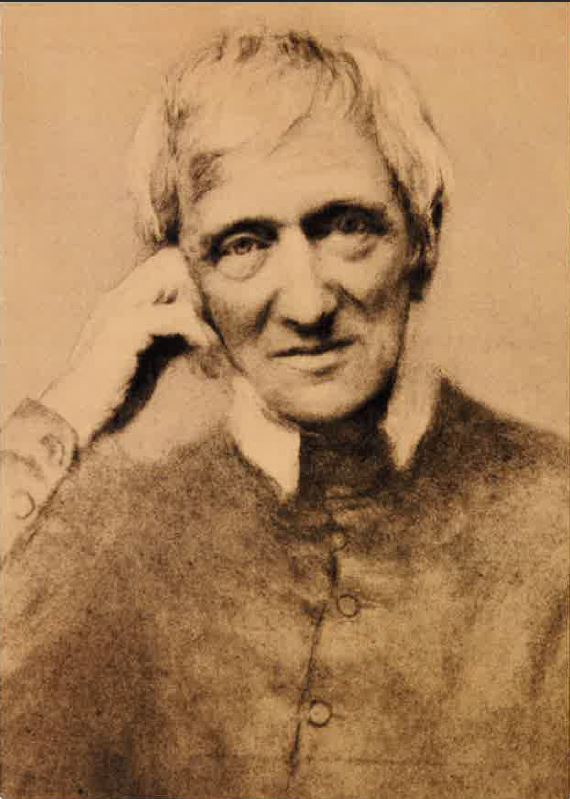
There is so much I could write about Cardinal Newman, on this, his feast day. I have, indeed, already written posts about him many times in the past. But now that courses are starting, I don’t find that I can say as much as I would perhaps like. I also write this essay in some state of exhaustion, having just completed the walking pilgrimage from the Oxford Oratory to Littlemore in honor of Newman’s reception into the Church by the Blessed Dominic Barberi.

So instead of making this a terribly erudite post about a point in Newman’s life or theology, I thought I’d just express my profound gratitude. It can be gauche to make any feast of the Church about one’s self. That is not at all my intention, and I hope I will not be thought self-seeking in writing of my own experience. I don’t pretend that my story is terribly uniquebut it is mine, and no one else can tell it. I am emboldened to relate the history of my own friendship with Blessed John Henry because, as I was taught by Dom Mark Daniel Kirby, “a grace remembered is a grace renewed.” And of course, it’s not really about me. It’s about God, and what He has mercifully done for me through Blessed John Henry Newman.

Saints come to us at many stages of our life. They are always timely, making their appointments according to Heaven’s clock. The mysterious intervention of the saints provides us with one of the many beautiful aspects under which we might consider the manifold glories of providence. They are, as they were in life, God’s instruments; only now, in beatitude, they are eternally and perfectly so. By their intercession, they fill their afterlife with comings and goings, always about God’s business.

Like so many Catholics, I have known the prayers of a saint. Blessed John Henry Newman entered my life when I was still very young in the faith. Of course, I had heard of him before. His name looms large in the history of conversion, and as a convert myself, I found his story interesting if not overly compelling. All that was to change in the spring of my second year, when, in a class entitled, “The University, God, and Reason,” I had the chance to read the first half of his famous educational treatise, The Idea of a University. His magnificent prose and bold defense of knowledge for its own sake thrilled me. I made him my Lenten companion that spring. And in May, I tried (not entirely successfully) to go through all of his Marian meditations for the entire month. A few weeks later, I left for my study abroad.

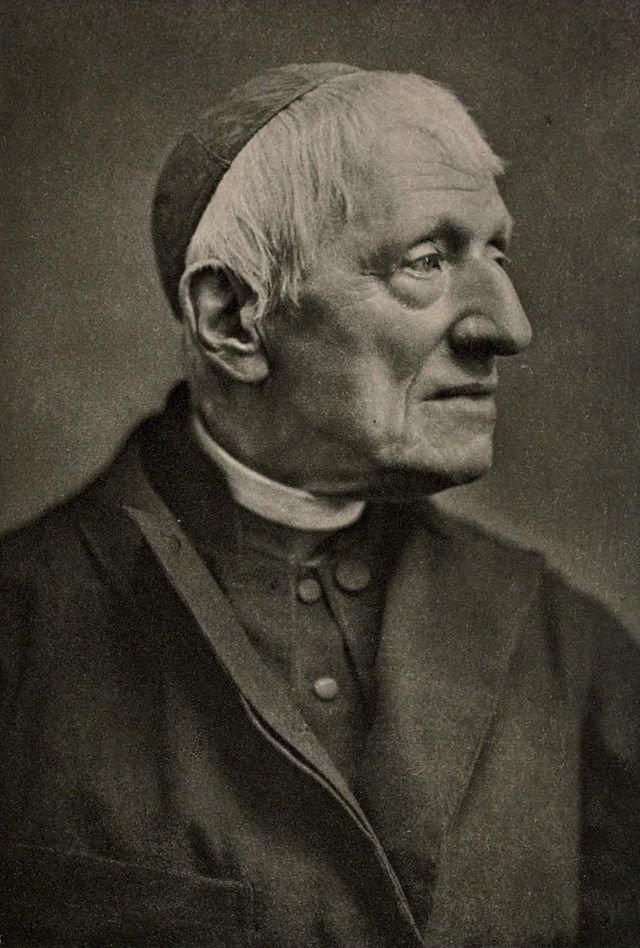
John-Henry-Newman-2.jpg

Newman in later years. (Source)

This venture is, I think, one of the great privileges and turning-points of my life. The more I reflect on it, and where I have been since, the more I thank God for allowing me that study which was more a pilgrimage than anything else. On my very first day away from home, I had the chance to visit the Brompton Oratory. Leaving the hustle and bustle of Kensington in the late afternoon, stepping into that dark and immense well of stillness, I immediately thought, “This is God’s house.” I had never had that reaction in any other church before, and never yet have since. It was unbidden, unlooked-for, unimagined. Yet there, in the vast twilight of Fr. Faber’s church, I felt the unmistakable presence of God. And whose altar should I find, off in a niche, under a low-hanging balcony? Whose but Cardinal Newman’s? And from Cardinal Newman’s altar I walked up to the transeptsand found the effigy-altar of St. Philip Neri. To this day, it is still my firm conviction that I was led to befriend St. Philip by Blessed John Henry, his son.

That was my first introduction to the Oratory. While I had heard of it and understood some of its distinctives, these were merely academic realities to me until that long journey. Throughout the rest of my travels that summer, my mind turned constantly to Blessed John Henry and St. Philip. In Rome, the presence of the latter seeped from the very walls. I had the grace of visiting the Chiesa Nuova twice, and San Giovanni dei Fiorentini once (though at the time I did not know its history). And when I returned to England to complete the course I had signed up for, I started to find Cardinal Newman everywhere. Across the street from my college in Oxford was the Church of St. Mary the Virgin, where Newman was vicar. I visited Oriel and passed by Trinity, his two colleges. I worshiped weekly at the Oratoryyet another house of St. Philipwhere Newman had preached in his own life. I bought a small portrait of the man himself in the little church shop there. And while on a brief retreat with the monks of Silverstream, I providentially purchased a short biography of St. Philip Neri. It was the first I ever read, and I devoured it in a few days.

I have little to say of the time since my return to the United States in August of 2015. The year that followed was very bad, and my faith suffered greatly. But when I came back after so long a spiritual exile, I once again felt the prayers of Cardinal Newman moving me in the right direction. Slowly but surely, my sense of the presence of God healed. By this point, I was writing a thesis on Newman. I was also seriously pondering my future. I knew I wanted to continue my studies, but the question of where to do so was subject to a number of considerations. So I offered up the issue in prayer to a number of saints, including Our Lady of Walsingham and Bl. Cardinal Newman.

And now I am at Oxford, Newman’s beloved university. Indeed, I am at a college guided by the spirituality of the Anglican movement he began. Cardinal Newman has not failed me by his prayers. I have read so many works by and about him, yet still I feel I have so much more to learn from his life and teaching. He is for me many things at once: intellectual mentor, friend in Heaven, father in God. For someone training for the scholarly life, Newman is a model Catholic academic. He pursued Truth until he found it, and, not resting therein, never ceased following it until his death. I pray that I, too, may follow him out of shadows and images and into the “kindly light” of Truth.

Blessed John Henry Cardinal Newman, Pray for Us.

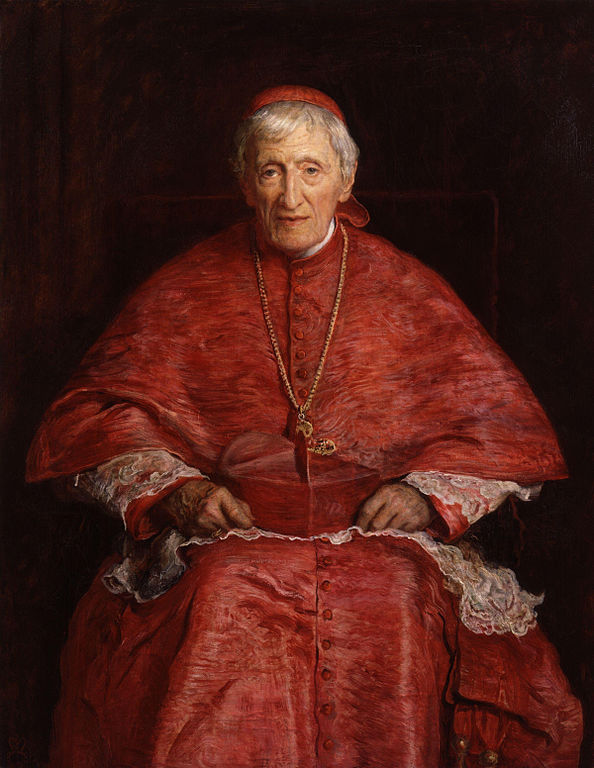
MIllaisNewman

The Millais portrait of Cardinal Newman. (Source)

Pious Youths Looking Terribly, Terribly Wan

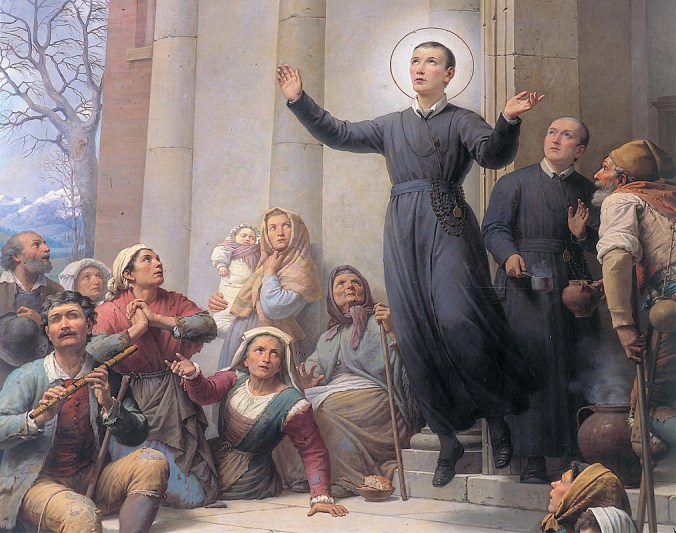
GerardMajellaFloating
No please, don’t get up.
I can levitate all by myself.
I’m sure you must see lots of levitating clergymen.
It’s no big deal.
Yes, I know it’s not even a foot up, but still.
Just play your flute or whatever.
Go on, keep doing what you were doing.
Just gonna levitate for my own sake.
Sure is high up here.
All seven inches.

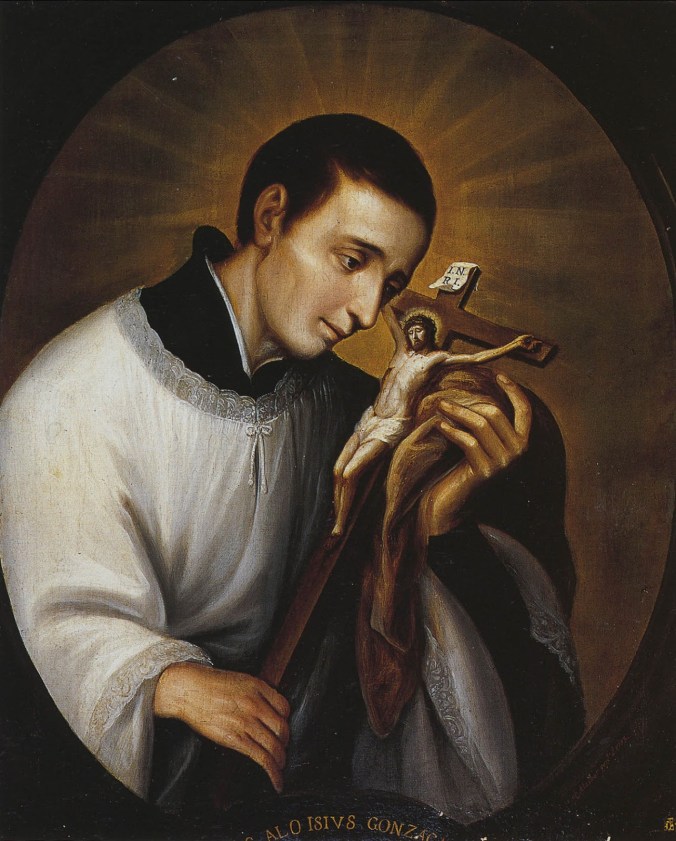
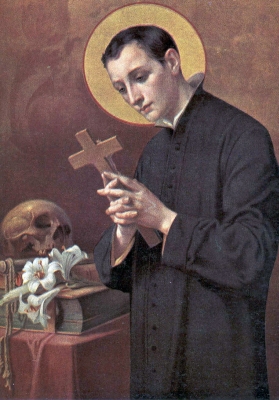
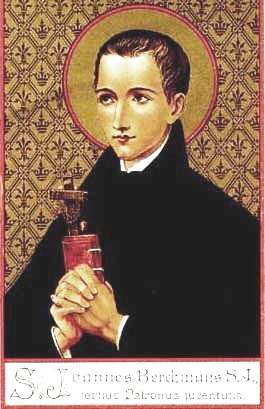
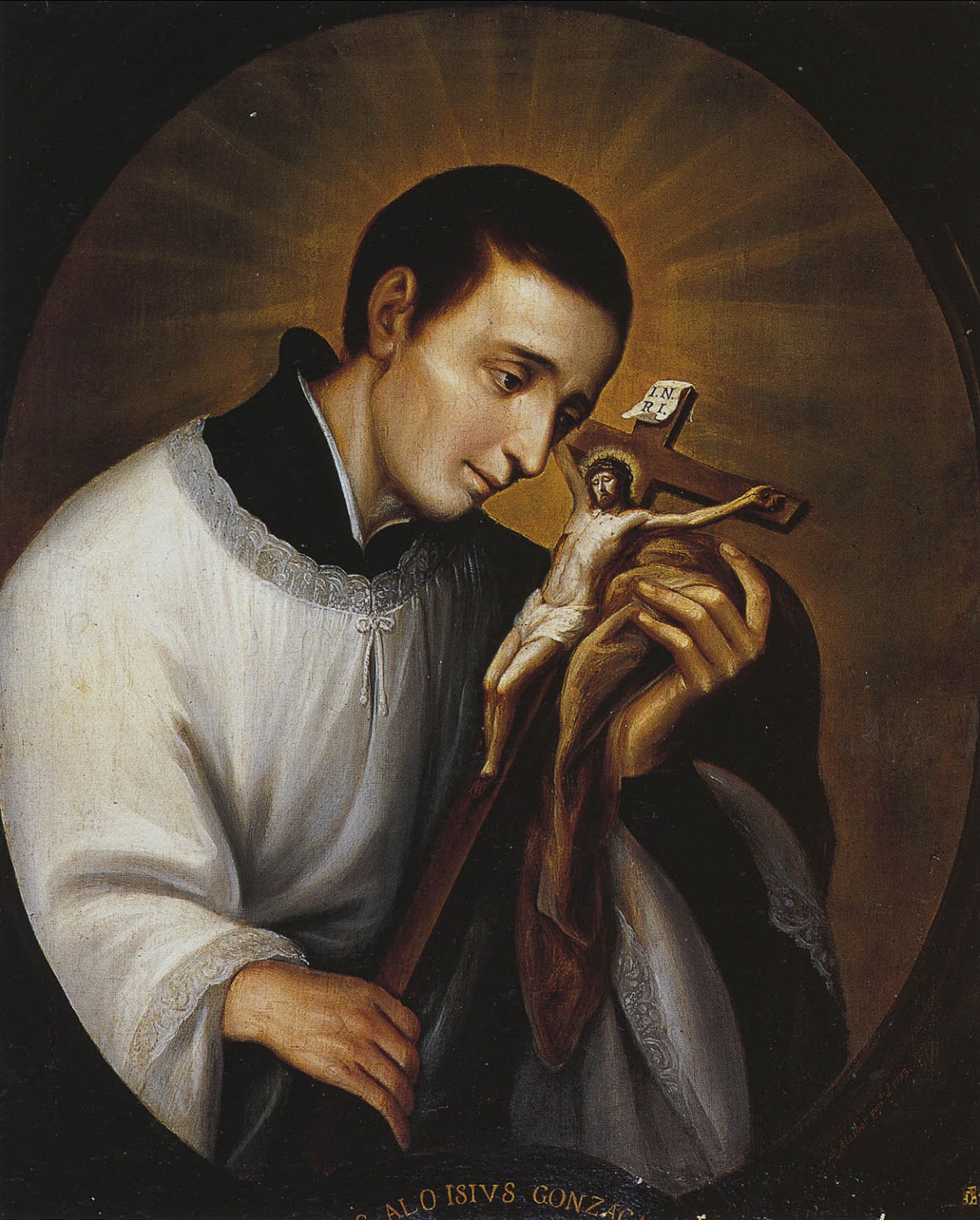
St_Aloysius_Gonzaga_June_21stOh, how I hope never to see the Sun.

saint-aloysius-gonzaga-00
To be honest, the best thing about the novitiate is all the restrictions.
It must be unpleasant to have to do all sorts of things that other people do.
Like eating, or going outside, or breathing more than thrice an hour.

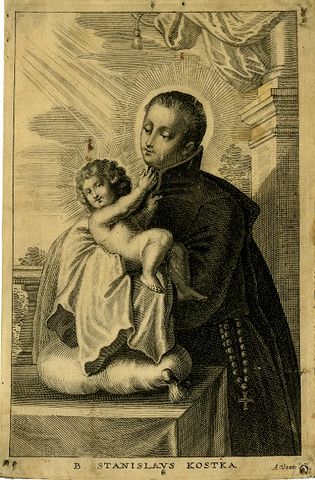
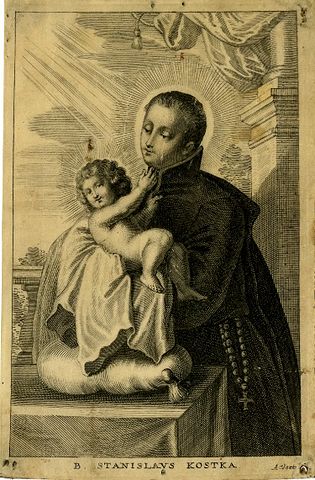
StanislausKostka1
Well it has been great holding you.
Really just a once-in-a-lifetime experience.
Truly.
Sure am gonna have to tell my friends about this.
Anyway, you are…uh, kinda heavy.
So uh, I think I’m gonna maybe put you downo, get your hand away from me…
OKAY THEN well I guess we’re just gonna stay like this a little longer.

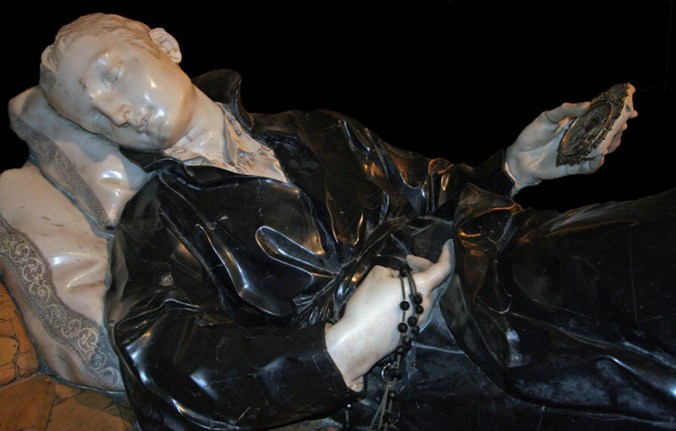
LeGrosStanislausKostka 2 web
Oh sorry, you caught me at a bad time. I was just dying clear away.

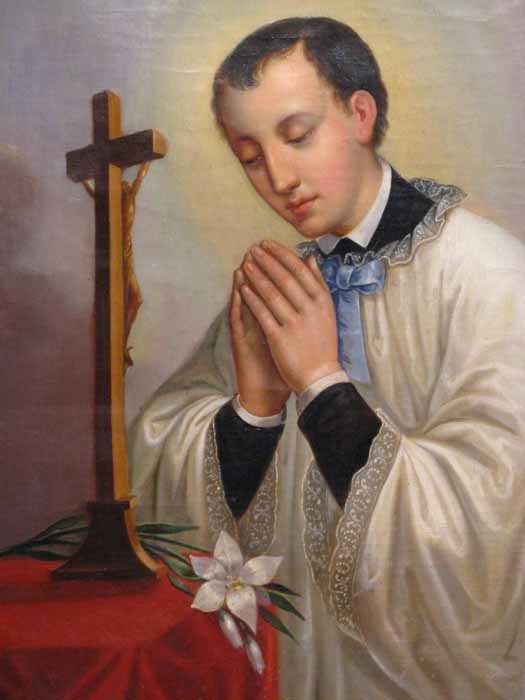
GonzagaBlueBow
I can never pray without my little blue bow.

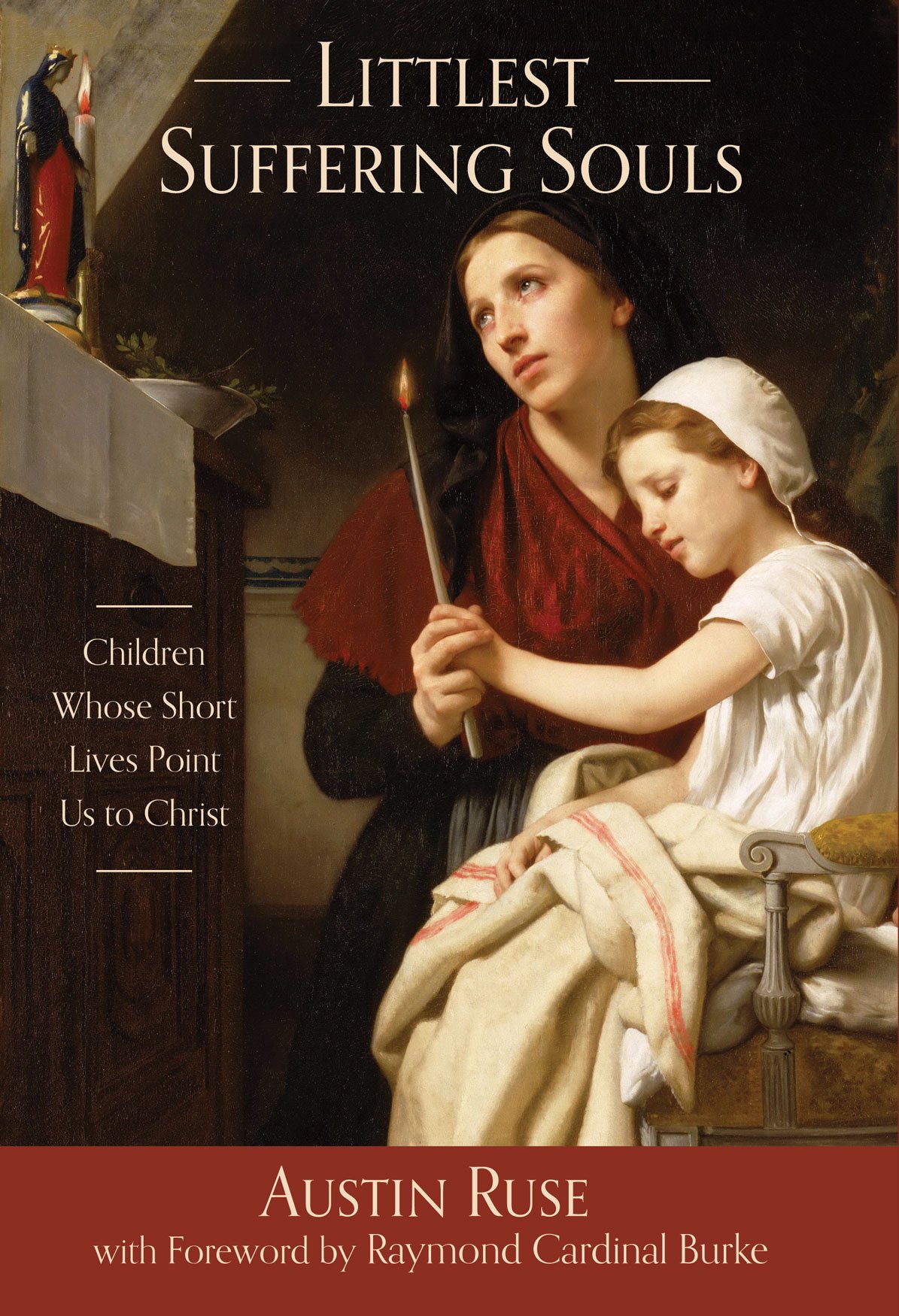
Screen Shot 2017-09-30 at 10.34.19 PMYou must pray, Iphigenia, you must pray harder.
But Mother, we’ve been doing it for six hours.
If you do not pray, Iphigenia, you can never be well.
We don’t have any more candles left.
Iphigenia, how shall you feel when you are dead and gone far from your own home and all its earthly lights and all who love you?
I only had a small cough
Shhhh, Iphigenia, shhhhh…

berchmans-e1467917574733
Yes, I said “Come down here at once.”
I’ve even got a little space for you to sit here.
Yes, I know there are bones on it.
Well you’ll just have to move them.
It’s not hard. Really.

brotherspraying
How long are we gonna keep saying grace, Jimmy?
Probably a while.
Why?
Because I’m using the Roman Canon.

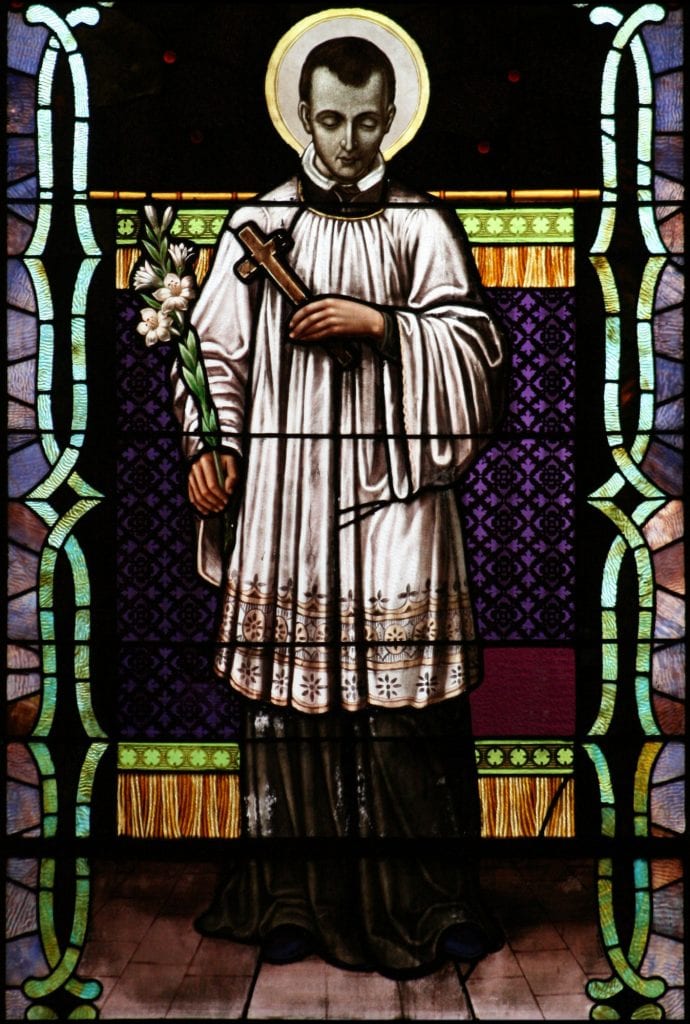
AloysiusGonzagaStainedGlassI love how this new makeup makes my face match my surplice.

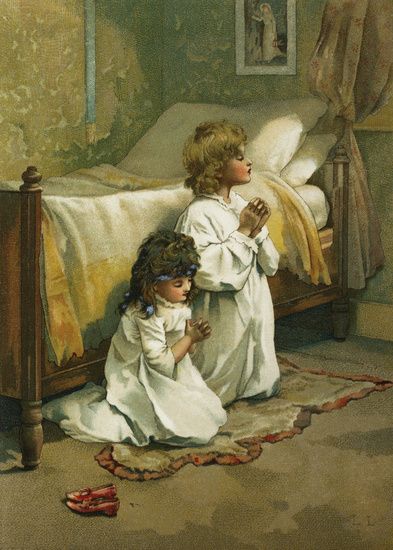
ChildrenPraying
And please bless mommy and daddy.
And please let us eat lots of desert.
And please crush the Modernist heresy in all its damnable ways.

BerchmansWallpaper
This wallpaper.
I hate. every. inch. of it.

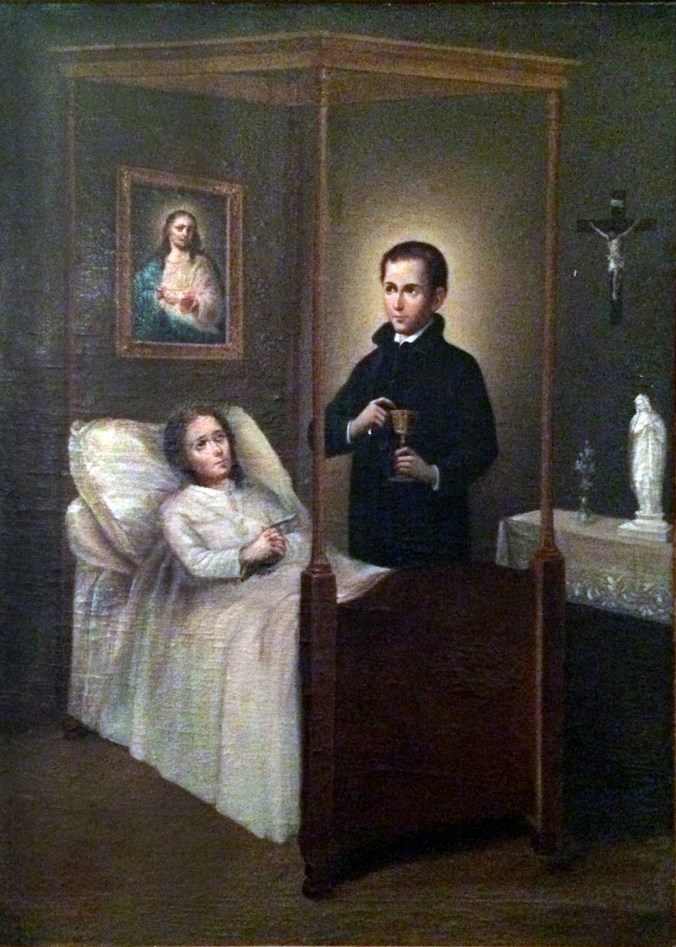
SJB-shrine.jpg
John…there’s, there’s a light all about you.
Well I certainly am the most glittering ornament in the room.

DogPrayer
I’m sorry, Cecil, but the Church does teach that you have no immortal soul.

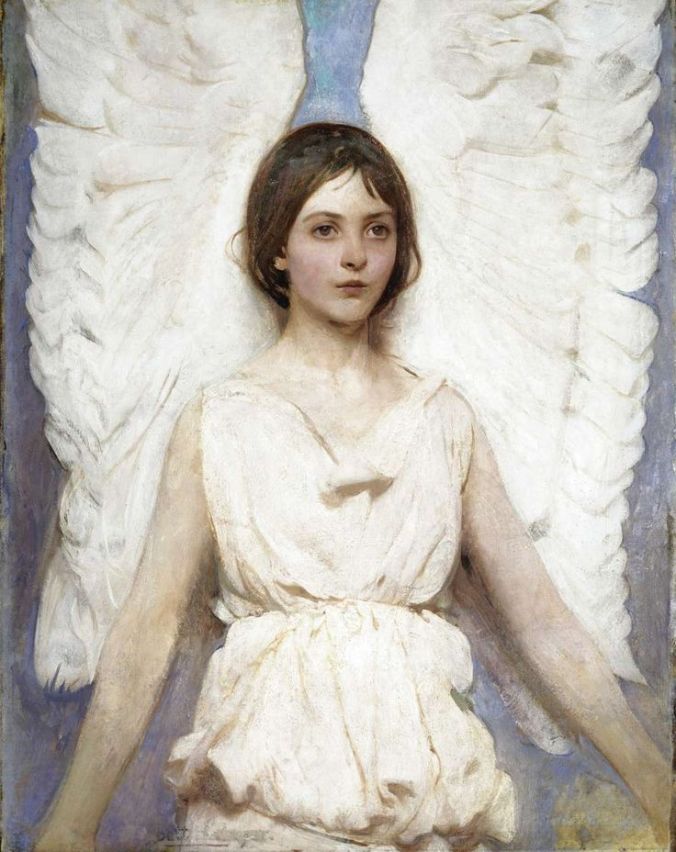
WingsAngel
Yes, they are rather nice wings, thank you.
Unfortunately I can’t move them at all.
But they look great.

StGabrielSorrows.jg
I’m aghast.
I had no idea such a thing could happen to me.
I feel personally victimized.
I walk into the room and what do I see?
This painting.
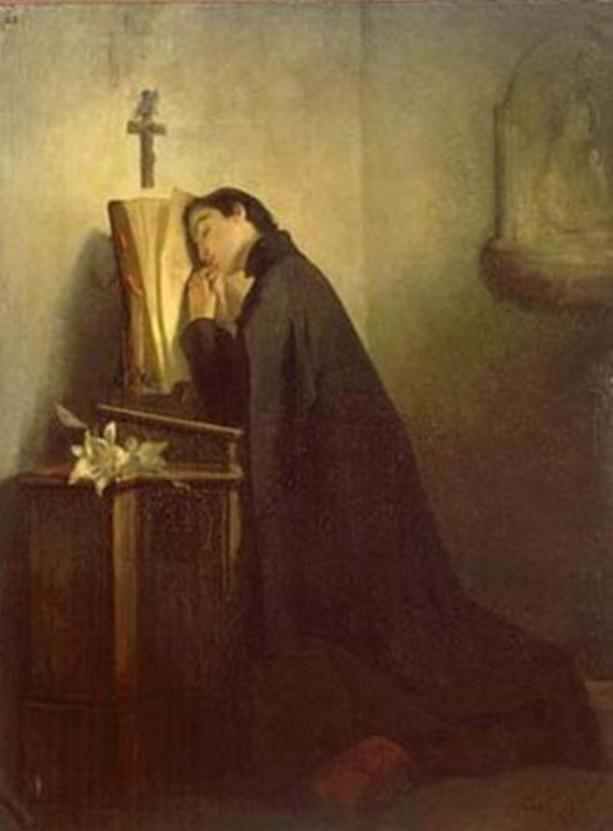
It’s…it’s…so…philistine!

AloysiusBook
What? You don’t pray to your poetry books?

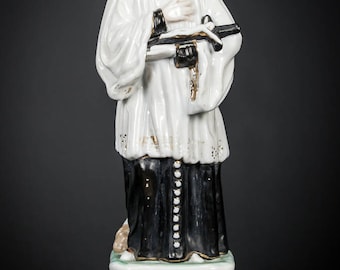
PorcelainAloysius
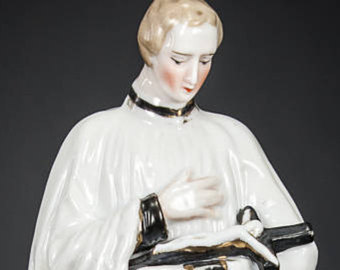
Deathly pale is the new black.

BremenChildPraying
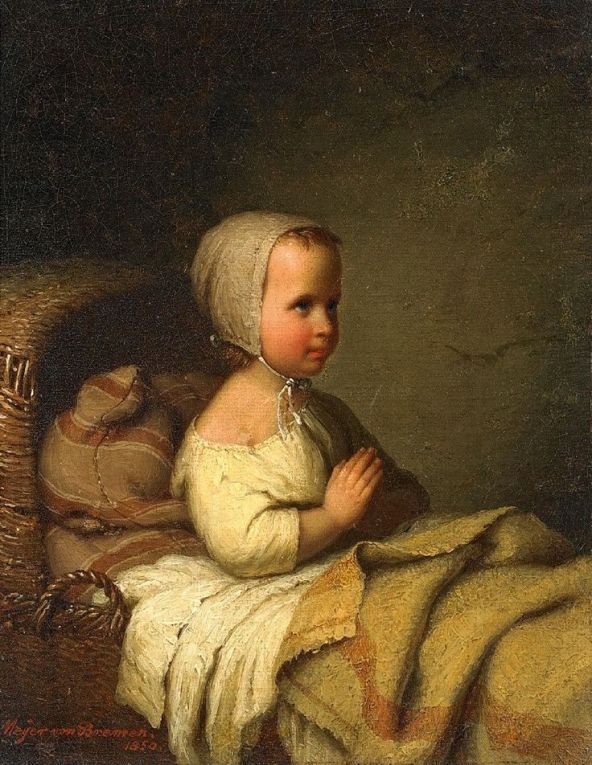
Little Peter enjoys his prayers.
He smiles as he prays.
He smiles because he thinks about how, at the Judgment Day, the Lord will cast down the heretics, the wicked, and the reprobate into the everlasting flames of Hell forever, where the demons shall rend the very flesh of their bones and devour them.
Little Peter enjoys his prayers.

(Images from here, here, here, here, here, here, here, here, here, here, here, here, here, here, here, here, and here)

A Word of Thanksgiving

image

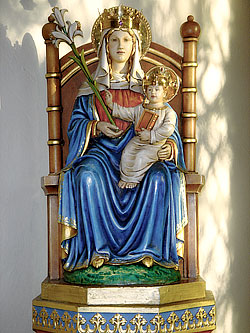
Our Lady of Walsingham, pray for us. (Source).

Today, on the double feast of Our Lady of Ransom and Our Lady of Walsingham, I was blessed to consecrate myself totally to the Mother of God at the Church of her Immaculate Heart, otherwise known as the Brompton Oratory. Thank you to everyone who prayed for me en route to this wonderful occasion. I look upon it as a momentous date, a renewal of my entrance into the Church four years ago,

The date and place are especially meaningful to me. I have long had a devotion to Our Lady of Walsingham, Patroness of England. During the stresses of my final year at Virginia, I entrusted all my major projects–in particular my thesis and my graduate school applications–to her. And over the course of the last few years, my love for St. Philip Neri and his sons has grown into a true devotion to the Oratorian way. Brompton was where that began for me, almost two and a half years ago. I date the start of my friendship with St. Philip to my first overawed trip to the Oratory in 2015. And I pronounced my vow of consecration at the altar of Our Lady of the Rosary, a grace that reminded me of all the wonderful Dominicans I have known over the short course of my life as a Catholic.

So thank you to all those who have prayed for me. And please pray still, that I might not forget my vow as the inevitable distractions, delights, and stresses of grad school set in.

Crashaw on Our Lady of Sorrows

Our-Lady-of-Oxford

Yesterday, we celebrated the Feast of the Holy Cross. Today, naturally, we follow that sorrowful glory of Jesus with the sorrowful glory of Mary. And Crashaw remains our companion. Here is his “Sancta Maria Dolorum; or The Mothers of Sorrows, A Pathetical Descant upon the Devout Plainsong of Stabat Mater Dolorosa.” You can also find the text over here.

1.

In shade of Deaths sad Tree
Stood doleful she,
Ah she! now by no other
Name to be known, alas, but Sorrow’s Mother.

Before her Eyes
Her’s and the whole World’s joyes,
Hanging all torn she sees; and in his woes
And Pains, her pangs and throes.
Each wound of his, from every part,
All, more at home in her own heart.

2.

What kind of Marble than
Is that cold man
Who can look on and see,
Nor keep such Noble sorrows company?
Sure even from you
(My Flints) some drops are due
To see so many unkind swords contest
So fast for one soft Brest.
While with a faithful, mutual, floud
Her Eyes bleed Tears, his wounds weep blood.

3.

O costly intercourse
Of deaths, and worse
Divided Loves: while Son and Mother
Discourse alternate wounds to one another;
Quick Deaths that grow
And gather, as they come and go:
His Nails write swords in her; which soon her heart
Pays back, with more then their own smart;
Her swords, still growing with his pain,
Turn Spears, and straight come home again;

4.

She sees her Son, her God,
Bow with a load
Of borrow’d sins; and swim
In woes that were not made for him.
Ah hard Command
Of Love! Here must she stand
Charg’d to look on, and with a stedfast Eye
See her life dye:
Leaving her only so much Breath
As serves to keep alive her death.

5.

O Mother Turtle-dove!
Soft sourse of Love,
That these dry Lids might borrow
Somthing from thy full seas of Sorrow!
O in that Brest
Of thine (the noblest Nest
Both of Love’s Fires and Flouds) might I recline
This hard, cold, Heart of mine!
The chil lump would relent, and prove
Soft Subject for the siege of Love.

6.

O teach those wounds to bleed
In me; me, so to read
This Book of Loves, thus writ
In lines of death, my life may copy it

With Loyal cares.
O let me here claim shares;
Yield something in thy sad prerogative
(Great Queen of griefs) and give
Me to my Tears; who, though all stone,
Think much that thou shouldst mourn alone.

7.

Yea let my life and me
Fix here with thee,
And at the Humble Foot
Of this fair Tree take our Eternal Root.
That so we may
At least be in Loves way;
And in these chaste wars while the wing’d wounds flee
So fast ‘twixt him and thee,
My Brest may catch the kiss of some kind Dart,
Though as at second hand, from either Heart.

8.

O you, your own best Darts,
Dear doleful hearts!
Hail; and strike home and make me see
That wounded bosomes their own weapons be.
Come Wounds! come Darts!
Nail’d hands! and pierced hearts!
Come your whole selves, Sorrow’s great Son and Mo∣ther.
Nor grudge a younger Brother
Of grief’s his portion, who (had all their due)
One single wound should not have left for you.

9.

Shall I set there
So deep a share
(Dear wounds) and onely now
In sorrows draw no dividend with you!
O be more wife,
If not more soft, mine Eyes!
Flow, tardy Founts! and into decent showrs
Dissolve my Days and Hours.
And if thou yet (faint soul!) defer
To bleed with him, fail not to weep with her.

10.

Rich Queen, lend some relief;
At least an alms of Grief
To’ a heart who by sad right of sin
Could prove the whole sum (too sure) due to him.
By all those stings
Of Love, sweet bitter things,
Which these torn hands transcrib’d on thy true Heart;
O teach mine too, the Art
To study him so, till we mix
Wounds, and become one Crucifix.

11.

O let me suck the Wine
So long of this chaste Vine,
Till, drunk of the dear wounds, I be
A lost thing to the World, as it to me.
O faithful friend
Of me and of my end!
Fold up my life in Love; and lay’t beneath
My dear Lord’s vital death.
Lo, heart, thy hopes whole Plea! her precious breath
Powr’d out in Prayers for thee; thy Lord’s in death.

Newman on the Cross of Christ

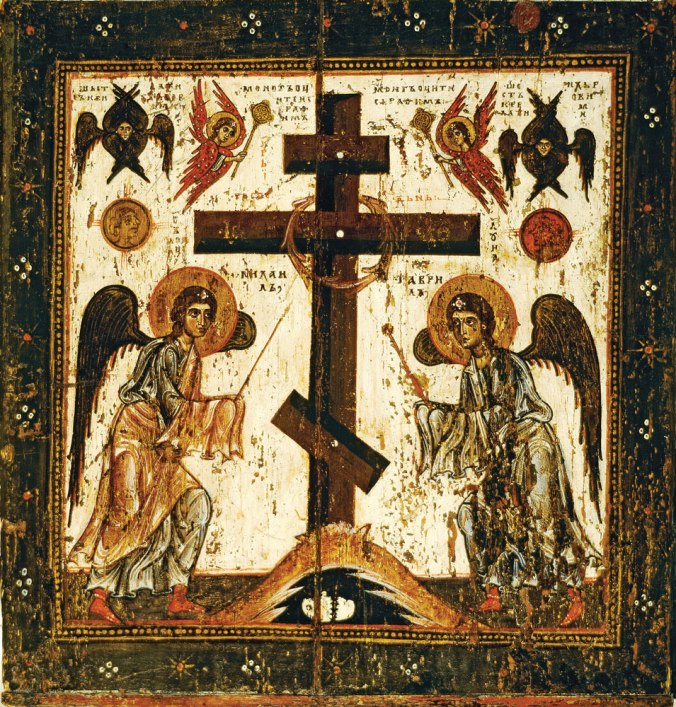
image

An icon of the Holy Cross. (Source)

My favorite sermon by John Henry Newman is directly germane to our feast today. He preached it at St. Mary the Virgin, Oxford, while still an Anglican. Though originally delivered on the sixth Sunday of Lent, the text fits admirably for today’s mystery, I take it from the Newman Reader, which makes available all of his writings for free online.

The Cross of Christ the Measure of the World

“And I, if I be lifted up from the earth, will draw all men unto Me.” John xii. 32.

A GREAT number of men live and die without reflecting at all upon the state of things in which they find themselves. They take things as they come, and follow their inclinations as far as they have the opportunity. They are guided mainly by pleasure and pain, not by reason, principle, or conscience; and they do not attempt to interpret this world, to determine what it means, or to reduce what they see and feel to system. But when persons, either from thoughtfulness of mind, or from intellectual activity, begin to contemplate the visible state of things into which they are born, then forthwith they find it a maze and a perplexity. It is a riddle which they cannot solve. It seems full of contradictions and without a drift. Why it is, and what it is to issue in, and how it is what it is, and how we come to be introduced into it, and what is our destiny, are all mysteries.

In this difficulty, some have formed one philosophy of life, and others another. Men have thought they had found the key, by means of which they might read what is so obscure. Ten thousand things come before us one after another in the course of life, and what are we to think of them? what colour are we to give them? Are we to look at all things in a gay and mirthful way? or in a melancholy way? in a desponding or a hopeful way? Are we to make light of life altogether, or to treat the whole subject seriously? Are we to make greatest things of little consequence, or least things of great consequence? Are we to keep in mind what is past and gone, or are we to look on to the future, or are we to be absorbed in what is present? How are we to look at things? this is the question which all persons of observation ask themselves, and answer each in his own way. They wish to think by rule; by something within them, which may harmonize and adjust what is without them. Such is the need felt by reflective minds. Now, let me ask, what is the real key, what is the Christian interpretation of this world? What is given us by revelation to estimate and measure this world by? The event of this season,—the Crucifixion of the Son of God.

It is the death of the Eternal Word of God made flesh, which is our great lesson how to think and how to speak of this world. His Cross has put its due value upon every thing which we see, upon all fortunes, all advantages, all ranks, all dignities, all pleasures; upon the lust of the flesh, and the lust of the eyes, and the pride of life. It has set a price upon the excitements, the rivalries, the hopes, the fears, the desires, the efforts, the triumphs of mortal man. It has given a meaning to the various, shifting course, the trials, the temptations, the sufferings, of his earthly state. It has brought together and made consistent all that seemed discordant and aimless. It has taught us how to live, how to use this world, what to expect, what to desire, what to hope. It is the tone into which all the strains of this world’s music are ultimately to be resolved.

Look around, and see what the world presents of high and low. Go to the court of princes. See the treasure and skill of all nations brought together to honour a child of man. Observe the prostration of the many before the few. Consider the form and ceremonial, the pomp, the state, the circumstance; and the vainglory. Do you wish to know the worth of it all? look at the Cross of Christ.

Go to the political world: see nation jealous of nation, trade rivalling trade, armies and fleets matched against each other. Survey the various ranks of the community, its parties and their contests, the strivings of the ambitious, the intrigues of the crafty. What is the end of all this turmoil? the grave. What is the measure? the Cross.

Go, again, to the world of intellect and science: consider the wonderful discoveries which the human mind is making, the variety of arts to which its discoveries give rise, the all but miracles by which it shows its power; and next, the pride and confidence of reason, and the absorbing devotion of thought to transitory objects, which is the consequence. Would you form a right judgment of all this? look at the Cross.

Again: look at misery, look at poverty and destitution, look at oppression and captivity; go where food is scanty, and lodging unhealthy. Consider pain and suffering, diseases long or violent, all that is frightful and revolting. Would you know how to rate all these? gaze upon the Cross.

Thus in the Cross, and Him who hung upon it, all things meet; all things subserve it, all things need it. It is their centre and their interpretation. For He was lifted up upon it, that He might draw all men and all things unto Him.

But it will be said, that the view which the Cross of Christ imparts to us of human life and of the world, is not that which we should take, if left to ourselves; that it is not an obvious view; that if we look at things on their surface, they are far more bright and sunny than they appear when viewed in the light which this season casts upon them. The world seems made for the enjoyment of just such a being as man, and man is put into it. He has the capacity of enjoyment, and the world supplies the means. How natural this, what a simple as well as pleasant philosophy, yet how different from that of the Cross! The doctrine of the Cross, it may be said, disarranges two parts of a system which seem made for each other; it severs the fruit from the eater, the enjoyment from the enjoyer. How does this solve a problem? does it not rather itself create one?

I answer, first, that whatever force this objection may have, surely it is merely a repetition of that which Eve felt and Satan urged in Eden; for did not the woman see that the forbidden tree was “good for food,” and “a tree to be desired”? Well, then, is it wonderful that we too, the descendants of the first pair, should still be in a world where there is a forbidden fruit, and that our trials should lie in being within reach of it, and our happiness in abstaining from it? The world, at first sight, appears made for pleasure, and the vision of Christ’s Cross is a solemn and sorrowful sight interfering with this appearance. Be it so; but why may it not be our duty to abstain from enjoyment notwithstanding, if it was a duty even in Eden?

But again; it is but a superficial view of things to say that this life is made for pleasure and happiness. To those who look under the surface, it tells a very different tale. The doctrine of the Cross does but teach, though infinitely more forcibly, still after all it does but teach the very same lesson which this world teaches to those who live long in it, who have much experience in it, who know it. The world is sweet to the lips, but bitter to the taste. It pleases at first, but not at last. It looks gay on the outside, but evil and misery lie concealed within. When a man has passed a certain number of years in it, he cries out with the Preacher, “Vanity of vanities, all is vanity.” Nay, if he has not religion for his guide, he will be forced to go further, and say, “All is vanity and vexation of spirit;” all is disappointment; all is sorrow; all is pain. The sore judgments of God upon sin are concealed within it, and force a man to grieve whether he will or no. Therefore the doctrine of the Cross of Christ does but anticipate for us our experience of the world. It is true, it bids us grieve for our sins in the midst of all that smiles and glitters around us; but if we will not heed it, we shall at length be forced to grieve for them from undergoing their fearful punishment. If we will not acknowledge that this world has been made miserable by sin, from the sight of Him on whom our sins were laid, we shall experience it to be miserable by the recoil of those sins upon ourselves.

It may be granted, then, that the doctrine of the Cross is not on the surface of the world. The surface of things is bright only, and the Cross is sorrowful; it is a hidden doctrine; it lies under a veil; it at first sight startles us, and we are tempted to revolt from it. Like St. Peter, we cry out, “Be it far from Thee, Lord; this shall not be unto Thee.” [Matt. xvi. 22.] And yet it is a true doctrine; for truth is not on the surface of things, but in the depths.

And as the doctrine of the Cross, though it be the true interpretation of this world, is not prominently manifested in it, upon its surface, but is concealed; so again, when received into the faithful heart, there it abides as a living principle, but deep, and hidden from observation. Religious men, in the words of Scripture, “live by the faith of the Son of God, who loved them and gave Himself for them:” [Gal. ii. 20.] but they do not tell this to all men; they leave others to find it out as they may. Our Lord’s own command to His disciples was, that when they fast, they should “anoint their head and wash their face.” [Matt. vi. 17.] Thus they are bound not to make a display, but ever to be content to look outwardly different from what they are really inwardly. They are to carry a cheerful countenance with them, and to control and regulate their feelings, that those feelings, by not being expended on the surface, may retire deep into their hearts and there live. And thus “Jesus Christ and He crucified” is, as the Apostle tells us, “a hidden wisdom;”—hidden in the world, which seems at first sight to speak a far other doctrine,—and hidden in the faithful soul, which to persons at a distance, or to chance beholders, seems to be living but an ordinary life, while really it is in secret holding communion with Him who was “manifested in the flesh,” “crucified through weakness,” “justified in the Spirit, seen of angels, and received up into glory.”

This being the case, the great and awful doctrine of the Cross of Christ, which we now commemorate, may fitly be called, in the language of figure, the heart of religion. The heart may be considered as the seat of life; it is the principle of motion, heat, and activity; from it the blood goes to and fro to the extreme parts of the body. It sustains the man in his powers and faculties; it enables the brain to think; and when it is touched, man dies. And in like manner the sacred doctrine of Christ’s Atoning Sacrifice is the vital principle on which the Christian lives, and without which Christianity is not. Without it no other doctrine is held profitably; to believe in Christ’s divinity, or in His manhood, or in the Holy Trinity, or in a judgment to come, or in the resurrection of the dead, is an untrue belief, not Christian faith, unless we receive also the doctrine of Christ’s sacrifice. On the other hand, to receive it presupposes the reception of other high truths of the Gospel besides; it involves the belief in Christ’s true divinity, in His true incarnation, and in man’s sinful state by nature; and it prepares the way to belief in the sacred Eucharistic feast, in which He who was once crucified is ever given to our souls and bodies, verily and indeed, in His Body and in His Blood. But again, the heart is hidden from view; it is carefully and securely guarded; it is not like the eye set in the forehead, commanding all, and seen of all: and so in like manner the sacred doctrine of the Atoning Sacrifice is not one to be talked of, but to be lived upon; not to be put forth irreverently, but to be adored secretly; not to be used as a necessary instrument in the conversion of the ungodly, or for the satisfaction of reasoners of this world, but to be unfolded to the docile and obedient; to young children, whom the world has not corrupted; to the sorrowful, who need comfort; to the sincere and earnest, who need a rule of life; to the innocent, who need warning; and to the established, who have earned the knowledge of it.

One more remark I shall make, and then conclude. It must not be supposed, because the doctrine of the Cross makes us sad, that therefore the Gospel is a sad religion. The Psalmist says, “They that sow in tears shall reap in joy;” and our Lord says, “They that mourn shall be comforted.” Let no one go away with the impression that the Gospel makes us take a gloomy view of the world and of life. It hinders us indeed from taking a superficial view, and finding a vain transitory joy in what we see; but it forbids our immediate enjoyment, only to grant enjoyment in truth and fulness afterwards. It only forbids us to begin with enjoyment. It only says, If you begin with pleasure, you will end with pain. It bids us begin with the Cross of Christ, and in that Cross we shall at first find sorrow, but in a while peace and comfort will rise out of that sorrow. That Cross will lead us to mourning, repentance, humiliation, prayer, fasting; we shall sorrow for our sins, we shall sorrow with Christ’s sufferings; but all this sorrow will only issue, nay, will be undergone in a happiness far greater than the enjoyment which the world gives,—though careless worldly minds indeed will not believe this, ridicule the notion of it, because they never have tasted it, and consider it a mere matter of words, which religious persons think it decent and proper to use, and try to believe themselves, and to get others to believe, but which no one really feels. This is what they think; but our Saviour said to His disciples, “Ye now therefore have sorrow, but I will see you again, and your heart shall rejoice, and your joy no man taketh from you.” … “Peace I leave with you; My peace I give unto you; not as the world giveth, give I unto you.” [John xvi. 22; xiv. 27.] And St. Paul says, “The natural man receiveth not the things of the Spirit of God; for they are foolishness unto him; neither can he know them, because they are spiritually discerned.” “Eye hath not seen, nor ear heard, neither have entered into the heart of man, the things which God hath prepared for them that love Him.” [1 Cor. ii. 9, 14.] And thus the Cross of Christ, as telling us of our redemption as well as of His sufferings, wounds us indeed, but so wounds as to heal also.

And thus, too, all that is bright and beautiful, even on the surface of this world, though it has no substance, and may not suitably be enjoyed for its own sake, yet is a figure and promise of that true joy which issues out of the Atonement. It is a promise beforehand of what is to be: it is a shadow, raising hope because the substance is to follow, but not to be rashly taken instead of the substance. And it is God’s usual mode of dealing with us, in mercy to send the shadow before the substance, that we may take comfort in what is to be, before it comes. Thus our Lord before His Passion rode into Jerusalem in triumph, with the multitudes crying Hosanna, and strewing His road with palm branches and their garments. This was but a vain and hollow pageant, nor did our Lord take pleasure in it. It was a shadow which stayed not, but flitted away. It could not be more than a shadow, for the Passion had not been undergone by which His true triumph was wrought out. He could not enter into His glory before He had first suffered. He could not take pleasure in this semblance of it, knowing that it was unreal. Yet that first shadowy triumph was the omen and presage of the true victory to come, when He had overcome the sharpness of death. And we commemorate this figurative triumph on the last Sunday in Lent, to cheer us in the sorrow of the week that follows, and to remind us of the true joy which comes with Easter-Day.

And so, too, as regards this world, with all its enjoyments, yet disappointments. Let us not trust it; let us not give our hearts to it; let us not begin with it. Let us begin with faith; let us begin with Christ; let us begin with His Cross and the humiliation to which it leads. Let us first be drawn to Him who is lifted up, that so He may, with Himself, freely give us all things. Let us “seek first the kingdom of God and His righteousness,” and then all those things of this world “will be added to us.” They alone are able truly to enjoy this world, who begin with the world unseen. They alone enjoy it, who have first abstained from it. They alone can truly feast, who have first fasted; they alone are able to use the world, who have learned not to abuse it; they alone inherit it, who take it as a shadow of the world to come, and who for that world to come relinquish it.

 

Crashaw on the Holy Cross

ExaltationoftheHolyCrossBaroque

The veritable Tree of Life. (Source)

Today’s feast of the Exaltation of the Holy Cross deserves some poetic note…as will tomorrow’s Feast of Our Lady of Sorrows. Richard Crashaw, whose deeply somatic, extravagantly Baroque spirituality made him somewhat distasteful to an older generation of critics, fits our purpose for both days admirably. My source is the 2013 University of Minnesota Edition of The English Poems of Richard Crashaw, pages 204-05.

Here is his “Upon the Bleeding Crucifix, a Song.” I’d like to add as accompaniment my favorite English rendition of the Vexilla Regis.

Upon the Bleeding Crucifix, a Song

1.
Jesu, no more! It is full tide.
From thy head and from thy feet,
From thy hands and from thy side
All the purple rivers meet.

2.
What need thy fair head bear a part
In show’rs, as if thine eyes had none?
What need they help to drown thy heart,
That strives in torrents of its own?

3.
Thy restless feet now cannot go
For us and our eternal good,
As they were ever wont. What though?
They swim. Alas, in their own flood.

4.
Thy hands to give, thou canst not lift;
Yet will thy hand still giving be.
It gives but O, itself’s the gift.
It gives though bound; though bound ’tis free.

5.
But O thy side, thy deep-digged side!
That hath a double Nilus going.
Nor ever was the Pharian tide
Half so fruitful, half so flowing.

6.
No hair so small, but pays his river
To this red sea of thy blood,
Their little channels can deliver
Something to the general flood.

7.
But while I speak, whither are run
All the rivers named before?
I counted wrong. There is but one,
But O that one is one all o’er.

8.
Rain-swoll’n rivers may rise proud,
Bent all to drown and overflow.
But when indeed all’s overflowed
They themselves are drownèd too.

9.
Thy blood’s deluge, a drie chance
Dear Lord to thee, to us is found
A deluge of deliverance;
A deluge lest we should be drowned.

Ne’er wast thou in a sense so sadly true,
The well of living waters, Lord, till now.


Some Saints on the Holy Name of Mary

name-of-Mary

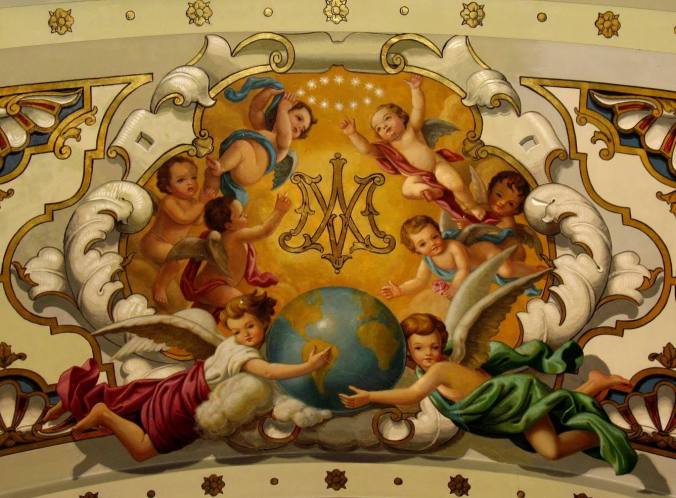
The Holy Name of Mary in a church mural. (Source)

The feast we celebrate today has moved around a bit. It only came to the kalendar in 1683, when Pope Innocent XI wished to commemorate the liberation of Vienna from the Ottoman siege. He originally placed it on the 17th, the Octave Day of Our Lady’s Nativity. The feast was later transferred to the 15th, and then done away with altogether by Archbishop Bugnini in one of his more obnoxious acts of liturgical vandalism. Pope St. John Paul II restored it in 2002, and now we celebrate it as an optional memorial on September 12th.

Accordingly, it behooves us to ponder the writings of the saints. For as it is a maxim in theology that we are led by lower things to higher, so we may pursue the heights of Our Lady’s throne only by the steps which our closer contemporaries have tread before us. Besides, while the feast may be relatively new in the life of the Church, the devotion it honors is much older. There is consequently much to choose from.

Consider the words of St. Bernard of Clairvaux.

Z_CAP005_052

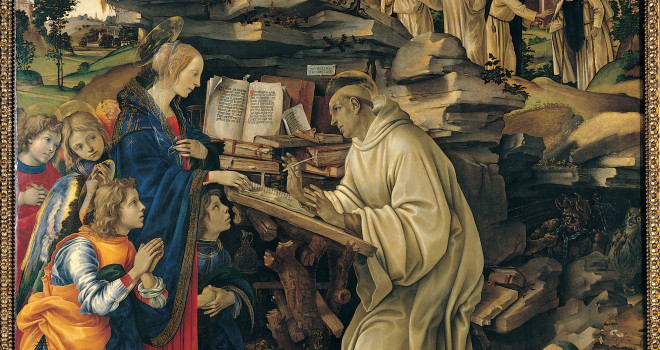
Apparition of the Virgin to St. Bernard, Detail. Filippino Lippi, 1480. (Source)

“And the Virgin’s name was Mary.” Let us speak a little about this name, which is said to mean “star of the sea,” and which so well befits the Virgin Mother. Rightly is she likened to a star. As a star emits a ray without being dimmed, so the Virgin brought forth her Son without receiving any injury. The ray takes naught from the brightness of the star, nor the Son from His Mother’s virginal integrity. This is the noble star risen out of Jacob, whose ray illumines the whole world, whose splendor shines in the heavens, penetrates the abyss, and, traversing the whole earth, gives warmth rather to souls than to bodies, cherishing virtues, withering vices. Mary is that bright and incomparable star, whom we need to see raised above this vast sea, shining by her merits, and giving us light by her example.

All of you, who see yourselves amid the tides of the world, tossed by storms and tempests rather than walking on the land, do not turn your eyes away from this shining star, unless you want to be overwhelmed by the hurricane. If temptation storms, or you fall upon the rocks of tribulation, look to the star: Call upon Mary! If you are tossed by the waves of pride or ambition, detraction or envy, look to the star, call upon Mary. If anger or avarice or the desires of the flesh dash against the ship o f your soul, turn your eyes to Mary. If troubled by the enormity of your crimes, ashamed of your guilty conscience, terrified by dread of the judgment, you begin to sink into the gulf of sadness or the abyss of despair, think of Mary. In dangers, in anguish, in doubt, think of Mary, call upon Mary. Let her name be even on your lips, ever in your heart; and the better to obtain the help of her prayers, imitate the example of her life:  “Following her, thou strayest not; invoking her, thou despairest not; thinking of her, thou wanderest not; upheld by her, thou fallest not; shielded by her, thou fearest not; guided by her, thou growest not weary; favored by her, thou reachest the goal. And thus dost thou experience in thyself how good is that saying: ‘And the Virgin’s name was Mary.'”

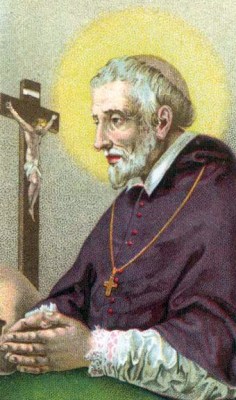
alphonsus_cross

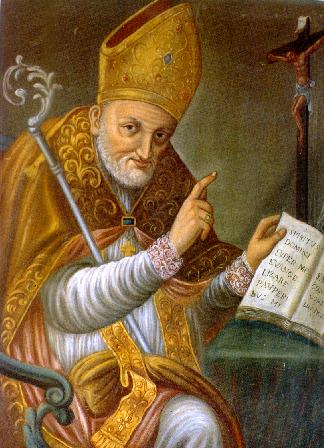
St. Alphonsus Liguori, author of The Glories of Mary. (Source)

St. Alphonsus Liguori, that Mariologist who so scrupulously records the thoughts of prior saints, affirms the antiquity and holiness of this devotion.

To begin with life, the holy anchorite, Honorius, says, that the name of Mary is [full] of all divine sweetness. And the glorious St. Anthony of Padua attributes to the name of Mary the same sweetness as St. Bernard attributed to the name of Jesus. The name of Jesus, said the latter, the name of Mary, said the former, is joy to the heart, honey to the mouth, melody to the ear of their devoted servants. It is related in the life of the venerable Father John Ancina, Bishop of Saluzzo, that when he pronounced the name of Mary, he experienced so great a sensible sweetness that he even tasted it on his lips. We also read that a certain woman in Cologne told the Bishop Marsillius, that whenever she pronounced the name of Mary she perceived in her mouth a taste sweeter than honey. Marsillius made the trial, and he also experienced the same sweetness. We read in the holy Canticles, that at the Assumption of the Virgin, the angels three times asked her name: “Who is she that goeth up by the desert as a pillar of smoke?” “Who is she that cometh forth as the morning rising?” And in another: “Who is this that cometh up from the desert, flowing with delights?” Richard of St. Laurence inquires why the angels so often asked the name of this queen, and answers: The sound of the name of Mary was so sweet to the angels, and they repeated the question that they might hear it repeated also.

But I do not hear speak of this sensible sweetness, since it is not commonly granted to all, but I speak of the salutary sweetness of consolation, love, joy, confidence, and strength, which the name of Mary universally gives to those who, with devotion, pronounce it. Speaking on this subject, Francone the Abbot says, that next to the holy name of Jesus, the name of Mary is so rich in blessings, that no other name is uttered on earth or in heaven from which devout souls receive so much grace, hope, and sweetness. For the name of Mary, he goes on to say, contains in itself something admirable, sweet, and divine, which, when it meets a friendly heart, breathes into it an odor of holy sweetness. And the wonder of this great name is, he concludes, that if heard a thousand times by the lovers of Mary, it is always heard as new, the sweetness they experience in hearing it spoken being always the same.

The blessed Henry Suso, also speaking of this sweetness, says, that in pronouncing the name of Mary, he felt his confidence so much increased, and his love so joyfully enkindled, that amidst the joy and tears with which he pronounced the beloved name, he thought his heart would have leaped from his mouth ; and he affirmed that this most sweet name, as honeycomb, melted into the depths of his soul. Whereat he exclaims: Oh most sweet name! oh Mary, what must thou thyself be, if thy name alone is so lovely and sweet?

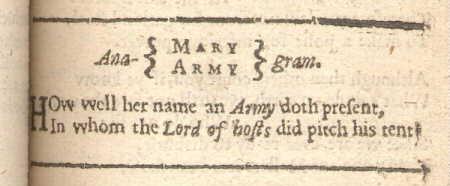
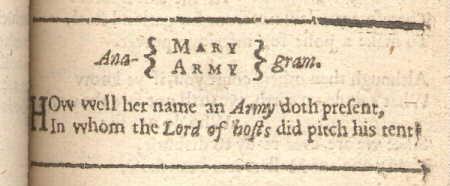
Nor is this devotion entirely absent outside the Church of Rome. One of George Herbert’s better epigrams runs as follows:

HerbertAnagram

“Anagram,” from The Temple. (Source)

Incidentally, the aforementioned Bishop of Saluzzo, Bl. John Juvenal Ancina, was a founder of the Naples Oratory and a personal disciple of St. Philip Neri. Can there be any doubt that the bishop learned his devotion at the side of his spiritual father?

img-Blessed-Giovanni-Giovenale-Ancina

Bl. Juvenal Ancina of the Oratory. (Source)

And we should learn it in turn from the saints who have gone before us, those holy men and women who now stand rejoicing in an eternal contemplation of Our Lady’s beatific name.

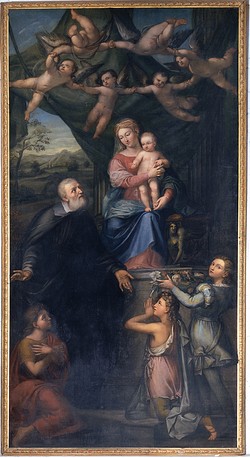
StPhilipNeriExhortinghtheYouth

St. Philip Neri Exhorting the Youth to Pray to the Virgin, Pala Pietro. A good metaphor for how the saints instruct us in Marian devotion. (Source)