St. Alphonsus on Christ’s Suffering

S_Alfonso02.jp

May St. Alphonsus pray for us always. (Source)

This Wednesday’s spiritual teacher is St. Alphonsus Liguori, Doctor of the Church and founder of the Redemptorists. He was known for his moral theology as well as his Mariological and devotional writings. Here is something Lenten by St. Alphonsus drawn, paradoxically, from The Incarnation, Birth, and Infancy of Jesus Christ (trans. 1927). The bibliographic information can be found on the page from which I took this text. 

The Desire that Jesus Had to Suffer for Us

Baptismo habeo baptizari; et quomodo coarctor, usquedum perficiatur?
“I have a baptism wherewith I am to be baptized; and how am I straitened until it be accomplished?”
—Luke, xii. 50.

I.
Jesus could have saved us without suffering; but He chose rather to embrace a life of sorrow and contempt, deprived of every earthly consolation, and a death of bitterness and desolation, only to make us understand the love which He bore us, and the desire which He had that we should love Him. He passed His whole life in sighing for the hour of His death, which He desired to offer to God, to obtain for us eternal salvation. And it was this desire which made Him exclaim: I have a baptism wherewith I am to be baptized; and how am I straitened until it be accomplished? He desired to be baptized in His Own Blood, to wash out, not, indeed, His Own, but our sins. O infinite Love, how miserable is he who does not know Thee, and does not love Thee!

II.
This same desire caused Him to say, on the night before His death, With desire I have desired to eat this pasch with you. By which words He shows that His only desire during His whole life had been to see the time arrive for His Passion and death, in order to prove to man the immense love which He bore him. So much, therefore, O my Jesus, didst Thou desire our love, that to obtain it Thou didst not refuse to die. How could I, then, deny anything to a God Who, for love of me, has given His Blood and His life?

III.
St. Bonaventure says that it is a wonder to see a God suffering for the love of men; but that it is a still greater wonder that men should behold a God suffering so much for them, shivering with cold as an infant in a manger, living as a poor boy in a shop, dying as a criminal on a Cross, and yet not burn with love to this most loving God; but even go so far as to despise this love, for the sake of the miserable pleasures of this earth. But how is it possible that God should be so enamoured with men, and that men, who are so grateful to one another, should be so ungrateful to God?

Alas! my Jesus, I find myself also among the number of these ungrateful ones. Tell me, how couldst Thou suffer so much for me, knowing the injuries that I should commit against Thee? But since Thou hast borne with me, and even desirest my salvation, give me, I pray Thee, a great sorrow for my sins, a sorrow equal to my ingratitude. I hate and detest, above all things, my Lord, the displeasure which I have caused Thee. If, during my past life, I have despised Thy grace, now I value it above all the kingdoms of the earth. I love Thee with my whole soul, O God, worthy of infinite love, and I desire only to live in order to love Thee. Increase the flames of Thy love, and give me more and more love. Keep alive in my remembrance the love that Thou hast borne me, so that my heart may always burn with love for Thee, as Thy heart burns with love for me. O burning heart of Mary, inflame my poor heart with holy love.

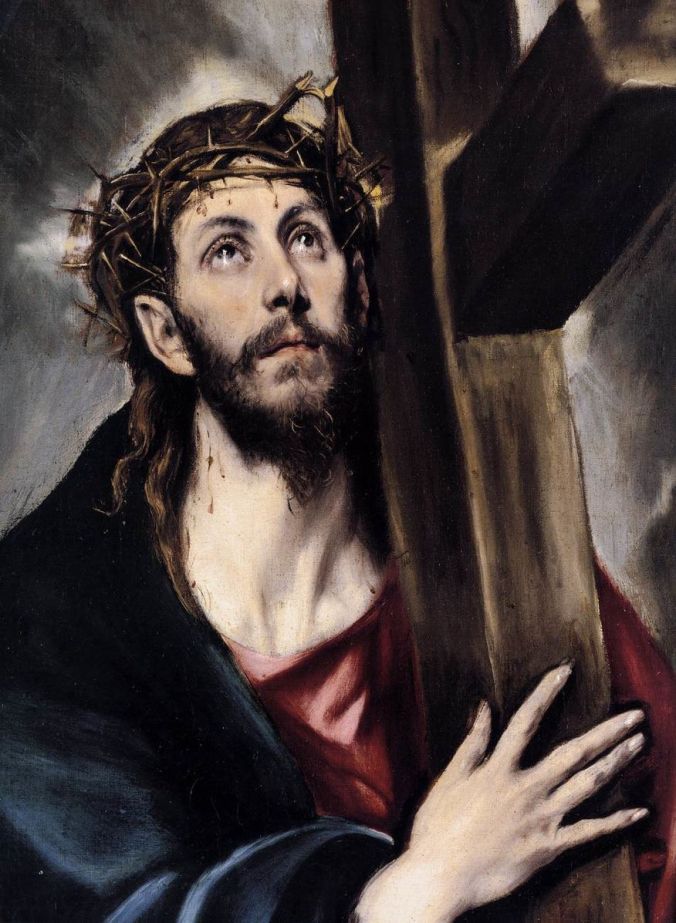
Christ_Carrying_the_Cross_1580.jpg

Detail of Christ Carrying the Cross, El Greco, 1580. (Source)

Newman on the Sorrowful Mother

slovakia_lady_sorrows

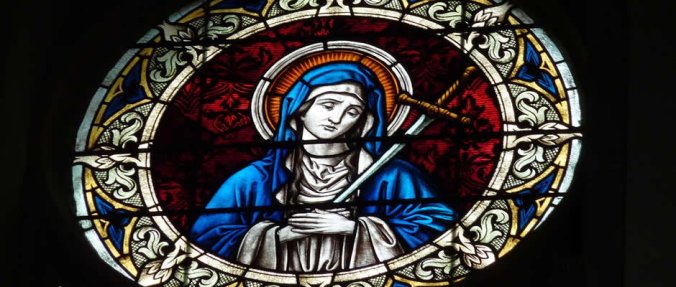
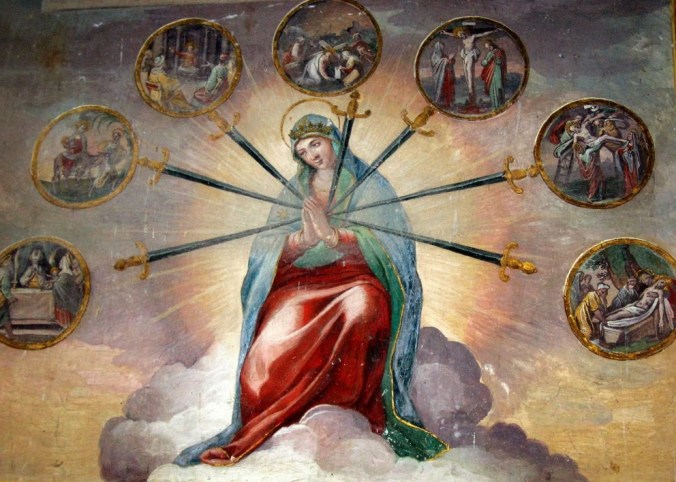
Our Lady of Sorrows, Pray for Us. (Source)

Continuing my Lenten series of Wednesday spiritual masters, here are two meditations from Newman on Our Lady’s dolours. They are taken from his Meditations and Devotions. We should never forget the terrible suffering of Our Lady at the foot of the cross. Her unique woes rendered her the Co-Redemptrix of Mankind.

Mary is the “Regina Martyrum,” the Queen of Martyrs

Why is she so called?—she who never had any blow, or wound, or other injury to her consecrated person. How can she be exalted over those whose bodies suffered the most ruthless violences and the keenest torments for our Lord’s sake? She is, indeed, Queen of all Saints, of those who “walk with Christ in white, for they are worthy;” but how of those “who were slain for the Word of God, and for the testimony which they held?”

To answer this question, it must be recollected that the pains of the soul may be as fierce as those of the body. Bad men who are now in hell, and the elect of God who are in purgatory, are suffering only in their souls, for their bodies are still in the dust; yet how severe is that suffering! And perhaps most people who have lived long can bear witness in their own persons to a sharpness of distress which was like a sword cutting them, to a weight and force of sorrow which seemed to throw them down, though bodily pain there was none.

What an overwhelming horror it must have been for the Blessed Mary to witness the Passion and the Crucifixion of her Son! Her anguish was, as Holy Simeon had announced to her, at the time of that Son’s Presentation in the Temple, a sword piercing her soul. If our Lord Himself could not bear the prospect of what was before Him, and was covered in the thought of it with a bloody sweat, His soul thus acting upon His body, does not this show how great mental pain can be? and would it have been wonderful though Mary’s head and heart had given way as she stood under His Cross?

Thus is she most truly the Queen of Martyrs.

VirgendelosDolores

Virgen de los Dolores, Private Collection, Puebla, Mexico. (Source)

***

Mary is the “Vas Honorabile,” the Vessel of Honor

St. Paul calls elect souls vessels of honour: of honour, because they are elect or chosen; and vessels, because, through the love of God, they are filled with God’s heavenly and holy grace. How much more then is Mary a vessel of honour by reason of her having within her, not only the grace of God, but the very Son of God, formed as regards His flesh and blood out of her!

But this title “honorabile,” as applied to Mary, admits of a further and special meaning. She was a martyr without the rude dishonour which accompanied the sufferings of martyrs. The martyrs were seized, haled about, thrust into prison with the vilest criminals, and assailed with the most blasphemous words and foulest speeches which Satan could inspire. Nay, such was the unutterable trial also of the holy women, young ladies, the spouses of Christ, whom the heathen seized, tortured, and put to death. Above all, our Lord Himself, whose sanctity was greater than any created excellence or vessel of grace—even He, as we know well, was buffeted, stripped, scourged, mocked, dragged about, and then stretched, nailed, lifted up on a high cross, to the gaze of a brutal multitude.

But He, who bore the sinner’s shame for sinners, spared His Mother, who was sinless, this supreme indignity. Not in the body, but in the soul, she suffered. True, in His Agony she was agonised; in His Passion she suffered a fellow-passion; she was crucified with Him; the spear that pierced His breast pierced through her spirit. Yet there were no visible signs of this intimate martyrdom; she stood up, still, collected, motionless, solitary, under the Cross of her Son, surrounded by Angels, and shrouded in her virginal sanctity from the notice of all who were taking part in His Crucifixion.

KlauberDolorosa

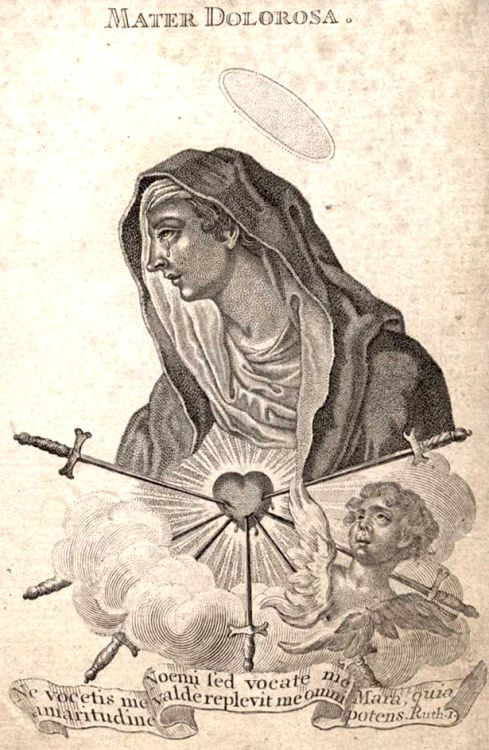
Mater Dolorosa, Klauber. (Source)

Elsewhere: An Anglo-Catholic Designer You Should Know

Screen Shot 2018-03-13 at 1.40.54 AM.png

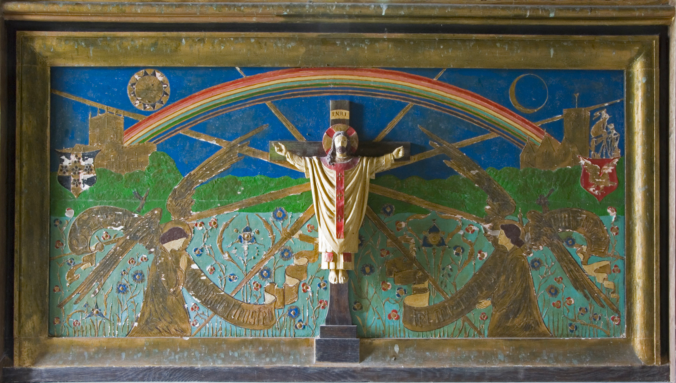
A reredos by John Coates-Carter. (Source)

Over at Liturgical Arts Journal, you will find a very good, brief introduction to an ecclesiastical architect of the Arts and Crafts Movement, John Coates-Carter. He is most famous for his design of the (extraordinary) abbey on Caldey Island. Most of his work can be found in Wales. Perhaps because of his regional interest, I had never heard of him before. Yet his altarpieces are about as Anglo-Catholic as you can get. They have all of the features I noted in my article on AC aesthetics; they’re earthy, colorful, idealized, with a hint of the illustrative verging on the cartoonish. And most importantly, the are deeply human. Anglo-Catholicism restored the human face to British ecclesiastical art. We can see that tendency in the luminous angels and vibrant peasants that appear in Coates-Carter’s sacral art. Do go have a look.

CaldeyIsland

Caldey Abbey, designed by John Coates-Carter. (Source)

A Letter on the Face of God

HolyFaceMosaic

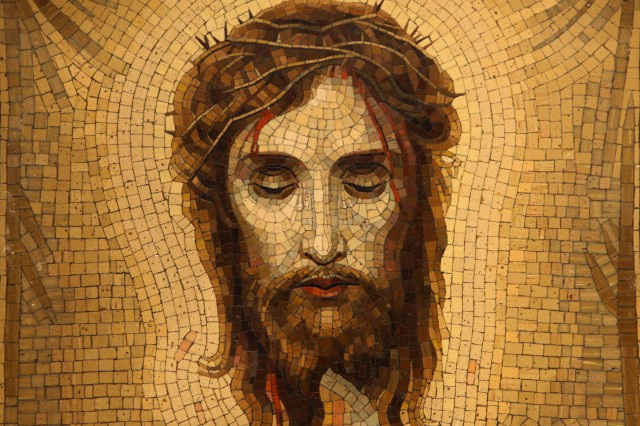
The Holy Face of Christ. (Source)

Dear Miriam,

Forgive me for my delay in replying to your message. You pose an excellent question, one that deserves an honest and well-considered answer. Indeed, I am not sure that I’m entirely qualified to speak on the matter. Not being a Biblical scholar, I can’t discuss the critical questions of authorship, Hebrew grammar, and culture that could be so useful. Alas. Nonetheless, I shall try to tell you what I understand the verse to mean, and why I saw fit to use it.

You ask me about what the Priestly Blessing meansespecially what we are to understand by those mysterious words, “The Lord make his face shine upon thee, and be gracious unto thee: The Lord lift up his countenance upon thee, and give thee peace” (Numbers 6:25-26 KJV). You are right to note that there is something odd about this passage.

I believe the prayer is best understood through meditation. Let us look first at the beginning and bulk of the passage:

The Lord make his face shine upon thee, and be gracious unto thee: The Lord lift up his countenance upon thee…

What do we learn from these words? What does it mean to say, however poetically, that God has a “face,” a “countenance?”

First, it means that God is personal. The God of Abraham, Isaac, and Jacob is not an abstract, nameless force. He is not the Tao of the Chinese mysticsor not just that. Rather, He is someone, a who, an infinite yet utterly unique spirit. This truth entails another; God is relational. The face is the chief organ and sign by which we communicate with other people. The full range of our emotions find expression in the human face. The face becomes a symbol or synecdoche of our individual souls. It is the way we share our hearts. It is the bridge between our interiority and the other. Through speech, a kiss, an exchange of glances, the face mediates our personhood and thus becomes the location of communion.

The use of the word “countenance” in English sums up all these ideas, with one rather startling implication. God Almighty desires to be in a relationship with us. More than that, He wishes to dwell with us. The words of the blessing are not that of a God who will reign remotely. If the metaphor of the “face” suggests personality and relationship, it also suggests presence. God wants us to be wholly His, that He may be wholly ours. That is why He goes so far as to establish multiple, connected covenants with Adam, Noah, Abraham, Moses, and David.

But covenants, like great love stories, are exclusive. You are right to point out the negative implication in the verse. If we pray for God to turn His face towards us, then surely God’s face could be turned away from us as well? I think the certain answer of the Bible, not to mention ordinary human experience, is yes. The ancient Israelites believed that they were a privileged, priestly people, subject to a totally unique relationship with God. Yet the whole of the Old Testament’s historical and prophetic corpus also shows that the Nation of Israel repeatedly caused God to “turn His face” away from them, not in loving them less, nor in breaching His covenant, but in permitting them to suffer chastisements that they might return to Him. The Holy only communes with the holy; God cannot abide with sin. And the Israelites often sinned. We all do. Speaking from my own life, I can testify that mortal sin is a terrible thing. To fall away from the face of God, to want to hide from His face as Adam did in the Garden, to feel Him turn His holy face away from yousuch is the interior darkness and desolation wrought by sin.

Yet the ground of your questionwhy God’s face would be turned away from anyone reveals that whether you realize it or not, you already have a basically Christian idea of God. To the ancient Jews who composed the Priestly Blessing for the liturgies of Tabernacle and Temple, the Face of God only turned towards the Nation of Israel. The idea that God loves all, and loves them unconditionally, is a notion that did not exist anywhere before the coming of Christ.

Indeed, the prayer receives its perfect answer and fulfillment when God takes on a human face. Jesus Christ is the Face of God, a divine person who wishes to be in an eternal and perfect communion with all men. That is why He is called Emmanuel, “God with us.” He is our eternal high priest (Hebrews 7:23-28; 9:11-14; 10:10-14).

And as our high priest, He has fulfilled the Priestly Blessing in three ways, all of which were unimaginable when it was written.

First, in His coming. In Christ, God has turned His face towards usin the manger at Bethlehem, in His ministry among the poor and sick, in His companionship with sinners, in His Transfiguration, in His ceaseless prayer for us, in His cruel and unjust death upon the cross, and in His glorious Resurrection and Ascension.

Secondly, in the heart of the Godhead. By assuming human nature, God the Son becomes a human. By His Incarnation, Death, Resurrection, and Ascension into Heaven, He has brought a human face into the inner life of the Most Holy Trinity. God the Father gazes upon the human face of His Son, and He desires to see all mankind in and through that face. God the Spirit, eternal love, is born forth out of this mutual gaze. The Father and the Son only behold each other in the absolute love of the Spirit.

But what is the fruit for us today? The rest of the prayer tells us:

…and give thee peace.

Peace is not the absence of suffering, but the absence of disturbance. The peace of Christ, the peace “which passeth all understanding” is not to be taken as earthly ease and comfort (Philippians 4:7 KJV). That would merely be the false and facile peace of the world. The peace of God is a foretaste of Heaven, an inner rock upon which we may stand when suffering assails us, a seed of the Kingdom that may render us more perfect imitators of Christ. With the peace of God in our hearts, we may hope to know the true joy that, paradoxically, only grows from the cross. This peace is not a quiet meekness. It is the liberating freedom and security that comes from the knowledge of His love. Peace does not paralyzeit propels. It makes us undertake great adventures for God. Why? Because true peace is communion with God.

That is why I made use of the prayer at the end of my “Letter on Loneliness.” It occurred to me that the torment of loneliness is in some way redeemed if we remember the presence of the God who is love, and thus attain to His peace.

I don’t believe we can hope for the fullness of that peace without the sacraments, especially the Eucharist. It is simply impossible to be a Christian without the Eucharist. Any grace, any glory, any goodness in the world is only granted and sustained by Christ present with us in the Most Holy Sacrament of the Altar. Indeed, the graces of all the other sacraments flow from the Eucharist, since it is Christ Himself.

And it is in the Eucharist that we find the third way that Christ has fulfilled the Priestly Blessing and extended its meaning to all peoples and all epochs. In the Eucharist, we once again come face to face with the God of Israelquite literally. His Eucharistic Face can be found in any Catholic Church on earth. Go to a service of Benediction. Chant hymns of adoration as the incense flies up like a ghost into the shadowy heights of the sanctuary. Let your soul rise with it, high above the little lights of the candles that line the altar. Then, as the bell rings and the priest lifts the Host, you will see God. Or at least, you will see His veil. He hides Himself under the sight of mere matter. No matter what, He will see you.

Better yet, go to Mass. Go to the Easter Vigil. Go on any Sunday. There, you will not only see God, but hundreds of perfectly ordinary people communing with Him in the most intimate way imaginablebody and soul. That holy act is the true fulfillment of the Priestly Blessing. It is the seal and crown of all the covenants. Not everyone in the world partakes of itbut happy are those who do! They alone know the Peace that was promised, the Peace that is He.

Forgive me if I have rambled. One could, in theory, write whole volumes on the verses you have asked me about. I am sure someone with more learning and a deeper life in Christ could give you an altogether better explanation. But what I have written is drawn ex corde meo. I hope, at the very least, that I’ve answered your question. I’d be happy to continue discussing the matter.

Until then, I pray that the Good Lord blesses you in all your works and ways.

In Christ,

Rick
Fénelon on the Return to God

Fenelon

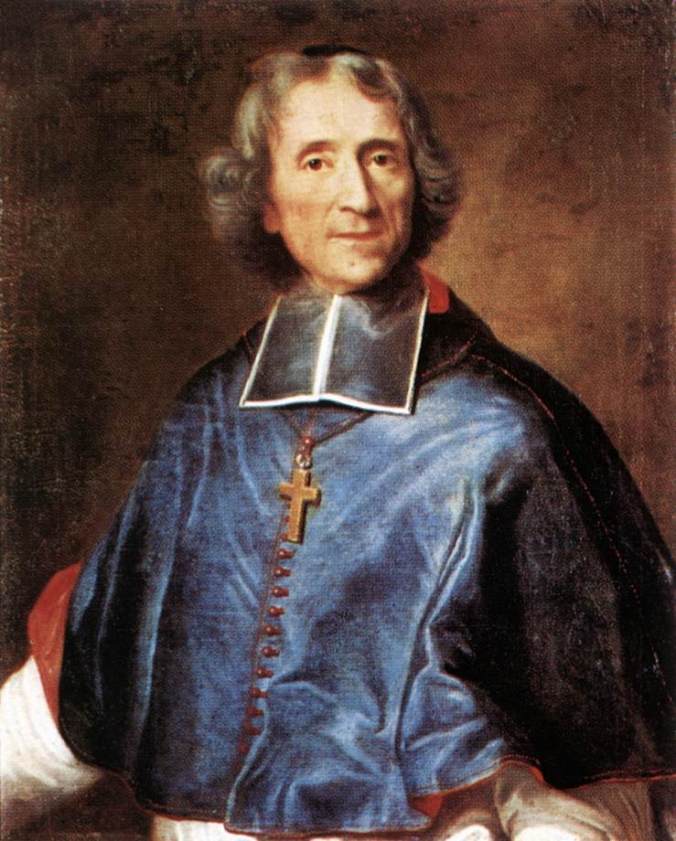
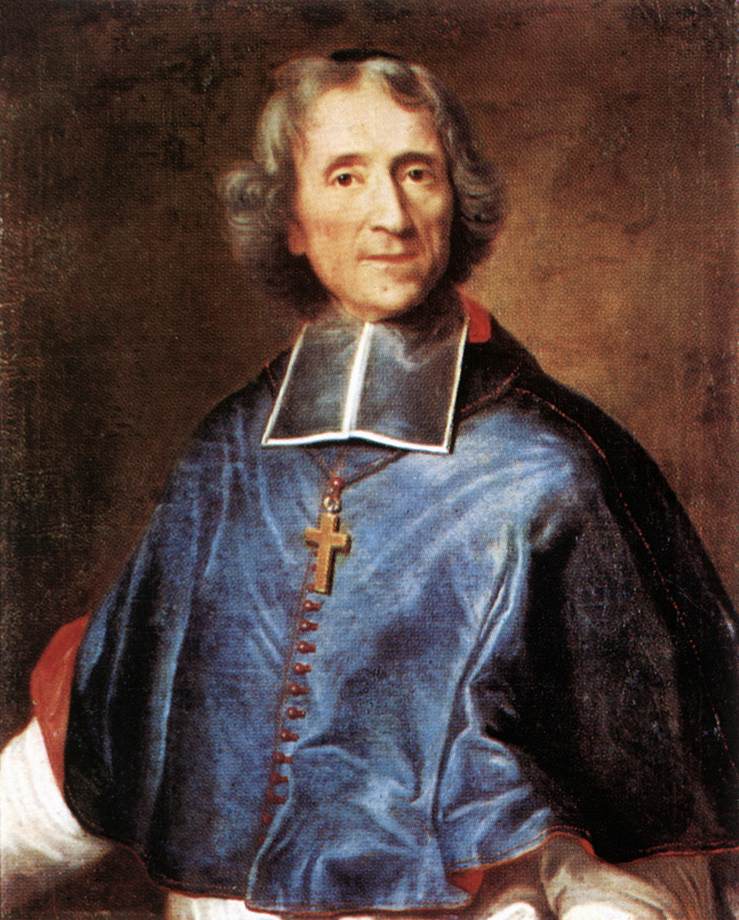
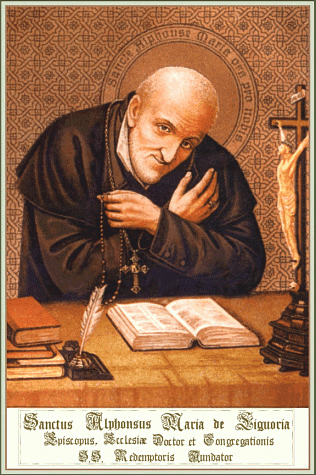
François de Salignac de la Mothe-Fénelon, Archbishop of Cambrai in the age of Louis XIV (Source)

Continuing my Lenten series of Wednesday spiritual masters, I present to you here a letter by Archbishop Fénelon to an officer, often identified as the Chevalier Colbert. The translation I am using comes from 1877, but I would also recommend to you the version by fellow Wahoo Chad Helms in the 2006 Paulist Press edition of Fénelon‘s Selected Writings. It struck me by its beauty and force of feeling, as well as its Lenten spirit. 

You have forgotten me, sir, but it is impossible for me to forget you. Something in my heart continually recalls you, and makes me want to hear of you, as I have more especially felt during the campaign and its perils. Your forgetfulness only makes me feel the more. The friendship you showed me once is of a kind never to be forgotten; and when I recall some of our conversations, my eyes are filled with tears. I trust that you remember how pleasant and hearty they were. Have you found anything since then more acceptable than God? Have the truths which then satisfied you failed? Is the pure light of the kingdom of God quenched? Has the world’s nothingness acquired some fresh value? Is that which was but a wretched dream not still the same? Is the God to Whom you poured out your soul, and Who filled you then with a peace beyond all earthly ken, no longer to be loved? Has the eternal beauty, ever so fresh to pure eyes, no longer charms for you? Is that source of heavenly joy, of unmarred happiness, which springs from the Father of Mercies and God of Consolation, dried up? No, for He has filled me with an urgent desire to recall you to Him. I cannot resist it: for long I have hesitated, and said to myself that I should only worry you. Even as I began this letter, I laid down a limit of discretion to myself; but after the first few words, my heart burst its bounds. Even should you not answer, or should think me absurd, I should not cease to speak sorrowfully to God of you, when unable to speak to you yourself any more. Once more, sir, forgive me if I exceed all due limits. I know it as well as you, but I feel irresistibly urged: God has not forgotten you, since He stirs up so eager a desire for your salvation in me.

What does He ask of you, save to be happy? Have you not realised that one is happy in loving Him? Have you not felt that there is no other real happiness, whatever excitement may be found in sensual pleasures, apart from Him? Since, then, you know where to find the Fountain of Life, and have of old drunk thereof, why would you seek foul, earthly cisterns? Bright, happy days, lighted up by the soft rays of loving mercy, when will ye return? When will it be given me to see this child of God reclaimed by His powerful Hand, filled with His favour, and the blessings of His holy Feast; causing joy in Heaven, despising earth, and acquiring an inexhaustible fund of humility and fervour from his experience of human frailty?

1280px-Rembrandt_Harmensz_van_Rijn_-_Return_of_the_Prodigal_Son_-_Google_Art_Project2

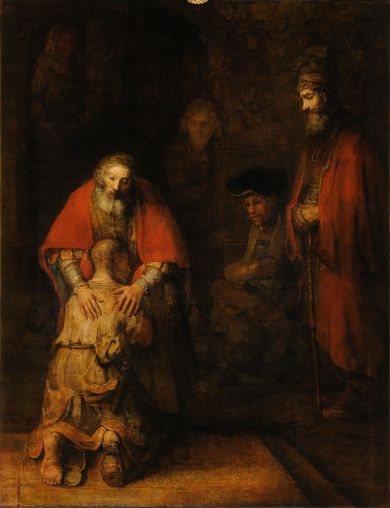
The Return of the Prodigal Son, Rembrandt van Rijn, c. 1661-69. (Source)

I am not dictating what you should do. God will Himself make that plain to you according to your needs, so long as you hearken inwardly to Him, and despise boldly that which is despicable. Do whatever you will, only love God, and let His Love, revived in your heart, be your guide. I have often thanked Him for having shielded you amid the perils of this campaign, in which your soul was even more exposed to risk than your body. Many a time I have trembled for you: put an end to my fears, and fill my heart with gladness. None can possibly be greater than to find myself once more with you in the house of God, united in heart and soul, looking together to one glorious hope, and the Coming of our Great God, Who will fill us with the flood of His pure delights. Your ears are not yet closed to the sublime language of truth, your heart is made to feel its charms. “Taste and see” the pleasant bread daily spread for us at our Father’s table. Why have you forsaken it? With such support, who can fear that anything else will be lacking? Even if you do not feel strong enough to regain the happy position where you were, at least answer me, at least do not shun me. I know what it is to be weak; I am a thousand times weaker than you. It is very profitable to have realised what one is; but do not add to that weakness, which is inseparable from human nature, an estrangement from the means of strength. You shall regulate our intercourse; I will only speak to you of such things as you are willing to hear. I will keep God’s secret in my heart, and shall be always, with unchanging affection and regard, etc.


A Benedictine Prayer to St. Philip Neri in Lenten Time

gueranger4-150dpi

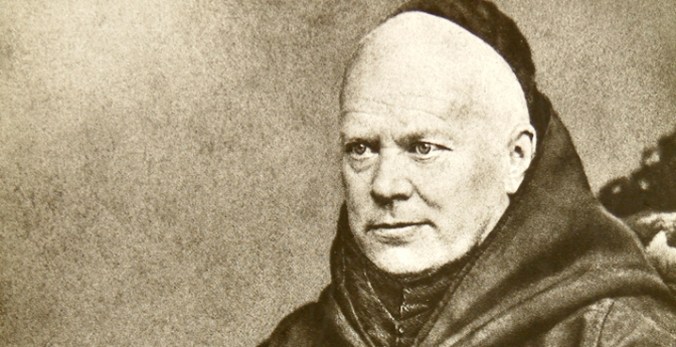
Ven. Dom Prosper Guéranger. (Source)

Many of my readers will know the Venerable Dom Prosper Guéranger (1805-1875) for his monumental work of sacramentology and liturgical exegesis, The Liturgical Year. I happened to be perusing a 1908 French edition of the text and came upon Dom Guéranger’s homage to St. Philip Neri in Volume 3 of his Easter writings. Naturally, this discovery was of great interest to me, as I have written before on the similarities between the Oratorian and Benedictine vocations. I thus present to you my own translation of the prayer, found on pages 548-50 in the edition I was using. I hope it may be thought a fair translation of the great monk’s words. At any rate, I have tried to render his prayer in an elevated style worthy to the subject.

Thou didst love the Lord Jesus, O Philip, and thy whole life was nothing but a continuous act of love; but thou didst not wish to enjoy the highest good alone. All thine efforts tended to make Him known by all men, such that all might love Him with thee and thus reach their supreme end. For forty years, thou wast the indefatigable apostle of the holy city, and nothing could subtract from the action of the divine fire that burned in thee. We who are the posterity of those who heard thy words and admired the celestial gifts in thee, we dare to beg of thee to cast thy gaze upon us as well. Teach us to love our Jesus resurrected. It does not suffice for us to adore Him and to rejoice in His triumph; we must love Him: for the train of His mysteries from His Incarnation to His Resurrection have no other aim but revealing to us, in an ever growing light, His divine kindness. It is by loving him ever more that we shall succeed in elevating ourselves to the mystery of His Resurrection, which fulfills in us the revelation of all the riches of His heart. The more He lifts Himself into the new life that He won in leaving His tomb, the more He appears full of love for us, and the more He desires that our hearts should be joined with His. Pray, O Philip, and beg that “our heart and our flesh might quake for the living God” [Ps. 83:2]. After the mystery of Easter, introduce us to that of the Ascension; dispose our hearts to receive the divine Spirit of Pentecost; and when the august mystery of the Eucharist shines before our eyes with all its fires in the solemnity that approaches, thou, O Philip, who didst celebrate it one last time here below, who didst rise at the end of the day to that eternal rest where Jesus shows Himself unveiled, do thou prepare our souls to receive and to taste “the living bread which giveth life to the world” [John 6:33].

The sanctity that shone in thee, O Philip, had as its character the momentum of thy soul towards God, and all those who approached thee soon participated in this disposition that alone could respond to the call of the divine Redeemer. Thou didst know that thou took hold of souls, and thou drovest them to perfection by the way of trust and generosity of heart. In this great work thy method was never to have any method at all, imitating the Apostles and the ancient Fathers, and thou didst trust in the virtue proper to the word of God. By thee the fervent frequenting of the sacraments reappeared as the surest sign of the Christian life. Pray for the faithful, and come to the aid of so many souls who grow restless and exhaust themselves in the paths that the hand of man hast traced, and that too often retard or prevent the intimate union of Creator and creature.

Thou didst most ardently love the Church, O Philip; and this love of the Church is the indispensable sign of sanctity. Thine elevated contemplation did not distract thee from the dolorous lot of this holy Bride of Christ, so tested in the century when thou wast born and died. The efforts of triumphant heresy in so many countries enkindled zeal in thy heart: obtain for us from the Holy Ghost this living sympathy for Catholic Truth that renders us sensible to its defeats and victories. It does not suffice for us to save our souls; we must desire with ardor and aid with all our means the advancement of the Reign of God on earth, the extirpation of heresy, and the exaltation of our mother the holy Church: it is in this condition that we are children of God. By thine examples, O Philip, inspire in us this ardor by which we must totally associate ourselves with the sacred interests of our common mother. Pray as well for the Church Militant which counted thee in her ranks as one of her best soldiers. Serve valiantly the cause of Rome, which holds as an honor the debt owed to thee for so many of thy services. You sanctified her during thy mortal life; hallow her again and defend her from heaven on high.

sc1119.jpg

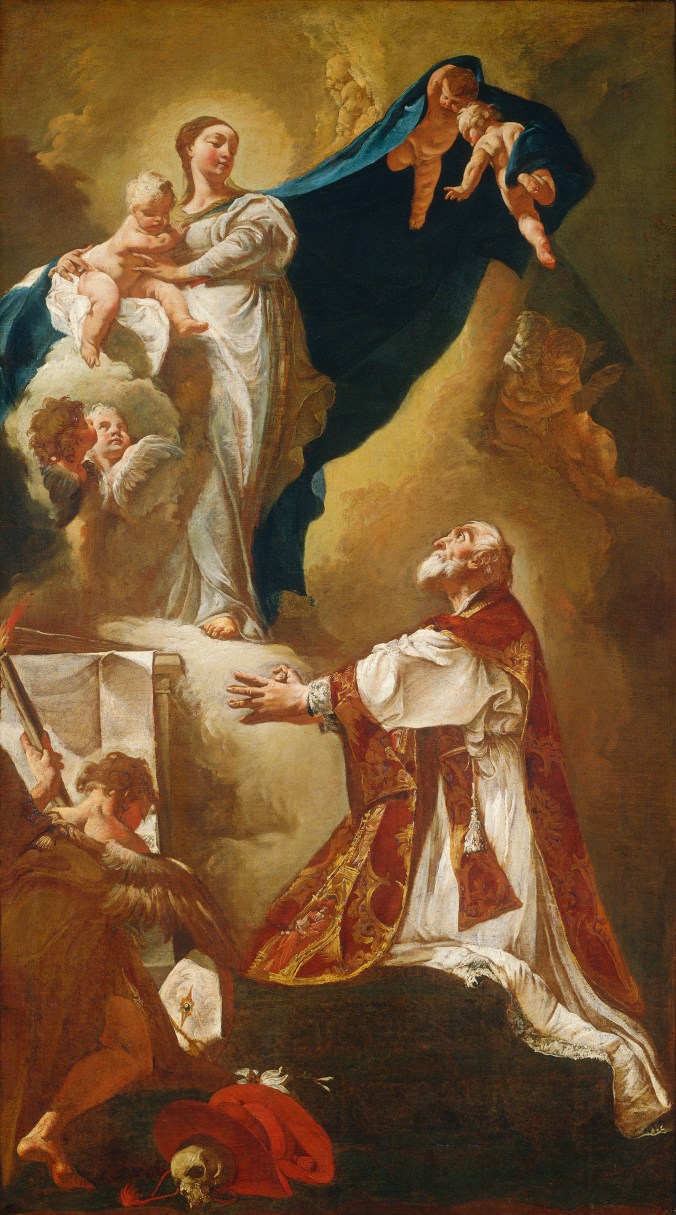
Madonna and Child Appearing to St. Philip Neri, Giovanni Battista Piazzetti, c. 1725. (Source)


A Prayer of Union with the Will of God

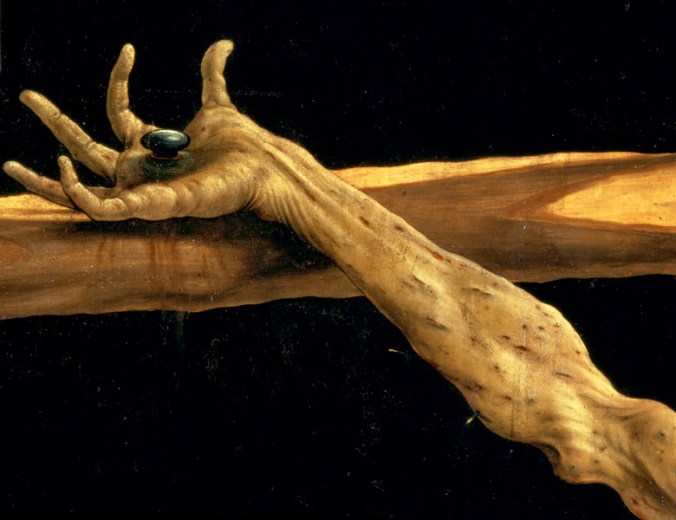
Crucifixion from the Isenheim Altarpiece, detail of Christ's right hand, c.1512-16 (oil on panel)

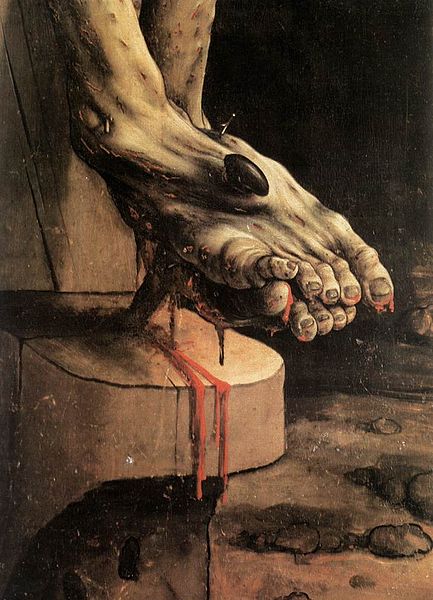
From the Isenheim Altarpiece of Matthias Grünewald. (Source)

Let me be Thy glove, O Lord,
that, acting not but by Thy hand,
I may be kept from the ways and works of evil.
Gather up all my five senses
unto Thee
as so many Providential fingers.
Let my heart be pierced with the wound
of Thy priestly palm.
So bound to Thee, I will fear not
for my salvation and everlasting bliss.
Through Our Lord Jesus Christ.

Amen.

Elsewhere: A Blog on Saintly Cadavers

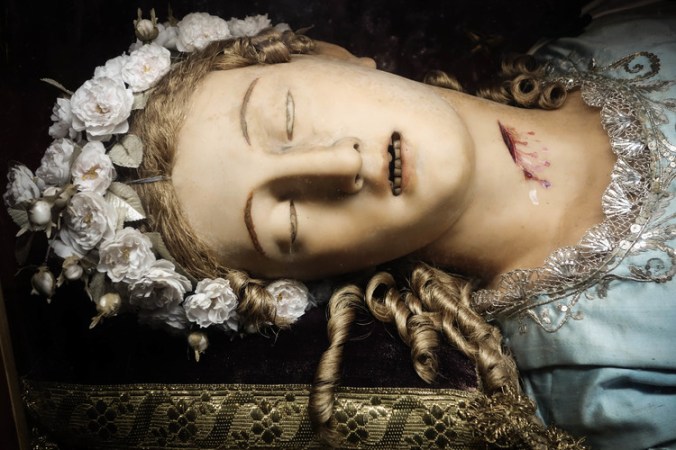
SantaVittoria.jpg

A photograph of Santa Vittoria by Elizabeth Harper. (Source)

A friend has just brought to my attention a blog entitled All the Saints You Should Know. It’s run by someone named Elizabeth Harper, a scholar and photographer based in Los Angeles. Her work is guided by three principles:

  • I believe Catholic churches are memory theaters where nature, science, arts, humanity, math, politics, and the divine mingle in miniature. There’s a wealth of knowledge locked inside sacred objects, though it’s often hidden in plain sight.
  • I’ve found that the Catholic comfort with death and death imagery is life-affirming. It offers believers and skeptics alike an important cultural reference that opposes modern death denial.
  • I love to learn about the past. I love it more when the past teaches me about the present.

These are all sound and salutary beliefs, and the blog is truly beautiful. If you’re like me and find joy in all things morbid (and all things Catholic, while we’re at it), you will no doubt peruse Ms. Harper’s work with as much pleasure as I do. As I’ve said before, the Sacred can be strange. Ms. Harper’s website is a welcome reminder of that fact.

Not a blog to be overlooked!

Maurice Zundel on Prayer

zundel-800x450

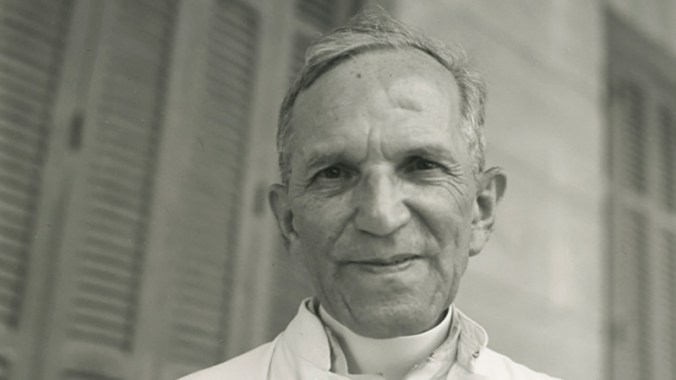
Maurice Zundel in old age. (Source)

Fr. Maurice Zundel was one of the great, if often-forgotten, theologians of the last century. Sometime student of Fr. Reginald Garrigou-Lagrange, he wrote various works of Catholic philosophy in conversation with existentialism, Protestantism, and personalism. This wide-ranging and erudite scholarship led soon-to-be-Saint Paul VI to call him “a mystical genius.” However, he is best known in the Anglophone world for his writing on the liturgy. This extract is taken from his great work, The Splendour of the Liturgy (1943), translated by Edward Watkin for Sheed & Ward. It comes from his chapter on “The Collect” (pg. 61-67). I was struck by this passage’s profound depths of wisdom as well as its light,  imaginative style.

Prayer is the soul’s breath, the creature’s fiat in response to the Creator’s in that mysterious exchange which makes us God’s fellow-workers. Its purpose is not to inform God of needs which He knows infinitely better than we do ourselves, nor to move His will to satisfy them, for His will is the eternal gift of infinite Love. Its sole object is to make us more capable of receiving such a gift, to open our eyes to the light, to throw open the portals of our heart too narrow to give access to the King of glory. There is no need to importune God for our happiness, for He never ceases to will it. It is we who place the obstacle in its way and keep his love at arm’s length.

Jerusalem, how often would I have gathered thy children, as a hen gathers her chickens beneath her wings, and thou wouldst not.

This surely is the most poignant expression of the Divine Tragedy: ‘I would, I, thy Lord and thy Godbut thou, thou wouldst not.’ If we place this complaint side by side with the text already quoted from the Apocalypse, ‘I stand at the door and knock,’ we must conclude that God always hears man’s prayer, that He is the eternal answer to prayer, and that it is man who too often refuses to hear God’s prayer.

And prayer is precisely the response to Love’s eternal invitation, which is made with an infinite regard for our freedom. It is, therefore, superfluous to ask whether every prayer is heard. It is heard if and in so far as it is a genuine prayer. For genuine prayer is the opening of the soul to the mysterious invasion of the Divine Presence, and it is completely summed up in the final appeal of the Apocalypse: ‘Come, Lord Jesus.’ (61-62)

Throughout the chapter, Zundel strikes what we might call a sophiological note. He approaches the most basic substance of the Christian lifeprayerand carries on to the Eschaton, to spiritual nuptials, and to illumination from on high.

It remains true that there is no conversation without answers, no marriage of love without mutual consent. And it is a marriage of love that is to be concluded between God and ourselves. In this marriage whose intimate union must continually grow until its flower unfolds in eternity, prayer is our assent. There is no need to put it into words. It may be confined to a silent adherence, a simple look in which we give our entire being a calm silence in which, without adding anything of her own, the soul listens to Him who utters Himself within her by His single Word. And all prayer tends towards this transparent passivity which exposes the diamond of our free will to the rays of the eternal light. We can pray without asking for anything and without saying anything, that God may express Himself the more freely…

It is ultimately for the sake of God that the soul desires her own Beatitude, that no obstacle may thwart His love, that the world may realise its spiritual vocation, and that throughout creation all may be yea, as all is yea in God. (62-64)

Zundel notes that the peculiar genius of the Liturgy is the way it uses human spiritual needs as launchpads for a “flight” into the eternal. The Collects crystallize this function in that they often speak of our human wants. Zundel writes:

But their very sobriety forbids us to stop at their verbal surface. The soul has but to let herself go and she is launched on the open sea voyaging over abysses of light and darkness, of sorrow and peace. They are more than prayers, they are sacraments of prayer, formulas that induce the essential prayer which we have attempted to describe. (64-65)

MassMeaning

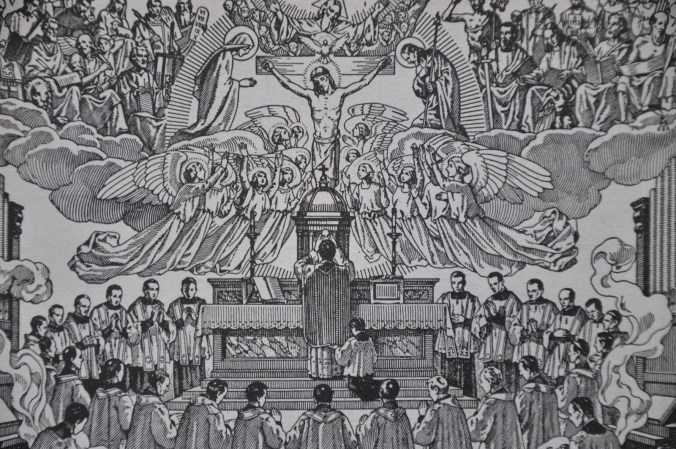
Would that we might be ever mindful of what is really taking place at every Mass! (Source)

Among Prayer-Book Anglicans, there used to be a very old custom of memorizing collects. I do wonder how many still keep it upcertainly, I don’t know of any Catholics who memorize collects. Imagine what would happen to our own spiritual lives, to say nothing of the Church militant, if we committed to learning a few by heart. If you’re looking for a beautiful English translation of the traditional collects, might I recommend a little volume published by W. Knott & Son. Otherwise, there’s another good alternative that came out around the same time. 

Fr. Faber on Unhappiness

Our Lady of Sorrows St Stefano

Our Lady of Sorrows, pray for us in this penitential season. (Source)

As we continue through Lent, I thought I might share some edifying words from various spiritual writers every Wednesday. This week’s writer is Fr. Faber. The passages are no doubt drawn from various works, but I found them in pages 63-70 of The Spirit of Father Faber, Apostle of London (1914). Perhaps you find yourself in an unusually stark unhappiness – perhaps someone you love is ill – perhaps there is tumult in your personal life – perhaps you face doubt and despair. Meditate on the words of Fr. Faber, which brim with a supernatural wisdom drawn from his long experience of the care of souls.

Unhappiness

I

UNHAPPINESS is not without mystery even in a fallen world. By rights there should be no unhappiness at all. For is not the whole world full of God everywhere, and can there be unhappiness in the neighbourhood of God ? How much goodness and kindness is there in everyone around us, if we only take a kindly view of them ourselves ! Sin is easily forgiven to those who are in earnest. Grace is prodigally bestowed. There is an almost incredible amount of actual enjoyment, and pain and suffering themselves are quickly turned to sanctity. Yet for all this the unhappiness of the world is real. Almost
every heart on earth is a sanctuary of secret sorrow. With some the grief is fresh. With others it is old. With immense numbers the unhappiness is literally lifelong, one out of which there is no possible escape except through the single door of death. With some it arises with having chosen an unfit lot in life from the first. With others it is from the unkindness, misconduct, or misunderstanding of those they love. In some cases men have to suffer for their religion, and its consequences are made by the cruelty of others to last to the end of their days. Not unfrequently it comes from men’s characters, or from their sins, or from some consequences of these. Now and then it is the burden of a broken heart, a heart which has been overweighted, and so has snapped, and thus lost its elasticity and the power of throwing off its sorrows. To much suffering time brings no healing. The broken heart lies bleeding in the hand of its Heavenly Father. He will look to it. No one else can.

II

SORROW is to the elect on earth, what the Beatific Vision is to the Saints in Heaven. It is God’s presence, His manifestation of Himself, His unfailing reward. We must not be amazed therefore if new efforts to serve God bring new sorrows in their train. By the supernatural principles of the spiritual life, they ought to do so. If we are able to bear them, these sorrows will come at once. Their delay is only the index of God’s estimation of our weakness. Yet we need not fear that they will be disproportioned to our strength. God’s blows are not dealt out at random. Our crosses are poised to a nicety by Divine wisdom, and then Divine love planes them, in order to make them at once smoother and lighter. But we can have no real comfort in devotion, if we are without trials. We have no proof that God accepts us, no security against delusion. We know that the stars are in their old places in the sky ; but in different states of the atmosphere they seem much farther off than at other times, or again much nearer, like teardrops of light on the very point of falling to the earth. So is it with God. Joy makes Him seem far off, while sorrow brings Him near, almost down into our bosom. When sorrows come, we feel instinctively their connection with the graces which have gone before, just as temptations so often have an odour about them of past victories. They come up, one after another, dealing their several blows upon our poor hearts, with such a modest heavenly significancy upon their faces, that it is easy to recognise angels beneath the thin disguise. As we touch them, even while the thrill goes through us, we feel that we are almost handling with our hands our own final perseverance, such solid evidence are they of our adoption, so full of substantial graces in their presence, and leaving such a legacy of blessings when they go. A heart without sorrows is like a world without a revelation. It has nothing but a twilight of God about it.

III

FURTHERMORE our sorrow must be our own. We must not expect anyone else to understand it. It is one of the conditions of true sorrow, that it should be misunderstood. Sorrow is the most individual thing in the whole world. We must not expect therefore to meet with sympathy at all adequate to what we are suffering. It will be a great thing if it be suitable, even though it is imperfect. It is a very desolate thing to have leaned on sympathy, and found that it would not bear our weight, with such a burden of sorrow upon our backs. It is very difficult to erect ourselves again. The heart sinks upon itself in dismay. It has used its last remaining strength to reach the place where it would rest itself, and now what is left for it, but a faintness which opens all the wounds afresh, and a dismal conviction that the grief is less tolerable than it was before? It is best therefore to keep our sorrows as secret as we can. Unfitting sympathy irritates us, and makes us sin. Inadequate sympathy lets the lame limb fall harshly to the ground. The denial of sympathy excites almost a querulous despair. God knows everything. There are volumes of comfort in that. God means everything. There is light for every darkness out of that simple truth. Our hearts are full of angels when they are full of sorrows. Let us make them our company, and go on our road, smiling all the day, scattering such sweetness round us as mourners only are allowed to scatter, and God will understand us, when we go to Him.

433px-Matthias_Grünewald_-_The_Crucifixion_(detail)_-_WGA10728,jpg

Detail of the Isenheim Altarpiece, Matthias Grünewald. (Source)

IV

JESUS will be a cause of blessed sorrow to every one of us. There are very many happy earthly things which we must sacrifice for Him ; or if we have not the heart to do so, He will have the kind cruelty to take them from us. Persecution is a word of many meanings, a thing of countless shapes. It must come infallibly to every one who loves our dearest Lord. It may come through the hard tongues of the worldly, or in the suspicions and jealousies and judgements of those we love. In the peace of family love and domestic union it often comes from hands which make it hard to be endured; and because of religion, there is keen misery where the casual visitor sees nothing but the edification of mutual love. Who was ever let alone to serve Jesus as he wished? It is idle to expect it. The husband’s love rises against it in the wife. The mother will tear her children from the Saviour’s arms. The father looks with suspicion on the claims of God, and jealousy of the Creator will make him harsh to a child who has never given him an hour of trouble in life beside, and to whom he has never been harsh before. The brother will forego the manliness of fraternal affection, and bring the bitterness of the world’s judgements into the sacred circle of home, if Jesus dares to lay a finger on his sister. O poor, poor world! And it is always the good who are the worst in this respect. Let this be laid to heart, and pondered. Outside of us, beside this inevitable persecution, our Lord will bring trials and crosses round us, at once to preserve our Grace and to augment it. The more we love him the thicker they will be. Nay, our love of Him often gets us into trouble we hardly know how. It almost leads us into faults, into imprudences to be repented of. Suddenly, especially when we are fervent, the ground gives way under our feet, and we sink into a pit, and in the retrospect, our fall seems inexcusable, and yet how did it come to pass ? How also is it within the soul ? Are there not such things as the pains of love ? Are they not more common than its joys ?

V

THEN there is the worse pain of not feeling our love, of seeming to lose our love, of its for ever slipping away from us. There are also interior trials, by which self-love is put to a painful death, and a cleansing of our inmost souls by fire, which is exceeding agony. Then there are the distresses into which the love of Jesus entraps us. It persuades us to give up this world, to put out all the lights wherewith earth had made our hearts gay, to break ties, to eschew loves, to commit ourselves to hard dull lives, and then it leaves us. God hides His countenance from us. All view of the other world is shut off from us. Just as it is at sundown, no sooner has the last rim sunk below the horizon, than, as if evoked by a spell, from river-side, from woody hollow, from pastures where the kine are feeding, from meadows with the haycocks standing, there rises up a cold white blinding mist : so is it in the soul, no sooner is God’s Face gone, than past sins, ghastly things, break up from the graves in which absolution laid them, and present imperfections, and unknown temptations, and chilling impossibilities, of perseverance, all rise up together, and involve the soul in the coldest gloomiest desolation, through which no star can pierce, and it is much if a sickly whiteness tells us that there is a moon somewhere. Who does not know these things ? It is no use shuddering. They are not on us now ; but they will come back again, be sure, when their hour arrives. Thus Jesus is in us a cause of sorrow, in us He is a sign to be contradicted, in us is He set for the rise and fall of many.

ChmielowskiAdam.1881.EcceHomo

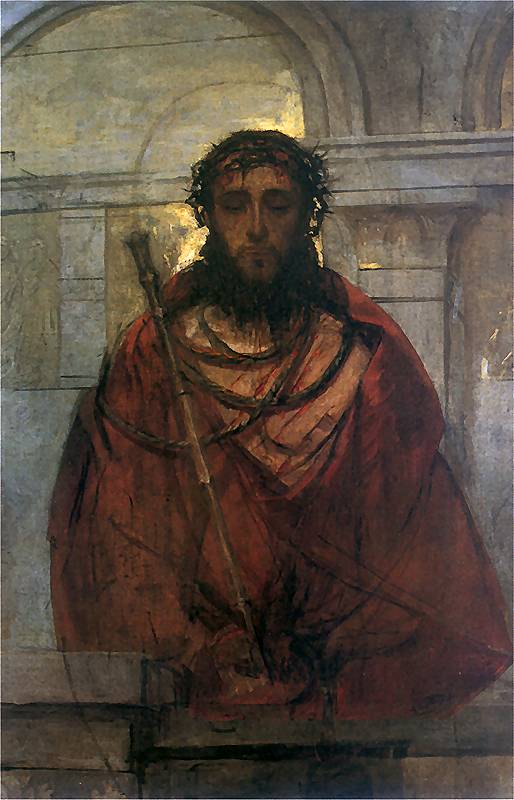
Ecce Homo, Adam Chmielowski, 1881. (Source)