“Lovely in Limbs, and Lovely in Eyes Not His”

Kingfisher

Kingfisher in action. (Source)

It’s beautiful weather in Oxford today, so I thought I’d celebrate with a quick poem by Hopkins. It’s one of my favorites.

As Kingfishers Catch Fire

As kingfishers catch fire, dragonflies draw flame;
As tumbled over rim in roundy wells
Stones ring; like each tucked string tells, each hung bell’s
Bow swung finds tongue to fling out broad its name;
Each mortal thing does one thing and the same:
Deals out that being indoors each one dwells;
Selves — goes itself; myself it speaks and spells,
Crying Whát I dó is me: for that I came.
I say móre: the just man justices;
Keeps grace: thát keeps all his goings graces;
Acts in God’s eye what in God’s eye he is —
Chríst — for Christ plays in ten thousand places,
Lovely in limbs, and lovely in eyes not his
To the Father through the features of men’s faces.

Faber’s Oxford Poems: Part I

Screen Shot 2018-10-03 at 2.16.56 PM

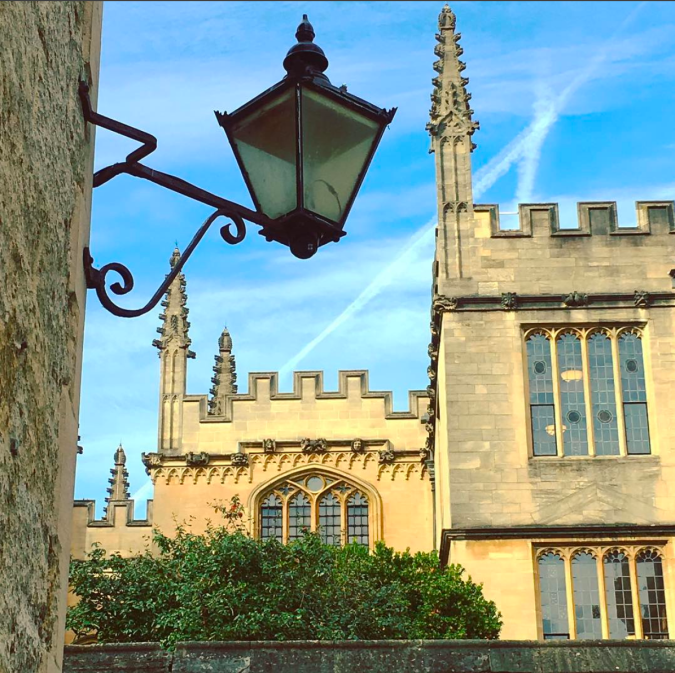
A view of the Bodleian Library from Radcliffe Square. Photo taken by author.

Fr. Frederick William Faber, that great son of St. Philip, was one of the many Oxford converts. He was a Balliol man who later became a fellow of University College, where he embarked on an ecclesiastical career as an Anglican. Later, of course, he came to the Church of Rome and founded the London Oratory. But as I am now settling back into Oxford, I thought it might my readers might enjoy a few of his poems about life at the University. I’ll probably break the collection up into a few different posts. Although Faber was later famous as a hymn-writer, in his youth he was a Romantic poet who won the admiration of none other than Wordsworth, whom he met in the Lake District. Faber’s style may be rather too Victorian for our tastes today. They also represent his spirituality at a very immature stage, when he was still an Anglican. The contrast between “College Chapel’s” rather pathetic final line and Faber’s “Muscular” pose in “College Hall” amuses, to say the least. But occasionally, as in “College Garden,” his sensuality and yearning anticipate the best of the Decadents who came at the end of the century. Finally, I’ll add that Faber’s romantic attachment to the legends and traditions of the English medieval monastics once again confirms my point that there remains an abiding affinity between the Oratorian and Benedictine charisms. 

College Chapel

A shady seat by some cool mossy spring,
Where solemn trees close round, and make a gloom,
And faint and earthy smells, as from a tomb,
Unworldly thoughts and quiet wishes bring:
Such hast thou been to me each morn and eve;
Best loved when most thy call did interfere
With schemes of toil or pleasure, that deceive
And cheat young hearts; for then thou mad’st me feel
The holy Church more night, a thing to fear.
Sometimes, all day with books, thoughts proud and wild
Have risen, till I saw the sunbeams steal
Through painted glass at evensong, and weave
Their threefold tints upon the marble near,
Faith, prayer, and love, the spirit of a child!

College Hall

Still may the spirit of the ancient days
Rest on our feasts, nor self-indulgence strive
Nor languid softness to invade the rule,
Manly, severe, and chastethe hardy school
Wherein our might fathers learnt to raise
Their souls to Heaven, and virtue best could thrive.
They, who have felt how oft the hour is past
In idle, worldly talk, would fain recall
The brazen Eagle that in times of yore
Was wont to stand in each monastic hall;
From whence the Word, or some old Father’s lore,
Or Latin hymns that spoke of sin and death
Were gravely read; and lowly-listening faith
In silence grew, at feast as well as fast.

College Garden

Sacred to early morn and evening hours,
Another chapel reared for other prayers,
And full of gifts,smells after noon-day showers,
When bright-eyed birds look out from leafy bowers,
And natural perfumes shed on midnight airs,
And bells and old church-clocks and holy towers,
All heavenly images that cluster round.
The rose, and pink acacia, and green vine
Over the fretted wall together twine,
With creepers fair and many, woven up
Into religious allegories, made
All out of strange Church meanings, and inlaid
With golden thoughts, drunk from the dewy cup
Of morns and evenings spent in that dear ground!

College Library

A churchyard with a cloister running round
And quaint old effigies in act of prayer,
And painted banners mouldering strangely there
Where mitered prelates and grave doctors sleep,
Memorials of a consecrated ground!
Such is this antique room, a haunted place
Where dead men’s spirits come, and angels keep
Long hours of watch with wings in silence furled.
Early and late have I kept vigil here:
And I have seen the moonlight shadows trace
Dim glories on the missal’s blue and gold,
The work of my monastic sires that told
Of quiet ages men call dark and drear,
For Faith’s soft light is darkness to the world.

“They Shall Not Bind Thy Wounds With Oil and Wine”

Occasionally I like to present obscure poetry here, especially by unusual figures. My readers will no doubt be well aware of my love of the bizarre and morbid. Here are two extremely rare poems from that equally strange poet, Count Eric Stanislaus Stenbock, an Anglo-Baltic aristocrat who dabbled in just about every religion known to man, kept a menagerie of wild animals at his Estonian palace, and carried a doll he called “le Petit Comte” that he always insisted was his son.

Eric_Stenbock.jpg

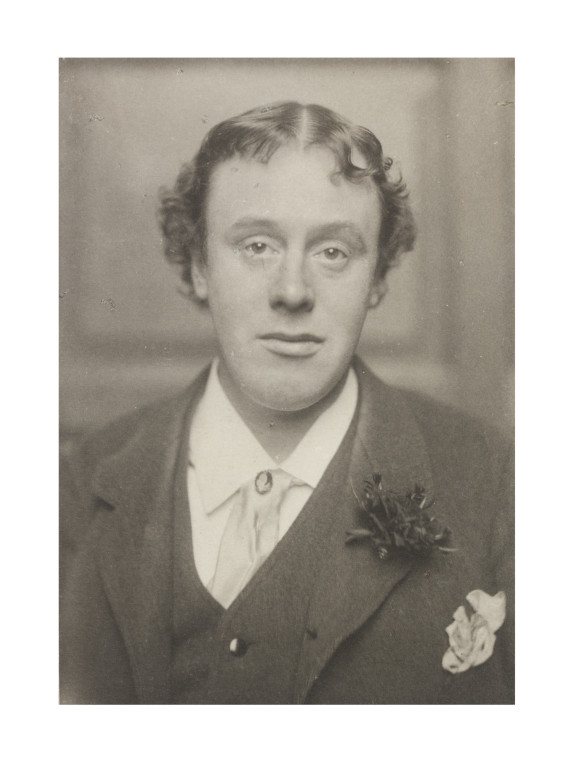
Count Stenbock. A more like Huysmans’s Des Esseintes has never walked the earth. (Source)

Original collections of his Decadent verse fetch tens of thousands on the open market. I was privileged enough to view two of them at the Bodleian last year, my source for these two poems. The first dates from 1893, the second from 1883. I chose these two from several others because of the rather striking thematic contrast they afford.

Sonnet VI

O vos ómnes qui transítis per víam, atténdite et vidéte: Si est dólor símilis sícut dólor méus.”

All suffer, but thou shalt suffer inordinately.
All weep, but thy tears shall be tears of blood.
I will destroy the blossom in the blood,
Nathless, I will not slay thee utterly
Nay, thou shalt live—I will implant in thee
Strange lusts and dark desires, lest any should,
In passing, look on thee in piteous mood,
For from the first I have my mark on thee.

So shalt thou suffer without sympathy,
And should’st thou stand within the street and say:
“Look on me, ye that wander by the way,
If there be any sorrow like to mine.”
They shall not bind thy wounds with oil and wine,
But with strange eyes downcast, shall turn from thee.

Sonnet I – Composed in St. Isaac’s Cathedral, St. Petersburg

On waves of music borne it seems to float
So tender sweet, so fraught with inner pain,
And far too exquisite to hear again
Above the quivering clouds that single note,
The tremendous fires of the lamp-light gloat
On the exceeding sweetness of that strain—
Though mightest spend a lifetime all in vain
In striving to recall it, yet recall it not.

Therein are mingled mercy, pity, peace,
Tears wiped away and sorrow comforted,
Bearing sweet solace and a short relief
To those, that are acquainted well with grief,
Reviving for a time joys long since dead,
And granting to the fettered soul release.

My First Year at Grad School in Twelve Musical Selections

Screen Shot 2018-06-22 at 2.00.39 AM.png

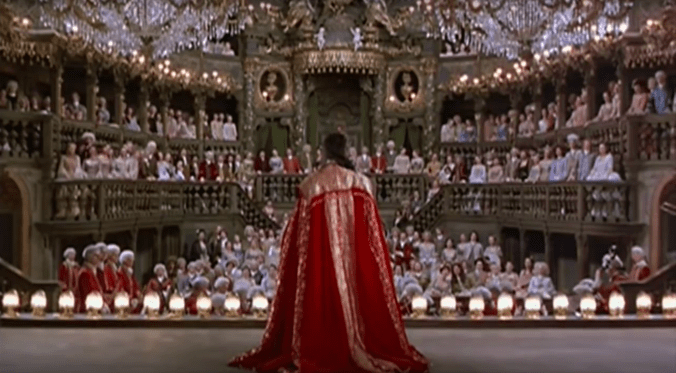
A still from Farinelli. This was the year I both became an 18th century scholar and discovered Castrato arias. (Source)

12. “Somebody That I Used to Know” only Vaporwave.

11. “Sumer is Icumen In,” from The Wicker Man (1973).

10. “Demons,” by Alex and “Sleep Games,” by Pye Corner Audio.

9. Tchaikovsky’s Swan Lake theme.

8. Psalm 129 from King’s College Choir, Cambridge.

7. The soundtrack from Le Roi Danse.

6. “Never Enough” from The Greatest Showman.

5. “Pur Ti Miro,” by Monteverdi.

4. The Little Match Girl Passion, by David Lang

3. The Farinelli soundtrack.

2. Michael Nyman’s “The Garden is Becoming a Robe Room,” “Prospero’s Magic,” and “Chasing Sheep is Best Left to Shepherds.”

1. Various Arias from Handel, especially Rinaldo‘s “Il Vostro Maggio” and “Lascia Ch’io Piangia” as well as most of “Ode for the Birthday of Queen Anne.”


Charles Williams, Marriage, and a Shameless Plug

edward_burne-jones_love_among_the_ruins

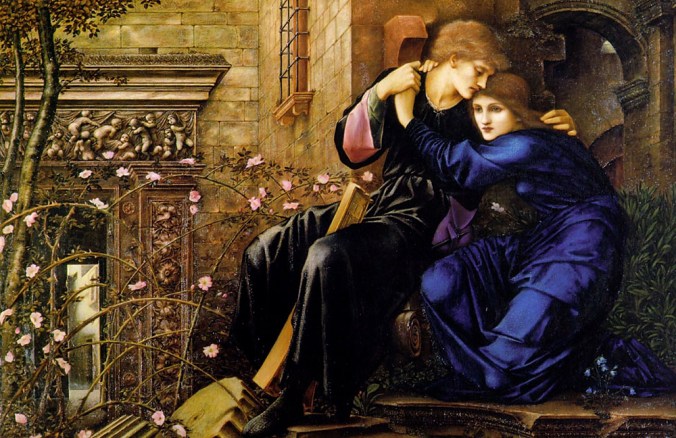
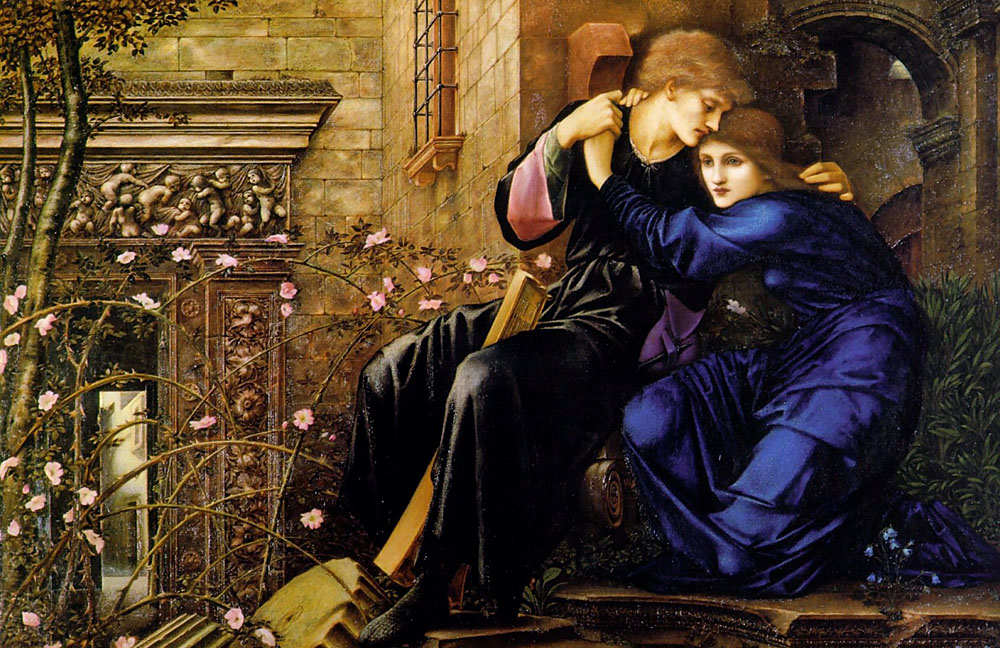
Love Among the Ruins, Edward Burne-Jones (Source)

I have a very exciting if somewhat tardy announcement. I have some poetry being published in Volume II of Jesus the Imagination, the hot new Sophiological journal by Angelico Press. There’s plenty of other really good material in the journal, too, including work by friends of mine. Plus an interview with the Revolutionary Army of the Infant Jesus! What’s not to love? As far as I’m aware I’m making no money whatsoever off this venture, but I still encourage you to buy a copy (or two, or three) if you want to read my contributions…or just the far more brilliant materials you’ll find there, too.  Either way, I can promise you that Jesus the Imagination won’t disappoint!

225px-Charles_Williams

A portrait of Charles Williams: poet, critic, lecturer, editor, author, sorcerer, mystic (Source)

The theme for this volume is Marriage. As I’m sure many of you know, marriage is an extraordinarily deep mystery in the heart of the Church’s sacramental life, mystical being, quotidien experience, and esoteric practice. To celebrate, I am reproducing here a poem by Charles Williams that scratches the surface of Matrimony’s essence. Williams, a friend of T.S. Eliot and fellow-Inkling to C.S. Lewis and J.R.R. Tolkien, was a profound mystical thinker who kept returning to nuptial themes over the course of his career. The poem below comes from his first poetry collection, The Silver Stair (1912), a slim book I recently examined in the Bodleian. Enjoy.

Of Marriage and of its Priesthood

Charles Williams

Here shall no pagan foot nor claw of beast
Enter; nor wizard sorcery be seen.
But sometime here have all true lovers been,
Nor hath the tale of outland riders ceased.
With hands of consecration now the priest
Exalts the holy sacrament between
The altar lights. Now, if your souls be clean,
Draw near: Himself Love gives you in His feast.

Whose voice in solemn ritual lifted up
Praises the Name of Love? Whose hands have blest
For you, His votaries, the mysterious Cup,
And set before you the ordained Food?
Voice of Himself, to narrow vows professed,
And hands of His adorable maidenhood.

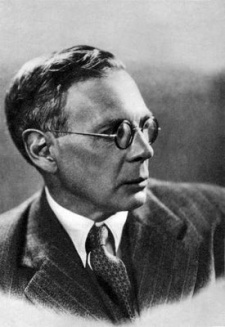
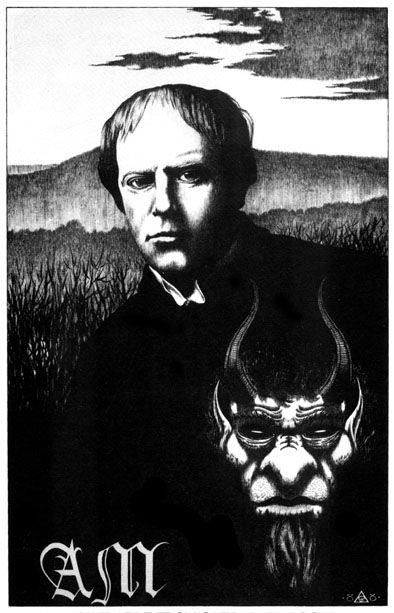
The Voice of Arthur Machen

GreatGodPanBeardsley.jp

The title illustration of Machen’s The Great God Pan and the Inmost Light (1896), famously rendered by Aubrey Beardsley (Source)

Arthur Machen (1863-1947) was one of the greatest horror writers in the English language. His particular brand of esoteric paganism, the dangers of the occult, the sinister truth lurking behind folktales, and a highly-developed knack for evoking eldritch terror – all of these elements exerted a profound influence on the development of weird literature. Those who enjoy Lovecraft will recognize much in Machen that later made its way into Lovecraft’s own corpus. The dark bard of Providence held Machen in high esteem.

Machen was also a deeply spiritual Christian, best but imperfectly classed as an Anglo-Catholic. His strong sense of the mystical life found its fullest expression not in his horror stories, which do indeed bear some mark of his sacramental worldview, but in his later writings. A Welshman, he was fascinated by the Grail legend and connected it with his idea of an ancient, vividly supernatural “Celtic” Christianity.

AMachen.jpg

Portrait of Arthur Machen (Source)

Machen is a favourite of mine. I cannot recommend his stories highly enough – especially The Great God Pan, “The Novel of the White Powder,” “The Shining Pyramid,” “The Ceremony,” and “The Lost Club.” He is far scarier than some of his better-known contemporaries such as M.R. James or Sir Arthur Conan Doyle.

He also figures prominently in some of my research. I recently came upon a recording of his voice from 1937, in which he speaks of Chesterton, Dickens, Thackeray, and the art of fiction more broadly. Some of my readers may find this as enjoyable as I do, and so I provide a link here.

A Poem by Montague Summers

madonna-delle-grazie-santa-chiara-giuseppe-marullo

Madonna delle Grazie, Naples (Source)

Some of my readers will no doubt remember that very strange fellow I once wrote about, the Rev. Montague Summers. I have had to look at quite a lot of his orchidaceous writings recently for my research, including his poetry. Here is one such poem he wrote in Antinous and Other Poems (1907). It was written while he was still an Anglican, though it anticipates the lusciously Baroque spirituality that would mark his later writings.

Madonna Delle Grazie

Montague Summers

In the fane of grey-robed Clare
Let me bow my knee in prayer,
Gazing at thy holy face
Gentle Mary, Queen of Grace.
Thou who knowest what I seek,
Ere I unlock my lips to speak,
For I am thine in every part
And thou knowest what my heart,
Yearning in my fervid breast,
Ere it be aloud confessed,
Longeth for exceedingly,
Mamma cara, pity me!

By the dearth of childlorn years,
By thy mother Anna’s tears,
By the cry of Joachim,
When the radiant seraphim,
Girdled with eternal light,
Blazed upon the patriarch’s sight
With the joyous heraldry
Of thy sinless infancy.

By the bridal of the Dove,
By thy God’s ecstatic love,
By the home of Nazareth,
When the supernatural breath
Of God enfolded thee, and cried:
“Open to me, love, my bride,
Come to where the south winds blow,
Whence the mystic spices flow,
Calamus and cinnamon,
Living streams from Lebanon.
Fresh flowers upon the earth appear
The time of singing birds is near,
The turtle-dove calls on his mate,
The fruit is fragrant at our gate.
Thy lips are as sweet-smelling myrrh,
When the odorous breezes stir
Amid the garden of the kings;
As incense burns at thanksgivings.
Thy lips are as a scarlet thread,
Like Carmèl is they comely head,
Thou art all mine, until the day
Break, and the shadows flee away!”

Mother, by thy agony
‘Neath the rood of Calvary,
When the over-piteous dole
Pierced through thy very soul
With a sevenfold bitter sword
According to the prophet’s word.
By the sweat and spiny caul,
By the acrid drink of gall,
By the aloes and the tomb,
By thy more than martyrdom,
Dolorosa, give to me
The thing I lowly crave of thee.

By thy glory far above,
Mother, Queen of heavenly love,
By thy crown and royal state,
By thy Heart Immaculate,
Consort of the Deity,
Withouten whose sweet assent He
May nothing deign to do or move
Bound by ever hungered love,
God obedient to thee!

Mother, greatly condescending,
To thy humblest suitor bending,
From thy star-y-pathen throne,
Since it never hath been known
Whoso to this picture hied,
Whoso prayed thee was denied,
Mamma bella, give to me,
The boon I supplicate of thee!

In Santa Chiara, Napoli.

Screen Shot 2018-06-04 at 11.43.14 PM.png

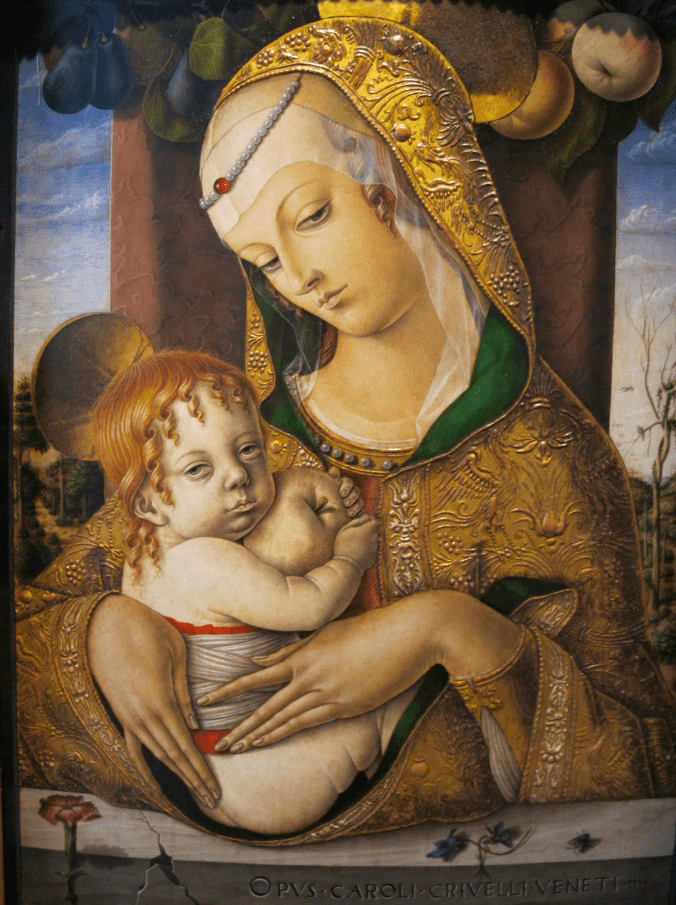
“Madonna and Child,” Carlo Crivelli, c. 1480 (Source)

A Hymn for St. Philip’s Day

StPhilipNeridolci

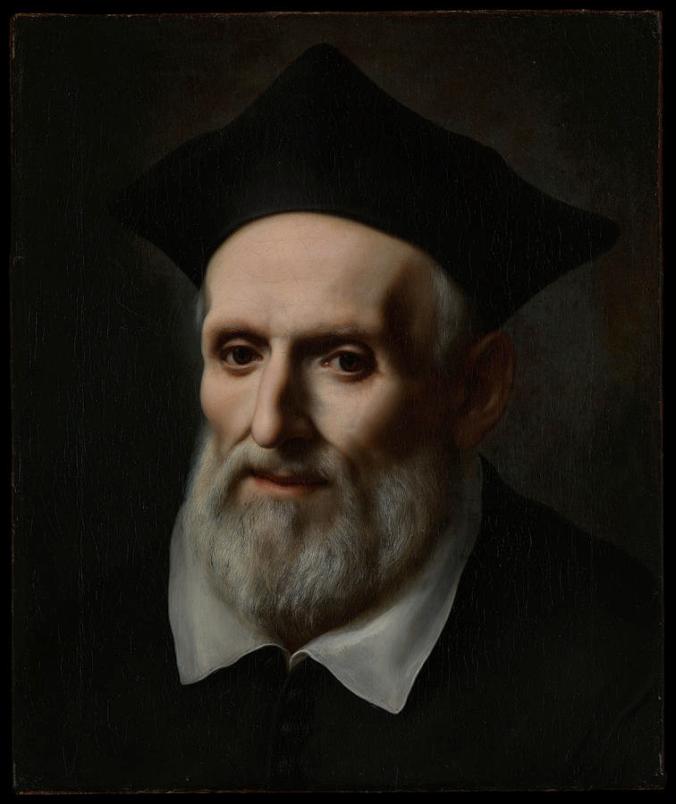
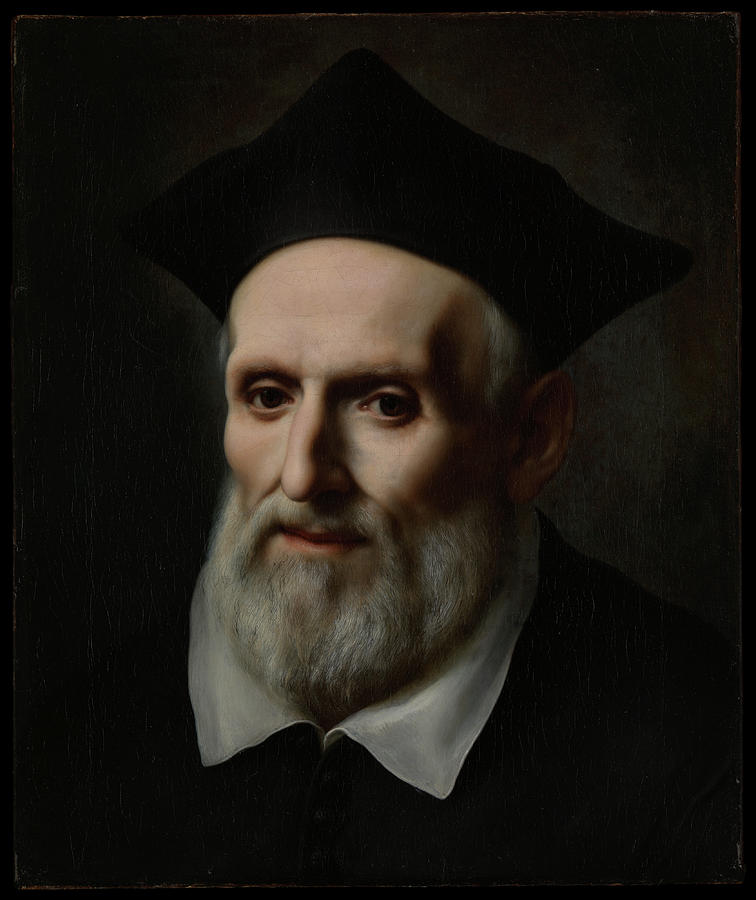
The Carlo Dolci portrait of St. Philip, now in the Metropolitan Museum of Art, New York. (Source)

St. Philip’s Picture

Fr. Frederick William Faber of the London Oratory

I.

Saint Philip! I have never known
A Saint as I know thee;
For none have their wills and ways
So plain for men to see.
I live with thee; and in my toil
All day thou hast my part;
And then I come at night to learn
Thy picture off by heart.

II.

O what a prayer thy picture is!
Was Jesus like to thee?
Whence hast thou caught that lovely look
That preaches so to me?
Sermon and prayer thy picture is,
And music to the eye;
Song to the soul, a song that sings
Of whitest purity!

III.

A blessing on thy name, dear Saint!
Blessing from young and old,
Whom thou in Mary’s gallant band
Hast winningly enrolled!
If ever there were poor man’s Saint,
That very Saint art thou!
If ever time were fit for thee,
Dear Saint! That time is now!

IV.

Philip! Strange missioner thou art,
Biding so still at home,
Content if with the evening star
Souls to thy nets will come!
If ever spell could make hard work
Profit and pastime be,
That spell is in thy coaxing ways,
That magic is in thee.

V.

Sweet-faced old Man! For so I dare,
Saint though thou be on high,
To name thee, for thou temptest love
By thy humility.
Sweet-faced old Man! What are thy wiles
With which thou winnest men?
Art thou all saints within thyself?
If not, what art thou then?

VI.

John’s love of Mary thou hast got,
Thy house is Mary’s home;
And then thou hast Paul’s love of souls
With Peter’s love of Rome.
Thy heart, that was so large and strong,
It could not quiet bide;
O was it not like his that beats
Within a wounded side?

VII.

Saint of the over-worked and poor!
Saint of the sad and gay!
Jesus and Mary be with those
Who keep to thy true way!
O bless us, Philip! Saint most dear!
Thine Oratory bless;
And gain for those who seek thee there
The gift of holiness!

Springtime Sophiology from St. Nicodemus

GateAddisons

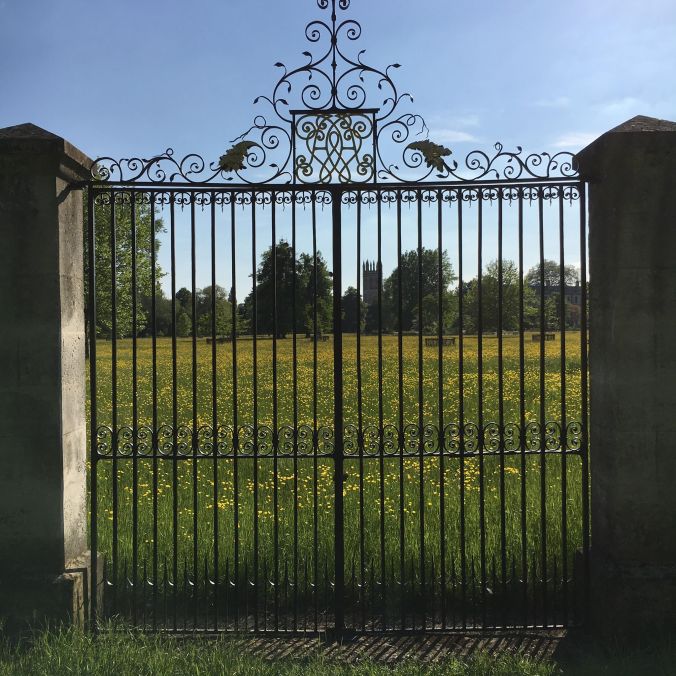
Gate on Addison’s Walk, Magdalen College, Oxford. Photo by author.

Now there are of course those who do not use the senses and the subsequent meditation on creation and Holy Scripture to rise through them to the knowledge and love of God, who both spoke the Scriptures and created the world. On the contrary, such people use this sense perception simply for human aggrandizement, for the marvel and mere pleasure of the corruptible beauty in creatures, and for other bodily purposes. Or, at least, they simply remain on the level of the limited purposes of the creatures and of the Scriptures. They thus neglect to proceed further, to rise to the catholic and comprehensive view of things, to God’s wisdom through which all things are known and in which all the reasons for each creature are to be found, according to St. Maximos. “The Lord by wisdom founded the earth…When he established the heavens, I was there” (Prv. 3:19, 27). St. Basil the Great too had something to say on this point: “There are indeed certain reasons why the primordial wisdom of God was laid as a foundation to nature at the time of creation.” Now, those who do not rise – through the reason endowed in nature and in the Holy Scriptures – to the hypostatic Logos of God, those who do not love Him “through whom all things were made” (Jn 1:3), as most of the worldly philosophers do not, all of these people act contrary to the Creator’s purpose in nature and in Holy Scripture. And according to the wise and most insightful Kallistos, the thought of such people has lost its natural tendency and has become unnatural. This has occurred because they use the means as ends in themselves, and the causes as results, and they love the gifts more than the Giver and the creatures more than the Creator, as St. Augustine has said. Since creation was not created for itself, but for the vision and glory of its Creator, it is not proper that it should be seen and admired for its own sake, but rather for the sake of its Creator. It is the same with the mirror which one does not look at for its own sake, but for the sake of the one reflected in it.

nicodemus-IN-2.jpg

St. Nicodemus of the Holy Mountain (Source)

We may add, finally, that the secondary goal and purpose for the creation of the senses is so that the material body may be able to enjoy through them material nourishment, growth, and life. Truly, I do not know what to marvel at most: the “palace” that is so intricately constructed or the “king” who dwells therein. But of these two, I must certainly marvel most at the master artist and the Creator who with infinite wisdom not only created both of them, but also united the mind and body in such perfect harmony.

Quoted from Chapter One of A Handbook of Spiritual Counsel by Nicodemos of the Holy Mountain, Trans. Peter A. Chamberas, Paulist Press, 1989, pages 73 and 74. 

The Best Monastic Documentaries

The monastic life is about as far as one can get from the flashy world of the entertainment industry. And yet, it has been the subject of some very good documentaries over the last fifteen years or so. For those curious about the various monks (and nuns) of the world, I thought I would provide a list of a few films with which to start.

Into Great Silence (2006)

Screen Shot 2018-05-16 at 10.05.16 PM.png

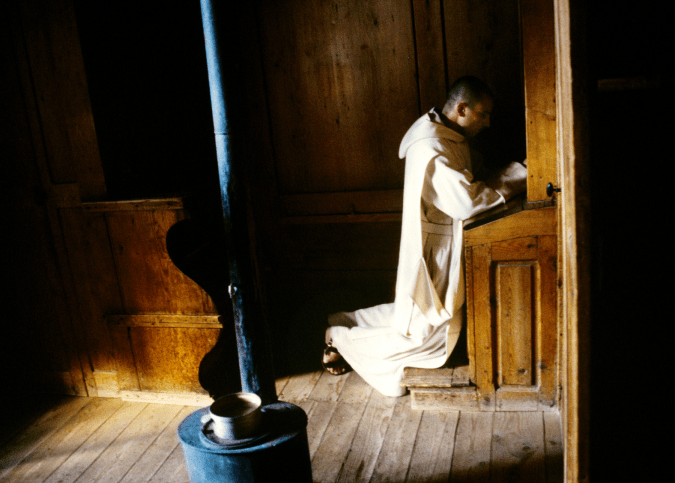
A Carthusian prays in his cell, from Into Great Silence (Source)

This stirring art film by Philip Gröning was produced over several years. Every shot is deeply meditative. We, the viewers, are drawn into a contemplative pose along with the monks themselves. As might be expected, there is very little dialogue – indeed, very little sound at all. We get a powerful sense of the holy silence that envelops the Carthusians of La Grande Chartreuse. Yet when the monks do speak, such as in an interview with an ancient, blind monk that comes towards the end of the film, the words mean something. The chant of the night office given prominent place in the film evokes all the centuries of virtually unchanged monastic life that have come down to us from St. Bruno. This film is hands down the most important and most spiritually insightful documentary about monasticism, and it has continued to exert a powerful influence on most such documentaries since.

Veilleurs dans la nuit (2011)
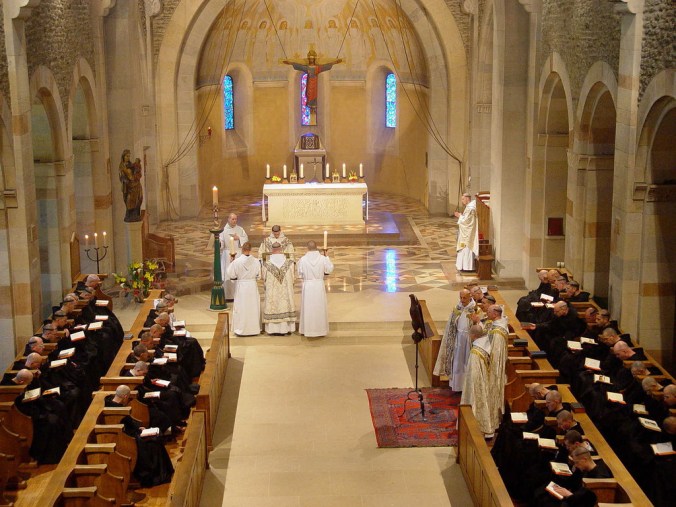
LeBarrouxMass

A liturgy at Le Barroux (Source)

The monastery of Sainte Marie-Madeleine du Barroux, founded in the wake of the Second Vatican Council, preserves much of the great tradition of French Benedictine life. It is one of the very few monasteries on earth which has preserved the form of tonsure once known as “the monastic crown.” It is also famous for its grand and elegant celebration of the liturgy, as well as the great holiness of its founder, Dom Gérard Calvet. This French documentary does a good job depicting their life through a mix of commentary and interviews. It is of an entirely different style than Into Great Silence, but it relates more actual information about the monks themselves.

Quaerere Deum (2011)
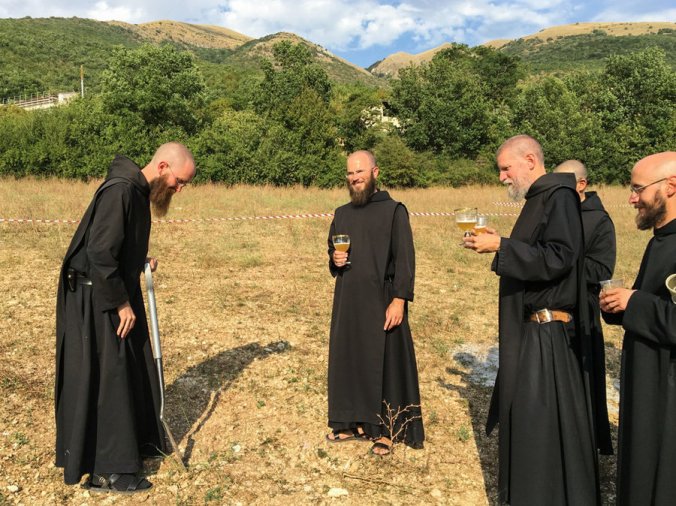
NorciaBeer

Some of the monks of Norcia with their famous beer (Source)

Filmmaker Peter Hayden of Wilderland Media has done some great and poetic work publicizing the various new monasteries founded in the old world by Americans. The first of these was the Monastero di San Benedetto in Norcia, established in 2000. It is only appropriate then that Hayden should have looked at them first. He produced a “day in the life” style documentary bearing clear influences from Into Great Silence. The slow pace, lack of commentary, and meditative minimalism all recall the best parts of that earlier work. Norcia itself – or what it was before the terrible earthquake of 2016 destroyed much of the town – emerges as a living community “seeking God.” A subdued sense of joy shines throughout.

Benedictine Monks, Ireland (2017)
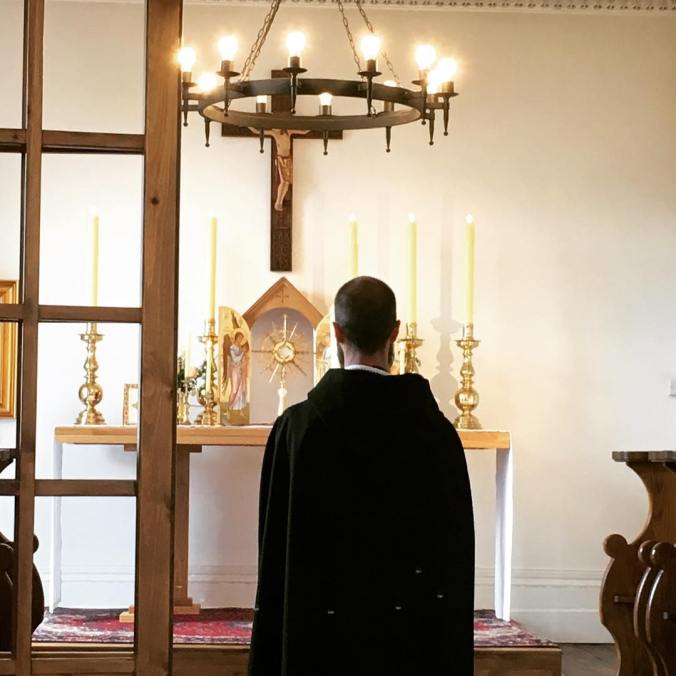
 

BrJBAdoration

Br. John Baptist in adoration before the Blessed Sacrament, Silverstream. Photo taken by the author.

Peter Hayden’s second work on the monastic renewal is a more obviously promotional piece of filmmaking than Quaerere Deum. A profile of Silverstream Priory, Benedictine Monks, Ireland depicts the community life of adoration and reparation led by the monks there. Scenes from Mass, chapter, and refectory alternate with candid shots of the monks at work and leisure. Interviews with the Prior and Subprior provide spiritual as well as historical context. As someone who knows the monks personally, I found it a pretty good exposition of their spirit. That peculiarly Benedictine sense of place is evoked through gentle Irish music at various points. And the combined wisdom of Dom Mark and Dom Benedict is a great grounding to the beautiful visuals. I was very taken with the image of Dom Cassian, then only a postulant, in prayer at the pillar and candle.

My only criticism is that, in spite of all these good features, the film fails to capture the overwhelming sense of the supernatural that hangs about Silverstream. I’m not sure if it was the darkness of the year during filming, or the slightly uneven cinematography, or the lack of scenic order that scuttled it for me.  Benedictine Monks, Ireland needs a heavier dose of the contemplative stillness that so strongly marks both Into Great Silence and Quaerere Deum. Still, it’s a nice introduction to the place for those curious about the Benedictine Monks of Perpetual Adoration.

Présence à Dieu (2015)
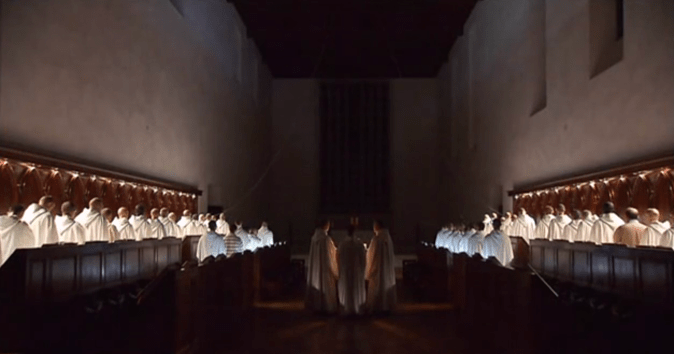
Screen Shot 2018-05-16 at 10.39.43 PM.png

Matins at Sept-Fons, from Présence à Dieu (Source)

This short film, first brought to my attention by Fr. Joseph Koczera SJ, does a good job showing what a traditional monastery can look like, even if it embraces the new Mass and the vernacular office. Notre Dame de Sept-Fons is currently the largest Trappist monastery in the world, at least in terms of membership – it is also manifestly young and diverse. The film shows why the Abbey keeps getting vocations. A near constant soundtrack of chant carries the viewer along. Présence à Dieu is also full of the Abbot’s exposition of the Rule, which is a nice plus.

God is the Bigger Elvis (2011)

GodistheBiggerElvis

Mother Dolores Hart, wearing her trademark beret, from God is the Bigger Elvis (Source)

This one differs from the others in a few key respects. First, it’s an HBO production, rather than an Indie film. Secondly, it’s about nuns rather than monks. And third, there is a delicate sense of humor throughout that is a refreshing change from the other movies. It tells the story of Mother Dolores Hart, a starlet of the 1950’s who appeared in several features alongside Elvis before becoming a nun at the Benedictine monastery of Regina Laudis in Connecticut. She is now the prioress of the community. The documentary looks at her life and vocation as well as the daily ins and outs of the monastery. Not to be missed!

Life in Hidden Light (2016)

LifeinHIddenLight

A scene in the refectory from Life in Hidden Light (Source)

Monasticism is not confined to the Benedictine family. As Life in Hidden Light reminds us, the Carmelites also have a great tradition of contemplative monasticism. Clearly influenced by Into Great Silence, this film does a great job balancing meditative cinematography and interviews with the Discalced Carmelite sisters of Wolverhampton. One in particular that stands out is the old, mostly deaf nun who speaks about the “mess” of the world and the love of God. I was reminded of Into Great Silence‘s blind Carthusian (not to mention the slightly grotesque Jesuit in “The Enduring Chill,” by Flannery O’Connor). The old nun’s message is a sound, salutary one that we should all hearken to in this day and age.

There are probably other such films out there, but these are a few that might be a good starting place for those interested in the monastic life.