M. Olier on Patience for Christ

In week two of the Lenten Spirituality Series, we have another treasure from seventeenth-century France. One of the great exponents of the French School of Spirituality, M. Jean-Jacques Olier, writes movingly about our suffering in this life as a means of bringing us closer to Christ. His words on the virtue of Patience, though directly primarily to clerics, have a wider application to all Christians in their Royal Priesthood. The text is excerpted from M. Olier’s “Introduction to the Christian Life and Virtues,” translated by Lowell M. Glendon, S.S. in Bérulle and the French School: Selected Writings (Paulist Press, 1989), 244-47. M. Olier’s description of patience crescendos into a typically French, Eucharistic note.
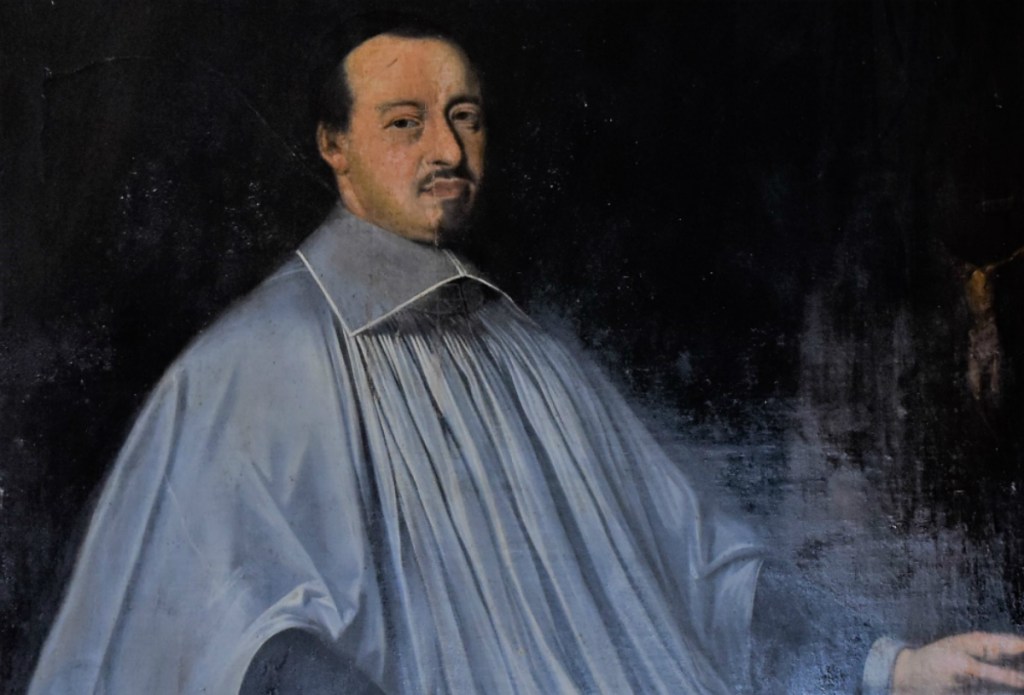
Jean-Jacques Olier, founder of the Sulpicians and a spiritual master of the Grand Siècle. (Source)

We are obliged to be patient. First, in our condition as creatures; for God, sovereign master of life and death, on whom our existence depends absolutely, has the right to dispose of us as he chooses…

Second, as sinners. For in this condition, we must bear with the effects of his justice and wrath toward us. All the punishments that he carries out in this world are nothing compared to what we deserve and what he would make use suffer if he did not choose to be merciful toward us and to treat us with gentleness and clemency in this life. The punishments that God meted out to sinners, as we see in the holy scripture, even the torments of the damned and the penalties the demons suffer and will suffer eternally for one sin, should cause us not only to be at peace, but to rejoice in our sufferings…

Third, as Christians. For as such we should bear with many difficulties and sufferings. This is why we are intitiated into the church. For our Lord only admitted us into it to continue his life, which is a life of opposition, contradiction, and condemnation toward the flesh.

He must then humiliate it and subdue it in us, using the ways he knows and judges to be most useful, so as to win a complete victory, He first achieved victory in his own flesh, and he wishes to continue it in ours in order to show forth in us a sample of the universal triumph that he had achieved over it in his own person.

The church and Christians are only a handful of flesh compared to the whole world. Nevertheless, he still desires to be victorious in them to proclaim his triumph and to give definite signs of his victory. Thus, from this perspective, the Christian should be very faithful to the Spirit and completely abandoned to him in order to overcome the flesh and to destroy it completely.

There will be no lack of opportunities in this life, for he must suffer; first, the attacks of the world through scorn, calumny and persecution; second, the violent onslaughts of the flesh in its uprisings and its revolts; third, the battles with the devil in the temptations he sends us; finally, the ordeals from God through dryness, desolation, abandonment and other interior difficulties, which he afflicts on him in order to initiate him into the perfect crucifixion of the flesh.

Fourth, as clerics. For clerics should participate in the fulfillment of Christianity. This cannot exist without patience.

Patience is a sign that the soul is intimately united to God and that it is rooted in perfection. For it must be very much in God and fully possessed by him in order to bear difficulties and torments with peace, tranquility and even joy and beatitude in one’s heart.

It must be quite profoundly immersed in him and remain quite powerfully and strongly united to him, so that the flesh has no power at all to attract it to itself and share with him the feelings and aversions that it has towards suffering and endurance.

In this state the soul experiences the perfection attainable in this life, since it conforms to our Lord’s perfect submission to God during his sufferings. For although his flesh experienced aversion and revulsion for the cross, he paid no attention to it with his will. Rather, he always adhered perfectly to the wishes of his Father.

Therefore clerics, being perfect Christians chosen from the midst of the church to assist before the tabernacle of God, should pay particular attention to this virtue. This is their very nature. It is the sign by which they can be identified. This is what predisposes them for the honorable rank that they possess. This is how they are recognized as domestics and servants of God.

Finally, priests and pastors should have a very high degree of patience because, in Jesus Christ and with Jesus Christ, they are both priests and victims for the sins of the world. Jesus Christ the priest wished to be the victim of his sacrifice. He became the host-victim for all people. Since priests are like sacraments and representations of him who lives in them to continue his priesthood and whom he clothes with his external conduct and his interior dispositions, as well as with his power and his person, he wishes furthermore that they be interiorly rooted in the spirit and dispositions of a host-victim in order to suffer, endure, do penance, in short, to immolate themselves for the glory of God and the salvation of the people.

In imitation of our Lord, priests should not only be victims for sin through persecution, penance, internal and external sufferings, but also they should be like the victims of a holocaust. This is their true vocation. For they should not merely suffer, as he did, all sorts of difficulties both for their own sins and the sins of the people entrusted to them, but even more the should be entirely consumed with him through love.

The spirit of love strengthens and empowers us to endure affliction and suffering, no matter how great they are. Since he is infinite, he gives us as much as we need to endure those that can occur in our vocation.

All the torments of the world are nothing to a generous soul filled with the power of a God, who is able to shoulder countless sufferings more violent than all those that the world and the devil might afflict us with. It is with this Spirit that Saint Paul said: I can do all things in him who strengthens me (Phil 4:14). Everything he saw seemed little to do or suffer because of the God who dwelled in him.

It is through this same eternal, immense, and all-powerful Spirit that he called his sufferings light and momentary, because Jesus Christ who suffered and bore them in himself and allowed him to see and experience something of his eternity through his presence, caused him to look upon the entire duration of this life as but a moment. This is how our Lord, who allows us to experience interiorly that his power and his strength could support a thousand worlds, leads us to call his burden light.

Pascal on Christ’s Agony

This year, the Lenten Spirituality Series will happen on Fridays. We begin the season with a salutary meditation taken from the Pensées of Blaise Pascal, Section 522 on “The Mystery of Jesus.”

Blaise Pascal, theologian, philosopher, mathematician, confessor, and ascetic (Source)

The Mystery of Jesus.—Jesus suffers in His passions the torments which men inflict upon Him; but in His agony He suffers the torments which He inflicts on Himself; turbare semetipsum. This is a suffering from no human, but an almighty hand, for He must be almighty to bear it.

Jesus seeks some comfort at least in His three dearest friends, and they are asleep. He prays them to bear with Him for a little, and they leave Him with entire indifference, having so little compassion that it could not prevent their sleeping even for a moment. And thus Jesus was left alone to the wrath of God.

Jesus is alone on the earth, without any one not only to feel and share His suffering, but even to know of it; He and Heaven were alone in that knowledge.

Jesus is in a garden, not of delight as the first Adam, where he lost himself and the whole human race, but in one of agony, where He saved Himself and the whole human race.

He suffers this affliction and this desertion in the horror of night.

I believe that Jesus never complained but on this single occasion; but then He complained as if he could no longer bear His extreme suffering. “My soul is sorrowful, even unto death.”

Jesus seeks companionship and comfort from men. This is the sole occasion in all His life, as it seems to me. But He receives it not, for His disciples are asleep.

Jesus will be in agony even to the end of the world. We must not sleep during that time.

Jesus, in the midst of this universal desertion, including that of His own friends chosen to watch with Him, finding them asleep, is vexed because of the danger to which they expose, not Him, but themselves; He cautions them for their own safety and their own good, with a sincere tenderness for them during their ingratitude, and warns them that the spirit is willing and the flesh weak.

Jesus, finding them still asleep, without being restrained by any consideration for themselves or for Him, has the kindness not to waken them, and leaves them in repose.

Jesus prays, uncertain of the will of His Father, and fears death; but, when He knows it, He goes forward to offer Himself to death. Eamus. Processit (John).

Jesus asked of men and was not heard.

Jesus, while His disciples slept, wrought their salvation. He has wrought that of each of the righteous while they slept, both in their nothingness before their birth, and in their sins after their birth.

He prays only once that the cup pass away, and then with submission; and twice that it come if necessary.

Jesus is weary.

Jesus, seeing all His friends asleep and all His enemies wakeful, commits Himself entirely to His Father.

Jesus does not regard in Judas his enmity, but the order of God, which He loves and admits, since He calls him friend.

Jesus tears Himself away from His disciples to enter into His agony; we must tear ourselves away from our nearest and dearest to imitate Him.

Jesus being in agony and in the greatest affliction, let us pray longer.

We implore the mercy of God, not that He may leave us at peace in our vices, but that He may deliver us from them.

If God gave us masters by His own hand, oh! how necessary for us to obey them with a good heart! Necessity and events follow infallibly.

—”Console thyself, thou wouldst not seek Me, if thou hadst not found Me.

“I thought of thee in Mine agony, I have sweated such drops of blood for thee.

“It is tempting Me rather than proving thyself, to think if thou wouldst do such and such a thing on an occasion which has not happened; I shall act in thee if it occur.

“Let thyself be guided by My rules; see how well I have led the Virgin and the saints who have let Me act in them.

“The Father loves all that I do.

“Dost thou wish that it always cost Me the blood of My humanity, without thy shedding tears?

“Thy conversion is My affair; fear not, and pray with confidence as for Me.

“I am present with thee by My Word in Scripture, by My Spirit in the Church and by inspiration, by My power in the priests, by My prayer in the faithful.

“Physicians will not heal thee, for thou wilt die at last. But it is I who heal thee, and make the body immortal.

“Suffer bodily chains and servitude, I deliver thee at present only from spiritual servitude.

“I am more a friend to thee than such and such an one, for I have done for thee more than they, they would not have suffered what I have suffered from thee, and they would not have died for thee as I have done in the time of thine infidelities and cruelties, and as I am ready to do, and do, among my elect and at the Holy Sacrament.”

“If thou knewest thy sins, thou wouldst lose heart.”

—I shall lose it then, Lord, for on Thy assurance I believe their malice.

—”No, for I, by whom thou learnest, can heal thee of them, and what I say to thee is a sign that I will heal thee. In proportion to thy expiation of them, thou wilt know them, and it will be said to thee: ‘Behold, thy sins are forgiven thee.’ Repent, then, for thy hidden sins, and for the secret malice of those which thou knowest.”

—Lord, I give Thee all.

—”I love thee more ardently than thou hast loved thine abominations, ut immundus pro luto.

“To Me be the glory, not to thee, worm of the earth.

“Ask thy confessor, when My own words are to thee occasion of evil, vanity, or curiosity.”

—I see in me depths of pride, curiosity, and lust. There is no relation between me and God, nor Jesus Christ the Righteous. But He has been made sin for me; all Thy scourges are fallen upon Him. He is more abominable than I, and, far from abhorring me, He holds Himself honoured that I go to Him and succour Him.

But He has healed Himself, and still more so will He heal me.

I must add my wounds to His, and join myself to Him; and He will save me in saving Himself. But this must not be postponed to the future.

Eritis sicut dii scientes bonum et malum. Each one creates his god, when judging, “This is good or bad”; and men mourn or rejoice too much at events.

Do little things as though they were great, because of the majesty of Jesus Christ who does them in us, and who lives our life; and do the greatest things as though they were little and easy, because of His omnipotence.

Elsewhere: Speaking of Jansenism

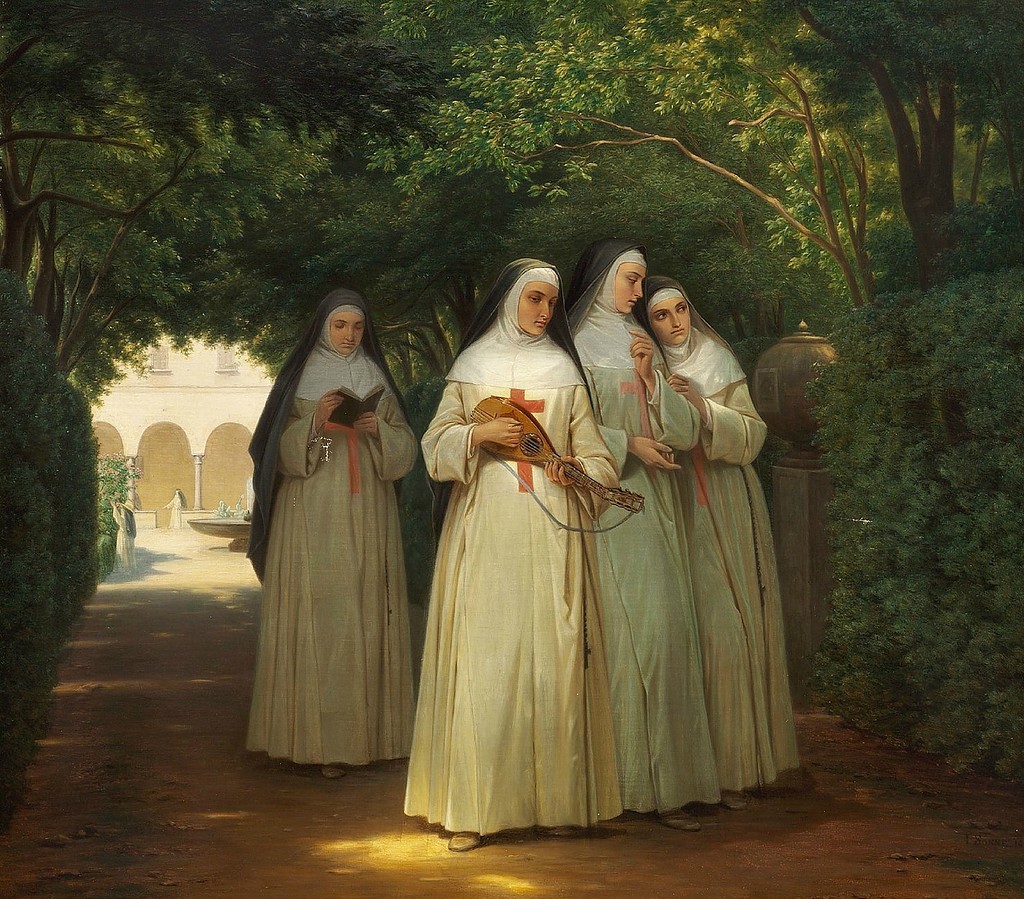
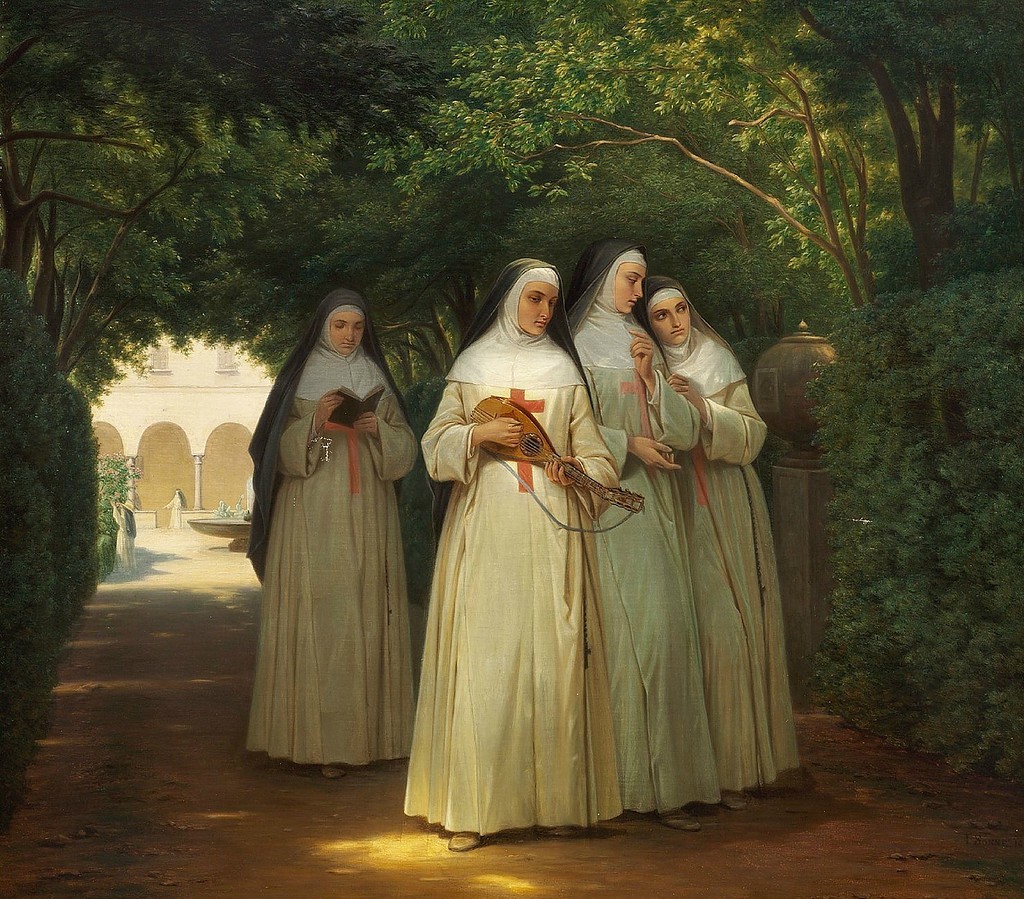
Jorgen Sonne’s 1866 Nuns walking in a cloister garden in Rome. He has, whether intentionally or not, given them the habit of Port-Royal-des-Champs. (Source)

I refer my readers to two articles that have recently appeared in the Notre Dame Church Life Journal. The first, which came out about a month ago, is an excellent piece by Dr. Shaun Blanchard showing that our polemical use of the term “Jansenism” is seriously mistaken. The second is an article I wrote, a church-historical study in which I both defend the Jansenists from various degrading misconceptions as well as point out some parallels between their situation and our own. I’m also very pleased that the Catholic Herald picked it up for Wednesday’s “Morning Catholic Must-Reads.”

This is not the first time I have tackled the issue, having previously pointed out the rhetorical and ecclesiastical-political resemblances between Pope Francis’s critics and the French Jansenists. I am more sure than ever of that similarity, and may yet elaborate it again should I deem it helpful for the present conversation. Regardless, I certainly will write more about Jansenist history and theology – watch this space.

I should add that I am particularly grateful to Dr. Blanchard for his kind aid in the preparation of my piece, and Dr. Artur Rosman for his editorial patience.

Reflections on Leaving Oxford

Sweet dreams are made of this… (Source)

I have, by the merciful grace of God, passed my M.Phil in Theology at Oxford. I could not have done so without the abundant help of my supervisors and tutors, principally Dr. Sarah Apetrei, as well as the many friends and family who supported me throughout the course of my studies there. Latterly this endeavor has caused me to neglect my blogging, for which I must beg pardon of my readers. Editing, submissions, an examination, travelling, and the arduous business of moving back across the Atlantic has distracted me. So has the bittersweet task of saying goodbye to so many friends, men and women I will miss in the years to come.

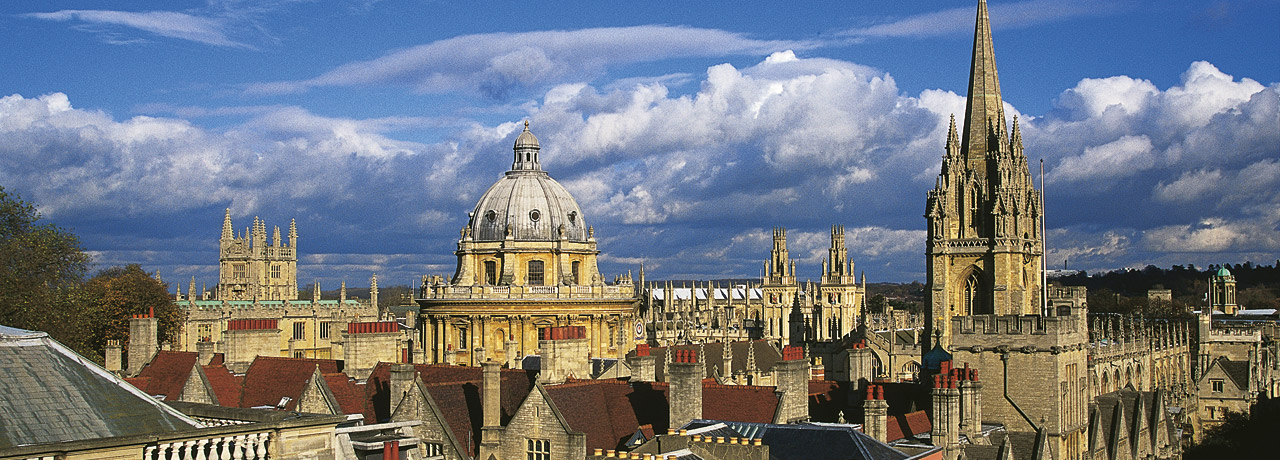
Oxford is most beautiful in the Spring. Photo taken by author.

I can understand why our soon-to-be-Saint Newman had so much trouble getting Oxford out of his blood. The place is a mirage in silver and stone. To have dwelt in such a dream-city for so long a time, to have been part of its inner life, to have shaped it according to one’s own character and to be shaped by it in turn, to watch the sun and the rain succeed in their seasons over streets imbued everywhere with a boundless sense of eternity…yes, I can see why Newman was always looking for a path back to this northern Eden. A Papal angel kept him from the gate. More prosaic barriers have turned me aside, namely, the prospects of an academic career in America.

But, in some way, the greater grief is leaving the United Kingdom. Shakespeare called Albion a swan’s nest in a stream. Having traveled from London to Birmingham, from Cardiff to York, from Tenby to Bournemouth, from Cambridge to Edinburgh, from Bath to Stratford, from Walsingham to Wakefield, in short, across the whole face of this country, I can start to see what he means. Britain possesses a peculiar beauty in grey-green and gold, something delicate and immortal that only reveals itself to an attentive foreigner. I shall miss it.

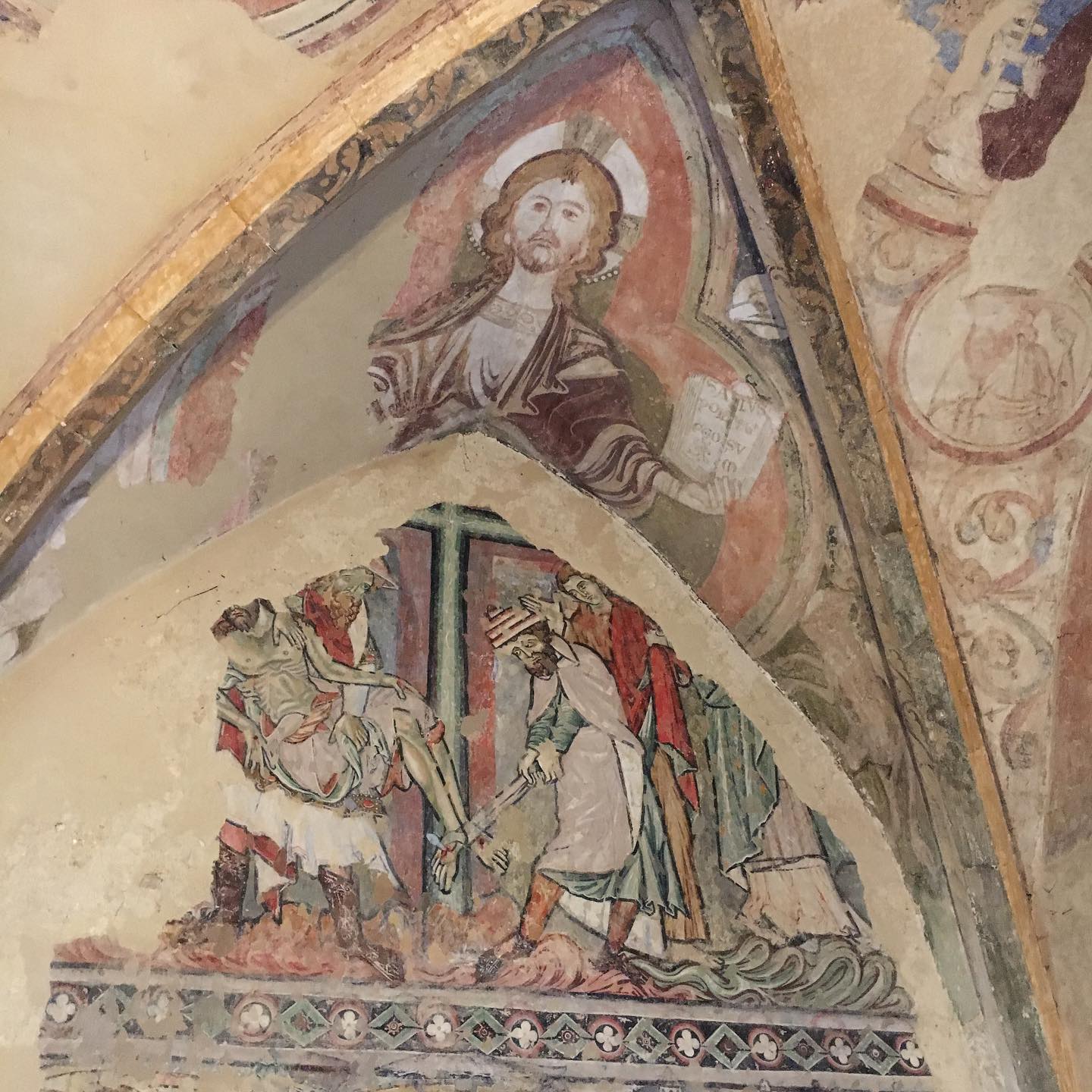
The St. Sepulchre Chapel, Winchester Cathedral. Photo taken by author.

More than that, I’ll miss the many friends I made in my two years abroad. Not just English either, though there were plenty of those – but also Canadians, Russians, Australians, Irish (both orange and green), French, Armenians, Italians, Romanians, Scots, Sri Lankans, Welsh, Poles, Chinese, and even some of my fellow countrymen. The story of my time in Oxford would not be complete without them. I will feel the absence of each, some more keenly than others.

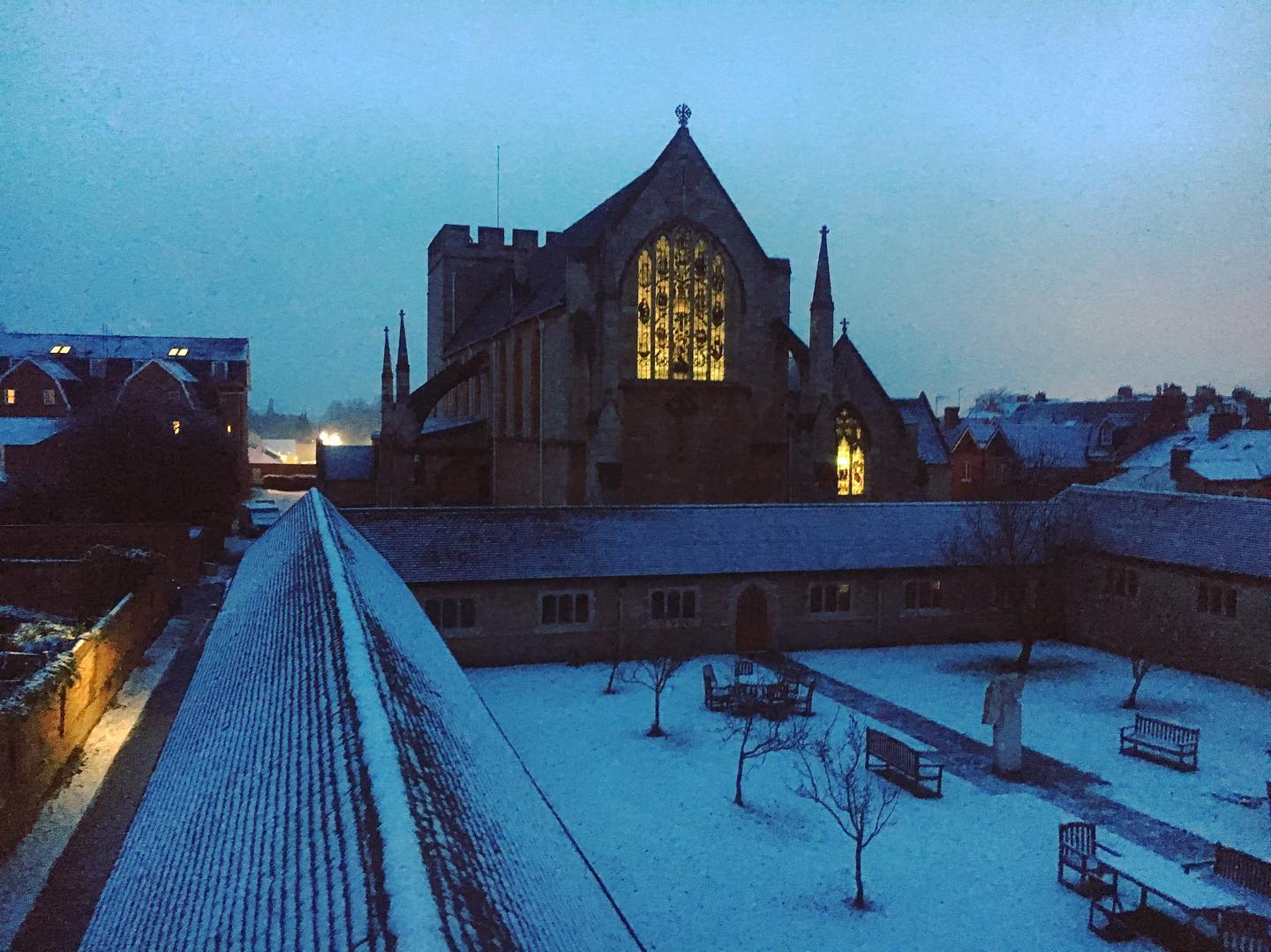
St. Stephen’s House in the snow, January 2019. Photo taken by author.

I suppose this is as good a time as ever to take stock of some of my travels through life at large. I am 24 years old. I have visited 12 countries beyond the borders of the United States:

The United Kingdom
France
Ireland
Belgium
The Netherlands
Italy
Austria
The Czech Republic
Hungary
Romania
Bermuda
Vatican City

And 14 if one includes layovers and train connections in Germany and Switzerland. I have stood at the banks of the following rivers:

The Thames in London
The Thames in Oxford (Isis)
The Thame in Dorchester (before it becomes the Thames)
The Cherwell
The Liffey
The Seine
The Amstel
The Arno
The Rhône
The Saône
The Tiber
The Danube
The Lys
The Usk
The Avon in Bath
The Loire
The Cam

I have spent quite a lot of time in churches. A few favorites in England include the Oxford Oratory, the York Oratory, the Birmingham Oratory, Magdalen College Chapel, Worcester College Chapel, Oriel College Chapel, Merton College Chapel, St. Stephen’s House Chapel, St. Etheldreda’s, Holborn, and the Anglican Shrine of Our Lady of Walsingham. My single favorite church in England remains the Brompton Oratory, as it has been since that first June day I stepped into its vast and holy darkness, four years ago.

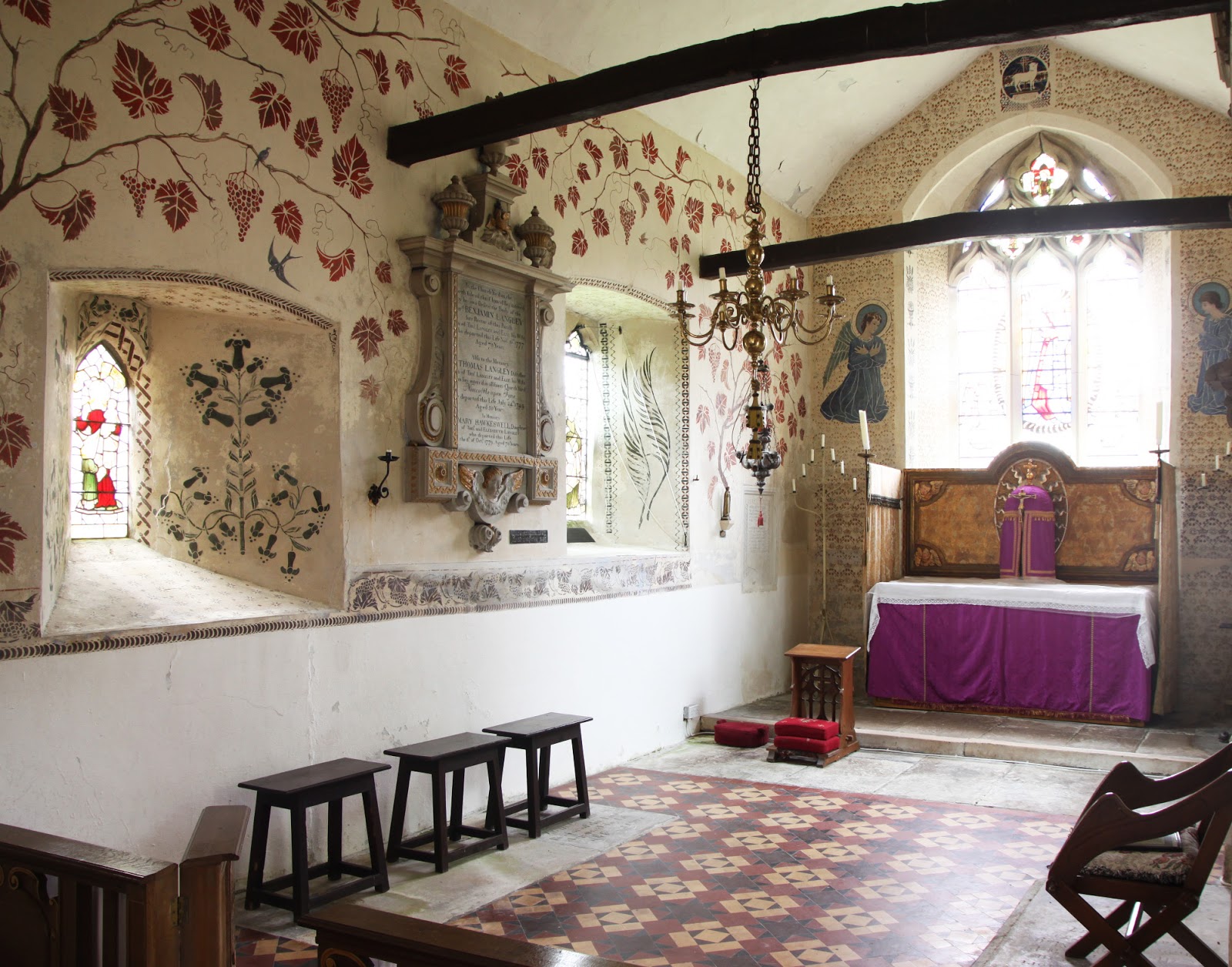
A favorite country church – St. Swithun’s, Compton Beauchamp. Full of delightfully ironic Georgian monuments and a complete refurbishment by Martin Travers in the 1930s. The setting is beautiful, too. (Source)

I have so far managed to get to the following Cathedrals (and Abbeys) in England, of which the first two are my favourites:

Winchester Cathedral
Gloucester Cathedral
Norwich Cathedral
Oxford Cathedral
St. Paul’s Cathedral
York Minster
Wakefield Cathedral
Salisbury Cathedral
St. Giles’s, Edinburgh
Westminster Cathedral
Westminster Abbey
Bath Abbey
Malmesbury Abbey

Plus some lovely country churches – East Coker, Burford, Stow-on-the-Wold, Binsey, and my very favorite, St. Swithun’s, Compton Beauchamp.

In Ireland, Silverstream Priory remains the most spiritually nourishing place I have ever been; its beauty and its holiness are always palpable.

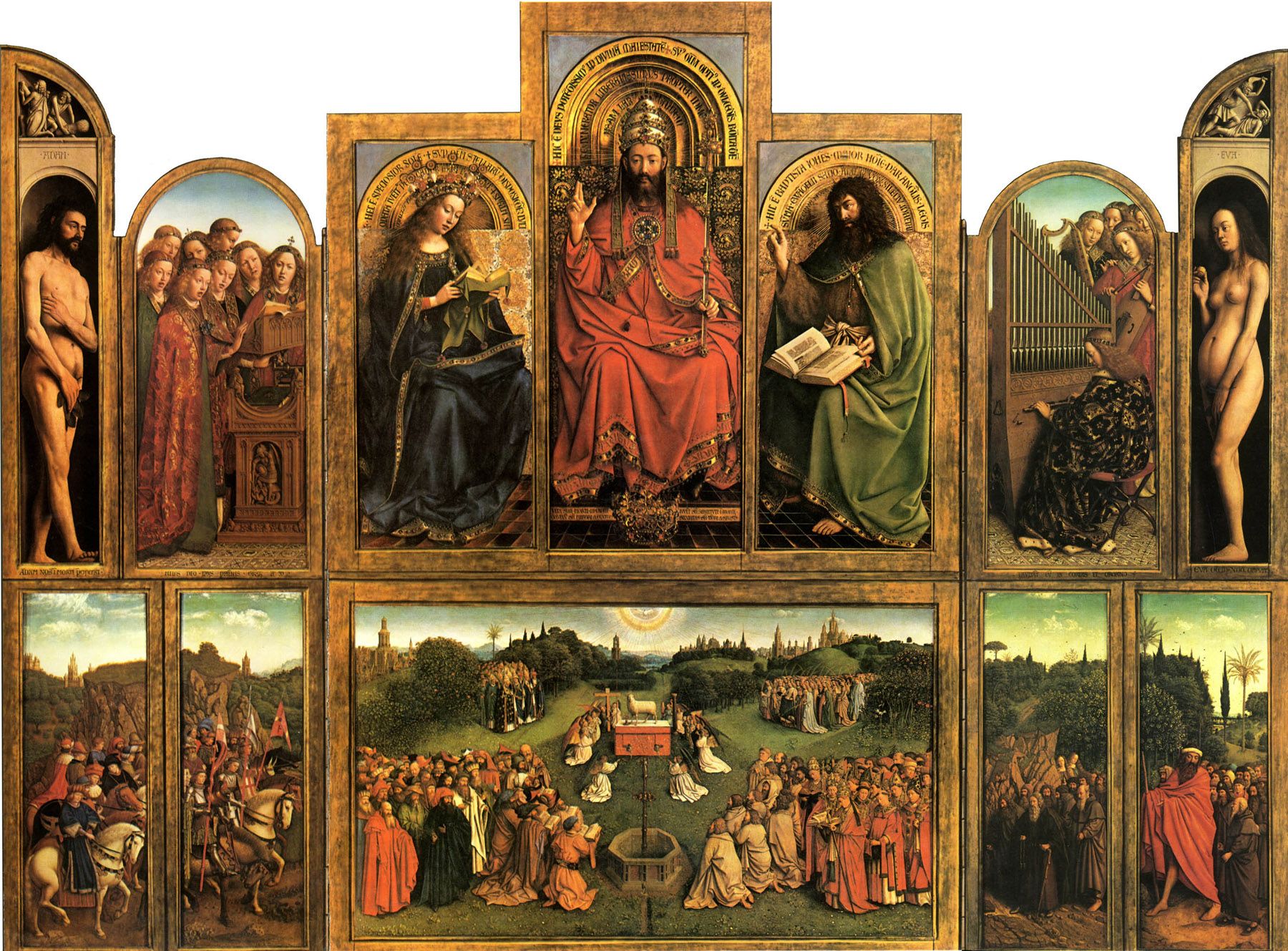
The Ghent Altarpiece. Seeing this for the first time last February in Saint Bavo’s Cathedral was one of the best moments of my two years abroad. (Source)

My travels on the Continent have been full of their own various ecclesiastical delights, so I’ll only mention a few highlights. My favorite cathedral in the world is St. Bavo’s, Ghent, which represents the perfect fusion of Gothic, Baroque, Rococo, and 19th Century styles. In France, the Chapel of the Miraculous Medal in the Rue du Bac, Saint-Étienne-du-Mont, Lyon Cathedral, Notre-Dame de Fourvière, and Saint-Just in Lyon are a few holy places I will not easily forget. Recently, I visited De Krijtberg in Amsterdam, which is the best example of painted Neo-Gothic I have seen beyond the Sainte-Chapelle. Italy is too full of wonderful churches to count, as are the old Hapsburg lands. If I were to choose a favorite in each, I suppose I would have to list the Chiesa Nuova (St. Philip Neri’s home and final resting place) in Italy, as well as Stift Heiligenkreuz in Austria, the Matthias Church in Hungary, and St. Vitus Cathedral in the Czech Republic. Though, to be fair, I visited several of these a few years ago rather than on this late sojourn in Europe.

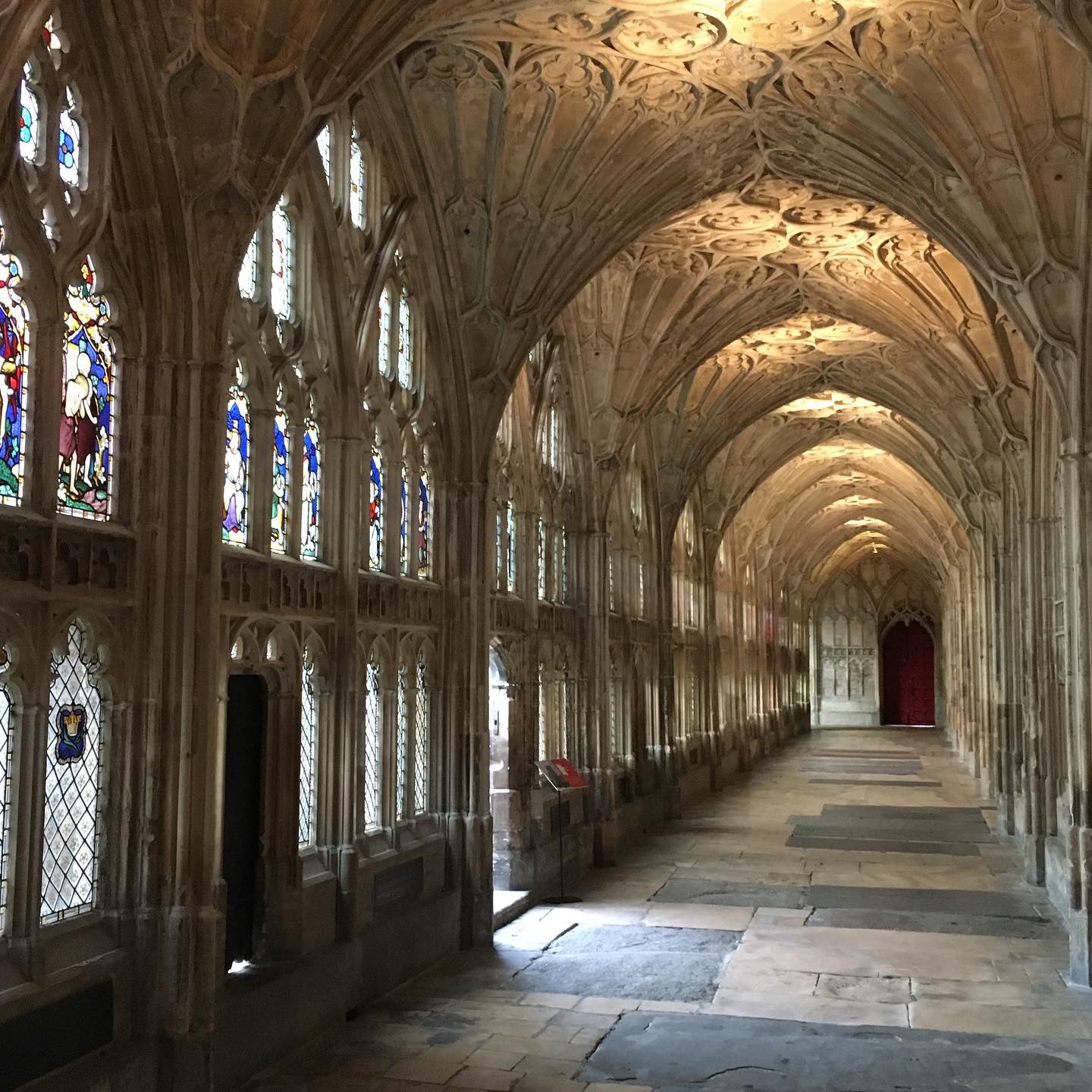
The cloisters, Gloucester Cathedral. America’s greatest fault probably lies in having no Medieval structures in situ. Photo taken by author.

I list these travels not out of any boasting, and, perhaps, not even for my readers. If anything, I do it for myself. I am more interested in remembering these places; writing about them has given me occasion to reminisce, to try and recapture something of the pleasure they gave me once.

I have been very blessed in life. I praise the Good Lord for allowing me the chance to see a bit of the world, to have done useful work, to have read interesting books, to have seen beautiful things, to have drank some good wine, and to have known such wonderful people. What more can one ask for in this brief life?

Fénelon on Perseverance in Prayer

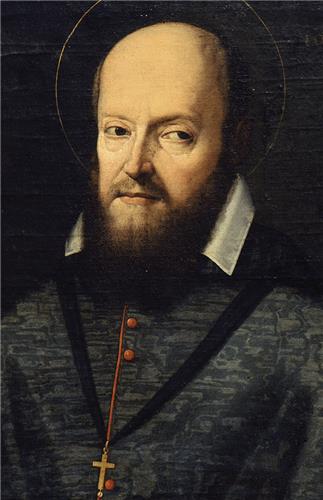
In Lent, I often return to the words of the great Bishop of Cambrai, François de Salignac de la Mothe-Fénelon. He is a perennially refreshing source of spiritual wisdom and guidance. Since we are finally in Passiontide, I thought this excerpt from Fénelon’s sermon on prayer, “The Saints Converse with God,” would be greatly edifying for all those of my readers keeping up with the Lenten Spirituality Series.

A portrait of Fénelon in excellent blue-purple episcopal garb (Source)

We must pray with perseverance. The perfect heart is never weary of seeking God. Ought we to complain if God sometimes leaves us to obscurity, and doubt, and temptation? Trials purify humble souls, and they serve to expiate the faults of the unfaithful. They confound those who, even in their prayers, have flattered their cowardice and pride. If an innocent soul, devoted to God, suffer from any secret disturbance, it should be humble, adore the designs of God, and redouble its prayers and its fervor. How often do we hear those who every day have to reproach themselves with unfaithfulness toward God complain that He refuses to answer their prayers! Ought they not to acknowledge that it is their sins which have formed a thick cloud between Heaven and them, and that God has justly hidden Himself from them? How often has He recalled us from our wanderings! How often, ungrateful as we are, have we been deaf to His voice and insensible to His goodness! He would make us feel that we are blind and miserable when we forsake Him. He would teach us, by privation, the value of the blessings that we have slighted. And shall we not bear our punishment with patience? Who can boast of having done all that he ought to have done; of having repaired all his past errors; of having purified his heart, so that he may claim as a right that God should listen to his prayer? Most truly, all our pride, great as it is, would not be sufficient to inspire such presumption! If then, the Almighty do not grant our petitions, let us adore His justice, let us be silent, let us humble ourselves, and let us pray without ceasing. This humble perseverance will obtain from Him what we should never obtain by our own merit. It will make us pass happily from darkness to light; for know, says St. Augustine, that God is near to us even when He appears far from us.

How to Celebrate Lent like a French Princess

Mesdames Victoire, Adélaide, and Louise, three of the pious daughters of Louis XV, known collectively as “Mesdames de France” or “Mesdames Tantes” after the accession of Louis XVI. Only Adélaide married; Louise later became a Carmelite prioress at Saint-Denis before having the extremely good fortune to die in 1787. Source

The inimitable John McManners, late Regius Professor of Ecclesiastical History at the University of Oxford, provides a window into the world of late Ancien Régime piety (or, rather, its dearth) in his monumental Church and Society in Eighteenth-Century France. He writes:

“To what extent was the fast of Lent observed? It was commonly said that the austerities of the penitential season were endured only by the poor. According to the Lenten pastoral letter of the archbishop of Sens in 1779, the rich often obtained medical certificates allowing them to eat what they liked. This was the fashionable thing to do. ‘Look at our bourgeois citizen and his wife in their (draper’s) shop, observing Lent strictly,’ said teh Jesuit Père Croisset in his Parallel des moeurs de ce siècle et la morale de Jesus-Christ (1727): ‘their fortune changes…and scarcely has the tape measure dropped from their hands than you see them putting on airs like people of quality and asking for dispensations from fasting.’ This class distinction was observed even in the kitchens of the Bastille: on the first Friday of his imprisonment, Marmontel gloomily at the meatless meal provided, not knowing that it had been meant for his servant. In any case, there were plenty of succulent dishes within the rules, for those who could afford them.

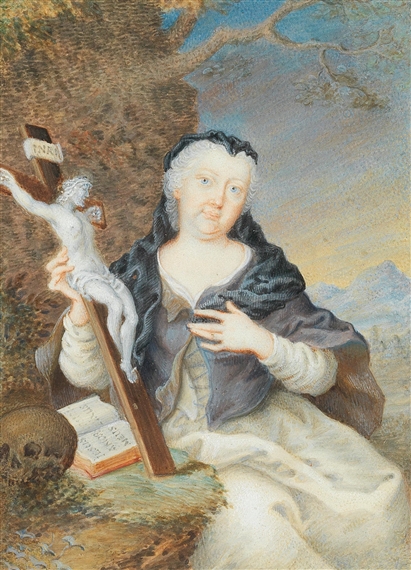
Empress Maria Theresa of Austria in the garb of a penitent (Source)

“Lent was the season to have tubs of fresh butter sent in from the countryside, and to ensure plentiful supplies of fish and water birds (the tes of an allowable fowl was: did the gravy remain uncongealed after fifteen minutes? – so a bishop gravely advised Mme Victoire, Louis XV’s pious but comfortable daughter). The peasant, whose existence is a perpetual Lent anyway, said Voltaire, awaits episcopal permission to eat his farmyard eggs, while the bishop himself looks forward to expensive dishes of soles. Certainly, things were well organized at Versailles. ‘A ray of grace has descended on us,’ wrote the duc de la Vallière in April 1756; ‘we fasted for three days a week during the whole of Lent, but on condition that we suffered no deprivations.’ Preachers were well aware that those with money and leisure could organize an attractive Lent for themselves: an occasional walk in a procession (a penitent’s garb was no disadvantage to a good-looking woman), extra time in bed to recuperate from privations, and food more delicately cooked and served than usual. ‘For some – God grant that there are none in my congregation today,’ thundered the Oratorian Surian, ‘Lent is a more agreeable time, in a sophisticated way, than the other seasons of the year.'”

(Vol. I, pg. 86-87).

Ah, the trials of the penitential season!

St. Francis de Sales Doesn’t Dance

Here is an extremely amusing (and, in its own way, edifying) little chapter from Introduction to the Devout Life. I’ve only just encountered it by chance. It’s passages like this that rather make one understand why Evelyn Underhill summed up his teaching in the one line, “Yes, indeed, my dear Duchess, as Your Grace so truly observes, God is love.”

One can almost hear the Gentleman Saint sipping his tea at the end of each numbered item in the list below.

CHAPTER XXXIII. Of Balls, and other Lawful but Dangerous Amusements.

DANCES and balls are things in themselves indifferent, but the circumstances ordinarily surrounding them have so generally an evil tendency, that they become full of temptation and danger. The time of night at which they take place is in itself conducive to harm, both as the season when people’s nerves are most excited and open to evil impressions; and because, after being up the greater part of the night, they spend the mornings afterwards in sleep, and lose the best part of the day for God’s Service. It is a senseless thing to turn day into night, light into darkness, and to exchange good works for mere trifling follies. Moreover, those who frequent balls almost inevitably foster their Vanity, and vanity is very conducive to unholy desires and dangerous attachments.

I am inclined to say about balls what doctors say of certain articles of food, such as mushrooms and the like—the best are not good for much; but if eat them you must, at least mind that they are properly cooked. So, if circumstances over which you have no control take you into such places, be watchful how you prepare to enter them. Let the dish be seasoned with moderation, dignity and good intentions. The doctors say (still referring to the mushrooms), eat sparingly of them, and that but seldom, for, however well dressed, an excess is harmful.

So dance but little, and that rarely, my daughter, lest you run the risk of growing over fond of the amusement.

Pliny says that mushrooms, from their porous, spongy nature, easily imbibe meretricious matter, so that if they are near a serpent, they are infected by its poison. So balls and similar gatherings are wont to attract all that is bad and vicious; all the quarrels, envyings, slanders, and indiscreet tendencies of a place will be found collected in the ballroom. While people’s bodily pores are opened by the exercise of dancing, the heart’s pores will be also opened by excitement, and if any serpent be at hand to whisper foolish words of levity or impurity, to insinuate unworthy thoughts and desires, the ears which listen are more than prepared to receive the contagion.

Believe me, my daughter, these frivolous amusements are for the most part dangerous; they dissipate the spirit of devotion, enervate the mind, check true charity, and arouse a multitude of evil inclinations in the soul, and therefore I would have you very reticent in their use.

To return to the medical simile;—it is said that after eating mushrooms you should drink some good wine. So after frequenting balls you should frame pious thoughts which may counteract the dangerous impressions made by such empty pleasures on your heart.

Bethink you, then—

1. That while you were dancing, souls were groaning in hell by reason of sins committed when similarly occupied, or in consequence thereof.

2. Remember how, at the selfsame time, many religious and other devout persons were kneeling before God, praying or praising Him. Was not their time better spent than yours?

3. Again, while you were dancing, many a soul has passed away amid sharp sufferings; thousands and tens of thousands were lying all the while on beds of anguish, some perhaps untended, unconsoled, in fevers, and all manner of painful diseases. Will you not rouse yourself to a sense of pity for them? At all events, remember that a day will come when you in your turn will lie on your bed of sickness, while others dance and make merry.

4. Bethink you that our Dear Lord, Our Lady, all the Angels and Saints, saw all that was passing. Did they not look on with sorrowful pity, while your heart, capable of better things, was engrossed with such mere follies?

5. And while you were dancing time passed by, and death drew nearer. Trifle as you may, the awful dance of death must come, the real pastime of men, since therein they must, whether they will or no, pass from time to an eternity of good or evil. If you think of the matter quietly, and as in God’s Sight, He will suggest many a like thought, which will steady and strengthen your heart.

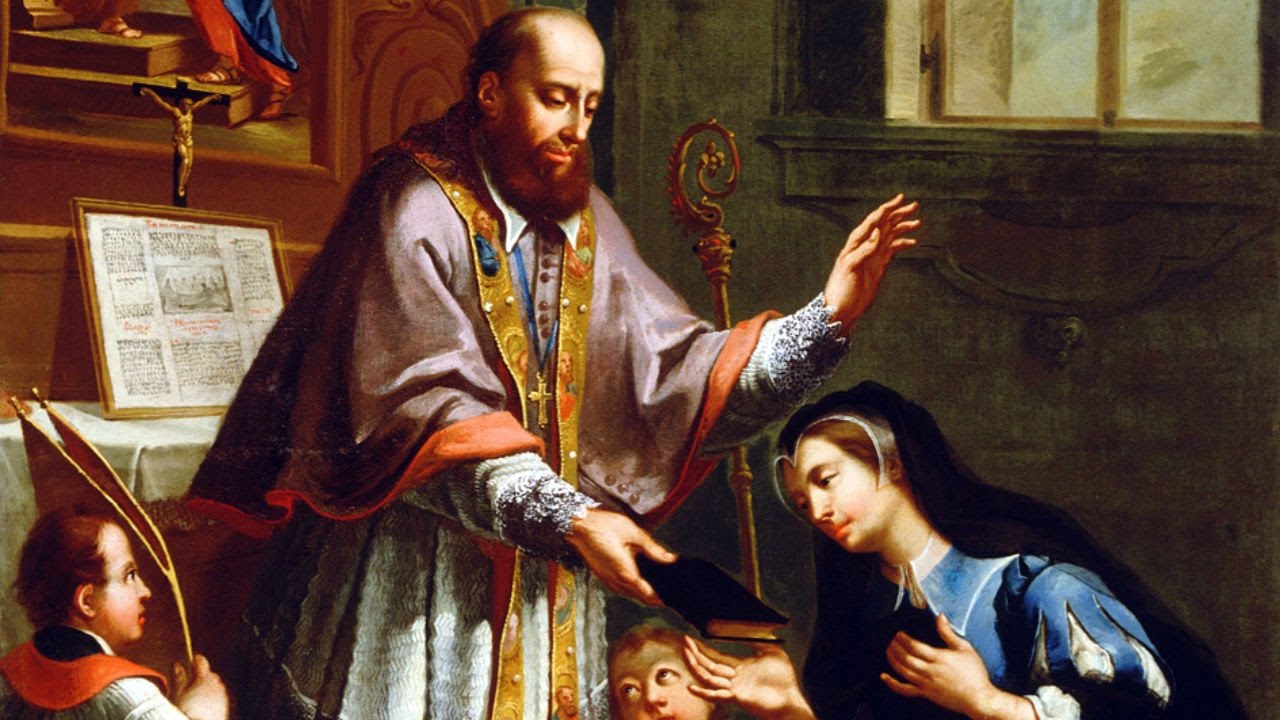
St. Francis de Sales, giving you the side-eye.

The Funerary Rites of James II

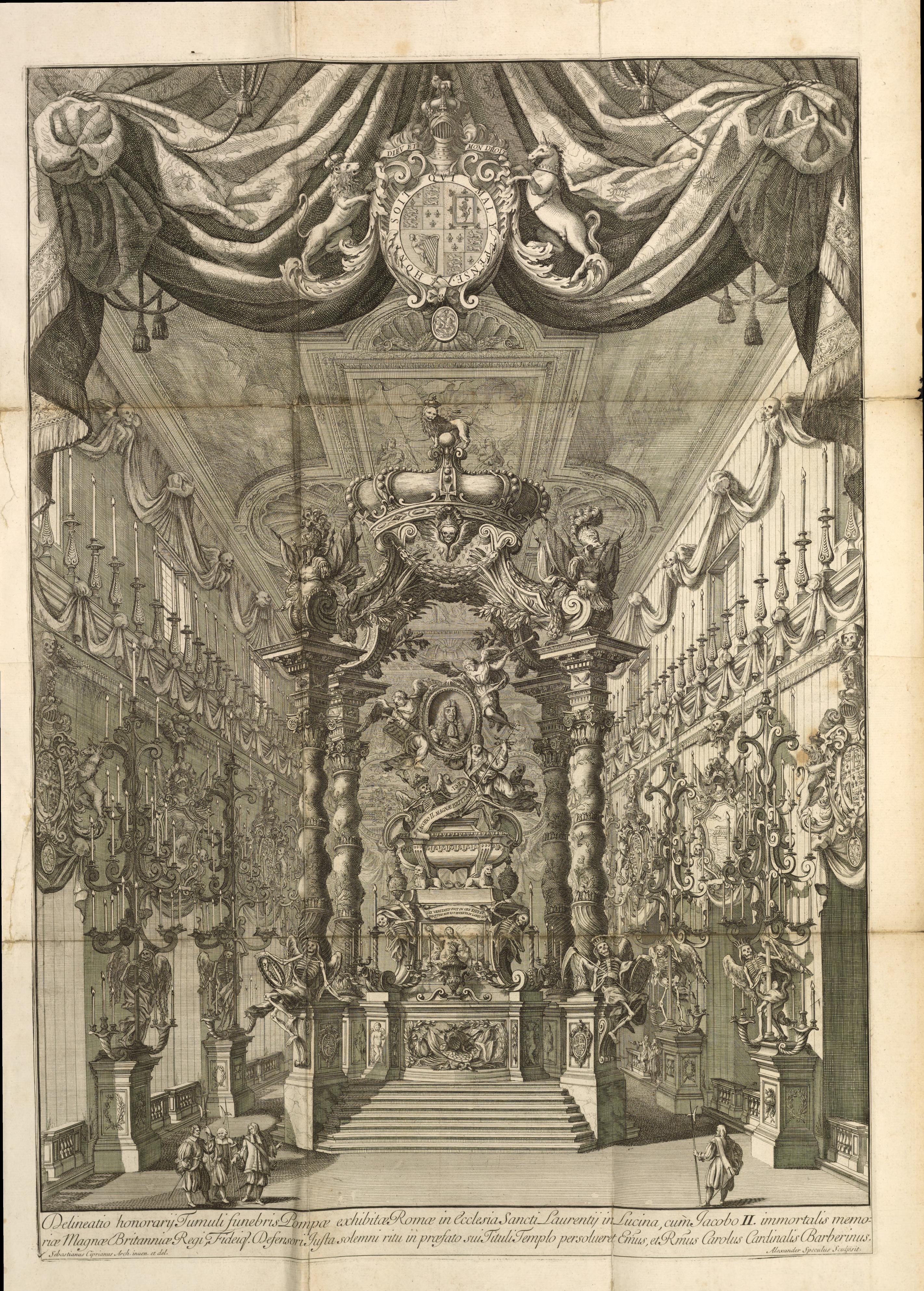
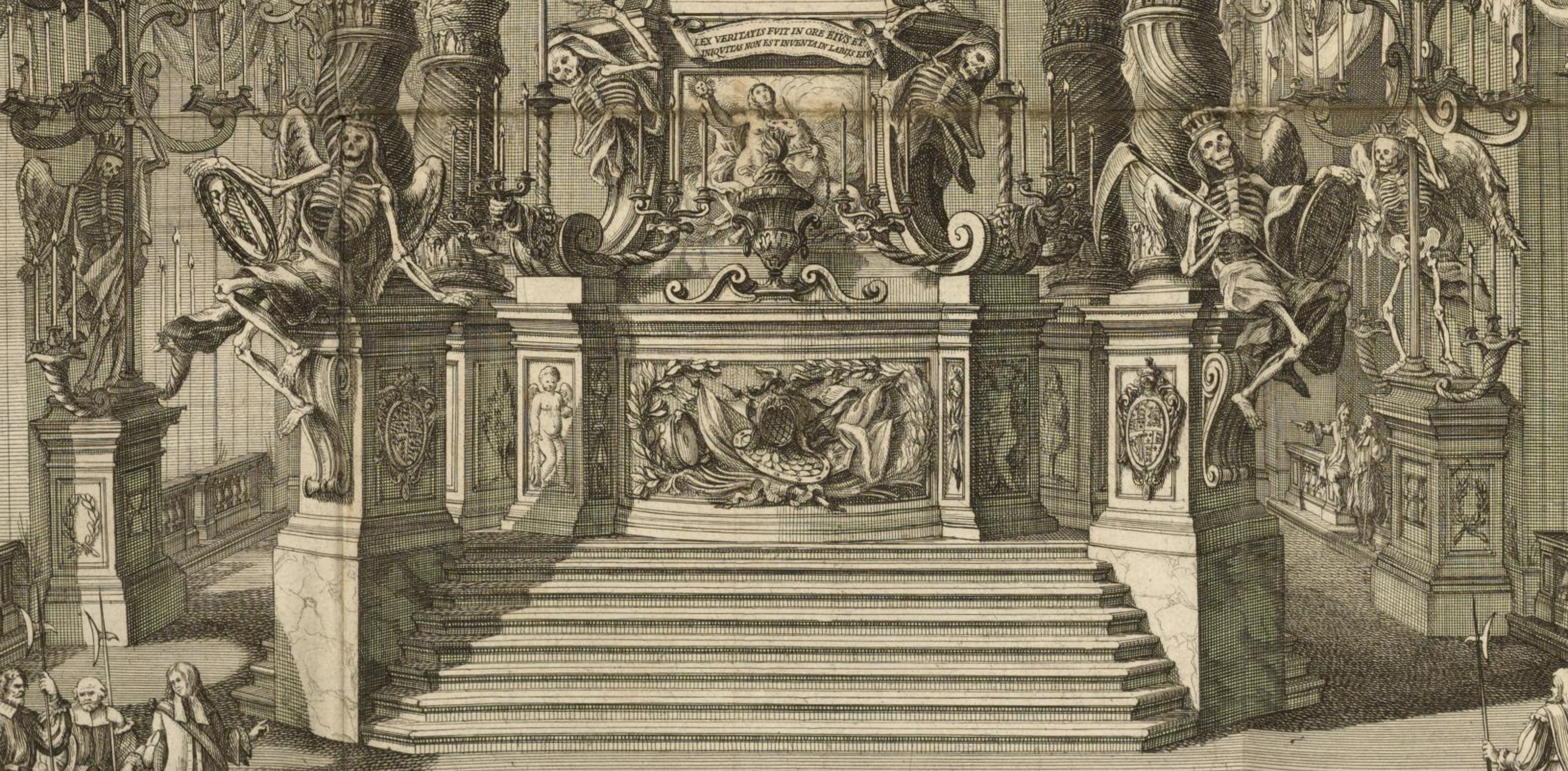
sacraexequialiai00aqui_00062.jpg

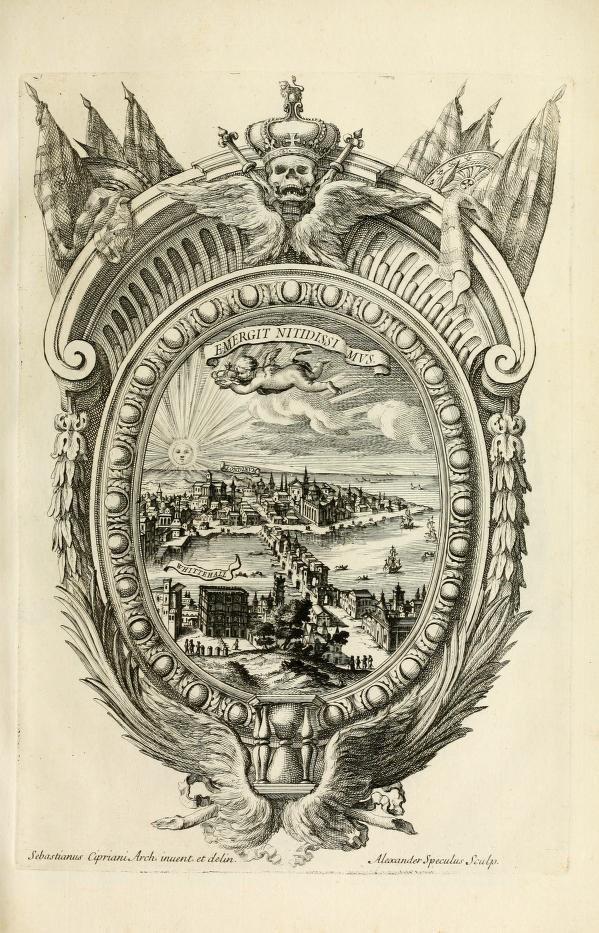
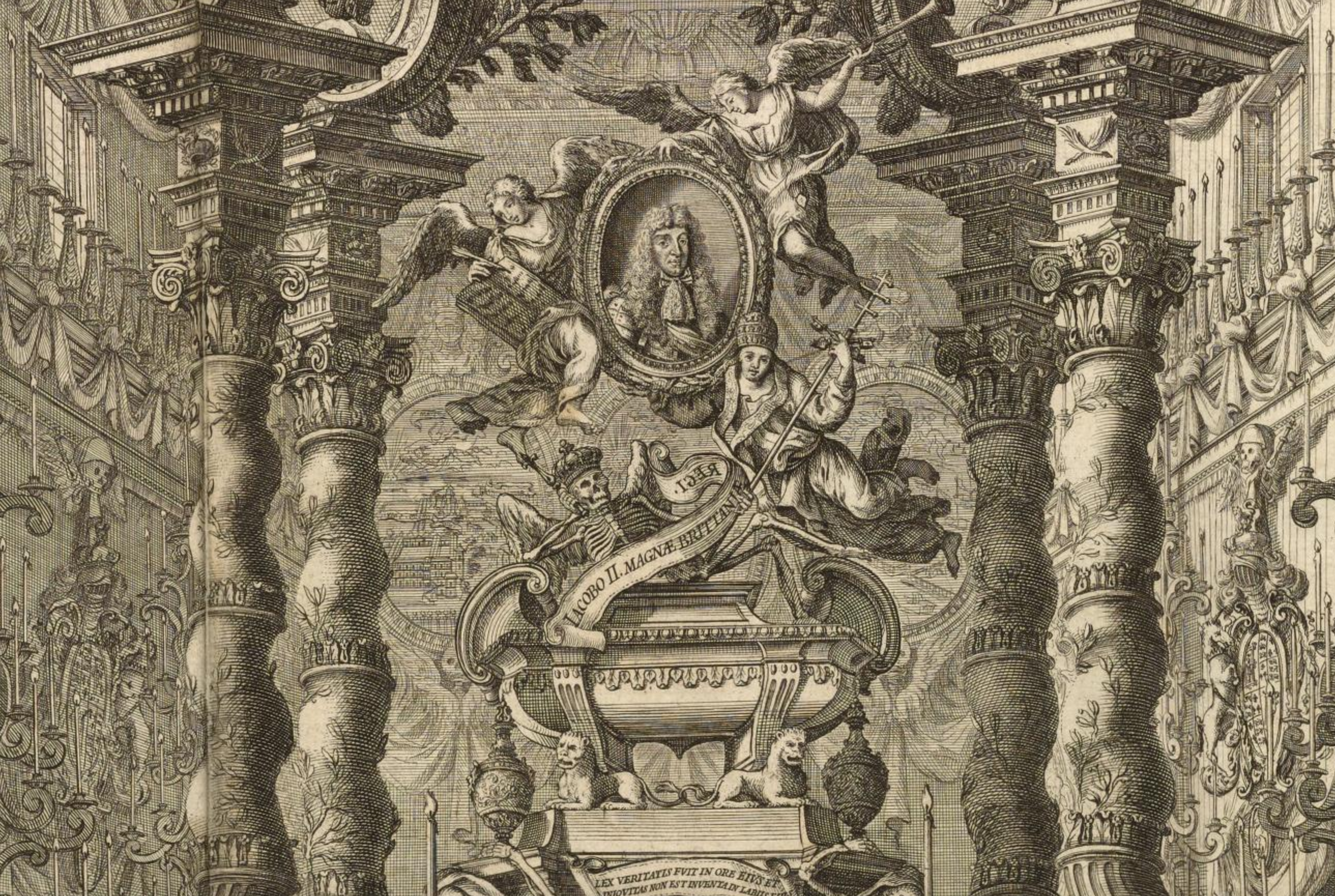
Frontispiece of the Sacra Exequialia. Note the skeletons at the base of the candelabra and baldachin columns. (Source)

A forgotten Latin text of 1702, the Sacra Exequialia in Funere Jacobi II, provides some wonderful views of early modern Catholic funerary rites. Or at least, as those rites were employed for dead monarchs. The central text is Cardinal Barberini’s funeral oration for the king at Rome. Fun fact: if you Google “Exequialia,” it’s the first and one of the only results. While it may not be a hapax legomenon, it’s the sort of rare word that makes epeolaters and logophiles drool.

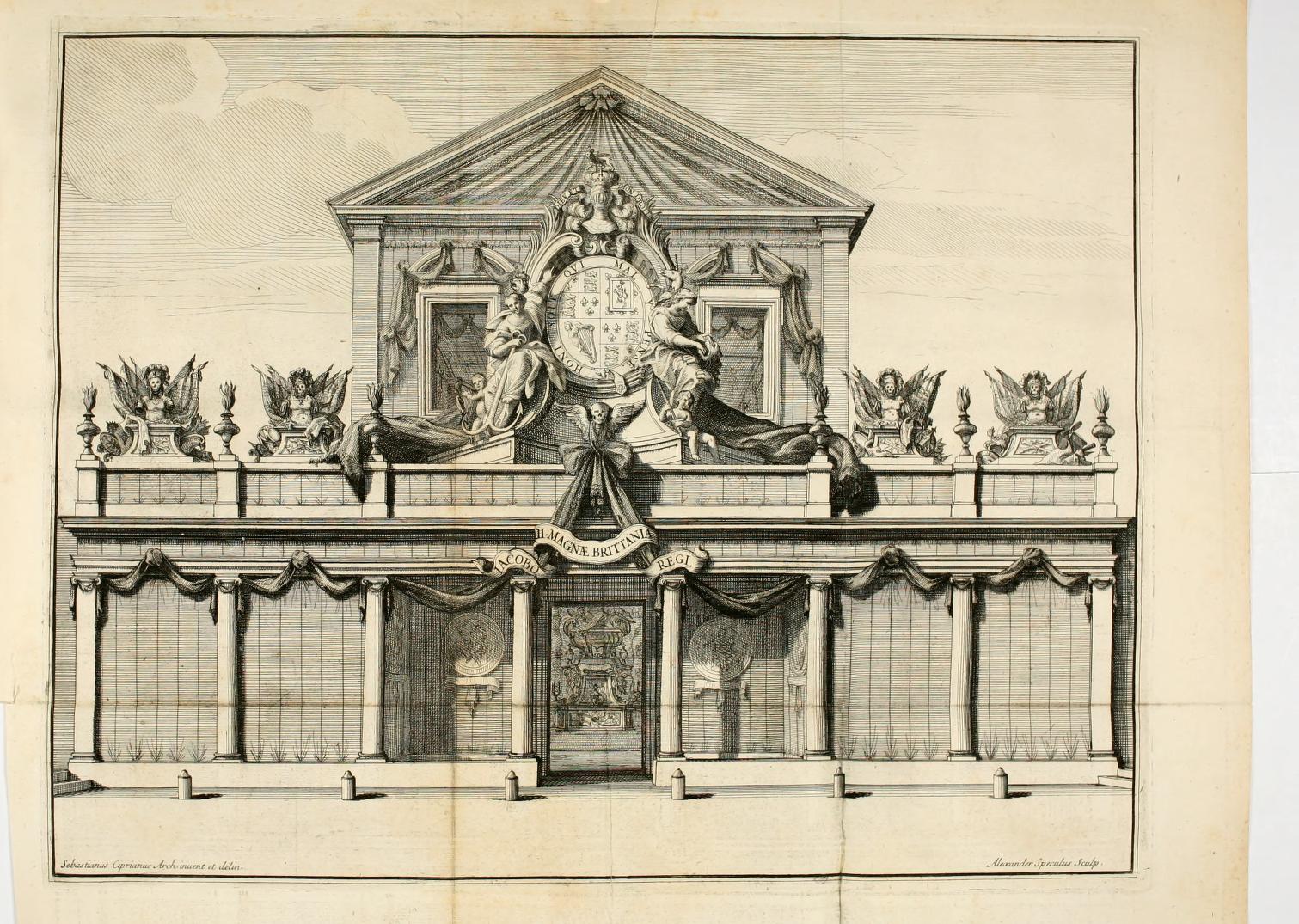
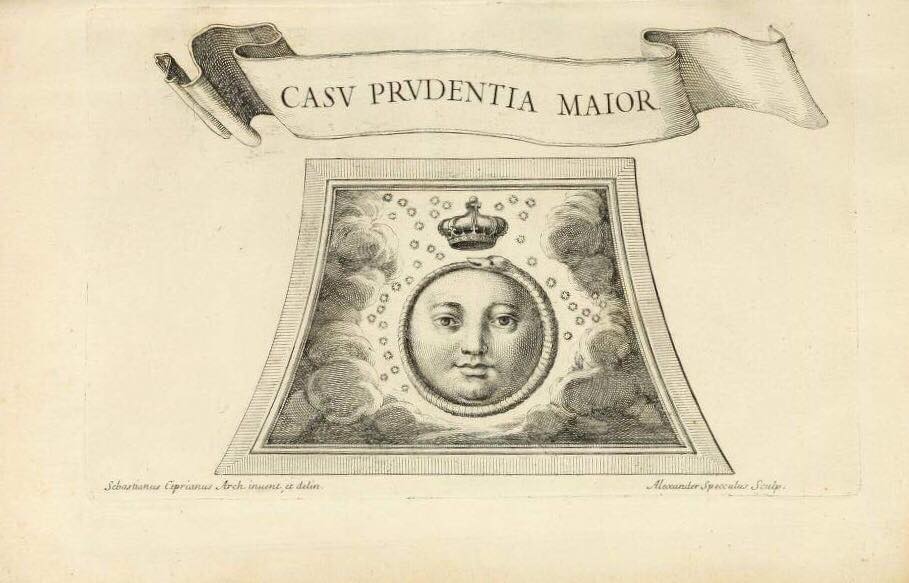
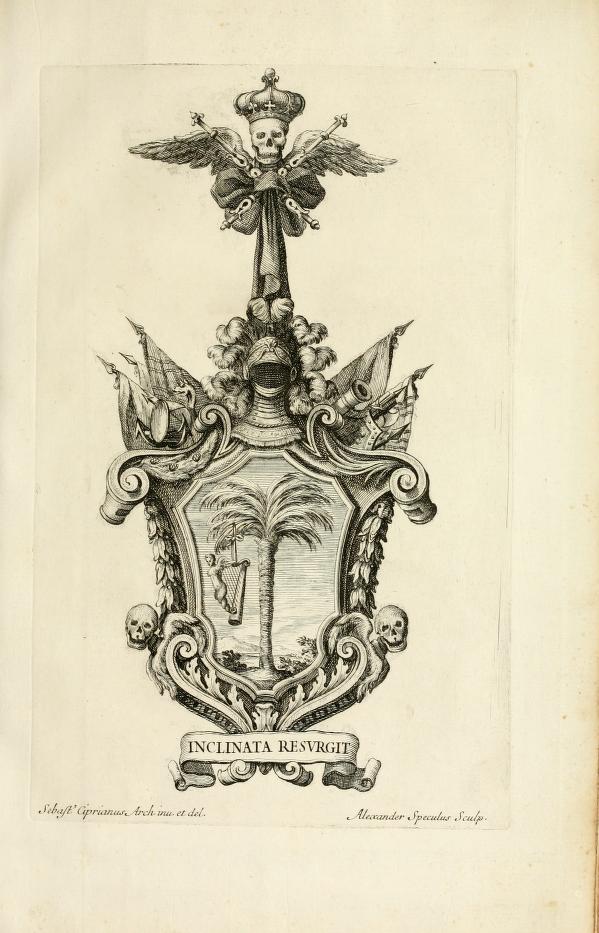
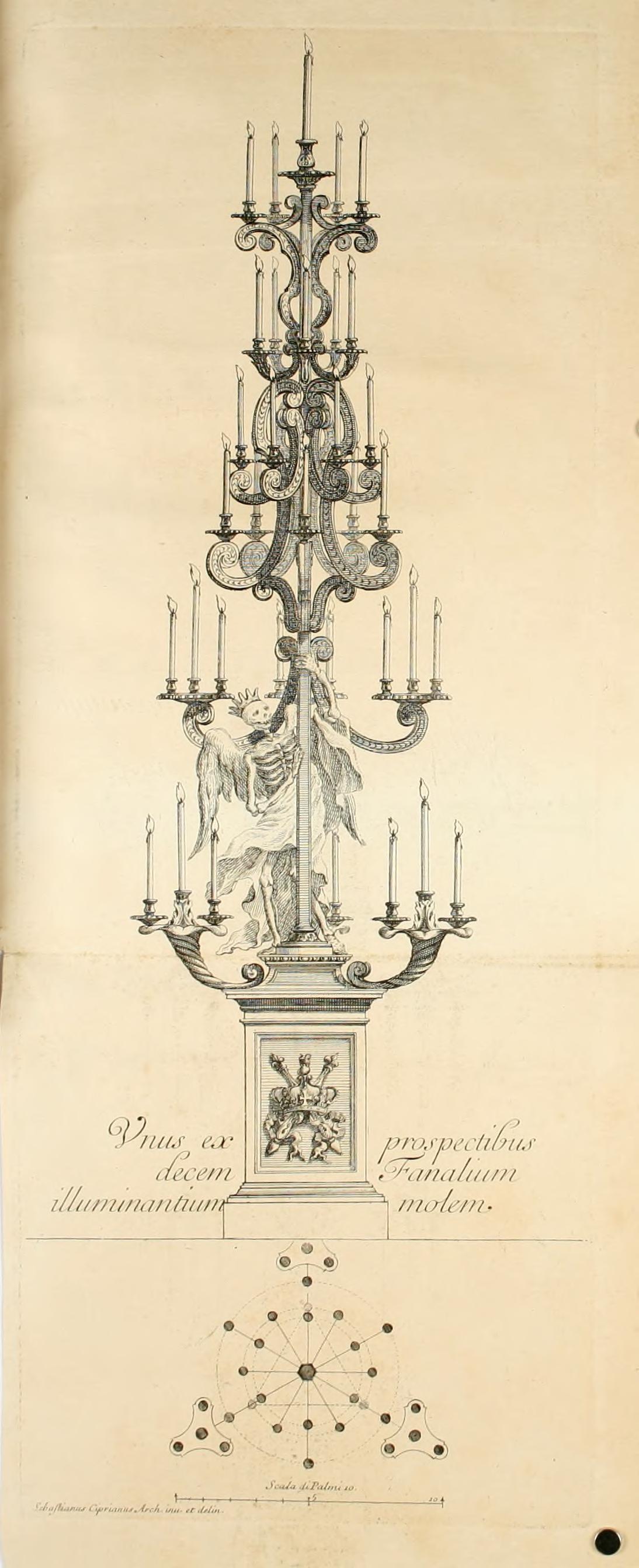
At any rate, I’m not writing this post because of Barberini’s text. The book’s more delicious feature is its several illustrations, including the wild Baroque decoration of the church of San Lorenzo in Lucina as well as several emblems.

sacraexequialiai00aqui_0032

The decorations of San Lorenzo in Lucina for the occasion. (Source)

Of course, James II died in Paris and buried in the English Benedictine church there. It is a testament to the respect he was held in by the Papal court that a Cardinal of such standing as Carlo Barberini, Archpriest of the Vatican Basilica, should preach an oration for him in Rome.

SacraExequialiaSunOurobouros

One of the marvellous emblems in the text. Note the Ouroboros. (Source)

sacraexequialiai00aqui_0041

An image of London. There are similar views of Paris and Rome. All were at hung at the high altar behind the catafalque and its baldachin. (Source)

sacraexequialiai00aqui_0061

Another moral emblem. I’m particularly fond of this one as the harp recalls not only the exile in Babylon (and thus the Jacobite exile) but also the valiant Irish defense of James’s claim to the throne in 1689. These also would have adorned the walls of the church alongside the King’s arms. (Source)

sacraexequialiai00aqui_0066

A closer view of the skeletal flambeaux. One can never have too many at a funeral. (Source)

Screen Shot 2018-11-02 at 10.07.34 AM.png

Jacobite emblem accompanying the text of the Oration. (Source)

Screen Shot 2018-11-02 at 10.10.05 AM.png

A closer view of the frontispiece. Note the Pope flying over the catafalque. (Source)

Screen Shot 2018-11-02 at 10.12.19 AM.png

Here you can see the spooky scary skeletons all around the room. (Source)


Advice from a French Nun

Screen Shot 2018-10-28 at 10.13.24 PM.png

A portrait of Mother Mectilde de Bar adoring the Blessed Sacrament. (Source)

Sometimes readers ask me about more information on Mother Mectilde de Bar (1614-1698), the saintly foundress of the Benedictine Nuns of Perpetual Adoration of the Most Blessed Sacrament of the Altar. I would of course direct those who read French or Italian to any of the several biographical studies about Mother Mectilde that have come out in those languages. However, I would perhaps more eagerly urge my readers to a series of recent posts at Vultus Christi presenting what is, I believe, the first English translations of some of Mother Mectilde’s spiritual letters. Here they are with the titles the translator has given them at VC.

I. “So that I might begin to live in simplicity, like a child.”

II. “On the Meaning of Desolation and Sufferings.”

III. “The state in which you find yourself is of God.”

IV. “The divine labourer who works in you.”

V. “Yet ever thou art at my side.”

VI. “Nothingness doesn’t even attach itself to nothingness.”

VII. “Some sayings of Mother Mectilde.”

VIII. “He sets fire everywhere.”

IX. “All our discontent comes from self-will.”

And on top of all that, there’s a letter from the lay mystic Jean de Bernières to Mother Mectilde. Bernières is a good example of someone who, though posthumously condemned as a “Quietist,” is now being recovered as a source of valuable mystical insight. We have seen the same happen to Benet Canfield before, and it may yet occur to someone like Pietro Matteo Petrucci. More work needs to be done in this area. At any rate, translation of these early modern mystical works is badly needed.

Both as a practicing Catholic and as an historian of early modern Catholicism, I am encouraged that these works are being put into English for the first time. The English-speaking world is now getting a much better sense of the importance of this unique tradition within the Benedictine family. More translations, we are told, are coming. I eagerly await their publication.


On Gallicanism and Ultramontanism

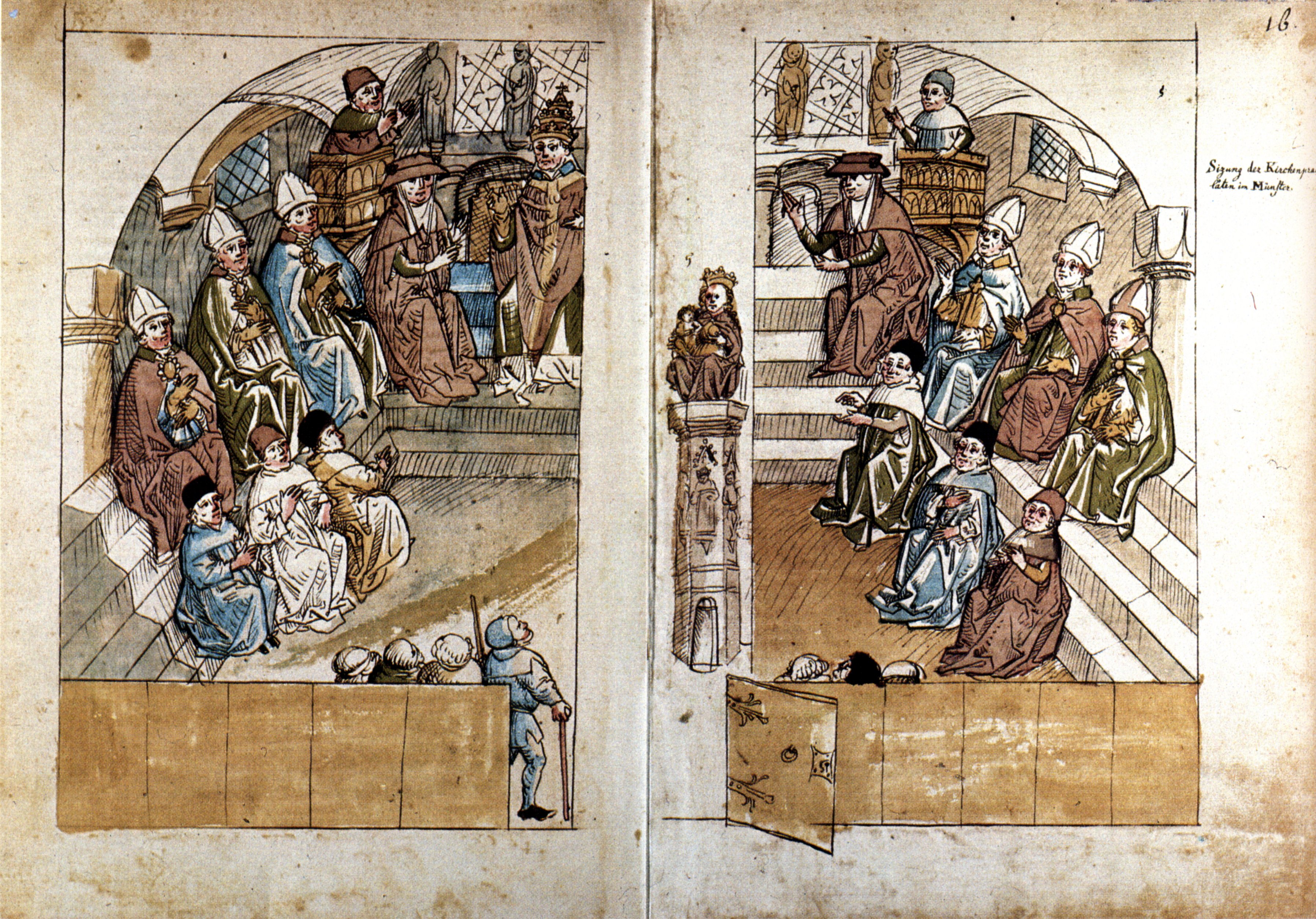
CouncilofConstance.jpg

Scene from the Council of Constance, the Sixteenth Ecumenical Council (Source)

Over at Notre Dame’s Church Life Journal, there are two important pieces worth your time. The first, Dr. Taylor Patrick O’Neill’s “A Defense of Ultramontanism Contra Gallicanism,” is a theological analysis of the recent use of “ultramontanism” as a pejorative in Catholic discourse. Dr. O’Neill, a Neo-Thomist theologian, suggests that Ultramontanism is “the golden mean” by which to preserve a healthy and authentically Catholic respect for the Papacy. He writes:

But how does the historical usage of the term “ultramontane” hold any significance for us today? Given that the term arose as an insult against those who challenged the claims of Gallicanism, and given that those who championed papal primacy over local kings and bishops were legitimized at Vatican I, the term ought not to be associated with heterodoxy but rather orthodoxy.

To equate ultramontanism and orthodoxy is an extraordinary claim. While Dr. O’Neill recognizes that there are some excessively papalist versions of ultramontanism – a phenomenon he would prefer to call “super-ultramontanism” or “ultra-ultramontanism” – he fails to escape the very alienation from the term’s “historical significance” that he attempts to address.

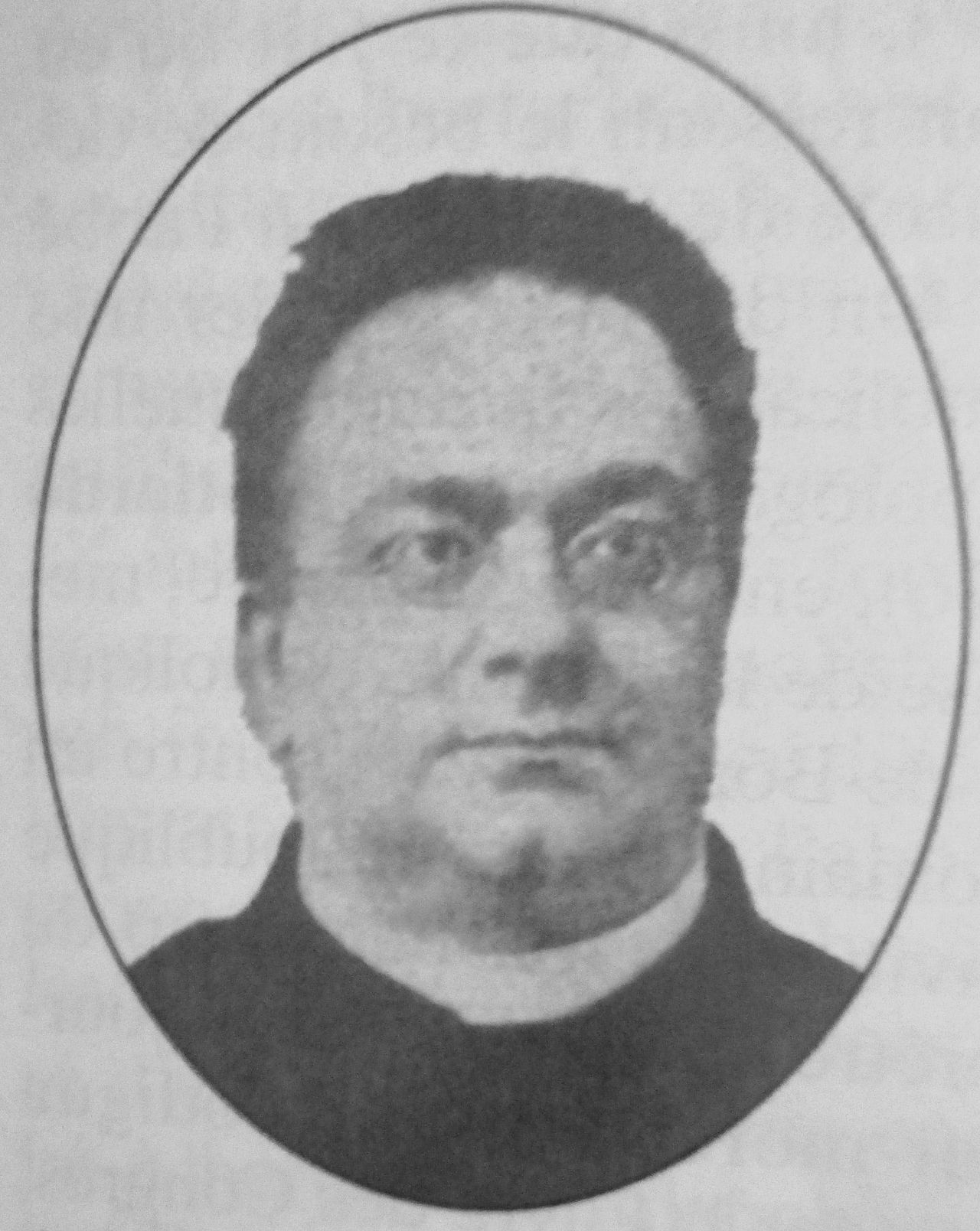
Benigni_Umberto

Umberto Benigni (1862-1934), Ultramontane church historian. (Source)

Take, for instance, his citation of Umberto Benigni’s article on “Ultramontanism” in the 1912 Catholic Encyclopedia. The passage O’Neill cites reads:

For Catholics it would be superfluous to ask whether Ultramontanism and Catholicism are the same thing: assuredly, those who combat Ultramontanism are in fact combating Catholicism, even when they disclaim the desire to oppose it.

If O’Neill had borrowed his words merely for a theological point, we might pass over the citation. But his is an historical judgment, not primarily a theological one. O’Neill doesn’t mention that Benigni is an out-dated, partisan, and sectarian Church historian whose article manifests those faults. It is hard to imagine any contemporary historian making much use of Benigni, whose other works include a volume entitled Ritual Murder Among the Jews (Belgrade, 1926-29).

Ultramontanism arose as a coherent and self-identified ecclesiological tendency under the pressures of post-Napoleonic Europe. While Papalism has always existed in the Church, the emergence of a self-consciously “Ultramontane” party before and after Vatican I was bound up with the Catholic response to modernity. And in some places – especially France – it was synonymous with less savory elements such as antisemitism. This fact alone hardly invalidates O’Neill’s theological point. But if we want to look at the term’s “historical significance,” I see little way to escape the actual history. “Historical significance” might just as well mean “connotations” as any sort of precise theological definition. O’Neill delimits ultramontanism by confining it to the realm of ideas as a functionally timeless truth. Yet he mires Gallicanism in the muck of human history. Ultramontanism is just the consistent teaching of the Church; Gallicanism, by contrast, is the small and fractious complaint of tendentious and self-interested minorities such as French kings and the Old Catholic schismatics. This discursive move may not be disingenuous, but it does set up a problematic historical imbalance. Ultramontanism is just as historically-conditioned as Gallicanism. Both involve something rather more than mere ideas – they enlisted social, political, and ecclesiastical movements, not always with very good results. And unfortunately, some of O’Neill’s history is simply incorrect.

At the same publication, the historian Dr. Shaun Blanchard’s “A Quasi-Defense of Gallicanism” provides some helpful correctives. It is a nuanced and well-argued piece (and well-sourced, too – Dr. Blanchard has seen fit to provide his readers with eight end-notes referring to reputable historical literature).

Against O’Neill’s suggestion that Gallicanism only arose after the Reformation, Blanchard correctly notes that the Medieval Conciliarist tradition most eloquently expressed by Jean Gerson (1368-1429) and the fathers of the Council of Constance (1414-18) provide ample groundwork for what would later be called “Gallicanism.” And Dr. Blanchard is right to point out that “Gallicanism” was never just one phenomenon, but a disparate tendency that crystallized into different forms of resistance to Papal centralization – not all of which were at play in Vatican I. Moreover, Blanchard correctly argues that, against Benigni and O’Neill’s interpretation, the Gallican minority at Vatican I preserved certain ecclesiological truths later vindicated by Vatican II. One could go on. Blanchard provides a great deal more historical background than O’Neill in support of his point.

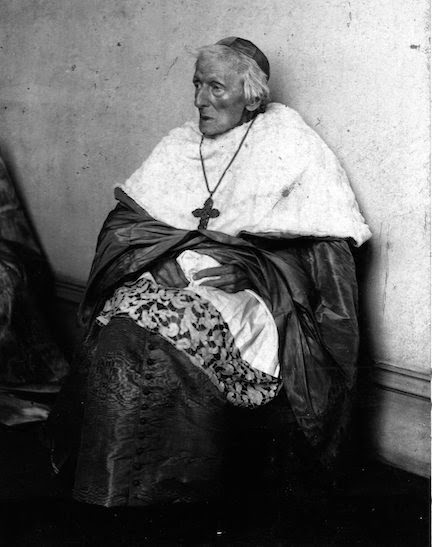
blessed_neman_winter_cappa

Cardinal Newman in his winter cappa. The man was no Ultramontanist. (Source)

Blanchard’s defense of Gallican thinkers such as Gerson, Bossuet, and Fleury is admirable. One could add to their names that of Cardinal Newman, whose soft-conciliarist ecclesiology earned the ire of ultramontanists like Cardinal Manning and W.G. Ward and Monsignor George Talbot, who famously wrote to Manning,

What is the province of the laity? To hunt, to shoot, to entertain? These matters they understand, but to meddle with ecclesiastical matters they have no right at all, and this affair of Newman is a matter purely ecclesiastical…Dr. Newman is the most dangerous man in England, and you will see that he will make use of the laity against your Grace.

None of this broader historical context appears in O’Neill’s piece. Perhaps it’s a little unfair to demand it, insofar as O’Neill is more interested in our contemporary debates than in the genealogy of the terms at play. But if we are to properly recognize “the historical significance” of ultramontanism, then we can’t really dodge the issue. If O’Neill is right to suggest that “the term ought not to be associated with heterodoxy but rather orthodoxy,” then men like Newman are beyond the pale of orthodoxy. And that seems like rather an impoverished vision of the Catholic intellectual life. I will conclude with Dr. Blanchard’s own measured words on the matter.

My point in this qualified defense of Gallicanism is not that we should “return” to Gallicanism, if such a thing were even possible. Neither must we equate ultramontanism with Catholic orthodoxy, simply because ultramontanes triumphed at Vatican I. Catholic orthodoxy is too big to be equated with either. The Catholic faith is big enough and dynamic enough to include what is good and true in ultramontanism and in Gallicanism, and likewise to reject what is harmful, false, or exaggerated in both.

Read them both.