“And the Light Shineth in Darkness; and the Darkness Comprehended It Not.”

Cybele.jpg

Cybele, the Magna Mater, on her triumphal car pulled by two lions. Has there ever been a more perfect likeness to the Whore of Babylon? (Source)

March 24th is the traditional Dies Sanguinis of the ancient Roman calendar, when the painted eunuch-priests of Cybele and the votaries of Attis in their Phrygian caps would join with the servants of warlike Bellona in the most vile public atrocities. On that day, hideous pipes stirred the wicked throng into a fever of unutterable terror, and as the revelers danced in an ever more demoniac fashion, they mutilated their flesh and let out copious torrents of blood upon the stones of forum and temple. Then they drank from their own spilled blood, descending even lower than the beasts in their frenzy and taking on instead the aspect of lustful aegypans. The summit of these evil ecstasies came when, before the altar of the Magna Mater, devotees castrated themselves. Only thus could they enter the service of that infernal priesthood.
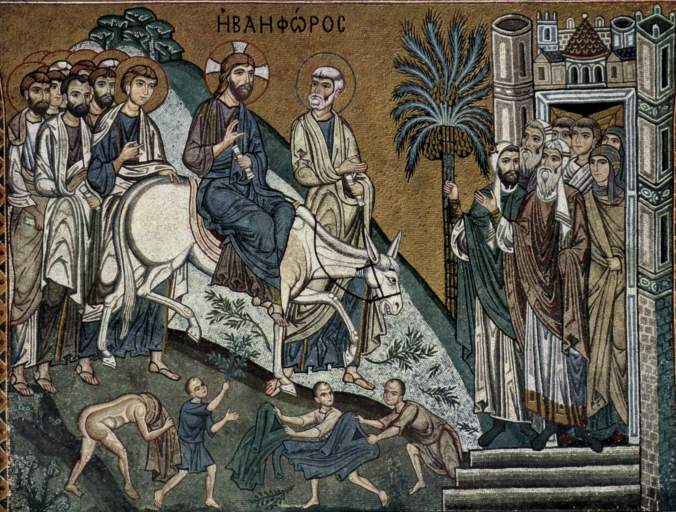
vhod-gospoden-v-ierusalim_palermo

The Triumphal Entrance of Christ, mosaic, Palermo. (Source)

This was the culture that Christianity conquered. And it is with these satanic rites in mind that we look forward to a double feast of rather a different sort tomorrow. For tomorrow, on the 25th of March, we celebrate Palm Sunday and the Annunciation, falling providentially on the same day.

“And the light shineth in darkness; and the darkness comprehended it not.”

Botticelli,_annunciazione_di_cestello_02

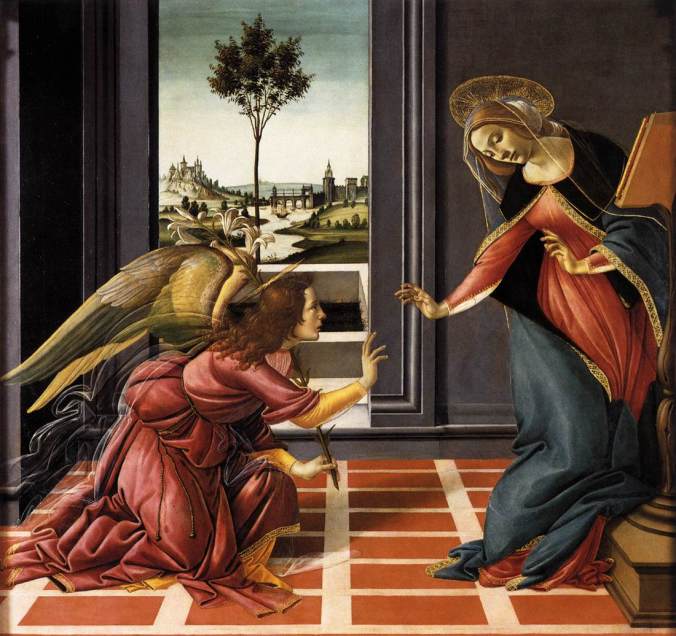
The Cestello Annunciation, Botticelli, 1489-90. My favorite of all Annunciations. (Source).


Elsewhere: An Anglo-Catholic Designer You Should Know

Screen Shot 2018-03-13 at 1.40.54 AM.png

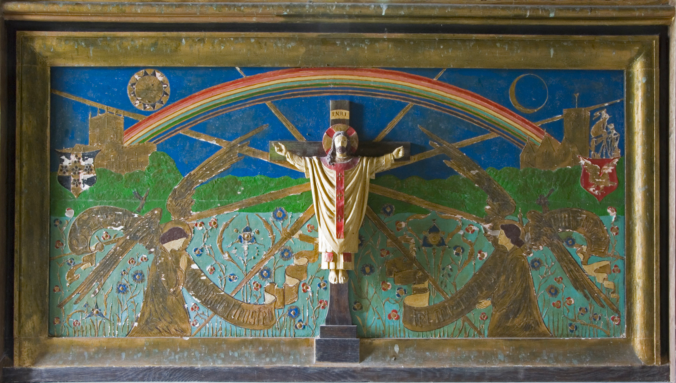
A reredos by John Coates-Carter. (Source)

Over at Liturgical Arts Journal, you will find a very good, brief introduction to an ecclesiastical architect of the Arts and Crafts Movement, John Coates-Carter. He is most famous for his design of the (extraordinary) abbey on Caldey Island. Most of his work can be found in Wales. Perhaps because of his regional interest, I had never heard of him before. Yet his altarpieces are about as Anglo-Catholic as you can get. They have all of the features I noted in my article on AC aesthetics; they’re earthy, colorful, idealized, with a hint of the illustrative verging on the cartoonish. And most importantly, the are deeply human. Anglo-Catholicism restored the human face to British ecclesiastical art. We can see that tendency in the luminous angels and vibrant peasants that appear in Coates-Carter’s sacral art. Do go have a look.

CaldeyIsland

Caldey Abbey, designed by John Coates-Carter. (Source)

Fénelon on the Return to God

Fenelon

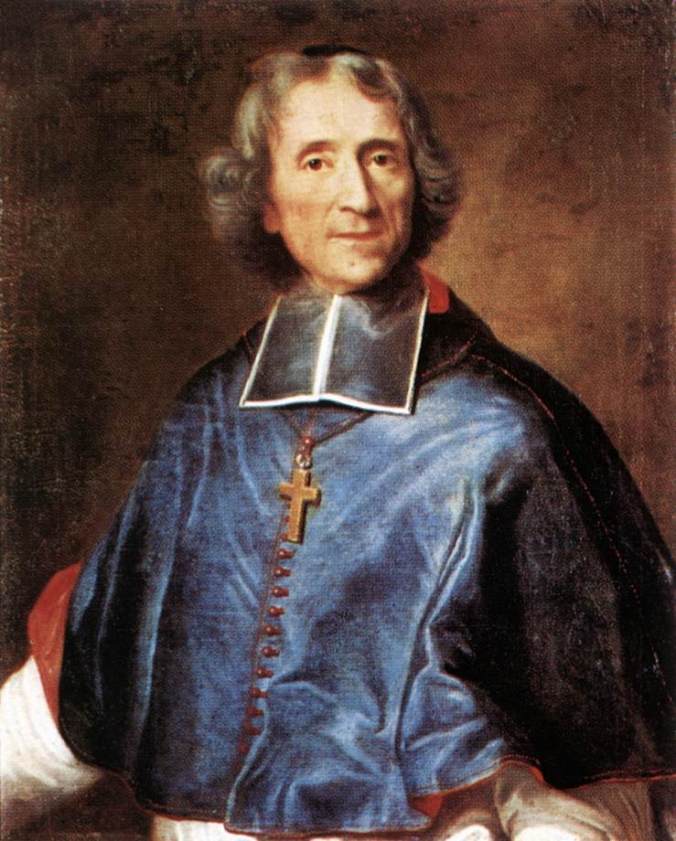
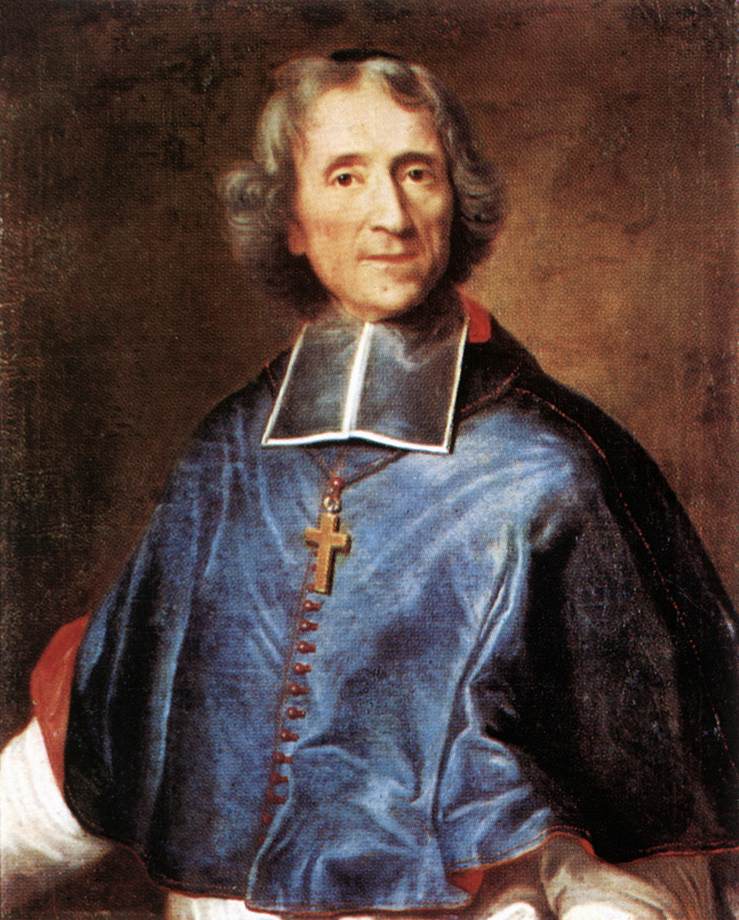
François de Salignac de la Mothe-Fénelon, Archbishop of Cambrai in the age of Louis XIV (Source)

Continuing my Lenten series of Wednesday spiritual masters, I present to you here a letter by Archbishop Fénelon to an officer, often identified as the Chevalier Colbert. The translation I am using comes from 1877, but I would also recommend to you the version by fellow Wahoo Chad Helms in the 2006 Paulist Press edition of Fénelon‘s Selected Writings. It struck me by its beauty and force of feeling, as well as its Lenten spirit. 

You have forgotten me, sir, but it is impossible for me to forget you. Something in my heart continually recalls you, and makes me want to hear of you, as I have more especially felt during the campaign and its perils. Your forgetfulness only makes me feel the more. The friendship you showed me once is of a kind never to be forgotten; and when I recall some of our conversations, my eyes are filled with tears. I trust that you remember how pleasant and hearty they were. Have you found anything since then more acceptable than God? Have the truths which then satisfied you failed? Is the pure light of the kingdom of God quenched? Has the world’s nothingness acquired some fresh value? Is that which was but a wretched dream not still the same? Is the God to Whom you poured out your soul, and Who filled you then with a peace beyond all earthly ken, no longer to be loved? Has the eternal beauty, ever so fresh to pure eyes, no longer charms for you? Is that source of heavenly joy, of unmarred happiness, which springs from the Father of Mercies and God of Consolation, dried up? No, for He has filled me with an urgent desire to recall you to Him. I cannot resist it: for long I have hesitated, and said to myself that I should only worry you. Even as I began this letter, I laid down a limit of discretion to myself; but after the first few words, my heart burst its bounds. Even should you not answer, or should think me absurd, I should not cease to speak sorrowfully to God of you, when unable to speak to you yourself any more. Once more, sir, forgive me if I exceed all due limits. I know it as well as you, but I feel irresistibly urged: God has not forgotten you, since He stirs up so eager a desire for your salvation in me.

What does He ask of you, save to be happy? Have you not realised that one is happy in loving Him? Have you not felt that there is no other real happiness, whatever excitement may be found in sensual pleasures, apart from Him? Since, then, you know where to find the Fountain of Life, and have of old drunk thereof, why would you seek foul, earthly cisterns? Bright, happy days, lighted up by the soft rays of loving mercy, when will ye return? When will it be given me to see this child of God reclaimed by His powerful Hand, filled with His favour, and the blessings of His holy Feast; causing joy in Heaven, despising earth, and acquiring an inexhaustible fund of humility and fervour from his experience of human frailty?

1280px-Rembrandt_Harmensz_van_Rijn_-_Return_of_the_Prodigal_Son_-_Google_Art_Project2

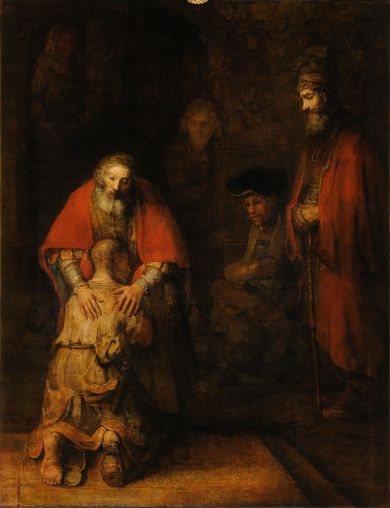
The Return of the Prodigal Son, Rembrandt van Rijn, c. 1661-69. (Source)

I am not dictating what you should do. God will Himself make that plain to you according to your needs, so long as you hearken inwardly to Him, and despise boldly that which is despicable. Do whatever you will, only love God, and let His Love, revived in your heart, be your guide. I have often thanked Him for having shielded you amid the perils of this campaign, in which your soul was even more exposed to risk than your body. Many a time I have trembled for you: put an end to my fears, and fill my heart with gladness. None can possibly be greater than to find myself once more with you in the house of God, united in heart and soul, looking together to one glorious hope, and the Coming of our Great God, Who will fill us with the flood of His pure delights. Your ears are not yet closed to the sublime language of truth, your heart is made to feel its charms. “Taste and see” the pleasant bread daily spread for us at our Father’s table. Why have you forsaken it? With such support, who can fear that anything else will be lacking? Even if you do not feel strong enough to regain the happy position where you were, at least answer me, at least do not shun me. I know what it is to be weak; I am a thousand times weaker than you. It is very profitable to have realised what one is; but do not add to that weakness, which is inseparable from human nature, an estrangement from the means of strength. You shall regulate our intercourse; I will only speak to you of such things as you are willing to hear. I will keep God’s secret in my heart, and shall be always, with unchanging affection and regard, etc.


Elsewhere: A Blog on Saintly Cadavers

SantaVittoria.jpg

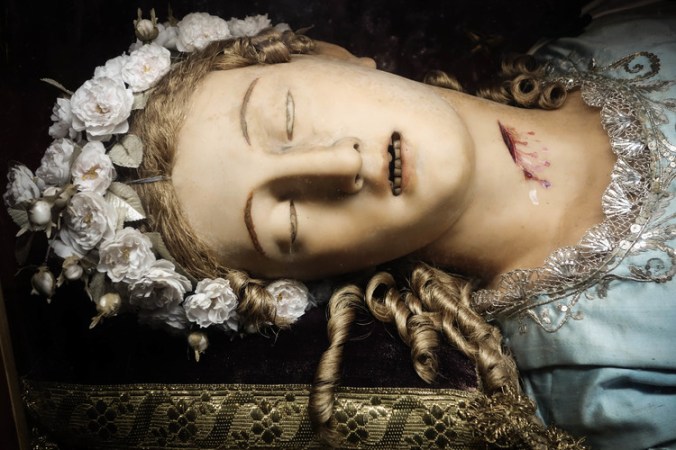
A photograph of Santa Vittoria by Elizabeth Harper. (Source)

A friend has just brought to my attention a blog entitled All the Saints You Should Know. It’s run by someone named Elizabeth Harper, a scholar and photographer based in Los Angeles. Her work is guided by three principles:

  • I believe Catholic churches are memory theaters where nature, science, arts, humanity, math, politics, and the divine mingle in miniature. There’s a wealth of knowledge locked inside sacred objects, though it’s often hidden in plain sight.
  • I’ve found that the Catholic comfort with death and death imagery is life-affirming. It offers believers and skeptics alike an important cultural reference that opposes modern death denial.
  • I love to learn about the past. I love it more when the past teaches me about the present.

These are all sound and salutary beliefs, and the blog is truly beautiful. If you’re like me and find joy in all things morbid (and all things Catholic, while we’re at it), you will no doubt peruse Ms. Harper’s work with as much pleasure as I do. As I’ve said before, the Sacred can be strange. Ms. Harper’s website is a welcome reminder of that fact.

Not a blog to be overlooked!

Elsewhere: Newman Against the Nazis

Werner und Sophie Scholl

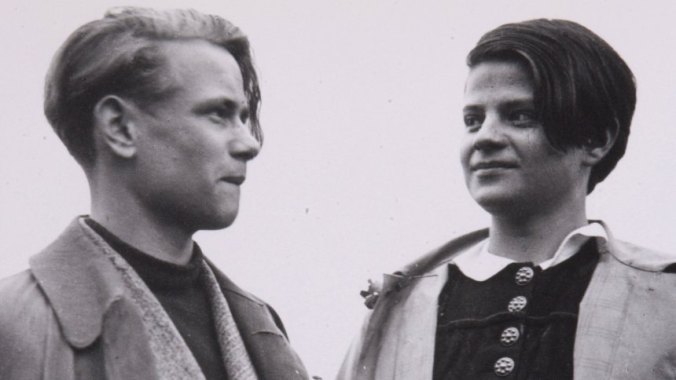
White Rose members Hans and Sophie Scholl. (Source)

A big thanks to Fr. David Abernethy of the Pittsburgh Oratory for bringing to my attention an article in the Catholic Herald about the influence of Cardinal Newman’s thought on die Weiße Rose. Apparently the Doctor of Conscience was an important impetus for their resistance to Nazi oppression. From the article:

The man who brought Newman’s writings to the attention of the Munich students was the philosopher and cultural historian Theodor Haecker. Haecker had become a Catholic after translating Newman’s Grammar of Assent in 1921, and for the rest of his life Newman was his guiding star. He translated seven of Newman’s works, and on several occasions read excerpts from them at the illegal secret meetings Hans Scholl convened for his friends. Strange though it may seem, the insights of the Oxford academic were ideally suited to help these students make sense of the catastrophe they were living through.

Haecker’s influence is evident already in the first three White Rose leaflets, but his becomes the dominant voice in the fourth: this leaflet, written the day after Haecker had read the students some powerful Newman sermons, finishes with the words: “We will not be silent. We are your bad conscience. The White Rose will not leave you in peace! Please read and distribute!”

Read the whole thing. And pray that Bl. John Henry Newman might, by his intercession, assist us in the struggle against every tyranny.

A Spanish Mystic of the Sacred Heart

Providence sometimes ordains that we should come across new friends in Heaven at exactly the right time. This happy accident of grace has just occurred to me.
SacredHeartTimesSix.jpg

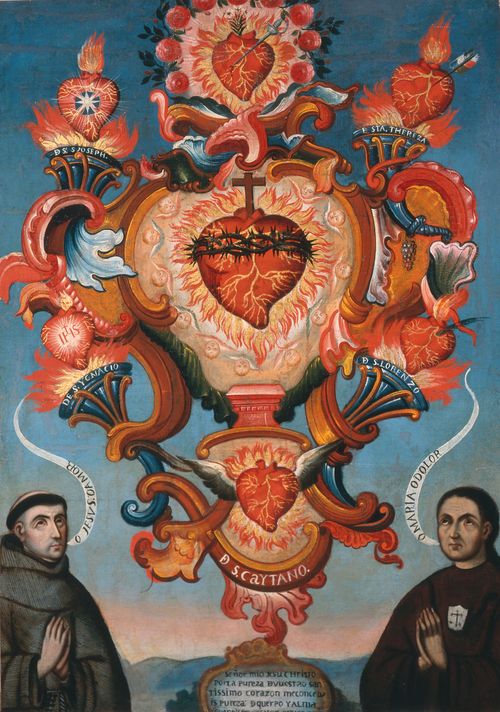
Holocausto de Corazones al Sagrado Corazon de Jesus, 17th century Mexican. (Source)

I’ve been reading about the Jesuits of the late 17th and early 18th centuries quite a lot recently in connection with my research. My admiration for them has grown tremendously. I always used to have a devotion to the Jesuit martyrs of Elizabethan and Jacobean England, and to an extent, I still do. But the Continental Jesuits who did so much to combat the spread of Jansenism are a marvel to behold. For all my jokes about the suppression of the Jesuits and my appreciation of Pascal, I have to say that the Jansenists were a nasty bunch. The more one studies their history and doctrines, the colder one feels. Thus, I especially admire those tireless evangelists of the Sacred Heart such as St. Claude de la Colombière, whose feast we celebrated yesterday. Along with this revived interest in the Continental Jesuits, I’ve found myself drawn to the Sacred Heart in recent weeks.
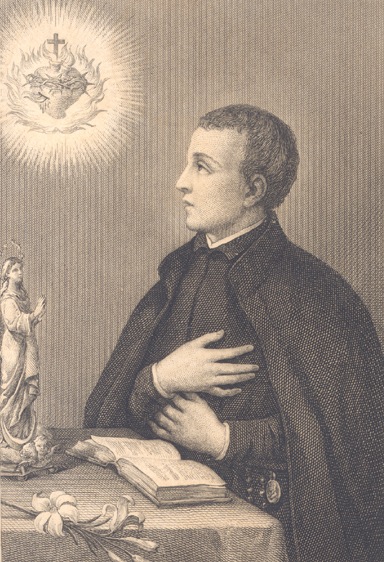
librohoyos

Bl. Bernardo Francisco de Hoyos S.J. (Source)

Into this recent ferment of the spirit came an unexpected intrusion of grace. As I was scrolling through Facebook, I saw that in one of my Catholic groups, someone had posted an article about a mystic and asked what we all thought. I opened the link and discovered a new and remarkable saint: the Blessed Bernardo Francisco de Hoyos, S.J.

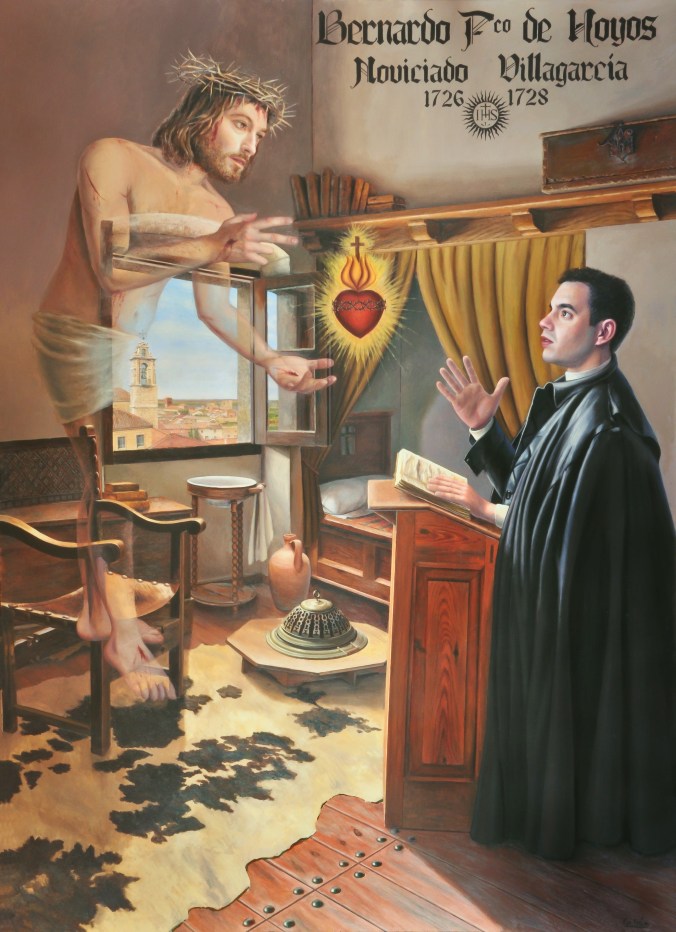
The Blessed Bernardo entered the Jesuit novitiate in 1726 when he was not yet fifteen. In the early years of his formation, he felt a strong attraction to the (then) Blessed John Berchmans, a model of Jesuit youth, seeking to emulate him in all things. The young saint later had a powerful “dark night of the soul” that involved demonic torments. When he came out on the other side, however, the Lord appeared to him in some of the most remarkable visions of the age. To wit:

Always holding my right hand, the Lord had me occupy the empty throne; then He fitted on my finger a gold ring…“May this ring be an earnest of our love. You are Mine, and I am yours. You may call yourself and sign Bernardo de Jesus, thus, as I said to my spouse, Santa Teresa, you are Bernardo de Jesus and I am Jesus de Bernardo. My honor is yours; your honor is Mine. Consider My glory that of your Spouse; I will consider yours, that of My spouse. All Mine is yours, and all yours is Mine. What I am by nature you share by grace. You and I are one!” – The Visions of Bernard Francis De Hoyos, S.J., Henri Béchard, S.J.
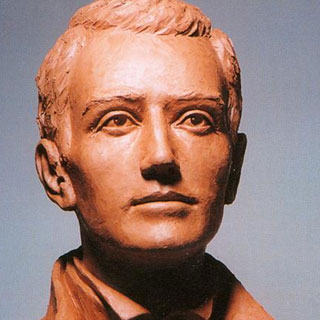
bernardfrancishoyos

A modern rendition of Bl. Bernardo. (Source)

Assuming this quote is accurate – like the author from whom I took it, I am unable to verify it (Bechard’s book is extremely rare) – it evinces an eminent degree of spiritual maturity. Dom Mark Daniel Kirby reports on more of the young saint’s experiences:

On August 10, 1729, the Saviour, covered with His Precious Blood, appeared to Bernardo, and showing him the wound in His Side, said, “Rejected by humanity, I come to find my consolation with chosen souls.” Bernardo’s experience closely resembles that of Saint Margaret Mary Alacoque fifty-three years earlier in the Visitation Monastery of Paray-le-Monial in France.
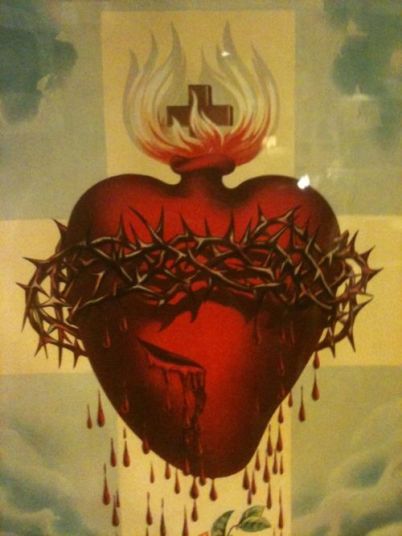
SacredHeartprint

The Sacred Heart of Jesus. (Source)

It should be no surprise to us, then, that Bl. Bernardo was a profound devotee and propagator of the Sacred Heart of Jesus. In 1732, when he was only 22, the Lord entrusted him with the mission of spreading love for the Sacred Heart, both “as a means of personal sanctification and as an effective means for accomplishing the apostolate.” That year, he consecrated himself to the Sacred Heart using St. Claude’s formula. Shortly after, he collaborated on a book about the devotion entitled The Hidden Treasure (alas, I don’t know if it has been translated into English). His brief priesthood – he died of typhus less than a year after ordination – was a total gift to the Sacred Heart. He was known to say, “Oh, how good it is to dwell in the Heart of Jesus.” These were, no doubt, the words of one who dwelt there indeed.

Bl. Bernardo was beatified in Valladolid on April 19, 2010. He is a special patron against the sin of impurity, perhaps because his own chastity was sealed in a mystical marriage to Jesus.

One of the things that truly struck me about Bl. Bernardo’s story – aside from his devotion to the Sacred Heart, which is, as I mention, timely – was his youth. He was only a year older than me when he died. To think that someone could achieve such heights of holiness in such a short time is a wonderful encouragement.

But of course, the growth of a soul is not, strictly speaking, a matter of our own effort. It is the work of the Holy Ghost in us. Bl. Bernardo is an example of what happens when we open ourselves totally to the operations of the Holy Ghost. Not everyone will receive visions. In fact, very few souls are so privileged. But they are given to the Memory of the Church so that we who are less favored may take some inspiration by their example and glimpse more perfectly some aspect of Our Savior. Christ is the one light caught by so many prisms through the centuries. Bl. Bernardo is one such pure glass, shining through the ages to light our way. May he pray for us in this Lenten season.
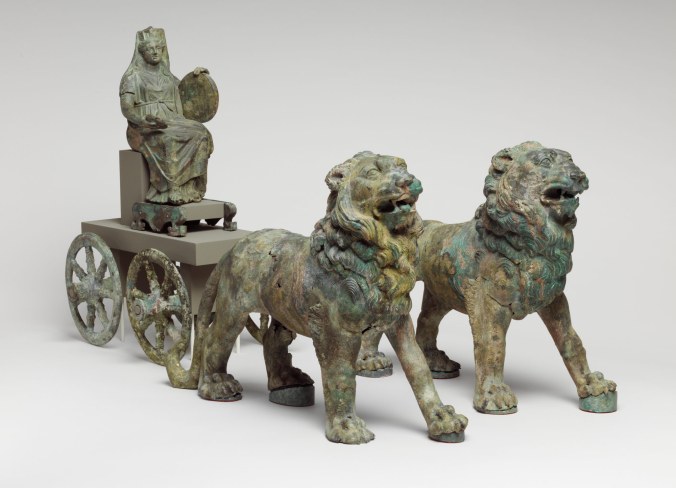
Bernardo_Fco_de_Hoyos.jpg

Bl. Bernardo Francisco de Hoyos’s vision of the Sacred Heart. (Source)

Elsewhere: A New Blog on Christianity and Cricket

19century_cricket.jpg

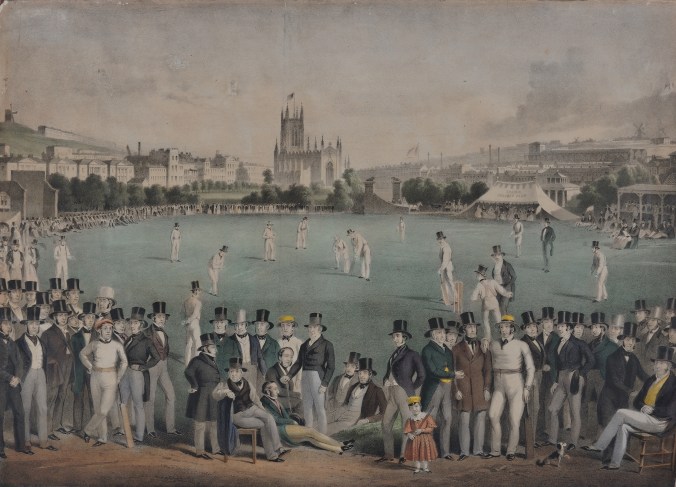
A scene of English life in the 19th century; top hats in the foreground, a Gothic Cathedral in the background, and between them, cricket. (Source)

Living at an Anglo-Catholic seminary has been an education in many respects, but I still haven’t got a handle on the sport of cricket. Luckily for me (and for many of my readers, I’m sure), a new blog hopes to correct that oversight. My friend and fellow Staggers resident, Mr. William Hamilton-Box, has just begun writing on Cricket, Christianity, and various fun facts. Do give it a look-see.

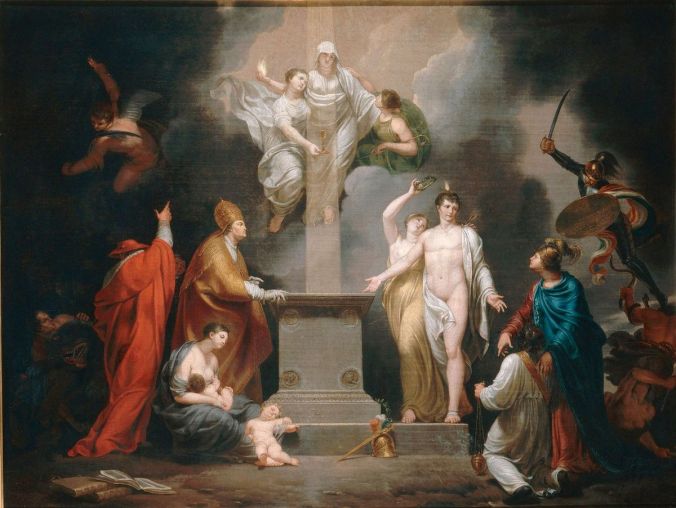
Elsewhere: A Brief Note on the Napoleonic Church

1200px-Allégorie_du_Concordat_de_1801

Allegory of the Concordat of 1801, Pierre Joseph Célestin François. Here’s some heavy-handed metanarrative for you. (Source)

Or, rather, the post-Napoleonic Church. Fascinating stuff about canonical life after Napoleon over at Canticum Salomonis. Some of my own research covers precisely this period, so I appreciate finding a contemporary Catholic blogger willing to post excerpted material of this nature. One does rather wish that he (I’m assuming it’s a he) had also provided the name of the original author, or at least the date of publication. Alas. The content is still very interesting.

A View of the Sacraments in the Age of Enlightenment

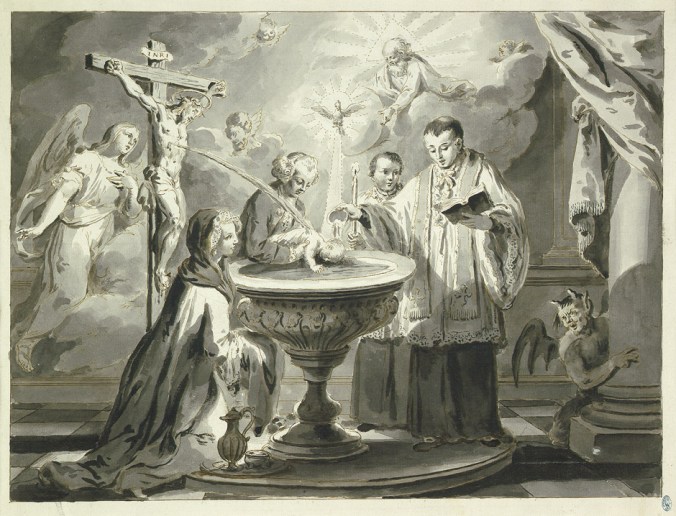
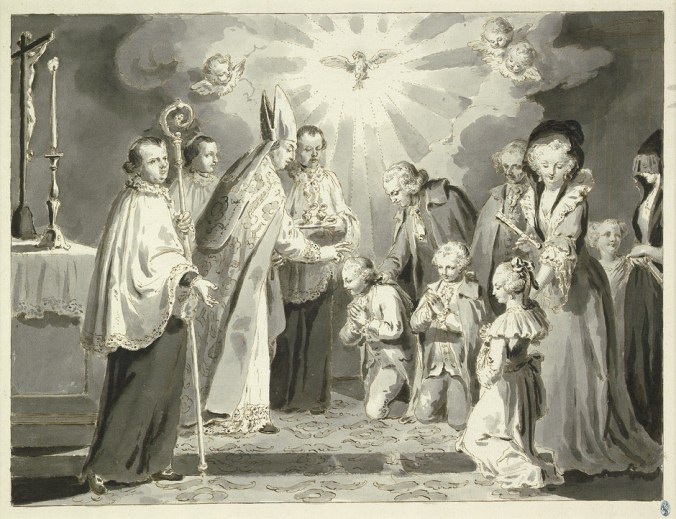
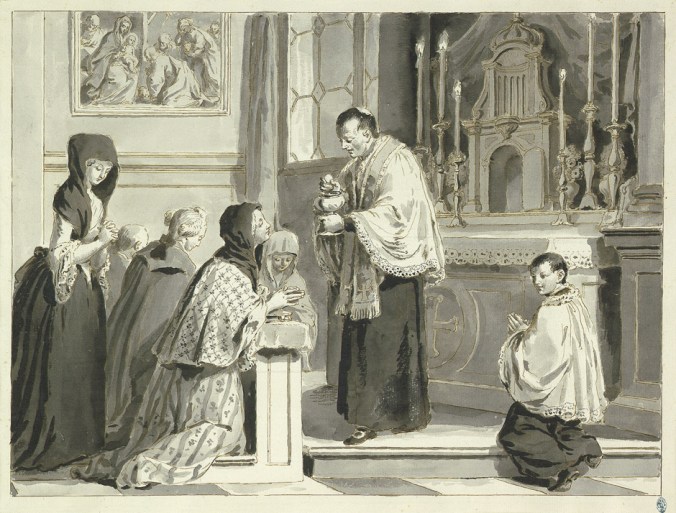
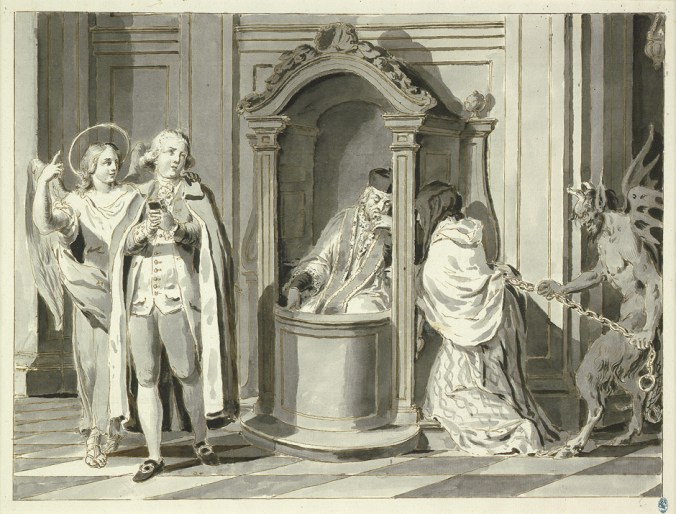
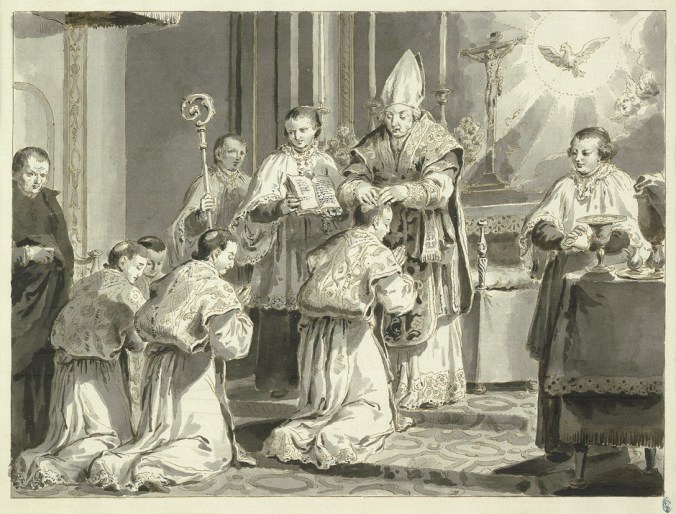
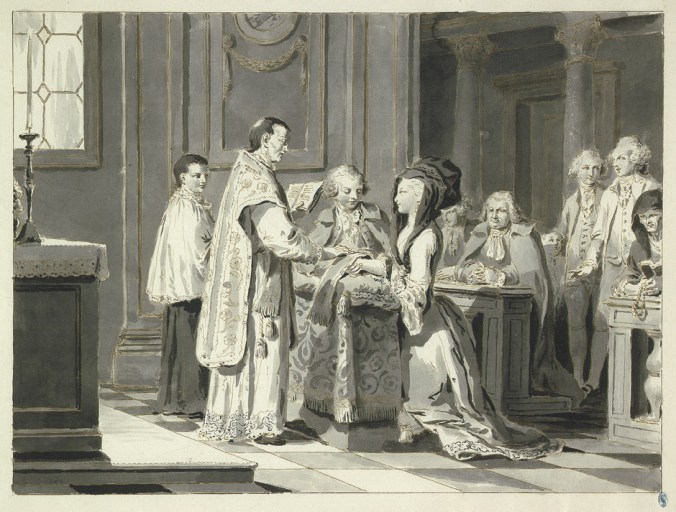
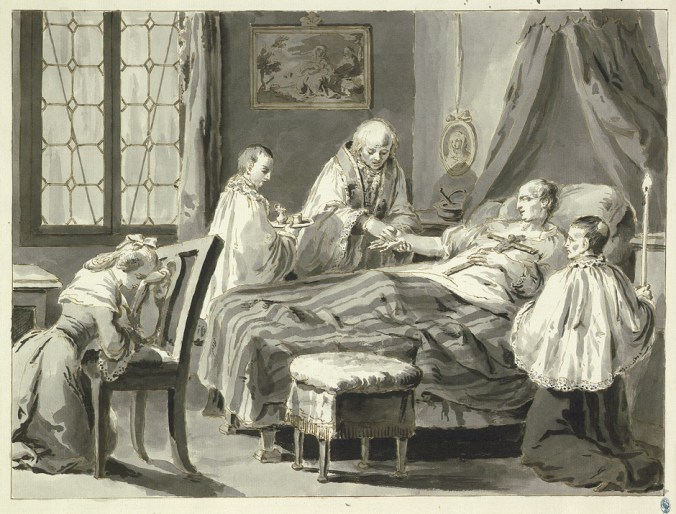
I just stumbled across Pietro Antonio Novelli’s engravings on the Seven Sacraments, completed in 1779. They give a fascinating view of ecclesiastical life in the late 18th century – Novelli would have moved to Rome from Venice about this time, so it’s unclear which part of Italy these were drawn from. Either way, they’re worth a look through. All are taken from Wikimedia Commons.

NovelliBaptism

Baptism. Note the prominent Angel and Devil.

NovelliConfirmation

Confirmation. Strong and sound emphasis placed upon the role of the Holy Ghost.

NovelliEucharist

The Eucharist. The arrangement of the Altar and rail suggests that this is a low mass. Very odd that the Priest has no chasuble, but surplice and stole.

NovelliConfession

Penance. Once again, we see the Angel-Devil dichotomy. Lovely open confessional, too.

NovelliHolyOrders

Holy Orders. It is entirely unclear to me where the Altar is supposed to be in this image. Nevertheless, the Bishop is wearing a wig, which answers a question of Fr. Hunwicke’s.

NovelliMarriage

Holy Matrimony. A fairly straightforward scene with lovely, somewhat spare Neoclassical church architecture in the background.

NovelliUnction

Unction. The attendance of two servers is a custom long since out of fashion. One rather wonders when their presence was removed from the rubrics.


A Startling Passage out of Peter Anson

GnosticVestments

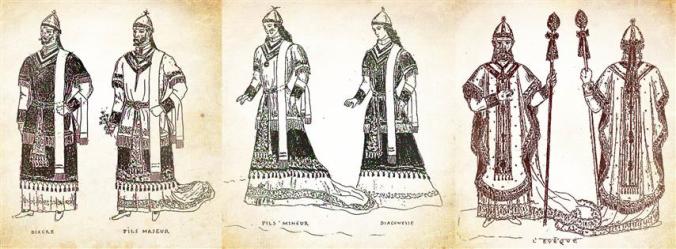
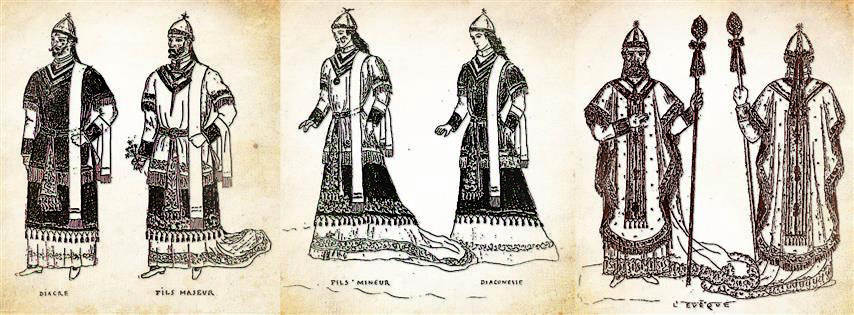
“Gnostic Catholic” vestments from Third Republic France. Note in particular the episcopal vesture at right. (Source)

In Peter Anson’s remarkable volume, Bishops at Large: Some Autocephalous Churches of the Past Hundred Years and their Founders (1964), we learn of many episcopi vagantes and their kindred spirits. It seems that several of these strange fellows dabbled (or more than dabbled) in the occult. Many also coupled that occultism with an interest in ancient heresies, which they sought to resurrect. In a chapter on the succession from René Vilatte, we stumble across a shocking little paragraph:

Mgr. Giraud and most of the priests and layfolk of the Gallican Church, even if not Gnostics themselves, were closely associated with them. Gnosticism was very much in the air fifty or sixty years ago. Even the Benedictine monks of Solesmes felt it worth their while to study what are known as the ‘Magic Vowels’ used in Gnostic rites and ceremonies. In 1901 they published a book entitled Le chant gnostico-magique. (Anson 309)

What an extraordinary claim. The monks of Solesmes, Dom Prosper Gueranger’s own sons, publishing studies of Gnostic chants! Dear readers, do any of you have any information on this bizarre note? I have been able to find evidence, however scanty, that the book Anson mentions was indeed published. But it surely must count as one of the rarest volumes in the assembled miscellanea of liturgical history. I would appreciate any leads whatsoever. Might some of my liturgically minded friends have any clue? Whatever comes of it, there is no doubt a very interesting story lurking behind this utterly unique publication.