As my readers will no doubt be aware, most religious orders have a motto that encapsulates their particular charism. However, many of these are a bit tired and could use with some updating. Here are my proposals:
Benedictines: Prayer, Work, Monk-eying Around
Jesuits: Up to Something
Dominicans: Sed Contra
Franciscans: Need a Bath
Lazarists: Nolite Me Tangere o Pauperes
Carthusians: ——-
Carmelites: Better Than You
Oratorians: O Happy Flowers!
Trappists: Beer, Cheese, Keeping Death Daily Before One’s Eyes
When the definitive cultural history of our late capitalist political moment is written, much will be said about the seminal influence of Willy Wonka and the Chocolate Factory. This 1971 film, emerging in the context of the Nixon administration, the War in Vietnam, and an ongoing reassessment of America’s place in the social, political, and ecological world, is still as fresh and potent as the first day it opened in theaters. Taken collectively with its originating text by Roald Dahl and subsequent re-make by Tim Burton, the Wonka Cycle constitutes one of the fundamental cinematic expressions of postmodern anxiety and self-reflexivity. Can it be any surprise that this complex contemporary fable has spawned a burgeoning field of scholarship?
While none of this will surprise Wonka specialists who seek out this volume, the lay reader may be surprised to know the extent to which Wonka as a text has risen to its prominent status in such a short time. For the benefit of such a reader, I will provide a brief literature review of the field.
Wonka Studies was initiated in 1987 with the publication of Jonathan Mortman’s “Oompa-Loompas of the World Unite: A Marxist Reading of Willy Wonka and the Chocolate Factory” (Forth 03, Fall 1987). Much has transpired since Mortman’s widely-acclaimed essay; the field has since evolved into an important sub-discipline of cultural and critical studies. The convening of the first Conference for Wonka Studies at Blippensbild College in 1992 disseminated various advances in Wonka scholarship made in the wake of Mortman’s intervention. Yet it was not until the following year that we start to see the first Wonka Studies seminars open on a test-case basis in various major research universities.
Scholars are divided as to the true political position of the Wonka Cycle. Heidi Zolker and Brian Stafford-Jones famously argued in their 1994 missive, “Oompa-Loompa Rights are Human Rights” (Force 17, Spring 1994) that the musical sequences of the film contain a carnivalesque critique of capitalist labor relations. This view would have become the established orthodoxy had not Leopold Öngg published his magisterial “Of Wonka and Wankers: The Golden Ticket as Phallocentric Signifier of Biopower” (Oberflächlichenstudien 03, Summer 1996). Drawing upon the insights of Foucault and Derrida, Öngg argued that the incentive-structure inscribed into the plot of Willy Wonka took an inherently apologetic stance towards the forces of patriarchal capital. Without denying the subversive elements identified by Zolker and Stafford-Jones, Öngg suggested that the anti-capitalist performances were akin to the economic logic of early National Socialism. “Wonka is a Strasserite. Behind and, indeed, beneath the Chocolate Factory, lurks the gas chamber,” wrote Öngg in a memorable and much-quoted phrase.
This central question – whether Wonka is a communist or a fascist – occupied much of the debate throughout the nineties. The important interventions by Julia Linley (Forts 16, Summer 1997), Oswald Glover (Forks 28, Fall 1998) and Eric Breedlove (Folks 30, Winter 1999) all respond to this controversy in some way.
Yet starting in 2002 with the rediscovery of early middle French theory, Wonka scholars began to move away into more reflexive and less strictly partisan approaches to the material. At the same time, more attention was given to the gender and class dynamics outside the Factory itself. Ernest Grenouille’s “We Are All Grandpa Joe” (Färt48, Spring 2003) was an important model of this “Humanizing” Turn. The wider socio-political, cultural, and economic troubles of the new millennium also found their place in the new scholarship. The significant upshoot of articles about Slugworth in the wake of the 2008 financial crisis (Karawasi 2009; Davison 2009; LeBocq 2010) are just one example among many.
Recent work has been equally attuned to our political moment. That much was clear to all the attendees and presenters at the 27th Annual Conference for Wonka Studies, which convened at South Mercury University and Ladies’ Seminary from 6-9 February, 2019. The essays included in this collection form the core of a radically self-conscious response to our era. For instance, Hilda Davis-Davies argues in her powerful intervention, “The Queering of Violet Beauregard,” that that character undergoes what is actually a transfiguration into a radically non-heteronormative and (more importantly?) non-speciesist physicality. Violet Beauregard thus becomes a model of praxis, and not without a certain jouissance. Jean-Claude LaMerde brings a psychoanalytic lens to the famous Augustus Gloop scene in his “Gloop/Narcissus: A Neo-Lacanian Reading.” LaMerde dares to ask, “Is the chocolate river in fact an objet a?” Fistula Pepper responds to the broader need to make Wonka Studies more interdisciplinary with her Film studies essay, “From Wonka to Cremaster: Interrogations of Late Capitalism in Cyclic Film.” Her comparison of these two masterpieces opens new cultural insights.
Yet all of the twenty-one essays published here break new ground. The future of Wonka Studies as a discipline is bright as a Golden Ticket.
Vincent Hingendingus, State University of Marshwater
Table of Contents
I. There is Nothing Outside the Factory: Derrida’s Of Grammatology and the Factory as Spatial Arbiter of Semantic Meaning in Willy Wonka and the Chocolate Factory
Nils Ländstroop
II. “I’ve Got Another Puzzle for You” : Strategies of Negotiated Subalternity and the Representation of the Racial Other in Willy Wonka and the Chocolate Factory
Leonora Hedley-Hadley
III. Does Charlie Bucket Punch Down?
Fergus Fripp
IV. “I Want It Now!” : Veruca Salt as Model of Radical Feminist Praxis
Joanna Cornwallis
V. “If You Are Wise You’ll Listen to Me” : Critical Re/Readings of Spivak’s “Can the Subaltern Speak?” in Willy Wonka and the Chocolate Factory
Brutus Catflap
VI. The Chocolatier’s Two Bodies
Stephen Piker
VII. To Win is to Suffer: The Final Confrontation in Willy Wonka and the Chocolate Factory as Turnerian Rite of Passage
The Rev. Dr. Aldo von Krefeld-Lipniz
VIII. The Queering of Violet Beauregard
Hilda Davis-Davies
IX. Gloop/Narcissus: A Neo-Lacanian Reading
Jean-Claude LaMerde
X. “Is the Hurricane A-Blowing?”: The Willy Wonka Boat Ride as Bourgeois Representation of 1960’s Radicalism
Alfonse Catelli
XI. Eco-Geographies of Consumption in Willy Wonka and the Chocolate Factory
Sharon Oldbeck
XII. “Pure Imagination” and the Impure Imaginary of Late Capitalism
Cynthia Abschreiber
XIII. A Thousand Candied Plateaus: Latent Rhizomatic Constructions of Subjectivity in the Wonka Cycle
Pokey O’Clanahan
XIV. Post-Oedipal Constructions of Parenthood in Willy Wonka and the Chocolate Factory
Karl Eimer
XV. “The Candy Man Can” : Gender and Linguistic Power in Willy Wonka and the Chocolate Factory
Butch McCracken
XVI. The Factory as Simulacrum: Landscape, Consumption, and Constellations of Subjectivity in Willy Wonka and the Chocolate Factory
Cvetko Dmikoviç
XVII. Wonkavision and the Ship of Theseus
Angus Leroy Huntingdon III
XVIII. From Wonka to Cremaster: Interrogations of Late Capitalism in Cyclic Film
Fistula Pepper
XIX. Spectacles of Sweetness: Touring the Chocolate Factory with Guy Debord
Plum Darndot
XX. A Journal of Courage: A History of Wonkastudien
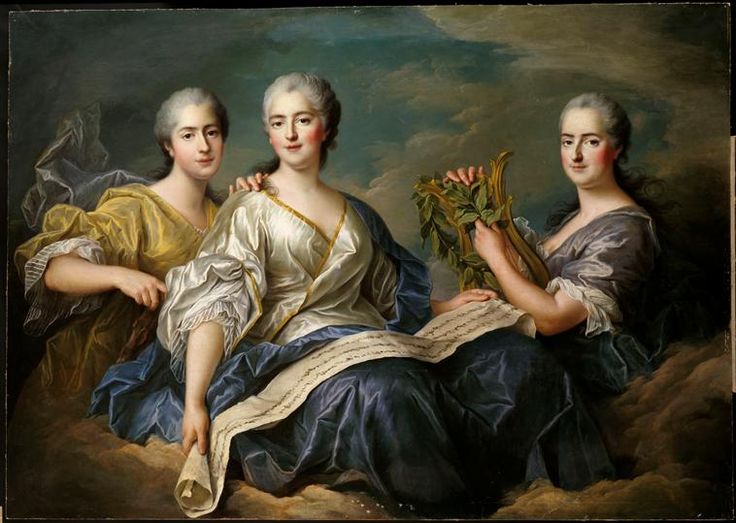
Mesdames Victoire, Adélaide, and Louise, three of the pious daughters of Louis XV, known collectively as “Mesdames de France” or “Mesdames Tantes” after the accession of Louis XVI. Only Adélaide married; Louise later became a Carmelite prioress at Saint-Denis before having the extremely good fortune to die in 1787. Source
The inimitable John McManners, late Regius Professor of Ecclesiastical History at the University of Oxford, provides a window into the world of late Ancien Régime piety (or, rather, its dearth) in his monumental Church and Society in Eighteenth-Century France. He writes:
“To what extent was the fast of Lent observed? It was commonly said that the austerities of the penitential season were endured only by the poor. According to the Lenten pastoral letter of the archbishop of Sens in 1779, the rich often obtained medical certificates allowing them to eat what they liked. This was the fashionable thing to do. ‘Look at our bourgeois citizen and his wife in their (draper’s) shop, observing Lent strictly,’ said teh Jesuit Père Croisset in his Parallel des moeurs de ce siècle et la morale de Jesus-Christ (1727): ‘their fortune changes…and scarcely has the tape measure dropped from their hands than you see them putting on airs like people of quality and asking for dispensations from fasting.’ This class distinction was observed even in the kitchens of the Bastille: on the first Friday of his imprisonment, Marmontel gloomily at the meatless meal provided, not knowing that it had been meant for his servant. In any case, there were plenty of succulent dishes within the rules, for those who could afford them.
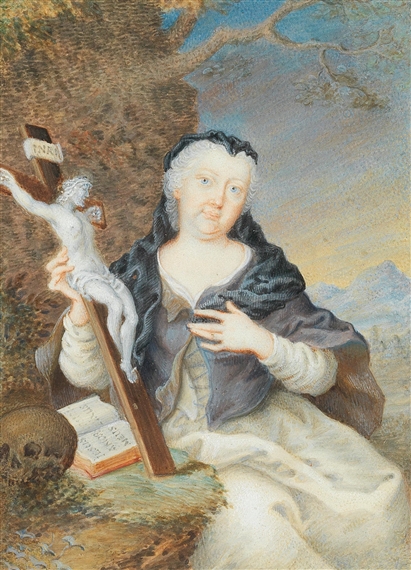
Empress Maria Theresa of Austria in the garb of a penitent (Source)
“Lent was the season to have tubs of fresh butter sent in from the countryside, and to ensure plentiful supplies of fish and water birds (the tes of an allowable fowl was: did the gravy remain uncongealed after fifteen minutes? – so a bishop gravely advised Mme Victoire, Louis XV’s pious but comfortable daughter). The peasant, whose existence is a perpetual Lent anyway, said Voltaire, awaits episcopal permission to eat his farmyard eggs, while the bishop himself looks forward to expensive dishes of soles. Certainly, things were well organized at Versailles. ‘A ray of grace has descended on us,’ wrote the duc de la Vallière in April 1756; ‘we fasted for three days a week during the whole of Lent, but on condition that we suffered no deprivations.’ Preachers were well aware that those with money and leisure could organize an attractive Lent for themselves: an occasional walk in a procession (a penitent’s garb was no disadvantage to a good-looking woman), extra time in bed to recuperate from privations, and food more delicately cooked and served than usual. ‘For some – God grant that there are none in my congregation today,’ thundered the Oratorian Surian, ‘Lent is a more agreeable time, in a sophisticated way, than the other seasons of the year.'”
“What a shock, Maximiliana has to be the life of the party AGAIN.”
“I think the real trouble in the Church today is the shortage of lace.”
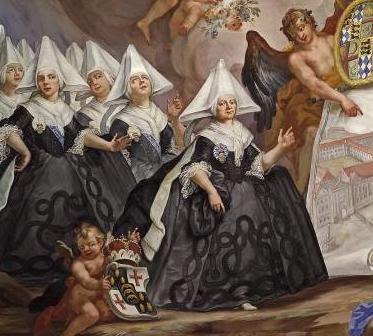
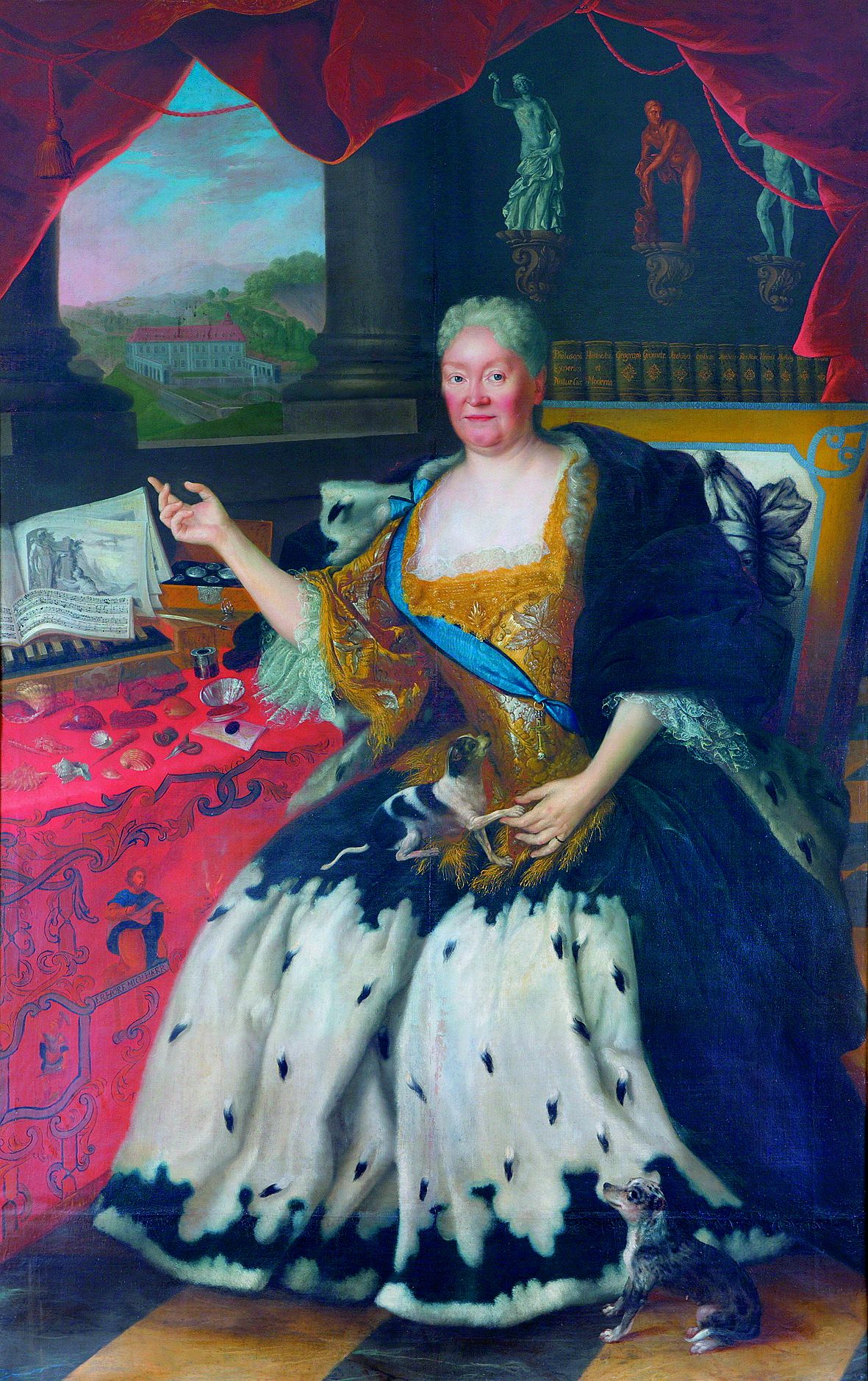
Princess-Abbess Christina zu Mecklenburg isn’t angry. She’s just disappointed.
“I’m not like a regular Princess-Abbess, I’m a cool Princess-Abbess. Observe my nude statues, dogs, and trendy collection of seashells.”
Winged headdresses are in this year.
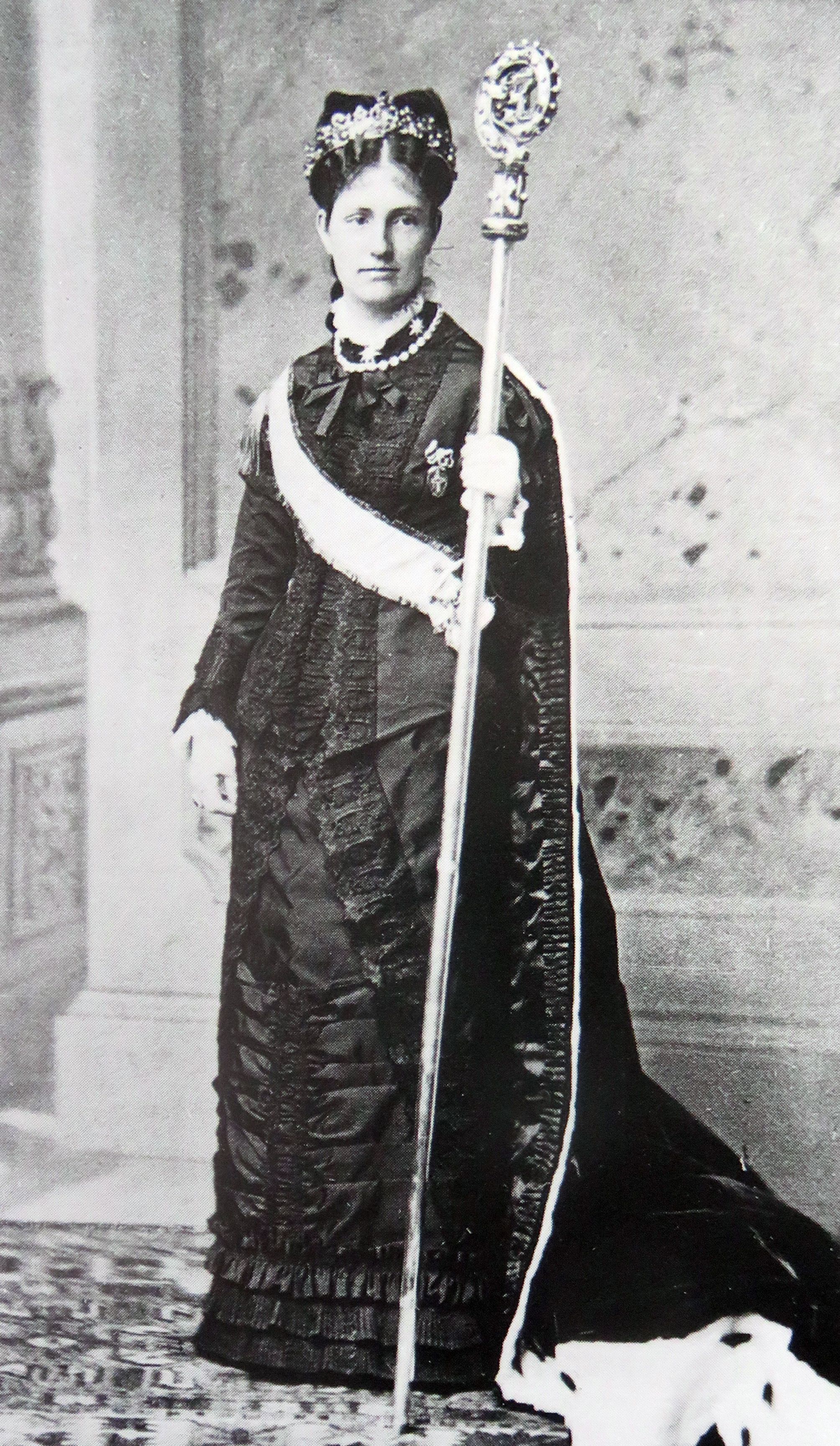
“This crosier was made by fifty leper goldsmiths on a Greek island owned by the Doge of Venice. My uncle, the Cardinal of Trieste and Titular Abbot of Unter-Festschrift, gave it to me at my accession.”
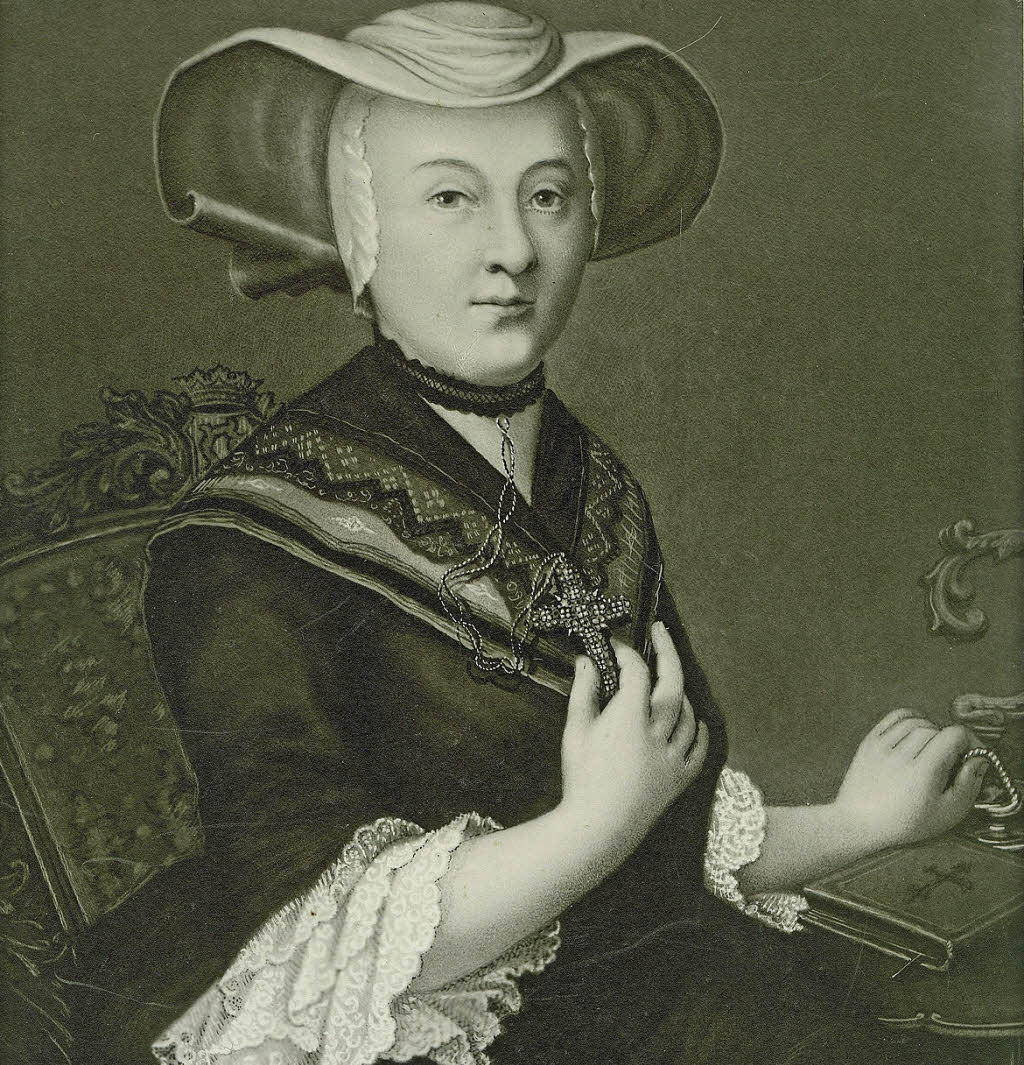
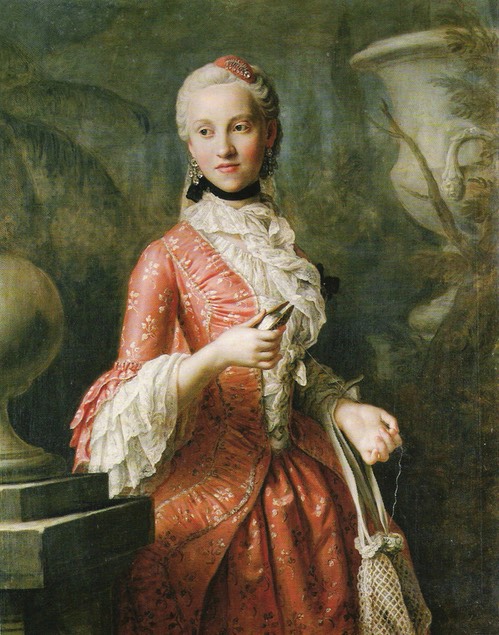
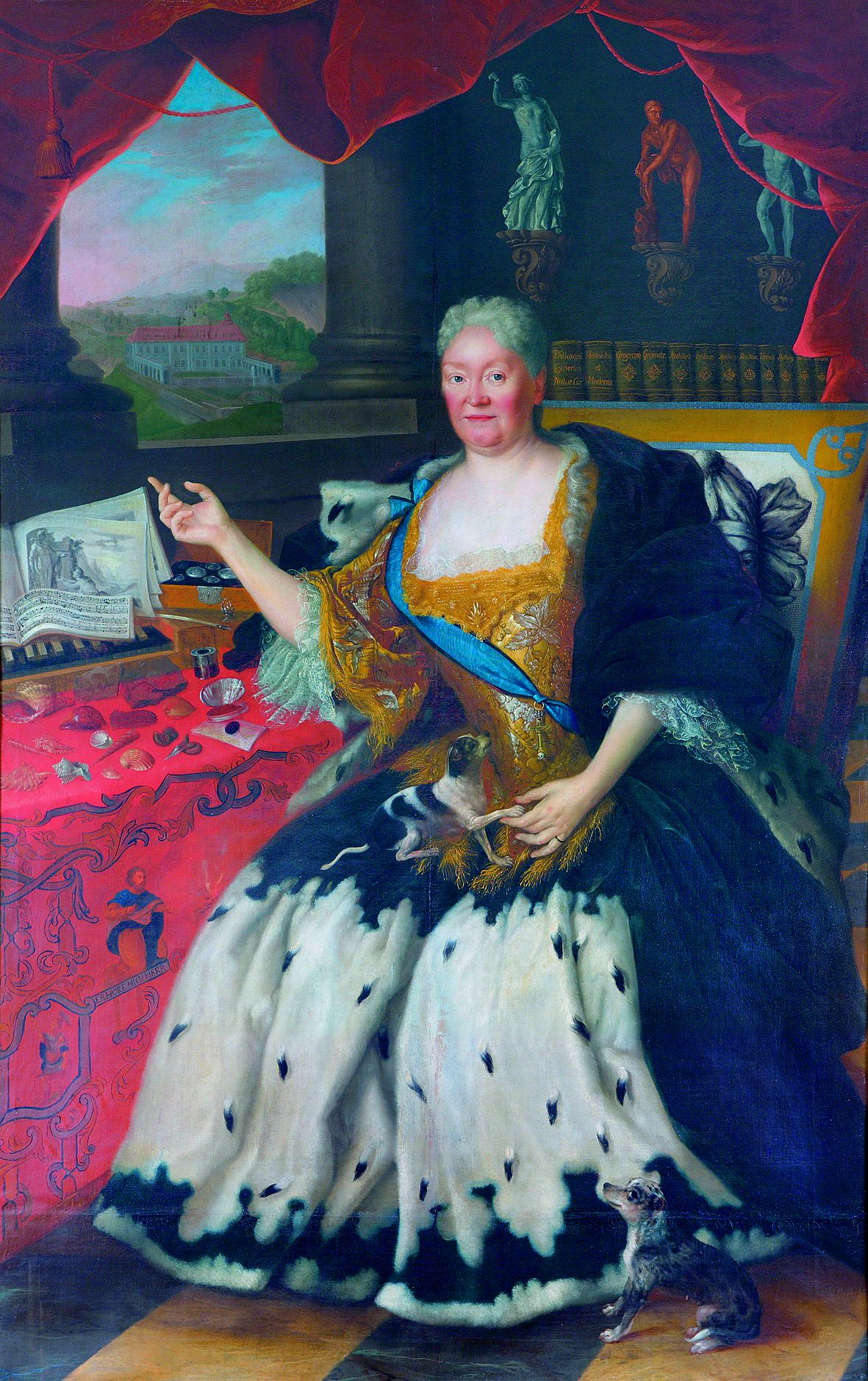
Therese Natalie of Brunswick-Wolfenbüttel, Princess-Abbess of Gandersheim, with her pendulous string of pearls, miniature portrait bracelet, powdered blue watered silk sash, ermine, and bejewelled Bible, is a model of noble simplicity.
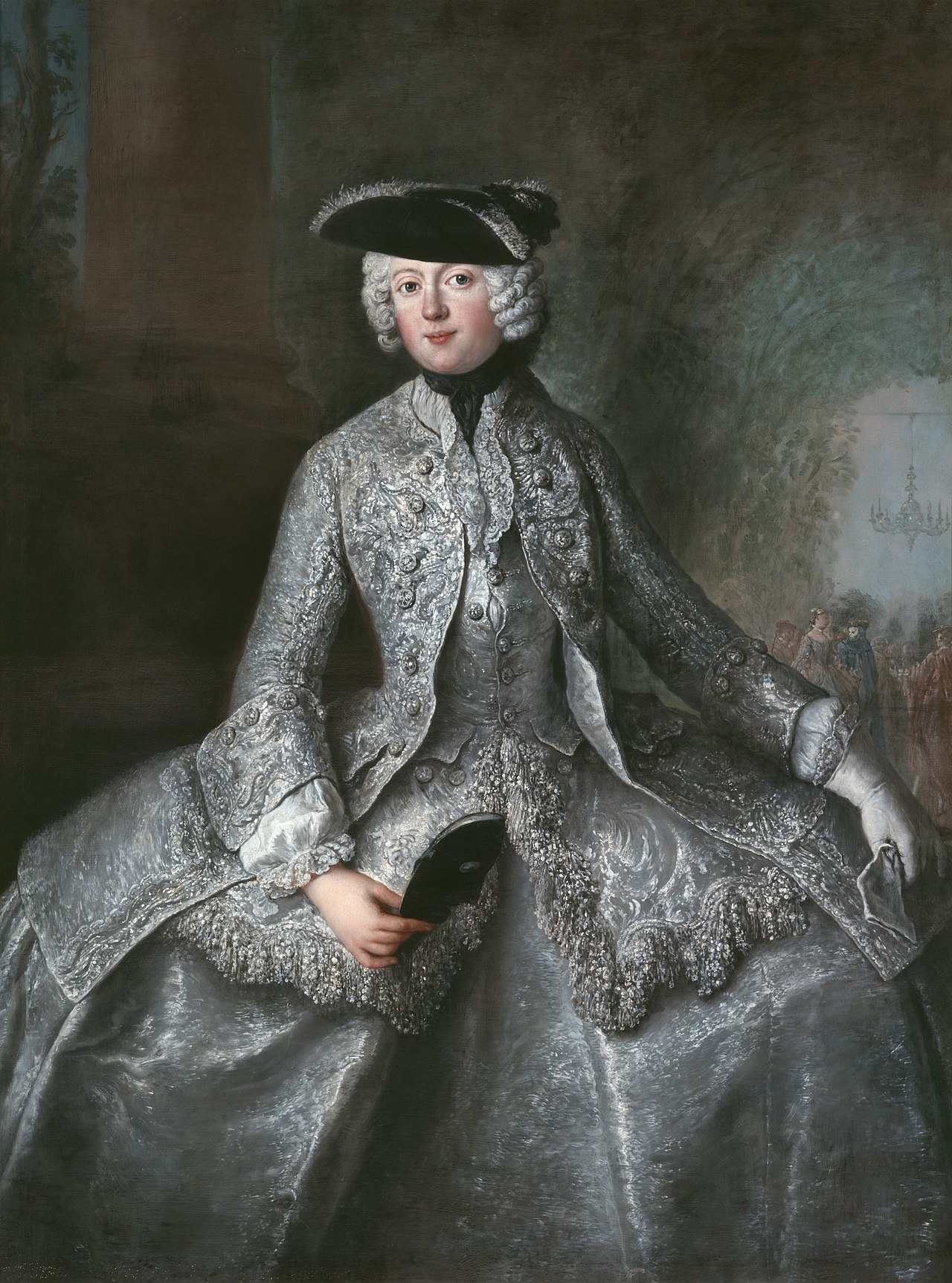
“Well, grey is a penitential color, after all. More than what you’re wearing, heathen.”
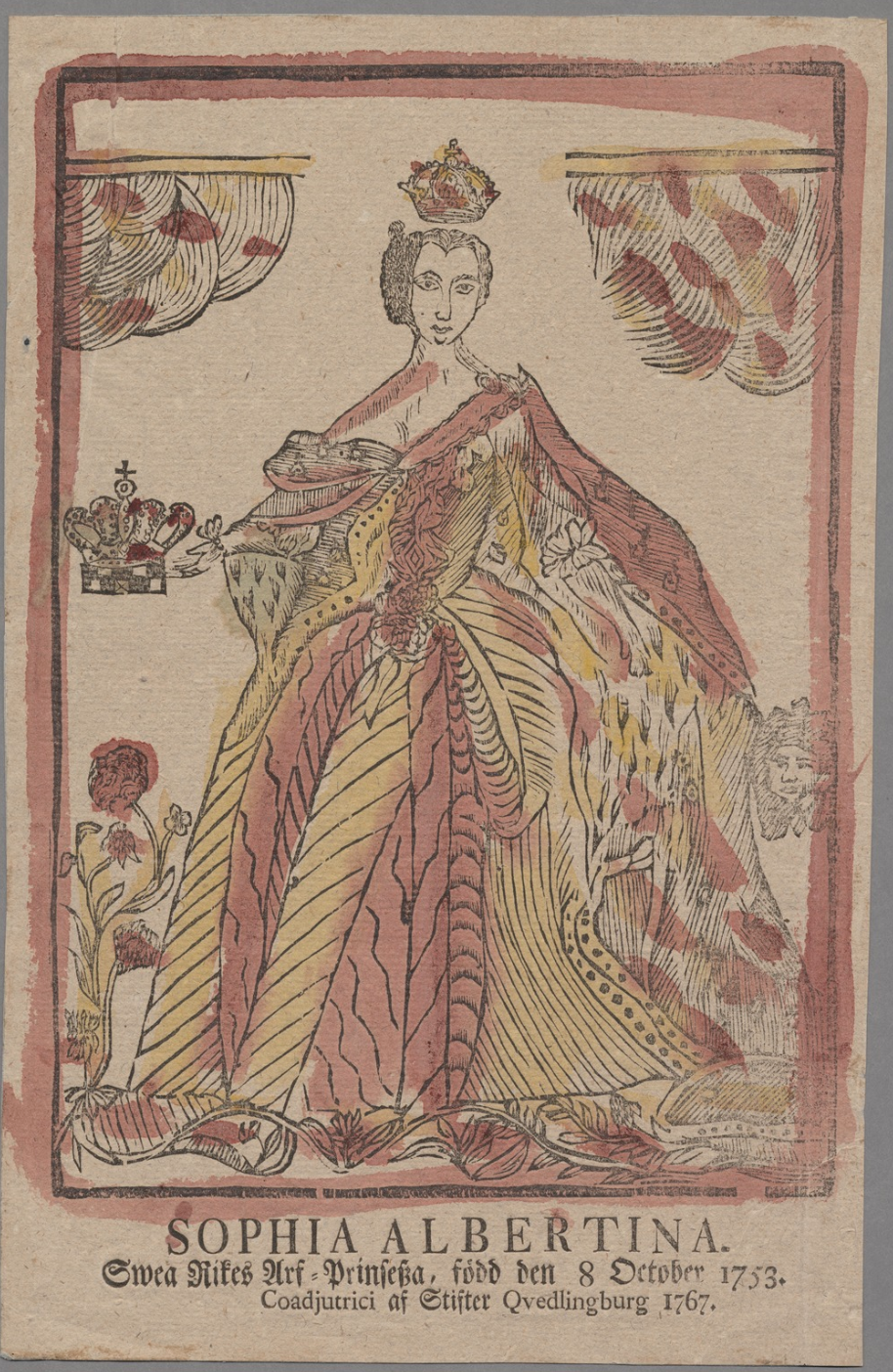
“They told me it was the crown or the hair. I chose the hair.”
The face when you realize that someone has spilled ketchup and mustard everywhere.
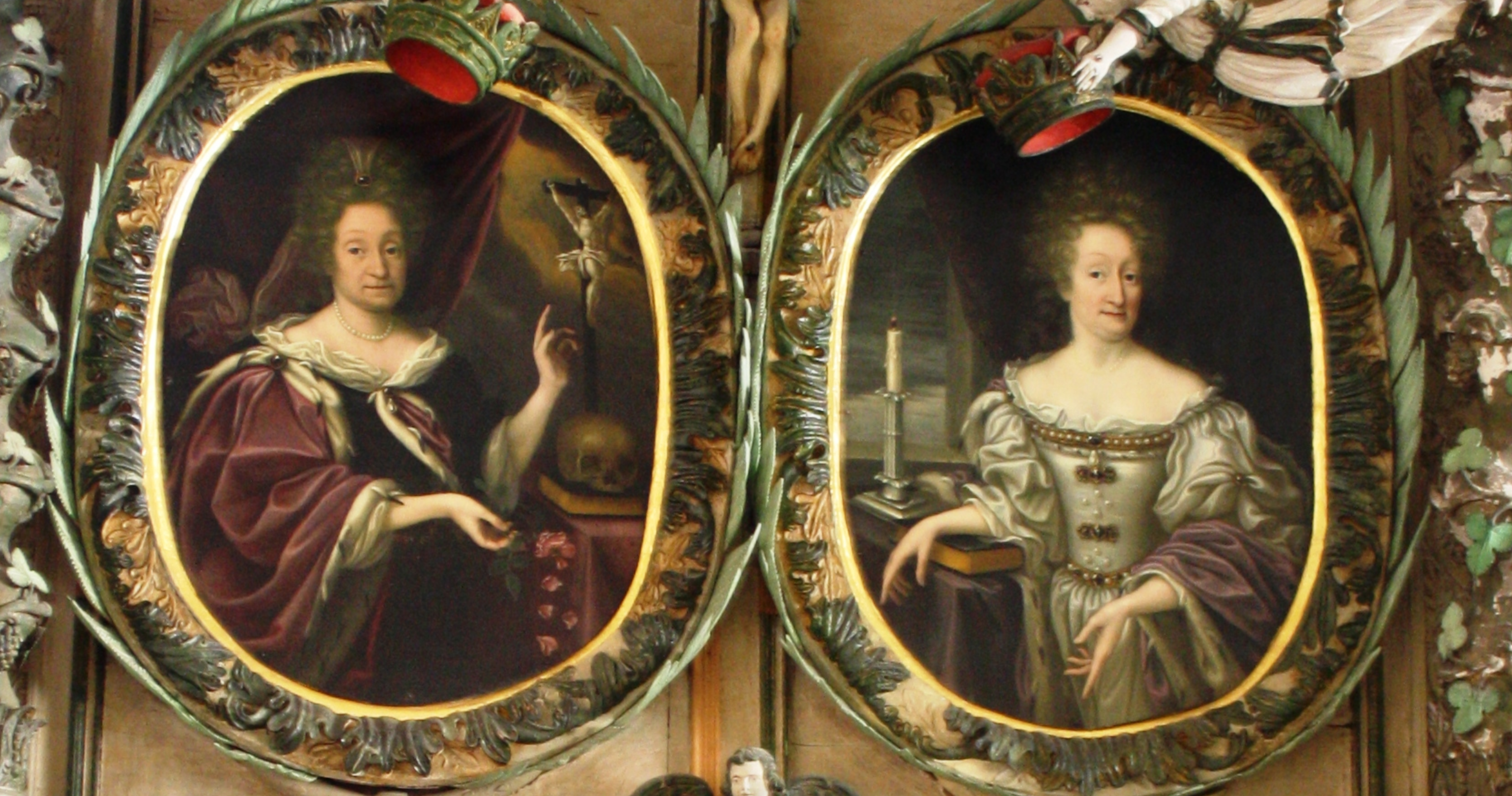
Marie Elisabeth von Holstein-Gottorf, Princess-Abbess of Quedlinburg, knows what you did. And she is not amused.
“What cloister is ever complete without tropical plants?”
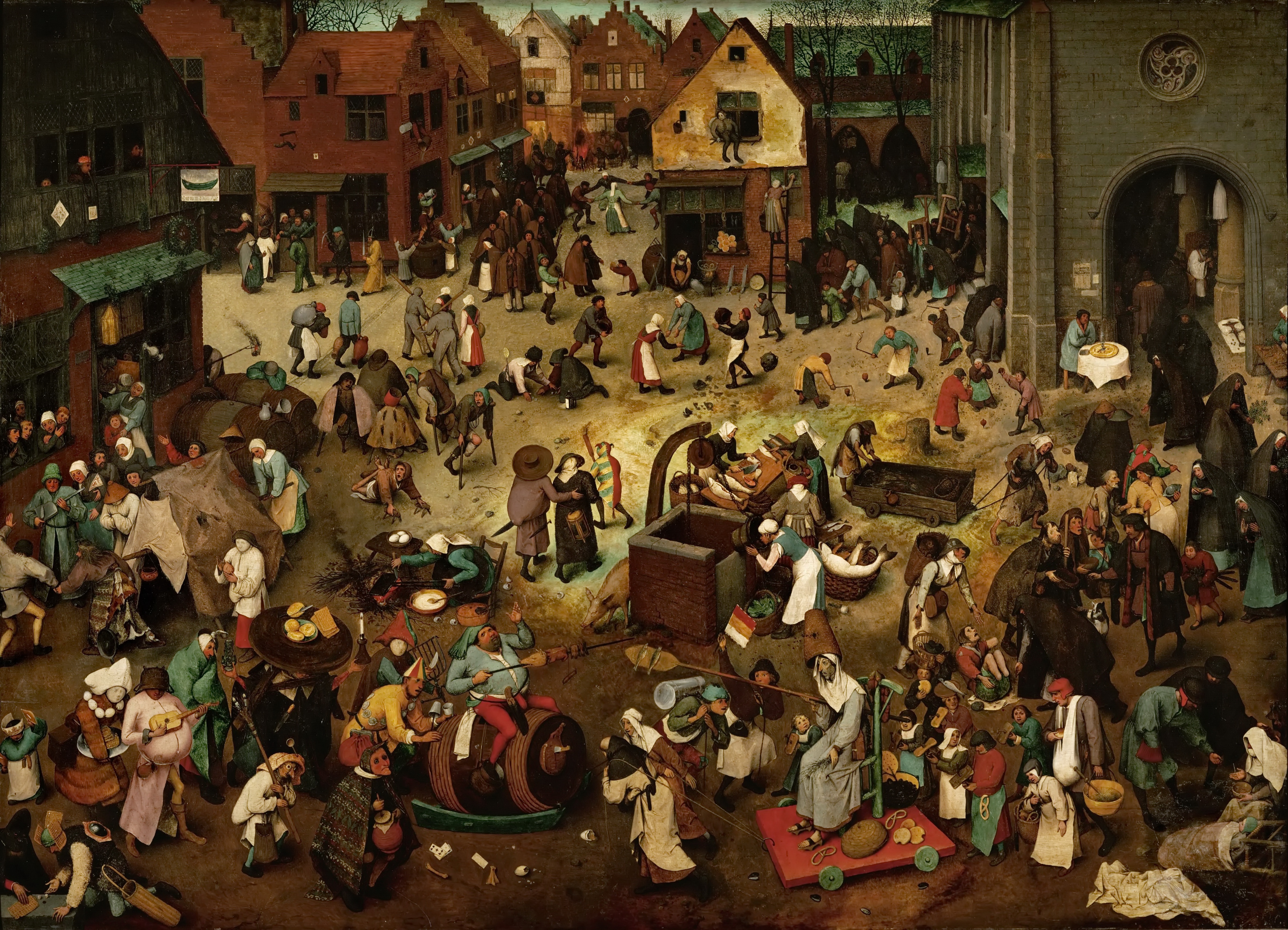
“The Fight Between Carnival and Lent,” Pieter Bruegel the Elder. Recently seen by the author in Brussels. (Source)
The pious among my readers will no doubt be aware that Lent will soon be upon us. Here are 100 ideas for how to have a successful and most fruitful season of penance.
Give up meat
Give up chocolate
Give up alcohol
Give up social media
Give up being a social media influencer
Give up films
Give up naughty films
Give up films that are very naughty but not the ones that are naughty while also being either smart or funny or historically dramatic in a passingly educational sort of way
Give up comic books
Give up music
Give up secular music
Give up Christian praise and worship music (for the love of God and all that is holy)
Give up lobster, though not on Fridays
Give up dairy
Give up various soft cheeses
Give up all cheeses from Poitou-Charente but not anywhere else in France
Give up Netflix
Give up “Netflix”
Give up petting zoos
Give up marsupials
Give up giraffes of any kind
Give up your ignorance of the various kinds of giraffe
Give up spy novels
Give up surprising all of your friends by suddenly screaming at them, apropos of nothing, “No, Mr. Bond, I expect you to die!”
Give up your longstanding telenovela addiction
Give up trying to learn Portuguese in favor of Esperanto
Give up learning Esperanto
Give up reading the poetry of William McGonagall, the Apollo of Dundee
Give up the various birds, stuffed and otherwise, that you are hoarding in your attic and basement
Give up your deeply-rooted habit of eating little fragments of ceramic statues
Give up your swimming lessons
Give up your avoidance of Luton, Slough, and Swindon
Give up the American news cycle
Give up the Busby Berkeley marathons you play in your living room every Friday evening
Give up pretending you are, in fact, the reincarnation of Senhor Doutor Plinio Corrêa de Oliveira
Give up whining
Give up long walks in the park
Give up spitting in public
Give up gossip
Give up gossip about me, please
Give up your general wanton demeanor and frowsy mien
Give up the chips
Give up all professional sports
Give up your various simultaneous affairs with the members of the Swazi National Curling Team
Give up the ghost
Give up your collection of Rococo snuff boxes depicting various prince-bishops in ermine
Give up practicing the kazoo at inappropriate hours of the night
Give up Morris dancing
Give up peanut butter and eel jelly sandwiches
Give up your place in line
Give up the furious Mah-Jong tournaments you regularly host for gangs of aged nuns
Give up reciting the poetry of William McGonagall, Bard of Dundee
Give up your participation in the capitalist system enslaving us all
Give up toast
Give up the secret alien knowledge you acquired through highly illegal methods of infiltrating government files
Give up felonies in general
Give up all the Skittles you have hoarded in your closet
Give up the various coffee table books of early brutalist architecture that you have received from work colleagues, many of whom have since passed on
Give up on modern architecture in toto
Give up writing emoji haikus
Give up your shoegaze band, Emoji Haiku
Give up on romance
Give up on romantic comedies
Give up those trashy bodice-rippers they sell in the supermarket book aisle (you know the ones)
Give up your seat in the Académie française
Give up your seat on the train to Timbuktu
Give up your seat on the Parish Council (here’s looking at you, Susan)
Give up your operatic emotional troubles
Give up addressing everyone in song
Give up asserting that you are, in fact, Madama Butterfly
Give up counting time in anything but the Mayan calendar
Give up your general estrangement from Mesoamerican culture
Give up your allergies
Give up your obstinate refusal to learn the Sasquatch language
Give up your unreliable narration
Give up your postmodern metairony
Give up your Twitter account
Give up treating your dogs like children
Give up treating your children like dogs
Give up treating your children better than your cats
Give up your claim to the long-defunct throne of the Polish-Lithuanian Commonwealth
Give up your alarming habit of musical flatulence
Give up your covert addiction to locomotive erotica
Give up your understated unibrow
Give up your long-awaited nose job
Give up your embittered attempt to remain Dean of a prominent English Cathedral
Give up memorizing the poetry of William McGonagall, the Orpheus of Dundee
Give up any expectations of amusement
Give up the pipe dream of tenure
Give up your position to the various paramilitary forces that are hunting you through the tundra
Give up break-dancing in public parks
Give up attending Hare Krishna services
Give up any association with the Libertarian Party
Give up all hope, ye who enter here.
Give up the secret recipe
Give up the art your late uncle Oswald took from various museums over the course of his long and chequered career as a forger and art thief
Give up approximately 1/4 of your bone marrow
Give up being lame
Give up all the excuses you always make for not keeping your Lenten penance
Here is an extremely amusing (and, in its own way, edifying) little chapter from Introduction to the Devout Life. I’ve only just encountered it by chance. It’s passages like this that rather make one understand why Evelyn Underhill summed up his teaching in the one line, “Yes, indeed, my dear Duchess, as Your Grace so truly observes, God is love.”
One can almost hear the Gentleman Saint sipping his tea at the end of each numbered item in the list below.
CHAPTER XXXIII. Of Balls, and other Lawful but Dangerous Amusements.
DANCES and balls are things in themselves indifferent, but the circumstances ordinarily surrounding them have so generally an evil tendency, that they become full of temptation and danger. The time of night at which they take place is in itself conducive to harm, both as the season when people’s nerves are most excited and open to evil impressions; and because, after being up the greater part of the night, they spend the mornings afterwards in sleep, and lose the best part of the day for God’s Service. It is a senseless thing to turn day into night, light into darkness, and to exchange good works for mere trifling follies. Moreover, those who frequent balls almost inevitably foster their Vanity, and vanity is very conducive to unholy desires and dangerous attachments.
I am inclined to say about balls what doctors say of certain articles of food, such as mushrooms and the like—the best are not good for much; but if eat them you must, at least mind that they are properly cooked. So, if circumstances over which you have no control take you into such places, be watchful how you prepare to enter them. Let the dish be seasoned with moderation, dignity and good intentions. The doctors say (still referring to the mushrooms), eat sparingly of them, and that but seldom, for, however well dressed, an excess is harmful.
So dance but little, and that rarely, my daughter, lest you run the risk of growing over fond of the amusement.
Pliny says that mushrooms, from their porous, spongy nature, easily imbibe meretricious matter, so that if they are near a serpent, they are infected by its poison. So balls and similar gatherings are wont to attract all that is bad and vicious; all the quarrels, envyings, slanders, and indiscreet tendencies of a place will be found collected in the ballroom. While people’s bodily pores are opened by the exercise of dancing, the heart’s pores will be also opened by excitement, and if any serpent be at hand to whisper foolish words of levity or impurity, to insinuate unworthy thoughts and desires, the ears which listen are more than prepared to receive the contagion.
Believe me, my daughter, these frivolous amusements are for the most part dangerous; they dissipate the spirit of devotion, enervate the mind, check true charity, and arouse a multitude of evil inclinations in the soul, and therefore I would have you very reticent in their use.
To return to the medical simile;—it is said that after eating mushrooms you should drink some good wine. So after frequenting balls you should frame pious thoughts which may counteract the dangerous impressions made by such empty pleasures on your heart.
Bethink you, then—
1. That while you were dancing, souls were groaning in hell by reason of sins committed when similarly occupied, or in consequence thereof.
2. Remember how, at the selfsame time, many religious and other devout persons were kneeling before God, praying or praising Him. Was not their time better spent than yours?
3. Again, while you were dancing, many a soul has passed away amid sharp sufferings; thousands and tens of thousands were lying all the while on beds of anguish, some perhaps untended, unconsoled, in fevers, and all manner of painful diseases. Will you not rouse yourself to a sense of pity for them? At all events, remember that a day will come when you in your turn will lie on your bed of sickness, while others dance and make merry.
4. Bethink you that our Dear Lord, Our Lady, all the Angels and Saints, saw all that was passing. Did they not look on with sorrowful pity, while your heart, capable of better things, was engrossed with such mere follies?
5. And while you were dancing time passed by, and death drew nearer. Trifle as you may, the awful dance of death must come, the real pastime of men, since therein they must, whether they will or no, pass from time to an eternity of good or evil. If you think of the matter quietly, and as in God’s Sight, He will suggest many a like thought, which will steady and strengthen your heart.
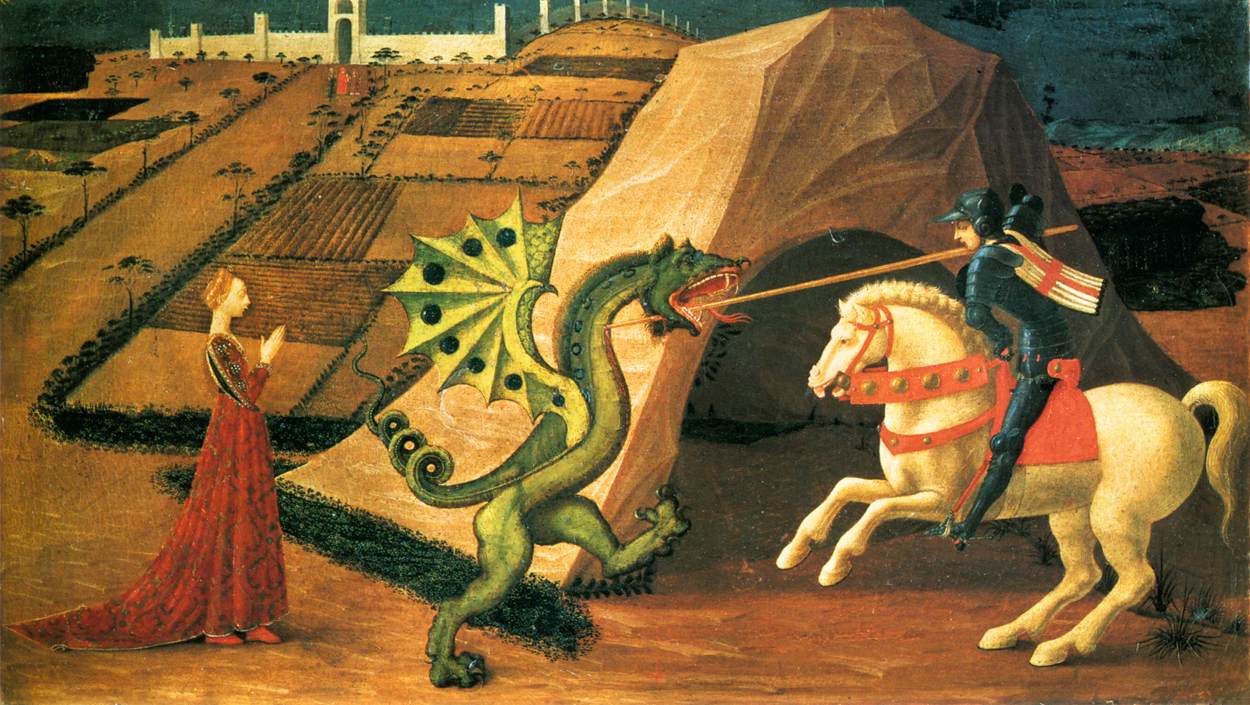
“Saint George and the Dragon,” Paolo Uccello, c. 1459 (Source)
The Englishman
G.K. Chesterton
St George he was for England,
And before he killed the dragon
He drank a pint of English ale
Out of an English flagon.
For though he fast right readily
In hair-shirt or in mail,
It isn’t safe to give him cakes
Unless you give him ale.
St George he was for England,
And right gallantly set free
The lady left for dragon’s meat
And tied up to a tree;
But since he stood for England
And knew what England means,
Unless you give him bacon
You mustn’t give him beans.
St George he is for England,
And shall wear the shield he wore
When we go out in armour
With battle-cross before.
But though he is jolly company
And very pleased to dine,
It isn’t safe to give him nuts
Unless you give him wine.
Spring is here, and the Pre-Raphaelites are going to tell you how to celebrate.
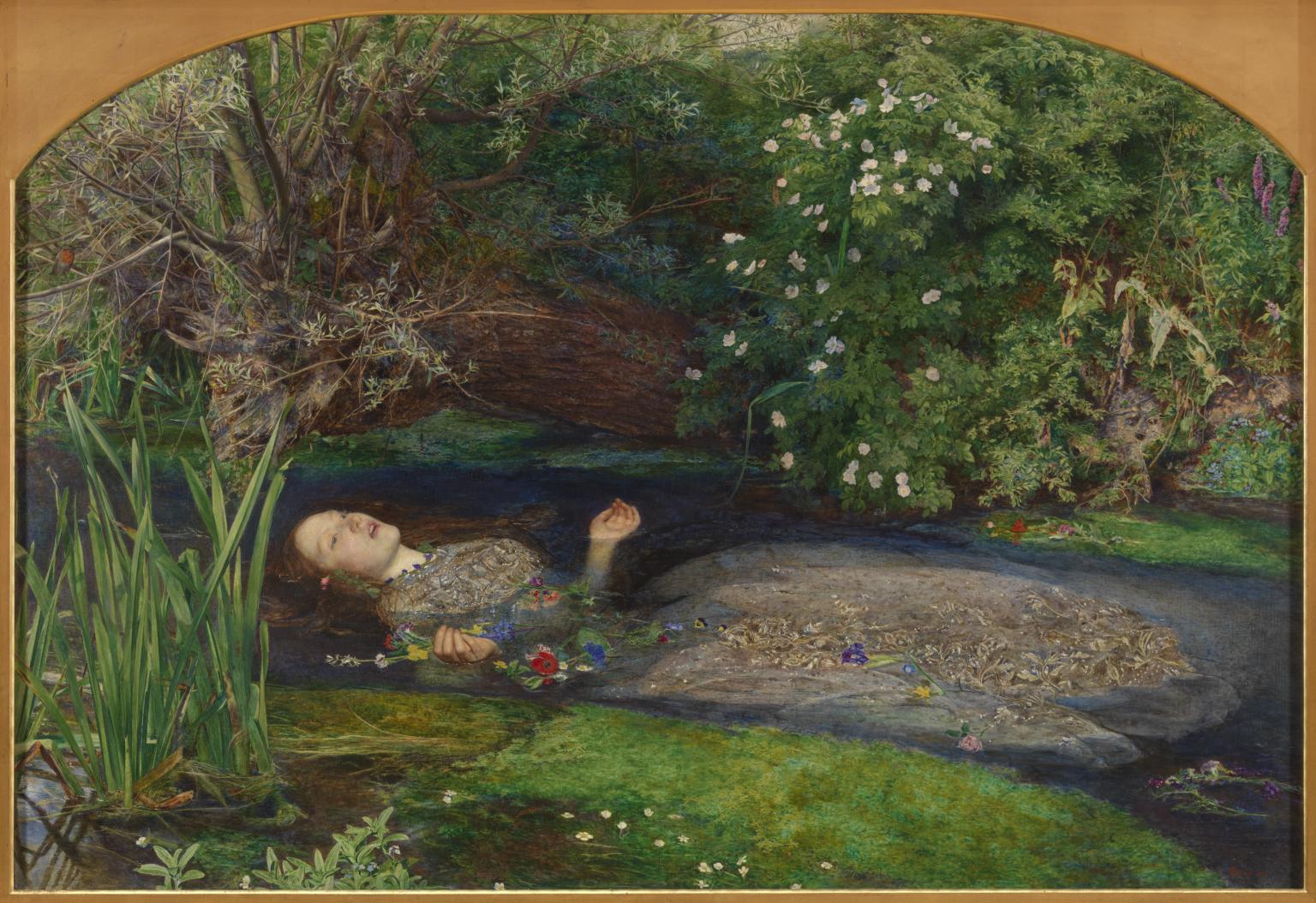
If you’re not just lying about languidly in a meadow, you’re not really doing it right, are you?
It is also acceptable to lie there with an audience, preferably one enjoying a lovely picnic. And everyone must be the same gender and should, if at all possible, be dressed in very uncomfortable clothing.
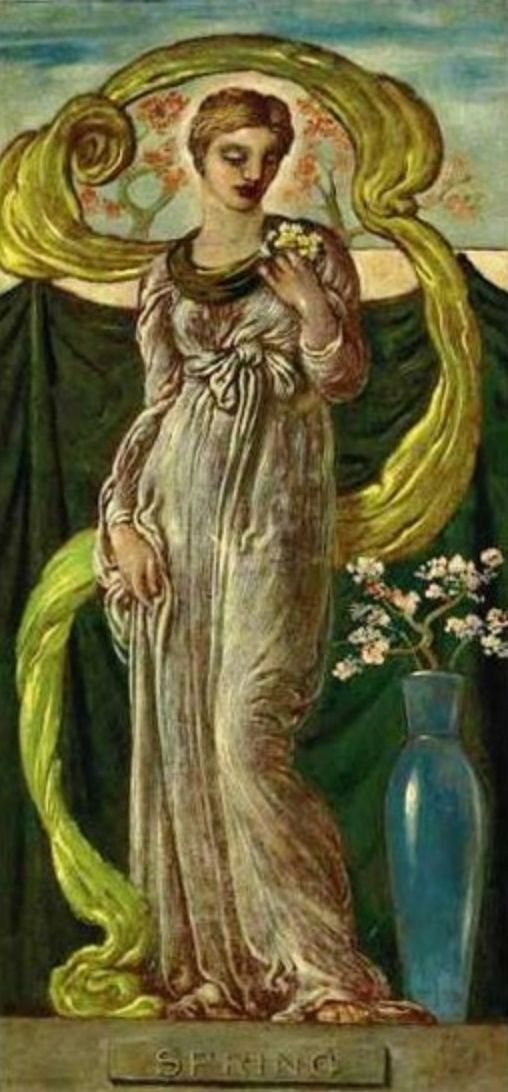
After you have wallowed in the flowers, be sure to pick some and stare vacantly into the middle distance.
And of course, you should be arrayed in an artfully disheveled white dress. To get that shabby chic look, you know?
How you dishevel it is up to you.
Never let a gust of wind pass without posing.
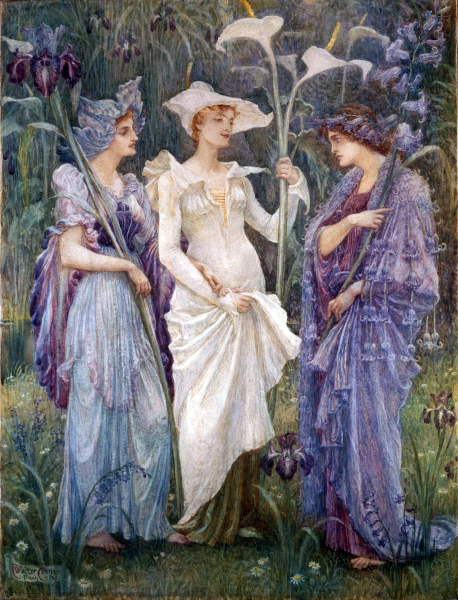
When it comes to flower-staffs, the bigger, the better.
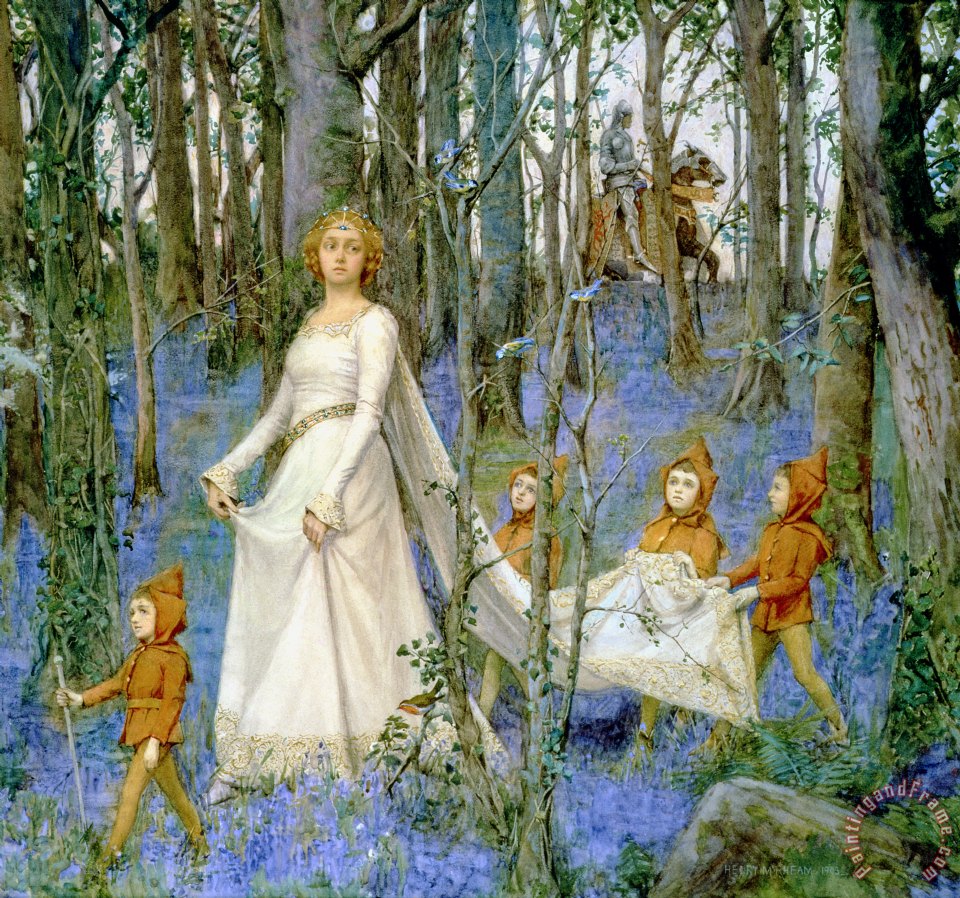
Only travel with an entourage of little people, so as better to accent your royal mien and bearing.
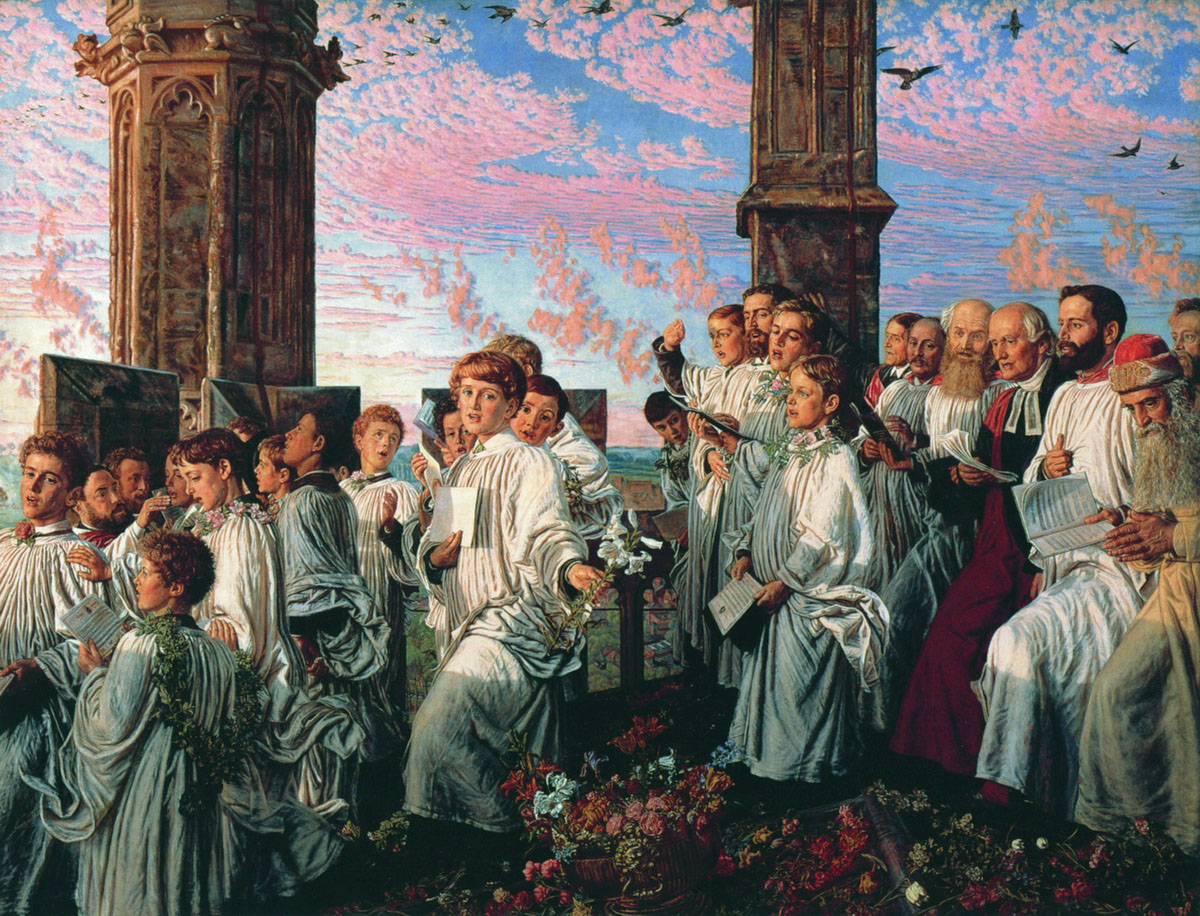
Choir boys will also do.
Spring is a lovely time for a refreshing dip.
You know you’re having a good Spring day when, so enraptured by the little blossoms you’re holding, you don’t even notice your long green scarf blowing away.
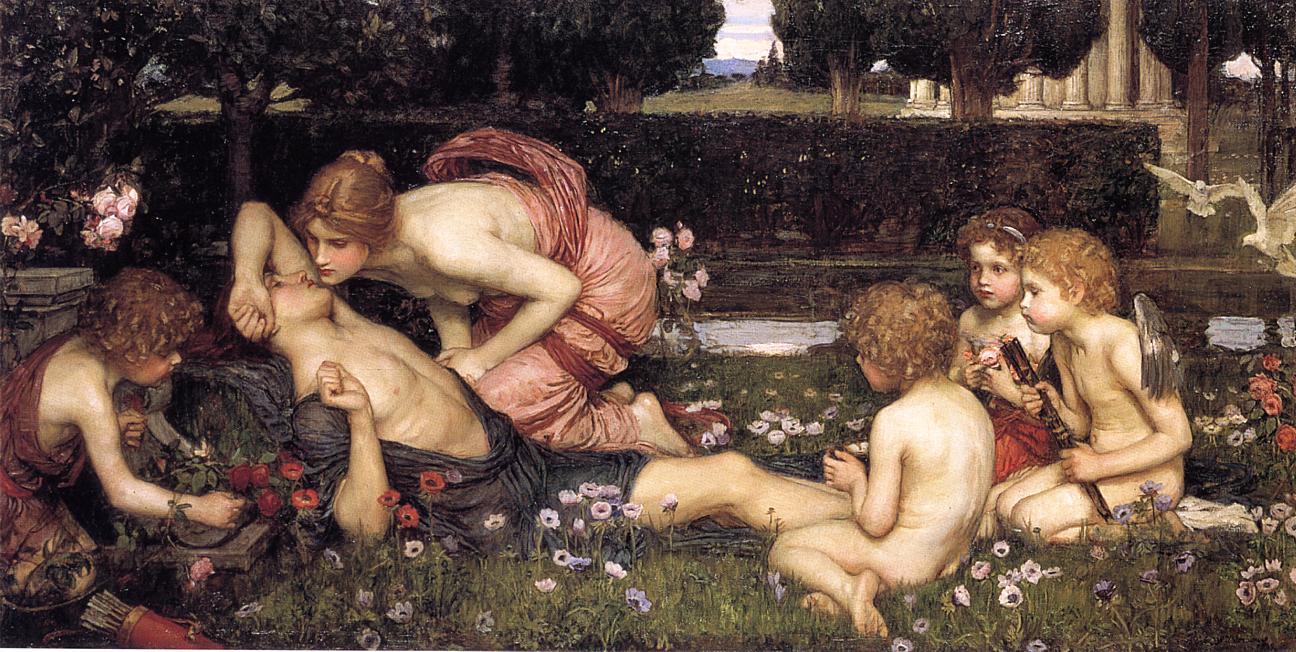
If you happen to find half-naked classical youths asleep in a garden, surrounded by putti and doves, and stuck in an extraordinarily improbable pose, don’t worry. This is normal in Spring.
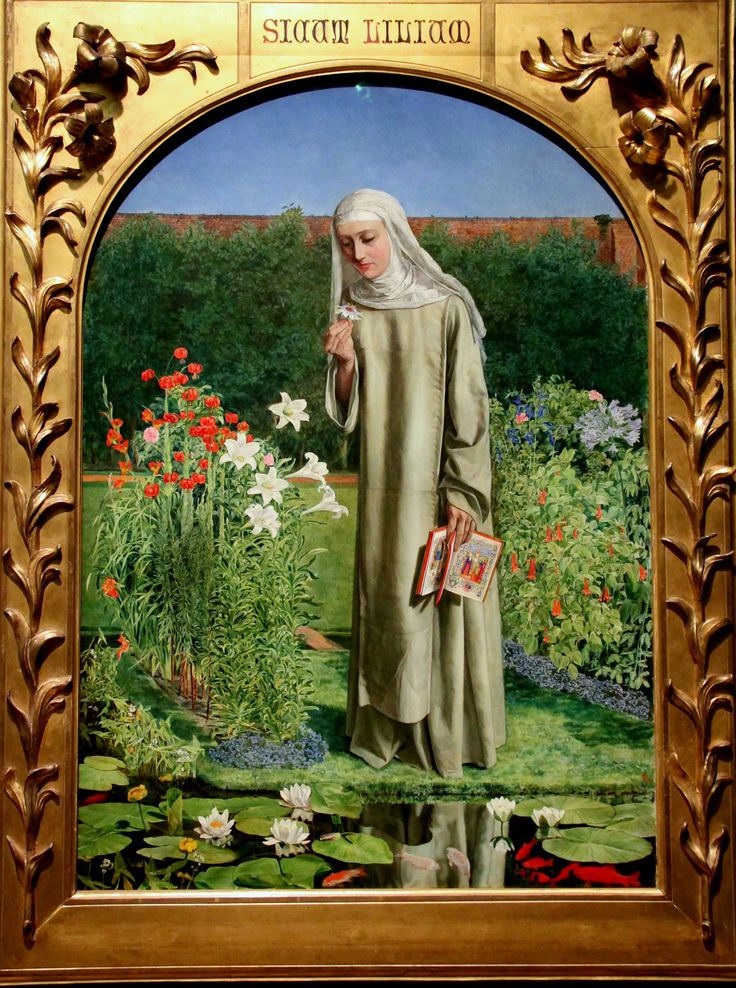
Likewise, wild nuns emerge from hibernation and range freely again in the Spring.
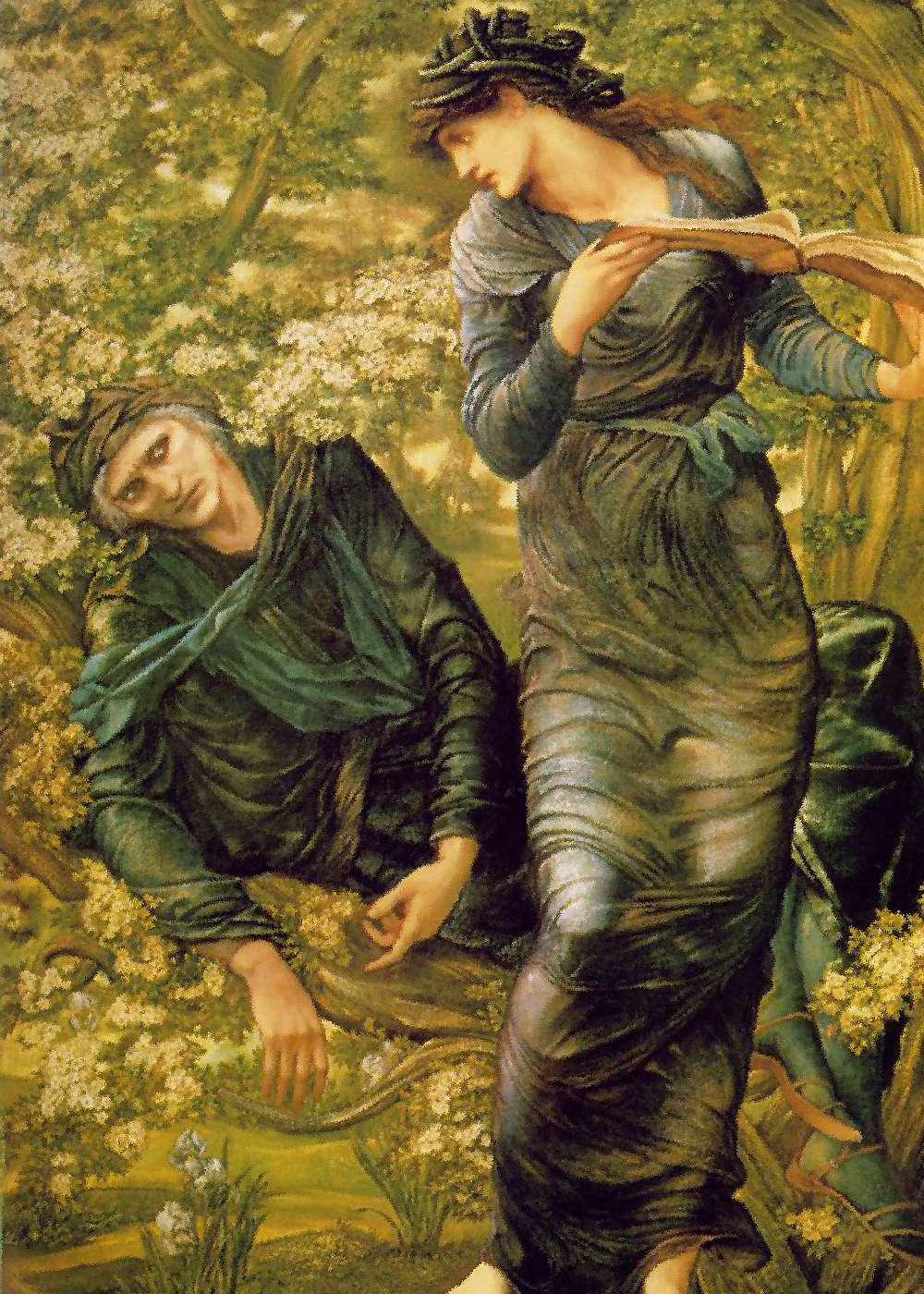
While it’s important to enjoy the season, it’s even more important not to get too caught up in it. This time of the year is when people are most at risk of being sealed into trees by nymphs.
But surely the best thing about Spring is that it’s no longer Winter!
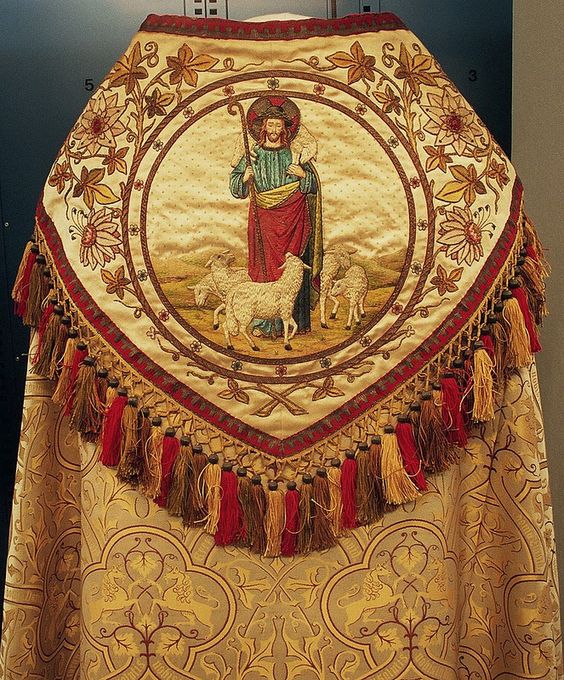
I realize that technically last week was Good Shepherd Sunday in the traditional calendar, but as most of the Catholic world (alas) celebrates it tomorrow, I thought I’d offer up this truly dismal hymn from Fr. Faber. I have never yet heard it set to music, so if any of my readers happen to know of a recording, I would appreciate them kindly sharing it. Fr. Faber is one of my favorite spiritual writers and hymnodists…even when he’s outlandishly bad.
The True Shepherd
Fr. Frederick William Faber
I was wandering and weary
When my Saviour came unto me;
For the ways of sin grew dreary
And the world had ceased to woo me:
And I thought I heard Him say,
As He came along His way,
O silly souls! come near Me;
My sheep should never fear Me;
I am the Shepherd true.
At first I would not hearken,
And put off till the morrow;
But life began to darken,
And I was sick with sorrow;
And I thought I heard Him say,
As He came along His way,
O silly souls! come near Me;
My sheep should never fear Me;
I am the Shepherd true.
At last I stopped to listen,
His voice could not deceive me;
I saw His kind eyes glisten,
So anxious to relieve me:
And I thought I heard Him say,
As He came along His way,
O silly souls! come near Me;
My sheep should never fear Me;
I am the Shepherd true.
He took me on His shoulder,
And tenderly He kissed me;
He bade my love be bolder,
And said how He had missed me;
And I’m sure I heard Him say,
As He went along His way,
O silly souls! come near Me;
My sheep should never fear Me;
I am the Shepherd true.
Strange gladness seemed to move Him,
Whenever I did better;
And he coaxed me so to love Him,
As if He was my debtor;
And I always heard Him say,
As He went along His way,
O silly souls! come near Me;
My sheep should never fear Me;
I am the Shepherd true.
I thought His love would weaken,
As more and more He knew me;
But it burneth like a beacon;
And its light and heat go through me;
And I ever hear Him say,
As He goes along His way,
O silly souls! come near Me;
My sheep should never fear Me;
I am the Shepherd true.
Let us do then, dearest brothers!
What will best and longest please us,
Follow not the ways of others,
But trust ourselves to Jesus;
We shall ever hear Him say,
As He goes along His way,
O silly souls! come near Me;
My sheep should never fear Me;
I am the Shepherd true.
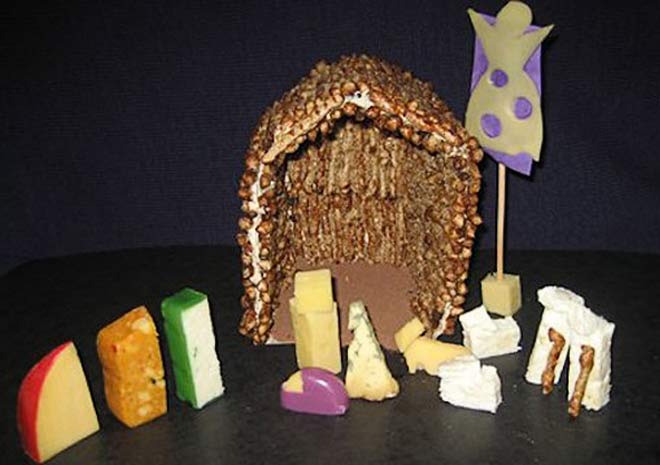
Fr. Dwight Longenecker has said all that really needs to be said about this year’s crêche at the Vatican. The issue is not just that it’s kind of crappy art, but that it dramatizes a heretical theology – a liberal Pelagianism of good works. Do give it a view.
‘Catholicity, Antiquity, and consent of the Fathers, is the proper evidence of the fidelity or Apostolicity of a professed Tradition’ J.H. Newman, Lectures on the Prophetical Office of the Church, 1837, p. 51









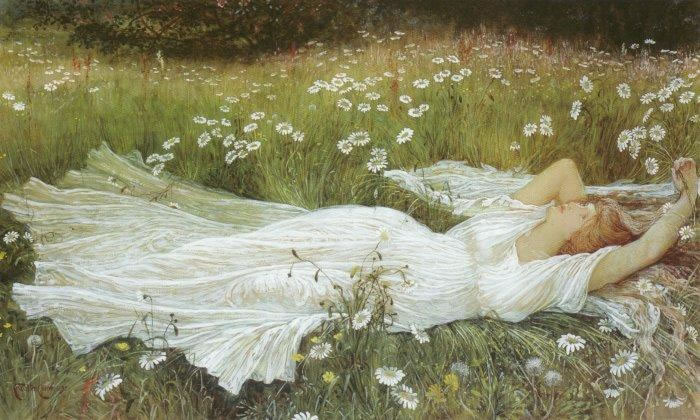 If you’re not just lying about languidly in a meadow, you’re not really doing it right, are you?
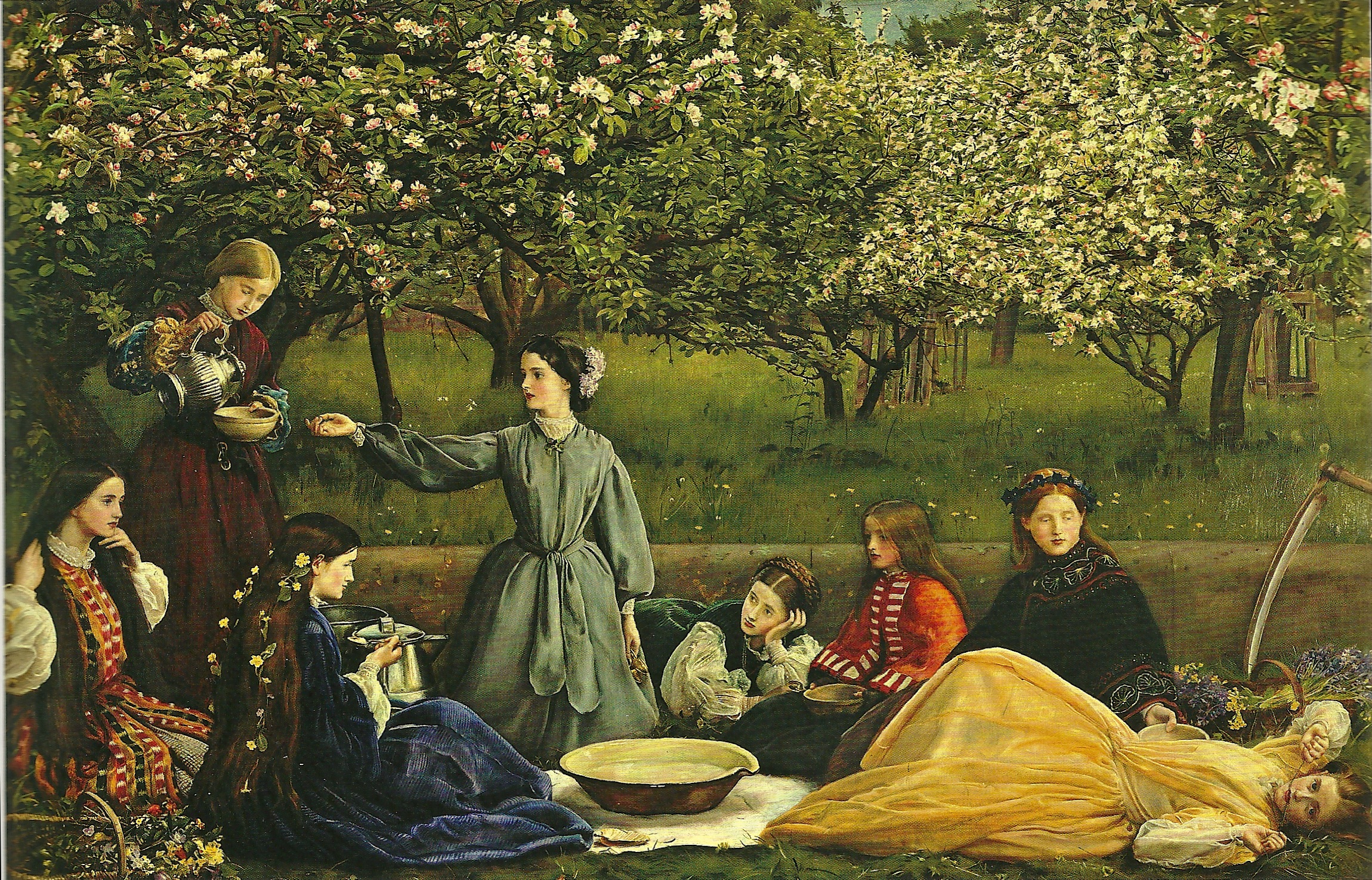 It is also acceptable to lie there with an audience, preferably one enjoying a lovely picnic. And everyone must be the same gender and should, if at all possible, be dressed in very uncomfortable clothing.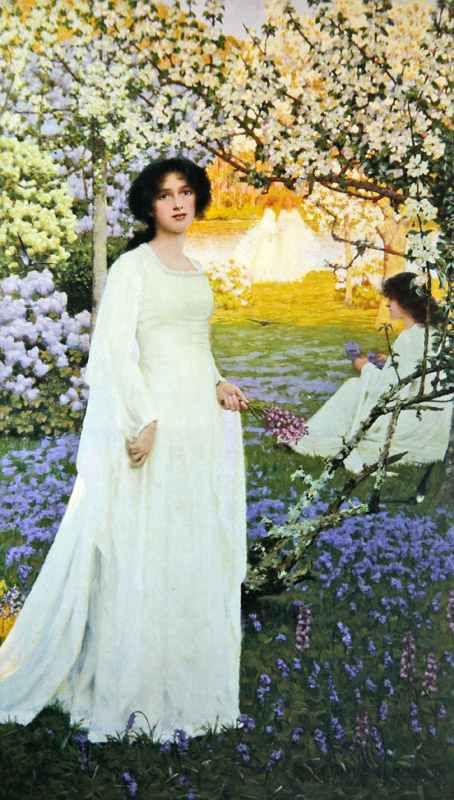
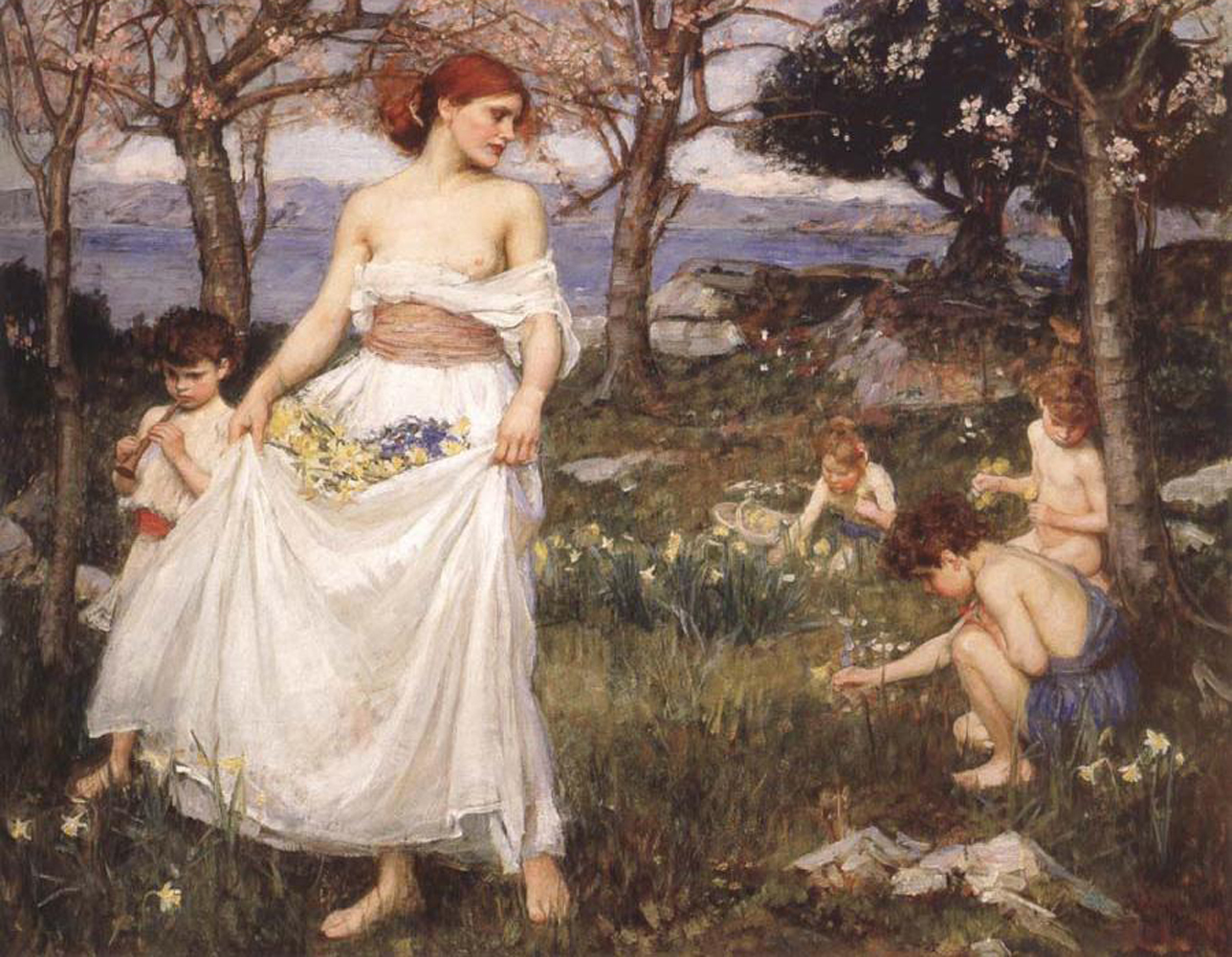 And of course, you should be arrayed in an artfully disheveled white dress. To get that shabby chic look, you know?
 How you dishevel it is up to you.

 The Amish Catholic




_01.jpg)

