Elsewhere: Mother Mectilde de Bar and the Prayer of Devekut

One of the great works of Vultus Christi has been the exposure of many English-speaking Catholics to the spiritual treasures of the continental Benedictine tradition, especially the life and work of Mother Mectilde de Bar. The good nun was a profound mystic of the Eucharist and a spiritual heir to the French School. Anyone with any interest in Benedictine life, Catholicism in early modern France, or spirituality generally should take note.

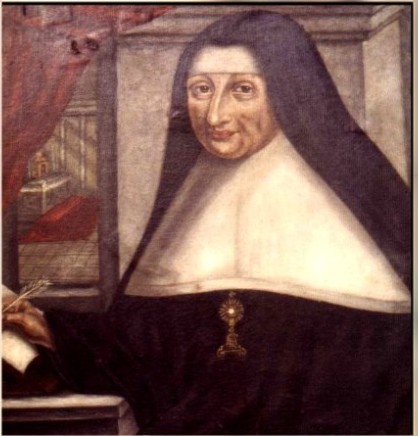
MechtildeBNF.jpg

Mother Mectilde de Bar (1614-1698), foundress of the Benedictines of Perpetual Adoration of the Most Blessed Sacrament of the Altar. (Source)

I am very happy to refer my readers to an excellent translation of one of Mother Mectilde’s letters of spiritual direction. The translator, an Oblate of Silverstream, has rendered the 17th century French into elegant and very readable English. A job well done!

Here’s a particularly potent excerpt:

The whole of Christian perfection consists in continual attention to Jesus Christ, and a constant adherence or submission to His good pleasure. These two points contain everything, and their faithful practice will lead you to the highest degree of perfection. Blessed is the soul who observes them.

The first point consists in seeing Jesus Christ in everything; in all events and in all our dealings; in such way that this divine sight removes from us the sight of creatures, ourselves, and our interests, in order to see nothing except Jesus Christ. In a word, it is to have the presence of God continually.

The second point consists in being constantly submissive to His holy will; in being so much subject to His good pleasure that we no longer have any return, at least voluntarily, by which we can withdraw from this respectful obedience.

I am reminded, in reading this passage, of a concept in Jewish mysticism called devekut. To practice devekut is to cleave to God constantly, even in the midst of everyday, profane activities. The Rabbis who founded and nurtured Hasidism in the 18th century made it a central feature of their mystical praxis, though the idea has roots in the Temple traditions of the Old Testament (vide Barker 2004, 37). Dr. Margaret Barker notes that, according to the older, priestly understanding of the word “cleaving” in Hebrew, “to cleave” meant quite literally to join. However, this sense was displaced when the Moses-focused Deuteronomist tradition came to ascendance. The new meaning of “cleaving” was, instead, obedience (Ibid. 37). Mother Mectilde has here joined both meanings in a salutary way.

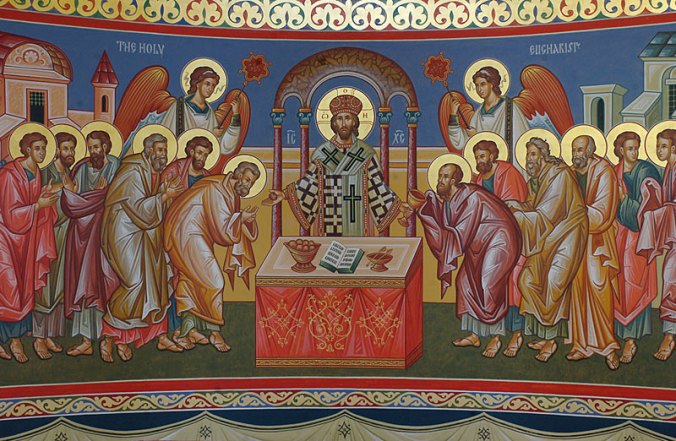
Holy-Eucharist-Icon.jpg

An icon of the Holy Eucharist, showing Christ the High Priest in the Holy of Holies. (Source)

However, I think she places a bit more emphasis on the first, as the primary and indispensable basis of the second. She goes on to write,

Have Jesus Christ imprinted and carved on the center of your soul. Have him in all the faculties of your mind. May your heart be able to think of and long for nothing except Jesus Christ.  May your whole inclination be to please Him. Attach all your fortunes and your happiness to knowing and loving Jesus Christ.[1] May nothing on earth, however great it seems, prevail in you against the constant union you should have with Jesus Christ. May neither heaven, nor earth, nor hell, nor any power, ever separate you from Him.[2]

She continues on and apostraphizes Divine Love, writing

O Jesus all powerful and all love, work in us these two effects of mercy: attract us by your omnipotence and transform us by your love into Yourself.

O love, O love divine, may you burn in us, and that you may consume in us everything that is contrary to you and opposed to your workings.

O life that is not animated by love, how can you be called life? You are a hideous death, and most terrible.

O pure and holy love of Jesus Christ, do not allow a single moment of my life to be spent without love; make me die and throw me into hell a thousand times rather than not to love Jesus Christ.

The first line here is the key; this is the loving and even conjugal language of devekut, not simple obedience. But obedience is implied as the sustaining force and natural result of such attentive love.

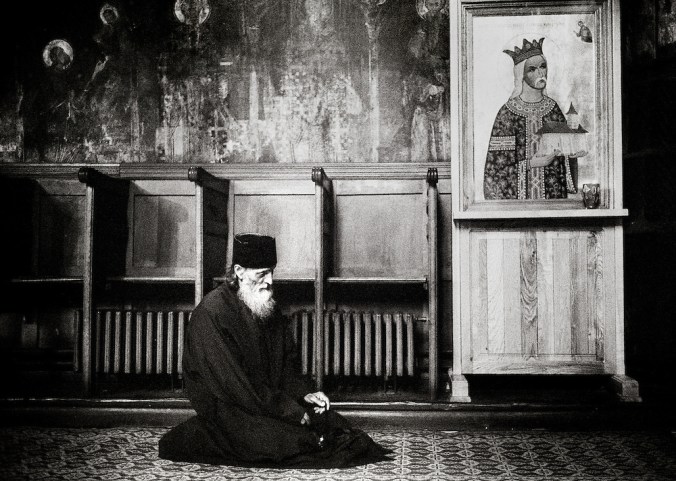
Hesychast.jpg

A hesychast at prayer. (Source)

It seems appropriate to me that Mother Mectilde, a Benedictine, should advocate for this kind of “cleaving” prayer, vigilant love in every moment. It has always been the task of the monastic throughout history to preserve this kind of remembrance of God that is itself a form of His presence in the heart. Precisely this “cleaving” constitutes the positive good underlying hesychasm in the East, but it can also be found in many monastic writers of both East and West. Mother Mectilde is not speaking alone. Indeed, she expresses the perennial Wisdom that has always infused the monastic life and made it fruitful.

Read the whole thing over at Vultus Christi.

A Carmelite Daughter of St. Philip: The Venerable Serafina di Dio, O.C.D.

One of my favorite essays to write on this blog so far has been my study of the way that St. Philip Neri embodied certain Benedictine qualities. In that piece, I argue that sometimes we can gain a deeper understanding of a saint by looking at their likenesses with saints of a different religious family or by the influence of other saints in their lives. As an extension of that essay, I’d like to introduce my readers to a Venerable whom they have probably never heard of, one who followed St. Philip in a very Benedictine spirit: the Venerable Serafina di Dio, O.C.D.

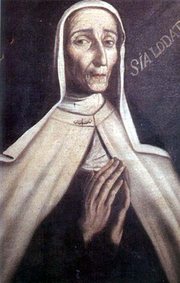
Venerabile-serafina-di-dio-fondatrice-.jpg

Ven. Serafina di Dio (1621-1699), Neapolitan Carmelite mystic. (Source)

The Life of a Mystic

Prudenza Pisa was born in the Kingdom of Naples in 1621. She clashed with her father at a young age when she refused to marry the young man he had chosen as her husband. She also cut her hair and donned pentiental garb. These actions did not go over well, and she soon found herself expelled from the household. Prudenza resided during this rather fraught period in what was essentially the family chicken coop. Yet she grew closer to her mother, who brought her meals secretly. Prudenza saw these sufferings as an opportunity for growth in trust of God. She also set herself to the good works of visiting the sick. In the Neapolitan Plagues of 1656, she continued her ministry even as the illness claimed her beloved mother. Her behavior at this terrible juncture was edifying:

Seraphina prepared her mother for death and actually closed her eyes when she died on August 5th 1656. Christian burial was not allowed during the plague. With her own hands, she dug a shallow grave in the backyard and personally buried her mother.

Yet her active life was soon to draw to a close. One of her uncles, a prominent priest, died of the same plague. He had been planning to found a convent of enclosed nuns on Capri. She carried on this noble work after his departure. She gathered together various companions from Naples and, on 29th of May, 1661, took the habit of the Discalced Carmelites at Naples Cathedral. It was then that she took the name of Serafina of God. Later that year, the community moved to Capri. Their residence soon proved inadequate, and they constructed a much larger monastery dedicated to the Most Holy Savior. Mother Serafina’s leadership bore fruit in another six Carmelite convents in the Kingdom of Naples, a remarkable flourishing clearly drawing its power from the Holy Ghost.
BenedictXIII.png

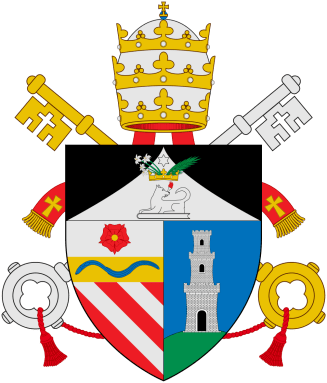
The (very Dominican) arms of Pope Benedict XIII, friend of Ven. Serafina di Dio (Source)

Ven. Serafina was not without trials. Although she wrote an attack on Quietism, she was herself accused of this noxious heresy. For six years, the Inquisition conducted an investigation into her writings and activities. For two, she was confined to her cell without the benefit of Holy Communion. But at last, her name was cleared, in no small part because of the intervention of her friend, Archbishop Vincenzo Maria Orsini, the future Pope Benedict XIII.

There can be little doubt that these troubles arose from within her own religious family. Although Mother Serafina was entirely blameless in conduct, her manner of spiritual leadership won her many enemies among her more lax daughters. Perhaps some of the trouble could have been anticipated from the fact that her recruits were customarily drawn from the ranks of the Neapolitan aristocracy, not a class generally known for its ascetic rigor. The Carmelites treated their foundress poorly. For example, while Serafina was ill in her confinement, she begged to see some of the sisters. They did not come. Yet the patience with which she bore these final trials remains exemplary. As one biographer notes, “Two days before she died she asked the Prioress to look after the sisters who had been so contrary to her, making excuses for their behavior.” This mercy converted the hard of heart, for, as the same writer says, “After her death on March 17, 1699, some of the sisters who were most against her became some of the most enthustiastic promoters of her Cause.”

Spiritual Daughter of St. Philip Neri

An heir of the Tridentine reform, the Ven. Serafina was a great admirer of St. Teresa of Avila, whom she endeavored to emulate in all things. She was a prolific writer, composing at least 2,173 letters and enough theological writing to fill 22 books. Some of her topics included:

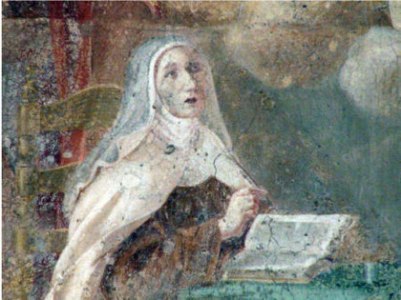
SerafinaWriting jpg.jpg

Ven. Serafina writing (Source).

-the prayer of faith
-mental prayer
-the love of God and the practice of the divine presence
-the common life
-conformity to the will of God.

Alas, I don’t believe any of these have been translated into English. Perhaps some intrepid early modernist will someday render these works into the Anglo-Saxon tongue.

Serafina was also a visionary mystic. She went about life with a constant ability to fall into meditation. In Serafina’s own words:

“…Anything I looked at I was able to turn into a meditation… When I saw it raining, I thought of the refreshment which the rain brought to the earth and that without it the earth would be arid. I would say: ‘If the water of divine grace did not fall on the soul, it would dry up without providing the fruits of good works.’ … The sight of fish swimming in the sea made me remember how the saints are immersed in God… And in such wise everything, even the slightest things, served me for my spiritual nourishment.”

The greatest misfortunes could not turn her from the praise of God. For in all things, she perceived the benevolent Providence of God. Her unfailing rule was that “All that God did and allowed was beautiful, good, ordered for our good.” Even the terrible things in life thus became for Serafina an occasion of magnification and blessing.

Serafina was also a visionary mystic. At one point, “She was so overwhelmed with her vision of the Godhead that she wondered what else could be reserved for her in heaven.” The experiences she was granted were extraordinary, though she took pains to keep them discreet. Yet we do have letters attesting to some of her ecstasies.

One figure who emerges as particularly important in her religious life is St. Philip Neri. The Oratorian Fr. Francesco Antonio Agnelli tells us that she honored St. Philip by, for instance, devoutly kissing the feet of the crucifix thirty-three times in his honor; she was repaid for this act of love with a vision of the glorified St. Philip prostrate and kissing the feet of Jesus thirty-three times in her name (Agnelli 194).

Serafina’s spiritual father was Fr. Vincenzo Avinatri of the Naples Oratory. She wrote him letters describing the visions she had of St. Philip. In one such letter, she reports that

“I saw the Saint, with the great Mother of God, in a flame of fire, and surrounded with light…with a sweet countenance, he told me many beautiful things…He showed me what his sons ought to be, and the dignity of the Congregation, made, so to speak, in the likeness of God and of the three Divine Persons, and especially of the Person of the Holy Spirit…Without speaking, he had explained to me the perfection we must have in order to be sons of light. It would be a monstrous thing if fire generated snow, if light brought forth darkness, if crystal produced mud…How much greater wonder would it be, if in any of the sons of St. Philip, who are called sons of the Holy Spirit, there should be any defect!” (qtd. in Agnelli 195-96)

In another vision that came to her on the vigil of St. Philip’s day, she was carried way into a heavenly rapture and saw the Saint aflame with a supernal light. And in view of St. Philip, she saw her own heart on fire, as well. But it did not glow as brightly as his; therefore, she prayed to the Saint that she might receive a more perfect and ample share of Divine Love. As Agnelli describes it,

Then the Saint united his heart with hers, and thus united they sent forth a great flame; she felt so much love that she could not express it, and the Saint invited her to rejoice in the presence of the Lord, and to sing His praises, desiring her to repeat with him these words, Sanctus, Sanctus, Sanctus, Magnus Dominus et laudabilis nimis [Holy, holy, holy, great is the Lord and worthy of all praise], adding that it is impossible to find in the most devout Canticles words more pleasing to God. (Agnelli 194-95).

She was thus adopted by the saint as a kind of daughter in the Spirit. She also looked upon Oratorians as her own sons. This spiritual affinity was later attested by a physical resemblance with St. Philip. When an autopsy was conducted on Mother Serafina’s body, the examiners found signs of transverberation in her heart.

It may seem odd for a visionary to become so friendly with St. Philip and his sons. After all, St. Philip himself was notorious for his skepticism when it came to visions. He had treated the Ven. Ursula Benincasa with unrelenting verbal abuse to test her inspiration – a test she passed, even if the holy man never quite came around to endorsing her. St. Philip taught that, “As for those who run after visions, dreams, and the like, we must lay hold of them by the feet and pull them to the ground by force, lest they should fall into the devil’s net.” Though a man of tremendous supernatural gifts himself, he knew that the spiritual world was a minefield of dangers. False visionaries abounded in his day, and his prudent words have retained their perennial wisdom down into our own era.

To properly understand the nature of Ven. Serafina’s visionary mysticism, and why we can properly say it breathes of a Philippine spirit, we must look at it in the context of her leadership of a Carmelite monastery.

A Liturgical Mysticism

The troubles in Serafina’s life began because of her governance. As one biographer has it,

As often happens, Sr. Seraphina’s strongest talents and graces became her heaviest crosses. In her foundations she shared her convictions about religious life with her sisters. She firmly believed that the best guarantee of authenticity of one’s religious experience was a dogged faithfulness to the traditional forms. She was immersed in the church’s liturgy, the celebration of the Eucharist, the Divine Office, the liturgical year, and the feasts of the Saints. She was often led to intimate communion with Christ Jesus at the liturgy beginning with the midnight office. She also stressed the need for silence and solitude as requisites for prayer. [emphasis mine – RTY]

Her tenacious devotion to the traditional forms of worship and to the great prayer of the Church, the Liturgy and Divine Office, shows that the Ven. Serafina was in every way a monastic. Indeed, these salutary measures evince a Benedictine sensibility.

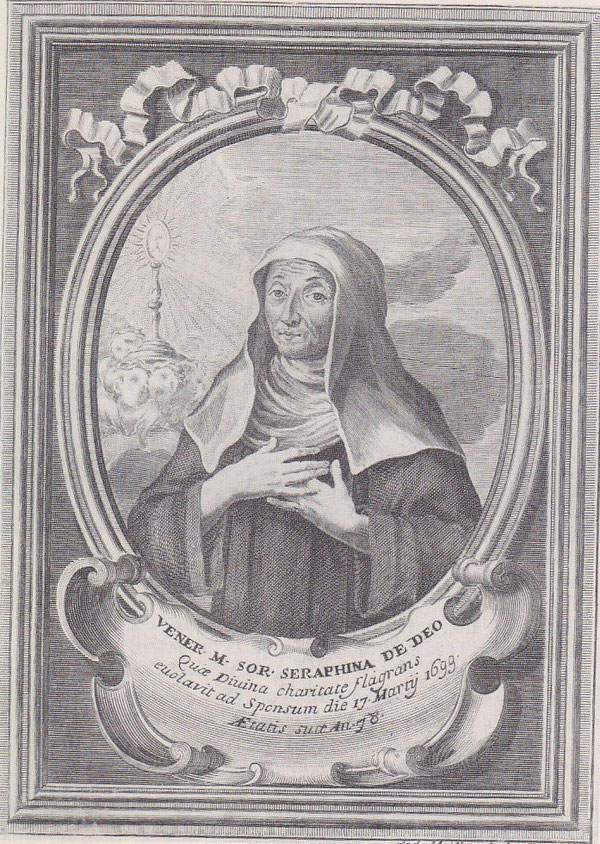
SeraphinadeDeo.jpg

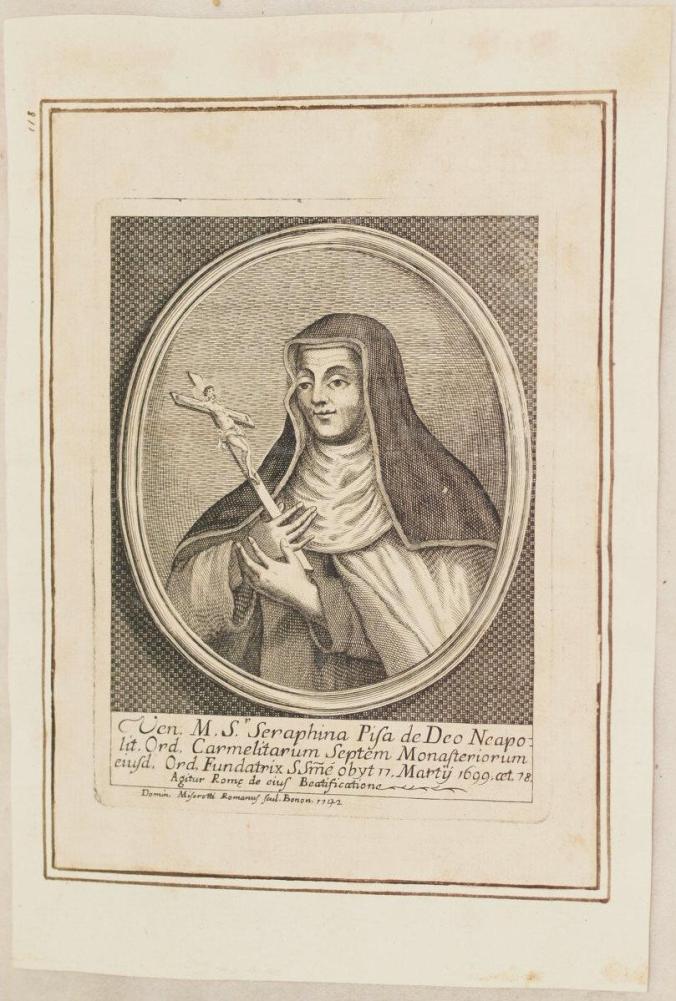
An 18th century portrait of the Ven. Serafina di Dio. Note the prominent place of the Blessed Sacrament in this composition. (Source)

Her ecstasies were not a superfluous and shallow add-on to this liturgical life. She built the house of her prayer upon the rock of tradition, and it was illumined with the uncreated light of the Holy Ghost.

Serafina’s mystical life was tied to her experience of the liturgical calendar. For instance, any of her most profound encounters with St. Philip took place on the vigil and day of his feast (Agnelli 194-95). A cynic would see in this timebound quality a mark of the merely human dimension of religion, a fine example of confirmation bias. But those who have learned of divine things will discover a deeper reality. In Serafina they will see a soul that has grown attuned to the Wisdom of God, made manifest in time through the Incarnation of Christ and the Liturgy of the Church.
altaresantissimosalvatore.jpg

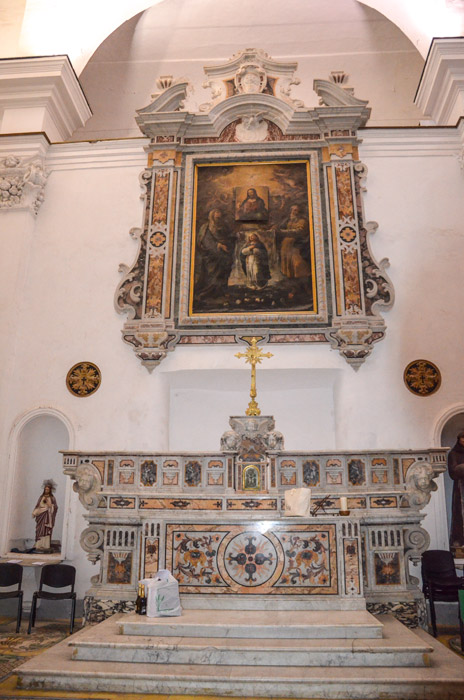
High Altar of the Chiesa Santissimo Salvatore, Capri. Although it has not been a Carmelite monastery since Napoleonic times, this is the altar where the Ven. Serafina would have received communion. (Source)

These are quintessentially sound foundations for the spiritual life. Her strictly liturgical and monastic way engendered serious opposition among her daughters, but it also gave her the strength to bear that opposition with true Christian patience. One can only imagine the terrible suffering that two years without the Blessed Sacrament must have inflicted on such a soul. Yet, by grounding herself in the Liturgy, she was able to nourish that innate trust in Providence already evident in her earliest days. Surely, that sustained her in the darkest days of her old age.

The Long Road to Sainthood

It seems somehow appropriate that, as an adopted daughter of St. Philip, the Ven. Serafina should not yet have been canonized. Many of his spiritual children have had a similar fate. Witness the stalled cases of Ven. Cardinal Cesare Baronius, Bl. Juvenal Ancina, Bl. Anthony Grassi, and Bl. Sebastian Valfre, just to name a few of the many early modern Oratorians who have not yet reached the highest altars of the Church.

Still, we can pray that this Carmelite mystic will one day be recognized as the saint she was. Let us beg her intercession and emulate her profound devotion to the Liturgy of the Church.

UPDATE: A Carmelite friend pointed out to me that Ven. Serafina was in fact not subject to the jurisdiction of either Carmelite order, essentially running independent Carmelite conservatories of oblates in the Discalced habit, following an adaptation of St. Teresa’s constitutions. She was a sort of Carmelite version of St. Francesca Romana. More info can be found in the works of Smet. As such, any use of the Carmelite letters after her name may be inappropriate, but given a) the unusual nature of the case, and b) the difficulty of changing my title and thus invalidating links, I have decided to keep my text as is and merely add this disclaimer.
SerafinadeDeo2.jpg

May the Ven. Serafina di Dio pray for us! (Source)
“Love is His Bond”

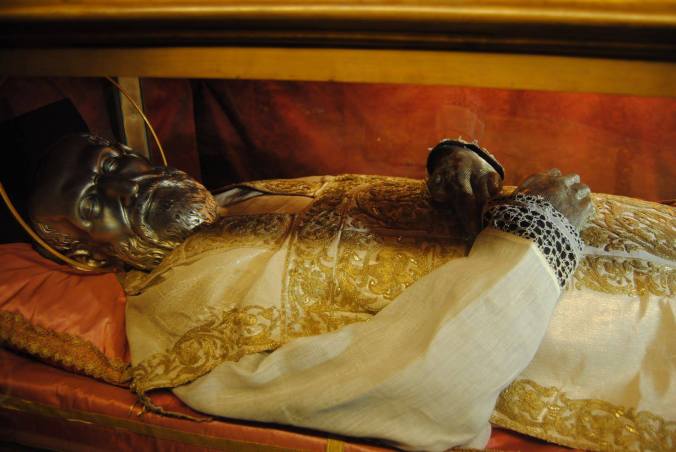
stphilipneribody

St. Philip, pray for us. (Source)
The Mass of St. Philip Neri is a little lesson in joy. The propers again and again stress a common theme: namely, the great saint’s joy, built upon his constant and fiery communion with the Holy Ghost. Holy Mother Church lifts her voice and sings in the Introit, “The love of God is shed abroad in our hearts by the Holy Ghost which dwelleth in us. Praise the Lord, O my soul; and all that is within me praise His holy name.” At the Collect, we pray to God to “mercifully grant that we, who rejoice in his solemnity, may be profited by the example of his virtues.” When, in the third reading, we hear of the saint’s overpowering love of “the spirit of wisdom,” we learn as well that “All good things together came to me with her…and I rejoiced in them all” (from Wisdom 7). The Offertory likewise proclaims with the Psalmist, “I will run the way of Thy commandments, when Thou hast set my heart at liberty” (Ps. 118). Everywhere we turn, we find the joy and freedom that alone springs from communion with the Holy Ghost.

And then we come to a remarkable moment. In the Secret, the priest prays over the offerings,

We beseech Thee, O Lord, favorably to regard these present sacrifices: and grant that the Holy Spirit may inflame us with that fire, wherewith he wondrously penetrated the heart of blessed Philip.

The Church has here enshrined a stunning and highly instructive truth. Yet it is easy to miss.

The very heart of St. Philip – that organ claimed so powerfully by the Holy Ghost in the catacombs of St. Sebastian, ever converting those sinners with the happy fortune of touching Philip’s breast, inflaming the saint with the deathless ardor of love, bearing such close likeness to those sacred hearts of Christ, Our Lady, and St. Joseph, beloved by generations upon generations – that heart is set up for us here in parallel to the Eucharist. For just as it is the Spirit who will so shortly transform bread into the most holy and eternal heart of Jesus, so it is that same Spirit who made of St. Philip’s heart a “hostia pura, hostia sancta, hostia immaculata.” Christ gives himself entirely to us by the Holy Ghost in the Liturgy, and St. Philip Neri became entirely Christ’s by the arrival of the Holy Ghost in those dark catacombs. To possess the heart is to possess the whole man.

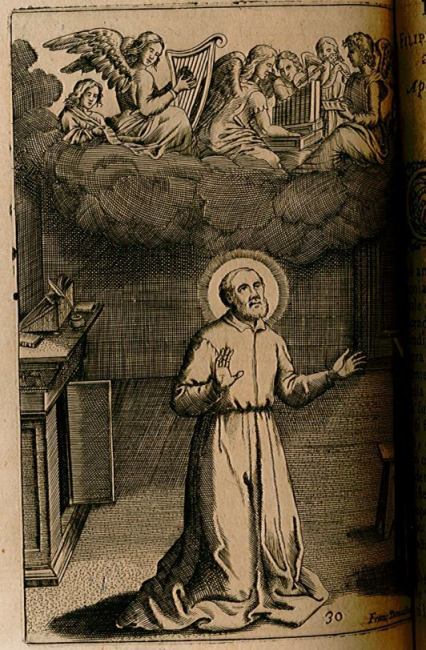
RarePlatePNCardiff

A plate illustrating the life of St. Philip from a rare 1699 Vita, kindly shown to me and since publicly shared by the Cardiff Oratorians. (Source)
This mutual possession of God and man animates everything for the Christian. The more we are given over to it, the more God allows us to partake of His own life. The more we are His, the more He becomes ours. This spiritual truth was well understood by St. Philip, who enshrined it as the principal of unvowed community life in the Oratory. In the words of Bl. John Henry Newman, “Love is his bond, he knows no other fetter.” This line, written of St. Philip, could apply just as well to Our Savior, Jesus Christ. For it is by His indwelling love that we come to love Him. It is by love that we can join our hearts to His in the Eucharist. It is truly by love that we share “that fire, wherewith [the Holy Spirit] wondrously penetrated the heart of blessed Philip.”

The 83rd Psalm comes to the Church’s lips at the Communion. She sings, “My heart and my flesh rejoice in the living God.” These are not only St. Philip’s words, but those of every soul who gives herself over to the indwelling love of God. And at the Postcommunion, the Church prays,

O Lord, who hast fulfilled us with Thy heavenly delights: we beseech Thee, that by the merits of blessed Philip Thy Confessor, and by following him, we may ever earnestly seek after those things whereby we truly live.

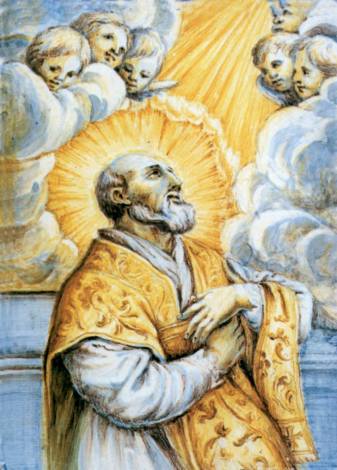
filippo-neri

St Philip lived a preeminently liturgical life. (Source)
What are “those things whereby we truly live?” The Holy Ghost, the Eucharist, and prayer – those things, if it be not too blasphemous to speak of them as “things,” which were ever St. Philip’s “heavenly delights.” Or, more properly, that mystic unity of the three in the Liturgy. In his own words, “A man without prayer is like an animal without the use of reason.” And it is surely the grand and orderly and perfect prayer of Christ the Priest and Victim that St. Philip means when he speaks of our super-sensual reason.

What, then, does it mean to “truly live?” If I may be permitted to tie together a few of St. Philip’s maxims, we can discern his own answer to this question:

In the spiritual life there are three degrees: the first may be called the animal life; this is the life of those who run after sensible devotion, which God generally gives to beginners, to allure them onwards by that sweetness to the spiritual life, just as an animal is drawn on by a sensible object. The second degree may be called the human life; this is the life of those who do not experience any sensible sweetness, but by the help of virtue combat their own passions. The third degree may be called the angelic life; this is the life which they come to, who, having been exercised for a long time in the taming of their own passions, receive from God a quiet, tranquil, and almost angelic life, even in this world, feeling no trouble or repugnance in anything. Of these three degrees it is well to persevere in the second, because the Lord will grant the third in His own good time.

A departure from the passions and a cleaving to virtue; mortification mixed with convivial, holy companionship; and above all, an overriding joy.  These are the manifestations of the indwelling love of God. These constitute a life “truly lived.” These are the fragrant flowers accompanying the fruits of the Holy Ghost. “Thou hast set my heart at liberty;” the saint embodies the song of the Offertory.

St. Philip’s life was marked in every way by such a communion with the Holy Ghost, first in a singular and miraculous way in the catacombs, and then again at every Mass. The love of God made him the most perfect model of the very “angelic life” he described to his sons and companions. Those of us privileged enough to count him among our heavenly friends may, by his merciful intercession, hope to share that one Divine Joy he knew so well. May he so pray for us on this, his feast.

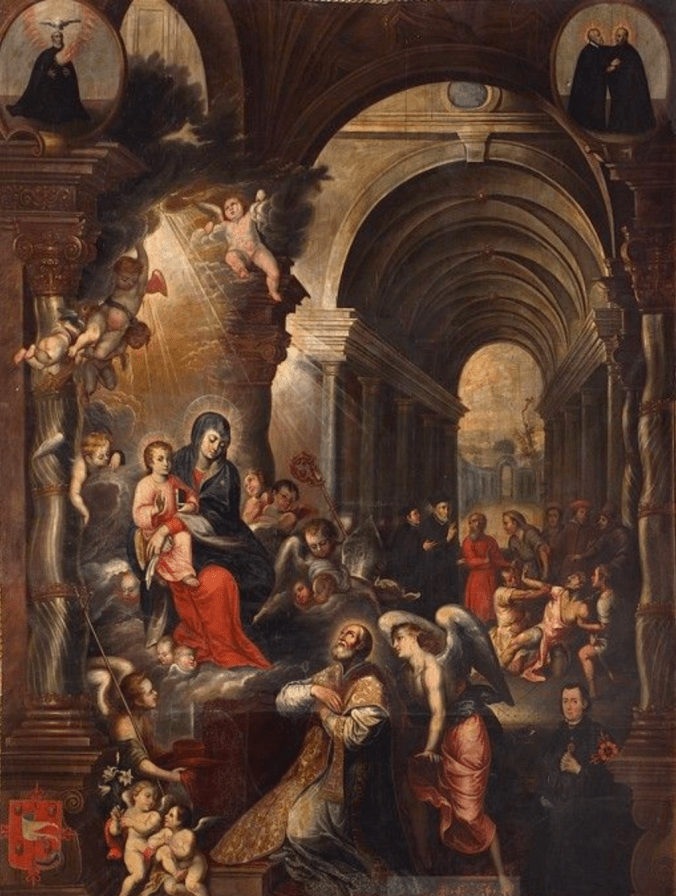
Screen Shot 2018-05-22 at 11.27.28 PM.png

Aparición de la Virgen a San Felipe Neri, Mexico, detail. (Source)


The Best Monastic Documentaries

The monastic life is about as far as one can get from the flashy world of the entertainment industry. And yet, it has been the subject of some very good documentaries over the last fifteen years or so. For those curious about the various monks (and nuns) of the world, I thought I would provide a list of a few films with which to start.

Into Great Silence (2006)

Screen Shot 2018-05-16 at 10.05.16 PM.png

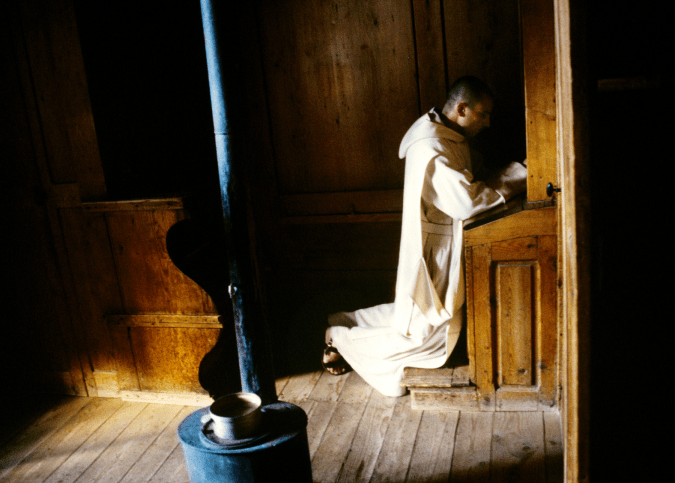
A Carthusian prays in his cell, from Into Great Silence (Source)

This stirring art film by Philip Gröning was produced over several years. Every shot is deeply meditative. We, the viewers, are drawn into a contemplative pose along with the monks themselves. As might be expected, there is very little dialogue – indeed, very little sound at all. We get a powerful sense of the holy silence that envelops the Carthusians of La Grande Chartreuse. Yet when the monks do speak, such as in an interview with an ancient, blind monk that comes towards the end of the film, the words mean something. The chant of the night office given prominent place in the film evokes all the centuries of virtually unchanged monastic life that have come down to us from St. Bruno. This film is hands down the most important and most spiritually insightful documentary about monasticism, and it has continued to exert a powerful influence on most such documentaries since.

Veilleurs dans la nuit (2011)

LeBarrouxMass

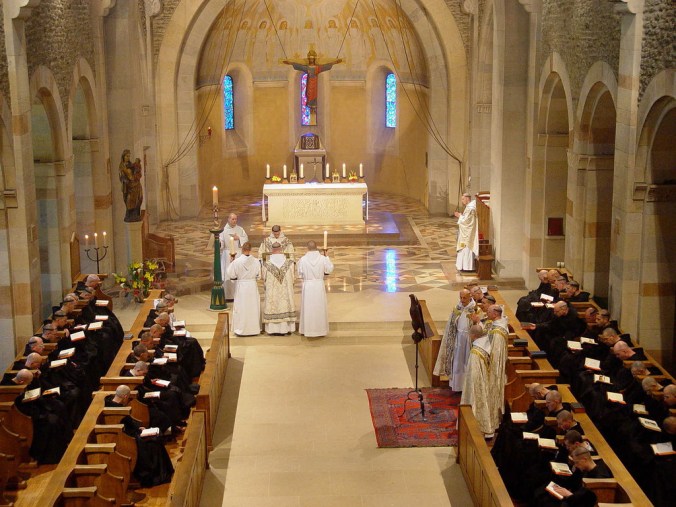
A liturgy at Le Barroux (Source)

The monastery of Sainte Marie-Madeleine du Barroux, founded in the wake of the Second Vatican Council, preserves much of the great tradition of French Benedictine life. It is one of the very few monasteries on earth which has preserved the form of tonsure once known as “the monastic crown.” It is also famous for its grand and elegant celebration of the liturgy, as well as the great holiness of its founder, Dom Gérard Calvet. This French documentary does a good job depicting their life through a mix of commentary and interviews. It is of an entirely different style than Into Great Silence, but it relates more actual information about the monks themselves.

Quaerere Deum (2011)

NorciaBeer

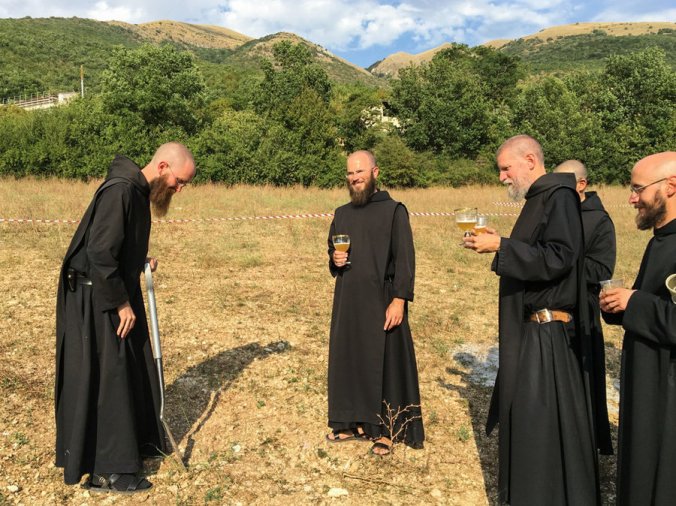
Some of the monks of Norcia with their famous beer (Source)

Filmmaker Peter Hayden of Wilderland Media has done some great and poetic work publicizing the various new monasteries founded in the old world by Americans. The first of these was the Monastero di San Benedetto in Norcia, established in 2000. It is only appropriate then that Hayden should have looked at them first. He produced a “day in the life” style documentary bearing clear influences from Into Great Silence. The slow pace, lack of commentary, and meditative minimalism all recall the best parts of that earlier work. Norcia itself – or what it was before the terrible earthquake of 2016 destroyed much of the town – emerges as a living community “seeking God.” A subdued sense of joy shines throughout.

Benedictine Monks, Ireland (2017)


BrJBAdoration

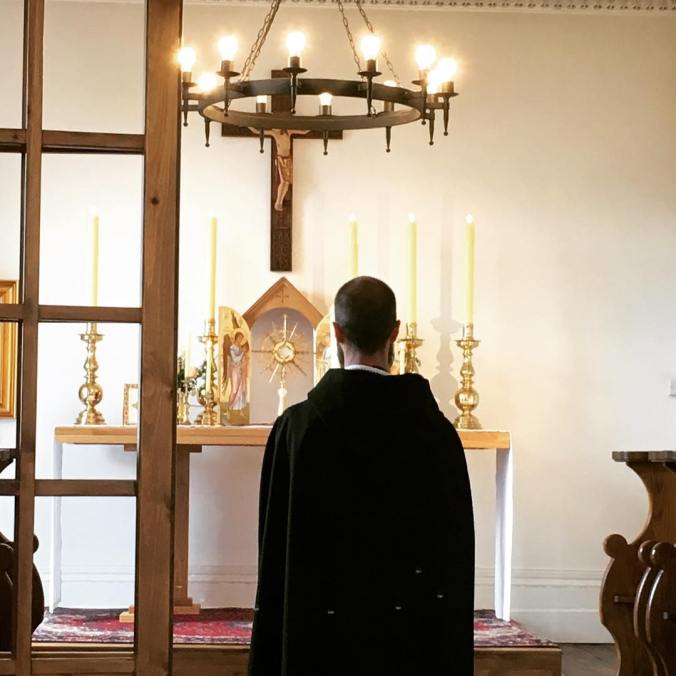
Br. John Baptist in adoration before the Blessed Sacrament, Silverstream. Photo taken by the author.

Peter Hayden’s second work on the monastic renewal is a more obviously promotional piece of filmmaking than Quaerere Deum. A profile of Silverstream Priory, Benedictine Monks, Ireland depicts the community life of adoration and reparation led by the monks there. Scenes from Mass, chapter, and refectory alternate with candid shots of the monks at work and leisure. Interviews with the Prior and Subprior provide spiritual as well as historical context. As someone who knows the monks personally, I found it a pretty good exposition of their spirit. That peculiarly Benedictine sense of place is evoked through gentle Irish music at various points. And the combined wisdom of Dom Mark and Dom Benedict is a great grounding to the beautiful visuals. I was very taken with the image of Dom Cassian, then only a postulant, in prayer at the pillar and candle.

My only criticism is that, in spite of all these good features, the film fails to capture the overwhelming sense of the supernatural that hangs about Silverstream. I’m not sure if it was the darkness of the year during filming, or the slightly uneven cinematography, or the lack of scenic order that scuttled it for me.  Benedictine Monks, Ireland needs a heavier dose of the contemplative stillness that so strongly marks both Into Great Silence and Quaerere Deum. Still, it’s a nice introduction to the place for those curious about the Benedictine Monks of Perpetual Adoration.

Présence à Dieu (2015)

Screen Shot 2018-05-16 at 10.39.43 PM.png

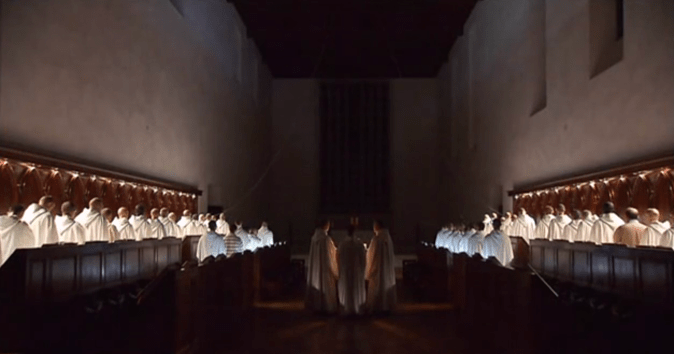
Matins at Sept-Fons, from Présence à Dieu (Source)

This short film, first brought to my attention by Fr. Joseph Koczera SJ, does a good job showing what a traditional monastery can look like, even if it embraces the new Mass and the vernacular office. Notre Dame de Sept-Fons is currently the largest Trappist monastery in the world, at least in terms of membership – it is also manifestly young and diverse. The film shows why the Abbey keeps getting vocations. A near constant soundtrack of chant carries the viewer along. Présence à Dieu is also full of the Abbot’s exposition of the Rule, which is a nice plus.

God is the Bigger Elvis (2011)

GodistheBiggerElvis

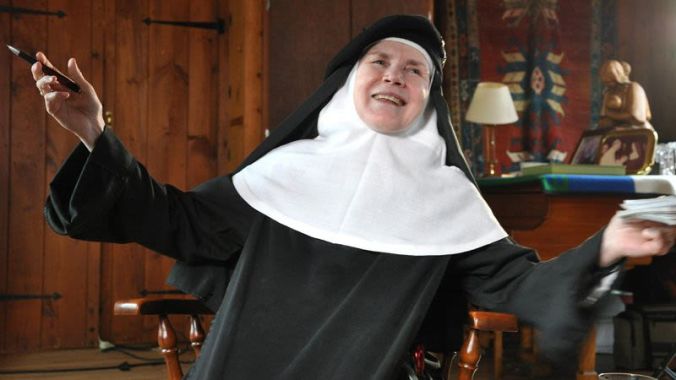
Mother Dolores Hart, wearing her trademark beret, from God is the Bigger Elvis (Source)

This one differs from the others in a few key respects. First, it’s an HBO production, rather than an Indie film. Secondly, it’s about nuns rather than monks. And third, there is a delicate sense of humor throughout that is a refreshing change from the other movies. It tells the story of Mother Dolores Hart, a starlet of the 1950’s who appeared in several features alongside Elvis before becoming a nun at the Benedictine monastery of Regina Laudis in Connecticut. She is now the prioress of the community. The documentary looks at her life and vocation as well as the daily ins and outs of the monastery. Not to be missed!

Life in Hidden Light (2016)

LifeinHIddenLight

A scene in the refectory from Life in Hidden Light (Source)

Monasticism is not confined to the Benedictine family. As Life in Hidden Light reminds us, the Carmelites also have a great tradition of contemplative monasticism. Clearly influenced by Into Great Silence, this film does a great job balancing meditative cinematography and interviews with the Discalced Carmelite sisters of Wolverhampton. One in particular that stands out is the old, mostly deaf nun who speaks about the “mess” of the world and the love of God. I was reminded of Into Great Silence‘s blind Carthusian (not to mention the slightly grotesque Jesuit in “The Enduring Chill,” by Flannery O’Connor). The old nun’s message is a sound, salutary one that we should all hearken to in this day and age.

There are probably other such films out there, but these are a few that might be a good starting place for those interested in the monastic life.

The Threefold Maternity of Mary

OurLadyCenacle.jpg

Our Lady of the Cenacle, pray for us. Photo by Lawrence Lew O.P. (Source)

God seems very fond of doing things in a Trinitarian way. Everywhere we look, in nature, in our lives, in the life of the Church, it seems that we constantly come upon things that speak of threeness-in-oneness. So it is with God’s finest creation, Our Lady. Or rather, with her maternity. She has but one singular motherhood – her highest title, Theotokos, means “Mother of God.” Nothing can surpass this supreme gift. Nothing greater can be said of the Lord’s chosen. Nothing can reveal more about Our Lady’s life and mission. Yet we detect a certain triune quality to this one eminent dignity. We can speak of the threefold maternity of Mary.

Screen Shot 2018-05-12 at 12.17.34 AM.png

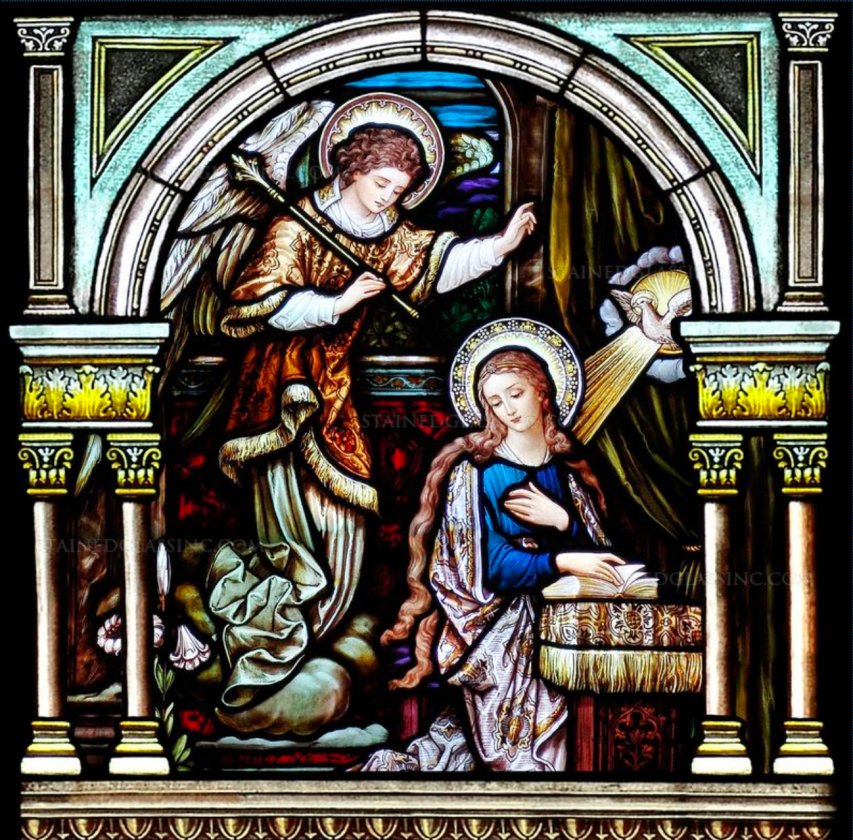
Our Lady of the Annunciation (Source)

First, we encounter Mary’s basic, physical motherhood of Jesus at the Annunciation. In welcoming the will of God into her life, she becomes the mother of the Most High, God Incarnate in Jesus Christ. The Holy Ghost, her divine spouse, conceives the Son in her womb. Her mystical partner and guardian in this parentage is St. Joseph. And in the joy of that maternity, we see Mary and Joseph as two models of chastity. Everything in those joyful mysteries becomes a parable of purity. The sanctity of the Holy Family consists in no small part in the innocence that pervades the hearts of each member. For that innocence is an opening to charity.

sorrowfulmotherwindow

Our Lady of Sorrows (Source)

Then, after the three and thirty years, Mary stands mournful beneath the cross. It was there that she became Mother of the Eucharistic Christ. For, offering up the sorrow of her own Immaculate Heart in union with her son’s High Priestly sacrifice, she bound herself to all the altars of the world as first adorer and co-redemptrix. Gone is St. Joseph; in his stead we find St. John, the figure of all priests under Christ. He would share the Eucharistic life with Mary forever after, entrusted with her care. Here, the great virtue uniting both of the hearts below the Cross is obedience. Our Lady obeys the paramount Providence of God in consenting to the sacrifice of her son, and St. John obeys the words of Our Lord in taking responsibility for the Sorrowful Mother.

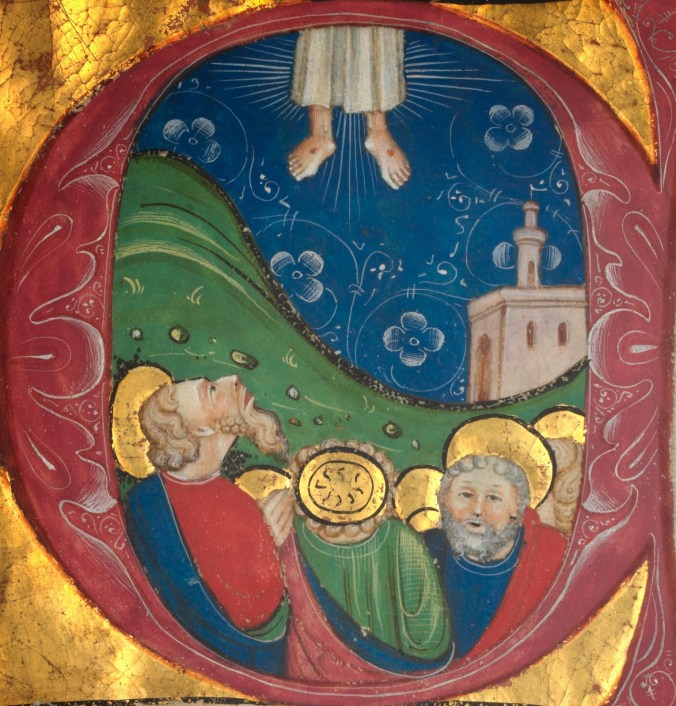
But it is today’s feast of Our Lady of the Cenacle that points to the full and final extension of these two prior forms of motherhood. It falls on a most interesting point in the calendar, Saturday in the Octave of the Ascension. It is as if we are standing in the middle of a bridge between two shining cities, and can hear the mingled music of both. This liminal quality is important. For the feast we celebrate today has a double meaning. Two feasts of different but equal importance and dignity seem to unite in this celebration.

We have just left Christ in his Ascension. The Ascension is a memorial of Christ’s High Priesthood. It is like the prayers at the foot of the altar in the Cosmic Liturgy. Pentecost is a glorious theophany, the arrival of the Holy Ghost. We are thus mid-way between a mystery of veiling, and mystery of unveiling. And who do we turn to, but Mary, she who both hid and manifested God in her person?

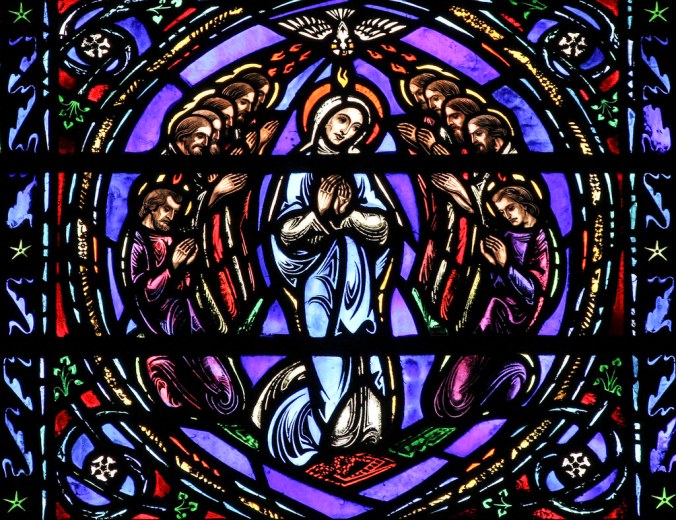
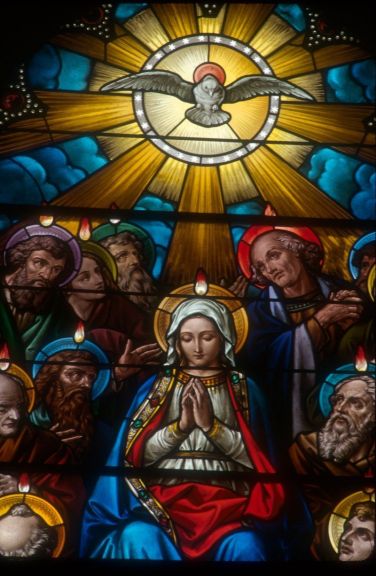
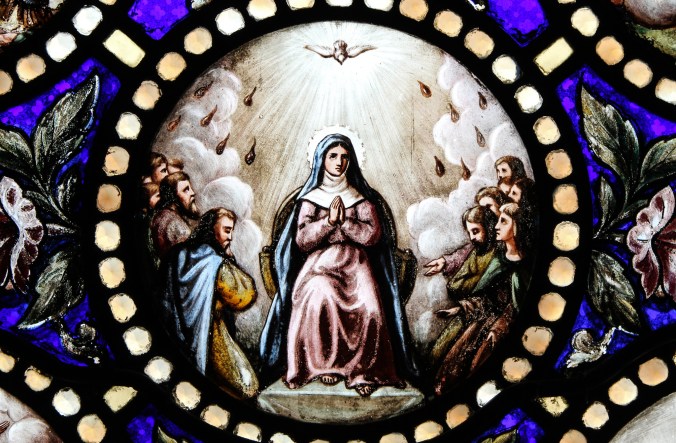
When we celebrate Our Lady of the Cenacle, we commemorate her vigil of silent prayer with the Apostles in the upper room in those intense days following Our Lord’s Ascension. But we also remember the descent of the Holy Ghost into her own Immaculate Heart and into those of her companions. At the deepest level of reality, these constitute a single event in the History of Salvation. And they give us a sense of Mary’s deepening, widening maternity.

MaryCenacleSpirit.jpg

Our Lady of the Cenacle (Source)

Wherever Mary communes with her divine spouse, the Holy Ghost, there is conceived the Body of Christ. First, that meant the physically Incarnate Word. Then it was the Eucharist extended throughout all time. And finally, as a consequence of these two forms of motherhood, we come to Mary’s maternity of the Church. This maternity is the crown of the other two, for it has never ended. The Holy Spirit came to that silver throne, the Immaculate Heart of Mary, and has never left. In all the rest of Mary’s earthly life and eternal existence in beatitude, she has never been deprived of that intimate union begun in Pentecost. And so the Church remains. Mary’s union with the Holy Ghost is at the very heart of the Church’s being. That union brought forth Christ once. It brings forth the Eucharist at every Mass. And now, at Pentecost, it brings forth the Eucharistic community, Christ in His members.

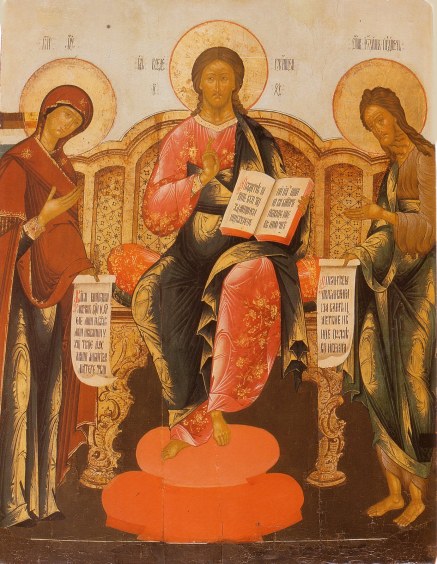
Yet in what does this exalted maternity consist? Prayer, offered perfectly in the Immaculate Heart united to the Holy Ghost. Contemplation, adoration, reparation, intercession – in all its forms, prayer rises from Mary’s heart like huge storms of incense blowing across a desert plain, raining down graces to make it fertile. Yet one form of prayer does not. Mary cannot be contrite. She has never sinned. But we turn to her mystic partner in this maternity, and find a pillar of penance. Who else shares in the life of the Spirit in such a fiery way, but St. John the Baptist? Such is the heavenly reality expressed by the Deisis icon. It shows the Blessed Virgin Mary, paragon of prayer, and St. John the Baptist, archetype of penance, adoring Christ the Lord. Both Our Lady and St. John represent the twin realities of the Ecclesial life – prayer and penance – ordered to Christ – the Sacraments. We might thus speak of Mary’s motherhood of the Church as her Sophianic Maternity, for it is entirely drawn from and oriented to the Divine Wisdom.

Deisis.jpg

A typical deisis. (Source)

The feast of Our Lady of the Cenacle is thus a profoundly maternal day in the Church’s liturgy. Let us join her in prayer. Perhaps we shall taste something of that everlasting life granted to her in the Cenacle.

CenacleRound.jpg

Monstra Te Esse Matrem (Source)

“God is Gone Up With a Merry Noise”

AscensionLetter.jpg

Ascendit Deus in iubilatione, alleluia (Source)

God is Gone Up With a Merry Noise

Rick Yoder

Rear a hill in my heart, O God,
from which Thou might ascend.
But o! How swift I overshoot
and rush on to the end.
For first Thou must come hallow it
with that most kingly flood,
the pearls surpassing every price,
Thine own most precious blood.
And though I wander far, O Lord,
from Thy most holy fount,
yet never shall I lose the sight
of Thine eternal mount.
The shadows of the day grow long
and silence takes the land;
still do I hope in Thy sweet song
and Thy high priestly hand.
“The Lord ascends with gladsome noise
and hath taken the better part.”
So runs the word, so I rejoice,
for He rises there in my heart.

A Relic of the 1965 Liturgy

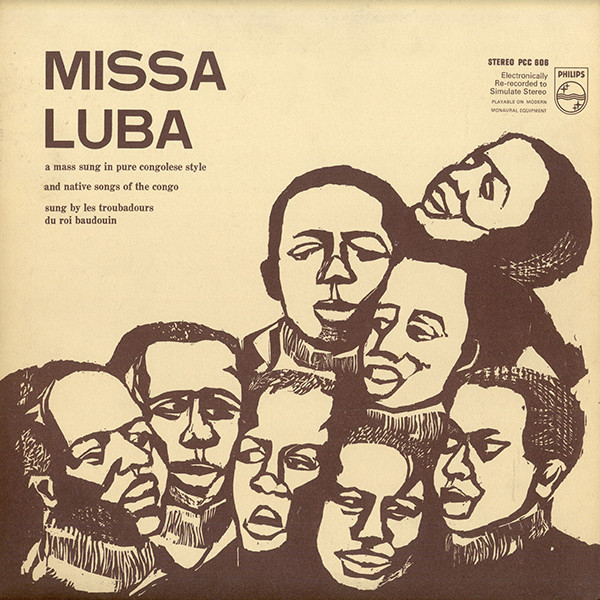
MissaLuba

Album cover of the Missa Luba. (Source)

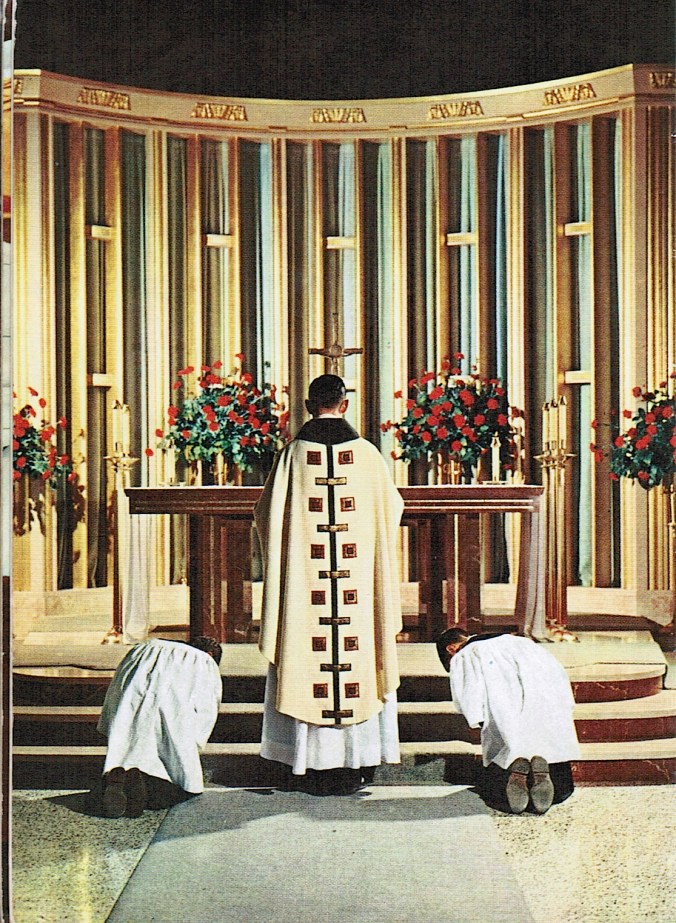
That strange Mass produced by the Council in 1965, an interim liturgy somewhere between the Usus Antiquior and the Novus Ordo, was often accompanied by a distinctive style – at once traditional and fresh, what has been called by some “The Other Modern.” Think of the decoration of the National Shrine of the Immaculate Conception in Washington, D.C – especially its many side-chapels. Think of the delightful, dignified, but very vernacular liturgical music of Fr. Clarence Rivers (at least his early material). Think of the ornate but often geometric vestments that emerged from that time. Indeed, just think of Paul VI’s space-age papal tiara.

1965 Mass.jpg

The hybrid Mass of 1965. Not ideal, but considerably better than what followed. (Source)

Recently I discovered a reminder of this strange time in the Church’s history. I was watching a 1968 movie called If… with friends. It’s a disturbing (if artful) film about an uprising at a traditional British public school, and was clearly made in conversation with the student protests that erupted that fateful Spring, fifty years ago. I was surprised to find that one of the major musical motifs was liturgical. Looking it up, I discovered it was the “Sanctus” of the 1965 Congolese Missa Luba. The song is in many ways a synecdoche of the 1965 rite. It starts off with on French Gregorian foot, quickly introduces drums, and ends with an extremely Congolese bit of improvised singing. And, it must be said, it’s very beautiful.

The poignant song, coming from a country and Church in turmoil, strikes me as emblematic of the crushed hopes of that era. So much was anticipated of Congolese independence, so bitterly contested in the five years since. Already, the forces of reaction were coalescing around an upstart colonel who would soon assume control of the country as its first home-grown dictator, Mobutu Sese Seko. And in the Church, those reformers who genuinely tried to bring about a more perfect sense of the divine in the modern world found their position betrayed by a coterie of unorthodox radicals who perverted the sense of the Council’s documents.

Yet we can still hear that bright, fleeting moment of hope in the voices of the Congolese joining their praises to those of the angels.

UPDATE: It has been pointed out to me, correctly, that I have erred in attributing the Missa Luba to 1965 proper. The Mass setting was actually first recorded in 1958. It was in 1965 that the first US release of the album came out. So I suppose that, insofar as we consider its Western reception, the Missa Luba does remain part of the 1965 liturgical landscape. And “The Other Modern” certainly existed in the 1950’s; the aesthetics of 1965 were the culmination of a few decades’ of development.

I suppose my final point, about the parallels in the Church and the Congo, wouldn’t work as well as I had hoped. But at the very least, the Congo in 1958 was indeed a place of tremendous hope for the future. That aspiration manifest in the music was soon crushed by the turmoil of five years of war following Belgium’s official withdrawal in 1960. And the Church? Well, in 1958, I’m not sure anyone really saw what was coming…

A Forgotten Feast

Aparición de San Miguel Arcángel en Monte Gargano

St. Michael, pray for us. (Source)

One of the great victims of the liturgical reform was a whole set of very odd, very particular feasts. The homogenizing, unpleasantly modern mindset of so many reformers back in the 1960’s and 70’s seems to have left no room for anything that could be remotely construed as anachronistic or legendary. Thus vanished the Invention of the Holy Cross, which would have fallen only a few days ago. Another feast lost to us is the one that would, in the old calendar, have come today: the Feast of the Apparition of St. Michael. How wonderful that the Liturgical Providence of God should grant us a feast simply to recall the visible presence of the Angelic Powers in our lives.

Allow me to quote Dom Gueranger at length:

Devotion to St. Michael was sure to spread through the Church, especially after the worship of idols had been banished from the various countries, and men were no longer tempted to give divine honor to creatures. Constantine built a celebrated Church called Michaelion in honor of the great Archangel, and at the time when Constantinople fell under the power of the Turks, there were no fewer than fifteen churches bearing the name of St. Michael, either in the city or the suburbs. In other parts of Christendom the devotion took root only by degrees; and it was through apparitions of the holy Archangel that the faithful were prompted to have recourse to him. These apparitions were local and for reasons which to us might seem of secondary importance; but God, Who from little causes produces great effects, made use of them whereby to excite Christians to have confidence in their heavenly protector. The Greeks celebrate the apparition that took place at Chone, the ancient Colossae in Phrygia. There was in that city a church dedicated to St. Michael and it was frequently visited by a holy man named Archippus, who was violently persecuted by the pagans. One day, when Archippus was at his devotions in his favorite St. Michael’s, his enemies resolved to destroy both him and the church. Hard by ran a brook which flowed into the river Lycus; they turned it aside and flooded the ground on which the church stood. Suddenly there appeared the Archangel St. Michael holding a rod in his hand; the water immediately receded, and flowed into a deep gulf near Colossae where the Lycus empties itself and disappears. The date of this apparition is not certain, but it occurred at the time when pagans were still numerous enough in Colossae to harass the Christians.

Another apparition which encouraged devotion to St. Michael in Italy, took place on Mount Gargano, in Apulia; it is the one honored by today’s Feast. A third happened on Mont Tombe (Mont Saint-Michel; see images at left and at bottom), on the coast of Normandy; it is commemorated on the 16th of October.

The Feast we are keeping today is not so solemn as the one of September 29th; it is, however, more exclusively in honor of St. Michael, inasmuch as the Autumn Feast includes all the choirs of the Angelic hierarchy. The Roman Breviary gives us the following account of the Apparition on Mount Gargano:

That the Blessed Archangel Michael has often appeared to men, is attested both by the authority of Sacred Scripture, and by the ancient tradition of the Saints. Hence, the memory of these apparitions is commemorated in divers places. As heretofore St. Michael was honored by the Synagogue of the Jews as Guardian and Patron, so is he now by the Church of God. A celebrated apparition of the Archangel took place, under the Pontificate of Gelasius I, in Apulia, on the top of Mount Gargano, at whose foot lies the town of Siponto.

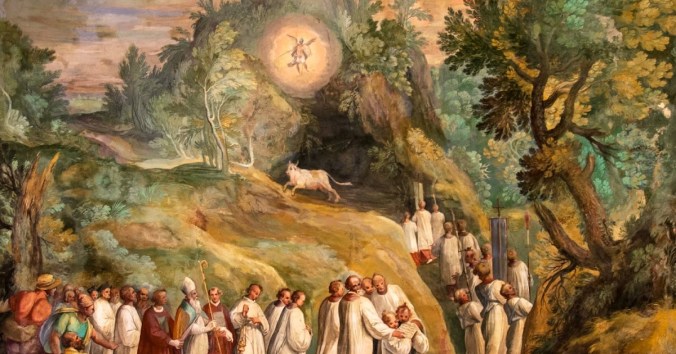
A bull belonging to a man who lived on the mountain, having strayed from the herd, was, after much searching, found hemmed fast in the mouth of a cave. One of its pursuers shot an arrow, with a view to rouse the animal by a wound; but the arrow rebounding struck him that sent it. This circumstance excited so much fear in the bystanders and in them who heard of it, that no one dared to go near the cave. The inhabitants of Siponto, therefore, consulted the Bishop; he answered that in order to know God’s will, they must spend three days in fasting and prayer.

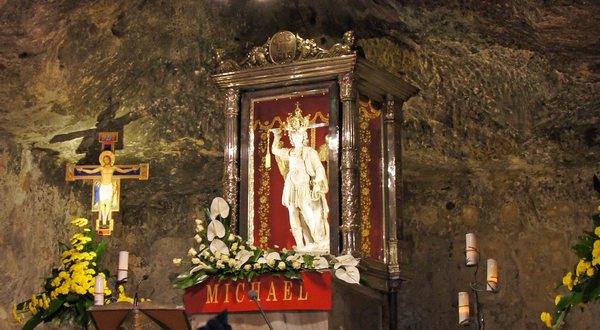
At the end of the three days, the Archangel Michael warned the Bishop that the place was under his protection, and that what had occurred was an indication of his will that God should be worshiped there, in honor of himself and the Angels. Whereupon the Bishop repaired to the cave, together with his people. They found it like a church in shape, and began to use it for the celebration of the divine offices (see image below). Many miracles were afterward wrought there. Not long after, Pope Boniface dedicated a church in honor of St. Michael in the great Circus of Rome, on the third of the Kalends of October (September 29), the day on which the Church celebrates the memory of all the Angels. But today’s Feast is kept in commemoration of the Apparition of St. Michael the Archangel.

gargano

The shrine to St. Michael on Monte Gargano (Source)

Yet these stories, reflecting Medieval devotional practice more than any Biblical story or the life of any particular saint, have no place in the new calendar. It is one thing to accept Our Lady of Guadalupe, beloved by millions. It is quite another to countenance a similar story which might only be of local interest. Yet the liturgy is never purely provincial. While there has always been great variety among local rites and practices, the Mind of the Church synthesizes this diversity into an underlying, supernatural harmony. There is only one High Priest, and the liturgy is His eternal prayer as shared by His bride and body, the Church.

The irony of course, is that the reformers seem to have grasped that principal, but then applied it perversely. They acknowledged the universality of the liturgy, but understood it with prejudice against the forest of particularities that had sprung up over the whole Catholic world over the course of nearly two millennia. They could stand on the precedent of Trent and the suppression of most other rites by Quo Primum (1570). Yet that bull at least allowed those liturgies in existence prior to 1370.

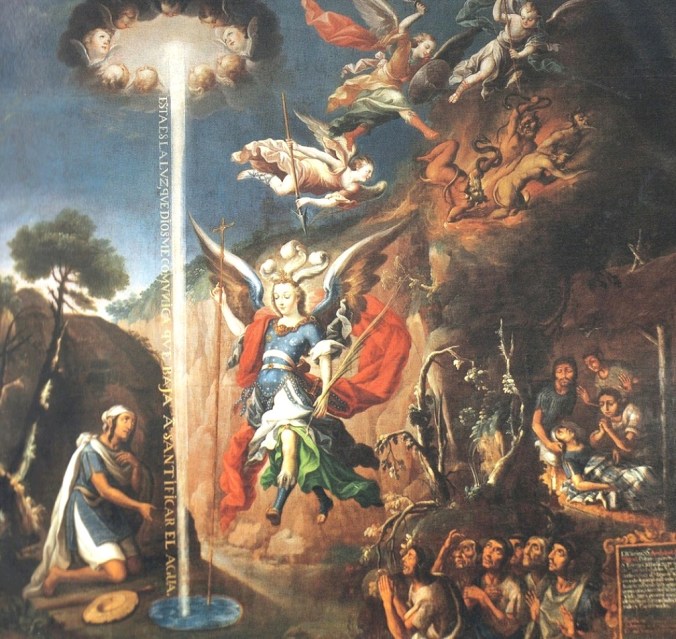
Apparition of St Michael the Archangel to Diego Lázaro, Santuario de San Miguel del Milagro, Nativitas, Tlaxcala

Apparition of St Michael the Archangel to Diego Lázaro, Santuario de San Miguel del Milagro, Nativitas, Tlaxcala, Mexico (Source)

It occurs to me that, in removing feasts like the Apparition of St. Michael, we have allowed ourselves to forget many of those little stories and details that were once part of a common Catholic heritage. That forgetting coincided with a general turn away from the supernatural in Western civilization. The middle of the twentieth century saw a retreat from those doctrines of the invisible world that today’s feast (and others like it) commemorate. The result? A proliferation of “new religious movements” seeking the transcendent in a host of spurious, unsound practices. The mumblings of Victorian cranks were garbled together with bastardized Buddhism and reconstructed paganism, garnished with a generous helping of hallucinogens. And that’s just the New Age.

The task that faces us now is to remember all those things we forgot. May St. Michael pray for us in this critical venture.

My Favorite Hymn to St. Philip Neri

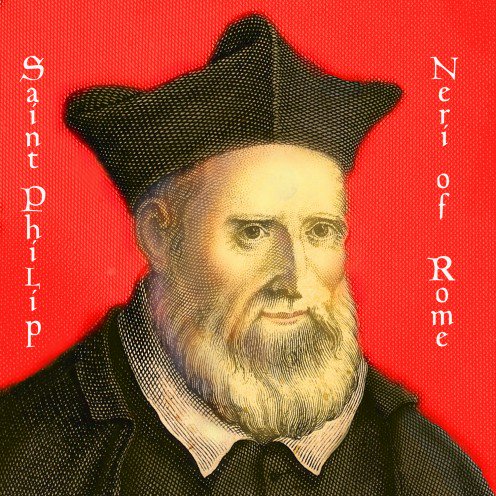
StPhilipImageRed

St. Philip, pray for us (Source)

As my readers will well know, St. Philip Neri is my favorite saint and has been for a long while now. I take every opportunity I can to sing his praises on this blog, and today happens to be one of them. In Oxford, we are celebrating the Feast of the Patronage of St. Philip, a local solemnity that honors the canonical erection of the house here as a Congregation of the Oratory. Please pray for the Oxford Fathers on this, their silver jubilee.

To celebrate, here is my favorite hymn to the Apostle of Rome – Pangamus Nerio, as sung by the choir of the Birmingham Oratory. It is the vesperal hymn of St. Philip.

Pangamus Nerio, debita cantica
Quem, supra nitidi sydera verticis,
Virtus et meritum sustulit inclytum,
Carpturum pia gaudia.

Noctes sub spectabus, corpora martyrum,
Quas implent, vigilat sedulus integras,
Ex ipsis satagens discere mortuis
Normam qua bene viveret.

Nocte dum Nereus fercula pauperi,
Gestans praecipitat, panniger Angelus
Tecto significat, qualiter excidat
Numquam fervida caritas.

Orantis penetrans cordis in intimum,
Laxavit spatium Spiritus impete
De Coelo veniens, esset ut hospiti
Immenso locus amplior!

Coelorum Domino, dum sacra munera
Libabat Nerius, saepius advolans,
Tellurem rapido corpore deserit,
Christo fiat ut obvius!

Corpus deseruit, cum Deus Hostiae
Fertur sub niveae tegmine conditus,
Prudens, in Patriam, pergere splendide
Nolens absque Viatico.

Amen.

Unfortunately, I don’t have an English translation (nor the time and energy to translate from the original myself). Alas.

May St. Philip Neri pray for Oxford, for the Oratorians there, and for all of us who call upon him in filial affection.