The Clock of the Passion

What follows is an original translation of L’Horloge de la Passion, a brief meditative text written by the Solitaire of Port-Royal, Jean Hamon (1618-1687), a doctor of medicine, mystic, and exegete. Hamon wrote L’Horloge for the sisters of Port-Royal to use during perpetual adoration of the Blessed Sacrament, perhaps during the Triduum. Perpetual adoration was a central feature of life at Port-Royal from 1647, when Mère Angélique returned from the unsuccessful venture of the Institut du Saint-Sacrement.

Each hour represents a different mystery of the Passion and is calibrated to follow the Passion narrative in real time. Hamon concludes with several prayers, probably composed first in Latin and then put into the vernacular. I have take the liberty of reproducing the Latin below while translating from the accompanying French.

This document, though originating from the heyday of Port-Royal, was only published in 1739 in the post-Unigenitus ferment of Jansenist print culture. It remains a very edifying text and a testament of the vitality of the spiritual life that characterized those wayward ascetics clustered around Port-Royal. I offer it here both out of historical interest for those who, like me, look at Port-Royal for academic reasons, and because I felt that such a text may be of some use and consolation to the faithful in this very unusual Holy Week, when death hedges us all around.
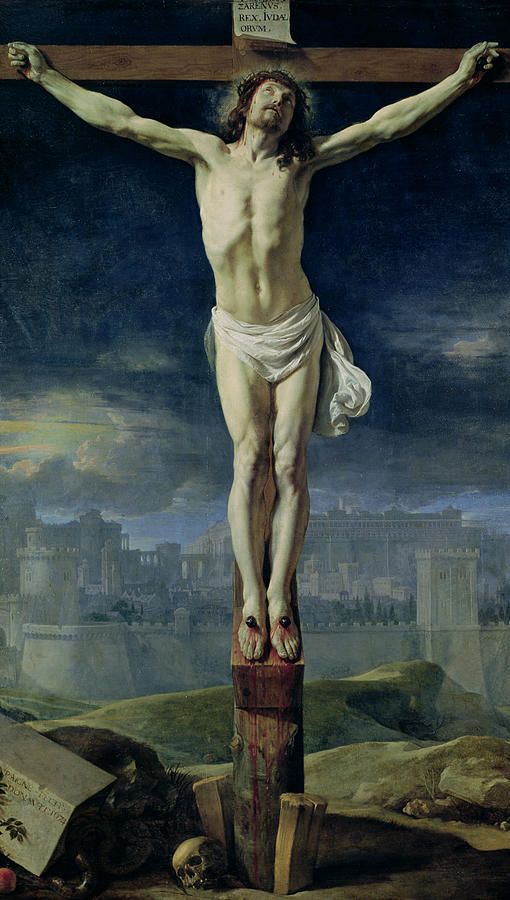
Christ on the Cross, Philippe de Champaigne, before 1650 (Source)

L’Horloge de la Passion

At six o’clock in the evening: Jesus Christ washes the feet of His Apostles. Humility. Help to our neighbor.

At seven o’clock in the evening: Jesus Christ institutes the Most Blessed Sacrament. Recognition and perpetual memory of this benefit.

At eight o’clock in the evening: Jesus Christ prays to His Father for the salvation and union of His Elect. To renounce everything that can stops us from being one with Jesus Christ and our brethren.

At nine o’clock in the evening: Jesus Christ is sad even unto death. Confidence in the weakness of Jesus Christ, who is our strength in our dejection and our miseries.

At ten o’clock in the evening: Jesus Christ prays to His Father to take away the chalice of His sufferings. Submission to the will of God.

At eleven o’clock in the evening: Jesus Christ enters into agony. To resist sin with courage.

At midnight: Jesus Christ, after having turned back the Jews by a single word, allows himself to be caught. To see God in all that man cause us to suffer.

At one o’clock in the morning: Jesus Christ allows himself to be carried off by the Jews. Sweetness and humility in ill-treatment.

At two o’clock in the morning: Jesus Christ is presented to the High Priest. To revere God in secular and ecclesiastical authorities.

At three o’clock in the morning: Renunciation and penance of St. Peter. Fidelity in confessing the name of Jesus Christ. Humble return to Him after our falls.

At four o’clock in the morning: Jesus Christ is presented before the Council of the Jews. To listen to the word of God as being truly His word. To adorer the Truth, never to raise ourselves against it.

At five o’clock in the morning: Jesus Christ mocked and outraged by the servants of the Priests. To suffer humbly both scorn and injuries.

At six o’clock in the morning: Jesus Christ is brought before Pilate. Adoration and imitation of the silence of Jesus Christ, when we are accused.

At seven o’clock in the morning: Jesus Christ is sent to Herod. To pass as foolish before men even though we be truly wise.

At eight o’clock in the morning: Jesus Christ is scourged. To take part in the sufferings of Jesus Christ and His members.

At nine o’clock in the morning: Jesus Christ is crowned with thorns. To adore Jesus Christ as our King. To suffer with him, is to reign.

At ten o’clock in the morning: Jesus Christ is condemned to death. To die to one’s self is to live in Jesus.

At eleven o’clock in the morning: Jesus Christ carries His Cross. Let us carry ours after him; he carries it with us.

At noon: Jesus Christ is crucified. To attach ourselves to Jesus Chris, and to desire to be attached by Him to the Cross.

At one o’clock in the afternoon: Jesus Christ is lifted up upon the Cross. To raise our eyes and heart towards the mysterious and divine Serpent.

At two o’clock in the afternoon: Jesus Christ speaks to His Father, to the Blessed Virgin Mary His Mother, and to St. Jean. Attention to these divine words that comprehend our duties.

At three o’clock in the afternoon: Jesus Christ gives up the ghost. To adore His death; to unite ours to him.

At four o’clock in the afternoon: The open side of Jesus Christ sheds blood and water. Rest in the Side and in the Wounds of Jesus Christ. To honor the Sacraments established in the Church.

At five o’clock in the evening: Jesus Christ is buried, and placed in the tomb. To be buried with Him. To hope for the Resurrection.

Prayers – That one can say in adoring the Death of Jesus Christ

Ut beatam horam Mortis tuae adoramus, Domine, da nobis ut horam mortis nostrae, quam solus nosti, perfecto corde & vivendo & moriendo adoremus.

Vouchsafe unto us grace, O Lord, that in adoring the hour of Thy Death, we might adore, in living and dying with a heart perfectly submitted to Thine commands, the hour of our death, that is known to none but thee.

Domine Jesu, qui mori voluisti ne moreremur, sed de morte ad vitam transiremus, recordare Mortis tuae in tempore mortis meae, cum nec tui nec mei recordari potuero.

Lord Jesus, who hast desired to die to deliver us from death, and to cause us to pass from death to life, remember Thou Thy Death at the hour of mine, when I will be no longer in a state to think of either myself or Thee.

Mortem meam quae poena peccati est, tutetur & protegat Mors tua, quae tollit peccata mundi, ut jam pie cogitando quia mortuus es, tunc moriendo non moriar.

May Thy Death that nullifies the sins of the world be my protection in death, which shall be the penalty of sin; and in thinking with piety that Thou art dead, in dying even may I not die.

Versetur semper ante oculos meos tempus Mortis tuae, quae mihi sit fons vitae, cum vita mea defecerit, ut in Morte tua vitam invenire possim qui in vita mea mortem singulis diebus invenio.

May Thy Death always be present to me, so that it may be unto me a source of immortal life when I will lose this corruptible life; and instead of often finding death in my life, may I find life in Thy Death.

Fac, Domine, semper conjungam cogitationem Mortis tuae cogitationi mortis meae, ut quod in morte mea amarum esse potest, benedictione Mortis tuae dulcescat; sicque vitae permanentis amore, mortis transeuntis levem ictum non reformidem.

Vouchsafe unto me the grace, O Lord, of ever uniting myself to the thought of Thy Death in the remembrance of mine, so that what there might be of bitterness in my death might be sweetened by the blessing of Thine; and thus that the love of an eternal life might cause me not to dread anything of the blow, so light, of a voyaging death.

Bene vivam, Domine, ut bene moriar. Ut bene vivam, vivam de te. Ut bene moriar, moriar in te,. Vitam meam informet Vita tua, ut sancta sit; & mortem meam defendat Mors tua, salus nostra, ut sit salutaris,

Vouchsafe unto me the grace, O Lord, of living well, that I may die well. May I live in Thee, that I might live well: and to die well, may I die in Thee. May Thy life be the rule of my life, so that it may be holy; and may Thy Death, which is the cause of our salvation, safeguard my death so that it may procure unto me salvation.
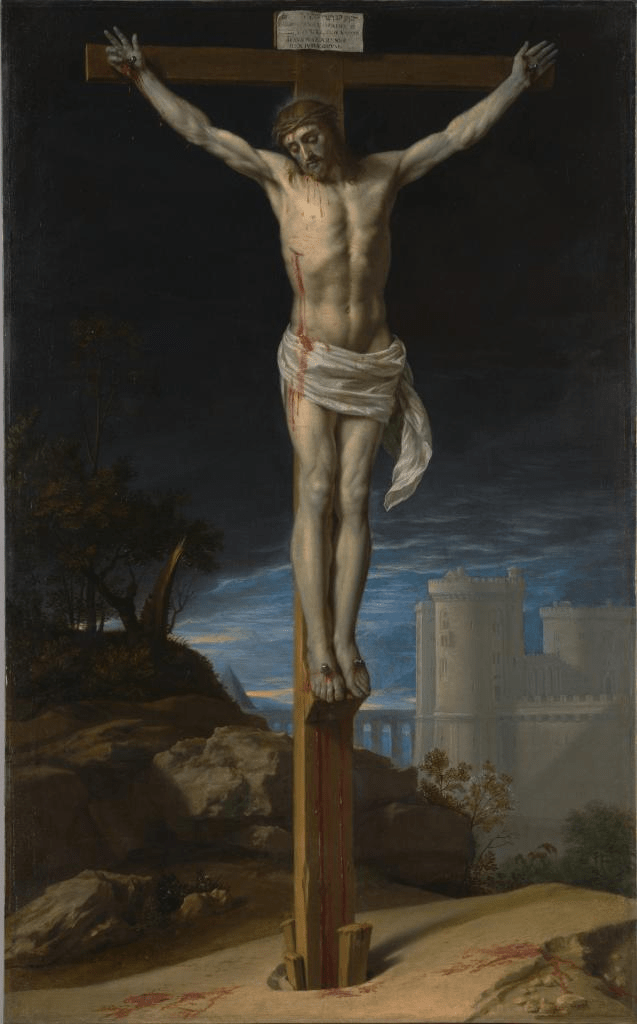

Christ on the Cross. Another treatment of the Passion by Philippe de Champaigne. c. 1655. Given by the artist to his sister Marie, a Beguine in Brussels. (Source)

Announcing a New Poetry Publication

A Neo-Gothic ruin. (Source)

I’m very pleased to announce that I have a poem coming out in the Emma Press’s new collection, The Emma Press Anthology of Contemporary Gothic Verse. From the press release:

The anthology was compiled from poems sourced in an open call for submissions launched towards the end of last year. 294 poets entered, of which 26 were chosen for the anthology. Editor Nisha Bhakoo says in her introduction to the book: “My hope for this anthology was to showcase poems that pointed to the uncanniness of our present time, giving traditional gothic tropes a compelling, contemporary flavour. I not only wanted the poems to hold up a mirror to our post-postmodern age, but also to challenge the norms and unwritten rules of it.”

Although I make no money from the sale, please consider buying a copy of the Anthology from the Press’s UK-based store. Small presses need as much support as we can give them, and the Emma Press has published some really great contemporary poetry. Pick up your copy today!

30 Alternate Religious Mottos

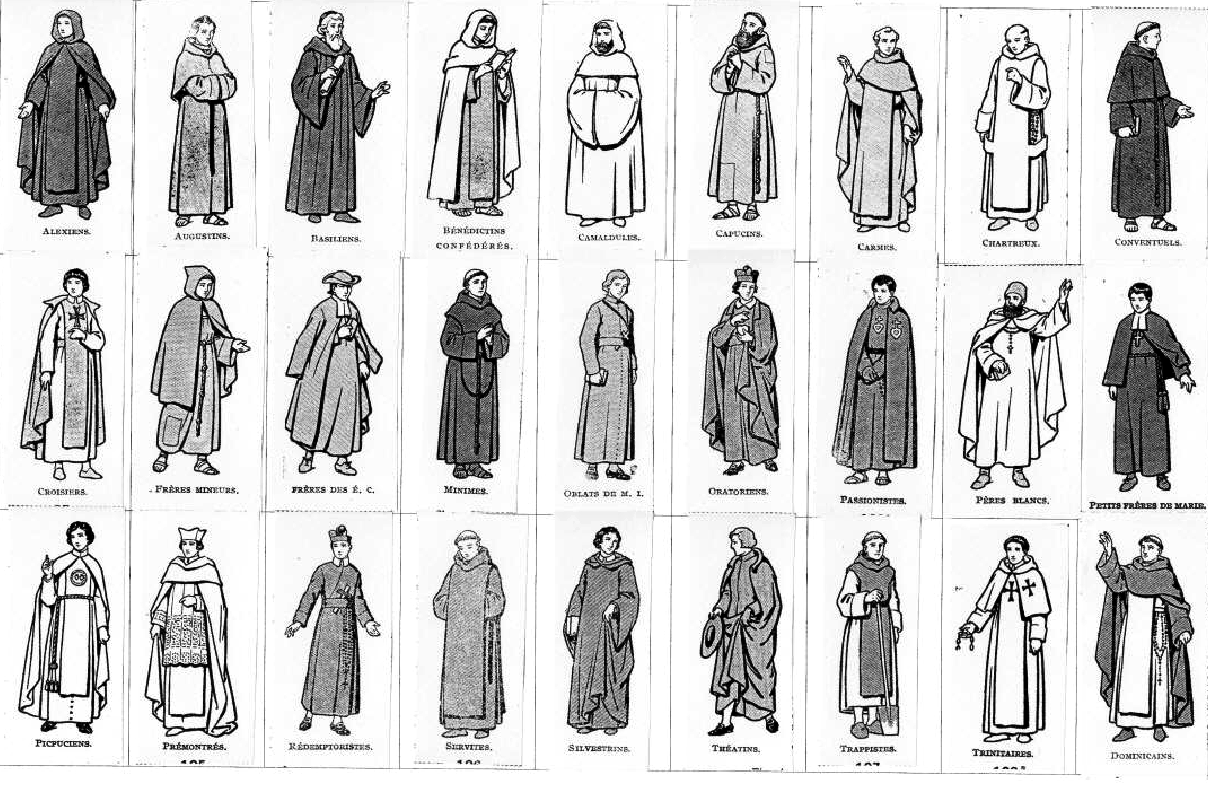
The habits of various orders. (Source)

As my readers will no doubt be aware, most religious orders have a motto that encapsulates their particular charism. However, many of these are a bit tired and could use with some updating. Here are my proposals:

  1. Benedictines: Prayer, Work, Monk-eying Around
  2. Jesuits: Up to Something
  3. Dominicans: Sed Contra
  4. Franciscans: Need a Bath
  5. Lazarists: Nolite Me Tangere o Pauperes
  6. Carthusians: ——-
  7. Carmelites: Better Than You
  8. Oratorians: O Happy Flowers!
  9. Trappists: Beer, Cheese, Keeping Death Daily Before One’s Eyes
  10. Cistercians: Trappists But With Fewer Skills
  11. Opus Dei: Definitely Not a Cult
  12. Augustinians: Peaked in 1517
  13. Norbertines: We Have White Birettas
  14. Redemptorists: Sowing Scrupulosity, Reaping Laxity
  15. Missionaries of Charity: Not Just a Gap Year
  16. Passionists: Dying in a Train Station
  17. Marists: Not the Marianists
  18. Legion of Christ: [REDACTED]
  19. Congregation of Holy Cross: Go Irish!
  20. Theatines: We Still Exist
  21. LCWR: Anything Goes!
  22. Salesians: Something for the Boys
  23. Basilian Monks: είμαστε ακόμα εδώ
  24. Camaldolese: Get Off My Lawn!
  25. ICKSP: All Dressed Up and Nowhere to Go
  26. Marianists: Not the Marists
  27. Holy Spirit Adoration Sisters: Pretty in Pink
  28. Heralds of the Gospel: Blasphemous Simpsons Episode Offends the Blessed Mother!
  29. Anglican Ordinariate: He Hath Vouchſafèd Unto Us These His Comfortable Words
  30. Secular Priests: Singalong Fun with Christopher West!

Proceedings of the 27th Annual Conference for Wonka Studies

Problematic. (Source)

Editor’s Introduction

When the definitive cultural history of our late capitalist political moment is written, much will be said about the seminal influence of Willy Wonka and the Chocolate Factory. This 1971 film, emerging in the context of the Nixon administration, the War in Vietnam, and an ongoing reassessment of America’s place in the social, political, and ecological world, is still as fresh and potent as the first day it opened in theaters. Taken collectively with its originating text by Roald Dahl and subsequent re-make by Tim Burton, the Wonka Cycle constitutes one of the fundamental cinematic expressions of postmodern anxiety and self-reflexivity. Can it be any surprise that this complex contemporary fable has spawned a burgeoning field of scholarship?

While none of this will surprise Wonka specialists who seek out this volume, the lay reader may be surprised to know the extent to which Wonka as a text has risen to its prominent status in such a short time. For the benefit of such a reader, I will provide a brief literature review of the field.

Wonka Studies was initiated in 1987 with the publication of Jonathan Mortman’s “Oompa-Loompas of the World Unite: A Marxist Reading of Willy Wonka and the Chocolate Factory” (Forth 03, Fall 1987). Much has transpired since Mortman’s widely-acclaimed essay; the field has since evolved into an important sub-discipline of cultural and critical studies. The convening of the first Conference for Wonka Studies at Blippensbild College in 1992 disseminated various advances in Wonka scholarship made in the wake of Mortman’s intervention. Yet it was not until the following year that we start to see the first Wonka Studies seminars open on a test-case basis in various major research universities.

Scholars are divided as to the true political position of the Wonka Cycle. Heidi Zolker and Brian Stafford-Jones famously argued in their 1994 missive, “Oompa-Loompa Rights are Human Rights” (Force 17, Spring 1994) that the musical sequences of the film contain a carnivalesque critique of capitalist labor relations. This view would have become the established orthodoxy had not Leopold Öngg published his magisterial “Of Wonka and Wankers: The Golden Ticket as Phallocentric Signifier of Biopower” (Oberflächlichenstudien 03, Summer 1996). Drawing upon the insights of Foucault and Derrida, Öngg argued that the incentive-structure inscribed into the plot of Willy Wonka took an inherently apologetic stance towards the forces of patriarchal capital. Without denying the subversive elements identified by Zolker and Stafford-Jones, Öngg suggested that the anti-capitalist performances were akin to the economic logic of early National Socialism. “Wonka is a Strasserite. Behind and, indeed, beneath the Chocolate Factory, lurks the gas chamber,” wrote Öngg in a memorable and much-quoted phrase.

This central question – whether Wonka is a communist or a fascist – occupied much of the debate throughout the nineties. The important interventions by Julia Linley (Forts 16, Summer 1997), Oswald Glover (Forks 28, Fall 1998) and Eric Breedlove (Folks 30, Winter 1999) all respond to this controversy in some way.

Yet starting in 2002 with the rediscovery of early middle French theory, Wonka scholars began to move away into more reflexive and less strictly partisan approaches to the material. At the same time, more attention was given to the gender and class dynamics outside the Factory itself. Ernest Grenouille’s “We Are All Grandpa Joe” (Färt48, Spring 2003) was an important model of this “Humanizing” Turn. The wider socio-political, cultural, and economic troubles of the new millennium also found their place in the new scholarship. The significant upshoot of articles about Slugworth in the wake of the 2008 financial crisis (Karawasi 2009; Davison 2009; LeBocq 2010) are just one example among many.

Recent work has been equally attuned to our political moment. That much was clear to all the attendees and presenters at the 27th Annual Conference for Wonka Studies, which convened at South Mercury University and Ladies’ Seminary from 6-9 February, 2019. The essays included in this collection form the core of a radically self-conscious response to our era. For instance, Hilda Davis-Davies argues in her powerful intervention, “The Queering of Violet Beauregard,” that that character undergoes what is actually a transfiguration into a radically non-heteronormative and (more importantly?) non-speciesist physicality. Violet Beauregard thus becomes a model of praxis, and not without a certain jouissance. Jean-Claude LaMerde brings a psychoanalytic lens to the famous Augustus Gloop scene in his “Gloop/Narcissus: A Neo-Lacanian Reading.” LaMerde dares to ask, “Is the chocolate river in fact an objet a?” Fistula Pepper responds to the broader need to make Wonka Studies more interdisciplinary with her Film studies essay, “From Wonka to Cremaster: Interrogations of Late Capitalism in Cyclic Film.” Her comparison of these two masterpieces opens new cultural insights.

Yet all of the twenty-one essays published here break new ground. The future of Wonka Studies as a discipline is bright as a Golden Ticket.

Vincent Hingendingus,
State University of Marshwater

Table of Contents

I. There is Nothing Outside the Factory: Derrida’s Of Grammatology and the Factory as Spatial Arbiter of Semantic Meaning in Willy Wonka and the Chocolate Factory

Nils Ländstroop

II. “I’ve Got Another Puzzle for You” : Strategies of Negotiated Subalternity and the Representation of the Racial Other in Willy Wonka and the Chocolate Factory

Leonora Hedley-Hadley

III. Does Charlie Bucket Punch Down?

Fergus Fripp

IV. “I Want It Now!” : Veruca Salt as Model of Radical Feminist Praxis

Joanna Cornwallis

V. “If You Are Wise You’ll Listen to Me” : Critical Re/Readings of Spivak’s “Can the Subaltern Speak?” in Willy Wonka and the Chocolate Factory

Brutus Catflap

VI. The Chocolatier’s Two Bodies

Stephen Piker

VII. To Win is to Suffer: The Final Confrontation in Willy Wonka and the Chocolate Factory as Turnerian Rite of Passage

The Rev. Dr. Aldo von Krefeld-Lipniz

VIII. The Queering of Violet Beauregard

Hilda Davis-Davies

IX. Gloop/Narcissus: A Neo-Lacanian Reading

Jean-Claude LaMerde

X. “Is the Hurricane A-Blowing?”: The Willy Wonka Boat Ride as Bourgeois Representation of 1960’s Radicalism

Alfonse Catelli

XI. Eco-Geographies of Consumption in Willy Wonka and the Chocolate Factory

Sharon Oldbeck

XII. “Pure Imagination” and the Impure Imaginary of Late Capitalism

Cynthia Abschreiber

XIII. A Thousand Candied Plateaus: Latent Rhizomatic Constructions of Subjectivity in the Wonka Cycle

Pokey O’Clanahan

XIV. Post-Oedipal Constructions of Parenthood in Willy Wonka and the Chocolate Factory

Karl Eimer

XV. “The Candy Man Can” : Gender and Linguistic Power in Willy Wonka and the Chocolate Factory

Butch McCracken

XVI. The Factory as Simulacrum: Landscape, Consumption, and Constellations of Subjectivity in Willy Wonka and the Chocolate Factory

Cvetko Dmikoviç

XVII. Wonkavision and the Ship of Theseus

Angus Leroy Huntingdon III

XVIII. From Wonka to Cremaster: Interrogations of Late Capitalism in Cyclic Film

Fistula Pepper

XIX. Spectacles of Sweetness: Touring the Chocolate Factory with Guy Debord

Plum Darndot

XX. A Journal of Courage: A History of Wonkastudien

Wolf Vielfraß

XXI. Decolonizing Wonka Studies

Becky Carrington Hughes

These Princess-Abbesses Have Just About Had It

“What a shock, Maximiliana has to be the life of the party AGAIN.”

“I think the real trouble in the Church today is the shortage of lace.”

Princess-Abbess Christina zu Mecklenburg isn’t angry. She’s just disappointed.

“I’m not like a regular Princess-Abbess, I’m a cool Princess-Abbess. Observe my nude statues, dogs, and trendy collection of seashells.”

Winged headdresses are in this year.

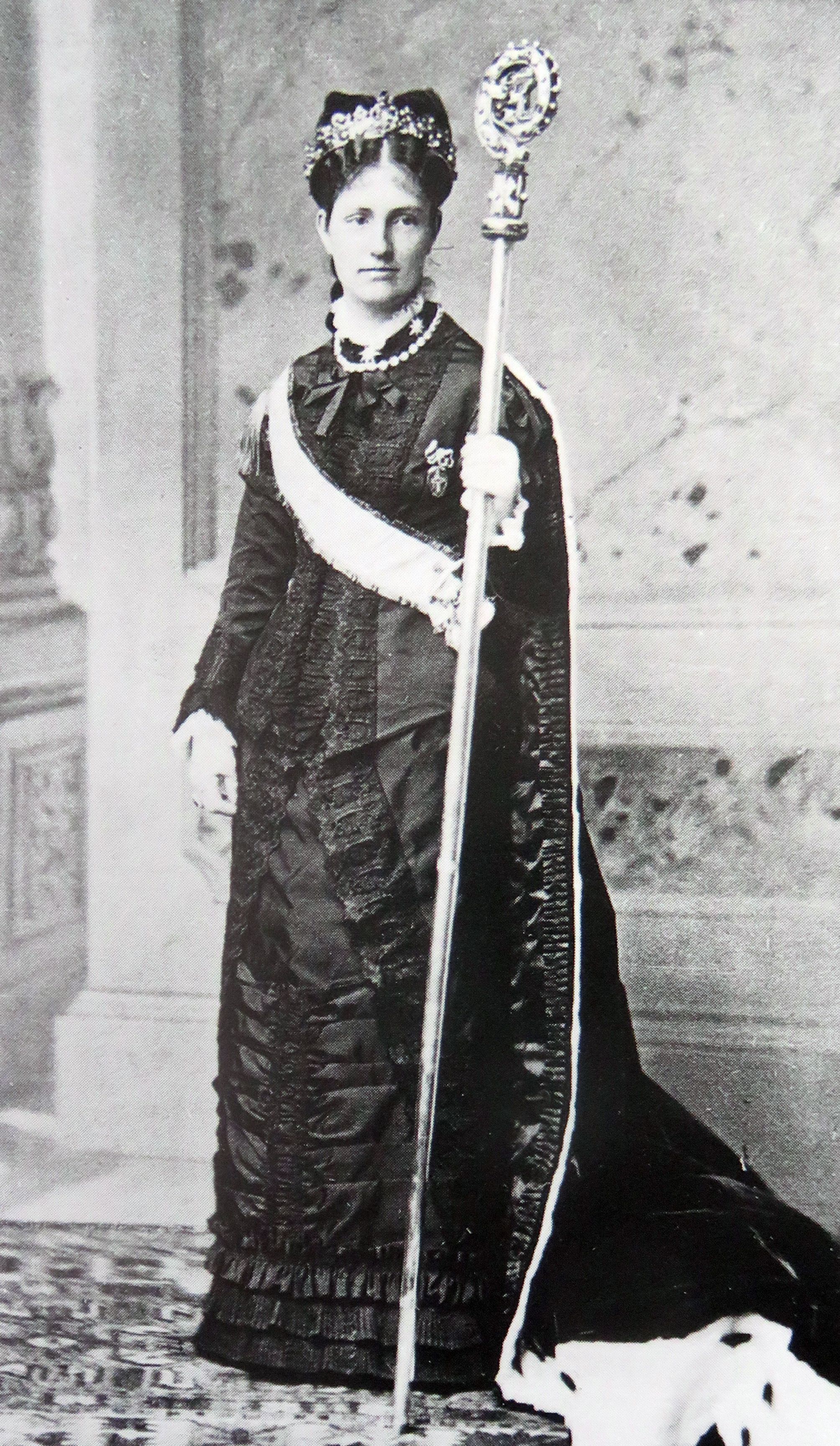
“This crosier was made by fifty leper goldsmiths on a Greek island owned by the Doge of Venice. My uncle, the Cardinal of Trieste and Titular Abbot of Unter-Festschrift, gave it to me at my accession.”

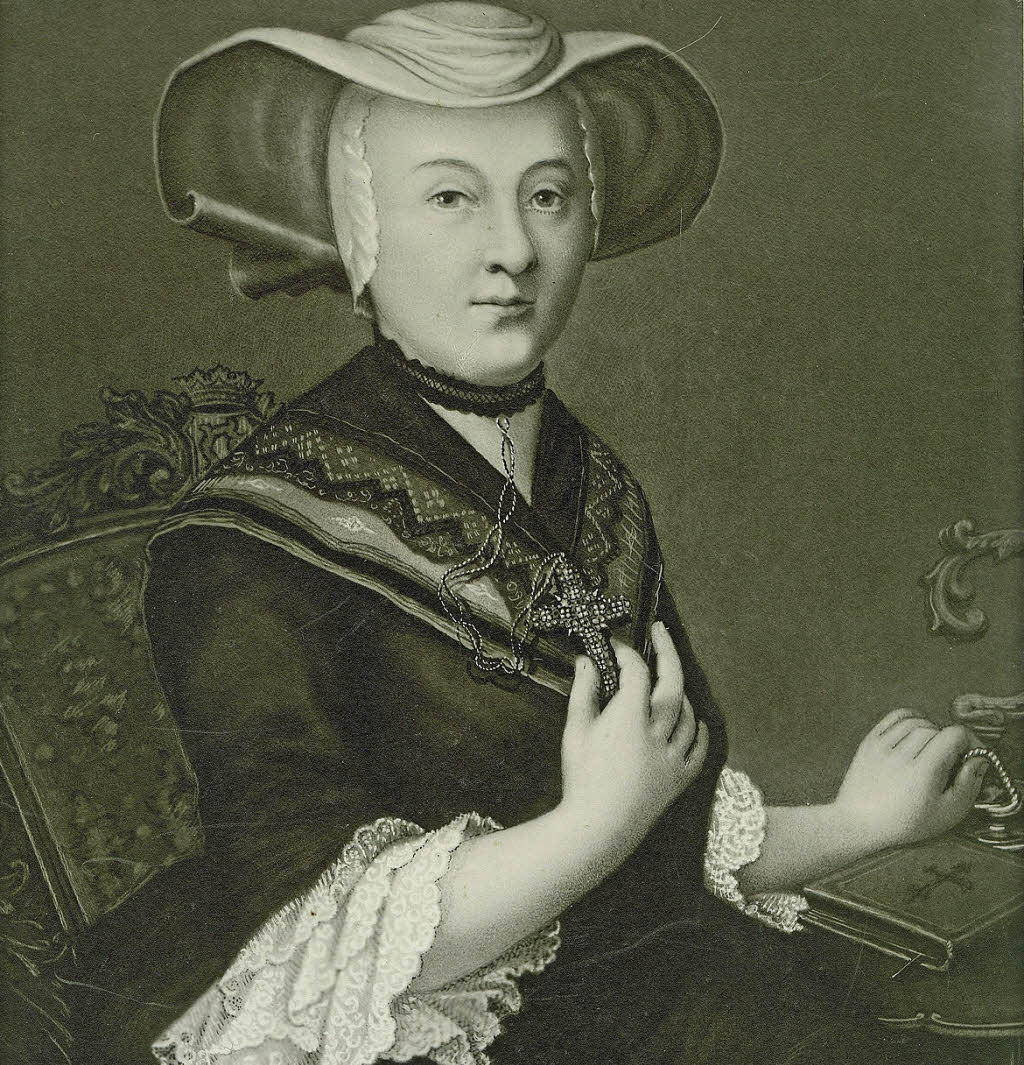
Therese Natalie of Brunswick-Wolfenbüttel, Princess-Abbess of Gandersheim, with her pendulous string of pearls, miniature portrait bracelet, powdered blue watered silk sash, ermine, and bejewelled Bible, is a model of noble simplicity.

“Well, grey is a penitential color, after all. More than what you’re wearing, heathen.”

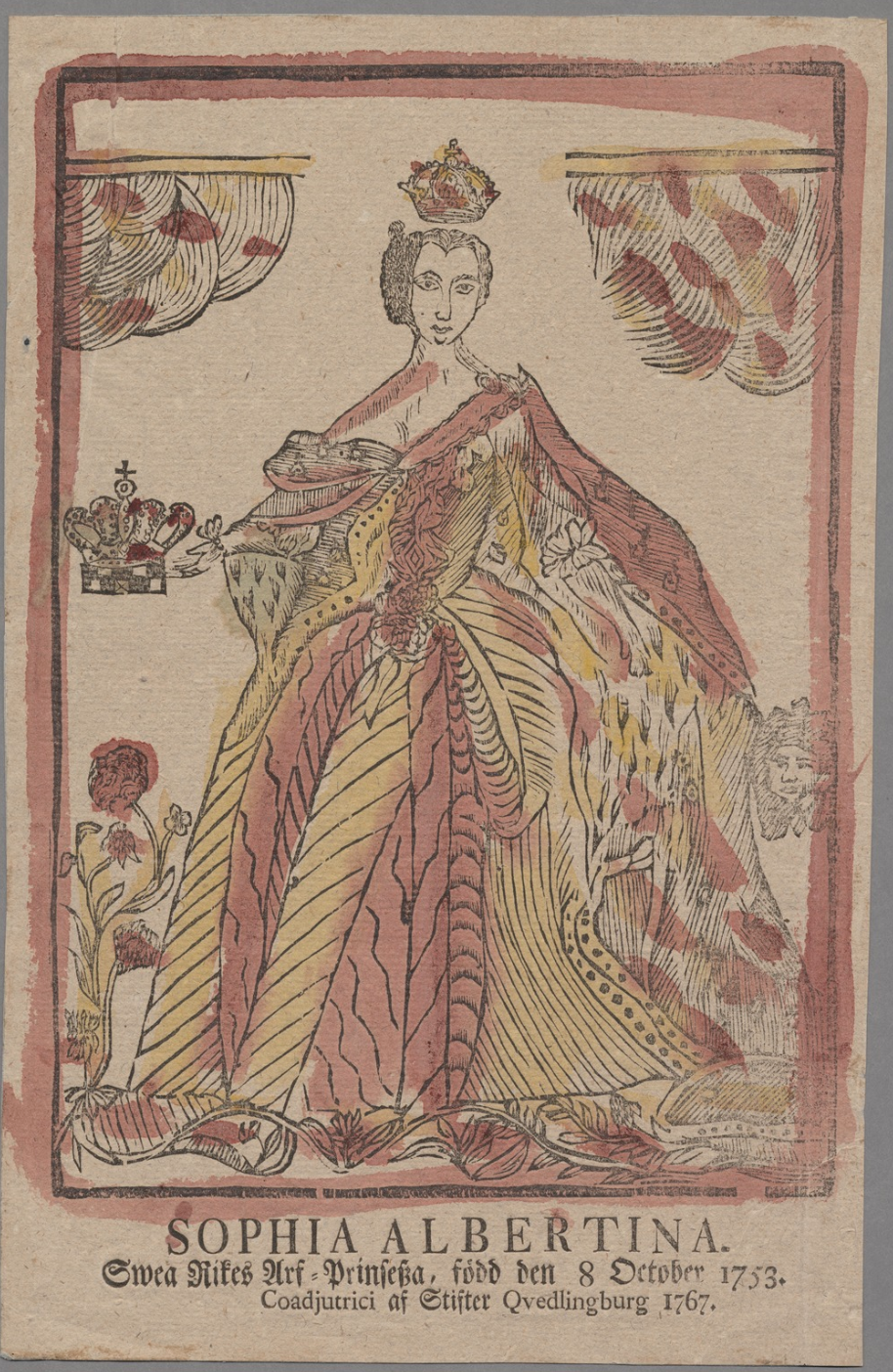
“They told me it was the crown or the hair. I chose the hair.”

The face when you realize that someone has spilled ketchup and mustard everywhere.

Marie Elisabeth von Holstein-Gottorf, Princess-Abbess of Quedlinburg, knows what you did. And she is not amused.

“What cloister is ever complete without tropical plants?”

How sweet when sisters live in (rococo) harmony…

…as opposed to Gothic mutual loathing.

(Sources: Here, Here, Here, Here, Here, Here, Here, Here, Here, Here, Here, Here, Here, Here)

100 Edifying Lenten Penances

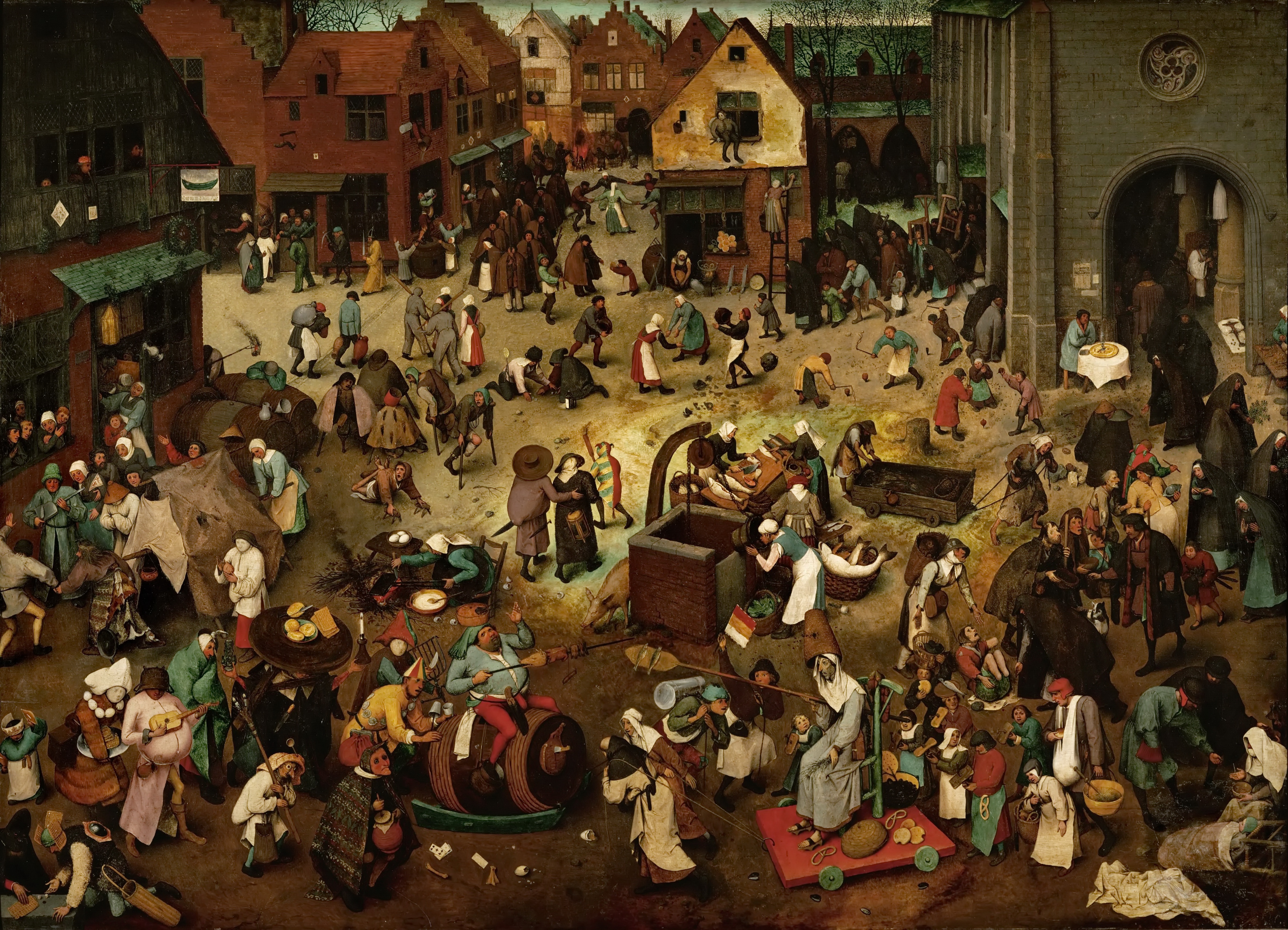
“The Fight Between Carnival and Lent,” Pieter Bruegel the Elder. Recently seen by the author in Brussels. (Source)

The pious among my readers will no doubt be aware that Lent will soon be upon us. Here are 100 ideas for how to have a successful and most fruitful season of penance.

  1. Give up meat
  2. Give up chocolate
  3. Give up alcohol
  4. Give up social media
  5. Give up being a social media influencer
  6. Give up films
  7. Give up naughty films
  8. Give up films that are very naughty but not the ones that are naughty while also being either smart or funny or historically dramatic in a passingly educational sort of way
  9. Give up comic books
  10. Give up music
  11. Give up secular music
  12. Give up Christian praise and worship music (for the love of God and all that is holy)
  13. Give up lobster, though not on Fridays
  14. Give up dairy
  15. Give up various soft cheeses
  16. Give up all cheeses from Poitou-Charente but not anywhere else in France
  17. Give up Netflix
  18. Give up “Netflix”
  19. Give up petting zoos
  20. Give up marsupials
  21. Give up giraffes of any kind
  22. Give up your ignorance of the various kinds of giraffe
  23. Give up spy novels
  24. Give up surprising all of your friends by suddenly screaming at them, apropos of nothing, “No, Mr. Bond, I expect you to die!”
  25. Give up your longstanding telenovela addiction
  26. Give up trying to learn Portuguese in favor of Esperanto
  27. Give up learning Esperanto
  28. Give up reading the poetry of William McGonagall, the Apollo of Dundee
  29. Give up the various birds, stuffed and otherwise, that you are hoarding in your attic and basement
  30. Give up your deeply-rooted habit of eating little fragments of ceramic statues
  31. Give up your swimming lessons
  32. Give up your avoidance of Luton, Slough, and Swindon
  33. Give up the American news cycle
  34. Give up the Busby Berkeley marathons you play in your living room every Friday evening
  35. Give up pretending you are, in fact, the reincarnation of Senhor Doutor Plinio Corrêa de Oliveira
  36. Give up whining
  37. Give up long walks in the park
  38. Give up spitting in public
  39. Give up gossip
  40. Give up gossip about me, please
  41. Give up your general wanton demeanor and frowsy mien
  42. Give up the chips
  43. Give up all professional sports
  44. Give up your various simultaneous affairs with the members of the Swazi National Curling Team
  45. Give up the ghost
  46. Give up your collection of Rococo snuff boxes depicting various prince-bishops in ermine
  47. Give up practicing the kazoo at inappropriate hours of the night
  48. Give up Morris dancing
  49. Give up peanut butter and eel jelly sandwiches
  50. Give up your place in line
  51. Give up the furious Mah-Jong tournaments you regularly host for gangs of aged nuns
  52. Give up reciting the poetry of William McGonagall, Bard of Dundee
  53. Give up your participation in the capitalist system enslaving us all
  54. Give up toast
  55. Give up the secret alien knowledge you acquired through highly illegal methods of infiltrating government files
  56. Give up felonies in general
  57. Give up all the Skittles you have hoarded in your closet
  58. Give up the various coffee table books of early brutalist architecture that you have received from work colleagues, many of whom have since passed on
  59. Give up on modern architecture in toto
  60. Give up writing emoji haikus
  61. Give up your shoegaze band, Emoji Haiku
  62. Give up on romance
  63. Give up on romantic comedies
  64. Give up those trashy bodice-rippers they sell in the supermarket book aisle (you know the ones)
  65. Give up your seat in the Académie française
  66. Give up your seat on the train to Timbuktu
  67. Give up your seat on the Parish Council (here’s looking at you, Susan)
  68. Give up your operatic emotional troubles
  69. Give up addressing everyone in song
  70. Give up asserting that you are, in fact, Madama Butterfly
  71. Give up counting time in anything but the Mayan calendar
  72. Give up your general estrangement from Mesoamerican culture
  73. Give up your allergies
  74. Give up your obstinate refusal to learn the Sasquatch language
  75. Give up your unreliable narration
  76. Give up your postmodern metairony
  77. Give up your Twitter account
  78. Give up treating your dogs like children
  79. Give up treating your children like dogs
  80. Give up treating your children better than your cats
  81. Give up your claim to the long-defunct throne of the Polish-Lithuanian Commonwealth
  82. Give up your alarming habit of musical flatulence
  83. Give up your covert addiction to locomotive erotica
  84. Give up your understated unibrow
  85. Give up your long-awaited nose job
  86. Give up your embittered attempt to remain Dean of a prominent English Cathedral
  87. Give up memorizing the poetry of William McGonagall, the Orpheus of Dundee
  88. Give up any expectations of amusement
  89. Give up the pipe dream of tenure
  90. Give up your position to the various paramilitary forces that are hunting you through the tundra
  91. Give up break-dancing in public parks
  92. Give up attending Hare Krishna services
  93. Give up any association with the Libertarian Party
  94. Give up all hope, ye who enter here.
  95. Give up the secret recipe
  96. Give up the art your late uncle Oswald took from various museums over the course of his long and chequered career as a forger and art thief
  97. Give up approximately 1/4 of your bone marrow
  98. Give up being lame
  99. Give up all the excuses you always make for not keeping your Lenten penance
  100. Just give up

Anglo-Catholics and the Occult: My Church Times Debut

The Abbey in the Oakwood, by Caspar David Friedrich.


The Church Times have just published an article in which I summarize some of my research on the connection of Anglo-Catholics and the occult world. I’d like to thank my supervisor, Dr. Sarah Apetrei, and co-supervisor, the Rev. Canon Robin Ward, for their support throughout all of this. I’d also like to thank Fr. James Lawson for the early help he provided as well as Dr. Michael Yelton and those various other figures who have discussed the matter with me over the past year, often in words of encouragement. Hopefully the full paper will be published someday. For now, read here

Charles Williams, Marriage, and a Shameless Plug

edward_burne-jones_love_among_the_ruins

Love Among the Ruins, Edward Burne-Jones (Source)

I have a very exciting if somewhat tardy announcement. I have some poetry being published in Volume II of Jesus the Imagination, the hot new Sophiological journal by Angelico Press. There’s plenty of other really good material in the journal, too, including work by friends of mine. Plus an interview with the Revolutionary Army of the Infant Jesus! What’s not to love? As far as I’m aware I’m making no money whatsoever off this venture, but I still encourage you to buy a copy (or two, or three) if you want to read my contributions…or just the far more brilliant materials you’ll find there, too.  Either way, I can promise you that Jesus the Imagination won’t disappoint!

225px-Charles_Williams

A portrait of Charles Williams: poet, critic, lecturer, editor, author, sorcerer, mystic (Source)

The theme for this volume is Marriage. As I’m sure many of you know, marriage is an extraordinarily deep mystery in the heart of the Church’s sacramental life, mystical being, quotidien experience, and esoteric practice. To celebrate, I am reproducing here a poem by Charles Williams that scratches the surface of Matrimony’s essence. Williams, a friend of T.S. Eliot and fellow-Inkling to C.S. Lewis and J.R.R. Tolkien, was a profound mystical thinker who kept returning to nuptial themes over the course of his career. The poem below comes from his first poetry collection, The Silver Stair (1912), a slim book I recently examined in the Bodleian. Enjoy.

Of Marriage and of its Priesthood

Charles Williams

Here shall no pagan foot nor claw of beast
Enter; nor wizard sorcery be seen.
But sometime here have all true lovers been,
Nor hath the tale of outland riders ceased.
With hands of consecration now the priest
Exalts the holy sacrament between
The altar lights. Now, if your souls be clean,
Draw near: Himself Love gives you in His feast.

Whose voice in solemn ritual lifted up
Praises the Name of Love? Whose hands have blest
For you, His votaries, the mysterious Cup,
And set before you the ordained Food?
Voice of Himself, to narrow vows professed,
And hands of His adorable maidenhood.

“God is Gone Up With a Merry Noise”

AscensionLetter.jpg

Ascendit Deus in iubilatione, alleluia (Source)

God is Gone Up With a Merry Noise

Rick Yoder

Rear a hill in my heart, O God,
from which Thou might ascend.
But o! How swift I overshoot
and rush on to the end.
For first Thou must come hallow it
with that most kingly flood,
the pearls surpassing every price,
Thine own most precious blood.
And though I wander far, O Lord,
from Thy most holy fount,
yet never shall I lose the sight
of Thine eternal mount.
The shadows of the day grow long
and silence takes the land;
still do I hope in Thy sweet song
and Thy high priestly hand.
“The Lord ascends with gladsome noise
and hath taken the better part.”
So runs the word, so I rejoice,
for He rises there in my heart.

Spring According to Pre-Raphaelites

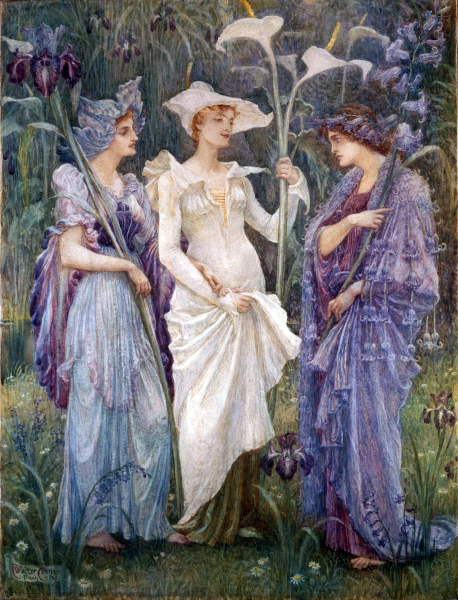
Spring is here, and the Pre-Raphaelites are going to tell you how to celebrate.

WalterCraneSpringIf you’re not just lying about languidly in a meadow, you’re not really doing it right, are you?
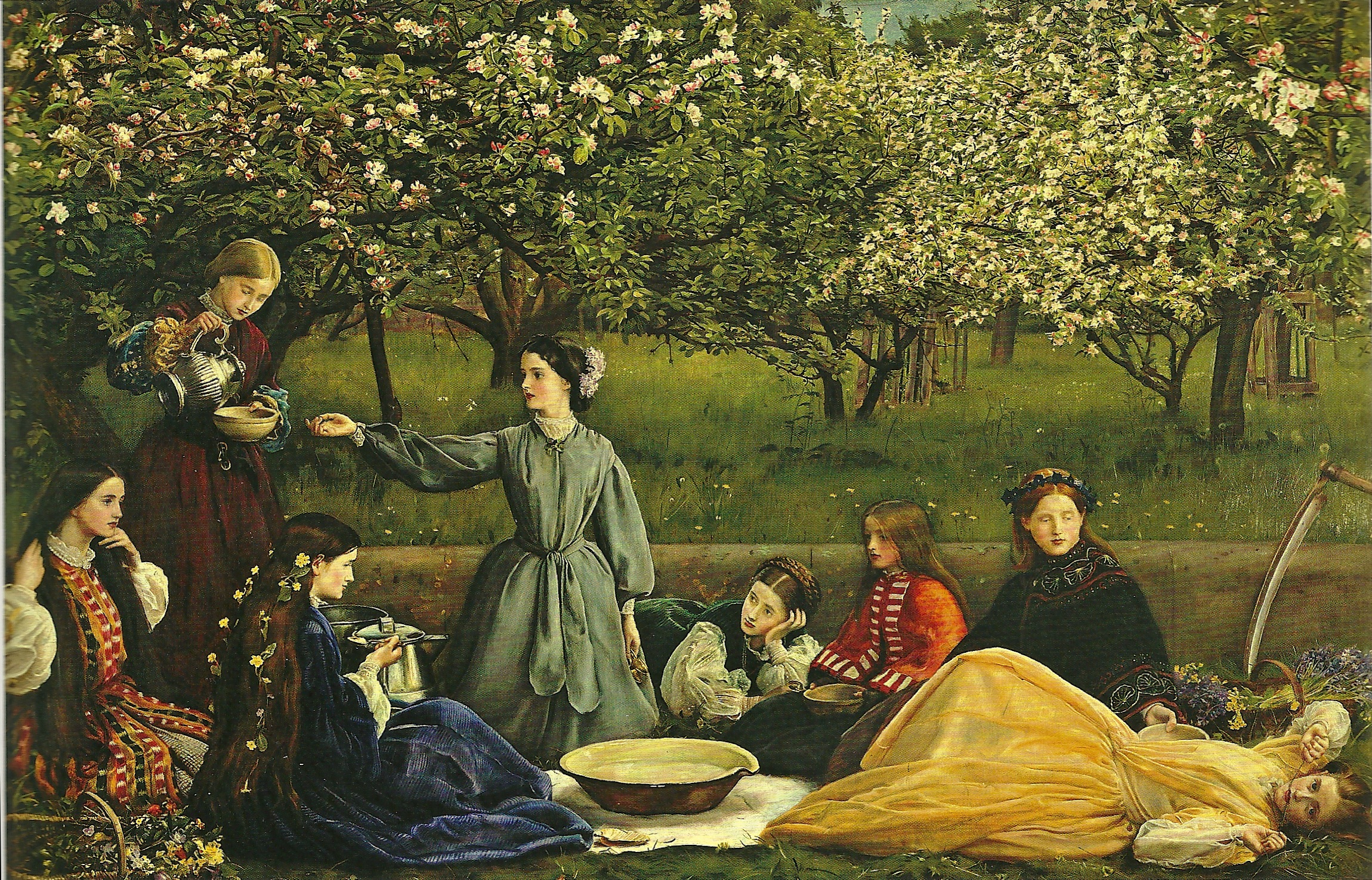
SpringAppleBlossoms.jpgIt is also acceptable to lie there with an audience, preferably one enjoying a lovely picnic. And everyone must be the same gender and should, if at all possible, be dressed in very uncomfortable clothing.

Spring_Buckland
After you have wallowed in the flowers, be sure to pick some and stare vacantly into the middle distance.

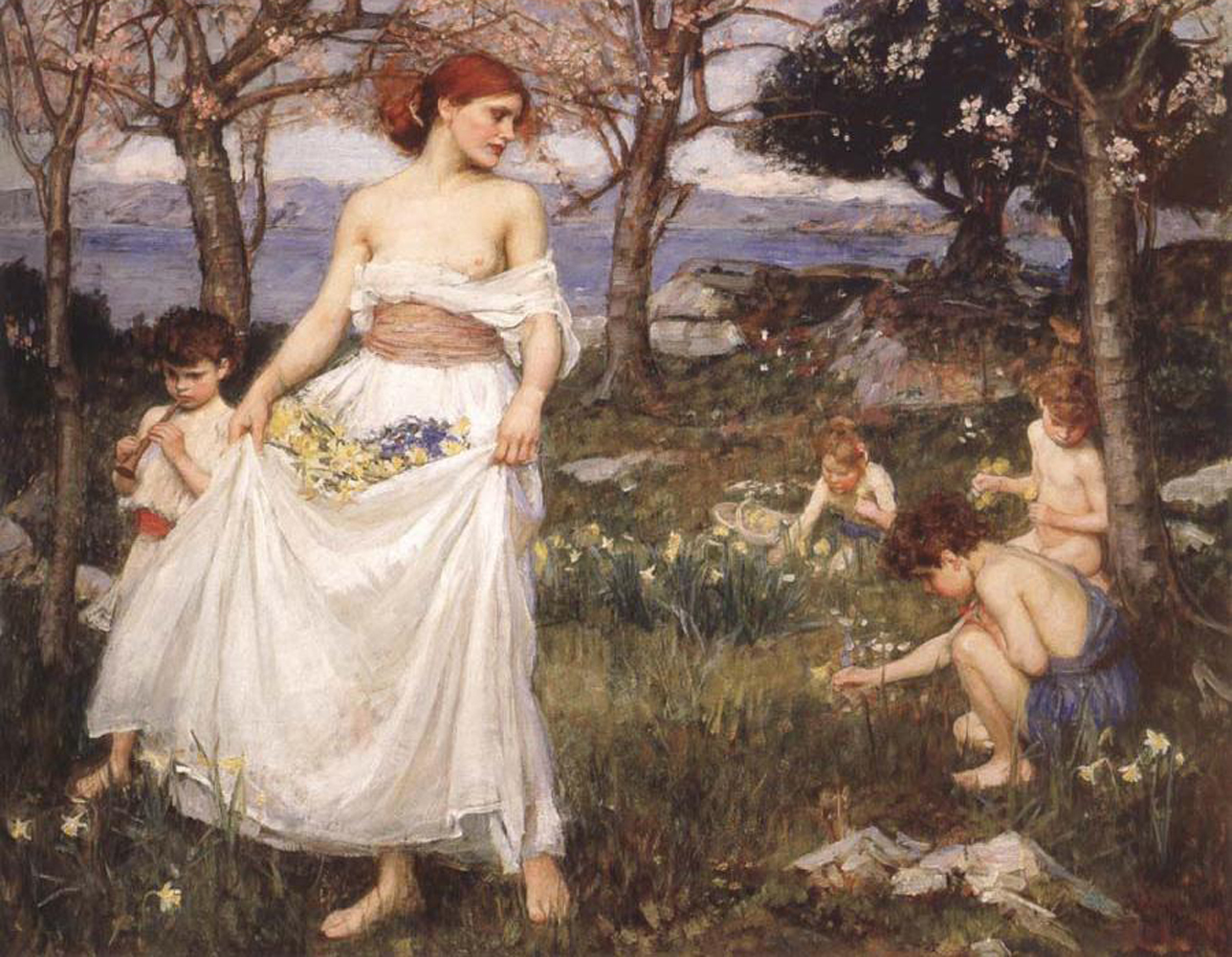
john_william_waterhouse_10_a_song_of_springtime.jpg And of course, you should be arrayed in an artfully disheveled white dress. To get that shabby chic look, you know?

HirelingHolmanHunt.jpgHow you dishevel it is up to you.
InnerBeautyWaterhouse
Never let a gust of wind pass without posing.

WalterCraneSignsofSpring
When it comes to flower-staffs, the bigger, the better.

the_fairy_wood
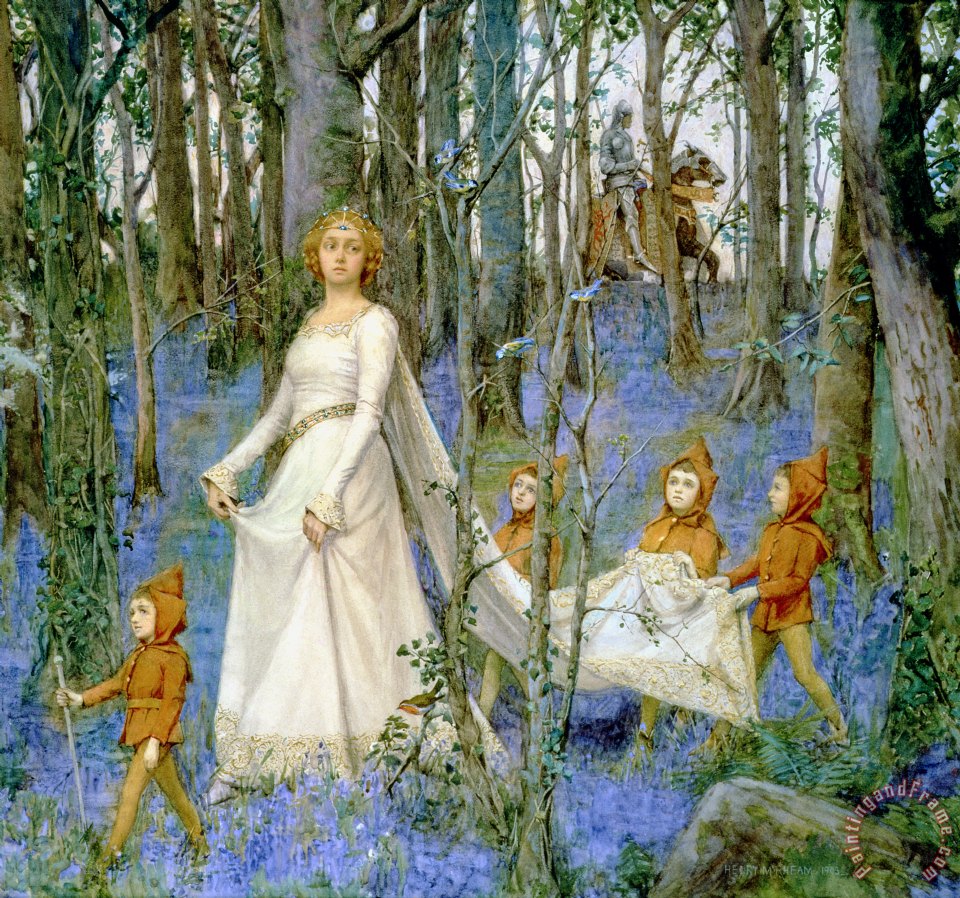
Only travel with an entourage of little people, so as better to accent your royal mien and bearing.

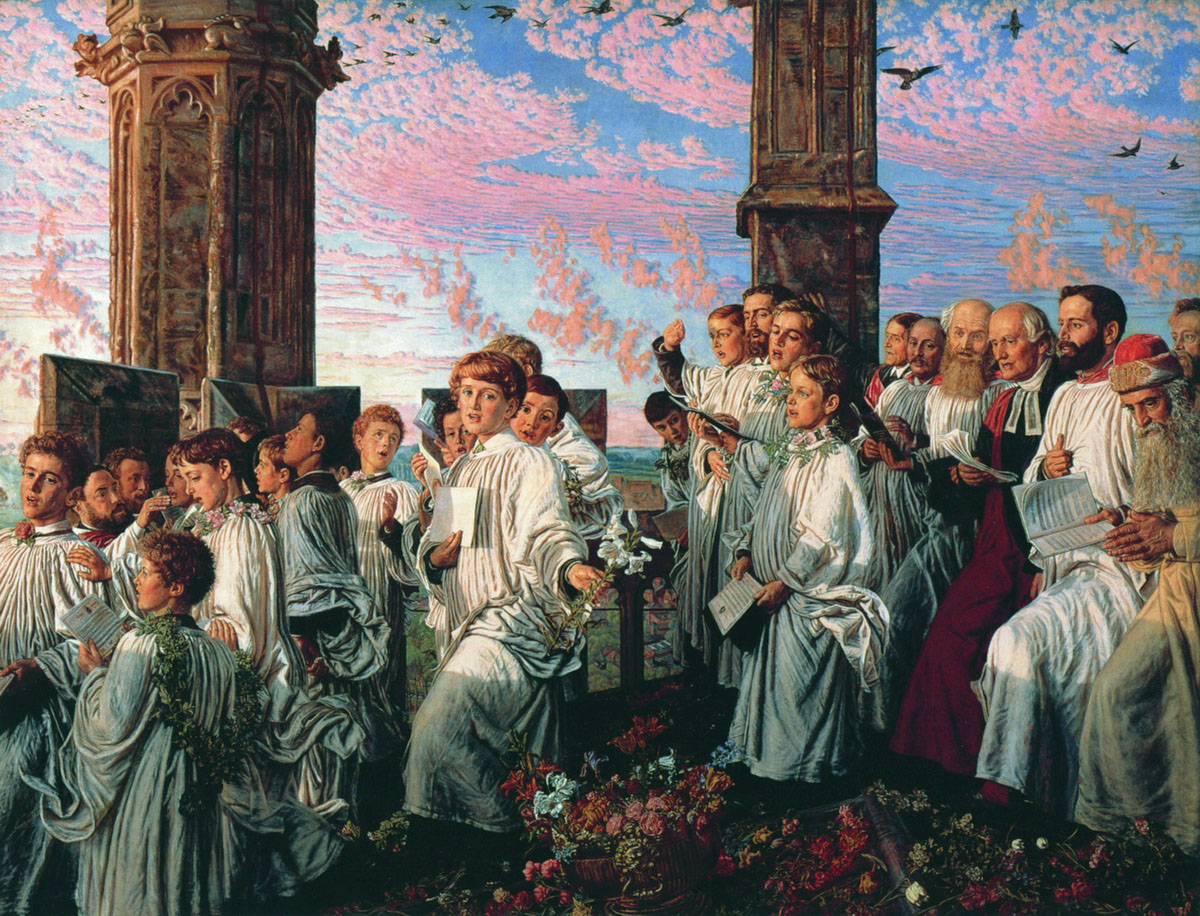
William_Holman_Hunt_-_May_Morning_on_Magdalen_Tower
Choir boys will also do.

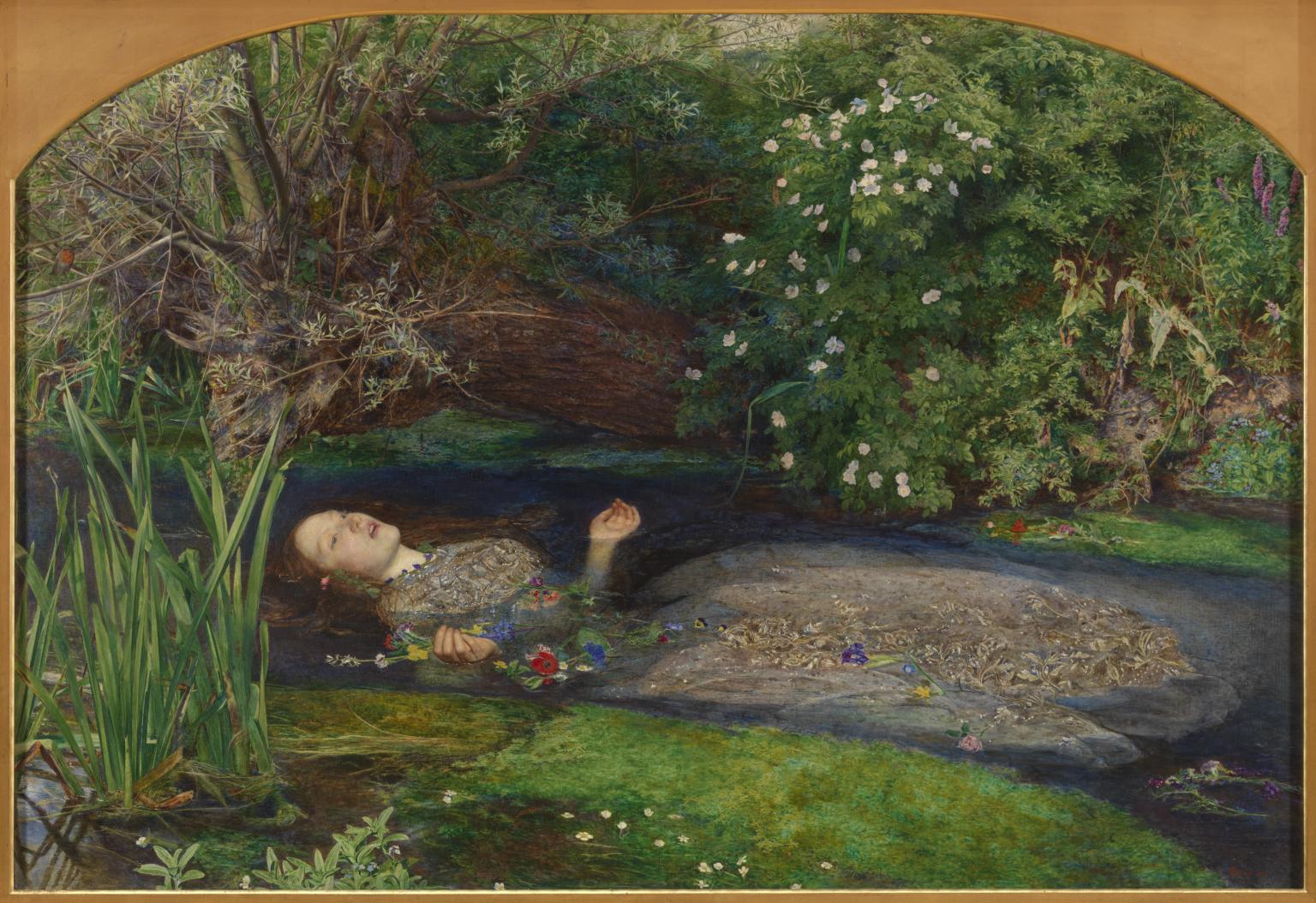
Ophelia 1851-2 by Sir John Everett Millais, Bt 1829-1896
Spring is a lovely time for a refreshing dip.

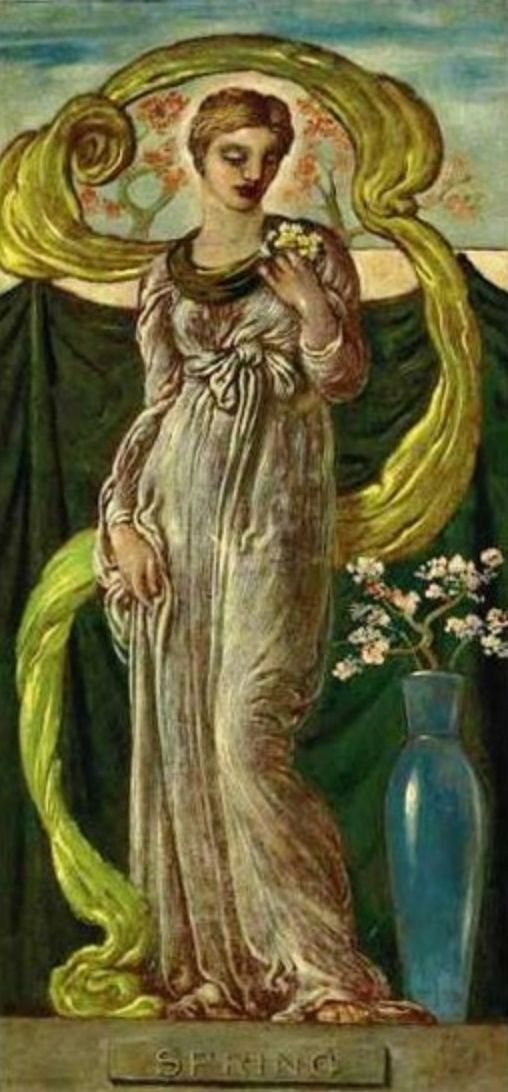
Screen Shot 2018-04-21 at 9.54.52 PM.png
You know you’re having a good Spring day when, so enraptured by the little blossoms you’re holding, you don’t even notice your long green scarf blowing away.

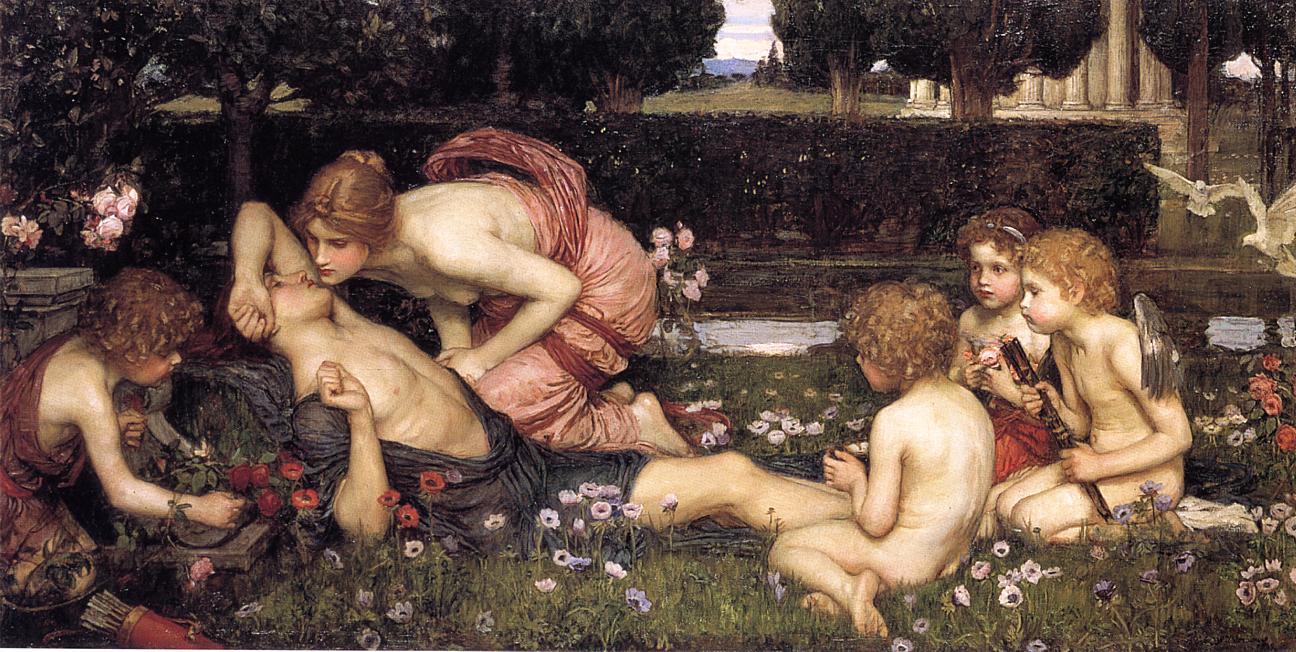
The_Awakening_of_Adonis_-_John_William_Waterhouse_(1899)
If you happen to find half-naked classical youths asleep in a garden, surrounded by putti and doves, and stuck in an extraordinarily improbable pose, don’t worry. This is normal in Spring.

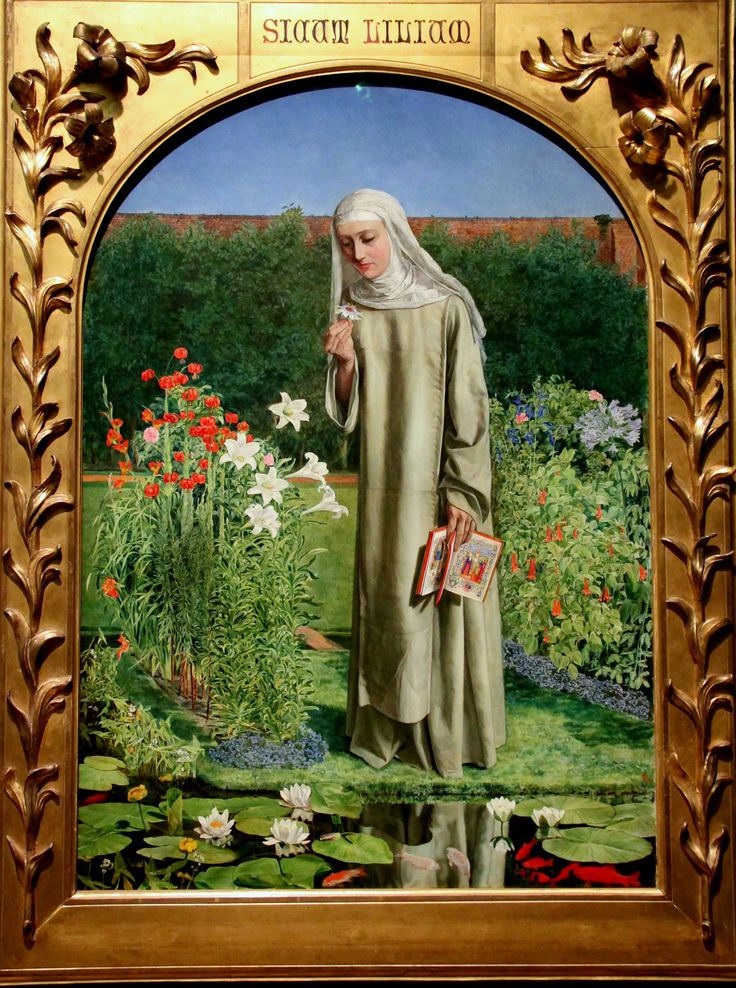
SicutLiliumPreRaph
Likewise, wild nuns emerge from hibernation and range freely again in the Spring.

Edward_Burne-Jones_-_The_Beguiling_of_Merlin.jpg
While it’s important to enjoy the season, it’s even more important not to get too caught up in it. This time of the year is when people are most at risk of being sealed into trees by nymphs.

The-Enchanted-Garden-of-Messer-Ansaldo-1-e1480773352693
But surely the best thing about Spring is that it’s no longer Winter!

(Images from here, here, here, here, here, here, here, here, here, here, here, here, here, here, here)