On Faith and the Priesthood of Christ

And he led them out as far as to Bethany, and he lifted up his hands, and blessed them. And it came to pass, while he blessed them, he was parted from them, and carried up into heaven. And they worshipped him, and returned to Jerusalem with great joy: And were continually in the temple, praising and blessing God. Amen. – Luke 24: 50-53

Many years ago, shortly after the start of my faith journey, I received some very good advice from an Anglican friend of mine. Or rather, I received a very good prayer. She told me that whenever she was anxious or worried or stressed about anything, she resorted to a prayer that ran like this:

“Jesus Christ is my High Priest, and He will always see me through.”

There is much consolation in these simple words, as I have had frequent occasion to learn in the years since then. And, to be honest, I am most drawn to Christ in the mystery of His High Priesthood. I often find myself asking Him to pray for me, not in the sense that one asks a friend or a saint to pray, but as one can only ask a sovereign and perfect intercessor. This sense of Christ as High Priest has become part of the basic structure of my own faith. Yet today’s feast, the Ascension of Our Lord into Heaven, invites us all to dwell upon this mystery in a more explicit way.

The Ascension from the Très Riches Heures du Duc de Berry ©Photo. R.M.N. / R.-G. OjŽda (Source)

It is a curious fact of the Church’s kalendar that in those solemnities when she most fervently celebrates the Incarnation, she also insists most firmly upon the hiddenness of God. In Christmas, we observe Christ born in a lowly shed at night, disclosing His presence only to those shepherds who resemble Him in their poverty, humility, and obscurity. Today’s feast of the Ascension is composed of a similar doubling. It brings before our eyes the Incarnation in its most radical implications—while reminding us that we live in and with Christ’s apparent absence.

It is, therefore, a salutary lesson in the virtue of Faith. I think that we too often lose sight of what Faith really is. Scripture tells us: “Now faith is the substance of things hoped for, the evidence of things not seen” (Heb. 11:1 KJV). But what does this really mean?

God’s absence is felt in two ways. First, we feel it through the insistent reality of evil. The agony of the world we live in is too great, too universal, and too obvious to need any underlining. The Church is no different. How many malicious and mediocre priests seem to cloud the pure light of the Gospel! Their sin weighs more heavily, for they have been given a greater charge. Yet there is some comfort in the High Priesthood of Christ. If our earthly priests falter and fail, Christ never will. He remains forever a spotless offering in the sight of the Father, and His blood is all-cleansing. The invisible pontiff of an invisible, all-embracing, and everlasting temple, Christ never abandons His children, who linger below with expectant eyes.

Let us pass on to the second sense in which God hides Himself, leaving us with, in the words of R.S. Thomas,

this great absence
that is like a presence, that compels
me to address it without hope
of a reply.

R.S. Thomas, “The Absence”

The past is forever dead to us, an enormous absence, a distantly glimmering mirage that fades even as we approach it. Sacred History, even supported by texts and archaeology, is not a special case. There is a sense in which the facts of the Incarnation, Death, and Resurrection of Christ are no different here. We may participate in them, but we cannot directly experience them as historical events, in historical time.

The great High Priest in Heaven. (Source)

So, what are we to do? How do we deal with the fact that God’s acts of revelation lie hidden behind the curtain of time? Quite simply, we must have faith. We must declare that faith is not certainty and not knowledge, but an engraced movement to trust those little lights given unto us. Those lights are, mainly, Scripture and Tradition, particularly the Liturgy, in which the Church as a body transcends the limits of earthly time through her collective remembrance. There is a tendency in Catholicism to downplay the “memorial” function of liturgy. This is a mistake. In fact, there is a sense in which the essence of the Liturgy (or rather, the Liturgies of the various Catholic Churches) is memory. But it is the memory of the Church as the very Body of Christ, a memory which realizes and re-presents the object of remembrance, not mere empty symbolism. Orthodox theologians have been better on this point than Western ones, perhaps because they have not been so fearful of the specter of Zwingli. But I digress.

All of this is to say that we cannot state with the certainty of historical science whether Sacred History is true. There is no real evidence for most of revelation, and we should not let the apologists delude us on this point. They’re far more addled by modernity than they realize. But by grace we can and should leap boldly across the chasm of our natural uncertainty, avoiding the Scylla of Apologetic Positivism and the Charybdis of Naturalistic Doubt. The result is not knowledge, which has no meaning here, but faith.

We would all be better off in a position of greater epistemological humility. For instance—let’s be honest—we have absolutely no knowledge of what happens after death. The data is inconclusive: annihilation, a flash of light, reincarnation, hauntings, purgatory, heaven and hell. We know nothing. It may seem like a commonplace, but it bears repeating, that our fate after death is a mystery. All we can do is have faith that what we have been promised is true. But none of this is certainty, not even for our own salvation. Do you know you will be saved? No. For no one can know what comes after death. Eternal hellfire or an infinity of mute blackness or a strange new human life could come instead. The only thing to do is to pray for mercy “in fear and trembling,” placing our faith in the Hidden God (Philip. 2:12).

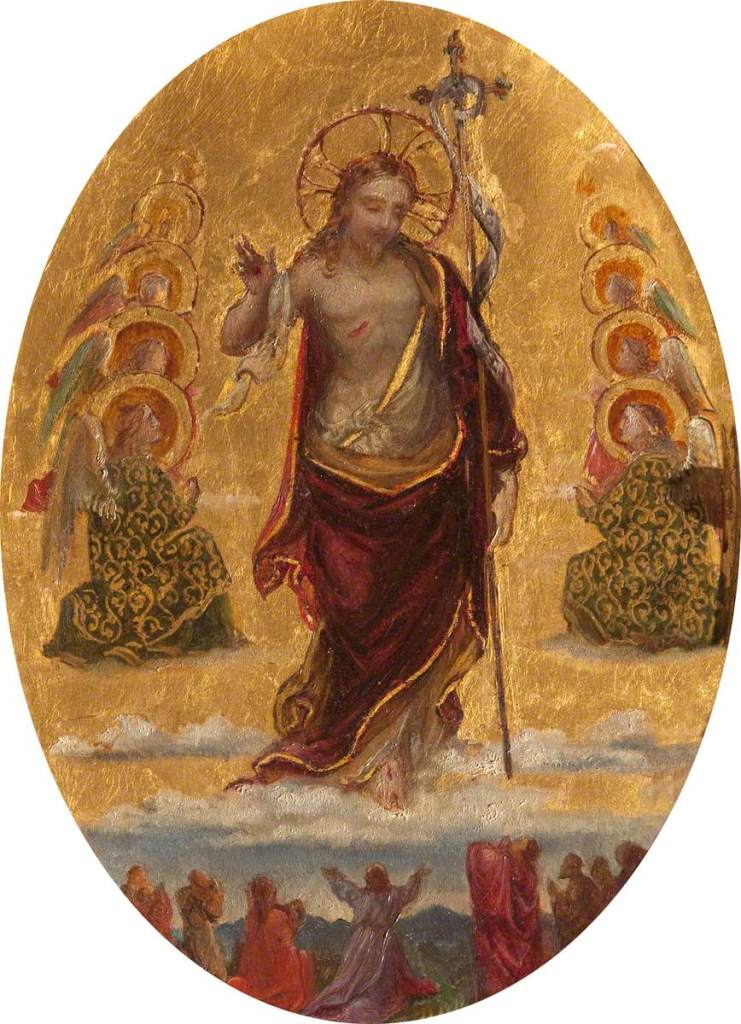
Rebecca Dulcibella Orpen, The Risen Christ (The Ascension), National Trust, Baddesley Clinton (Source)

Do not say to me that you “know” these things because you “know” your Bible or because you “know” Church teaching or even because you “know” Jesus. To be frank, I don’t believe it. In fact, I’m not confident we can know God at all, in the sense of positive knowledge. God’s existence is not like a mathematical theorem or the date of the Battle of Waterloo. Nor do I think you can know God or any of His saving mysteries like you can know another person. You cannot see God; you cannot touch Him; you cannot hear Him like you can hear a friend or lover or even a stranger passing in the street. Simply put, I don’t believe that our “knowledge” of God, the Infinite and loving ground of Being, should be called “knowledge” at all. In fact, I rather suspect that this fixation with “knowledge” has been a very substantial problem for the Church throughout her history.

To interject a personal note; I look back at my life and I sometimes wonder if I ever really knew Christ. There are others I doubt as well. False mystics and visionaries abound, as the Church chokes on her own prelest. But when I look at my own case, I remain unsure. I certainly know a lot about the Church, and have ever since I eagerly began RCIA nearly ten years ago. But did I know Christ? Was I just enamored with my own exaltation, with the fool’s-gold assurances of spiritual certainty, with the glittering baubles that float like empty bottles down the Tiber? Is it even possible to know Him? Or must we just choose, by grace, to have faith—to place our confidence in Him, trusting that He will guide us through the overwhelming darkness of uncertainty which is the very tissue of our lives?

I have come around to the latter position. The virtue of Faith has nothing to do with knowledge per se, and is as far from certainty as East from West. It is granted to us precisely because we lack certain knowledge of the immense realities it comprehends, and probably must by our very nature. Eliot writes in “Burnt Norton” that “Human kind/cannot bear very much reality.” We forget our weakness too easily.

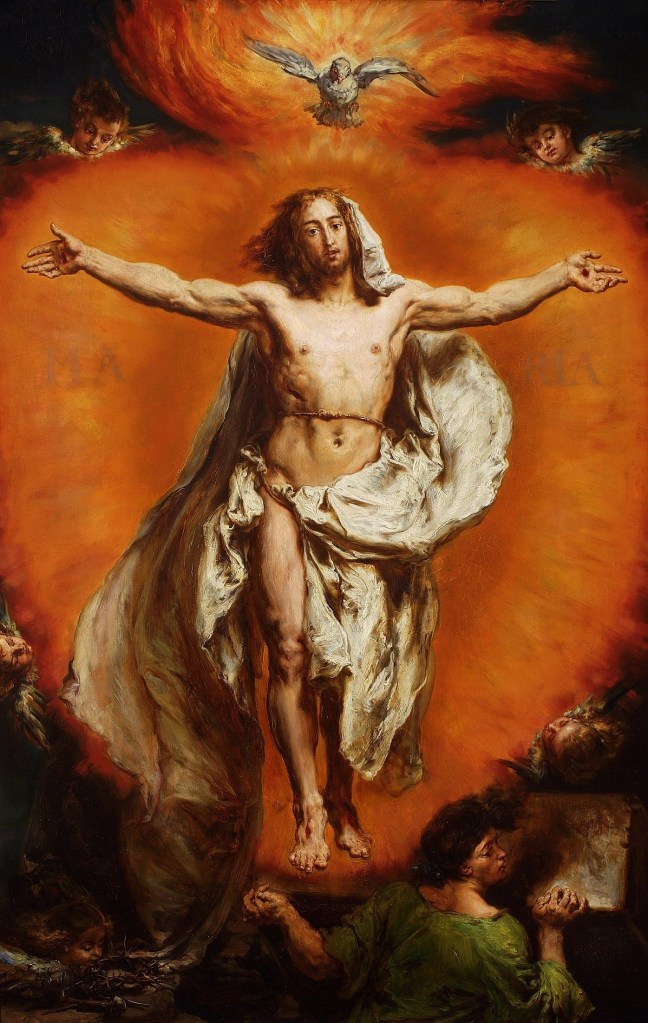
Jan Matejko, The Ascension of Christ, 1884 (Source)

Happily, the substance of our faith does not reside in the natural faculties of understanding. As Pascal says, “It is the heart which experiences God, and not the reason. This, then, is faith: God felt by the heart, not by the reason.” In a sense, the Ascension is the true beginning of the Christian faith in history, for it inaugurates our sensible separation from Christ. Our eyes grow dim, but not our hearts. The blindness of nature is transformed into sight by grace.

In Exodus, God tells Moses that “Thou canst not see my face: for there shall no man see me, and live.” (Ex. 33:20 KJV). The Ascension is the triumphant reversal of these words. For today, a man greater than Moses, a man greater than Enoch and greater than Elijah, but a man all the same, sees the Face of the Father. He has “ascended into Heaven, and sitteth on the right hand of God, the Father Almighty.” Godhead wraps Himself in human nature, and humanity is plunged into the abyss of everlasting Light. A human being stands at the threshold of eternity. The Ascension brings humanity into the very Holy of Holies of the cosmos. We truly participate in this Ascension if we unite ourselves to Christ through the grace given us, especially the grace of the sacraments. If we one day enjoy the Blessed Vision of the Divine Essence, it will be through the eyes of our High Priest, our Head, the Lamb who is the Lamp of the New Jerusalem (Rev. 21:23). John Donne puts it thus:

Behold the Highest, parting hence away,
Lightens the dark clouds, which He treads upon;
Nor doth he by ascending show alone,
But first He, and He first enters the way.

John Donne, “Ascension”

By grace, we shall follow these luminous steps, someday. So many saints have – including today’s great saint, Philip Neri, Apostle of Rome. Their stories remind us that now is the time of faith, and hope, and the charity that breathes life into both.   

If the Ascension is a lesson in Faith, it is just as much a lesson in Hope. It shows us which way we must go. It tells us that we must look to the hills, from whence cometh our help (Ps. 121:1). We need go neither backwards nor forwards, neither to the East nor to the West—but rather, up. Up, into the hidden mystery of the Divine Life. Our help is not from man but from the God-Man, the one who brought our very nature beyond the veil of the celestial temple. And what do the Apostles do? They imitate their Head and repair to the visible and earthly temple, there to sing and praise and preach the Gospel of the Lord. So have all the saints throughout the long, dark centuries since the Ascension. And so should we.  

But even as we tabernacle in the visible Church, we are truly cloistered in the heart of the Most High. As St. Paul writes to the Colossians,

If ye then be risen with Christ, seek those things which are above, where Christ sitteth on the right hand of God. Set your affection on things above, not on things on the earth. For ye are dead, and your life is hid with Christ in God.

Colossians 3:1-3

Let us pray with the Apostles that we might one day ascend with Christ. And let us ever hold in remembrance that Jesus Christ is our High Priest, and He will always see us through.

Difficulties

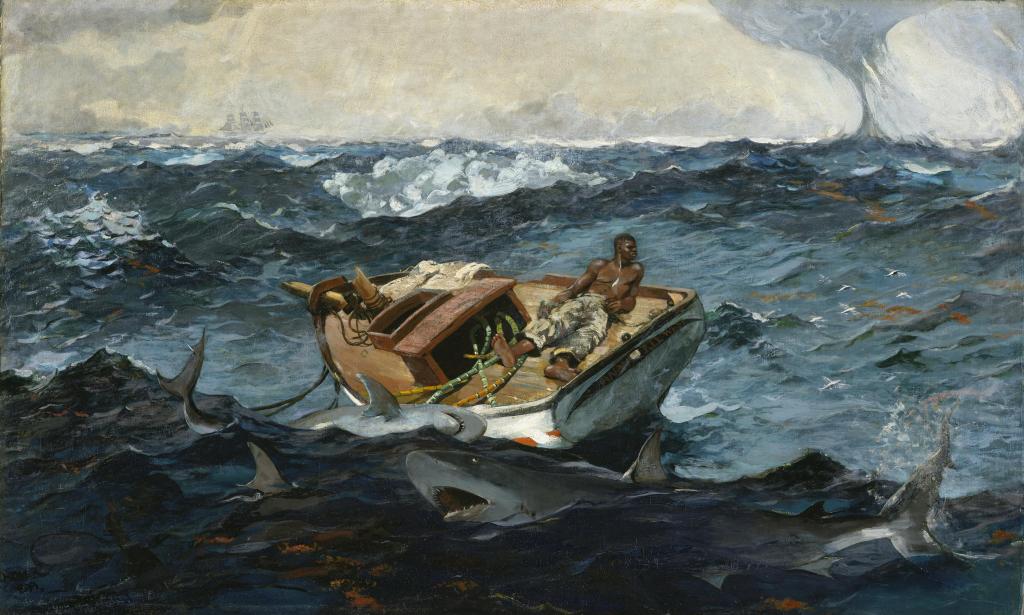
Winslow Homer, The Gulf Stream, 1899 (Source)
  1. Why does God create so many souls that He has no intention of saving?
    1.a. Take the massa damnata of St. Augustine. What is the point of creating a human soul – ostensibly out of infinite, perfect love – and not saving it?
    1.a.i. The argument that God allows us to be damned to preserve our free will is meaningless in the face of the basic anthropology of the Christian tradition, which holds salvation itself to be an unmerited and supernatural grace. Man cannot save himself, and in the state of sin, rightly deserves damnation. But why bother creating so much life – so many unique and irreplaceable souls – if you intend to preserve the vast majority of these souls in everlasting torment without any reciprocal knowledge or love?
    1.a.i.1. There can be no softening of this point. The very clear implication of the New Testament, and even of the Old Testament, is that the vast majority of mankind is hellbound, or at least cut off from God. This was a fairly normal view until quite recently in Christian history, and is not unique to Catholics, Protestants, or Orthodox.
    1.a.i.2. God could conceivably create souls simply to damn them. After all, as St. Paul says, “Hath not the potter power over the clay, of the same lump, to make one vessel unto honor, and another unto dishonor?” (Romans 9:21). But is this the act of a God who is Love, to fashion a sentient entity for the express purpose of eternal torture – just to manifest His own quality of justice in perpetuity?
    1.a.ii. In the Christian East, there is still not a satisfactory answer here. Even should we accept the theology of St. Maximus the Confessor (and later, Bl. John Duns Scotus) that mankind’s purpose is to become deified, and thus that the Incarnation would have happened for our glorification even without original sin, this position does nothing to explain why the vast majority of the human race should be committed to hellfire. It does nothing to explain why almost everyone who has ever lived (including most so-called Christians) should face an eternity of unimaginable and unmitigated torment at the physical, emotional, and spiritual levels.
    1.a.ii.1. It is a dogma of the faith that at the Last Judgment, all the dead will be raised bodily – some to everlasting life, others to everlasting punishment. Hell’s torments are therefore not merely spiritual, but physical. St. Thomas Aquinas declares that the fires of hell will be corporeal. (ST Suppl. III. Q. 97, Art. 5).
    1.b. Let’s move beyond the human. Why does God bother to create so much life that’s wasted? There are sentient, ensouled beings that serve no human purpose.
    1.b.i. It is not enough to suggest that animals exist to serve man, per Genesis 1-3.
    1.b.i.1. Does a leopard eating a gazelle, hundreds of miles from human settlement, serve mankind? Does a whale locked in the deadly embrace of a squid contribute at all towards man’s dominion or salvation or even his punishment? Multiply this factor by billions – for we must include the insects, as well as most wild animals that have ever lived. Why create this life if it is all a waste?
    1.b.i.1.a. Doesn’t this massive wastage imply that there is no spiritual or even metaphysical point to animal life on its own terms?
    1.b.ii. If we mere humans love our domestic animals in an imperfect way, and yet we still are saddened at the thought that they are lost forever at their death, what would God’s perfect love for His creatures look like? Why should we follow the Thomists and declare their souls extinct upon death?
    1.b.iii. Does this position of extinction not reduce God to an imperfect creator, one who makes far, far more sentient beings than He has any intention of preserving – thus trivializing His love of so many creatures to virtual non-existence?
    1.b.iii.a. It would be possible to object here that animals and humans do not have the same kind of souls – more on this at 4.b.i.-4.b.ii.2.b.
    1.b.iii.b. Put another way – doesn’t this picture of God’s relationship with non-human, sentient creatures make Him appear wasteful to the point of active cruelty? Doesn’t this picture give us an image of a fundamentally frivolous creator cruelly indifferent to, not just the temporal suffering, but the very existence of His living creations?
    1.b.iii.c. Isn’t this implication drawn yet more forcefully in the case of damned humans?
    1.c. Can God – who is infinite, perfect, loving, and Being-in-Itself – have any true and lasting foes?
  2. In 1 Corinthians, we read that “Love is patient, love is kind” (1 Cor. 13:1). If God is Love, then it follows that God is patient. Does Christian soteriology suggest as much?
    2.a. In what sense is God patient? In His terms, or ours?
    2.a.i. Can an eternal, infinite Being be described as “patient” if He condemns a soul to equally eternal torment on the basis of choices made – or even graces which He Himself withholds – in the course of some seven or so decades?
    2.a.i.1. Surely there are some crimes that deserve far greater punishment than we mortals can imagine. But wouldn’t eternal damnation, which afflicts both body and soul, be necessarily disproportionate to any crime committed by any human subject?
    2.a.i.2. Quite apart from such serious crimes – sexual assault, child abuse, genocide, serial killing, war rape, etc. – that could reasonably merit eternal damnation, let’s consider lesser offenses that Western Christianity has historically considered damnable.
    2.a.i.2.a. Should a soul who dies suddenly and impenitently after masturbating be damned?
    2.a.i.2.b. Should a soul who dies without reconciling to the Church, after sincerely losing his faith as the victim of spiritual abuse, be damned?
    2.a.i.2.c. Should a soul who, having heard about Christianity but having rejected it due to the poor example of its ministers, and who dies in another religion, be damned?
    2.a.i.2.d. Should a soul who, beset by serious mental illness or unthinkable distress, commits suicide, be damned?
    2.a.i.2.d.i Traditional Catholic teaching, and even much traditional Protestantism, would answer in the affirmative to all these abstract questions, while refraining from any declaration prejudicial to God’s actual judgment in the case of particular souls.
    2.a.i.2.d.i.1. Is this religion reasonable where it should be reasonable?
    2.a.i.2.d.i.2. Is it humane?
    2.a.i.2.d.i.3. What conclusions must we draw about a religion that needs to ignore, change, or trim its own moral teachings in order to provide human consolation to the grieving?
    2.a.i.2.d.i.3.a. Do our conclusions become more grievous when the religion that does so claims to be a unique revelation safeguarded by the preservative quality of the Divine dwelling in its teaching authority, or in the unchanging deposit of its doctrine, or in the infallibility of its Scriptures?
    2.a.i.2.e. Is a soul in hell glorifying to God in itself? If not, then what is the point of its existence in the first place?
    2.a.i.2.e.i. St. Thomas alleges that the Saints in Heaven will be able to peer down into Hell, without pity, so as to rejoice in the just punishment they witness. (ST Suppl. III. Q. 94. Art. 1-3).
    2.a.i.2.e.i.1. Does this image of the saints preserve into beatitude the cardinal virtue of the Christian life, namely, charity?
    2.a.i.2.e.i.2. What kind of glory does God need or want or gain from the eternal, penal torture of a finite being? Or, indeed, of the eternal torture of many such beings?
  3. Are eternal damnation, eternal salvation, and temporary purgation the only options for the human soul after death?
    3.a. If the philosophical basis for this claim is an anthropology that defines man as the union of a single discreet body and a single discreet soul, as in ST I. Q.75. Art. 4, then what happens to our soteriology if we redefine the human subject?
    3.a.i. For instance, why shouldn’t we accept that, instead of our particular material embodiment – which is manifestly mutable, corruptible, and gross – our true self is an indestructible, immaterial, subtle spirit?
    3.b. Why shouldn’t a soul return to another mortal body after death?
    3.b.i. Wouldn’t reincarnation, which thus extends a soul’s spiritual journey through multiple lifetimes, be more consistent with the patience of an infinite and perfectly loving Being?
  4. How are we to understand the basic relationship of God and creation?
    4.a. Is there a complete distinction between creator and creature? If so, what does this say about God?
    4.a.i. Wouldn’t the fact that God is Being Itself rule out the possibility of a complete distinction between creator and creature?
    4.b. If God is Being Itself, then of necessity, all discreet entities that exist must subsist in Him. He must also subsist in Them, albeit in a radically different fashion.
    4.b.i. What kinds of entities exist, according to the classical Christian system?
    4.b.i.1. God is not an entity among entities, but rather the very Being (ens) in which they “live and move and have [their] being.” (Acts 17:28).
    4.b.i.2. Angels and Demons are intellectual and rational spirits without matter.
    4.b.i.3. Humans are intellectual and rational spirits who are embodied.
    4.b.i.3.a. Is this definition capable of distinction between the genus (Human) and the species (Individual subject)? That is, can we preserve this definition while accounting for the objection raised at 3.a.i?
    4.b.i.3.a.i. If man, being “made in the image and likeness of God” (Gen. 1:27) shares his rational intellect with the Angels, in what sense – if any – is this image and likeness shared with the Angels? Put another way, is it really distinctive of the human race?
    4.b.i.2. Animals have sensitive and embodied souls, but these souls lack intellect and rationality.
    4.b.i.3. Plants have vegetative souls but lack reason or sensitive animation.
    4.b.i.4. The rest of existence consists of inanimate matter without spirit or sentience.
    4.b.ii. Is this system compelling?
    4.b.ii.1. Doesn’t this system take distinctions among creatures as its organizing principle, rather than distinctions within the manifold relationship of creator and creature?
    4.b.ii.2. Wouldn’t a better metaphysical system divide categories of entities by virtue of the way that they relate to the very ground of Being as such?
    4.b.ii.2.a. Isn’t the chief ontological distinction between independent (divine) and dependent (creaturely) being?
    4.b.ii.2.a.i. Doesn’t this division preserve both difference and the essential unity of Being?
    4.b.ii.2.b. Isn’t the second ontological distinction between pure soul (God), ensouled dependent beings, and non-ensouled dependent beings?
    4.b.iii. Sophiology has opened up again in our time the question of a “world soul,” but no Christian denomination has authoritatively taught this as doctrine. The question must be laid aside for now.
    4.b.iv. Following Sinistrari and mindful of the times, we must acknowledge the possibility of other intelligent beings, whether on other planets or in other, subtler dimensions. But barring proof, we must lay aside this question as well.
    4.c. If God, the ground of Being, is in all entities, is He in the souls of the damned?
    4.c.i. If the souls of the damned continue to exist for eternity, is God not there, at least in their preservation?
    4.c.ii. Is it reasonable to think that God would subject Himself to everlasting torture?
    4.c.ii.1. Wouldn’t this portion of damned eternal existence, already seen to be much larger than saved eternal existence in its human aspect, be of necessity less perfect than an eternal existence which is wholly saved, wholly glorified, wholly assumed to the Divine Nature?
  5. Why must there only be one Incarnation?
    5.a. Assuming God is omnipotent, omniscient, and omnipresent, why should He only come personally once into material existence?
    5.a.i. It may be said that any God who had to come in numerous incarnations would thereby demonstrate His insufficiency in accomplishing His mission the first time. For an omnipotent Being can accomplish His ends without failure.
    5.a.i.1. But this objection assumes that God would only come if compelled in some way by creatures; however, we cannot compel God in any way.
    5.a.i.2. Any divine incarnation would thus, of necessity, be completely gratuitous. So couldn’t God conceivably incarnate as many times as He wishes, for His own purposes?
    5.a.ii. It may be said that God incarnates to affirm the essential goodness of matter, as in the refrain of Genesis 1.
    5.a.ii.1. However, this objection only suggests one good reason that God incarnates; it does not prove that there can only be one incarnation.
    5.a.ii.2. Moreover, although this reason occasionally appears in popular discourse, no one really believes that the point of any incarnation was to show the essential goodness of matter, which would, at best, be an auxiliary effect and not the telos thereof.
    5.a.iii. It may be said that God incarnates only once so as to manifest Himself as He is, once and for all.
    5.a.iii.1. This objection fails, however, insofar as it does not consider that God can present Himself in any way He wishes; there is nothing but (ostensibly) our own fallen nature that caused God to become human and not angelic. Why shouldn’t He appear in other material guises, if He wishes?
    5.a.iii.2. Furthermore, the Scriptures are full of theophanies that do not require incarnation. Thus, self-manifestation cannot be an argument for the singularity of the incarnation, as it is not a sufficient reason for it in the first place.
    5.a.iii.3. God, as an infinite Being, may have capacities and attributes not best expressed in human form. So if God really wanted to manifest Himself in incarnation, would it not follow that He may choose to incarnate in forms other than the strictly human? Perhaps, for instance, as an angel, a being subtler and thus nobler than mankind?
    5.a.iv. It may be argued that God can only incarnate once because He has chosen a singular people and one line of covenants by which to save the world and glorify His Name; consequently, the whole body of the elect are one in His single body, which He first had to assume, and that once for all.
    5.a.iv.1. This is the best argument for the singularity of the Incarnation, as is another like it – that it is more fitting to the Divine Majesty to have one mother, and not many.
    5.a.iv.1.a. Though this objection does not account for a possible incarnation that does not emerge from biological processes.
    5.a.iv.2. Moreover, this argument raises again some of the metaphysical and soteriological issues at 4.c-4.c.ii. above. For at the deepest level of reality, both the elect and the damned are one in their ontological position vis-à-vis absolute being.
  6. What is the point of grace if it does not sanctify?
    6.a. If grace is not efficacious enough to actually turn the heart towards God and away from evil, then what good is it?
    6.a.i. Put another way, why is it that a soul who receives the sacraments regularly, believes the creeds and doctrines of the Church, attempts to live in charity, and has a regular prayer life makes no progress in any of his cardinal temptations or sins?
    6.a.i.1. What are we to make of a religion whose priests, receiving the grace of the sacraments (and even God Himself) every day, nevertheless show no signs of growth in holiness?
    6.a.i.2. What are we to make of a religion where even the local proximity of God Himself in the Blessed Sacrament is not enough to banish the most horrific of vices?
    6.a.i.3. What are we to make of a religion whose visible head, allegedly supported by special graces, acquiesces to the cover-up of the most wicked of crimes?
    6.a.i.4. What are we to make of a religion that, taking all of the above, nevertheless claims that God Himself sustains it with supernatural graces, including (especially) the graces of sanctification and of an abiding Real Presence in the Church?
    6.b. Would any of this tension exist in a religion that made no such claims, or at least tempered them?
    6.c. It could be said that Providence removes, restrains, or hides grace as God sees fit. But what is the point of a visible church if not to dispense grace in dependable ways?
  7. In considering God, shouldn’t our rule be to favor what is most fitting to the Divine Majesty?
    7.a. Is Christianity?

On Sexuality, Christianity, and Language

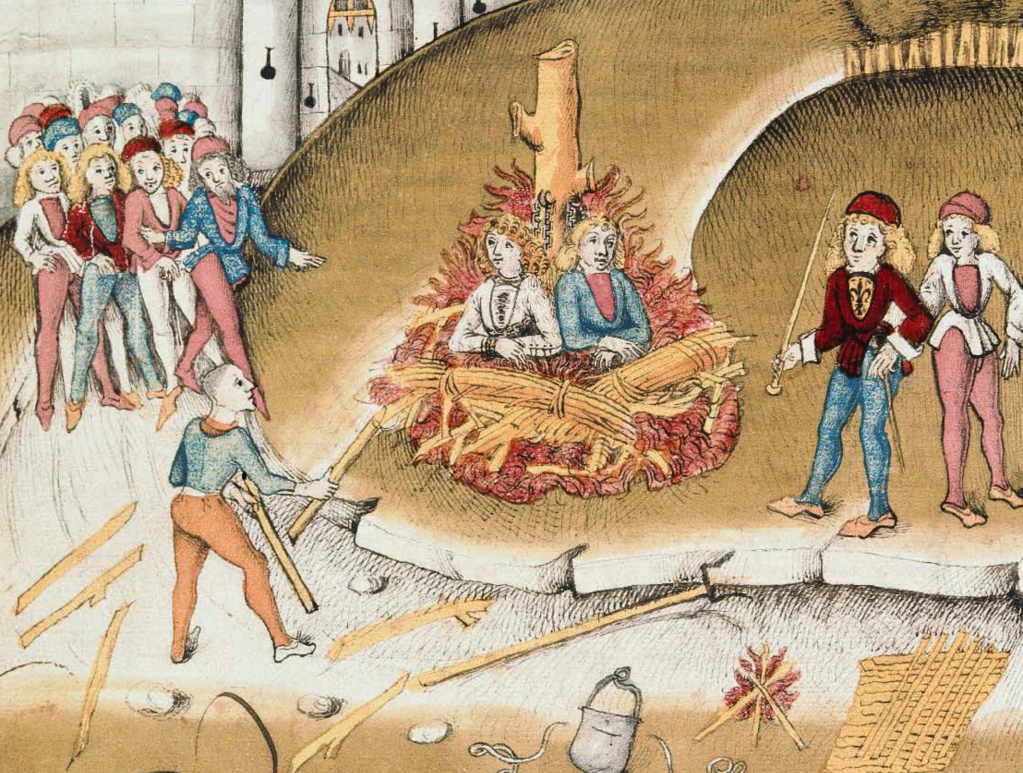
The knight Richard Puller von Hohenburg and his servant, burned before the walls of Zürich for sodomy, 1482. (Source)

The recent controversy in ACNA about the language of homosexuality has been deeply unedifying. It has been aggravated in the last few days by an open, co-signed letter that, while doing the bare minimum, nevertheless was far more affirming than the original pastoral statement to which it replied. In a move I can only describe as scandalous, the principal author’s bishop then stepped in and ordered him to take it down.

I am for the most part uninterested in the internal politics of ACNA. I have friends in that communion, and after all, it is neither my circus nor my monkeys. I am, however, keenly interested in the issue at stake: what kinds of language sexual-minority Christians use, why, and what this says about their broader place within Christianity. Especially as some of these same issues have come up repeatedly in the Catholic context as well. That relevance to my own situation moves me to write, when I might otherwise keep silence.

When the original statement came out last month (no pun intended), a gay Christian friend of mine wrote, “I am starting to think that this tired conversation about sexual identity language is actually *designed* to keep the Church from caring for sexual minorities by addressing its pervasive homophobia.” Much of what follows therefore comes from what I wrote in reply, with a few edits and additions here and there.

It seems to me that this debate about language – the alleged moral valences of words like “homosexual” or “gay,” and whether or not it is appropriate for Christians to self-identify with these words – serves a multipronged function:

(1) It distracts from urgent issues, like sexual minorities being disproportionately subject to homelessness, political oppression, intimidation, healthcare discrimination, targeted murder, and suicide.

(2) It subsequently distracts from the historical and ongoing complicity of heterosexual Christians in these phenomena, and absolves them of any effort to help fix it.

(3) It puts the entire onus of subjectivity-formation on the gay Christian individual and thus places them in a defensive posture which prevents them from making further demands. It does this in three ways:

(4) It deprives them of a language in which to articulate their own subjectivity and needs.

(5) It isolates them by preventing them from using the language by which they can form bonds of solidarity with other sexual minorities.

(6) It further isolates them by cutting them off from the history of other sexual minorities, whatever terms they may have used (sodomites, inverts, homosexuals, fairies, queers, gays, LGBT, etc.).

(7) All of which is to say, the debate mainly functions to control sexual minority Christians by making their own experience more and more illegible to them.

(8) It works very well because it exhausts a lot of emotional energy from LGBTQ+ Christians. This is intrinsic to the debate’s function as a mechanism of control.

(9) It is doubly effective when, as in the ACNA document, it reverts to the most clinical and pathologized language imaginable. “Christians afflicted with” or “who struggle with same-sex attraction” is not only unwieldy, it’s obviously stigmatizing. SSA might as well be leprosy.

(10 This is not to say that gay Christians who feel that the language of “same-sex attraction” or SSA best expresses their experience shouldn’t use it. We should all use the language that best fits our own embodied story. But when straight Christians use it this way, they are robbing them of the freedom to make that decision for themselves.

(11) In the Roman Catholic Church, there is the added rigmarole around vocations. No man with “deep-seated homosexual tendencies” can be ordained…but what does this mean? If you have sex with men (or at least want to) but don’t call yourself gay, do you have these tendencies? What are we to make of the considerable number of gay priests that are already ordained? It hides hypocrisy.

(12) I am reminded, for instance, of what Roy Cohn says in Angels in America.

(13) The most insidious thing about the ACNA statement, though, isn’t even the matter of terminology. It’s the deeper point from which the terminological discussion grew: a claim that homosexuals can become straight again.

(14) If this were coming from an old-school queer theorist or even second-wave feminist who insisted on the radical flexibility of gender and sexuality, I wouldn’t have too much of an issue. But the obvious problem here is the latent moral imperative that moves from is to ought (also the erasure of bisexuals, but that’s a bit of a tangent).

(15) Going from “some people can move between kinds of attraction” to “you must become attracted to the opposite sex,” as this document does implicitly, is an awful lapse into conversion-therapy thinking. And we know how harmful this is, especially to queer youth.

(16) But this pathologization is itself, once again, a mechanism of control. Religions are social bodies that require adherents in order to survive. And like it or not, gays have historically been a major part of the Christian fold – including in Anglicanism!

(17) The reasoning advanced by ACNA is thus, quite precisely, an ideology. It is a logic that helps the oppressed buy into their own oppression. They are hardly unique in this; many in our own Church of Rome offer the same false narrative for the same ends.

(18) I would like to end this thread on a hopeful note, though I have very little hope to speak of. The best I can say is that LGBT Christians need to make their own communities. We need to use the terms that best express our own subjectivity. This is quite apart from the issue of sexual ethics, which does not hinge on what we call ourselves.

(19) Straight Christians, including Catholics, should accept that we are going to use the terms that we choose. It is not up to them. Their time would be better spent helping on the very urgent issues I outlined earlier. And maybe trying to understand what it’s like for (Christian) sexual minorities in the Church and in society at large.

(20) Finally – the best thing to help on the issues of terminology is for sexual-minority Christians, where it is safe to do so, to come out. Even clergy. Articulating your own experience is truly liberating, even as it opens up a new vulnerability. But freedom is worth it. Honesty is worth it. Visibility is worth it. Life is worth it.

On Joy

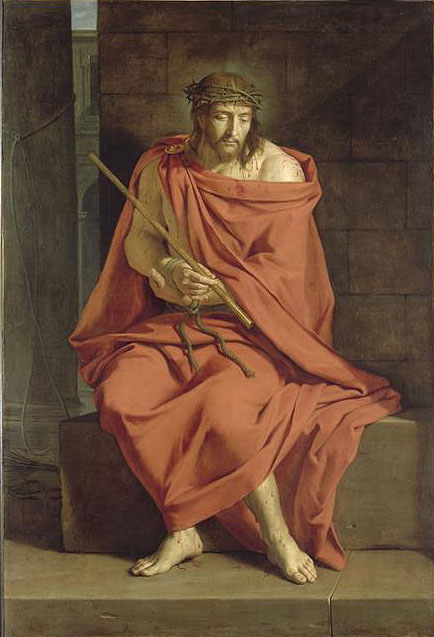
Le Christ aux outrages, Philippe de Champaigne, 17th c. (Source)

“Jesus Christ will be in agony until the end of the world” – Blaise Pascal

We shall not be blamed for not having worked miracles, or for not having been theologians, or not having been rapt in divine visions. But we shall certainly have to give an account to God of why we have not unceasingly mourned.” – St John Climacus

Recently I have had occasion to consider the role of joy in the Christian life. While I don’t believe that any particular emotions as such are intrinsic to Christianity, I sometimes feel that there is in the Church’s culture a kind of low-level idolatry of affective joy that makes it a good in itself and, more poisonously, demonizes those who do not share in it. This rather shallow (and ultimately false) view of joy as relentless and mandatory happiness has at times eclipsed the demands of the Cross, and has little to offer the suffering, the infirm, the distressed, the depressed, the sorrowful, the anxious, and the temperamentally gloomy. Are they to be excluded from heaven if they cannot force a smile? This soft and implicit Pelagianism of the emotions is a greater discouragement to souls than an honest reckoning with the sorrows of life and the terrible demands of the Cross.[1]

So, I thought I would put down a few very brief meditations on true and false joy. I would not wish to speak in absolute and general terms, but rather, out of the fullness of my heart, and all that I – a mere layman – have gleaned from seven years in the faith, the reading of Scripture, and the study of the Church’s spiritual history.

St. Paul tells us that joy is a fruit of the Spirit; he does not promise us that we shall have all those fruits at all times, or that they grow in us for own profit alone.[2] If I may alter the metaphor a bit for illustrative purposes (without in any way denying the truth St. Paul teaches), I would say that joy is the flower, and not the root or the fruit, of the Christian life as such.[3] It is chiefly given to us by God so that we might advance His Kingdom. Like the pleasant blooms of spring, joy is meant to attract souls who do not yet know the grace of God, and thereby to spread the life of the spirit. As soon as we have it, we must give it away. It is like an ember in our hands – giving light and heat, but liable to burn us if we hold on to it. For who are we to keep it, we who are nothing? And so, we should not be surprised if even this true joy is fleeting, and given to us only in rare occasions as a special grace. For the joy of God is not like the joy of the world. The former is rare as gold, and the latter as common as fool’s gold.

And as fool’s gold will not purchase what true gold can buy, so does a false joy fail in this paramount duty of conversion. We should not force ourselves to seem happier than we really are; a certain virtuous attempt at good cheer in the face of sorrow is always welcome, and we generally should not air our griefs too freely. I believe this virtue, built upon a detachment from our worldly disposition, is what the Apostle refers to when he tells us to “Rejoice always.”[4] But let us not delude ourselves into thinking that this human cheer can ever compare with the supernatural joy that comes only from God, and which many just souls have not been granted. To do so approaches dishonesty, both to ourselves and to our neighbor. Let us not pretend that our faith cheers us more than it really does; let us instead recognize that it promises us suffering, and a yoke that, though light, is nevertheless still a yoke.[5] And under that yoke, someone else will lead us where we do not wish to go.[6]

Joy is only true if it comes from, is ordered to, and brings us back to the Cross. The joy that God gives is always stained with the Precious Blood. But even then, we are not entitled even to this joy in our present life; rather, we are given the Cross as our inheritance. For what is the world if not a land of false joys? They come from nothing, they come to nothing; in their essence, they are nothing. Well and truly does the Sage condemn it all as vanity.[7] Well and truly does the Psalmist speak of it as “the valley of the shadow of death.”[8] Well and truly do we address the Mother of God from “this valley of tears.” We can do no other.

This life of the Cross is a gradual annihilation – what the French call anéantissement – a fearsome but salutary tutelage in humility and in the growing recognition of our own nothingness. To live and die on the Cross is to say every day with St. John the Baptist that “He must increase, I must decrease.”[9] Yet how hard this is! We lose sight of the fact that at the end, when we are nothing again, we can grasp the God who is No-Thing, the One who is beyond the traps, illusions, trinkets, clutter, disappointments, and, indeed, the joys of this world. We efface ourselves now so we may one day face Him. We mourn our sins today so we may rejoice in attaining God on the last day.

That is the true joy of the Cross – that, in mounting it, we can see God. But how rare is such a grace in this life! Most of us are caught up into the business of the world. Most of our lives are a long distraction. Most of us will only achieve the vision of God after the sorrows of this life and the pains of purgatory. And so, let us never forget that to be a Christian is to let Christ suffer and die in us, so that one day, we too may rise with Him.[10]


[1] James 4:4.

[2] Galatians 5:22-23.

[3] The root is faith, and the fruits are redemptive suffering and acts of charity.

[4] 1 Thessalonians 5:16.

[5] Matthew 11:28-30.

[6] John 21:18.

[7] Ecclesiastes 1:2.

[8] Psalm 22 (23): 4.

[9] John 3:30.

[10] Galatians 2:20; 2 Corinthians 4:11; 2 Timothy 2:11; Philippians 1:21

A New Book for a Divided Country

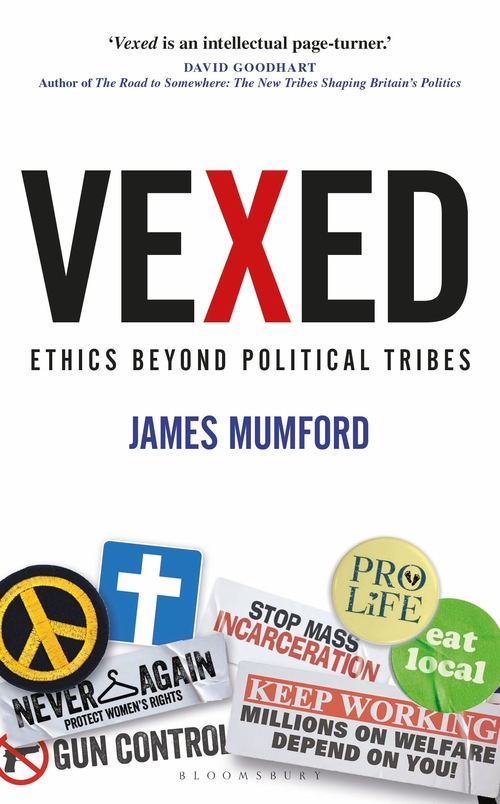
I would like to draw my readers’ attention to a new book that will, I am sure, prove to be one of the more important and provocative publications this year. Dr. James Mumford’s Vexed: Ethics Beyond Political Tribes has just been released today in this country after having been out in the UK for a few months. So far it’s been getting compelling reviews. To quote one reviewer,

Vexed is that kind of book: less interested in hard-and-fast answers than undermining supposedly concrete certainties. That may suggest that Mumford indulges in ethics as a kind of academic sport, but at the heart of what he writes is something much more serious than that. The key argument of his book is that failures of what Mumford calls “moral imagination” do not just sully our political discourse.

John Harris, The Guardian

You can hear Dr. Mumford discuss the book himself here.

For me, this publication means something more. I worked as Dr. Mumford’s research assistant in the early stages of the project, as did my old friend Tatiana Lozano (who has written her own blurb about the book on her website). It was, in fact, my first research job. Coming at the end of my undergraduate career, I look back on that experience as a formative stepping-stone in my own scholarly journey.

I don’t know if I’ll agree with everything in the book, as I haven’t yet read it. But it’s wonderful to see a project to which I contributed – however small that contribution may have been – come to completion. I wish Dr. Mumford all the best, and commend the book to my readers.

Cover of Vexed, by James Mumford. (Source)

Elsewhere: A Review about Magic in Modernity

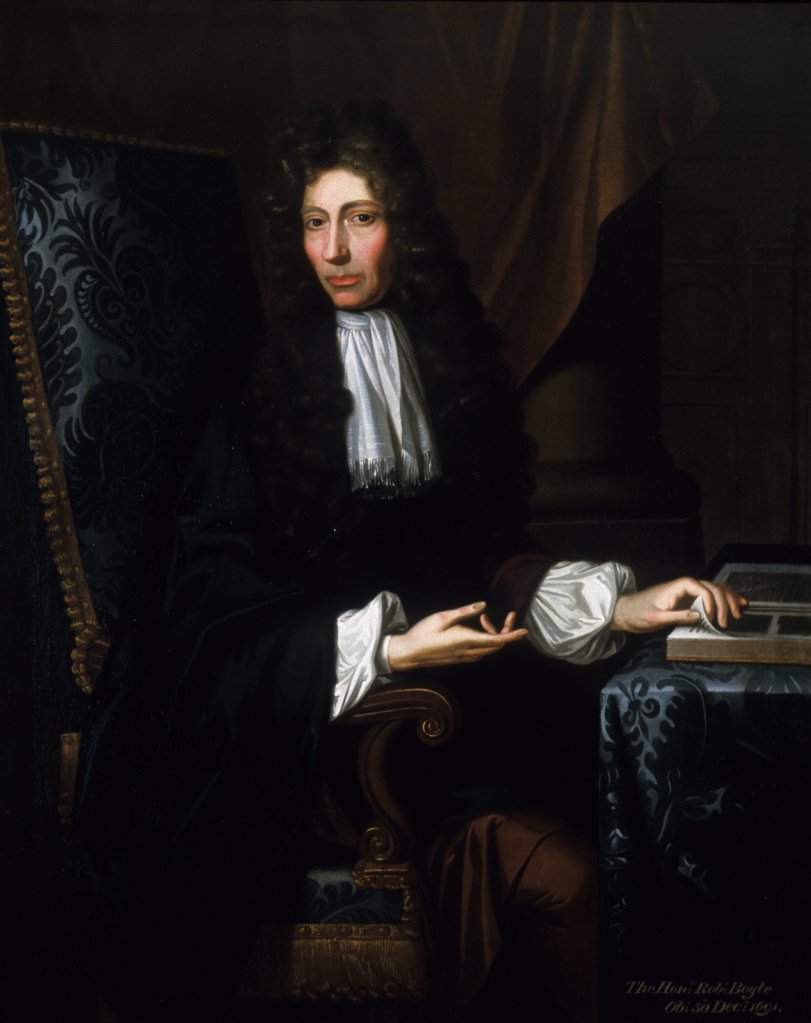
Portrait of Robert Boyle, Father of Modern Chemistry. A scientist distinguished by his open-minded and empirical attitude towards paranormal, supernatural, and magical phenomena. (Source)

I am pleased and proud to announce that I have a book review up at the Genealogies of Modernity Blog. I examine a compelling recent work by historian of science, Michael Hunter. The Decline of Magic: Britain in the Enlightenment (Yale UP, 2020) is well worth your time. I think it provokes really intriguing questions about the process of disenchantment – a transition that Hunter effectively describes as the methodological eclipse of Francis Bacon and Robert Boyle by Isaac Newton. You’ll understand what I mean when you read the review (and the book), so please head on over and give it a read-through!

Thank you to the GoM Blog for hosting my writing, and especially to Mr. Terence Sweeney for kindly asking me to contribute. It was an honor and a pleasure to write for a platform with such intriguing content.

Elsewhere: Newman Against the Nazis

Werner und Sophie Scholl

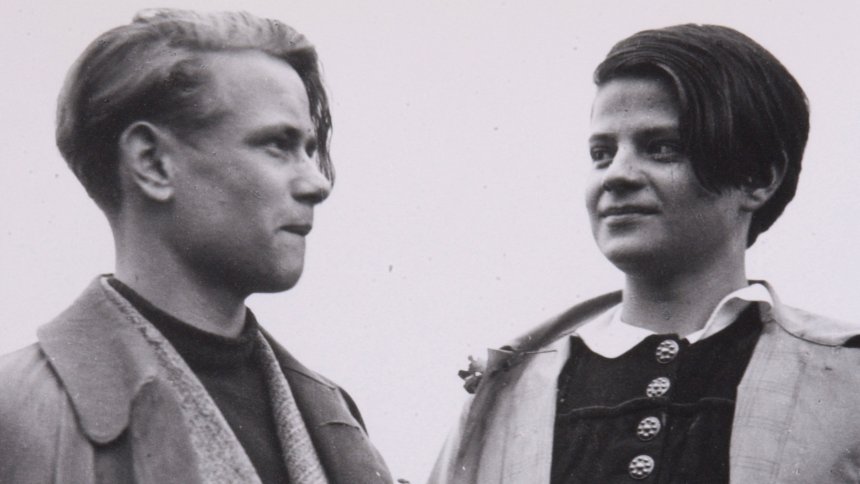
White Rose members Hans and Sophie Scholl. (Source)

A big thanks to Fr. David Abernethy of the Pittsburgh Oratory for bringing to my attention an article in the Catholic Herald about the influence of Cardinal Newman’s thought on die Weiße Rose. Apparently the Doctor of Conscience was an important impetus for their resistance to Nazi oppression. From the article:

The man who brought Newman’s writings to the attention of the Munich students was the philosopher and cultural historian Theodor Haecker. Haecker had become a Catholic after translating Newman’s Grammar of Assent in 1921, and for the rest of his life Newman was his guiding star. He translated seven of Newman’s works, and on several occasions read excerpts from them at the illegal secret meetings Hans Scholl convened for his friends. Strange though it may seem, the insights of the Oxford academic were ideally suited to help these students make sense of the catastrophe they were living through.

Haecker’s influence is evident already in the first three White Rose leaflets, but his becomes the dominant voice in the fourth: this leaflet, written the day after Haecker had read the students some powerful Newman sermons, finishes with the words: “We will not be silent. We are your bad conscience. The White Rose will not leave you in peace! Please read and distribute!”

Read the whole thing. And pray that Bl. John Henry Newman might, by his intercession, assist us in the struggle against every tyranny.

Fr. James Martin and the Perils of Imaginative Religious Art

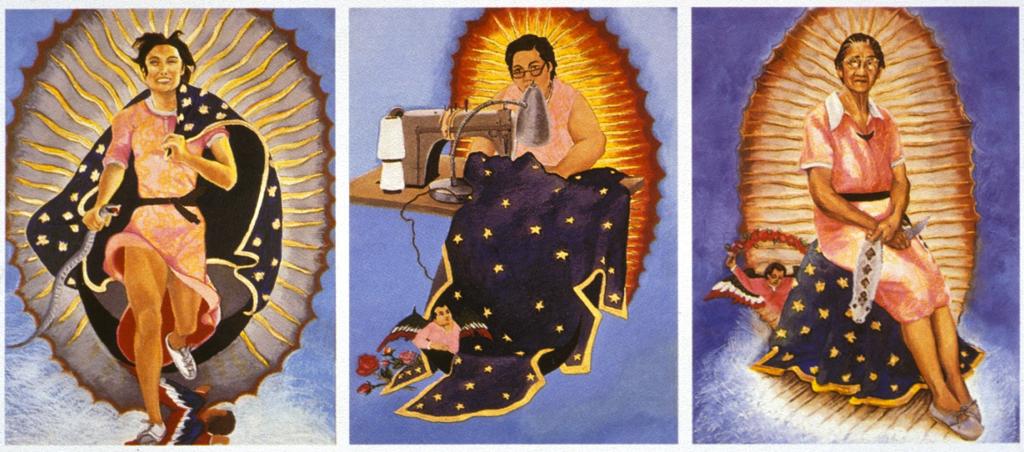
GuadalupeSeries.jpg

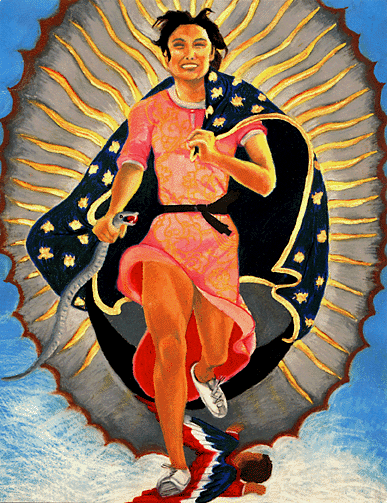
The Guadalupe Series, by Yolanda Lopez. 1978. (Source)

Recently, Fr. James Martin SJ posted these three images on his Facebook page with the following caption: “Mira! Look at these beautiful images of Our Lady of Guadalupe, reimagined as contemporary women. Remember that Our Lady lived a real life in Nazareth.” He then included a link to a website about the artist, Yolanda Lopez.

When some of his followers responded negatively, Fr. Martin wrote the following comment, quoted in full:

Some of the comments on this post are truly ridiculous. Yes, there is one beautiful and holy image, given by Our Lady, to Juan Diego at Tepeyac (which I posted earlier today). But reimagining Our Lady has been done since the earliest days of the church. Most of the images we are used to are images in which she was imagined as a woman of the Middle Ages and the Renaissance, in which the Blessed Mother is dressed in contemporary dress (not as a woman in first-century Galilee would have been dressed). The artist, as I see it, was trying to remind us that Mary (Our Lady) was a real woman. And that the artist sees her in those around her, especially in Mexican women. People need really need to calm down, stop picking apart her art, and stop using words like heresy and blasphemy. Of course you don’t have to like it (art is very subjective of course) but you also don’t have to hurl accusations. I’m as devoted to Our Lady as you are, and if I didn’t like something I’d just nod and move on. Not everything has to end up as a crusade.

There are all kinds of problems with the Jesuit’s post, from his Mariology to his aesthetic philosophy. And while he may have been annoyed that his followers dared to turn his humble offering into the occasion of “a crusade,” I’m afraid that he really leaves us no choice. His post is a scandal for a number of reasons.

It bears mentioning that Fr. Martin is right to suggest that our images of Mary are always shaped in part by culture. But there is a difference between the unconscious ethnocentrism of the Medieval imagination and deliberate efforts to portray Mary or Jesus as something other than what they were. If an artist is (a) going to go down that path, and (b) do so as a well-formed Catholic, then there are a few principles that he should probably stick to along the way.

First, all changes to the subject’s probable historic appearance or culture should serve to illustrate the subject’s deeper identity as well as to magnify his or her glory.

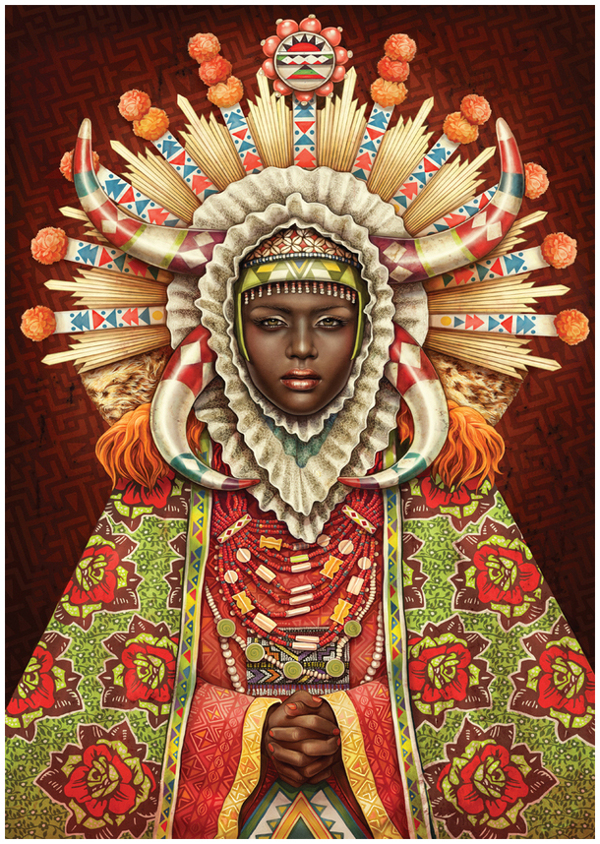
AfricanMadonna.jpg

African Madonna, Studio Muti, South Africa. c. 2013. (Source)

A good example of this kind of art is African Madonna, by Studio Muti. This Marian image works well both because it is constructed in dialogue with the tradition of Christian art – specifically, processional statues of the Virgin – and it powerfully captures the dignity of the sacred subject. We could probably guess who this is, even without some of the ordinary symbols of the Mother of God to aid us.

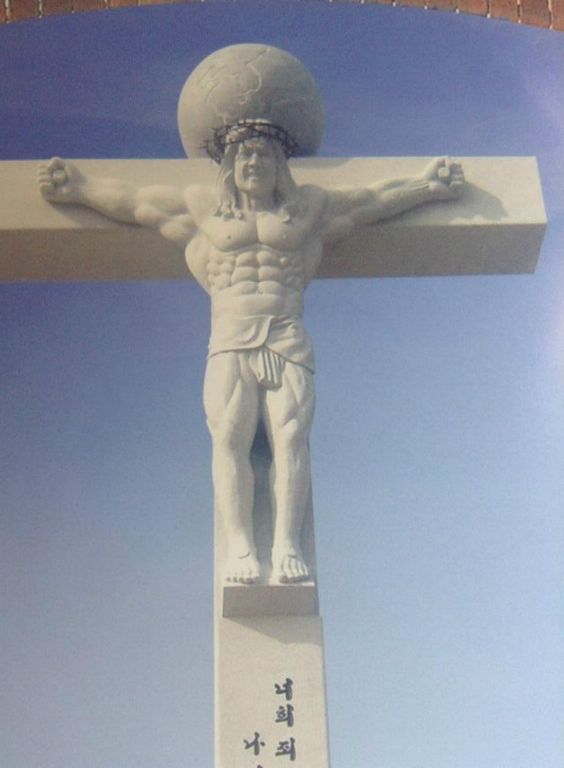
Second, kitsch should be avoided. If the work is devotional or liturgical in any sense (that is, destined for a worship space or context of veneration), then gimmicks become flatly inappropriate. Need we turn to the infamous “Korean Jesus” of 21 Jump Street?

KoreanJesus

Just….why? (Source)

Finally, these kinds of renditions should ordinarily come from the people themselves. Unfortunately, much of it has been produced by well-meaning white liberals like Br. Robert Lentz OFM or Fr. John Giuliani.

RobertLentzNavahoMadonna

Navaho Madonna, Br. Robert Lentz OFM. (Source)

When consciously non-white or non-Western depictions of Christ and the Virgin are created by white and Western artists, the danger of cultural appropriation is at its highest. See Lentz’s canned reduction of Navajo culture in his artist’s statement for the above “icon.” See also Fr. Giuliani’s statement that he “intends that his work celebrate the soul of the Native American as the original spiritual presence on this continent, thus rendering his images with another dimension of the Christian Faith.” One detects in these images a dollop of self-important White Savior mentality beneath the breathless exoticism. It’s all very patronizing.

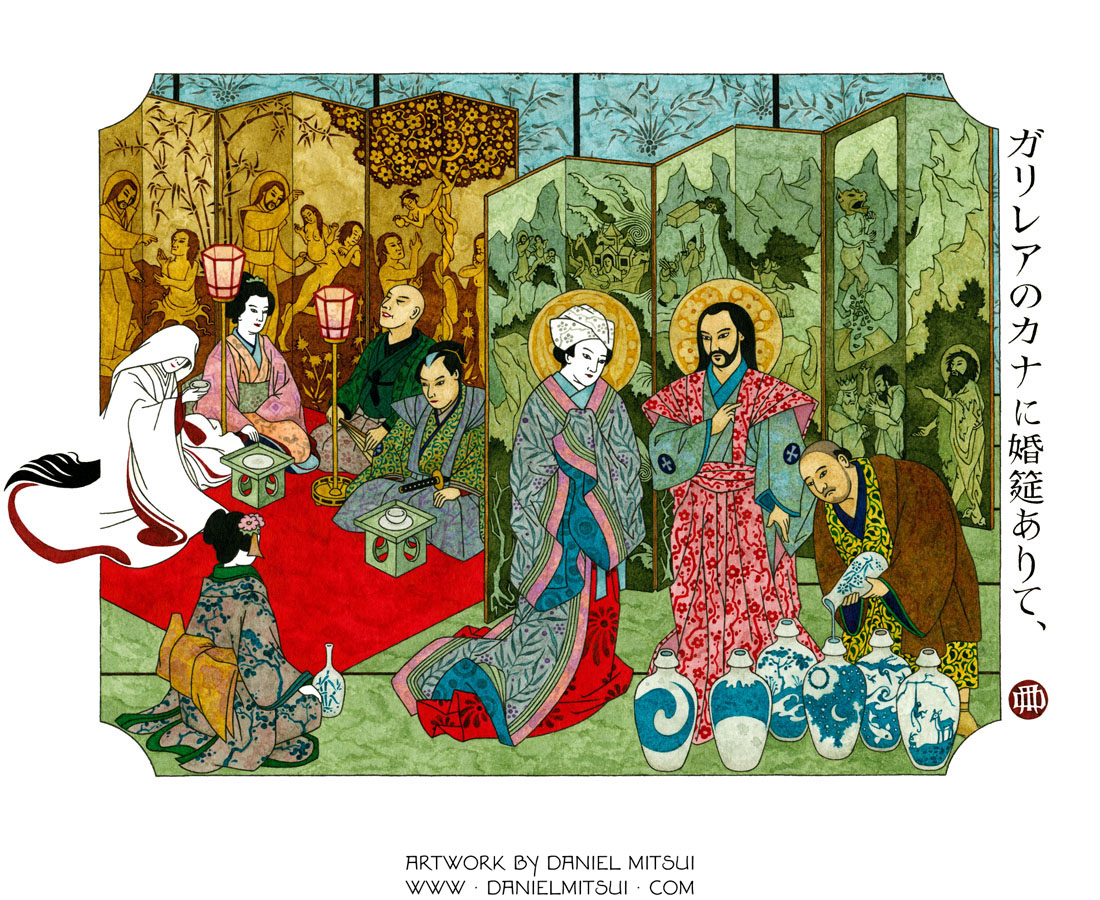
A much better example comes from Daniel Mitsui, who draws upon the artistic traditions of his own Japanese heritage to lovingly craft intricate renditions of Jesus, Mary, and Biblical scenes in a distinctively Asian setting.

CanaMitsui.jpg

Wedding at Cana, Daniel Mitsui. (Source)

But all of this theorizing applies only to art which depicts sacred subjects. The art that Fr. Martin posted doesn’t do that. His interpretation is simply wrong. As some of the commenters noted, the very link he posted with the three images shows how off his view is. I will quote the source in full:

Yolanda Lopez has received the majority of her fame through the creation of her Guadalupe series. This groundbreaking series has transformed the way in which the iconic image of the Virgin of Guadalupe is viewed into a much more personal and political ideal. Lopez claims that in creating the Portrait of the Artist as the Virgin of Guadalupe she questioned this common icon of the ideal woman in the Chicano culture. The goal of Lopez was to demonstrate and consider the new types of role models Chicanas need and not simply adopt anything just because it is Mexican. Yolanda stated that by doing these portraits of her mother, grandmother, and herself she wanted to draw attention and pay homage to working class women, old women, middle-aged over weight women, young, and self assertive women. By naming each drawing individually Lopez emphasizes the uniqueness of each woman and accentuates the society that allows women of color to go unnoticed.

In the Portrait of the Artist as the Virgin of Guadalupe, Yolanda illustrates the strength and the power by the muscular legs and the long strides as well as the leap she has taking from the crescent moon. Through this long leap Lopez demonstrates that Chicanas are free from the oppressive social stigmas that limit women’s form of expression. In Margaret F. Stewart: Our Lady of Guadalupe, Lopez depicts her mother at work but proposes a new type of beauty. This new beauty is not the typical beauty that is depicted by others as the slender body type, white, young, and glamorous but as the older an fuller woman hard at work. Lastly in Guadalupe: Victoria F. Franco, Lopez illustrates her grandmother as a sad but strong old woman. In each portrait Lopez incorporates a serpent but the serpent in her grandmother’s portrait has been skinned and the grandmother holds the serpent skin in her left hand and the knife that was used in on her right hand. Lopez states “ She is holding the knife herself, because she’s no longer struggling with life and sexuality. She has her own power.” According to Dr. Davalos (author of Yolanda Lopez) the first two portraits represent lived realities of Chicana women and the last portrait address death.

(emphases in bold mine)

The Guadalupe paintings are not, as Fr. Martin insists, “beautiful images of Our Lady of Guadalupe, reimagined as contemporary women.” They are just portraits of the artist, her mother, and her grandmother incorporating the symbolism of Our Lady of Guadalupe. Lopez takes great pains to emphasize that, in her paintings, she is interrogating the received iconography of Guadalupe. The focus is on the poor Chicana as an icon in her own right, an icon that can surpass the role of Our Lady as a role model for contemporary women. This treatment of Guadalupe as an image of primarily moral and social significance is at odds with its presentation and reception by the Faithful. it is basically heretical. However, it’s hardly an uncommon practice today (though it must have been truly radical, if not exactly novel, in 1978). Our Lady of Guadalupe has become a symbolic nexus of all manner of discourses: Catholic, feminist, leftist, Immigrants’ Rights, Latinx, etc. But it doesn’t follow that every image of Guadalupe that engages those questions is properly understood as a “reimagining” of Our Lady.

Simply reading the source statement would have made all of this meaning clear. Fr. Martin must have either (a) not read the link he posted, (b) egregiously misunderstood it, or (c) willfully ignored it. In other words, his post was either lazy, imbecilic, or intellectually dishonest. Regardless, it was irresponsible. If he had bothered to look up some of Lopez’s other work, he might have avoided his grotesque mistake.

PortraitGuadalupe

Portrait of the Artist as the Virgin of Guadalupe, Yolanda Lopez, 1978. (Source)

But even assuming that we take him at his word and accept that he genuinely thought these were perfectly sound “reimaginings” of the Blessed Virgin, what kind of sensibility does that judgment betray? How does Fr. James Martin think Our Lady can and should be “imagined?” It seems that the overt eroticism of Portrait of the Artist as the Virgin of Guadalupe didn’t faze him. Nor did “Mary” trampling on the angel. Nor did her highly unusual connection with the serpent. It is incredible that a priest, particularly one as culturally sophisticated as Fr. Martin, would miss these blasphemous irregularities in an image of the Mother of God. At the very least, his post fails to inspire much confidence in his sense of the sacred.

Fr. Martin’s talk of “imagination” is revealing. Imagination is one of the central components of Ignatian spirituality, as Fr. Martin himself tells us in The Jesuit Guide to (Almost) Everything (2012). He writes of Ignatian contemplation:

Using my imagination wasn’t so much making things up, as it was trusting that my imagination could help to lead me to the one who created it: God. That didn’t mean that everything I imagined during prayer was coming from God. But it did mean that from time to time God could use my imagination as one way of communicating with me. (The Jesuit Guide 146)

St_Ignatius_of_Loyola_(1491-1556)_Founder_of_the_Jesuits

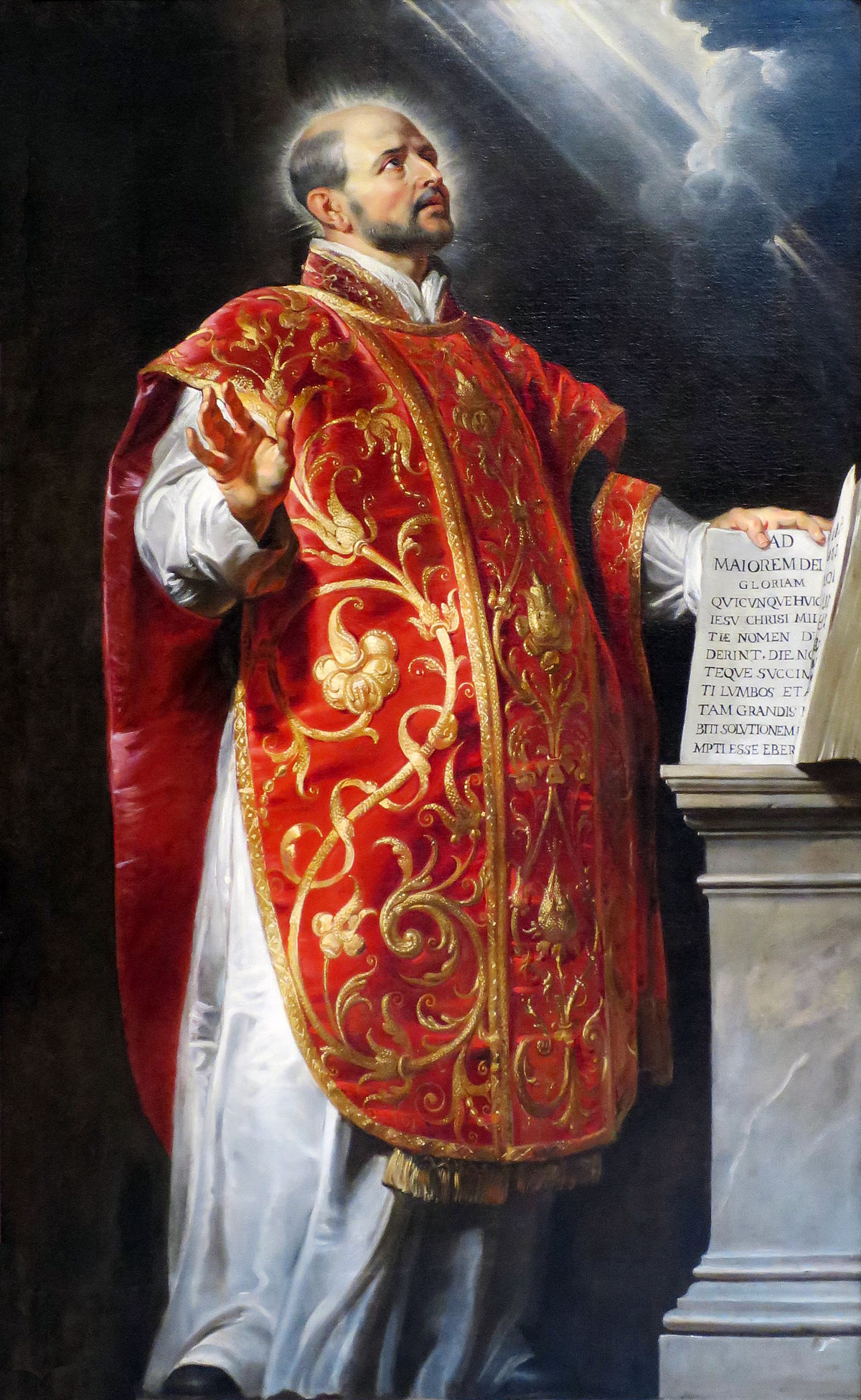
St. Ignatius of Loyola, Peter Paul Rubens. 17th century. (Source)

He then goes on to describe the practical method of Ignatian prayer.

There is much to recommend this spirituality, not least of which is the glorious roll call of Jesuit saints echoing down the centuries. But a danger lies hidden in Ignatian prayer. Grounded as it is upon the working of the individual psyche, it lacks the objectivity of, say, a liturgically-grounded spirituality. Without proper adherence to the mind of the Church, those engaged in Ignatian prayer can recede into a fuzzy personal relativism. In Fr. Martin’s case, it seems to have predisposed him to an overemphasis on the rights of imagination in the production of religious art. Note his use of vision discourse: “The artist, as I see it, was trying to remind us that Mary (Our Lady) was a real woman. And that the artist sees her in those around her, especially in Mexican women” (emphasis mine). Note that he never bothers to investigate the objective meaning encoded in the art itself – its formal characteristics, its use of symbols, its colors and patterns, etc.

Worse, his words imply a quietly Gnostic dissolution of both the meaningful category of physicality as well as the concrete propositions of dogma. Where does that leave us? It doesn’t matter if the Virgin Mary was a Jewish woman of the first century, nor if she was the Immaculately Conceived Mother of God. The imagination and spiritual vision of the artist is primary. Fr. Martin’s point, implicit at first and only later drawn out in reaction to his critics, is that Catholics should be affirming of those “reimaginings.”

But this is an untenable position in the face of actual art. The imagination is inevitably bound up in any artistic process, and it has often produced strange and wonderful innovations on older traditions (see, inter alia, the work of Giovanni Gasparro). But that fact does not isolate the pieces from serious criticism. We must judge; artistic discrimination is the very soul of good taste. And we must be even more critical for art that treats of the spiritual life, even at the cursory level of motifs. It aspires higher. As such, more is at stake. Fr. Martin’s banal pablum is a betrayal of the art he presents. It demands to be taken more seriously.

When the Sacred is Strange: The Art of Giovanni Gasparro

Screen Shot 2017-11-11 at 11.25.56 PM.png

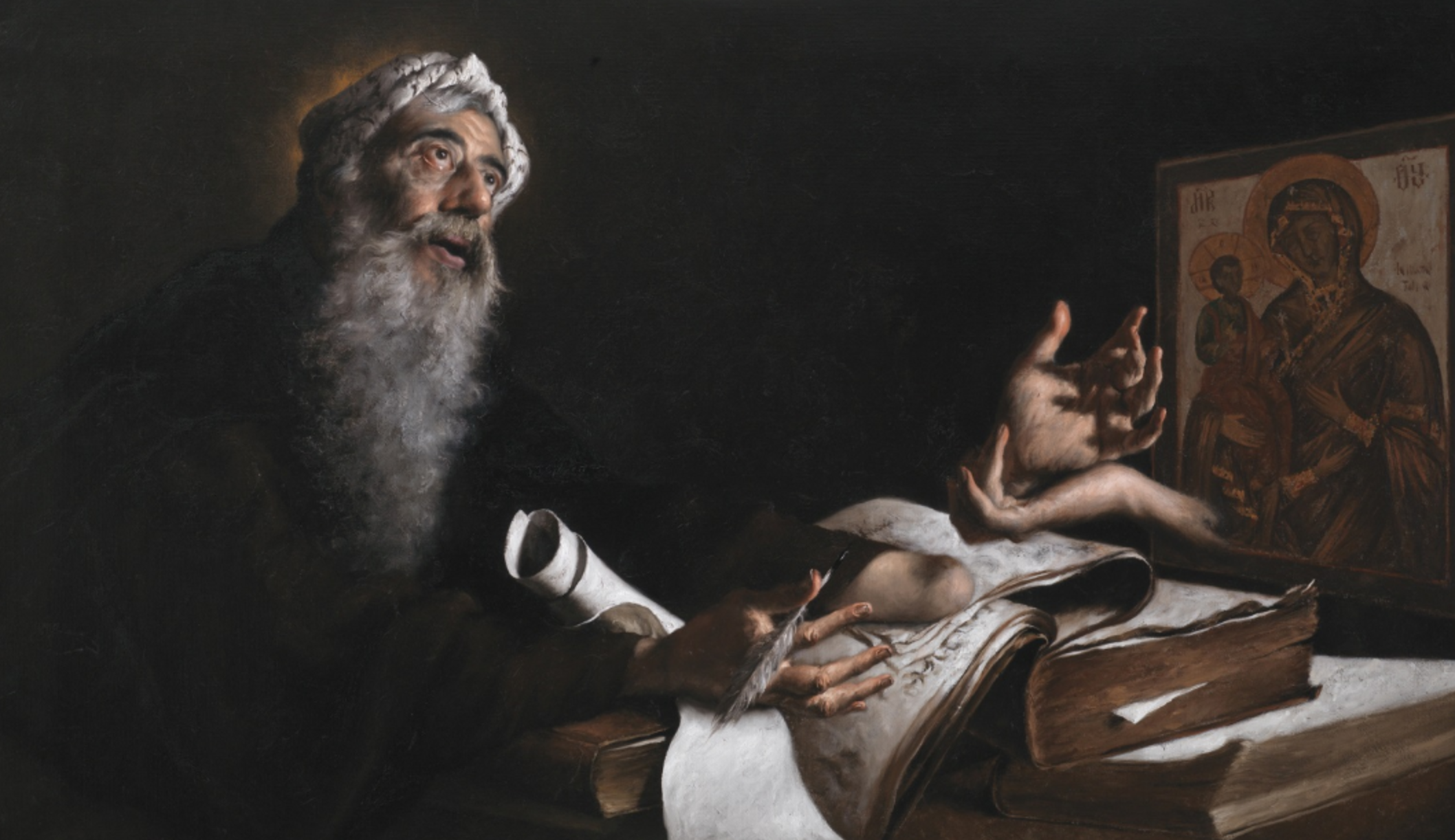
St. John Damascene and the St. Virgin Tricherusa, Giovanni Gasparro. Here we see Gasparro depicting a legend from the Saint’s life that is particularly appropriate for an artist. The work also represents the unity of Western and Eastern visual traditions in the transcendent Divinity. (Source)

UPDATE 4/2/20: It has recently come to my attention that Giovanni Gasparro, the artist profiled here, whose work I have admired at this blog on several occasions, has just produced a painting that reproduces the vicious anti-Semitic trope of Jewish ritual murder. This lie has historically led to violence against the Jews and, to put it lightly, is a subject unbecoming of a Christian painter. I condemn it in the strongest possible terms. While I used to look to Mr. Gasparro as a prime example of what Christian art could be in our postmodern era, his embrace of imagery more fit for the pages of Der Stürmer means that I can no longer endorse him. Nevertheless, I have decided to keep this essay up online because it enunciates certain principles about art that I think remain important. I hope that my readers will understand that they reflect an assessment of Mr. Gasparro’s value as religious art that I no longer hold. 

Recently there came into my newsfeed an article by Hilary White Obl.S.B. of What’s Up with Francischurch?. The piece was an extended criticism of Giovanni Gasparro, an Italian artist whose paintings inspired a few of the meditations I have written before on this blog. As someone who has long admired Mr. Gasparro’s Neo-Baroque art, I was happy to see that Rorate Caeli recently profiled one of his pieces. Ms. White was, it seems, partially responding to this attention. However, the more I read of her article, the more I found myself in stark disagreement with her analysis and broader philosophy.

While I have in the past appreciated her reporting as well as the monastic spirit she brings to her work, I confess that I was surprised at the poor quality of her post. I would not ordinarily seek out controversy, but as it seems that Ms. White’s post is making the rounds of the Tradisphere, I felt it imperative to offer a counter perspective.

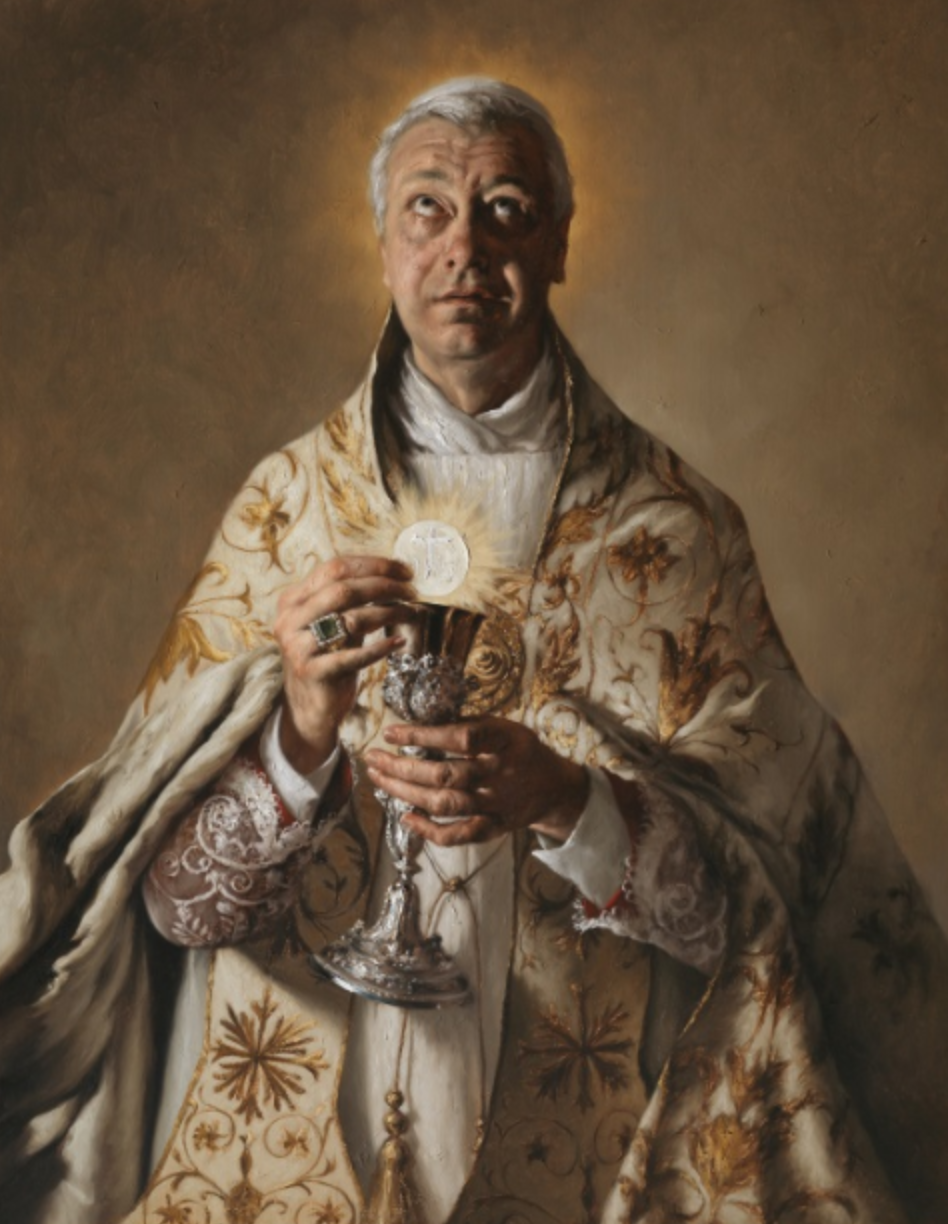
There are many problems with the article. It is a textbook example of how not to write about art and theology, failing comprehensively at description, prescription, and imagination. She focuses too heavily on one work, Gasparro’s St. Pius X Pontifex Maximus. When she looks at other examples of his art, her analysis – if that is the right word for her summary denunciations – always remains far too cursory to do justice to such a talented artist. And while she notes that Gasparro is a master draughtsman, she follows up this comment with the presumptive assertion that Gasparro “is someone who still approaches sacred subjects with a distinctly modernist mindset.”
Screen Shot 2017-11-11 at 7.07.49 PM

St. Pius X Pontifex Maximus, Giovanni Gasparro. (Source)

There are overarching philosophical problems with Ms. White’s argument. But I’d prefer to begin with her shoddy treatment of the material itself.

To start with a small, but, I think, a representative example; Ms. White claims that in Gasparro’s portrait of Pope St. Pius X, the light falls on the Pope’s face in a sinister way. She writes,

But the painting of Pius X is underlit, a type of lighting that we associate with evil. If you see horror movies, the light is often placed this way on a face to give it a frightening, even demonic effect. It’s what springs to mind: where does a light come from if it’s up from below? Still, is hell’s light this white, electric glare?

This effect, illuminating the facial structure from an odd and unnatural angle – light doesn’t usually come from the ground up, still less heavenly light – the underside of the brow ridge lit up, giving the eye sockets a sickly, sunken appearance, etc… None of that is going to be found in genuine devotional sacred art.

An interesting idea, but one that misses the mark.

For one thing, the Pope is not underlit. It would be more accurate to say that he’s side-lit. There is a striking similarity in the way the light falls in Gasparro’s piece and the photograph of St. Pius to which Ms. White compares it. Nor is side-lighting unusual in Catholic art. Zubarán’s famous St. Francis in Meditation (1635-39) uses almost exactly the same angle for a much more sinister effect.

Screen Shot 2017-11-11 at 9.57.24 PM.png

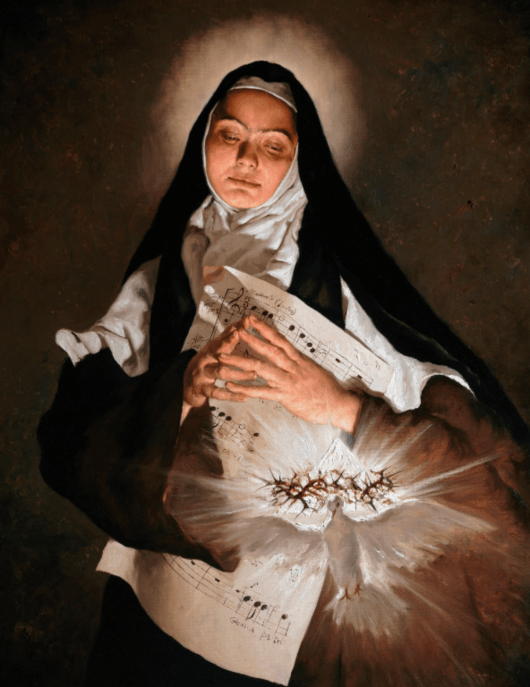
St. Elizabeth of the Trinity, Giovanni Gasparro. In which a saint is underlit, and with good reason. (Source)

Her rather contrived interpretation requires one of two presuppositions: first, that the symbolic lexicon of sacred, or, indeed, Western art is so narrow as to entail only a very limited range of connotations in the use of light, and secondly, that Gasparro’s work is intrinsically profane, deceptive, or downright evil. Neither of these assumptions is fair to the the artwork. They obscure its meaning rather than illuminate it.

But this point is relatively minor compared to some of Ms. White’s other egregious analysis. She dismisses Gasparro’s oeuvre as “surrealist, not sacred art,” with particular attention to his common motif of multiplied hands. She takes exception to the way he depicts faces, as well. Once again, we can see this tendency on display in her take on the Pius X portrait:

Giuseppe Sarto – even in death – had a very “beatific” face, handsome and always with a very assured and calm expression. I can’t imagine him ever making a face like the one in the painting. In fact, it looks more like what you’d get if you cloned Pius X and added a few drops of Nigel Farage.

She goes on to suggest that the “lumps and bumps” on the face of Gasparro’s Pius X are unsound, and that his expression inappropriately reflects “apprehension, not adoration.”

I’ll admit, the likeness is imperfect. She’s not totally off to note the resemblance with Nigel Farage, an unfortunate quality of the painting. Nevertheless, these indignant statements reflect more on Ms. White’s failure of imagination than they do Mr. Gasparro’s art. Moreover, mightn’t the Pope’s face also convey a whole range of emotions? Instead of apprehension, couldn’t the Pope’s expression show humble supplication? Or simply the holy Fear of God that priests ought to hold in their hearts as they offer the Most Holy Sacrifice of the Mass? And might not Pope Sarto have made much the same face at the altar as he spoke the sacred and secret words to the Almighty? Is she really incapable of imagining him “ever making a face like the one in the painting?” Sure it’s not that hard.

Ms. White continues in this vein at some length.

The “light” from the Eucharist isn’t actually light. It illuminates nothing, there is no reflection of it on the face or hands or vestments. The halo is equally dead as a light source, since it falls on nothing. The only light on the figure is from this lower left white source – like a stage light. The non-light from the Eucharist could be a signal; is he saying, “This is NOT the light of the world”?

One gets the impression that the message of the painting is that Eucharistic theology is deception; there is no light from the Host, the celebrant does not believe; his face says “this is all theatre & flummery”

In fact, the more you look at it, the more the feeling grows that this is actually a parody of sacred art. As a friend of mine commented, “His face in no way looks beatific.” There’s something in this hyperrealism, all the lumpiness and the harsh white lighting, that doesn’t say heavenly to me, but psychotic. They seem like subtle corruptions of reality.

What an extraordinary concatenation of assertions.

A few questions come to mind immediately. First, why must the Eucharist necessarily illumine anything? There are, of course, discernible rays of light emanating from it, and any ordinary viewer who sees the painting would probably understand what is meant spiritually. But why should that light be seen to rest on anything in particular, when it’s already an unearthly light to begin with? Secondly, why do halos need to be light sources at all? David Clayton has argued at New Liturgical Movement that:

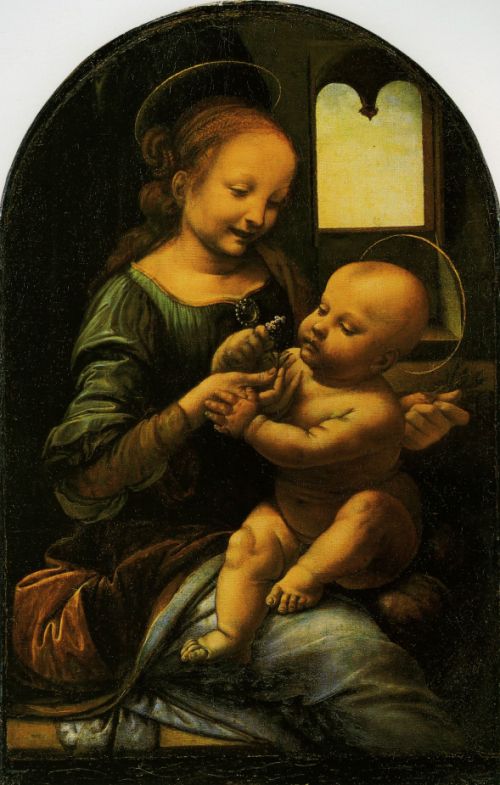
…the art of the High Renaissance and Baroque is aiming to portray historical man (and not as with the icon eschatological man united with God in heaven), what the artists are doing might in fact be consistent with this. One might propose that because the aura of uncreated light, the nimbus, would not be as visible (to the same degree at any rate) in fallen man, even if that man is a saint. So it would seem that the artist might choose not to portray a halo very faintly, as a slight glow, or even not at all.
Madonna_Benois

The Madonna Benois, Leonard da Vinci. One of the paintings to which Clayton draws our attention – note that the halos of both are just golden circles, not lights. (Source).

Clayton’s division between iconography and art is an important, to which we will return, in a certain sense, later. For now, I’ll merely note two facts: a) it is extraordinarily commonplace in Western art to find halos that don’t function as any kind of light source, and b) the halo in Gasparro’s painting of the Pope is a diffuse but definite illumination. I can’t help but feel I am looking at an altogether different image than Ms. White, based on how badly she has described it. Instead of attempting to determine what the artist is actually communicating with what he has shown, Ms. White has given us a testimony of her own reactions.

Where she does attend to the painting as such, she uses the overly suspicious hermeneutic of a conspiracy theorist. The least probable and most malignant of interpretations come to the fore. Instead of merely asserting, as she is free to do, that Gasparro has painted a bad bit of sacred art, she instead goes so far as to accuse the artist of parodying the sacred.

There may be something grotesque, kitschy, or even campy about Gasparro’s oeuvre. But the grotesque, kitsch, and camp are three typical Catholic idioms. Look at the little prints of the Sacred and Immaculate Hearts surrounded by roses of all colors, adored by angels in little white gowns. Look at the gargoyles that grow like frightful stone pimples from the corners of our Cathedral spires. Look at the contorted muscles and thorn-choked skin of the Isenheim Altarpiece. Look at the Rococo churches that dot the landscape of the old Hapsburg Lands. Look at the Spanish processions of Holy Week, with all those peaked hoods and gilt statues in the streets. Look for the buskins and buckles of the pre-conciliar clerics. Look at the huge folds of watered silk enshrouding cardinals and archbishops and all manner of monsignori in that more confident age of the Church’s triumph. Look indeed at the splendid choir dress of the Institute of Christ the King, Sovereign Priest in our day! Look at Cardinal Burke in his glorious cappa magna (incidentally, Gasparro has done a charming portrait of him, too).

There is something delightfully other, delightfully weird, delightfully over-the-top about our religion. And surely, all of this is meet and right. The priest is other. The Church is other, and should appear mad in a world gone mad. Flannery O’Connor (probably) said, “You shall know the truth, and the truth shall make you odd.” Whatever its actual provenance, I take this saying as a true maxim of Catholic life in the modern world. I don’t mind if our art reflects that tendency for the strange, even if it disturbs us a little. I would be more suspicious if it didn’t.

We are all of us living as strangers, both to the world and to heaven. Gasparro’s art confronts us with this quality of strangeness, throws it back in our face – and startles us. Good. The Gospel is a very startling tale indeed.
Screen Shot 2017-11-11 at 10.19.19 PM

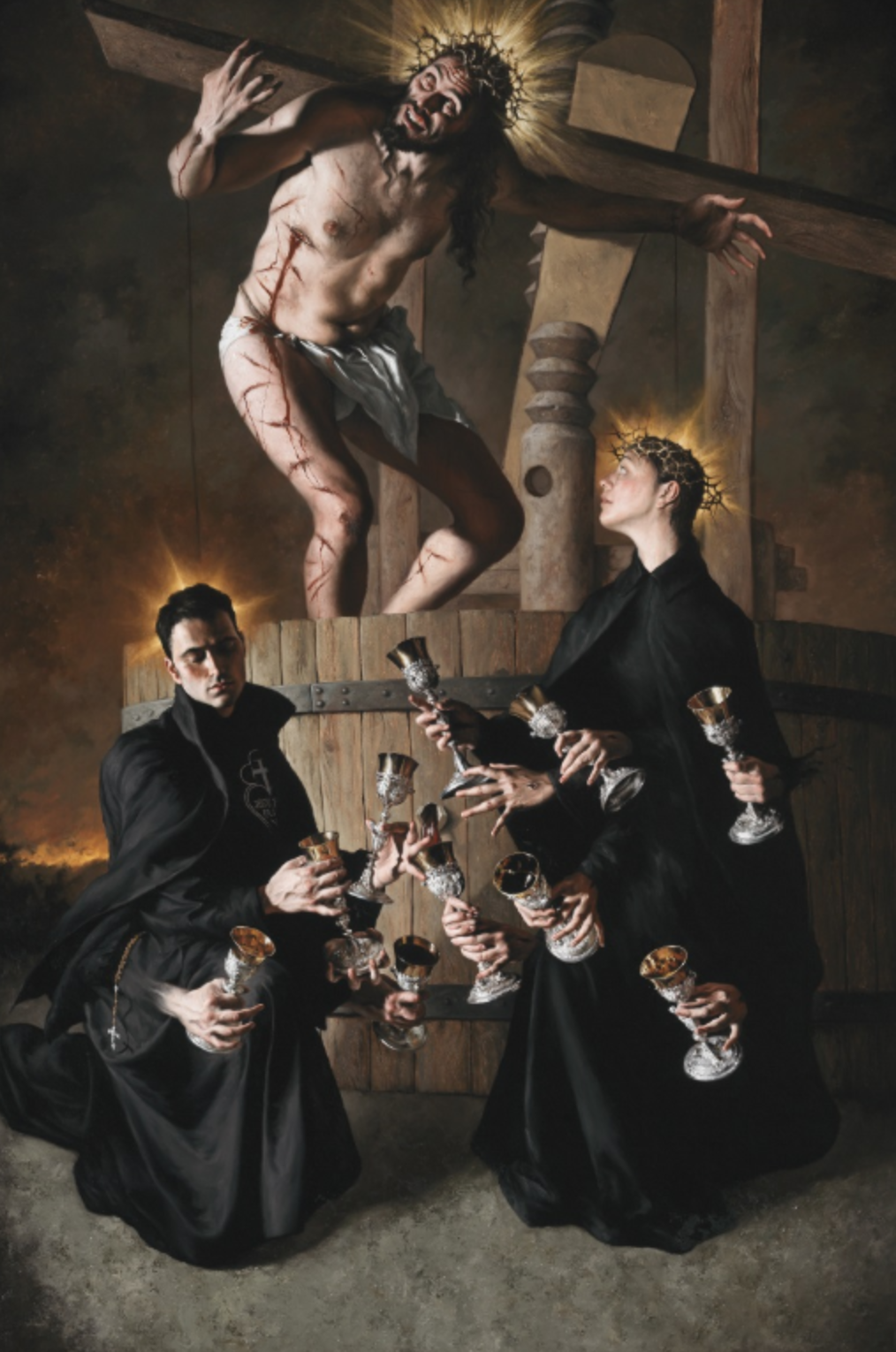
Torculus Christi. Mystic press with St. Gabriele dell’Addolorata and St. Gemma Galgani, Giovanni Gasparro. One of his more overtly weird pieces, but one that is deeply rooted in Catholic mystical and artistic tradition. (Source)

Moving on to a few of Ms. White’s other statements, we come to her distinction between surrealist and sacred art. I happen to be working on a piece right now that will argue that surrealism is an artistic movement that, purged of its original anticlerical animus, can open up plenty of new avenues for a specifically Catholic spiritual art. Indeed, there is already quite a corpus of work that we might reasonably call Catholic surrealism, and I hope to incorporate it into that argument. In the meantime, I refute her argument thus.

Ms. White also takes exception with Gasparro’s very common use of multiplied hands in his paintings. She writes in one of her more patronizing captions,

He seems to be really big into this creepy thing with the multiple floating hands. This is what I would call “schtick” and it is common among highly trained younger artists who think that having a schtick will get them brand-recognition.

This wholesale dismissal is maybe the worst part of the essay. Once again, it evinces a refusal to engage with what Mr. Gasparro has put on the canvas for our consideration, summarizing it tidily in order to condemn it tout court.

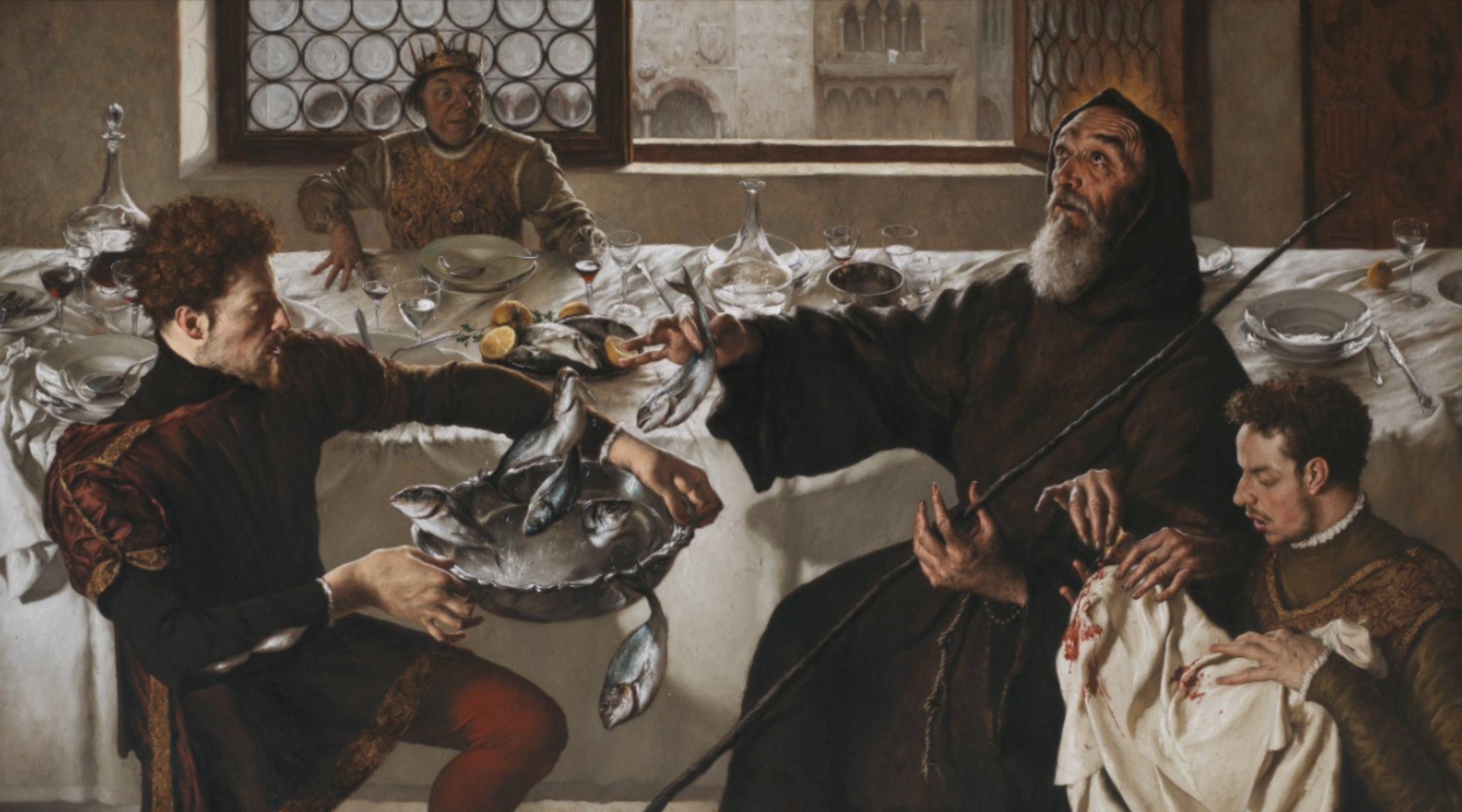
Gasparro’s multiplication of hands – or, in some cases, other body parts – serves two functions in his art. First, it can express the passing of time. In The Miracles of St. Francis of Paola (2015), the doubled set of hands represent discreet acts. Secondly, it can express numerous levels of spiritual meaning that otherwise might be missed through a more conventional image. Manipulating gesture opens up the image. This is particularly true in Gasparro’s Speculum Iustitiate (2014), St. Nicholas of Bari (2016), and his deeply moving portrait of Pius VII, Quum memoranda (Servant of God, Pope Pius VII Chiaramonti) (2014).

Screen Shot 2017-11-11 at 10.28.22 PM.png

The Miracles of St. Francis of Paola, Giovanni Gasparro. (Source)

The doubling invites the viewer to consider each act or spiritual meaning in turn and to ponder how the subject may be acting in each case. The multiplication of hands invites us into a secondary, meditative dimension of the work. As I mentioned at the beginning of this essay, I have found his work a very fruitful spur to precisely this kind of spiritual meditation.

Screen Shot 2017-11-11 at 10.35.58 PM.png

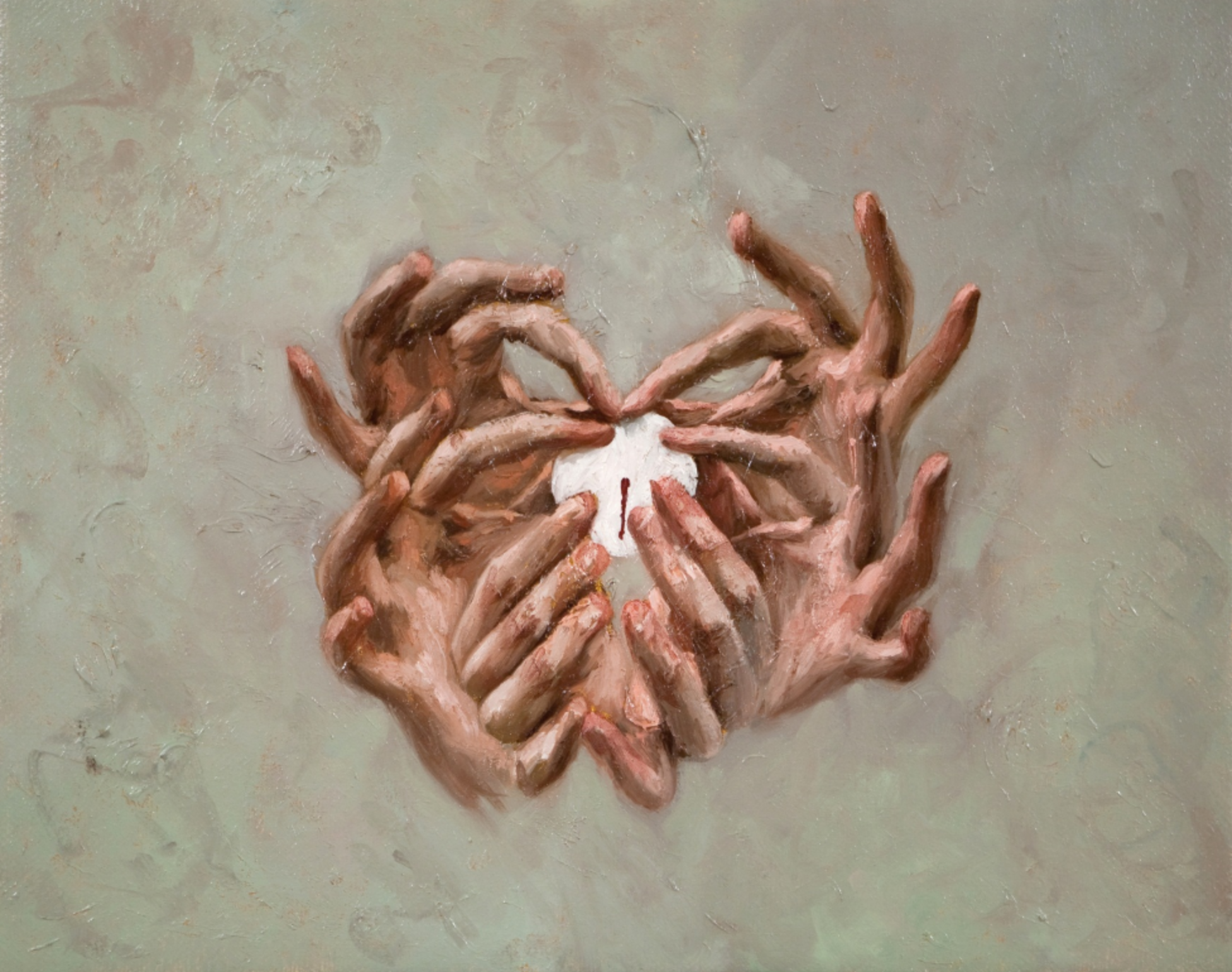
Transunstanziazione, Giovanni Gasparro. This image would be perfectly at home in a church. (Source)

Take one of Gasparro’s finest pieces, Transunstanziazione (2009). I will repeat here what I wrote about it in my Corpus Christi piece:

Three pairs of hands, like the three pairs of wings on the seraphim and cherubim, bear aloft a bleeding host in undifferentiated space. The three sets of hands appear the samethey are, perhaps, the hands of the same priest captured over the lapse of time. This distortion of time and space lends the image a sense of eternity. We are viewing something transcendent. The Eucharist is not just an earthly event. It is also a rite which happens forever in the cosmic liturgy of heaven. And who is the Great High Priest offering that liturgy for us mortals? Who but Christ? In Gasparro’s image, Christ is present as priest and victim.

The three pairs of hands also remind us of the Trinity. When we approach the Eucharist, we truly approach the Triune God. At every Mass, the act of Transubstantiation only happens because of the work of the whole Trinity. Christ offers Himself to the Father in the Holy Spirit, through the hands of His priests and the prayer of His bride, the Church. It is meet and right that we should consider the painting at this point between the Ordinary Form celebrations of Trinity Sunday and Corpus Christi.

The painting has a certain sacramentality, in that, like the liturgy, it captures something of the invisible and manifests it to our earthbound senses. Looking at Gasparro’s painting, we have the sense that we are glimpsing something profound, unsettling, and sacredsomething ordinarily hidden from us. Do we not hear the words of St. Thomas’s Corpus Christi hymn, Lauda Sion?

Every time I return to this painting, I find something deeper in it. I’ll add that the multiplication of hands is a trope that exists in the work of that most unimpeachable of Catholic Artists, the Blessed Fra Angelico, who uses it in virtually the same way as Gasparro.
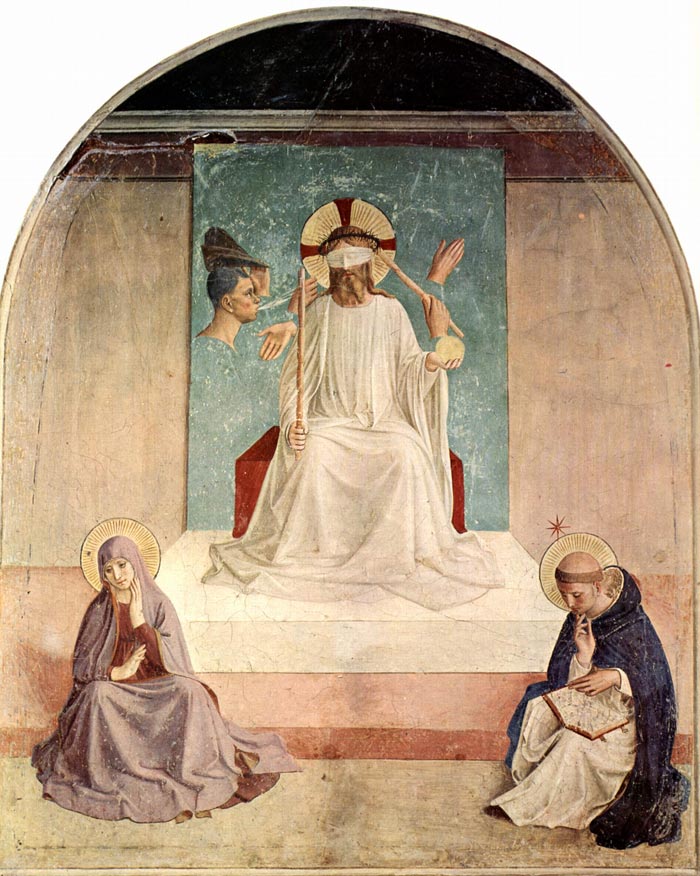
mockingofchrist700

The Mocking of Christ, Fra Angelico. Here he uses hands in the same ways that Gasparro does – to telescope sequential events into one image, to provide an insight into hidden action, and to lead us into meditation. Two of my Facebook friends noticed the formal and spiritual kinship between the two artists. (Source)

Of course, I don’t expect Ms. White or anyone else to have the same approach to every work of art as I do. If she finds Gasparro “creepy,” that is her right. But it is not an argument against Gasparro’s Catholicity. It is a subjective and affective assessment of his art, and thus it lies more in the realm of taste than aesthetic theology. And there’s nothing intrinsically wrong with having and describing a visceral reaction to a work of art. I’m perfectly happy to say de gustibus and leave it at that.

Unfortunately, Ms. White expatiates about what constitutes “sacred art,” which, she claims, is emphatically not what Mr. Gasparro is doing.

She writes,

Knowing nothing about him other than what he paints, I have no idea what this artist intends – and that right there should tell you that he’s NOT doing sacred art – but it seems that in general hyperrealism simply isn’t going to work for devotional art. It’s always going to come across as strange and parodic, because the purpose of devotional painting is not to depict ordinary earthly reality – with all its “warts” – but a supernaturalised, idealised and perfected reality, a redeemed reality, that can only be occasionally glimpsed in this life by seeing the saints.

Sacred art is devotional art. If it isn’t devotional, it’s a parody of the sacred.

Where do I begin?

First of all, it doesn’t matter what the artist intends. We emphatically don’t need to know the artist’s intentions to appreciate what exists in the constructed world of the art-object. It can be helpful, but it really isn’t necessary. “Intention” is one of those terms that is always so heterogeneous and slippery as to be virtually meaningless. Consider the range of “intentions” that might be implicit in any work of art. Most artists of the Renaissance probably intended to produce images that would please their wealthy patrons so that they could keep eating. Moreover, it seems that a great deal of eros generated quite a lot of the Western canon. No doubt at times the souls of the artists were illuminated by the grandeur of their work. But we can’t possibly know to what extent the deeply fallible men (and they were almost all men) intended to invest their work with a consciously spiritual meaning.

What’s more, Ms. White’s dislike for “hyperrealism” as well as “surrealism” leads her to miss the fact that Gasparro’s work strikes an incarnational balance between the two. His subjects are recognizably human, but in the strange art-world he depicts, they are charged with the heavy presence of a mystery far beyond their humanity. They share our condition while pointing towards a world that stands beyond it.

It bears mentioning that her dislike of “ordinary earthly reality – with all its ‘warts'” would necessarily strike Caravaggio from the canon of Catholic masters. Of course, Gasparro resembles Caravaggio more than any other artist. Perhaps she would be glad to see him go. Who else would disappear under Ms. White’s discriminating eye? Rubens and his corpulent maidens? Matthias Grunewald and his unpleasant crucifixions? How about Carlo Crivelli and the sly, malevolent eyes he gives to his saints? What are we to do with the Mannerists and all the distended limbs that litter their canvases? And although he was no Catholic, are we to write off the value of Rembrandt’s religious work because he dares to show the uneven surface of human flesh? Would this not be precisely the least Catholic impulse of all – to fly from the corporeality of our existence, and of the way God uses it?
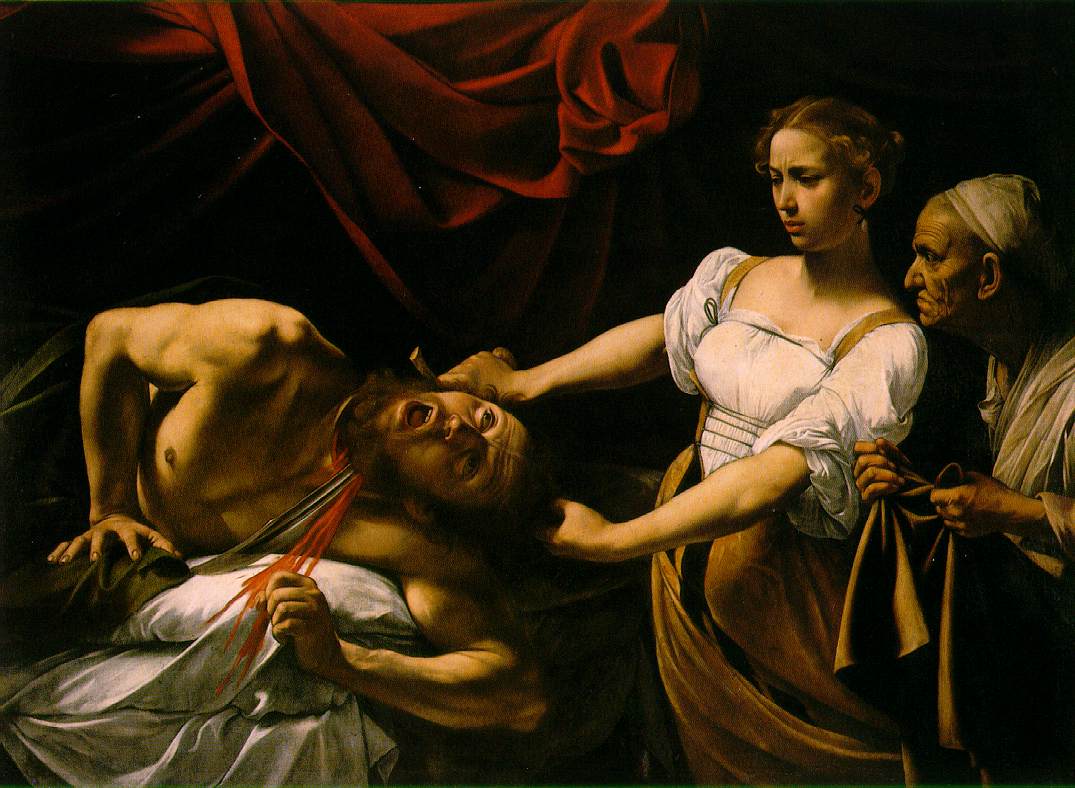
Judith_Beheading_Holofernes_by_Caravaggio

Judith Beheading Holofernes, Caravaggio. This magnificent portrayal of Judith’s triumph over the wicked general is apparently not “sacred art” under Ms. White’s criteria. (Source)

Ms. White insists on idealism and devotionalism in sacred art. Anything that fails in either of these qualities must be consigned to the great heap of Modernist parody.

Yet both of these are deeply misbegotten efforts. First, when she speaks of “supernaturalised, idealised and perfected reality, a redeemed reality,” she is using the language of iconography. There is indeed much to commend the hallowed iconographic traditions of the Greeks and Slavs (not to mention the Armenians). But Byzantine icons are subject to strict canons, types, and lineages. An iconographer’s process and material are, to a certain extent, determined for him. Longstanding customs surround the production and ritual use of the icons. Part of the reason that theologians can work from the icons as a source in their writing is that those customs safeguard and guarantee the orthodoxy of the images. And the spirituality they have fostered over the centuries is one I admire; it has quickened my own Christian life.
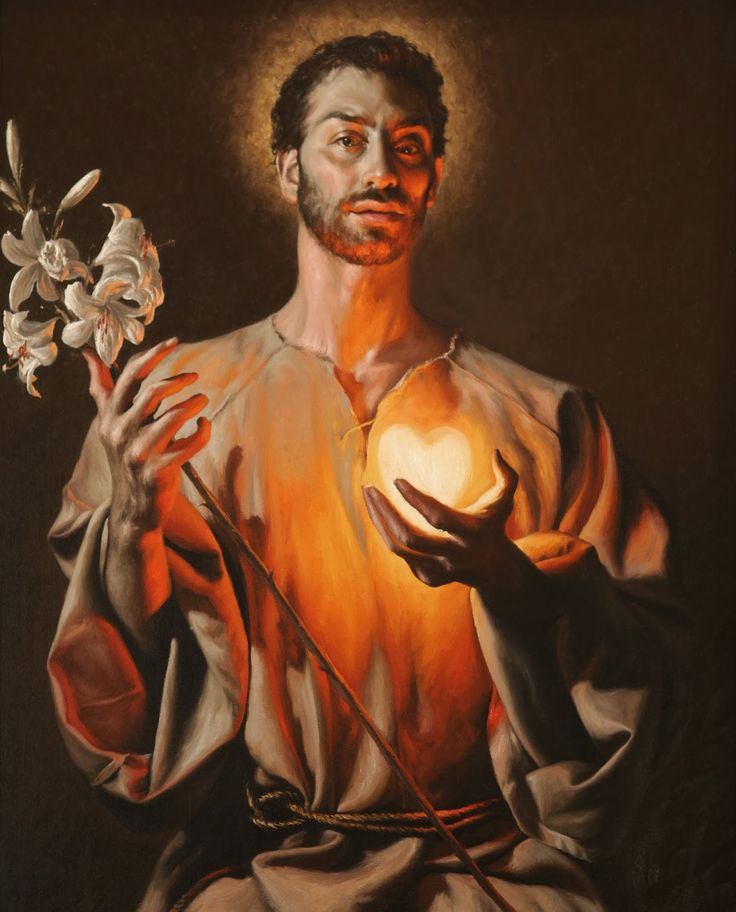
TheMostChasteHeartofStJoseph

The Most Chaste Heart of St. Joseph, Giovanni Gasparro. Something nigh-unprecedented like this devotional image would be impossible if Western art followed strict canons like the Byzantines do. (Source)

Nevertheless, that’s not what we do in the West. While some artists have managed to give us glimpses of a transcendent realm of sophianic glory (one thinks of the Cusco School and some of those Catholic surrealists I was talking about), they are certainly not obliged to do so by force of tradition. One can lament the fact that we developed a much freer sense of sacred art. I don’t, both because I like statues and because I think the relative freedom of artists has been an enormous boon to civilization and the Church.

We can definitely learn from icons, in part because they remind us of where our own tradition has been. Before this year’s terrible earthquake, Ms. White’s own monastery had a wonderful fresco that captured precisely this quality of enrichment from the East that can and should be productively pursued by Catholic artists. But we ought not make the spiritual vision of the East normative in the West, just as we would decry any effort to impose Western forms on the East. And so I entirely reject her attempt to foist on Western Catholic art the strict confines of the icons.

Secondly, I’m bothered by instrumentalist approaches to art, including an assessment that rests heavily on whether the piece in question is “edifying” or “devotional.” That’s a largely meaningless standard – much more indistinct than the question of whether something is beautiful – since it places the center of the art’s meaning and quality in the affective response of the viewer rather than its own constructed reality and the way that construction interacts with transcendental standards. Namely, beauty.

The idea that specifically sacred art should be a) “devotional,” and b) in a church is a narrow, limiting, overly contextual approach to art. It is only helpful in the strict sense of guidance for church decoration. If Ms. White had limited the purview of her argument to what should count as specifically Liturgical Art, that is, what type of art should be placed in a church for the public veneration and instruction of the faithful in a ritual context, she might have a point. But she doesn’t write within that important qualifier. Instead, she uses Mr. Gasparro’s oeuvre to think about sacred art in general, and arrives at the rather flattening dictum that “Sacred art is devotional art. If it isn’t devotional, it’s a parody of the sacred.”
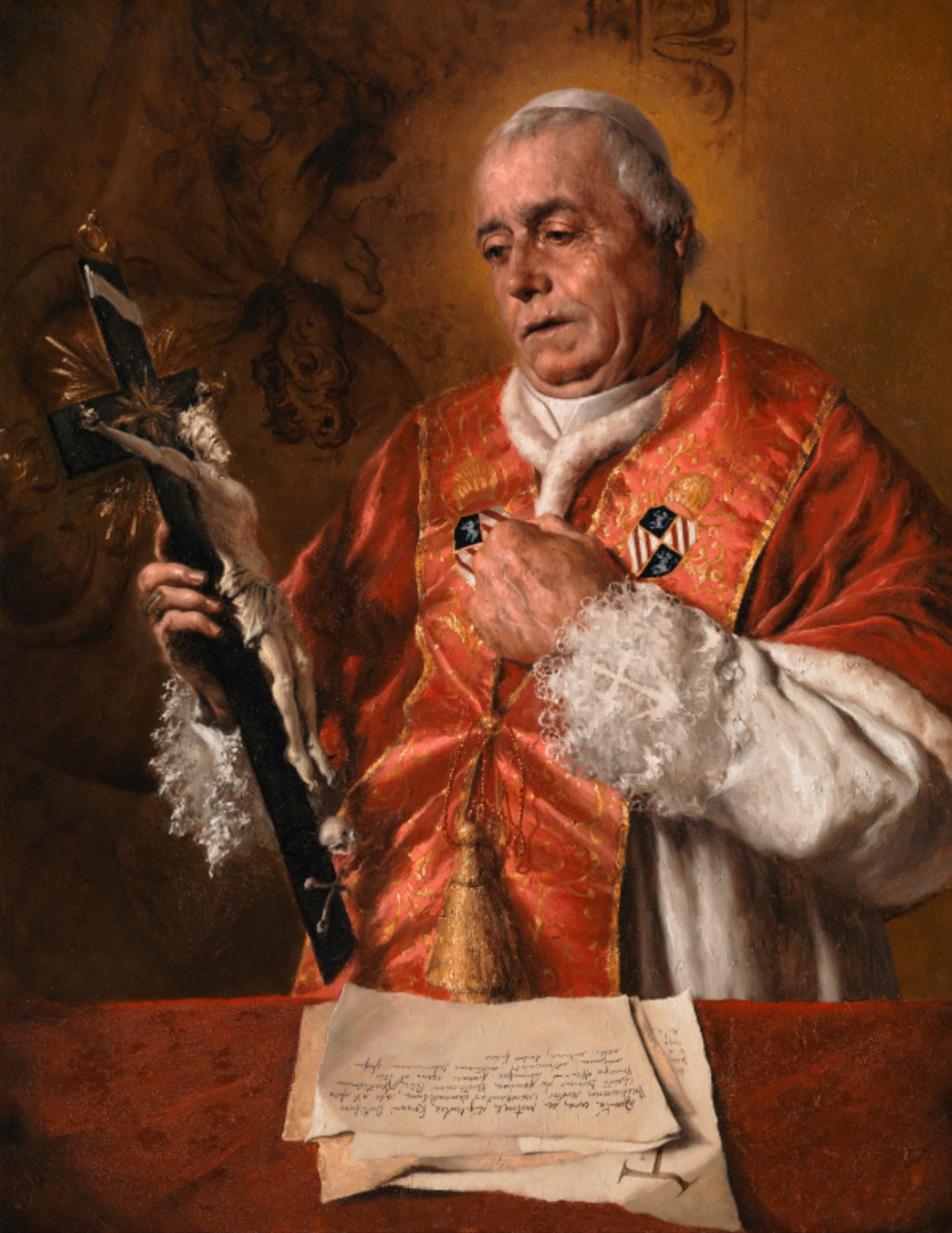
Screen Shot 2017-11-12 at 1.27.39 AM.png

Blessed Pius IX Pontifex Maximus, Giovanni Gasparro. Because artists who are really modernist heretics are drawn to depicting Pio Nono in prayer. (Source)

The conclusions she draws are totally unworkable as a Catholic approach to aesthetics. Imagine how much poetry and how much music we would have to surrender if we tried to carry the standards of idealism and devotionalism into the other arts in any kind of normative way.

Catholics should be concerned about the quality and orthodoxy of their sacred art. Insofar as Ms. White’s article represents that concern, it is an admirable effort. I’ll add that Ms. White and I probably share a similar exasperation with some of the trends in poor church art and architecture that are so maddening today. Likewise, we no doubt share a desire for a renewal of the Catholic arts. But Ms. White’s artistic philosophy smacks too much of Savonarola. While she is willing to summarily cast Gasparro’s art into the bonfire of the vanities, I contend that he is one of the Church’s most important living artists, alongside Daniel Mitsui, Matthew Alderman, Raúl Berzosa, Ken Woo, Alvin Ong, and others. I also share Rebecca Bratten Weiss’s views on the arts more broadly. We Catholics, and especially those of us who consider ourselves fairly Traditional, are sometimes too “self-referential” (if I may borrow a term favored by the Pope). As Weiss notes:

Toni Morrison, for instance, is a Catholic Nobel laureate whose works are filled with themes of community and redemption. But the Catholic critics who enthuse over Flannery O’Connor and Graham Greene regard Morrison only as a controversial writer on race relations. “She’s not practicing,” they might say, as an excuse to ignore her. And yet, C.S. Lewis, who is revered in their circles, was never even Catholic at all.

Mary Karr – the keynote speaker at the conference – not only is a Catholic convert, but wrote extensively about her conversion, but is deemed by some not to be a “real” Catholic writer, because of her openness about certain sexual issues. And yet Graham Greene was a notorious womanizer who slept with over 300 prostitutes, was condemned by church spokespersons in his time, and closed The End of the Affair with the prayer: “O God, You’ve done enough, You’ve robbed me of enough, I’m too tired and old to learn to love, leave me alone for ever.”

Perhaps the critics who are timid about these powerful Catholic writers working right now in our midst are waiting for someone else to “baptize” them? Perhaps they are waiting for someone else to say “I heard God there” – because they, themselves, have not learned to open the inner chambers of the ear? Because we do not have a robust Catholic arts culture that teaches us to open all the portals for reception, but instead have embraced a misnamed “Benedict Option” which is all about putting up walls and barriers, drawing those lines in the sand.

I concur, and would extend the same sort of criticism to Ms. White and those who support her view of the arts. Let us not fall into that old trap of mistaking the modern for Modernism. Christ is King over all. Let Catholic artists explore the plenitude of that Kingship over all, in all, and through all – even if looks strange to our worldly eyes.
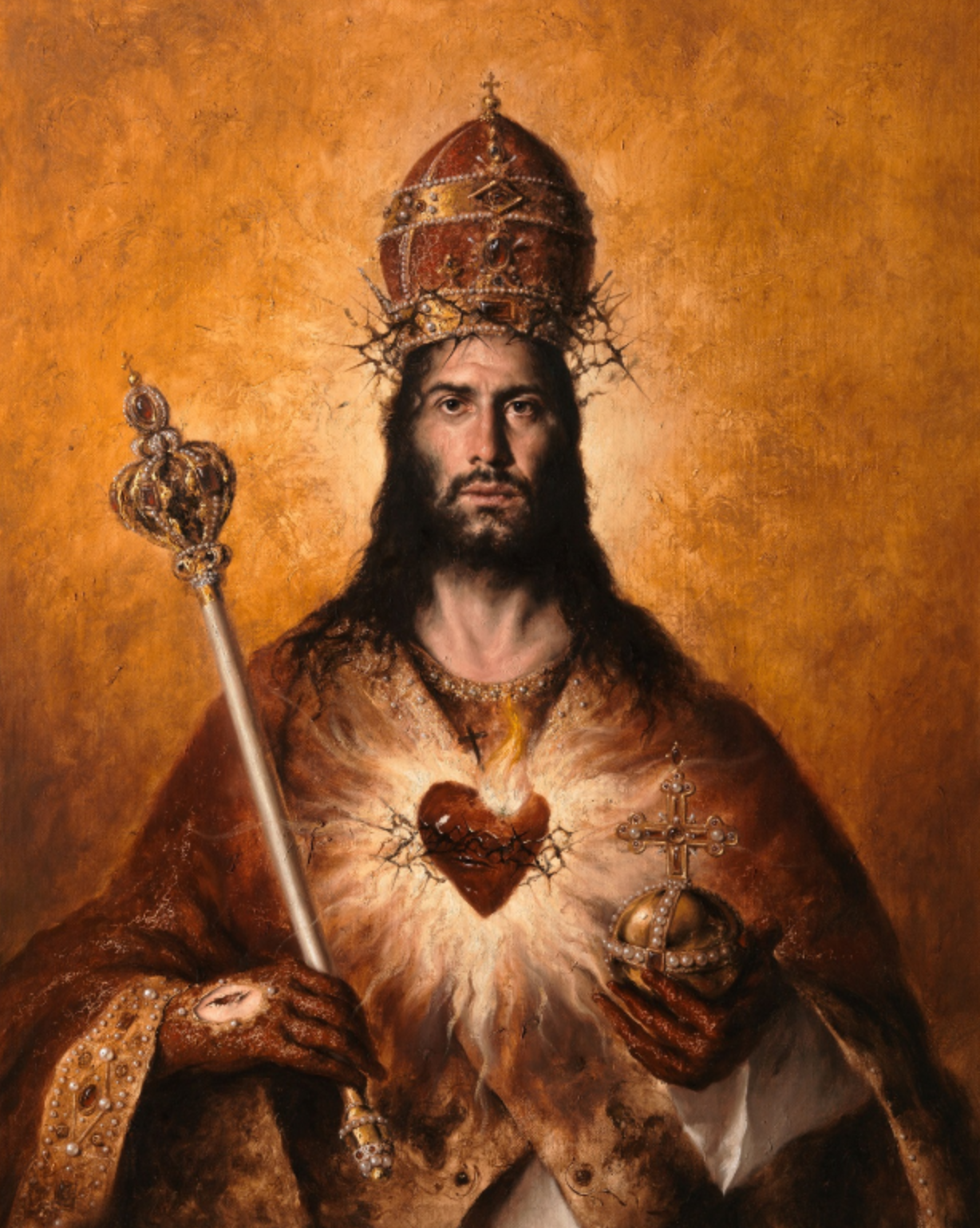
Screen Shot 2017-11-11 at 10.00.45 PM

Christ the King, Giovanni Gasparro. May we always serve Him with ardent charity and zeal for the beauty of His house. (Source)

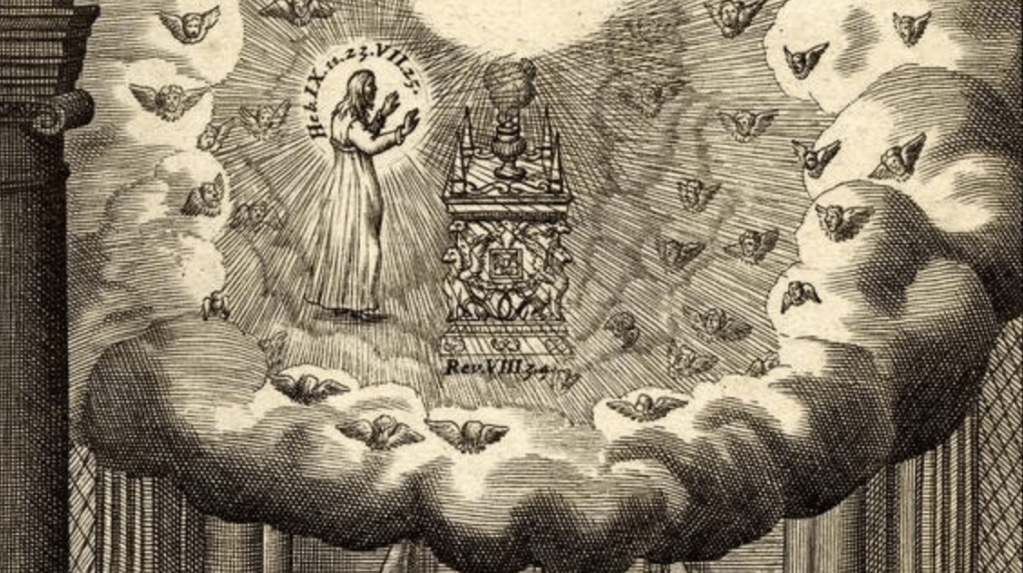
A Poem for the Feast of the Blessed John Duns Scotus

Oxford

Scotus preached and prayed at the University Church of St. Mary the Virgin, now an Anglican parish – there is now a plaque commemorating him on one of the walls. I have heard differing accounts of where his house of Greyfriars would have stood, either near St. Aldate’s or in what is now Brasenose College. (Source)

Duns Scotus’s Oxford

Gerard Manley Hopkins SJ

Towery city and branchy between towers;
Cuckoo-echoing, bell-swarmed, lark-charmed, rook-racked, river-rounded;
The dapple-eared lily below thee; that country and town did
Once encounter in, here coped and posed powers;

Thou hast a base and brackish skirt there, sours
That neighbour-nature thy grey beauty is grounded
Best in; graceless growth, thou hast confounded
Rural rural keeping — folks, flocks, and flowers.

Yet ah! this air I gather and I release
He lived on; these weeds and waters, these walls are what
He haunted who of all men most sways my spirits to peace;

Of realty the rarest-veined unraveller; a not
Rivalled insight, be rival Italy or Greece;
Who fired France for Mary without spot.

scotuseyes.jpg

Blessed John Duns Scotus, Pray for Us. (Source)