Pop Culture
My Favorite Scary Movies
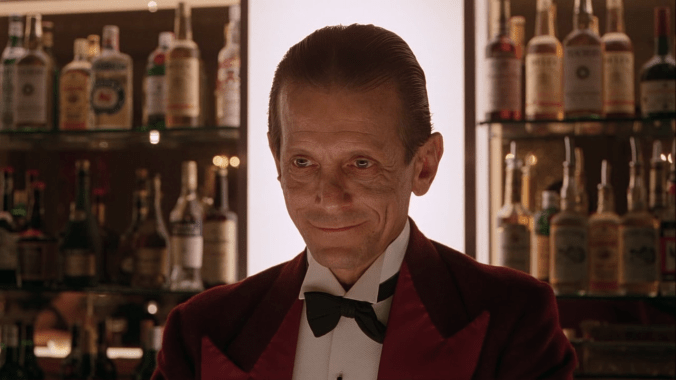
What’ll ya have? (Source)
It’s nearly the Eve of All Hallows, and that means it’s time for some spooky stuff. I thought I’d offer up my top 10 favorite horror films for your viewing enjoyment.
I’ll begin with a few honorable mentions, including horror comedies. In no particular order: Sweeney Todd (2007), Halloween (1978), The Rocky Horror Picture Show (1975), The Exorcist (1973), Dracula: Dead and Loving It (1995), What We Do in the Shadows (2014), The Silence of the Lambs (1991), Young Frankenstein (1974), The Others (2001), and Shaun of the Dead (2004). All of these are pretty good films on their own terms, and you should watch them. But for the following list, I wanted to highlight a few I though were especially worth re-viewing this Halloween.
I generally dislike slashers and body horrors, so you won’t see any of the Saw, Grudge, Hostel, Alien, or Ring series here. My tastes run towards the Gothic, psychological, occult, Lovecraftian, and atmospheric. My list reflects that tendency. I don’t claim it will satisfy everyone. Finally, while I have generally tried to avoid SPOILERS, I think I may have left one or two. So abandon all hope, ye who enter here.
10. Jack Frost (1997)

When he kills this guy, he says, “I only axed ya for a smoke.” And chuckles. Really. (Source)
Admittedly, this is a very bad film. It holds a whopping 7% on Rotten Tomatoes, and I’ve never been able to get through the whole thing myself. But what I have seen makes me esteem Jack Frost as one of the corniest and campiest of horror B-movies. And I adore B-movies, so this one’s gonna stand in for all the crap I could have chosen instead.
The plot is pretty straightforward. A psychopathic serial killer is being transported to death row when his car gets in an accident with a massive container truck full of a biological reagent. He is burned by the acid and seemingly melts away. However, his DNA fuses with the snow and takes on a new form as a Killer Mutant Snowman, hell-bent on terrorizing the community that sentenced him. Hilarity ensues. Complete with over-the-top gore, the very cheapest of special effects, completely maladroit music, a ridiculous sex scene, some of the worst acting you will ever watch, and dad-level one-liners (no, but really), this Christmas-themed whopper of a flop will liven up your Halloween.
9. Les Yeux Sans Visage (1960)
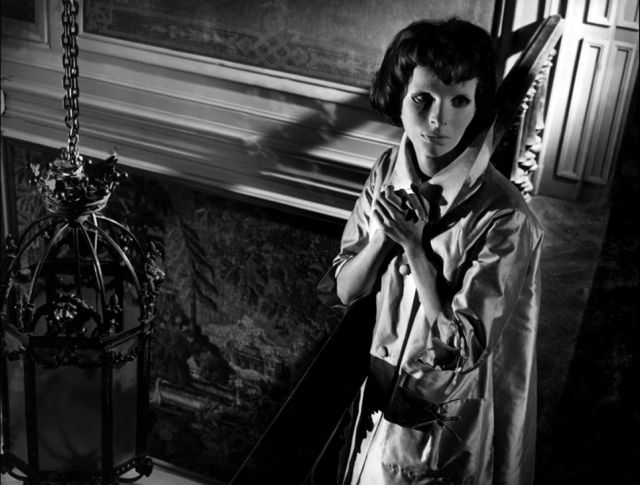
Les Yeux Sans Visage – a classic of French horror, with profound Feminist undertones. (Source)
Now on to something actually creepy. This French horror film by Georges Franju is not overly scary, in the sense that it lacks jump scares or the typical fare of, say, slashers or sex-crazed body horrors. But it’s definitely worth seeing, as at times it actually becomes a poignant exploration of power and acceptance. Also, it inspired an eponymous song by Billy Idol.
A mad scientist and his cohort of minions murder young girls in Paris so that he can steal their faces – literally. His daughter Christiane suffers from a terrible facial disfigurement after a motorcycle accident for which he was responsible, and in his guilt, he promises he will graft a new face onto her. Every attempt is unsuccessful. Christiane wanders the halls in an eerie white mask, and we are treated to a gruesome, close-up view of a face transplant. Ultimately, the story examines how men use female bodies as canvasses to represent and expiate their own guilt, especially for violence they have committed against women. It also examines the complicity of other women – the mad doctor’s closest assistant is a lady whom he successful healed after her own scarring accident.
A sensitive, beautiful, and tragic tale with a few disturbing scenes. Worth your time.
8. Repulsion (1965)
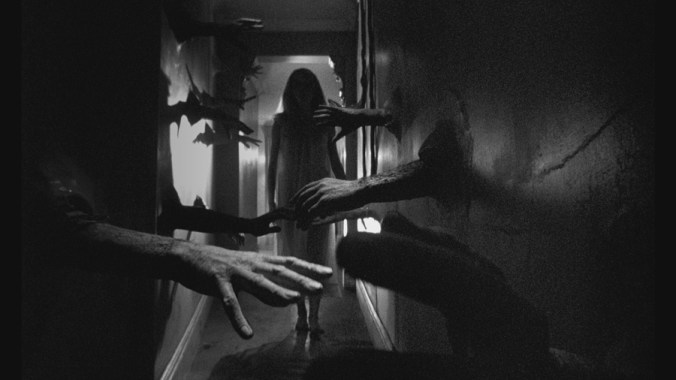
The famous hallway of hands sequence in Repulsion. (Source)
One of Roman Polanski’s early greats, Repulsion remains a standard of Psychological Thrillers. It features some of Polanski’s classic sequences and shots: the buskers, the hallway of hands, the decomposing rabbit. The film follows the mental breakdown of a young girl (played by a youthful Catherine Deneuve) on a weekend she spends alone in her apartment in Belgium. That may sound simple, but boy is there a lot going on. Sex, murder, insanity – not to mention painfully tight close-ups in an era when that was considered artistic. Repulsion is definitely one of the strangest and most harrowing films on this list.
7. Jaws (1975)
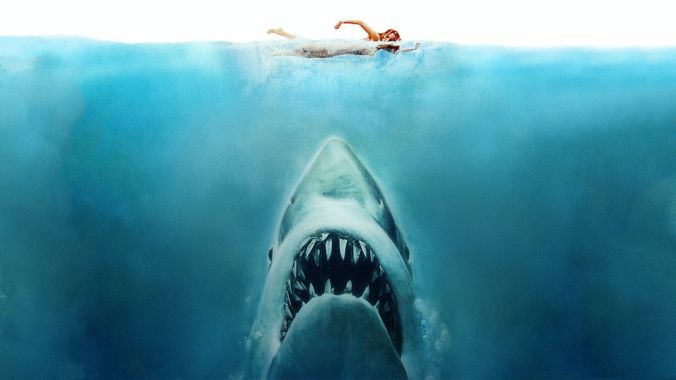
Duh dum. Duh dum. (Source)
One of the greatest and most popular horror films ever made. Its instantly recognizable theme is one of the few horror scores to rise to the status of auditory icon. I would argue that it’s Steven Spielberg’s finest and scariest foray into the genre, much better than his trope-heavy Poltergeist (1982). The simplicity of Jaws is what makes it so effective as a nail-biter. There’s a murderous shark, and to hunt it, you have to become ever more isolated – and thus ever more vulnerable.
There are plenty of genuinely scary moments in the film, but I think one of the best is also one of the most understated: the tale of the USS Indianapolis. Here, too, the black magic is all in the simplicity. Quint tells a story. That’s it. But it’s one of the most disturbing stories ever told in a film (and what’s worse, it’s true). While all the cast give fantastic performances, Robert Shaw exceeds his peers by that one scene.
6. Psycho (1960)
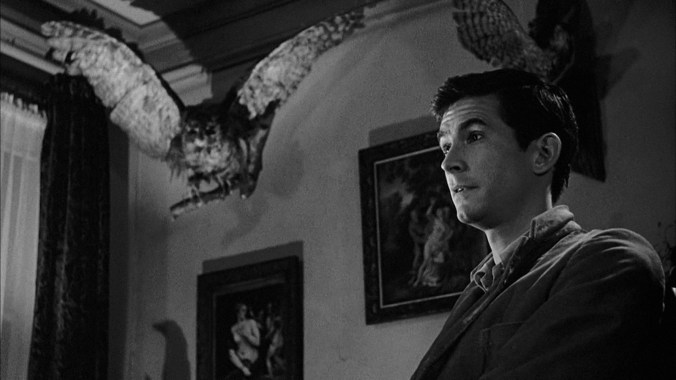
“We all go a little mad sometimes…” (Source)
I probably could have chosen several of Hitchcock’s films for this list. Some of his thrillers are remarkably good. Particular favorites include Strangers on a Train (1951), Vertigo (1958), and Rope (1948). But as far as frights go, nothing in the prolific director’s oeuvre surpasses his horrific masterpiece, Psycho. Long before M. Nigh Shyamalan attempted (and subsequently wrecked) the art of the twist ending, Psycho showed generations of directors how it was done. Ans like Jaws, Psycho gave us an iconic score, forever associated with an iconic scene.
Psycho was among the first real horror films I saw, one Halloween night many years ago. I’ve loved it ever since.
5. Eraserhead (1977)
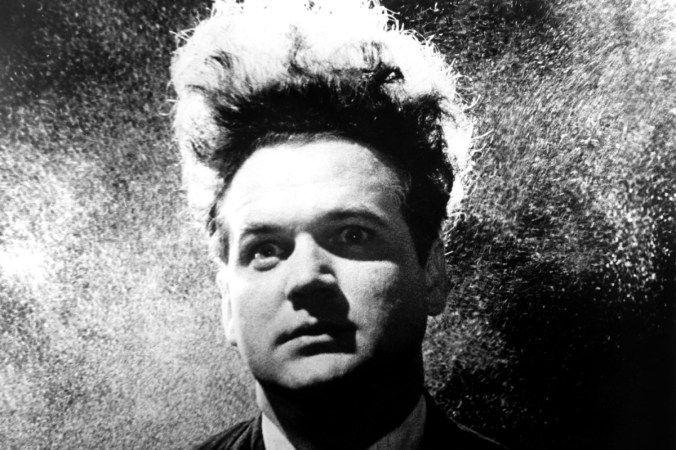
The woeful Henry Spencer in David Lynch’s first movie, Eraserhead (Source).
David Lynch is one of my favorite directors (I sometimes joke that Twin Peaks is my “second religion”). His first film, Eraserhead, has an affinity with the New Wave horror of Polanski et al. As in Repulsion, we are constantly made to feel the limits of the space the characters inhabit. But Claustrophobia is only one of the fears that Lynch explores. Eraserhead is a great meditation on the terrors that attend some of the most common experiences of life: work, sex, marriage, fatherhood. Jack Nance’s performance as Henry Spencer is riveting as it is tense, and the eerie Lady in the Radiator sequences foreshadow much of what Lynch would later use in his more famous works like Twin Peaks and Mulholland Drive. The film also probably wins the award for creepiest baby in cinematic history; even today, Lynch won’t reveal how they made it. If you like surrealism, body horror, or pencils, I recommend this classic for your consideration.
4. The Innocents (1961)
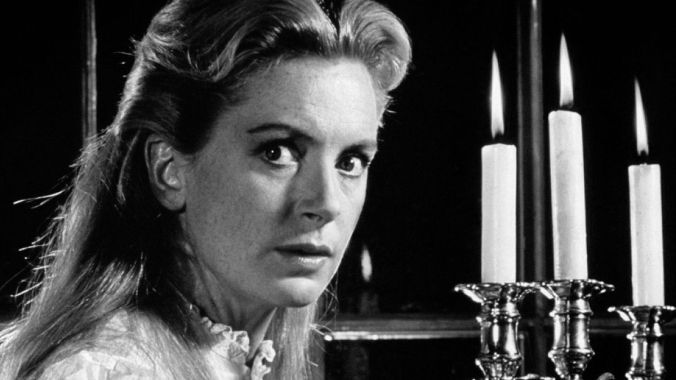
Deborah Kerr gives a masterful performance in this classic Gothic horror. (Source).
If you like your horror set in creepy old English manor homes, full of candlelight and the creak of ghosts on the stairs, then you’ll certainly love The Innocents. Based on Henry James’s classic novella, The Turn of the Screw, the film follows a governess, played by Deborah Kerr, who is sent to care for two orphans in the English countryside. As time passes, she starts to believe that the children are under the malign influence of ghosts. Is she insane? Or is she battling the forces of the supernatural?
While viewers still debate the meaning of the deeply ambivalent ending, one thing’s for certain; this film is a masterful example of mid-century Gothic horror. Not to be missed.
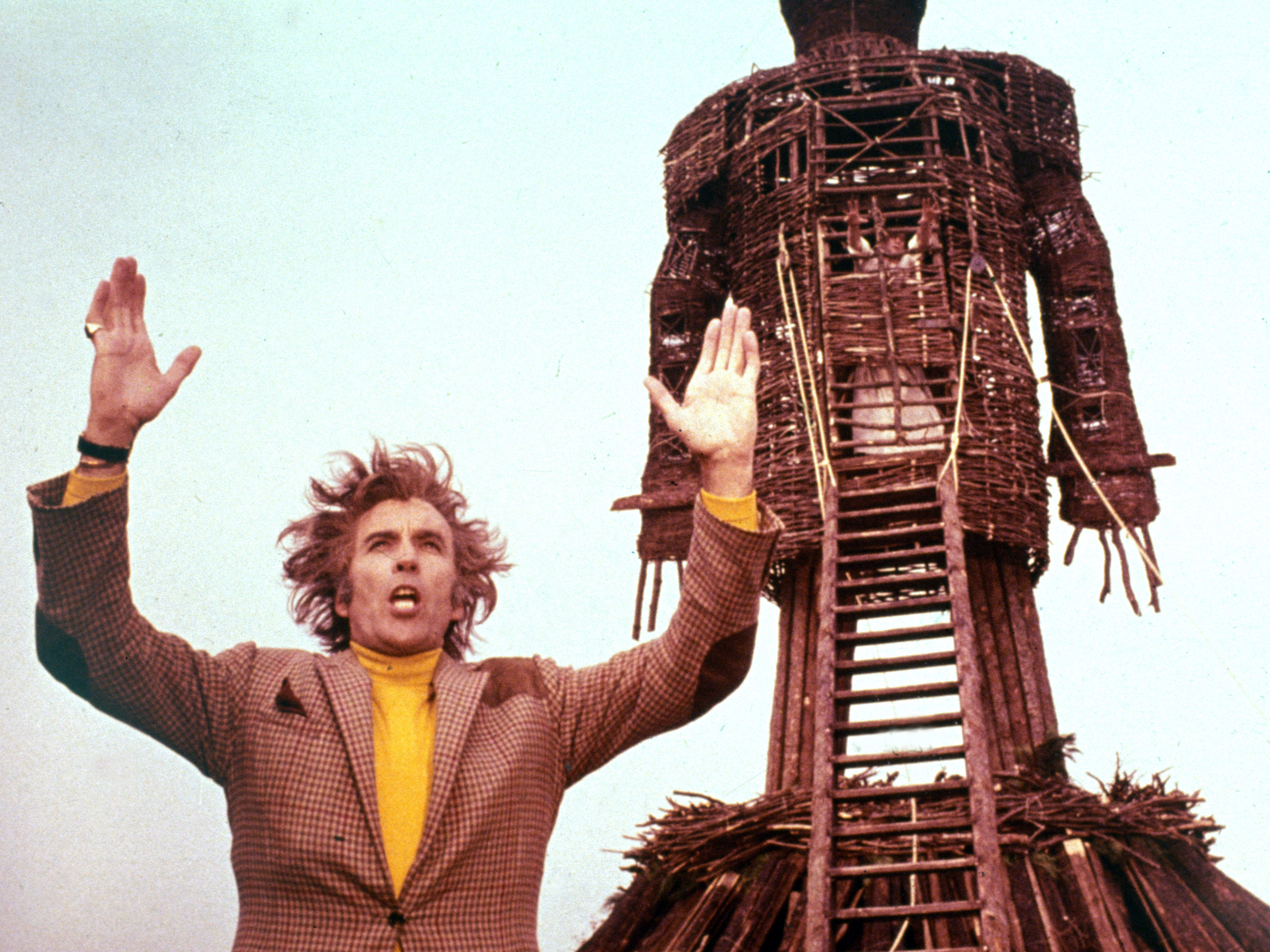
3. The Wicker Man (1973)
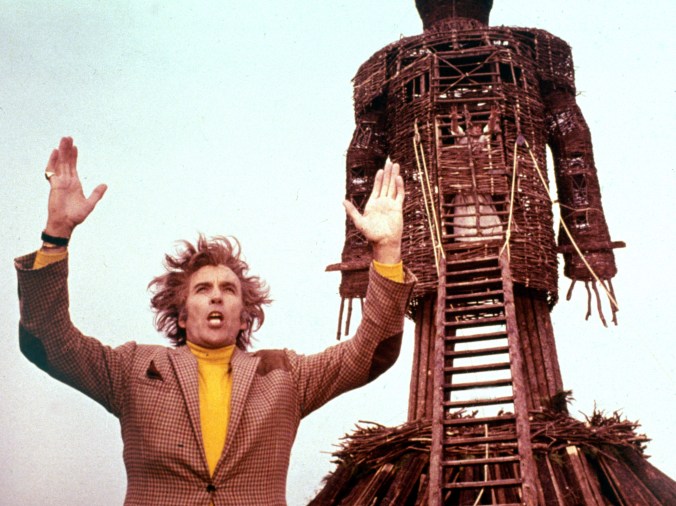
Traditional British Values. (Source)
The Wicker Man, strictly speaking, really isn’t all that scary. But it is a very good story all the same, and Christopher Lee puts in a marvelous performance as Lord Summerisle. If you like folk-horror, a subgenre the English do better than anyone, you’ll enjoy this creepy little romp through a murderous, pagan island in Scotland. Arthur Machen would have loved it.
I find it somewhat amusing that Lee, a devout Anglo-Catholic, thought that the film was ultimately a Christian one in suggesting that even nice people can commit horrible acts if they are not within the fold of the Church. Maybe. But what a poor argument for Christianity it is! The protagonist is such an unlikable and censorious prude, and the villagers are such fun-loving heathens, that you end up not caring too much about the Christian policeman’s fate in the final showdown. Alas. I suppose I’m biased, though, as I’ve long thought that Catholics are just baptized pagans anyway. Incidentally, I think the community of Summerisle gives a pretty good picture of what the Benedict Option might look like in practice.
Don’t confuse this classic with the highly memeable 2006 sequel starring the one and only Nicolas Cage. There are creepy masks, but no full-on bear suits in Christopher Lee’s version. And definitely no bees.
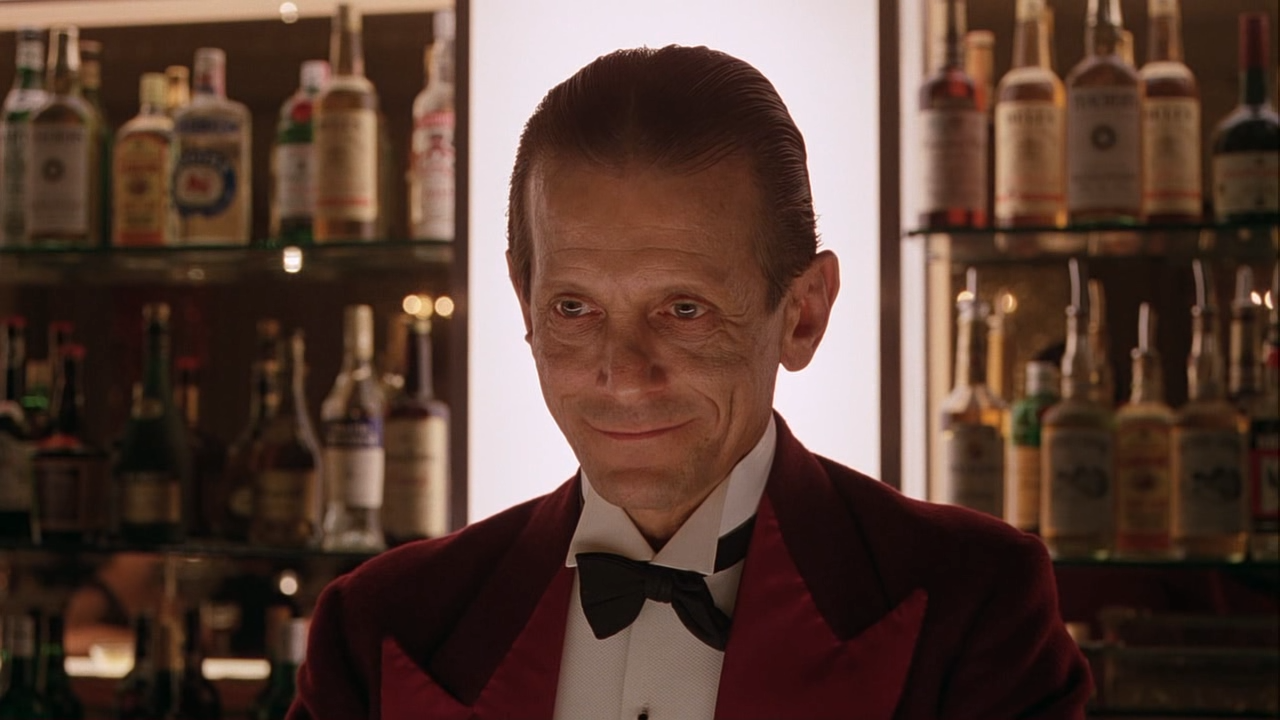
2. The Shining (1980)
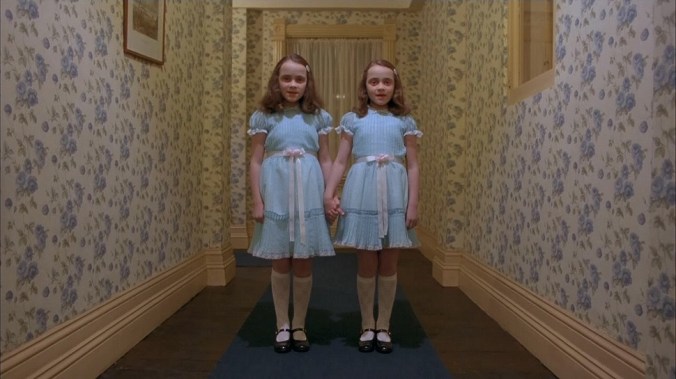
“Come play with us, Danny.” (Source)
Stanley Kubrick’s horror masterpiece. Considered in purely artistic terms, there are no better films on this list. It shows what kind of art can happen when a genius director works with a genius actor (Jack Nicholson in one of the best performances of his career). More to our point – the frights are just as potent today as they were in 1980. Unlike a number of other works from the same decade, The Shining has retained its creepiness. It terrified and disturbed me the first time I saw it, and while I mainly pay attention to its formal and aesthetic qualities now, I still jump now and then when I watch it. I will never not find that man in the dog/bear suit (you know the one) absolutely terrifying, and I will never not relish the conversations with Lloyd and Grady with a certain perverse glee.
I could probably go on and on about how great this film is. But why bother? Just watch it yourself. You won’t be disappointed.
1. The VVitch
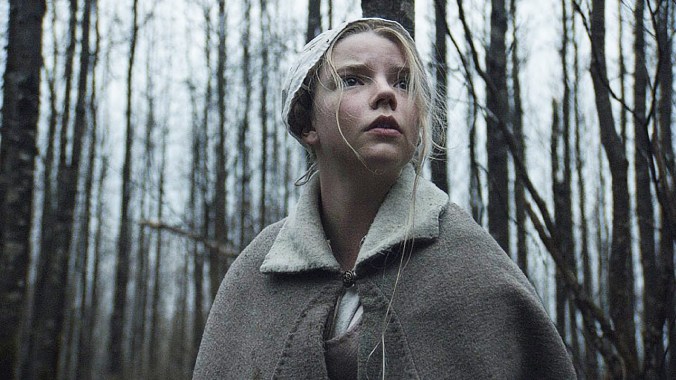
“What went we out into these woods to find?” (Source)
Horror has gotten much better lately, with genuinely artistic offerings from bold new directors. The Babadook (2014), Goodnight Mommy (2014), It Follows (2014), The Blackcoat’s Daughter (2015), The Eyes of My Mother (2016), It Comes at Night (2017), and Get Out (2017), among others, have all renewed the genre. But my favorite among the new horror is The Witch (2016). Genuinely creepy, trope-laden without being clichéd, atmospheric, Gothic, full of painstakingly reproduced sets and costumes from Puritan New England, and written entirely in 17th century English, The Witch represents an enthusiastic return to the old legends of Early Modern witchcraft. And it is beautifully shot. At times, it looks like the film that Goya would produce if he lived in our time. There is a black goat. It will change the way you look at the animals. In short, it is a cinematic triumph for A24, a studio that has proven itself to be one of the leaders of the new horror.
I love The Witch for all those reasons – but also because it presents a world in which Christianity is taken seriously. That rather startling quality has been in short supply among horror films since Terrence Fisher’s Hammer flicks of the 1960’s and 70’s. We see these characters as real, dignified people afflicted by indisputably real forces of the supernatural. In the world of The Witch, the Devil is real and so are his servants.
The film can also be read as a profound meditation on the doctrine of original sin. The ruin of the whole family follows from the pride of the father as we see it at the movie’s start. They are effectively damned as soon as they leave the village. There is perhaps some irony in the fact that the Church of Satan both endorsed and promoted the film. It is the only really Calvinist movie I’ve ever seen; no other has so deftly and deeply explored the Reformed idea of reprobation.
Halloween is naturally a time to seek out a good scare. If you’re looking to do that with a movie, I can think of no better option than The Witch. But you’ll get more than that. The Witch immerses us in a world we can hardly fathom, a world where supernatural evil lurks just behind the treeline and in the pale light of an attic. Dipping into that world can be salutary. After all, maybe it’s a good idea on the Eve of All Hallows – the night before the feasts of the Saints in Heaven and the Holy Souls in Purgatory – to spend some time first meditating on the damned.
Tag Yourself: Church Architecture Edition
I made this, and I’m Baroque.

Original Art: Some Recent Work
Here are some more of my August projects.

“Map of Hanserat, Vosh Kyaz, and the Isles.” Photo by artist. An imaginary map I came up with a while ago and wanted to see in color.
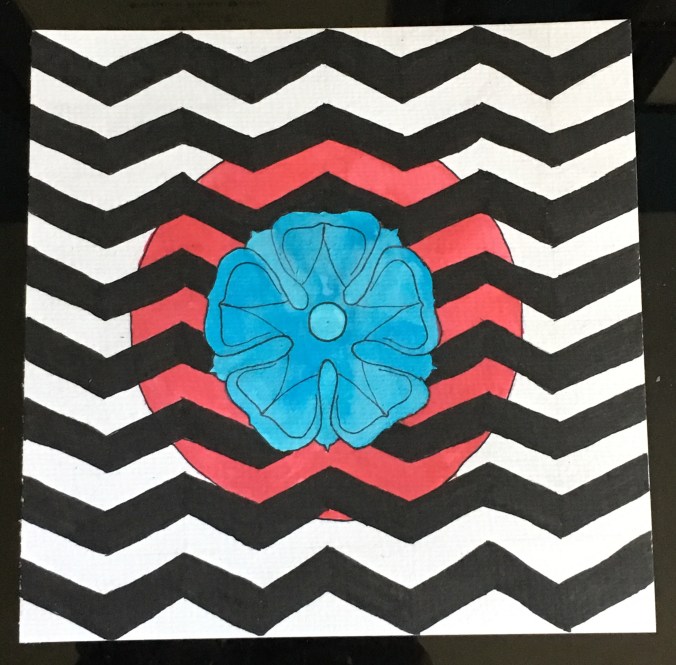
“Under the Sycamore Trees.” Photo by artist. We are like the dreamer…
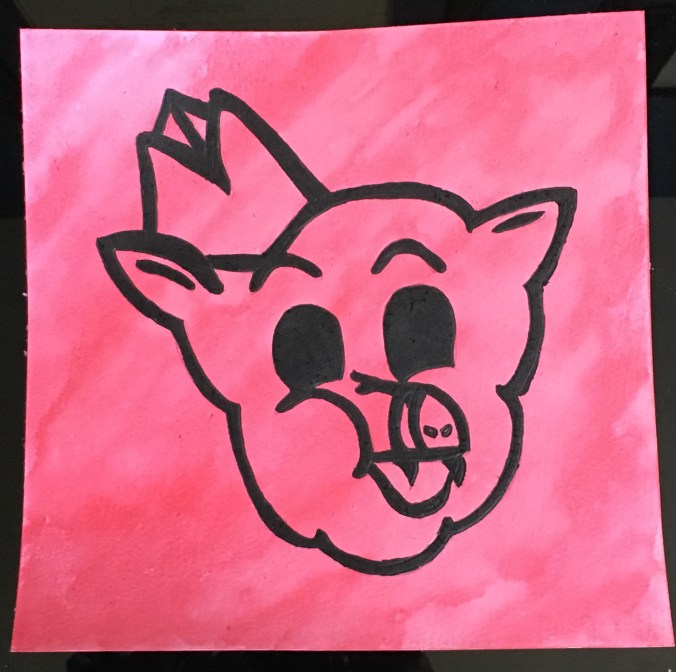
“Gluttony.” Photo by artist. I may do a series on the seven deadly sins.
100 Things I Would Rather Listen To at Mass than Hymns from the 70’s and 80’s, In No Particular Order

A brilliant friend of mine pointed out that “We Are Called and Gifted By Our God,” “Gather Us In,” “On Eagle’s Wings,” etc. are basically the Catholic, musical equivalent of Thomas Kinkade: bad art enjoyed primarily by old people. (Source).
- Gregorian Chant
- Byzantine Chant
- Old Roman Chant
- Ambrosian Chant
- Mozarabic Chant
- Hildegard Von Bingen
- Palestrina
- Thomas Tallis
- Bruckner
- John Tavener
- John Taverner
- Henryk Gorecki
- Arvo Part
- Ralph Vaughan Williams
- Old Negro Spirituals
- The Mormon Tabernacle Choir
- Appalachian Shape-Note Singing
- Mongolian Throat Singing
- Swedish Black Metal
- Broadway Showtunes
- Spanish Versions of Broadway Showtunes
- Esperanto Versions of Broadway Showtunes
- Crappy Bootlegged Esperanto Versions of Broadway Showtunes
- DMX
- Patsy Cline
- Irish Folk Ceol
- The Game of Thrones Theme Song
- Melanie Martinez
- All 7 Hours of a Castro Speech
- Chris Tomlin (shudder)
- YouTube videos about Fitness
- RuPaul’s Drag Race
- “Shall We Gather at the River?”
- David Lynch Cooking Quinoa
- Schoenberg
- That Weird Russian Guy Who Dances and Makes That Noise with his Lips (you know the one)
- The Interviews of Edward Gorey
- The Collected Works of Charles Dickens Played Backwards
- Machine Metal Music
- The Sound of Two Hundred Bees Copulating Simultaneously
- A Giant Saw Cutting Off California from the Rest of the Union
- Musique concrète
- Dissertation Defenses by Statistics Ph.D’s
- Mark Zuckerberg (shudder)
- The Sound Made by Nikita Kruschev’s Shoe on the Podium, But on Infinite Loop
- The Sound Made by Justin Trudeau When He Announced The Year as If It Mattered, But on Infinite Loop
- Cats
- Ayn Rand Interviews
- Vaporwave Remixes of Ayn Rand Interviews
- Vaporwave Anything, Really
- “Always Look on the Bright Side of Life!”
- Mr. G’s Dance from Summer Heights High
- A Theory of Justice: The Musical
- “Universal Love, Said the Cactus Person”
- The Ambient Sounds Recorded at the Varsity in Atlanta
- Twelve Germans Arguing About Philology
- John Oliver
- Ethel Merman
- Untranslated Korean Horror Movies
- Buskers in the Tube
- Robert Nozick Gently Asking Me to Kill 10,000 Contented Cows
- Gypsy Music
- Fleet Foxes (actually this would be pretty great and like the only good “folk mass” conceivable in any way, shape, or form)
- “The Sash”
- Ambient Noise Recorded at the Louvre
- The Sound of Praying Mantises Fighting Each Other
- The Sound of Praying Nuns Fighting Each Other
- The Sound of Music
- Oral Histories of the Tennessee Valley Authority
- Smash Mouth
- The Collected Oeuvre of Insane Clown Posse
- Gargling
- Untranslatable Russian Poetry
- Donald Trump (shudder)
- Gordon Ramsay Insulting Hell’s Kitchen Contestants
- Hideous Yak Noises
- The Broken Wind of an Unusually Flatulent Old Vicar in Surrey
- Lobsters
- Tracey Emin Talking About Her Work As If It Mattered
- That Flute Played by Mr. Tumnus
- Road Rage
- Chevy Chase Reciting Edward Lear
- “Your Mom Goes to College”
- Lobsters, but Fighting
- Gilbert Gottfried Reciting The Faerie Queene
- “Just You…And I…Just You…And I…”
- The Unrestrained Moans of Passion from the Majestic Wombat in Rut
- All the Burps from Arlo: The Burping Pig
- All the Burps from Arlo Guthrie Over His Entire Life
- “Alice’s Restaurant Massacree” On A Day Other Than Thanksgiving
- This List, Recited in Swahili
- Little Jimmy Scott
- The National Anthem of the USSR
- “MacArthur Park” (the original, performed by Richard Harris)
- Cardinal Richelieu as Petula Clark
- A Medley from Die Dreigroschenoper
- Mark Gormley’s “Without You”
- A Headline Act from Branson
- Wing’s cover of “Dancing Queen”
- Silence
Elsewhere: New Magazine, “Peregrine”

The titular bird. (Source).
This morning, I’d like to bring your attention to a new Catholic magazine, Peregrine.
Here’s their mission statement:
Peregrine Magazine is a collaborative project that seeks to think out loud about the practical concerns of living a truly political life according to traditional Catholic social teaching. Our goal is to promote the Common Good through a better understanding of our communities, our nations, and our world.
Sounds good to me. They’ve already got two pieces up: one on Dunkirk, And one on guilds. Give em a look!
Books I Have Finished This Summer

Old volumes. (Source).
I intend to keep updating this post as a running list of the books I have completed (though not necessarily started and completed) over the summer. I will include a short blurb and review for each title. Thus far:
1. The Benedict Option. Rod Dreher. 2017. Non-fiction.
An argument for focusing on Christian community-building in the face of an increasingly hostile secular liberal order. And a very flawed argument at that. But the book got me thinking about a better option, so as a provocation to thought and discussion, it works pretty well.
Score: 3/5.
2. A Litany of Mary. Ann Ball. 1987. Non-Fiction.
A lovely exposition of and meditation on various titles of Mary. Would recommend for anyone seeking a deeper understanding of Our Lady, her role, and her apparitions in the modern world. Particular highlights are some of the rarer titles such as Our Lady of the Cenacle and Our Lady of the Most Blessed Sacrament. If you have (or want) a devotion to Mary under one of her titles, this is the book for you.
Score: 4/5
3. Free Women, Free Men. Camille Paglia. 2017. Non-fiction.
The dissident feminist’s newest collection of essays. Gives a great taste of her style and scholarly concerns over the course of her long career. Topics range from The Real Housewives, “Southern Women,” BDSM, Puritanism, and all kinds of feminist spats. Her essay “On Abortion” is one of the most idiosyncratic and provocative takes on the issue I have yet read. Paglia never tires of displaying her acid wit and crackling prose. Perhaps her greatest flaw, beyond those points where she is simply wrong, is her irritating autobiographical tendency. I could do without the seventh mention of her childhood Halloween costumes. But all in all, a read well worth the effort.
Score: 4.25/5
4. The Leopard. Giuseppe di Lampedusa. 1958. Fiction.
The decline and fall of a Sicilian noble family. There’s romance, history, and a dollop of nostalgia that Lampedusa sprinkles with acerbically cynical observations about his characters. It’s uncommon to find a class commentary that doubles as a sensitive psychological portrait. The Leopard is just such a rare gem. Lampedusa has a knack for evocation. You can feel the heat of the Sicilian sun radiating from the pages; with Lampedusa, you can almost catch a faint whiff of ambergris over the rot. His style is a slow-moving delight, well-suited to his subject. There’s also a Great Dane, which is always a plus.
Score: 4.5/5
5. The Black Arts. Richard Cavendish. 1967. Non-fiction.
A helpful, if perhaps somewhat dated, exposition of occult history and practice. Cavendish presents a thorough overview of dark magic. His wry, understated humor makes it a great read (one quote: “[Éliphas Lévi’s] later books are less interesting, including his History of Magic (1860) and The Key of the Mysteries (1861), which he himself translated into when he was reincarnated as Aleister Crowley…The learned English occultist A. E. Waite, who was not a reincarnation of Lévi, but succeeded in translating the secrets of the Doctine and Ritual all the same” pg. 29). Would strongly recommend to anyone with a love of horror fiction, the macabre, Christopher Lee, the Kabbalah, Latin, and batsh*t crazy characters from the Victorian and Edwardian periods (including Montague Summers). It made me want to read Valentin Tomberg’s Meditations on the Tarot and watch Penny Dreadful.
Score: 4/5
6. Chickamauga. Charles Wright. 1995. Poetry.
Remarkable, luminous poetry by a professor at my alma mater. T.S. Eliot’s spiritual and stylistic successor. Reading him is like reading a mystic in motion—more ornate that Wendell Berry, more apophatic than William Blake. I cannot recommend him highly enough.
Score: 5/5
Twin Mashups of Twin Peaks
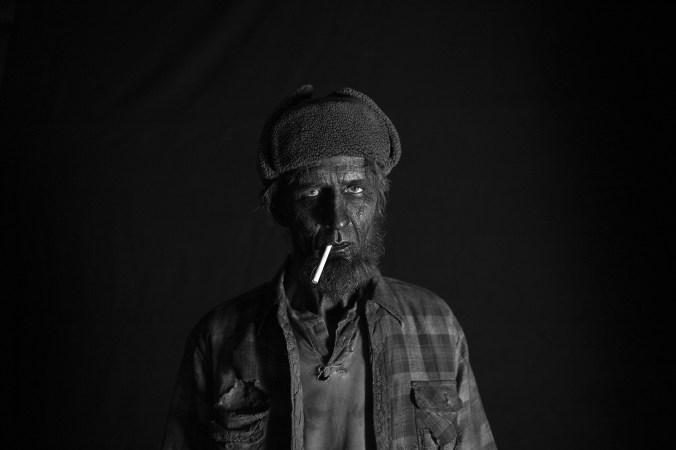
“Gotta light?” (Source)
If you’re a Twin Peaks fan like me, you watched what must be the strangest hour of material ever to air on television last Sunday. There are those who are also calling it one of the greatest episodes of any tv show in history. They may be right. In any case, Season Three, Part Eight has lingered with me (as with so many others). I thought I’d play around and make some mashups using footage from the new series and sound from the old. Don’t watch either if you don’t want spoilers. And remember to mute and expand the first video in each.
Here’s one using the “Twin Peaks Theme.”
And here’s one using “Laura Palmer’s Theme.”
Enjoy.
The Waste Land of Father John Misty
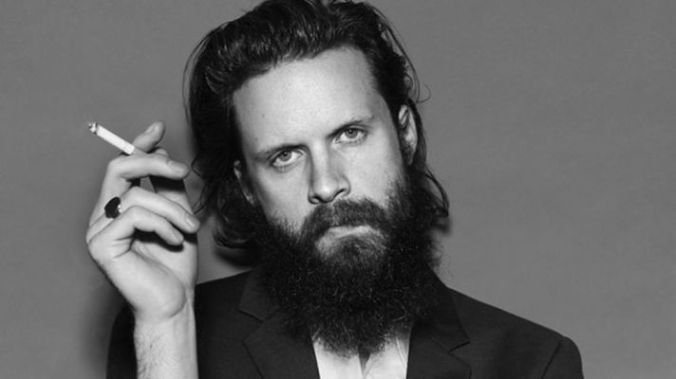
Father John Misty. (Source).
A Christ in sunglasses is nailed to a papier-mâché cross. He is, in fact, not just Jesus, but also Macauley Culkin and Kurt Cobain at once, the triune victim of philistines and a squad of jackbooted, mocking Romans who are dressed as Ronald McDonald. A Xenomorphic version of the clown himself pops out of the hook-handed captain’s chest and fires a lazer at a bleeding-eyed Virgin in a red Wendy’s wig. The good thief is Bill Clinton on a confetti-colored cross. The titulus crucis has been replaced with a cardboard scroll that reads “King of the Cucks.” Before departing, the last fast-food fascist takes a selfie with the Cobain-Christ. And good old George Washington, Oculus Rift still clasped to his head, burns to a crisp in orgiastic entertainment as the virtual sacrifice concludes.
Was this an Ayahuasca trip, a mystic hallucination, or a rather heavy-handed SNL skit?
The answer, of course, is D, none of the above. It’s just another Father John Misty video. This one is entitled “Total Entertainment Forever,” and the track comes from his new release from Sub Pop, Pure Comedy. Father John Misty (alias Josh Tillman) has long produced a body of work at once blasphemous and baffling, though occasionally given to brief bursts of beauty. There is less of this latter quality in his newest album, and it’s sorely missed. Tillman has instead given us a project bloated with its own sense of self-importance and suffocating on its own shallow satirical spite.
Of course, it’s perfectly fine for an artist to mock, to rally, or to critique. Some of the greatest art does all three at once. Take, for instance, that modernist monolith, The Waste Land. T.S. Eliot may have contended for years that it was just “the relief of a personal and wholly insignificant grouse against life…just a piece of rhythmical grumbling,” but critics of every generation have recognized in the poem a powerful diagnosis of the sickness of Western civilization. Much of Eliot’s “grouse” remains relevant today, in part because, even as he pilloried all kinds of people, he grounded his art in the perennial images of human culture.
Father John Misty, alas, does not. He is content to complain without saying anything all that deep, and without investing his work with the kind of symbolic depth we recognize in Eliot.
The titular track, “Pure Comedy,” sets the mood for the rest of the album. We might as well spend some time looking at the lyrics. They reveal quite a lot about Father John Misty’s priorities and self-perception. Here are the first lines:
The comedy of man starts like this
Our brains are way too big for our mothers’ hips
And so Nature, she divines this alternative
We emerged half-formed and hope that whoever greets us on the other end
Is kind enough to fill us in
And, babies, that’s pretty much how it’s been ever since
The song goes on to announce that mankind’s lot is really just,
Comedy, now that’s what I call pure comedy.
Just waiting until the part where they start to believe
They’re at the center of everything
And some all-powerful being endowed this horror show with meaning
That right there is the little light in the plane that tells us to buckle up and get ready for the hackneyed atheist bits.
Oh, their religions are the best
They worship themselves yet they’re totally obsessed
With risen zombies, celestial virgins, magic tricks, these unbelievable outfits
And they get terribly upset
When you question their sacred texts
Written by woman-hating epileptics
For those of you who didn’t watch the video I linked above, let me save you some time. He’s not talking about Islam and Judaism. Tilman is mainly targeting Catholicism, even if he refrains from becoming explicit about it in the lyrics. Worse, he’s not even terribly original. The verse just distills the common, fedora-tipping New (c. 2006) Atheism of the Internet. Josh Tilman is no Ivan Karamazov.
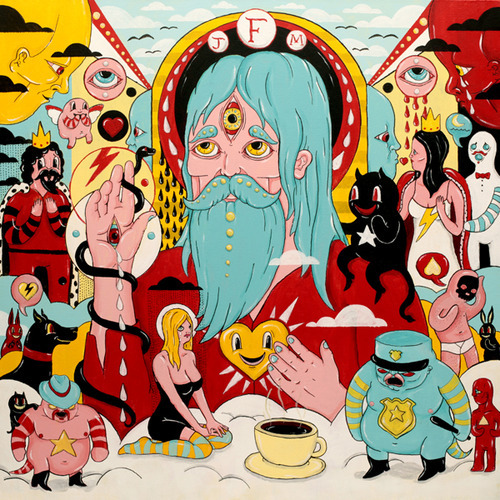
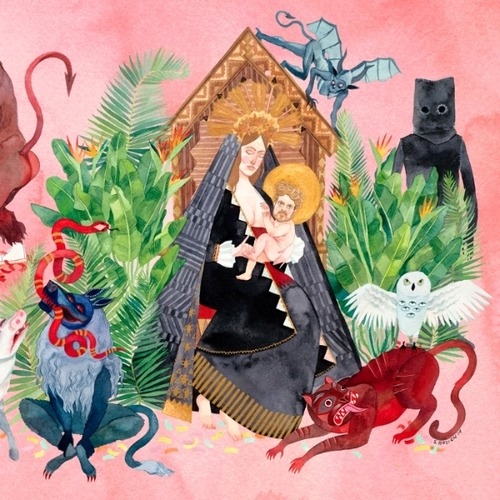
Tillman has shown a longstanding interest in religious themes, as his previous two album covers demonstrate. He is known to sprinkle his songs with religious allusions. Pure Comedy features a track entitled “When the God of Love Returns There’ll Be Hell to Pay.” Tillman sings about what he would tell Jesus as the Apocalypse unfolds. He says that he would give Jesus a tour of the world, then says:
Barely got through the prisons and stores
And the pale horse looks a little sick
Says, “Jesus, you didn’t leave a whole lot for me
If this isn’t hell already then tell me what the hell is?”
Tillman, never wary of blasphemy, says to Christ, “And now you’ve got the gall to judge us.” One might point out the irony of Tillman posing as a holier-than-thou moral authority when, just a few lines earlier, he equates prisons and stores. If this fatuous and fundamentally unserious judgment doesn’t betray a warped moral sensibility, then I’m not sure what does.
On a more philosophical note, let me say that it is the prerogative of the artist to explore the bounds of the possible, especially when crafting strange hypotheticals like the one that Tillman imagines. Tillman also works in a long tradition of artists who mediate their work through the careful deployment of personae. His stage-name, Father John Misty, is a good example of this tendency (and a religiously-tinged one at that). But even granting these stipulations about the nature of art, we should remember a third point. All art inherently crafts aesthetic experience and therefore “sets the stage” for a presentation and affective reception of beauty. Insofar as art is bound to beauty, it is necessarily tied to the good and the true as well. Art can deny, flatter, hide, contest, mask, or assail goodness and truth, but it can never be rid of them and their own proper criteria. The problems that arise when we try too hard to make art “good” or “true” are many and easy to identify. But we cannot totally separate the aesthetic world from the moral and scientific spheres of life. An artist whose work displays a perverse moral sensibility may produce great art, but it will be somewhat immoral, and it may not correspond to the way things really are.
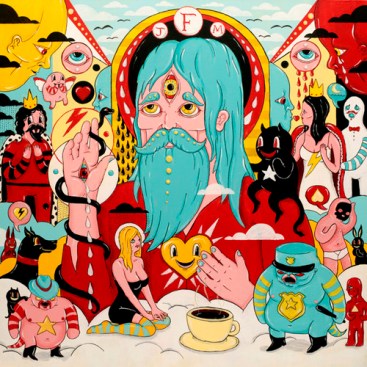
Fear Fun (2012). A much better album. Note the religious imagery underneath all the chaos.
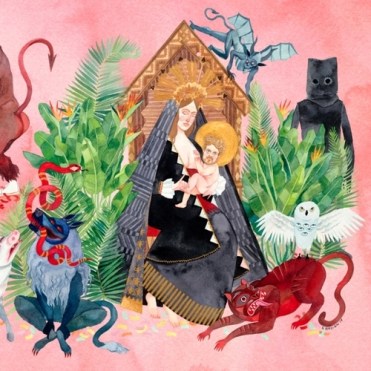
I Love You, Honeybear (2015). A not very good but still better album. Here, too, FJM appropriates Christian iconography.
But back to “Pure Comedy.”
Perhaps because his criticism of religion/Christianity is so stale, Tillman spices things up a bit in the next verse by trying to be Relevant© and Woke™. Even without watching the video, you can tell that it’s about a certain unsavory Head of State.
Their languages just serve to confuse them
Their confusion somehow makes them more sure
They build fortunes poisoning their offspring
And hand out prizes when someone patents the cure
Where did they find these goons they elected to rule them?
What makes these clowns they idolize so remarkable?
These mammals are hell-bent on fashioning new gods
So they can go on being godless animals
It’s not clear whether Tillman lost his faith in humanity because of Trump, or if the Donald’s ascent merely confirmed a longstanding pessimism. One could perhaps sympathize with the latter position, if only because it would be intellectually honest.
But I digress.
We come to the emotional climax of the song.
Oh comedy, their illusions they have no choice but to believe
Their horizons that just forever recede
And how’s this for irony, their idea of being free is a prison of beliefs
That they never ever have to leave
I would take his point more seriously if it were not a banal and adolescent bastardization of Camus or Rand or Nietzsche or [insert edgelord here]. “Pure Comedy” is not unique in this sense of immaturity. Listening and reading through all the songs, I was repeatedly reminded of angsty teenage poetry. Tillman’s unhappy tendency to be biographical, abstract, and preachy was not nearly as pronounced in his earlier work as Father John Misty (I can’t speak to his releases as J. Tillman).
Unfortunately, the song doesn’t get better from there. In the final verse, Tillman croons,
The only thing that seems to make them feel alive is the struggle to survive
But the only thing that they request is something to numb the pain with
Until there’s nothing human left
Just random matter suspended in the dark
I hate to say it, but each other’s all we got
The idea of our planet being nothing more than a rock in space comes up again and again throughout the album. At the beginning of one track, Tillman calls the earth “this bright blue marble orbited by trash.” It’s Eliot’s “Unreal City,” brought up to date for the space age. But in that last line, we hear the echoes of Auden’s famous poem about the beginning of World War II; “We must love one another or die.” It’s a maudlin sentiment that Auden repented for the rest of his life. One wonders if Tillman will someday look back on the shallow clichés of “Pure Comedy” with the same sense of regret.
The rest of the album continues these themes. Tillman gives us a tour of the imbecility of human nature, especially as manifested by the entertainment industry, pharmaceutical corporations, Republicans, fast food, the religious, Middle America, social media, public intellectuals, and ideologues of all sorts. By the end, the Holden Caulfield act gets old. In most of the songs, the music trundles along aimlessly, neither powerful nor novel enough to sustain Tilman’s puerile lyrics.
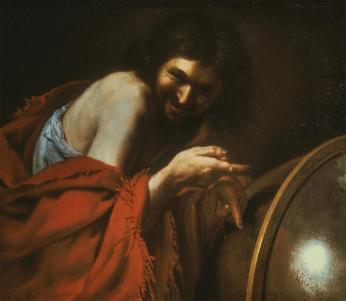
Democritus laughs because he sees that the world is hopeless. (Source).
All of which is a serious disappointment to someone like me, who’s been a fan for years. You see, this ain’t Father John Misty’s first rodeo in the American Wasteland. His earlier work often treated these same themes, but in a more aesthetically and intellectually sophisticated way. Where in Pure Comedy do we find a song that matches the sultry and haunting sense of doom rippling through “Funtimes in Babylon?” Or the perky, quirky, frenzied mania of “I’m Writing a Novel?” Or the languid malaise of “Bored in The USA?” Or the soulfully earnest and operatically desperate madman’s litany, “Holy Shit,” perhaps Tilman’s finest piece yet? All of these songs work, not just because of their evocative lyrics, but because they are genuine musical accomplishments. Each is a gem of a song in its own way. In each, Tillman flexes the considerable powers of his unique voice. His sound manages to swing seamlessly between a controlled vigor and a vulnerability that shines without brittleness.
The album is not without its strengths. The satire does sometimes land pretty well, as in “Birdie” and “Things It Would Have Been Helpful To Know Before the Revolution” and “Ballad of the Dying Man.” In “The Memo,” Tillman wields his well-refined sense of shock value to drive home an unremittingly cynical take on the entertainment and advertising industries. But perhaps I’m just gravitating to songs that are pretty clearly meant to mock the left establishment or deflate the pretensions of neoliberals and transhumanists.
In “Dying Man,” we hear:
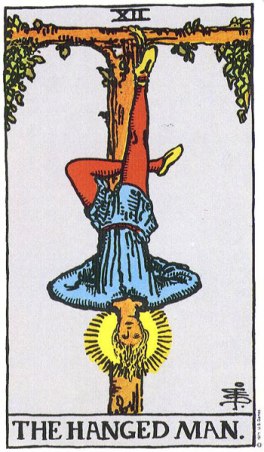
“Consider Phlebas…” (Source)
So says the dying man once I’m in the box
Just think of all the overrated hacks running amok
And all of the pretentious, ignorant voices that will go unchecked
The homophobes, hipsters, and 1%
The false feminists he’d managed to detect
Oh, who will critique them once he’s left?
A nice bit of biting sarcasm there. But sadly, Tilman smothers his wit under clunky diction—a verbose, chatty mess apparently composed without any care for euphony. Paired with lackluster music, the song fails.
The only really superlative work in the entire album is Tillman’s flawless penultimate track, “So I’m Growing Old on Magic Mountain.” Here, too, he is commenting on the madness of our times. But he’s left aside the pose of the pontificating prophet. Gone are the grand and sweeping lines about “human nature” as in “When the God of Love Returns.” Gone, too, are the plastic, pop-culture in-jokes that masquerade as hot takes; gone, the pearl-clutching about the woes of consumerism and fast food and the stupid white people who vote Republican and believe in God.
Instead, Tillman tells a story. A New Year’s Eve party has just ended, and the revelry is fading away. One of the guests describes the scene.
That’s it. Observe:
The wine has all been emptied
And smoke has cleared
As people file back to the valley
On the last night of life’s party
These days the years thin till I can’t remember
Just what it feels like to be young forever
Tillman’s more symbolic and sensitive tack suits his message; our age echoes the cultural moment that led Thomas Mann to write The Magic Mountain, and coming to grips with that realization has aged us. His sonic scene-craft evokes universal images and elevates the song into a testament of the human condition. If Tilman intends to speak to our particular cultural moment in Pure Comedy, he succeeds with “Magic Mountain.”
The only real shame is that there weren’t more songs like it on the rest of the album.
Pure Comedy
Father John Misty, Sub Pop Records, 2017
5.5/10 stars.
You Must Watch “The Keepers”
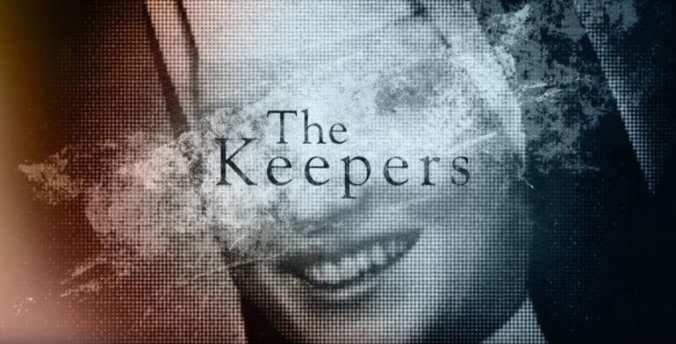
Who killed Sister Cathy? (Source).
You must watch The Keepers if you have Netflix. And if you don’t, you should start a subscription or a free trial to watch it. If you are a Catholic, I dare say that you have a duty to do so. I said the same thing about John Michael McDonagh’s Calvary, for much the same reason.
The Keepers tells the story of Sister Cathy Cesnik S.S.N.D., who was found murdered in the woods outside Baltimore in January of 1970. In seven riveting episodes, the series follows the intrepid amateur investigators who have, for years, devoted untold time and energy to solving this case. As private citizens, they have conducted important research into the case that the police should have done years ago. But the series isn’t just a compelling murder mystery (though, at times, it does rise to the level of the best true-crime tv). The Keepers is also a powerful testimony to the grim reality of clerical sex abuse, the corruption that aids the perpetrators, and the strength of the survivors.
If you are content with what I have written thus far and don’t want to risk any spoilers, then please don’t continue reading.
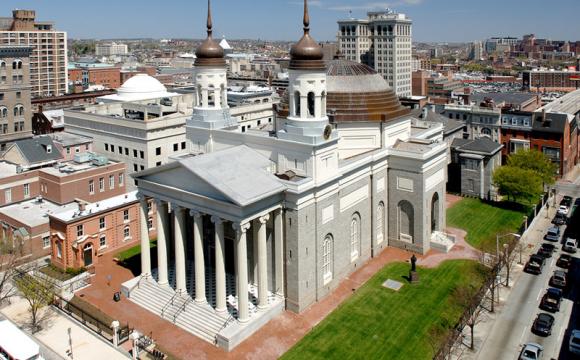
Basilica of the National Shrine of the Assumption of the Blessed Virgin Mary, Baltimore. (Source)
Sister Cathy had previously worked at a local Catholic girls’ school, Archbishop Keough High School. In 1969, she had discovered that the school chaplain and counselor, Father Joseph Maskell, was sexually abusing the students. In November, she disappeared in the night and was never seen alive again.
The series delves deep into the crimes of the priest, which are many and shocking. Maskell was violent and incredibly manipulative. He was a trained psychologist who preyed on his victims’ emotional and personal weaknesses and conducted deeply invasive psychological and physiological tests on them.

The affable face of evil. Father Joseph Maskell, c. 1969. (Source).
But, as with so many of these stories, the far more enraging element of it all is the cover-up. And boy is there a cover-up. Notice I used the present tense. The series strongly suggests that the law enforcement agencies of the greater Baltimore area deliberately turned a blind eye to the abuse and failed to properly investigate Sister Cathy’s murder – even today. There are reasons for this that I won’t get into here.
But perhaps more infuriatingly, the Archdiocese of Baltimore not only refused to give an interview to the filmmakers, but a) lied to the filmmakers about the history of complaints against Maskell, b) never mentioned that Maskell was sent to Ireland after a civil suit in the 1990’s, c) has refused to release any of their records related to Father Maskell, and d) repeatedly scuppered legislation to extend the statute of limitations on cases of sexual abuse. The show gets into some of these matters. But the Archdiocese’s reaction since the series premier has been shameful. It has waged a misbegotten social media campaign to smear the series.
Or consider this concatenation of coincidences I happened to just discover.
In the very last episode, we hear from one of Maskell’s first victims. He was an altar boy at Maskell’s parish, and when he complained to his mother, she alerted the Archdiocese. That was 1967. As a result, Fr. Maskell was promptly transferred to Archbishop Keough, where he carried on a covert reign of terror for eight years alongside his similarly perverted assistant, Fr. Neil Magness. Maskell’s secrets started to leak in the 1990’s when two brave victims, former students of Keough, filed a Jane Doe-Jane Roe suit against him and the Archdiocese. During that period, the first victim – that altar boy, then a dentist and family man – was contacted by the Archdiocese. They set up a private meeting led by (then) Monsignor W. Francis Malooly. At that meeting, Malooly allegedly attempted to bribe the victim into keeping quiet, so as not to provide corroboration for the complainant’s claims.
These are allegations. You are free to reject them. What you are not free to dispute is that the meeting between Malooly and the first victim happened. Malooly himself admits it, though he characterizes it rather differently (as you can see in the show). Likewise, you cannot dispute that Monsignor Malooly was later raised to the episcopate by Pope St. John Paul II and is currently serving as the Bishop of Wilmington, Delaware.
Now, a very strange thing happened when I googled Malooly’s name.
The first news item I got was this:
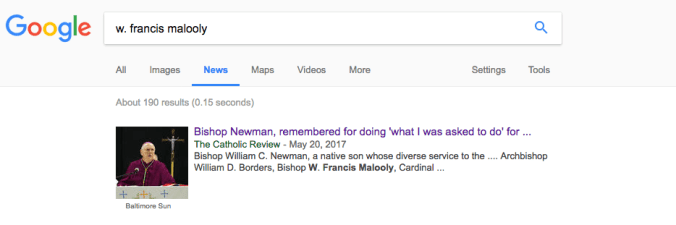
But if when I clicked on it, I got this error page:

And what is The Catholic Review? Why, the newspaper of the Archdiocese of Baltimore!
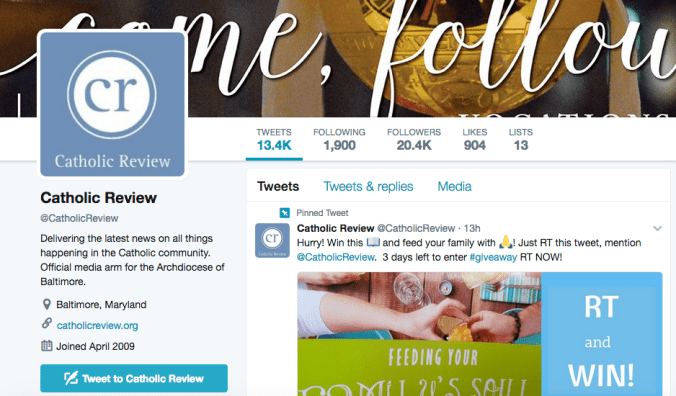
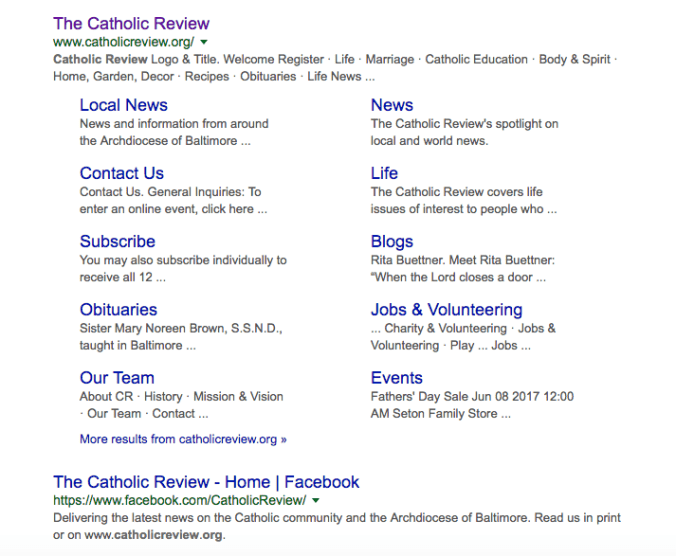
And if you click on the homepage of the website, you get the same error:
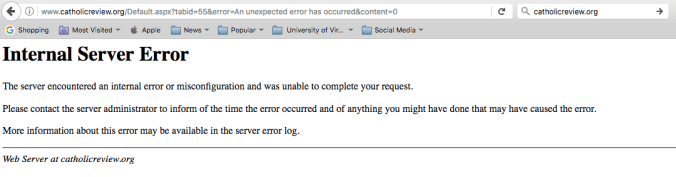
All of this strikes me as suspicious. There may be a perfectly innocuous reason why the Archdiocese of Baltimore’s newsletter is down at precisely the same time that it’s facing a firestorm over its egregious social media response to these allegations. It doesn’t make a lot of sense why the Archdiocese would bother to do something so drastic. I know so little of technology that I may be fumbling towards nothing here, finding strange connections where there are none.
But that timing. It’s hard to discount.
Ultimately, this is why we need good priests. This is why we need souls given to ministries of reconciliation and reparation to the Sacred and Eucharistic Heart of Jesus. Every abuse of an innocent is one more wound to the Holy Face of Christ. Shows like The Keepers remind us of our guilt, and of our need for salvation. They also remind us of our paramount responsibility towards the defenseless.
I don’t write any of this to scandalize the faithful. I write because Catholics should be furious. We should be filled with the righteous wrath of God that these kinds of abuses—both of innocence and power—take place in our midst. I write to my fellow converts, especially younger ones. We don’t talk about this issue enough, probably because most of us have never had direct contact with it. For us recent converts, the sex abuse crisis can often seem like a phenomenon of past decades, something that happened in stifling parish communities simmering with clericalism, patriarchy, and a ghetto mentality to boot. It is easy as a convert, and particularly as a young convert, to write off the sex abuse crisis (implicitly, if not overtly) as a phenomenon of the hypenated-American-Catholicism of the Northeastern working classes, a faith that was more about social pressure and cultural values than theology, tradition, and mysticism.
And in that, we are wrong. Clerical sex abuse and its cover up are still grievous sins that we have not yet fully grappled with, and which—sadly—I expect will continue to be an issue in the future. Among the many disappointments of this pontificate, perhaps the most bitter is that Pope Francis has proven to have such a poor record when it comes to pedophile priests.
There can be no doubt that those aforementioned -isms and -archies made clerical sexual abuse much harder to prevent, much harder to stop, and much harder to punish. The Keepers gets into some of that, though not as much as it could have. And that’s fine. Instead, it captures and sensitively presents the spiritual, emotional core of the problem. At its heart, The Keepers is about bearing witness. It testifies to the profound failure of the Church to guard its innocents. True, the chief villains are all dead. True, we may never know the full rogues’ gallery of their accomplices. But the horrible pains caused by those villains rippled through hundreds of lives—and continue to do so today. And we must never forget it.
Kyrie eleison, Christe eleison, Kyrie eleison.
 The Amish Catholic