A Benedictine Prayer to St. Philip Neri in Lenten Time

gueranger4-150dpi

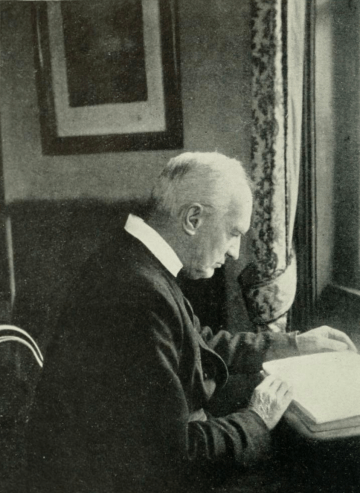
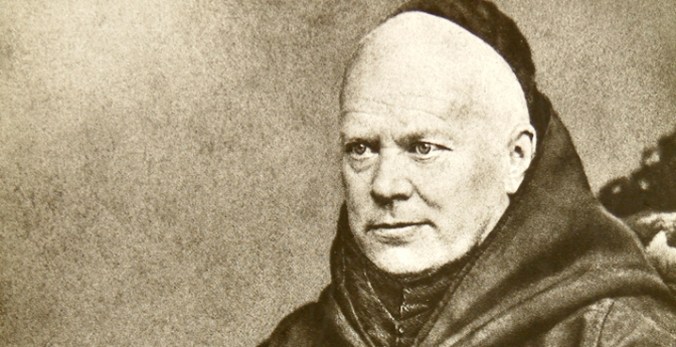
Ven. Dom Prosper Guéranger. (Source)

Many of my readers will know the Venerable Dom Prosper Guéranger (1805-1875) for his monumental work of sacramentology and liturgical exegesis, The Liturgical Year. I happened to be perusing a 1908 French edition of the text and came upon Dom Guéranger’s homage to St. Philip Neri in Volume 3 of his Easter writings. Naturally, this discovery was of great interest to me, as I have written before on the similarities between the Oratorian and Benedictine vocations. I thus present to you my own translation of the prayer, found on pages 548-50 in the edition I was using. I hope it may be thought a fair translation of the great monk’s words. At any rate, I have tried to render his prayer in an elevated style worthy to the subject.

Thou didst love the Lord Jesus, O Philip, and thy whole life was nothing but a continuous act of love; but thou didst not wish to enjoy the highest good alone. All thine efforts tended to make Him known by all men, such that all might love Him with thee and thus reach their supreme end. For forty years, thou wast the indefatigable apostle of the holy city, and nothing could subtract from the action of the divine fire that burned in thee. We who are the posterity of those who heard thy words and admired the celestial gifts in thee, we dare to beg of thee to cast thy gaze upon us as well. Teach us to love our Jesus resurrected. It does not suffice for us to adore Him and to rejoice in His triumph; we must love Him: for the train of His mysteries from His Incarnation to His Resurrection have no other aim but revealing to us, in an ever growing light, His divine kindness. It is by loving him ever more that we shall succeed in elevating ourselves to the mystery of His Resurrection, which fulfills in us the revelation of all the riches of His heart. The more He lifts Himself into the new life that He won in leaving His tomb, the more He appears full of love for us, and the more He desires that our hearts should be joined with His. Pray, O Philip, and beg that “our heart and our flesh might quake for the living God” [Ps. 83:2]. After the mystery of Easter, introduce us to that of the Ascension; dispose our hearts to receive the divine Spirit of Pentecost; and when the august mystery of the Eucharist shines before our eyes with all its fires in the solemnity that approaches, thou, O Philip, who didst celebrate it one last time here below, who didst rise at the end of the day to that eternal rest where Jesus shows Himself unveiled, do thou prepare our souls to receive and to taste “the living bread which giveth life to the world” [John 6:33].

The sanctity that shone in thee, O Philip, had as its character the momentum of thy soul towards God, and all those who approached thee soon participated in this disposition that alone could respond to the call of the divine Redeemer. Thou didst know that thou took hold of souls, and thou drovest them to perfection by the way of trust and generosity of heart. In this great work thy method was never to have any method at all, imitating the Apostles and the ancient Fathers, and thou didst trust in the virtue proper to the word of God. By thee the fervent frequenting of the sacraments reappeared as the surest sign of the Christian life. Pray for the faithful, and come to the aid of so many souls who grow restless and exhaust themselves in the paths that the hand of man hast traced, and that too often retard or prevent the intimate union of Creator and creature.

Thou didst most ardently love the Church, O Philip; and this love of the Church is the indispensable sign of sanctity. Thine elevated contemplation did not distract thee from the dolorous lot of this holy Bride of Christ, so tested in the century when thou wast born and died. The efforts of triumphant heresy in so many countries enkindled zeal in thy heart: obtain for us from the Holy Ghost this living sympathy for Catholic Truth that renders us sensible to its defeats and victories. It does not suffice for us to save our souls; we must desire with ardor and aid with all our means the advancement of the Reign of God on earth, the extirpation of heresy, and the exaltation of our mother the holy Church: it is in this condition that we are children of God. By thine examples, O Philip, inspire in us this ardor by which we must totally associate ourselves with the sacred interests of our common mother. Pray as well for the Church Militant which counted thee in her ranks as one of her best soldiers. Serve valiantly the cause of Rome, which holds as an honor the debt owed to thee for so many of thy services. You sanctified her during thy mortal life; hallow her again and defend her from heaven on high.
sc1119.jpg

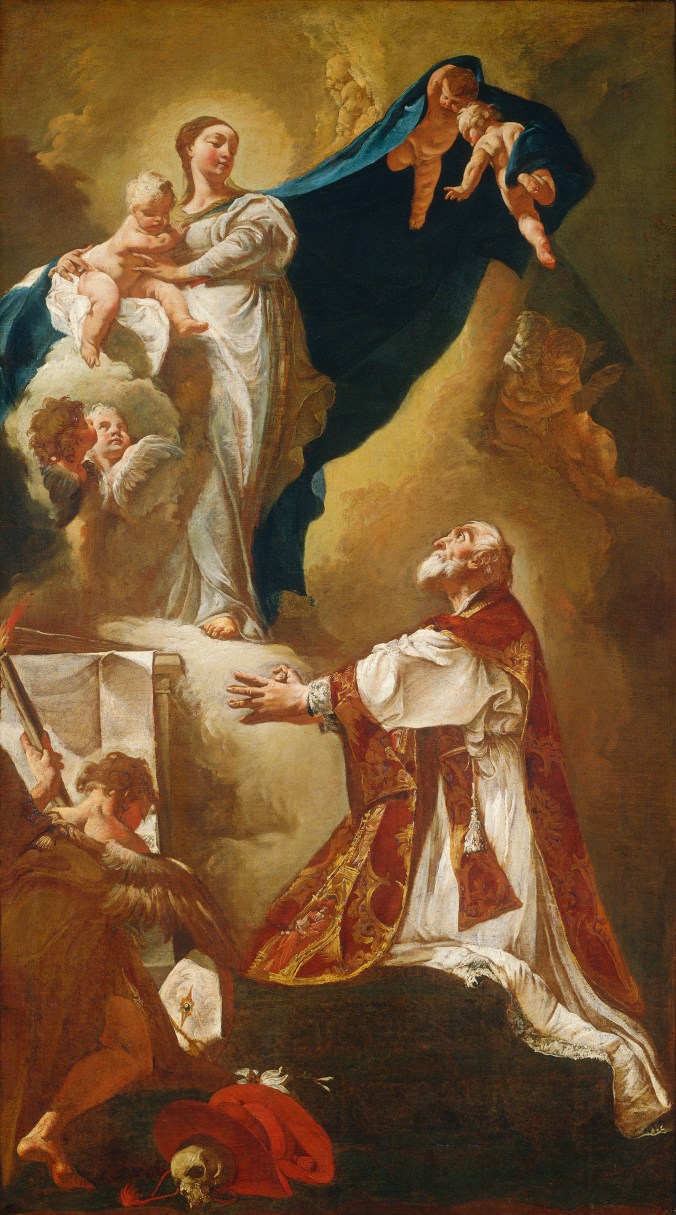
Madonna and Child Appearing to St. Philip Neri, Giovanni Battista Piazzetti, c. 1725. (Source)
 

Fr. Faber on Unhappiness

Our Lady of Sorrows St Stefano

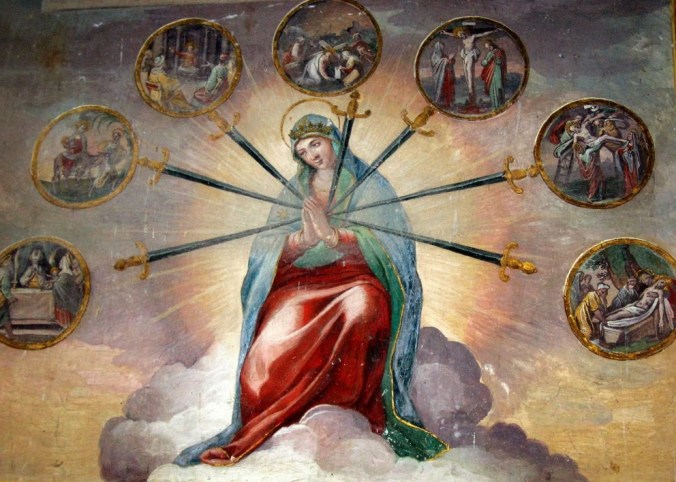
Our Lady of Sorrows, pray for us in this penitential season. (Source)
As we continue through Lent, I thought I might share some edifying words from various spiritual writers every Wednesday. This week’s writer is Fr. Faber. The passages are no doubt drawn from various works, but I found them in pages 63-70 of The Spirit of Father Faber, Apostle of London (1914). Perhaps you find yourself in an unusually stark unhappiness – perhaps someone you love is ill – perhaps there is tumult in your personal life – perhaps you face doubt and despair. Meditate on the words of Fr. Faber, which brim with a supernatural wisdom drawn from his long experience of the care of souls.

Unhappiness

I

UNHAPPINESS is not without mystery even in a fallen world. By rights there should be no unhappiness at all. For is not the whole world full of God everywhere, and can there be unhappiness in the neighbourhood of God ? How much goodness and kindness is there in everyone around us, if we only take a kindly view of them ourselves ! Sin is easily forgiven to those who are in earnest. Grace is prodigally bestowed. There is an almost incredible amount of actual enjoyment, and pain and suffering themselves are quickly turned to sanctity. Yet for all this the unhappiness of the world is real. Almost
every heart on earth is a sanctuary of secret sorrow. With some the grief is fresh. With others it is old. With immense numbers the unhappiness is literally lifelong, one out of which there is no possible escape except through the single door of death. With some it arises with having chosen an unfit lot in life from the first. With others it is from the unkindness, misconduct, or misunderstanding of those they love. In some cases men have to suffer for their religion, and its consequences are made by the cruelty of others to last to the end of their days. Not unfrequently it comes from men’s characters, or from their sins, or from some consequences of these. Now and then it is the burden of a broken heart, a heart which has been overweighted, and so has snapped, and thus lost its elasticity and the power of throwing off its sorrows. To much suffering time brings no healing. The broken heart lies bleeding in the hand of its Heavenly Father. He will look to it. No one else can.

II

SORROW is to the elect on earth, what the Beatific Vision is to the Saints in Heaven. It is God’s presence, His manifestation of Himself, His unfailing reward. We must not be amazed therefore if new efforts to serve God bring new sorrows in their train. By the supernatural principles of the spiritual life, they ought to do so. If we are able to bear them, these sorrows will come at once. Their delay is only the index of God’s estimation of our weakness. Yet we need not fear that they will be disproportioned to our strength. God’s blows are not dealt out at random. Our crosses are poised to a nicety by Divine wisdom, and then Divine love planes them, in order to make them at once smoother and lighter. But we can have no real comfort in devotion, if we are without trials. We have no proof that God accepts us, no security against delusion. We know that the stars are in their old places in the sky ; but in different states of the atmosphere they seem much farther off than at other times, or again much nearer, like teardrops of light on the very point of falling to the earth. So is it with God. Joy makes Him seem far off, while sorrow brings Him near, almost down into our bosom. When sorrows come, we feel instinctively their connection with the graces which have gone before, just as temptations so often have an odour about them of past victories. They come up, one after another, dealing their several blows upon our poor hearts, with such a modest heavenly significancy upon their faces, that it is easy to recognise angels beneath the thin disguise. As we touch them, even while the thrill goes through us, we feel that we are almost handling with our hands our own final perseverance, such solid evidence are they of our adoption, so full of substantial graces in their presence, and leaving such a legacy of blessings when they go. A heart without sorrows is like a world without a revelation. It has nothing but a twilight of God about it.

III

FURTHERMORE our sorrow must be our own. We must not expect anyone else to understand it. It is one of the conditions of true sorrow, that it should be misunderstood. Sorrow is the most individual thing in the whole world. We must not expect therefore to meet with sympathy at all adequate to what we are suffering. It will be a great thing if it be suitable, even though it is imperfect. It is a very desolate thing to have leaned on sympathy, and found that it would not bear our weight, with such a burden of sorrow upon our backs. It is very difficult to erect ourselves again. The heart sinks upon itself in dismay. It has used its last remaining strength to reach the place where it would rest itself, and now what is left for it, but a faintness which opens all the wounds afresh, and a dismal conviction that the grief is less tolerable than it was before? It is best therefore to keep our sorrows as secret as we can. Unfitting sympathy irritates us, and makes us sin. Inadequate sympathy lets the lame limb fall harshly to the ground. The denial of sympathy excites almost a querulous despair. God knows everything. There are volumes of comfort in that. God means everything. There is light for every darkness out of that simple truth. Our hearts are full of angels when they are full of sorrows. Let us make them our company, and go on our road, smiling all the day, scattering such sweetness round us as mourners only are allowed to scatter, and God will understand us, when we go to Him.

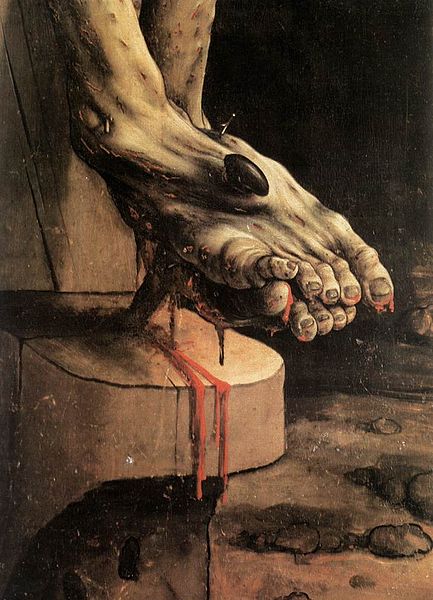
433px-Matthias_Grünewald_-_The_Crucifixion_(detail)_-_WGA10728,jpg

Detail of the Isenheim Altarpiece, Matthias Grünewald. (Source)

IV

JESUS will be a cause of blessed sorrow to every one of us. There are very many happy earthly things which we must sacrifice for Him ; or if we have not the heart to do so, He will have the kind cruelty to take them from us. Persecution is a word of many meanings, a thing of countless shapes. It must come infallibly to every one who loves our dearest Lord. It may come through the hard tongues of the worldly, or in the suspicions and jealousies and judgements of those we love. In the peace of family love and domestic union it often comes from hands which make it hard to be endured; and because of religion, there is keen misery where the casual visitor sees nothing but the edification of mutual love. Who was ever let alone to serve Jesus as he wished? It is idle to expect it. The husband’s love rises against it in the wife. The mother will tear her children from the Saviour’s arms. The father looks with suspicion on the claims of God, and jealousy of the Creator will make him harsh to a child who has never given him an hour of trouble in life beside, and to whom he has never been harsh before. The brother will forego the manliness of fraternal affection, and bring the bitterness of the world’s judgements into the sacred circle of home, if Jesus dares to lay a finger on his sister. O poor, poor world! And it is always the good who are the worst in this respect. Let this be laid to heart, and pondered. Outside of us, beside this inevitable persecution, our Lord will bring trials and crosses round us, at once to preserve our Grace and to augment it. The more we love him the thicker they will be. Nay, our love of Him often gets us into trouble we hardly know how. It almost leads us into faults, into imprudences to be repented of. Suddenly, especially when we are fervent, the ground gives way under our feet, and we sink into a pit, and in the retrospect, our fall seems inexcusable, and yet how did it come to pass ? How also is it within the soul ? Are there not such things as the pains of love ? Are they not more common than its joys ?

V

THEN there is the worse pain of not feeling our love, of seeming to lose our love, of its for ever slipping away from us. There are also interior trials, by which self-love is put to a painful death, and a cleansing of our inmost souls by fire, which is exceeding agony. Then there are the distresses into which the love of Jesus entraps us. It persuades us to give up this world, to put out all the lights wherewith earth had made our hearts gay, to break ties, to eschew loves, to commit ourselves to hard dull lives, and then it leaves us. God hides His countenance from us. All view of the other world is shut off from us. Just as it is at sundown, no sooner has the last rim sunk below the horizon, than, as if evoked by a spell, from river-side, from woody hollow, from pastures where the kine are feeding, from meadows with the haycocks standing, there rises up a cold white blinding mist : so is it in the soul, no sooner is God’s Face gone, than past sins, ghastly things, break up from the graves in which absolution laid them, and present imperfections, and unknown temptations, and chilling impossibilities, of perseverance, all rise up together, and involve the soul in the coldest gloomiest desolation, through which no star can pierce, and it is much if a sickly whiteness tells us that there is a moon somewhere. Who does not know these things ? It is no use shuddering. They are not on us now ; but they will come back again, be sure, when their hour arrives. Thus Jesus is in us a cause of sorrow, in us He is a sign to be contradicted, in us is He set for the rise and fall of many.

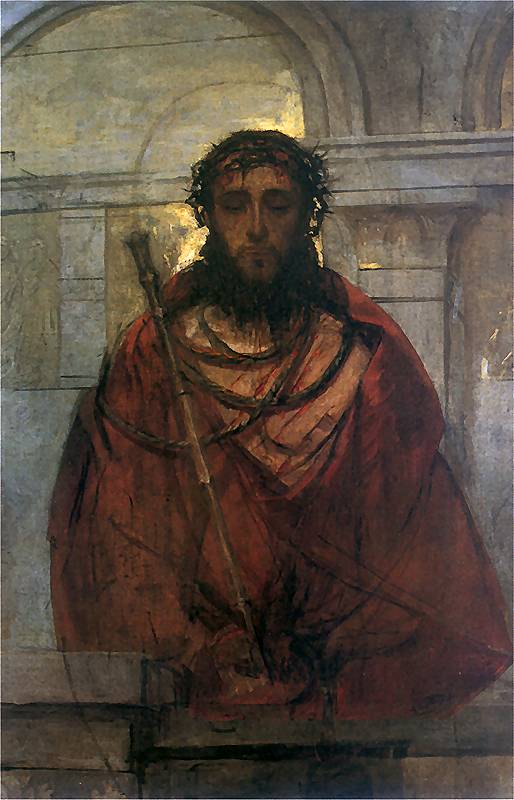
ChmielowskiAdam.1881.EcceHomo

Ecce Homo, Adam Chmielowski, 1881. (Source)

A Spanish Mystic of the Sacred Heart

Providence sometimes ordains that we should come across new friends in Heaven at exactly the right time. This happy accident of grace has just occurred to me.

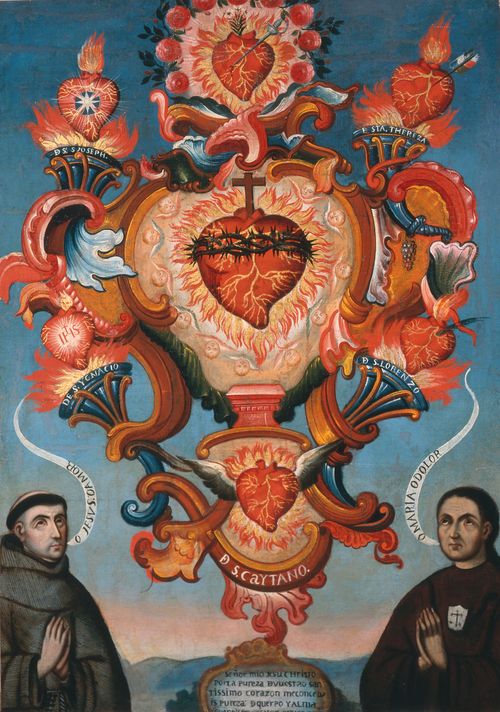
SacredHeartTimesSix.jpg

Holocausto de Corazones al Sagrado Corazon de Jesus, 17th century Mexican. (Source)
I’ve been reading about the Jesuits of the late 17th and early 18th centuries quite a lot recently in connection with my research. My admiration for them has grown tremendously. I always used to have a devotion to the Jesuit martyrs of Elizabethan and Jacobean England, and to an extent, I still do. But the Continental Jesuits who did so much to combat the spread of Jansenism are a marvel to behold. For all my jokes about the suppression of the Jesuits and my appreciation of Pascal, I have to say that the Jansenists were a nasty bunch. The more one studies their history and doctrines, the colder one feels. Thus, I especially admire those tireless evangelists of the Sacred Heart such as St. Claude de la Colombière, whose feast we celebrated yesterday. Along with this revived interest in the Continental Jesuits, I’ve found myself drawn to the Sacred Heart in recent weeks.

librohoyos

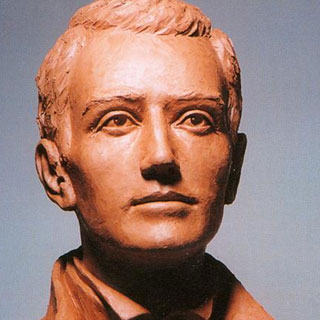
Bl. Bernardo Francisco de Hoyos S.J. (Source)

Into this recent ferment of the spirit came an unexpected intrusion of grace. As I was scrolling through Facebook, I saw that in one of my Catholic groups, someone had posted an article about a mystic and asked what we all thought. I opened the link and discovered a new and remarkable saint: the Blessed Bernardo Francisco de Hoyos, S.J.

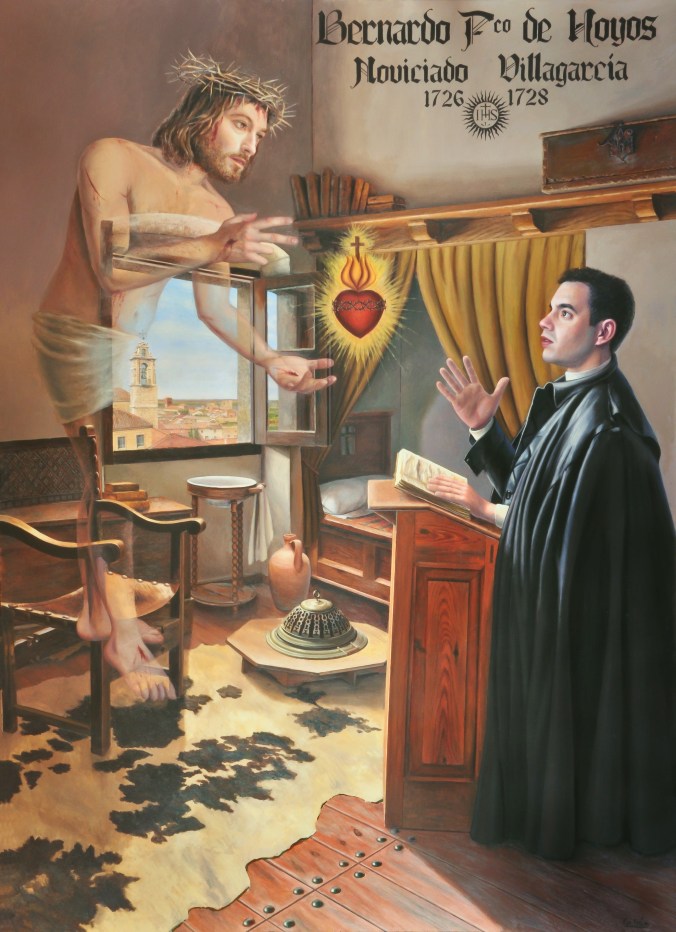
The Blessed Bernardo entered the Jesuit novitiate in 1726 when he was not yet fifteen. In the early years of his formation, he felt a strong attraction to the (then) Blessed John Berchmans, a model of Jesuit youth, seeking to emulate him in all things. The young saint later had a powerful “dark night of the soul” that involved demonic torments. When he came out on the other side, however, the Lord appeared to him in some of the most remarkable visions of the age. To wit:

Always holding my right hand, the Lord had me occupy the empty throne; then He fitted on my finger a gold ring…“May this ring be an earnest of our love. You are Mine, and I am yours. You may call yourself and sign Bernardo de Jesus, thus, as I said to my spouse, Santa Teresa, you are Bernardo de Jesus and I am Jesus de Bernardo. My honor is yours; your honor is Mine. Consider My glory that of your Spouse; I will consider yours, that of My spouse. All Mine is yours, and all yours is Mine. What I am by nature you share by grace. You and I are one!” – The Visions of Bernard Francis De Hoyos, S.J., Henri Béchard, S.J.

bernardfrancishoyos

A modern rendition of Bl. Bernardo. (Source)

Assuming this quote is accurate – like the author from whom I took it, I am unable to verify it (Bechard’s book is extremely rare) – it evinces an eminent degree of spiritual maturity. Dom Mark Daniel Kirby reports on more of the young saint’s experiences:

On August 10, 1729, the Saviour, covered with His Precious Blood, appeared to Bernardo, and showing him the wound in His Side, said, “Rejected by humanity, I come to find my consolation with chosen souls.” Bernardo’s experience closely resembles that of Saint Margaret Mary Alacoque fifty-three years earlier in the Visitation Monastery of Paray-le-Monial in France.

SacredHeartprint

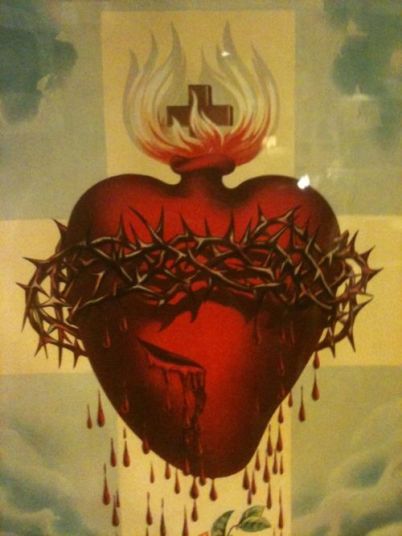
The Sacred Heart of Jesus. (Source)

It should be no surprise to us, then, that Bl. Bernardo was a profound devotee and propagator of the Sacred Heart of Jesus. In 1732, when he was only 22, the Lord entrusted him with the mission of spreading love for the Sacred Heart, both “as a means of personal sanctification and as an effective means for accomplishing the apostolate.” That year, he consecrated himself to the Sacred Heart using St. Claude’s formula. Shortly after, he collaborated on a book about the devotion entitled The Hidden Treasure (alas, I don’t know if it has been translated into English). His brief priesthood – he died of typhus less than a year after ordination – was a total gift to the Sacred Heart. He was known to say, “Oh, how good it is to dwell in the Heart of Jesus.” These were, no doubt, the words of one who dwelt there indeed.

Bl. Bernardo was beatified in Valladolid on April 19, 2010. He is a special patron against the sin of impurity, perhaps because his own chastity was sealed in a mystical marriage to Jesus.

One of the things that truly struck me about Bl. Bernardo’s story – aside from his devotion to the Sacred Heart, which is, as I mention, timely – was his youth. He was only a year older than me when he died. To think that someone could achieve such heights of holiness in such a short time is a wonderful encouragement.

But of course, the growth of a soul is not, strictly speaking, a matter of our own effort. It is the work of the Holy Ghost in us. Bl. Bernardo is an example of what happens when we open ourselves totally to the operations of the Holy Ghost. Not everyone will receive visions. In fact, very few souls are so privileged. But they are given to the Memory of the Church so that we who are less favored may take some inspiration by their example and glimpse more perfectly some aspect of Our Savior. Christ is the one light caught by so many prisms through the centuries. Bl. Bernardo is one such pure glass, shining through the ages to light our way. May he pray for us in this Lenten season.

Bernardo_Fco_de_Hoyos.jpg

Bl. Bernardo Francisco de Hoyos’s vision of the Sacred Heart. (Source)
Fr. Bowden’s Meditations for Lent

870px-Kramskoi_Christ_dans_le_désert

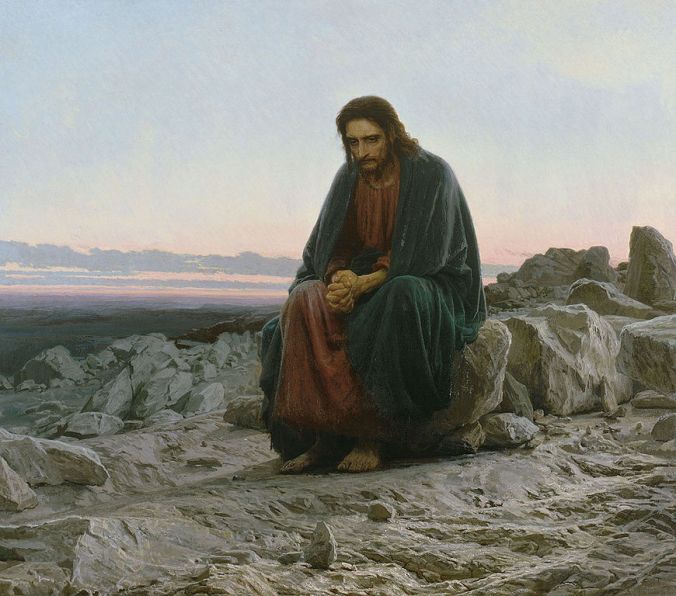
Christ in the Desert, Ivan Kramskoi, 1872. (Source)

Some of my readers will no doubt recognize the name of Fr. Sebastian Bowden of the London Oratory. He achieved some small notoriety as the priest who nearly converted Oscar Wilde in the 1870’s. He was also a well-respected spiritual teacher, though sadly neglected today. I would like to make some of his wisdom available, especially as it bears on the season we enter on this Ash Wednesday.

Here’s Fr. Bowden’s advice for Lent:

Consider the bearing that Lent has upon Death. Lent is given us as a time of preparation, and the way it is spent has great influence on the times that follow it: a carefully spent Lent will bring about a careful month after it, and the influence of that may go on through the year. So, we may look upon each Lent as a bringing us nearer to a good state for death, by making a fresh mark on our life:—for as we live so we must die. Therefore enter fully into this spirit: withdraw as far as you possibly can from all outer things, in thought, during this season: let the things of Time go to a distance, and be as nothing to you. Be alone with God, and try simply to learn more and more where you are, and what you are worth, in His eyes only; and thus prepare yourself for joining Him in Eternity.

Give yourself thoroughly to the Spirit of the Passion. Do not look, in anything you do, for success, pleasantness, or comfort: expect crosses, failures, disappointments, and take all these readily:go to meet them, receive all with perfect resignation from God’s handstake their impress on your soul. Aim, in preparation for death, at caring for nothing so much that you will not be ready in a moment to give it up.

Remember that, perfect and infinite as are the merits of Christ’s Passion and Death, there is one thing still wanting to them:that is, our part in them: our taking and accepting His sufferings as ours, and bearing them with Him. Without this, His Passion remains worthless. To what purpose is the Head crowned with thorns, if the Members remain dead, paralyzed, mortified and motionless? And so it is if we, who are Christ’s Members, will not enter with Him into His Passion, and will to suffer with Him. Let us, therefore, now, go in with Him into the life of suffering, giving ourselves to Him completely. It is difficult and painful to human nature to face the thought of a penitential life, but it must be done if we would be His true followers. And at this season it should be done specially by some outward thing:no lessening of food or sleep for those who need strength to work; but, still, in some wayif it is only by restraint of attitude, by some posture at times different from the ordinaryno matter what, but by some meanswe should daily remind ourselves that it is Lent.

Of course, it is hard to realize the good of the Cross: it often seems to our eyes so purposelessso gratuitousas well as so hard. It is in Faith alone that we can bear it; human nature must feel and suffer by it,. Let us try, during Holy Week, for a “broken heart”: that is, not feeling, but the certain conviction of our own nothingness and the nothingness of everything but God’s will. It is not merely the having, or the not having, to suffer this or the other thing: it is in all that we must be crushed: it is that there is absolutely nothing of importance except to do the Will of God: and this is the Cross.

The Sacrifice [acceptance of crosses or voluntary renunciation] always seems greater than we expected: when the Cross presses inward it must take hold of us. But we must treat it by looking beyond, remembering that, after all, it is all, in reality, but nothing; living in daily Faith in God, and Hope; and reminding ourselves that all will pass. Feeling, at the moment, we cannot help. (Spiritual Teaching of Fr. Sebastian Bowden of the London Oratory, 1921, pp. 17-20)

Screen Shot 2018-02-14 at 3.25.35 AM.png

Fr. Sebastian Bowden of the London Oratory. (Source)

I would add two brief thoughts that come from a later portion of the book. They seem admirably suited to our meditation on this penitential day, the start of a journey of penance that will not end until we face the cross.

The best way of realizing our Free Will is St. Philip’s way: “Lord, keep Thy hand on my head, or I shall betray Thee.” This consciousness of how easily we may at any moment commit any sin, however great, is simply the truth. It is the experience of everyone who knows anything of human nature, and especially of every priest. He knows it first for himself, and then for others. This it is that fills our prisons with criminals: the sinfulness of human naturegreed and avarice, lust and passion. To know our own weakness is our only safeguard. (p. 98)

Recollect that it was Christ on the Cross that redeemed the world: not His miraclesnot His life of preachingbut His naked body offered on the Cross to God. And so it must be with us if we would follow Him: the will simply to suffer must be oursto this our whole lives must be bent. It is not by great and heroic deeds that we are to succeed in Eternity: it is by the daily round of silent, humble suffering of whatever God sends. We are to become what He was: holocausts: to be stripped of Self on all sides:of our will, of our powers, of our very individuality if He chooses, so as simply to be in His hands to do what He likes with. Remember that here we see everything exactly as it is not: to us, success seems to lie in what showsin active deeds, in energy, in strength and power. But this is not so before God; and when we die we shall see it all in its right light. Let us live, therefore, for the things which are great in Eternity, though not in Time, and be patient. (pp. 79-80)

May we all learn from Fr. Bowden’s sound practical wisdom and make a well and holy Lent.

temptation1824.jpg

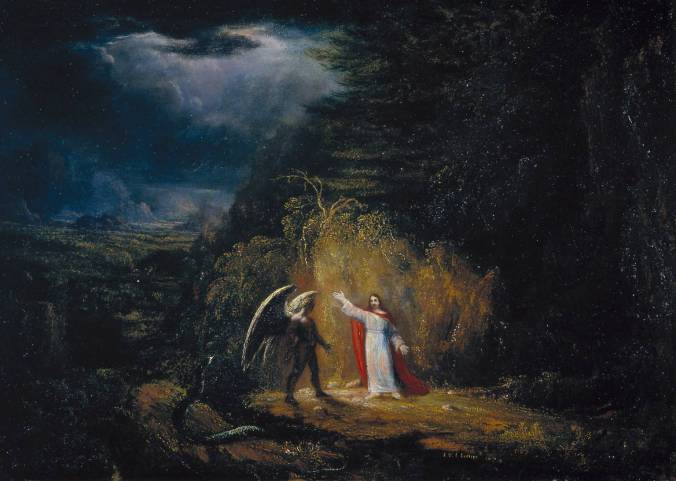
The Temptation in the Wilderness, John St. John Long, 1824. (Source)

One Year of “The Amish Catholic”

Flammarion1.jpg

The Flammarion Engraving. It somehow seemed appropriate. (Source)

It has now been officially one year of The Amish Catholic. What a ride. I’ve had 50,874 views, and a total of 31,385 visitors from every continent except Antarctica. I’ve had 2 views in the Holy See. I am particularly proud of those 2 readers in Uzbekistan.  I have been cited in The Catholic Herald and Liturgical Arts Journal, not to mention several other blogs I admire and respect. Everything has taken off rather more quickly than I thought.

Thank you to everyone who has made the last year such a rewarding experiment. An especially great thank you to those kind enough to share, comment upon, react to, or otherwise mention my blog. I know you’re all busy, and I appreciate whatever time you can spare to read my ramblings. A big thanks in particular to those few – you know who you are – who have recommended my blog on their own sites or through their own platforms. You have been more than generous.

I hope to continue The Amish Catholic in a spirit of fellowship, inquiry, and freedom. When I started, I had no idea where it would lead me. But I’ve had fun and made the acquaintance of some wonderful people along the way. I feel almost as if I’ve carried on a year-long conversation with you, my readers. Sometimes we talk about The Young Pope; sometimes we talk about Mormon artists. Sometimes we laugh at church politics, and sometimes we peruse the odd birds of Catholic history. Sometimes we pray together, and sometimes we weep together. Let’s have another year of it!

Thank you for your support and your continuing encouragement. May God bless you all with good friends, good graces, good laughs, good art, and good wine.

Elsewhere: A Brief Note on the Napoleonic Church

1200px-Allégorie_du_Concordat_de_1801

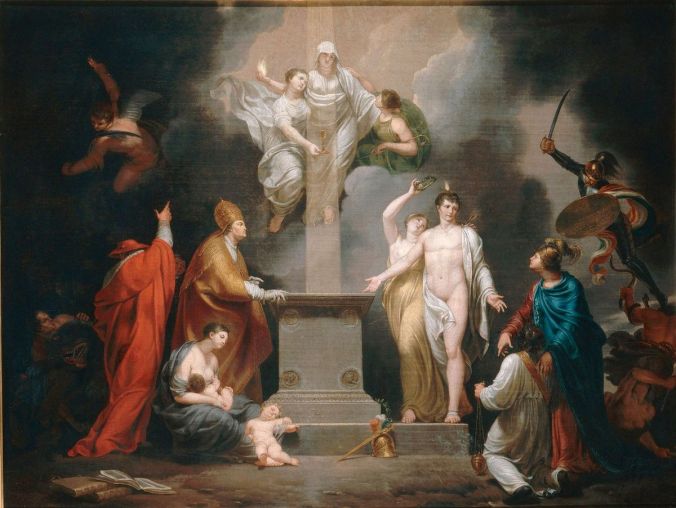
Allegory of the Concordat of 1801, Pierre Joseph Célestin François. Here’s some heavy-handed metanarrative for you. (Source)

Or, rather, the post-Napoleonic Church. Fascinating stuff about canonical life after Napoleon over at Canticum Salomonis. Some of my own research covers precisely this period, so I appreciate finding a contemporary Catholic blogger willing to post excerpted material of this nature. One does rather wish that he (I’m assuming it’s a he) had also provided the name of the original author, or at least the date of publication. Alas. The content is still very interesting.

A Letter on Loneliness

Veronese-Cristo-nell-orto-del-Getsemani-1024x797

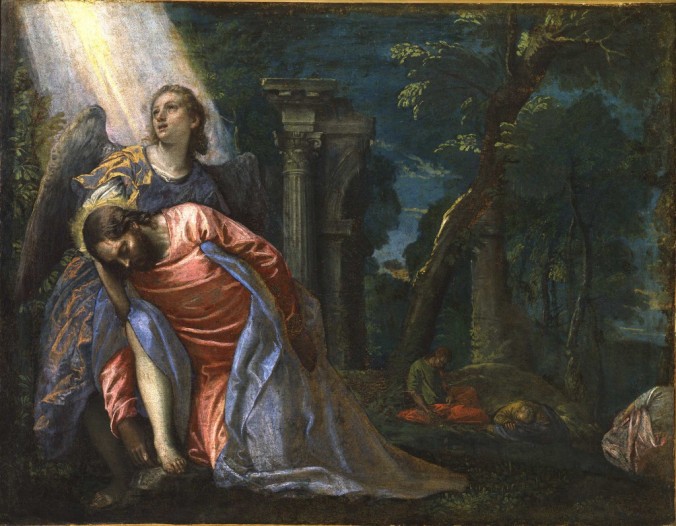
Christ in the Garden of Gethsemane, Veronese. Pinacoteca di Brera (Source)

My Dear Brother Josiah,

I received your last correspondence with a mixture of joy and sorrow. Joy, for all the good news you shared of our friends and familiars; sorrow, for those matters closer to your own heart that weigh so heavily upon your soul. Normally, I would not venture to offer unsolicited advice. However, as you have come to me seeking counsel, I will try to speak from what little light I have been granted. I will offer you, I hope, nothing but the constant teaching of the saints, nor anything I would not myself seek to follow. So much of what I must share is rooted in my own experience, the fruit of suffering not in all respects unlike your own.

You tell me that you worry about God’s blessing. You write that, in view of your griefs, you no longer trust that the Lord will bless you. This is a failure of Christian hope, but an understandable one. Faced with one reversal after another, it is easy to despair. I will point you first to the book of Job, a well from whose water I know you have already imbibed in more bitter times. What else could I tell you? The key practical thing is to recollect often those graces you have received. Savor them. Go over each, holding them close to your heart in memory. Make space in your week – better yet, your day – to ponder the grand and little mercies of God. I commend to you one of the very greatest pieces of wisdom I have received, that “a grace remembered is a grace renewed.” Continual recollection means that we are never really bereft of those graces once delivered unto us.

Look over your current state of life. The world, at least, sees your success. Many would desire your place. Thank God for what He has seen fit to give you so far.

But I know how incomparably small all of those worldly triumphs seem next to the losses you’ve suffered. I see what you mean when you say that you don’t trust God to bless you anymore. You aren’t speaking of those tangible blessings the world prizes in its vanity. You speak instead of the love of those taken from you. That golden blessing is worth all the others combined.

And so, we come to what seems to me to be the basic problem; not despair, but loneliness. The chill that stains even the brightest happiness and reveals the joys of this world to be fool’s gold. Have you considered loneliness in itself? Perhaps you have. It is a dark and loathsome thing. Perhaps you have found it buried down in your soul. A void. A hole that, like a carious tooth, aches and aches until it cries out for your full attention. A little black space at the bottom of things. You carry it around with you and never set it down. Grief carved it out, shaped it to its own image, and colors it even today.

I don’t know if you will always bear that burden. Some of us must. But I would encourage you to embrace it. That emptiness is, in the words of R.S. Thomas, “a vacuum he may not abhor.” Come close to the void. Peer at it. Ecce lignum crucis! It is the cross you have been given. Fasten your heart to its center with the very nails of Our Lord’s passion. Accept His invitation, and you will be able to endure those long and painful hours when hope fails. One day, when you are least expecting it, something may very well happen. You may be at prayer in your room. You may be savoring the Eucharist at Mass. You may be finishing the sorrowful mysteries of the rosary. But suddenly, unbidden, the Holy Ghost will visit you. The darkness will turn to dazzling light. By some strange alchemy known only in heaven, the emptiness will all at once turn into a full fountain of molten gold. The cavern will become a cup that runneth over. The silence will become song beyond sound or human voice. And your heart will be seized by the beautiful and terrifying realization that the Living God sees you. If only for a moment, you will know what it is to be “alone with the Alone.” Then will your heart become one with His. Then will you know a communion that obliterates all loneliness and a joy that erases all grief.

This moment cannot be rushed. God will not come but in His own way and in His own time. All the same, one can prepare.

First and foremost, take your loneliness and grief to the sacraments. When you are at the offertory or some other convenient point at the Mass, give your heart to the Eucharistic Christ. Ask to be alone with Him in the Tabernacle. Cleave to it as to the one rock of safety in a stormy sea. Consider, too, how Our Lord suffers loneliness in the Tabernacle. Think how He is neglected in His tabernacles through all the world. Think how He desires your consolation – yours! Truly, He wishes to make that emptiness in your soul His true and everlasting Tabernacle. Will you deny your Lord? For in the Tabernacle, He is at once most suffering and most glorious. So, too, where you are most suffering, He will render you most glorious.

Second, make a point of consciously drawing near to Christ crucified in your daily prayer. One thing I’ve done in the past – though, I confess, I have lately been lax about it – is to pray the Divine Mercy chaplet and dedicate each decade to one of the Holy Wounds. Start by contemplating Our Lord’s feet, His physical presence on Earth during His lifetime and evermore in the Eucharist. Consider His comings and goings, and how He willingly ceases all of that to offer Himself to the Father on the cross. Then consider His left hand, the Kingly hand that holds the orb of the world. Ponder the ways of His Providence. Take heart in His mercy towards the penitent and His just judgment of the wicked. Praise Him for His true and final victory over the forces of evil, for scattering the proud in their conceit. Then, move to His right hand, the Priestly hand of blessing. Think of how He has transformed all things by the peace wrought with His right hand, under the sign of His blessing. Look forward to the world as it shall be on the day of His Wisdom’s Triumph. It is a world we can already enter at the Mass. Bring your gaze up to the Holy Face, wounded by the crown of thorns. Offer him your anxieties, your fears for the future, and all those worries that come from not knowing what you must do or why some calamity has transpired. Consider the crown of thorns as the mortification of your very reason. As Our Lord unquestioningly accepted the will of His Father, may you do the same. But remember to gaze into the Holy Face as into the very countenance of the Living God. Ponder Jesus Christ in His humanity. God is a person; nor is he just any person, but a person who suffered all that we suffer, and more. Finally, move to the wound in the Holy Side and the Sacred Heart. Give yourself up to as pure an expression of love for your Savior as you can muster. Consider the flood of water and blood that fell from those triumphant gates, so rudely torn open. Think, if you can, of the power so much as one drop of either precious liquid would have to redeem not just one soul, but millions and millions of universes teeming with the souls of the very worst sinners. Ponder what it means that you may receive the Precious Blood at even a low Mass. Fix your gaze beyond the Holy Side, passing into the darkness of Our Lord’s chest. Dwell upon the Sacred Hear in its quiet and eternal radiance. Know that Our Lord’s chest cavity is so very much like the void to which I have already alluded, and so like the Tabernacle. For in both, we find the Heart of God! Imagine yourself receiving the Sacred Heart in the Eucharist. Meditate upon the immense fire of Love pulsing there until the last shudder of death – and, as you come to the Trisagion, recall how that love blazed forth again on Easter Morn, never to be extinguished.

Third, keep in mind the words of St. Philip Neri. Amare Nesciri – “Love to be unknown.” One thinks of St. Benedict. In his rule, St. Benedict enjoins his children to overcome the temptations of lust with a similarly simple phrase, “Love chastity” (RB IV). St. Philip’s words carry many meanings. They are a wonderful program of humility, of perfection, of freedom, but also of loneliness and grief. Love to be unknown. Find God in the moment when no one else notices you. Don’t do what you do to be recognized, as the Scribes and Pharisees (Matt. 6:3, 16, Luke 18:9-14). Be content that God sees and knows you. It will take time to grow into this practice, but you will come to recognize its benefit. You may someday find someone to share or alleviate the yoke of your sorrows – maybe even someone to love. But until then, embrace Solitude as St. Benedict would have us embrace Chastity; that is, as a beloved spouse. Focus on that task, the one you have been given for now, and the rest will come to you as God sees fit in His own time. I would wager that it will make you happier and help you love others more perfectly.

Fourth, do not depart from under Mary’s mantle. If you wish to see the very picture of loss, I will show you the woman who, though the only one free of sin among the whole human race, suffered the loss of her parents, her husband, and her son. Turn your eyes to Mary. The sorrows of her Immaculate Heart demand your attention. We have no greater advocate and comfort in our own suffering than Mary, in union with her eternal spouse, the Paraclete.

Finally – hardest of all – you must forgive. Jesus’s death was not just a perfect sacrifice because He was an innocent and willing victim. He forgave His murderers. If we are to have a share in that death, we must learn the extremely difficult discipline of forgiveness. It is the only way we can be truly free.

I would be remiss in giving you these counsels if I did not add with all due caution that, insofar as any of it applies to me, I often fail. But I feel no shame in saying so, since Our Lord is magnified in weakness. Don’t rely only on my words, narrow and feeble as they are. If anything I have said is contradicted by the example of the saints and the teaching of God’s holy Church, refer to their superior model. After all, I’m not a priest. I’m not even all that well versed in theology. Seek out a spiritual father who can help your soul more intimately than a friend can.

For all that, be assured of my prayers and affection. I hope you find the hope that can only come from the Lord, my dear brother. May He bless you and keep you, and make His face shine upon you, and be gracious to you; may He turn His countenance upon you, and give you peace.

In Christ,

RTY

Five Poems by Clark Ashton Smith

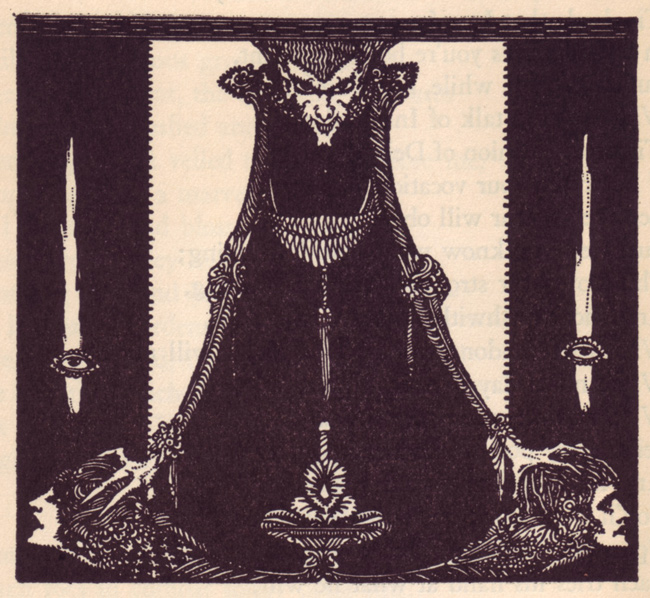
15-clarke-faust

One of Harry Clarke’s illustrations of Faust. He also produced a celebrated set of illustrations of Poe. (Source)

Clark Ashton Smith (1893-1961) was most famous for his publications in Weird Tales and his consequent literary association with H.P. Lovecraft and Robert E. Howard. He had a profound talent and produced copious work in the Eldritch School of American Decadence. In Smith’s work one can easily discover similarities with both Lovecraft, his more famous colleague, and greater predecessors like Poe and Baudelaire. The violent inventiveness of his language calls to mind a demon-crazed Hopkins. I have selected five representative poems that all treat a common theme: beauty.

A Dream of Beauty
(1911)

I dreamed that each most lovely, perfect thing
That nature hath, of sound and form and hue—
The winds, the grass, the light-concentering dew,
The gleam and swiftness of the sea-bird’s wing;
Blueness of sea and sky, and gold of storm
Transmuted by the sunset, and the flame
Of autumn-colored leaves, before me carne,
And, meeting, merged to one diviner form.

Incarnate Beauty ’twas, whose spirit thrills
Through glaucous ocean and the greener hills,
And in the cloud-bewildered peaks is pent.
Her face the light of fallen planets wore,
But as I gazed, in doubt and wonderment,
Mine eyes were dazzled, and I saw no more.


The Refuge of Beauty
(1918)

From regions of the sun’s half-dreamt decay,
All day the cruel rain strikes darkly down;
And from the night thy fatal stars shall frown—
Beauty, wilt thou abide this night and day ?

Roofless, at portals dark and desperate,
Wilt thou a shelter unrefused implore,
And past the tomb’s too-hospitable door
Evade thy lover in eluding Hate ?

Alas, for what have I to other thee ? —
Chill halls of mind, dank rooms of memory
Where thou shalt dwell with woes and thoughts infirm;

This rumor-throngèd citadel of Sense,
Trembling before some nameless imminence;
And fellow-guestship with the glutless Worm.


The Mirrors of Beauty
(1922)

Beauty has many mirrors to ensphere
Her presence or her passing: orbs of dew;
Far-flooding Amazons with margents new;
The narrowing circlet of the desert mere;
Deep wells on which the ruby planets rear;
Blades from Damascus; gems of Xanadu;
And pools that hold a falcon-hovered blue
Or eves whereon the ghostly owlets veer.

Often, upon the solitary sea,
She lieth, ere the wind shall gather breath—
One with the reflex of infinity;
In oriels filled with some conflagrant sky
Her vision dwells, or in the ring-dove’s eye,
Or the black crystal of the eyes of Death.


The Orchid of Beauty
(1922)

Beauty, thou orchid of immortal bloom,
Sprung from the fire and dust of perished spheres,
How art thou tall in these autumnal years
With the red rain of immemorial doom,
And fragrant where the lesser suns illume,
For sustenance of Life’s forgotten tears.
Ever thy splendor and thy light appears
Like dawn from out the midnight of the tomb.

Colors, and glints, and glamors unrecalled,
Richly thy petals intricate revive:
Blossom, whose roots are in eternity,
The faithful soul, the sentience darkly thralled,
In dream and wonder evermore shall strive
At Edens lost of time and memory.


You are not Beautiful
(1923)

You are not beautiful; but, ah, too long
I sought, and found a slowly growing grace;
Till fairer now than beauty is your face,
And all your silence dearer than a song.


Mormon Artists You Should Know

BarschTheBookofWalkingForthByDay

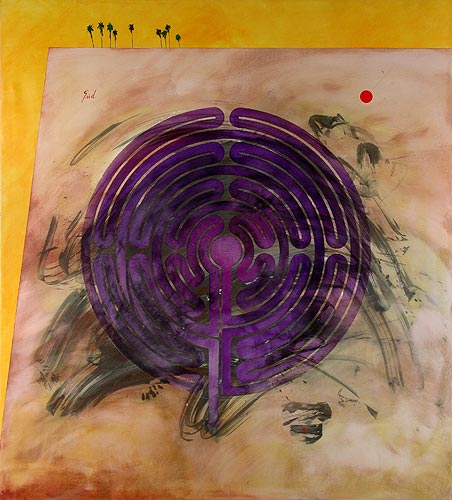
Wulf Barch’s prize-winning piece, The Labrynth, or the Book of Walking Forth by Day. 2011. (Source)

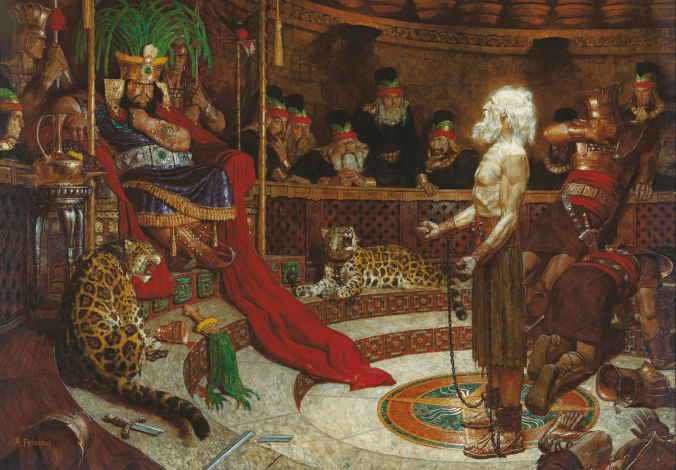
One of my recent discoveries has been the Mormon art world, formerly a dark continent for me. With the passing of the late Mormon president, I thought I might offer a window into an aesthetic realm that, I suspect, is still largely unknown to many. Most non-LDS people will have heard of the Mormon Tabernacle Choir. Some may be aware of the imaginative Book of Mormon illustrations by Arnold Friberg. And anyone who’s been on the internet long enough will recognize the utterly bonkers right-wing propaganda produced by Jon McNaughton. However, few know the very impressive offerings by contemporary Mormon artists.


Screen Shot 2018-01-10 at 6.07.10 PM.png

Abinadi before King Noah (Abinadi Appearing before King Noah). Arnold Friberg. Note the curious mixture of Biblical motifs and Central American aesthetics. We have here a typically Mormon image. (Source)

Apparently, BYU has an excellent Fine Arts department. The jewel in their crown is Wulf Barsch, a Bavarian émigré who studied under the Bauhaus Masters, themselves trained by Klee and Kandinsky. After some flirtations with the Viennese school of Fantastic Realism, best represented by Ernst Fuchs, Barsch, we read, “studied Egyptian and Islamic culture and history.” These influences would come to the fore in his later work. He was baptized a Mormon in 1966, went to BYU to study Fine Art, and stayed there for some forty years.

Barsch’s work is marked by a few cardinal motifs. He always uses vivid colors, often structured by two juxtaposed elements: a blurred realism and a lightly sketched geometric design. This combination gives his work the slightly dizzy air of a dream – or, better yet, of a mystic vision, of some terrible sacral truth unveiling itself. The viewer becomes the prophet.

Barsch_The_Real_Voyage_of_Discovery

The Real Voyage of Discovery, Wulf Barsch. (Source)

Barsch’s study of Islamic art and its long tradition of sacred geometry has borne much fruit throughout his career.

BarschBay

The Measure of All Things, Wulf Barsch. 2009. (Source)

Barsch’s prophetic accents are heightened and canalized by a keen ritual sensibility. On those occasions when he does depict architectural details, they usually reflect the norms of temples: Classical, Masonic, and Mormon.

Screen Shot 2018-01-10 at 6.33.29 PM.png

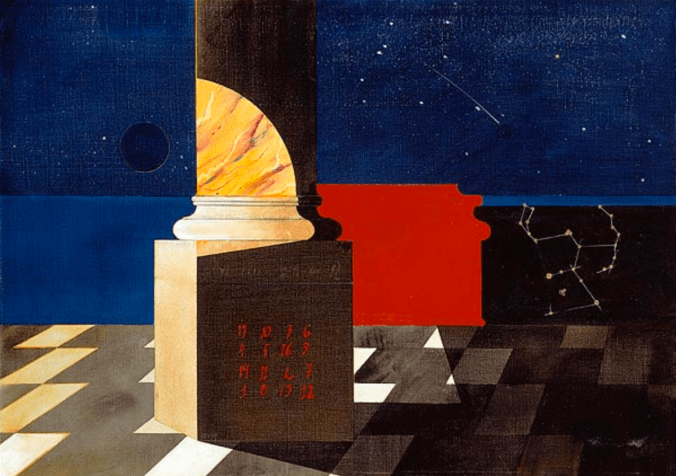
Jupiter Square, Wulf Barsch. Note the use of a Magic Square. (Source)

BarschEtinArchadiaEgo

Et in Arcadia Ego, Wulf Barsch. 2010. The tiled floor, the pair of broken columns, and the orientalist flavor of the pyramids and palms all suggest a Masonic aesthetic. (Source)

He will sometimes write on the painting, adding a secondary symbolic layer to the image.

BarschVaporwave

Title Unknown, Wulf Barsch. No doubt this will be of particular interest to fans of a e s t h e t i c s (Source)

BarschDoor

Title Unknown, Wulf Barsch. (Source).

Observe, if you will, the piece above. Looking at this painting, we are struck by the contrast between the garlanded, barely visible columns and the stark yellow and red scene beyond. The most immediate impression comes from the color, which forms, as it were, the raw material of the art-world we see. Yet we can also glimpse geometric drawings in the yellow field and the outline of the columns. That which is artificial melts away before the manifestation of the absolute. Lesser being fades, even as it is heightened beyond its limitations under the demands of human artifice. Yet even in contemplating the absolute, we recognize something like our own reason. There is an intelligence there, an ideal that is only dimly mirrored in this dark world below. In short, Barsch has presented a model of mystical experience.

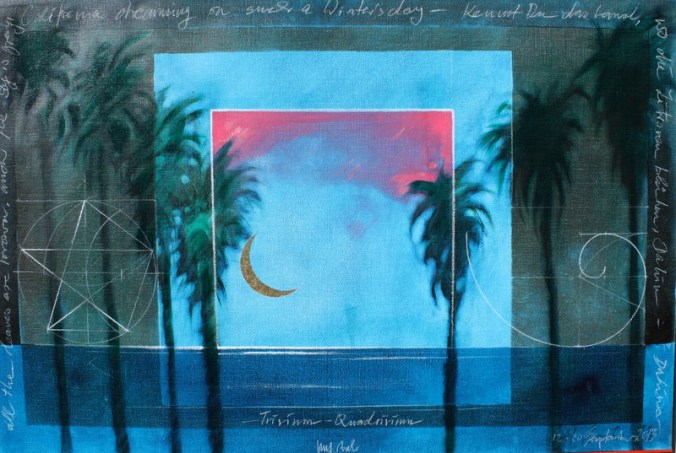
Or take another painting. Below, we see is, at first glance, little more than a tropical landscape. We can feel the heat through the stereoscopically blurred palm fronds. Yet upon further consideration, we find a celestial scene in the blue window – an impossibly delicate set of constellations in a field of bright bleu celeste. There is at once a sense of familiarity and otherness. Are we inside or out? We experience a de-familiarization of the scene. This sensation comes, appropriately enough, through the viewer’s discovery of heaven in the painting. Likewise, the soul feels a similar sudden reversal upon the discovery that there is a God. The subtle intrusion of the transcendent changes the way we look around us.

BarschWindow

Title Unknown, Wulf Barsch. (Source)

Barsch is intensely interested in the way the numinous appears through creation. His vision is almost sacramental, with one important caveat. The presence of the transcendent that he describes is not resting in the material realm but in its ideal configuration. He represents this ideal world, as well as our access to it, by use of the Labyrinth, a frequent symbol.

BarschTheLabyrinth

The Labyrinth, Wulf Barsch. 2006. Note that it lies within the cliff, under the trees. (Source)

The same idea animates his Magic Square (2006). The titular magic square appears in the silhouetted palm tree, as if exposing its underlying mathematical nature. It’s as if Barsch is showing us God’s blueprints.

BarschMagicSquare

Magic Square, Wulf Barsch. 2006. (Source)

Barsch has won multiple awards, including the prestigious Rome Award, over his long and prolific career. He has also carried his talents across media. For example, here is one of his lithographs.

BarschLithograph

Title Unknown, Wulf Barsch. (Source)

Barsch continues to exert a major influence on the oeuvre of younger Mormon artists. Whitney Johnson, David Habben, and Nick Stephens all exhibit signs of Barsch’s lingering artistic vision.

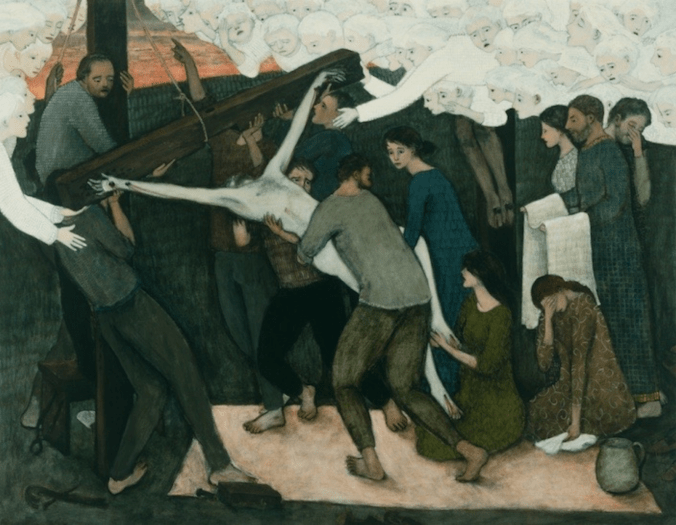
A very different representative of contemporary Mormon artistic trends is Brian Kershisnik. An American who originally trained in ceramics at BYU, Kershisnik later moved to painting. He now produces spiritually sensitive figurative images that somehow capture the freshness and simplicity of the American West.

Screen Shot 2018-01-10 at 8.11.31 PM.png

Descent from the Cross, Brian Kershisnik. Currently on display at BYU Museum of Art as part of their exhibit, “The Interpretation Thereof: Contemporary LDS Art and Scripture.” (Source)

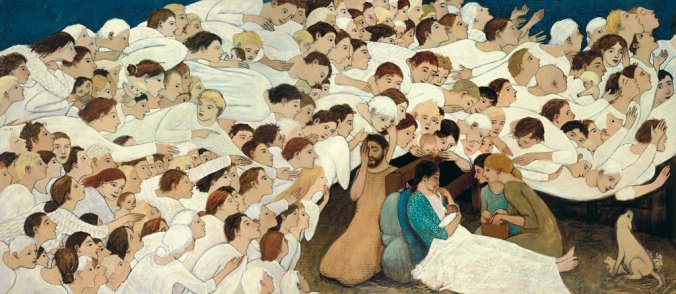
His religious art is very often in conversation with the canons of the Western tradition. Nevertheless, he infuses a certain ordinariness into scenes from the Bible. If Barsch presents a spiritual vision drawn from Mormonism’s Masonic and Orientalist past, then Kershisnik returns to its Low-Church Protestant roots. Even his crowds of angels look just like us.

Previous File: bkNativity_3_2.psdEpson_1_PhtRg_720uni_2007_0106
'Nativity'

Nativity, Brian Kershisnik. (Source)

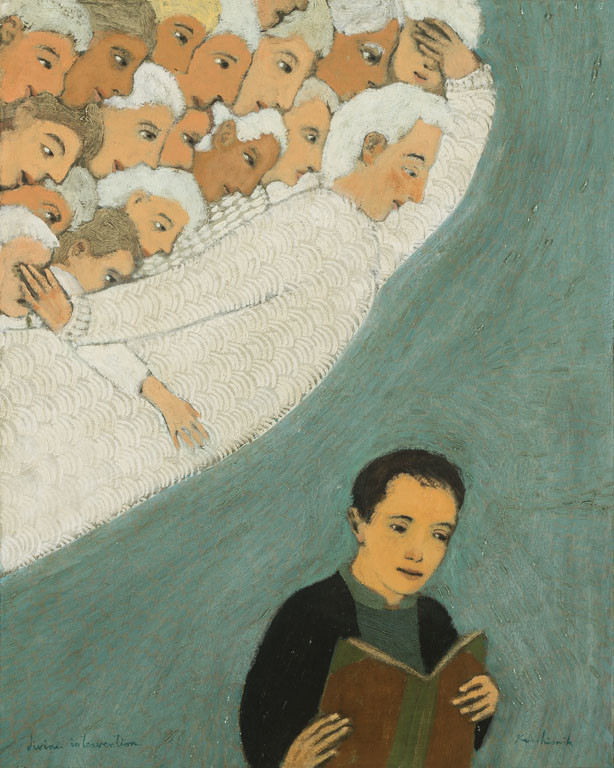
Those angels, by the way, are profoundly interested in human life. Even fairly quotidien scenes betray an unseen presence.

KershisnikDivineInspiration

Divine Inspiration, Brian Kershisnik. (Source)

Many of his characters are, quite literally, rough around the edges. In them, we can detect the faintest hint of Chagall. Particularly as so many of Kershisnik’s non-Biblical subjects seem to inhabit a stylized world hovering on the edge of allegory.

KershisnikDancersIsland.jpg

Dancing on a Very Small Island, Brian Kershisnik. (Source)

Kershisnik is fundamentally an artist of human dignity, and the quiet joy that springs from that dignity.

Screen Shot 2018-01-10 at 8.21.40 PM.png

Holy Woman, Brian Kershisnik. (Source)

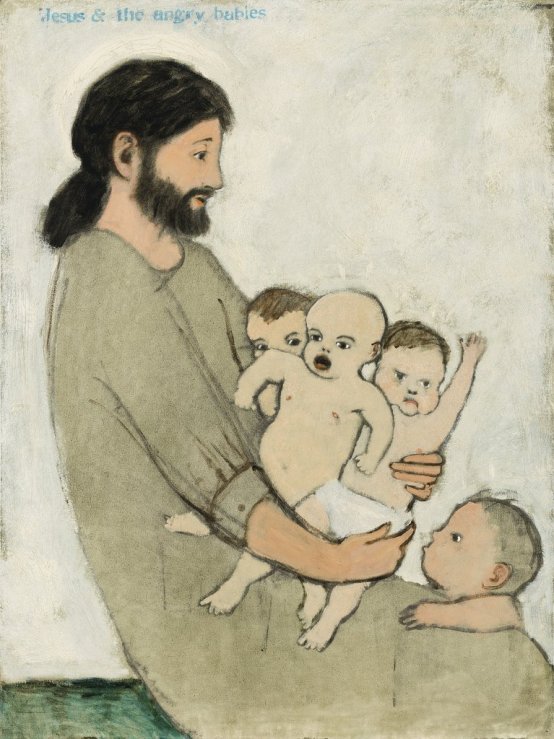
He also brings an understated sense of humor to much of his material, as in Jesus and the Angry Babies.

KershisnikAngryBabies

Jesus and the Angry Babies, Brian Kershisnik. (Source)

Note in A Quiet Shining Dance of Sisters how Kershisnik draws together line (the mirroring of the two profiles) and color (gold) and texture (the mosaic effect in the upper half of the image) to suggest a spiritual union that goes beyond the merely physical elements of the titular dance.

KershisnikSistersDance

A Quiet Shining Dance of Sisters, Brian Kershisnik. (Source)

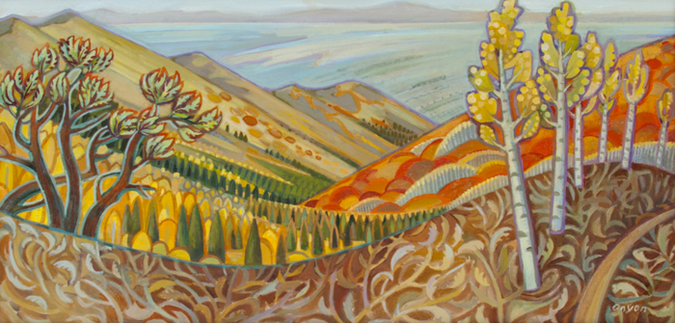
There are a few other Mormon artists worth knowing. Take, for instance, painter and illustrator Michal Luch Onyon, whose colorful and somewhat naive works are sure to delight. Or landscape artist Jeffrey R. Pugh, whose bold and strong brushstrokes evince the confidence of the West. He also created one of the more numinously beautiful depictions of Joseph Smith’s alleged vision, Early Spring, 1820. Finally, take a look at Nnadmi Okonkwo’s sculptures. The Nigerian’s graceful depictions of the human form are a testament to the respect afforded to women, and strike a beguiling balance between traditional African forms and American methods. His work is a testament not only to his considerable talent but to the great lengths which the Mormon church has traveled in its delayed acceptance of black members.

OnyonAnimals

Title Unknown, Michal Luch Onyon. (Source)

MichaelLuchOnyonBuffalo.jpg

Title Unknown, Michal Luch Onyon. (Source)

Michal-Onyon-Mountain-Aspen.jpg

Mountain Aspen, Michal Luch Onyon. (Source)

PughADayintheLife.jpg

A Day in the Life, Jeffrey R. Pugh. (Source)

Screen Shot 2018-01-10 at 9.13.36 PM.png

Cumulus Creepers, Jeffrey R. Pugh. (Source)

24X12-Early-Spring-1820

Early Spring, 1820, Jeffrey R. Pugh. (Source)

Screen Shot 2018-01-10 at 9.17.38 PM.png

Friends, Nnamdi Okonkwo. (Source)

Screen Shot 2018-01-10 at 9.20.03 PM.png

Guardian, Nnamdi Okonkwo. (Source)

Nnamdi-Art.jpg

Title Unknown, Nnamdi Okonkwo. (Source)

The remarkable proliferation of Mormon fine artnot merely the kitschy stuff which characterizes so much religiously inflected work todayis certainly a sign of the faith’s expansion and self-confidence. Catholics should watch the continuing development of a specifically Mormon aesthetic as the LDS presence in society continues to grow.

A View of the Sacraments in the Age of Enlightenment

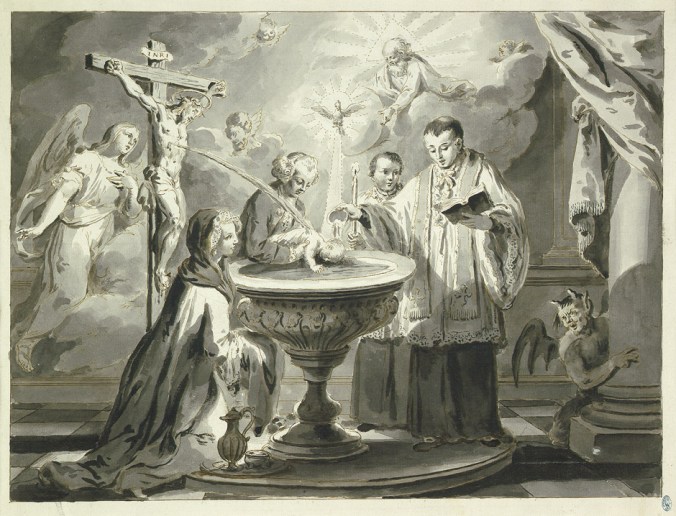
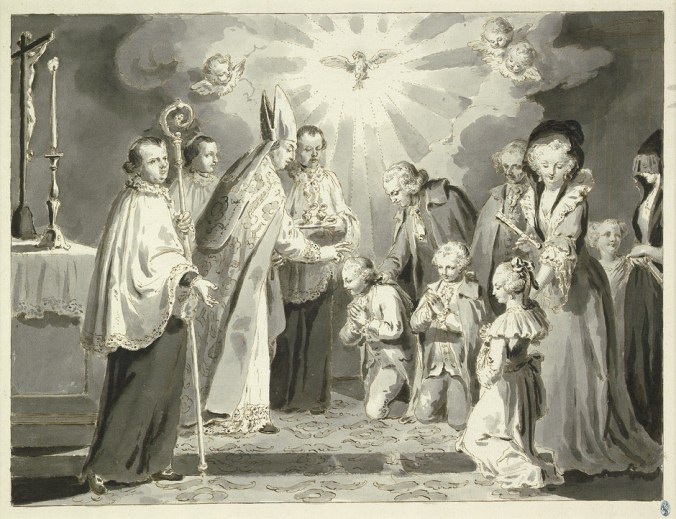
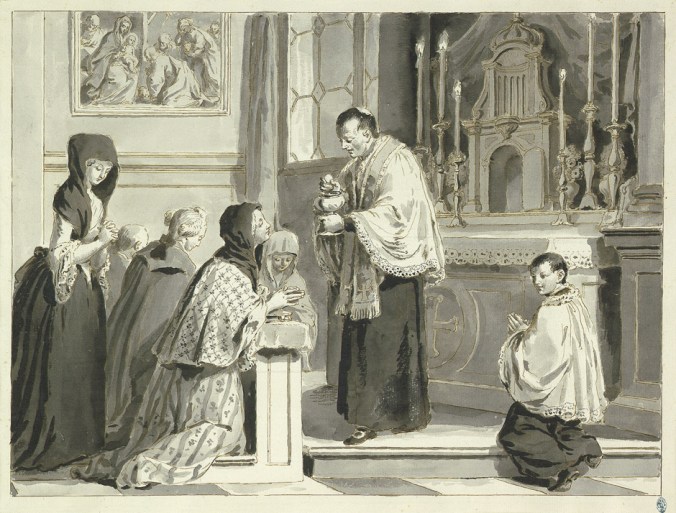
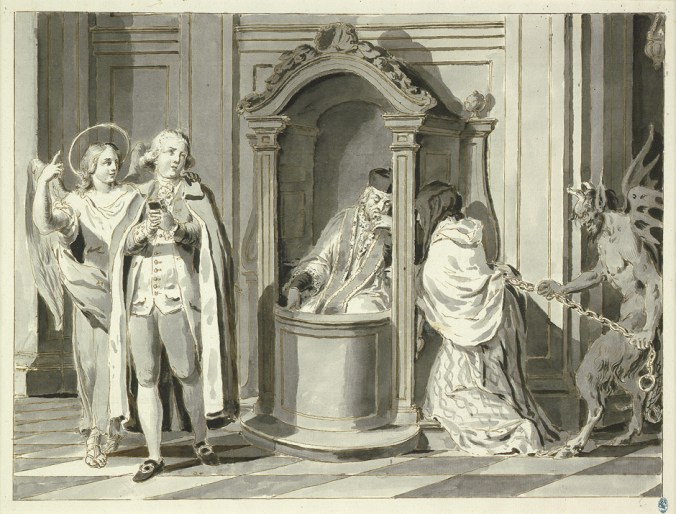
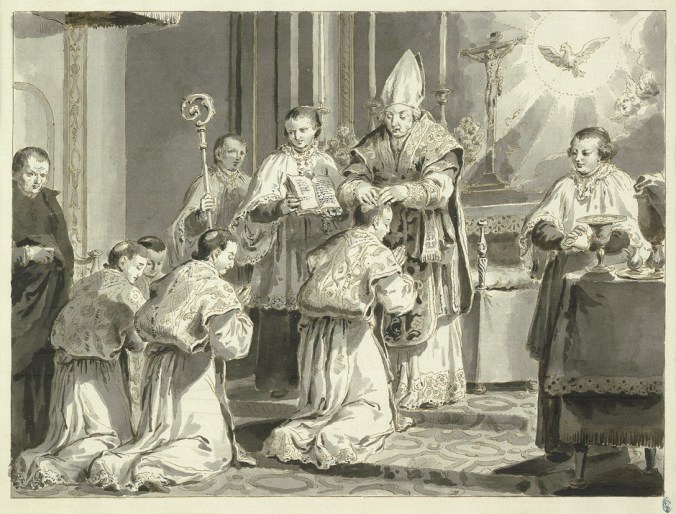
I just stumbled across Pietro Antonio Novelli’s engravings on the Seven Sacraments, completed in 1779. They give a fascinating view of ecclesiastical life in the late 18th century – Novelli would have moved to Rome from Venice about this time, so it’s unclear which part of Italy these were drawn from. Either way, they’re worth a look through. All are taken from Wikimedia Commons.

NovelliBaptism

Baptism. Note the prominent Angel and Devil.

NovelliConfirmation

Confirmation. Strong and sound emphasis placed upon the role of the Holy Ghost.

NovelliEucharist

The Eucharist. The arrangement of the Altar and rail suggests that this is a low mass. Very odd that the Priest has no chasuble, but surplice and stole.

NovelliConfession

Penance. Once again, we see the Angel-Devil dichotomy. Lovely open confessional, too.

NovelliHolyOrders

Holy Orders. It is entirely unclear to me where the Altar is supposed to be in this image. Nevertheless, the Bishop is wearing a wig, which answers a question of Fr. Hunwicke’s.

NovelliMarriage

Holy Matrimony. A fairly straightforward scene with lovely, somewhat spare Neoclassical church architecture in the background.

NovelliUnction

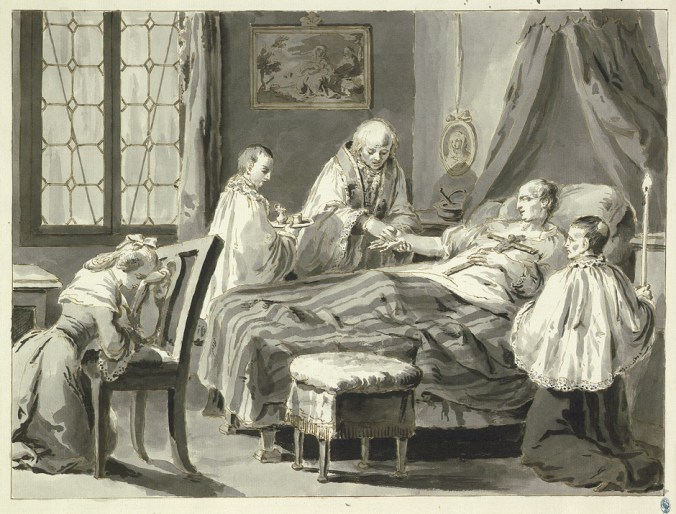
Unction. The attendance of two servers is a custom long since out of fashion. One rather wonders when their presence was removed from the rubrics.