A Belated Word of Thanks

Maria-de-Jesus-de-Agreda

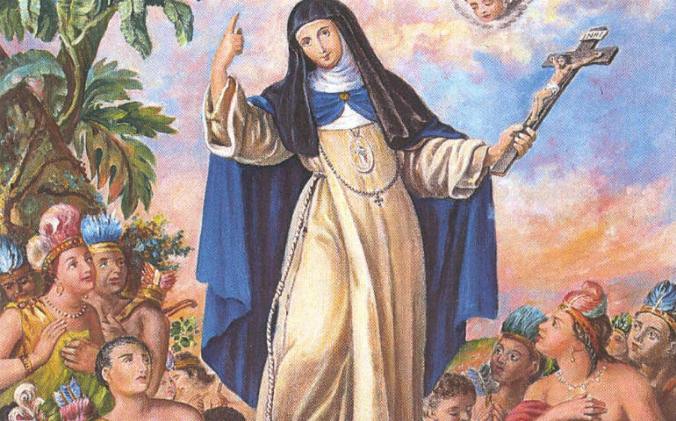
The Ven. Mary of Agreda, seen here preaching to the Indians by the miracle of bilocation. She was one among many who taught the Absolute Primacy of Christ. (Source)

I must thank Fr. Maximilian Mary Dean for republishing two of my pieces over at  Absolute Primacy of Christ: my introduction to the life and thought of Fr. Faber as well as my survey of art depicting the Subtle Doctor. It is a great honor to have been thought worthy of republication on a site I so greatly esteem. I have learned a lot from Fr. Maximilian’s blog and hope I might continue to do so! Go check it out.

Elsewhere: An Anglo-Catholic Designer You Should Know

Screen Shot 2018-03-13 at 1.40.54 AM.png

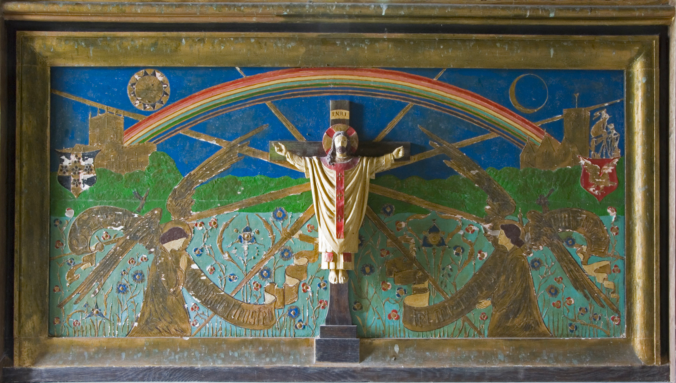
A reredos by John Coates-Carter. (Source)

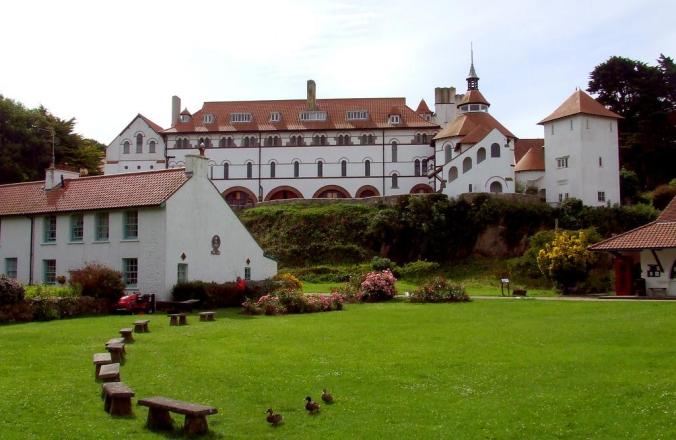
Over at Liturgical Arts Journal, you will find a very good, brief introduction to an ecclesiastical architect of the Arts and Crafts Movement, John Coates-Carter. He is most famous for his design of the (extraordinary) abbey on Caldey Island. Most of his work can be found in Wales. Perhaps because of his regional interest, I had never heard of him before. Yet his altarpieces are about as Anglo-Catholic as you can get. They have all of the features I noted in my article on AC aesthetics; they’re earthy, colorful, idealized, with a hint of the illustrative verging on the cartoonish. And most importantly, the are deeply human. Anglo-Catholicism restored the human face to British ecclesiastical art. We can see that tendency in the luminous angels and vibrant peasants that appear in Coates-Carter’s sacral art. Do go have a look.

CaldeyIsland

Caldey Abbey, designed by John Coates-Carter. (Source)

Elsewhere: Newman Against the Nazis

Werner und Sophie Scholl

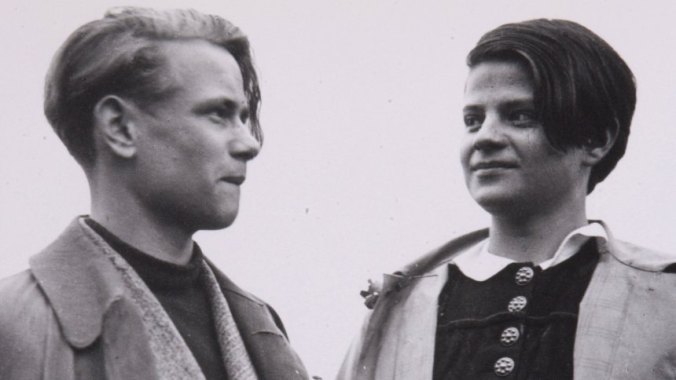
White Rose members Hans and Sophie Scholl. (Source)

A big thanks to Fr. David Abernethy of the Pittsburgh Oratory for bringing to my attention an article in the Catholic Herald about the influence of Cardinal Newman’s thought on die Weiße Rose. Apparently the Doctor of Conscience was an important impetus for their resistance to Nazi oppression. From the article:

The man who brought Newman’s writings to the attention of the Munich students was the philosopher and cultural historian Theodor Haecker. Haecker had become a Catholic after translating Newman’s Grammar of Assent in 1921, and for the rest of his life Newman was his guiding star. He translated seven of Newman’s works, and on several occasions read excerpts from them at the illegal secret meetings Hans Scholl convened for his friends. Strange though it may seem, the insights of the Oxford academic were ideally suited to help these students make sense of the catastrophe they were living through.

Haecker’s influence is evident already in the first three White Rose leaflets, but his becomes the dominant voice in the fourth: this leaflet, written the day after Haecker had read the students some powerful Newman sermons, finishes with the words: “We will not be silent. We are your bad conscience. The White Rose will not leave you in peace! Please read and distribute!”

Read the whole thing. And pray that Bl. John Henry Newman might, by his intercession, assist us in the struggle against every tyranny.

Elsewhere: A New Blog on Christianity and Cricket

19century_cricket.jpg

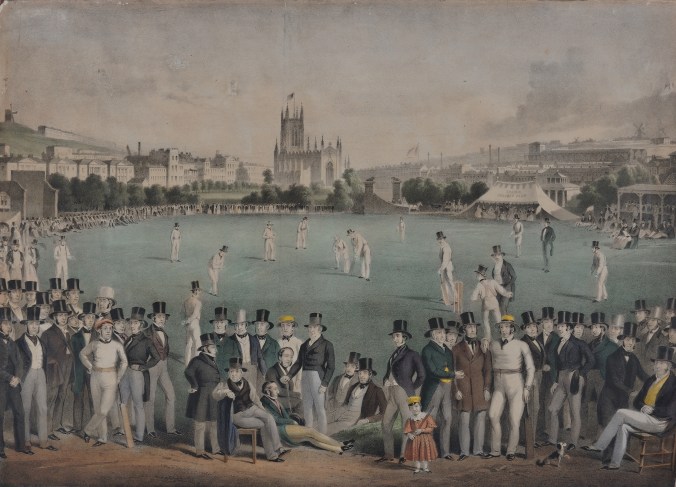
A scene of English life in the 19th century; top hats in the foreground, a Gothic Cathedral in the background, and between them, cricket. (Source)

Living at an Anglo-Catholic seminary has been an education in many respects, but I still haven’t got a handle on the sport of cricket. Luckily for me (and for many of my readers, I’m sure), a new blog hopes to correct that oversight. My friend and fellow Staggers resident, Mr. William Hamilton-Box, has just begun writing on Cricket, Christianity, and various fun facts. Do give it a look-see.

Elsewhere: A Brief Note on the Napoleonic Church

1200px-Allégorie_du_Concordat_de_1801

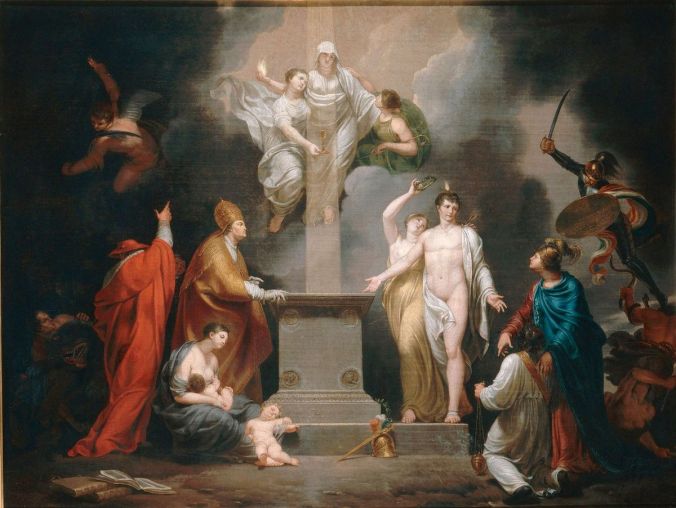
Allegory of the Concordat of 1801, Pierre Joseph Célestin François. Here’s some heavy-handed metanarrative for you. (Source)

Or, rather, the post-Napoleonic Church. Fascinating stuff about canonical life after Napoleon over at Canticum Salomonis. Some of my own research covers precisely this period, so I appreciate finding a contemporary Catholic blogger willing to post excerpted material of this nature. One does rather wish that he (I’m assuming it’s a he) had also provided the name of the original author, or at least the date of publication. Alas. The content is still very interesting.

Elsewhere: Shawn Tribe on St. Mary’s, Aiken

NewStMarysAiken.jpg

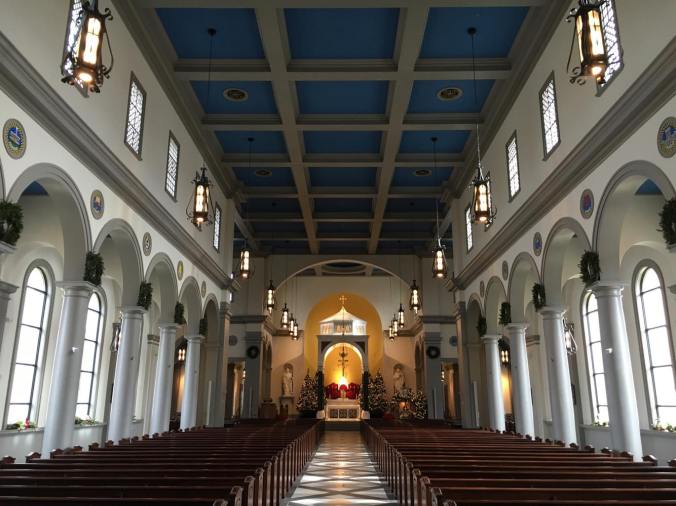
The nave of new St. Mary’s, Aiken. Photo by yours truly.

Over at Liturgical Arts Journal, Shawn Tribe has written a wonderful piece on St. Mary, Help of Christians, in Aiken, SC. He was kind enough to use some of my own photography of the parish. The new church is an excellent example of Neo-Baroque architecture in the American South. I am glad that Mr. Tribe has also devoted some attention to the gorgeous Neo-Classical stations by Leonard Porter. Do check it out!

Elsewhere: Two New Blogs on Mystics

lazzari+print

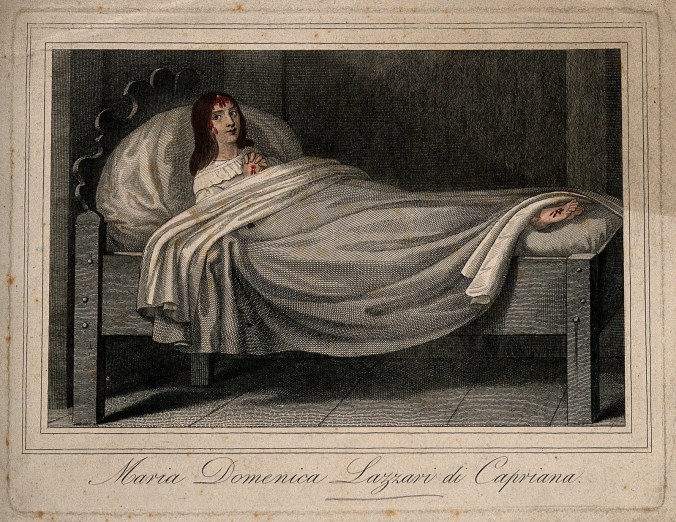
A stigmatic, c. 1840. (Source)

Recently two very worthy endeavors have come to my attention. The first is the blog of the Stigmatics Project at the Ruusbroec Institute, University of Antwerp. The project “studies the promotion and devotion of the hundreds of stigmatics reported in five European countries during the nineteenth and early twentieth century.” It takes a scholarly, non-confessional approach to its subject. No doubt this new venture will yield greater insights into the stigmata as a social phenomenon.

The second is a much more theological blog called Littlest Souls, and it presents a veritable treasure trove of mystic spirituality. The blogger has clearly read widely in the library of the soul passed on to us from age to age by the Church. He seems to place a special emphasis on the 19th and early 20th century mystics, much like the Stigmatics Project. In fact, they probably cover some of the same figures. But unlike the recently-founded work of the Ruusbroec Institute, Littlest Souls has been up and running since May 2012. There is consequently much more material here to review and contemplate. Fans of that other great blog, Mystics of the Church, will find much here to admire.

In my first post on Father Faber, I noted that he represented a kind of lost world of the faith. Today, it is hard to imagine a Catholicism that once supported the kind of imaginatively baroque and overtly sentimental spirituality that oozes from his pages. Father Faber looks odd to our cynical, postmodern eyes. But in exploring his writings now, I find much in them that’s salutary and beautiful. My hope is that I can play some small part in recovering those gems for our times.

Both of these blogs seem to do precisely that; one at the level of scholarship, and one at the level of spirituality. Both set out to investigate and present a spiritual school that often seems morbid, unhealthy, or slightly daft – certainly one that has little place in our age. But there are real values here, real impressions of humanity in communion with the divine. I can only commend their efforts as important contributions to the memory and mystical life of the Church Militant.

I’ve said it before, and I’ll say it again. The Church is weird because she is supernatural, and the supernatural is always strange. We should embrace that fact.
Elsewhere: A New Blog on English Catholicism

image

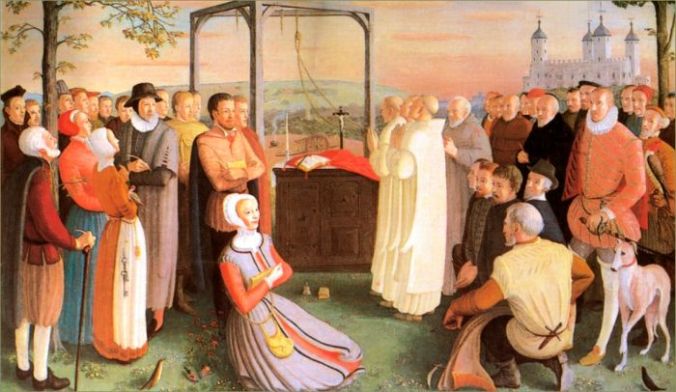
All ye holy English Martyrs, pray for us. (Source)

Anglo-Catholic readers will no doubt have mourned the demise of Conner McNeill’s Merrily on High, what was once among the best and most prolific AC blogs on the web. Never fear! Connor McNeill rides again. He’s back with a new blog called Mary’s Dowry. It looks as tasteful, reverent, and aesthetically sophisticated as the project that preceded it.

Mr. McNeill has decided to depart from the Church of England and join the Roman Communion. As he had been pursuing ordination with the C of E, this conversion is no small undertaking. Pray for him! And check out Mary’s Dowry while you’re at it.


Elsewhere: Fr. Hunwicke on Liturgical Wigs

image

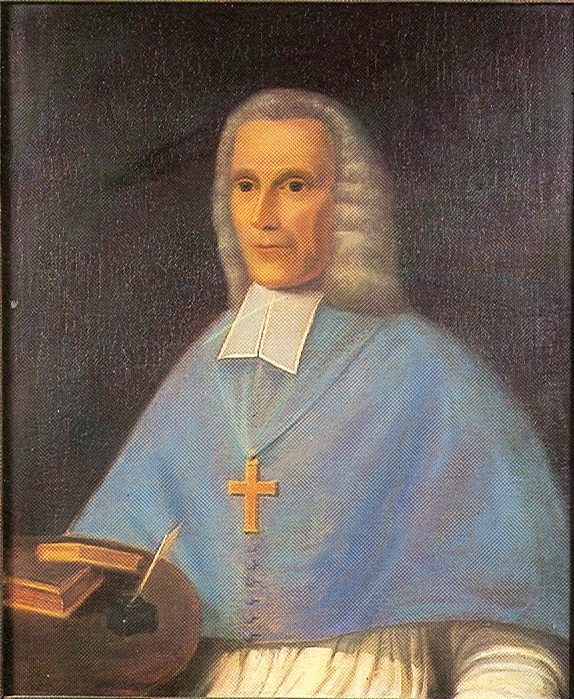
The famous portrait of Bishop Challoner to which Fr. Hunwicke refers in his piece. (Source)

I haven’t written much this week, as I’ve been traveling. However, on this beautiful  St. Bernard’s Day, I thought I’d share this brief and wonderful gem of a piece by Fr. John Hunwicke of the Ordinariate.

An excerpt:

I’m sure there are zillions of you out there who have the following sort of information right at your snuff-stained finger tips: did prelates eo fere tempore wear their wigs all through Mass? Even after their zucchetto had been removed as they approached the Consecration? When did Catholic bishops stop wearing wigs? (I think it went out of fashion in Anglican cicles in the 1830s.)

He also gets into the question of blue episcopal choir dress, mainly used in France and Ireland. Read the whole thing.

Clerical dress is one of my longstanding interests, as is the history of 18th century Catholicism. I’m glad Fr. Hunwicke is using his formidable celebrity to draw attention to these matters. While some may dismiss clerical fashion (particularly that of the Ancien Régime) as a trivial matter, I beg to differ. Clerical dress both during and outside of the liturgy is one more aesthetic component by which we can present “the beauty of holiness.” The nondescript threads worn by so many clergy and religious today are, alas, one more surrender to the cult of stark utility, false equality, failed individuality, and, in the end, boring homogeneity.

At the moment, I don’t have the time or capacity to research the questions Fr. Hunwicke raises. But The Amish Catholic will follow this story with all due attention and gravity. You can count on that. In the meantime, I’ll feast my eyes on this doozy of a cappa magna.