Advice from a French Nun

Screen Shot 2018-10-28 at 10.13.24 PM.png

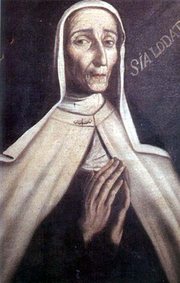
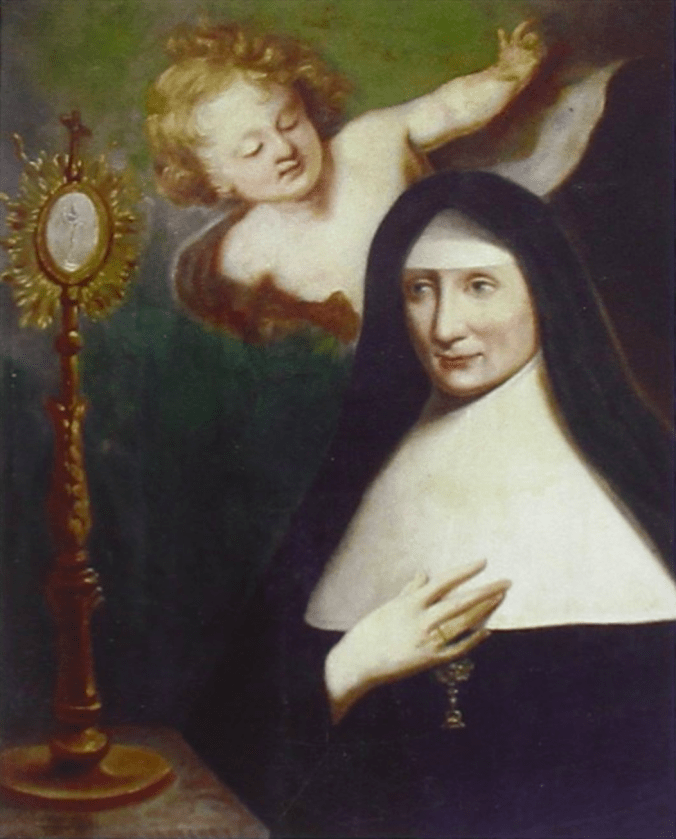
A portrait of Mother Mectilde de Bar adoring the Blessed Sacrament. (Source)

Sometimes readers ask me about more information on Mother Mectilde de Bar (1614-1698), the saintly foundress of the Benedictine Nuns of Perpetual Adoration of the Most Blessed Sacrament of the Altar. I would of course direct those who read French or Italian to any of the several biographical studies about Mother Mectilde that have come out in those languages. However, I would perhaps more eagerly urge my readers to a series of recent posts at Vultus Christi presenting what is, I believe, the first English translations of some of Mother Mectilde’s spiritual letters. Here they are with the titles the translator has given them at VC.

I. “So that I might begin to live in simplicity, like a child.”

II. “On the Meaning of Desolation and Sufferings.”

III. “The state in which you find yourself is of God.”

IV. “The divine labourer who works in you.”

V. “Yet ever thou art at my side.”

VI. “Nothingness doesn’t even attach itself to nothingness.”

VII. “Some sayings of Mother Mectilde.”

VIII. “He sets fire everywhere.”

IX. “All our discontent comes from self-will.”

And on top of all that, there’s a letter from the lay mystic Jean de Bernières to Mother Mectilde. Bernières is a good example of someone who, though posthumously condemned as a “Quietist,” is now being recovered as a source of valuable mystical insight. We have seen the same happen to Benet Canfield before, and it may yet occur to someone like Pietro Matteo Petrucci. More work needs to be done in this area. At any rate, translation of these early modern mystical works is badly needed.

Both as a practicing Catholic and as an historian of early modern Catholicism, I am encouraged that these works are being put into English for the first time. The English-speaking world is now getting a much better sense of the importance of this unique tradition within the Benedictine family. More translations, we are told, are coming. I eagerly await their publication.


On Gallicanism and Ultramontanism

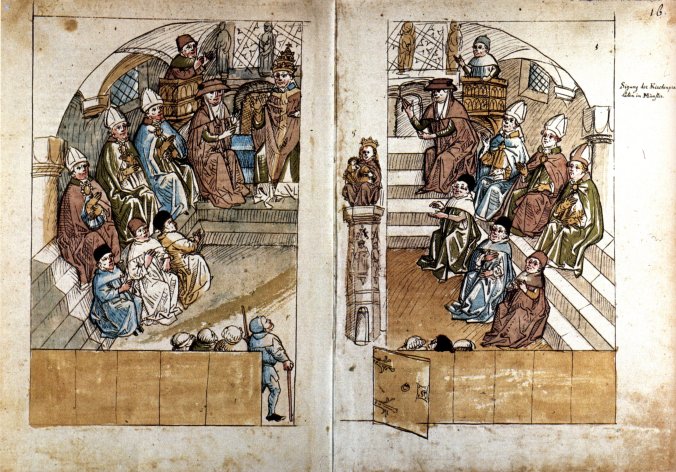
CouncilofConstance.jpg

Scene from the Council of Constance, the Sixteenth Ecumenical Council (Source)

Over at Notre Dame’s Church Life Journal, there are two important pieces worth your time. The first, Dr. Taylor Patrick O’Neill’s “A Defense of Ultramontanism Contra Gallicanism,” is a theological analysis of the recent use of “ultramontanism” as a pejorative in Catholic discourse. Dr. O’Neill, a Neo-Thomist theologian, suggests that Ultramontanism is “the golden mean” by which to preserve a healthy and authentically Catholic respect for the Papacy. He writes:

But how does the historical usage of the term “ultramontane” hold any significance for us today? Given that the term arose as an insult against those who challenged the claims of Gallicanism, and given that those who championed papal primacy over local kings and bishops were legitimized at Vatican I, the term ought not to be associated with heterodoxy but rather orthodoxy.

To equate ultramontanism and orthodoxy is an extraordinary claim. While Dr. O’Neill recognizes that there are some excessively papalist versions of ultramontanism – a phenomenon he would prefer to call “super-ultramontanism” or “ultra-ultramontanism” – he fails to escape the very alienation from the term’s “historical significance” that he attempts to address.

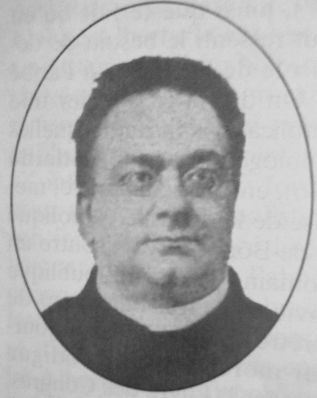
Benigni_Umberto

Umberto Benigni (1862-1934), Ultramontane church historian. (Source)

Take, for instance, his citation of Umberto Benigni’s article on “Ultramontanism” in the 1912 Catholic Encyclopedia. The passage O’Neill cites reads:

For Catholics it would be superfluous to ask whether Ultramontanism and Catholicism are the same thing: assuredly, those who combat Ultramontanism are in fact combating Catholicism, even when they disclaim the desire to oppose it.

If O’Neill had borrowed his words merely for a theological point, we might pass over the citation. But his is an historical judgment, not primarily a theological one. O’Neill doesn’t mention that Benigni is an out-dated, partisan, and sectarian Church historian whose article manifests those faults. It is hard to imagine any contemporary historian making much use of Benigni, whose other works include a volume entitled Ritual Murder Among the Jews (Belgrade, 1926-29).

Ultramontanism arose as a coherent and self-identified ecclesiological tendency under the pressures of post-Napoleonic Europe. While Papalism has always existed in the Church, the emergence of a self-consciously “Ultramontane” party before and after Vatican I was bound up with the Catholic response to modernity. And in some places – especially France – it was synonymous with less savory elements such as antisemitism. This fact alone hardly invalidates O’Neill’s theological point. But if we want to look at the term’s “historical significance,” I see little way to escape the actual history. “Historical significance” might just as well mean “connotations” as any sort of precise theological definition. O’Neill delimits ultramontanism by confining it to the realm of ideas as a functionally timeless truth. Yet he mires Gallicanism in the muck of human history. Ultramontanism is just the consistent teaching of the Church; Gallicanism, by contrast, is the small and fractious complaint of tendentious and self-interested minorities such as French kings and the Old Catholic schismatics. This discursive move may not be disingenuous, but it does set up a problematic historical imbalance. Ultramontanism is just as historically-conditioned as Gallicanism. Both involve something rather more than mere ideas – they enlisted social, political, and ecclesiastical movements, not always with very good results. And unfortunately, some of O’Neill’s history is simply incorrect.

At the same publication, the historian Dr. Shaun Blanchard’s “A Quasi-Defense of Gallicanism” provides some helpful correctives. It is a nuanced and well-argued piece (and well-sourced, too – Dr. Blanchard has seen fit to provide his readers with eight end-notes referring to reputable historical literature).

Against O’Neill’s suggestion that Gallicanism only arose after the Reformation, Blanchard correctly notes that the Medieval Conciliarist tradition most eloquently expressed by Jean Gerson (1368-1429) and the fathers of the Council of Constance (1414-18) provide ample groundwork for what would later be called “Gallicanism.” And Dr. Blanchard is right to point out that “Gallicanism” was never just one phenomenon, but a disparate tendency that crystallized into different forms of resistance to Papal centralization – not all of which were at play in Vatican I. Moreover, Blanchard correctly argues that, against Benigni and O’Neill’s interpretation, the Gallican minority at Vatican I preserved certain ecclesiological truths later vindicated by Vatican II. One could go on. Blanchard provides a great deal more historical background than O’Neill in support of his point.

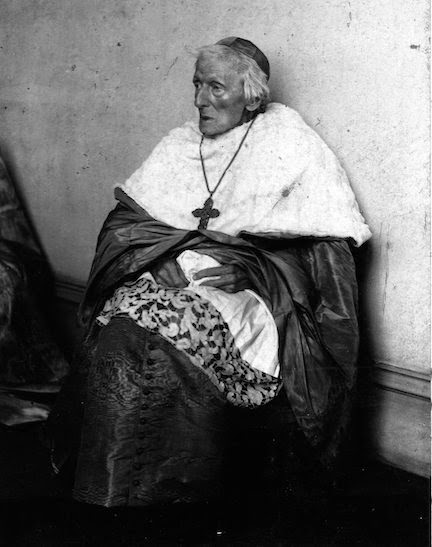
blessed_neman_winter_cappa

Cardinal Newman in his winter cappa. The man was no Ultramontanist. (Source)

Blanchard’s defense of Gallican thinkers such as Gerson, Bossuet, and Fleury is admirable. One could add to their names that of Cardinal Newman, whose soft-conciliarist ecclesiology earned the ire of ultramontanists like Cardinal Manning and W.G. Ward and Monsignor George Talbot, who famously wrote to Manning,

What is the province of the laity? To hunt, to shoot, to entertain? These matters they understand, but to meddle with ecclesiastical matters they have no right at all, and this affair of Newman is a matter purely ecclesiastical…Dr. Newman is the most dangerous man in England, and you will see that he will make use of the laity against your Grace.

None of this broader historical context appears in O’Neill’s piece. Perhaps it’s a little unfair to demand it, insofar as O’Neill is more interested in our contemporary debates than in the genealogy of the terms at play. But if we are to properly recognize “the historical significance” of ultramontanism, then we can’t really dodge the issue. If O’Neill is right to suggest that “the term ought not to be associated with heterodoxy but rather orthodoxy,” then men like Newman are beyond the pale of orthodoxy. And that seems like rather an impoverished vision of the Catholic intellectual life. I will conclude with Dr. Blanchard’s own measured words on the matter.

My point in this qualified defense of Gallicanism is not that we should “return” to Gallicanism, if such a thing were even possible. Neither must we equate ultramontanism with Catholic orthodoxy, simply because ultramontanes triumphed at Vatican I. Catholic orthodoxy is too big to be equated with either. The Catholic faith is big enough and dynamic enough to include what is good and true in ultramontanism and in Gallicanism, and likewise to reject what is harmful, false, or exaggerated in both.

Read them both.

Three New Books for Early Modernists

There are some very exciting publications coming out soon…especially for those of us who study religion in the early modern period.

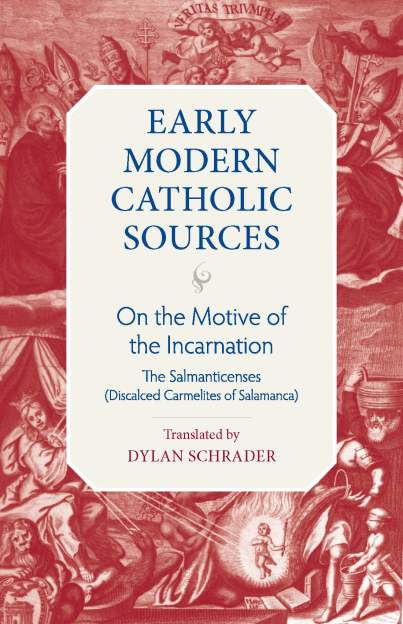
First, there’s a new series from CUA Press on Early Modern Catholic Sources, edited by Ulrich Lehner and Trent Pomplun. The first volume covers Christological debates among the Discalced Carmelites of the School of Salamanca. I think it’s a fair assumption that this material has never been translated before. The first volume should appear in 2019.

Salmanticenses-final-sketch

Vol. I of Early Modern Catholic Sources (Source)

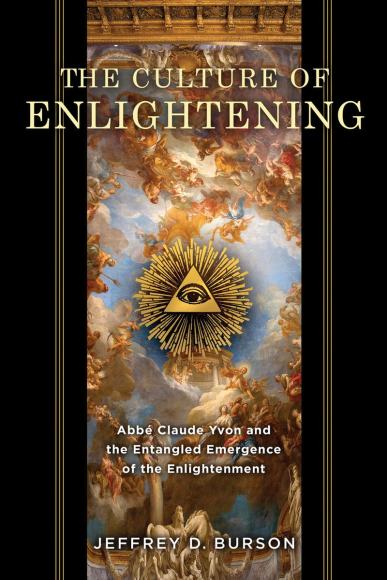
Second, and more germane to my own work, we have Jeffrey Burson’s very promising intervention into the perennial “Enlightenment” v. “Enlightenments” debate. His new book, Culture of Enlightening: Abbé Claude Yvon and the Entangled Emergence of the Enlightenment, is scheduled to be released from Notre Dame Press in May 2019. Burson has already established himself as a major scholar of the Catholic Enlightenment, and his newest foray promises to be his most ambitious work yet.

Bursonbook

Burson’s new book (Source)

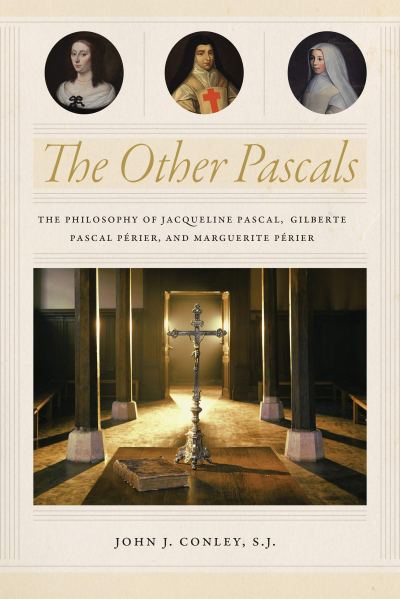
For those of you who, like me, take an interest in the Jansenists and in early modern Catholic women, you’ll be happy to know that there’s a new study of Pascal’s sisters by Rev. John J. Conley, S.J. The Other Pascals: The Philosophy of Jacqueline Pascal, Gilberte Pascal Périer, and Marguerite Périer, another ND Press piece slated for an April 2019 release, will no doubt shed new light on these fascinating figures. Conley has done important work before on Catholic women in the 17th century – I look forward to his newest treatment of the subject.

OtherPascals.jpg

A Jesuit writes about Jansenists (Source)

And if you’re just looking for general book recommendations, might I refer you to Incudi Reddere? You’ll find much more there.

The Horses of St. Bruno

Today is the Feast of St. Bruno, founder of the Carthusians. While many know of the Carthusians for their famous silence, their holy way of life preserved from corruption down the centuries, and that wonderful green liqueur they make, few are aware of another gift they have given the world: a breed of Andalusian horse known as the Cartujano.

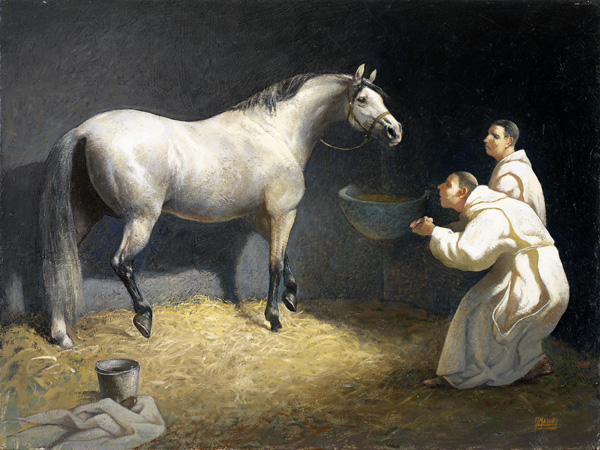
Cartujano1

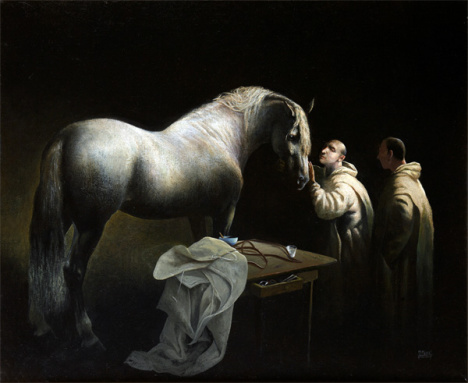
Monks with their horse. (Source)

The breed emerged as early as the 1400’s, and had become an important strain of the Spanish equine population by the early modern period. They originated at the Charterhouse of Jerez. The story of their arrival at the monastery is a little uncertain, but one plausible theory holds that:

“Don Pedro Picado, was unable to pay his ground rent to the monks…decided to pay them…in kind by offering them his mares and colts. These animals had been bought…from the brothers Andrés and Diego Zamora…who formed this small stud farm from a stallion bought from a soldier, and one of its sons, a colt of extraordinary beauty and grace, called ‘Esclavo.'”

Cartujanotoday.jpg

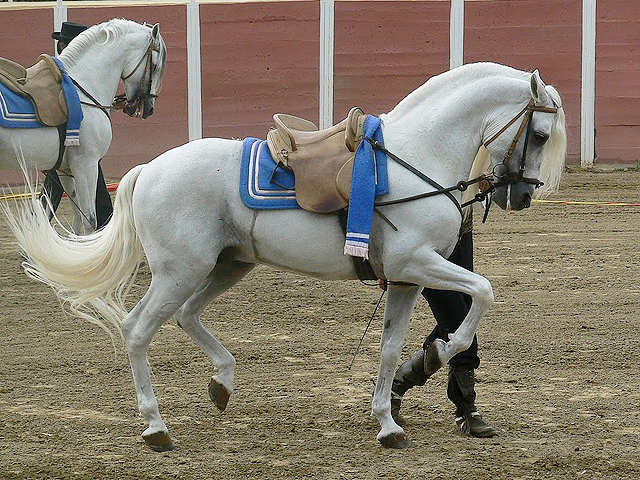
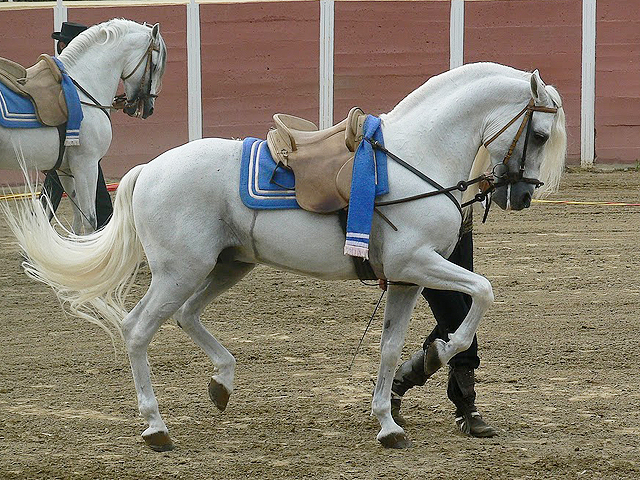
A Cartujano today. (Source)

At any rate, the monks commenced a breeding program that lasted for hundreds of years – they only lost their monopoly on the line at the French invasion. The end result was what one source has called “the purest of Spanish horses.” Take a look at the numbers:

The Carthusian horse, or Cartujano is not a distinct breed of horse but rather an offshoot of the pure Spanish horse and is considered the purest strain remaining with one of the oldest stud books in the world. Roughly 82% of the Pura Raza Espanola (PRE) population in Spain contains Cartujano blood. But there are less than 3% pure Cartujano horses within the PRE population and only 500 pure Cartujanos in existence in Spain today.

Music Study III_ 004

“The Cartujanos,” Jose Manuel Gomez. (Source)

Virtually all Cartujanos today are descended from that first horse at Jerez, that Jacob of horses – “Esclavo.” You can see one in action here.

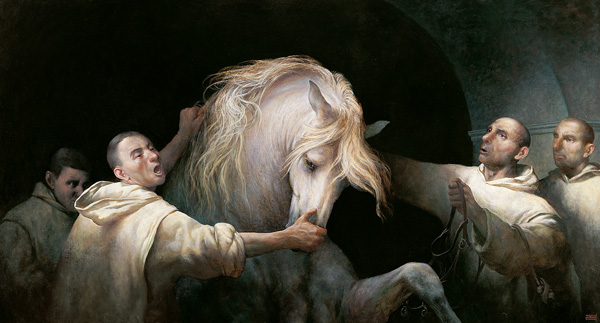
Cartujano2

Monks and their horse. (Source)

We need not justify the monastic life on terms other than its own final good – that is, union with God. Or even its secondary good – prayer for the world. But if one is seeking “useful” or “worldly” benefits of monasticism, look no further than the Cartujano horse. The continuity provided by the monastic state over centuries allowed proper record keeping and a meticulous attention to the intricacies of a sustained lineage. These beautiful creatures are one testament to the salutary work of monks in history.

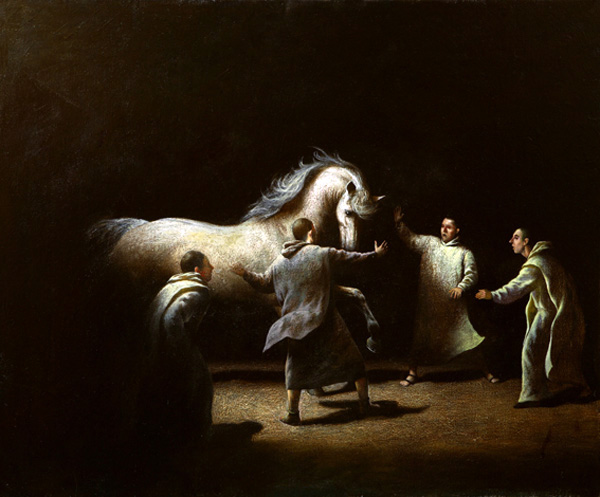
Cartujano3

I’m sure there’s a spiritual metaphor here. (Source)


A Carmelite Daughter of St. Philip: The Venerable Serafina di Dio, O.C.D.

One of my favorite essays to write on this blog so far has been my study of the way that St. Philip Neri embodied certain Benedictine qualities. In that piece, I argue that sometimes we can gain a deeper understanding of a saint by looking at their likenesses with saints of a different religious family or by the influence of other saints in their lives. As an extension of that essay, I’d like to introduce my readers to a Venerable whom they have probably never heard of, one who followed St. Philip in a very Benedictine spirit: the Venerable Serafina di Dio, O.C.D.

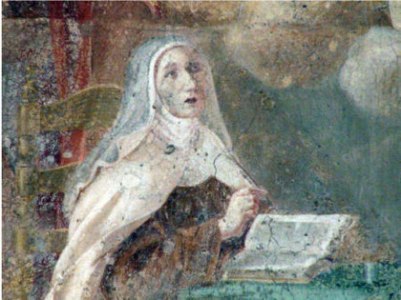
Venerabile-serafina-di-dio-fondatrice-.jpg

Ven. Serafina di Dio (1621-1699), Neapolitan Carmelite mystic. (Source)

The Life of a Mystic

Prudenza Pisa was born in the Kingdom of Naples in 1621. She clashed with her father at a young age when she refused to marry the young man he had chosen as her husband. She also cut her hair and donned pentiental garb. These actions did not go over well, and she soon found herself expelled from the household. Prudenza resided during this rather fraught period in what was essentially the family chicken coop. Yet she grew closer to her mother, who brought her meals secretly. Prudenza saw these sufferings as an opportunity for growth in trust of God. She also set herself to the good works of visiting the sick. In the Neapolitan Plagues of 1656, she continued her ministry even as the illness claimed her beloved mother. Her behavior at this terrible juncture was edifying:

Seraphina prepared her mother for death and actually closed her eyes when she died on August 5th 1656. Christian burial was not allowed during the plague. With her own hands, she dug a shallow grave in the backyard and personally buried her mother.

Yet her active life was soon to draw to a close. One of her uncles, a prominent priest, died of the same plague. He had been planning to found a convent of enclosed nuns on Capri. She carried on this noble work after his departure. She gathered together various companions from Naples and, on 29th of May, 1661, took the habit of the Discalced Carmelites at Naples Cathedral. It was then that she took the name of Serafina of God. Later that year, the community moved to Capri. Their residence soon proved inadequate, and they constructed a much larger monastery dedicated to the Most Holy Savior. Mother Serafina’s leadership bore fruit in another six Carmelite convents in the Kingdom of Naples, a remarkable flourishing clearly drawing its power from the Holy Ghost.
BenedictXIII.png

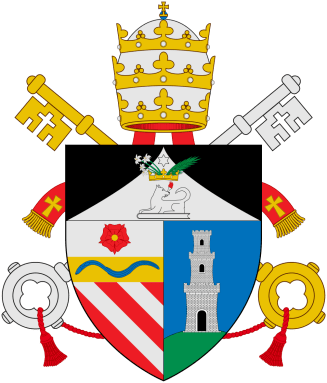
The (very Dominican) arms of Pope Benedict XIII, friend of Ven. Serafina di Dio (Source)

Ven. Serafina was not without trials. Although she wrote an attack on Quietism, she was herself accused of this noxious heresy. For six years, the Inquisition conducted an investigation into her writings and activities. For two, she was confined to her cell without the benefit of Holy Communion. But at last, her name was cleared, in no small part because of the intervention of her friend, Archbishop Vincenzo Maria Orsini, the future Pope Benedict XIII.

There can be little doubt that these troubles arose from within her own religious family. Although Mother Serafina was entirely blameless in conduct, her manner of spiritual leadership won her many enemies among her more lax daughters. Perhaps some of the trouble could have been anticipated from the fact that her recruits were customarily drawn from the ranks of the Neapolitan aristocracy, not a class generally known for its ascetic rigor. The Carmelites treated their foundress poorly. For example, while Serafina was ill in her confinement, she begged to see some of the sisters. They did not come. Yet the patience with which she bore these final trials remains exemplary. As one biographer notes, “Two days before she died she asked the Prioress to look after the sisters who had been so contrary to her, making excuses for their behavior.” This mercy converted the hard of heart, for, as the same writer says, “After her death on March 17, 1699, some of the sisters who were most against her became some of the most enthustiastic promoters of her Cause.”

Spiritual Daughter of St. Philip Neri

An heir of the Tridentine reform, the Ven. Serafina was a great admirer of St. Teresa of Avila, whom she endeavored to emulate in all things. She was a prolific writer, composing at least 2,173 letters and enough theological writing to fill 22 books. Some of her topics included:

SerafinaWriting jpg.jpg

Ven. Serafina writing (Source).

-the prayer of faith
-mental prayer
-the love of God and the practice of the divine presence
-the common life
-conformity to the will of God.

Alas, I don’t believe any of these have been translated into English. Perhaps some intrepid early modernist will someday render these works into the Anglo-Saxon tongue.

Serafina was also a visionary mystic. She went about life with a constant ability to fall into meditation. In Serafina’s own words:

“…Anything I looked at I was able to turn into a meditation… When I saw it raining, I thought of the refreshment which the rain brought to the earth and that without it the earth would be arid. I would say: ‘If the water of divine grace did not fall on the soul, it would dry up without providing the fruits of good works.’ … The sight of fish swimming in the sea made me remember how the saints are immersed in God… And in such wise everything, even the slightest things, served me for my spiritual nourishment.”

The greatest misfortunes could not turn her from the praise of God. For in all things, she perceived the benevolent Providence of God. Her unfailing rule was that “All that God did and allowed was beautiful, good, ordered for our good.” Even the terrible things in life thus became for Serafina an occasion of magnification and blessing.

Serafina was also a visionary mystic. At one point, “She was so overwhelmed with her vision of the Godhead that she wondered what else could be reserved for her in heaven.” The experiences she was granted were extraordinary, though she took pains to keep them discreet. Yet we do have letters attesting to some of her ecstasies.

One figure who emerges as particularly important in her religious life is St. Philip Neri. The Oratorian Fr. Francesco Antonio Agnelli tells us that she honored St. Philip by, for instance, devoutly kissing the feet of the crucifix thirty-three times in his honor; she was repaid for this act of love with a vision of the glorified St. Philip prostrate and kissing the feet of Jesus thirty-three times in her name (Agnelli 194).

Serafina’s spiritual father was Fr. Vincenzo Avinatri of the Naples Oratory. She wrote him letters describing the visions she had of St. Philip. In one such letter, she reports that

“I saw the Saint, with the great Mother of God, in a flame of fire, and surrounded with light…with a sweet countenance, he told me many beautiful things…He showed me what his sons ought to be, and the dignity of the Congregation, made, so to speak, in the likeness of God and of the three Divine Persons, and especially of the Person of the Holy Spirit…Without speaking, he had explained to me the perfection we must have in order to be sons of light. It would be a monstrous thing if fire generated snow, if light brought forth darkness, if crystal produced mud…How much greater wonder would it be, if in any of the sons of St. Philip, who are called sons of the Holy Spirit, there should be any defect!” (qtd. in Agnelli 195-96)

In another vision that came to her on the vigil of St. Philip’s day, she was carried way into a heavenly rapture and saw the Saint aflame with a supernal light. And in view of St. Philip, she saw her own heart on fire, as well. But it did not glow as brightly as his; therefore, she prayed to the Saint that she might receive a more perfect and ample share of Divine Love. As Agnelli describes it,

Then the Saint united his heart with hers, and thus united they sent forth a great flame; she felt so much love that she could not express it, and the Saint invited her to rejoice in the presence of the Lord, and to sing His praises, desiring her to repeat with him these words, Sanctus, Sanctus, Sanctus, Magnus Dominus et laudabilis nimis [Holy, holy, holy, great is the Lord and worthy of all praise], adding that it is impossible to find in the most devout Canticles words more pleasing to God. (Agnelli 194-95).

She was thus adopted by the saint as a kind of daughter in the Spirit. She also looked upon Oratorians as her own sons. This spiritual affinity was later attested by a physical resemblance with St. Philip. When an autopsy was conducted on Mother Serafina’s body, the examiners found signs of transverberation in her heart.

It may seem odd for a visionary to become so friendly with St. Philip and his sons. After all, St. Philip himself was notorious for his skepticism when it came to visions. He had treated the Ven. Ursula Benincasa with unrelenting verbal abuse to test her inspiration – a test she passed, even if the holy man never quite came around to endorsing her. St. Philip taught that, “As for those who run after visions, dreams, and the like, we must lay hold of them by the feet and pull them to the ground by force, lest they should fall into the devil’s net.” Though a man of tremendous supernatural gifts himself, he knew that the spiritual world was a minefield of dangers. False visionaries abounded in his day, and his prudent words have retained their perennial wisdom down into our own era.

To properly understand the nature of Ven. Serafina’s visionary mysticism, and why we can properly say it breathes of a Philippine spirit, we must look at it in the context of her leadership of a Carmelite monastery.

A Liturgical Mysticism

The troubles in Serafina’s life began because of her governance. As one biographer has it,

As often happens, Sr. Seraphina’s strongest talents and graces became her heaviest crosses. In her foundations she shared her convictions about religious life with her sisters. She firmly believed that the best guarantee of authenticity of one’s religious experience was a dogged faithfulness to the traditional forms. She was immersed in the church’s liturgy, the celebration of the Eucharist, the Divine Office, the liturgical year, and the feasts of the Saints. She was often led to intimate communion with Christ Jesus at the liturgy beginning with the midnight office. She also stressed the need for silence and solitude as requisites for prayer. [emphasis mine – RTY]

Her tenacious devotion to the traditional forms of worship and to the great prayer of the Church, the Liturgy and Divine Office, shows that the Ven. Serafina was in every way a monastic. Indeed, these salutary measures evince a Benedictine sensibility.

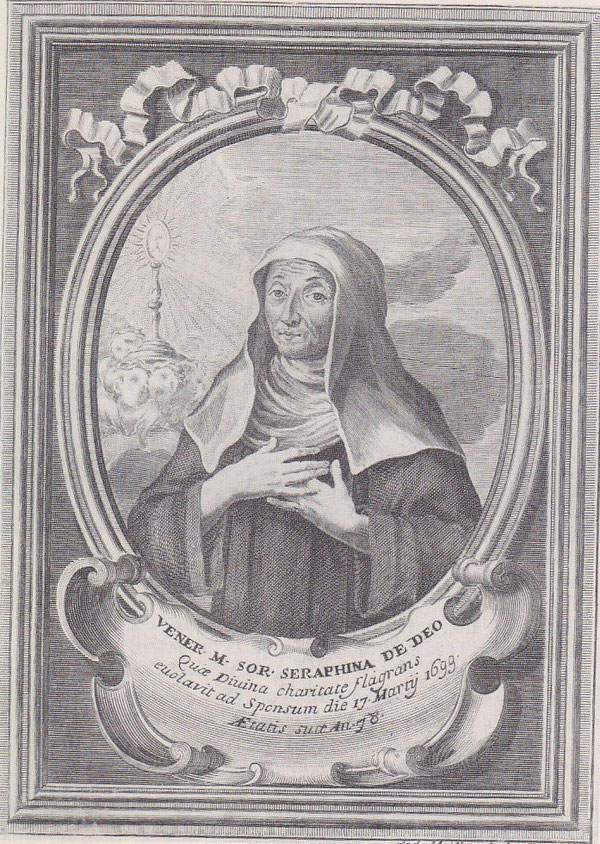
SeraphinadeDeo.jpg

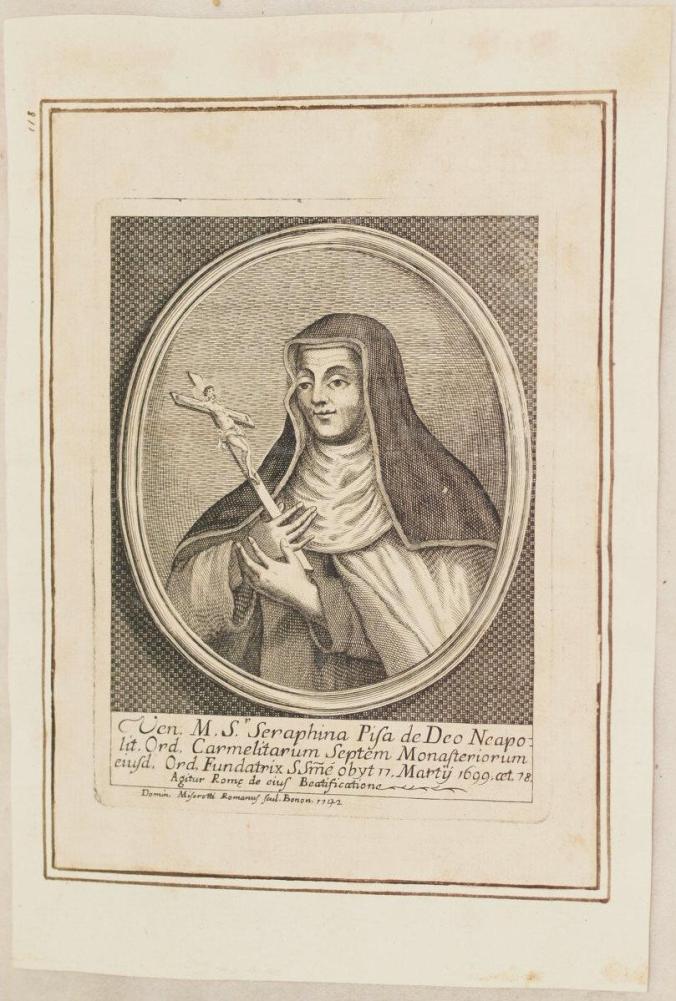
An 18th century portrait of the Ven. Serafina di Dio. Note the prominent place of the Blessed Sacrament in this composition. (Source)

Her ecstasies were not a superfluous and shallow add-on to this liturgical life. She built the house of her prayer upon the rock of tradition, and it was illumined with the uncreated light of the Holy Ghost.

Serafina’s mystical life was tied to her experience of the liturgical calendar. For instance, any of her most profound encounters with St. Philip took place on the vigil and day of his feast (Agnelli 194-95). A cynic would see in this timebound quality a mark of the merely human dimension of religion, a fine example of confirmation bias. But those who have learned of divine things will discover a deeper reality. In Serafina they will see a soul that has grown attuned to the Wisdom of God, made manifest in time through the Incarnation of Christ and the Liturgy of the Church.
altaresantissimosalvatore.jpg

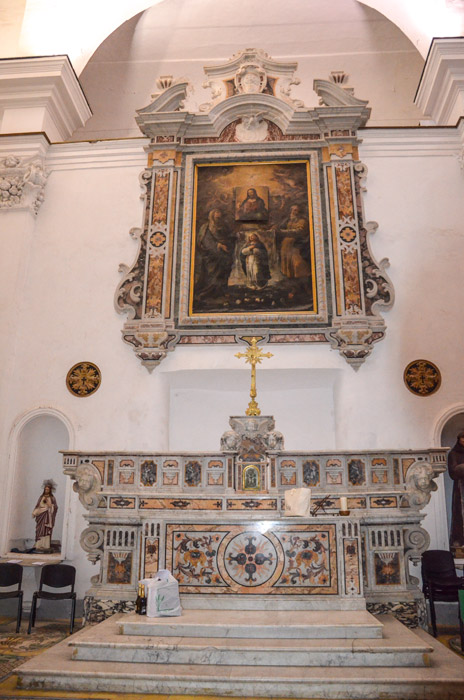
High Altar of the Chiesa Santissimo Salvatore, Capri. Although it has not been a Carmelite monastery since Napoleonic times, this is the altar where the Ven. Serafina would have received communion. (Source)

These are quintessentially sound foundations for the spiritual life. Her strictly liturgical and monastic way engendered serious opposition among her daughters, but it also gave her the strength to bear that opposition with true Christian patience. One can only imagine the terrible suffering that two years without the Blessed Sacrament must have inflicted on such a soul. Yet, by grounding herself in the Liturgy, she was able to nourish that innate trust in Providence already evident in her earliest days. Surely, that sustained her in the darkest days of her old age.

The Long Road to Sainthood

It seems somehow appropriate that, as an adopted daughter of St. Philip, the Ven. Serafina should not yet have been canonized. Many of his spiritual children have had a similar fate. Witness the stalled cases of Ven. Cardinal Cesare Baronius, Bl. Juvenal Ancina, Bl. Anthony Grassi, and Bl. Sebastian Valfre, just to name a few of the many early modern Oratorians who have not yet reached the highest altars of the Church.

Still, we can pray that this Carmelite mystic will one day be recognized as the saint she was. Let us beg her intercession and emulate her profound devotion to the Liturgy of the Church.

UPDATE: A Carmelite friend pointed out to me that Ven. Serafina was in fact not subject to the jurisdiction of either Carmelite order, essentially running independent Carmelite conservatories of oblates in the Discalced habit, following an adaptation of St. Teresa’s constitutions. She was a sort of Carmelite version of St. Francesca Romana. More info can be found in the works of Smet. As such, any use of the Carmelite letters after her name may be inappropriate, but given a) the unusual nature of the case, and b) the difficulty of changing my title and thus invalidating links, I have decided to keep my text as is and merely add this disclaimer.
SerafinadeDeo2.jpg

May the Ven. Serafina di Dio pray for us! (Source)
The Voice of Arthur Machen

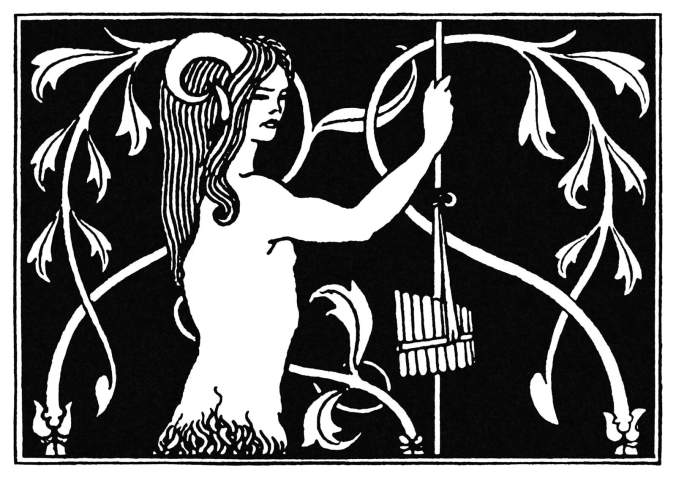
GreatGodPanBeardsley.jp

The title illustration of Machen’s The Great God Pan and the Inmost Light (1896), famously rendered by Aubrey Beardsley (Source)

Arthur Machen (1863-1947) was one of the greatest horror writers in the English language. His particular brand of esoteric paganism, the dangers of the occult, the sinister truth lurking behind folktales, and a highly-developed knack for evoking eldritch terror – all of these elements exerted a profound influence on the development of weird literature. Those who enjoy Lovecraft will recognize much in Machen that later made its way into Lovecraft’s own corpus. The dark bard of Providence held Machen in high esteem.

Machen was also a deeply spiritual Christian, best but imperfectly classed as an Anglo-Catholic. His strong sense of the mystical life found its fullest expression not in his horror stories, which do indeed bear some mark of his sacramental worldview, but in his later writings. A Welshman, he was fascinated by the Grail legend and connected it with his idea of an ancient, vividly supernatural “Celtic” Christianity.

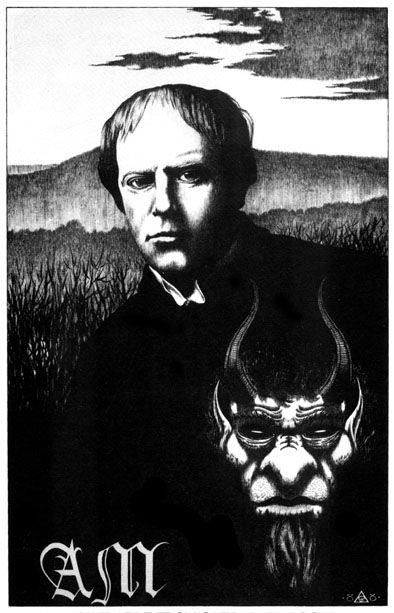
AMachen.jpg

Portrait of Arthur Machen (Source)

Machen is a favourite of mine. I cannot recommend his stories highly enough – especially The Great God Pan, “The Novel of the White Powder,” “The Shining Pyramid,” “The Ceremony,” and “The Lost Club.” He is far scarier than some of his better-known contemporaries such as M.R. James or Sir Arthur Conan Doyle.

He also figures prominently in some of my research. I recently came upon a recording of his voice from 1937, in which he speaks of Chesterton, Dickens, Thackeray, and the art of fiction more broadly. Some of my readers may find this as enjoyable as I do, and so I provide a link here.

A Relic of the 1965 Liturgy

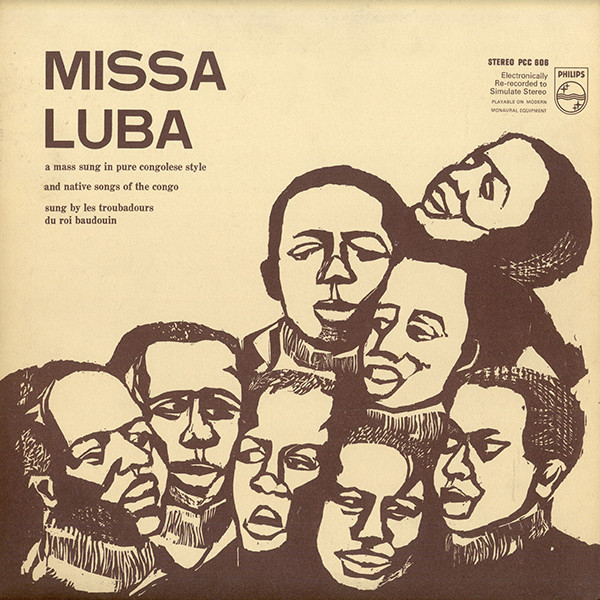
MissaLuba

Album cover of the Missa Luba. (Source)

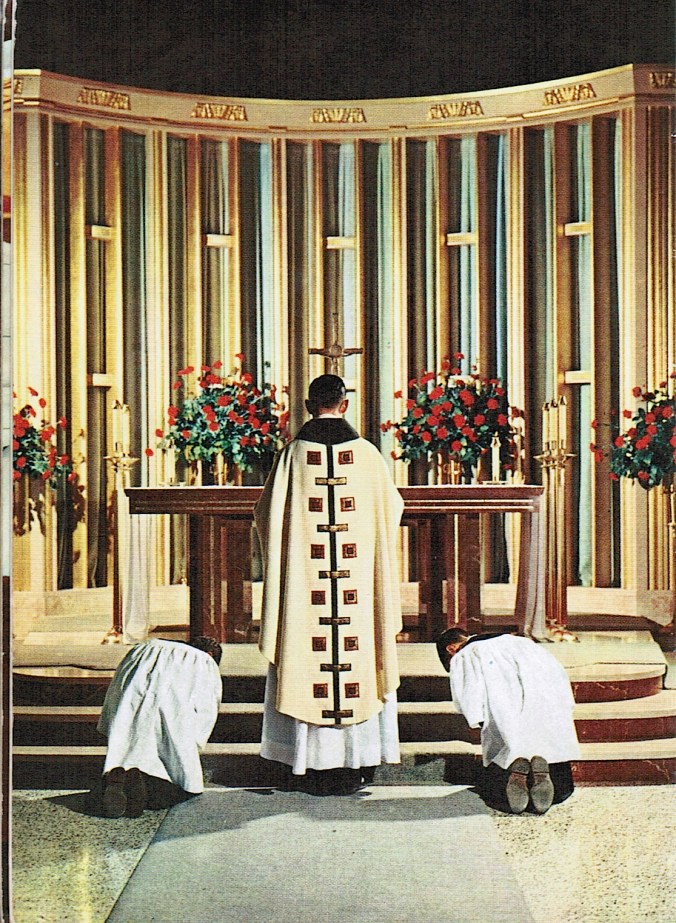
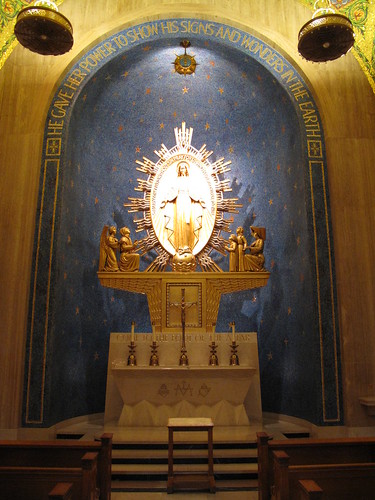
That strange Mass produced by the Council in 1965, an interim liturgy somewhere between the Usus Antiquior and the Novus Ordo, was often accompanied by a distinctive style – at once traditional and fresh, what has been called by some “The Other Modern.” Think of the decoration of the National Shrine of the Immaculate Conception in Washington, D.C – especially its many side-chapels. Think of the delightful, dignified, but very vernacular liturgical music of Fr. Clarence Rivers (at least his early material). Think of the ornate but often geometric vestments that emerged from that time. Indeed, just think of Paul VI’s space-age papal tiara.

1965 Mass.jpg

The hybrid Mass of 1965. Not ideal, but considerably better than what followed. (Source)

Recently I discovered a reminder of this strange time in the Church’s history. I was watching a 1968 movie called If… with friends. It’s a disturbing (if artful) film about an uprising at a traditional British public school, and was clearly made in conversation with the student protests that erupted that fateful Spring, fifty years ago. I was surprised to find that one of the major musical motifs was liturgical. Looking it up, I discovered it was the “Sanctus” of the 1965 Congolese Missa Luba. The song is in many ways a synecdoche of the 1965 rite. It starts off with on French Gregorian foot, quickly introduces drums, and ends with an extremely Congolese bit of improvised singing. And, it must be said, it’s very beautiful.

The poignant song, coming from a country and Church in turmoil, strikes me as emblematic of the crushed hopes of that era. So much was anticipated of Congolese independence, so bitterly contested in the five years since. Already, the forces of reaction were coalescing around an upstart colonel who would soon assume control of the country as its first home-grown dictator, Mobutu Sese Seko. And in the Church, those reformers who genuinely tried to bring about a more perfect sense of the divine in the modern world found their position betrayed by a coterie of unorthodox radicals who perverted the sense of the Council’s documents.

Yet we can still hear that bright, fleeting moment of hope in the voices of the Congolese joining their praises to those of the angels.

UPDATE: It has been pointed out to me, correctly, that I have erred in attributing the Missa Luba to 1965 proper. The Mass setting was actually first recorded in 1958. It was in 1965 that the first US release of the album came out. So I suppose that, insofar as we consider its Western reception, the Missa Luba does remain part of the 1965 liturgical landscape. And “The Other Modern” certainly existed in the 1950’s; the aesthetics of 1965 were the culmination of a few decades’ of development.

I suppose my final point, about the parallels in the Church and the Congo, wouldn’t work as well as I had hoped. But at the very least, the Congo in 1958 was indeed a place of tremendous hope for the future. That aspiration manifest in the music was soon crushed by the turmoil of five years of war following Belgium’s official withdrawal in 1960. And the Church? Well, in 1958, I’m not sure anyone really saw what was coming…

“And the Light Shineth in Darkness; and the Darkness Comprehended It Not.”

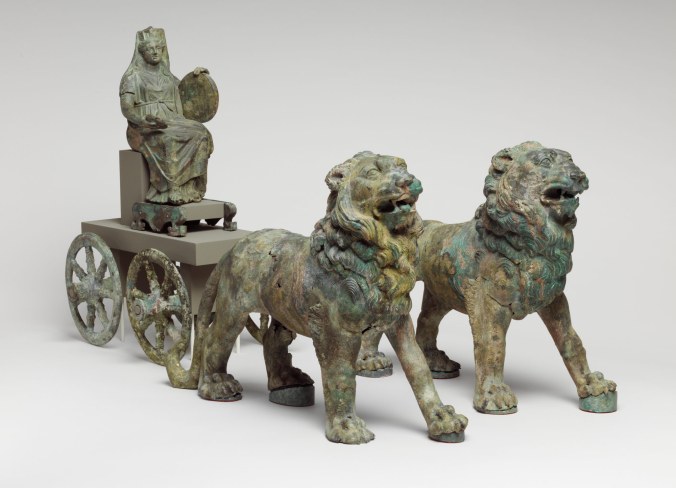
Cybele.jpg

Cybele, the Magna Mater, on her triumphal car pulled by two lions. Has there ever been a more perfect likeness to the Whore of Babylon? (Source)

March 24th is the traditional Dies Sanguinis of the ancient Roman calendar, when the painted eunuch-priests of Cybele and the votaries of Attis in their Phrygian caps would join with the servants of warlike Bellona in the most vile public atrocities. On that day, hideous pipes stirred the wicked throng into a fever of unutterable terror, and as the revelers danced in an ever more demoniac fashion, they mutilated their flesh and let out copious torrents of blood upon the stones of forum and temple. Then they drank from their own spilled blood, descending even lower than the beasts in their frenzy and taking on instead the aspect of lustful aegypans. The summit of these evil ecstasies came when, before the altar of the Magna Mater, devotees castrated themselves. Only thus could they enter the service of that infernal priesthood.
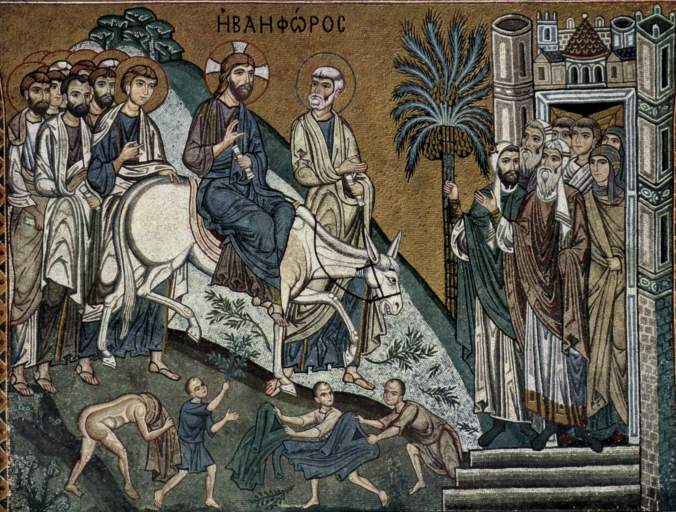
vhod-gospoden-v-ierusalim_palermo

The Triumphal Entrance of Christ, mosaic, Palermo. (Source)

This was the culture that Christianity conquered. And it is with these satanic rites in mind that we look forward to a double feast of rather a different sort tomorrow. For tomorrow, on the 25th of March, we celebrate Palm Sunday and the Annunciation, falling providentially on the same day.

“And the light shineth in darkness; and the darkness comprehended it not.”

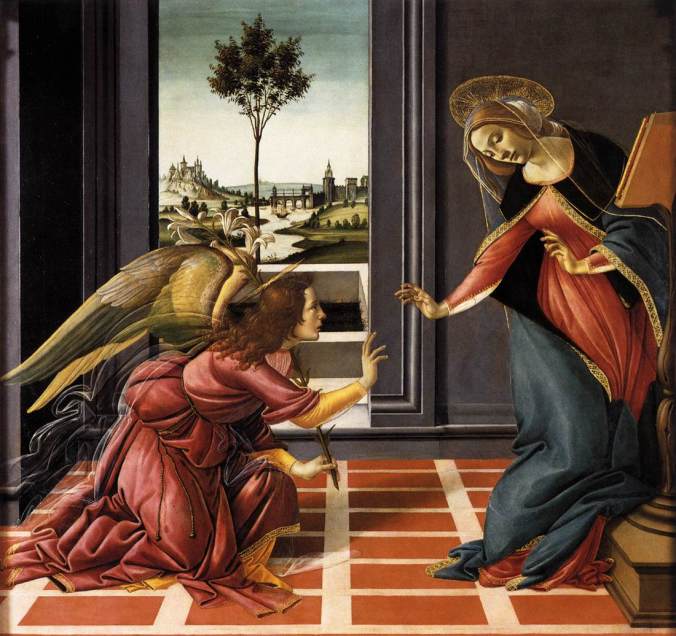
Botticelli,_annunciazione_di_cestello_02

The Cestello Annunciation, Botticelli, 1489-90. My favorite of all Annunciations. (Source).


Elsewhere: Newman Against the Nazis

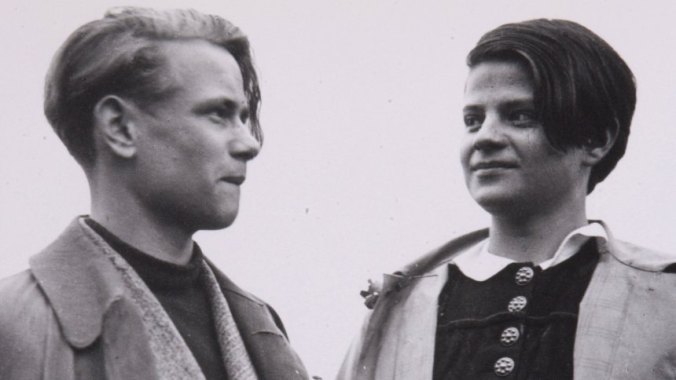
Werner und Sophie Scholl

White Rose members Hans and Sophie Scholl. (Source)

A big thanks to Fr. David Abernethy of the Pittsburgh Oratory for bringing to my attention an article in the Catholic Herald about the influence of Cardinal Newman’s thought on die Weiße Rose. Apparently the Doctor of Conscience was an important impetus for their resistance to Nazi oppression. From the article:

The man who brought Newman’s writings to the attention of the Munich students was the philosopher and cultural historian Theodor Haecker. Haecker had become a Catholic after translating Newman’s Grammar of Assent in 1921, and for the rest of his life Newman was his guiding star. He translated seven of Newman’s works, and on several occasions read excerpts from them at the illegal secret meetings Hans Scholl convened for his friends. Strange though it may seem, the insights of the Oxford academic were ideally suited to help these students make sense of the catastrophe they were living through.

Haecker’s influence is evident already in the first three White Rose leaflets, but his becomes the dominant voice in the fourth: this leaflet, written the day after Haecker had read the students some powerful Newman sermons, finishes with the words: “We will not be silent. We are your bad conscience. The White Rose will not leave you in peace! Please read and distribute!”

Read the whole thing. And pray that Bl. John Henry Newman might, by his intercession, assist us in the struggle against every tyranny.

A Spanish Mystic of the Sacred Heart

Providence sometimes ordains that we should come across new friends in Heaven at exactly the right time. This happy accident of grace has just occurred to me.

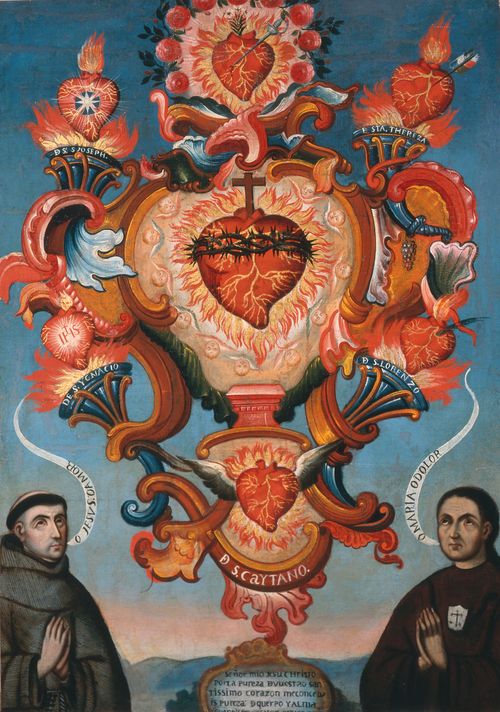
SacredHeartTimesSix.jpg

Holocausto de Corazones al Sagrado Corazon de Jesus, 17th century Mexican. (Source)

I’ve been reading about the Jesuits of the late 17th and early 18th centuries quite a lot recently in connection with my research. My admiration for them has grown tremendously. I always used to have a devotion to the Jesuit martyrs of Elizabethan and Jacobean England, and to an extent, I still do. But the Continental Jesuits who did so much to combat the spread of Jansenism are a marvel to behold. For all my jokes about the suppression of the Jesuits and my appreciation of Pascal, I have to say that the Jansenists were a nasty bunch. The more one studies their history and doctrines, the colder one feels. Thus, I especially admire those tireless evangelists of the Sacred Heart such as St. Claude de la Colombière, whose feast we celebrated yesterday. Along with this revived interest in the Continental Jesuits, I’ve found myself drawn to the Sacred Heart in recent weeks.

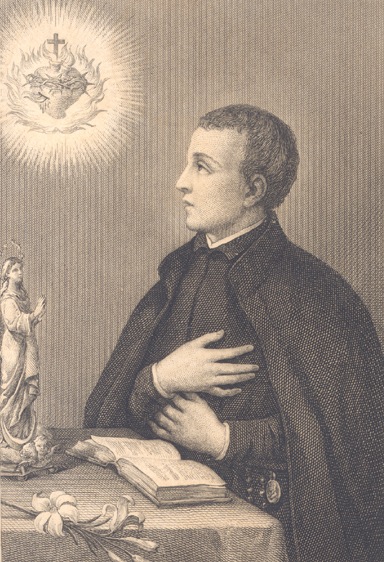
librohoyos

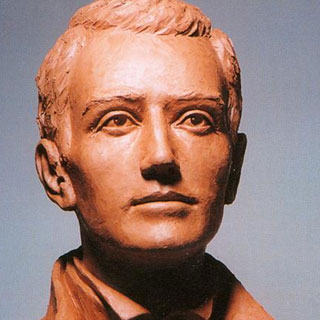
Bl. Bernardo Francisco de Hoyos S.J. (Source)

Into this recent ferment of the spirit came an unexpected intrusion of grace. As I was scrolling through Facebook, I saw that in one of my Catholic groups, someone had posted an article about a mystic and asked what we all thought. I opened the link and discovered a new and remarkable saint: the Blessed Bernardo Francisco de Hoyos, S.J.

The Blessed Bernardo entered the Jesuit novitiate in 1726 when he was not yet fifteen. In the early years of his formation, he felt a strong attraction to the (then) Blessed John Berchmans, a model of Jesuit youth, seeking to emulate him in all things. The young saint later had a powerful “dark night of the soul” that involved demonic torments. When he came out on the other side, however, the Lord appeared to him in some of the most remarkable visions of the age. To wit:

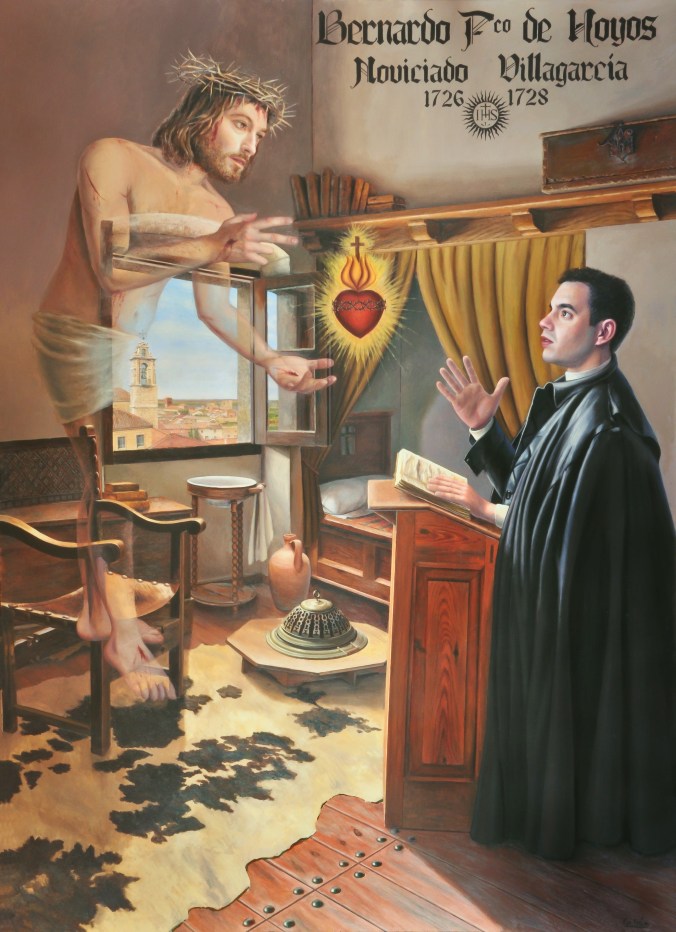
Always holding my right hand, the Lord had me occupy the empty throne; then He fitted on my finger a gold ring…“May this ring be an earnest of our love. You are Mine, and I am yours. You may call yourself and sign Bernardo de Jesus, thus, as I said to my spouse, Santa Teresa, you are Bernardo de Jesus and I am Jesus de Bernardo. My honor is yours; your honor is Mine. Consider My glory that of your Spouse; I will consider yours, that of My spouse. All Mine is yours, and all yours is Mine. What I am by nature you share by grace. You and I are one!” – The Visions of Bernard Francis De Hoyos, S.J., Henri Béchard, S.J.

bernardfrancishoyos

A modern rendition of Bl. Bernardo. (Source)

Assuming this quote is accurate – like the author from whom I took it, I am unable to verify it (Bechard’s book is extremely rare) – it evinces an eminent degree of spiritual maturity. Dom Mark Daniel Kirby reports on more of the young saint’s experiences:

On August 10, 1729, the Saviour, covered with His Precious Blood, appeared to Bernardo, and showing him the wound in His Side, said, “Rejected by humanity, I come to find my consolation with chosen souls.” Bernardo’s experience closely resembles that of Saint Margaret Mary Alacoque fifty-three years earlier in the Visitation Monastery of Paray-le-Monial in France.

SacredHeartprint

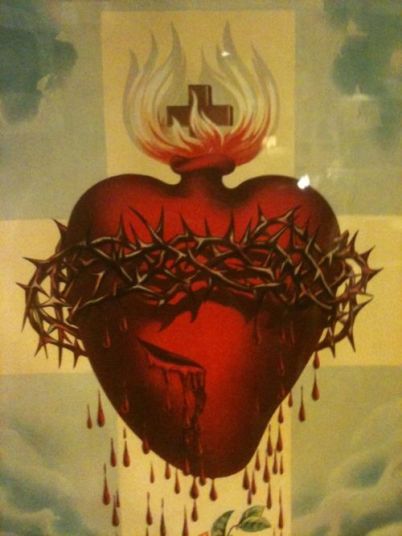
The Sacred Heart of Jesus. (Source)

It should be no surprise to us, then, that Bl. Bernardo was a profound devotee and propagator of the Sacred Heart of Jesus. In 1732, when he was only 22, the Lord entrusted him with the mission of spreading love for the Sacred Heart, both “as a means of personal sanctification and as an effective means for accomplishing the apostolate.” That year, he consecrated himself to the Sacred Heart using St. Claude’s formula. Shortly after, he collaborated on a book about the devotion entitled The Hidden Treasure (alas, I don’t know if it has been translated into English). His brief priesthood – he died of typhus less than a year after ordination – was a total gift to the Sacred Heart. He was known to say, “Oh, how good it is to dwell in the Heart of Jesus.” These were, no doubt, the words of one who dwelt there indeed.

Bl. Bernardo was beatified in Valladolid on April 19, 2010. He is a special patron against the sin of impurity, perhaps because his own chastity was sealed in a mystical marriage to Jesus.

One of the things that truly struck me about Bl. Bernardo’s story – aside from his devotion to the Sacred Heart, which is, as I mention, timely – was his youth. He was only a year older than me when he died. To think that someone could achieve such heights of holiness in such a short time is a wonderful encouragement.

But of course, the growth of a soul is not, strictly speaking, a matter of our own effort. It is the work of the Holy Ghost in us. Bl. Bernardo is an example of what happens when we open ourselves totally to the operations of the Holy Ghost. Not everyone will receive visions. In fact, very few souls are so privileged. But they are given to the Memory of the Church so that we who are less favored may take some inspiration by their example and glimpse more perfectly some aspect of Our Savior. Christ is the one light caught by so many prisms through the centuries. Bl. Bernardo is one such pure glass, shining through the ages to light our way. May he pray for us in this Lenten season.

Bernardo_Fco_de_Hoyos.jpg

Bl. Bernardo Francisco de Hoyos’s vision of the Sacred Heart. (Source)