A Letter on Loneliness

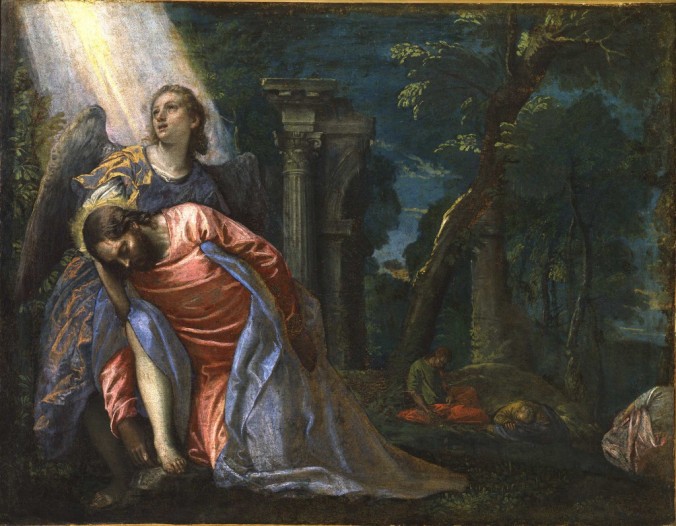
Veronese-Cristo-nell-orto-del-Getsemani-1024x797

Christ in the Garden of Gethsemane, Veronese. Pinacoteca di Brera (Source)

My Dear Brother Josiah,

I received your last correspondence with a mixture of joy and sorrow. Joy, for all the good news you shared of our friends and familiars; sorrow, for those matters closer to your own heart that weigh so heavily upon your soul. Normally, I would not venture to offer unsolicited advice. However, as you have come to me seeking counsel, I will try to speak from what little light I have been granted. I will offer you, I hope, nothing but the constant teaching of the saints, nor anything I would not myself seek to follow. So much of what I must share is rooted in my own experience, the fruit of suffering not in all respects unlike your own.

You tell me that you worry about God’s blessing. You write that, in view of your griefs, you no longer trust that the Lord will bless you. This is a failure of Christian hope, but an understandable one. Faced with one reversal after another, it is easy to despair. I will point you first to the book of Job, a well from whose water I know you have already imbibed in more bitter times. What else could I tell you? The key practical thing is to recollect often those graces you have received. Savor them. Go over each, holding them close to your heart in memory. Make space in your week – better yet, your day – to ponder the grand and little mercies of God. I commend to you one of the very greatest pieces of wisdom I have received, that “a grace remembered is a grace renewed.” Continual recollection means that we are never really bereft of those graces once delivered unto us.

Look over your current state of life. The world, at least, sees your success. Many would desire your place. Thank God for what He has seen fit to give you so far.

But I know how incomparably small all of those worldly triumphs seem next to the losses you’ve suffered. I see what you mean when you say that you don’t trust God to bless you anymore. You aren’t speaking of those tangible blessings the world prizes in its vanity. You speak instead of the love of those taken from you. That golden blessing is worth all the others combined.

And so, we come to what seems to me to be the basic problem; not despair, but loneliness. The chill that stains even the brightest happiness and reveals the joys of this world to be fool’s gold. Have you considered loneliness in itself? Perhaps you have. It is a dark and loathsome thing. Perhaps you have found it buried down in your soul. A void. A hole that, like a carious tooth, aches and aches until it cries out for your full attention. A little black space at the bottom of things. You carry it around with you and never set it down. Grief carved it out, shaped it to its own image, and colors it even today.

I don’t know if you will always bear that burden. Some of us must. But I would encourage you to embrace it. That emptiness is, in the words of R.S. Thomas, “a vacuum he may not abhor.” Come close to the void. Peer at it. Ecce lignum crucis! It is the cross you have been given. Fasten your heart to its center with the very nails of Our Lord’s passion. Accept His invitation, and you will be able to endure those long and painful hours when hope fails. One day, when you are least expecting it, something may very well happen. You may be at prayer in your room. You may be savoring the Eucharist at Mass. You may be finishing the sorrowful mysteries of the rosary. But suddenly, unbidden, the Holy Ghost will visit you. The darkness will turn to dazzling light. By some strange alchemy known only in heaven, the emptiness will all at once turn into a full fountain of molten gold. The cavern will become a cup that runneth over. The silence will become song beyond sound or human voice. And your heart will be seized by the beautiful and terrifying realization that the Living God sees you. If only for a moment, you will know what it is to be “alone with the Alone.” Then will your heart become one with His. Then will you know a communion that obliterates all loneliness and a joy that erases all grief.

This moment cannot be rushed. God will not come but in His own way and in His own time. All the same, one can prepare.

First and foremost, take your loneliness and grief to the sacraments. When you are at the offertory or some other convenient point at the Mass, give your heart to the Eucharistic Christ. Ask to be alone with Him in the Tabernacle. Cleave to it as to the one rock of safety in a stormy sea. Consider, too, how Our Lord suffers loneliness in the Tabernacle. Think how He is neglected in His tabernacles through all the world. Think how He desires your consolation – yours! Truly, He wishes to make that emptiness in your soul His true and everlasting Tabernacle. Will you deny your Lord? For in the Tabernacle, He is at once most suffering and most glorious. So, too, where you are most suffering, He will render you most glorious.

Second, make a point of consciously drawing near to Christ crucified in your daily prayer. One thing I’ve done in the past – though, I confess, I have lately been lax about it – is to pray the Divine Mercy chaplet and dedicate each decade to one of the Holy Wounds. Start by contemplating Our Lord’s feet, His physical presence on Earth during His lifetime and evermore in the Eucharist. Consider His comings and goings, and how He willingly ceases all of that to offer Himself to the Father on the cross. Then consider His left hand, the Kingly hand that holds the orb of the world. Ponder the ways of His Providence. Take heart in His mercy towards the penitent and His just judgment of the wicked. Praise Him for His true and final victory over the forces of evil, for scattering the proud in their conceit. Then, move to His right hand, the Priestly hand of blessing. Think of how He has transformed all things by the peace wrought with His right hand, under the sign of His blessing. Look forward to the world as it shall be on the day of His Wisdom’s Triumph. It is a world we can already enter at the Mass. Bring your gaze up to the Holy Face, wounded by the crown of thorns. Offer him your anxieties, your fears for the future, and all those worries that come from not knowing what you must do or why some calamity has transpired. Consider the crown of thorns as the mortification of your very reason. As Our Lord unquestioningly accepted the will of His Father, may you do the same. But remember to gaze into the Holy Face as into the very countenance of the Living God. Ponder Jesus Christ in His humanity. God is a person; nor is he just any person, but a person who suffered all that we suffer, and more. Finally, move to the wound in the Holy Side and the Sacred Heart. Give yourself up to as pure an expression of love for your Savior as you can muster. Consider the flood of water and blood that fell from those triumphant gates, so rudely torn open. Think, if you can, of the power so much as one drop of either precious liquid would have to redeem not just one soul, but millions and millions of universes teeming with the souls of the very worst sinners. Ponder what it means that you may receive the Precious Blood at even a low Mass. Fix your gaze beyond the Holy Side, passing into the darkness of Our Lord’s chest. Dwell upon the Sacred Hear in its quiet and eternal radiance. Know that Our Lord’s chest cavity is so very much like the void to which I have already alluded, and so like the Tabernacle. For in both, we find the Heart of God! Imagine yourself receiving the Sacred Heart in the Eucharist. Meditate upon the immense fire of Love pulsing there until the last shudder of death – and, as you come to the Trisagion, recall how that love blazed forth again on Easter Morn, never to be extinguished.

Third, keep in mind the words of St. Philip Neri. Amare Nesciri – “Love to be unknown.” One thinks of St. Benedict. In his rule, St. Benedict enjoins his children to overcome the temptations of lust with a similarly simple phrase, “Love chastity” (RB IV). St. Philip’s words carry many meanings. They are a wonderful program of humility, of perfection, of freedom, but also of loneliness and grief. Love to be unknown. Find God in the moment when no one else notices you. Don’t do what you do to be recognized, as the Scribes and Pharisees (Matt. 6:3, 16, Luke 18:9-14). Be content that God sees and knows you. It will take time to grow into this practice, but you will come to recognize its benefit. You may someday find someone to share or alleviate the yoke of your sorrows – maybe even someone to love. But until then, embrace Solitude as St. Benedict would have us embrace Chastity; that is, as a beloved spouse. Focus on that task, the one you have been given for now, and the rest will come to you as God sees fit in His own time. I would wager that it will make you happier and help you love others more perfectly.

Fourth, do not depart from under Mary’s mantle. If you wish to see the very picture of loss, I will show you the woman who, though the only one free of sin among the whole human race, suffered the loss of her parents, her husband, and her son. Turn your eyes to Mary. The sorrows of her Immaculate Heart demand your attention. We have no greater advocate and comfort in our own suffering than Mary, in union with her eternal spouse, the Paraclete.

Finally – hardest of all – you must forgive. Jesus’s death was not just a perfect sacrifice because He was an innocent and willing victim. He forgave His murderers. If we are to have a share in that death, we must learn the extremely difficult discipline of forgiveness. It is the only way we can be truly free.

I would be remiss in giving you these counsels if I did not add with all due caution that, insofar as any of it applies to me, I often fail. But I feel no shame in saying so, since Our Lord is magnified in weakness. Don’t rely only on my words, narrow and feeble as they are. If anything I have said is contradicted by the example of the saints and the teaching of God’s holy Church, refer to their superior model. After all, I’m not a priest. I’m not even all that well versed in theology. Seek out a spiritual father who can help your soul more intimately than a friend can.

For all that, be assured of my prayers and affection. I hope you find the hope that can only come from the Lord, my dear brother. May He bless you and keep you, and make His face shine upon you, and be gracious to you; may He turn His countenance upon you, and give you peace.

In Christ,

RTY
A Startling Passage out of Peter Anson

GnosticVestments

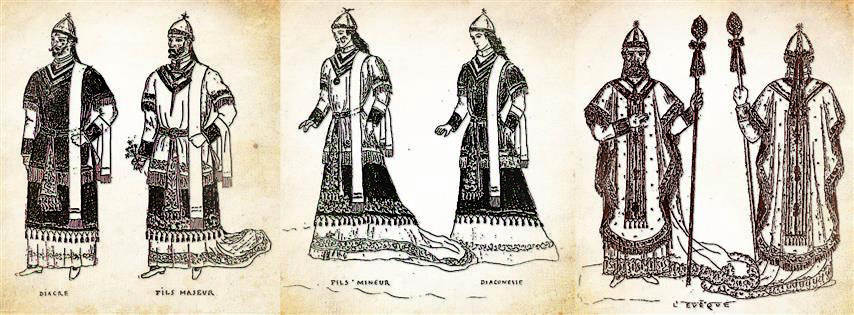
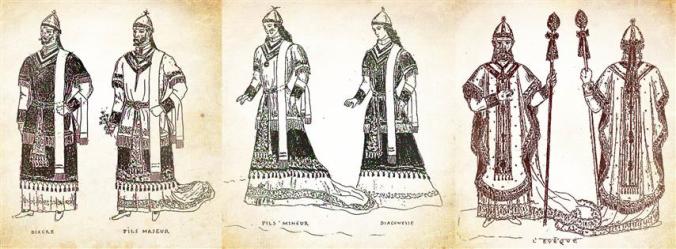
“Gnostic Catholic” vestments from Third Republic France. Note in particular the episcopal vesture at right. (Source)

In Peter Anson’s remarkable volume, Bishops at Large: Some Autocephalous Churches of the Past Hundred Years and their Founders (1964), we learn of many episcopi vagantes and their kindred spirits. It seems that several of these strange fellows dabbled (or more than dabbled) in the occult. Many also coupled that occultism with an interest in ancient heresies, which they sought to resurrect. In a chapter on the succession from René Vilatte, we stumble across a shocking little paragraph:

Mgr. Giraud and most of the priests and layfolk of the Gallican Church, even if not Gnostics themselves, were closely associated with them. Gnosticism was very much in the air fifty or sixty years ago. Even the Benedictine monks of Solesmes felt it worth their while to study what are known as the ‘Magic Vowels’ used in Gnostic rites and ceremonies. In 1901 they published a book entitled Le chant gnostico-magique. (Anson 309)

What an extraordinary claim. The monks of Solesmes, Dom Prosper Gueranger’s own sons, publishing studies of Gnostic chants! Dear readers, do any of you have any information on this bizarre note? I have been able to find evidence, however scanty, that the book Anson mentions was indeed published. But it surely must count as one of the rarest volumes in the assembled miscellanea of liturgical history. I would appreciate any leads whatsoever. Might some of my liturgically minded friends have any clue? Whatever comes of it, there is no doubt a very interesting story lurking behind this utterly unique publication.

“Awake and Sing and Be All Wing”

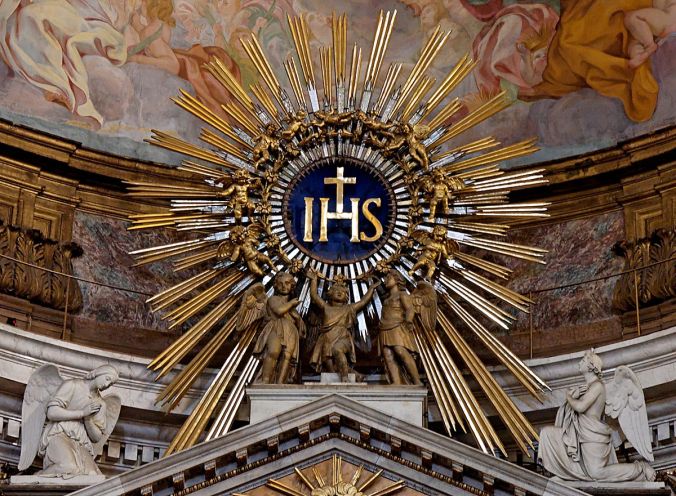
MostHolyNameofJesus

The Most Holy Name of Jesus at the High Altar of the Gesu, Rome. (Source)

To the Name above every Name, the Name of Jesus

By Richard Crashaw

A HYMN


I SING the Name which None can say

But touch’t with An interiour Ray:

The Name of our New Peace; our Good:

Our Blisse: and Supernaturall Blood:

The Name of All our Lives and Loves.

Hearken, And Help, ye holy Doves!

The high-born Brood of Day; you bright

Candidates of blissefull Light,

The Heirs Elect of Love; whose Names belong

Unto The everlasting life of Song;

All ye wise Soules, who in the wealthy Brest

Of This unbounded Name build your warm Nest.

Awake, My glory. Soul, (if such thou be,

And That fair Word at all referr to Thee)

Awake and sing

And be All Wing;

Bring hither thy whole Self; and let me see

What of thy Parent Heaven yet speakes in thee,

O thou art Poore

Of noble Powres, I see,

And full of nothing else but empty Me,

Narrow, and low, and infinitely lesse

Then this Great mornings mighty Busynes.

One little World or two

(Alas) will never doe.

We must have store.

Goe, Soul, out of thy Self, and seek for More.

Goe and request

Great Nature for the Key of her huge Chest

Of Heavns, the self involving Sett of Sphears

(Which dull mortality more Feeles then heares)

Then rouse the nest

Of nimble, Art, and traverse round

The Aiery Shop of soul-appeasing Sound:

And beat a summons in the Same

All-soveraign Name

To warn each severall kind

And shape of sweetnes, Be they such

As sigh with supple wind

Or answer Artfull Touch,

That they convene and come away

To wait at the love-crowned Doores of

This Illustrious Day.

Shall we dare This, my Soul? we’l doe’t and bring

No Other note for’t, but the Name we sing.

Wake Lute and Harp

And every sweet-lipp’t Thing

That talkes with tunefull string;

Start into life, And leap with me

Into a hasty Fitt-tun’d Harmony.

Nor must you think it much

T’obey my bolder touch;

I have Authority in Love’s name to take you

And to the worke of Love this morning wake you;

Wake; In the Name

Of Him who never sleeps, All Things that Are,

Or, what’s the same,

Are Musicall;

Answer my Call

And come along;

Help me to meditate mine Immortall Song.

Come, ye soft ministers of sweet sad mirth,

Bring All your houshold stuffe of Heavn on earth;

O you, my Soul’s most certain Wings,

Complaining Pipes, and prattling Strings,

Bring All the store

Of Sweets you have; And murmur that you have no more.

Come, né to part,

Nature and Art!

Come; and come strong,

To the conspiracy of our Spatious song.

Bring All the Powres of Praise

Your Provinces of well-united Worlds can raise;

Bring All your Lutes and Harps of Heaven and Earth;

What ére cooperates to The common mirthe

Vessells of vocall Ioyes,

Or You, more noble Architects of Intellectuall Noise,

Cymballs of Heav’n, or Humane sphears,

Solliciters of Soules or Eares;

And when you’are come, with All

That you can bring or we can call;

O may you fix

For ever here, and mix

Your selves into the long

And everlasting series of a deathlesse Song;

Mix All your many Worlds, Above,

And loose them into One of Love.

Chear thee my Heart!

For Thou too hast thy Part

And Place in the Great Throng

Of This unbounded All-imbracing Song.

Powres of my Soul, be Proud!

And speake lowd

To All the dear-bought Nations This Redeeming Name,

And in the wealth of one Rich Word proclaim

New Similes to Nature.

May it be no wrong

Blest Heavns, to you, and your Superiour song,

That we, dark Sons of Dust and Sorrow,

A while Dare borrow

The Name of Your Dilights and our Desires,

And fitt it to so farr inferior Lyres.

Our Murmurs have their Musick too,

Ye mighty Orbes, as well as you,

Nor yields the noblest Nest

Of warbling Seraphim to the eares of Love,

A choicer Lesson then the joyfull Brest

Of a poor panting Turtle-Dove.

And we, low Wormes have leave to doe

The Same bright Busynes (ye Third Heavens) with you.

Gentle Spirits, doe not complain.

We will have care

To keep it fair,

And send it back to you again.

Come, lovely Name! Appeare from forth the Bright

Regions of peacefull Light,

Look from thine own Illustrious Home,

Fair King of Names, and come.

Leave All thy native Glories in their Georgeous Nest,

And give thy Self a while The gracious Guest

Of humble Soules, that seek to find

The hidden Sweets

Which man’s heart meets

When Thou art Master of the Mind.

Come, lovely Name; life of our hope!

Lo we hold our Hearts wide ope!

Unlock thy Cabinet of Day

Dearest Sweet, and come away.

Lo how the thirsty Lands

Gasp for thy Golden Showres! with longstretch’t Hands.

Lo how the laboring Earth

That hopes to be

All Heaven by Thee,

Leapes at thy Birth.

The’ attending World, to wait thy Rise,

First turn’d to eyes;

And then, not knowing what to doe;

Turn’d Them to Teares, and spent Them too.

Come Royall Name, and pay the expence

Of all this Pretious Patience.

O come away

And kill the Death of This Delay.

O see, so many Worlds of barren yeares

Melted and measur’d out is Seas of Teares.

O see, The Weary liddes of wakefull Hope

(Love’s Eastern windowes) All wide ope

With Curtains drawn,

To catch The Day-break of Thy Dawn.

O dawn, at last, long look’t for Day!

Take thine own wings, and come away.

Lo, where Aloft it comes! It comes, Among

The Conduct of Adoring Spirits, that throng

Like diligent Bees, And swarm about it.

O they are wise;

And know what Sweetes are suck’t from out it.

It is the Hive,

By which they thrive,

Where All their Hoard of Hony lyes.

Lo where it comes, upon The snowy Dove’s

Soft Back; And brings a Bosom big with Loves.

Welcome to our dark world, Thou

Womb of Day!

Unfold thy fair Conceptions; And display

The Birth of our Bright Ioyes.

O thou compacted

Body of Blessings: spirit of Soules extracted!

O dissipate thy spicy Powres

(Clowd of condensed sweets) and break upon us

In balmy showrs;

O fill our senses, And take from us

All force of so Prophane a Fallacy

To think ought sweet but that which smells of Thee.

Fair, flowry Name; In none but Thee

And Thy Nectareall Fragrancy,

Hourly there meetes

An universall Synod of All sweets;

By whom it is defined Thus

That no Perfume

For ever shall presume

To passe for Odoriferous,

But such alone whose sacred Pedigree

Can prove it Self some kin (sweet name) to Thee.

Sweet Name, in Thy each Syllable

A Thousand Blest Arabias dwell;

A Thousand Hills of Frankincense;

Mountains of myrrh, and Beds of species,

And ten Thousand Paradises,

The soul that tasts thee takes from thence.

How many unknown Worlds there are

Of Comforts, which Thou hast in keeping!

How many Thousand Mercyes there

In Pitty’s soft lap ly a sleeping!

Happy he who has the art

To awake them,

And to take them

Home, and lodge them in his Heart.

O that it were as it was wont to be!

When thy old Freinds of Fire, All full of Thee,

Fought against Frowns with smiles; gave Glorious chase

To Persecutions; And against the Face

Of Death and feircest Dangers, durst with Brave

And sober pace march on to meet A Grave.

On their Bold Brests about the world they bore thee

And to the Teeth of Hell stood up to teach thee,

In Center of their inmost Soules they wore thee,

Where Rackes and Torments striv’d, in vain, to reach thee.

Little, alas, thought They

Who tore the Fair Brests of thy Freinds,

Their Fury but made way

For Thee; And serv’d them in Thy glorious ends.

What did Their weapons but with wider pores

Inlarge thy flaming-brested Lovers

More freely to transpire

That impatient Fire

The Heart that hides Thee hardly covers.

What did their Weapons but sett wide the Doores

For Thee: Fair, purple Doores, of love’s devising;

The Ruby windowes which inrich’t the East

Of Thy so oft repeated Rising.

Each wound of Theirs was Thy new Morning;

And reinthron’d thee in thy Rosy Nest,

With blush of thine own Blood thy day adorning,

It was the witt of love óreflowd the Bounds

Of Wrath, and made thee way through All Those wounds.

Wellcome dear, All-Adored Name!

For sure there is no Knee

That knowes not Thee.

Or if there be such sonns of shame,

Alas what will they doe

When stubborn Rocks shall bow

And Hills hang down their Heavn-saluting Heads

To seek for humble Beds

Of Dust, where in the Bashfull shades of night

Next to their own low Nothing they may ly,

And couch before the dazeling light of thy dread majesty.

They that by Love’s mild Dictate now

Will not adore thee,

Shall Then with Just Confusion, bow

And break before thee.

A Note of Gratitude at Year’s End

LondonNewYears.jpg

Happy New Year! (Source)

Here are XVII things for which I am grateful in the year of Our Lord MMXVII.

1. Graduating from the University of Virginia and starting the next phase of my academic career at the University of Oxford, as well as everyone who has helped me along the way.

2. All of the friends I have left behind in Virginia, and all of the friends I have made at Oxfordfrom Staggers, my Ecclesiastical History cohort, and the Companions of Malta. Also my wonderful family who have been there for me throughout the transition.

3. Everyone who has taken the time and effort to read, share, and respond to what I have written at this blog. As of this writing, I’ve gotten 44,127 views.

4. All of the support I received when my grandmother died right before Holy Week.

5. The fact that I have several friends who have started the process of entering or returning to the Church.

6. David Lynch, Paolo Sorrentino, Peter Morgan, and Noah Hawley.

7. Rekindling my love of creating art.

8. The new basset hound my family got this winter and the rabbits we received in the spring. Not to mention the continued good health of our other pets.

9. Gin and Tonics, Whiskey Sours, and St. Germaine.

10. All the museums I have worked in or visited.

11. Discovering the joys of sticky toffee pudding.

12. My Marian consecration. The continued friendship of many saints, including St. Philip Neri and the Blessed John Henry Newman. Also the many beautiful liturgies I had the chance to attend this year.

13. The memory of those warm and golden weeks on the Lawn between the end of Spring exams and the beginning of final exercises.

14. All of the great music I have come across this year (The Revolutionary Army of the Infant Jesus, David Lang, a few pieces by John Tavener and Zbgniew Preisner, George Jones and Monteverdi, Bernstein, Gilbert & Sullivan, Chrysta Bell, James Carr and Pokey LaFarge, Gaelynn Lea, Jackson C. Frank, and so much more).

15. A new appreciation for William Blake and an introduction to the poetry of R.S. Thomas.

16. The fact that we haven’t all been nuked to kingdom come yet.

17. The laughter I have happily shared with friends and family.

May the good Lord bless all of us in the coming year of His grace!

Becket’s “Easier Victory”

becket_martyr

Saint Thomas of Canterbury, pray for us and for England. (Source)

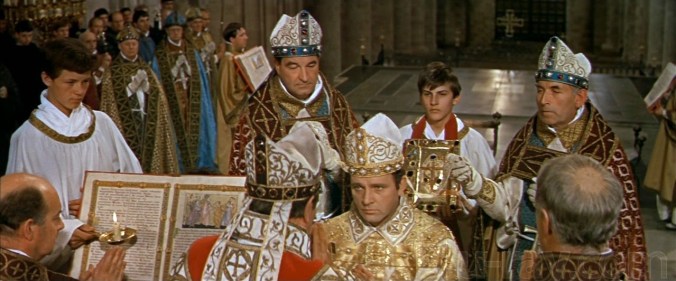
It’s that time a year again. The Feast of St. Thomas Becket, Martyred Archbishop of Canterbury, defender of the Church’s independence from the Crown. Which means we get to watch that fantastic and ever so Catholic film, Becket (1964). For those without access to the full movie, you can watch the very best scene here.

Becket#4

One of the film’s great charms is its collection of beautiful Romanesque vestments, all used properly. (Source)

Let me also add in a great excerpt from T.S. Eliot’s classic 1935 verse drama about the Archbishop, Murder in the Cathedral. It comes from the most climactic moment of the play, when Thomas is about to be killed. His priests have barred the doors of the cathedral to the four assassins, but Thomas will have none of their worldly prudence. His speech presents a brief theology of martyrdom that must stir the heart of any Catholic.

You think me reckless, desperate and mad.
You argue by results, as this world does,
To settle if an act be good or bad.
You defer to the fact. For every life and every act
Consequence of good and evil can be shown.
And as in time results of many deeds are blended
So good and evil in the end become confounded.
It is not in time that my death shall be known;
It is out of time that my decision is taken
If you call that decision
To which my whole being gives entire consent.
I give my life
To the Law of God above the Law of Man.
Unbar the door! unbar the door!
We are not here to triumph by fighting, by stratagem, or by resistance,
Not to fight with beasts as men. We have fought the beast
And have conquered. We have only to conquer
Now, by suffering. This is the easier victory.
Now is the triumph of the Cross, now
Open the door! I command it. OPEN THE DOOR!

(MITC 73-74)

May we so speak in the many trials of our own lesser martyrdoms.

Elsewhere: Shawn Tribe on St. Mary’s, Aiken

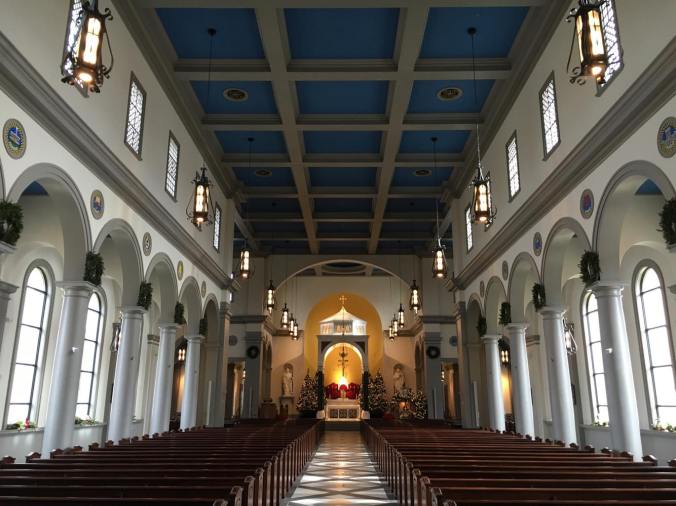
NewStMarysAiken.jpg

The nave of new St. Mary’s, Aiken. Photo by yours truly.

Over at Liturgical Arts Journal, Shawn Tribe has written a wonderful piece on St. Mary, Help of Christians, in Aiken, SC. He was kind enough to use some of my own photography of the parish. The new church is an excellent example of Neo-Baroque architecture in the American South. I am glad that Mr. Tribe has also devoted some attention to the gorgeous Neo-Classical stations by Leonard Porter. Do check it out!

The God Who Loves to Be Unknown

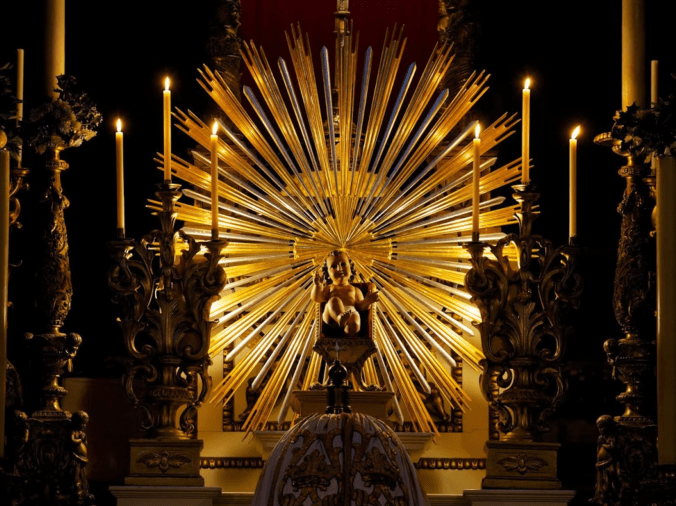
Screen Shot 2017-12-24 at 12.11.38 AM

Christmas at the Brompton Oratory. (Source)

We come at last to the feast of the Incarnation, the brilliant night of the Godhead’s triumphal entry into creation. But the mysteries here are too vast and too bright for our untrained eyes. Let us therefore ascend to higher things by way of lower ones.

A phrase that St. Philip Neri was always repeating to his disciples was Amare Nesciri—”to love to be to unknown.” This injunction lies at the heart of St. Philip’s idiosyncratic sense of mortification. The chief thing was not to punish the body through long fasts and arduous ascesis. Far better was the mortification of the “razionale,” that proud and self-commanding reason common to us all. How often would St. Philip say to his penitents, “The sanctity of a man lies in the breadth of three fingers,” and pointedly lay those fingers on his forehead.

ConcaPhilipMadonna

The Madonna Appearing to St. Philip Neri, Sebastiano Conca, 1740. It is no accident that the vast majority of St. Philip’s iconography shows him in an ecstasy, venerating the Virgin and Christ Child. (Source)

The outlandish practical jokes, the daily confessions, the severe and thankless workload he imposed on his sons; everything tended to mortify the intellect and cultivate humility. Like T.S. Eliot, St. Philip knew that “The only wisdom we can hope to acquire/Is the wisdom of humility: humility is endless” (East Coker II). And for St. Philip, humility found its greatest expression in “loving to be unknown.” 

In a certain sense, this fact hardly strikes us as noteworthy. All the greatest saints were humble and taught humility to other, lesser souls. But how marvelously unique is St. Philip’s via humilitatis! To better grasp his singular path of perfection, it would behoove us to turn briefly to other saints first.

St. Benedict makes perfection in humility a physical, and even visible, matter. The monk who has achieved the Twelfth Degree of humility goes about with his head and eyes ever downcast, pondering his guilt and preparing himself for Judgment (Regula VII). In this state, the monk is spiritually united to Christ on the cross. As one eminent and trustworthy commentator has it, “The bowed head of the crucified Jesus, and of the monk in whom the Holy Ghost reproduces the image of His death, signifies a total adhesion to the will of the Father.” The monk’s humility is cruciform, stained by the Precious Blood as it flows freely from the holy wound in Christ’s side.

St. Ignatius stands apart as well. Ever spurring his sons on with a single battle cry Magis! Magis!“Greater! Greater!”he demands a humility that can only grow in the self-effacing pursuit of excellence for God. Jesuits must act. Like Christ in His ministry, they have no place to lay their heads (Luke 9:58). But Christ was not always going to and fro. His active life was marked by a profound interiority. He was often withdrawing for times of recollection and prayer. And thus the Jesuit humbles himself like Christ through his Examen, a conscious effort at humbling one’s self before God in an honest review of the day. The Jesuit’s proper humility thus bears a striking resemblance to that of Our Lord during those three momentous years.

We could find similar likenesses all through the glorious garden of the Church. Consider the contemplative humility of Carmel, drawn doubly from Christ on Tabor and Christ in Nazareth. Or ponder the humility of St. Dominic, by which we disappear entirely in the singular and all-absorbing Truth of the Word. How like Christ the preacher is the Dominican in his humility! And need we point to the way in which Franciscans draw their model of humility from the unremitting poverty of Our Lord? Thus, the Holy Ghost has showered the Church with various views of Christ’s one inexhaustible humility.

What, then, is left to St. Philip? How may his peculiar spirit and sense of humility draw us closer to Christ’s own humility? In what way can we find the God of the Universe in the simple words, Amare Nesciri?

Barocci1597

Nativity, Federico Barocci, 1597. Now in the Prado, Madrid. Barocci was St. Philip’s favorite artist. (Source)

St. Philip would have us love to be unknown. And so he leads us to the God who loves to be unknown, the God who willingly entered into human obscurity, who put off His glory, who was content to sleep under the watch of peasants and shepherds and beasts of burden. St. Philip brings us, gently but firmly, to gaze upon the face of the Infant Christ, true icon of humility. In the newborn Deity of Bethlehem, there are no clear signs of divinityonly the ineffable sweetness that seems to mark His features, a sweetness He will impart to the hearts of all His saints.

St. Philip is eminently the saint of the Divine Arrival. His whole life was marked by Pentecost, and his devotion to the Eucharist was legendary. So, too, is he invisibly bound to the conception and birth of the God-Man. His own deeply domestic spirituality drew its core of humble charity from the life of the Holy Family in Bethlehem. See the characters laid out before us: silent St. Joseph, the all-meek Virgin, the wakeful and overawed shepherds. At the heart of it all lies the sleeping babe, “Verbum infans, the Word without a word; the eternal Word not able to speak a word” as Lancelot Andrewes puts it. What a picture of humility! Here is a delightful paradox. God has entered the world in darkness and obscurity, that He might commune more profoundly with those few quiet souls. Here we have no mere abasement, but a stripping away of everything extraneous so that a deeper knowledge might follow. The God who is self-diffusive Goodness nevertheless hides and loves to be unknown, that He might savor the intimacy which only true humility can find.

Let Angel choirs sound their celestial praises; let powers and principalities quake with awe; let even the sky hail a new champion among the sidereal host; yet “let all mortal flesh keep silence,” for here lies the newborn God asleep. Above, music. Below, silence. Christmas is not just about the joyful manifestation of God. It is just as much about the astounding paradox at the heart of our faith, the way that the Infinite and Omnipotent God deepened the mystery of all things by robing himself in lowly humanity. Neither Jew nor pagan could have conceived of such a scandalous humility.

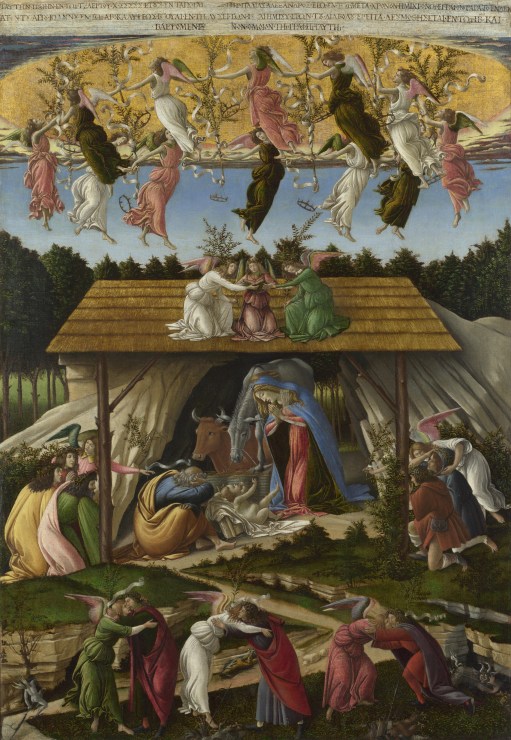
Mystic_Nativity,_Sandro_Botticelli.jpg

The Mystical Nativity, Sandro Botticelli, c. 1500-1501. National Gallery, London. (Source)

And that is the humility that St. Philip Neri taught. We love to be unknown so that we might reach a deeper communion with God and with each other, free of pretense or distraction. That is why Cardinal Newman’s motto, Cor ad Cor Loquitur, breathes of a peculiarly Oratorian spirit. Heart truly can speak to heart when both are freed by humility. The remarkable life of St. Philip Neri is testament to that truth.

But where did St. Philip learn to emulate the humility of the Infant Christ? I think we can infer two chief sources.

It is the distinctive mark of the Oratory to discourse daily upon the Word of God in a free and familiar manner. Indeed, the very first exercises of the Oratory at San Girolamo always took the reading and discussion of Scripture as their central object. It stands to reason that St. Philip’s profound engagement with the Gospels would have shaped his sense of Christ’s own humility.

But perhaps a more important source can be glimpsed in St. Philip’s intensely Eucharistic life. Surely St. Philip would have entered into the mystery of Christ’s birth precisely as he encountered Him in the Mass. The Eucharistic silence of the Host is but an echo of the silence Christ kept that first Christmas night. God’s hiddenness upon the altar comes from the obscurity in which He enmantled himself on that first night of His human life.

inexhaustiblechalice.jpg

Icon of The Inexhaustible Chalice. (Source)

Christmas is here, reminding us of God’s wondrous love. But that love calls us to contemplation as well as jubilation. Amidst the lessons and carols, amidst the bells and laughter, amidst the exuberance of family conversations, let us recall the silence of the Holy Infant. He was willing to cloak his Godhead for us. That love of being unknown seems utterly foreign to us, proud and vain as we are. So let this Christmastide see our entry into the mystery of God’s humility. Perhaps St. Philip Neri can help us find what we have missed.


Terrible as An Army Set in Array

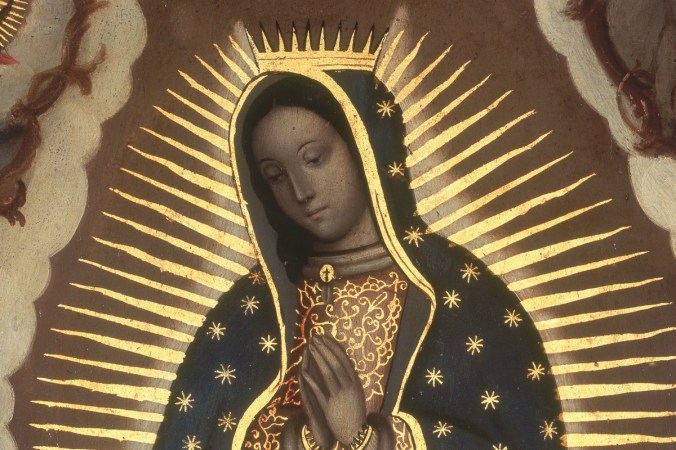
GuadalupeHead

Our Lady of Guadalupe, pray for us. (Source)

“Your deed of hope will never be forgotten by those who tell of the might of God. You are the highest honor of our race.”

Thus does the whole Church sing at Mass today, on the Feast of Our Lady of Guadalupe. And no mean words are they! The Psalm is drawn from the Book of Judith – a frequent verse for feasts of Our Lady – and it lands on our ears like a shout of proleptic joy in this season of preparation and penance. The liturgy draws two special comparisons between Mary and the women of the Old Testament: Mary as the new Eve, and Mary as the second Judith. Today’s feast draws its special energy, its exegetical verve, from the mystical connection between Mary and Judith.

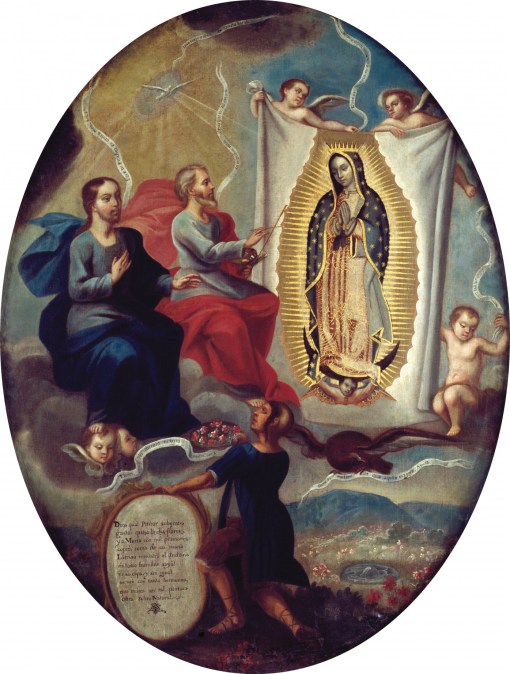
trinityguadalupe

Our Lady of Guadalupe painted by the Trinity. An image worth meditating on. (Source)

The particular verse that the Church applies to Mary comes from Uzziah’s praise of Judith after she has already beheaded Holofernes the Assyrian. Let us turn briefly to the immediately preceding passage.

Then she took the head out of the bag, showed it to them, and said: “Here is the head of Holofernes, the ranking general of the Assyrian forces, and here is the canopy under which he lay in his drunkenness. The Lord struck him down by the hand of a female! Yet I swear by the Lord, who has protected me in the way I have walked, that it was my face that seduced Holofernes to his ruin, and that he did not defile me with sin or shame.” All the people were greatly astonished. They bowed down and worshiped God, saying with one accord, “Blessed are you, our God, who today have humiliated the enemies of your people.” (Judith 13:15-17).

Then come our Psalm verses.

JudithBeheading

Judith Beheading Holofernes, Caravaggio, c. 1602. (Source)

Why would the Church draw our attention to this violent episode on a feast of Our Lady falling so soon after the Immaculate Conception? Haven’t we just contemplated her Sophianic existence? Haven’t we just basked in the light of the Holy Spirit resting upon her Immaculate Heart? Why must we leave those pleasant snow-caps of the spirit? Why turn instead to this grisly tale of murderous deliverance?

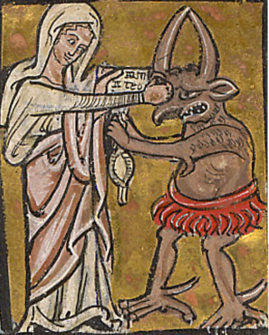
We must recall that, although Mary is all sweetness and concord to those who love her Son, she is the terror of demons. Her litanies and devotions include many titles that evoke the clamor of warfare: “Tower of David,” “Tower of Ivory,” even “Gate of Heaven.” She crushes the head of the Serpent. The sword that pierces her heart becomes, by the union of her suffering with that of her Son, a fearful weapon in her mighty hands.

MaryPunchingDevil

“Hail Mary, full of grace, punch the devil in the face.” (Source)

The story of Guadalupe is just one example of Our Lady exercising this power. Her appearance on Tepeyac, and the miracle wrought on the tilma of St. Juan Diego, was the beginning of the end of Aztec paganism. The demons that held that great people in thrall to the murderous rites of human sacrifice were totally vanquished. Like Judith, Mary rode out from Heaven into the  very camp of the enemy. Like Judith, she conquered. Like Judith, she proclaimed her victory with a visible sign – only, Our Lady’s sign was far more glorious. Judith held up the head of the vanquished foe, the bloody remains of a wicked oppressor. The Mother of God gave us her own image, miraculously imprinted into the convert’s cloak.

Judith delivered the Jews from the army of the Assyrians. Mary came forth to Tepeyac to convert the Mexican people, lifting from them the demonic yoke of a bloodthirsty paganism. What a glorious victory she won! Nine million Aztecs converted within the first ten years of the apparitions. Even today, she continues to spur us to conquer those terrible forces of injustice that oppress so many of God’s people. The collect prayer for today’s feast reads:

O God, Father of mercies, who placed your people under the singular protection of your Son’s most holy Mother, grant that all who invoke the Blessed Virgin of Guadalupe, may seek with ever more lively faith the progress of peoples in the ways of justice and of peace. (Source; emphasis mine)

These days it is rather in vogue to lament a certain kind of triumphalism that is built on self-centered pride. But too often we forget that there is another triumphalism, the shout of a people who have seen their salvation coming from the Lord:

Blessed are you, daughter, by the Most High God,
above all the women on earth;
and blessed be the LORD God,
the creator of heaven and earth
(Judith 13:18).

The Church herself enjoins us to celebrate the works and ways of God through His chosen instruments. And in today’s Mass, we are called to join that praise to the sacrifice of Christ in the Eucharist.

GuadalupeHeresy

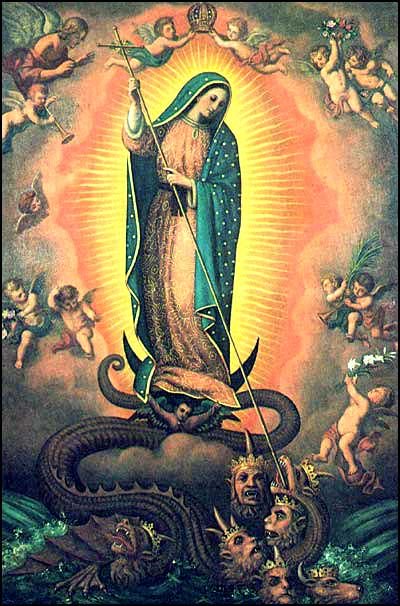
Our Lady of Guadalupe, Victrix over All Heresies and Demons. (Source)

In considering Our Lady of Guadalupe and the zeal with which she overcame the forces of evil and in contemplating the beauty of her miraculous portrait, a verse of Scripture comes to mind.

“Who is she that cometh forth as the morning rising, fair as the moon, bright as the sun, terrible as an army set in array?” (Cant. 6:10 DRA)

We who have seen the tilma through the eyes of faith know the answer.

GuadalupeRoses

Our Lady of Guadalupe, Mystical Rose. (Source)