Prayer Request: Retreat

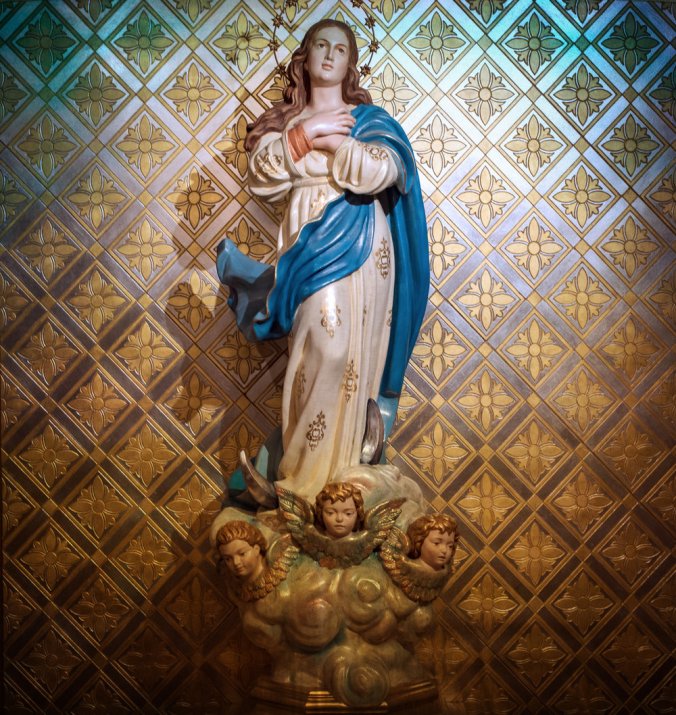
ImmaculateConceptionStatue

Maria Immaculata, Ora Pro Nobis. (Source)

I haven’t been as active on this blog as I had hoped for the last week or so, but I do have several good posts in store. In the meantime, please do pray for me. I’m off to Ireland for a retreat in honor of the Immaculate Conception, and I would appreciate your prayers as I spend this time unplugging and drawing near to Our Lord in His Blessed Infancy.

I noticed yesterday that I’ve accidentally timed the whole thing rather well. I leave England on the feast of St. Birinus, Bishop of Dorchester. He baptized Cynegils, King of the West Saxons, in what is now Dorchester on Thames, only a short bus ride from Oxford. I leave Ireland to return home to the United States on the feast of St. Juan Diego, the first indigenous saint of the Americas (and a deeply Marian one at that). And of course, the culmination of the retreat falls on the solemnity of the Immaculate Conception, America’s patronal feast. Providence works through these kinds of coincidences.

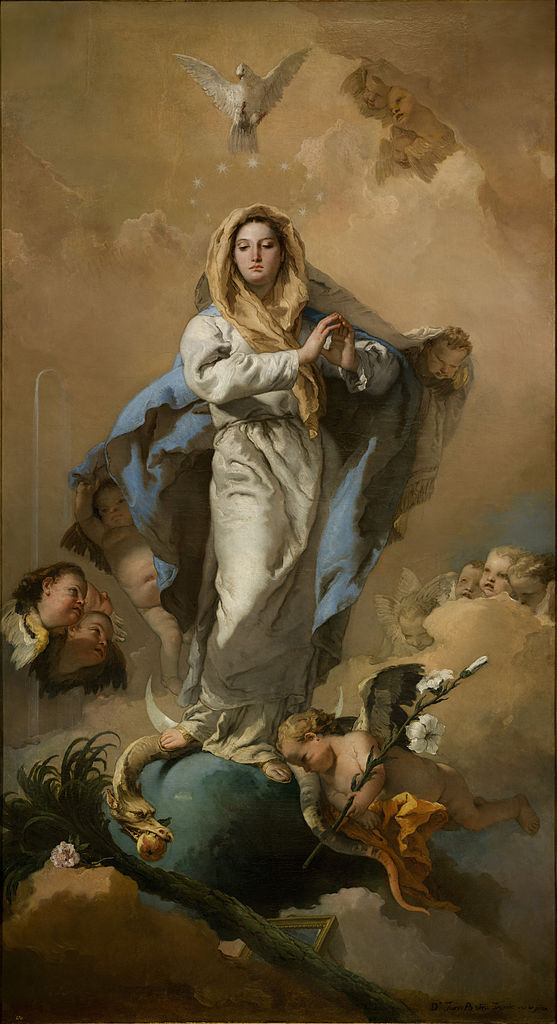
557px-The_Immaculate_Conception,_by_Giovanni_Battista_Tiepolo,_from_Prado_in_Google_Earth

The Immaculate Conception, Giovanni Battista Tiepolo, c.1767. I love Our Lady’s expression –  a mixture of humility before the Spirit above and regal contempt for the Devil at her feet. (Source)

Additionally, by a quirk of the academic calendar, this year is the first time in my life that I will have a genuine Advent. Since seventh grade, I’ve had exams deep into December. Since I became Catholic four and a half years ago, I haven’t had the chance to experience this season for what it is, a time of profound peace, penance, and prayer in preparation for the Nativity of Christ. All of which prompts me to beg for your prayers.

Our Lady, Immaculate, pray for us.
Our Lady, Theotokos, pray for us.
Our Lady, Queen of Heaven, pray for us.

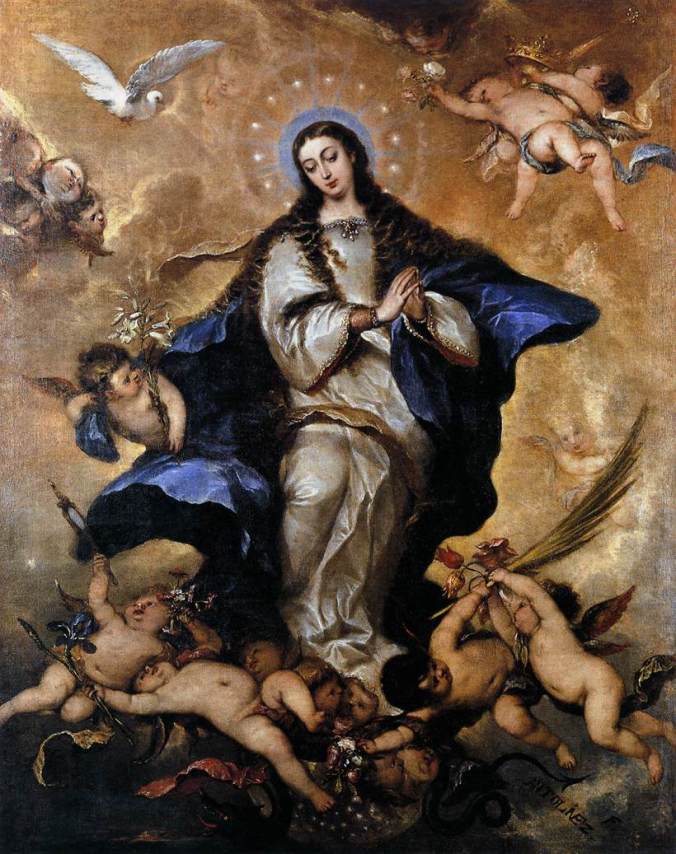
immaculb

Immaculate Conception, José Claudio Antolinez, 17th century. (Source)

Elsewhere: Two New Blogs on Mystics

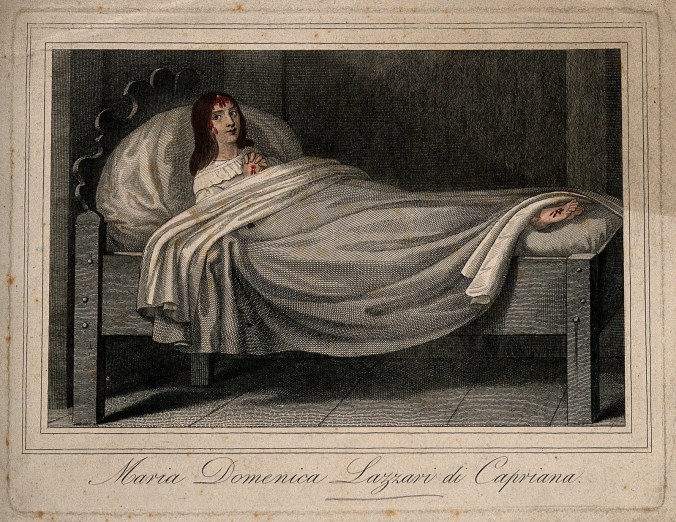
lazzari+print

A stigmatic, c. 1840. (Source)

Recently two very worthy endeavors have come to my attention. The first is the blog of the Stigmatics Project at the Ruusbroec Institute, University of Antwerp. The project “studies the promotion and devotion of the hundreds of stigmatics reported in five European countries during the nineteenth and early twentieth century.” It takes a scholarly, non-confessional approach to its subject. No doubt this new venture will yield greater insights into the stigmata as a social phenomenon.

The second is a much more theological blog called Littlest Souls, and it presents a veritable treasure trove of mystic spirituality. The blogger has clearly read widely in the library of the soul passed on to us from age to age by the Church. He seems to place a special emphasis on the 19th and early 20th century mystics, much like the Stigmatics Project. In fact, they probably cover some of the same figures. But unlike the recently-founded work of the Ruusbroec Institute, Littlest Souls has been up and running since May 2012. There is consequently much more material here to review and contemplate. Fans of that other great blog, Mystics of the Church, will find much here to admire.

In my first post on Father Faber, I noted that he represented a kind of lost world of the faith. Today, it is hard to imagine a Catholicism that once supported the kind of imaginatively baroque and overtly sentimental spirituality that oozes from his pages. Father Faber looks odd to our cynical, postmodern eyes. But in exploring his writings now, I find much in them that’s salutary and beautiful. My hope is that I can play some small part in recovering those gems for our times.

Both of these blogs seem to do precisely that; one at the level of scholarship, and one at the level of spirituality. Both set out to investigate and present a spiritual school that often seems morbid, unhealthy, or slightly daft – certainly one that has little place in our age. But there are real values here, real impressions of humanity in communion with the divine. I can only commend their efforts as important contributions to the memory and mystical life of the Church Militant.

I’ve said it before, and I’ll say it again. The Church is weird because she is supernatural, and the supernatural is always strange. We should embrace that fact.

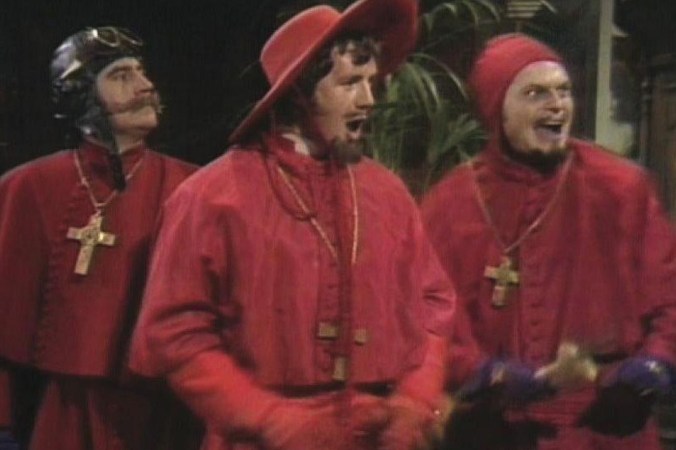
The Lord High Inquisitor’s Song

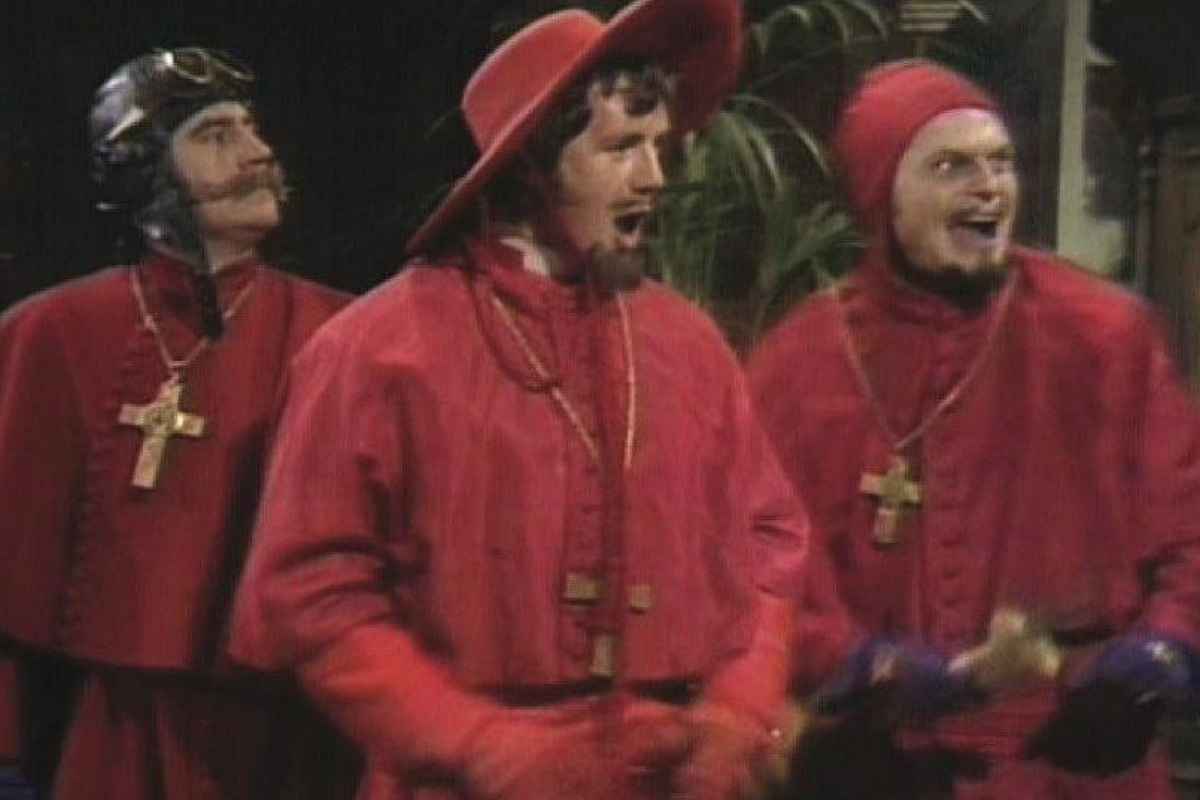
HighInquisitors

Nobody expects it. (Source)

The Lord High Inquisitor’s Song

(tune)

Cardinal Ko-Ko
As some day it may happen that a victim must be found,
I’ve got a little list—I’ve got a little list
Of ecclesial offenders who might well be underground,
And who never would be missed—who never would be missed!
There’s the pestilential journalists who write for NCR,
and all the ultramontanists who think the Pope’s a Czar—
All clergy who wear ugly stoles and vestments as they pray—
And philistines who think that lace is just a little fey—
Theologians from the Argentine who study how to kiss.
They’d none of ’em be missed—they’d none of ’em be missed!

Chorus
He’s got ’em on the list—he’s got ’em on the list;
And they’ll none of ’em be missed—they’ll none of ’em be missed.

Cardinal Ko-Ko
There’s the Jesuit on Twitter who does not believe in hell.
Since God he does resist—I’ve got him on my list!
Then there’s the German Cardinals who pray to Martin L.
They’re just “ecumenist”—they never would be missed!
Then the liberal who praises, with some social justice rage,
The “spiritual but not religious” tenor of the age;
And the parish secretary who makes fruitcake every year
For the congregation’s Christmas Party (and inspires fear);
And that odd phenomenon, theologians feminist
I don’t think they’d be missed—I’m sure they’ll not be missed!

Chorus
He’s got them on the list—he’s got them on the list;
And I don’t think they’ll be missed—I’m sure they’ll not be missed!

Cardinal Ko-Ko
And those mouth-foaming maniacs who write LifeSite clickbait,
Would that they might desist—I’ve got them on the list!
The Neo-Caths at Crisis in a moral panic state.
And a Two-Tiered Thomist—you know he’s on the list!
Then the smug and smarmy statesman who still wears the scarlet hat
Who bows to tyrants’ wishes from a desk chair in the Vat—
And the bishops who decide they want obedience, not truth
All baby boomers who attack the faithful of the youth—
And all the heretics who can be judged quite Modernist.
They’ll none of ’em be missed—they would none of ’em be missed!

Chorus
You may put ’em on the list—you may put ’em on the list;
And they’ll none of ’em be missed—they’ll none of ’em be missed!

Father Faber on the Holy Souls in Purgatory

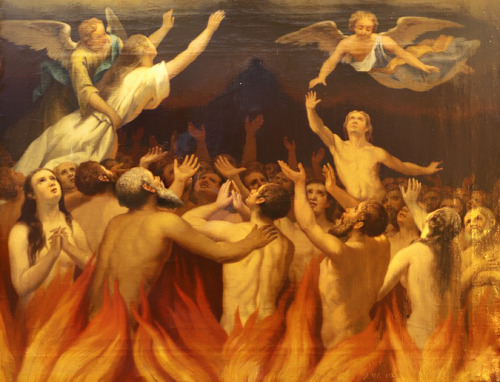
OLYMPUS DIGITAL CAMERA

We should always remember to pray for the Holy Souls in Purgatory, especially in this, their month. (Source)

Today is Remembrance Sunday here in the U.K. We had a splendid Solemn High Requiem Mass at the Oxford Oratory, complete with black vestments. The setting was a Requiem by Haydn, which seem to draw us on the journey of a holy soul. From an Introit that sounds like the mournful ghosts of the dead, we proceed to a communion that is full of airy light and calm joy – with a great deal of drama in between. 

I realized that I had not posted anything for All Souls’ Day. Since today is yet another day set aside, at least by British Catholics, for praying on behalf of the dead, I decided I’d post something by that spiritual master, Father Frederick William Faber of the London Oratory. In his own life, Fr. Faber was known for his great devotion to the Holy Souls. One of his more famous texts deals with prayer for those in Purgatory. I have selected the following passage from that work, Fr. Faber’s Purgatory. You can also find it on this website. I offer it here for your consideration and in the hope that the good priest’s words might kindle in us a fonder and more steadfast devotion to the Faithful Departed.

Both views [of Purgatory within Catholicism] agree again in holding that what we in the world call very trivial faults are most severely visited in purgatory. St. Peter Damian gives us many instances of this, and others are collected and quoted by Bellarmine. Slight feelings of self-complacency, trifling inattentions in the recital of the Divine Office, and the like, occur frequently among them. Sister Francesca mentions the case of a girl of fourteen in purgatory, because she was not quite conformed to the will of God in dying so young: and one soul said to her: Ah men little think in the world how dearly they are going to pay here for faults they hardly note there. She even saw souls that were immensely punished only for having been scrupulous in this life; either, I suppose, because there is mostly self-will in scruples, or because they did not lay them down when obedience commanded. Wrong notions about small faults may thus lead us to neglect the dead, or leave off our prayers too soon, as well as lose a lesson for ourselves.

Then, again, both views agree as to the helplessness of the Holy Souls. They lie like the paralytic at the pool. It would seem as if even the coming of the angel were not an effectual blessing to them, unless there be some one of us to help them Some have even thought they cannot pray. Anyhow, they have no means of making themselves heard by us on whose charity they depend. Some writers have said that Our Blessed Lord will not help them without our co-operation; and that Our Blessed Lady cannot help them, except in indirect ways, because she is no longer able to make satisfaction; though I never like to hear anything our dearest mother cannot do; and I regard such statements with suspicion. Whatever may come of these opinions, they at least illustrate the strong way in which theologians apprehend the helplessness of the Holy Souls. Then another feature in their helplessness is the forgetfulness of the living, or the cruel flattery of relations who will always have it that those near or dear to them die the deaths of Saints. They would surely have a scruple, if they knew of how many Masses and prayers they rob the souls, by the selfish exaggeration of their goodness. I call it selfish, for it is nothing more than a miserable device to console themselves in their sorrow. The very state of the Holy Souls is one of the most unbounded helplessness. They cannot do penance; they cannot merit; they cannot satisfy; they cannot gain indulgences; they have no Sacraments; they are not under the jurisdiction of God’s Vicar, overflowing with the plentitude of means of grace and manifold benedictions. They are a portion of the Church without either priesthood or altar at their own command.

holy-souls._jpg

Pray for the Holy Souls in Purgatory. (Source)

Those are the points common to both views of purgatory; and how manifold are the lessons we learn from them, on our own behalf as well as on behalf of the Holy Souls. For ourselves, what light does all this throw on slovenliness, lukewarmness, and love of ease? What does it make us think of performing our devotions out of a mere spirit of formality, or a trick of habit? What diligence in our examens, confessions, Communions, and prayers! It seems as if the grace of all graces for which we should ever be importuning our dear Lord, would be to hate sin with something of the hatred wherewith He hated it in the garden of Gethsemane. Oh, is not the purity of God something awful, unspeakable, adorable? He, who is Himself a simple act, has gone on acting, multiplying acts since creation, yet he has incurred no stain! He is ever mingling with a most unutterable condescension with what is beneath Him-yet no stain! He loves His creatures with a love immeasurably more intense than the wildest passion of earth- yet no stain! He is omnipotent, yet it is beyond the limits of His power to receive a stain. He is so pure that the very vision of Him causes eternal purity and blessedness. Mary’s purity is but a fair thin shadow of it, and yet we, even we, are to dwell in His arms for ever, we are to dwell amid the everlasting burnings of that uncreated purity! Yet, let us look at our lives; let us trace our hearts faithfully through but one day, and see of what mixed intentions, human respects, self-love, and pusillanimous temper our actions, nay, even our devotions, are made up of; and does not purgatory, heated seven-fold and endured to the day of doom, seem but a gentle novitiate for the Vision of the All-holy?

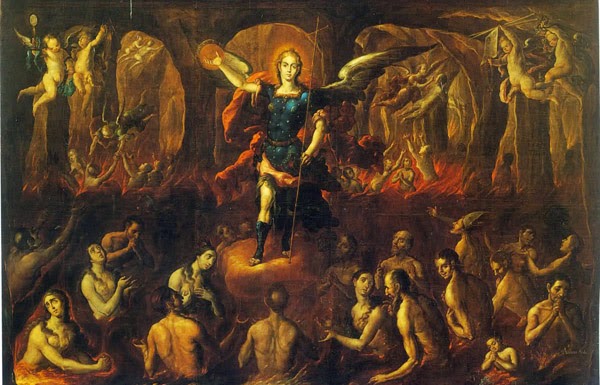
St.-Michael-the-Archangel-and-the-Souls-in-Purgatory

St. Michael the Archangel has traditionally been closely associated with the Holy Souls of Purgatory in the Church’s devotional life. (Source)

But some persons turn in anger from the thought of purgatory, as if it were not to be endured, that after trying all our lives long to serve God, we should accomplish the tremendous feat of a good death, only to pass from the agonies of the death-bed into fire, long, keen, searching, triumphant, incomparable fire. Alas! my dear friends, your anger will not help you nor alter facts. But have you thought sufficiently about God? Have you tried to realise His holiness and purity in assiduous meditation? Is there a real divorce between you and the world which youknow is God’s enemy? Do you take God’s side? Are you devoted to His interests? Do you long for His glory? Have you put sin alongside of our dear Saviours’ Passion, and measured the one by the other? Surely, if you had, purgatory would but seem to you the last, unexpected, and inexpressibly tender invention of an obstinate love, which was mercifully determined to save you in spite of yourself. It would be a perpetual wonder to you, a joyous wonder, fresh every morning, a wonder that would be meat and drink to your soul, that you, being what you know yourself to be, what God knows you to be, should be saved eternally. Remember what the suffering soul said so simply, yet with such force, to Sister Francesca: ‘ Ah! those on that side of the grave little reckonhow dearly they will pay on this side for the lives they live! To be angry because you are told you will go to purgatory! Silly, silly people Most likely it is a great false flattery, and that you will never be good enough to go there at all. Why, positively, you do not recognise your own good fortune, when you are told of it. And none but the humble go there. I remember Maria Crocifissa was told that although many of the Saints while on earth loved God more than some do even in heaven, yet that the greatest Saint on earth was not so humble as are the souls in purgatory. I do not think I ever read anything in the lives of the Saints which struck me so much as that. You see it is not well to be angry; for those only are lucky enough to get into purgatory who sincerely believe themselves to be worthy of hell.

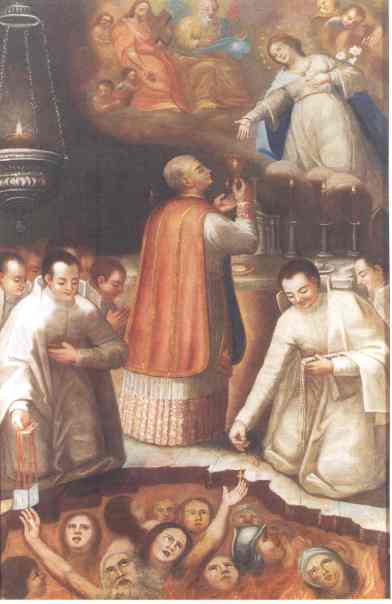
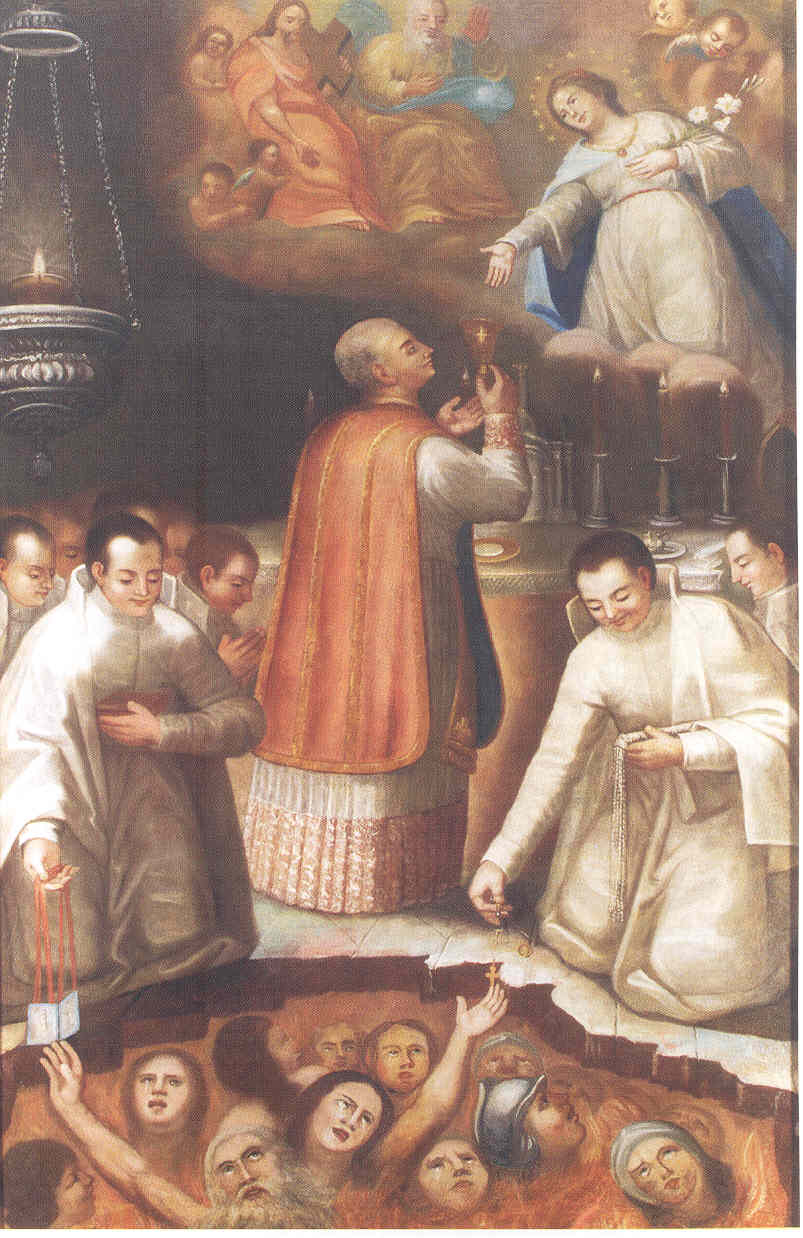
Purgatory_Mass._jpg

Masses and indulgences can be tremendously helpful to the souls suffering in Purgatory. (Source)

But we not only learn lessons for our own good, but for the good of the Holy Souls. We see that our charitable attention towards them must be far more vigorous and persevering than they have been; for men go to purgatory for very little matters, and remain there an unexpectedly long time. But their most touching appeal to us lies in their helplessness; and our dear Lord, with His usual loving arrangement, has made the extent of our power to help them more than commensurate with their ability to help themselves. Some theologians have said that prayer for the Holy Souls is not infallibly answered. I confess their arguments on this head do not convince me; but, conceding the point, how wonderful still is the power which we can exercise in favour of the departed! St. Thomas has at least taught us that prayer for the dead is more readily accepted with God than prayer for the living. We can offer and apply for them all the satisfactions of Our Blessed Lord. We can do vicarious penance for them. We can give to them all the satisfactions of our ordinary actions, and of our sufferings. We can make over to them, by way of suffrage, the indulgences we gain, provided the Church has made them applicable to the dead. We can limit and direct to them, or any one of them, the intention of the Adorable Sacrifice. The Church, which has no jurisdiction over them, can yet make indulgences applicable or inapplicable to them by way of suffrage; and by means of liturgy, commemoration, incense, holy water, and the like, can reach efficaciously to them, and most of all by her device of privileged altars. The Communion of Saints furnishes the veins and channels by which all these things reach them in Christ. Heaven itself condescends to act upon them through earth. Their Queen helps them by setting us to work for them, and the Angels and the Saints bestow their gifts through us, whom they persuade to be their almoners; nay, we are often their almoners without knowing that we are so. Our Blessed Lord vouchsafes to look to us, as if He would say: Here are my weapons, work for me! just as a father will let his child do a portion of his work, in spite of the risk he runs in having it spoiled. To possess such powers, and not to use them, would be the height of irreverence towards God, as well as of want of charity to men. There is nothing so irreverent, because nothing so unfilial, as to shrink from God’s gifts simply because of their exhuberance. Men have a feeling of safety in not meddling with the supernatural; but the truth is, we cannot stand aloof on one side and be safe. Naturalism is the unsafe thing. If we do not enter the system, and humbly take our place in it, it will draw us in, only to tear us to pieces when it has done so. The dread of the supernatural is the unsafest of feelings. The jealousy of it is a prophecy of eternal loss.

It is not saying too much to call devotion to the Holy Souls a kind of centre in which all Catholic devotions meet, and which satisfies more than any other single devotion our duties in that way; because it is a devotion all of love, and of disinterested love. If we cast an eye over the chief Catholic devotion, we shall see the truth of this. Take the devotion of St. Ignatius to the glory of God. This, if we may dare to use such an expression of Him, was the special and favourite devotion of Jesus. Now, purgatory is simply a field white for the harvest of God’s glory. Not a prayer can be said for the Holy Souls, but God is at once glorified, both by the faith and the charity of the mere prayer.

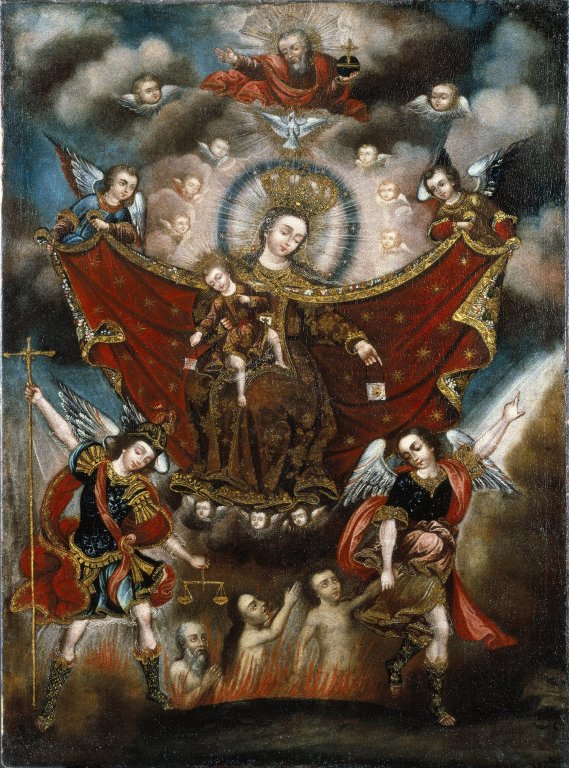
Brooklyn_Museum_-_Virgin_of_Carmel_Saving_Souls_in_Purgatory_-_Circle_of_Diego_Quispe_Tito_-_overall

The Virgin of Carmel Saving Souls in Purgatory, Circle of Diego Quispe Tito, c. 17th century. Brooklyn Museum. (Source)

The Best Depictions of the Subtle Doctor

I’ve taken a major interest in Scotus recently. His Christology and Mariology seem to be treasures that remain largely unexploited by contemporary theologians, in part because he was recognized as being in the right about a doctrine that became dogma almost two hundred years ago. He is at the center of ongoing debates about the advent of secularism and modernity, debates which I am not competent to comment on at this time. Nevertheless, I thought it might be fun to examine some of the ways that Catholics (mostly Franciscans) have memorialized him in art over the course of the last several centuries. In some sense, the variety of depictions here tell a story of a lineage long overshadowed by other, more influential streams of thought. Thomism in particular has had a near perennial appeal within the Church, whereas Scotism, it seems, has largely been a niche concern. After all, Scotus has not yet been canonized or joined the ranks of the Doctors of the Church. This inequity arose from a variety of factors. No doubt, the fate of Scotism has come partially from Scotus’s own difficult style and vast intelligence. There’s a reason he’s called the “Subtle Doctor.”

May my small collection here help rectify that oversight on this, his feast day.

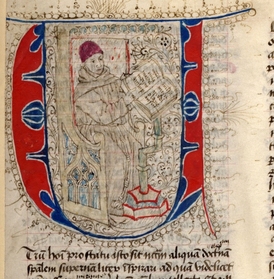
Bl John Duns Scotus-thumb-275x279-4957

John the Scot (c. 1266 – 8 Nov. 1308), appearing in what must be one of his earliest depictions: an illuminated capital. (Source)

bl-john-duns-scotus

A Renaissance portrait of the Blessed John Duns Scotus. One point that people forget about Scotus is that he defended the rights of the Church against Philip IV, who had wanted to tax church properties. For his bold stance, he was exiled for a few years from Paris. (Source)

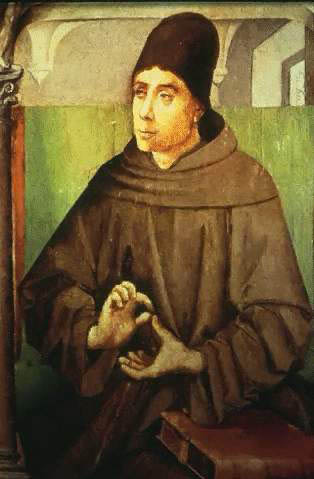
JohnDunsScotus_-_full

Perhaps the most famous, a late-Medeival, early-Renaissance portrait of Scotus. The name of the artist escapes me. (Source)

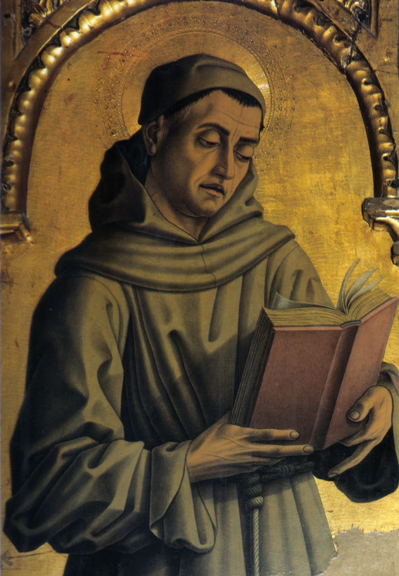
Beato_Giovanni_Duns_Scoto_B

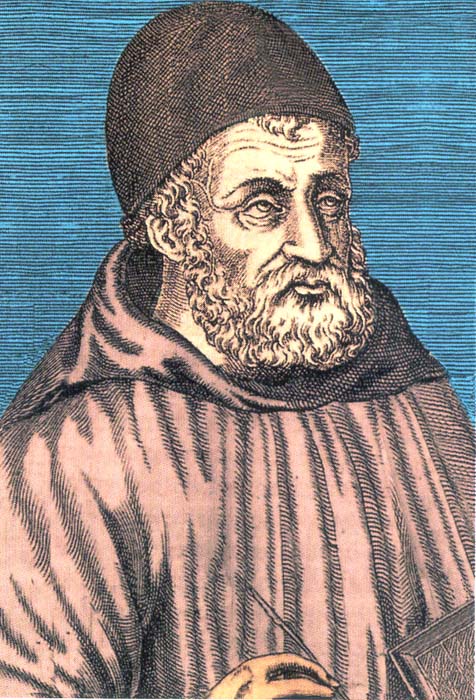
An early modern engraving of Scotus, probably early to mid 15th century. (Source)

St Albert the Great & Bl John Duns Scotus

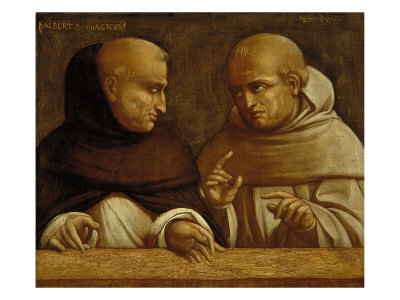
Here he is with St. Albert the Great, one of the Dominican Doctors. (Source)

duns-scotus1

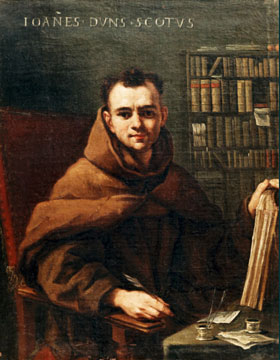
Scotus the Scholar. Age and provenance unclear; my guess is late 17th century, though it may be later. (Source)

Scotus17thcentury

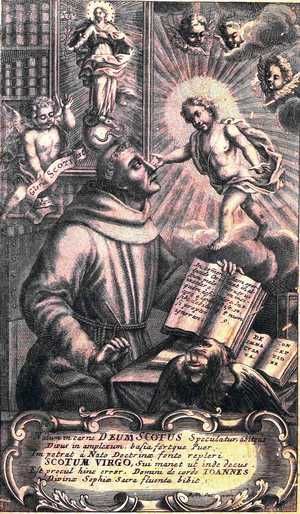
Scotus receiving a vision of the Christ Child, 17th or 18th century. Although chiefly remembered for his metaphysics and Mariology, Scotus made major contributions to Christology, defending the Patristic idea of Christ’s Absolute Primacy. (Source)

scotusstatue1

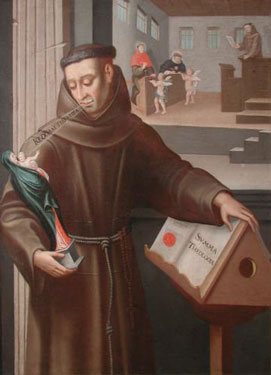
From the early modern period, it became typical to depict Scotus with representations of the Virgin Mary, whose Immaculate Conception he famously defended. This piece, probably from the 18th century, is one such example. It also contains a pretty clear criticism of Aquinas – Scotus looks away from the Summa to gaze lovingly at Mary (Source: this very friendly take on Scotus by a prominent popular Thomist)

11_08_duns_scotus2

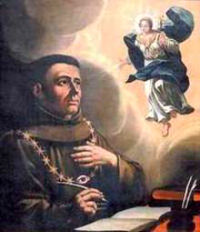
A slightly more dramatic iteration of the same theme. Scotus is inspired by the Immaculate Conception. (Source)

ScotusChariot

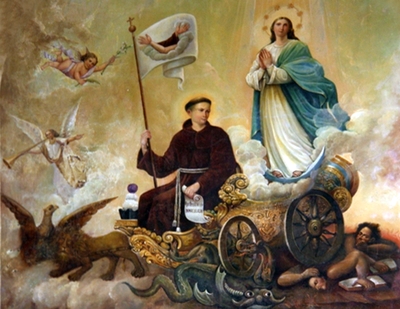
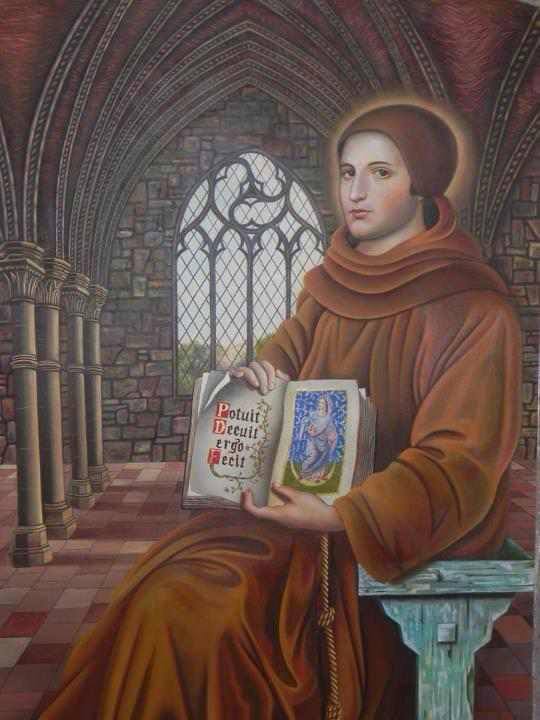
My single favorite image of Scotus is this ludicrously over-the-top Rococo depiction of Scotus and the Immaculate Conception triumphing over heresy and sin. He holds the arms (no pun intended) of the Franciscan order. His defense of the Immaculate Conception surpassed the doubts of even his own order’s great luminary, St. Bonaventure. And what a marvellously simple argument it was, too. Remember: POTVIT DECVIT ERGO FECIT. (Source).

Izamal Duns Scotus Adopte rest

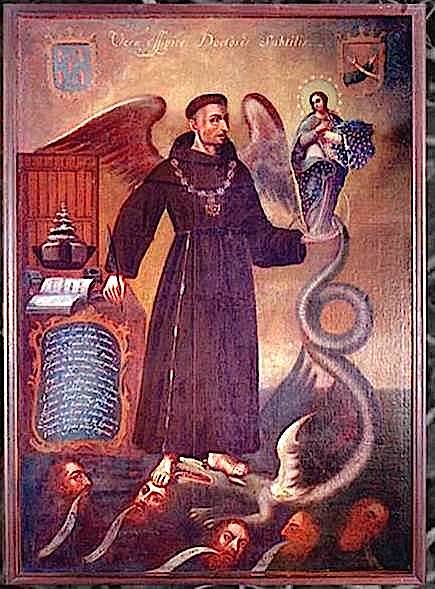
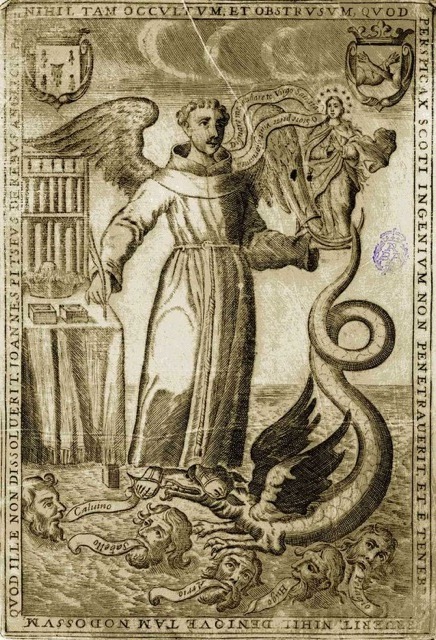
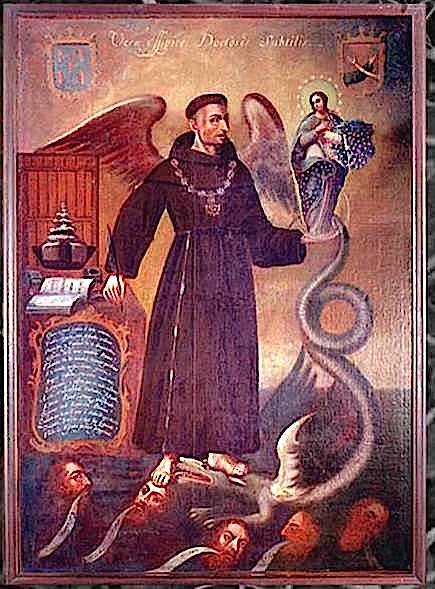
Likewise, this totally marvelous Colonial Mexican painting from the Franciscan monastery of Izamal, Yucatan, is something else. Rare is the saint granted wings in traditional iconography, though the trend was not uncommon in early modern Mexican art (Source)

Joannes Pitseus, Scotus 1619

The mystery solved! This version by Johannes Pitseus comes from 1619, and served as a model for the Izamal piece. Here, it’s clearer that the heads represent various heretics, including Pelagius, Arius, and Calvin. (Source)

Landa Duns Scotus

This ceiling relief from Landa, Querétaro, uses the same iconographic lexicon. It seems that the Franciscans of colonial Mexico had a set of stock images to propagate devotion to their own saints. (Source)

huej purisima

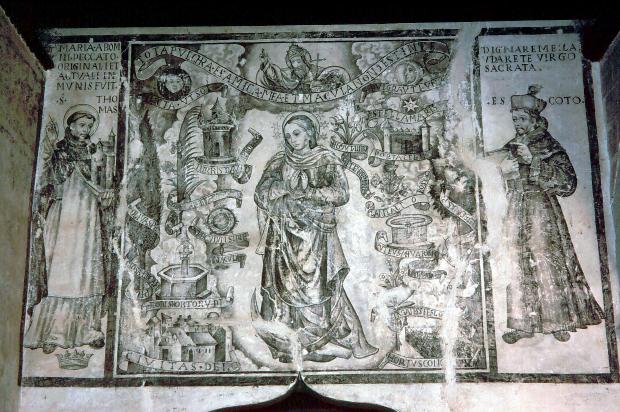
Here’s another unusual image of Scotus. In this mural of Mary Immaculate, or La Purísima, we see Scotus alongside St. Thomas Aquinas…and wearing a biretta! A remarkable addition, unique among all other depictions of the Subtle Doctor that I know of. (Source)

SCOTUS

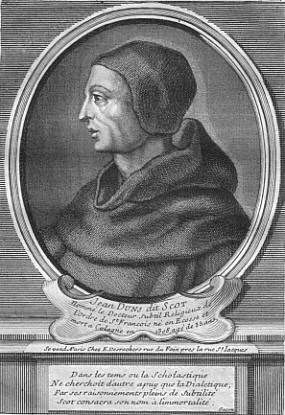
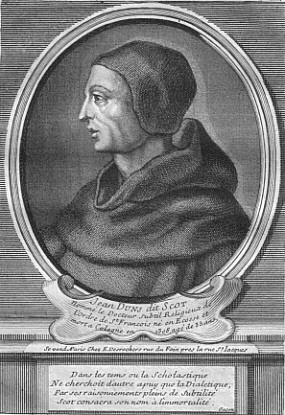
Moving away from Mexico, we come to this rather uninteresting French portrait of Scotus. Not all 18th century portraits of the man are elaborate bits of Franciscan propaganda. (Source)


unknown artist; John Duns Scotus (1266-1308)

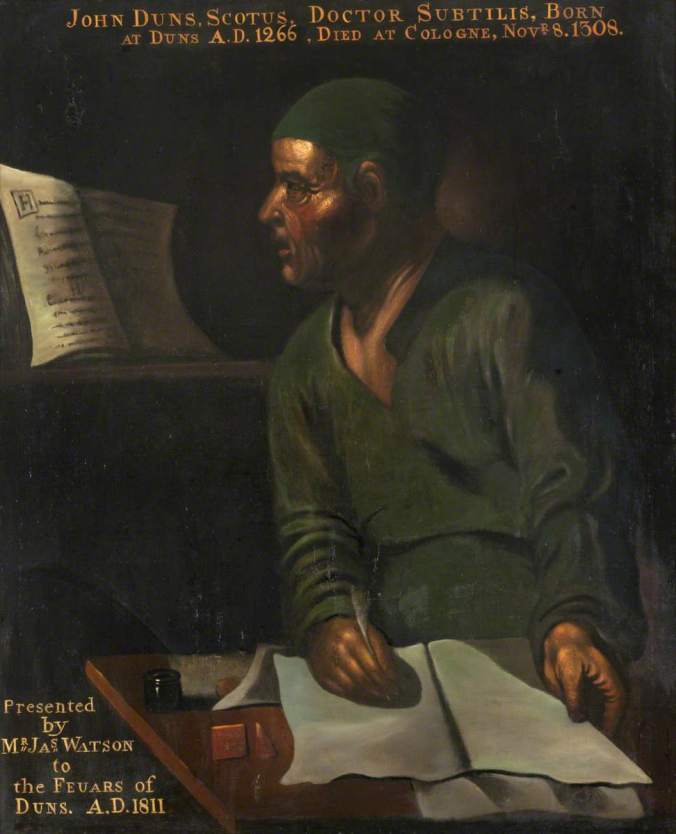
A late 18th or early 19th century depiction of Bl. John Duns Scotus. If this is in fact an English painting, its creation at a time of high and dry Anglican Protestantism poses interesting questions about the use of Scotus as a figure of national pride. (Source)

john-duns-scotus

I’m unsure of how old this image is; my guess, however, is that it represents a 19th century imitation of late Medieval and Renaissance style. (Source)

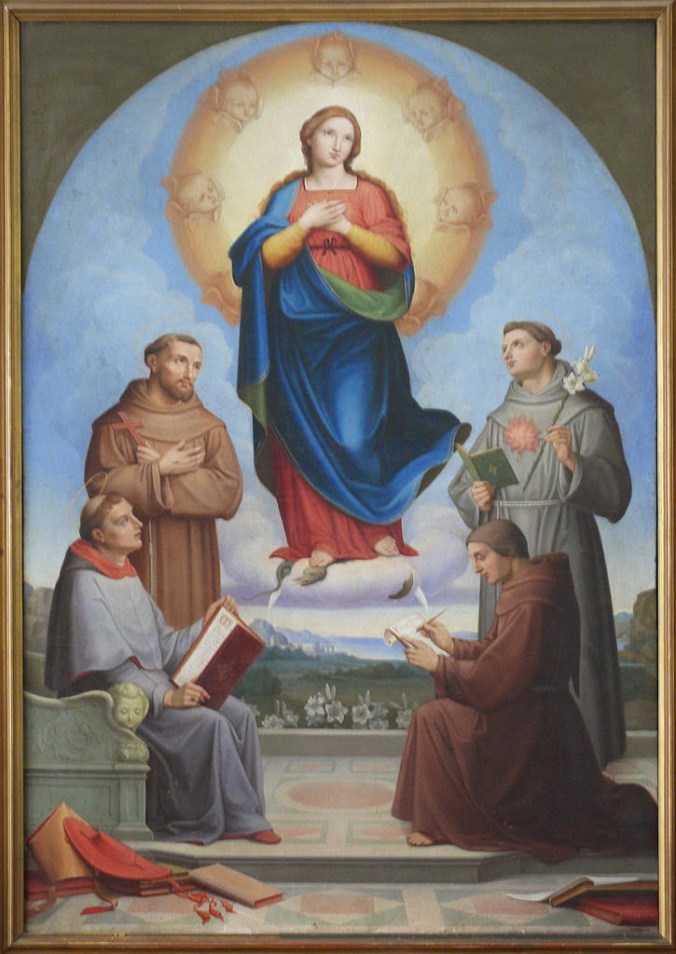
Albert Küchler (Brother Peter of Copenhagen) - Immaculate Conception with St. Bonaventure, Francis, Anthony and Blessed John Duns Scotus - Rome - Pontifical University Antonianum

A great 19th century painting of the Immaculate Conception by Danish Franciscan Albert Küchler. Scotus, who is on the bottom right, is here depicted alongside other Franciscan saints – S.s. Francis of Assisi, Anthony of Padua, and Bonaventure. (Source)

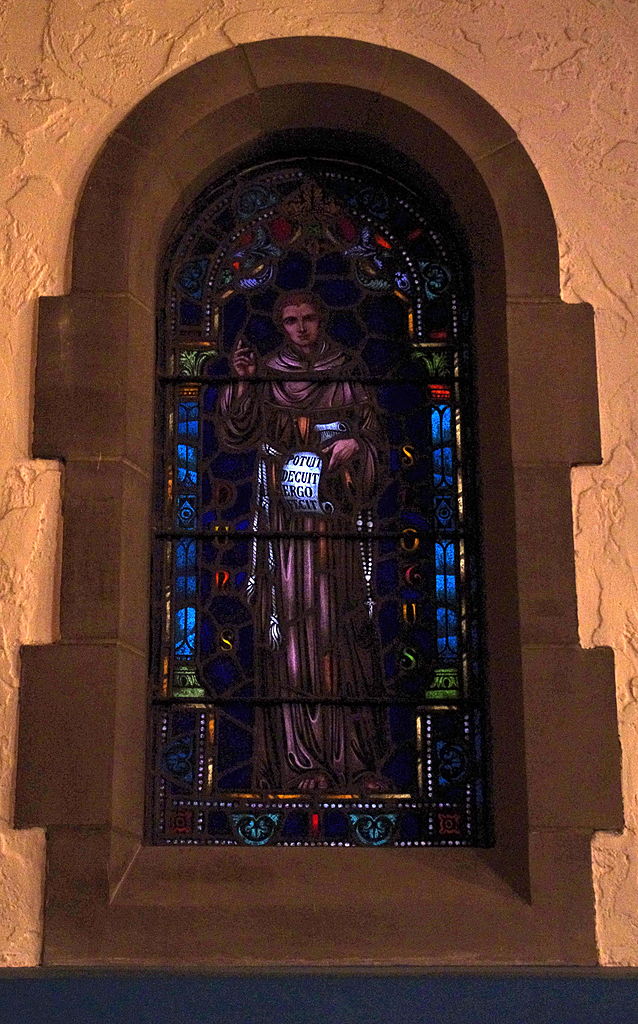
Immaculate_Conception_Church_(Columbus,_Ohio)_-_stained_glass,_Blessed_Duns_Scotus

This looks like a Harry Clarke window, though it may just resemble his style. In anyway, we see here Scotus holding a scroll with his famous argument for the Immaculate Conception epitomized – “He could do it, It was fitting He should do it, so He did it.” (Source)

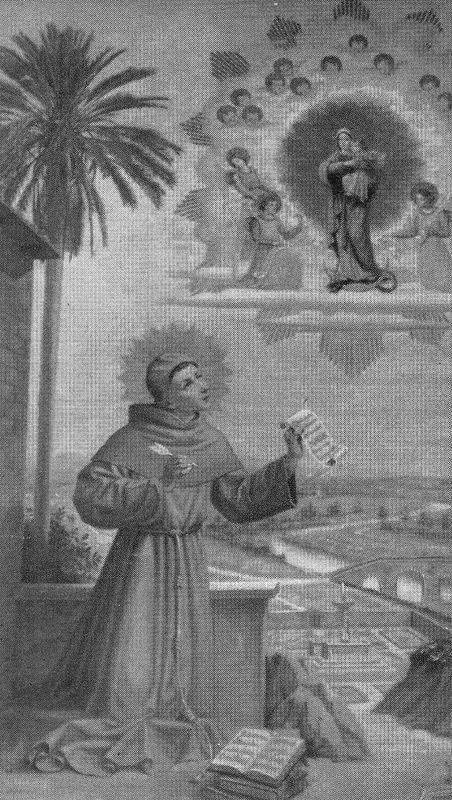
JohnDunsScotusImmaculata

John Duns Scotus, once again contemplating the Immaculate Virgin and offering his mighty works to her. (Source)

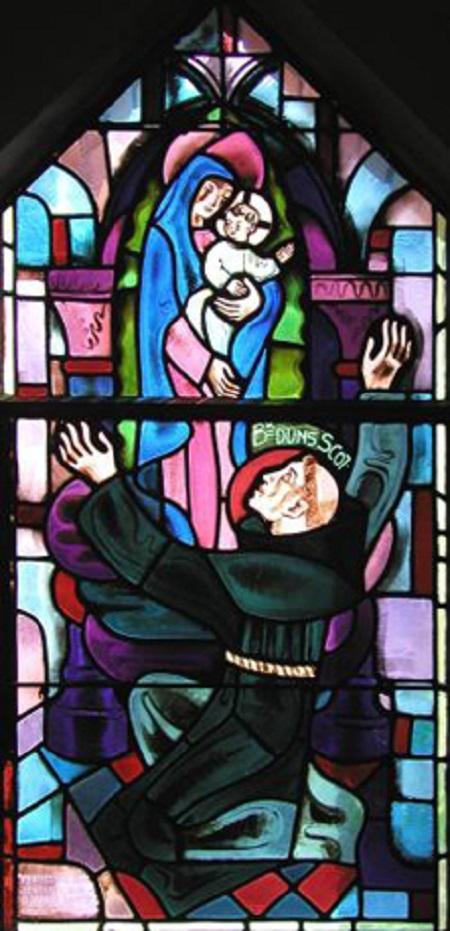
dunsscot.2

Another stained glass window, this time indubitably from the 20th century. We see here Scotus worshiping the Christ Child and his Immaculate Mother. (Source)

Johannes_duns_scotus_20060501

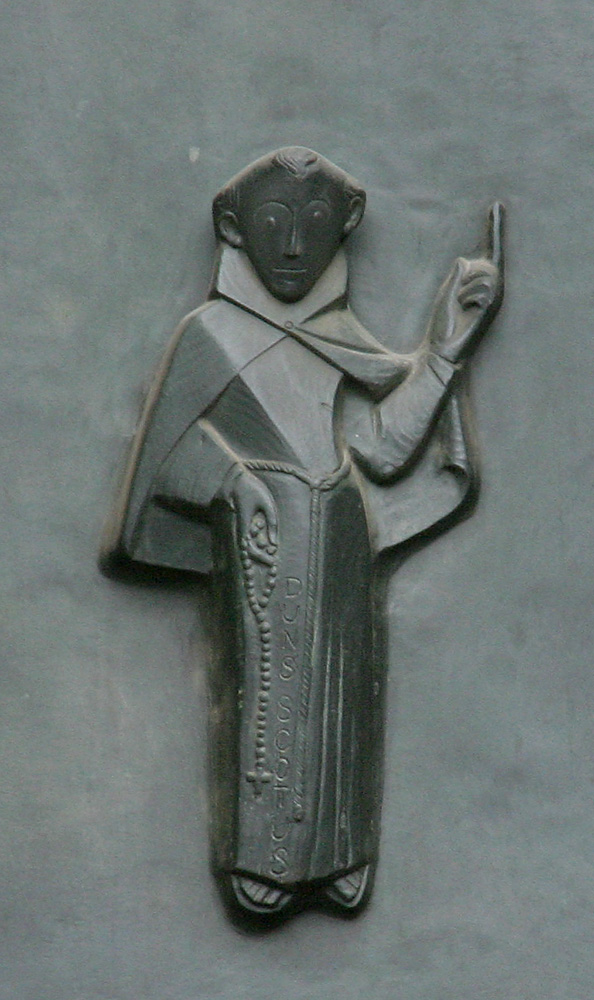
Scotus depicted in on the door of a Cologne Cathedral, 1948. He represents the supernatural gift of Understanding. (Source)

duns-scott_01

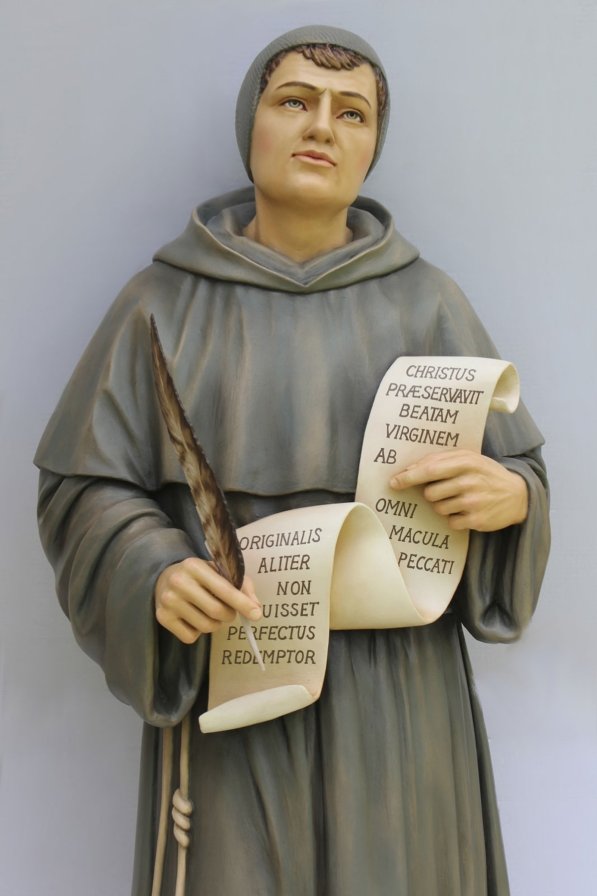
A contemporary statue of Scotus. (Source)

Scoto-2

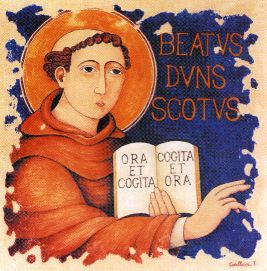
Scotus with a modification of the Benedictine phrase. “Pray and Think. Think and Pray.” Not a bad motto. (Source)


20thCScotus

A 20th or 21st century image of the Blessed Scotus (Source).

A Poem by Richard Crashaw for St. Teresa’s Day


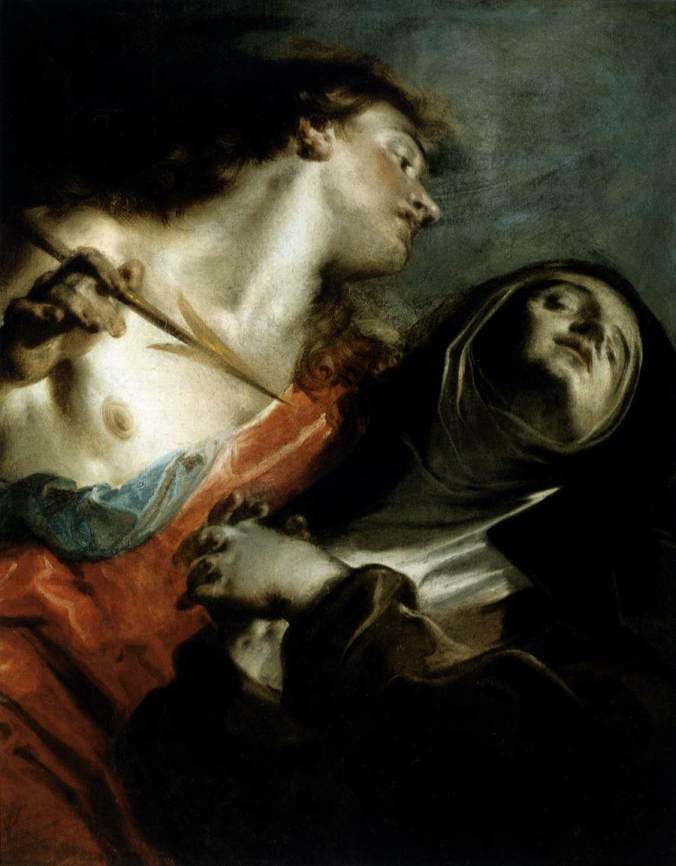
Giuseppe_Bazzani_-_The_Ecstasy_of_St_Therese_-_WGA01527

“The Ecstasy of St. Teresa,” Giuseppe Bazzani, c. 1747 (Source).

The Flaming Heart

VPON THE BOOK AND PICTURE OF THE SERAPHICAL SAINT TERESA, AS SHE IS VSVALLY EXPRESSED WITH A SERAPHIM BISIDE HER.

Well-meaning readers! you that come as friends
And catch the pretious name this piece pretends;
Make not too much hast to admire
That fair-cheek’t fallacy of fire.
That is a seraphim, they say
And this the great Teresia.
Readers, be rul’d by me; and make
Here a well-plact and wise mistake:
You must transpose the picture quite,
And spell it wrong to read it right;
Read him for her, and her for him,
And call the saint the seraphim.
Painter, what didst thou understand
To put her dart into his hand?
See, even the yeares and size of him
Showes this the mother seraphim.
This is the mistresse flame; and duteous he
Her happy fire-works here, comes down to see.
O most poor-spirited of men!
Had thy cold pencil kist her pen,
Thou couldst not so unkindly err
To show vs this faint shade for her.
Why, man, this speakes pure mortall frame;
And mockes with female frost Love’s manly flame.
One would suspect thou meant’st to paint
Some weak, inferiour, woman-saint.
But had thy pale-fac’t purple took
Fire from the burning cheeks of that bright booke,
Thou wouldst on her have heap’t up all
That could be found seraphicall;
What e’re this youth of fire, weares fair,
Rosy fingers, radiant hair,
Glowing cheek, and glistering wings,
All those fair and fragrant things
But before all, that fiery dart
Had fill’d the hand of this great heart.
Doe then, as equall right requires,
Since his the blushes be, and her’s the fires,
Resume and rectify thy rude design,
Undresse thy seraphim into mine;
Redeem this injury of thy art,
Give him the vail, give her the dart.
Give him the vail; that he may cover
The red cheeks of a rivall’d lover.
Asham’d that our world now can show
Nests of new seraphims here below.
Give her the dart, for it is she
(Fair youth) shootes both thy shaft, and thee;
Say, all ye wise and well-peirc’t hearts
That live and die amidst her darts,
What is’t your tastfull spirits doe prove
In that rare life of her, and Love?
Say, and bear witnes. Sends she not
A seraphim at every shott?
What magazins of immortall armes there shine!
Heavn’s great artillery in each love-spun line.
Give then the dart to her who gives the flame;
Give him the veil, who gives the shame.
But if it be the frequent fate
Of worst faults to be fortunate;
If all’s præscription; and proud wrong
Hearkens not to an humble song;
For all the gallantry of him,
Give me the suffring seraphim.
His be the bravery of all those bright things,
The glowing cheekes, the glistering wings;
The rosy hand, the radiant dart;
Leave her alone the flaming heart.
Leave her that; and thou shalt leave her
Not one loose shaft but Love’s whole quiver.
For in Love’s field was never found
A nobler weapon then a wound.
Love’s passives are his activ’st part,
The wounded is the wounding heart.
O heart! the æquall poise of Love’s both parts
Bigge alike with wound and darts.
Live in these conquering leaves; live all the same,
And walk through all tongues one triumphant flame.
Live here, great heart; and love and dy and kill;
And bleed and wound; and yield and conquer still.
Let this immortall life wherere it comes
Walk in a crowd of loves and martyrdomes.
Let mystick deaths wait on’t; and wise soules be
The love-slain wittnesses of this life of thee.
O sweet incendiary! shew here thy art,
Upon this carcasse of a hard, cold hart;
Let all thy scatter’d shafts of light, that play
Among the leaves of thy larg books of day.
Combin’d against this brest at once break in
And take away from me my self and sin;
This gratious robbery shall thy bounty be,
And my best fortunes such fair spoiles of me.
O thou undanted daughter of desires!
By all thy dowr of lights and fires;
By all the eagle in thee, all the dove;
By all thy lives and deaths of love;
By thy larg draughts of intellectuall day,
And by thy thirsts of love more large then they;
By all thy brim-fill’d bowles of fierce desire,
By thy last morning’s draught of liquid fire;
By the full kingdome of that finall kisse
That seiz’d thy parting soul, and seal’d thee His;
By all the Heau’n thou hast in Him
(Fair sister of the seraphim!)
By all of Him we have in thee;
Leave nothing of my self in me.
Let me so read thy life, that I
Unto all life of mine may dy.

(Richard Crashaw, Carmen Deo Nostro, with some orthographic editing).


A Word of Thanksgiving

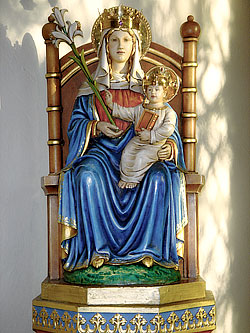
image

Our Lady of Walsingham, pray for us. (Source).

Today, on the double feast of Our Lady of Ransom and Our Lady of Walsingham, I was blessed to consecrate myself totally to the Mother of God at the Church of her Immaculate Heart, otherwise known as the Brompton Oratory. Thank you to everyone who prayed for me en route to this wonderful occasion. I look upon it as a momentous date, a renewal of my entrance into the Church four years ago,

The date and place are especially meaningful to me. I have long had a devotion to Our Lady of Walsingham, Patroness of England. During the stresses of my final year at Virginia, I entrusted all my major projects–in particular my thesis and my graduate school applications–to her. And over the course of the last few years, my love for St. Philip Neri and his sons has grown into a true devotion to the Oratorian way. Brompton was where that began for me, almost two and a half years ago. I date the start of my friendship with St. Philip to my first overawed trip to the Oratory in 2015. And I pronounced my vow of consecration at the altar of Our Lady of the Rosary, a grace that reminded me of all the wonderful Dominicans I have known over the short course of my life as a Catholic.

So thank you to all those who have prayed for me. And please pray still, that I might not forget my vow as the inevitable distractions, delights, and stresses of grad school set in.

Crashaw on Our Lady of Sorrows

Our-Lady-of-Oxford

Yesterday, we celebrated the Feast of the Holy Cross. Today, naturally, we follow that sorrowful glory of Jesus with the sorrowful glory of Mary. And Crashaw remains our companion. Here is his “Sancta Maria Dolorum; or The Mothers of Sorrows, A Pathetical Descant upon the Devout Plainsong of Stabat Mater Dolorosa.” You can also find the text over here.

1.

In shade of Deaths sad Tree
Stood doleful she,
Ah she! now by no other
Name to be known, alas, but Sorrow’s Mother.

Before her Eyes
Her’s and the whole World’s joyes,
Hanging all torn she sees; and in his woes
And Pains, her pangs and throes.
Each wound of his, from every part,
All, more at home in her own heart.

2.

What kind of Marble than
Is that cold man
Who can look on and see,
Nor keep such Noble sorrows company?
Sure even from you
(My Flints) some drops are due
To see so many unkind swords contest
So fast for one soft Brest.
While with a faithful, mutual, floud
Her Eyes bleed Tears, his wounds weep blood.

3.

O costly intercourse
Of deaths, and worse
Divided Loves: while Son and Mother
Discourse alternate wounds to one another;
Quick Deaths that grow
And gather, as they come and go:
His Nails write swords in her; which soon her heart
Pays back, with more then their own smart;
Her swords, still growing with his pain,
Turn Spears, and straight come home again;

4.

She sees her Son, her God,
Bow with a load
Of borrow’d sins; and swim
In woes that were not made for him.
Ah hard Command
Of Love! Here must she stand
Charg’d to look on, and with a stedfast Eye
See her life dye:
Leaving her only so much Breath
As serves to keep alive her death.

5.

O Mother Turtle-dove!
Soft sourse of Love,
That these dry Lids might borrow
Somthing from thy full seas of Sorrow!
O in that Brest
Of thine (the noblest Nest
Both of Love’s Fires and Flouds) might I recline
This hard, cold, Heart of mine!
The chil lump would relent, and prove
Soft Subject for the siege of Love.

6.

O teach those wounds to bleed
In me; me, so to read
This Book of Loves, thus writ
In lines of death, my life may copy it

With Loyal cares.
O let me here claim shares;
Yield something in thy sad prerogative
(Great Queen of griefs) and give
Me to my Tears; who, though all stone,
Think much that thou shouldst mourn alone.

7.

Yea let my life and me
Fix here with thee,
And at the Humble Foot
Of this fair Tree take our Eternal Root.
That so we may
At least be in Loves way;
And in these chaste wars while the wing’d wounds flee
So fast ‘twixt him and thee,
My Brest may catch the kiss of some kind Dart,
Though as at second hand, from either Heart.

8.

O you, your own best Darts,
Dear doleful hearts!
Hail; and strike home and make me see
That wounded bosomes their own weapons be.
Come Wounds! come Darts!
Nail’d hands! and pierced hearts!
Come your whole selves, Sorrow’s great Son and Mo∣ther.
Nor grudge a younger Brother
Of grief’s his portion, who (had all their due)
One single wound should not have left for you.

9.

Shall I set there
So deep a share
(Dear wounds) and onely now
In sorrows draw no dividend with you!
O be more wife,
If not more soft, mine Eyes!
Flow, tardy Founts! and into decent showrs
Dissolve my Days and Hours.
And if thou yet (faint soul!) defer
To bleed with him, fail not to weep with her.

10.

Rich Queen, lend some relief;
At least an alms of Grief
To’ a heart who by sad right of sin
Could prove the whole sum (too sure) due to him.
By all those stings
Of Love, sweet bitter things,
Which these torn hands transcrib’d on thy true Heart;
O teach mine too, the Art
To study him so, till we mix
Wounds, and become one Crucifix.

11.

O let me suck the Wine
So long of this chaste Vine,
Till, drunk of the dear wounds, I be
A lost thing to the World, as it to me.
O faithful friend
Of me and of my end!
Fold up my life in Love; and lay’t beneath
My dear Lord’s vital death.
Lo, heart, thy hopes whole Plea! her precious breath
Powr’d out in Prayers for thee; thy Lord’s in death.

Newman on the Cross of Christ

image

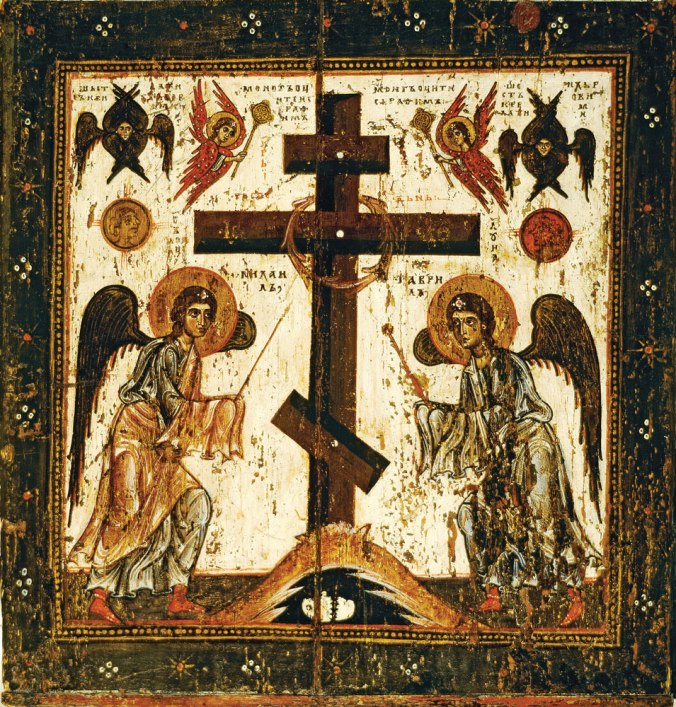
An icon of the Holy Cross. (Source)

My favorite sermon by John Henry Newman is directly germane to our feast today. He preached it at St. Mary the Virgin, Oxford, while still an Anglican. Though originally delivered on the sixth Sunday of Lent, the text fits admirably for today’s mystery, I take it from the Newman Reader, which makes available all of his writings for free online.

The Cross of Christ the Measure of the World

“And I, if I be lifted up from the earth, will draw all men unto Me.” John xii. 32.

A GREAT number of men live and die without reflecting at all upon the state of things in which they find themselves. They take things as they come, and follow their inclinations as far as they have the opportunity. They are guided mainly by pleasure and pain, not by reason, principle, or conscience; and they do not attempt to interpret this world, to determine what it means, or to reduce what they see and feel to system. But when persons, either from thoughtfulness of mind, or from intellectual activity, begin to contemplate the visible state of things into which they are born, then forthwith they find it a maze and a perplexity. It is a riddle which they cannot solve. It seems full of contradictions and without a drift. Why it is, and what it is to issue in, and how it is what it is, and how we come to be introduced into it, and what is our destiny, are all mysteries.

In this difficulty, some have formed one philosophy of life, and others another. Men have thought they had found the key, by means of which they might read what is so obscure. Ten thousand things come before us one after another in the course of life, and what are we to think of them? what colour are we to give them? Are we to look at all things in a gay and mirthful way? or in a melancholy way? in a desponding or a hopeful way? Are we to make light of life altogether, or to treat the whole subject seriously? Are we to make greatest things of little consequence, or least things of great consequence? Are we to keep in mind what is past and gone, or are we to look on to the future, or are we to be absorbed in what is present? How are we to look at things? this is the question which all persons of observation ask themselves, and answer each in his own way. They wish to think by rule; by something within them, which may harmonize and adjust what is without them. Such is the need felt by reflective minds. Now, let me ask, what is the real key, what is the Christian interpretation of this world? What is given us by revelation to estimate and measure this world by? The event of this season,—the Crucifixion of the Son of God.

It is the death of the Eternal Word of God made flesh, which is our great lesson how to think and how to speak of this world. His Cross has put its due value upon every thing which we see, upon all fortunes, all advantages, all ranks, all dignities, all pleasures; upon the lust of the flesh, and the lust of the eyes, and the pride of life. It has set a price upon the excitements, the rivalries, the hopes, the fears, the desires, the efforts, the triumphs of mortal man. It has given a meaning to the various, shifting course, the trials, the temptations, the sufferings, of his earthly state. It has brought together and made consistent all that seemed discordant and aimless. It has taught us how to live, how to use this world, what to expect, what to desire, what to hope. It is the tone into which all the strains of this world’s music are ultimately to be resolved.

Look around, and see what the world presents of high and low. Go to the court of princes. See the treasure and skill of all nations brought together to honour a child of man. Observe the prostration of the many before the few. Consider the form and ceremonial, the pomp, the state, the circumstance; and the vainglory. Do you wish to know the worth of it all? look at the Cross of Christ.

Go to the political world: see nation jealous of nation, trade rivalling trade, armies and fleets matched against each other. Survey the various ranks of the community, its parties and their contests, the strivings of the ambitious, the intrigues of the crafty. What is the end of all this turmoil? the grave. What is the measure? the Cross.

Go, again, to the world of intellect and science: consider the wonderful discoveries which the human mind is making, the variety of arts to which its discoveries give rise, the all but miracles by which it shows its power; and next, the pride and confidence of reason, and the absorbing devotion of thought to transitory objects, which is the consequence. Would you form a right judgment of all this? look at the Cross.

Again: look at misery, look at poverty and destitution, look at oppression and captivity; go where food is scanty, and lodging unhealthy. Consider pain and suffering, diseases long or violent, all that is frightful and revolting. Would you know how to rate all these? gaze upon the Cross.

Thus in the Cross, and Him who hung upon it, all things meet; all things subserve it, all things need it. It is their centre and their interpretation. For He was lifted up upon it, that He might draw all men and all things unto Him.

But it will be said, that the view which the Cross of Christ imparts to us of human life and of the world, is not that which we should take, if left to ourselves; that it is not an obvious view; that if we look at things on their surface, they are far more bright and sunny than they appear when viewed in the light which this season casts upon them. The world seems made for the enjoyment of just such a being as man, and man is put into it. He has the capacity of enjoyment, and the world supplies the means. How natural this, what a simple as well as pleasant philosophy, yet how different from that of the Cross! The doctrine of the Cross, it may be said, disarranges two parts of a system which seem made for each other; it severs the fruit from the eater, the enjoyment from the enjoyer. How does this solve a problem? does it not rather itself create one?

I answer, first, that whatever force this objection may have, surely it is merely a repetition of that which Eve felt and Satan urged in Eden; for did not the woman see that the forbidden tree was “good for food,” and “a tree to be desired”? Well, then, is it wonderful that we too, the descendants of the first pair, should still be in a world where there is a forbidden fruit, and that our trials should lie in being within reach of it, and our happiness in abstaining from it? The world, at first sight, appears made for pleasure, and the vision of Christ’s Cross is a solemn and sorrowful sight interfering with this appearance. Be it so; but why may it not be our duty to abstain from enjoyment notwithstanding, if it was a duty even in Eden?

But again; it is but a superficial view of things to say that this life is made for pleasure and happiness. To those who look under the surface, it tells a very different tale. The doctrine of the Cross does but teach, though infinitely more forcibly, still after all it does but teach the very same lesson which this world teaches to those who live long in it, who have much experience in it, who know it. The world is sweet to the lips, but bitter to the taste. It pleases at first, but not at last. It looks gay on the outside, but evil and misery lie concealed within. When a man has passed a certain number of years in it, he cries out with the Preacher, “Vanity of vanities, all is vanity.” Nay, if he has not religion for his guide, he will be forced to go further, and say, “All is vanity and vexation of spirit;” all is disappointment; all is sorrow; all is pain. The sore judgments of God upon sin are concealed within it, and force a man to grieve whether he will or no. Therefore the doctrine of the Cross of Christ does but anticipate for us our experience of the world. It is true, it bids us grieve for our sins in the midst of all that smiles and glitters around us; but if we will not heed it, we shall at length be forced to grieve for them from undergoing their fearful punishment. If we will not acknowledge that this world has been made miserable by sin, from the sight of Him on whom our sins were laid, we shall experience it to be miserable by the recoil of those sins upon ourselves.

It may be granted, then, that the doctrine of the Cross is not on the surface of the world. The surface of things is bright only, and the Cross is sorrowful; it is a hidden doctrine; it lies under a veil; it at first sight startles us, and we are tempted to revolt from it. Like St. Peter, we cry out, “Be it far from Thee, Lord; this shall not be unto Thee.” [Matt. xvi. 22.] And yet it is a true doctrine; for truth is not on the surface of things, but in the depths.

And as the doctrine of the Cross, though it be the true interpretation of this world, is not prominently manifested in it, upon its surface, but is concealed; so again, when received into the faithful heart, there it abides as a living principle, but deep, and hidden from observation. Religious men, in the words of Scripture, “live by the faith of the Son of God, who loved them and gave Himself for them:” [Gal. ii. 20.] but they do not tell this to all men; they leave others to find it out as they may. Our Lord’s own command to His disciples was, that when they fast, they should “anoint their head and wash their face.” [Matt. vi. 17.] Thus they are bound not to make a display, but ever to be content to look outwardly different from what they are really inwardly. They are to carry a cheerful countenance with them, and to control and regulate their feelings, that those feelings, by not being expended on the surface, may retire deep into their hearts and there live. And thus “Jesus Christ and He crucified” is, as the Apostle tells us, “a hidden wisdom;”—hidden in the world, which seems at first sight to speak a far other doctrine,—and hidden in the faithful soul, which to persons at a distance, or to chance beholders, seems to be living but an ordinary life, while really it is in secret holding communion with Him who was “manifested in the flesh,” “crucified through weakness,” “justified in the Spirit, seen of angels, and received up into glory.”

This being the case, the great and awful doctrine of the Cross of Christ, which we now commemorate, may fitly be called, in the language of figure, the heart of religion. The heart may be considered as the seat of life; it is the principle of motion, heat, and activity; from it the blood goes to and fro to the extreme parts of the body. It sustains the man in his powers and faculties; it enables the brain to think; and when it is touched, man dies. And in like manner the sacred doctrine of Christ’s Atoning Sacrifice is the vital principle on which the Christian lives, and without which Christianity is not. Without it no other doctrine is held profitably; to believe in Christ’s divinity, or in His manhood, or in the Holy Trinity, or in a judgment to come, or in the resurrection of the dead, is an untrue belief, not Christian faith, unless we receive also the doctrine of Christ’s sacrifice. On the other hand, to receive it presupposes the reception of other high truths of the Gospel besides; it involves the belief in Christ’s true divinity, in His true incarnation, and in man’s sinful state by nature; and it prepares the way to belief in the sacred Eucharistic feast, in which He who was once crucified is ever given to our souls and bodies, verily and indeed, in His Body and in His Blood. But again, the heart is hidden from view; it is carefully and securely guarded; it is not like the eye set in the forehead, commanding all, and seen of all: and so in like manner the sacred doctrine of the Atoning Sacrifice is not one to be talked of, but to be lived upon; not to be put forth irreverently, but to be adored secretly; not to be used as a necessary instrument in the conversion of the ungodly, or for the satisfaction of reasoners of this world, but to be unfolded to the docile and obedient; to young children, whom the world has not corrupted; to the sorrowful, who need comfort; to the sincere and earnest, who need a rule of life; to the innocent, who need warning; and to the established, who have earned the knowledge of it.

One more remark I shall make, and then conclude. It must not be supposed, because the doctrine of the Cross makes us sad, that therefore the Gospel is a sad religion. The Psalmist says, “They that sow in tears shall reap in joy;” and our Lord says, “They that mourn shall be comforted.” Let no one go away with the impression that the Gospel makes us take a gloomy view of the world and of life. It hinders us indeed from taking a superficial view, and finding a vain transitory joy in what we see; but it forbids our immediate enjoyment, only to grant enjoyment in truth and fulness afterwards. It only forbids us to begin with enjoyment. It only says, If you begin with pleasure, you will end with pain. It bids us begin with the Cross of Christ, and in that Cross we shall at first find sorrow, but in a while peace and comfort will rise out of that sorrow. That Cross will lead us to mourning, repentance, humiliation, prayer, fasting; we shall sorrow for our sins, we shall sorrow with Christ’s sufferings; but all this sorrow will only issue, nay, will be undergone in a happiness far greater than the enjoyment which the world gives,—though careless worldly minds indeed will not believe this, ridicule the notion of it, because they never have tasted it, and consider it a mere matter of words, which religious persons think it decent and proper to use, and try to believe themselves, and to get others to believe, but which no one really feels. This is what they think; but our Saviour said to His disciples, “Ye now therefore have sorrow, but I will see you again, and your heart shall rejoice, and your joy no man taketh from you.” … “Peace I leave with you; My peace I give unto you; not as the world giveth, give I unto you.” [John xvi. 22; xiv. 27.] And St. Paul says, “The natural man receiveth not the things of the Spirit of God; for they are foolishness unto him; neither can he know them, because they are spiritually discerned.” “Eye hath not seen, nor ear heard, neither have entered into the heart of man, the things which God hath prepared for them that love Him.” [1 Cor. ii. 9, 14.] And thus the Cross of Christ, as telling us of our redemption as well as of His sufferings, wounds us indeed, but so wounds as to heal also.

And thus, too, all that is bright and beautiful, even on the surface of this world, though it has no substance, and may not suitably be enjoyed for its own sake, yet is a figure and promise of that true joy which issues out of the Atonement. It is a promise beforehand of what is to be: it is a shadow, raising hope because the substance is to follow, but not to be rashly taken instead of the substance. And it is God’s usual mode of dealing with us, in mercy to send the shadow before the substance, that we may take comfort in what is to be, before it comes. Thus our Lord before His Passion rode into Jerusalem in triumph, with the multitudes crying Hosanna, and strewing His road with palm branches and their garments. This was but a vain and hollow pageant, nor did our Lord take pleasure in it. It was a shadow which stayed not, but flitted away. It could not be more than a shadow, for the Passion had not been undergone by which His true triumph was wrought out. He could not enter into His glory before He had first suffered. He could not take pleasure in this semblance of it, knowing that it was unreal. Yet that first shadowy triumph was the omen and presage of the true victory to come, when He had overcome the sharpness of death. And we commemorate this figurative triumph on the last Sunday in Lent, to cheer us in the sorrow of the week that follows, and to remind us of the true joy which comes with Easter-Day.

And so, too, as regards this world, with all its enjoyments, yet disappointments. Let us not trust it; let us not give our hearts to it; let us not begin with it. Let us begin with faith; let us begin with Christ; let us begin with His Cross and the humiliation to which it leads. Let us first be drawn to Him who is lifted up, that so He may, with Himself, freely give us all things. Let us “seek first the kingdom of God and His righteousness,” and then all those things of this world “will be added to us.” They alone are able truly to enjoy this world, who begin with the world unseen. They alone enjoy it, who have first abstained from it. They alone can truly feast, who have first fasted; they alone are able to use the world, who have learned not to abuse it; they alone inherit it, who take it as a shadow of the world to come, and who for that world to come relinquish it.