Monsieur Olier on the Ascension

QueensCollegeAscension.jpg

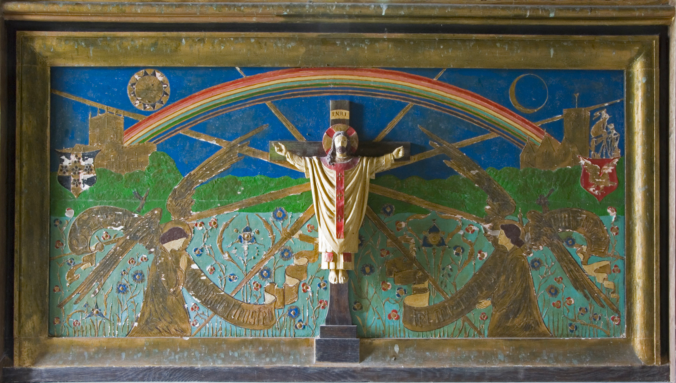
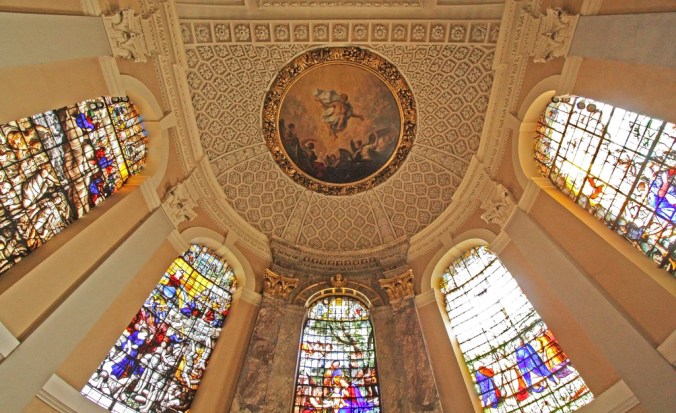
The Ascension fresco at Queen’s College Chapel, Oxford – perhaps my favorite chapel in the entire University. Photo by Fr. Lawrence Lew OP. (Source)

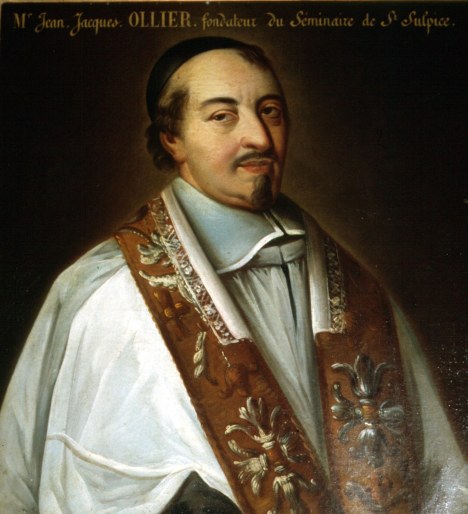
One of the greatest luminaries of the French Church in the 17th century, that period known as the Grand Siècle, was Jean-Jacques Olier. Though barely read today, he exerted a profound influence upon the formation of the French School of Spirituality through his work in founding the Sulpician Order. He was a close associate of St. Vincent de Paul, who always regarded him as a saint.
M.Olier.jpg

M. Olier, priez pour nous! (Source)

I have excerpted here his short chapter on the Ascension from his book, The Interior Life of the Most Holy Virgin. I must ask my readers to forgive me for not translating this edifying work, as I did not have the time. Those with French, however, will appreciate the depth of M. Olier’s insight.

***

Le sacrifice de Jésus-Christ étant offert pour l’Église, qui est visible, devait être visible lui-même dans toutes ses parties, afin de nous donner une certitude parfaite de notre réconciliation avec Dieu. Marie, dans le jour de la Purification, avait paru à l’offrande de la victime, en présentant elle-même, au nom de l’Église, Jésus-Christ notre hostie, et en le dévouant à l’immolation. Elle avait aussi été présente à la deuxième partie du sacrifice, à l’immolation réelle de Jésus-Christ sur la croix. La troisième, qui était la consommation ou le transport de la victime en Dieu, avait eu lieu dans le mystère de la Résurrection. Mais cette consommation s’était opérée d’une manière invisible; et la bonté de Dieu voulait que, pour notre consolation, cette partie du sacrifice devînt visible aussi bien que les deux autres, ou plutôt que Notre-Seigneur montât au ciel pour aller se perdre dans le sein de Dieu non-seulement à la vue de la très-sainte Vierge sa mère, mais encore sous les yeux de tous les apôtres par qui l’Église était représentée. C’est ce qu’avait figuré autrefois Élie montant au ciel dans un char de feu à la vue d’Élisée ; et ce prophète avait déclaré expressément à son disciple que, s’il le voyait monter, il aurait son double esprit. Don mystérieux, qui exprimait le fruit du sacrifice, c’est-à-dire l’esprit de mort et de résurrection ou de vie divine, que Jésus-Christ devait laisser à l’Église figurée par Élisée.

Après sa résurrection, il communiquait toutes les dispositions et tous les sentiments de son âme à sa bénite Mère. Il lui exprimait spécialement les désirs ardents qui le pressaient d’aller enfin se réunir à Dieu son Père, pour le louer et le glorifier dans le ciel. Marie, de son côté, éprouvait un véhément désir d’y accompagner son Fils, pour s’unir à ses louanges; et sans doute qu’elle eût terminé alors sa vie et l’eût suivi dans les cieux, s’il n’eût voulu se servir d’elle pour aider l’Église dans ses commencements.

L’oeuvre de cette divine Mère était encore incomplète. Après avoir donné, par Marie, naissance au chef, Dieu voulait procurer aussi, par elle, la formation de tout le corps. Il voulait la rendre mère de sa famille entière, de Jésus-Christ et de tous ses enfants d’adoption. Par zèle pour la gloire de Dieu et par charité pour nous, elle accepte avec joie la commission que Notre-Seigneur lui laisse de travailler à faire honorer son Père par les hommes, et de demeurer sur la terre jusqu’à ce que l’Église ait été bien affermie.

Le quarantième jour après la Résurrection étant donc venu, Jésus-Christ- se rend à Béthanie avec sa sainte Mère et ses apôtres; là élevant les mains et les bénissant, il se sépare d’eux, et en leur présence s’élève vers le ciel. Ils l’y suivirent des yeux, jusqu’à ce qu’enfin une nuée le dérobe à leur vue; et comme néanmoins ils tenaient toujours leurs regards fixés au ciel, deux anges vêtus de blanc leur apparurent et leur dirent : Pourquoi vous arrêtez-vous à regarder le ciel? Ce Jésus, qui a été attiré du milieu de vous dans le ciel, viendra de la même manière que vous l’avez vu monter au ciel. Ainsi Dieu voulut-il que l’acceptation solennelle qu’il faisait de notre hostie, eût pour témoins non-seulement tous les apôtres et la très-sainte Vierge, qui l’avait produite de sa propre substance, mais les anges eux-mêmes.

En montant dans les cieux, Jésus-Christ élève avec lui tous les saints patriarches et les autres justes qu’il avait retirés des limbes, et va les offrir à son Père, comme les premières dépouilles qu’il a ravies au démon par sa mort. Enfin, dérobé par la nuée à la vue de ses disciples, il laisse rejaillir la splendeur de sa gloire, qu’ils n’auraient pu soutenir et dont il avait retenu l’éclat dans ses diverses apparitions.

Comme les enfants des rois donnent des présents à leurs sujets, en faisant leur entrée dans leur royaume, Jésus-Christ, montant à la droite de son Père pour prendre possession de son trône, voulait envoyer à ses apôtres son esprit et ses dons, c’est-à-dire dilater son coeur en faisant entrer les hommes dans ses sentiments de religion envers Dieu son Père, et achever ainsi son ouvrage. Dans ce dessein et par son commandement, les disciples s’assemblèrent à Jérusalem avec la très-sainte Vierge et plusieurs saintes femmes; et là ils étaient en prière, louant, bénissant le nom de Dieu, et attendant la venue de l’Esprit-Saint. Marie était au milieu d’eux et présidait ce sacré concile, comme ayant, pour aviser à établir la gloire de Dieu dans le monde, une grâce qui excellait par-dessus celle de tous les apôtres. Quoique Jésus-Christ n’eût pas voulu qu’elle fût présente à la Cène, ni qu’elle offrît extérieurement le saint sacrifice, ni qu’elle fût prêtre selon l’ordre de Melchisédech, il voulait néanmoins que Marie, destinée à être la mère des vivants, se trouvât dans le Cénacle avec les apôtres, afin de verser la plénitude de son esprit en elle, comme dans le réservoir de la vie divine, et de la distribuer par elle à tous ses enfants, et aussi pour apprendre à l’Église que jamais elle ne serait renouvelée qu’en la société de sa divine Mère et en participant à son esprit.
rococoascensionaltar

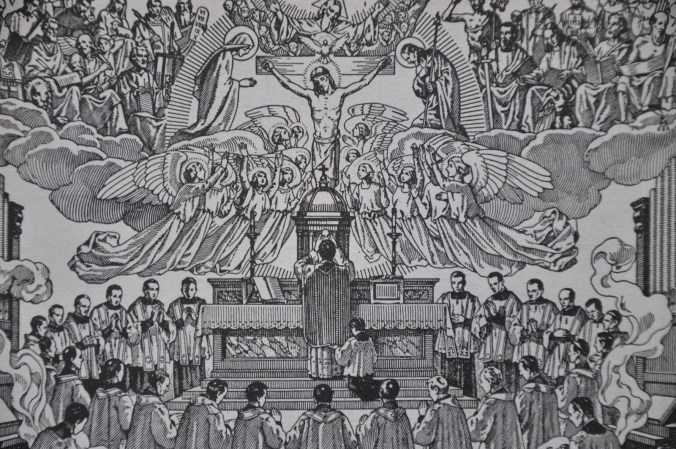
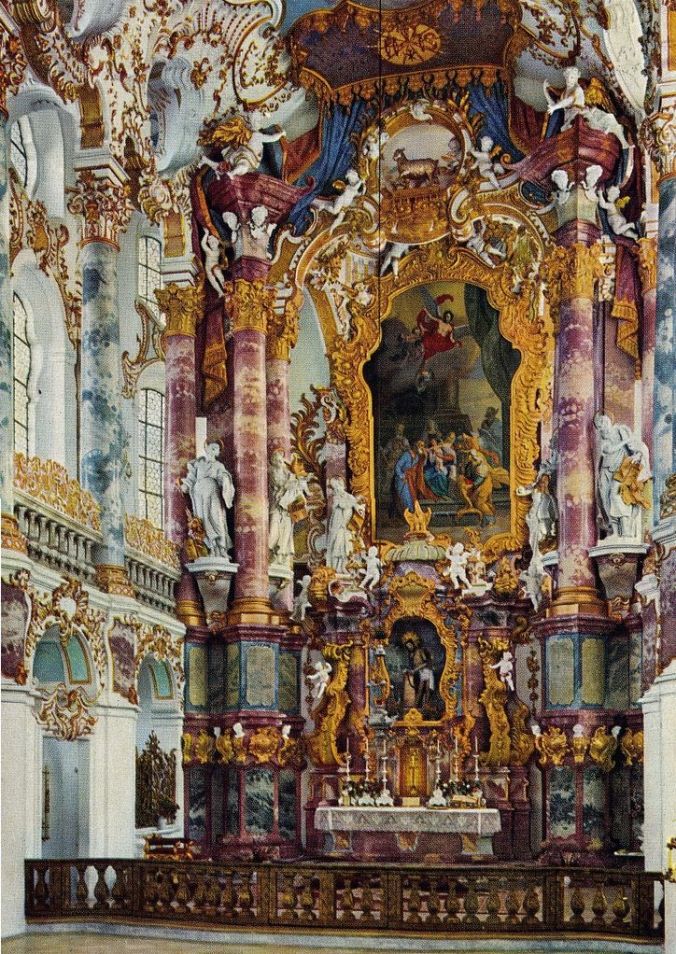
A rococo altar depicting the Ascension, Ottobeuren, Germany. (Source)
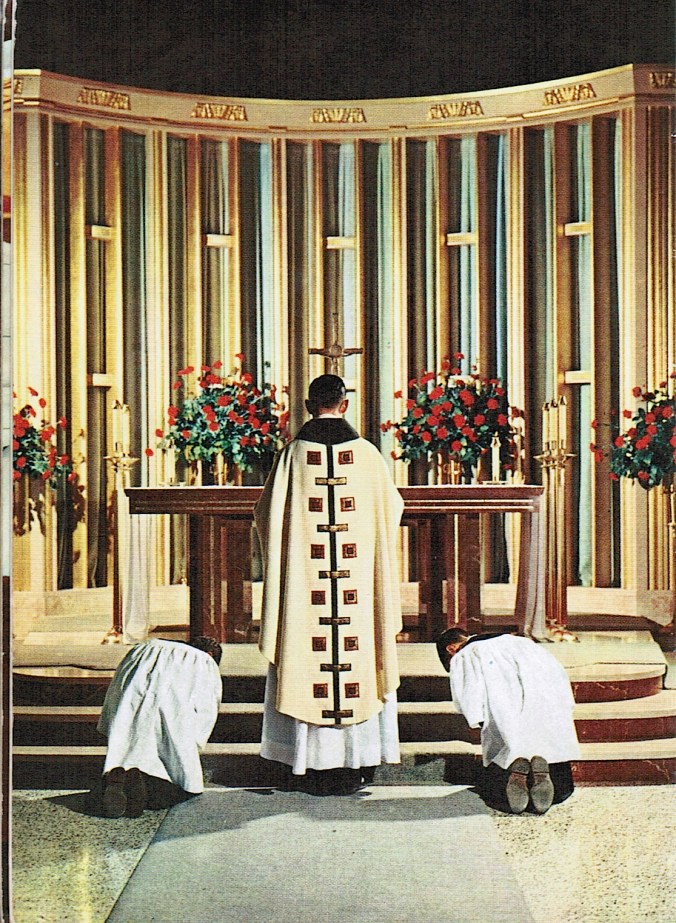
A Relic of the 1965 Liturgy

MissaLuba

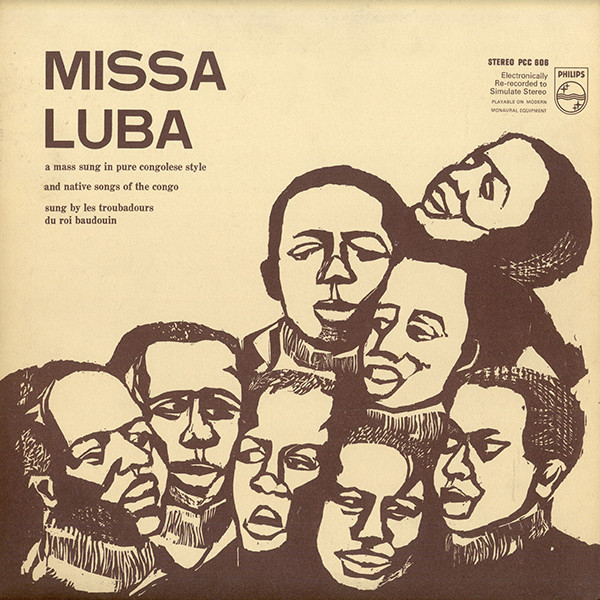
Album cover of the Missa Luba. (Source)

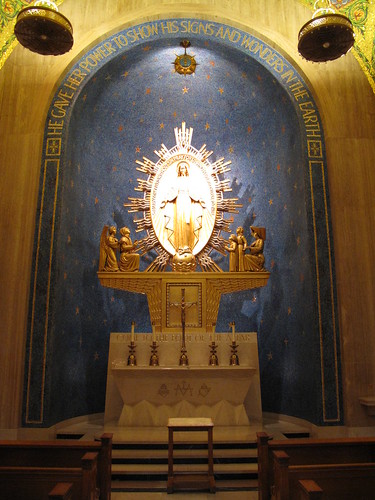
That strange Mass produced by the Council in 1965, an interim liturgy somewhere between the Usus Antiquior and the Novus Ordo, was often accompanied by a distinctive style – at once traditional and fresh, what has been called by some “The Other Modern.” Think of the decoration of the National Shrine of the Immaculate Conception in Washington, D.C – especially its many side-chapels. Think of the delightful, dignified, but very vernacular liturgical music of Fr. Clarence Rivers (at least his early material). Think of the ornate but often geometric vestments that emerged from that time. Indeed, just think of Paul VI’s space-age papal tiara.

1965 Mass.jpg

The hybrid Mass of 1965. Not ideal, but considerably better than what followed. (Source)

Recently I discovered a reminder of this strange time in the Church’s history. I was watching a 1968 movie called If… with friends. It’s a disturbing (if artful) film about an uprising at a traditional British public school, and was clearly made in conversation with the student protests that erupted that fateful Spring, fifty years ago. I was surprised to find that one of the major musical motifs was liturgical. Looking it up, I discovered it was the “Sanctus” of the 1965 Congolese Missa Luba. The song is in many ways a synecdoche of the 1965 rite. It starts off with on French Gregorian foot, quickly introduces drums, and ends with an extremely Congolese bit of improvised singing. And, it must be said, it’s very beautiful.

The poignant song, coming from a country and Church in turmoil, strikes me as emblematic of the crushed hopes of that era. So much was anticipated of Congolese independence, so bitterly contested in the five years since. Already, the forces of reaction were coalescing around an upstart colonel who would soon assume control of the country as its first home-grown dictator, Mobutu Sese Seko. And in the Church, those reformers who genuinely tried to bring about a more perfect sense of the divine in the modern world found their position betrayed by a coterie of unorthodox radicals who perverted the sense of the Council’s documents.

Yet we can still hear that bright, fleeting moment of hope in the voices of the Congolese joining their praises to those of the angels.

UPDATE: It has been pointed out to me, correctly, that I have erred in attributing the Missa Luba to 1965 proper. The Mass setting was actually first recorded in 1958. It was in 1965 that the first US release of the album came out. So I suppose that, insofar as we consider its Western reception, the Missa Luba does remain part of the 1965 liturgical landscape. And “The Other Modern” certainly existed in the 1950’s; the aesthetics of 1965 were the culmination of a few decades’ of development.

I suppose my final point, about the parallels in the Church and the Congo, wouldn’t work as well as I had hoped. But at the very least, the Congo in 1958 was indeed a place of tremendous hope for the future. That aspiration manifest in the music was soon crushed by the turmoil of five years of war following Belgium’s official withdrawal in 1960. And the Church? Well, in 1958, I’m not sure anyone really saw what was coming…

My Favorite Hymn to St. Philip Neri

StPhilipImageRed

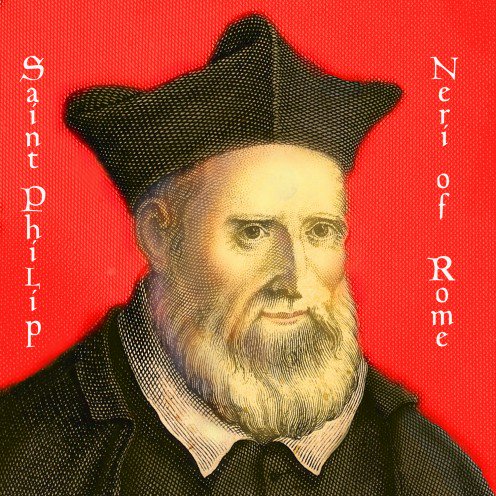
St. Philip, pray for us (Source)

As my readers will well know, St. Philip Neri is my favorite saint and has been for a long while now. I take every opportunity I can to sing his praises on this blog, and today happens to be one of them. In Oxford, we are celebrating the Feast of the Patronage of St. Philip, a local solemnity that honors the canonical erection of the house here as a Congregation of the Oratory. Please pray for the Oxford Fathers on this, their silver jubilee.

To celebrate, here is my favorite hymn to the Apostle of Rome – Pangamus Nerio, as sung by the choir of the Birmingham Oratory. It is the vesperal hymn of St. Philip.

Pangamus Nerio, debita cantica
Quem, supra nitidi sydera verticis,
Virtus et meritum sustulit inclytum,
Carpturum pia gaudia.

Noctes sub spectabus, corpora martyrum,
Quas implent, vigilat sedulus integras,
Ex ipsis satagens discere mortuis
Normam qua bene viveret.

Nocte dum Nereus fercula pauperi,
Gestans praecipitat, panniger Angelus
Tecto significat, qualiter excidat
Numquam fervida caritas.

Orantis penetrans cordis in intimum,
Laxavit spatium Spiritus impete
De Coelo veniens, esset ut hospiti
Immenso locus amplior!

Coelorum Domino, dum sacra munera
Libabat Nerius, saepius advolans,
Tellurem rapido corpore deserit,
Christo fiat ut obvius!

Corpus deseruit, cum Deus Hostiae
Fertur sub niveae tegmine conditus,
Prudens, in Patriam, pergere splendide
Nolens absque Viatico.

Amen.

Unfortunately, I don’t have an English translation (nor the time and energy to translate from the original myself). Alas.

May St. Philip Neri pray for Oxford, for the Oratorians there, and for all of us who call upon him in filial affection.


Chesterton’s St. George

Saint_George_and_the_Dragon_by_Paolo_Uccello_(Paris)_01.jpg

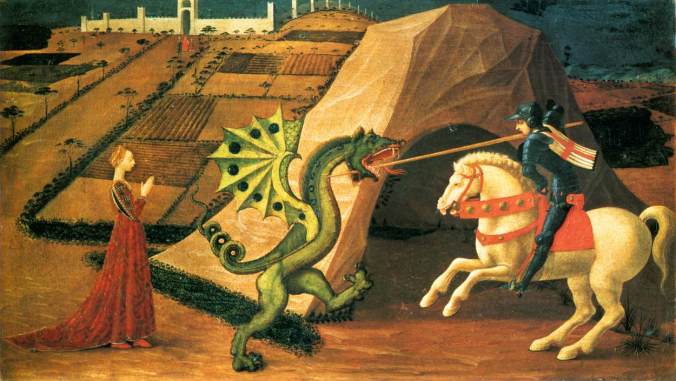
“Saint George and the Dragon,” Paolo Uccello, c. 1459 (Source)

The Englishman

G.K. Chesterton

St George he was for England,
And before he killed the dragon
He drank a pint of English ale
Out of an English flagon.
For though he fast right readily
In hair-shirt or in mail,
It isn’t safe to give him cakes
Unless you give him ale.

St George he was for England,
And right gallantly set free
The lady left for dragon’s meat
And tied up to a tree;
But since he stood for England
And knew what England means,
Unless you give him bacon
You mustn’t give him beans.

St George he is for England,
And shall wear the shield he wore
When we go out in armour
With battle-cross before.
But though he is jolly company
And very pleased to dine,
It isn’t safe to give him nuts
Unless you give him wine.

Spring According to Pre-Raphaelites

Spring is here, and the Pre-Raphaelites are going to tell you how to celebrate.

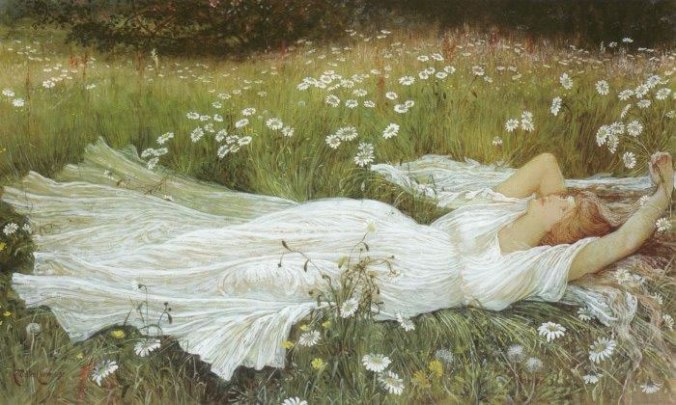
WalterCraneSpringIf you’re not just lying about languidly in a meadow, you’re not really doing it right, are you?
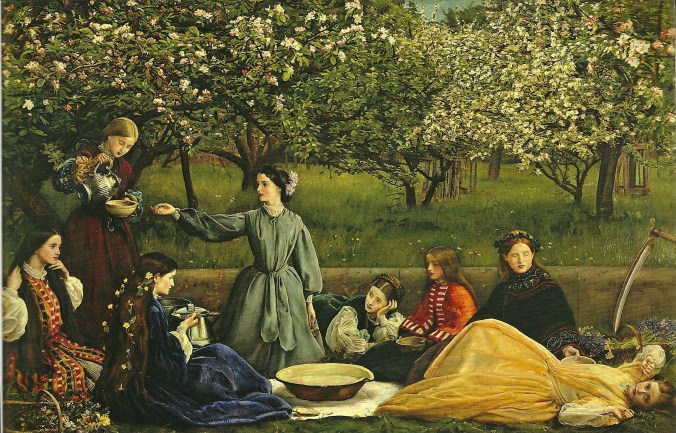
SpringAppleBlossoms.jpgIt is also acceptable to lie there with an audience, preferably one enjoying a lovely picnic. And everyone must be the same gender and should, if at all possible, be dressed in very uncomfortable clothing.
Spring_Buckland
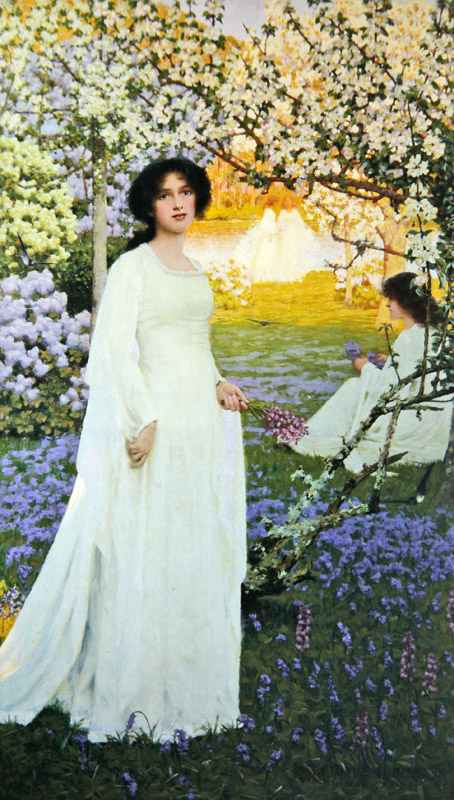
After you have wallowed in the flowers, be sure to pick some and stare vacantly into the middle distance.

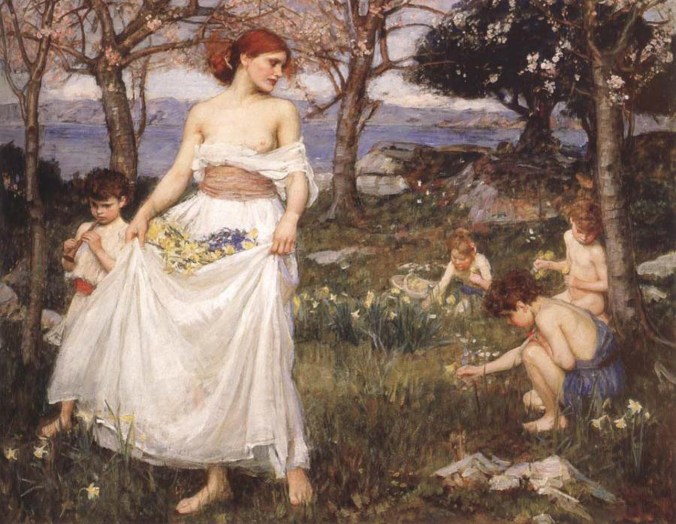
john_william_waterhouse_10_a_song_of_springtime.jpg And of course, you should be arrayed in an artfully disheveled white dress. To get that shabby chic look, you know?
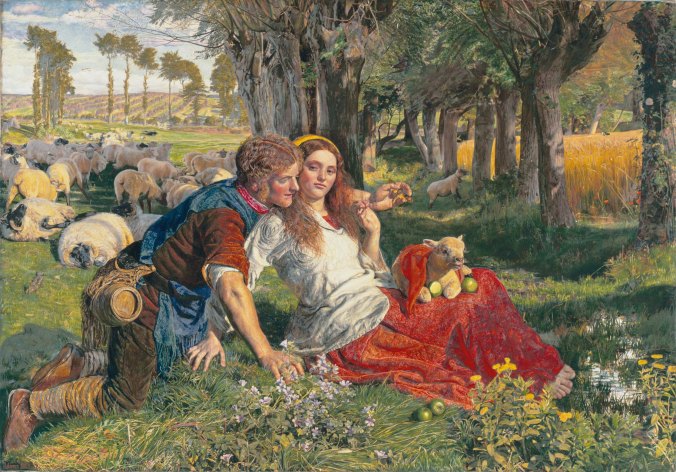
HirelingHolmanHunt.jpgHow you dishevel it is up to you.
InnerBeautyWaterhouse
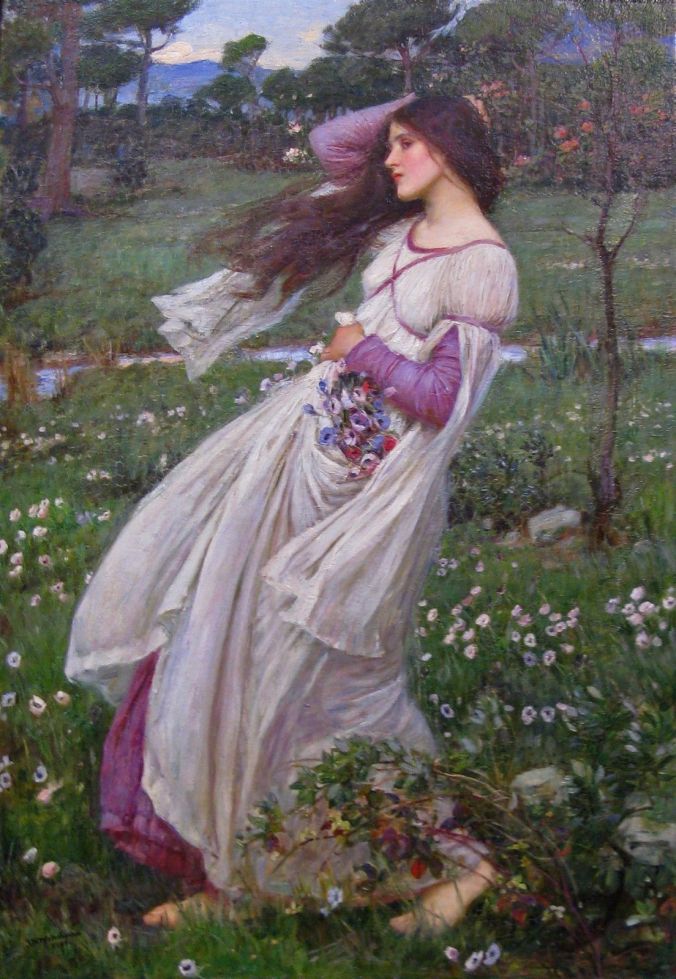
Never let a gust of wind pass without posing.

WalterCraneSignsofSpring
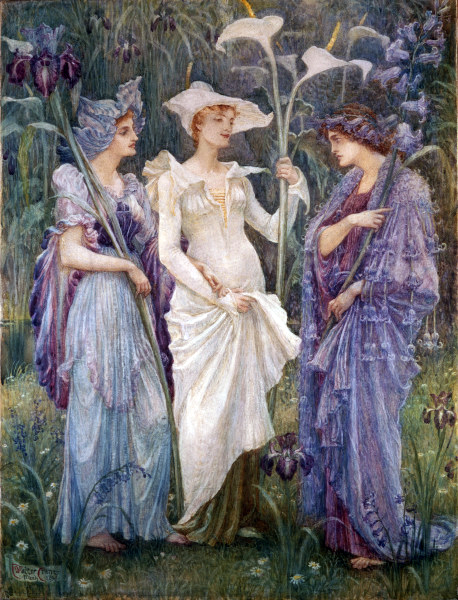
When it comes to flower-staffs, the bigger, the better.

the_fairy_wood
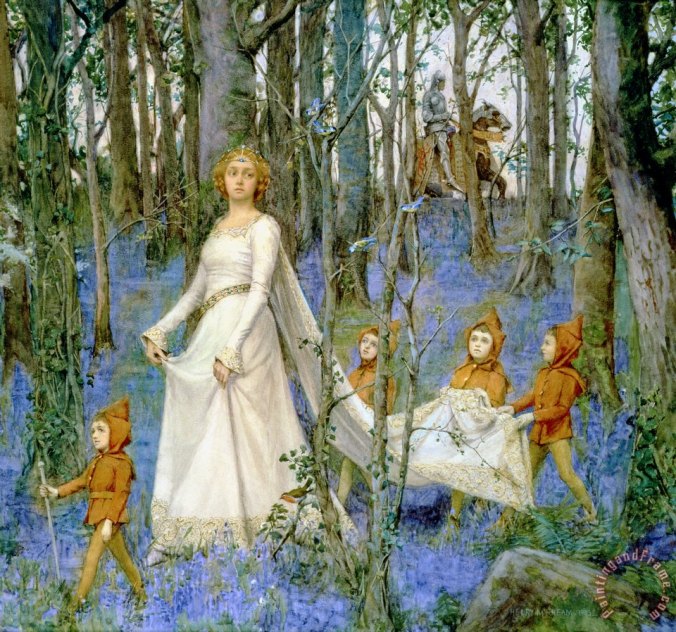
Only travel with an entourage of little people, so as better to accent your royal mien and bearing.

William_Holman_Hunt_-_May_Morning_on_Magdalen_Tower
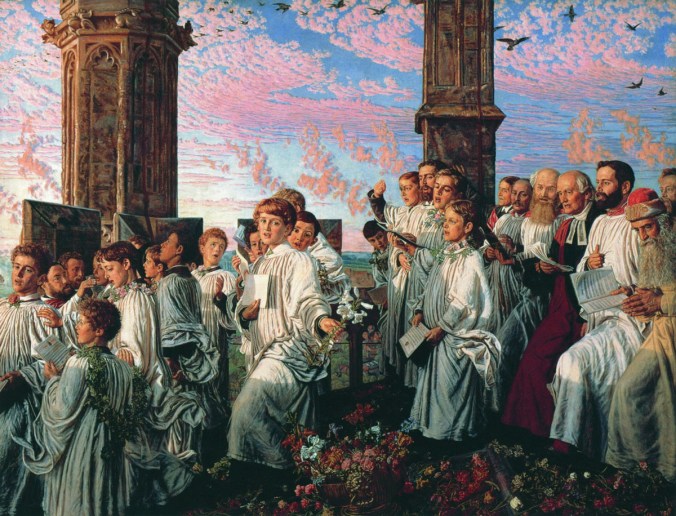
Choir boys will also do.

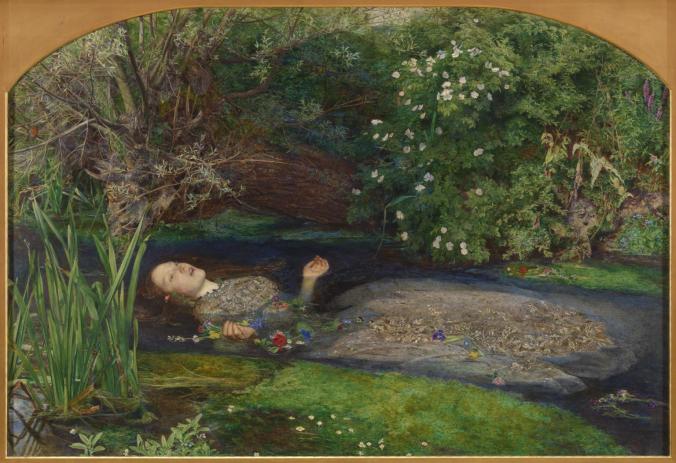
Ophelia 1851-2 by Sir John Everett Millais, Bt 1829-1896
Spring is a lovely time for a refreshing dip.

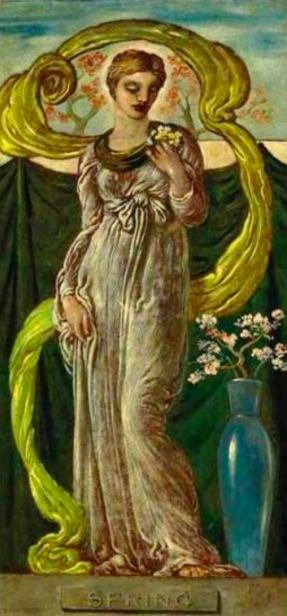
Screen Shot 2018-04-21 at 9.54.52 PM.png
You know you’re having a good Spring day when, so enraptured by the little blossoms you’re holding, you don’t even notice your long green scarf blowing away.

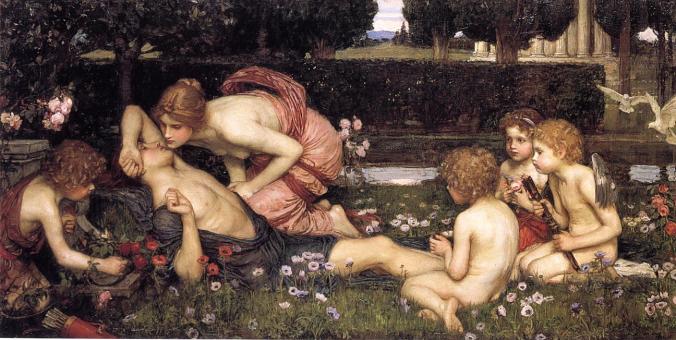
The_Awakening_of_Adonis_-_John_William_Waterhouse_(1899)
If you happen to find half-naked classical youths asleep in a garden, surrounded by putti and doves, and stuck in an extraordinarily improbable pose, don’t worry. This is normal in Spring.

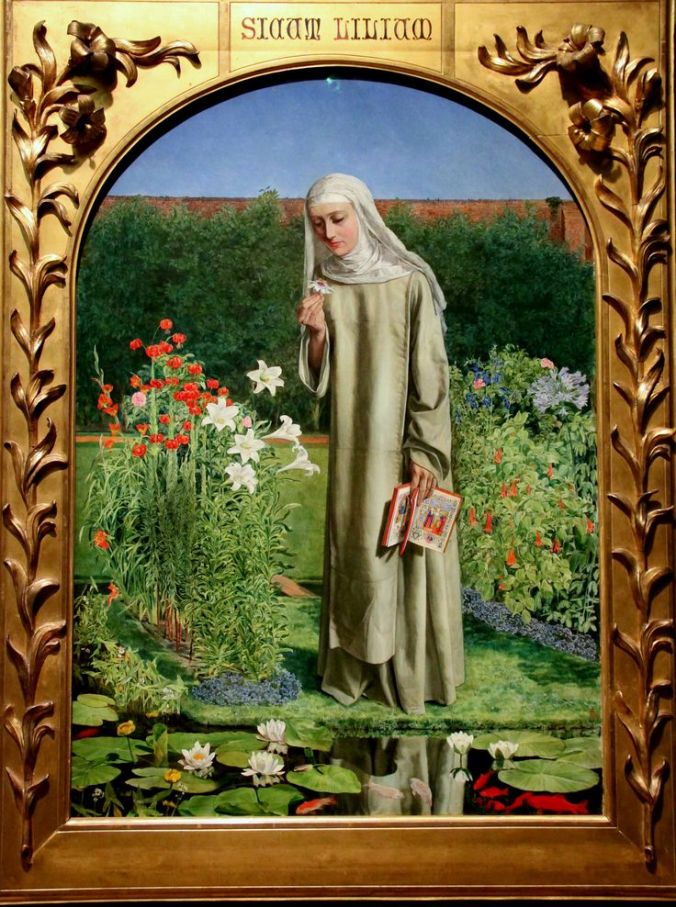
SicutLiliumPreRaph
Likewise, wild nuns emerge from hibernation and range freely again in the Spring.

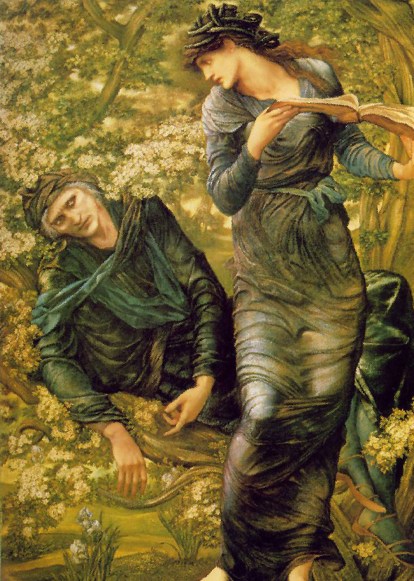
Edward_Burne-Jones_-_The_Beguiling_of_Merlin.jpg
While it’s important to enjoy the season, it’s even more important not to get too caught up in it. This time of the year is when people are most at risk of being sealed into trees by nymphs.

The-Enchanted-Garden-of-Messer-Ansaldo-1-e1480773352693
But surely the best thing about Spring is that it’s no longer Winter!

(Images from here, here, here, here, here, here, here, here, here, here, here, here, here, here, here)


A Ghastly Hymn for Good Shepherd Sunday

Cope2

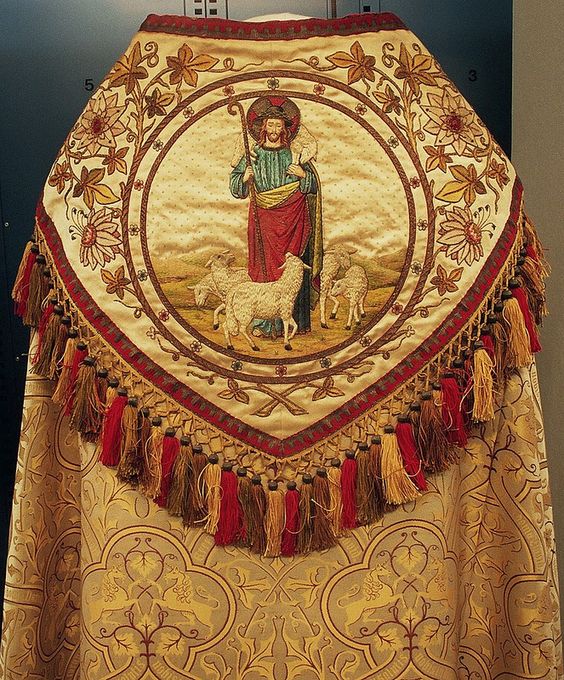
A cope depicting the Good Shepherd. (Source)

I realize that technically last week was Good Shepherd Sunday in the traditional calendar, but as most of the Catholic world (alas) celebrates it tomorrow, I thought I’d offer up this truly dismal hymn from Fr. Faber. I have never yet heard it set to music, so if any of my readers happen to know of a recording, I would appreciate them kindly sharing it. Fr. Faber is one of my favorite spiritual writers and hymnodists…even when he’s outlandishly bad.

The True Shepherd

Fr. Frederick William Faber

I was wandering and weary
When my Saviour came unto me;
For the ways of sin grew dreary
And the world had ceased to woo me:
And I thought I heard Him say,
As He came along His way,
O silly souls! come near Me;
My sheep should never fear Me;
I am the Shepherd true.

At first I would not hearken,
And put off till the morrow;
But life began to darken,
And I was sick with sorrow;
And I thought I heard Him say,
As He came along His way,
O silly souls! come near Me;
My sheep should never fear Me;
I am the Shepherd true.

At last I stopped to listen,
His voice could not deceive me;
I saw His kind eyes glisten,
So anxious to relieve me:
And I thought I heard Him say,
As He came along His way,
O silly souls! come near Me;
My sheep should never fear Me;
I am the Shepherd true.

He took me on His shoulder,
And tenderly He kissed me;
He bade my love be bolder,
And said how He had missed me;
And I’m sure I heard Him say,
As He went along His way,
O silly souls! come near Me;
My sheep should never fear Me;
I am the Shepherd true.

Strange gladness seemed to move Him,
Whenever I did better;
And he coaxed me so to love Him,
As if He was my debtor;
And I always heard Him say,
As He went along His way,
O silly souls! come near Me;
My sheep should never fear Me;
I am the Shepherd true.

I thought His love would weaken,
As more and more He knew me;
But it burneth like a beacon;
And its light and heat go through me;
And I ever hear Him say,
As He goes along His way,
O silly souls! come near Me;
My sheep should never fear Me;
I am the Shepherd true.

Let us do then, dearest brothers!
What will best and longest please us,
Follow not the ways of others,
But trust ourselves to Jesus;
We shall ever hear Him say,
As He goes along His way,
O silly souls! come near Me;
My sheep should never fear Me;
I am the Shepherd true.

Newman on the Sorrowful Mother

slovakia_lady_sorrows

Our Lady of Sorrows, Pray for Us. (Source)

Continuing my Lenten series of Wednesday spiritual masters, here are two meditations from Newman on Our Lady’s dolours. They are taken from his Meditations and Devotions. We should never forget the terrible suffering of Our Lady at the foot of the cross. Her unique woes rendered her the Co-Redemptrix of Mankind.

Mary is the “Regina Martyrum,” the Queen of Martyrs

Why is she so called?—she who never had any blow, or wound, or other injury to her consecrated person. How can she be exalted over those whose bodies suffered the most ruthless violences and the keenest torments for our Lord’s sake? She is, indeed, Queen of all Saints, of those who “walk with Christ in white, for they are worthy;” but how of those “who were slain for the Word of God, and for the testimony which they held?”

To answer this question, it must be recollected that the pains of the soul may be as fierce as those of the body. Bad men who are now in hell, and the elect of God who are in purgatory, are suffering only in their souls, for their bodies are still in the dust; yet how severe is that suffering! And perhaps most people who have lived long can bear witness in their own persons to a sharpness of distress which was like a sword cutting them, to a weight and force of sorrow which seemed to throw them down, though bodily pain there was none.

What an overwhelming horror it must have been for the Blessed Mary to witness the Passion and the Crucifixion of her Son! Her anguish was, as Holy Simeon had announced to her, at the time of that Son’s Presentation in the Temple, a sword piercing her soul. If our Lord Himself could not bear the prospect of what was before Him, and was covered in the thought of it with a bloody sweat, His soul thus acting upon His body, does not this show how great mental pain can be? and would it have been wonderful though Mary’s head and heart had given way as she stood under His Cross?

Thus is she most truly the Queen of Martyrs.

VirgendelosDolores

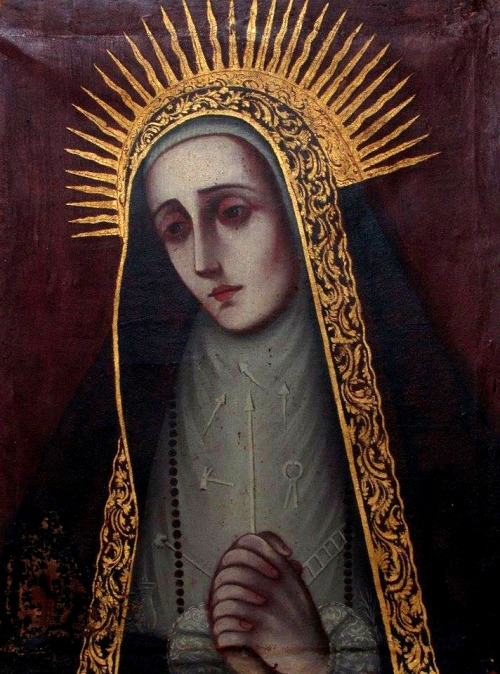
Virgen de los Dolores, Private Collection, Puebla, Mexico. (Source)

***

Mary is the “Vas Honorabile,” the Vessel of Honor

St. Paul calls elect souls vessels of honour: of honour, because they are elect or chosen; and vessels, because, through the love of God, they are filled with God’s heavenly and holy grace. How much more then is Mary a vessel of honour by reason of her having within her, not only the grace of God, but the very Son of God, formed as regards His flesh and blood out of her!

But this title “honorabile,” as applied to Mary, admits of a further and special meaning. She was a martyr without the rude dishonour which accompanied the sufferings of martyrs. The martyrs were seized, haled about, thrust into prison with the vilest criminals, and assailed with the most blasphemous words and foulest speeches which Satan could inspire. Nay, such was the unutterable trial also of the holy women, young ladies, the spouses of Christ, whom the heathen seized, tortured, and put to death. Above all, our Lord Himself, whose sanctity was greater than any created excellence or vessel of grace—even He, as we know well, was buffeted, stripped, scourged, mocked, dragged about, and then stretched, nailed, lifted up on a high cross, to the gaze of a brutal multitude.

But He, who bore the sinner’s shame for sinners, spared His Mother, who was sinless, this supreme indignity. Not in the body, but in the soul, she suffered. True, in His Agony she was agonised; in His Passion she suffered a fellow-passion; she was crucified with Him; the spear that pierced His breast pierced through her spirit. Yet there were no visible signs of this intimate martyrdom; she stood up, still, collected, motionless, solitary, under the Cross of her Son, surrounded by Angels, and shrouded in her virginal sanctity from the notice of all who were taking part in His Crucifixion.

KlauberDolorosa

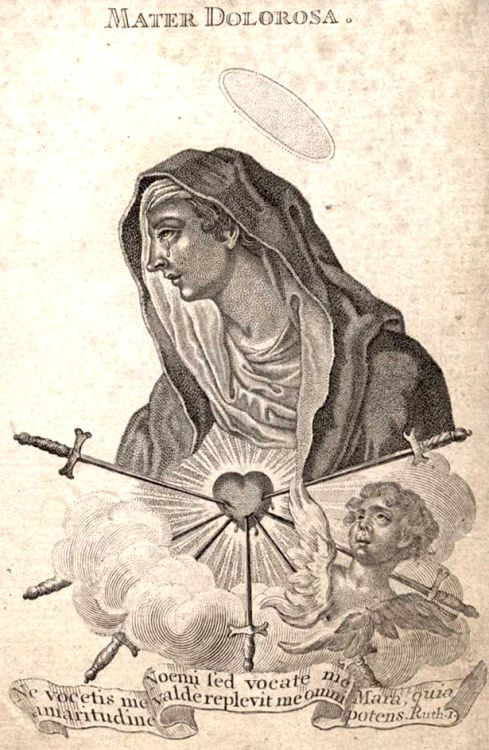
Mater Dolorosa, Klauber. (Source)

Elsewhere: An Anglo-Catholic Designer You Should Know

Screen Shot 2018-03-13 at 1.40.54 AM.png

A reredos by John Coates-Carter. (Source)

Over at Liturgical Arts Journal, you will find a very good, brief introduction to an ecclesiastical architect of the Arts and Crafts Movement, John Coates-Carter. He is most famous for his design of the (extraordinary) abbey on Caldey Island. Most of his work can be found in Wales. Perhaps because of his regional interest, I had never heard of him before. Yet his altarpieces are about as Anglo-Catholic as you can get. They have all of the features I noted in my article on AC aesthetics; they’re earthy, colorful, idealized, with a hint of the illustrative verging on the cartoonish. And most importantly, the are deeply human. Anglo-Catholicism restored the human face to British ecclesiastical art. We can see that tendency in the luminous angels and vibrant peasants that appear in Coates-Carter’s sacral art. Do go have a look.

CaldeyIsland

Caldey Abbey, designed by John Coates-Carter. (Source)

“A Vacuum He May Not Abhor”

RS Thomas Obituary

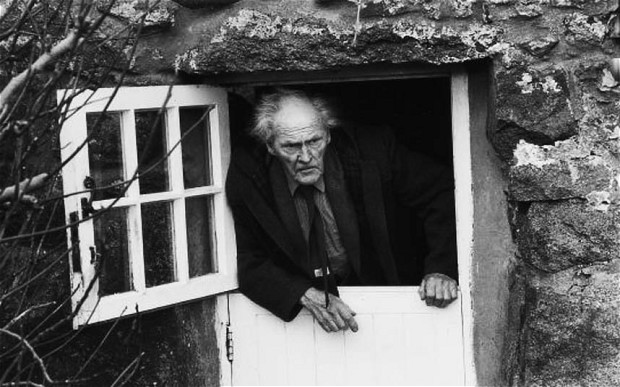
R.S. Thomas in a typical pose. One does wonder if he ever smiled. (Source)

R.S. Thomas (1913-2000), the Welsh nationalist, Anglican minister, and consummate poet belief and doubt has recently become a favorite. Here is a poem of his that, I think, is worth pondering in Lent.

The Absence

It is this great absence
that is like a presence, that compels
me to address it without hope
of a reply. It is a room I enter

from which someone has just
gone, the vestibule for the arrival
of one who has not yet come.
I modernise the anachronism

of my language, but he is no more here
than before. Genes and molecules
have no more power to call
him up than the incense of the Hebrews

at their altars. My equations fail
as my words do. What resources have I
other than the emptiness without him of my whole
being, a vacuum he may not abhor?

Maurice Zundel on Prayer

zundel-800x450

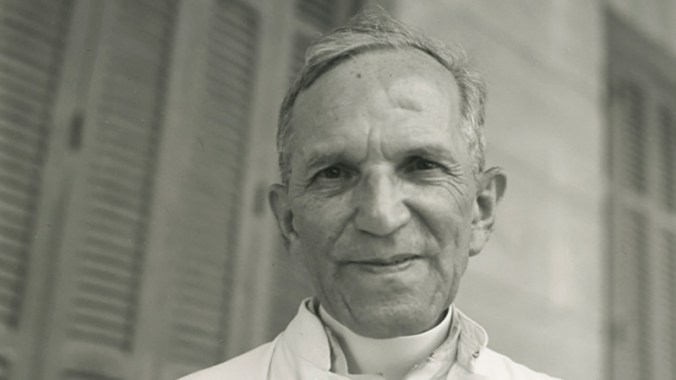
Maurice Zundel in old age. (Source)

Fr. Maurice Zundel was one of the great, if often-forgotten, theologians of the last century. Sometime student of Fr. Reginald Garrigou-Lagrange, he wrote various works of Catholic philosophy in conversation with existentialism, Protestantism, and personalism. This wide-ranging and erudite scholarship led soon-to-be-Saint Paul VI to call him “a mystical genius.” However, he is best known in the Anglophone world for his writing on the liturgy. This extract is taken from his great work, The Splendour of the Liturgy (1943), translated by Edward Watkin for Sheed & Ward. It comes from his chapter on “The Collect” (pg. 61-67). I was struck by this passage’s profound depths of wisdom as well as its light,  imaginative style.

Prayer is the soul’s breath, the creature’s fiat in response to the Creator’s in that mysterious exchange which makes us God’s fellow-workers. Its purpose is not to inform God of needs which He knows infinitely better than we do ourselves, nor to move His will to satisfy them, for His will is the eternal gift of infinite Love. Its sole object is to make us more capable of receiving such a gift, to open our eyes to the light, to throw open the portals of our heart too narrow to give access to the King of glory. There is no need to importune God for our happiness, for He never ceases to will it. It is we who place the obstacle in its way and keep his love at arm’s length.

Jerusalem, how often would I have gathered thy children, as a hen gathers her chickens beneath her wings, and thou wouldst not.

This surely is the most poignant expression of the Divine Tragedy: ‘I would, I, thy Lord and thy Godbut thou, thou wouldst not.’ If we place this complaint side by side with the text already quoted from the Apocalypse, ‘I stand at the door and knock,’ we must conclude that God always hears man’s prayer, that He is the eternal answer to prayer, and that it is man who too often refuses to hear God’s prayer.

And prayer is precisely the response to Love’s eternal invitation, which is made with an infinite regard for our freedom. It is, therefore, superfluous to ask whether every prayer is heard. It is heard if and in so far as it is a genuine prayer. For genuine prayer is the opening of the soul to the mysterious invasion of the Divine Presence, and it is completely summed up in the final appeal of the Apocalypse: ‘Come, Lord Jesus.’ (61-62)

Throughout the chapter, Zundel strikes what we might call a sophiological note. He approaches the most basic substance of the Christian lifeprayerand carries on to the Eschaton, to spiritual nuptials, and to illumination from on high.

It remains true that there is no conversation without answers, no marriage of love without mutual consent. And it is a marriage of love that is to be concluded between God and ourselves. In this marriage whose intimate union must continually grow until its flower unfolds in eternity, prayer is our assent. There is no need to put it into words. It may be confined to a silent adherence, a simple look in which we give our entire being a calm silence in which, without adding anything of her own, the soul listens to Him who utters Himself within her by His single Word. And all prayer tends towards this transparent passivity which exposes the diamond of our free will to the rays of the eternal light. We can pray without asking for anything and without saying anything, that God may express Himself the more freely…

It is ultimately for the sake of God that the soul desires her own Beatitude, that no obstacle may thwart His love, that the world may realise its spiritual vocation, and that throughout creation all may be yea, as all is yea in God. (62-64)

Zundel notes that the peculiar genius of the Liturgy is the way it uses human spiritual needs as launchpads for a “flight” into the eternal. The Collects crystallize this function in that they often speak of our human wants. Zundel writes:

But their very sobriety forbids us to stop at their verbal surface. The soul has but to let herself go and she is launched on the open sea voyaging over abysses of light and darkness, of sorrow and peace. They are more than prayers, they are sacraments of prayer, formulas that induce the essential prayer which we have attempted to describe. (64-65)

MassMeaning

Would that we might be ever mindful of what is really taking place at every Mass! (Source)

Among Prayer-Book Anglicans, there used to be a very old custom of memorizing collects. I do wonder how many still keep it upcertainly, I don’t know of any Catholics who memorize collects. Imagine what would happen to our own spiritual lives, to say nothing of the Church militant, if we committed to learning a few by heart. If you’re looking for a beautiful English translation of the traditional collects, might I recommend a little volume published by W. Knott & Son. Otherwise, there’s another good alternative that came out around the same time.