M. Olier on Patience for Christ

In week two of the Lenten Spirituality Series, we have another treasure from seventeenth-century France. One of the great exponents of the French School of Spirituality, M. Jean-Jacques Olier, writes movingly about our suffering in this life as a means of bringing us closer to Christ. His words on the virtue of Patience, though directly primarily to clerics, have a wider application to all Christians in their Royal Priesthood. The text is excerpted from M. Olier’s “Introduction to the Christian Life and Virtues,” translated by Lowell M. Glendon, S.S. in Bérulle and the French School: Selected Writings (Paulist Press, 1989), 244-47. M. Olier’s description of patience crescendos into a typically French, Eucharistic note.
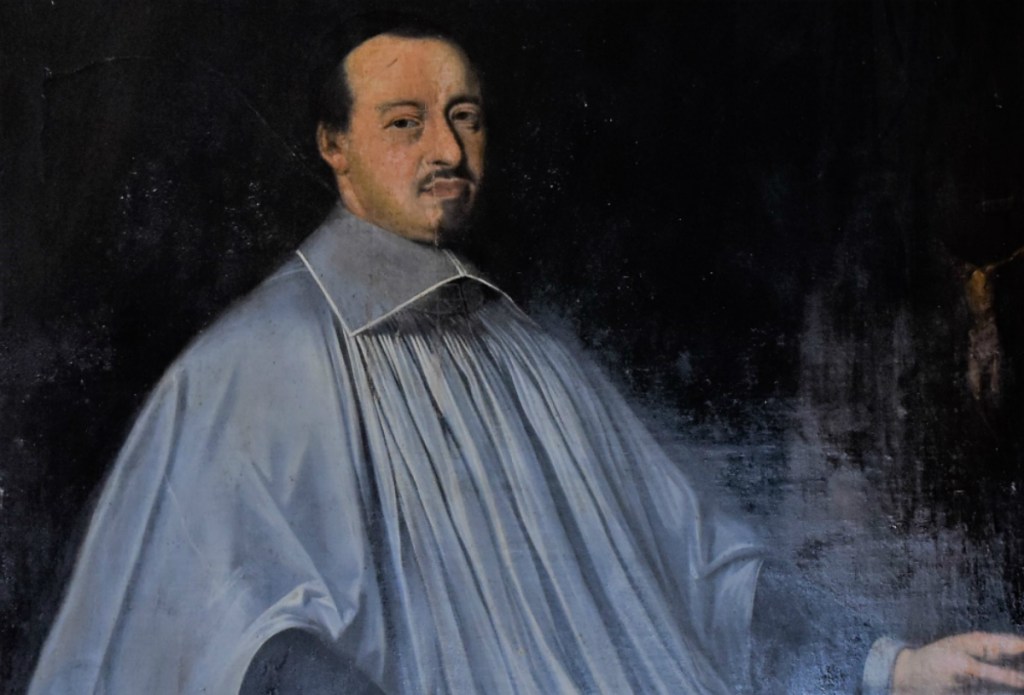
Jean-Jacques Olier, founder of the Sulpicians and a spiritual master of the Grand Siècle. (Source)

We are obliged to be patient. First, in our condition as creatures; for God, sovereign master of life and death, on whom our existence depends absolutely, has the right to dispose of us as he chooses…

Second, as sinners. For in this condition, we must bear with the effects of his justice and wrath toward us. All the punishments that he carries out in this world are nothing compared to what we deserve and what he would make use suffer if he did not choose to be merciful toward us and to treat us with gentleness and clemency in this life. The punishments that God meted out to sinners, as we see in the holy scripture, even the torments of the damned and the penalties the demons suffer and will suffer eternally for one sin, should cause us not only to be at peace, but to rejoice in our sufferings…

Third, as Christians. For as such we should bear with many difficulties and sufferings. This is why we are intitiated into the church. For our Lord only admitted us into it to continue his life, which is a life of opposition, contradiction, and condemnation toward the flesh.

He must then humiliate it and subdue it in us, using the ways he knows and judges to be most useful, so as to win a complete victory, He first achieved victory in his own flesh, and he wishes to continue it in ours in order to show forth in us a sample of the universal triumph that he had achieved over it in his own person.

The church and Christians are only a handful of flesh compared to the whole world. Nevertheless, he still desires to be victorious in them to proclaim his triumph and to give definite signs of his victory. Thus, from this perspective, the Christian should be very faithful to the Spirit and completely abandoned to him in order to overcome the flesh and to destroy it completely.

There will be no lack of opportunities in this life, for he must suffer; first, the attacks of the world through scorn, calumny and persecution; second, the violent onslaughts of the flesh in its uprisings and its revolts; third, the battles with the devil in the temptations he sends us; finally, the ordeals from God through dryness, desolation, abandonment and other interior difficulties, which he afflicts on him in order to initiate him into the perfect crucifixion of the flesh.

Fourth, as clerics. For clerics should participate in the fulfillment of Christianity. This cannot exist without patience.

Patience is a sign that the soul is intimately united to God and that it is rooted in perfection. For it must be very much in God and fully possessed by him in order to bear difficulties and torments with peace, tranquility and even joy and beatitude in one’s heart.

It must be quite profoundly immersed in him and remain quite powerfully and strongly united to him, so that the flesh has no power at all to attract it to itself and share with him the feelings and aversions that it has towards suffering and endurance.

In this state the soul experiences the perfection attainable in this life, since it conforms to our Lord’s perfect submission to God during his sufferings. For although his flesh experienced aversion and revulsion for the cross, he paid no attention to it with his will. Rather, he always adhered perfectly to the wishes of his Father.

Therefore clerics, being perfect Christians chosen from the midst of the church to assist before the tabernacle of God, should pay particular attention to this virtue. This is their very nature. It is the sign by which they can be identified. This is what predisposes them for the honorable rank that they possess. This is how they are recognized as domestics and servants of God.

Finally, priests and pastors should have a very high degree of patience because, in Jesus Christ and with Jesus Christ, they are both priests and victims for the sins of the world. Jesus Christ the priest wished to be the victim of his sacrifice. He became the host-victim for all people. Since priests are like sacraments and representations of him who lives in them to continue his priesthood and whom he clothes with his external conduct and his interior dispositions, as well as with his power and his person, he wishes furthermore that they be interiorly rooted in the spirit and dispositions of a host-victim in order to suffer, endure, do penance, in short, to immolate themselves for the glory of God and the salvation of the people.

In imitation of our Lord, priests should not only be victims for sin through persecution, penance, internal and external sufferings, but also they should be like the victims of a holocaust. This is their true vocation. For they should not merely suffer, as he did, all sorts of difficulties both for their own sins and the sins of the people entrusted to them, but even more the should be entirely consumed with him through love.

The spirit of love strengthens and empowers us to endure affliction and suffering, no matter how great they are. Since he is infinite, he gives us as much as we need to endure those that can occur in our vocation.

All the torments of the world are nothing to a generous soul filled with the power of a God, who is able to shoulder countless sufferings more violent than all those that the world and the devil might afflict us with. It is with this Spirit that Saint Paul said: I can do all things in him who strengthens me (Phil 4:14). Everything he saw seemed little to do or suffer because of the God who dwelled in him.

It is through this same eternal, immense, and all-powerful Spirit that he called his sufferings light and momentary, because Jesus Christ who suffered and bore them in himself and allowed him to see and experience something of his eternity through his presence, caused him to look upon the entire duration of this life as but a moment. This is how our Lord, who allows us to experience interiorly that his power and his strength could support a thousand worlds, leads us to call his burden light.
The Saint, the Centaur, and the Satyr

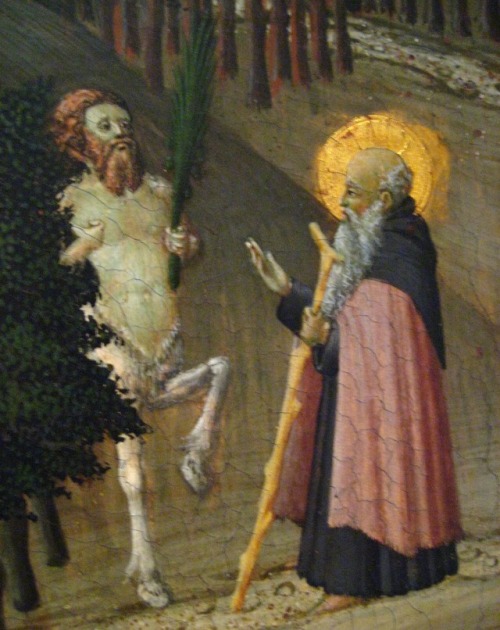
On this feast of St. Anthony the Abbot, I am reminded of a peculiar episode in the life of the saint that St. Jerome records. In full, it reads:

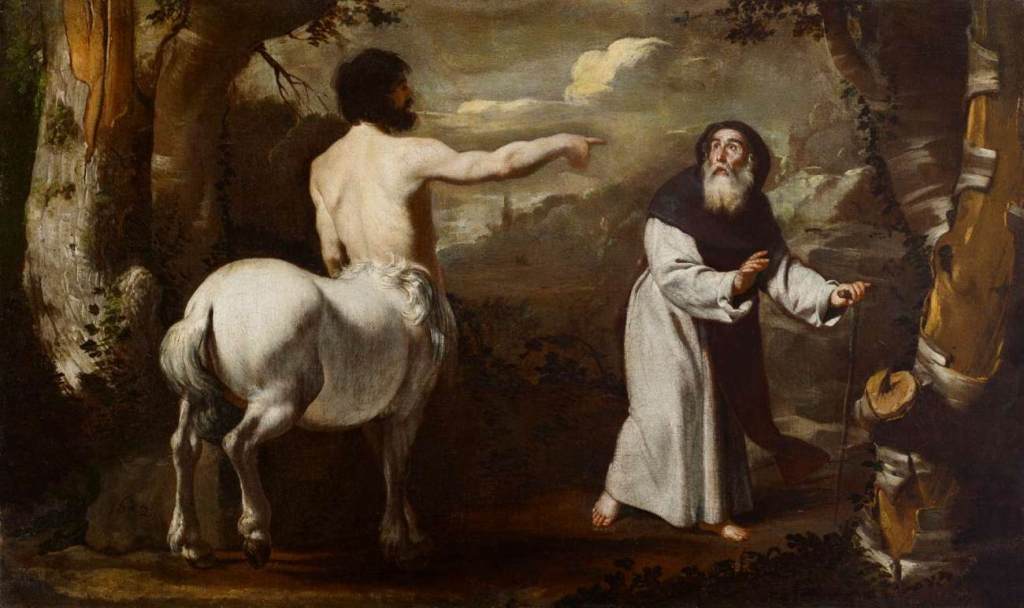
Francesco Guarino, St. Anthony Abbot and Centaur, 1642 (Source)

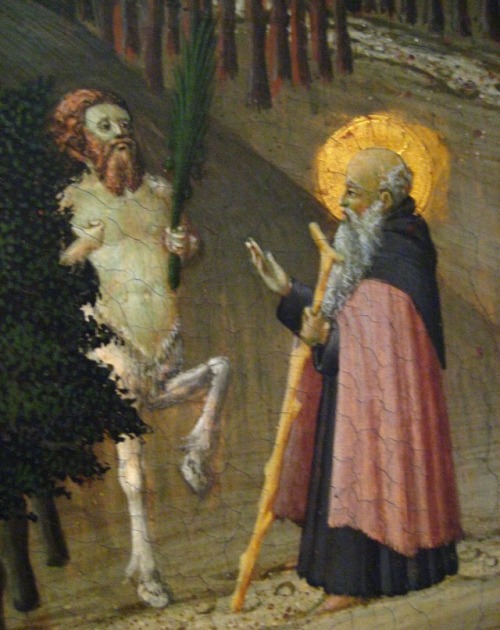
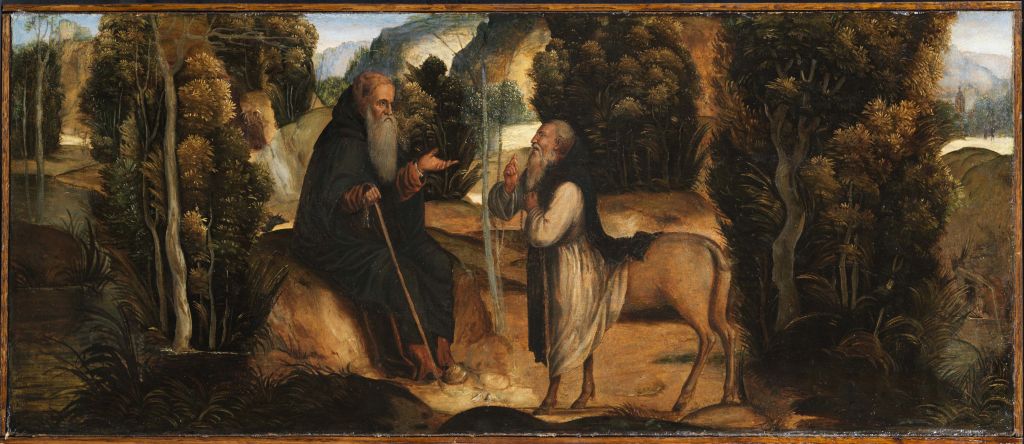
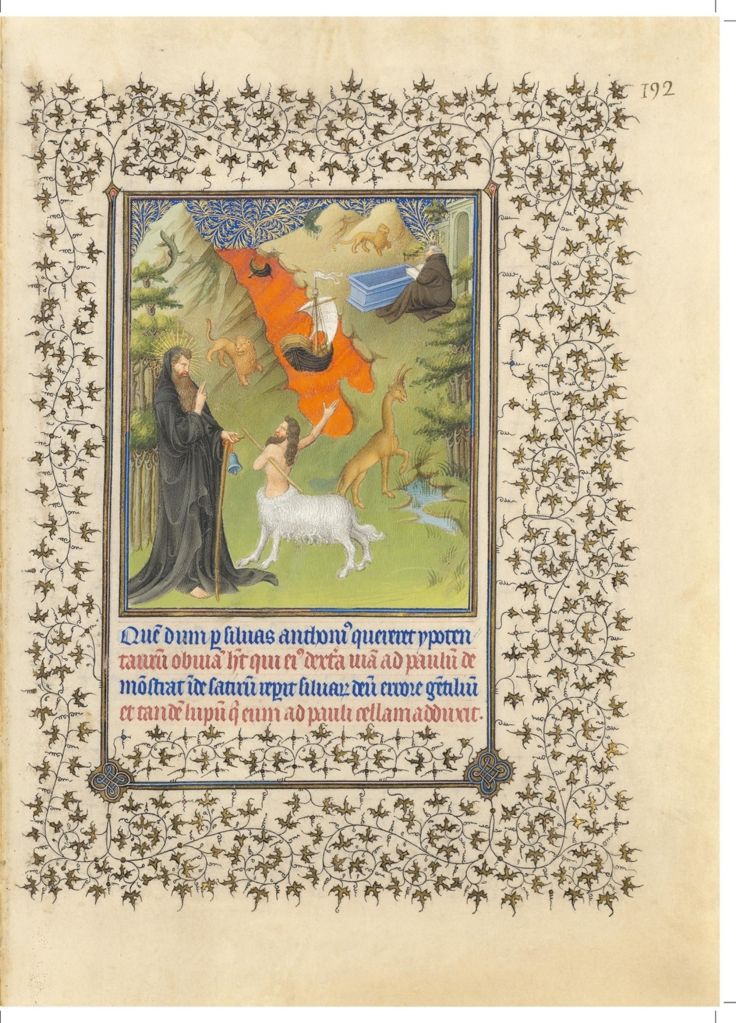
But to return to the point at which I digressed. The blessed Paul had already lived on earth the life of heaven for a hundred and thirteen years, and Antony at the age of ninety was dwelling in another place of solitude (as he himself was wont to declare), when the thought occurred to the latter, that no monk more perfect than himself had settled in the desert. However, in the stillness of the night it was revealed to him that there was farther in the desert a much better man than he, and that he ought to go and visit him. So then at break of day the venerable old man, supporting and guiding his weak limbs with a staff, started to go: but what direction to choose he knew not. Scorching noontide came, with a broiling sun overhead, but still he did not allow himself to be turned from the journey he had begun. Said he, I believe in my God: some time or other He will show me the fellow-servant whom He promised me. He said no more. All at once he beholds a creature of mingled shape, half horse half man, called by the poets Hippocentaur. At the sight of this he arms himself by making on his forehead the sign of salvation, and then exclaims, Holloa! Where in these parts is a servant of God living? The monster after gnashing out some kind of outlandish utterance, in words broken rather than spoken through his bristling lips, at length finds a friendly mode of communication, and extending his right hand points out the way desired. Then with swift flight he crosses the spreading plain and vanishes from the sight of his wondering companion. But whether the devil took this shape to terrify him, or whether it be that the desert which is known to abound in monstrous animals engenders that kind of creature also, we cannot decide.

Antony was amazed, and thinking over what he had seen went on his way. Before long in a small rocky valley shut in on all sides he sees a mannikin with hooked snout, horned forehead, and extremities like goats’ feet. When he saw this, Antony like a good soldier seized the shield of faith and the helmet of hope: the creature none the less began to offer to him the fruit of the palm-trees to support him on his journey and as it were pledges of peace. Antony perceiving this stopped and asked who he was. The answer he received from him was this: I am a mortal being and one of those inhabitants of the desert whom the Gentiles deluded by various forms of error worship under the names of Fauns, Satyrs, and Incubi. I am sent to represent my tribe. We pray you in our behalf to entreat the favour of your Lord and ours, who, we have learned, came once to save the world, and ‘whose sound has gone forth into all the earth.’ As he uttered such words as these, the aged traveller’s cheeks streamed with tears, the marks of his deep feeling, which he shed in the fullness of his joy. He rejoiced over the Glory of Christ and the destruction of Satan, and marvelling all the while that he could understand the Satyr’s language, and striking the ground with his staff, he said, Woe to you, Alexandria, who instead of God worships monsters! Woe to you, harlot city, into which have flowed together the demons of the whole world! What will you say now? Beasts speak of Christ, and you instead of God worship monsters. He had not finished speaking when, as if on wings, the wild creature fled away. Let no one scruple to believe this incident; its truth is supported by what took place when Constantine was on the throne, a matter of which the whole world was witness. For a man of that kind was brought alive to Alexandria and shown as a wonderful sight to the people. Afterwards his lifeless body, to prevent its decay through the summer heat, was preserved in salt and brought to Antioch that the Emperor might see it.

St. Jerome, The Life of Paul the First Hermit, 7-8.

Let it never be said that the lives of the saints are boring. Artists, like Demonologists, have throughout the centuries returned to these scenes again and again. The Centaur shows up a lot, probably because it’s a subject that permits the artist to show off his own talents at depicting both human and equine anatomy. Yet we can also detect here a certain visual sensibility that can only be described as picturesque delight and fascination.

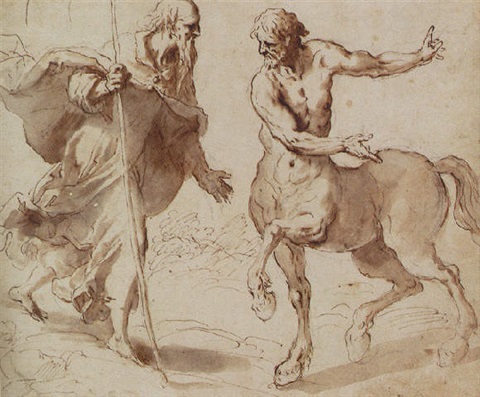
Jacopo Palma il Giovane, Saint Anthony Abbot asking the Centaur the way (Source)
Osservanza Master, The Meeting of Saint Anthony and Saint Paul, 1430-35, detail (Source)
Benedetto di Montagna, St. Anthony and the Centaur. The depiction of the Centaur as a monk is particularly unusual. (Source)
A less common depiction, St. Anthony and the Satyr (Source)
A medieval depiction of St. Anthony with both the Centaur and the Satyr, by Robert Testard. (Source)
John Mandeville’s take on the scene, with color highlighting the hybridity of the Centaur’s nature. (Source)
St. Anthony meets the Centaur in an illumination by Jean de Limbourg (Source)

Elsewhere: Speaking of Jansenism

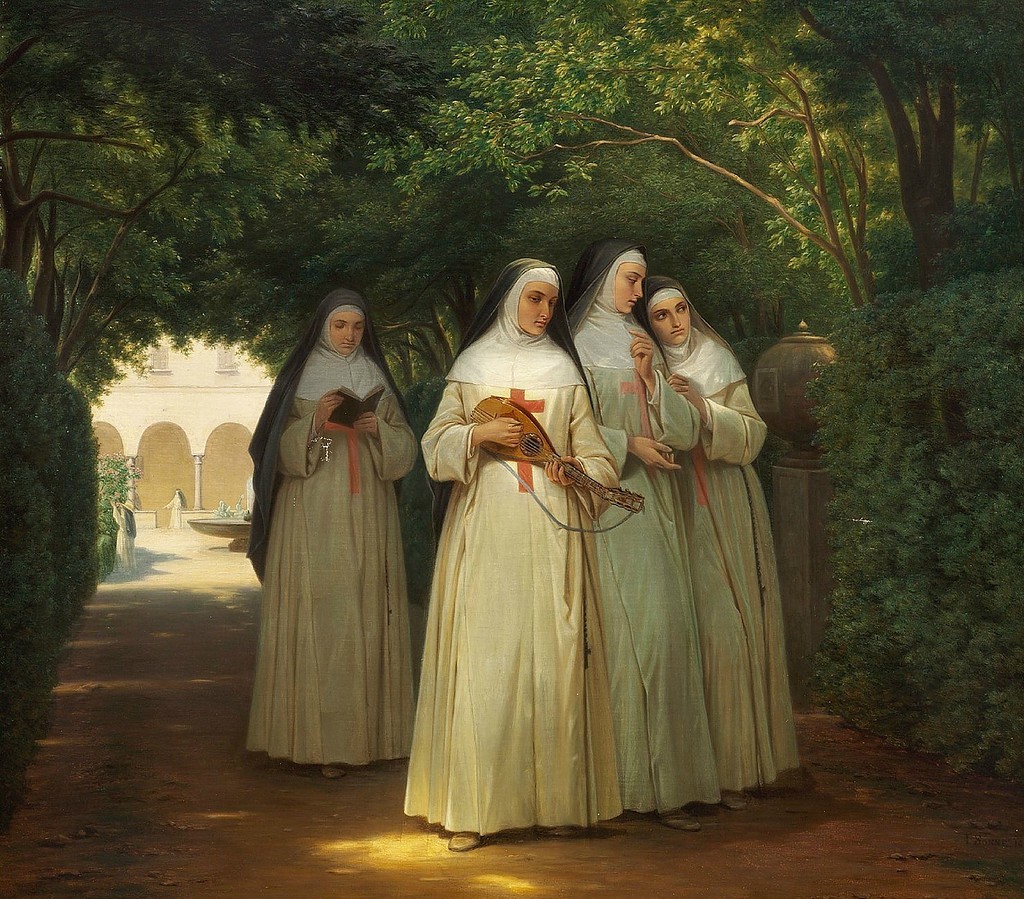
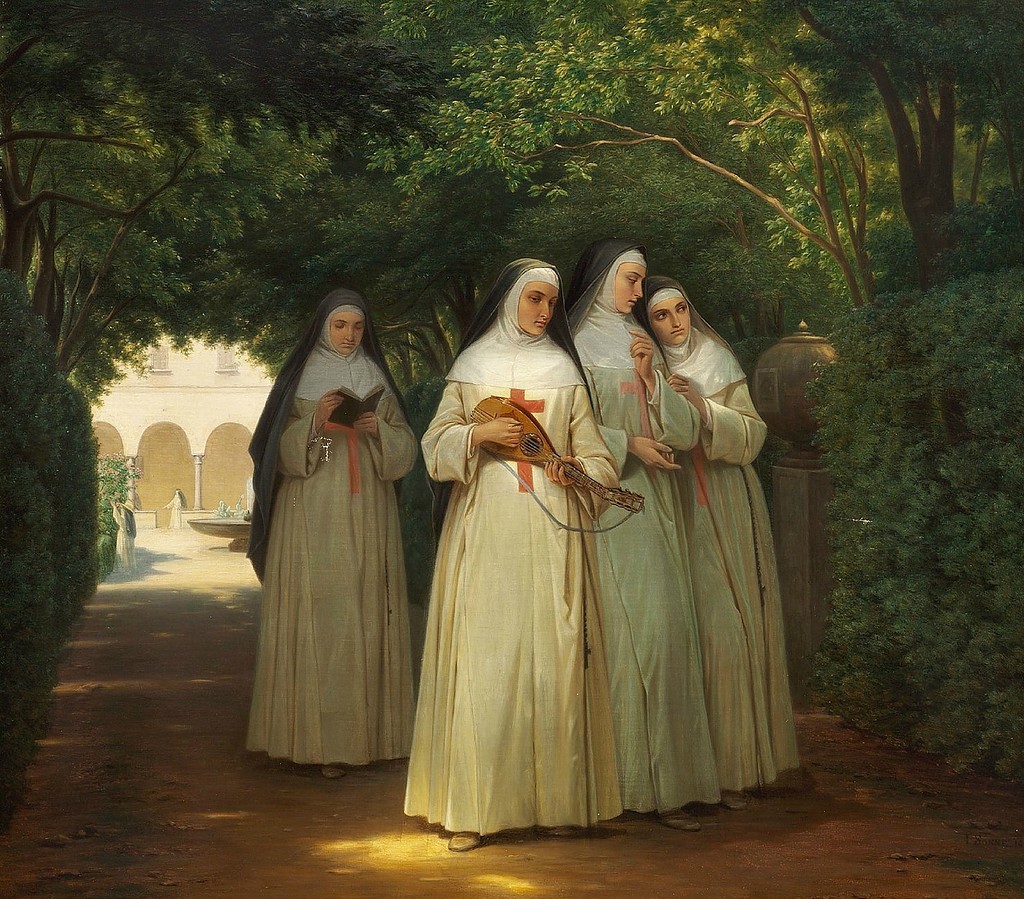
Jorgen Sonne’s 1866 Nuns walking in a cloister garden in Rome. He has, whether intentionally or not, given them the habit of Port-Royal-des-Champs. (Source)

I refer my readers to two articles that have recently appeared in the Notre Dame Church Life Journal. The first, which came out about a month ago, is an excellent piece by Dr. Shaun Blanchard showing that our polemical use of the term “Jansenism” is seriously mistaken. The second is an article I wrote, a church-historical study in which I both defend the Jansenists from various degrading misconceptions as well as point out some parallels between their situation and our own. I’m also very pleased that the Catholic Herald picked it up for Wednesday’s “Morning Catholic Must-Reads.”

This is not the first time I have tackled the issue, having previously pointed out the rhetorical and ecclesiastical-political resemblances between Pope Francis’s critics and the French Jansenists. I am more sure than ever of that similarity, and may yet elaborate it again should I deem it helpful for the present conversation. Regardless, I certainly will write more about Jansenist history and theology – watch this space.

I should add that I am particularly grateful to Dr. Blanchard for his kind aid in the preparation of my piece, and Dr. Artur Rosman for his editorial patience.

Propositions for the Pious

I offer the following propositions to my readers in a spirit of inquiry. Are these not edifying, pious, and – in many cases – straightforwardly true maxims? I have arranged them in thematic paragraphs, but beyond that, they do not issue from my hand. They are indeed far older maxims, drawn from the writings of certain noteworthy Catholic divines. Nevertheless, I should be very curious what my readers think of them – especially those with a theological background.

Are these not, on the whole, quite salutary? Do they not breathe the spirit of the best Fathers and Doctors, especially of those glorious Patriarchs of the West, SS Augustine and Thomas? Or, if anyone should find anything objectionable in them, what is the flaw? I ask sincerely. Those with ears to hear, let them hear.

In vain, O Lord, do You command, if You do not give what you command. Thus, O Lord, all things are possible to him for whom You make all things possible by effecting those same things in him.

All knowledge of God, even natural knowledge, even in the pagan philosophers, cannot come except from God; and without grace knowledge produces nothing but presumption, vanity, and opposition to God Himself, instead of the affections of adoration, gratitude, and love. As there is no sin without love of ourselves, so there is no good work without love of God.

A mark of the Christian Church is that it is catholic, embracing all the angels of heaven, all the elect and the just on earth, and of all times. What is the Church except an assembly of the sons of God abiding in His bosom, adopted in Christ, subsisting in His person, redeemed by His blood, living in His spirit, acting through His grace, and awaiting the grace of the future life? The Church or the whole Christ has the Incarnate Word as head but all the saints as members. The Church is one single man composed of many members, of which Christ is the head, the life, the subsistence and the person- it is one single Christ composed of many saints, of whom He is the sanctifier. There is nothing more spacious than the Church of God; because all the elect and the just of all ages comprise it.

It is useful and necessary at all times, in all places, and for every kind of person, to study and to know the spirit, the piety, and the mysteries of Sacred Scripture. The reading of Sacred Scripture is for all. The sacred obscurity of the Word of God is no reason for the laity to dispense themselves from reading it. The Lord’s Day ought to be sanctified by Christians with readings of pious works and above all of the Holy Scriptures. It is harmful for a Christian to wish to withdraw from this reading. It is an illusion to persuade oneself that knowledge of the mysteries of religion should not be communicated to women by the reading of Sacred Scriptures. Not from the simplicity of women, but from the proud knowledge of men has arisen the abuse of the Scriptures and have heresies been born. To snatch away from the hands of Christians the New Testament, or to hold it closed against them by taking away from them the means of understanding it, is to close for them the mouth of Christ. To forbid Christians to read Sacred Scripture, especially the Gospels, is to forbid the use of light to the sons of light, and to cause them to suffer a kind of excommunication. To snatch from the simple people this consolation of joining their voice to the voice of the whole Church is a custom contrary to the apostolic practice and to the intention of God.

A method full of wisdom, light, and charity is to give souls time for bearing with humility. and for experiencing their state of sin, for seeking the spirit of penance and contrition, and for beginning at least to satisfy the justice of God, before they are reconciled.

To suffer in peace an excommunication and an unjust anathema rather than betray truth, is to imitate St. Paul; far be it from rebelling against authority or of destroying unity.

Nothing engenders a worse opinion of the Church among her enemies than to see exercised there an absolute rule over the faith of the faithful, and to see divisions fostered because of matters which do not violate faith or morals. Truths have descended to this, that they are, as it were, a foreign tongue to most Christians, and the manner of preaching them is, as it were, an unknown idiom, so remote is the manner of preaching from the simplicity of the apostles. and so much above the common grasp of the faithful; nor is there sufficient advertence to the fact that this defect is one of the greatest visible signs of the weakening of the Church and of the wrath of God on His sons. Stubbornness, investigation, and obstinacy in being unwilling either to examine something or to acknowledge that one has been deceived daily changes into an odor, as it were, of death, for many people, that which God has placed in His Church to be an odor of life within it, for instance, good books, instructions, holy examples, etc. Deplorable is the time in which God is believed to be honored by persecution of the truth and its disciples! This time has come…. To be considered and treated by the ministers of religion as impious and unworthy of all commerce with God, as a putrid member capable of corrupting everything in the society of saints, is to pious men a more terrible death than the death of the body. In vain does anyone flatter himself on the purity of his intentions and on a certain zeal for religion, when he persecutes honest men with fire and sword, if he is blinded by his own passion or carried away by that of another on account of which he does not want to examine anything. We frequently believe that we arc sacrificing an impious man to God, when we are sacrificing a servant of God to the devil.

Elsewhere: Catholic Kabbalah

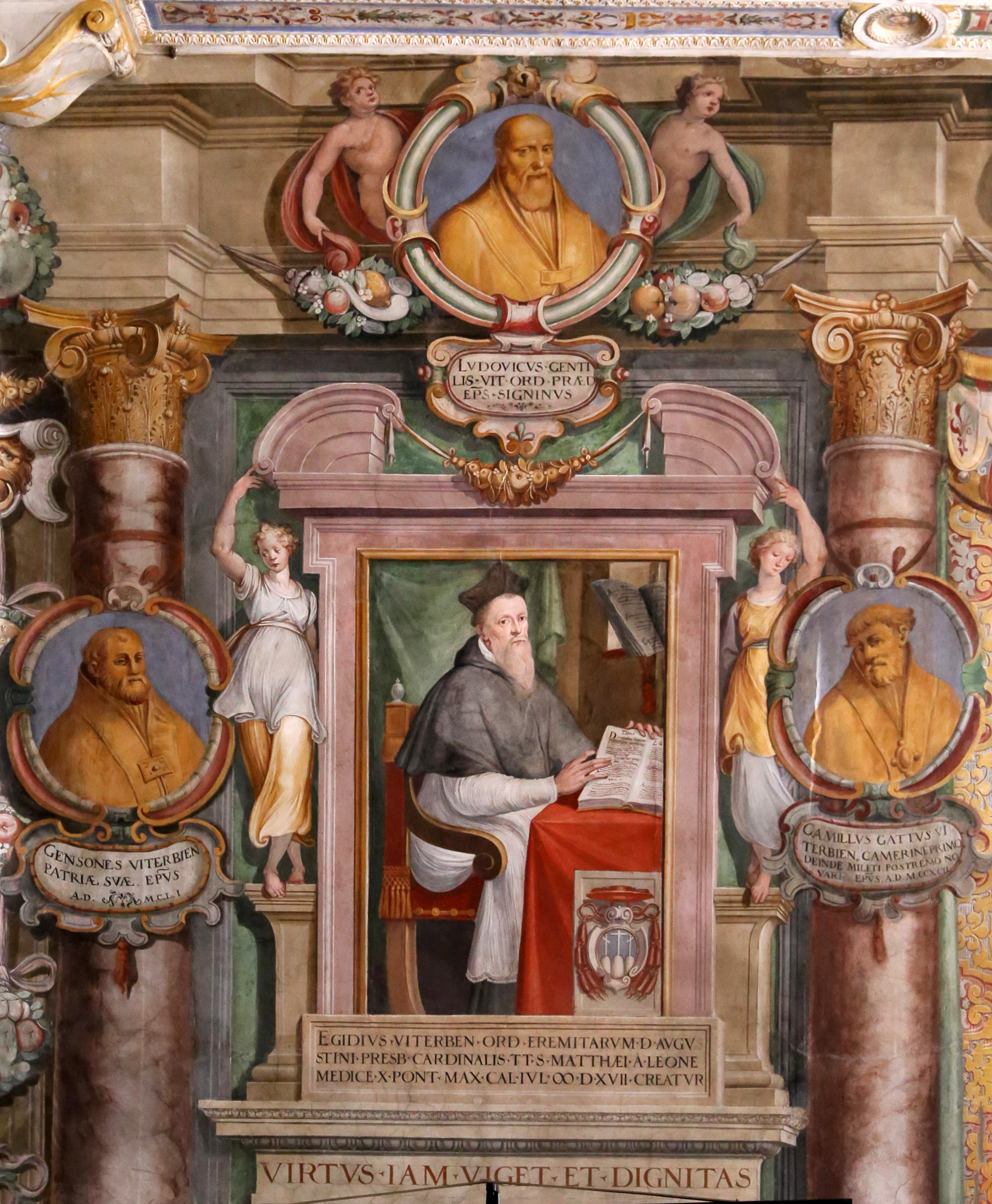
Portrait of Giles of Viterbo in his old Palazzo (Source)

Over at Church Life Journal, Andrew Kuiper has a tour-de-force article on the history and theology of Catholic Kabbalah. His review of four Catholic Kabbalists – Pico della Mirandola, Johannes Reuchlin, Giles of Viterbo, and St. John Fisher – is a model of intellectual history. He does a great job showing the continuing relevance of Kabbalah for Catholic (and other Christian) thinkers throughout the centuries.

The piece is amply cited and provides several helpful theological considerations. I thought Kuiper’s nod towards Sophiology was particularly enlightening. If Christian Kabbalah has a place in Catholic theology today, I predict that it will be in the writings of latter-day Sophiologists.

If I were to offer a criticism of Kuiper’s piece, it would be a very minor one at that: he makes no reference to the works of Margaret Barker. Her research has shed a new light on the roots of Christianity and Jewish mysticism (in both its Merkabah and later Sephirotic developments) in the memory of the First Temple. Reading Kabbalistic texts through a Temple lens can ease their Christian interpretation. But I digress.

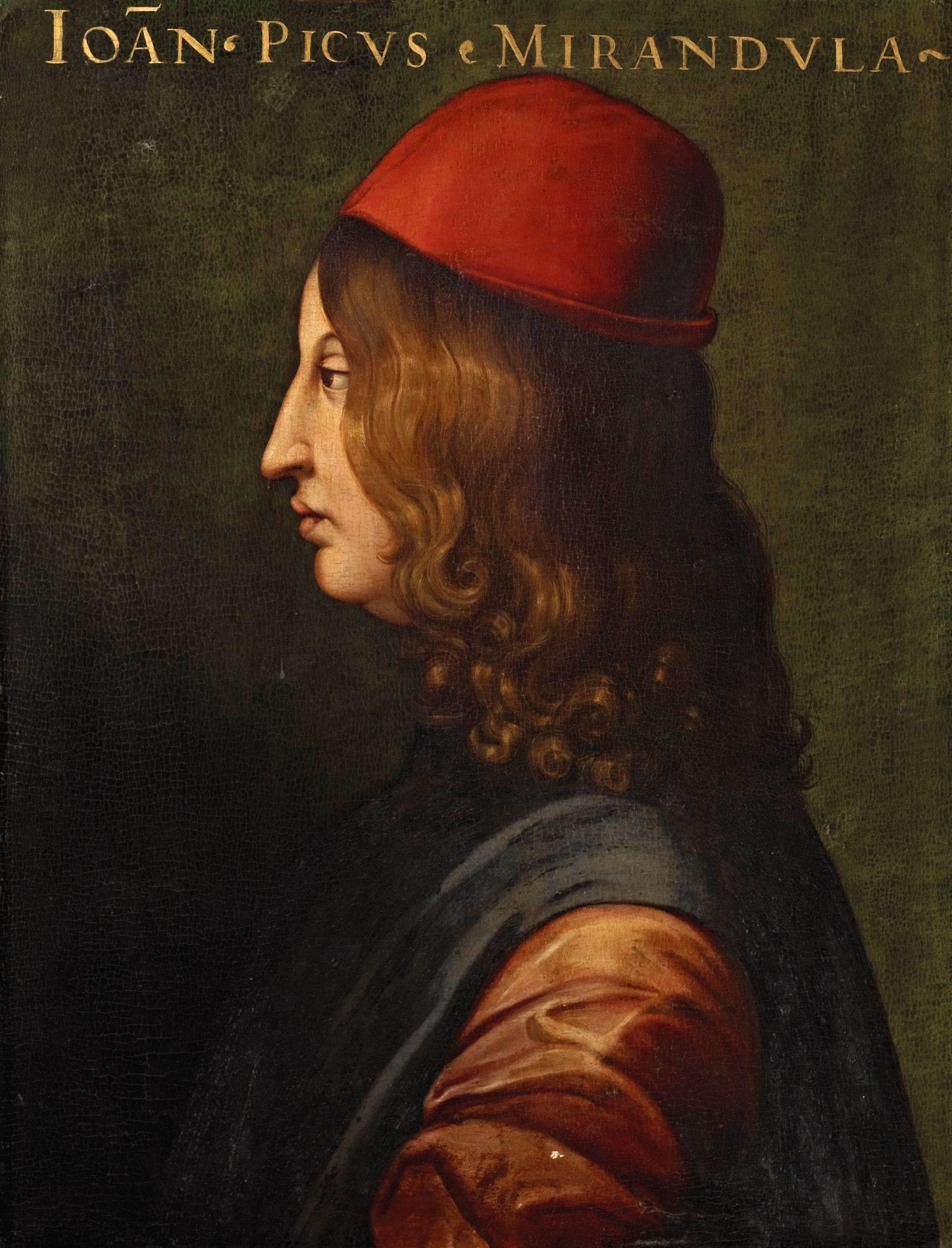
Pico della Mirandola, a pioneer in the Christian use of Kabbalah. (Source)

Perhaps the most exciting part of the article, for a historian of the period, is Kuiper’s various references to the Kabbalistic books written by these Christians of the 15th and 16th centuries. I would particularly keen on finding the text of Giles of Viterbo’s Shechina or Pico’s Heptaplus. Some of these hard-to-find volumes have never been translated into English.

It is not easy to summarize the teachings of the Jewish mystics, nor their Christian interpreters. Kuiper does both with commendable attention to detail and obvious competence, all while keeping things clear and concise enough for a lay reader. This article also provides a badly-needed defense of the respectability of Kabbalah as a field of study. Its bastardization in recent times, exemplified most clearly by Madonna et al., has led some to question whether Kabbalah is anything more than a gnostic mishmash of magic with Hebrew letters. I have heard colleagues dismiss it entirely as a field of serious inquiry for a historian or theologian. This tendency seems especially strong with Christian academics, many of whom retain outdated ideas about Jewish mysticism or who simply haven’t up with the post-Scholem rediscovery of Kabbalah. Kuiper’s intervention is a broadside against this boring complacency. It’s not exactly “a cruel angel’s thesis,” but it is one worth defending.

How to Celebrate Lent like a French Princess

Mesdames Victoire, Adélaide, and Louise, three of the pious daughters of Louis XV, known collectively as “Mesdames de France” or “Mesdames Tantes” after the accession of Louis XVI. Only Adélaide married; Louise later became a Carmelite prioress at Saint-Denis before having the extremely good fortune to die in 1787. Source

The inimitable John McManners, late Regius Professor of Ecclesiastical History at the University of Oxford, provides a window into the world of late Ancien Régime piety (or, rather, its dearth) in his monumental Church and Society in Eighteenth-Century France. He writes:

“To what extent was the fast of Lent observed? It was commonly said that the austerities of the penitential season were endured only by the poor. According to the Lenten pastoral letter of the archbishop of Sens in 1779, the rich often obtained medical certificates allowing them to eat what they liked. This was the fashionable thing to do. ‘Look at our bourgeois citizen and his wife in their (draper’s) shop, observing Lent strictly,’ said teh Jesuit Père Croisset in his Parallel des moeurs de ce siècle et la morale de Jesus-Christ (1727): ‘their fortune changes…and scarcely has the tape measure dropped from their hands than you see them putting on airs like people of quality and asking for dispensations from fasting.’ This class distinction was observed even in the kitchens of the Bastille: on the first Friday of his imprisonment, Marmontel gloomily at the meatless meal provided, not knowing that it had been meant for his servant. In any case, there were plenty of succulent dishes within the rules, for those who could afford them.

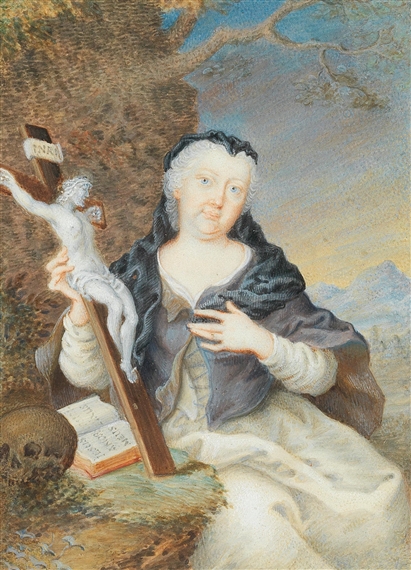
Empress Maria Theresa of Austria in the garb of a penitent (Source)

“Lent was the season to have tubs of fresh butter sent in from the countryside, and to ensure plentiful supplies of fish and water birds (the tes of an allowable fowl was: did the gravy remain uncongealed after fifteen minutes? – so a bishop gravely advised Mme Victoire, Louis XV’s pious but comfortable daughter). The peasant, whose existence is a perpetual Lent anyway, said Voltaire, awaits episcopal permission to eat his farmyard eggs, while the bishop himself looks forward to expensive dishes of soles. Certainly, things were well organized at Versailles. ‘A ray of grace has descended on us,’ wrote the duc de la Vallière in April 1756; ‘we fasted for three days a week during the whole of Lent, but on condition that we suffered no deprivations.’ Preachers were well aware that those with money and leisure could organize an attractive Lent for themselves: an occasional walk in a procession (a penitent’s garb was no disadvantage to a good-looking woman), extra time in bed to recuperate from privations, and food more delicately cooked and served than usual. ‘For some – God grant that there are none in my congregation today,’ thundered the Oratorian Surian, ‘Lent is a more agreeable time, in a sophisticated way, than the other seasons of the year.'”

(Vol. I, pg. 86-87).

Ah, the trials of the penitential season!

“Reversed Thunder, Christ-Side-Piercing Spear”

The holy side-wound of Christ, from a Book of Hours (Source)

Today is the Anglican commemoration of George Herbert, the great English cleric and metaphysical poet of the 17th century. He died on March 1st, 1633. In honor of this bard of the spirit, I offer to my readers one of my favorite Herbert poems. Every time I return to it, I find new edification.

“Prayer (1)”

George Herbert

Prayer the church’s banquet, angel’s age,
God’s breath in man returning to his birth,
The soul in paraphrase, heart in pilgrimage,
The Christian plummet sounding heav’n and earth
Engine against th’ Almighty, sinner’s tow’r,
Reversed thunder, Christ-side-piercing spear,
The six-days world transposing in an hour,
A kind of tune, which all things hear and fear;
Softness, and peace, and joy, and love, and bliss,
Exalted manna, gladness of the best,
Heaven in ordinary, man well drest,
The milky way, the bird of Paradise,
Church-bells beyond the stars heard, the soul’s blood,
The land of spices; something understood.

An Oxonian Blog Worth Reading

The dreaming spires of Oxford. (Source)

I have just discovered that Once I Was a Clever Boy, a blog I used to enjoy but was sorry to see in hiatus, has returned. John Whitehead, the blog’s author, is a friend and a Brother of the Little Oratory here in Oxford. He hasn’t put up any new content recently. Nevertheless, there was a long time when for whatever technical reason – either on John’s end or mine, I was never sure – the blog was totally inaccessible. I’m very happy to see it’s back, and I look forward to more content from this quintessentially Oxonian blog.

Anglo-Catholics and the Occult: My Church Times Debut

The Abbey in the Oakwood, by Caspar David Friedrich.


The Church Times have just published an article in which I summarize some of my research on the connection of Anglo-Catholics and the occult world. I’d like to thank my supervisor, Dr. Sarah Apetrei, and co-supervisor, the Rev. Canon Robin Ward, for their support throughout all of this. I’d also like to thank Fr. James Lawson for the early help he provided as well as Dr. Michael Yelton and those various other figures who have discussed the matter with me over the past year, often in words of encouragement. Hopefully the full paper will be published someday. For now, read here

Blessed Bernardo Francisco de Hoyos and the Challenge of Holiness

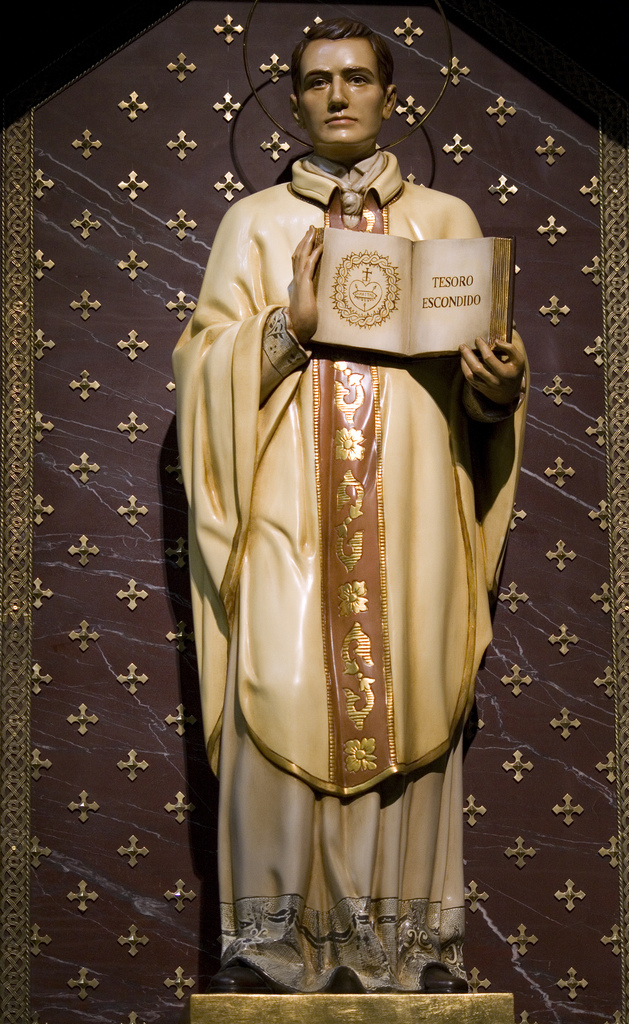
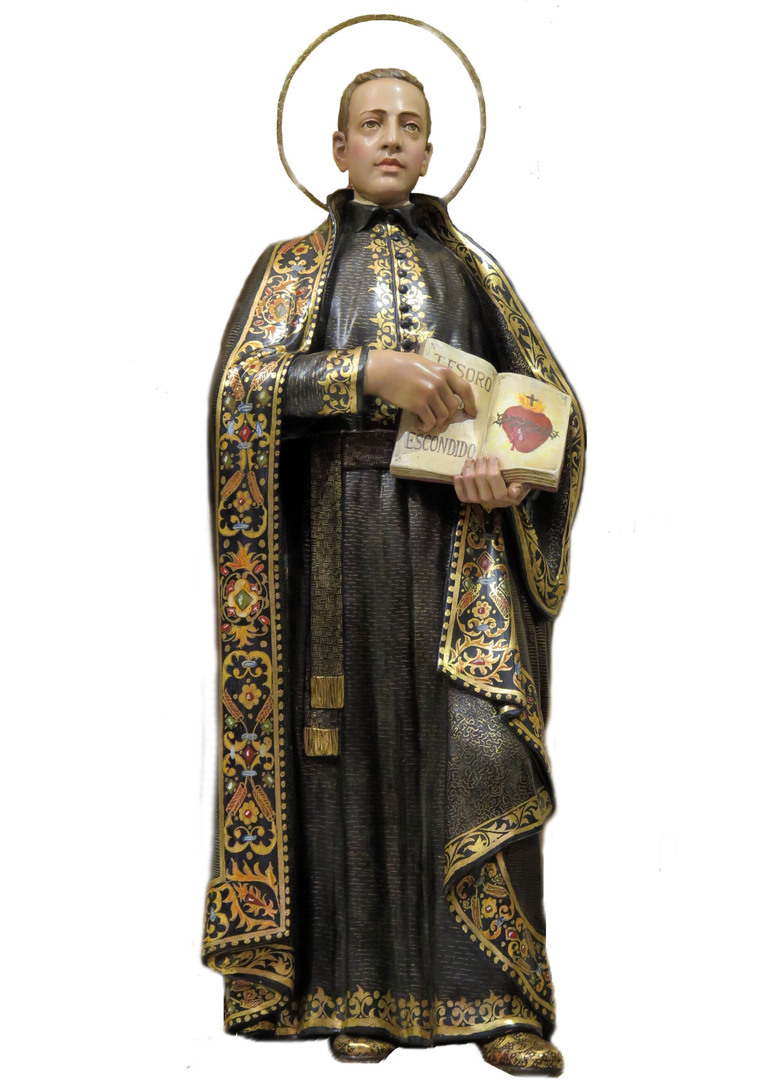
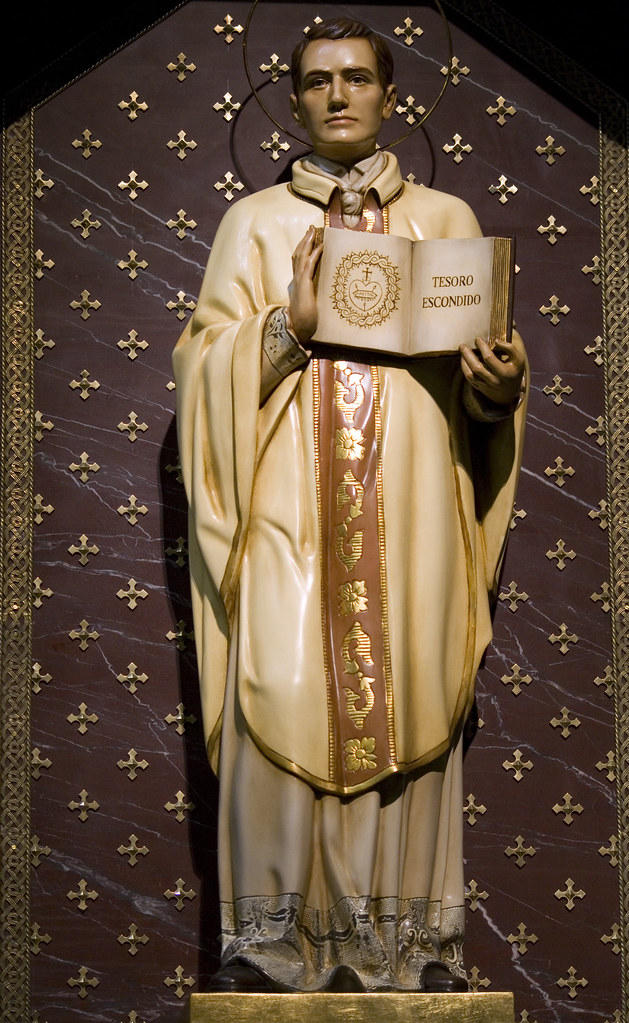
A statue of the Blessed Bernardo Francisco de Hoyos. (Source)

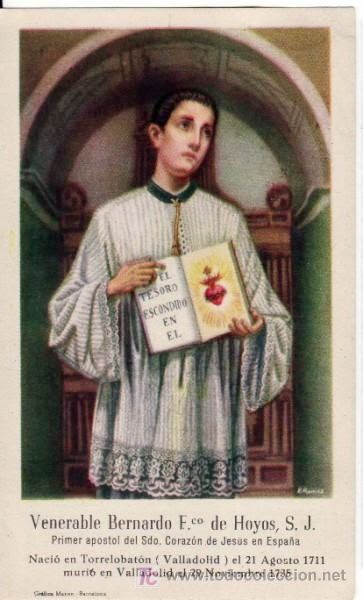
Earlier this year, I discovered a new friend in heaven – the Blessed Bernardo Francisco de Hoyos (1711-1735), a Jesuit mystic of the Sacred Heart. Today is his feast. I like Blessed Bernardo for a lot of reasons. I admit, it’s hard to get a great sense of his life story, as so many of the materials about him (or by him) are untranslated from their original Spanish. Nevertheless, a few things are clear.

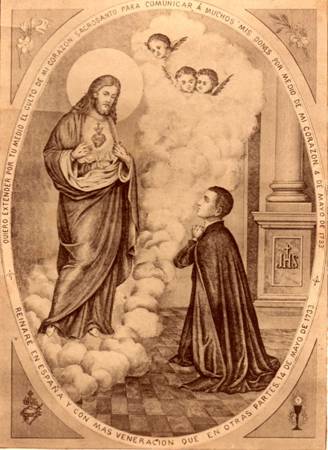
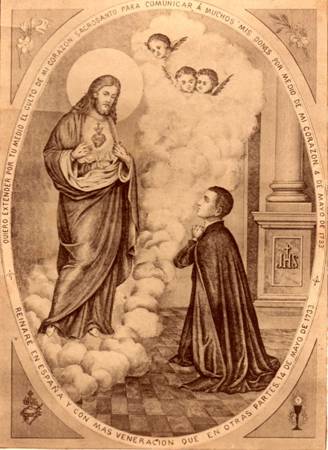
We share a devotion to the Heart of Jesus. Blessed Bernardo received private revelations of Jesus in which he was shown the Sacred Heart, culminating in a monumental mystical union. While strange phenomena are by no means unheard-of in the lives of the saints, Bernardo’s story is unusual insofar as many of his experiences were more typical of female mystics. The Sacred Heart devotion itself was often seen (and ridiculed by Jansenists) as an effeminate innovation that oozed sentimentalism. It’s hard to square that view with the very real rigor of Blessed Bernardo’s Jesuit life. As usual, simple narratives tend to fail when placed against a far more interesting reality.

A devotional image of the Blessed Bernardo receiving a vision of the Sacred Heart. (Source)

The Spanish priest died when he was only 24. I will be 24 in a little over a month. It’s hard to imagine coming to the same heights of sanctity and intimacy with Jesus in such a short time. I look at my own spiritual life – scattered with sins and shortcomings, easily worn out, so often caught in a kind of lax scrupulosity – and I wonder how Bernardo did it.

Of course, it does rather help if you enter a Jesuit novitiate at the age of 14, as Bernardo did. That’s a good ten years of arduous ascetic labor and practice at prayer. All the same, lots of men entered religious life as youths in the early modern era. Not all of them achieved mystical marriage, one of the highest states of the interior life. And that even with many decades in the habit.

It occurs to me that, at the recent Vatican Youth Synod, stories like the Blessed Bernardo’s were mostly absent. The challenge of sanctity – indeed, its romance and adventure – were tepidly drawn at best. The tone of the discussions and of the later summary document may have been interpreted by some as a compassionate, realistic, and open-minded approach to the realities of life in the 21st century. But surely there was more than a touch of Dostoevsky’s Grand Inquisitor about the whole thing. You know the style. Holiness really is too hard, so we should make things easier – allow them to reach some other goal, some lesser goodness that isn’t holiness at all.

Yes, he may be a pious youth who’s terribly, terribly wan. But he’s in heaven, and you’re not. (Source)

The experience of all the saints, but especially mystics like Father Bernardo Francisco de Hoyos, runs counter to this maudlin spirituality.

The truth is much more dangerous, and much more exhilarating. Holiness demands heroic virtue. We are called to be heroes. But true heroism looks very different than what this world – or what a worldly hierarchy – thinks it is. It is a life of risk and sacrifice and no small discomfort. But the rewards it gives are beyond all telling.

Blessed Bernardo knew that. He knew that the only true recompense that the Christian will receive is Christ Himself. And so he went unflaggingly forward to the work he was given as a missionary of the Sacred Heart. His entire life was a brief, bright blaze of love for Jesus. In this, he rather resembles that other great devotionalist, Fr. Faber, who died at the age of 49, a full 27 years before Cardinal Newman. Souls like these are gifts to the whole Church. They kindle the love of God in their fellows and light the path to His holy mount.

But they also present us with a challenge. By incarnating the charity of God in such a visible way, they invite us to the same labors of love. All of us are called to gaze upon the Sacred Heart. Holiness is not an adventure closed to any of us, no matter how young (or old) we may be. If there is anything we can take from the story of Blessed Bernardo Francisco de Hoyos, priest, missionary, and mystic, it is this salutary truth.

Let us pray for the good Jesuit’s swift and sure canonization. And may he pray for us. (Source)