The Music of the Holy Ghost

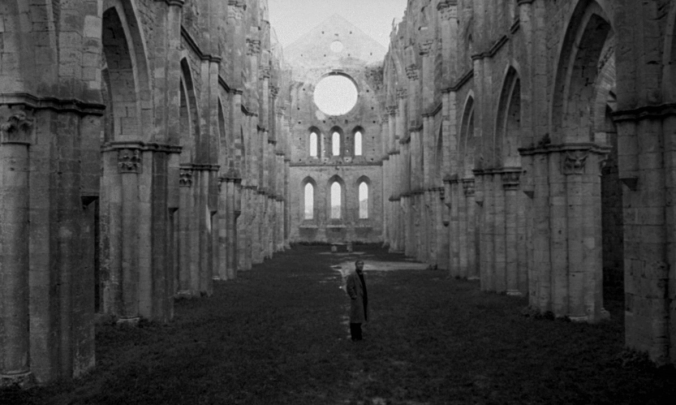
TarkovskyNostalghia.jpg

A still from Andrei Tarkovsky’s Nostalghia (1983). Clips from Tarkovsky’s films are often incorporated into the Rev Army’s music videos. (Source)

Not long ago, I came across a new band. What a singular group it is. Their music crosses and confuses genres. They produce content at a far scarcer rate than other musical acts. Even their name, taken from a Buñuel film, sets them apart from most of the offerings one comes across today.

Little did I know that I had stumbled upon a cult gem. The Revolutionary Army of the Infant Jesus has been on the scene for quite a while. Almost thirty years ago, they released their first album, The Gift of Tears (1987). Since then, they have only come out with sporadic releases, such as 1990’s Mirror and 2015’s Beauty Will Save the World. The long hiatus has well earned them the title of “One of music’s most elusive and enigmatic acts,” as we can read on their BandCamp site.

Tim Cooper has a great review of their work over at The Quietus:

…the attention-averse trio, who regard themselves as a creative collective rather than a band, make wildly eclectic music rooted in liturgical texts and ecclesiastical iconography, contrasting ethereal beauty with stark brutalism. Celestial choirs rub their cassocked shoulders with squalls of industrial noise, political speeches are interwoven with celluloid dialogue, instrumentation ranges from sombre neo-classical piano to pounding dance beats by way of folk, free-form jazz and experimental psychedelia.

They draw together a variety of spiritual and cultural influences: folk Catholicism, peasant mysticism, Russian Orthodoxy, the experience of post-Soviet Europe, Simone Weil, Welsh poetry. Their work can, I think, be described as sophianic, but it is a sophanicity carefully drawn through the harried cracks of the fallen world. The truth that the Rev Army grips and holds up to the light gleams all the more for being refracted in the shards of our earthly mirror.

Here are some favorite songs with their proper music videos, many of which are just as important for the meaning of the piece as the score itself.

Come Holy Spirit” – the very first Rev Army song I discovered. A bit too much flute and too many drums for me, but it was different enough from anything I had ever heard that it caught my attention.

Bright Field” – the first one that captivated me. The upward lift of the music combined with R.S. Thomas’s stirring paraphrase of the Gospel, not to mention Tarkovsky’s silken, dreamlike visuals, all together inspire something like wonder. Whenever I listen to it, I am reminded of a poem by Rilke.

After the End” – a simple and haunting French ditty set to the grainy images of villagers at prayer. They seem to be visionaries.

Psalm” – a few women chant in English against an increasingly dissonant shower of quasi-industrial background noise. The juxtaposition strikes me as an artistic model of transcendence through persistent prayer.

Repentance” – the most Flannery O’Connor thing you will ever see or hear. I’ll just leave it at that.

Théme de l’homme qui n’a pas cru en lui méme” – a Latin-flavored and occasionally jazzy piece featuring footage from a (staged?) Spanish Lenten procession. In case you hadn’t already noticed, the band is extremely Catholic.

Joy of the Cross” – another Lenten procession, but this time with a soft-edged folk music that makes me think of Fleet Foxes.

Before the Ending of the Day” – the Compline hymn surrounded and supported by an airy yet pulsing larger song. Tarkovsky’s Andrei Rublev provides the meditative visuals. Note that one of the commenters on YouTube wrote, “Please keep making more of these. This helped still my soul.”

Something epicletic moves through their music. But one can find that quality in lots of other work. What sets the Rev Army apart isn’t just their obsession with the Holy Ghost, nor their stylistic eclecticism. It’s their powerful sense of mystery. They never shy away from the divine darkness with which the Holy Ghost enshrouds His manifold works of grace. How refreshing, in an age of “Spirit of the Council” muzak and shallow “praise and worship,” to find music that is overtly Christian and even mystical without ever becoming preachy, dated, or emotivist. They treat their subject, the perennial and universal longing of the human heart for God, with a rare artistic and spiritual sophistication.

Caught up in marvel at the saving mystery of the Holy Ghost, the Revolutionary Army of the Infant Jesus is the real Catholic charismatic revival.

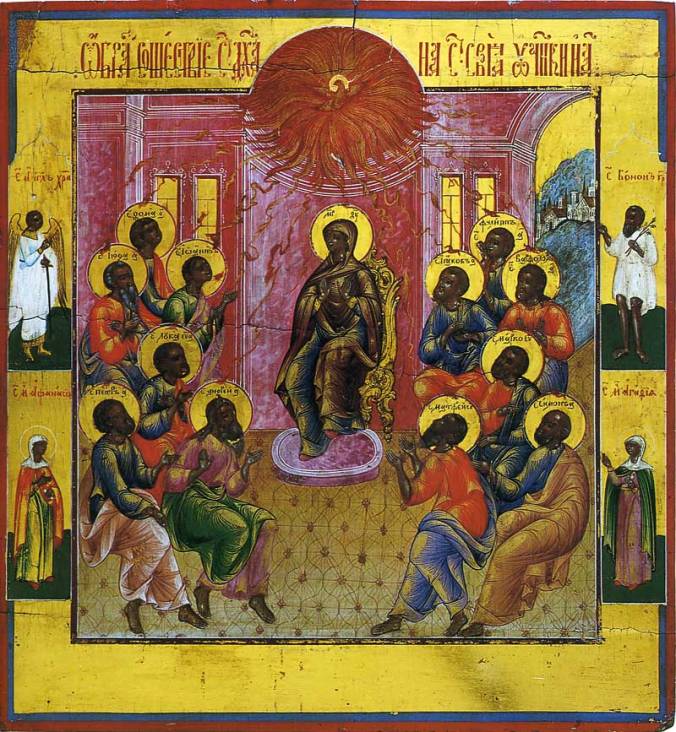
DescentoftheHolySpiritIcon

An icon of the Descent of the Holy Ghost. (Source)

Elsewhere: Two New Blogs on Mystics

lazzari+print

A stigmatic, c. 1840. (Source)

Recently two very worthy endeavors have come to my attention. The first is the blog of the Stigmatics Project at the Ruusbroec Institute, University of Antwerp. The project “studies the promotion and devotion of the hundreds of stigmatics reported in five European countries during the nineteenth and early twentieth century.” It takes a scholarly, non-confessional approach to its subject. No doubt this new venture will yield greater insights into the stigmata as a social phenomenon.

The second is a much more theological blog called Littlest Souls, and it presents a veritable treasure trove of mystic spirituality. The blogger has clearly read widely in the library of the soul passed on to us from age to age by the Church. He seems to place a special emphasis on the 19th and early 20th century mystics, much like the Stigmatics Project. In fact, they probably cover some of the same figures. But unlike the recently-founded work of the Ruusbroec Institute, Littlest Souls has been up and running since May 2012. There is consequently much more material here to review and contemplate. Fans of that other great blog, Mystics of the Church, will find much here to admire.

In my first post on Father Faber, I noted that he represented a kind of lost world of the faith. Today, it is hard to imagine a Catholicism that once supported the kind of imaginatively baroque and overtly sentimental spirituality that oozes from his pages. Father Faber looks odd to our cynical, postmodern eyes. But in exploring his writings now, I find much in them that’s salutary and beautiful. My hope is that I can play some small part in recovering those gems for our times.

Both of these blogs seem to do precisely that; one at the level of scholarship, and one at the level of spirituality. Both set out to investigate and present a spiritual school that often seems morbid, unhealthy, or slightly daft – certainly one that has little place in our age. But there are real values here, real impressions of humanity in communion with the divine. I can only commend their efforts as important contributions to the memory and mystical life of the Church Militant.

I’ve said it before, and I’ll say it again. The Church is weird because she is supernatural, and the supernatural is always strange. We should embrace that fact.

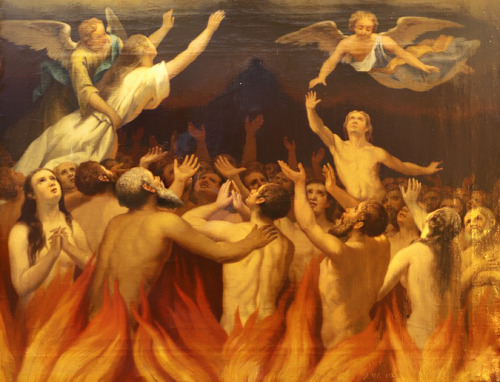
Father Faber on the Holy Souls in Purgatory

OLYMPUS DIGITAL CAMERA

We should always remember to pray for the Holy Souls in Purgatory, especially in this, their month. (Source)

Today is Remembrance Sunday here in the U.K. We had a splendid Solemn High Requiem Mass at the Oxford Oratory, complete with black vestments. The setting was a Requiem by Haydn, which seem to draw us on the journey of a holy soul. From an Introit that sounds like the mournful ghosts of the dead, we proceed to a communion that is full of airy light and calm joy – with a great deal of drama in between. 

I realized that I had not posted anything for All Souls’ Day. Since today is yet another day set aside, at least by British Catholics, for praying on behalf of the dead, I decided I’d post something by that spiritual master, Father Frederick William Faber of the London Oratory. In his own life, Fr. Faber was known for his great devotion to the Holy Souls. One of his more famous texts deals with prayer for those in Purgatory. I have selected the following passage from that work, Fr. Faber’s Purgatory. You can also find it on this website. I offer it here for your consideration and in the hope that the good priest’s words might kindle in us a fonder and more steadfast devotion to the Faithful Departed.

Both views [of Purgatory within Catholicism] agree again in holding that what we in the world call very trivial faults are most severely visited in purgatory. St. Peter Damian gives us many instances of this, and others are collected and quoted by Bellarmine. Slight feelings of self-complacency, trifling inattentions in the recital of the Divine Office, and the like, occur frequently among them. Sister Francesca mentions the case of a girl of fourteen in purgatory, because she was not quite conformed to the will of God in dying so young: and one soul said to her: Ah men little think in the world how dearly they are going to pay here for faults they hardly note there. She even saw souls that were immensely punished only for having been scrupulous in this life; either, I suppose, because there is mostly self-will in scruples, or because they did not lay them down when obedience commanded. Wrong notions about small faults may thus lead us to neglect the dead, or leave off our prayers too soon, as well as lose a lesson for ourselves.

Then, again, both views agree as to the helplessness of the Holy Souls. They lie like the paralytic at the pool. It would seem as if even the coming of the angel were not an effectual blessing to them, unless there be some one of us to help them Some have even thought they cannot pray. Anyhow, they have no means of making themselves heard by us on whose charity they depend. Some writers have said that Our Blessed Lord will not help them without our co-operation; and that Our Blessed Lady cannot help them, except in indirect ways, because she is no longer able to make satisfaction; though I never like to hear anything our dearest mother cannot do; and I regard such statements with suspicion. Whatever may come of these opinions, they at least illustrate the strong way in which theologians apprehend the helplessness of the Holy Souls. Then another feature in their helplessness is the forgetfulness of the living, or the cruel flattery of relations who will always have it that those near or dear to them die the deaths of Saints. They would surely have a scruple, if they knew of how many Masses and prayers they rob the souls, by the selfish exaggeration of their goodness. I call it selfish, for it is nothing more than a miserable device to console themselves in their sorrow. The very state of the Holy Souls is one of the most unbounded helplessness. They cannot do penance; they cannot merit; they cannot satisfy; they cannot gain indulgences; they have no Sacraments; they are not under the jurisdiction of God’s Vicar, overflowing with the plentitude of means of grace and manifold benedictions. They are a portion of the Church without either priesthood or altar at their own command.

holy-souls._jpg

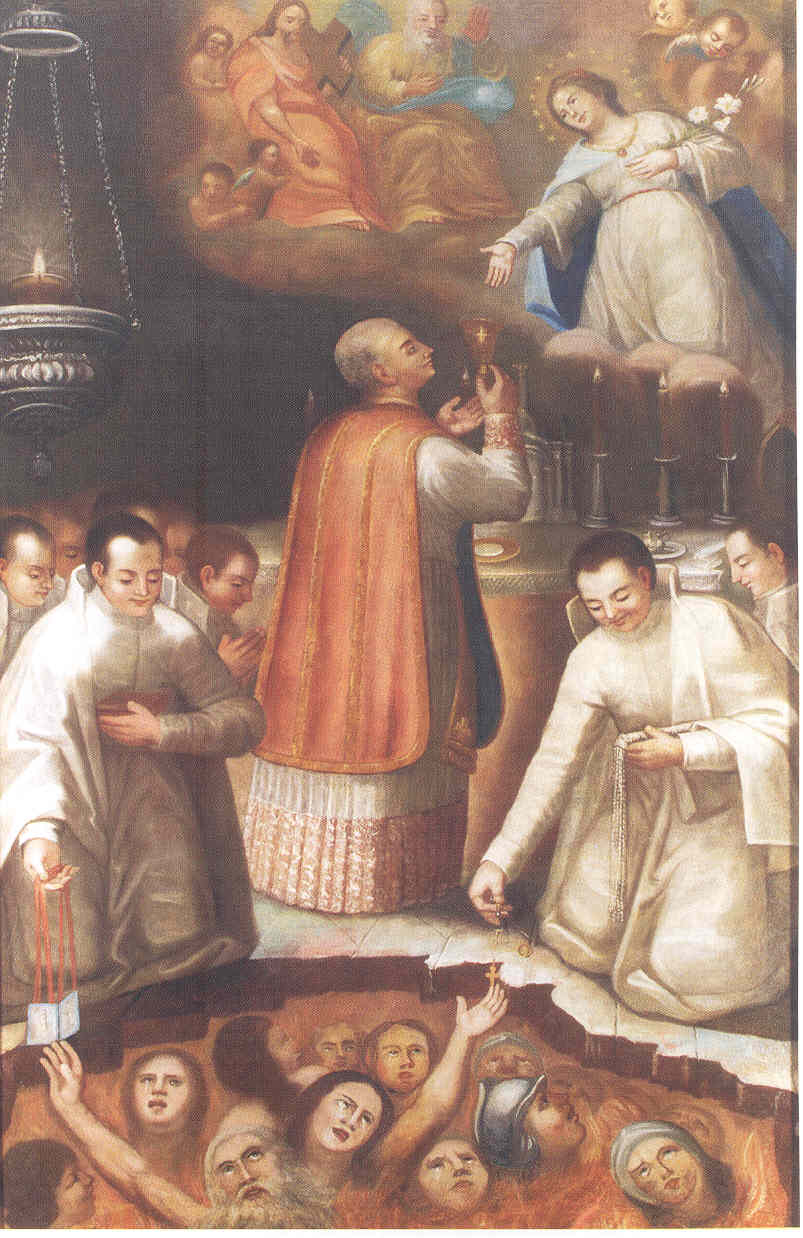
Pray for the Holy Souls in Purgatory. (Source)

Those are the points common to both views of purgatory; and how manifold are the lessons we learn from them, on our own behalf as well as on behalf of the Holy Souls. For ourselves, what light does all this throw on slovenliness, lukewarmness, and love of ease? What does it make us think of performing our devotions out of a mere spirit of formality, or a trick of habit? What diligence in our examens, confessions, Communions, and prayers! It seems as if the grace of all graces for which we should ever be importuning our dear Lord, would be to hate sin with something of the hatred wherewith He hated it in the garden of Gethsemane. Oh, is not the purity of God something awful, unspeakable, adorable? He, who is Himself a simple act, has gone on acting, multiplying acts since creation, yet he has incurred no stain! He is ever mingling with a most unutterable condescension with what is beneath Him-yet no stain! He loves His creatures with a love immeasurably more intense than the wildest passion of earth- yet no stain! He is omnipotent, yet it is beyond the limits of His power to receive a stain. He is so pure that the very vision of Him causes eternal purity and blessedness. Mary’s purity is but a fair thin shadow of it, and yet we, even we, are to dwell in His arms for ever, we are to dwell amid the everlasting burnings of that uncreated purity! Yet, let us look at our lives; let us trace our hearts faithfully through but one day, and see of what mixed intentions, human respects, self-love, and pusillanimous temper our actions, nay, even our devotions, are made up of; and does not purgatory, heated seven-fold and endured to the day of doom, seem but a gentle novitiate for the Vision of the All-holy?

St.-Michael-the-Archangel-and-the-Souls-in-Purgatory

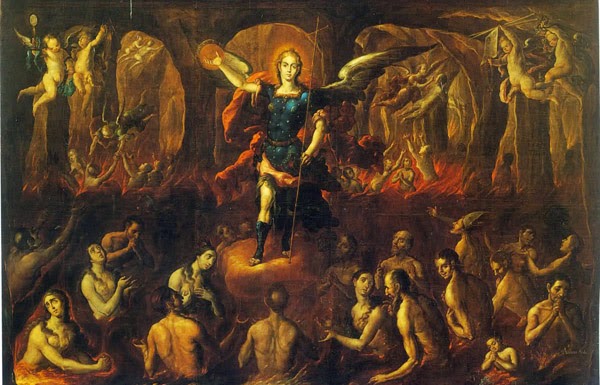
St. Michael the Archangel has traditionally been closely associated with the Holy Souls of Purgatory in the Church’s devotional life. (Source)

But some persons turn in anger from the thought of purgatory, as if it were not to be endured, that after trying all our lives long to serve God, we should accomplish the tremendous feat of a good death, only to pass from the agonies of the death-bed into fire, long, keen, searching, triumphant, incomparable fire. Alas! my dear friends, your anger will not help you nor alter facts. But have you thought sufficiently about God? Have you tried to realise His holiness and purity in assiduous meditation? Is there a real divorce between you and the world which youknow is God’s enemy? Do you take God’s side? Are you devoted to His interests? Do you long for His glory? Have you put sin alongside of our dear Saviours’ Passion, and measured the one by the other? Surely, if you had, purgatory would but seem to you the last, unexpected, and inexpressibly tender invention of an obstinate love, which was mercifully determined to save you in spite of yourself. It would be a perpetual wonder to you, a joyous wonder, fresh every morning, a wonder that would be meat and drink to your soul, that you, being what you know yourself to be, what God knows you to be, should be saved eternally. Remember what the suffering soul said so simply, yet with such force, to Sister Francesca: ‘ Ah! those on that side of the grave little reckonhow dearly they will pay on this side for the lives they live! To be angry because you are told you will go to purgatory! Silly, silly people Most likely it is a great false flattery, and that you will never be good enough to go there at all. Why, positively, you do not recognise your own good fortune, when you are told of it. And none but the humble go there. I remember Maria Crocifissa was told that although many of the Saints while on earth loved God more than some do even in heaven, yet that the greatest Saint on earth was not so humble as are the souls in purgatory. I do not think I ever read anything in the lives of the Saints which struck me so much as that. You see it is not well to be angry; for those only are lucky enough to get into purgatory who sincerely believe themselves to be worthy of hell.

Purgatory_Mass._jpg

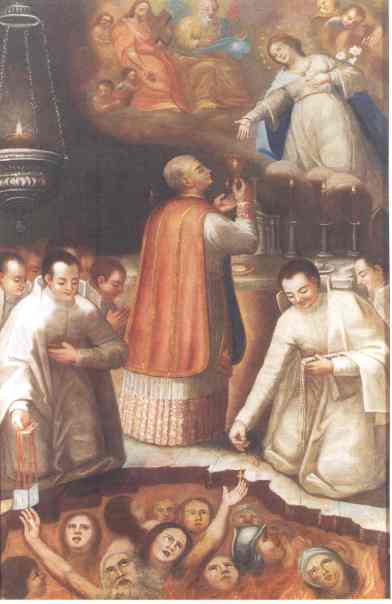
Masses and indulgences can be tremendously helpful to the souls suffering in Purgatory. (Source)

But we not only learn lessons for our own good, but for the good of the Holy Souls. We see that our charitable attention towards them must be far more vigorous and persevering than they have been; for men go to purgatory for very little matters, and remain there an unexpectedly long time. But their most touching appeal to us lies in their helplessness; and our dear Lord, with His usual loving arrangement, has made the extent of our power to help them more than commensurate with their ability to help themselves. Some theologians have said that prayer for the Holy Souls is not infallibly answered. I confess their arguments on this head do not convince me; but, conceding the point, how wonderful still is the power which we can exercise in favour of the departed! St. Thomas has at least taught us that prayer for the dead is more readily accepted with God than prayer for the living. We can offer and apply for them all the satisfactions of Our Blessed Lord. We can do vicarious penance for them. We can give to them all the satisfactions of our ordinary actions, and of our sufferings. We can make over to them, by way of suffrage, the indulgences we gain, provided the Church has made them applicable to the dead. We can limit and direct to them, or any one of them, the intention of the Adorable Sacrifice. The Church, which has no jurisdiction over them, can yet make indulgences applicable or inapplicable to them by way of suffrage; and by means of liturgy, commemoration, incense, holy water, and the like, can reach efficaciously to them, and most of all by her device of privileged altars. The Communion of Saints furnishes the veins and channels by which all these things reach them in Christ. Heaven itself condescends to act upon them through earth. Their Queen helps them by setting us to work for them, and the Angels and the Saints bestow their gifts through us, whom they persuade to be their almoners; nay, we are often their almoners without knowing that we are so. Our Blessed Lord vouchsafes to look to us, as if He would say: Here are my weapons, work for me! just as a father will let his child do a portion of his work, in spite of the risk he runs in having it spoiled. To possess such powers, and not to use them, would be the height of irreverence towards God, as well as of want of charity to men. There is nothing so irreverent, because nothing so unfilial, as to shrink from God’s gifts simply because of their exhuberance. Men have a feeling of safety in not meddling with the supernatural; but the truth is, we cannot stand aloof on one side and be safe. Naturalism is the unsafe thing. If we do not enter the system, and humbly take our place in it, it will draw us in, only to tear us to pieces when it has done so. The dread of the supernatural is the unsafest of feelings. The jealousy of it is a prophecy of eternal loss.

It is not saying too much to call devotion to the Holy Souls a kind of centre in which all Catholic devotions meet, and which satisfies more than any other single devotion our duties in that way; because it is a devotion all of love, and of disinterested love. If we cast an eye over the chief Catholic devotion, we shall see the truth of this. Take the devotion of St. Ignatius to the glory of God. This, if we may dare to use such an expression of Him, was the special and favourite devotion of Jesus. Now, purgatory is simply a field white for the harvest of God’s glory. Not a prayer can be said for the Holy Souls, but God is at once glorified, both by the faith and the charity of the mere prayer.

Brooklyn_Museum_-_Virgin_of_Carmel_Saving_Souls_in_Purgatory_-_Circle_of_Diego_Quispe_Tito_-_overall

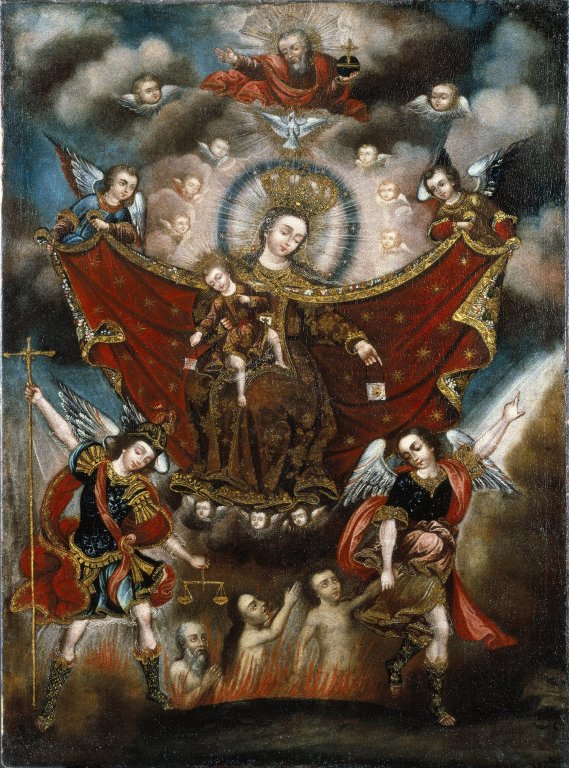
The Virgin of Carmel Saving Souls in Purgatory, Circle of Diego Quispe Tito, c. 17th century. Brooklyn Museum. (Source)

A Poem by Richard Crashaw for St. Teresa’s Day


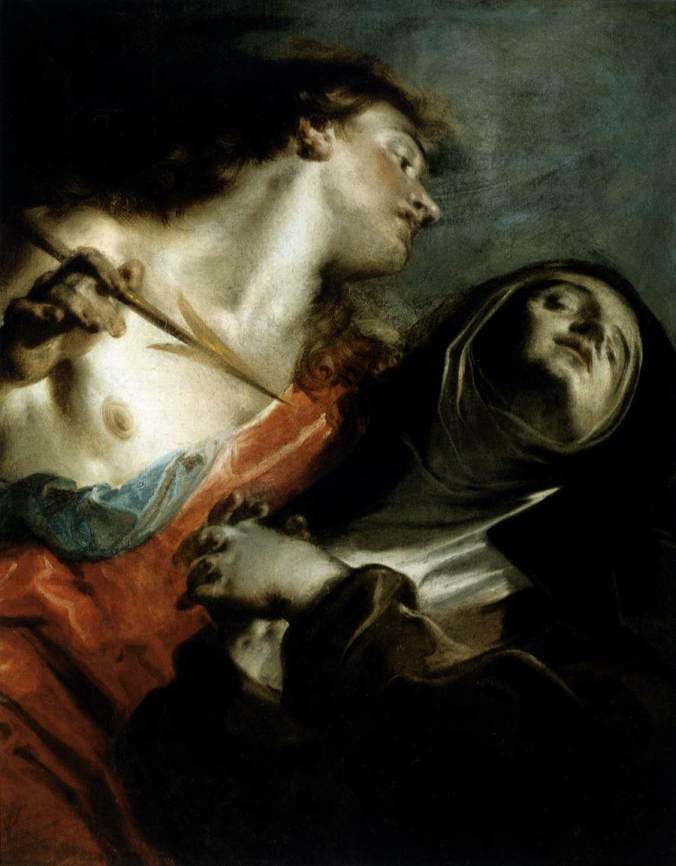
Giuseppe_Bazzani_-_The_Ecstasy_of_St_Therese_-_WGA01527

“The Ecstasy of St. Teresa,” Giuseppe Bazzani, c. 1747 (Source).

The Flaming Heart

VPON THE BOOK AND PICTURE OF THE SERAPHICAL SAINT TERESA, AS SHE IS VSVALLY EXPRESSED WITH A SERAPHIM BISIDE HER.

Well-meaning readers! you that come as friends
And catch the pretious name this piece pretends;
Make not too much hast to admire
That fair-cheek’t fallacy of fire.
That is a seraphim, they say
And this the great Teresia.
Readers, be rul’d by me; and make
Here a well-plact and wise mistake:
You must transpose the picture quite,
And spell it wrong to read it right;
Read him for her, and her for him,
And call the saint the seraphim.
Painter, what didst thou understand
To put her dart into his hand?
See, even the yeares and size of him
Showes this the mother seraphim.
This is the mistresse flame; and duteous he
Her happy fire-works here, comes down to see.
O most poor-spirited of men!
Had thy cold pencil kist her pen,
Thou couldst not so unkindly err
To show vs this faint shade for her.
Why, man, this speakes pure mortall frame;
And mockes with female frost Love’s manly flame.
One would suspect thou meant’st to paint
Some weak, inferiour, woman-saint.
But had thy pale-fac’t purple took
Fire from the burning cheeks of that bright booke,
Thou wouldst on her have heap’t up all
That could be found seraphicall;
What e’re this youth of fire, weares fair,
Rosy fingers, radiant hair,
Glowing cheek, and glistering wings,
All those fair and fragrant things
But before all, that fiery dart
Had fill’d the hand of this great heart.
Doe then, as equall right requires,
Since his the blushes be, and her’s the fires,
Resume and rectify thy rude design,
Undresse thy seraphim into mine;
Redeem this injury of thy art,
Give him the vail, give her the dart.
Give him the vail; that he may cover
The red cheeks of a rivall’d lover.
Asham’d that our world now can show
Nests of new seraphims here below.
Give her the dart, for it is she
(Fair youth) shootes both thy shaft, and thee;
Say, all ye wise and well-peirc’t hearts
That live and die amidst her darts,
What is’t your tastfull spirits doe prove
In that rare life of her, and Love?
Say, and bear witnes. Sends she not
A seraphim at every shott?
What magazins of immortall armes there shine!
Heavn’s great artillery in each love-spun line.
Give then the dart to her who gives the flame;
Give him the veil, who gives the shame.
But if it be the frequent fate
Of worst faults to be fortunate;
If all’s præscription; and proud wrong
Hearkens not to an humble song;
For all the gallantry of him,
Give me the suffring seraphim.
His be the bravery of all those bright things,
The glowing cheekes, the glistering wings;
The rosy hand, the radiant dart;
Leave her alone the flaming heart.
Leave her that; and thou shalt leave her
Not one loose shaft but Love’s whole quiver.
For in Love’s field was never found
A nobler weapon then a wound.
Love’s passives are his activ’st part,
The wounded is the wounding heart.
O heart! the æquall poise of Love’s both parts
Bigge alike with wound and darts.
Live in these conquering leaves; live all the same,
And walk through all tongues one triumphant flame.
Live here, great heart; and love and dy and kill;
And bleed and wound; and yield and conquer still.
Let this immortall life wherere it comes
Walk in a crowd of loves and martyrdomes.
Let mystick deaths wait on’t; and wise soules be
The love-slain wittnesses of this life of thee.
O sweet incendiary! shew here thy art,
Upon this carcasse of a hard, cold hart;
Let all thy scatter’d shafts of light, that play
Among the leaves of thy larg books of day.
Combin’d against this brest at once break in
And take away from me my self and sin;
This gratious robbery shall thy bounty be,
And my best fortunes such fair spoiles of me.
O thou undanted daughter of desires!
By all thy dowr of lights and fires;
By all the eagle in thee, all the dove;
By all thy lives and deaths of love;
By thy larg draughts of intellectuall day,
And by thy thirsts of love more large then they;
By all thy brim-fill’d bowles of fierce desire,
By thy last morning’s draught of liquid fire;
By the full kingdome of that finall kisse
That seiz’d thy parting soul, and seal’d thee His;
By all the Heau’n thou hast in Him
(Fair sister of the seraphim!)
By all of Him we have in thee;
Leave nothing of my self in me.
Let me so read thy life, that I
Unto all life of mine may dy.

(Richard Crashaw, Carmen Deo Nostro, with some orthographic editing).


Pious Youths Looking Terribly, Terribly Wan

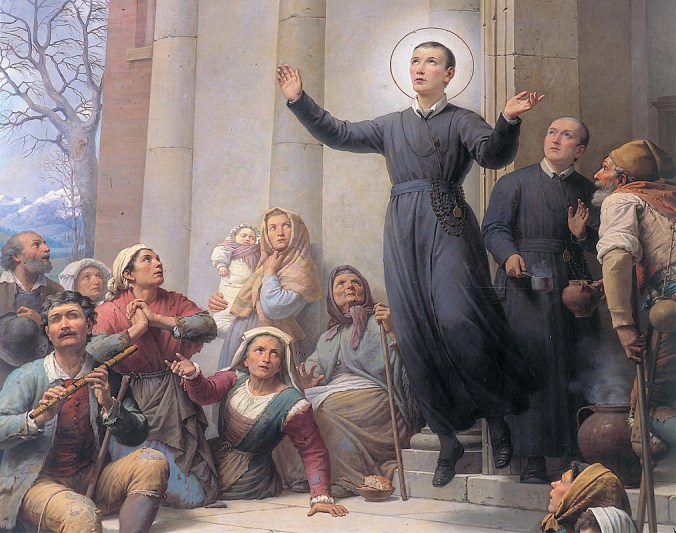
GerardMajellaFloating
No please, don’t get up.
I can levitate all by myself.
I’m sure you must see lots of levitating clergymen.
It’s no big deal.
Yes, I know it’s not even a foot up, but still.
Just play your flute or whatever.
Go on, keep doing what you were doing.
Just gonna levitate for my own sake.
Sure is high up here.
All seven inches.

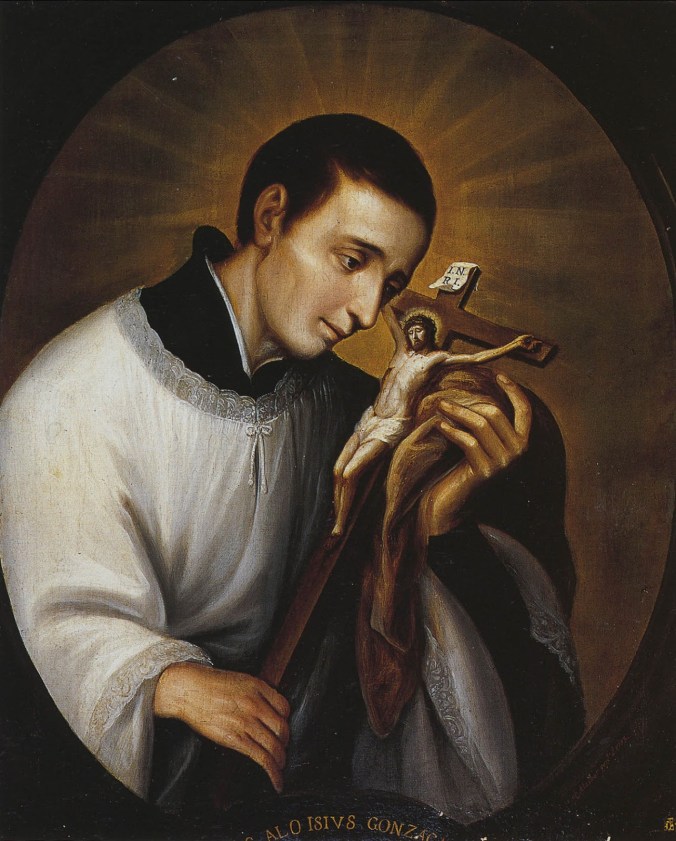
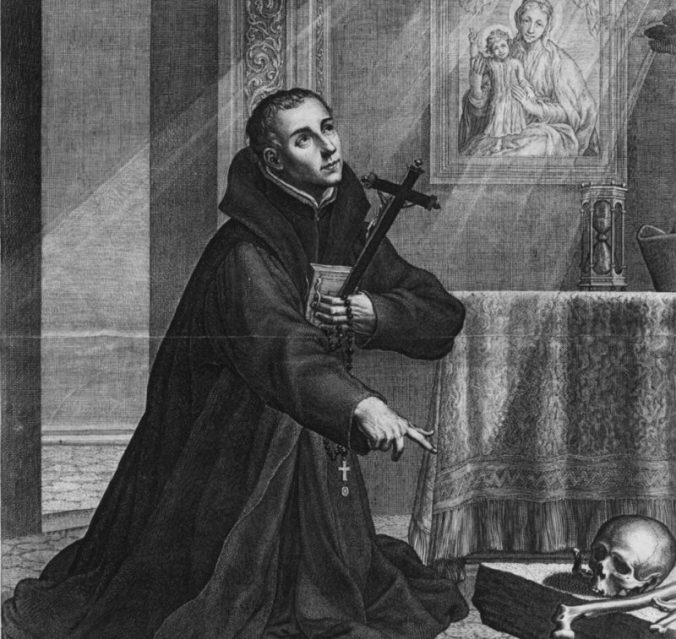
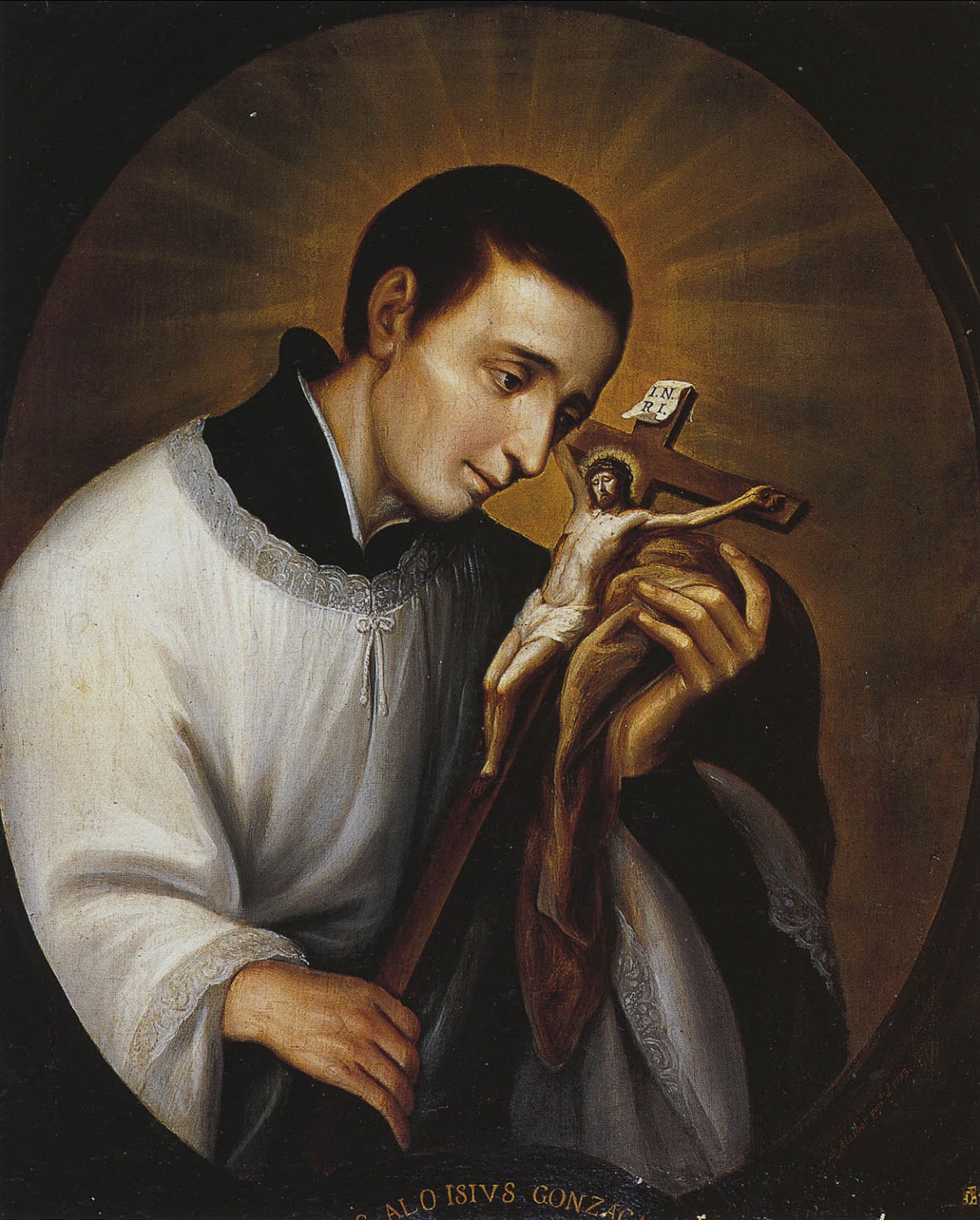
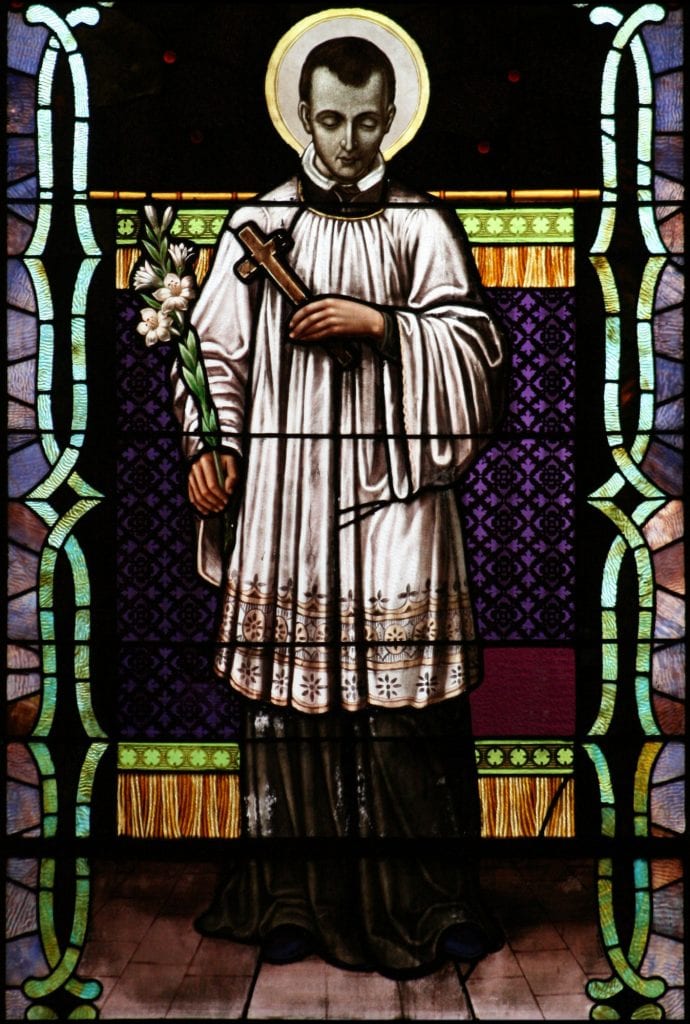
St_Aloysius_Gonzaga_June_21stOh, how I hope never to see the Sun.

saint-aloysius-gonzaga-00
To be honest, the best thing about the novitiate is all the restrictions.
It must be unpleasant to have to do all sorts of things that other people do.
Like eating, or going outside, or breathing more than thrice an hour.

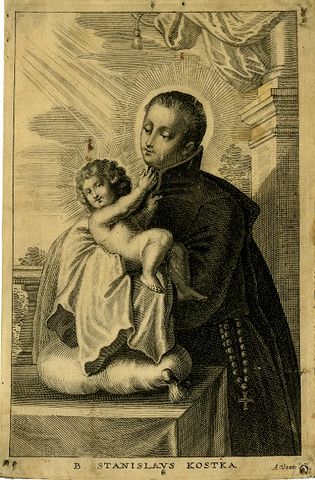
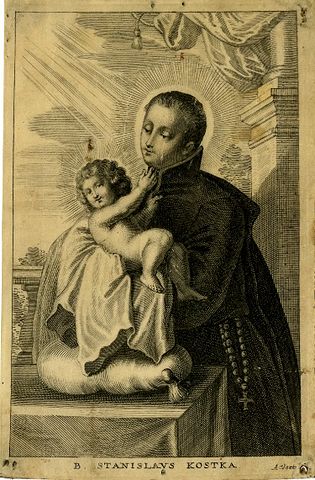
StanislausKostka1
Well it has been great holding you.
Really just a once-in-a-lifetime experience.
Truly.
Sure am gonna have to tell my friends about this.
Anyway, you are…uh, kinda heavy.
So uh, I think I’m gonna maybe put you downo, get your hand away from me…
OKAY THEN well I guess we’re just gonna stay like this a little longer.

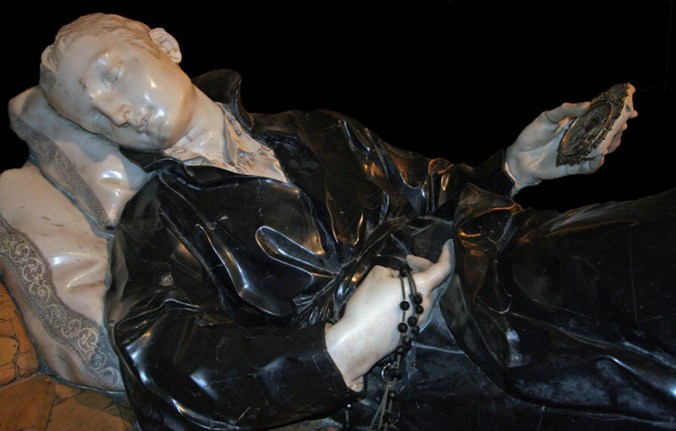
LeGrosStanislausKostka 2 web
Oh sorry, you caught me at a bad time. I was just dying clear away.

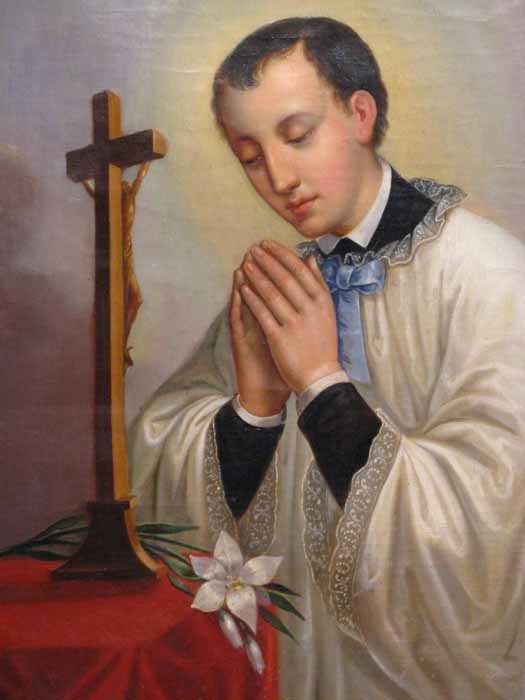
GonzagaBlueBow
I can never pray without my little blue bow.

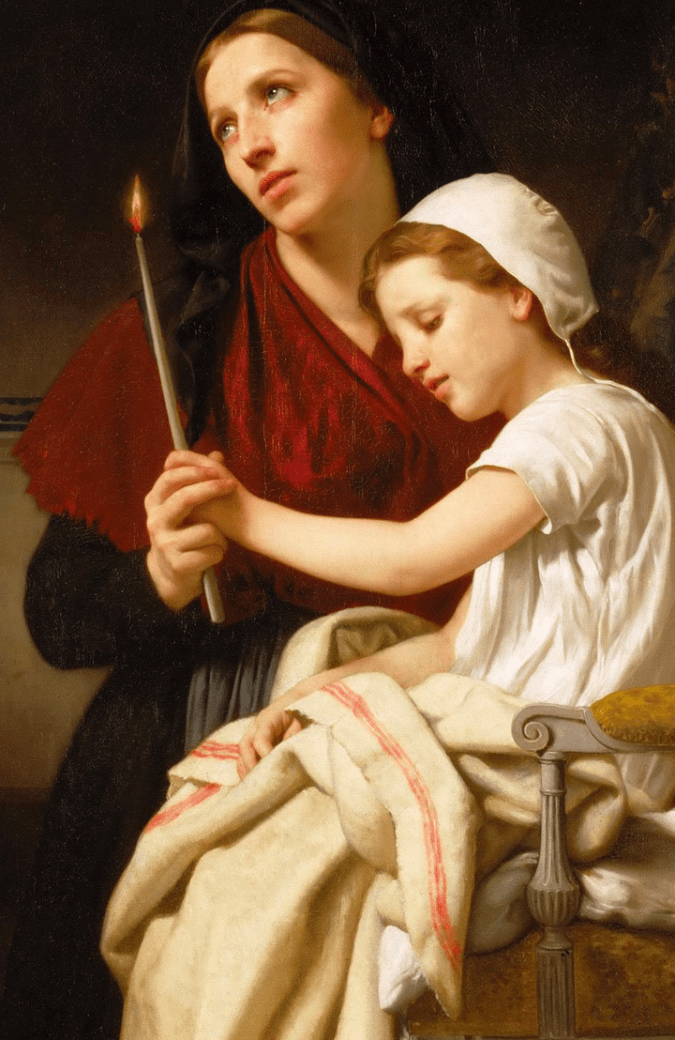
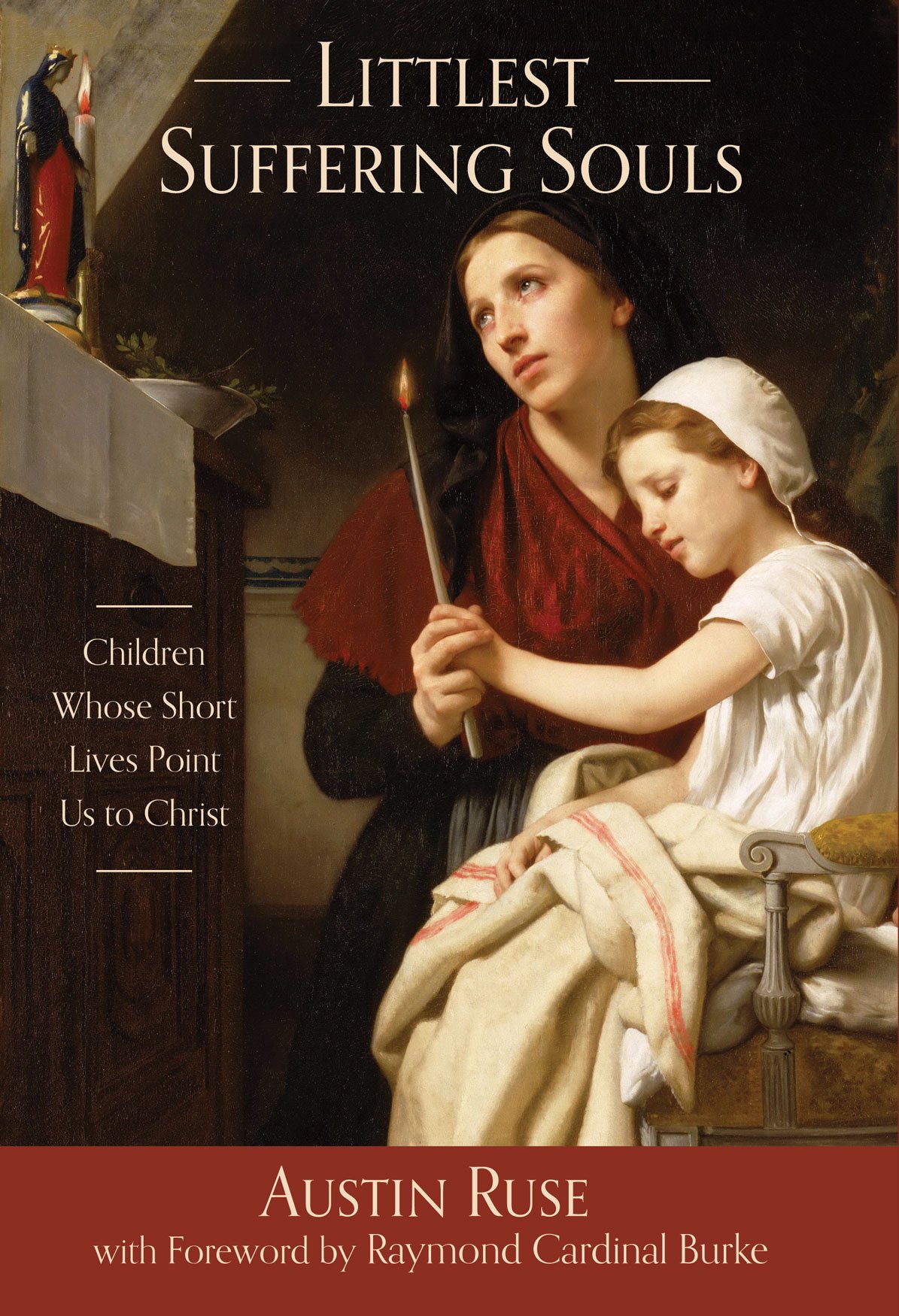
Screen Shot 2017-09-30 at 10.34.19 PMYou must pray, Iphigenia, you must pray harder.
But Mother, we’ve been doing it for six hours.
If you do not pray, Iphigenia, you can never be well.
We don’t have any more candles left.
Iphigenia, how shall you feel when you are dead and gone far from your own home and all its earthly lights and all who love you?
I only had a small cough
Shhhh, Iphigenia, shhhhh…

berchmans-e1467917574733
Yes, I said “Come down here at once.”
I’ve even got a little space for you to sit here.
Yes, I know there are bones on it.
Well you’ll just have to move them.
It’s not hard. Really.

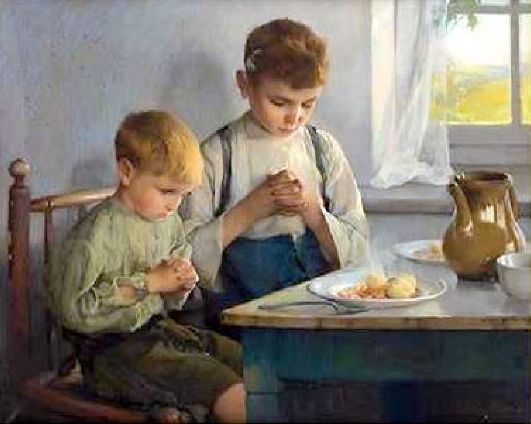
brotherspraying
How long are we gonna keep saying grace, Jimmy?
Probably a while.
Why?
Because I’m using the Roman Canon.

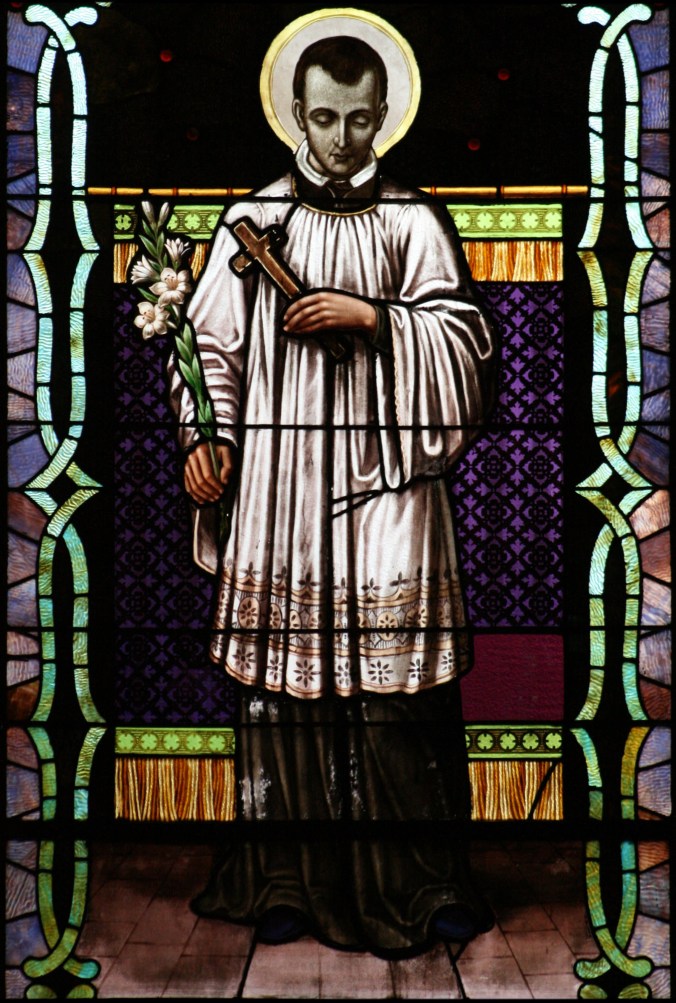
AloysiusGonzagaStainedGlassI love how this new makeup makes my face match my surplice.

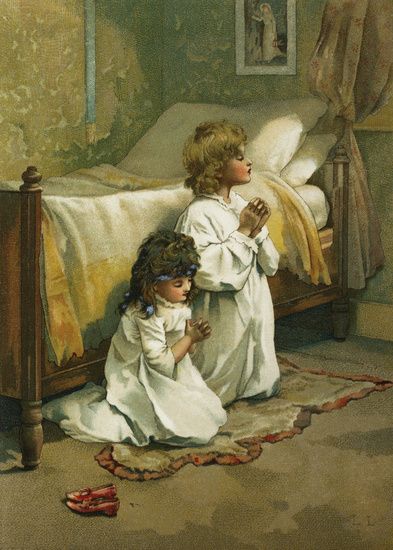
ChildrenPraying
And please bless mommy and daddy.
And please let us eat lots of desert.
And please crush the Modernist heresy in all its damnable ways.

BerchmansWallpaper
This wallpaper.
I hate. every. inch. of it.

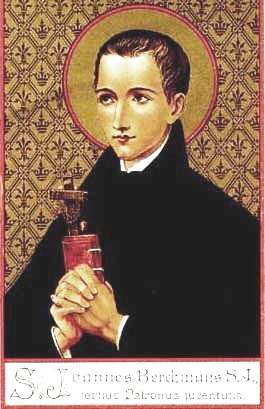
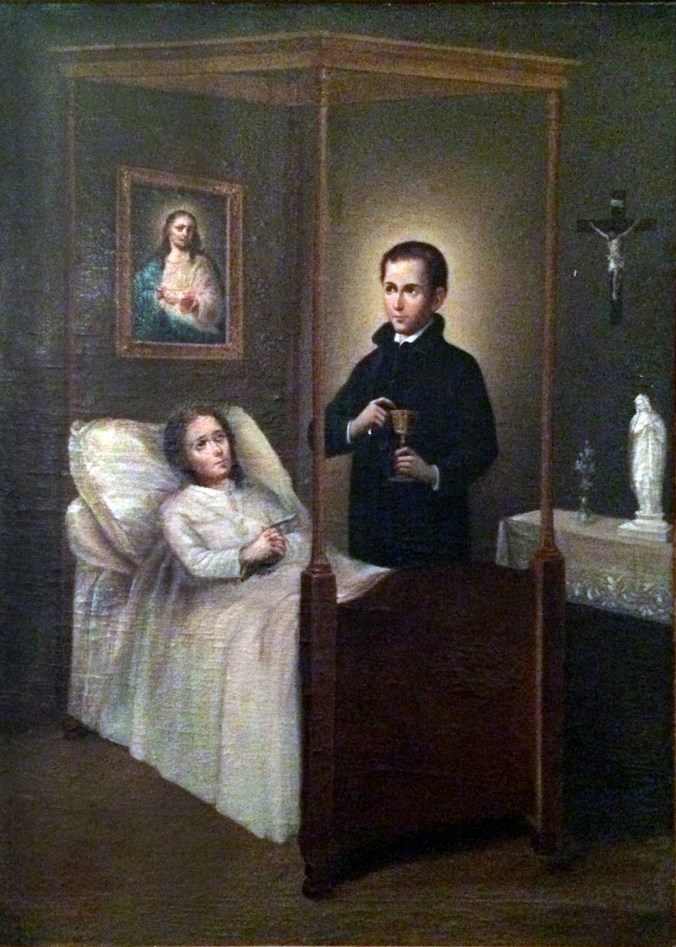
SJB-shrine.jpg
John…there’s, there’s a light all about you.
Well I certainly am the most glittering ornament in the room.

DogPrayer
I’m sorry, Cecil, but the Church does teach that you have no immortal soul.

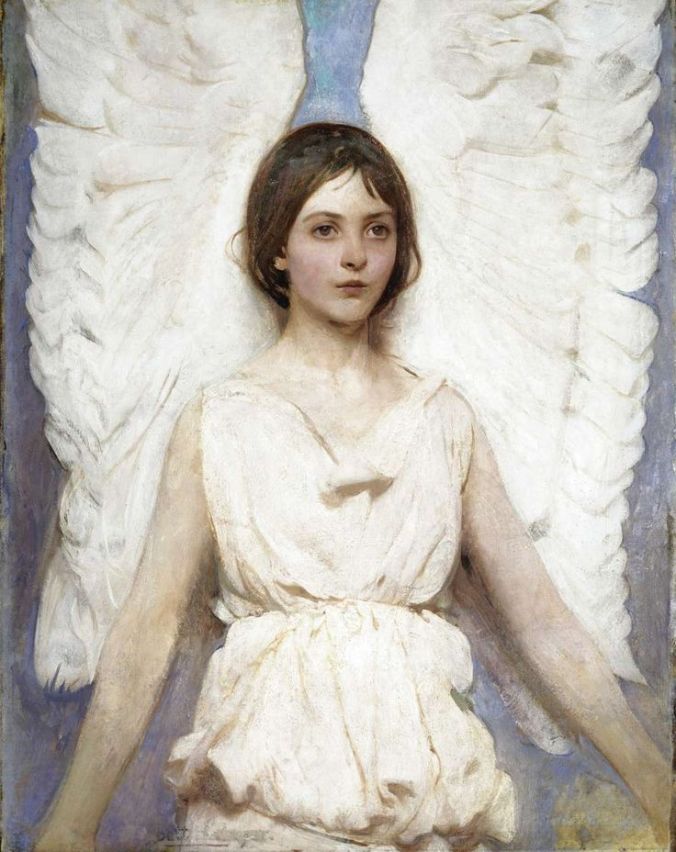
WingsAngel
Yes, they are rather nice wings, thank you.
Unfortunately I can’t move them at all.
But they look great.

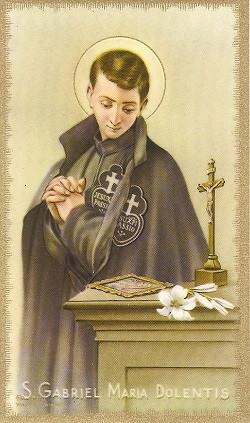
StGabrielSorrows.jg
I’m aghast.
I had no idea such a thing could happen to me.
I feel personally victimized.
I walk into the room and what do I see?
This painting.
It’s…it’s…so…philistine!

AloysiusBook
What? You don’t pray to your poetry books?

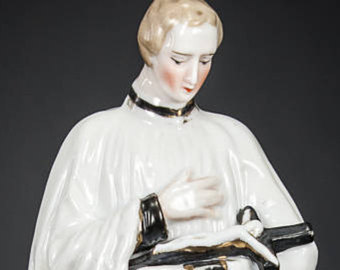
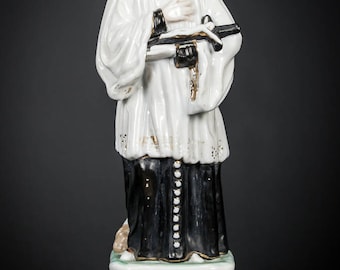
PorcelainAloysius
Deathly pale is the new black.

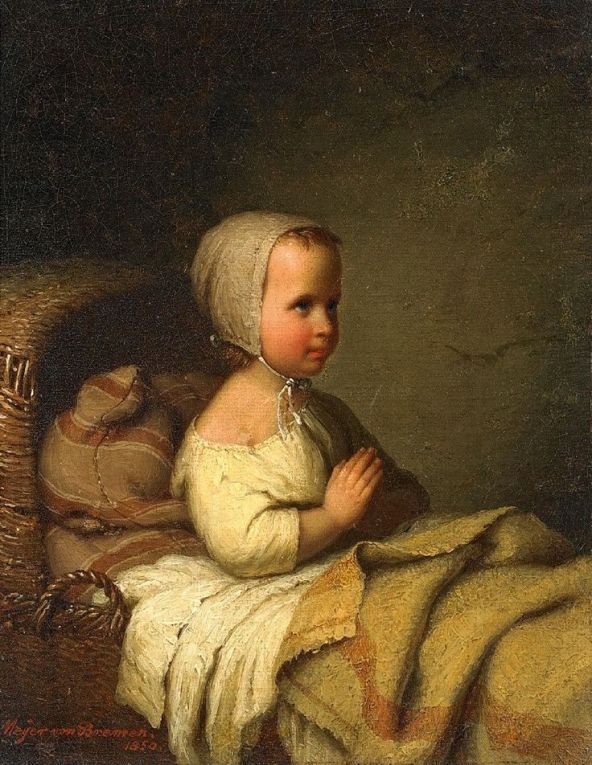
BremenChildPraying
Little Peter enjoys his prayers.
He smiles as he prays.
He smiles because he thinks about how, at the Judgment Day, the Lord will cast down the heretics, the wicked, and the reprobate into the everlasting flames of Hell forever, where the demons shall rend the very flesh of their bones and devour them.
Little Peter enjoys his prayers.

(Images from here, here, here, here, here, here, here, here, here, here, here, here, here, here, here, here, and here)

A Word of Thanksgiving

image

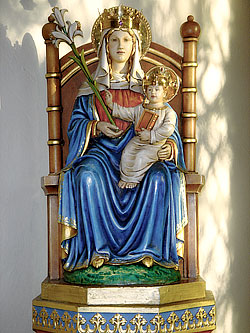
Our Lady of Walsingham, pray for us. (Source).

Today, on the double feast of Our Lady of Ransom and Our Lady of Walsingham, I was blessed to consecrate myself totally to the Mother of God at the Church of her Immaculate Heart, otherwise known as the Brompton Oratory. Thank you to everyone who prayed for me en route to this wonderful occasion. I look upon it as a momentous date, a renewal of my entrance into the Church four years ago,

The date and place are especially meaningful to me. I have long had a devotion to Our Lady of Walsingham, Patroness of England. During the stresses of my final year at Virginia, I entrusted all my major projects–in particular my thesis and my graduate school applications–to her. And over the course of the last few years, my love for St. Philip Neri and his sons has grown into a true devotion to the Oratorian way. Brompton was where that began for me, almost two and a half years ago. I date the start of my friendship with St. Philip to my first overawed trip to the Oratory in 2015. And I pronounced my vow of consecration at the altar of Our Lady of the Rosary, a grace that reminded me of all the wonderful Dominicans I have known over the short course of my life as a Catholic.

So thank you to all those who have prayed for me. And please pray still, that I might not forget my vow as the inevitable distractions, delights, and stresses of grad school set in.

Newman on the Cross of Christ

image

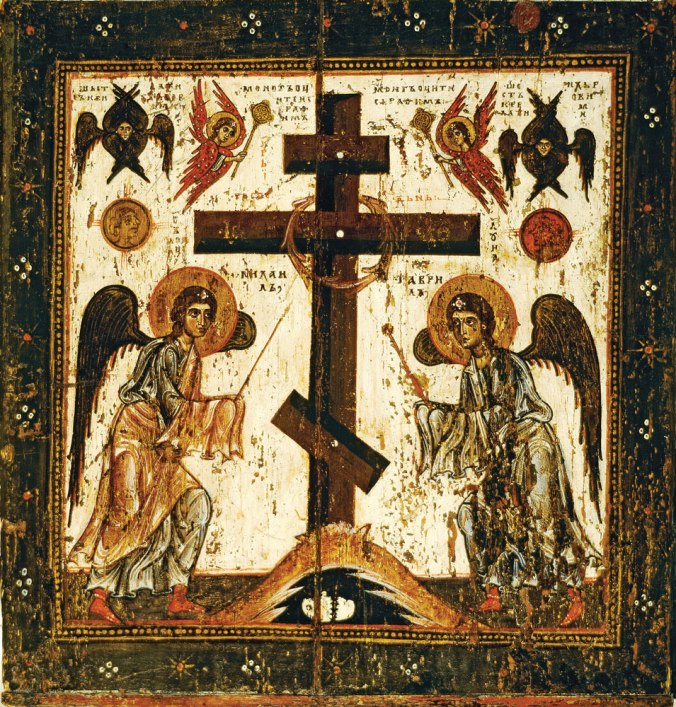
An icon of the Holy Cross. (Source)

My favorite sermon by John Henry Newman is directly germane to our feast today. He preached it at St. Mary the Virgin, Oxford, while still an Anglican. Though originally delivered on the sixth Sunday of Lent, the text fits admirably for today’s mystery, I take it from the Newman Reader, which makes available all of his writings for free online.

The Cross of Christ the Measure of the World

“And I, if I be lifted up from the earth, will draw all men unto Me.” John xii. 32.

A GREAT number of men live and die without reflecting at all upon the state of things in which they find themselves. They take things as they come, and follow their inclinations as far as they have the opportunity. They are guided mainly by pleasure and pain, not by reason, principle, or conscience; and they do not attempt to interpret this world, to determine what it means, or to reduce what they see and feel to system. But when persons, either from thoughtfulness of mind, or from intellectual activity, begin to contemplate the visible state of things into which they are born, then forthwith they find it a maze and a perplexity. It is a riddle which they cannot solve. It seems full of contradictions and without a drift. Why it is, and what it is to issue in, and how it is what it is, and how we come to be introduced into it, and what is our destiny, are all mysteries.

In this difficulty, some have formed one philosophy of life, and others another. Men have thought they had found the key, by means of which they might read what is so obscure. Ten thousand things come before us one after another in the course of life, and what are we to think of them? what colour are we to give them? Are we to look at all things in a gay and mirthful way? or in a melancholy way? in a desponding or a hopeful way? Are we to make light of life altogether, or to treat the whole subject seriously? Are we to make greatest things of little consequence, or least things of great consequence? Are we to keep in mind what is past and gone, or are we to look on to the future, or are we to be absorbed in what is present? How are we to look at things? this is the question which all persons of observation ask themselves, and answer each in his own way. They wish to think by rule; by something within them, which may harmonize and adjust what is without them. Such is the need felt by reflective minds. Now, let me ask, what is the real key, what is the Christian interpretation of this world? What is given us by revelation to estimate and measure this world by? The event of this season,—the Crucifixion of the Son of God.

It is the death of the Eternal Word of God made flesh, which is our great lesson how to think and how to speak of this world. His Cross has put its due value upon every thing which we see, upon all fortunes, all advantages, all ranks, all dignities, all pleasures; upon the lust of the flesh, and the lust of the eyes, and the pride of life. It has set a price upon the excitements, the rivalries, the hopes, the fears, the desires, the efforts, the triumphs of mortal man. It has given a meaning to the various, shifting course, the trials, the temptations, the sufferings, of his earthly state. It has brought together and made consistent all that seemed discordant and aimless. It has taught us how to live, how to use this world, what to expect, what to desire, what to hope. It is the tone into which all the strains of this world’s music are ultimately to be resolved.

Look around, and see what the world presents of high and low. Go to the court of princes. See the treasure and skill of all nations brought together to honour a child of man. Observe the prostration of the many before the few. Consider the form and ceremonial, the pomp, the state, the circumstance; and the vainglory. Do you wish to know the worth of it all? look at the Cross of Christ.

Go to the political world: see nation jealous of nation, trade rivalling trade, armies and fleets matched against each other. Survey the various ranks of the community, its parties and their contests, the strivings of the ambitious, the intrigues of the crafty. What is the end of all this turmoil? the grave. What is the measure? the Cross.

Go, again, to the world of intellect and science: consider the wonderful discoveries which the human mind is making, the variety of arts to which its discoveries give rise, the all but miracles by which it shows its power; and next, the pride and confidence of reason, and the absorbing devotion of thought to transitory objects, which is the consequence. Would you form a right judgment of all this? look at the Cross.

Again: look at misery, look at poverty and destitution, look at oppression and captivity; go where food is scanty, and lodging unhealthy. Consider pain and suffering, diseases long or violent, all that is frightful and revolting. Would you know how to rate all these? gaze upon the Cross.

Thus in the Cross, and Him who hung upon it, all things meet; all things subserve it, all things need it. It is their centre and their interpretation. For He was lifted up upon it, that He might draw all men and all things unto Him.

But it will be said, that the view which the Cross of Christ imparts to us of human life and of the world, is not that which we should take, if left to ourselves; that it is not an obvious view; that if we look at things on their surface, they are far more bright and sunny than they appear when viewed in the light which this season casts upon them. The world seems made for the enjoyment of just such a being as man, and man is put into it. He has the capacity of enjoyment, and the world supplies the means. How natural this, what a simple as well as pleasant philosophy, yet how different from that of the Cross! The doctrine of the Cross, it may be said, disarranges two parts of a system which seem made for each other; it severs the fruit from the eater, the enjoyment from the enjoyer. How does this solve a problem? does it not rather itself create one?

I answer, first, that whatever force this objection may have, surely it is merely a repetition of that which Eve felt and Satan urged in Eden; for did not the woman see that the forbidden tree was “good for food,” and “a tree to be desired”? Well, then, is it wonderful that we too, the descendants of the first pair, should still be in a world where there is a forbidden fruit, and that our trials should lie in being within reach of it, and our happiness in abstaining from it? The world, at first sight, appears made for pleasure, and the vision of Christ’s Cross is a solemn and sorrowful sight interfering with this appearance. Be it so; but why may it not be our duty to abstain from enjoyment notwithstanding, if it was a duty even in Eden?

But again; it is but a superficial view of things to say that this life is made for pleasure and happiness. To those who look under the surface, it tells a very different tale. The doctrine of the Cross does but teach, though infinitely more forcibly, still after all it does but teach the very same lesson which this world teaches to those who live long in it, who have much experience in it, who know it. The world is sweet to the lips, but bitter to the taste. It pleases at first, but not at last. It looks gay on the outside, but evil and misery lie concealed within. When a man has passed a certain number of years in it, he cries out with the Preacher, “Vanity of vanities, all is vanity.” Nay, if he has not religion for his guide, he will be forced to go further, and say, “All is vanity and vexation of spirit;” all is disappointment; all is sorrow; all is pain. The sore judgments of God upon sin are concealed within it, and force a man to grieve whether he will or no. Therefore the doctrine of the Cross of Christ does but anticipate for us our experience of the world. It is true, it bids us grieve for our sins in the midst of all that smiles and glitters around us; but if we will not heed it, we shall at length be forced to grieve for them from undergoing their fearful punishment. If we will not acknowledge that this world has been made miserable by sin, from the sight of Him on whom our sins were laid, we shall experience it to be miserable by the recoil of those sins upon ourselves.

It may be granted, then, that the doctrine of the Cross is not on the surface of the world. The surface of things is bright only, and the Cross is sorrowful; it is a hidden doctrine; it lies under a veil; it at first sight startles us, and we are tempted to revolt from it. Like St. Peter, we cry out, “Be it far from Thee, Lord; this shall not be unto Thee.” [Matt. xvi. 22.] And yet it is a true doctrine; for truth is not on the surface of things, but in the depths.

And as the doctrine of the Cross, though it be the true interpretation of this world, is not prominently manifested in it, upon its surface, but is concealed; so again, when received into the faithful heart, there it abides as a living principle, but deep, and hidden from observation. Religious men, in the words of Scripture, “live by the faith of the Son of God, who loved them and gave Himself for them:” [Gal. ii. 20.] but they do not tell this to all men; they leave others to find it out as they may. Our Lord’s own command to His disciples was, that when they fast, they should “anoint their head and wash their face.” [Matt. vi. 17.] Thus they are bound not to make a display, but ever to be content to look outwardly different from what they are really inwardly. They are to carry a cheerful countenance with them, and to control and regulate their feelings, that those feelings, by not being expended on the surface, may retire deep into their hearts and there live. And thus “Jesus Christ and He crucified” is, as the Apostle tells us, “a hidden wisdom;”—hidden in the world, which seems at first sight to speak a far other doctrine,—and hidden in the faithful soul, which to persons at a distance, or to chance beholders, seems to be living but an ordinary life, while really it is in secret holding communion with Him who was “manifested in the flesh,” “crucified through weakness,” “justified in the Spirit, seen of angels, and received up into glory.”

This being the case, the great and awful doctrine of the Cross of Christ, which we now commemorate, may fitly be called, in the language of figure, the heart of religion. The heart may be considered as the seat of life; it is the principle of motion, heat, and activity; from it the blood goes to and fro to the extreme parts of the body. It sustains the man in his powers and faculties; it enables the brain to think; and when it is touched, man dies. And in like manner the sacred doctrine of Christ’s Atoning Sacrifice is the vital principle on which the Christian lives, and without which Christianity is not. Without it no other doctrine is held profitably; to believe in Christ’s divinity, or in His manhood, or in the Holy Trinity, or in a judgment to come, or in the resurrection of the dead, is an untrue belief, not Christian faith, unless we receive also the doctrine of Christ’s sacrifice. On the other hand, to receive it presupposes the reception of other high truths of the Gospel besides; it involves the belief in Christ’s true divinity, in His true incarnation, and in man’s sinful state by nature; and it prepares the way to belief in the sacred Eucharistic feast, in which He who was once crucified is ever given to our souls and bodies, verily and indeed, in His Body and in His Blood. But again, the heart is hidden from view; it is carefully and securely guarded; it is not like the eye set in the forehead, commanding all, and seen of all: and so in like manner the sacred doctrine of the Atoning Sacrifice is not one to be talked of, but to be lived upon; not to be put forth irreverently, but to be adored secretly; not to be used as a necessary instrument in the conversion of the ungodly, or for the satisfaction of reasoners of this world, but to be unfolded to the docile and obedient; to young children, whom the world has not corrupted; to the sorrowful, who need comfort; to the sincere and earnest, who need a rule of life; to the innocent, who need warning; and to the established, who have earned the knowledge of it.

One more remark I shall make, and then conclude. It must not be supposed, because the doctrine of the Cross makes us sad, that therefore the Gospel is a sad religion. The Psalmist says, “They that sow in tears shall reap in joy;” and our Lord says, “They that mourn shall be comforted.” Let no one go away with the impression that the Gospel makes us take a gloomy view of the world and of life. It hinders us indeed from taking a superficial view, and finding a vain transitory joy in what we see; but it forbids our immediate enjoyment, only to grant enjoyment in truth and fulness afterwards. It only forbids us to begin with enjoyment. It only says, If you begin with pleasure, you will end with pain. It bids us begin with the Cross of Christ, and in that Cross we shall at first find sorrow, but in a while peace and comfort will rise out of that sorrow. That Cross will lead us to mourning, repentance, humiliation, prayer, fasting; we shall sorrow for our sins, we shall sorrow with Christ’s sufferings; but all this sorrow will only issue, nay, will be undergone in a happiness far greater than the enjoyment which the world gives,—though careless worldly minds indeed will not believe this, ridicule the notion of it, because they never have tasted it, and consider it a mere matter of words, which religious persons think it decent and proper to use, and try to believe themselves, and to get others to believe, but which no one really feels. This is what they think; but our Saviour said to His disciples, “Ye now therefore have sorrow, but I will see you again, and your heart shall rejoice, and your joy no man taketh from you.” … “Peace I leave with you; My peace I give unto you; not as the world giveth, give I unto you.” [John xvi. 22; xiv. 27.] And St. Paul says, “The natural man receiveth not the things of the Spirit of God; for they are foolishness unto him; neither can he know them, because they are spiritually discerned.” “Eye hath not seen, nor ear heard, neither have entered into the heart of man, the things which God hath prepared for them that love Him.” [1 Cor. ii. 9, 14.] And thus the Cross of Christ, as telling us of our redemption as well as of His sufferings, wounds us indeed, but so wounds as to heal also.

And thus, too, all that is bright and beautiful, even on the surface of this world, though it has no substance, and may not suitably be enjoyed for its own sake, yet is a figure and promise of that true joy which issues out of the Atonement. It is a promise beforehand of what is to be: it is a shadow, raising hope because the substance is to follow, but not to be rashly taken instead of the substance. And it is God’s usual mode of dealing with us, in mercy to send the shadow before the substance, that we may take comfort in what is to be, before it comes. Thus our Lord before His Passion rode into Jerusalem in triumph, with the multitudes crying Hosanna, and strewing His road with palm branches and their garments. This was but a vain and hollow pageant, nor did our Lord take pleasure in it. It was a shadow which stayed not, but flitted away. It could not be more than a shadow, for the Passion had not been undergone by which His true triumph was wrought out. He could not enter into His glory before He had first suffered. He could not take pleasure in this semblance of it, knowing that it was unreal. Yet that first shadowy triumph was the omen and presage of the true victory to come, when He had overcome the sharpness of death. And we commemorate this figurative triumph on the last Sunday in Lent, to cheer us in the sorrow of the week that follows, and to remind us of the true joy which comes with Easter-Day.

And so, too, as regards this world, with all its enjoyments, yet disappointments. Let us not trust it; let us not give our hearts to it; let us not begin with it. Let us begin with faith; let us begin with Christ; let us begin with His Cross and the humiliation to which it leads. Let us first be drawn to Him who is lifted up, that so He may, with Himself, freely give us all things. Let us “seek first the kingdom of God and His righteousness,” and then all those things of this world “will be added to us.” They alone are able truly to enjoy this world, who begin with the world unseen. They alone enjoy it, who have first abstained from it. They alone can truly feast, who have first fasted; they alone are able to use the world, who have learned not to abuse it; they alone inherit it, who take it as a shadow of the world to come, and who for that world to come relinquish it.
 

The Prince of Papist Purple Prose

SacredHeartRoses

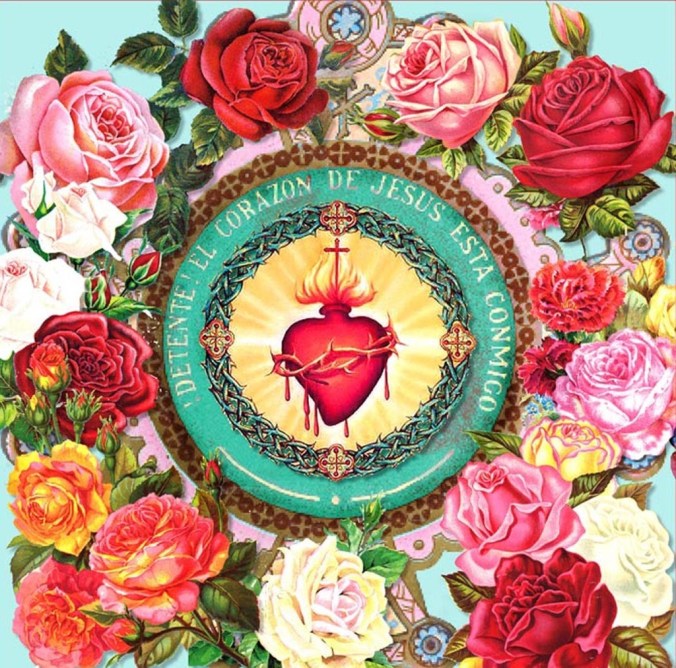
Faberesque religious art. (Source)

The Church offers us the way of salvation. She declares the destination, Heaven; she notes our provenance, the bondage of our sinful nature. And she furnishes a route from the latter up to the former. Or, I might say, “routes.” For while the Cruciform road to Heaven may appear singular from afar, anyone who enters the Journey will find that it is in fact composed of many different paths. The holy diversity of the Church is one testament of its Catholicity. Like a great Cathedral or Basilica that appears as one massive edifice from the street but harbors dozens of little side-altars within, each distinctly the Table of the Lord, the Church offers more streams of spirituality than we can discern. Some flow still in our midst, giving life to multitudes. Others run dry. And some thought long-extinct may suddenly spring forth in new vim and vigor.

It is only a natural and concurrent fact that the Church should likewise offer her children a diverse array of spiritual writers. There is the beautiful, mysterious Areopagite; the mighty, noble St. Augustine; the dazzlingly imaginative St. Ephrem the Syrian; the logical, pacific Aquinas; the bloody consolations of Dame Julian; the gleaming shadows of St. John of the Cross; the brooding brilliance of Pascal; the soaring eloquence of Bossuet; the roseate cheer of St. Thérèse of Lisieux; the luminous fragmentation of T.S. Eliot; the Gothic grotesquerie of Flannery O’Connor.  The list goes on and on.

The English Catholic Revival was a fertile time for spiritual writers. At the fountainhead of the entire movement stands Cardinal Newman, whose massive influence is still being felt by theologians and writers today. The founder of the English Oratory was a masterful stylist, so much so that James Joyce considered him the greatest master of English prose. Every ecclesiastical development proves that Newman’s theology is more timely than ever. He has been lauded by subsequent generations, and rightly so. When he is eventually canonized, he will certainly be declared a Doctor of the Church for his labors.

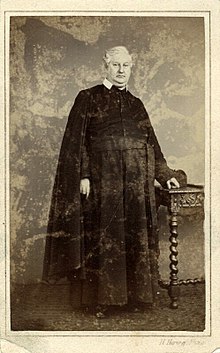
But he has, sadly, overshadowed another figure, one no less deserving of praise for his own work on behalf of the Gospel. That man is Fr. Frederick William Faber, the founder of the London Oratory.

Faber1860

Fr. Frederick William Faber, Father of the Brompton Oratory. (Source)

Faber was an Oxford convert like Newman. After leaving the University, he first served as an Anglican parish priest in Northamptonshire. He would later bring eleven men with him across the Tiber when he resigned his post. After shepherding the community for a short time, he eventually joined forces with Newman and co-founded the English Oratory. They split the country. Newman went to Birmingham, and Faber went to London. In the course of his time there, he gained notoriety as a preacher of remarkable versatility and power, a widely-respected hymnodist, a constant friend of the poor, and an authoritative teacher of the spiritual life. As one source has it, his written works

…are a mine of spiritual gold of the highest purity, refined and drawn from Faber’s deep understanding of Catholic spiritual theology. For he had delved deeply, not only into the standard Scholastic philosophy and theology, but especially into the mystical schools. Father Faber was a brilliant man whose theology of the Absolute Primacy of Christ and Mary is grounded in that of the Subtle Doctor, Blessed John Duns Scotus (1266-1308), all recast in simple ordinary English. (174).

When he died, all the great Catholics of England honored his memory. In France, even the formidable abbot of Solesmes, Dom Prosper Guéranger, admired his writings and wrote of him fondly.

But Faber is a largely forgotten figure today, at least among American Catholics. While most have probably heard at least one or two of his hymns, such as “Faith of Our Fathers,” few read more deeply into his life or thought. Why? What has caused this lacuna in our collective memory?

There are, I think, two primary reasons.

The first is that he is eclipsed by Newman. The two had differences in their own day. Newman was resolutely opposed to the pretensions of Ultramonatism; Faber, like Cardinal Manning, was a strong advocate of Rome’s prerogatives. Newman always wanted to return to Oxford and restore some traces of his old, academic life; Faber was content to build the finest church of Great Britain in London, to better minister to the poor. Newman was always a little wary about Marian titles and devotions; Faber practically bathed in them. As Monsignor Rondald Knox writes in 1945,

While Faber is introducing the British public to the most luscious legends of the Counter-Reformation, Newman is still concerned over the difficulties of Anglicans, still asking how and in what sense Catholic doctrine has developed, still cautiously delimiting the spheres of faith and reason. (“The Conversions of Newman and Faber,” Pastoral and Occasional Sermons, 875).

The tensions surrounding Faber’s spirituality eventually led Newman to formally, judicially separate the two houses. Sadly, “While Newman visited Faber shortly before his death, the two men were not able to fully resolve their differences.”

The second, related to the first, is part stylistic, part spiritual. Consider an analogy. Among the Metaphysical Poets, the meditative Donne has always outshone the ebullient Crashaw. Logos is easy to parse. Its analysis is a straightforward, if sometimes arduous task. Pathos, however, is a more slippery beast altogether, and one less communicable and less persistent than we should like to think. It may fire one breast and repel another. Not all hearts chime the same tune in the same wind. Likewise, Newman’s depth, intellect, and style have garnered more attention than Faber’s flowery devotions. His devotional prose is as purple as it gets. Consider the following passage, taken from Part I of “The Mystery of the Precious Blood.”

SALVATION! What music is there in that word – music that never tires but is always new, that always rouses yet always rests us! It holds in itself all that our hearts would say. It is sweet vigor to us in the morning, and in the evening it is contented peace. It is a song that is always singing itself deep down in the delighted soul. Angelic ears are ravished by it up in Heaven; and our Eternal Father Himself listens to it with adorable complacency. It is sweet even to Him out of Whose mind is the music of a thousand worlds. To be saved! What is it to be saved? Who can tell? Eye has not seen, nor ear heard. It is a rescue, and from such a shipwreck. It is a rest, and in such an unimaginable home. It is to lie down forever in the bosom of God in an endless rapture of insatiable contentment. (“The Mystery of the Precious Blood“)

Or, later in the same volume, when he writes the following passage.

Green Nazareth was not a closer hiding-place than the risen glory of the Forty Days. As of old, the Precious Blood clung round the sinless Mother. Like a stream that will not leave its parent chain of mountains, but laves them incessantly with many an obstinate meandering, so did the Blood of Jesus, shed for all hearts of men, haunt the single heart of Mary. Fifteen times, or more in those Forty Days, it came out from under the shadow of Mary’s gladness and gleamed forth in beautiful apparitions. Each of them is a history in itself, and a mystery, and a revelation. Never did the Sacred Heart say or do such ravishing things as those Forty Days of its Risen Life. The Precious Blood had almost grown more human from having been three days in the keeping of the Angels. But, as it had mounted Calvary on Good Friday, so now it mounts Olivet on Ascension Thursday, and disappears into Heaven amidst the whiteness of the silver clouds. It had been but a decree in Heaven before, a Divine idea, an eternal compassion, an inexplicable complacency of the life of God. It returns thither a Human Life, and is throned at the Right Hand of the Father forever in right of its inalienable union with the Person of the Word. There is no change in the Unchangeable. But in Heaven there had never been change like this before, nor ever will be again. The changes of the Great Doom can be nothing compared to the exaltation of the Sacred Humanity of the Eternal Word. The very worship of the glorious spirits was changed, so changed that the Angels themselves cannot say how it is that no change has passed on God. Somehow the look of change has enhanced the magnificence of the Divine immutability, and has given a new gladness to their adoration of its unspeakable tranquility (“The History of the Precious Blood“).

Or this passage from The Blessed Sacrament, taken from a friend who posted it on Facebook for the Nativity of Mary.

Let us mount higher still. Earth never broke forth with so gay and glad fountain as when the Babe Mary, the infant who was the joy of the whole world, the flower of God’s invisible creation, and the perfection of the invisible and hitherto queenless angels of His court, came like the richest fruit, ready-ripe and golden, of the world’s most memorable September. There is hardly a feast in the year so gay and bright as this of her Nativity, right in the heart of the happy harvest, as though she were, as indeed she was, earth’s heavenliest growth, whose cradle was to rock to the measures of the worlds vintage songs; for she had come who was the true harvest-home that homeless world.

His devotion to Our Lady was legendary. He was, in fact, the first English translator of St. Louis de Montfort’s famous text, True Devotion to Mary…and that even before he had become an Oratorian! He was also probably the first English author to think of Mary as Co-Redemptrix. In one of his hymns, he declares:

Mother of God! we hail thy heart,
Throned in the azure skies,
While far and wide within its charm
The whole creation lies.
O sinless heart, all hail!
God’s dear delight, all hail!
Our home, our home is deep in thee,
Eternally, eternally.
(Source)

ImmaculateheartRosesDoves

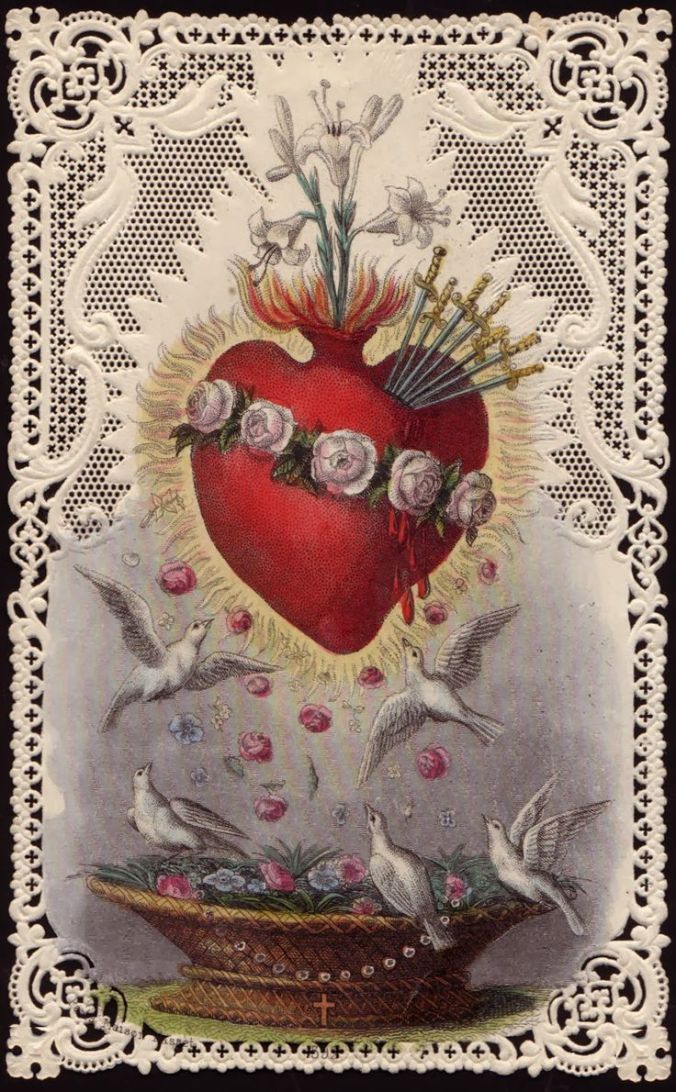
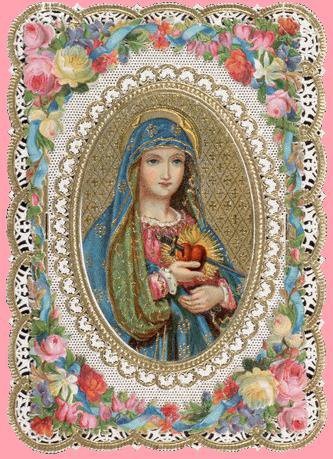
Lace holy card of the Immaculate Heart of Mary. Extremely Fr. Faber’s aesthetic. (Source)

Fr. Faber’s devotion to Our Lady extended beyond his prolific writings. He not only translated St. Louis’s book. In 1846, he undertook his own Marian consecration in the Holy House of Loreto. He had a tendency to refer to the Mother of God as “Mama.” A famous episode related by Monsignor Knox depicts Fr. Faber at one of his more florid moments. After a particularly high Marian procession at the Oratory, he was observed weeping. Without any care for who heard, he cried out, “Won’t Mamma be pleased?” (“The Conversion of Faber,” Pastoral and Occasional Sermons, 891).

None of this spirituality or the writing in which it comes to us fits our modern tastes. It is too perfumed, too sickly-sweet, too campy, too Victorian, too decadent, too redolent of pastel holy cards mouldering in antique prayer books. One critic puts it thus:

There are great slabs of passages, sometimes chapters at a time, which glow with ethereal light but have little content. Hypnotized by his own fluency Faber flows on and on, melodious and tedious…There are awful lapses of taste. (Chapman, quoted here).

And certainly, Faber cared not one shred for taste. The only thing that mattered was the salvation and sanctification of souls. Knox tells us that “‘Art for art’s sake’ had no meaning for him…if a bad verse would have more chance of winning souls than a good verse, down the bad verse would go” (“The Conversion of Faber,” Pastoral and Occasional Sermons, 891). There is much to criticize in this tendency from a purely aesthetic standpoint. Christians should commit themselves to the highest standards in all artistic and literary endeavors.

But it is hard not to like the man weeping after the procession; it is harder still to feel totally averse to passages that glow purple as the evening sky. One has the sense that Fr. Faber would have been a remarkable presence today, if only because his emotionalism and baroque, slightly kitschy aesthetic would have made him an ironic celebrity on Weird Catholic Twitter. Imagine what he would have done with memes!

SantaMariaBambina1

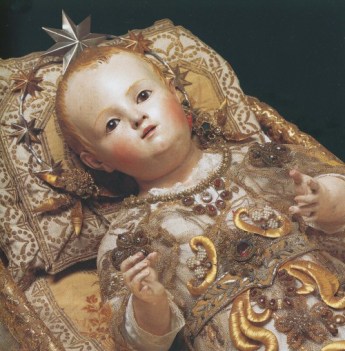
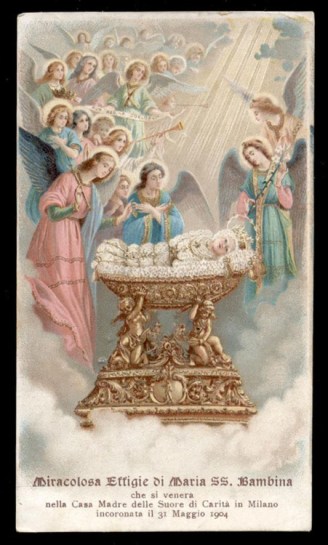
Santa Maria Bambina, Southern Italy. (Source)

Yet he would also be a sign of contradiction. We have seen a renewed emphasis on Muscular Christianity, with a proliferation of websites, associations, and thinkpieces all dedicated to restoring “authentic masculinity” and resisting the “feminization” of the liturgy. This is a particularly popular movement within the larger Traditionalist wing of the Church. In brief, the narrative usually runs as follows:

1) After Vatican II, the Novus Ordo initiated a new, “feminine” form of the Mass.
2) This innovation was a substantive capitulation to the Sexual Revolution.
3) Men don’t want to serve a feminized Church in a feminized liturgy, with altar girls, felt banners, versus populum, happy-clappy music, etc.
4) The vocations crisis of the last 30-40 years ensues.
5) As such, we need to restore more pronounced gender binaries and hierarchies along with the Usus Antiquior.

Some of this narrative may be correct. I refrain from judging its particular historical claims, social implications, or theological presuppositions.

midnightmass3

Midnight Mass at the Brompton Oratory. (Source)

Nevertheless, Fr. Faber confounds that entire way of thinking. He was anything but a “Muscular” Christian. His personality, style, and spirituality were so clearly “feminine” that his own nephew, the publisher Geoffrey Faber, considered him a probable closet case (see David Hilliard’s famous essay “UnEnglish and Unmanly,” page 5). Whether or not his (disputed) conclusions about the priest (and all the leaders of the Oxford Movement) are true, it suffices to say that Fr. Faber was far from the “authentically masculine” man fetishized by the new Muscular Christianity.  Yet liturgically he was known as one of the highest of the high, and his sons at the Brompton Oratory continue that admirable tradition. If nothing else, Fr. Faber’s legacy is the Oratory that still stand as a landmark of reverence, beauty, and transcendent holiness in the midst of postconciliar banality.


What’s more, Fr. Faber is not just a fine hymnodist and devotional writer. He penetrated deep mysteries of the faith. A thoroughgoing Scotist, he advocated the thesis (shared by this author) that Christ probably would have been incarnated anyway even if Adam had never fallen. And as the Church’s Mariology continues to develop, his arguments on behalf of Our Lady’s Co-Redemption may yet prove invaluable. Sophiologists should take note. Here is a man after our own heart.

SantaMariaBambina2

A holy card of Santa Maria Bambina. (Source)

Fr. Faber writes of Our Lady’s suffering in a passage worth quoting at length:

But this is not all. She co-operated with our Lord in the redemption of the world in quite a different sense, a sense which can never be more than figuratively true of the Saints. Her free consent was necessary to the Incarnation, as necessary as free will is to merit according to the counsels of God. She gave Him the pure blood, out of which the Holy Ghost fashioned His Flesh and bone and Blood. She bore Him in her womb for nine months, feeding Him with her own substance. Of her was He born, and to her He owed all those maternal offices which, according to common laws, were necessary for the preservation of His inestimable life. She exercised over Him the plenitude of parental jurisdiction. She consented to His Passion; and if she could not in reality have withheld her consent, because it was already involved in her original consent to the Incarnation, nevertheless she did not in fact withhold it, and so He went to Calvary as her free-will offering to the Father. Now, this is co-operation in a different sense from the former, and if we compare it with the co-operation of the Saints, their own co-operation, in which Mary herself alone surpassed them all, we shall see that this other peculiar co-operation of hers was indispensable to the redemption of the world as effected on the Cross. Souls could be saved without the co-operation of the Saints. The soul of the penitent thief was saved with no other co-operation than that of Mary, and, if our Blessed Lord had so willed it, could have been saved without even that. But the co-operation of the Divine Maternity was indispensable. Without it our Lord would not have been born when and as He was; He would not have had that Body to suffer in; the whole series of the Divine purposes would have been turned aside, and either frustrated, or diverted into another channel. It was through the free will and blissful consent of Mary that they flowed as God would have them flow. Bethlehem, and Nazareth, and Calvary, came out of her consent, a consent which God did in no wise constrain. But not only is the co-operation of the Saints not indispensable of itself, but no one Saint by himself is indispensable to that co-operation. Another Apostle might have fallen, half the Martyrs might have sacrificed to idols, the Saints in each century might have been a third fewer in number than they were, and yet the co-operation of the Saints would not have been destroyed, though its magnificence would have been impaired. Its existence depends on the body, not on the separate individuals. No one Saint who can be named, unless perhaps it were in some sense St. Peter, was necessary to the work, so necessary that without him the work could not have been accomplished. But in this co-operation of Mary she herself was indispensable. It depended upon her individually. Without her the work could not have been accomplished. Lastly, it was a co-operation of a totally different kind from that of the Saints. Theirs was but the continuation and application of a sufficient redemption already accomplished, while hers was a condition requisite to the accomplishment of that redemption. One was a mere consequence of an event which the other actually secured, and which only became an event by means of it. Hence it was more real, more present, more intimate, more personal, and with somewhat of the nature of a cause in it, which cannot in any way be predicated of the co-operation of the Saints. And all this is true of the co-operation of Mary, without any reference to the dolors at all…Our Lord had taken a created nature, in order that by its means He might accomplish that great work; so it seemed as if the highest honor and the closest union of a sinless creature with Himself should be expressed in the title of co-redemptress. In fact, there is no other single word in which the truth could be expressed; and, far off from His sole and sufficient redemption as Mary’s co-operation lies, her co-operation stands alone and aloof from all the co-operation of the elect of God. This, like some other prerogatives of our Blessed Lady, cannot have justice done it by the mere mention of it. We must make it our own by meditation before we can understand all that it involves. But neither the Immaculate Conception nor the Assumption will give us a higher idea of Mary’s exaltation than this title of co-redemptress, when we have theologically ascertained its significance. Mary is vast on every side, and, as our knowledge and appreciation of God grow, so also will grow our knowledge and appreciation of her His chosen creature. No one thinks unworthily of Mary, except because he thinks unworthily of God. Devotion to the Attributes of God is the best school in which to learn the theology of Mary; and the reward of our study of Mary lies in a thousand new vistas that are opened to us in the Divine Perfections, into which except from her heights we never could have seen at all.
(“The Compassion of Mary,” emphases in source.)

There is much in this text, and in so many like it, to warm a Catholic’s flagging devotion to the Mother of God. For that treasure alone, we should be grateful.

KitschyMaryCard

A Marian Holy Card. (Source)

As his writing on this subject demonstrates, Father Faber was in all things the most enthusiastic and the most Roman of Catholics. Yet his prodigious work on behalf of the Gospel, and the ardor with which he was wont to express himself, made him a popular figure even among Protestants. His hymns are sung by traditional and mainline Protestant churches even today.

A.W. Tozer held him in high esteem, going so far as to write:

Spinoza wrote of the intellectual love of God, and he had a measure of truth there; but the highest love of God is not intellectual, it is spiritual. God is spirit and only the spirit of man can know Him really. In the deep spirit of a man the fire must glow or his love is not the true love of God. The great of the Kingdom have been those who loved God more than others did. We all know who they have been and gladly pay tribute to the depths and sincerity of their devotion. We have but to pause for a moment and their names come trooping past us smelling of myrrh and aloes and cassia out of the ivory palaces. Frederick Faber was one whose soul panted after God as the roe pants after the water brook, and the measure in which God revealed Himself to his seeking heart set the good man’s whole life afire with a burning adoration rivaling that of the seraphim before the throne. His love for God extended to the three Persons of the Godhead equally, yet he seemed to feel for each One a special kind of love reserved for Him alone. The Pursuit of God, p. 40 (quoted here)

If a modern master of Protestant spirituality can appreciate the peculiar wisdom of this effusive little man, then what excuse do we have? The Church has entrusted him to our memory and will, I hope, some day do so formally at the altar of God.

I began this essay describing the various spiritualities that have animated the Church from its earliest days. Some remain vital, others have disappeared, and some may yet come back from quietude. The strange and fragrant spirituality Father Faber let out into the world may appear as one of those dried-up streams, never again to impart life to the desert of our world. We are not Victorians. Yet this great Oratorian offers his gift to us still. We are the ones who must accept it. I have little doubt that his life, example, and thought are welcome aids in our pursuit of Heaven.

On the Coronation of the Coredemptrix

Corredenzione2

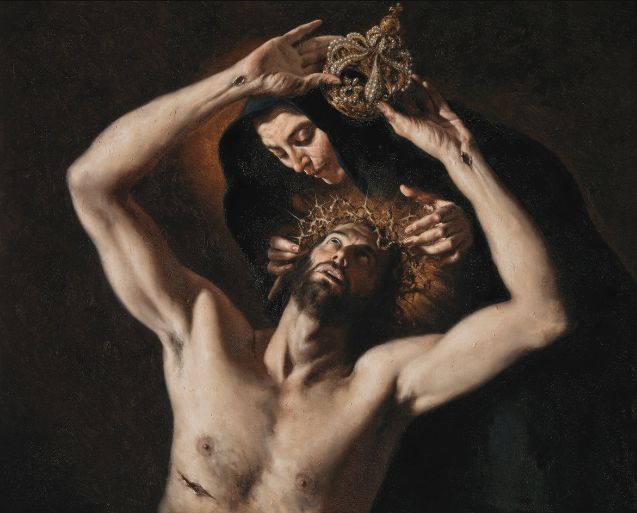
Corredenzione, by Giovanni Gasparro. This painting convinced my heart of the doctrine of the Co-Redemption of Mary. (Source).

It is appropriate on this Feast of Our Lady’s Coronation and Everlasting Queenship that we contemplate the fleeting thrones of this lesser world. Let us commemorate the loss of two great English dynasties, fixed on this day by Providence.

On Aug. 22, 1485, His Majesty King Richard III was defeated on Bosworth Field by a usurper from the House of the Tudors. The Red Dragon of Wales eclipsed the White Rose of York; years later, T.S. Eliot would wear the flower every 22nd of August.

RIII-Banner-RIIIF

The Personal Standard of Richard III. (Source).

On Aug. 22, 1642, His Majesty King Charles I raised the Royal Standard at Nottingham. This act has widely been considered the formal start of the English Civil War that would end in Puritan dictatorship, the slaughter of the Irish and Scots, and the martyrdom of the King himself for the doctrine of Episcopacy.

RoyalStandardStuarts.jpg

The Royal Standard of the Stuarts, 1603-1649. (Source).

Consider the leaden weight of these crowns. Worn by men alternately noble and feeble, loyal and inconstant, heroic and fearful, they rot away with the passage of time. The gilt of their craft and the earthly acclaim of their subjects have gone the way of all flesh. Those crowns are memories, but even in memory they do not earn the glory and affection they once inspired. Their reputations are occulted with cumbersome connotations. Richard has been much maligned ever since his death, in part by no less a personage than Shakespeare himself. Charles, a more complicated figure, has been swallowed up by his role as the symbolic center of Tory anxieties and Whig acrimony for the better part of four centuries. More bitterly, both kings “Accept the constitution of silence/And are folded in a single party.” They have become an unimportant datum of historical trivia for most people, even in England.

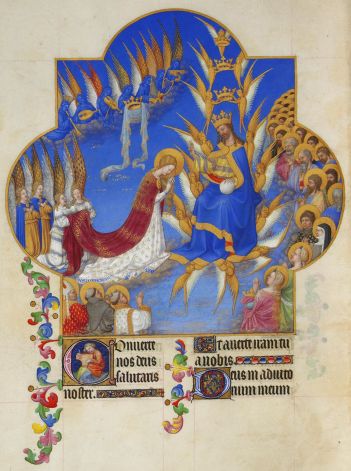
the-coronation-of-the-virginLimbourg.jpg

The Coronation of the Virgin, by the Limbourg Brothers. (Source)

How unlike those crowns is that won by Mary! She who was immaculately conceived and preserved from every stain of sin never sullies her crown by any failure of virtue. Having borne the Son of God in her womb, no other glory could ever outstrip what she has already known in her perpetually virginal maternity. Assumed into heaven, she is preserved from the terrible corruption of the grave. And now, as the Church celebrates the Octave Day of the Assumption, we contemplate the eternal joy which her coronation engenders in all the ranks of the blessed. All generations have called her blessed, and all will forevermore. She will never be reduced in the eyes of the world, because no one is more perfect in the eyes of God.

Has there ever been so marvelous a creature as Mary? Can we name, in the orderly chaos of the creation, a being more closely united to the Trinity? Who else among mere mortals has been lauded as “More honorable than the Cherubim, and more glorious beyond compare than the Seraphim?” In her burns the fire of charity; in her grows the ground of humility; in her flows the water of purity; in her soars the mighty wind of patience. She is the New and Sophianic Eve, in which the Wisdom of God is most clearly manifest.

And why? Because she is the threefold Mother of the Redeemer. First, by her Fiat, she assents to a physical maternity of the Word Incarnate. Second, by the sorrows of her Immaculate Heart at the Cross, she wins a sacramental maternity of Christ in the Eucharist. And third, by her prayer in the Cenacle on Pentecost, she gains a mystical maternity of Christ in the whole Church. This threefold motherhood is but one theandric maternityand thus we see the Trinitarian character of Our Lady’s co-redemption. She and she alone of all mankind is so favored and so bound to the work of Christ.

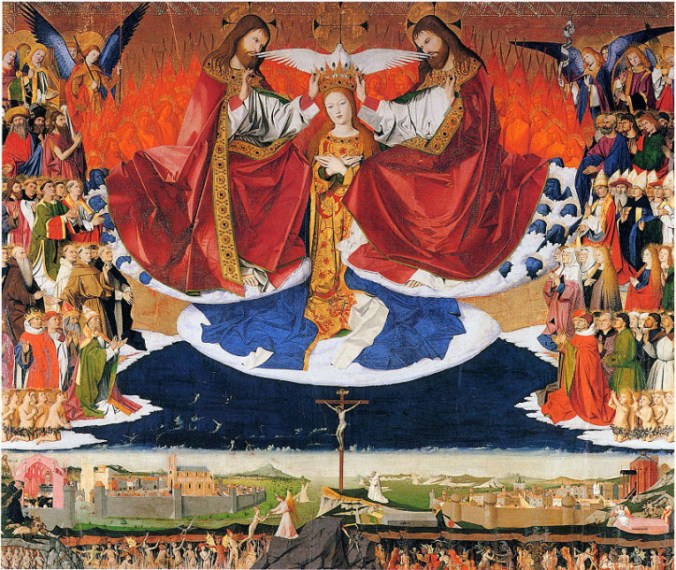
art-and-liturgy-enguerrand-quarton-coronation-of-the-virgin-1454

Coronation of the Virgin, Enguerrand Quarton. 1454. (Source). Mary crowned by the Trinity is surely an icon of the Eschaton.

A friend of mine passed on this passage from St. Amadeus of Lausanne, a Cistercian most famous for his eight homilies in praise of the Mother of God. He took it from Universalis, which gives the full liturgy of the hours online. Thus, the Church particularly commends these words to us on this holy day:

Observe how fitting it was that even before her assumption the name of Mary shone forth wondrously throughout the world. Her fame spread everywhere even before she was raised above the heavens in her magnificence. Because of the honour due her Son, it was indeed fitting for the Virgin Mother to have first ruled upon earth and then be raised up to heaven in glory. It was fitting that her fame be spread in this world below, so that she might enter the heights of heaven on overwhelming blessedness. Just as she was borne from virtue to virtue by the Spirit of the Lord, she was transported from earthly renown to heavenly brightness.

So it was that she began to taste the fruits of her future reign while still in the flesh. At one moment she withdrew to God in ecstasy; at the next she would bend down to her neighbours with indescribable love. In heaven angels served her, while here on earth she was venerated by the service of men. Gabriel and the angels waited upon her in heaven. The virgin John, rejoicing that the Virgin Mother was entrusted to him at the cross, cared for her with the other apostles here below. The angels rejoiced to see their queen; the apostles rejoiced to see their lady, and both obeyed her with loving devotion.

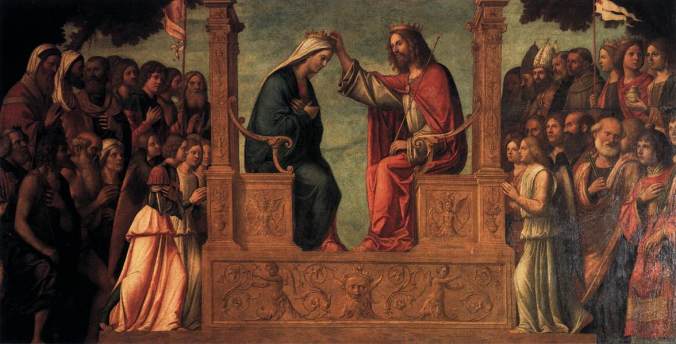
the-coronation-of-the-virginCimaThe Coronation of the Virgin, Cima da Conegliano. (Source).
Dwelling in the loftiest citadel of virtue, like a sea of divine grace or an unfathomable source of love that has everywhere overflowed its banks, she poured forth her bountiful waters on trusting and thirsting souls. Able to preserve both flesh and spirit from death she bestowed health-giving salve on bodies and souls. Has anyone ever come away from her troubled or saddened or ignorant of the heavenly mysteries? Who has not returned to everyday life gladdened and joyful because his request had been granted by the Mother of God?

She is a bride, so gentle and affectionate, and the mother of the only true bridegroom. In her abundant goodness she has channelled the spring of reason’s garden, the well of living and life-giving waters that pour forth in a rushing stream from divine Lebanon and flow down from Mount Zion until they surround the shores of every far-flung nation. With divine assistance she has redirected these waters and made them into streams of peace and pools of grace. Therefore, when the Virgin of virgins was led forth by God and her Son, the King of kings, amid the company of exulting angels and rejoicing archangels, with the heavens ringing with praise, the prophecy of the psalmist was fulfilled, in which he said to the Lord: At your right hand stands the queen, clothed in gold of Ophir.

WomanClothedWiththeSun

An illustration of “The Woman Clothed With the Sun.” (Source)

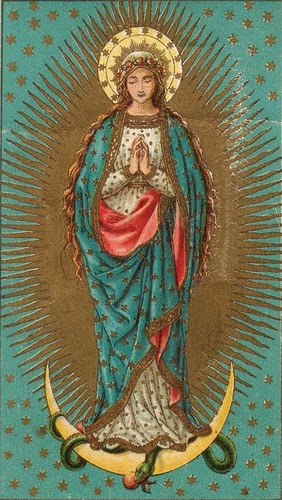
St. Amadeus is right; “Has anyone ever come away from her troubled or saddened or ignorant of the heavenly mysteries? Who has not returned to everyday life gladdened and joyful because his request had been granted by the Mother of God?” We who still struggle with sin on the path to beatitude cannot hope to achieve our goal if we will not be with and like Mary. We, too, are promised crowns. The scriptures mention five: the imperishable crown (1 Cor. 5:24-25), the crown of rejoicing (1 Thess. 2:19), the crown of righteousness (2 Tim. 4:8), the crown of glory (1 Pet. 5:4), and the crown of life (Rev. 2:10). Our Lady wears all these and seven more, for she is the “woman clothed with the sun, and the moon under her feet, and upon her head a crown of twelve stars” (Rev. 12:1 KJV). Are these other seven stars the seven gifts of the Holy Spirit, her spouse? Or the seven cardinal virtues? Or the seven sacraments that constitute the Church? Or the seven lesser ranks of the angels in praise of their queen? Impossible to say. Mary is not only the fountain of all holiness, but the mother of the Church’s deepest mysteries.

How might I end this praise of Our Lady that could properly continue ad infinitum? By returning to those lesser crowns with which I began.

Earthly splendor is no great thing. It can only be built on sufferingeither our own or that of others. Even when turned to good (as, I would argue, Charles I attempted to use his power), it reflects something of our fallen state. It is slippery, contingent, and as mortal as we are. But the glory of heaven is without end. Incorrupt and incorruptible, it abides in the gaze of the Father. Mary, above all creation, receives this kind of glory. She, the New Eve to the New Adam, mirrors Him in all things. Let us run after the course she trod before us, the course of Her Son’s redemption! Only by pursuing a life like Christ’s can we hope for a reward like Mary’s.

May she pray for us as we celebrate her feast today.

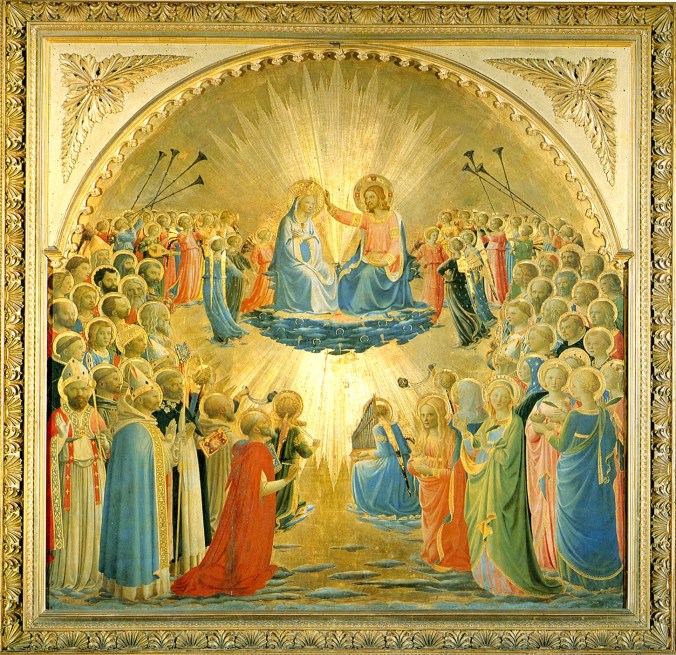
coronation-of-the-virgin-fra-angelico-big.jpg

“Coronation of the Virgin,” Fra Angelico. (Source). The Blessed Angelico returned to this subject throughout his career, but this version, hanging in the Uffizi Gallery, is my favorite.